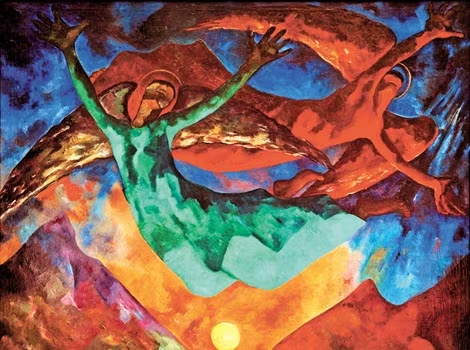
Abstract Art: Texture and Color
For decades, painting instructors have introduced students to abstraction through a phrase that has become almost universal: “Abstract Art Basics.” Although well-intentioned, this expression reveals a fundamental misunderstanding of what abstract art truly is.
The word “basics” implies a fixed set of foundational rules, principles, or procedures that every artist must learn before creating. Such an assumption may be appropriate in representational painting, where perspective, anatomy, composition, or color theory often function as shared conventions. However, abstract art emerged precisely by challenging the idea that artistic expression should be governed by predetermined rules.
To speak of “Abstract Art Basics” is therefore paradoxical. The concept of “basics” contradicts the philosophical essence of abstraction. Abstract art is not a system of formulas waiting to be mastered. It is a field of freedom, intuition, experimentation, and discovery.
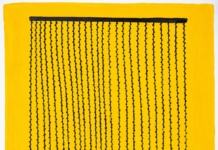
What truly defines abstract art is not a prescribed methodology but the artist’s relationship with color, texture, material, and surface. These are not rules; they are possibilities.
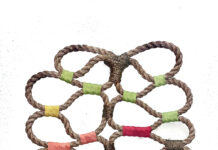
Color becomes emotion rather than description. Texture becomes language rather than decoration. Materials cease to be merely tools and become active participants in the creative process. The surface—whether canvas, wood, metal, paper, fabric, or an unconventional support—is not simply a place to paint but a space where matter, gesture, and perception interact.
Every abstract artist invents a personal visual vocabulary. One artist may communicate through thick impasto and layered pigments, another through transparent washes, raw earth, industrial compounds, fibers, sand, wax, or found objects. None of these approaches is more “correct” than another because abstraction rejects the notion of a universal grammar.
History confirms this diversity. From the spiritual geometry of early abstraction to the expressive gestures of postwar painting, from Color Field painting to material abstraction and contemporary mixed media, abstract art has continually reinvented itself. Its greatest strength has always been its refusal to accept fixed definitions.
Teaching abstract art should therefore encourage investigation rather than imitation. Instead of asking students to memorize “the basics,” educators should invite them to explore the expressive potential of pigment, texture, materiality, and the physical qualities of the surface itself. The objective is not to reproduce a style but to cultivate an authentic visual language.
Abstract art begins where certainty ends. It is an open territory in which color acquires emotional presence, texture records the passage of thought, and materials speak with their own voices. The artist’s responsibility is not to follow established rules but to discover relationships that have never existed before.
Perhaps it is time to replace the misleading expression “Abstract Art Basics” with a more accurate understanding: Abstract Art is an exploration of color, texture, material, and surface—without fixed rules, only infinite possibilities.