
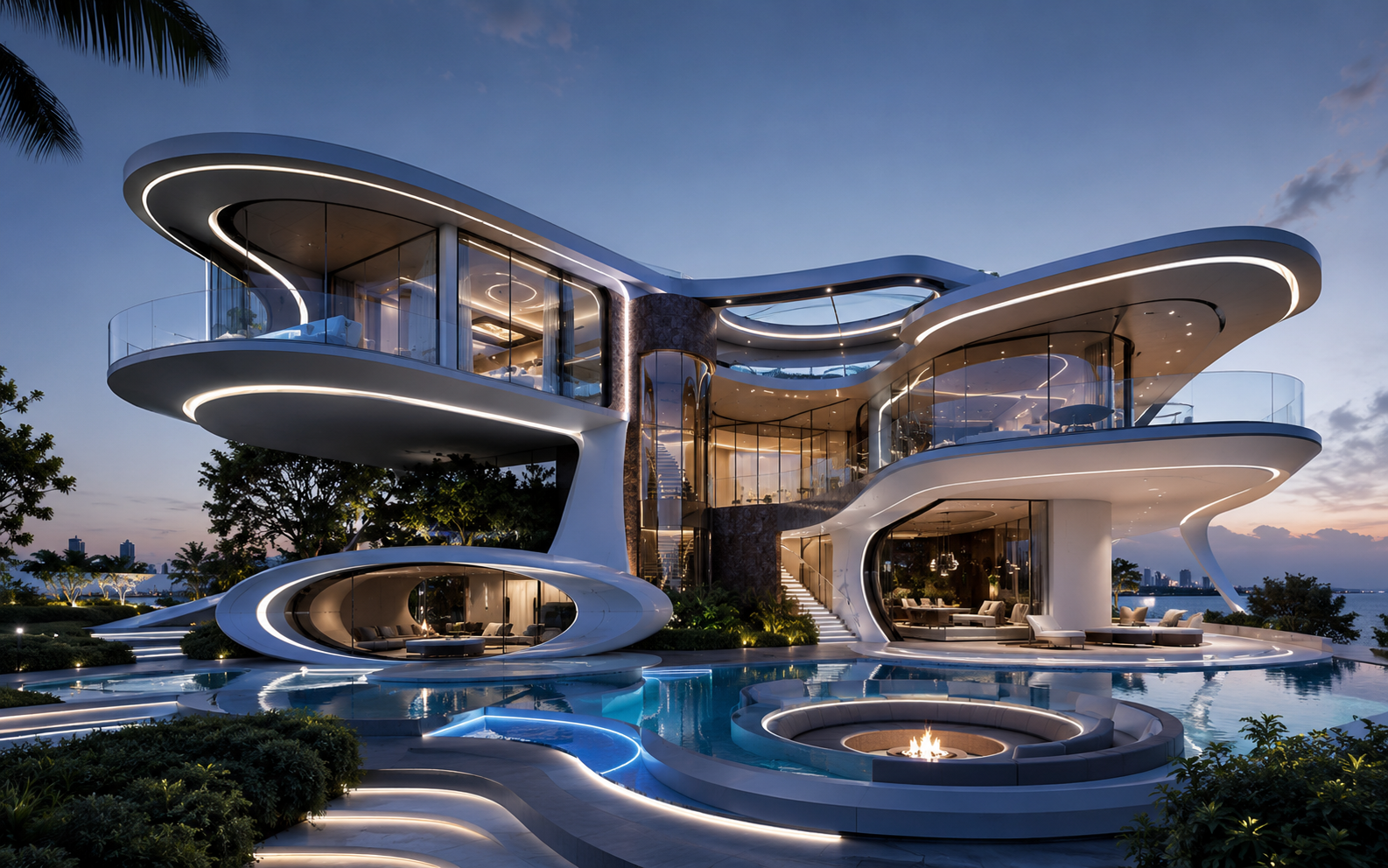
Miami Luxury Home Trends for 2026: The Future of Luxury Living
How Architecture, Art, Wellness, and Technology Are Redefining High-End Residences in South Florida
Luxury living in Miami is entering a new era.
The days when prestige was measured solely by square footage, imported marble, and waterfront views are rapidly fading. Today’s affluent buyers are seeking something more sophisticated: homes that combine architectural excellence, emotional resonance, technological intelligence, environmental responsibility, and a deep sense of personal identity.
As Miami continues to attract entrepreneurs, global investors, technology leaders, collectors, and a new generation of wealthy Millennials, luxury homes are evolving from symbols of success into carefully curated lifestyle ecosystems.
The luxury residence of 2026 is not merely a home—it is a private resort, wellness sanctuary, art gallery, technological hub, and climate-resilient retreat all at once.
The Rise of Timeless Design with Personality
One of the most significant shifts in luxury residential architecture is the rejection of trend-driven interiors in favor of timeless design enriched with character.
The sterile white boxes that dominated luxury development during the previous decade are giving way to residences that feel layered, collected, and deeply personal. Architects and interior designers are embracing enduring proportions, handcrafted details, custom millwork, artisanal finishes, and museum-quality furnishings that tell a story.
Luxury buyers increasingly want homes that age gracefully rather than follow short-lived design trends. The emphasis has shifted from fashionable minimalism to curated authenticity.
In Miami’s most desirable residences, elegance is no longer about perfection—it is about personality.
Art as the New Luxury Amenity
Perhaps the most fascinating development in luxury home design is the emergence of museum-style residences.
For many affluent homeowners, art has become as important as architecture itself. Entire homes are now designed around significant collections, transforming private residences into immersive cultural environments.
Paintings, sculptures, textiles, archaeological artifacts, contemporary installations, and even paleontological specimens serve as focal points that shape the architecture surrounding them.
Beyond aesthetics, art creates emotional depth. It establishes a contemplative atmosphere that encourages reflection, conversation, and intellectual engagement.
In a city known for Art Basel, international collecting, and cultural diversity, Miami is uniquely positioned to lead this movement toward art-centered living.
Wellness Becomes Architecture
Luxury homeowners are increasingly prioritizing longevity, health, and mental well-being.
As a result, wellness is no longer confined to a gym or spa room. It is integrated into every aspect of residential design.
Natural light, biophilic environments, meditation spaces, air purification systems, circadian lighting, thermal wellness suites, infrared saunas, cryotherapy chambers, Himalayan salt rooms, and resort-inspired bathrooms are becoming standard features in ultra-luxury homes.
The most successful residences understand that true luxury is not simply about visual beauty; it is about enhancing the quality of everyday life.
The home itself becomes a tool for physical restoration and emotional balance.
Biophilic Design and Nature Immersion
The connection between architecture and nature has never been stronger.
Biophilic design—an approach that integrates natural elements into the built environment—continues to gain momentum throughout South Florida.
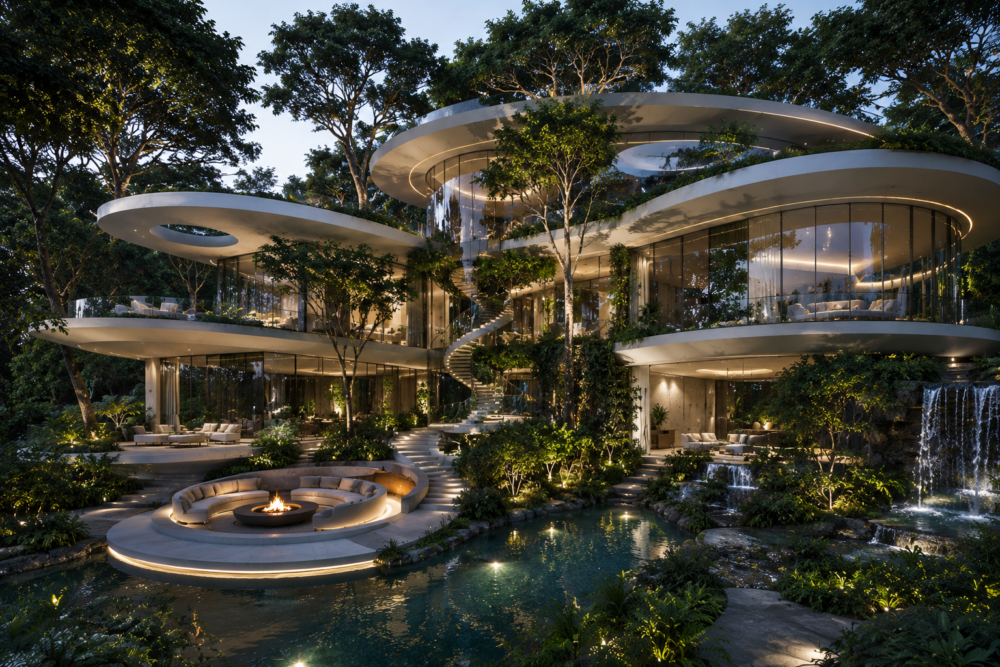
Living walls, interior gardens, mature tropical landscapes, water features, organic materials, and seamless indoor-outdoor transitions help create environments that reduce stress and improve well-being.
Rather than treating nature as a backdrop, architects are increasingly making it an active participant in the design experience.
The result is a residence that feels simultaneously luxurious and restorative.
The Smart Home Evolves into an Intelligent Home
Technology remains a defining feature of luxury real estate, but the focus has shifted dramatically.
Early smart homes often emphasized novelty. The intelligent homes of 2026 prioritize simplicity, personalization, and invisibility.
Artificial intelligence now manages climate control, lighting, entertainment systems, security, wellness routines, and energy efficiency through seamless integration.
The most sophisticated homes are designed so that technology disappears into the background while continuously adapting to the lifestyle and preferences of their owners.
Luxury technology today is less about gadgets and more about effortless living.
Climate-Resilient Luxury
In coastal markets such as Miami, resilience has become an essential component of luxury.
Discerning buyers are increasingly evaluating properties based on their ability to withstand environmental challenges, including hurricanes, flooding, heat, and energy disruptions.
Advanced building envelopes, impact-resistant systems, backup power infrastructure, elevated construction techniques, solar integration, and water-management strategies are becoming integral parts of high-end residential design.
Climate resilience is no longer viewed as a practical necessity—it has become a luxury feature in its own right.
Rich Materials and Expressive Interiors
The era of all-white interiors is giving way to richer, more sophisticated environments.
Luxury homes are embracing textured stone, warm woods, natural fibers, handcrafted surfaces, and deeper color palettes inspired by nature.
Earth tones, mineral hues, sculptural lighting, and tactile materials create interiors that feel both elegant and welcoming.
These spaces are designed not merely to impress visitors but to provide emotional comfort and visual richness throughout the year.
Private Resort Living
One of the most influential trends shaping luxury real estate is the transformation of homes into self-contained resorts.
Homeowners increasingly seek environments that eliminate the need to leave the property for recreation, wellness, or entertainment.
Outdoor kitchens, resort-style pools, wellness pavilions, pickleball courts, putting greens, wine lounges, private cinemas, meditation gardens, and guest casitas are becoming highly desirable features.
Luxury today is defined by convenience, privacy, and the ability to create meaningful experiences without leaving home.
The Rise of the Mega-Mansion
At the highest level of the market, luxury gives way to something even more extraordinary: the ultra-luxury estate.
These architectural compounds, often exceeding 20,000 square feet and valued between $50 million and $400 million, function as private worlds unto themselves.
Features may include climate-controlled automotive galleries, Imax-certified theaters, wellness complexes, private docks, helicopter landing facilities, subterranean entertainment spaces, and rare imported materials sourced from around the globe.
In South Florida, neighborhoods such as Miami Beach’s Star Island, the Venetian Islands, Pinecrest, Palm Beach, and Naples continue to establish themselves as some of the most prestigious ultra-luxury destinations in the United States.
The Future Is Curated, Not Excessive
Perhaps the most important trend of all is philosophical rather than architectural.
Luxury buyers are increasingly moving away from disposable design, fast furniture, and trend-driven consumption. Instead, they are investing in craftsmanship, permanence, sustainability, and emotional value.
The luxury home of the future is not necessarily larger—it is smarter, healthier, more resilient, and more meaningful.
It is a place where architecture, art, wellness, technology, and nature coexist in harmony.
As Miami continues to evolve as a global center for culture, finance, innovation, and design, its most exceptional residences will not be defined by extravagance alone. They will be defined by their ability to enrich everyday life.
That may ultimately become the new definition of luxury itself.