Odyssey: A Transformative Journey: Belkis Ayón and Carlos Alfonzo at MOAD
Written By Olga Garcia-Mayoral
Some exhibitions don’t simply hang on the wall—they press back. Belkis Ayón and Carlos Alfonzo: Odyssey at the Museum of Art and Design (MOAD) at Miami Dade College is one of those rare shows that feels less like a viewing experience and more like a private reckoning staged in public. It’s on view through May 10, 2026, and it stands—without exaggeration—as one of the most compelling exhibitions Miami has to offer right now.
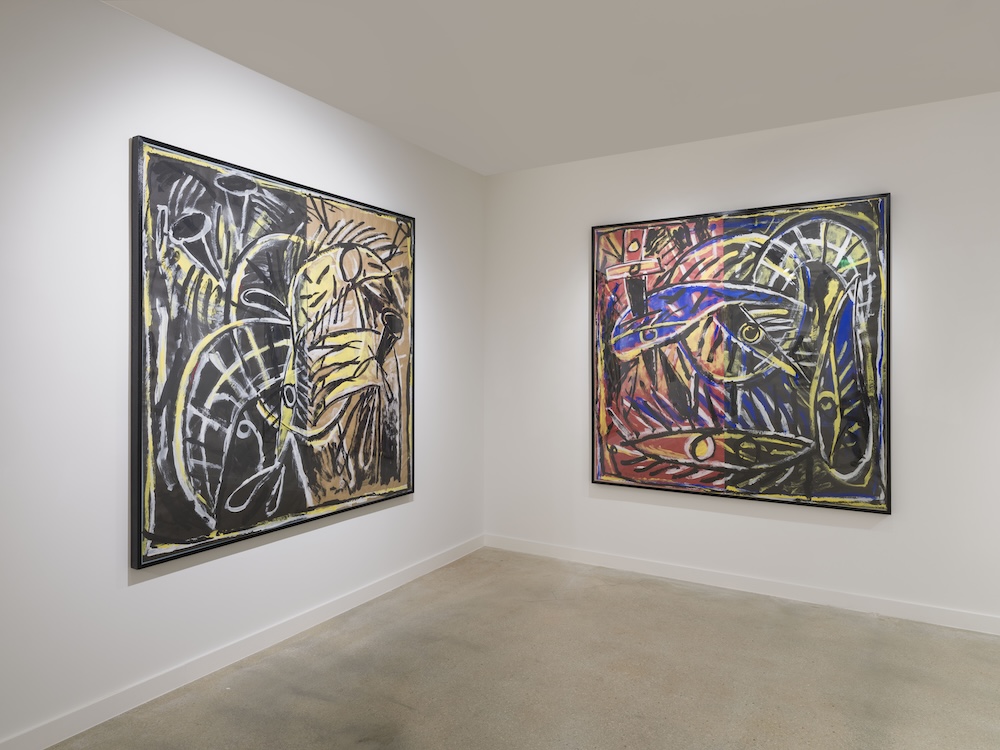
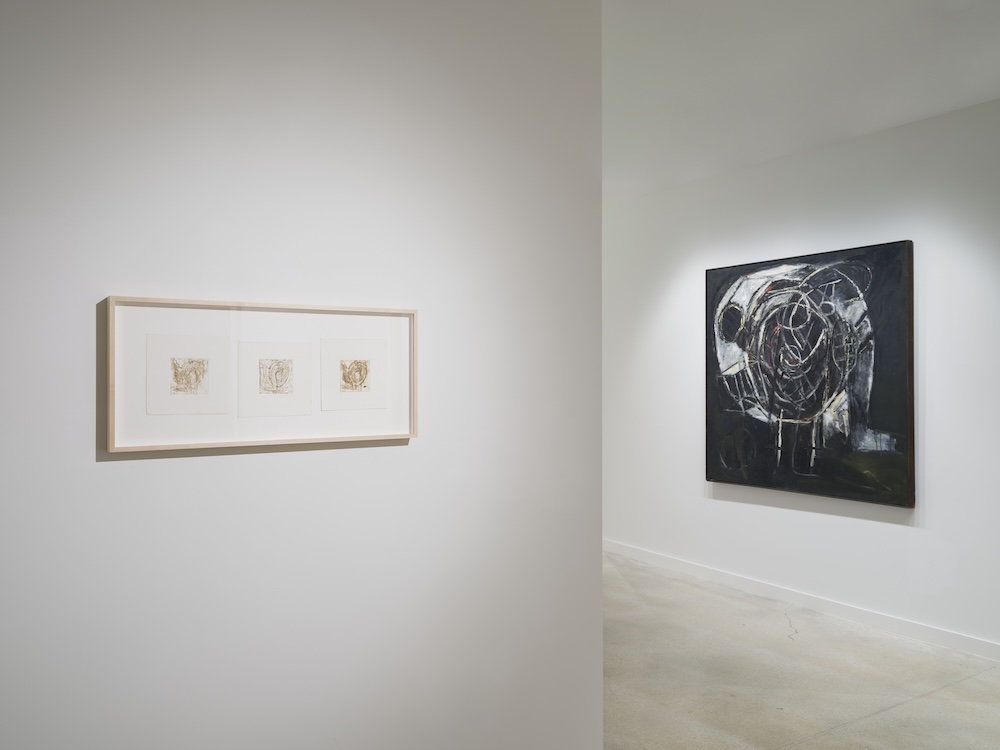
Bringing together two artists of immense force—Belkis Ayón (1967–1999) and Carlos Alfonzo (1950–1991)—Odyssey is a study in distinct aesthetic languages that share a common gravity. Their styles differ dramatically: Ayón’s printmaking carries a stark, mythic austerity; Alfonzo’s painting burns with expressive urgency. Yet the exhibition reveals how both artists arrive at similar stakes: image-making as spiritual inquiry, myth as a living archive, and storytelling as a continuous journey rather than a closed narrative.
What makes the experience feel so complete is the curatorial intelligence behind it. Chief Curator Amy Galpin has assembled a selection that doesn’t rely on spectacle; instead, it builds density—visual, psychological, and emotional. The exhibition design guides you without forcing you, allowing the works to speak in their own registers while quietly amplifying their correspondences. It’s a show that respects silence, encourages contemplation, and trusts the viewer to meet the work halfway.
Ayón: The Weight of Myth, the Sharpness of Silence
Belkis Ayón’s work is magnetic in its restraint. Her visual world—anchored by commanding figures and a rich vocabulary of black, white, and gray—feels like entering a ritual space where meaning is withheld just long enough to sharpen your attention. The surfaces carry a tension between softness and severity: velvety blacks that absorb light, pale forms that emerge like revelations, eyes that stare not as portraits but as presences.
Ayón’s compositions don’t simply depict myth; they seem to activate it. There is an atmosphere of secrecy and initiation—a sense that what you are looking at is only one layer of what is being communicated. The figures operate like symbols and beings at once: human, animal, divine, and something unnamed. It becomes difficult to remain an observer; the work invites an internal dialogue and self-questioning. You begin to feel how mythology can function not as a story of the past, but as a mirror.
The emotional impact of Ayón’s work isn’t loud. It arrives in the body like a slow realization. Her images hold violence and vulnerability in the same breath—an understanding of oppression that is not presented as a headline, but as atmosphere, structural, and unavoidable. The power comes from how little she needs to say to make you feel the stakes.
Alfonzo: Painting as Incantation
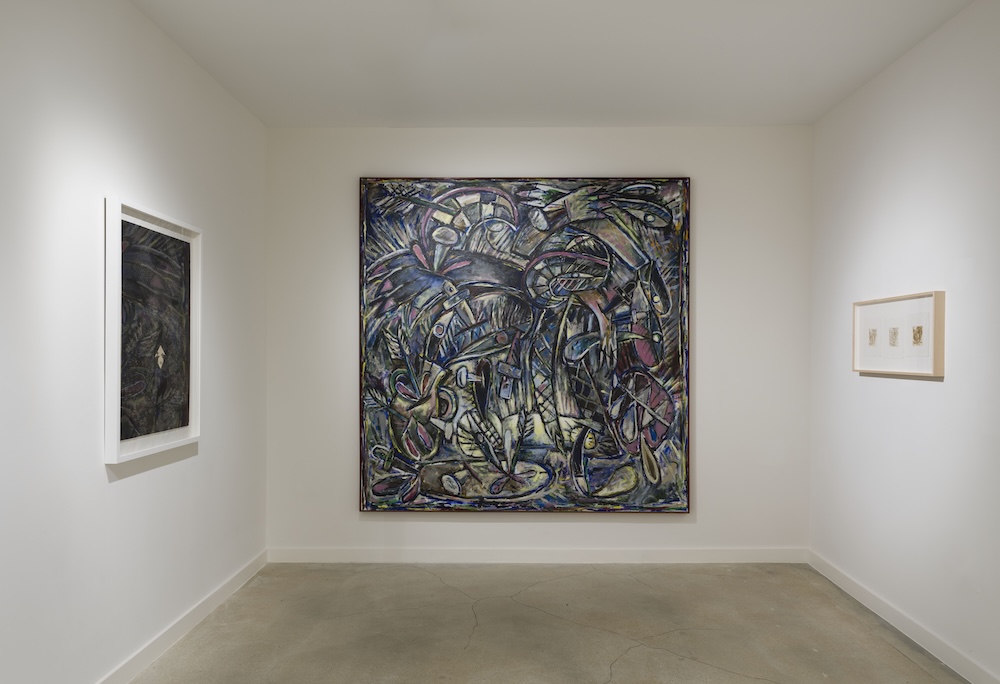
If Ayón’s work feels like a rite conducted in shadow, Carlos Alfonzo’s feels like a chant—urgent, radiant, often fierce. His paintings pulse with the force of someone pushing against limitation through color, gesture, and symbol. There is a physicality to the surface—an insistence in the mark-making—that reads as both defiance and devotion.
Alfonzo’s visual language can feel like an odyssey in motion: forms turning, bodies transforming, symbols colliding. His work often feels inhabited by multiple worlds at once—history and autobiography, spirit and street-level reality, tenderness and aggression. The paintings don’t settle into a single reading, and that’s the point: they demand that you return to them, reassess, re-enter. Their narratives are ongoing, not resolved.
There is also a kind of emotional transparency in Alfonzo’s work—an openness to intensity. You feel the artist’s awareness of violence and oppression not as distant commentary but as a lived condition. Yet the work is not consumed by despair; it converts tension into visual abundance, turning psychic pressure into creative force.
A Conversation Across Difference
The genius of Odyssey is that it doesn’t force equivalence between these artists. Instead, it stages a conversation—a dialogue across difference in which meaning emerges through proximity. Ayón and Alfonzo are connected here not by aesthetic similarity, but by shared commitments: to myth, to complex spiritualities, to bold storytelling, and to a sense of art as a journey that never really ends.
Both artists lived with the realities of Cuba’s constraints—scarcity and limited freedoms—and both developed practices that transform pressure into language. Yet their paths diverge, and the exhibition makes room for that. It shows two artists navigating their worlds differently while arriving at works that still speak to each other across time.
There’s a deeper resonance, too, in seeing these works in Miami—one of the great centers of the Cuban diaspora, a city shaped by the ongoing tension between memory and reinvention. This exhibition doesn’t just belong in Miami; it helps clarify Miami. It reminds us that cultural history is not simply inherited; it is argued over, revised, mourned, celebrated, and continually reimagined.
Curatorial Clarity and Emotional Architecture
Amy Galpin’s curatorial decisions feel both scholarly and intuitive. The show is built on pacing—moments when the viewer can breathe and moments when the work tightens its grip. The design supports the emotional “odyssey” suggested by the title: not a straight line, but a journey through layers of myth, spirit, and lived experience.
What’s striking is how the exhibition makes space for the works’ complexity without overexplaining them. You are invited to bring your own questions, your own history, your own sensitivity. The result is an exhibition that doesn’t just inform—it transforms.
Why You Should Go Now
Odyssey is the kind of exhibition that recalibrates your expectations of what a museum show can do. It is intellectually rich, visually gripping, and emotionally resonant. It is also rare: two artists, each monumental in their own right, presented in a way that honors their individuality while revealing their shared stakes.
If you care about Cuban and Cuban diasporic art, about contemporary myth-making, about spiritual complexity in visual form, or simply about what it feels like to encounter art that doesn’t let you remain untouched, this show is essential.
Miami has many offerings, but few that feel as necessary as this one. Belkis Ayón and Carlos Alfonzo: Odyssey is not just worth seeing; it is essential. It’s worth sitting with. And it may stay with you longer than you expect.