ICON ARTIST ART BASEL AWARD
Icon Artists Who Redefined the Boundaries of Contemporary Art
Across five decades of radical experimentation, Joan Jonas, Adrian Piper, Betye Saar, Cecilia Vicuña, David Hammons, and Lubaina Himid have reshaped the landscape of contemporary art through practices that are at once fiercely inventive, philosophically grounded, and socially transformative. Though distinct in medium and cultural context, these six artists are bound by a shared commitment to confronting entrenched systems of power and reimagining the possibilities of artistic expression.
Jonas revolutionized performance and video art, expanding the relationship between body, myth, and technological space. Piper merged conceptual rigor with political urgency, redefining how art interrogates race, identity, and personal ethics. Saar transformed assemblage into a powerful vessel for memory, spirituality, and Black liberation. Vicuña revived ancestral Indigenous knowledge while pioneering ecofeminist aesthetics that resonate profoundly in today’s ecological crises. Hammons subverted the art world from within, exposing the structures of market value, visibility, and racial politics through acts of conceptual mischief and poetic provocation. Himid reframed European art history by centering the African diaspora, challenging colonial narratives while celebrating cultural resilience and Black presence.
Together, these artists form a canon of resistance and renewal. Their practices do not simply reflect the world—they intervene in it. They open new spaces for marginalized voices, critique dominant systems, and expand the very definition of what art can be. Their legacies live in the hybrid, fluid, socially engaged art of today, and their influence continues to guide conversations around identity, ecology, politics, and imagination.
This constellation of iconic figures offers more than a history; it offers a blueprint for art that refuses silence, embraces multiplicity, and insists on transformation. Through their visionary approaches, they illuminate pathways toward a more expansive, just, and interconnected cultural future.
Artist
Joan Jonas
Joan Jonas (b. 1936, New York, NY) is a foundational figure in performance, video art, and interdisciplinary practice. Since the late 1960s, Jonas has fused movement, drawing, ritual, and myth to create poetic visual languages that transformed how performance and media art are understood today. Her influence spans generations of artists exploring embodiment, narrative fragmentation, and the relationship between the human body and technological mediation. As one of the first artists to use video as an expressive tool, Jonas helped define the possibilities of time-based art in the contemporary era.
Joan is a world-renowned artist whose work encompasses a wide range of media including video, performance, installation, sound, text, and sculpture. Jonas’ experiments and productions in the late 1960s and early 1970s continue to be crucial to the development of many contemporary art genres, from performance and video to conceptual art and theatre. Since 1968, her practice has explored ways of seeing, the rhythms of rituals, and the authority of objects and gestures.
Jonas has exhibited and performed extensively around the world. Her notable exhibition history includes Documenta 5, 6, 7, 8, 11, and 13; the 28th Sao Paolo Biennial; the 5th Kochi-Muziris Biennale; and the 13th Shanghai Biennale. She has recently presented solo exhibitions at the United States Pavilion for the 56th Edition of the Venice Biennial; Tate Modern, London; Museu Serralves, Porto; Pinacoteca de São Paulo; Museo Thyssen-Bornemisza, Madrid; Dia Beacon; Haus der Kunst, Munich; The Drawing Center, New York, Gladstone Gallery, New York and Galerie Gisela Capitain, Naples, Italy. The Museum of Modern Art in New York hosted a retrospective of Jonas’s work in 2024.
Jonas is the recipient of many awards including The Whitechapel Gallery Art Icon (2016); the Maya Deren Award given by the American Film Institute (1989); and the Lifetime Achievement Award given by the Solomon R. Guggenheim Museum (2009). In 2018, Jonas was awarded the prestigious Kyoto Prize, given to those individuals who have contributed significantly to the scientific, cultural and spiritual betterment of mankind, and in 2024 she was presented with the Nam June Paik Prize, awarded to artists who have contributed to the development of contemporary art, mutual understanding, and world peace.
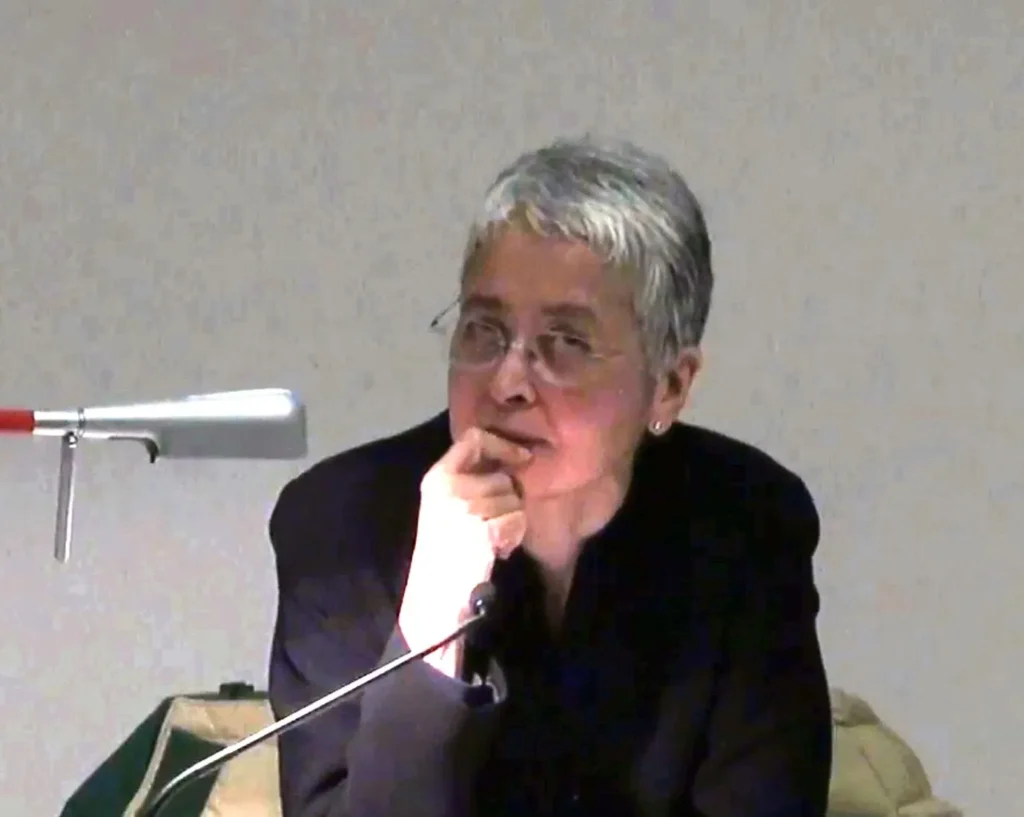
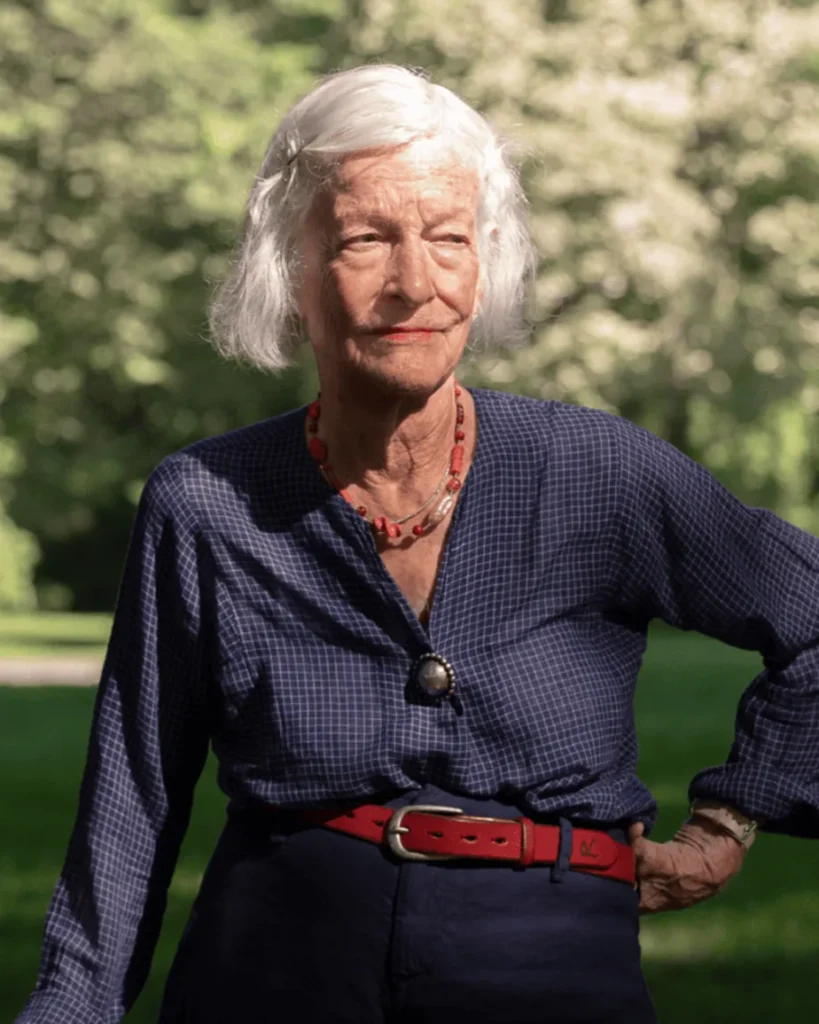
Adrian Piper
Adrian Piper is one of the most groundbreaking conceptual artists and philosophers of the 20th and 21st centuries. Her work interrogates race, gender, identity, and systems of power with intellectual rigor and emotional precision. Through performance, text, participatory structures, and analytic frameworks, Piper exposed the mechanisms of racism and xenophobia long before such discourse became mainstream. Her confrontational yet deeply humane practice redefined what political art can achieve and continues to shape contemporary debates around ethics and social identity.
Adrian produces artwork in a variety of traditional and nontraditional media, including photo-text collage, drawing on pre- printed paper, video installation, site-specific sculptural installation, digital imagery, performance and sound works. Piper’s works locate the viewer in a direct, unmediated and indexical relation to the concrete specificity of the object of awareness. They consistently explore the nature of subjecthood and agency, the limits of the self, and the continuities and discontinuities of individual identity in the metaphysical, social and political contexts. In 1968 Piper’s Parallel Grid Proposal for Dugway Proving Grounds introduced explicit political content into Minimalism. In 1970-73, her Catalysis and Mythic Being series introduced issues of race and gender into the vocabulary of Conceptual art. In 2000 her Color Wheel Series introduced Vedic philosophical concepts into political art. Her mixed media installation + participatory group performance, The Probable Trust Registry (2013-15), won the Golden Lion Award for Best Artist in the 56th Venice Biennale 2015 .
For her artwork Piper has also received Guggenheim, AVA, and NEA Fellowships, as well as the Skowhegan Medal for Sculptural Installation and the New York Dance & Performance Award (the Bessies) for Installation & New Media. She received the 2012 College Art Association Artist Award for a Distinguished Body of Work, for having “since the late 1960s, … profoundly influenced the language and form of Conceptual art;” and in 2014, a Women’s Caucus for Art Lifetime Achievement Award. In 2018 she became the first American to be honored by Germany’s Kaethe Kollwitz prize, and was elected to membership in the Akademie der Künste. In 2021, she was the winner of the Goslarer Kaiserring and was elected to membership in the American Academy of Arts and Letters. In 2023 she was the recipient of the Harvard Arts Medal.
Piper’s artwork is in the collections of the Museum of Modern Art, the Centre Pompidou, the Metropolitan Museum of Art, the Generali Foundation, the Museum of Contemporary Art of Los Angeles, and the Museum Ludwig, among others. From March to July of 2018, her seventh traveling retrospective, Adrian Piper: A Synthesis of Intuitions 1965-2016 , was hosted by the Museum of Modern Art in New York , the largest retrospective ever for a living artist. It was dubbed “the most important exhibition of the year” by ARTNews. Her eighth retrospective (and first European retrospective in over twenty years), RACE TRAITOR, opened at PAC Milan in March 2024.
Artist
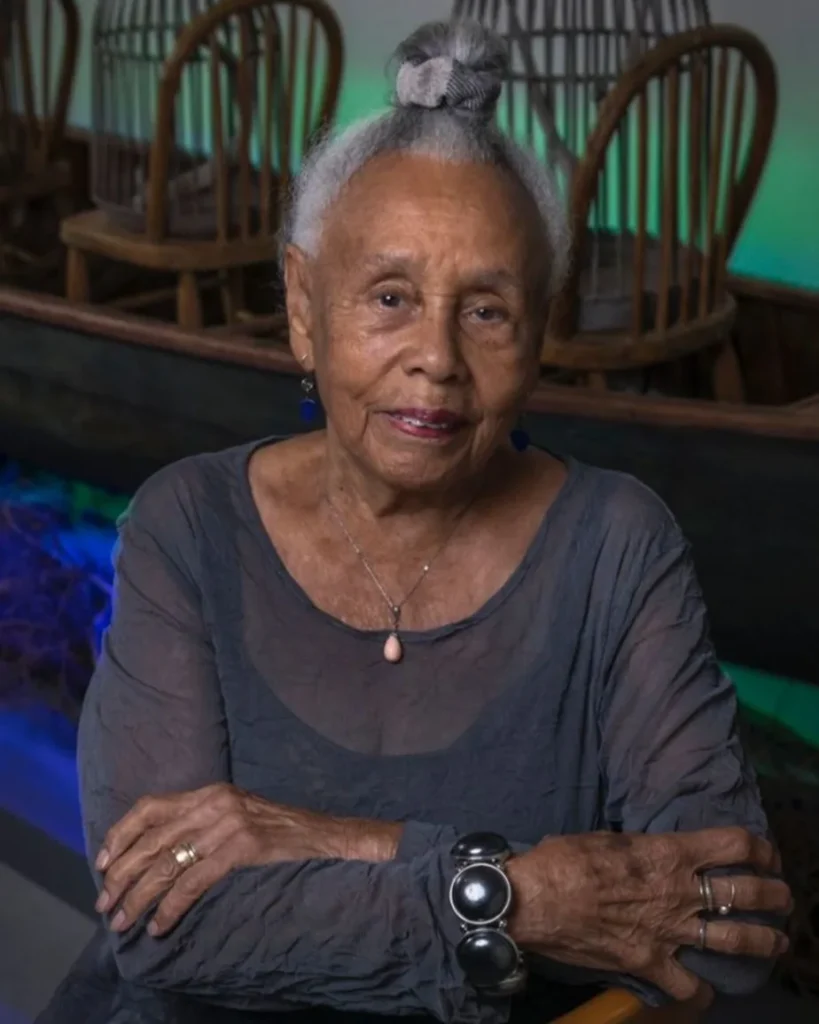
Betye Saar
Betye Saar is a pioneering force of the Black Arts Movement and a master of assemblage. Her transformative works use found objects, family archives, and symbolic materials to challenge racist imagery and reclaim African American spirituality, memory, and resistance. Saar’s iconic assemblages—charged with mysticism and political critique—reframe domestic objects into powerful cultural monuments. Her influence on generations of artists working with memory, identity, and social justice is immeasurable.
As one of the artists who ushered in the development of Assemblage art, Betye Saar’s practice reflects on African American identity, spirituality and the connectedness between different cultures. Her symbolically rich body of work has evolved over time to demonstrate the environmental, cultural, political, racial, technological, economic, and historical context in which it exists.
For over six decades, Saar has created assemblage works that explore the social, political, and economic underpinnings of America’s collective memory. She began her career at the age of 35 producing work that dealt with mysticism, nature and family. Saar’s art became political in the 1970’s namely with the assemblage The Liberation of Aunt Jemima in 1972. Activist and scholar Angela Davis has cited this work as the beginning of the Black Women’s movement. Like many women who came to political consciousness in the 1960s, Saar takes on the feminist mantra “the personal is political” as a fundamental principle in her assemblage works. Her appropriation of black collectibles, heirlooms, and utilitarian objects are transformed through subversion, and yet given her status as a pioneer of the Assemblage movement, the impact of Saar’s oeuvre on contemporary art has yet to be fully acknowledged or critically assessed. Among the older generation of Black American artists, Saar is without reproach and continues to both actively produce work and inspire countless others.
Saar received a B.A. from the University of California, Los Angeles in 1949 and has received six honorary doctorates. Her contributions to art and community activism have earned her numerous accolades, including two National Endowment for the Arts Awards, the W.E.B. Du Bois Award (2022), and the Wolfgang Hahn Prize (2022).
In 1975, Saar’s first solo museum show was held at the Whitney Museum of Art in New York where she was the first African American woman to have her art on display there. Recent solo exhibitions include Los Angeles County Museum of Art (2019); The Museum of Modern Art, New York (2019); Institute of Contemporary Art Miami (2021); and Isabella Stewart Gardner Museum (2023); The Huntington Library (2024); and The Neubauer Collegium (2025.) Saar’s artwork is in numerous public and private collections, including The Museum of Modern Art, The Metropolitan Museum of Art, Hirshhorn Museum and Sculpture Garden, Smithsonian Institution, Whitney Museum of American Art, New York, Los Angeles County Museum of Art, Museum of Contemporary Art Los Angeles, Hammer Museum, Art Institute of Chicago, Tate Modern and Museum Ludwig, among many others.
Artist
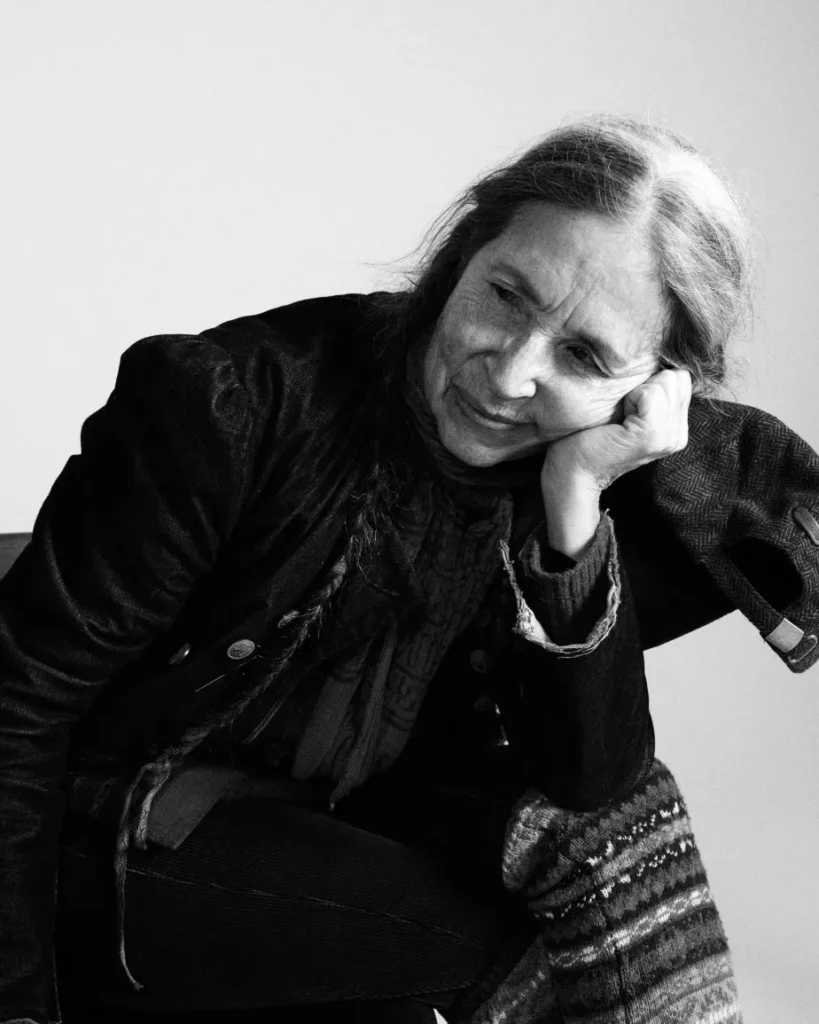
Cecilia Vicuña
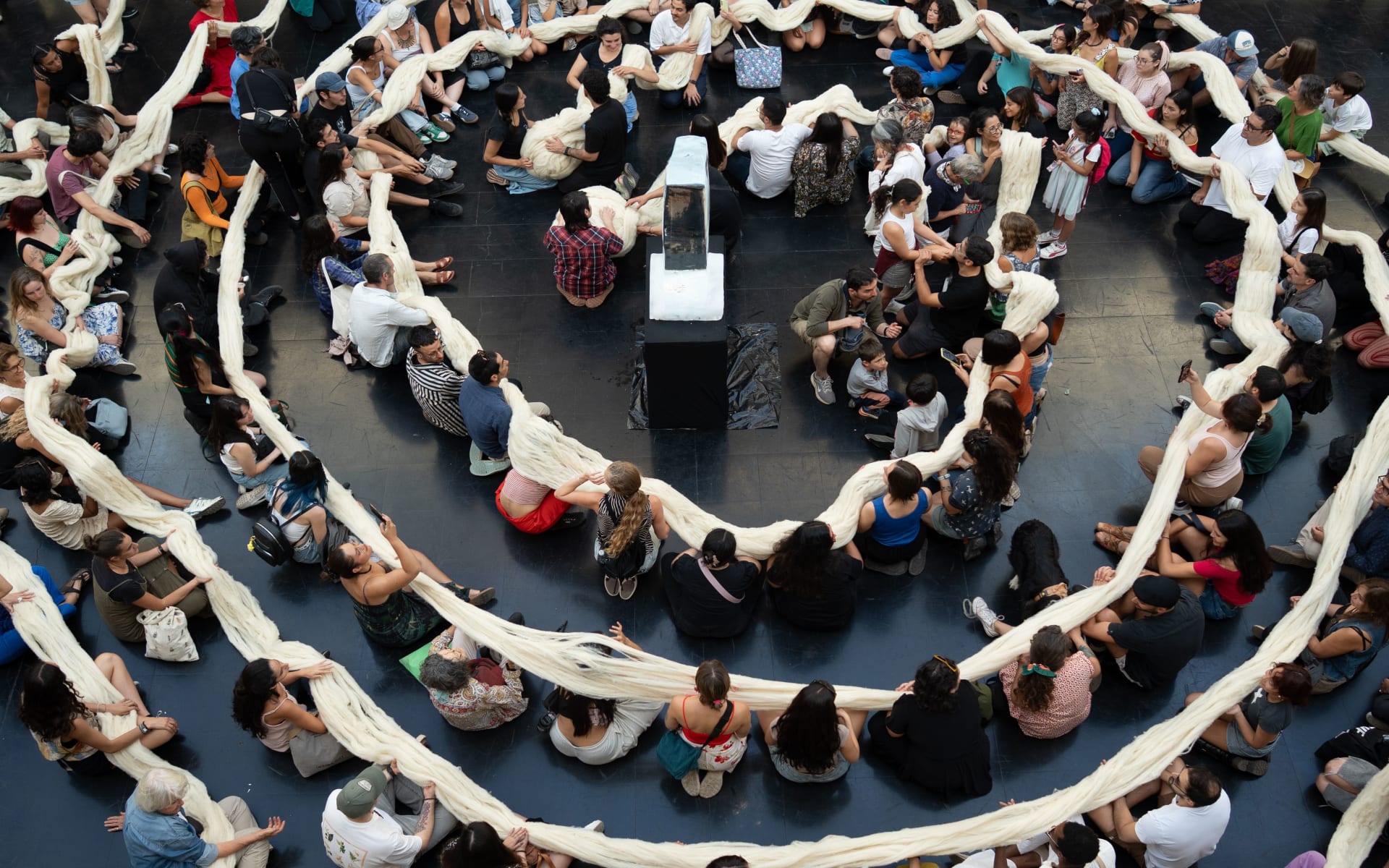
Cecilia Vicuña is an icon of ecofeminism, Indigenous knowledge, and expanded poetry. Working across performance, installation, sculpture, and text, she reconnects ancient Andean traditions—such as the quipu—with contemporary ecological and political urgencies. Her precarios (precarious sculptures) and monumental textile installations embody fragility, resilience, and ancestral continuity. Vicuña’s work sits at the intersection of activism and visionary poetics, offering a radically interconnected worldview urgently relevant to our time.
Cecilia s a poet, artist, activist and filmmaker whose work addresses pressing concerns of the modern world, including ecological destruction, human rights, and cultural homogenization. Born and raised in Santiago de Chile, she has been in exile since the early 1970s, after the military coup against the president Salvador Allende. In London, she was a co-founder of Artists for Democracy in l974.
She coined the term “Arte Precario” in the mid-1960s in Chile, as a new independent and non-colonized category for her precarious works composed of debris, structures that disappear in the landscape, which include her quipus (knot in Quechua), envisioned as poems in space. Vicuña has re-invented the ancient Pre-Columbian quipu system of non-writing with knots through ritual acts that weave the urban landscape, rivers and oceans, as well as people, to re-construct a sense of unity and awareness of interconnectivity. These works bridge art and poetry as a way of “hearing an ancient silence waiting to be heard.” Her poetry and Palabrarmas (word-weapons) stem from a deep enquiry into the roots of language. Her early work as a poet in the 60’s was simultaneously celebrated by avant-garde poetry magazines as El Corno Emplumado, Mexico City (l961–1968), and censored and/or suppressed for many decades in Chile and Latin America.
Solo exhibitions of Vicuña’s work have been organized at a number of major institutions, including, most recently, the Museo de Bellas Artes, Santiago de Chile, Chile (2023); Tate Modern, London, United Kingdom (2022); Solomon R. Guggenheim Museum, New York, NY (2022); Museo de Arte Miguel Urrutia (MAMU), Bogotá, Colombia (2022); Centro de Arte Dos de Mayo (CA2M), Madrid, Spain (2021); CCA Wattis Institute for Contemporary Art, San Francisco, CA (2020); and Museo Universitario de Arte Contemporáneo, Mexico City, Mexico (2020). Her work has been featured in numerous group exhibitions, including in documenta 14, Athens and Kassel (2017), and the 59th Venice Biennale (2022), and is part of major museum collections around the world.
The author of more than 30 volumes of art and poetry published in the United States, Europe, and Latin America, her most recent books are: PALABRARmas, USACH, Editorial de la Universidad de Santiago (2023); Word Weapons, Co-published by RITE Editions and Wattis Institute, San Francisco (2023); Libro Venado, Direcciones, Buenos Aires (2022); Sudor de Futuro, Altazor, Chile (2021); Cruz del Sur, Lumen Chile (2020), Minga del Cielo Oscuro, CCE, Chile (2020), and New & Selected Poems of Cecilia Vicuña, edited and translated by Rosa Alcalá, Kelsey Street Press (2018), among many others.
Cecilia Vicuña was the winner of the 2023 Premio Nacional de Artes Plásticas 2023, one of the most prestigious awards given by her homeland. Preceding this recognition, Vicuña was elected a foreign honorary member of the United States Academy of Arts and Letters and also received the Gold Lion for Lifetime Achievement in 2022 at the 59th Venice Biennale.
Artist
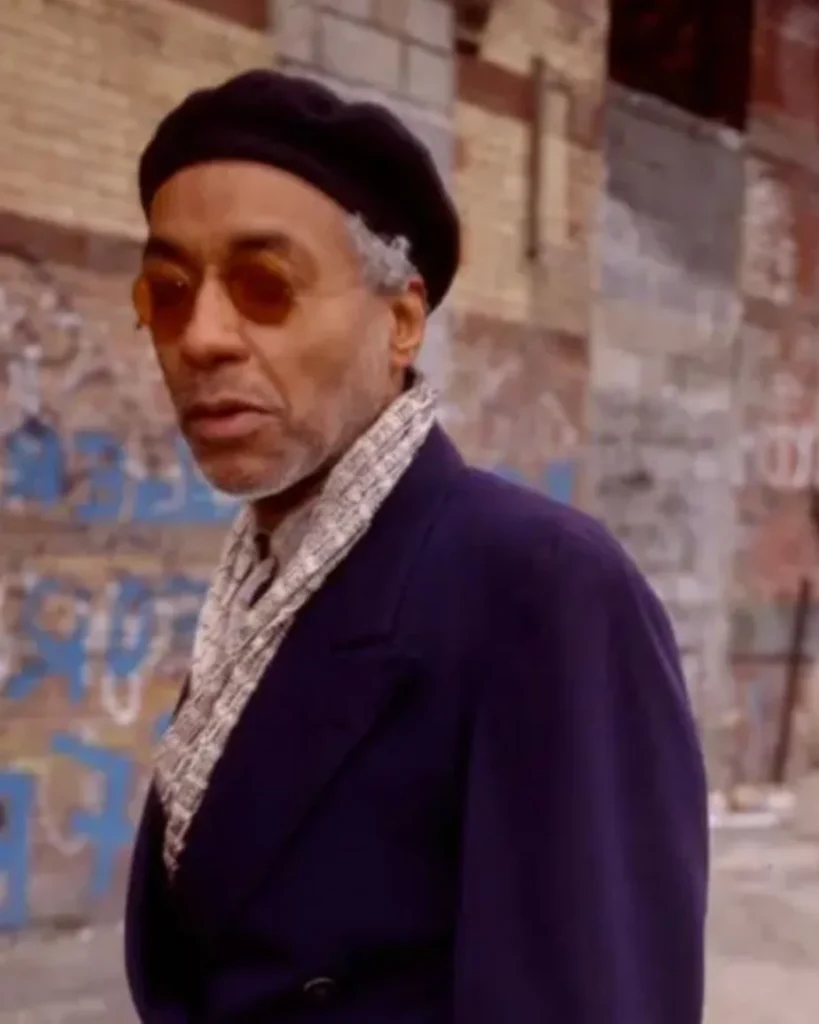
DAVID HAMMONS
David Hammons was born in Springfield, Illinois on July 24, 1943. He is a legendary and elusive figure whose practice critiques systems of race, class, market value, and cultural appropriation with unmatched conceptual sharpness. From body prints using his own hair and grease to street-based actions and found-object sculptures, Hammons inverts art-world hierarchies and exposes their contradictions. His resistance to institutional expectations and his strategic use of invisibility have made him one of the most respected—and enigmatic—artists in American art history.
David moved to Los Angeles in 1962, attending CalArts from 1966-1968, and the Otis Art Institute from 1968-1972, where he was inspired by artists such as Bruce Nauman, John Baldessari, Charles White, and Chris Burden. In 1974, Hammons settled in New York City.
Over the past five decades, Hammons has created a versatile body of work that explores the experience of African-American life and the role of race within American society. He began his career in Los Angeles in the late 1960s, where he was influenced by the politically charged imagery of the Black Arts Movement, the found-object assemblages of Dada, and the humble materials of Arte Povera. His first notable work is his series of Body Prints done in the 1960s and ’70s. Life-size representations of his own figure would be transferred to the support by coating his skin and hair with margarine and pressing his greased body onto the paper, then covering those sections with pigment powder. These images would be paired with politically charged symbols such as the American flag.
After his move to New York in the mid-1970s, Hammons disengaged from two-dimensional works, preferring to devote his practice entirely to sculptural assemblage, installation, and performance, in which he would employ provocative materials such as elephant dung, chicken parts, strands of hair, and bottles of cheap wine. Centered in the Black urban experience, Hammons often uses sarcasm and humor as a means of confronting the cultural stereotypes and racial issues at the core of his practice. In recent years, Hammons returned again to two-dimensions in series such as his Kool Aid drawings, which use the popular drink as a medium for mark-making, and the Basketball Drawings, which are composed through repeatedly bouncing a basketball covered with charcoal onto the paper. As in so many of Hammons’ works, the title and physical object work together as a verbal and visual pun to generate meaning – in this case, an allusion to the unrealistic dream of basketball providing an escape from urban poverty, and encouragement for black youths to seek loftier goals than athletic prowess. In the 1980s, Hammons became known for his public sculptures and installations, such as the 1986 work “Higher Goals,” a group of five, 20-30 foot tall telephone poles topped with basketball hoops and covered in mosaics of discarded beer bottle caps.
Hammons was the recipient of the MacArthur Fellowship in July 1991. His work is collected by major public and private institutions internationally, among them: Albright-Knox Art Gallery, Buffalo; Fogg Art Museum, Cambridge; Glenstone, Potomac; Museum of Contemporary Art Chicago; Museum of Contemporary Art, Los Angeles; the Museum of Modern Art, New York; Whitney Museum of American Art, New York; SMAK, Stedelijk Museum voor Actuele Kunst, Ghent; Fondation Cartier pour l’art contemporain, Paris; Francois Pinault Foundation, Venice; and Tate Britain, London.
Artist
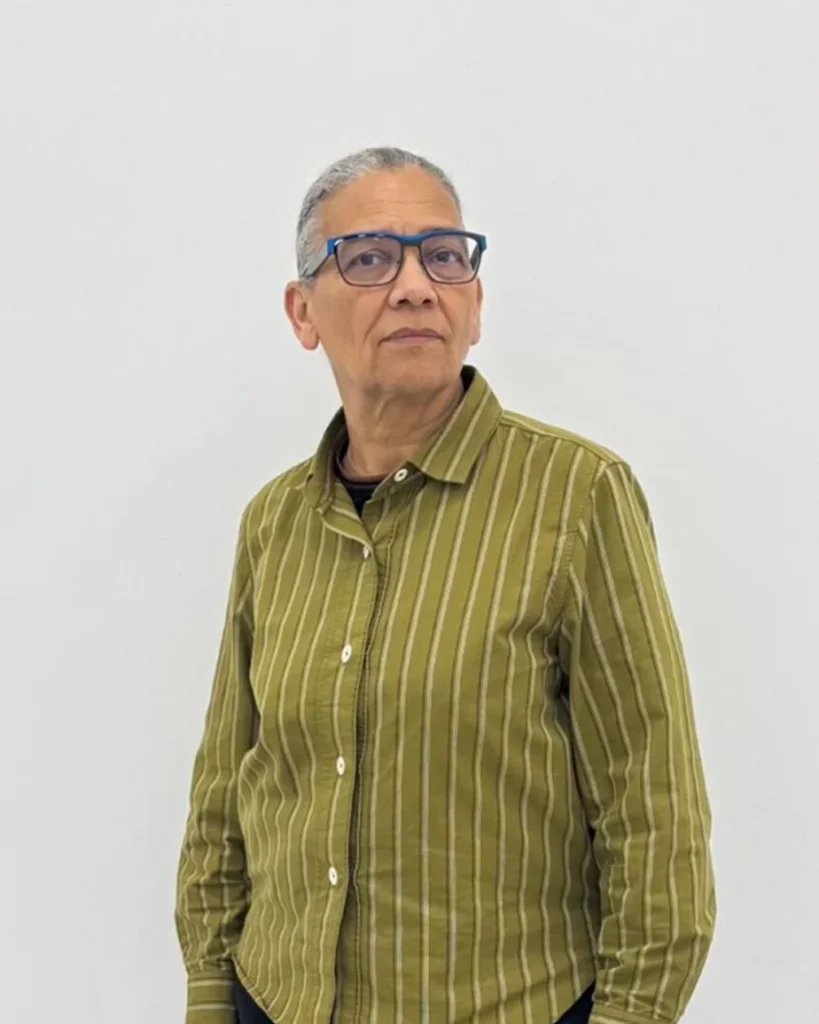
Lubaina Himid
Lubaina Himid is a central figure in the British Black Arts Movement and the first Black woman to receive the Turner Prize. Her paintings, installations, and theatrical tableaux foreground the histories and contributions of the African diaspora, challenging the erasure of Black presences from European art history. Himid’s work is known for its bold color, incisive narrative strategies, and its ability to critique colonial histories while celebrating cultural resilience, community, and creativity.
Lubaina, CBE, lives and works in Preston, England. A two-person exhibition with Magda Stawarska is currently on view at Mudam Luxembourg – Musée d’Art Moderne Grand-Duc Jean through August 24. In 2026, she will represent the United Kingdom at the 61st Venice Biennale with a solo exhibition of new work at the British Pavilion.
Himid received the Turner Prize in 2017 and was the subject of a major survey at Tate Modern in 2021–22. Other recent solo and two-person exhibitions include MUDAM Luxembourg (through August 24, 2025); FLAG Art Foundation, New York (2024–25); Greene Naftali, New York (2024); The Contemporary Austin (2024); Sharjah Art Foundation, Sharjah, UAE (2023–24); Glyndebourne Opera Festival, East Sussex, UK (2023); Musée cantonal des Beaux-Arts, Lausanne, Switzerland (2022); Tate Britain, London (2019); Frans Hals Museum, Haarlem, The Netherlands (2019); CAPC Bordeaux, France (2019); New Museum, New York (2019); Spike Island, Bristol, UK (2017); and Modern Art Oxford (2017). Her work is in the collections of the Baltimore Museum of Art; Hammer Museum, Los Angeles; Hessel Museum of Art, Annandale-on-Hudson, New York; Museum Ludwig, Cologne; National Museums, Liverpool; Rhode Island School of Design, Providence; Royal Academy, London; Solomon R. Guggenheim Museum, New York; Tate, London; and the Victoria & Albert Museum, London, among others.