Nomadic Thought and Contemporary Practice: Reflections on the MoCAA Conference and Roundtable
Last Saturday, the headquarters of the Museum of Contemporary Art of the Americas (MoCAA) became a site of convergence for artists, curators, critics, and scholars from across the Ibero-American world, hosting a keynote lecture and roundtable led by curator and researcher Hernán Pacururu. More than a conventional academic encounter, the event unfolded as a space of shared inquiry, where artistic practice, political imagination, and collective experience intersected.
At the center of Pacururu’s lecture was the notion of artistic nomadism, approached not as a romanticized metaphor of movement, but as an aesthetic, ethical, and epistemological position. Nomadism, in this framework, challenges fixed territorial logics, stable institutional roles, and the presumed neutrality of museum spaces. Rather than emphasizing displacement alone, Pacururu articulated nomadic practice as a mode of thinking and working that privileges process over spectacle, situated knowledge over abstraction, and relational engagement over market visibility.
Drawing from international experiences connected to the Nomadic Biennial, Pacururu traced a constellation of practices developed across Latin America and Europe through site-specific interventions, residencies, congresses, and long-term collaborations. These projects, deliberately decentralized and extended in time, operate outside the accelerated rhythms of the global exhibition circuit. In contrast to the conventional biennial model—often tied to spectacle, branding, and cultural consumption—the Nomadic Biennial proposes art as a situated and collective practice, deeply entangled with specific social, political, and affective contexts.
One of the most compelling aspects of the lecture was its insistence on horizontal knowledge exchange and the centrality of affective bonds. Pacururu framed nomadic artistic practice as an exercise in listening: to territories, to communities, and to forms of knowledge that are frequently marginalized within institutional and academic frameworks. In doing so, the lecture foregrounded art not as representation, but as a form of relational action—capable of generating temporary yet meaningful configurations of community.
The subsequent roundtable expanded these ideas through an active dialogue with the audience. Questions and interventions opened a plural space for reflection on the contemporary conditions of artistic production, addressing tensions between institutional validation and experimental practices, as well as the role of art in relation to migration, precarity, identity fragmentation, and the reconfiguration of cultural communities. Rather than seeking consensus, the discussion embraced productive friction, underscoring the necessity of critical discomfort as a catalyst for thought.
Within the context of South Florida and Miami-Dade County, the event marked a significant moment of regional and international articulation. The strong presence of voices from across the Ibero-American cultural field reaffirmed MoCAA’s role as a platform for transnational dialogue and critical exchange. More importantly, it highlighted a growing urgency to reconsider how art circulates, convenes publics, and generates meaning beyond dominant institutional and economic paradigms.
Seen alongside MoCAA’s forthcoming exhibition The Garden of Earthly Delights (opening January 30, 2026), the conference and roundtable suggest a coherent institutional trajectory—one committed to questioning normative frameworks, amplifying historically underrepresented perspectives, and understanding contemporary art as a field of ethical and political engagement. Together, these initiatives position MoCAA not merely as an exhibition space, but as a site of thought, encounter, and collective imagination.
In a moment marked by global instability and cultural fragmentation, the gathering served as a reminder that nomadism—understood as attentiveness, mobility of thought, and relational practice—remains a vital tool for reimagining both art and community today.
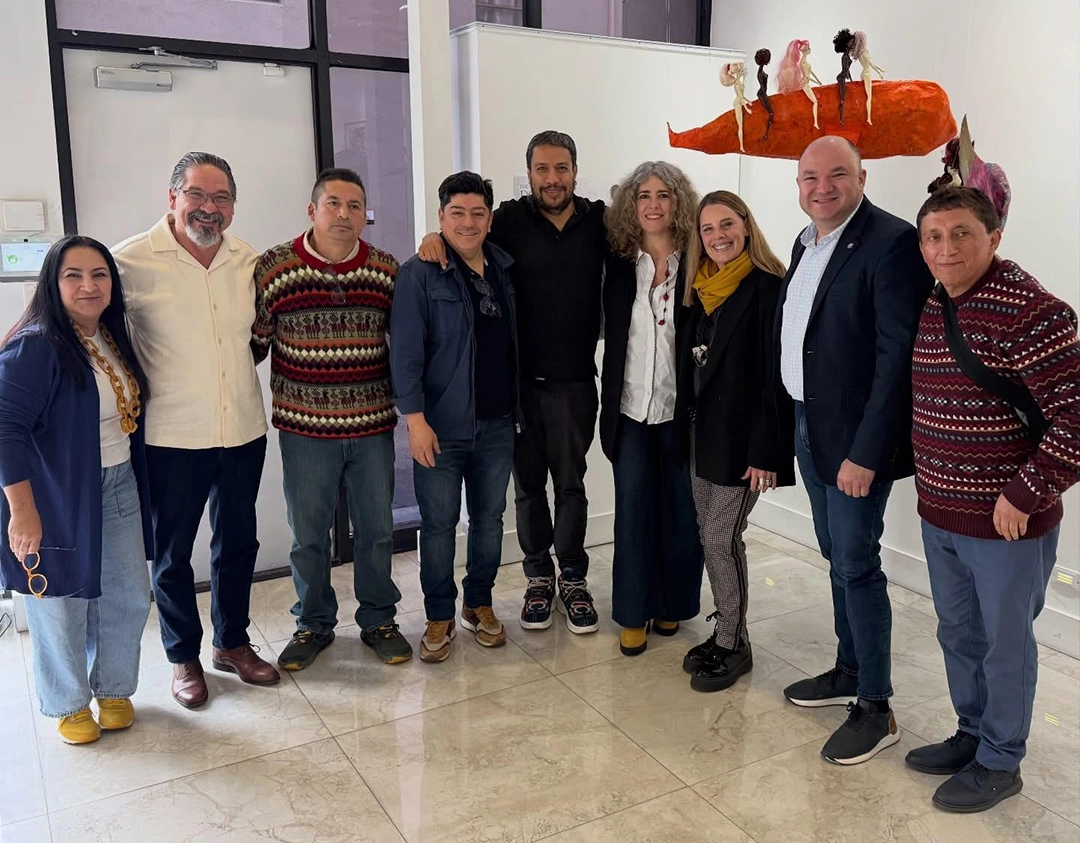
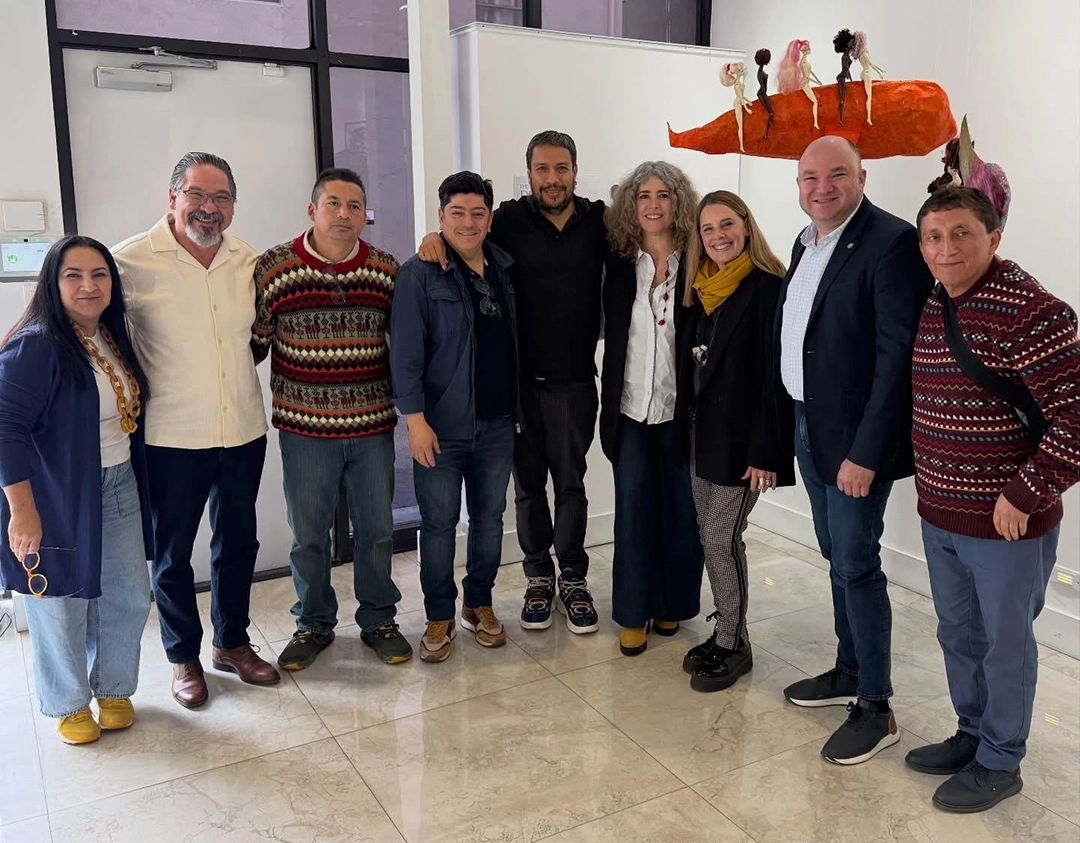
From left to right: Milena Martínez Pedrosa, artist and Vice Director of the Fine Arts Ceramic Center; Leonardo Rodríguez, Founder and Executive Director of the Museum of Contemporary Art of the Americas; Ángel Mendoza, Ecuadorian visual artist based in Miami; Martín Cano, Ecuadorian visual artist; Hernán Pacucuru; Ivonne Ferrer, visual artist and Vice Director of MoCAA; Carola Bravo, Venezuelan-American visual artist and Director of the hARTvest Project at Pinecrest Gardens; Jesús Alberto Fuenmayor, PhD in General Sciences and Director Professor of DIAF; and Hernán Illescas, Ecuadorian visual artist.
Address: 12063 SW 131st Ave
Miami, Fl 33186 United States
Website: Mocaamericas.org
Email: [email protected]
Phone:+1 786 624 0182
+1 305 213 4162
About MOCA:
After six successful years of exhibitions, events, traveling shows, publications, community education, and unique artists projects, the Kendall Art Center evaluates its future; in terms of thinking to ensure a relevant and innovative institution for the audiences of tomorrow. After months of intense work, research, and discussions, the Museum of Contemporary Art of the Americas emerges…