
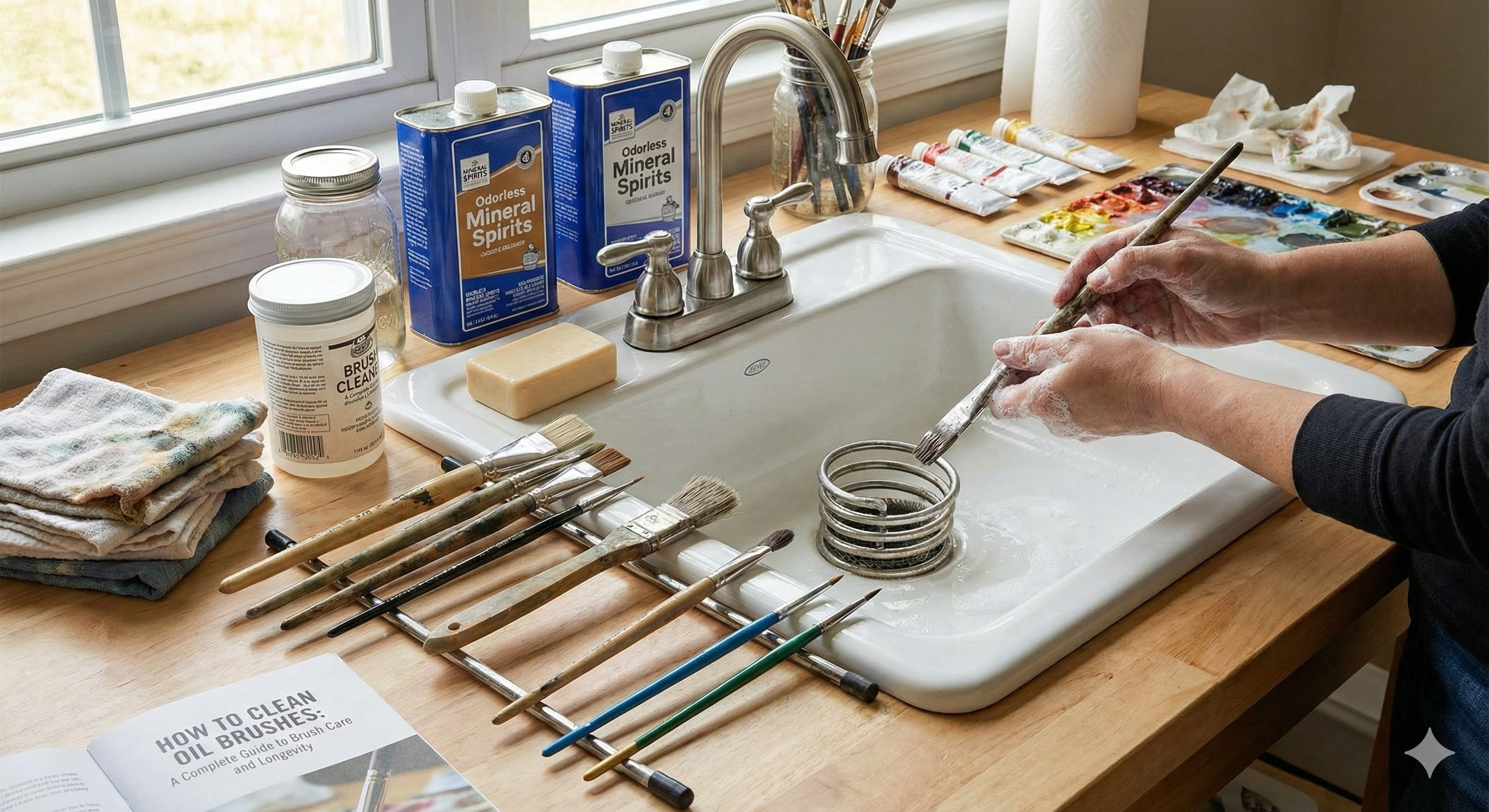
How to Clean Oil Brushes: A Complete Guide to Brush Care and Longevity
For oil painters, brushes are more than tools—they’re extensions of the hand, intimate companions in the creative process, and significant investments that demand proper care. A single high-quality sable brush can cost upwards of $50, and a well-maintained brush can last decades, while a neglected one deteriorates in months. Yet many artists, especially beginners, inadvertently destroy their brushes through improper cleaning techniques.
The viscous, slow-drying nature of oil paint makes brush cleaning more complex than with water-based mediums. Oil paint doesn’t simply rinse away with water; it requires solvents, patience, and proper technique. This comprehensive guide explores everything you need to know about cleaning oil brushes—from immediate post-session care to deep cleaning methods, solvent options, and long-term maintenance strategies that will keep your brushes performing beautifully for years.
Understanding Why Proper Cleaning Matters
Before diving into technique, it’s worth understanding what happens when oil brushes aren’t cleaned properly. Oil paint contains pigments suspended in linseed oil or other drying oils. These oils don’t evaporate like water—they oxidize and polymerize, gradually hardening into a solid film. This process, which creates the durable surface of an oil painting, also ruins brushes if paint is allowed to dry in the bristles.
Paint that hardens near the ferrule (the metal part that holds bristles to the handle) is particularly destructive. It causes bristles to splay, prevents the brush from forming a proper point or edge, and eventually loosens the glue holding bristles in place. Even worse, dried paint creates abrasive particles that damage remaining flexible bristles with every stroke.
Beyond preservation, clean brushes perform better. They hold more paint, create smoother strokes, maintain their shape, and allow for precise color mixing without contamination from previous sessions. The time invested in proper cleaning pays dividends in both brush longevity and painting quality.
Essential Supplies for Brush Cleaning
Before you begin painting, assemble your cleaning supplies. Having everything ready prevents the rushed, inadequate cleaning that happens when you’re eager to finish for the day.
Solvents: You’ll need at least one, preferably two or three different solvents:
- Odorless mineral spirits (OMS): The most popular choice, less toxic than turpentine, minimal odor, effective at dissolving oil paint
- Turpentine: Traditional choice, more aggressive than OMS, stronger odor, some artists prefer its cleaning power
- Citrus-based solvents: Natural alternatives like Citrus Solvent or Turpenoid Natural, pleasant smell, less toxic but more expensive
- Vegetable oil or baby oil: For final conditioning (optional but beneficial)
Containers:
- Two or three glass jars or metal containers for solvent (one for initial cleaning, one for rinsing)
- A brush cleaning tank with coil or screen at bottom (allows sediment to settle, keeping solvent cleaner)
Cleaning agents:
- Murphy’s Oil Soap or Masters Brush Cleaner: Specifically formulated to remove oil paint while conditioning bristles
- Mild bar soap or liquid dish soap as alternative
- Paper towels or clean rags in abundance
Optional but useful:
- Rubber gloves to protect hands from solvents
- Brush cleaning pad with textured surface
- Old plate or palette for working soap into brushes
The Three-Stage Cleaning Process
Professional brush cleaning follows a methodical three-stage approach: removal of excess paint, solvent cleaning, and soap washing. Each stage serves a specific purpose, and skipping stages compromises results.
Stage 1: Remove Excess Paint
Never put a paint-loaded brush directly into solvent. This wastes solvent and makes the process messier and less effective.
Wipe thoroughly: Using paper towels or rags, wipe as much paint as possible from the brush. Start at the ferrule and pull toward the bristle tips, rotating the brush to clean all sides. Continue wiping until very little paint transfers to the towel. For heavily loaded brushes, you might go through several towels.
Squeeze gently: With paper towel wrapped around bristles, gently squeeze from ferrule to tip, pressing out paint trapped deep in the bristles. Be careful not to pull or bend bristles harshly—gentle, firm pressure is what you want.
Work into palette: For stubborn paint, press and work the brush into your palette or a piece of cardboard, coaxing paint out from deep within the bristles. This is especially important for large brushes and those used with thick impasto paint.
This stage should remove 80-90% of the paint. The more thorough you are here, the less solvent you’ll need and the easier subsequent stages become.
Stage 2: Solvent Cleaning
Now you’re ready for solvents. If you’re using a two-jar system, the first jar is for initial heavy cleaning, the second for rinsing.
First solvent bath: Pour small amount of solvent into jar—just enough to cover bristles when brush is inserted. Dip brush into solvent and gently agitate, working bristles against the bottom of the jar or the coil if using a brush tank. The motion should be gentle swirling and pressing, not aggressive scrubbing which can damage bristles.
Wipe and repeat: Remove brush, wipe on paper towel. You’ll see paint dissolving into the towel. Return to solvent, agitate again, wipe again. Repeat this cycle 3-5 times until very little paint comes off on the towel.
Second solvent rinse: Move to your clean solvent jar and repeat the process. This rinses away paint dissolved in the first bath, leaving bristles cleaner. If you’re only using one jar, pour out the paint-contaminated solvent and add fresh solvent for this rinse stage.
Check the ferrule: Pay special attention to the area where bristles meet ferrule. Paint trapped here is the most destructive. Use your thumbnail or a rag to gently work along the ferrule edge, ensuring no paint remains.
Shape and set aside: After solvent cleaning, gently reshape the brush with your fingers, coaxing bristles back into their proper form. Set aside for soap washing. Don’t leave brushes standing in solvent—this bends bristles and can loosen ferrules.
Stage 3: Soap Washing
Solvent removes most paint, but soap cleans completely while conditioning bristles and removing solvent residue.
Wet the brush: Run brush under lukewarm water. Water should be comfortably warm but not hot—extreme temperatures can loosen ferrule glue.
Load with soap: If using bar soap like Masters Brush Cleaner, work the wet brush in circular motions on the soap, building up lather. If using liquid soap, put a small amount in your palm or on a plate and work the brush into it. You want substantial lather.
Work thoroughly: Using gentle circular motions, work the soapy brush against your palm, a brush cleaning pad, or the soap itself. You’re trying to reach paint and solvent trapped deep in the bristles near the ferrule. As you work, you may see color bleeding into the lather—this is dissolved paint being extracted.
Rinse and repeat: Rinse the brush under running water, squeezing gently from ferrule to tip. Check if water runs clear and if any color remains. If you see color, repeat the soaping process. For brushes that were heavily used, you might need to soap and rinse 3-4 times before water runs completely clear.
Final conditioning: For the final soap application, work up lather but don’t rinse it out completely. Instead, reshape the brush with the soap still in the bristles—this acts as a conditioning agent that keeps bristles soft and helps maintain shape as the brush dries.
Shape and dry: Carefully reshape the brush to its proper form—point for rounds, flat edge for flats, fan shape for fans. Lay flat to dry on a clean towel or hang bristles-down in a brush holder. Never dry brushes standing upright in a jar—water and remaining paint will seep into the ferrule, loosening it and causing the wooden handle to crack.
Alternative and Supplementary Cleaning Methods
Beyond the standard three-stage process, several alternative approaches and supplementary techniques can enhance brush care.
The Oil-Solvent-Soap Method
Some artists add an initial oil stage before solvents. After wiping excess paint, they dip brushes in vegetable oil or baby oil, working it into bristles. Oil dissolves oil-based paint, and this preliminary oil cleaning removes more paint before you even reach solvents, preserving solvent life and reducing exposure to harsher chemicals.
The sequence becomes: wipe excess paint → work in vegetable oil → wipe oil and dissolved paint → solvent cleaning → soap washing. This four-stage process is gentler on both brushes and your health.
The No-Solvent Method
For artists concerned about solvent toxicity or working in spaces with poor ventilation, solvent-free cleaning is possible, though more labor-intensive.
Process:
- Wipe excess paint thoroughly
- Work vegetable oil into bristles, dissolving remaining paint
- Wipe away oil and dissolved paint (repeat several times)
- Wash with dish soap (may require multiple washings to remove all oil)
- Rinse until water runs clear
This method takes longer and uses more soap and towels, but eliminates solvent exposure entirely. It works best for brushes that weren’t heavily loaded with paint.
Deep Cleaning for Neglected Brushes
Found some old brushes with dried, hardened paint? Don’t give up—many can be rescued.
For moderately neglected brushes:
- Soak in Murphy’s Oil Soap overnight (pour soap in jar, submerge bristles only, not ferrule or handle)
- Next day, work bristles gently, massaging soap deeper into paint
- Rinse and assess—if paint softened, continue working soap into bristles
- Repeat soaking if necessary
- Once paint loosens, proceed with normal solvent and soap cleaning
For severely hardened brushes:
- Try soaking in Master’s Brush Cleaner (pink bar form) overnight—it’s more aggressive than Murphy’s
- Alternatively, use paint stripper designed for brushes (follow product instructions carefully—these are harsh chemicals)
- As paint softens, use an old comb to gently work through bristles, removing loosened paint
- Expect to lose some bristles—severely neglected brushes may be partially salvageable at best
- After paint removal, condition extensively with oil and soap
Reality check: Brushes with paint dried solid into the ferrule rarely return to full functionality. Prevention through proper initial cleaning is infinitely better than attempted rescue.
Conditioning Treatments
Beyond regular cleaning, occasional conditioning treatments extend brush life.
Oil conditioning: Every few weeks, after cleaning, work a small amount of hair conditioner (yes, the kind for human hair) or specialized brush conditioning oil into clean, damp bristles. Let sit for 5-10 minutes, then rinse. This keeps natural bristles supple, preventing brittleness.
Reshaping treatment: For brushes losing their shape, apply Masters Brush Cleaner and shape carefully, then let dry with soap in bristles. The dried soap acts like a setting gel. Before next use, rinse out the dried soap.
Solvent Safety and Environmental Considerations
Solvents are effective but require responsible handling.
Health Precautions
Ventilation: Always clean brushes in well-ventilated spaces. Open windows, use fans, or work outdoors when possible. Solvent fumes—even from “odorless” varieties—can cause headaches, dizziness, and long-term health effects with chronic exposure.
Skin protection: Wear gloves if you have sensitive skin or clean multiple brushes regularly. Prolonged skin contact with solvents can cause dryness, irritation, and potentially systemic absorption of chemicals.
Alternatives for sensitive individuals: If you have asthma, chemical sensitivities, or are pregnant, strongly consider solvent-free cleaning methods or at minimum use citrus-based solvents with excellent ventilation.
Environmental Responsibility
Solvent disposal: Never pour used solvent down drains. It’s illegal in most jurisdictions and environmentally destructive. Instead:
- Let solvent sit in sealed jar; paint pigments will settle to bottom
- Pour off clear solvent on top into another jar for reuse
- Once you accumulate significant paint sludge at bottom, take to hazardous waste facility
- Most communities have periodic hazardous waste collection days
Solvent conservation: You can reuse solvent many times:
- Keep a three-jar rotation: jar 1 (dirtiest) for initial cleaning, jar 2 (medium) for rinse, jar 3 (cleanest) for final rinse
- As jar 3 gets dirty, it becomes jar 2; jar 2 becomes jar 1; jar 1 gets cleaned out and refilled with fresh solvent to become new jar 3
- This system dramatically extends solvent life
Eco-friendly options: Safflower or walnut oil for the initial oil-cleaning stage are completely non-toxic and biodegradable. Citrus solvents, while more expensive, are less environmentally harmful than petroleum-based alternatives.
Brush-Specific Cleaning Considerations
Different brush types and sizes require slightly different approaches.
Natural vs. Synthetic Bristles
Natural hair (sable, hog bristle, mongoose): More delicate, requires gentler handling. Never use hot water or harsh detergents. Condition more frequently as natural hair can become brittle. These brushes benefit enormously from the oil-solvent-soap method.
Synthetic: More durable, can withstand slightly more aggressive cleaning. Less prone to damage from occasional hot water or stronger soaps. However, they still benefit from gentle treatment—synthetic bristles can fray or lose their engineered spring with abuse.
Size Matters
Large brushes: Hold more paint, especially near the ferrule. Require extra attention to wiping before solvent stage. May need to work soap into bristles multiple times to reach paint trapped deep inside.
Small detail brushes: More delicate, easier to damage with rough handling. The fine point is precious—protect it by never pressing brush flat during cleaning. Clean these brushes more gently, using lighter pressure when working soap.
Specialty Brushes
Fan brushes: Spread bristles flat when cleaning to reach paint between them. Never squeeze fan brushes into a point—this ruins their characteristic shape.
Riggers and liners: These long, thin brushes hold paint throughout their length. Pull soap through the entire bristle length repeatedly to clean thoroughly.
Filberts and brights: Pay attention to the shaped edges that define these brushes. Reshape carefully during drying to maintain the precise edge that makes them useful.
Daily Habits for Brush Longevity
Beyond cleaning technique, daily habits dramatically impact brush lifespan.
During Painting
Don’t let paint dry: If stepping away from painting for more than 30 minutes, suspend brushes in oil (not solvent—it evaporates). Some artists keep a small jar of safflower oil for this purpose.
Rotate brushes: Don’t use the same brush continuously for hours. Alternate between brushes, giving each periods to rest. This prevents paint from working too deeply into bristles.
Don’t scrub: Oil painting shouldn’t require scrubbing brushes against canvas. If you find yourself scrubbing, you’re damaging both canvas and brushes. Use appropriate brush sizes and proper paint consistency instead.
Keep ferrule paint-free: Wipe brushes frequently during painting, preventing paint from migrating up into the ferrule. Paint in the ferrule is the kiss of death for brushes.
Storage
Never store dirty: This seems obvious, but fatigue at session’s end tempts shortcuts. Always clean before storing. Paint hardens quickly overnight—what seems like minor residue becomes destructive dried paint by morning.
Store properly: Clean, dry brushes should be stored:
- Flat in drawers or boxes
- Bristles-up in jars (only when completely dry)
- In brush rolls or cases that protect bristles from bending
- Never bristles-down in containers, which bends them
- Never in airtight containers when damp, which encourages mildew
Protect from pests: Moths love natural bristle brushes. Store with cedar blocks or mothballs (in separate compartment—don’t let mothballs touch brushes).
Common Mistakes and How to Avoid Them
Learning what not to do is as important as proper technique.
Mistake: Leaving brushes in solvent containers Effect: Bends bristles permanently, can loosen ferrules, dissolves handle finish Solution: Never let brushes sit in solvent more than a few minutes during active cleaning
Mistake: Using hot water Effect: Loosens ferrule glue, causes wooden handles to crack and swell Solution: Use lukewarm water only
Mistake: Harsh scrubbing Effect: Breaks bristles, causes shedding, damages bristle tips Solution: Use firm but gentle pressure—work soap through bristles, don’t attack them
Mistake: Insufficient rinsing Effect: Soap residue stiffens bristles, causes color contamination in next session Solution: Rinse until water runs completely clear and no soap bubbles remain
Mistake: Standing brushes upright while wet Effect: Water and paint run into ferrule, loosening glue and causing handle damage Solution: Always dry flat or hanging with bristles pointing downward
Mistake: Skipping the soap stage Effect: Solvent residue remains, paint isn’t fully removed, bristles aren’t conditioned Solution: Soap washing is non-negotiable—it’s the finishing touch that ensures truly clean brushes
Mistake: Over-cleaning Effect: Excessive cleaning strips natural oils from bristles, causing brittleness Solution: Clean thoroughly but not obsessively—if water runs clear and no color bleeds, you’re done
When to Replace vs. Restore
Even with perfect care, brushes eventually wear out. Knowing when to retire versus restore is important.
Replace when:
- Bristles are heavily broken or frayed with split ends
- Ferrule is loose and re-gluing hasn’t worked
- Brush has lost its shape permanently despite conditioning attempts
- Significant bristle loss means the brush no longer holds paint effectively
- Handle is cracked or broken (though you might re-handle if bristles are still good)
Attempt restoration when:
- Brush has some dried paint but ferrule is still solid
- Shape is slightly lost but bristles are intact
- Bristles are stiff but not broken
- It’s a high-quality brush worth the effort
Quality brushes deserve restoration attempts. A $60 Kolinsky sable warrants hours of restoration work that a $3 synthetic doesn’t.
Conclusion: The Ritual of Care
Cleaning oil brushes is more than maintenance—it’s ritual, meditation, a closing ceremony for each painting session. The repetitive motions, the transformation from paint-clogged to pristine, the attention required—these create a mindful transition between creative intensity and everyday life.
Artists who embrace brush cleaning as practice rather than chore develop deeper relationships with their tools. They notice subtle changes in bristle behavior, understand each brush’s personality, and extend the working life of expensive tools by years or even decades.
The techniques outlined here—from basic three-stage cleaning to solvent-free alternatives, from daily habits to deep restoration—provide a complete framework for brush care. But remember: the best cleaning method is the one you’ll actually do consistently. A simple but religiously followed routine beats an elaborate technique used sporadically.
Your brushes enable your vision to become visible. They deserve—and reward—your attention, your patience, and your care. Clean them well, and they’ll serve you faithfully for years, becoming trusted partners in the endless, beautiful challenge of making art.