Home Blog Page 8

Beyond the Visible:A History of Abstract Painting 2026

Hilma af Klint: Pioneer of Abstract Painting

Beyond the Visible:
A History of
Abstract Painting

From Hilma af Klint’s spirit-guided canvases to Pollock’s dripped galaxies, abstract painting is the most radical act in the history of Western art — a sustained refusal to depict, and a wager that pure form can carry the full weight of human experience.

Every painting makes a choice about the world. The representational painter chooses to mirror it; the abstract painter chooses to abandon that mirror entirely, or to shatter it into something unrecognizable and perhaps more true. This second choice — which is really a bet, a philosophical wager on the capacity of color, line, and form to carry meaning without the crutch of resemblance — is the defining act of modern art. It altered, irreversibly, what a painting is permitted to be.

Abstract art did not arrive fully formed. It was the result of a century of accumulated pressure: the camera liberating painting from its documentary function; non-Western visual cultures destabilizing European conventions; the explosion of modern physics, psychology, and theosophy reorganizing humanity’s sense of what was real and what was hidden. By the early twentieth century, the conditions were in place for a rupture. The only question was who would make it — and when.

I. The Hidden Founder: Hilma af Klint

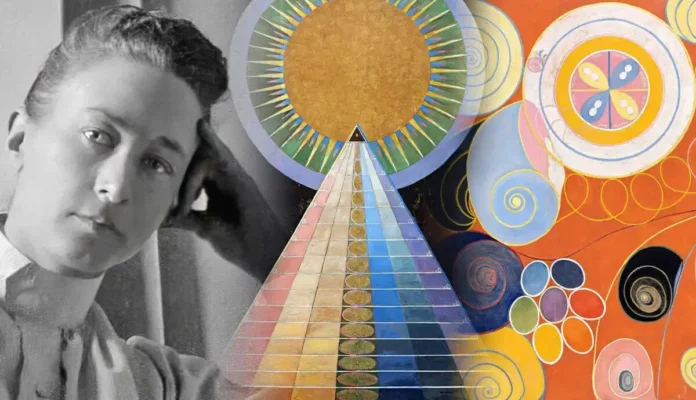
The official history of abstraction has been systematically wrong. For decades it named Wassily Kandinsky as the originator, citing his first non-objective compositions from around 1911. af Klint What Kandinsky did not know is that a Swedish painter by the name of Hilma af Klint had created her first abstract painting in her Stockholm studio in 1906, five years before him. She did not know it either. They worked in complete mutual ignorance, like two trains on the same tracks — Klint arriving before Kandinsky.

Born in 1862, af Klint was a trained portraitist and landscape painter who had become drawn, alongside four other women artists she called “The Five,” to theosophy and the possibility of communicating with forces beyond ordinary perception. Her Paintings for the Temple, which she began in 1906, were painted directly through her, without preliminary drawings and with great force — she had no idea what the paintings were supposed to depict, yet she worked swiftly and surely, without changing a single brushstroke. The resulting works — spiraling, biomorphic, geometrically ordered — are today recognized as the earliest sustained body of abstract painting in Western art history.

“Hilma af Klint worked with non-figurative forms years before her male peers Wassily Kandinsky, Piet Mondrian and Kazimir Malevich were credited with inventing abstract art.”

— Smithsonian Magazine

Believing her art carried spiritual messages that would benefit humankind, af Klint stipulated in her will that her paintings remain out of sight for twenty years following her death — convinced her contemporaries were not yet equipped to understand them. When the boxes were finally opened at the end of the 1960s and her work slowly entered public consciousness through the 1980s, it forced a complete rewriting of the founding myth. Hilma af Klint created abstract paintings as early as 1906, predating other artists’ first forays into abstraction; her paintings feature nonrepresentational geometric and organic forms. She is now the hidden mother of the movement — hidden by patriarchal art history, and by her own prophetic doubt that the world was ready.

II. Kandinsky and the Grammar of Feeling

Kandinsky Wassily Kandinsky (1866–1944) arrived at abstraction through a different portal: synesthesia and music. Trained in law before dedicating himself to painting, Kandinsky developed the conviction that color and form could produce emotional and even auditory sensations independent of any depicted subject. His 1911 treatise Concerning the Spiritual in Art is the founding theoretical document of abstraction — a systematic argument that the purely visual could speak the language of the soul.

Where af Klint’s abstraction was channeled and spiritual in an almost literal sense, Kandinsky’s was philosophical and worked toward by intellectual effort. His compositions of the early 1910s — cascading color masses, angular forms in tension, loosely related to landscape and horsemen — gave way, after his years at the Bauhaus, to harder-edged geometric work. The New York Times described his practice as exhibiting a rigorous focus on logic, utility and simplicity, but this misses the core of it: Kandinsky was after emotional resonance, and he believed that geometry, used rightly, could carry it.

III. The Order of Pure Form: Suprematism, Constructivism, De Stijl

While Kandinsky worked from feeling outward toward form, another lineage of abstractionists worked from form inward toward philosophy. Kazimir Malevich’s Suprematism, inaugurated by the notorious Black Square (c. 1915), proposed that geometric abstraction represented a higher order of reality — the supremacy of pure feeling over the contingencies of the visible world. A black rectangle on a white ground was not reduction but elevation: the elimination of everything unnecessary until only the essential remained.

Constructivism Constructivism was an early twentieth-century art movement founded in 1915 by Vladimir Tatlin and Alexander Rodchenko. Abstract and austere, constructivist art aimed to reflect modern industrial society and urban space, rejecting decorative stylization in favour of the industrial assemblage of materials. Where Malevich sought the spiritual, the Constructivists sought the social: art as instrument of the revolutionary new order, geometric abstraction as the visual language of a collective modernity. Their grid-structures, photomontages, and agitational graphics extended abstract principles into every domain of material culture.

De Stijl In the Netherlands, Piet Mondrian and Theo van Doesburg arrived at a different but related purity. De Stijl was an innovative visual language marked by abstraction and universality, reducing the visual to the essential using only vertical and horizontal lines and primary colors. Mondrian called his system Neoplasticism. He saw the grid as an embodiment of universal forces: vertical lines carrying the energy of the sun’s rays, horizontal lines relating to the earth’s movement. By simplifying his visual vocabulary to straight lines, primary colors, and rectangular shapes, Mondrian sought a streamlined “language” of art — four elements he thought were part of a universal language that would promote universal harmony.

IV. Marlow Moss: The Double Line and the Erased Name

Moss Any honest account of abstract painting’s development must contend with the systematic erasure of its women. Marlow Moss (1889–1958) is perhaps the most egregious example. Moss was the first British Constructivist artist, working in both painting and sculpture, and she had a documented, verifiable influence on the very master whose work most defines the Neoplasticist canon.

Moss moved to Paris in the late 1920s to apprentice herself to Fernand Léger, although it was her encounter with Piet Mondrian, around 1928, that would define her approach to abstraction for the rest of her career. What followed was a relationship of genuine intellectual exchange — and one in which the established account has been quietly, persistently unjust to Moss. Her thinking was that the then customary single-line grid of Neo-Plasticism split a composition up, rendered it static, and prevented it from visually expanding outwards. Mondrian was impressed enough that in 1931 he nominated Moss for founding membership of the new Association Abstraction-Création, and began to experiment with the double-line himself.

“Moss devised the double line as an innovation to the Neo-Plasticist grid. Mondrian would later use the parallel lines himself — without referring to Moss’s authorship.”

— Von Bartha Gallery

The war was devastating for Moss’s legacy. At the beginning of World War II, Moss fled France and went to Cornwall in the UK, but a 1944 bombardment destroyed all of her works stored in Gauciel — the output of a highly creative two decades in Paris, narrowly escaped on a boat to England. What survives is extraordinary: tight, luminous compositions of double lines and white grounds that vibrate with contained energy. Her work is held in the collections of MoMA, the Tate, and the Centre Pompidou — and her name is still largely unknown.

V. The American Rupture: Abstract Expressionism

The next great transformation came from an unexpected quarter. Abstract Expressionism Abstract expressionism in the United States emerged as a distinct art movement in the aftermath of World War II and gained mainstream acceptance in the 1950s. It was the first specifically American movement to achieve international influence and put New York City at the center of the Western art world, a role formerly filled by Paris.

All the artists of the movement were committed to art as expressions of the self, born out of profound emotion and universal themes, and most were shaped by the legacy of Surrealism — a movement they translated into a new style fitted to the post-war mood of anxiety and trauma. The Surrealist technique of automatism — allowing the hand to move without conscious control, mining the unconscious — became central to their method. Pollock dripped. De Kooning slashed. Kline made gestures that looked like architecture being torn down.

Pollock Jackson Pollock’s drip paintings of the late 1940s represent the most extreme gesture of liberation in Western art history. In 1947, Pollock developed a radical new technique, pouring and dripping thinned paint onto raw canvas laid on the ground — the paintings were entirely nonobjective; in their subject matter, scale, and technique, the works were shocking to many viewers. What Pollock discovered was that the act of painting — its physical drama, the evidence of the body moving through space and time — could be the subject of the work. The canvas became, as Harold Rosenberg memorably framed it, an arena of action rather than a surface for representation.

Rothko Mark Rothko arrived at a very different but equally radical conclusion. Where Pollock’s canvases are electric with event, Rothko’s large-scale color fields are conspicuously still — hovering rectangles of luminous color that seem to absorb light rather than reflect it. For Rothko, his glowing soft-edged rectangles of luminescent color were meant to provoke a quasi-religious experience in viewers, even eliciting tears. “I paint big to be intimate,” he said: the notion is toward the personal rather than the grandiose. His Orange, Red, Yellow (1961) is one of the most powerful emotional instruments ever constructed in paint.

VI. The Branching Tree: Abstract Painting’s Descendants

Abstract painting did not reach an endpoint. It branched, and its branches continue to grow. The following movements all emerged from, or are in direct dialogue with, the abstract tradition:

1910s–30s

Suprematism

Malevich’s geometric purity; the supremacy of pure feeling above representation. The Black Square as both painting and manifesto.

1915–30s

Constructivism

Soviet-born movement fusing abstraction with industrial production, politics, and social transformation. Tatlin, Rodchenko, El Lissitzky.

1917–31

De Stijl / Neoplasticism

Mondrian’s grid of primary colors and right angles as a universal visual language. A utopian geometry seeking cosmic harmony.

1919–33

Bauhaus

The great German school synthesizing abstract art with craft and design. Where Constructivism met everyday life. Klee, Albers, Kandinsky as professors.

1940s–50s

Abstract Expressionism

The New York School’s explosion of gesture, scale, and unconscious mark-making. Pollock, de Kooning, Rothko, Krasner, Kline, Mitchell.

1950s–60s

Color Field Painting

Large flat planes of pure color as meditative and emotional fields. Rothko, Newman, Frankenthaler, Louis, Noland.

1950s–60s

Action Painting / Tachisme

The physical act as subject; Europe’s parallel to American gesture painting. Paint applied spontaneously, impulsively, as existential testimony.

1950s–60s

Lyrical Abstraction

Emotive, fluid painting balancing spontaneity with compositional control. Frankenthaler’s soak-stain technique; Sam Francis; Joan Mitchell.

1960s

Minimalism

The reduction of abstraction to its irreducible elements: Frank Stella’s shaped canvases, Ad Reinhardt’s near-black monochromes, Donald Judd’s industrial forms.

1960s

Hard-Edge Painting

Crisp, flat, geometric fields with sharp transitions. Ellsworth Kelly, Al Held, Kenneth Noland. The human hand made deliberately invisible.

1960s

Op Art

Optical illusions and perceptual instability as artistic subject. Bridget Riley, Victor Vasarely. The viewer’s eye becomes the medium.

1960s–70s

Conceptual Abstraction

When the idea supersedes the object entirely. Art as proposition. The painting as documentation of a thought rather than its resolution.

1970s–80s

Neo-Expressionism

A return of raw gesture, figuration, and emotional urgency in reaction to Minimalism. Basquiat, Kiefer, Baselitz, Schnabel.

1980s–now

Post-Painterly Abstraction

Cool, detached, process-based painting moving beyond expressionism. Richter’s squeegee paintings; Julie Mehretu’s layered cartographies of event.

Contemporary Abstraction

No single center remains. Digital tools, global perspectives, feminist and postcolonial revisionism have opened abstraction to an unprecedented plurality of voices and methods.

Digital & Generative Abstraction

Algorithms, AI, and code as co-authors of abstract form. The question of authorship and intention reopened for a new century.

VII. What Abstract Painting Asks of Us

Abstract painting is frequently accused of hermeticism — of being art for initiates, art that excludes. The accusation is almost always made by those who have not stood long enough in front of a Rothko or a Frankenthaler or a Mondrian to let the work do its work. Abstract painting does not exclude; it demands. It asks the viewer to abandon the habit of identification — the comfortable procedure of recognizing chair, face, landscape — and to be present, instead, to sensation, to color relationship, to spatial tension, to the emotional pressure a composition can exert before the naming-mind has had time to intercede.

This is, in fact, a more intimate demand than representation makes. Representation allows the viewer to stand at a safe distance from the image, processing it through the familiar machinery of recognition. Abstraction offers no such distance. The viewer stands before pure address.

Abstract art mainly focuses on the content of an artwork rather than its subject — through forms and colors it gives out different degrees of a particular emotion or idea, experienced by feelings and mind, not by recognition of images.

— On the definition of abstract painting

The century-long project of abstract painting has produced some of the most powerful objects Western culture has made. It has also produced a great deal of noise — work that mistakes absence of skill for absence of ego, or confuses visual poverty with spiritual depth. But the tradition at its best, from af Klint’s spiraling cosmologies to Rothko’s luminous fields to Julie Mehretu’s vast palimpsests of history and event, constitutes an argument that painting — freed from the obligation to describe the world — can, paradoxically, show us something truer about experience than any description could achieve.

The abstract painting does not show us what the world looks like. It shows us what it feels like to be in it — which is, in the end, the older and deeper task of art.

Source:

Hilma af Klint

  • Tate Etc. – “The First Abstract Artist? (And It’s Not Kandinsky)” → tate.org.uk
  • Smithsonian Magazine – “A Swirl of Intrigue Surrounds Hilma af Klint’s Newfound Status as an Icon of Abstract Art” → smithsonianmag.com
  • Artsy – “How the Swedish Mystic Hilma af Klint Invented Abstract Art” → artsy.net
  • DailyArt Magazine – “Hilma af Klint: Pioneer of Abstract Art” → dailyartmagazine.com
  • The Collector – “Hilma af Klint: 7 Facts About the Pioneer of Abstract Art” → thecollector.com

Wassily Kandinsky / Abstracción temprana

  • Contemporary Art Issue – “Abstract Art Explained: Ultimate FAQ on Abstraction” → contemporaryartissue.com
  • Artyfactory – “Modern Art Timeline Part 1” → artyfactory.com

Constructivismo / De Stijl / Suprematismo

  • Wikipedia – “Constructivism (art)” → en.wikipedia.org/wiki/Constructivism_(art)
  • Wikipedia – “Abstract Expressionism” → en.wikipedia.org/wiki/Abstract_expressionism
  • Study.com – “Abstract Art Styles: Definition, List & Examples” → study.com
  • Artlex – “19 Types of Abstract Art: Characteristics and Artists” → artlex.com

Abstract Expressionism

  • The Metropolitan Museum of Art – “Abstract Expressionism” (essay) → metmuseum.org
  • Britannica – “Abstract Expressionism” → britannica.com
  • Tate – “Abstract Expressionism” (art term) → tate.org.uk
  • The Art Story – “Abstract Expressionism Movement Overview” → theartstory.org

Marlow Moss

  • Art UK – “Queering Constructivism: The Legacy of Marlow Moss” → artuk.org
  • Ideelart – “A Long-Overdue Artist Spotlight on Marlow Moss” → ideelart.com
  • Wikipedia – “Marlow Moss” → en.wikipedia.org/wiki/Marlow_Moss
  • Tate – “Marlow Moss 1889–1958” → tate.org.uk
  • Von Bartha Gallery – “Marlow Moss, Who?” → vonbartha.com
  • Sotheby’s – “Marlow Moss: Artist Biography” → sothebys.com
  • The Mayor Gallery – “Marlow Moss” → mayorgallery.com
  • AWARE Women Artists – “Marlow Moss” → awarewomenartists.com
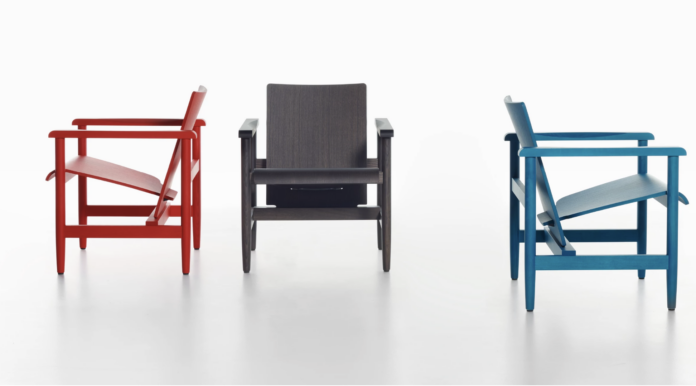
Konstantin Grcic

Sol & Sombra / Furniture / Plank 2025

Konstantin Grcic

The Weight of
Necessary Things

Simplicity as structural principle in the work of a designer who refuses ornament without rejecting meaning

Art Criticism·Essay·Industrial Design

There is a distinction — rarely observed, almost always collapsed — between objects that have been reduced and objects that were never excessive to begin with. The history of twentieth-century design is littered with the wreckage of the former: furniture from which ornament has been surgically removed, leaving behind the ghost of an idea that was never fully committed to its own logic. Konstantin Grcic, born in Munich in 1965 and working out of Berlin for more than three decades, belongs emphatically to a rarer tradition. His objects do not arrive at simplicity by subtraction. They are constituted by it.

This is the essential distinction that separates Grcic from the long lineage of designers who wear minimalism as a stylistic badge. Minimalism, as a formal category, is available to anyone willing to strip a surface. Simplicity — the kind that Grcic insists upon, and that pervades every object his studio has produced — is something fundamentally different: it is a structural and philosophical principle, a commitment to the idea that every material, every line, every joint must justify its own existence.

“The intelligent and economical use of material forms an important part of my understanding of good design.”

— Konstantin Grcic

Grcic has articulated this distinction himself, with some impatience for the minimalist label. Minimalism, he has argued, is often misunderstood as something formalistic — something rectangular, something mute. The real idea of minimalism, he concedes, can be more complicated. But even so, he prefers the word simplicity, precisely because it carries no formal prescription. A well-worn old tool, he notes, is simple. No one would call it minimalist. This is not a semantic quibble. It is a philosophy of use, an ethic of making.

The Education of the Hand and the Mind

To understand the work, one must understand the formation. Grcic’s trajectory is unusual for a designer of his theoretical sophistication: he began, in the mid-1980s, as a cabinetmaker. His training at the John Makepeace School in Dorset, England — an institution devoted to craftsmanship in the Arts and Crafts tradition — gave him something that no amount of conceptual education could supply: an intimate knowledge of how material behaves under the hand, of the resistance of wood grain, of the intelligence embedded in a joint. He subsequently studied at the Royal College of Art in London, where he encountered the work of Jasper Morrison and spent a brief but formative period in Morrison’s studio.

This dual formation — the craftsman’s hand and the conceptualist’s mind — is not incidental to Grcic’s work. It is its very armature. Where a designer trained only in theory might resolve a structural problem with a drawing, Grcic has consistently reached for physical models: cardboard, aluminium welding rods, litho plates salvaged from a printing company. The famous twenty-seven development models for Chair_ONE, donated in their entirety to Munich’s Die Neue Sammlung in 2013, constitute perhaps the most eloquent argument for this method. They are not sketches. They are thinking made material — a record of logic discovering itself through iterative making.

“What began as a simple sketch, a series of cardboard models, prototypes, is now a real chair. The more we worked on the models, the more we learnt to understand the structural logic behind what we were doing.”

— Konstantin Grcic, on Chair_ONE

Chair_ONE: The Geometry of Necessity

No work in Grcic’s catalogue demonstrates his principle more rigorously than Chair_ONE (2004), which the Victoria and Albert Museum has described as introducing “a new paradigm into the design vocabulary of contemporary furniture — that of the crystal or fractal.” The chair, produced by Magis in die-cast aluminium after four years of intensive development, is often called skeletal. It is more precise to call it structural argument. Every element of that tessellated seat — its web of flat bars, more tightly knit where load demands it, more open where it does not — is positioned by engineering logic rather than aesthetic preference.

The Art Institute of Chicago, which held a retrospective of Grcic’s work in 2009, observed that the chair recalls the wire rod furniture of Harry Bertoia and Charles and Ray Eames, but departs from it decisively: where wire rod was an act of material reduction in the service of visual lightness, die-cast aluminium demanded a different kind of intelligence. The mould logic of liquid metal injection — the requirement that form be demoulded, that geometry accommodate process — shaped the visual language from within. Form follows fabrication, one might say, but only in the sense that fabrication is itself a form of thinking.

It is not comfortable-looking — this is intentional. Chair_ONE does not offer the reassurance of upholstery or curve. It confronts the body with geometry. And yet it is, by all accounts, comfortable to sit in. This paradox is central to Grcic’s project: his objects propose a different relationship between appearance and experience, one in which the eye is not coddled in advance of the body’s encounter.

The Mayday Lamp: Simplicity as Democratic Tool

If Chair_ONE represents Grcic’s most structurally radical work, the Mayday Lamp (1999) — produced by Flos and now part of the permanent collection of the Museum of Modern Art in New York — reveals the other dimension of his simplicity: its relationship to use and accessibility. The lamp is conceived as a tool rather than a luminaire: portable, hook-equipped, designed for the kind of provisional, improvisational illumination one associates with a mechanic’s workshop or a camping excursion. Its conical polypropylene form owes nothing to any lamp that preceded it. It owes everything to the logic of what a lamp, understood as a functional object rather than a decorative one, might actually be.

Achille Castiglioni, who by any measure understood the functional object better than almost any designer of the twentieth century, reportedly called Grcic his spiritual heir. The compliment is not merely biographical. Castiglioni’s great contribution was the recognition that ordinary, anonymous objects — tools, industrial components, everyday things — contained a design intelligence that could be redeployed in new contexts without irony and without condescension. Grcic inherits this sensibility entirely. The Mayday Lamp is not a lamp that looks like a tool; it is a lamp that thinks like one.

Against the Decorative Impulse

What distinguishes Grcic’s simplicity from mere austerity — from the cold, repudiating blankness that sometimes passes for rigor — is its intellectual texture. The New York Times has noted his “rigorous focus on logic, utility and simplicity,” but this formula risks understating the speculative dimension of his practice. Grcic has spoken of design as “the adventure of not knowing exactly what the creative process will produce.” He rejects preconceived ideas about functionality, comfort, and beauty not because he is indifferent to these categories, but because he believes that premature commitment to them forecloses discovery.

This is the epistemological core of his method: design as inquiry rather than confirmation. The object that results is not the illustration of a prior concept; it is the record of a process of thought that needed material form in order to complete itself. The Miura Stool (2005), with its fluid automotive-inspired surfaces — so different from the angular severity of Chair_ONE — demonstrates that this method is not attached to any single formal vocabulary. Simplicity, for Grcic, does not look like anything in particular. It is a quality of relationship between the object and the forces — structural, material, gravitational, human — that constitute it.

“I’m sometimes called a minimalist, and minimalism is often misunderstood as something quite formalistic. I prefer the term ‘simplicity.’ Something ‘simple’ could be an old tool. People wouldn’t call that minimalist.”

— Konstantin Grcic, in conversation with Disegno

The Object as Proposition

Grcic has said that for him, an object is never only an object. A design poses questions: about how we live, how we inhabit space, how culture evolves. This is not a claim to art — Grcic is too precise a thinker to blur that boundary carelessly — but it is a claim to seriousness. His objects generate what might be called intellectual tension: they do not resolve immediately into comfort or pleasure, but demand an active engagement from the user, a willingness to renegotiate one’s assumptions about what a chair, a lamp, or a stool is supposed to feel like.

This is, perhaps, what it means to work in the tradition of Castiglioni rather than in the tradition of, say, Philippe Starck. The latter offers objects that seduce on first encounter, that perform their own wit and charm. Grcic’s objects withhold. They reveal themselves through use, through the accumulation of encounters, through the slow discovery that what first appeared austere is in fact extraordinarily considered. The reward is not immediate, but it is durable.

Coda: The Serious Work of Necessary Things

Grcic has said, with characteristic directness: “Design is not fun. It is serious work.” Coming from a designer whose pieces are represented in the permanent collections of the MoMA and the Centre Pompidou, who has received the Compasso d’Oro three times and been named Designer of the Year at Design Miami, this is not a pose. It is a statement of vocation. The seriousness consists precisely in the refusal to treat simplicity as a style — as something that can be applied to an object from without, like a coat of lacquer — and in the insistence on pursuing it as a structural condition, achievable only through rigorous, iterative, physically embodied thinking.

In an era when “less” has become a brand proposition, when minimalism is as likely to be found on an Instagram mood board as in a design studio, Grcic’s practice offers an important corrective. Reduction, in itself, achieves nothing. What achieves something is the intelligence that makes reduction necessary — that arrives at the spare form not by subtracting from abundance but by beginning with necessity and refusing to exceed it. This is what Grcic makes. Objects that could not be otherwise. Objects that are, in the most demanding sense of the word, simple.

Photo:

Sol & Sombra / Furniture / Plank
2025

Like sun and shadow, SOL and SOMBRA were conceived as a pair—two chairs with a shared foundation yet distinct identities. SOL is compact and agile, while SOMBRA is more generous and relaxed.

Both are crafted from solid ash, whose vertical legs and horizontal armrests create a calm, open presence. Subtle details such as tapered feet and carved armrests highlight their craftsmanship.

SOL has a small footprint and a low, active posture, with a plywood seat and backrest designed to flex for comfort.

SOMBRA is wider and softer, with upholstered cushions and broad armrests that double as handy surfaces for a book, phone, or drink.

Project Assistant:

  • Frederic Rätsch

Producer:

Source: https://konstantin-grcic.com/projects/2025-sol-furniture-plank

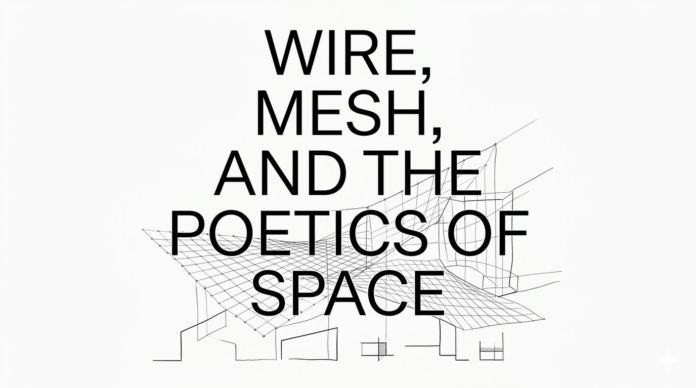
Wire, Mesh, and the Poetics of Space

Wire, Mesh, and the Poetics of Space

Wire, Mesh, and the Poetics of Space

Explore transparency, structure, and void

To work with wire or metal mesh is to reject sculpture as mass and to reinvent it as relation. These artists do not simply build objects; they construct tensions between line and volume, solidity and transparency, body and void. In their hands, wire ceases to be merely industrial material and becomes a philosophical instrument: it can draw in space, suspend weight, map invisible forces, or transform the sculptural object into a field of connections. Across modern and contemporary art, alambre and malla metálica have offered a radically different way of thinking form—not as a closed body, but as an open structure.

Alexander Calder

Alexander Calder was among the first to understand that wire could function as drawing released from the page. The Calder Foundation notes that, after arriving in Paris in 1926, he developed wire sculpture as a way of “drawing” portraits, animals, circus figures, and personalities in three dimensions. Rather than modeling mass, Calder traced contour. His wire pieces are airy, witty, and immediate, but beneath their lightness lies a profound shift in sculptural thought: the figure no longer depends on volume to exist. It can be summoned by line alone. In Calder, wire becomes an economy of means and a liberation of form. Sculpture stops being heavy and begins to think like drawing.

Gego

Gego pushes this logic much further. If Calder uses wire to outline the figure, Gego uses it to dissolve the very certainty of form. Trained as an architect and engineer, she brought unusual structural intelligence to her work, yet her achievement was never merely technical. Her networks, lattices, and suspended constellations transform line into unstable spatial experience. MoMA notes that in 1969 she coined the term Reticuláreas for works that gave material and dimensional form to her earlier drawings; the Guggenheim has emphasized these environments as large-scale installations of nets or webs. Gego’s importance lies in the fact that she does not treat line as boundary, but as relation. Her wire is not descriptive; it is generative. It creates a world of crossings, interruptions, rhythms, and trembling intervals. In her work, space is no longer empty background. It becomes the true medium of sculpture.

Ruth Asawa

Ruth Asawa transformed wire into something at once intimate and infinite. The Whitney and MoMA both emphasize her signature hanging woven-wire sculptures, while SFMOMA describes the breadth of a practice built from ceaseless exploration of wire and simple materials. Her suspended forms appear almost weightless, like breathing organisms or transparent cocoons. Yet their delicacy should not be mistaken for fragility of thought. Asawa understood repetition as a generative force: loop after loop, form emerges through patience rather than imposition. Her work joins craft and modernism without hierarchy. The woven technique she encountered through basket-making methods in Mexico became, in her hands, a sculptural language of extraordinary refinement. Asawa’s sculptures do not occupy space aggressively; they inhabit it like living presences. They are among the most lyrical demonstrations that transparency can be as sculpturally powerful as mass.

Naum Gabo

With Naum Gabo, the use of line enters a more explicitly theoretical territory. The Guggenheim and Tate identify him as a central figure of Constructivism, a movement that rejected the old idea of sculpture as solid block and instead conceived space as continuous and dynamic. Gabo’s linear constructions do not carve mass; they articulate energy, direction, and structure. His significance lies in showing that modern sculpture could be built from intervals rather than from weight. The line in Gabo is rational, disciplined, almost scientific, but never cold. It gives visible form to a new worldview in which art, engineering, and modern life participate in the same search for order. His constructions propose that volume can be implied without being filled, that matter can be minimized without diminishing form.

Antony Gormley

Antony Gormley inherits the modern lesson of line and structure, but turns it back toward the human body. On his website, Gormley describes works built from matrices of rings and later speaks of continuous steel wire as a means of forming sculpture as a single strip of metal unfurling in space. In his work, mesh, rings, grids, and linear frameworks become a way to think embodiment from within. The body is no longer modeled as surface anatomy; it is rendered as a field, a coordinate system, a tension between internal and external space. Gormley’s figures often feel as though they are made of atmosphere held together by thought. They ask where the body ends and the surrounding world begins. Wire and steel mesh here become metaphysical tools: they allow sculpture to represent not the image of the body, but its condition of being in space.

Janet Echelman

Janet Echelman monumentalizes the logic of the net. Her own biography and project materials describe sculptures at the scale of buildings and city blocks, transformed by wind and light, and experienced not simply as objects but as environments. Echelman shifts the conversation from sculpture as fixed form to sculpture as responsive event. Her aerial networks hover over urban space like weather systems, at once engineered and sensuous. Though her material language often belongs more to fiber than to metal, her relevance here lies in the logic of mesh itself: a structure made of relation, tension, and permeability. Her works make visible the invisible choreography of air, public movement, and collective experience. They are not monuments in the old sense; they are spatial fields that breathe with the city.

Chiharu Shiota

Chiharu Shiota is not a wire sculptor in the literal sense, yet her installations belong to this genealogy because she thinks through the logic of the web. Her official materials describe an exploration of “presence in the absence,” while the Mori Art Museum emphasizes how her thread installations render invisible presences visible across entire spaces. Shiota’s webs are less structural than psychic. They trap memory, longing, fear, and attachment in dense networks that fill rooms like emotional architecture. If Gego creates relational space through wire, Shiota creates existential space through thread. Her environments feel like interior states externalized. They are immersive not because they are large, but because they seem to catch the viewer inside a diagram of memory itself.

Harry Bertoia

Harry Bertoia occupies a unique territory between sculpture, design, and sound. Knoll describes him as an artist who experimented for decades with light, sound, and volume through sculpture, furniture, and architectural installations. His wire chairs are now canonical examples of modern design, but they are also sculptural events: space passes through them, and structure becomes visible rather than concealed. Even more compelling are his Sonambient sculptures, where thin metal rods turn linear form into acoustic experience. In Bertoia, wire is not only visual; it is vibrational. His work reminds us that line can resonate, that structure can sing. He collapses the distinction between functional object and autonomous artwork not by blurring them rhetorically, but by making both answer to the same material intelligence.

Tomás Saraceno

Tomás Saraceno expands the idea of mesh into an ecological and planetary imagination. Art21 and Serpentine describe his practice as inspired by the structures and behaviors of the “more-than-human” world, especially spider webs, and as a bridge among architecture, engineering, sculpture, and environmental thought. Saraceno’s webs are not metaphors alone; they are models of interdependence. He sees in arachnid structures a way to rethink how humans inhabit the world alongside other forms of life. His installations and research projects turn the web into both form and philosophy. In his hands, the net is no longer merely a sculptural device. It becomes a cosmology of relation, where every vibration implies shared consequence.

El Anatsui

El Anatsui transforms metal into something astonishingly close to fabric. Tate and the Brooklyn Museum describe his monumental works as composed of thousands of bottle tops and metal fragments joined with copper wire into shimmering, flexible surfaces that change shape with each installation. This is one of the great reinventions of sculptural material in contemporary art. Anatsui takes the discarded remnants of circulation—consumption, trade, colonial exchange—and turns them into hanging fields of memory. The copper wire that joins each fragment is crucial: it binds without fully fixing, allowing the work to remain mutable. His metal “cloths” oscillate between armor and textile, monument and ruin, abundance and fracture. If wire in Calder draws, in Gego networks, and in Bertoia resonates, in El Anatsui it sutures history.

Conclusion

Taken together, these artists reveal that wire and mesh are never secondary materials. They are conceptual instruments. They allow sculpture to think in terms of relation rather than mass, permeability rather than closure, vibration rather than fixity. Calder gives us line as drawing in air; Gego gives us line as networked space; Asawa gives us line as woven breath; Gabo gives us line as modern structure; Gormley gives us line as embodiment; Echelman gives us net as civic atmosphere; Shiota gives us web as memory; Bertoia gives us metal as sound; Saraceno gives us network as ecology; and El Anatsui gives us joined fragments as historical skin. What unites them is the understanding that the most powerful sculpture is not always the most solid. Sometimes it is the work that seems most open, most permeable, most unfinished—because it leaves space for the world to enter.

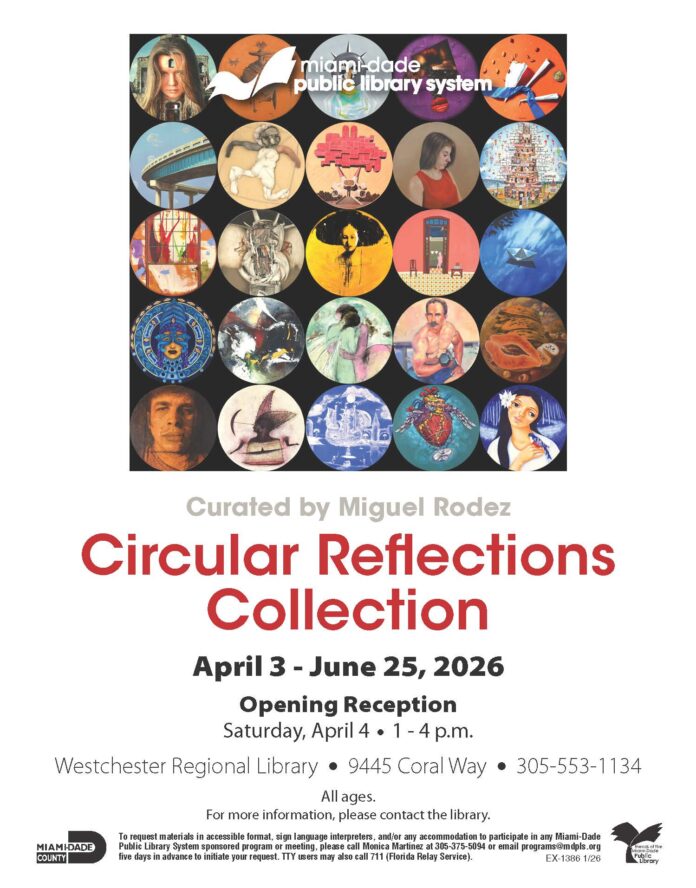
Circular Reflections

Circular Reflections exhibition
Westchester Regional Library

In a city defined by a diverse Latin diaspora, we often see history through a rearview mirror. On April 4, curator Miguel Rodez is inviting Miami to look through a different lens—specifically, 80 of them.

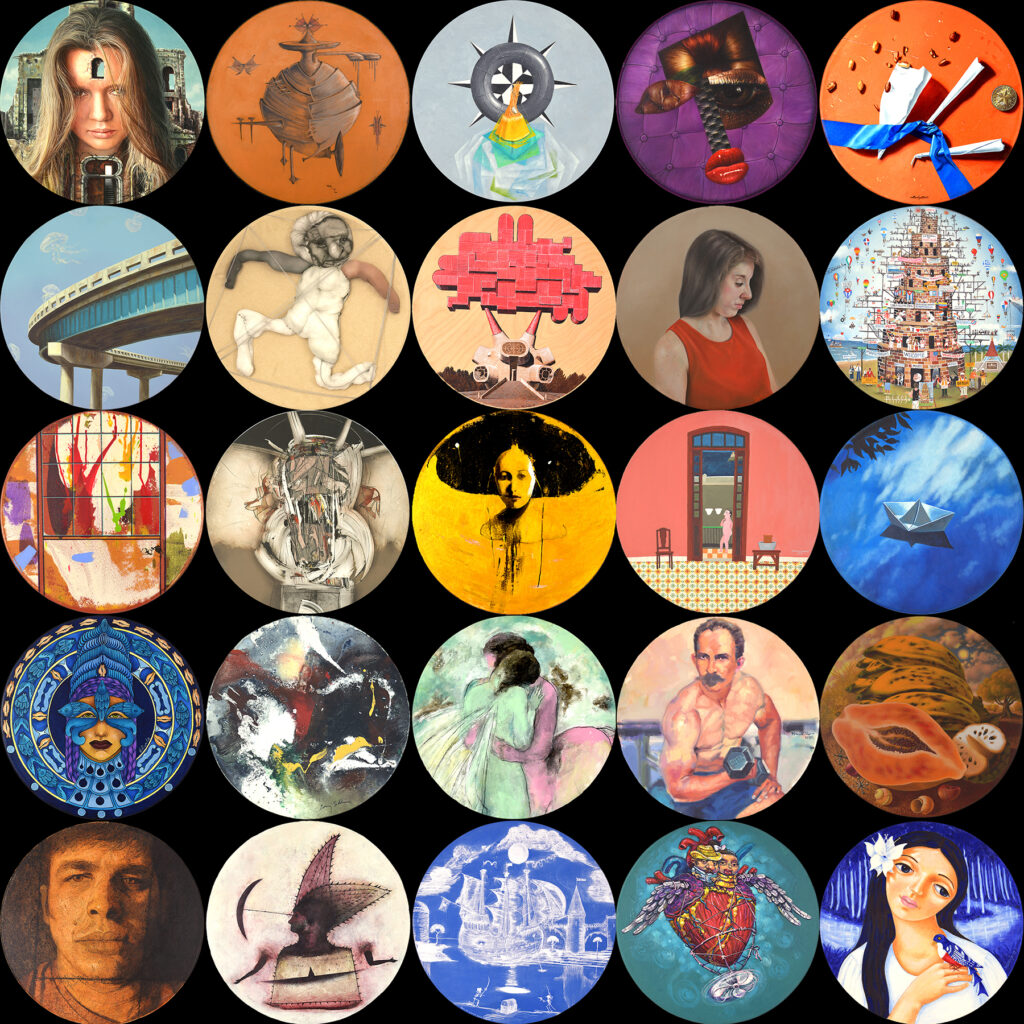
I’m reaching out to share an exclusive first look at “Circular Reflections,” a monumental exhibition nine years in the realization. Opening at the striking Brutalist Westchester Regional Library, this isn’t just another gallery show; it’s an itinerant “visual symphony” seeking to document Cuban Art by featuring 80+ accomplished contemporary Cuban artists.

The Hook:

·       Breaking the Square: Every piece in this collection abandons traditional parameters for a uniform 21-inch circular format. This creates a hypnotic, rhythmic pull across the library’s expansive two-story lobby, transforming the space into a portal of “dreamscapes and abstract color explosions.”

·       The “Quiet Whisper”: Moving beyond static observation, Rodez—a former Chairman of Miami-Dade’s Art in Public Places Trust—has paired each work with a written reflection, designed to spark a personal “internal tug-of-war” for the viewer.

·       The Pedigree: This is the most ambitious project to date for Rodez, whose background in history and philosophy elevates this from a simple art display to a deep intellectual dialogue on the current state of Cuban identity.

With the massive scale of this “traveling odyssey” and the caliber of the 80+ artists involved (list attached), this is a significant moment for the Miami-Dade arts calendar.

I’d love to coordinate an interview to discuss the decade-long curation process or provide high-res images of the circular works for a feature.

The Details:

·       What: Opening of Circular Reflections

·       When: Saturday, April 4, 2026, at 1:00 p.m.

·       Where: Westchester Regional Library (9445 SW 24 St.)

Ramon Alejandro
Enrique Alfonso
Mario Almaguer
Mario Almaguer
Franklin Alvarez Fortún
David Anasagasti (Ahol Sniffs Glue)
Anthony Ardavin
Nestor Arenas
Alejandro Arrechea
Yovani Bauta
Cesar Beltran
Luis Cabrera
Pablo Cano
Alberto Carol
Ramón Carulla
Mabelin Castellanos
Sergio Chavez
Jose Chiu
Ana Albertina Delgado
Angel Delgado
Julio Cesar Delgado Pacheco
Alain Donate
Vicente Dopico
Ivonne Ferrer
Julio Figueroa Beltran
Jorge Fornes
Carlos Gallostra
Juanma García
Sergio García
Osley Gil
Victor Gomez
Asbel Gomez Dumpierre
Ismael Gomez Peralta
Felix González Sanchez
Antonio Guerrero
Rodrigo Guillen
Frank Izquierdo
Aisar Jalil Martinez
Alvaro Labañino
Sergio Lastres
Esteban Leyva
Gloria Lorenzo
José Marquez Valdez
Piki Mendizabal
Alejandro Mendoza
Aldo Menendez
Luisa Mesa
Aurora Molina
Luis Molina
Clara Morera
José Lorenzo Moya Diaz
Orlando Naranjo
Adriano Nicot
Denis Nuñez Rodriguez
Agustin Rolando Rojas Leyva
Rolando Paciel
Luis Pardini
Sergio Payares
Magin Perez Ortiz
Guillermo Portieles
Ciro Quintana
Abel Quintero
Niels Reyes Cadalso
David Roche
Miguel Rodez
Candida Rodriguez
David Rodriguez
Hernan Rodriguez
Henry Rodriguez Bienes
Jose Antonio “Tony” Rodriguez Olivares
Orlando Rodriguez Barea
Rubén Rodriguez
Violeta Roque de Arana
Baruj Salinas
Luis Saldaña
Jorge Santos Marcos
Yampier Sardina Esperon
Medardo Miguel Tauntor Albóñiga
José Tonito
Juan Carlos Verdial Soltura
Fredy Villamil
Pedro Vizcaino
Ramon Williams

Visual Artists

Visual Artists

Zarouhie Abdalian
Marina Abramović
Robert Adams
Tanya Aguiñiga
Ai Weiwei
John Akomfrah
Diana Al-Hadid
Laylah Ali
Allora & Calzadilla
Natalia Almada
Alejandro Almanza Pereda
David Altmejd
El Anatsui
Laurie Anderson
Eleanor Antin
Janine Antoni
Ida Applebroog
Edgar Arceneaux
assume vivid astro focus
Charles Atlas
Firelei Báez
John Baldessari
Phyllida Barlow
Matthew Barney
Kevin Beasley
Lynda Benglis
Meriem Bennani
Diego Bianchi
Lucas Blalock
Louise Bourgeois
Mark Bradford
David Brooks
Tania Bruguera
Cai Guo-Qiang
Cao Fei
Jordan Casteel
Nick Cave
Vija Celmins
Michael Ray Charles
Mel Chin
David Claerbout
Martha Colburn
William Cordova
Creative Growth Art Center
Abraham Cruzvillegas
Minerva Cuevas
Alex Da Corte
Raúl de Nieves
Louise Despont
Abigail DeVille
Mark Dion
Nathalie Djurberg & Hans Berg
Stan Douglas
Rackstraw Downes
Leonardo Drew
Marcel Dzama
Debo Eilers
Olafur Eliasson
Charles Gaines
Ellen Gallagher
Doreen Garner
Theaster Gates
David Goldblatt
Daniel Gordon
Katy Grannan
Katharina Grosse
Guan Xiao
Nick Hallett
Josephine Halvorson
Ann Hamilton
Trenton Doyle Hancock
Tommy Hartung
Tim Hawkinson
Mary Heilmann
Arturo Herrera
Oliver Herring
Dan Herschlein
Lynn Hershman Leeson
Thomas Hirschhorn
Nicholas Hlobo
Lonnie Holley
Loie Hollowell
Jenny Holzer
Roni Horn
Maryam Hoseini
Hubbard/Birchler
Elliott Hundley
Luchita Hurtado
Pierre Huyghe
Graciela Iturbide
Alfredo Jaar
Yun-Fei Ji
Rashid Johnson
Joan Jonas
Jamian Juliano-Villani
Brian Jungen
Jesper Just
Hiwa K
Anish Kapoor
Gülsün Karamustafa
Barbara Kasten
Mike Kelley
William Kentridge
Jon Kessler
Tommy Kha
Laleh Khorramian
Margaret Kilgallen
Kimsooja
Lucia Koch
Jeff Koons
Beryl Korot
Barbara Kruger
Wolfgang Laib
Liz Larner
Liz Magic Laser
Heidi Lau
An-My Lê
Shaun Leonardo
Glenn Ligon
Maya Lin
Liu Xiaodong
Kalup Linzy
Rafael Lozano-Hemmer
Tala Madani
Basim Magdy
Liz Magor
Florian Maier-Aichen
Mark Manders
Iñigo Manglano-Ovalle
Robert Mangold
Sally Mann
Guadalupe Maravilla
Christian Marclay
Kerry James Marshall
Eddie Martinez
Ahmed Mater
Mary Mattingly
Paul McCarthy
Allan McCollum
Josiah McElheny
Barry McGee
Julie Mehretu
Dan Miller
Adam Milner
Richard Misrach
Azikiwe Mohammed
Jason Moran
Richard Mosse
Shana Moulton
Zanele Muholi
Elizabeth Murray
Wangechi Mutu
Christopher Myers
Bruce Nauman
Ernesto Neto
Diane Severin Nguyen
Aliza Nisenbaum
Catherine Opie
Gabriel Orozco
Damián Ortega
Pepón Osorio
Trevor Paglen
Elle Pérez
Stephen Petronio
Raymond Pettibon
Judy Pfaff
Paul Pfeiffer
Susan Philipsz
Lari Pittman
Postcommodity
The Propeller Group
Martin Puryear
RAAAF
Michael Rakowitz
Kameelah Janan Rasheed
Mary Reid Kelley
Pedro Reyes
Robin Rhode
Matthew Ritchie
Mariah Robertson
Matt Roche
Rachel Rossin
Susan Rothenberg
Mika Rottenberg
Robert Ryman
Rose Salane
Doris Salcedo
Aki Sasamoto
Jacolby Satterwhite
Collier Schorr
Judith Scott
William Scott
Colin Self
Richard Serra
Wael Shawky
Arlene Shechet
Cindy Sherman
Erin Shirreff
Yinka Shonibare CBE (RA)
Katrín Sigurdardóttir
Shahzia Sikander
Laurie Simmons
Avery Singer
Kiki Smith
Valeska Soares
Song Dong
Nancy Spero
Hito Steyerl
Ruby Sky Stiler
Jessica Stockholder
Hiroshi Sugimoto
Do Ho Suh
Catherine Sullivan
Stephanie Syjuco
Sarah Sze
Tabaimo
Mika Tajima
Diana Thater
Salman Toor
James Turrell
Richard Tuttle
Monica Valentine
Ursula von Rydingsvard
Kara Walker
Jeff Wall
Chris Ware
Jaimie Warren
Carrie Mae Weems
William Wegman
Jack Whitten
Fred Wilson
Eric Winkler
Krzysztof Wodiczko
Caroline Woolard
Xu Bing
Yin Xiuzhen
Marela Zacarías
Bryan Zanisnik
Andrea Zittel

Artists

José Caldas
José Caldas

Carl Andre,
Dan Flavin,
Donald Judd,
Sol LeWitt,
Robert Morris,
Stephen Antonakos,
Jo Baer,
Larry Bell,
Ronald Bladen,
Mary Corse,
Walter De Maria,
Robert Grosvenor,
Carmen Herrera,
Eva Hesse,
Gary Kuehn,
Robert Mangold,
Agnes Martin,
John McCracken,
Charlotte Posenenske,
Robert Ryman,
Fred Sandback,
Richard Serra,
Tony Smith,
Robert Smithson,
Anne Truitt,

Margaret Bowland 

Dennis Ashbaugh, 

Ryan Trecartin, 

Wright Harvey,

Padraic South.

Teresa Cabello

Constanza Profeta

Danié Gómez-Ortigoza

Jeanne Jaffe

Marina Font

Milixa Moron

Nina Surel

Adriana Torres

Alessandra Sequeira

Monica Czukerberg

Nahila Campos

Michele Janata

Rebecca Setareh

Valeria Montag

Bibi Martinez

Capucine Safir

Daniela Viotti

 Ileana Rincón-Cañas

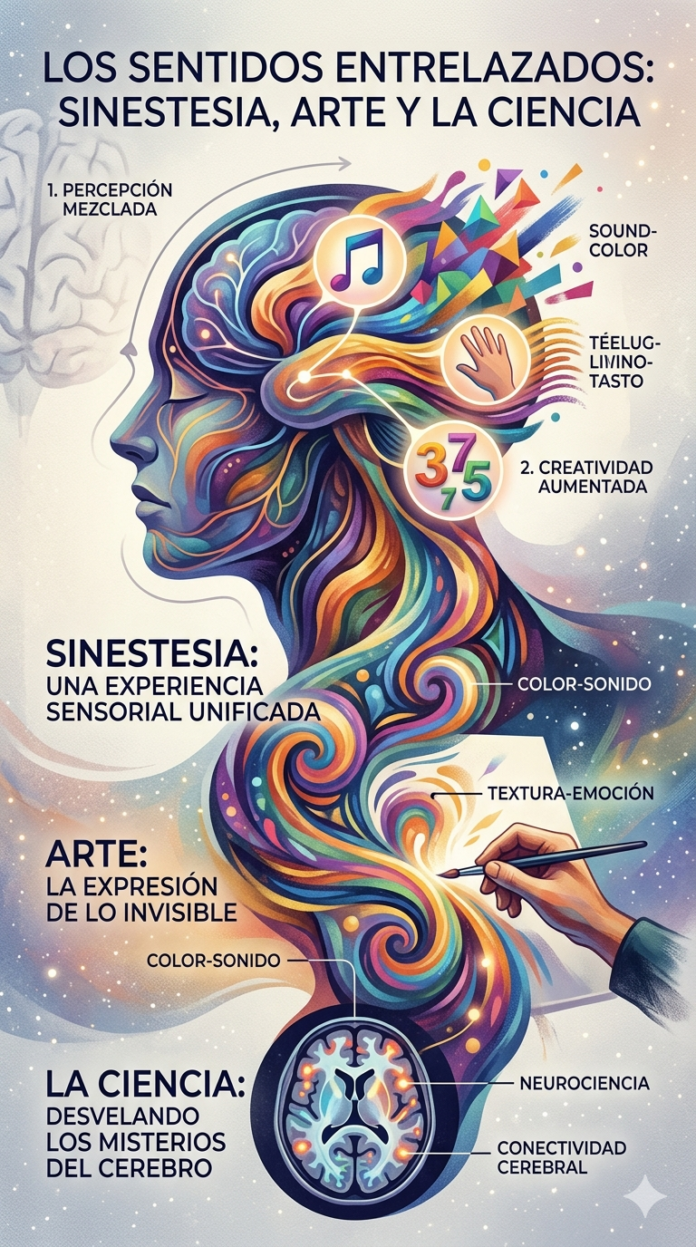
Los Sentidos Entrelazados: Sinestesia, Arte y la Ciencia de Richard E. Cytowic

Los Sentidos Entrelazados: Sinestesia, Arte y la Ciencia

Los Sentidos Entrelazados: Sinestesia, Arte y la Ciencia de Richard E. Cytowic

¿Qué es la sinestesia?

La sinestesia es la experiencia física involuntaria de una asociación entre modalidades sensoriales distintas. Es decir, la estimulación de un sentido provoca de manera consistente una percepción en uno o más sentidos diferentes. PhilPapers El término proviene del griego: syn (unión) y aisthesis (percepción). Un sinestésico puede escuchar una nota musical y simultáneamente ver un color, sentir una textura en los dedos al probar un alimento, o percibir que el miércoles tiene el color índigo.

No es un trastorno, sino un rasgo neurológico —como el oído perfecto— que crea acoplamientos sensoriales vívidos. Un sinestésico podría escuchar una voz y al mismo tiempo verla como un color o una forma, saborear su distintivo matiz, o sentirla como un toque físico. MIT Press

Su fenomenología la distingue claramente de la metáfora, los tropos literarios, el simbolismo sonoro y los artificios artísticos deliberados que a veces usan el término “sinestesia” para describir sus uniones multisensoriales. PhilPapers

Richard E. Cytowic: El científico que devolvió la sinestesia a la ciencia

Richard E. Cytowic es un neurólogo y autor estadounidense que reavivó el interés por la sinestesia en la década de 1980 y la devolvió a la ciencia convencional. En 1989, publicó un texto pionero, Synesthesia: A Union of the Senses, seguido de una exploración popular del tema en 1993, The Man Who Tasted Shapes. Wikipedia

Cytowic es Profesor Clínico de Neurología en la Universidad George Washington. Redescubrió la sinestesia hace cuarenta años y la devolvió a la ciencia convencional. ResearchGate Su trabajo ha sido objeto de dos documentales de la BBC: Orange Sherbert Kisses (1994) y Derek Tastes of Earwax (2014), y su vídeo de TED, “What Color is Tuesday? Exploring Synesthesia”, ha superado 1,8 millones de visualizaciones.

Sus investigaciones fundamentales

La contribución académica de Cytowic abarca décadas. Su artículo seminal “Synesthesia: Phenomenology and Neuropsychology” (1995) estableció el marco científico para diagnosticar y estudiar el fenómeno. En él identificó una constelación demográfica y cognitiva inesperada que coexiste con la sinestesia: predominan las mujeres y los zurdos, el rasgo es familiar, la memoria es superior mientras que las matemáticas y la navegación espacial se ven afectadas. La sinestesia parece ser una función del hemisferio izquierdo que no es cortical en el sentido convencional, y el hipocampo es crítico para su experiencia. PhilPapers

En 2009, junto al neurocientífico David Eagleman, publicó Wednesday Is Indigo Blue: Discovering the Brain of Synesthesia, ganador de la Medalla Montaigne 2011. En él explican la neurociencia y la genética detrás de las experiencias multisensoriales de la sinestesia, y sostienen que la percepción ya es multisensorial en todos los seres humanos, aunque para la mayoría sus múltiples dimensiones existen más allá del alcance de la conciencia. La realidad, señalan, es más subjetiva de lo que la mayoría de la gente reconoce. MIT Press

Porque la sinestesia contradecía la teoría existente, Cytowic pasó veinte años persuadiendo a sus colegas de que era un fenómeno cerebral real e importante, y no una mera curiosidad. Hoy, científicos en quince países están explorando la sinestesia y cómo está cambiando la visión tradicional del funcionamiento cerebral. PenguinRandomhouse.com

Uno de sus hallazgos más provocadores tiene que ver con la creatividad. Cytowic ha sugerido que la sinestesia podría expresarse en partes no sensoriales del cerebro —como la memoria, la planificación y el razonamiento moral—, amplificando la creatividad en relación con esos dominios. Asimismo, la mayor comunicación entre regiones cerebrales podría expresarse de forma difusa, resultando en un talento generalizado para conectar temas aparentemente no relacionados. Wikipedia

La sinestesia y los artistas: cuando los sentidos se convierten en arte

La conexión entre la sinestesia y la creatividad ha fascinado desde hace tiempo tanto a científicos como a artistas. Muchos creadores famosos han reportado experiencias sinestésicas: el pintor David Hockney describía ver las notas musicales como colores; el músico Pharrell Williams habla de los acordes como texturas relucientes; el poeta Arthur Rimbaud escribió célebremente sobre las vocales como colores. Science News Today

Wassily Kandinsky: el pintor que escuchaba colores

La sinestesia, esa rara condición neurológica en la que dos sentidos quedan interconectados, puede haber inspirado a Vasily Kandinsky a dedicarse a la pintura. Guggenheim Museums Kandinsky experimentaba una forma de sinestesia conocida como cromatestesia, en la que los sonidos evocaban colores y formas en su mente. Creía que ciertos colores correspondían a determinados instrumentos musicales, y estas asociaciones sinestésicas influyeron profundamente en su enfoque de la pintura abstracta. Sus obras buscaban con frecuencia representar visualmente la música y las emociones que esta evocaba. Juanmoisesdelaserna

No es casual que sus pinturas lleven títulos como Composición, Improvisación o Impresión, todos tomados del lenguaje musical. La relación entre pintores y músicos —como la de Kandinsky con Arnold Schönberg— fue central en el desarrollo de la pintura sinestésica a principios del siglo XX. Dialnet

Sin embargo, existe debate sobre si Kandinsky fue realmente un sinestésico en el sentido neurológico. El propio artista declaró que sus correspondencias entre colores y timbres musicales no tenían una base “científica”, sino que se fundaban en una combinación de sus propias sensaciones, los prejuicios culturales imperantes y el misticismo. Wikipedia

Franz Liszt: el director que pedía “más rosa”

El compositor Franz Liszt exigía célebremente a su orquesta que tocara “más rosa” o “menos verde”, dejando perplejos a los músicos pero insinuando un mundo sensorial invisible para ellos. Science News Today Liszt era un sinestésico auditivo-audiovisual, alguien que asociaba colores con ciertos sonidos, y poseía la cualidad singular de poder visualizar la música. Infosalus

Vladimir Nabokov: letras de colores equivocados

El famoso sinestésico Vladimir Nabokov insistía desde niño en que los colores de las letras en sus bloques de madera estaban “todos mal”. Su madre entendió perfectamente lo que quería decir porque ella también tenía sinestesia. El hijo de Nabokov, Dmitri, también es sinestésico, lo que ilustra cómo la sinestesia corre en las familias. MIT Press

Pharrell Williams: ver la música en colores

El músico y productor estadounidense Pharrell Williams ha hablado abiertamente sobre su sinestesia audio-visual. Williams ve colores cuando escucha música, y atribuye parte de su éxito como productor a su capacidad sinestésica para visualizar y manipular el sonido. Juanmoisesdelaserna

Otros creadores sinestésicos confirmados o probables

Entre los creadores sinestésicos, confirmados o probables, figuran los escritores Vladimir Nabokov y Joanne Harris; pintores como Vincent Van Gogh, Wassily Kandinsky o David Hockney; músicos como Nikolai Rimsky-Korsakov, Leonard Bernstein, Duke Ellington, Stevie Wonder, Billy Joel o Pharrell Williams; científicos como Richard Feynman o Nikola Tesla; y actores como Geoffrey Rush o Marilyn Monroe. Oftalvist

Por qué la sinestesia alimenta la creatividad

Una posibilidad es que, al vincular los sentidos de maneras inusuales, el cerebro sinestésico fomenta el pensamiento metafórico y las asociaciones novedosas. Donde otros ven una frontera, los sinestésicos experimentan un puente. Esta flexibilidad cognitiva puede ayudar a explicar su frecuente presencia en los círculos artísticos y musicales. Los neurocientíficos también señalan que los sinestésicos sobresalen con frecuencia en tareas de memoria, ya que asociar colores, formas o personalidades con información abstracta les proporciona pistas adicionales para el recuerdo. Science News Today

Cytowic va más lejos: en sus primeras investigaciones y en Synesthesia: A Union of the Senses, considera la aparente frecuencia del rasgo entre los artistas, y la naturaleza subjetiva e ilusoria de lo que tomamos por realidad objetiva, particularmente en el ámbito visual. ResearchGate

La prevalencia: más común de lo que pensamos

Un dato que ha sorprendido a la comunidad científica desde las investigaciones de Cytowic es la prevalencia del fenómeno. Una de cada veintitrés personas lleva los genes de la sinestesia. Su manifestación más frecuente es ver los días de la semana en colores, seguida de percibir letras, números y signos de puntuación en distintos tonos aunque estén impresos en negro. Otras manifestaciones incluyen saborear los alimentos en formas, ver la música en colores en movimiento y ubicar los números y otras secuencias de manera espacial. MIT Press

Cytowic ve hoy la sinestesia como un espectro —un término paraguas que cubre cinco grupos de acoplamientos que pueden ocurrir por varias vías. Y, sinestésico o no, cada cerebro filtra de manera única lo que percibe: la perspectiva de cada individuo sobre el mundo es profundamente subjetiva. MIT Press

Una ventana al cerebro humano

La sinestesia no es una rareza exótica ni un artificio poético. Es, como argumenta Cytowic a lo largo de cuatro décadas de investigación, una ventana privilegiada al funcionamiento del cerebro. Ofrece un estudio único de una condición que ha desconcertado a los científicos durante más de doscientos años, y cuya investigación demuestra que se trata de un fenómeno basado en el cerebro —perceptivo, no imaginario. Springer

El legado de Cytowic es haber convertido algo que parecía imposible —que alguien pudiera literalmente saborear formas o escuchar colores— en uno de los campos más fecundos de la neurociencia contemporánea. Y al hacerlo, nos recuerda que la realidad que percibimos no es el mundo tal como es, sino el mundo tal como cada cerebro, único e irrepetible, lo construye.

Obras académicas de referencia de Richard E. Cytowic (MIT Press): Synesthesia: A Union of the Senses (1989/2002); The Man Who Tasted Shapes (1993); Wednesday Is Indigo Blue: Discovering the Brain of Synesthesia (con David Eagleman, 2009, ganador de la Medalla Montaigne 2011); Synesthesia (2018); Your Stone Age Brain in the Screen Age (2024).

Rebecca Setareh

Rebecca Setareh

Rebecca Setareh
Rebecca Setareh

@artofrebecca

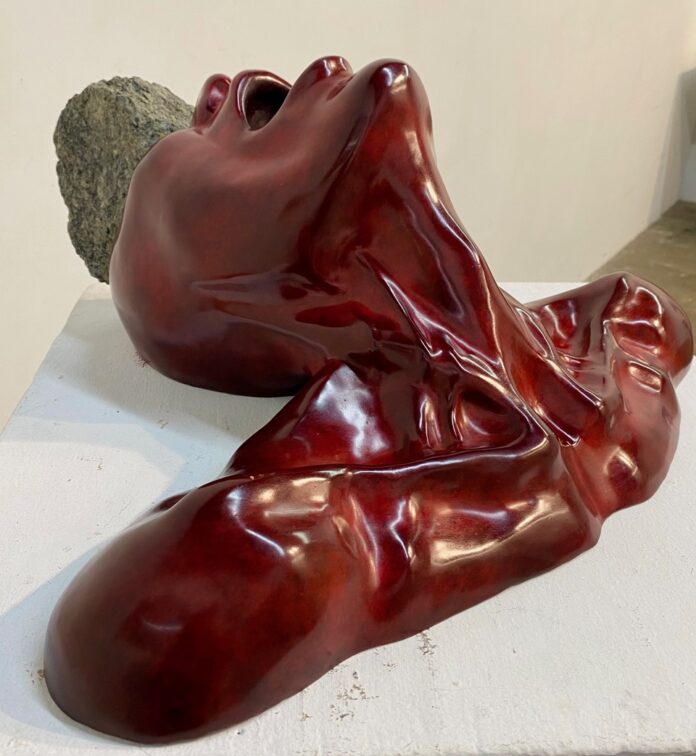
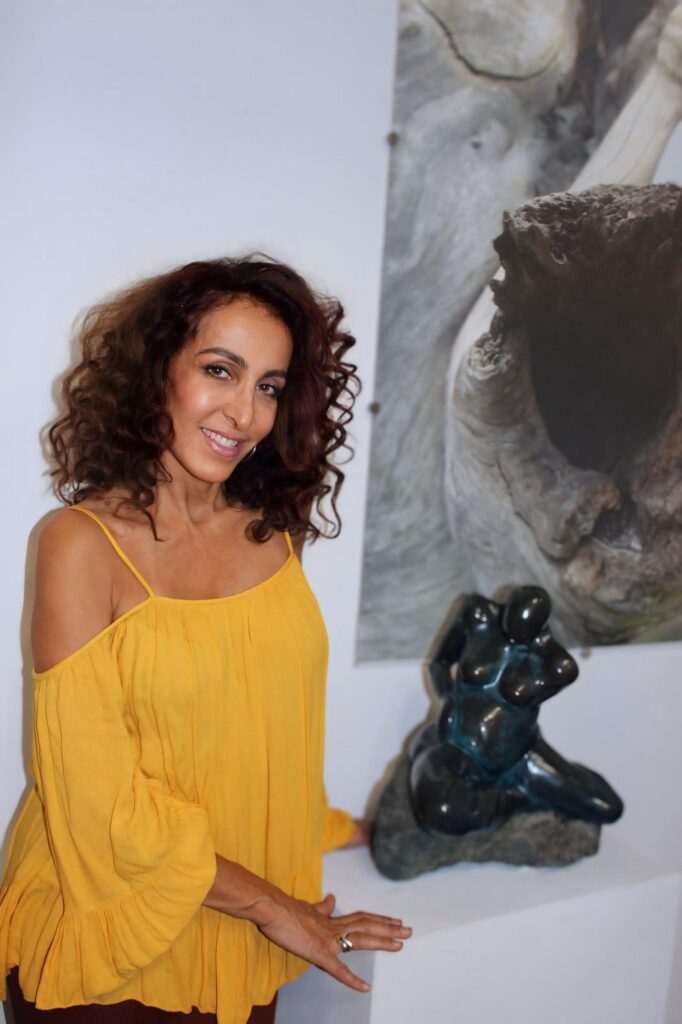
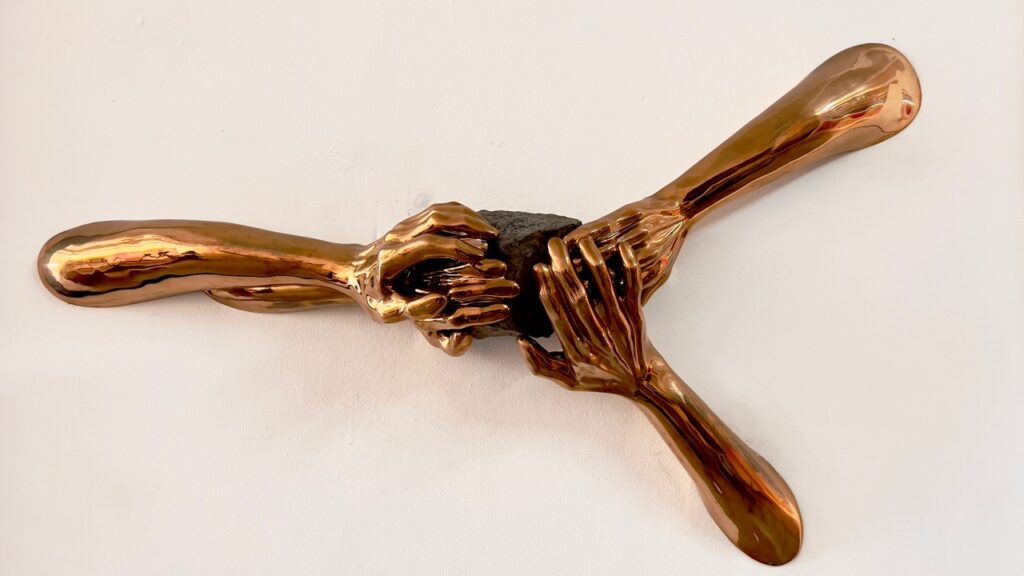
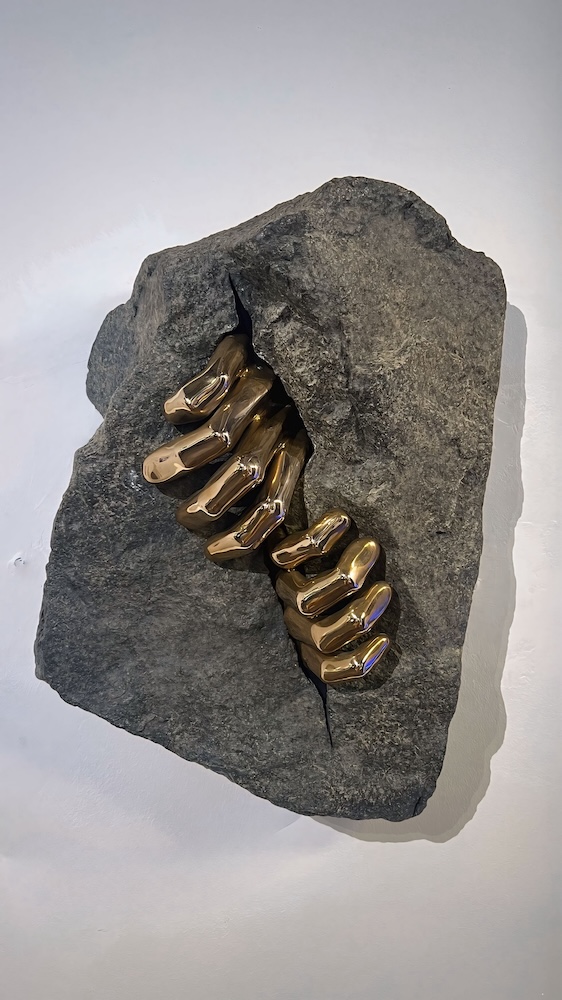
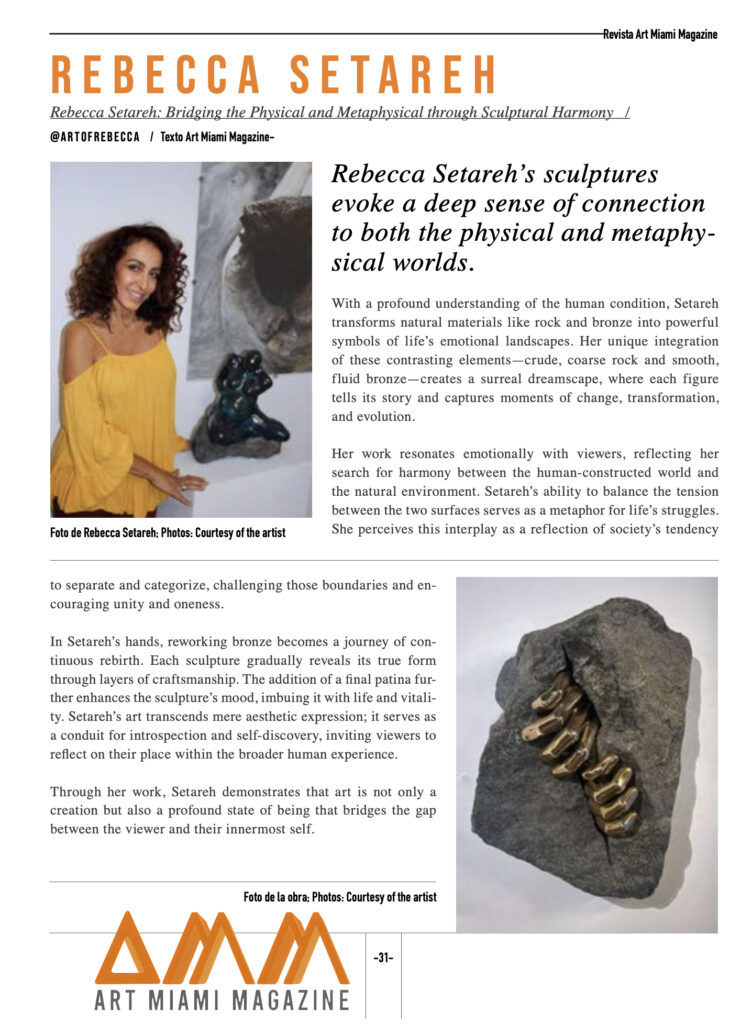
Rebecca Setareh, a resident of Miami, Florida, is an internationally acclaimed artist known for her unique integration of rock and bronze in sculpture. She holds a Bachelor’s in Fine Arts from the Institut des Beaux-Arts St. Luc in Liege, Belgium. Her work has garnered significant recognition, including awards from prominent figures such as Iran’s former Prime Minister and Queen Farah Diba Pahlavi.  

Her sculptures masterfully blend the fluidity of bronze figures that represent the man-made world, with the roughness of natural stone representing Mother nature, creating a visual harmony that represent the duality of life’s existence and the oneness that permeates all. By challenging societal tendencies to categorize and divide, Rebecca captures moments that communicate the pleasure and pains of human existence, often drawing from her own life experiences. Her unique approach has earned her acclaim in numerous national exhibitions and attracted a global audience. Her brand is called, Art of Rebecca and viewers can connect with her via Instagram: @artofrebecca or her website: www.artofrebecca.com

Rebecca Setareh
Screenshot

GALERIA AZUR

GALERIA AZUR

GALERIA AZUR

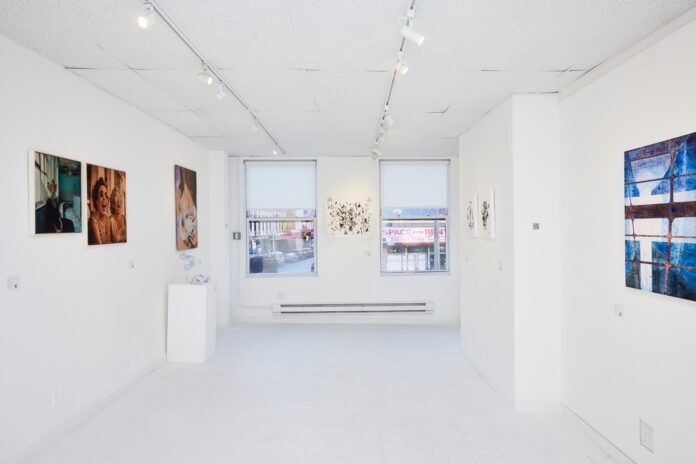
GALERIA AZUR se ha consolidado, a lo largo de más de 14 años, como una plataforma dinámica dentro del ecosistema del arte moderno y contemporáneo global. Más que una galería tradicional, su enfoque se define por una vocación activa hacia el acompañamiento de artistas, la promoción de la diversidad y la apertura de nuevas narrativas dentro del panorama artístico actual.

Su misión se articula en torno a la idea de inspirar y transformar, generando espacios donde la práctica artística no solo se exhibe, sino que también se cuestiona y se expande. A través de exposiciones individuales y colectivas, GALERIA AZUR propone un entorno donde convergen artistas emergentes y consolidados, fomentando el diálogo entre distintas geografías, lenguajes y sensibilidades contemporáneas.

En este sentido, la galería opera como un punto de encuentro entre creación, mercado y comunidad, facilitando conexiones entre artistas, coleccionistas y públicos diversos. Su presencia en ciudades clave como New York, Berlin, Miami, Buenos Aires y Uruguay refuerza su papel dentro de un circuito internacional en constante evolución, donde la visibilidad y el intercambio cultural son fundamentales.

Más allá de su programación expositiva, GALERIA AZUR se posiciona como un agente que impulsa el desarrollo profesional de los artistas, ofreciendo oportunidades que amplían su alcance y proyección. En un contexto donde las estructuras tradicionales del arte están en transformación, su modelo responde a una lógica contemporánea: flexible, global y orientada a la expansión de posibilidades.

GALERIA AZUR no solo exhibe arte; construye plataformas para que nuevas voces encuentren resonancia y para que el arte continúe siendo un espacio de conexión, cuestionamiento y transformación.

Artistas por descubrir

Una selección de artistas contemporáneos:

• Ece Abay
• Patrícia Abreu
• Renata Abreu
• Adrian Horatiu Dan
• Beatriz A. Ferrari
• Nikol Aghababyan
• Felipe Alarcón Echenique
• Monica Alba
• Griselda Alcazar
• Aleksandra Klein
• Stefano Alvino
• Anna Amgren
• Karine Andriasyan
• Andreas Angleitner
• Eva Apostolatou
• Vicky Arango
• Lawrence Armstrong
• Alejandro Avakian
• Osvaldo Bacman
• John Bacon
• Giuliana Bagnasco
• Carolina Baron Biza
• Fernando Barrionuevo
• Mikael Becker
• Maria Bianchini
• Carmela Blanco
• Patricia Blanco
• Frédéric Blondiaux
• Chris Bohlin
• Anthony Brewer
• Andrés Calamaro
• Eduardo Castillo-Salgado
• Eric Chabot
• Yanghee Chang
• Giuliana Chiavari
• Christine Weber-Nolte
• Daria Chuvaeva
• Delfina Collazo
• Valentina Cox
• Rosario Crespo
• Claudia Cruzat
• Felipe Cuoco
• Eva Davidova
• Gregory Dunn
• Roberta De Mutiis
• Giovanna Desiderato
• Stephanie Dillon
• Laura DizChaves
• Erika Dos
• Jolie Dueñas
• Maria Escano
• Francesca Escoto
• Tanya Fedorovskaya
• Aurelie Ferrara
• Marcela Ferrero
• Jennifer Fincher
• Alexis Finley
• Carolina Fuentes
• Cloe Galasso
• Anaís García Richaud
• Dominique Genin
• Sharon Gershman
• Owen Gildersleeve
• Veronika Gjorgjievska
• Paavan Goel
• Andres Gonzalez
• Isabelle Gougenheim
• Paula Grosso
• Andrea Halm
• Ingrid Haubrich
• Daniel Heugas
• Makram Hilal
• Hunter Hogan
• Hua Huang
• Yoshiko Ito
• Yasaman Jannati
• Jennifer Hart
• Juliana Ferreyros
• Helen Kagan
• Katarzyna Zawada
• Alice Kauer
• Silvio Kempf
• Brittany Key
• Mathilda Kienast
• Youngmi Kim
• Renate Kirchhof
• Yuko Kokubun
• María Krall
• Daniela Kronvall
• Justyna Kubica
• Emma Kunsagi
• Marlene Lee
• Christina Legere
• Agata Lewandowska
• Lihong Zhang
• Joana Lopes
• Nina Lovina
• Beatriz Lugo
• Silvia Macková
• Natalia Malyukova
• Cherif Mama
• Raya Mansoor
• Marcos Levy Cohen
• Eva Martin Soler
• Claudia Medina Vega
• Francisco Merello
• Pavel Michalič
• Sophia Milligan
• Cathy Miranker
• Jaime Monge
• Catalina Montes
• Paula Montgomery
• Karin Morris
• Uwe Müller-Fabian
• Remi Nagahara
• Marika Nagaoke
• Shalom Neuman
• Koki Nishimawari
• Amy Oh
• Keisuke Okada
• Soledad Olave
• Darina Palmire
• Taeree Park
• Patricia Pueyrredon
• Brittney Pearman
• Jacqueline Perez Saleh
• Marie Pernet
• Daryl Perry
• Claire Pettinati
• Ben Plaumann
• Monica Ponsky
• Elaina Porcaro
• Matias Presta
• Antonio Ramirez
• Wendy Ramírez
• Sofia Ramos
• Ramsay Allan
• Laurie Raskin
• Paula Rello
• Michelangelo Ricchetti
• Javier Rivas
• Inna Rogozhina
• Gabriela Román
• Mary Rothenberger
• Carlos Rueda
• Martin Rusek
• Saachi
• Flora Saldivar
• Jantien Salomons
• Enrique Sama
• Lika Sarishvili
• Mira Satryan
• Kira Schindler
• Valeria Secret
• Jenny Shaw
• Ryuta Shishikura
• Anja Siimes
• Gabriela Simionato
• Michele Simonetti
• Irena Skalik
• Delia Solari
• Song Yu Jeong
• Roxy Sora
• Pedro Sousa Louro
• Morgane Soulier
• Lauren Strock
• Emily Strulson
• Laurette Succar
• Dominika Switala
• Eiko Tabata
• Saika Takahashi
• Tamara Eder
• Teodora Prodanova
• Laura Tijsterman
• Daniel Timko
• Tiziana Menghi
• Svitlana Tkachenko
• Axel Traverso
• Patricia Trujillo
• Elise Tsikis
• Shlomo Tuvia
• Ramona Ursache
• Valeria Valeri
• Peter Van Dyke
• Rodrigo Veloso
• Veronica Viedma Paoli
• Federico Vezzaro
• Eduardo Vidal
• Ignacio Videla
• Oksana Vorobiova
• Katarzyna Wasilewska
• Jolanda Wassenaar
• Pu Wei
• Mark Weiss
• Carol Welsch
• Ashton Whitney Lally
• Monika Widenka
• Malina Wieczorek
• Bex Wilkinson
• Michael Winitsky
• Brigitte Witzer
• David Roberts
• Christoph Wycislok
• Magdél Wyser
• Yaji Zhou
• Ryusuke Yamagiwa
• Jinhee Yang
• Amy Yeung
• Michael Yurick
• Florencia Zampieri
• Zaina Zayed
• Haohao Zhang
• Andrea Zottola

Descubre a los artistas emergentes y consagrados que están marcando el panorama del arte contemporáneo.
Galeriaazur.art
Arroyo 981
Ciudad autónoma de Buenos Aires, Buenos Aires C1007
Argentina
Tel: +54 11 4326-5242

Miguel Génova

Miguel Génova

Miguel Génova

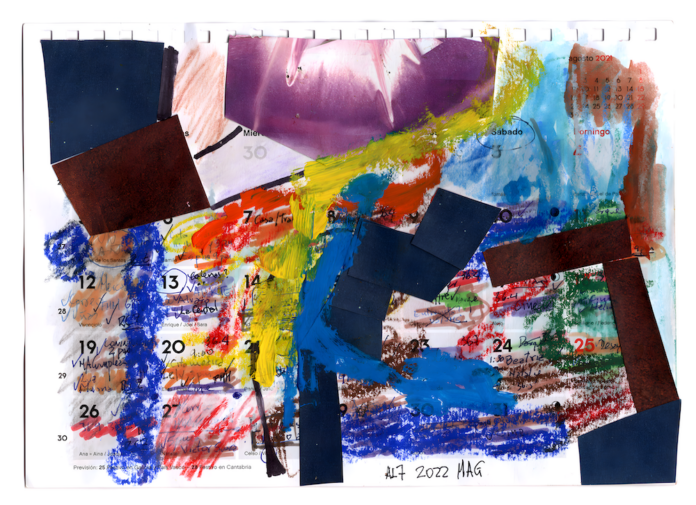
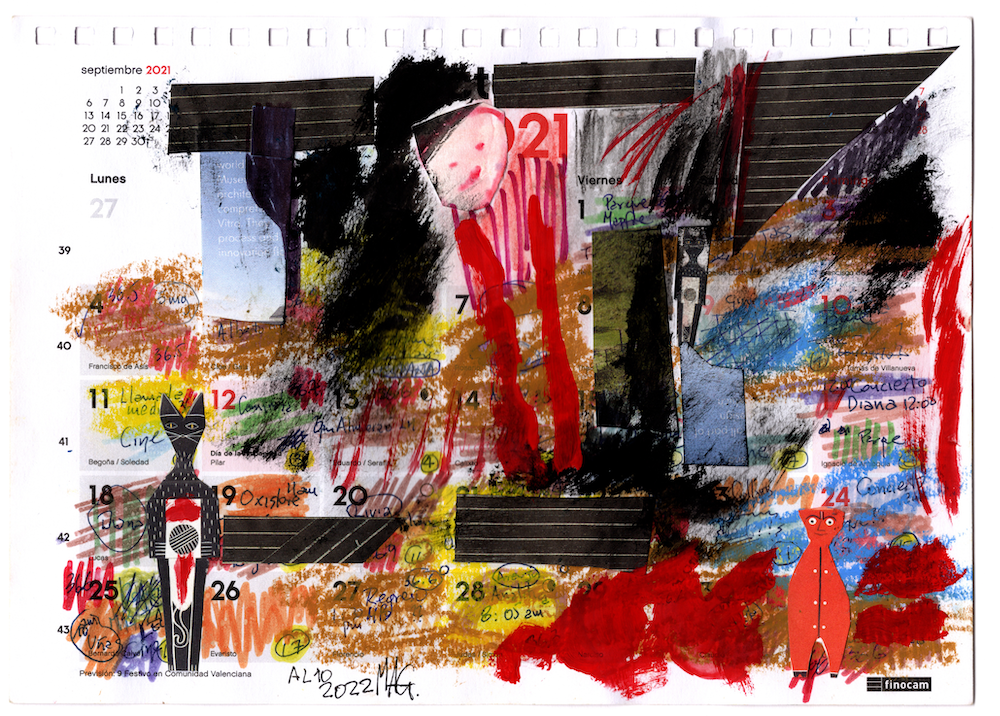
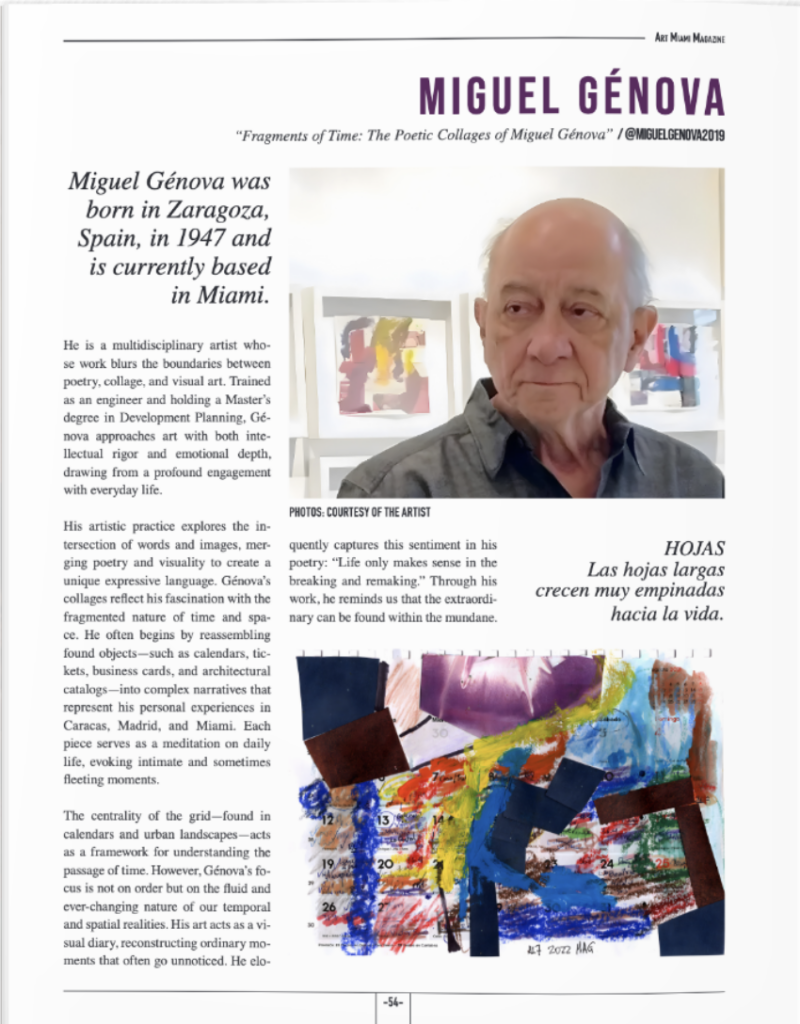
Miguel Génova was born in Zaragoza, Spain, in 1947 and is currently based in Miami. He is a multidisciplinary artist whose work blurs the boundaries between poetry, collage, and visual art. Trained as an engineer and holding a Master’s degree in Development Planning, Génova approaches art with both intellectual rigor and emotional depth, drawing from a profound engagement with everyday life.

His artistic practice explores the intersection of words and images, merging poetry and visuality to create a unique expressive language. Génova’s collages reflect his fascination with the fragmented nature of time and space. He often begins by reassembling found objects—such as calendars, tickets, business cards, and architectural catalogs—into complex narratives that represent his personal experiences in Caracas, Madrid, and Miami. Each piece serves as a meditation on daily life, evoking intimate and sometimes fleeting moments.

The centrality of the grid—found in calendars and urban landscapes—acts as a framework for understanding the passage of time. However, Génova’s focus is not on order but on the fluid and ever-changing nature of our temporal and spatial realities. His art acts as a visual diary, reconstructing ordinary moments that often go unnoticed. He eloquently captures this sentiment in his poetry: “Life only makes sense in the breaking and remaking.” Through his work, he reminds us that the extraordinary can be found within the mundane.

Miguel Génova
Page 8 of 284
1 6 7 8 9 10 284