Home Blog Page 56

Angles of Incredulity—Ariel Orozco

Ariel Orozco
Ariel Orozco

Angles of Incredulity—Ariel Orozco

November 15, 2025—January 17, 2026

Reception—November 15, 6—9 pm

Dimensions Variable (DV)
101 NW 79th Street
Miami, FL 33150

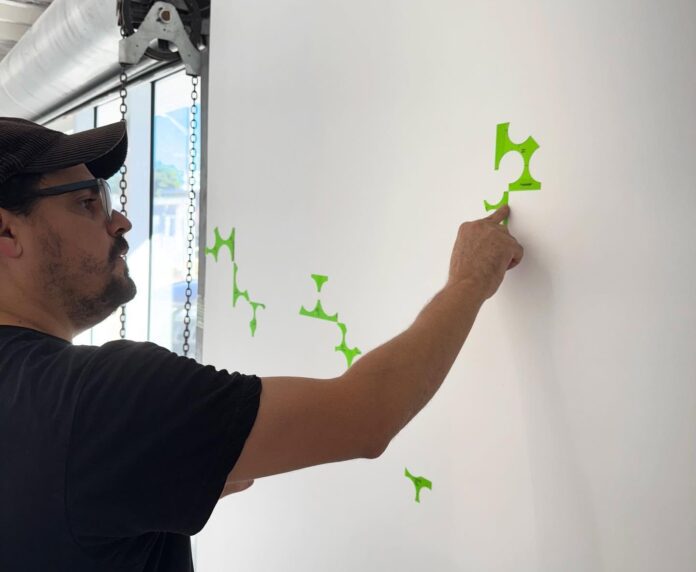
Dimensions Variable (DV) presents a solo project titled Angles of Incredulity by Ariel Orozco. The exhibition opens on November 15, 2025, and runs through January 17, 2026.

Ariel Orozco’s practice embarks on a journey across the surface of things, yet his primary interest lies in looking inside—in experiencing materials as if they were about to disappear. His work captures reflections in passing and headlights coming toward him on the road, or the perfume of a stranger that makes him think of someone else. For Orozco, everything is too fragile to take seriously and too fast to catch. He keeps walking and hurries on, because night is almost here.

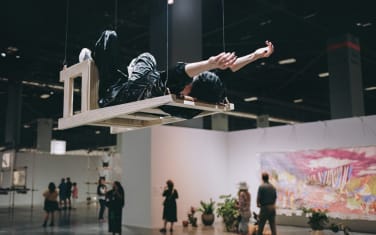
Working within a diverse array of mediums, Orozco moves seamlessly between performance, painting, installation, and video in his conceptually driven practice. Often taking the form of interventions or actions, his work reflects on overlooked interactions of everyday life by providing new or alternative perspectives on the seemingly mundane.1 His work deals with issues of plenitude and scarcity, evoking both desire and lack, while weaving disjointed narratives with no plot or end, leading the viewer on a meandering mental path and inviting imaginative whimsy.2

In his seminal performance Yo paso por la ciudad y la ciudad pasa por mi (2005), Orozco walked the streets of Mexico City for three days asking members of the public to swap their clothing for what he was wearing. By repeatedly making this request, he navigated a complex network of social and economic classes, connecting them with an unusual form of material exchange and highlighting some of the stark differences between them.1

Encompassing the profoundly personal to the completely public, Orozco nevertheless imbues his work with a compassion that is universal. Daily rituals, such as drinking a beer, having a conversation with a friend, or simply walking through the city without a specific destination, can become the starting point for a work of art. His resulting objects and documentation derive from actions or their notion—formal and conceptual syntheses of his relationship with people, places, things, times, and events.

Ariel Orozco (b. 1979, Sanctus Spiritus, Cuba) received his MFA from the Instituto Superior de Arte in Havana in 2005. His work has been shown at galleries, museums, and art fairs worldwide. It is included in such collections as Colección Jumex, the Zabludowicz Collection, and the Museo de Arte Moderno, México. Working within a diverse array of mediums, Ariel Orozco moves seamlessly between performance, painting, and installation in his conceptually driven practice. Often taking the form of interventions or actions, his work reflects on those overlooked interactions of everyday life by providing a new or alternative perspective on the seemingly mundane. Encompassing the profoundly personal to the completely public, he nevertheless imbues his work with a compassion that is universal. Always seeking to give his audience an awareness of the people and things that surround us, his artwork provides moments of contemplation to reflect on the vagaries and marvels of life. Deeply symbolic and startlingly simple, Orozco’s work speaks a universal language accessible to all.

This exhibition is sponsored by the Audrey Irmas Foundation for Social Justice.

  1. Zabludowicz Collection. “Ariel Orozco.” 
  2. Watson, Mike. “Ariel Orozco.” Frieze, 22 April 2012. 

Dimensions Variable (DV) is a nonprofit contemporary art program based in Miami—founded and led by artists.

Mission

We fund artist development, curate innovative exhibitions, provide spaces to work, host community events, and advocate for artists to encourage a more equitable and interconnected art world independent of the constraints of markets and traditional institutions. Dimensions Variable is a point of convergence for new ideas, advocacy, dialogue, and a diverse audience.

Board of Trustees

Leyden Rodriguez-Casanova (Co-founder)
Chair

Frances Trombly (Co-founder)
Vice Chair

Thomas H. Brown
Kelley Johnson
Ruben Millares
Sarah Michelle Rupert
Mindy Solomon

Artists:
Alfredo Travieso

Alexis Martínez

Alexandru Gherman

Alexandro Orozco? (No—your list: Ariel Orozco) → Ariel Orozco

Angela Valella

Bradley Wester

Bruno Castro Santos

Carrie Sieh

Charo Oquet

Chris Byrd

Claudia Vieira

Claudio Marcotulli

Dahlia Dreszer

Deborah Lynn Irmas

Dennis Scholl

Devora Perez

Donna Ruff

Elaine R. Defibaugh

Erin Parish

Fabian Peña

Felice Grodin

Francisco Masó

Frances Trombly

Jacin Giordano

Jamilah Sabur

Javier Barrera

Jenene Nagy

Jennifer Printz

Jenny Brillhart

John DeFaro

Karen Starosta-Gilinski

Karla Kantorovich

Leyden Rodriguez-Casanova

Leyla Cárdenas

Liene Bosquê

Lisu Vega

Macarena Salinas A.

Magnús Sigurdarson

Maria Lino

Marianna Angel

Marisa Telleria

Marcos Valella

Margrethe Aanestad

Mark Herrera

Monica Avayou

Moira Holohan

Muu Blanco

Nicole Burko

Nicole Charre

Onajide Shabaka

Rebecca Setareh

Regina Durante Jestrow

Ricardo Alcaide

Richard Garet

Rocío Rodríguez

Rosemarie Chiarlone

Salua Ares

Tom Scicluna

Vanessa Lustig

Yanet Martínez Molina
BLACK MANS SHADOW WORKQUEUE

BLACK MANS SHADOW WORKQUEUE

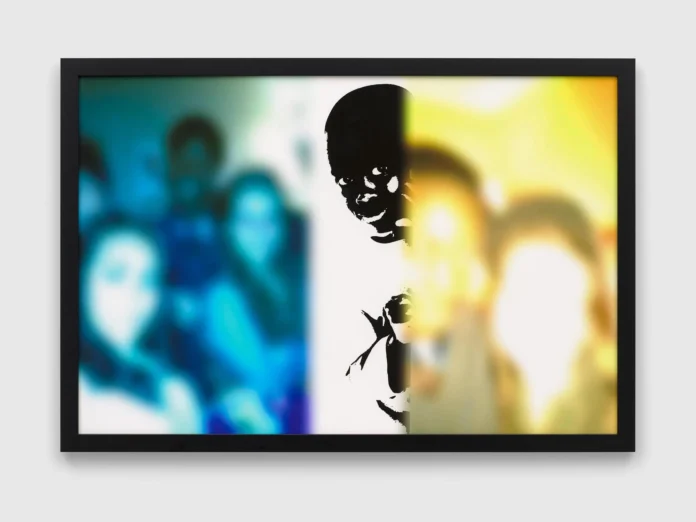
ON VIEW: BLACK MANS SHADOW WORKQUEUE Gallery is pleased to present Black Mans Shadow Work, a two-person exhibition with Torrance Hall & Karryl Eugene.

Dates: October 4 – November 15, 2025
Closing: Saturday, November 15th, 6–9 PM
Address: 212 N Miami Ave, Miami, FL 33128 (Second floor — buzz for entry)

Exploring interiority over surface, Black Mans Shadow Work reflects on ideas such as W.E.B. Du Bois’ notion of “double-consciousness,” reframing what contemporary art by Black men can reveal beyond stereotype or defense. Karryl Eugene examines malehood, introspection, and sociology through layered compositions drawn from images of video games, all-white parties, film stills, and celebrity culture, interrogating intimacy, status, and spectacle. Hall’s new series Untitled (Body/Count) introduces what he refers to as a “subject-system” whose cycles of integration and ejection unfold within the friction of emergence, with futurity as the sole site of equilibrium. Together, their works articulate a language of Black art that moves past familiar ties to trauma or representation, instead privileging interior voices that resonate with nuance, persistence, and a re-imagined horizon.

Stanek Gallery Miami BLUE

Stanek Gallery Miami BLUE
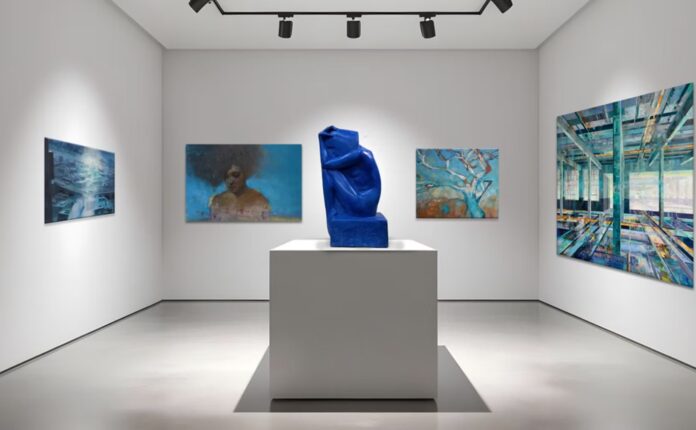
From Left: Robert Birmelin, Citizen of the City III (Breathing), Stanka Kordic,Witness, Katherine Stanek, Woman, Jacqueline Boyd, Intertwined, Michael Bartmann, Bardo Room V.

BLUE

Opening Saturday Nov 15, 2025 _ 12 – 5pm

8375 NE 2nd Ave.

Miami, FL 33138

(305) 713-9454​

Stanek Gallery presents BLUE, an immersive group exhibition exploring the emotional, psychological, and sensory power of a single color. More than a hue, blue becomes an atmosphere of reflection, depth, and transformation, inviting viewers into calm and contemplation.

Blue transforms the gallery into an immersive exploration of the profound emotional, psychological, and sensory dimensions of a single color.

More than a hue, blue embodies an atmosphere, an enduring metaphor for the human condition and envelops the viewer in a poetic metaphor for reflection, depth, and transformation. Across a range of mediums, participating artists consider the multifaceted nature of blue as both pigment and feeling, as material and meaning, and as a bridge between what is visible and what is intangible. 

Throughout history, blue has held a rare and sacred presence, from the ultramarine of Renaissance altarpieces to the meditative abstractions of modern masters. In BLUE, this legacy is reimagined through contemporary perspectives that embrace the color’s duality: its serenity and melancholy, its depth and distance, its ability to soothe even as it evokes longing. The exhibition invites viewers to experience how blue can quiet the senses, slow perception, and hold space for reflection.

The works on view transform the gallery into a realm of contemplation, where light and pigment merge to create an environment of calm intensity. Within this immersive field, each piece contributes to a conversation about how color itself can carry emotion, memory, and meaning. BLUE becomes a language that transcends medium, a force that connects heart, mind, and body through a color field of resonance.

BLUE will be on view at Stanek Gallery in Miami from November 15th through December 31st. Join us Saturday November 15th when the show opens for a chance to meet the artist and gallery director, Katherine Stanek and view Woman, Stanek’s newest piece in concrete. 

A World Far Away, Nearby and Invisible: Territory Narratives in the Jorge M. Pérez Collection

A World Far Away, Nearby and Invisible

A World Far Away, Nearby and Invisible: Territory Narratives in the Jorge M. Pérez Collection

November 20, 2025 – August 15, 2026

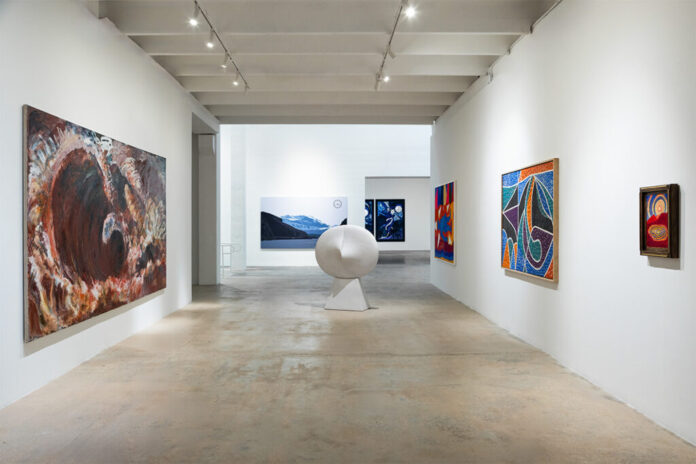
A World Far Away, Nearby and Invisible invites viewers on a journey through selected works from the Jorge M. Pérez Collection that explore and reimagine the complex, multifaceted idea of territory. The exhibition moves from a conception of territory as layered, tangible ground to one rooted in primordial, earthbound forces—celebrating it as a space where the symbolic and the dreamlike converge. Organized into four chapters, the exhibition weaves together narratives that portray territory as a shared space of affection, magic, and community, where legends and myths meet. These stories form a tapestry of metaphors that, in the words of Mazatec shaman María Sabina, evoke a world that is far away, nearby, and invisible all at once.

The works on view at El Espacio 23 suggest territory as a vital force: a living, shifting organism, a refuge, a site of purification, and a space for meaning. In contrast, the landscape emerges as a cultural construct: a subjective gaze that, through aestheticization, fragments and categorizes territory in order to name it. Curated by Claudia Segura Campins in dialogue with curators of the Pérez Collection, Patricia M. Hanna and Anelys Alvarez, A World Far Away, Nearby, and Invisible becomes a dialogue between physical substance and symbolic resonance. Within this conceptual frame, territory is rendered in sharp, unembellished clarity, revealing its political, performative, and transformative dimensions.

Hours

Thursday- Saturday | 10am-5pm

2270 NW 23rd St.
Miami, Florida, 33142

El fotógrafo venezolano Eduardo Chacon

El fotógrafo venezolano Eduardo Chacon expone su obra en el Museo de Arte de Boca Ratón

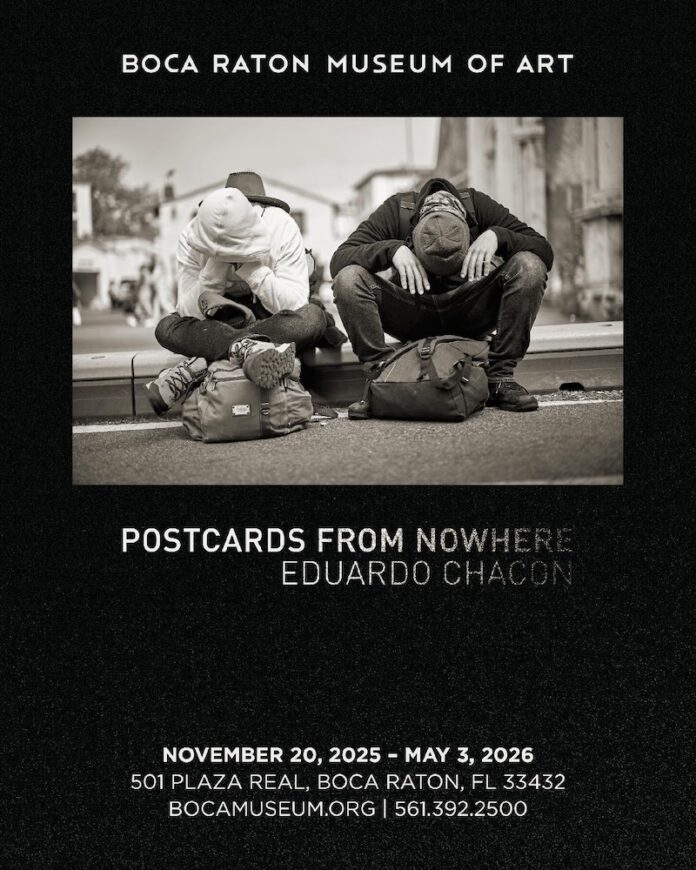
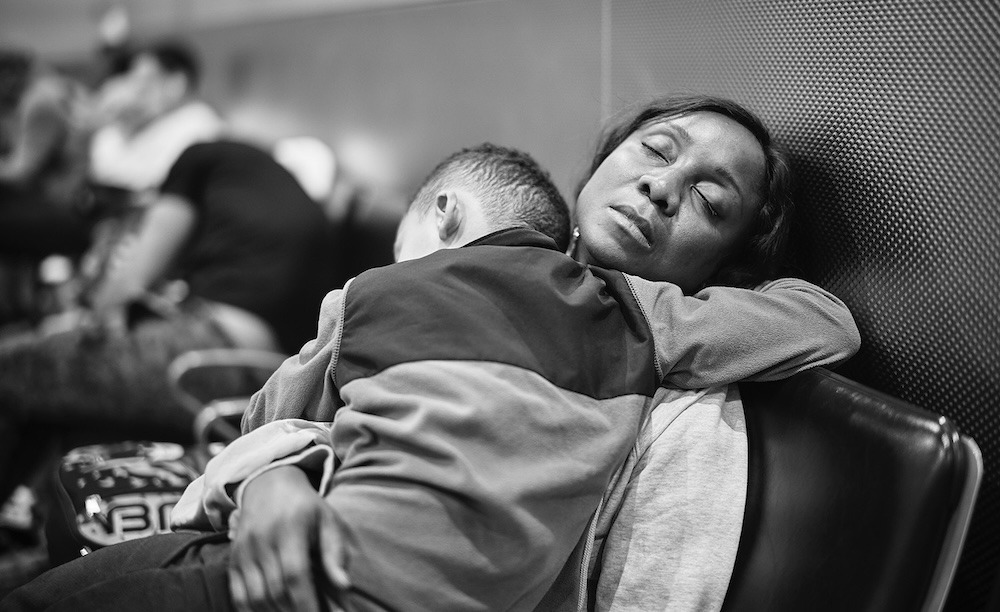
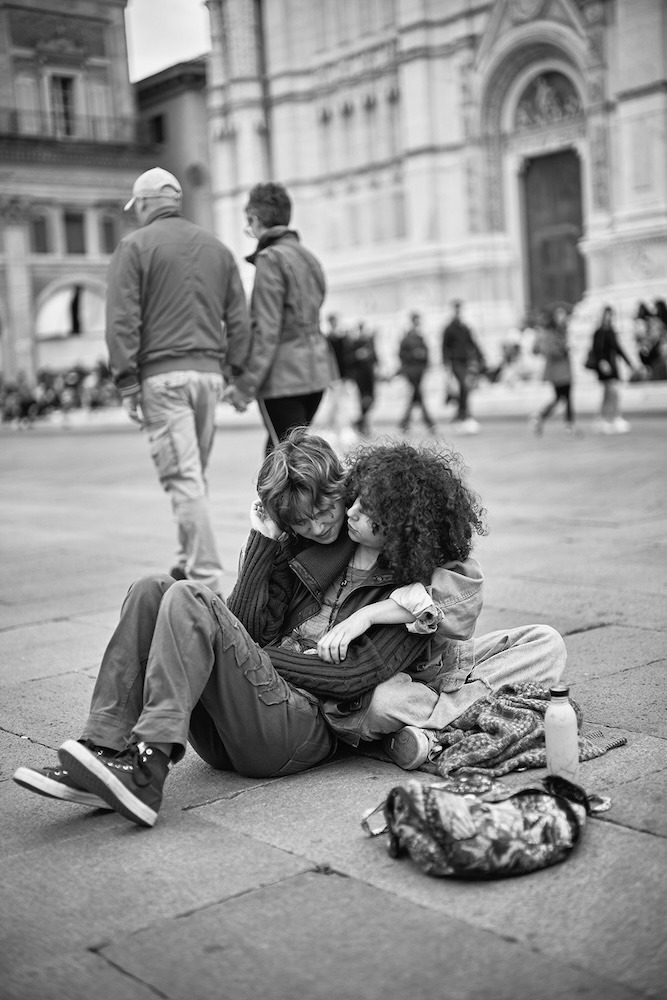
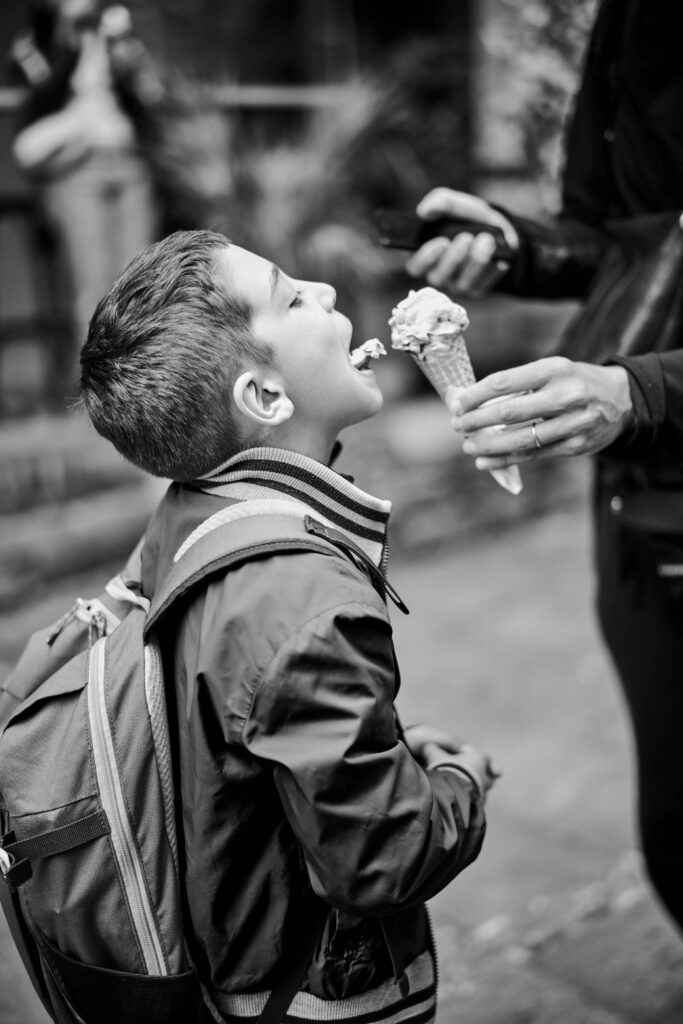
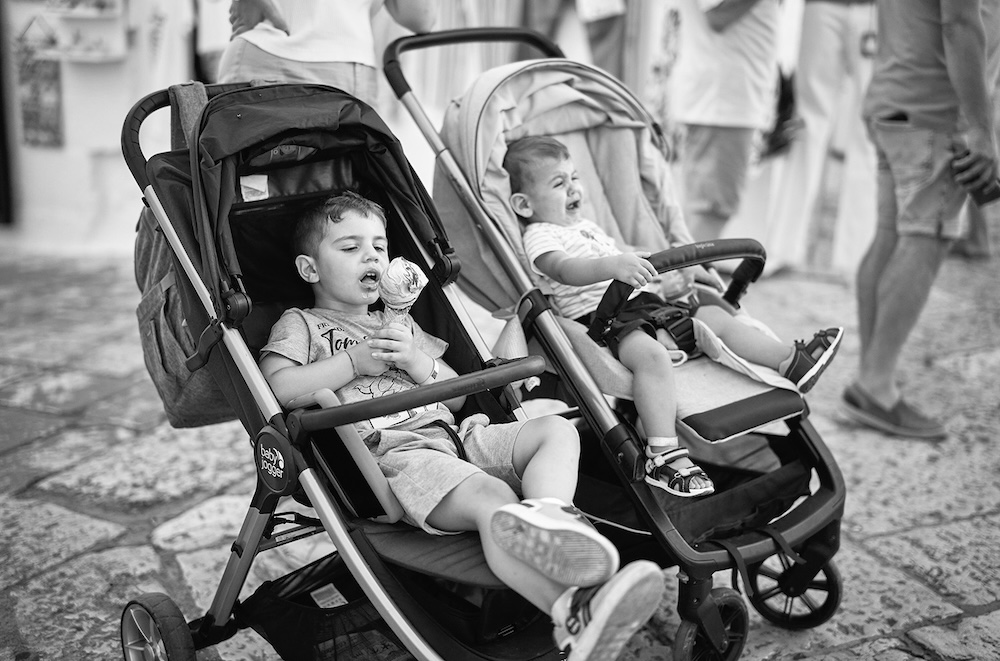
Una exposición titulada “Postales de ningún lugar”, del fotógrafo venezolano Eduardo Chacon, se estará exhibiendo a partir del 20 de noviembre de 2025, en el Museo de Arte de Boca Ratón, bajo la curaduría de Kelli Bodle. 

La muestra, según explica la curadora Kelli Bodle en el texto de sala, “combina la fotografía espontánea en blanco y negro sin editar del artista Eduardo Chacon, radicado en Florida, con una selección de fotografías callejeras de la colección del Museo realizadas por artistas que establecieron el estándar para el género. Impresas en una escala íntima del tamaño de una postal, las imágenes de Chacon capturan momentos fugaces de interacción humana capturados al azar en calles, playas y festivales”.

“Prefiriendo el término fotógrafo ‘humanista’, es decir, uno que se centra en el ser humano en la vida cotidiana, el ‘momento decisivo’ de Chacon para apretar el obturador incluye no solo la composición y la iluminación perfectas, sino que también requiere que el sujeto incluya un momento emotivo. Debido a que estos momentos son universales y atemporales, las imágenes podrían ser postales de cualquier lugar o de ningún lugar”.

De acuerdo con Kelli Bodle, “las fotografías de la colección emparejadas con la obra de Chacon en esta exposición, que abarca desde 1926 hasta 1978, ofrecen imágenes similares en el tiempo, capturando los momentos fugaces que componen nuestras vidas y les dan significado, ya sea que vivamos ahora o en 1926; ya sea que vivamos en Italia o Estados Unidos; ya sea que los consideremos perfectos o no”.

A su vez la crítico de arte Katherine Chacón afirma en el texto del catálogo de la exposición, que Eduardo Chacon “es un fotógrafo humanista que ha centrado su trabajo en la objetiva honestidad del medio fotográfico. Su talante como creador de imágenes se conecta con la gran tradición de la fotografía analógica clásica, interesada en la captura de instantes que, al ser resaltados por la toma, resultan enormemente elocuentes. Admirador de fotógrafos como Henri Cartier-Bresson, Willy Ronis o Brassaï, Chacon reduce al mínimo los recursos tecnológicos provistos por los dispositivos digitales con los que trabaja, evitando los artificios y las sofisticaciones técnicas propias de la era informática. Para ello, utiliza un enfoque estrictamente manual, lo que le permite tener un control total sobre la captura de la imagen, ya que es él y no el dispositivo quien decide variables determinantes como la luminosidad, la velocidad del disparo, y la apertura del lente, entre otras”. 

Asimismo, Katherine Chacón señala que “en la serie Postales de ningún lugar, Chacon reúne un grupo de piezas en las que hace gala de la sobriedad que caracteriza su método y su lenguaje fotográfico. Realizada, como toda su obra, en blanco y negro, y concretando el encuadre definitivo al momento de la captura, las imágenes ilustran esos momentos que, por fugaces y habituales, pasan desapercibidos, y que solo bajo la mirada atenta y la punzante sensibilidad de Chacon, revelan su rara belleza y potente expresividad”.

Por su parte, el fotógrafo Eduardo Chacon afirma que él se esfuerza por crear crónicas visuales de su entorno, “inspiradas en la experiencia humana. En caza de emociones esquivas, ignoradas y a menudo olvidadas en nuestra acelerada sociedad moderna”.

“En el corazón de mi fotografía se encuentra una profunda reverencia por la humanidad que subyace a cada imagen y mi deseo más genuino de retratar la historia que la trasciende. Mis imágenes se crean y se componen en el mismo momento en que son capturadas en cámara, con un objetivo de enfoque manual y ajustes totalmente manuales. Salvo la conversión a blanco y negro y los ajustes básicos de niveles, rara vez se recortan o se les realizan otras manipulaciones. A su manera, el proceso retardatario con el que elijo producir estas imágenes me ayuda a desconectar de las complicaciones de la tecnología moderna y me transporta a una época y un lugar donde la vida era más sencilla”, expresa el artista.

Eduardo Chacon (1960) es un fotógrafo residente en Tamarac, Florida. Estudió en la Escuela de Fotografía de Nueva Inglaterra a principios de los 80 y abrió su propio estudio de fotografía publicitaria, especializándose posteriormente en fotografía de productos y gastronomía. Sus imágenes comerciales se han publicado extensamente a nivel nacional e internacional. Tras retirarse del mundo de la publicidad, sintió la necesidad de retomar sus raíces en la captura de la condición humana, viajando tanto a nivel nacional como internacional en busca de inspiración. Ha participado en varios concursos nacionales e internacionales.

La exposición “Postales de ningún lugar”, de Eduardo Chacon, permanecerá en exhibición hasta el 3 de mayo de 2026, en el Museo de Arte de Boca Ratón, ubicado en 501 Plaza Real, Boca Ratón, Florida 33432, Estados Unidos.

Eduardo Chacon
Eduardo Chacon
Eduardo Chacon
Eduardo Chacon

Histórica retrospectiva en el MOMA: Wifredo Lam a plenitud

Wifredo Lam
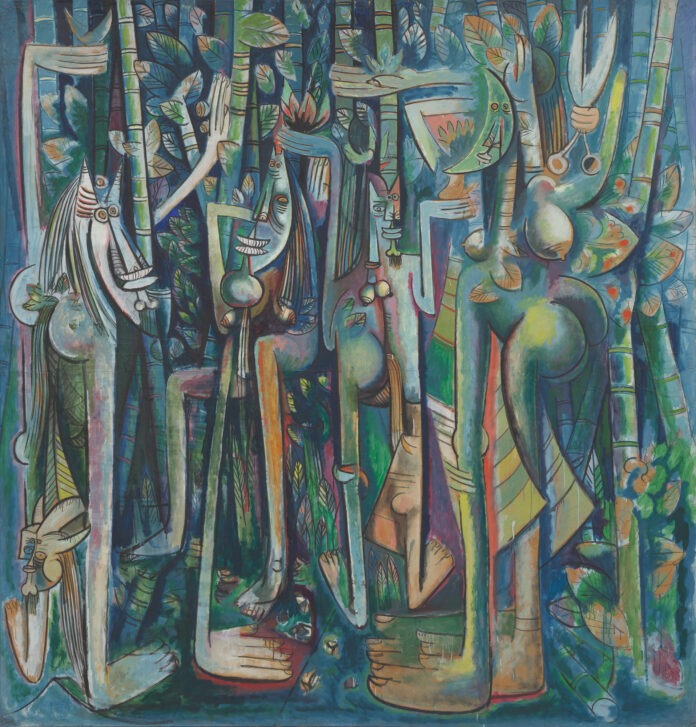
La Jungla (1943). Foto: MOMA.

Histórica retrospectiva en el MOMA: Wifredo Lam a plenitud

Author: Wilfredo Cancio Isla

La mayor exhibición dedicada al artista cubano Wifredo Lam (1902-1982) en Estados Unidos abre este lunes sus puertas en el Museo de Arte Moderno de NY y podrá visitarse hasta abril de 2026.

La exhibición Wifredo Lam: When I Don’t Sleep, I Dream (Cuando no duermo, sueño), la más completa retrospectiva dedicada al célebre artista cubano en Estados Unidosabrirá sus puertas al público este lunes en el Museo de Arte Moderno (MOMA) de Nueva York.

La exposición abarca seis décadas de la prolífica carrera de Wifredo Lam (1902-1982) e incluye más de 130 obras, entre las que se encuentran  pinturas, piezas en papel de gran formato, dibujos colaborativos, libros ilustrados, grabados, cerámicas y material de archivo, así como un cortometraje documental sobre el artista.

Varias piezas en préstamo del Patrimonio de Wifredo Lam, de París, se han incorporado a la muestra. El Museo de Bellas Artes de La Habana (MNBA) se negó a ceder obras para la restrospectiva, según los organizadores, temiendo posibles incautaciones para cubrir los montos de demandas validadas por tribunales estadounidenses.

En propiedad del MNBA están cuatro obras consideradas capitales en la trayectoria de Lam: La silla (1943), donada por el escritor Alejo CarpentierHuracán (1946), Maternidad (1952) y El Tercer Mundo (1966).  

Lam no solo es el más universal de los pintores cubanos, sino que su experiencia logró encarnar la figura del artista transnacional del siglo XX.

El MOMA le ha dedicado a la muestra todo el tercer piso de la instalación, en lo que constituye un histórico tributo a Lam y al arte cubano de la era moderna.

“Esta exposición renueva la energía y el entusiasmo por la  obra de Lam”, dijo el galerista Ramón Cernuda, propietario de Cernuda Arte, en Coral Gables. “Es realmente un acontecimiento relevante para el arte cubano y latinoamericano”.

Eskil Lam (izq.), hijo de Wifredo Lam, junto al galerista Ramón Cernuda. Foto: CF.

Desde su fundación, en 1929, es la cuarta vez que el MOMA dedica una muestra retrospectiva de gran alcance a un artista latinoamericano. Con anterioridad habían recibido esta distinción el mexicano Diego Rivera (1886-1957), a quien la institución homenajeó en 1931; la brasileña Tarsila de Amaral (1886-1973) y el venezolano Armando Reverón (1889-1954).

Cernuda, que posee una de las mayores colecciones privadas de Lam en Estados Unidos, estuvo entre los invitados especiales del MOMA a la apertura oficial del pasado jueves, con la asistencia de personalidades del mundo del arte, galeristas, representantes de importantes museos e instituciones culturales, y miembros de la familia Lam.

“Disfrutar esta muestra es una experiencia estética de alto nivel, representativa de toda la gran pintura de Lam desde su regreso a Cuba hasta comienzos de los años 60, aunque incompleta en lo que al contexto histórico político respecta”, comentó el historiador y crítico de arte Alejandro Anreus, autor de Modern Art in 1940’s Cuba.

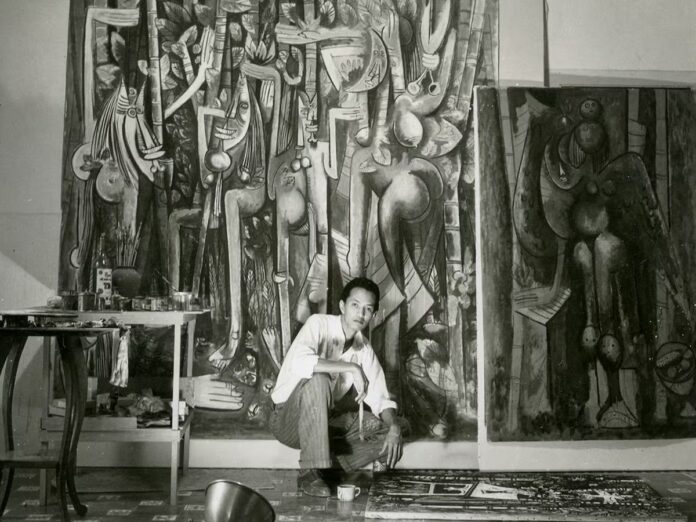
Forjado en el torbellino surrealista y bajo la tutela inicial de Pablo Picasso, Lam realizó su obra entre España, Francia e Italia, con un período decisivo de estancia en Cuba y en el Caribe, a partir de 1940. Justamente en esa etapa es La Jungla (1943), una pieza que marcó la consolidación de un estilo propio, integrando elementos de la vanguardia a su herencia multicultural, de raíces negra y china.

La Jungla, su creación más internacionalmente conocida, forma parte de la colección permanente del MOMA. Con ella, Lam inauguró un poderoso vocabulario visual, síntesis de un barroco antillano donde se mezclan lo humano, lo animal, lo vegetal y lo divino.

Fue adquirida por el MOMA en 1945 y permaneció colgada en el vestíbulo de la entidad hasta que la crítica alertó sobre la significación de la pieza.

Otro de los singulares atractivos de la muestra de Nueva York es Grande Composition (4.2 x 2.9 metros), un impresionante lienzo de 1949 y que no se ha exhibido públicamente por más de sesenta años. El museo adquirió la pieza en fecha reciente luego de una prolongada negociación con un coleccionista privado.

Lam rechazó participar en la antológica muestra de arte cubano Modern Cuban Painters, que realizó el  MOMA, con el apoyo financiero de la mecenas María Luisa Gómez Mena, en la primavera de 1944. Pero la prestigiosa galería Pierre Matisse de Nueva York planificó una exposición personal del artista hacia finales de los años 40, la cual no llegó a realizarse. El proyecto se frustró por razones personales que involucraron la relación con su entonces esposa, Helena Holzer, y el proceso de separación de ambos.

El evento se pospuso hasta la muerte de Lam, en 1982, pero la  pintura preparada por el artista para identificar la muestra se conservó en manos de la Pierre Matisse Gallery durante más de 30 años, hasta que fue exhibida y su imagen impresa en la cubierta del catálogo de la exhibición póstuma. La pieza puede verse actualmente en Cernuda Arte.

Wifredo Lam: When I Don’t Sleep, I Dream permanecerá abierta hasta el 11 de abril de 2026.

Sourde: https://cafefuerte.com/culturales/historica-retrospectiva-en-el-moma-wifredo-lam-a-plenitud/

Wifredo Lam: When I Don’t Sleep, I Dream

Wifredo Lam
Wifredo Lam

The Museum of Modern Art Presents the Most Comprehensive U.S. Retrospective of Wifredo Lam in Decades

Wifredo Lam: When I Don’t Sleep, I Dream Explores Six Decades of Work by One of the 20th Century’s Most Significant Transnational Artists

The Museum of Modern Art announces Wifredo Lam: When I Don’t Sleep, I Dream, opening November 10, 2025, and on view through April 11, 2026. This landmark exhibition represents the most extensive retrospective devoted to the artist in the United States, offering an unprecedented examination of one of modernism’s most compelling yet underrecognized figures.

Spanning six decades of Lam’s prolific career, the exhibition brings together more than 130 artworks created between the 1920s and 1970s. The retrospective features paintings, large-scale works on paper, collaborative drawings, illustrated books, prints, ceramics, and archival material, with key loans generously provided by the Estate of Wifredo Lam, Paris. This comprehensive presentation reveals how Lam—born in Cuba and spending most of his life working across Spain, France, and Italy—came to embody the quintessential transnational artist of the 20th century.

Wifredo Lam (1902-1982)
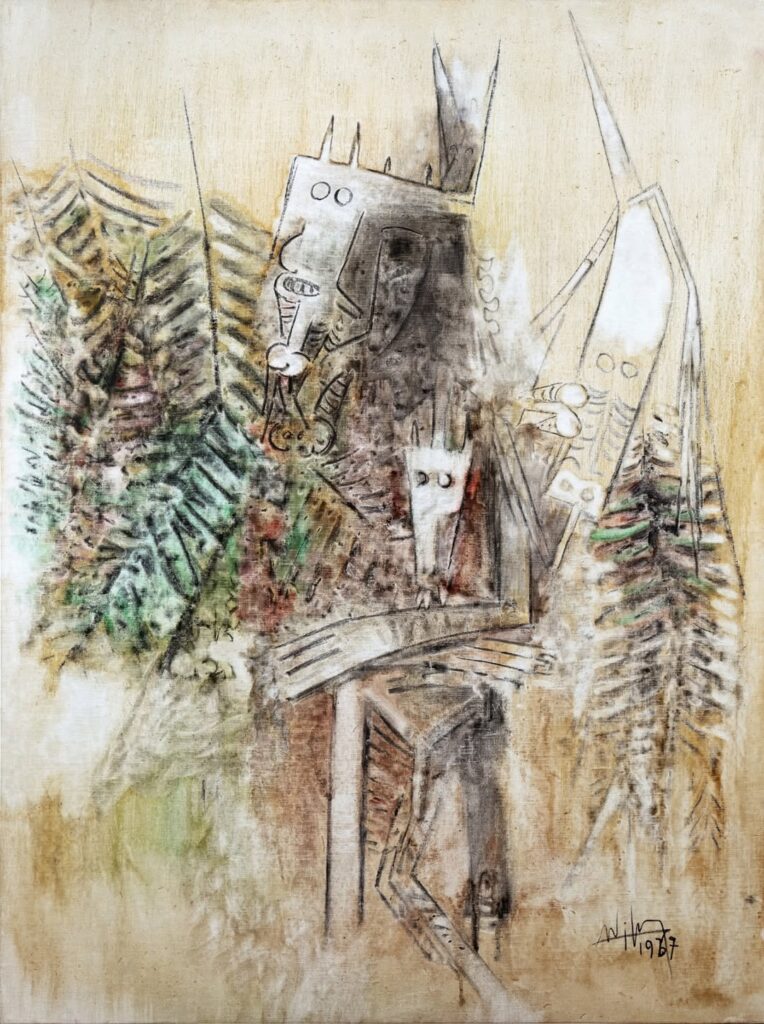
Wifredo Lam (1902-1982) Sans titre 1967, oil on canvas (51.1 x 38.1 in) 130 x 97 cm)

Wifredo Lam (1902–1982) occupies a unique position in modern art history, having developed a visual language that synthesized Afro-Caribbean spiritual traditions, European avant-garde movements, and a profound critique of colonialism. His work engaged with Surrealism and Cubism while simultaneously challenging the Eurocentrism of these movements, creating paintings that are at once formally innovative and culturally subversive. Lam’s hybrid aesthetic—featuring enigmatic figures that merge human, animal, and plant forms—continues to resonate with contemporary discussions about identity, diaspora, and cultural hybridity.

When I Don’t Sleep, I Dream traces the full arc of Lam’s artistic evolution, from his early academic training to his mature works that secured his position as a crucial figure in international modernism. The exhibition illuminates his significant relationships with major artists and intellectuals, including Pablo Picasso, André Breton, and Aimé Césaire, while emphasizing how Lam maintained his distinctive vision throughout these encounters.

The exhibition is organized by Christophe Cherix, The David Rockefeller Director, and Beverly Adams, The Estrellita Brodsky Curator of Latin American Art; with Damasia Lacroze, Curatorial Associate, Department of Painting and Sculpture, and Eva Caston, Curatorial Assistant, Department of Drawings and Prints.

Leadership support for the exhibition is provided by the Sandra and Tony Tamer Exhibition Fund, the Eyal and Marilyn Ofer Family Foundation, The International Council of The Museum of Modern Art, Sue and Edgar Wachenheim III, and the Dian Woodner Exhibition Endowment Fund.

Generous funding is provided by The Black Arts Council of The Museum of Modern Art.

Additional support is provided by Roberto S. and Elizabeth T. Goizueta.

The Bloomberg Connects digital experience is made possible through the support of Bloomberg Philanthropies.

Major support for the publication is provided by The Museum of Modern Art’s Research and Scholarly Publications endowment established through the generosity of The Andrew W. Mellon Foundation, the Edward John Noble Foundation, Mr. and Mrs. Perry R. Bass, and the National Endowment for the Humanities’ Challenge Grant Program. Generous funding is provided by the Jo Carole Lauder Publications Endowment Fund of The International Council of The Museum of Modern Art.

Exhibition Dates: November 10, 2025 – April 11, 2026

Location: The Museum of Modern Art, 11 West 53 Street, New York, NY 10019

For press inquiries, contact: [Press Office Contact Information]

About The Museum of Modern Art

The Museum of Modern Art is a place that fuels creativity, ignites minds, and provides inspiration. With extraordinary exhibitions and the world’s finest collection of modern and contemporary art, MoMA is dedicated to the conversation between the past and the present, the established and the experimental.

Art Basel unveils gallery lineup and key highlights for its 2025 Miami Beach edition

Art Basel unveils gallery lineup and key highlights for its 2025 Miami Beach edition

Art Basel unveils gallery lineup and key highlights for its 2025 Miami Beach edition

Art Basel unveils gallery line‑up and key highlights for its 2025 Miami Beach edition

  • The 2025 edition of Art Basel Miami Beach will welcome 283 premier galleries from 43 countries and territories across the Americas, Europe, Asia, the Middle East, and Africa—reasserting its position as the leading international art fair in the Americas.
  • More than two-thirds of participating galleries operate spaces in the Americas, with a deep presence in the U.S., Latin America, and the Caribbean, underscoring the fair’s unmatched engagement with the region’s vibrant art scenes.
  • Further expanding the fair’s national footprint, galleries from New York, Los Angeles, San Francisco, Chicago, Dallas, Philadelphia, and Greater Miami join a global roster of major blue-chip, established, and emerging exhibitors from the UK, France, Germany, Italy, Spain, South Korea, Hong Kong, mainland China, Japan, and beyond.
  • The show will activate Greater Miami with a week of museum-quality presentations, dynamic public programming, and institutional and partner collaborations of the highest caliber—convening artists, galleries, collectors, institutions, thought leaders from across the creative industries, and the broader public.
  • Marking a major new chapter, Art Basel Awards—the first global honors celebrating excellence across the contemporary art industry—will debut in Miami Beach. The 2025 Gold Medalists will be revealed during the Official Night of the Art Basel Awards on December 4, presented in partnership with BOSS.
  • Art Basel, whose Global Lead Partner is UBS, will take place from December 5–7, 2025, with VIP Preview Days on December 3 and 4, at the Miami Beach Convention Center (MBCC).

Art Basel is pleased to announce the exhibitor list for its 2025 edition in Miami Beach, featuring 283 premier galleries—including 49 making their debut. Representing 43 countries and territories, the fair remains a vital platform for discovering exceptional works by Modern masters, postwar icons, leading contemporary practitioners, and emergent voices.

This year’s edition will foreground the most urgent artistic currents shaping the American scene today, with a particular focus on Latinx, Indigenous, and diasporic positions. Reflecting Miami Beach’s unique position at the crossroads of North and South America, the fair offers a panoramic view of the region’s creative influence within a global context.

Bridget Finn, Director, Art Basel Miami Beach, said: “The strength and caliber of this year’s exhibitors reaffirms Art Basel Miami Beach’s centrality within the global art ecosystem. This edition reflects the vitality of artistic production across the Americas—which continues to shape contemporary art practice, patronage, and discourse worldwide—and the fair’s role as a critical gateway for introducing pioneering international artists and perspectives to the American market. It is bold, rigorous, and attuned to the moment.” 

Highlights by Region

Latin America and the Caribbean

Participating galleries this year hail from Mexico, Brazil, Argentina, Chile, Colombia, Cuba, Guatemala, Peru, and Uruguay. Returning stalwarts in the region such as Raquel Arnaud (São Paulo), Galería Isabel Aninat (Vitacura), Ruth Benzacar Galería de Arte (Buenos Aires), OMR (Mexico City), and Galería Sur (Punta del Este) will present their acclaimed programs.

A rising generation of exhibitors that have swiftly gained recognition within their local contexts further expands the region’s representation. El Apartamento—the first homegrown Cuban gallery to join the fair, with exhibition spaces in Havana and Madrid—makes its debut, alongside Crisis (Lima); Lodos (Mexico City); Galeria Mapa (São Paulo); Galeria Elvira Moreno (Bogotá); Parallel Oaxaca (Oaxaca); Pasto Galería (Buenos Aires); Proyecto Nasal (Mexico City, Guayaquil); W—galería (Buenos Aires, Garzón); and Zielinsky (Barcelona, São Paulo).

United States and Regional Diversity

This year’s edition welcomes a new wave of rising galleries from New York City’s downtown scene, joining established Chelsea powerhouses and international mega-dealers including Gagosian, Hauser & Wirth, David Zwirner, Pace Gallery, and Paula Cooper Gallery. First-time participants from the city include David Peter Francis, Candice Madey, Margot Samel, Theta, Kate Werble Gallery, and YveYang. Alexander Gray Associates returns for the first time since 2016.

In addition, the West Coast scene is represented more expansively at Art Basel Miami Beach, with nearly 50 exhibitors operating spaces across California. San Francisco’s Rebecca Camacho Presents and Catharine Clark Gallery, along with Los Angeles-based Diane Rosenstein Gallery and The Pit, join longstanding exhibitors such as Berggruen Gallery, David Kordansky Gallery, Gemini G.E.L., Regen Projects, Roberts Projects, and Vielmetter Los Angeles.

The fair continues to broaden its reach beyond coastal art hubs. From Dallas, Erin Cluley Gallery joins for the first time, while Locks Gallery (Philadelphia) returns after nearly two decades. Chicago maintains a strong showing with Document, GRAY, moniquemeloche, and Patron.

Underscoring Art Basel’s deep, mutually generative relationship with South Florida’s cultural community, the fair welcomes back Central Fine—now expanding with a second space in Salta, Argentina and relocating its principal gallery to Miami’s Design District—alongside Piero Atchugarry (Miami, Garzón); David Castillo (Miami); Gavlak (West Palm Beach); Fredric Snitzer (Miami); and Acquavella Galleries (New York, Palm Beach). They are joined by debut exhibitors Nina Johnson (Miami) and Voloshyn Gallery (Kyiv, Miami Beach), the latter introducing the first-ever Ukrainian gallery presence at the fair.

International Presence

The fair continues to draw top-tier galleries from Europe, Asia, and Africa, with nearly 100 exhibitors with principal locations in these regions returning—and a notable representation from the UK, France, Germany, Italy, Spain, South Korea, Hong Kong, mainland China, and Japan.

Major blue-chip and secondary market dealers including Cardi Gallery (Milan, London); Galerie Karsten Greve (Paris, St. Moritz, Cologne); and Vedovi Gallery (Brussels) return, alongside US fixtures such as Edward Tyler Nahem (New York); Helly Nahmad Gallery (New York); Van de Weghe (New York); Yares Art (New York, Beverly Hills, Santa Fe); and Tibor de Nagy (New York), which celebrates its 75th anniversary this year.

Also returning are pioneering international galleries with influential contemporary programs, such as Edel Assanti (London); Gallery Baton (Seoul); galerie frank elbaz (Paris); Nanzuka (Tokyo, Shanghai); and Galerie Thomas Schulte (Berlin).

Several galleries with cross-continental footprints and programs that notably attend to artistic production in the Americas also return, including Galleria Continua (San Gimignano, Beijing, Les Moulins, Havana, Rome, São Paulo, Paris, Dubai); mor charpentier (Paris, Bogotá); and Galerie Nordenhake (Berlin, Mexico City, Stockholm).

Exhibition Sectors

Art Basel Miami Beach is structured across several exhibition sectors, including:

  • Galleries, the fair’s main sector, in which leading Modern, postwar, and contemporary art dealers present the full breadth of their program
  • Nova, for galleries presenting works created within the last three years by up to three artists
  • Positions, for young galleries showcasing ambitious solo presentations by emerging artists
  • Survey, dedicated to galleries highlighting artistic practices of historical relevance

Details on other sectors and additional gallery programming will be announced in the coming months. 

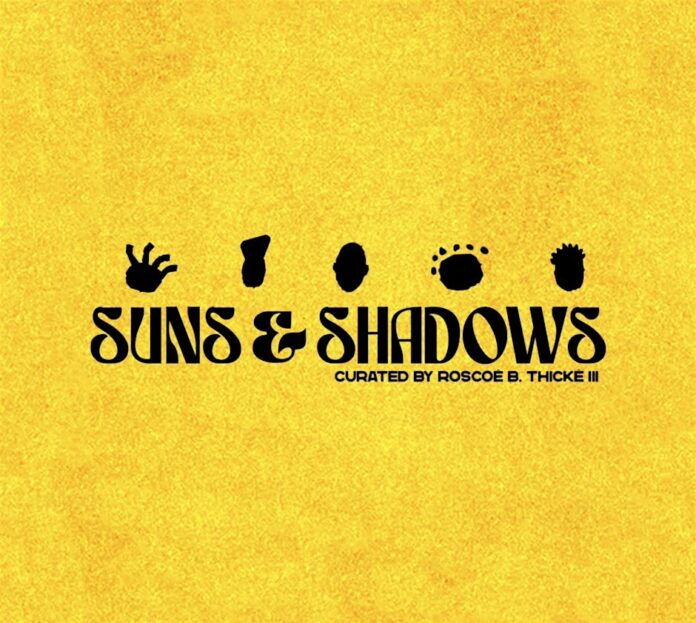
Suns & Shadows

SUNS & SHADOWS

SUNS & SHADOWS

AMADLOZI Gallery.  African Heritage Cultural Arts Center

6161 NW 22nd Ave
Miami, FL 33142

MARK DELMONT
REGINALD O’NEAL
LANCE MINTO-STROUSE
MARK FLUERIDOR
T. ELIOTT MANSA

Light and shadow converge at the African Heritage Cultural Arts Center for the opening of Suns & Shadows, a thought-provoking exhibition curated by Roscoè B. Thickè III in the Amadlozi Gallery.

Exploring Miami’s contrasts—its vibrancy and vulnerability, resilience and renewal—the exhibition features works by Mark Delmont, Reginald O’Neal, Lance Minto Strouse, T. Eliott Mansa and Mark Fleuridor. Through sculpture, painting, installation and textile, the artists reflect on legacy, memory and identity, illuminating how history and imagination shape both community and self.

Curator Roscoè B. Thickè III, a celebrated Miami-born artist known for his lens-based and multidisciplinary practice, brings his deep connection to place and storytelling to this compelling presentation.

We were once children in the hush of someone else’s shade
held in the arms of giants whose names were sung,
whose shadows stretched across front porches, oceans, classrooms, barbershops and sanctuaries.
We learned to move beneath them
not in fear, but in reverence.
Because in Blackness, a shadow is not the absence of light.
It is the evidence of presence.
A trace of protection.
A testament that someone stood tall,
and made a way.
SUNS & SHADOWS is a gathering of artists who reckon with that inheritance
who remember the hands that shaped them,
and recognize the moment they began to shape themselves.
This exhibition reveals the ways we have always been both the dream and
the dreamer,
the rooted and the reaching.
They honor the shadow as shelter,
and the sun as a calling.

SUNS & SHADOWS is an exhibition that holds the circular nature of legacy at its center. It begins with an acknowledgement: we are always living in relation to those who came before and those who will come after. To stand in the present is to be both inheritor and torchbearer, both child of someone’s shadow and source of someone else’s light. The works in this exhibition gather around that truth, offering forms that remind us that lineage is not linear. It is a cycle of giving and receiving, of being sheltered and sheltering in return, of being illuminated and illuminating others.
Within the vastness of black knowing, shadow has never meant the absence of light. Instead, it has been presence, evidence that someone stood tall enough to protect, to shield, to make a way. The shadow drapes across skyscrapers built from breath, sanctuaries of praise, classrooms shimmering with becoming, barbershops echoing lineage and a kitchen fragrant with care. It is memory, but it is also living practice. The artists here do not merely look backward in mourning or forward in aspiration; they remind us that to exist in this moment is already to participate in an unbroken circle of care, sacrifice, and creation.
Together, these works create a collective vision that is not confined by chronology. They are about memory and mourning, yes, but also about the ways in which we are always more than recipients of history. We are extensions of it, co-authors of it, living embodiments of its cycles To honor the past is not to leave it behind, but to recognize how it lives on through us. To imagine the future is not to move past the present, but to understand how our actions, gestures, and creations will cast their own shadows forward.
SUNS & SHADOWS therefore asks us to see legacy not as a weight to carry but as a rhythm, a breathing, circular exchange that we inhabit. We are reminded that to be held is also to hold, to be guided is also to guide, to be shaped is also to shape. The rays of the sun move through these works, revealing what persists, while the shadow gathers what light leaves behind. One calls us forward, the other folds us in. Between them lies the comfort of continuity, the knowledge that both brilliance and shelter sustain us.

Suns & Shadows: Opening Reception takes place on Friday, November 14. Admission is free and open to the public.

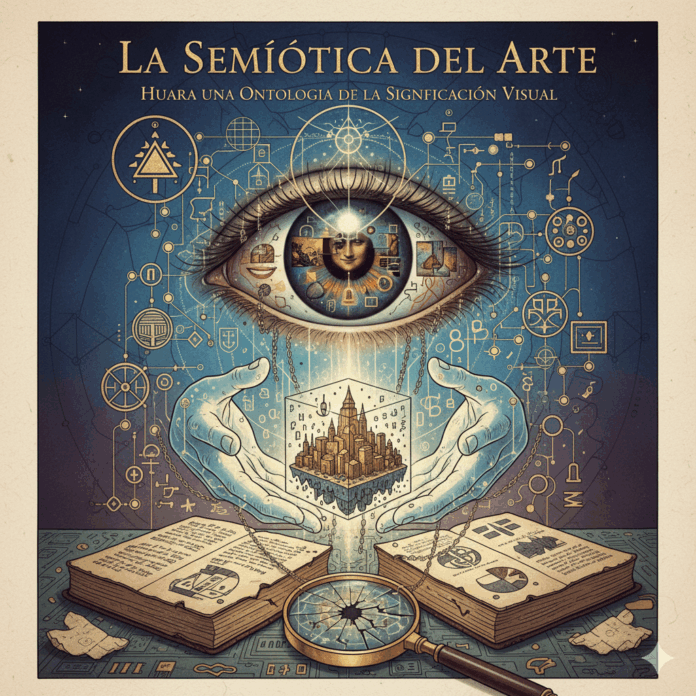
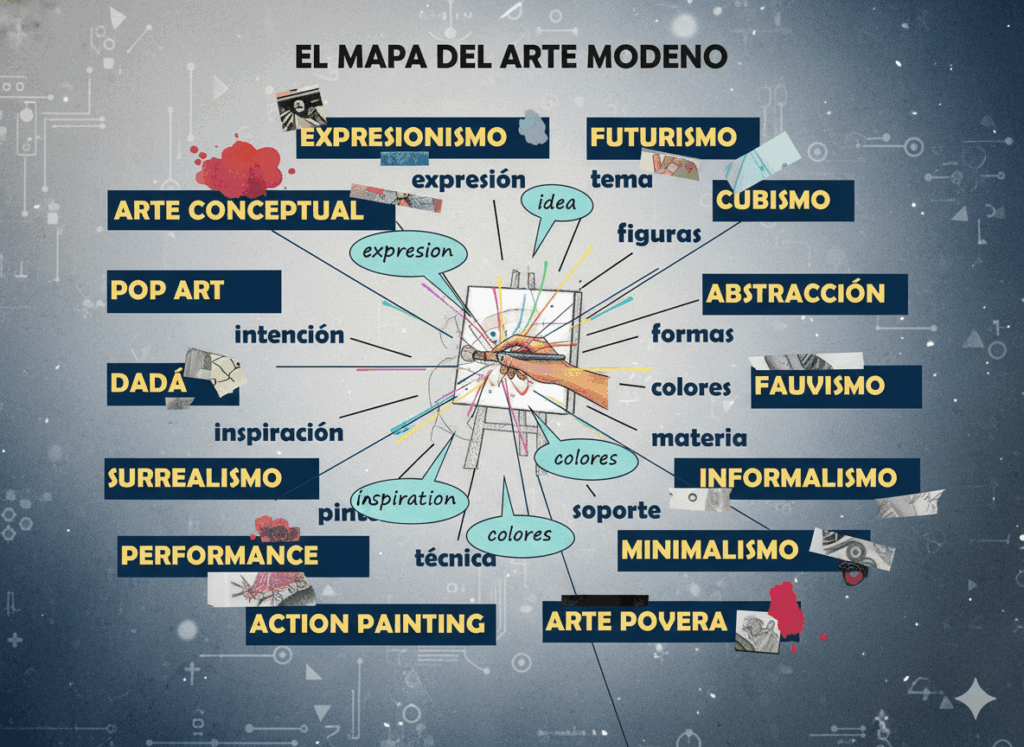
La Semiótica del Arte: Hacia una Ontología de la Significación Visual

La Semiótica del Arte: Hacia una Ontología de la Significación Visual

La Semiótica del Arte: Hacia una Ontología de la Significación Visual

I. La Naturaleza Paradójica del Signo Artístico

La semiótica del arte se enfrenta a una paradoja fundamental que rara vez se aborda en los estudios introductorios: el signo artístico existe simultáneamente como presencia material y ausencia conceptual. Cuando contemplamos una pintura, no experimentamos meramente pigmentos sobre lienzo, sino que atravesamos la materialidad hacia un dominio de significación que trasciende lo físico. Esta dualidad ontológica—la obra como objeto y como signo—constituye el núcleo problemático de toda teoría semiótica del arte.

Charles Sanders Peirce, en su arquitectura triádica del signo, nos ofrece un marco que supera el binarismo saussureano. El signo no es simplemente la relación entre significante y significado, sino una estructura tripartita que involucra el representamen (el signo mismo), el objeto (aquello que representa) y el interpretante (el efecto significativo que produce). Esta terceridad—el interpretante—es crucial para comprender el arte, pues introduce la dimensión pragmática: el signo artístico no existe en un vacío semántico, sino en un proceso dinámico de interpretación que genera nuevos signos.

II. La Semiosis Ilimitada y la Obra Abierta

La teoría de Peirce sobre la semiosis ilimitada ilumina un aspecto fundamental del arte: cada interpretación genera un nuevo interpretante que se convierte en signo para futuras interpretaciones. Este proceso, potencialmente infinito, explica por qué obras como “Las Meninas” de Velázquez o “La Fuente” de Duchamp continúan generando discursos críticos siglos o décadas después de su creación. No se trata simplemente de que admitan “múltiples interpretaciones”—concepto que permanece en el nivel superficial—sino que cada acto interpretativo transforma la obra misma al incorporar nuevos contextos semióticos.

Umberto Eco, en su concepto de “opera aperta”, desarrolla esta intuición peirceana aplicada específicamente al arte contemporáneo. La obra abierta no es ambigua por deficiencia comunicativa, sino por diseño estructural: su organización formal invita a una pluralidad de lecturas sin prescribir una ruta interpretativa privilegiada. Sin embargo, Eco introduce una distinción crucial: la apertura no implica infinitud caótica. Existe lo que él denomina “intentio operis”—la intención de la obra—que establece límites a la interpretación legítima. Así, el arte contemporáneo navega entre la determinación y la indeterminación, entre estructura y apertura.

III. El Problema del Referente en el Arte No-Representacional

La semiótica clásica, basada en modelos lingüísticos, enfrenta una crisis cuando se confronta con el arte abstracto. Si el signo artístico no representa un objeto identificable del mundo, ¿cómo funciona su significación? Kandinsky, en “De lo espiritual en el arte”, propone que la pintura abstracta opera mediante “resonancia interior”—una vibración espiritual que trasciende la referencia mimética. Desde una perspectiva semiótica, esto sugiere que el arte abstracto emplea signos que son primariamente cualisignos (signos de cualidad) más que sinsignos (signos de existencia singular) o legisignos (signos de ley o convención).

El color rojo en una pintura de Rothko no representa nada exterior a sí mismo; es una presentación más que una representación. Aquí, la semiótica debe expandirse más allá del modelo representacional hacia lo que podríamos llamar semiótica de la presencia. El signo no apunta hacia algo ausente, sino que presenta una experiencia cualitativa inmediata. Esta es la diferencia entre el icono como semejanza y el icono como evento fenomenológico.

IV. Códigos Culturales y la Hermenéutica de la Sospecha

Roland Barthes, en “Mitologías”, introduce la distinción entre denotación y connotación que resulta crucial para el análisis semiótico del arte. La denotación opera en el nivel del reconocimiento básico (estos son colores, estas son formas), mientras que la connotación involucra significados culturalmente codificados. Pero Barthes va más allá: identifica un tercer nivel que él llama “mito”—sistemas de significación de segundo orden donde signos completos se convierten en significantes de nuevos significados ideológicos.

En el arte, esto se manifiesta cuando, por ejemplo, el uso de perspectiva renacentista no sólo organiza el espacio pictórico, sino que connota valores humanistas, racionalidad científica y privilegio del punto de vista individual—todo un sistema ideológico codificado en una convención formal. El análisis semiótico debe entonces practicar lo que Ricoeur llama “hermenéutica de la sospecha”: interrogar no sólo qué significa la obra, sino qué intereses, valores y estructuras de poder están siendo naturalizados a través de sus códigos visuales.

V. La Traducción Intersemiótica: Entre Sistemas de Signos

Roman Jakobson distingue tres tipos de traducción: intralingüística, interlingüística e intersemiótica. Esta última—la traducción entre diferentes sistemas de signos—es particularmente relevante para comprender fenómenos como la écfrasis (descripción verbal de obras visuales) o las adaptaciones cinematográficas de novelas. El problema es: ¿qué se pierde y qué se gana cuando un sistema semiótico se traduce a otro?

La música no puede capturar el color, pero puede evocar su cualidad emocional. La poesía no puede reproducir la simultaneidad visual de la pintura, pero puede desplegar temporalmente sus elementos. Cada sistema semiótico posee affordances específicas—posibilidades expresivas únicas a su medio. El arte intermedia y multimedia contemporáneo explora precisamente estos espacios de traducción imperfecta, generando significados que emergen de la fricción entre sistemas sígnicos diferentes.

VI. Narratología Visual: La Sintaxis del Tiempo Congelado

Mientras que la semiótica del arte tradicionalmente se enfoca en signos individuales, la narratología visual—influenciada por la semiótica narrativa de Greimas—examina cómo las imágenes construyen estructuras narrativas. Una pintura es un objeto espacial, pero puede implicar temporalidad a través de lo que Lessing llamó “el momento pregnante”: ese instante que contiene el antes y el después, que sugiere movimiento dentro de la inmovilidad.

La composición pictórica funciona como una sintaxis visual: el orden de lectura (determinado por jerarquías visuales, vectores direccionales, peso cromático) crea una secuencia temporal implícita. Los esquemas narrativos (situación inicial, transformación, situación final) pueden estar codificados espacialmente—izquierda a derecha en culturas occidentales, por ejemplo. Así, la imagen estática deviene imagen-tiempo, para usar el término de Deleuze, donde el movimiento no es representado sino sugerido estructuralmente.

VII. La Fenomenología de la Experiencia Estética

Maurice Merleau-Ponty, en “El ojo y el espíritu”, critica la semiótica tradicional por reducir la experiencia visual a un proceso de decodificación intelectual. Para Merleau-Ponty, la visión es corporal, encarnada, prereflexiva. Antes de interpretar signos, experimentamos el mundo visualmente de manera inmediata y preconceptual. El arte, particularmente, activa esta dimensión fenomenológica de la percepción.

Esto plantea un desafío fundamental a la semiótica: ¿puede una ciencia de los signos dar cuenta de aquellos aspectos de la experiencia artística que preceden a la significación? Quizás necesitamos una semiótica fenomenológica que reconozca dos momentos: la presencia prereflexiva de la obra (su impacto sensorial inmediato) y su significación reflexiva (la interpretación conceptual). El primero no es simplemente “sensación sin sentido”, sino una forma de comprensión corporal que resiste la articulación proposicional.

VIII. La Iconoclasia como Crisis Semiótica

Las controversias iconoclastas—desde Bizancio hasta la Reforma Protestante—revelan ansiedades profundas sobre el poder de los signos visuales. El temor no es que las imágenes no signifiquen nada, sino que signifiquen demasiado, que establezcan una presencia que rivalice con lo divino. La iconoclasia es, fundamentalmente, un reconocimiento del poder performativo de los signos: no sólo representan la realidad, sino que la constituyen.

En el arte contemporáneo, esta dimensión performativa se hace explícita. El arte conceptual, por ejemplo, afirma que la idea (el concepto) es la obra misma, relegando el objeto material a mera documentación. Aquí, el signo artístico alcanza su máxima inmaterialidad: la obra existe como proposición, como acto de habla, como intervención en el discurso cultural. El objeto estético desaparece, dejando sólo el gesto semiótico.

IX. Conclusión: Hacia una Semiótica Crítica del Arte

La semiótica del arte no puede contentarse con ser una herramienta neutra de descripción. Debe reconocer su propia implicación en las estructuras de poder, conocimiento y subjetividad que el arte simultáneamente refleja y produce. Una semiótica crítica interroga no sólo cómo funcionan los signos artísticos, sino a quién sirven, qué mundos hacen posibles o imposibles, qué subjetividades construyen.

El signo artístico, en última instancia, es el sitio donde lo sensible se encuentra con lo inteligible, donde la materia deviene significado, donde la percepción individual se encuentra con códigos colectivos. Estudiar la semiótica del arte es estudiar cómo los seres humanos construyen y habitan mundos de significación—es, en el sentido más profundo, una antropología filosófica expresada a través de lo visual.

La pregunta no es simplemente “¿qué significa esta obra?”, sino “¿cómo produce significado este tipo particular de signo?”, “¿qué hace posible o imposible esta estructura sígnica?”, y finalmente, “¿qué tipo de sujeto se constituye en el acto de interpretar?” Estas preguntas nos llevan más allá de la semiótica descriptiva hacia una semiótica crítica y especulativa que reconoce el arte como un modo fundamental—quizás el más fundamental—mediante el cual los seres humanos se comprenden a sí mismos y a su mundo.

Page 56 of 282
1 54 55 56 57 58 282