Home Blog Page 3

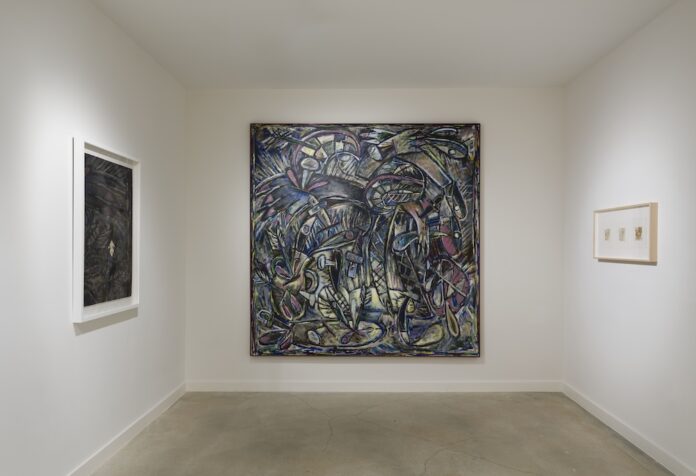
Odyssey: A Transformative Journey: Belkis Ayón and Carlos Alfonzo at MOAD

Odyssey:
Odyssey: A Transformative Journey: Belkis Ayón and Carlos Alfonzo at MOAD

Odyssey: A Transformative Journey: Belkis Ayón and Carlos Alfonzo at MOAD

Written By Olga Garcia-Mayoral

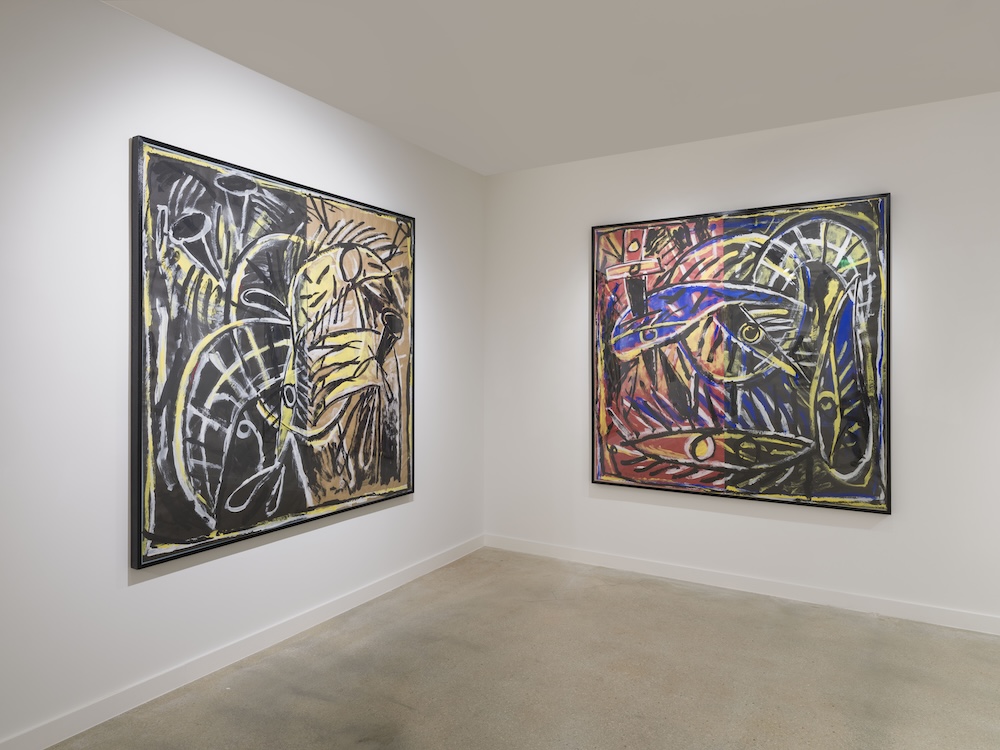
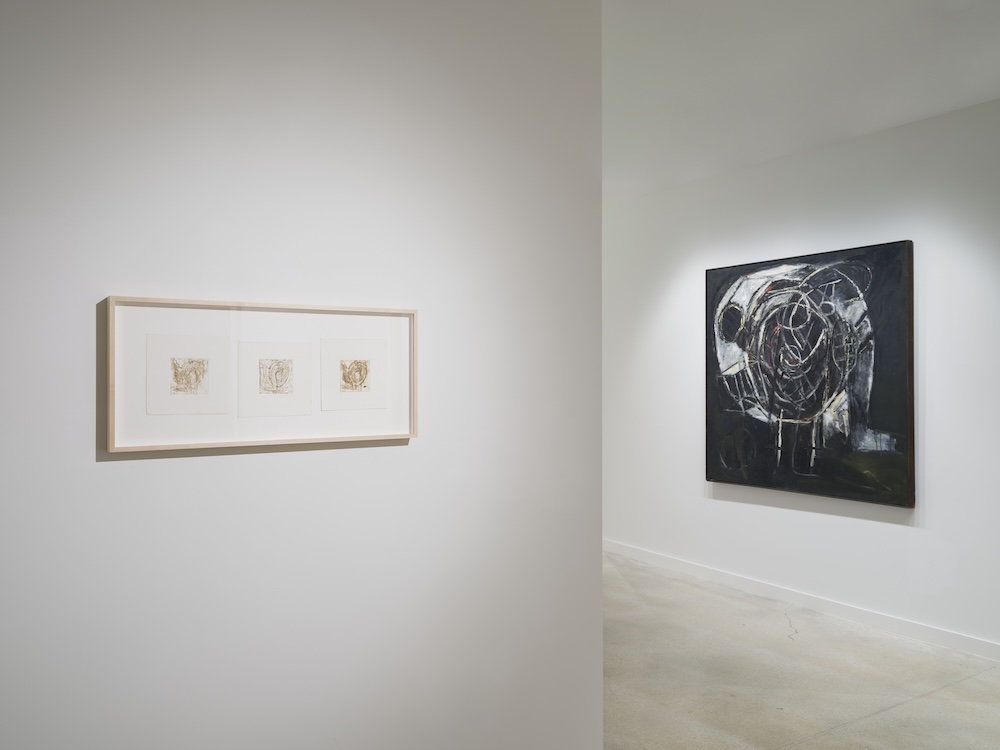
Some exhibitions don’t simply hang on the wall—they press back. Belkis Ayón and Carlos Alfonzo: Odyssey at the Museum of Art and Design (MOAD) at Miami Dade College is one of those rare shows that feels less like a viewing experience and more like a private reckoning staged in public. It’s on view through May 10, 2026, and it stands—without exaggeration—as one of the most compelling exhibitions Miami has to offer right now.

Bringing together two artists of immense force—Belkis Ayón (1967–1999) and Carlos Alfonzo (1950–1991)—Odyssey is a study in distinct aesthetic languages that share a common gravity. Their styles differ dramatically: Ayón’s printmaking carries a stark, mythic austerity; Alfonzo’s painting burns with expressive urgency. Yet the exhibition reveals how both artists arrive at similar stakes: image-making as spiritual inquiry, myth as a living archive, and storytelling as a continuous journey rather than a closed narrative.

What makes the experience feel so complete is the curatorial intelligence behind it. Chief Curator Amy Galpin has assembled a selection that doesn’t rely on spectacle; instead, it builds density—visual, psychological, and emotional. The exhibition design guides you without forcing you, allowing the works to speak in their own registers while quietly amplifying their correspondences. It’s a show that respects silence, encourages contemplation, and trusts the viewer to meet the work halfway.

Ayón: The Weight of Myth, the Sharpness of Silence

Belkis Ayón’s work is magnetic in its restraint. Her visual world—anchored by commanding figures and a rich vocabulary of black, white, and gray—feels like entering a ritual space where meaning is withheld just long enough to sharpen your attention. The surfaces carry a tension between softness and severity: velvety blacks that absorb light, pale forms that emerge like revelations, eyes that stare not as portraits but as presences.

Ayón’s compositions don’t simply depict myth; they seem to activate it. There is an atmosphere of secrecy and initiation—a sense that what you are looking at is only one layer of what is being communicated. The figures operate like symbols and beings at once: human, animal, divine, and something unnamed. It becomes difficult to remain an observer; the work invites an internal dialogue and self-questioning. You begin to feel how mythology can function not as a story of the past, but as a mirror.

The emotional impact of Ayón’s work isn’t loud. It arrives in the body like a slow realization. Her images hold violence and vulnerability in the same breath—an understanding of oppression that is not presented as a headline, but as atmosphere, structural, and unavoidable. The power comes from how little she needs to say to make you feel the stakes.

Alfonzo: Painting as Incantation

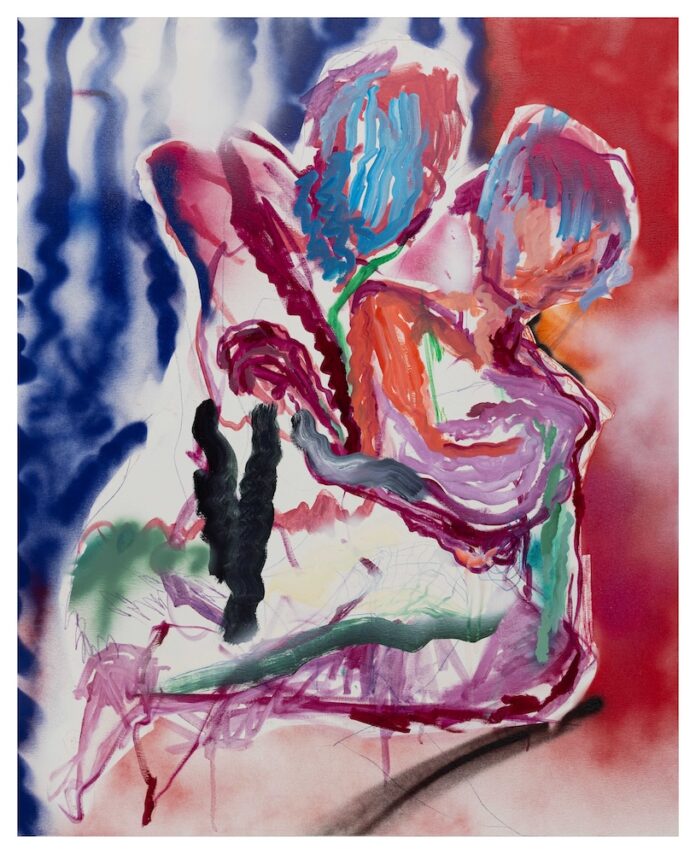
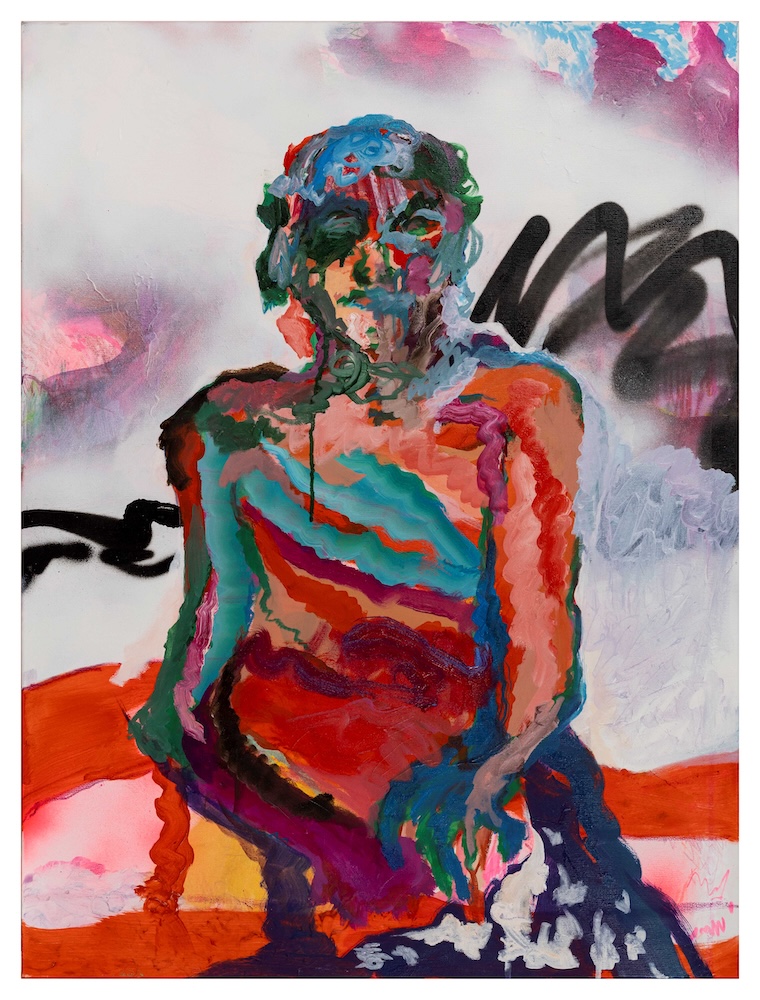
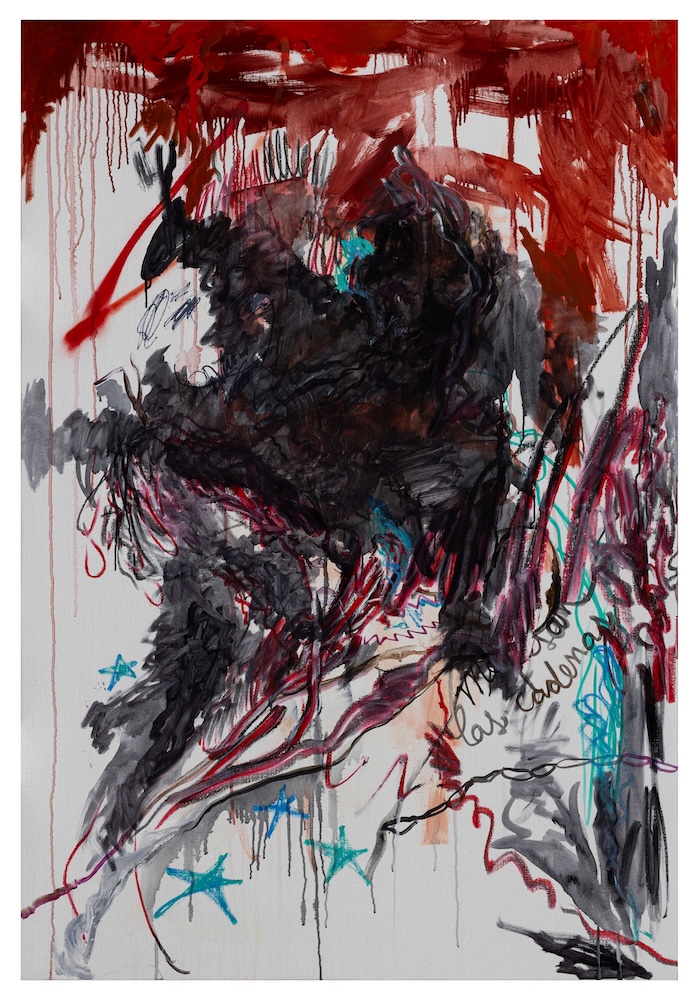
If Ayón’s work feels like a rite conducted in shadow, Carlos Alfonzo’s feels like a chant—urgent, radiant, often fierce. His paintings pulse with the force of someone pushing against limitation through color, gesture, and symbol. There is a physicality to the surface—an insistence in the mark-making—that reads as both defiance and devotion.

Alfonzo’s visual language can feel like an odyssey in motion: forms turning, bodies transforming, symbols colliding. His work often feels inhabited by multiple worlds at once—history and autobiography, spirit and street-level reality, tenderness and aggression. The paintings don’t settle into a single reading, and that’s the point: they demand that you return to them, reassess, re-enter. Their narratives are ongoing, not resolved.

There is also a kind of emotional transparency in Alfonzo’s work—an openness to intensity. You feel the artist’s awareness of violence and oppression not as distant commentary but as a lived condition. Yet the work is not consumed by despair; it converts tension into visual abundance, turning psychic pressure into creative force.

A Conversation Across Difference

The genius of Odyssey is that it doesn’t force equivalence between these artists. Instead, it stages a conversation—a dialogue across difference in which meaning emerges through proximity. Ayón and Alfonzo are connected here not by aesthetic similarity, but by shared commitments: to myth, to complex spiritualities, to bold storytelling, and to a sense of art as a journey that never really ends.

Both artists lived with the realities of Cuba’s constraints—scarcity and limited freedoms—and both developed practices that transform pressure into language. Yet their paths diverge, and the exhibition makes room for that. It shows two artists navigating their worlds differently while arriving at works that still speak to each other across time.

There’s a deeper resonance, too, in seeing these works in Miami—one of the great centers of the Cuban diaspora, a city shaped by the ongoing tension between memory and reinvention. This exhibition doesn’t just belong in Miami; it helps clarify Miami. It reminds us that cultural history is not simply inherited; it is argued over, revised, mourned, celebrated, and continually reimagined.

Curatorial Clarity and Emotional Architecture

Amy Galpin’s curatorial decisions feel both scholarly and intuitive. The show is built on pacing—moments when the viewer can breathe and moments when the work tightens its grip. The design supports the emotional “odyssey” suggested by the title: not a straight line, but a journey through layers of myth, spirit, and lived experience.

What’s striking is how the exhibition makes space for the works’ complexity without overexplaining them. You are invited to bring your own questions, your own history, your own sensitivity. The result is an exhibition that doesn’t just inform—it transforms.

Why You Should Go Now

Odyssey is the kind of exhibition that recalibrates your expectations of what a museum show can do. It is intellectually rich, visually gripping, and emotionally resonant. It is also rare: two artists, each monumental in their own right, presented in a way that honors their individuality while revealing their shared stakes.

If you care about Cuban and Cuban diasporic art, about contemporary myth-making, about spiritual complexity in visual form, or simply about what it feels like to encounter art that doesn’t let you remain untouched, this show is essential.

Miami has many offerings, but few that feel as necessary as this one. Belkis Ayón and Carlos Alfonzo: Odyssey is not just worth seeing; it is essential. It’s worth sitting with. And it may stay with you longer than you expect.

Odyssey:
Odyssey:

Inteligencia Artificial y la Psicología de Vender Arte

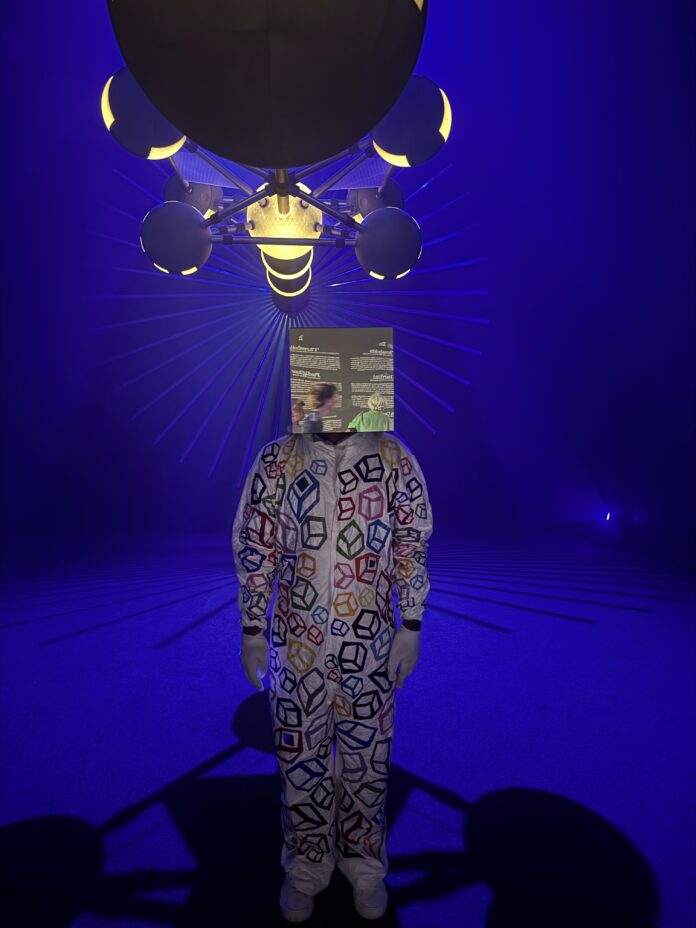
Kube Man Performance at the German Pavilion — Venice Biennale 2024

Inteligencia Artificial y la Psicología de Vender Arte

Cuadernos de Arte, Mercado y Tecnología — Vol. 7, 2026

Cómo las herramientas algorítmicas amplifican los principios del comportamiento humano para transformar el mercado del arte en 2026

Palabras clave: mercado del arte · inteligencia artificial · psicología del consumidor · personalización · valoración algorítmica · comportamiento del coleccionista

Resumen

La venta de arte no escapa a los mecanismos universales que gobiernan el comportamiento del consumidor. Décadas de investigación en psicología económica —desde el efecto de la mera exposición hasta la paradoja de la elección— identificaron patrones que hoy la Inteligencia Artificial puede detectar, personalizar y amplificar a escala. Este artículo revisa la evidencia académica disponible hasta 2026, examina cómo plataformas y galerías adoptan herramientas de IA para mejorar la experiencia del coleccionista, y propone una lectura crítica de las tensiones entre eficiencia algorítmica y autenticidad curatorial. La tesis central es que la IA no sustituye la emoción que mueve la compra de arte; más bien, elimina la fricción que la obstaculiza.

I. El problema que nadie nombra

¿Por qué algunas obras parecen venderse por sí solas mientras otras permanecen ignoradas durante años? La pregunta inquieta a artistas, galeristas y académicos por igual. La respuesta convencional apela al talento o al azar del mercado. La respuesta que la investigación psicológica lleva décadas construyendo es más precisa: la decisión de comprar arte está gobernada por estructuras cognitivas predecibles, y la Inteligencia Artificial ha llegado, en 2026, a la posición óptima para operar dentro de ellas.

El mercado global de IA aplicada a las artes y la creatividad alcanzó los 7.160 millones de dólares en 2026, con una tasa de crecimiento anual compuesto del 24,9% [1]. No se trata de un fenómeno marginal: la IA está reconfigurando la manera en que el arte se crea, se valora, se recomienda y, en última instancia, se vende. Comprender esta transformación exige ir más allá de las cifras del mercado y penetrar en la psicología que subyace al acto de coleccionar.

II. Los fundamentos psicológicos de la compra de arte

Antes de examinar lo que la IA puede hacer, es imprescindible establecer qué nos dice la investigación sobre cómo los seres humanos deciden comprar una obra. El arte no es un bien de consumo ordinario: su valor es en gran medida simbólico, emocional y socialmente construido. Sin embargo, el acto de comprarlo obedece a los mismos principios cognitivos que rigen la elección de un vino o una película.

El efecto de la mera exposición

Robert Zajonc demostró en 1968, y múltiples réplicas han confirmado desde entonces, que la familiaridad engendra preferencia. Cuantas más veces una persona está expuesta a un estímulo —una imagen, un nombre, una forma— mayor es la probabilidad de que lo juzgue favorablemente. En el contexto del arte, esto explica por qué los artistas con una presencia digital consistente venden más: el coleccionista no compra lo que no reconoce. La IA puede calibrar con precisión la frecuencia y el contexto óptimo de esa exposición.

La paradoja de la elección

Barry Schwartz, en su influyente obra de 2004, documentó que la abundancia de opciones no amplía la satisfacción del consumidor: la paraliza. El célebre estudio de la mermelada de Iyengar y Lepper (2000) mostró que reducir la oferta de 24 a 6 variedades elevó las ventas un 900% [5]. Para el mercado del arte —donde una plataforma digital puede presentar miles de obras simultáneamente— este hallazgo tiene implicaciones directas: la curaduría inteligente no es un lujo estético, es una necesidad psicológica. Los algoritmos de recomendación son, en esencia, herramientas para resolver la parálisis por exceso de opción.

Anclaje y estructura de precios

Daniel Kahneman y Amos Tversky describieron el efecto de anclaje: el primer número que un comprador encuentra condiciona toda evaluación posterior. Mostrar primero la obra de mayor precio no es una táctica de ventas agresiva; es una operación cognitiva que redimensiona el rango de lo “razonable”. La IA, con acceso a los datos de comportamiento del coleccionista, puede determinar en tiempo real qué punto de anclaje maximiza la probabilidad de conversión sin generar rechazo.

III. Qué puede hacer la IA en la cadena de valor del arte

La Inteligencia Artificial no es un actor monolítico: opera en distintos puntos de la cadena de valor artística, y su efectividad varía según el contexto. Distinguir estas aplicaciones evita tanto la hipérbole tecnológica como el escepticismo infundado.

1. Recomendación personalizada

El 75% de las organizaciones artísticas ya emplean IA para sugerir obras a coleccionistas potenciales [2]. Investigaciones publicadas en Springer Nature (2025) demuestran que los algoritmos de recomendación aumentan significativamente la intención de compra, especialmente cuando el usuario percibe que la sugerencia es genuinamente personalizada y cuando la plataforma genera confianza [6]. La clave está en lo que los investigadores llaman “experiencia perspicaz”: la capacidad del sistema de detectar patrones de comportamiento —obras visualizadas, tiempo de permanencia, comparaciones realizadas— para inferir preferencias que el propio coleccionista no sabría articular.

2. Valoración y precio basados en datos

Determinar el precio correcto de una obra ha sido históricamente una práctica opaca, reservada a intermediarios con acceso privilegiado. La plataforma MyArtBroker, por ejemplo, emplea aprendizaje automático que pondera más de 40 variables —color, firma, tipo de papel, historial de subasta, demanda en tiempo real— para ofrecer valoraciones instantáneas [4]. Más de la mitad de los coleccionistas encuestados en el informe Art & Finance 2025 de Deloitte/ArtTactic declararon que la falta de transparencia en precios frena su decisión de compra. La IA democratiza ese acceso, reduciendo la asimetría de información que ha caracterizado al mercado primario durante décadas.

3. Autenticación e investigación de procedencia

Los algoritmos de visión computacional analizan patrones estilísticos —pinceladas, paleta, composición— para detectar desviaciones respecto a la técnica auténtica de un artista, con tasas de precisión que en algunos casos superan el 85% [2]. La autenticación, que antes requería semanas de trabajo especializado, puede iniciarse en minutos. Esto no solo protege al comprador; construye la confianza que, según la literatura académica, es la variable mediadora clave entre la recomendación algorítmica y la decisión de compra [7].

4. Reducción de fricción transaccional

El mercado del arte tiene una liquidez extraordinariamente baja: se estima que su tasa de rotación es inferior al 4%. Parte de esta rigidez proviene de procesos anticuados —certificados en papel, valuaciones manuscritas, coordinación logística manual. La IA integrada en plataformas de gestión puede generar cotizaciones de envío, verificaciones de procedencia y cobertura de seguro casi instantáneamente [8]. El coleccionista joven, acostumbrado al comercio electrónico de un clic, abandona cuando enfrenta esa fricción. Eliminarla es tanto un argumento de usabilidad como de psicología del consumidor.

5. Curaduría algorítmica de exhibiciones

Galerías y museos emplean IA para analizar preferencias de visitantes y optimizar la disposición de obras. En el contexto digital, esto se traduce en secuencias de presentación diseñadas para maximizar el engagement y la intención de compra. La investigación sobre “experiencia de inmersión” en plataformas de e-commerce confirma que la calidad del sistema de recomendación impacta directamente en la percepción de valor y en la probabilidad de retorno del comprador [9].

Nota de campo — El caso Christie’s (2025): En febrero de 2025, Christie’s organizó su primera subasta dedicada exclusivamente a arte generado con IA, titulada “Augmented Intelligence”. Los resultados superaron las estimaciones iniciales en un 21%, con ventas totales de 728.784 dólares. El 48% de los pujantes eran Millennials o Gen Z, y el 37% eran nuevos clientes de la casa [3].

IV. La confianza como variable irreducible

La investigación académica sobre personalización algorítmica converge en un hallazgo que los defensores entusiastas de la IA suelen subestimar: la tecnología solo funciona cuando el usuario confía en el sistema. Un estudio publicado en Advances in Consumer Research (2025) establece que la personalización por IA puede incrementar sustancialmente la intención de compra, pero el efecto está completamente mediado por la confianza [7]. Un algoritmo percibido como manipulador o invasivo genera el efecto contrario.

Esta tensión —la paradoja privacidad-personalización— es especialmente relevante en el arte, donde la relación entre galería y coleccionista tiene una dimensión afectiva que los sistemas puramente automatizados todavía no pueden replicar. El CEO de ArtLogic lo señaló en 2026: las herramientas de IA benefician a la industria cuando aumentan la confianza del comprador, pero corren el riesgo de negar la historia detrás de la obra y las relaciones que la galería ha construido con sus coleccionistas [4]. El desafío no es elegir entre el algoritmo y la conversación humana, sino diseñar sistemas donde ambos se refuercen mutuamente.

V. Implicaciones prácticas para artistas y galeristas

La investigación revisada permite derivar cuatro recomendaciones operativas. No son recetas; son hipótesis informadas por la evidencia que cada agente deberá calibrar según su contexto.

I. Gestionar la exposición con intención. El efecto de la mera exposición sugiere que la frecuencia y consistencia con que un coleccionista potencial ve una obra antes del lanzamiento incide directamente en su disposición a comprar. Las herramientas de retargeting inteligente y las secuencias de contenido en redes sociales, cuando están diseñadas algorítmicamente, pueden replicar este efecto a escala.

II. Curar la oferta, no solo la obra. La paradoja de Schwartz y el estudio de Iyengar y Lepper tienen una traducción directa: presentar menos opciones, mejor contextualizadas, convierte más que catálogos exhaustivos [5]. La IA puede segmentar al visitante y mostrarle solo las obras más alineadas con su perfil, replicando la función del galerista experto.

III. Diseñar la estructura de precios como arquitectura perceptiva. La primera obra presentada al coleccionista establece el marco de referencia para toda la interacción subsiguiente. Un estudio de 2025 en Scientific Reports confirma que el valor percibido y el precio percibido son los dos predictores de intención de compra con mayor peso relativo en productos culturales con IA [10].

IV. Invertir en datos propios. Más del 60% de las ventas en el mercado del arte ocurren en privado, generando información incompleta o ausente [4]. Las galerías que implementan sistemas de CRM con IA acumulan un modelo predictivo del comportamiento de sus propios coleccionistas, que es quizás la ventaja competitiva más duradera que la tecnología pone a disposición del mercado primario.

VI. La tensión no resuelta: eficiencia versus singularidad

Sería intelectualmente irresponsable concluir este artículo sin señalar la tensión estructural que ningún algoritmo resuelve. El arte como categoría cultural descansa en la convicción de que cada obra es singular, que su valor trasciende su precio y que la experiencia estética no es reducible a preferencias estadísticas. La IA opera, por definición, con patrones. Pero el coleccionista que compra una obra que “no debería” haber comprado según su historial —porque lo sorprendió, lo perturbó, lo cambió— está realizando precisamente el acto que define al arte como práctica humana.

El 70% de los artistas encuestados en un estudio reciente creen que la IA no podrá crear obra con la misma profundidad emocional que el arte humano [2]. Independientemente de si esa convicción es correcta, señala algo importante: la resistencia del campo artístico a reducirse a datos no es irracionalidad. Es la defensa de una zona de experiencia que, si se coloniza completamente por la lógica optimizadora, deja de ser lo que es.

La conclusión no es que la IA sea la panacea del mercado del arte, sino que es una herramienta poderosa cuando opera en su zona de competencia: reducir la asimetría de información, eliminar la fricción transaccional, personalizar la experiencia de descubrimiento. Lo que ocurre después del clic —la conversación con el galerista, el momento en que el coleccionista está frente a la obra, la decisión de llevársela a casa— sigue siendo, afortunadamente, una negociación entre personas.

Referencias

[1] Research and Markets. (2026). AI in Art and Creativity Market Report 2026. researchandmarkets.com

[2] Market.us. (2024). AI in Art Market Size, Share, Trends | CAGR of 28.9%. market.us/report/ai-in-art-market/

[3] Artsy Editorial. (2025, julio). Why AI Art Is Winning over Young Collectors. artsy.net

[4] Insurance Journal / Bloomberg. (2026, febrero). Can AI Tell Us How Much to Pay for Art? insurancejournal.com

[5] Iyengar, S. S., & Lepper, M. R. (2000). When choice is demotivating. Journal of Personality and Social Psychology, 79(6), 995–1006; Schwartz, B. (2004). The Paradox of Choice. HarperCollins.

[6] Hu, X., et al. (2025). Personalized recommendation algorithm for cultural and creative products. International Journal of Computational Intelligence Systems, 18. Springer Nature. doi:10.1007/s44196-025-00857-w

[7] Advances in Consumer Research. (2025). AI-Powered Personalization in E-Commerce: Consumer Perceptions, Trust, and Purchase Decision-Making. acr-journal.com

[8] The Art Newspaper. (2025, septiembre). ‘AI will transform the art market—just not how you expect’. theartnewspaper.com

[9] ScienceDirect. (2025). From purchase to return: How personalized E-commerce recommendations shape consumer behavior. doi:10.1016/j.jretconser.2025

[10] Scientific Reports / Nature. (2025). Research on driving factors of consumer purchase intention of AI creative products based on user behavior. nature.com/articles/s41598-025-01258-x

[11] De, S., et al. (2025). Art Market Predictions Through Deep Learning. ShodhKosh: Journal of Visual and Performing Arts, 6(4s), 255–265.

[12] PMC / Frontiers. (2025). AI-powered creative stimulus: the ascent of virtual virtuoso entrepreneurship. pmc.ncbi.nlm.nih.gov/articles/PMC12241160/

Geometric Abstraction in Ecuadorian Art

Geometric Abstraction in Ecuadorian Art

Geometric Abstraction in Ecuadorian Art

Within the history of Ecuadorian art, geometric abstraction has not merely functioned as a formal language, but as a site of intellectual inquiry—one that negotiates between modernist ideals, local sensibilities, and evolving notions of perception, space, and consciousness. While Ecuador is often internationally associated with social figuration through artists like Oswaldo Guayasamín, a parallel lineage of abstraction has quietly constructed a rigorous and sophisticated discourse.

Araceli Gilbert: Constructive Modernity

Araceli Gilbert de Blomberg stands as a foundational figure in the development of geometric abstraction in Ecuador. Deeply influenced by her studies in Europe, particularly within the circles of constructive abstraction, Gilbert introduced a visual language grounded in order, balance, and chromatic precision.

Her work is not merely formalist; it reflects a philosophical engagement with harmony and structure, positioning geometry as a universal language capable of transcending cultural boundaries. Through her practice, Ecuadorian art entered into dialogue with international modernism without losing its distinct identity.

Estuardo Maldonado: Geometry in Motion

A central figure in Latin American geometric abstraction, Estuardo Maldonado expanded the possibilities of form through a dynamic exploration of movement, optics, and spatial tension. His work bridges geometric rigor with perceptual instability, often incorporating elements of kinetic art and optical vibration.

Maldonado’s practice situates Ecuador within a broader Latin American avant-garde, aligning with movements in Venezuela and Argentina while maintaining a unique sensibility rooted in structural clarity and experimentation.

Olga Dueñas: Light, Technology, and Perception

Olga Dueñas represents a critical evolution of geometric abstraction into the realm of light and technological mediation. Over more than seven decades, her work has explored the immaterial dimensions of geometry—transforming line and structure into luminous, shifting experiences.

Her practice can be understood as a transition from object to phenomenon, where geometry becomes activated through perception. In this sense, Dueñas extends modernist abstraction into a contemporary dialogue with time, energy, and the viewer’s sensory engagement.

Larissa Marangoni: System, Repetition, and Contemporary Geometry

In the work of Larissa Marangoni, geometric abstraction is revisited through a contemporary lens. Her practice often engages systems, repetition, and modular structures, creating visual fields that oscillate between control and organic variation.

Marangoni’s work reflects a post-modern awareness of structure—not as fixed order, but as a living system—thus expanding geometric abstraction into conceptual territory that resonates with contemporary global practices.

Irene Cárdenas: Early Modern Sensibilities

Irene Cárdenas occupies an earlier moment in Ecuadorian modernism. While not strictly aligned with geometric abstraction, her work contributed to the opening of formal experimentation within the Ecuadorian context, creating the conditions for later developments in abstraction.

Paula Barragán: Material Abstraction and Poetic Surface

Paula Barragán approaches abstraction through materiality and gesture. Her work, often rooted in printmaking and surface exploration, moves away from strict geometry but retains an underlying structural sensitivity.

Barragán’s practice introduces a more poetic and tactile dimension, where abstraction becomes a space of introspection rather than construction.

Oswaldo Guayasamín: The Counterpoint of Figuration

While primarily known for his powerful figurative work, Oswaldo Guayasamín provides an essential counterpoint to abstraction in Ecuador. His expressionist language, deeply engaged with social and political realities, highlights the divergence within Ecuadorian art between universal abstraction and human-centered narrative.

Conclusion

Geometric abstraction in Ecuador is not a singular movement but a constellation of practices that evolve from structural modernism to perceptual, technological, and conceptual explorations. From the foundational rigor of Gilbert and Maldonado to the expanded fields of Dueñas and Marangoni, this lineage reveals a sustained engagement with form as a vehicle for thought—one that continues to unfold within contemporary discourse.

La Nau se convierte en un espacio donde confluyen la pintura, la memoria y la reflexión crítica gracias a Rossi Aguilar

Rossi Aguilar

La Nau se convierte en un espacio donde confluyen la pintura, la memoria y la reflexión crítica gracias a Rossi Aguilar

D.B. Colmenares

En Escrituras fragmentarias. Gesto y memoria, Rossi Aguilar (Venezuela, 1993) articula un cuerpo de obra que se resiste a la clausura. Las piezas no se presentan como unidades autónomas, sino como fragmentos extraídos de un continuo mayor, de una narración en permanente estado de devenir. El soporte —lienzo, papel o madera— actúa como dispositivo de detención temporal: fija un momento del proceso sin agotarlo, conserva la huella de lo inacabado y permite que la obra permanezca abierta a nuevas lecturas.

Estas superficies funcionan como espacios de inscripción antes que como campos de representación. Se asemejan a cuadernos, tablillas o archivos en construcción, donde la materia pictórica, aplicada en capas sucesivas, adquiere una densidad simbólica ambivalente. Fragilidad y resistencia, opacidad y revelación coexisten en una tensión constante. La pintura no ilustra una idea previa: piensa desde su propia materialidad.

Entre gesto y escritura

Uno de los ejes centrales de la muestra es la fricción productiva entre el trazo corporal y la palabra fragmentada. Aguilar desplaza el gesto pictórico desde una pulsión inicialmente impulsiva —rápida, casi agresiva— hacia una gestualidad más contenida, reflexiva y consciente de sí misma. Este desplazamiento no supone una pérdida de intensidad, sino una mutación del gesto en signo.

En este proceso, los trazos se repiten, se afinan y se reconocen como un repertorio estable, un abecedario visual con resonancias caligráficas. La pintura se aproxima así a una escritura sin lenguaje verbal, donde el signo no remite a un significado fijo, sino a una experiencia corporal y temporal. La referencia a Cy Twombly resulta pertinente, no como cita formal, sino como afinidad en la comprensión del gesto como acto de inscripción y memoria.

Rossi Aguilar

Memoria acumulativa y archivos invisibles

La memoria aparece en la obra de Aguilar no como relato lineal, sino como estrato. Sus piezas se construyen de manera acumulativa y transformativa, a partir de memorias inconscientes que, por repetición, sedimentan en la superficie. Se trata de recuerdos difusos, memorias del hogar, experiencias tempranas que no se presentan de forma explícita, sino como una presencia envolvente, casi táctil.

Estas capas conviven con otros elementos capturados del contexto inmediato, generando una red invisible de relaciones. La artista no busca narrar una historia personal reconocible, sino activar en el espectador una sensación de extrañeza y curiosidad, una intuición de que algo se comunica más allá de lo visible. La obra opera desde la metainformación: aquello que no se puede señalar directamente, pero que se percibe como latencia.

Superficie como palimpsesto

En esta exposición, la superficie pictórica se convierte en un espacio de excavación. Las obras funcionan como palimpsestos donde distintas temporalidades se superponen sin jerarquía. Lo que en otros momentos pertenecía al ámbito de lo íntimo —archivos protegidos, memorias crípticas— se abre ahora a una dimensión colectiva.

Aguilar introduce de manera explícita una conciencia histórica y política: en sus capas aparecen otras mujeres, las abuelas, las compañeras, las figuras silenciadas de una historia del arte construida desde la exclusión. Este desplazamiento implica una toma de posición. La artista asume una responsabilidad discursiva y reivindica el derecho a ser leída, no solo mirada. La pintura se convierte así en un espacio de enunciación donde lo personal y lo colectivo se entrelazan.

Rossi Aguilar

Ritmo, fragmento y continuidad

Las composiciones de Escrituras fragmentarias. Gesto y memoria poseen un ritmo interno que sugiere simultáneamente ruptura y continuidad. Ninguna obra se plantea como “terminada” en un sentido cerrado. Cada pieza es parte de un sistema mayor, de una narrativa que excede el soporte que la contiene.

El marco expositivo actúa como un corte provisional dentro de un flujo de trabajo constante. Aguilar extrae capas de esa malla conceptual y material, las fija en lienzo o papel y continúa el proceso, aceptando las limitaciones técnicas del soporte como condiciones productivas. La fragmentación no implica dispersión, sino método.

El cuerpo como sombra

El gesto pictórico en la obra de Aguilar roza lo performativo. El cuerpo está siempre presente, aunque no necesariamente de forma figurativa. A veces aparece como movimiento, como rastro, como “sombra” que acecha la superficie. El cuerpo abre un canal de información, pero lo hace desde la restricción, desde la conciencia de sus propios límites.

Es precisamente en esa limitación donde la obra encuentra su potencia. La pintura no lo dice todo: sugiere, insinúa, deja espacios en blanco que activan la participación del espectador. La experiencia estética se construye en esa tensión entre lo mostrado y lo oculto.

Fragmentar para releer

Lejos de entender la fragmentación como herida o pérdida, la exposición la reivindica como posibilidad crítica. Fragmentar es releer, reconstruir, desestabilizar los relatos hegemónicos. Aguilar no oculta la incomodidad: la utiliza como motor discursivo. Su pintura rompe con lo estético entendido como superficie complaciente para abrir conversaciones necesarias.

En este sentido, Escrituras fragmentarias. Gesto y memoria reafirma la potencia del arte como forma de pensamiento. La pintura se presenta como una herramienta crítica capaz de cuestionar las jerarquías del relato histórico y de activar nuevas maneras de habitar la memoria desde sus bordes.

THE FLUID GUEST BY LORIS CECCHINI

THE FLUID GUEST BY LORIS CECCHINI

THE FLUID GUEST BY LORIS CECCHINI

Diana Lowenstein Gallery

Opening Reception
LORIS CECCHINI
Saturday March 28th
New Location in The Design District

Every space of welcome is a threshold — a place where identities dissolve, blend, and reform.

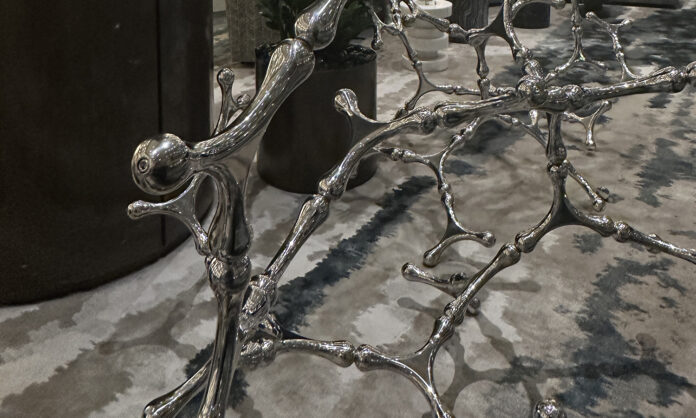
In The Fluid Guest, Loris Cecchini translates this condition into a structure that breathes and flows: a metallic organism that seems to emerge from the wall and, at the same time, dissolve into it. Its forms recall cells, branches, corals — living systems that adapt, grow, and migrate.

The work thus becomes a silent guest, an entity that inhabits space without possessing it, like a traveler who leaves no trace yet subtly alters everything it touches.

The material — gleaming, modular, almost liquid — behaves like water: it expands and retracts, embraces the light, and lets the gaze pass through it.

In this hall, a place of transit and waiting, The Fluid Guest evokes a new idea of hospitality: not one that separates host and guest, but one that recognizes in reciprocal transformation the highest form of encounter.

Waterbones is one of Loris Cecchini’s most renowned series. These are modular installations composed of stainless steel elements that the artist links together to form organic lattices, fluid branches, or cell-like structures that seem to grow spontaneously across walls, ceilings, or open space.

The very title, Waterbones, aptly conveys their dual nature: they are flexible skeletons, biomorphic and metamorphic forms that unite solidity and lightness, structural rigor and fluid motion. 

Cecchini often conceives them as expanding systems, where each module is both an autonomous unit and part of a whole — much like in natural or digital networks. Conceptually, the Waterbones embody his exploration of osmosis between art, nature, and technology, translating into visual form the idea of a world in constant transformation, where matter and energy interpenetrate.

Loris Cecchini’s Waterbones can be read as a poem of metamorphosis, a fluid script composed not of words but of nodes, curves, and joints. Their name — “water bones” — already contains a poetic paradox: the union of opposites. 

Water, the principle of life and movement, meets bone, the principle of structure and resistance.

In this alliance between the liquid and the solid, Cecchini gives form to something that seems alive but not biological — a possible life, an organism in potential. Each Waterbone is like a multiplying cell, a particle of thought expanding through space, generating a rhizomatic network akin to a nervous system or a coral reef.

It is a cartography of connection, where nothing exists alone: everything interweaves, propagates, transforms. In their luminous silence, the Waterbones recount a poetic physics of interdependence — a universe where the creative gesture coincides with an act of cosmic respiration: each module a breath, each joint a heartbeat, each expansion an act of trust in continuity.

At the heart of a passageway, Loris Cecchini’s work seems to hold the breath of movement.

Its forms, born from the meeting of fluidity and structure, expand like an echo of water that has learned to pause, to take on body. Each module is a droplet that has found its stillness, a fragment of inner landscape that flows without leaving.

In this luminous suspension, matter reminds us that even a journey can rest — that there is a place where the flow gathers and the threshold becomes home. In the hall, where every arrival merges with a departure, the work unfolds as a silent map of movement. 

It is a journey that does not cross space, but creates it: an architecture of breath, a constellation of forms opening and closing like an unfinished sentence.

Matter vibrates at the precise point where energy pauses, and stillness reveals its inner motion.

Here, passage becomes contemplation — and transit, for a moment, finds its home.

About the artist:

Loris Cecchini (1969) lives and works in Milan. One of the most prominent Italian artists on the international stage he has exhibited his works throughout the world with solo exhibitions in prestigious museums such as Palais de Tokyo in Paris, Musée d’Art Moderne de Saint-Étienne Métropole in Saint-Priest-en-Jarez, MoMA PS1 in New York, Shanghai Duolun MoMA of Shanghai, Museo Casal Solleric in Palma de Mallorca, Centro Galego de Arte Contemporánea in Santiago de Compostela, Kunstverein of Heidelberg, Centro per l’Arte Contemporanea Luigi Pecci in Prato and Fondazione Arnaldo Pomodoro in Milan.
Loris Cecchini has participated in numerous international exhibitions, including the 56th, 51st and 49th Venice Biennale, the 6th and the 9th Shanghai Biennale, the 15th and 13th Rome Quadrennial, the Taiwan Biennale in Taipei, the Valencia Biennale in Spain and the Biennale of Urbanism/Architecture (UABB) in Shenzhen, Time Gravity – 2023 Chengdu Biennale China. Loris Cecchini has also taken part in several collective shows, including exhibitions at the Ludwig Museum in Cologne, PAC in Milan, Palazzo Fortuny in Venice, Macro Future in Rome, MART in Rovereto, London’s Hayward Gallery, The Garage Centre for Contemporary Culture in Moscow, Palazzo delle Esposizioni in Rome, Musée d’Art Contemporain of Lyon, Shanghai’s MOCA, the Deutsche Bank Kunsthalle in Berlin and others.
He has created various permanent and site- specific installations, particularly at Villa Celle in Pistoia and in the courtyard of Palazzo Strozzi in Florence, at the Boghossian Foundation in Brussels and for the Cleveland Clinic’s Arts & Medicine Institute in the United States, at Les Terrasses Du Port in Marseille, and recently at the Shinsegae Hanam Starfield in Seoul at the Cornell Tech Building in New York and at the Università 3 of Rome,The Quirinale Palace, Rome.

For more information 
call us at 305.576.1804 or email us at [email protected]

WE MOVED TO THE DESIGN DISTRICT

4100 NE 2nd Avenue – Suite 202
Miami, FL 33137

We are open Tuesday to Friday 10 to 5 PM
Saturdays 10 to 3 pm.

Miami Light Project

The Light Box at Miami Theater Center

Miami Light Project: A Cultural Engine for Contemporary Art and Community

In the evolving cultural landscape of South Florida, Miami Light Project stands out as a vital force supporting contemporary performance, artistic experimentation, and community engagement. Founded in 1989, the organization has played a transformative role in shaping Miami’s identity as an international hub for innovative art.

A Platform for Contemporary Artists

At its core, Miami Light Project is dedicated to presenting and supporting artists who push boundaries. Its programming spans a wide range of disciplines, including:

  • Dance
  • Theater
  • Music
  • Multimedia and experimental film

Rather than focusing on mainstream productions, the organization prioritizes cutting-edge and often underrepresented voices, bringing both local and international artists to Miami audiences.

One of its most important initiatives is its artist residency program, now based at The Light Box inside the Miami Theater Center. This program provides artists with:

  • Creative space and time to develop new work
  • Technical and production support
  • Opportunities to present works-in-progress

The emphasis is not just on finished performances, but on the creative process itself, allowing artists to experiment, take risks, and evolve their ideas.

Deep Community Engagement

Beyond performances and residencies, Miami Light Project has a strong commitment to community involvement. Its programs are designed to make contemporary art accessible and meaningful to a broad audience.

Key community-focused efforts include:

  • Educational workshops and masterclasses for students and emerging artists
  • Open rehearsals and artist talks, offering insight into the creative process
  • Collaborations with local schools and cultural institutions

These initiatives help bridge the gap between artists and the public, encouraging dialogue and participation rather than passive consumption.

Importantly, the organization reflects the diversity of Miami itself, often highlighting artists from Latin America, the Caribbean, and other global regions that resonate with the city’s multicultural identity.

A Hub for Innovation: The Light Box

The move to The Light Box at Miami Theater Center marked a significant evolution. This flexible, intimate space functions as a creative laboratory, where artists can test ideas in front of live audiences.

Unlike traditional theaters, The Light Box supports:

  • Experimental staging
  • Interdisciplinary collaborations
  • Interactive and immersive experiences

This environment fosters innovation and allows Miami Light Project to remain at the forefront of contemporary performance.

Signature Programs and Festivals

Miami Light Project is also known for its signature programs, such as:

  • Here & Now Festival – showcasing South Florida-based artists
  • ScreenDance Miami – an international festival dedicated to dance on film

These events not only elevate local talent but also connect Miami to global artistic networks.

Why It Matters

In a city often associated with commercial entertainment and large-scale events, Miami Light Project provides something different: a space for thoughtful, experimental, and socially engaged art.

Its impact goes beyond performances. By investing in artists, engaging communities, and fostering dialogue, the organization helps:

  • Strengthen Miami’s cultural ecosystem
  • Support artistic careers at critical stages
  • Encourage innovation across disciplines

Final Thoughts

Miami Light Project is more than an arts presenter—it is a catalyst for creativity and connection. For artists, it offers resources and visibility. For audiences, it offers access to bold and meaningful work. And for the community, it creates opportunities to engage with art in ways that are both personal and transformative.

As Miami continues to grow as a global city, institutions like Miami Light Project ensure that its cultural life remains dynamic, inclusive, and forward-thinking.

  • The Light Box at Miami Theater Center
  • 9806 NE 2nd Ave.
  • Miami Shores, FL 33138
  • United States

+1 305-576-6480
Miamilightproject.com
[email protected]

National Museum of the American Latino

National Museum of the American Latino

National Museum of the American Latino To Showcase Salsa Music and
Celia Cruz’s Iconic Costumes in New Exhibition April 18

“¡Puro Ritmo! The Musical Journey of Salsa” Will Premiere in the Museum’s
Temporary Exhibition Space at the National Museum of American History

The Smithsonian’s National Museum of the American Latino

Exhibition Opening: “¡Puro Ritmo! The Musical Journey of Salsa” Date: Saturday, April 18 Location: Molina Family Latino Gallery, Smithsonian’s National Museum of American History

Presented in English and Spanish, the multimedia exhibition explores the rhythm, movement, and shared heritage of salsa music in the United States.

Exhibition Overview

Spanning four thematic sections and featuring nearly 300 objects, “Puro Ritmo” traces salsa’s roots from the dance halls of Havana to the clubs of New York City, Washington, D.C., Los Angeles, and beyond. The exhibition situates salsa within major moments in U.S. history, including Caribbean migration, the evolution of jazz, and the influence of Afro-Cuban rhythms on rock ’n’ roll, disco, and house music.

“‘Puro Ritmo’ tells a vital chapter of the American experience that has been shaped by movement, migration and global exchange,” said Jorge Zamanillo, director of the National Museum of the American Latino. “Salsa is not simply a Latin genre; it’s become a great American musical tradition.”

Celia Cruz: Queen of Salsa

A centerpiece of the exhibition is the presentation of five ensembles and five pairs of shoes worn by Celia Cruz, celebrated worldwide as the Queen of Salsa. Gifted by the Estate of Celia Cruz, the five dresses and a pair of shoes are now part of the Latino Museum’s permanent collection. The outfits will rotate throughout the exhibition’s two-and-a-half-year run, offering visitors multiple opportunities to experience Cruz’s vibrant stage presence.

Featured items include:

  • Dresses dating to 1970
  • A cape designed by Irma Peñalver
  • A 2002 ensemble by Willy Mena
  • Distinctive performance shoes, including pairs with dramatic cantilever heels

Other Highlights

The exhibition also features iconic figures such as Tito Puente and Eddie Palmieri, alongside influential artists including Arsenio Rodríguez, Graciela, Ray Barretto, and Willie Colón. It explores the industry-shaping impact of Fania Records and its cofounders, Jerry Masucci and Johnny Pacheco.

Through the museum’s collection and loans from Smithsonian museums, individuals, and institutions, “Puro Ritmo” includes objects connected to Puerto Rican music promoter Héctor Maisonave and producer Harvey Averne, both of whom played key roles in expanding salsa’s reach and recognition.

Museum’s Mission

As the National Museum of the American Latino continues to grow, it is deepening its collecting efforts to build a permanent collection that reflects the breadth of U.S. Latino history and culture. In the years ahead, the museum will expand its acquisitions to preserve the stories, objects, and artistic legacies that define the American Latino experience.

About the Museum

Established by Congress in 2020, the Smithsonian’s National Museum of the American Latino honors the dreams, challenges, and triumphs of U.S. Latinos and elevates their stories within the nation’s narrative. The museum creates transformative experiences, fosters a deeper understanding of American history and culture, and connects communities nationwide.

Visit the museum’s exhibitions at the Molina Family Latino Gallery in the National Museum of American History or at latino.si.edu. Follow @USLatinoMuseum on Instagram, Facebook, LinkedIn, and YouTube.

Open Call for Artists (Print Edition)

open call
Art Miami Magazine – Open Call for Artists (Print Edition)

Open Call for Artists (Print Edition)

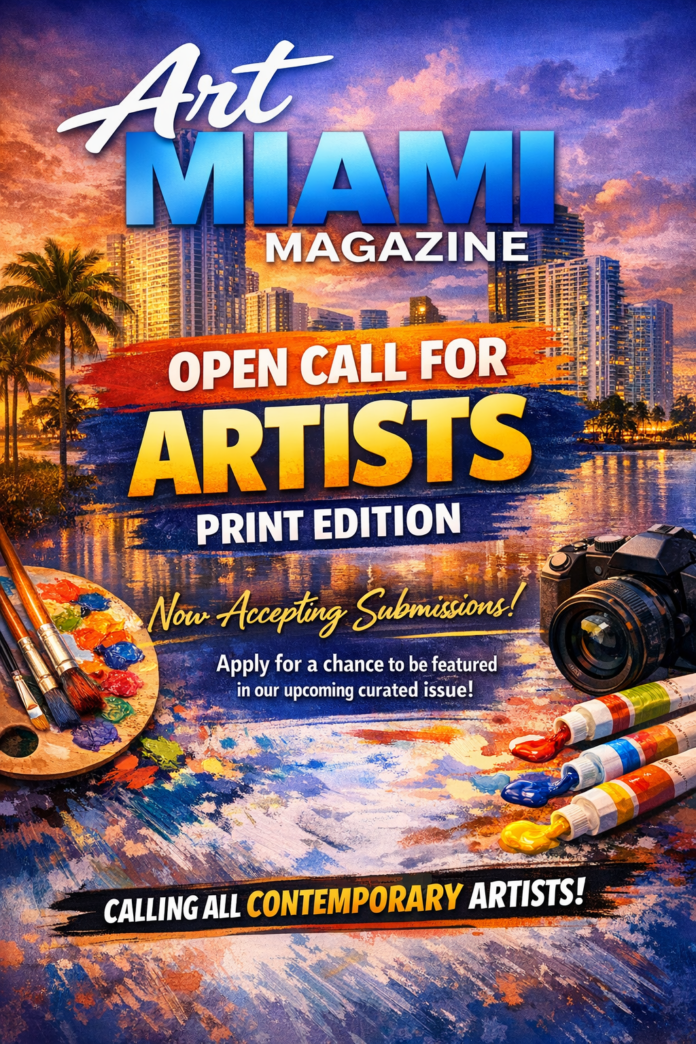
Art Miami Magazine is currently curating its upcoming printed edition and invites a select group of contemporary artists to apply for consideration.

We are seeking artists with a strong visual language and a distinctive artistic voice, working across painting, sculpture, photography, and mixed media.

The printed edition is distributed throughout Miami via a curated network of galleries, cultural venues, and luxury spaces, reaching collectors, curators, and art professionals. This upcoming issue will also extend its reach internationally, including Mexico City.

Each feature includes a curated print presentation of your work, accompanied by a critical text, an online interview, and extended visibility across our digital platforms, including a dedicated artist profile and promotion to our network of collectors, curators, and art professionals. Artists based in the United States will also receive a complimentary printed copy of the magazine.

Application Process:

  1. Submit your application
    Please submit your CV, artist statement, short bio, and a selection of artworks (website, Instagram, or portfolio link) to: [email protected](or via WeTransfer)
  2. Selection & next steps
    If selected, you will receive full details regarding the feature, available formats, and participation options.

We work with a limited number of artists per issue to maintain a focused and high-quality publication.

Deadline: April 15, 2026

We look forward to discovering your work.

How to Read Abstract Art Without Feeling Lost

Carmen Herrera
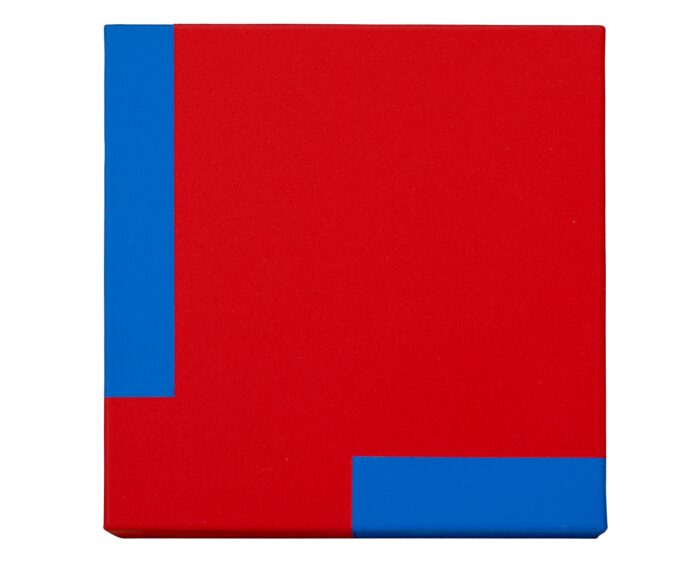
Carmen Herrera (b.1915) Untitled 2013, acrylic on canvas 10 × 10 × 2.8 in (25 × 25 × 7 cm)

How to Read Abstract Art Without Feeling Lost

Have you ever stood in front of an abstract painting feeling like everyone else understands something you simply can’t see? That feeling — that there’s a hidden code you’re supposed to crack — is, paradoxically, the biggest obstacle to enjoying abstract art. And the good news is: that code doesn’t exist.

The Biggest Myth About Abstract Art

The most common mistake is thinking abstract art is random or meaningless. In reality, every mark, every color choice, and every compositional decision is intentional. Abstract artists use visual elements — line, color, shape, texture — as their vocabulary to communicate ideas and emotions that words cannot express.

Here’s the secret galleries rarely tell you: there is no single correct way to interpret an abstract work. The anxiety comes from believing there’s something you’re “failing to see.” The truth is that abstract art speaks directly to your senses and emotions, bypassing analytical thinking altogether.

The Three Questions That Unlock Any Painting

When approaching an abstract work, start with these three simple questions:

  1. What do I see? — Describe what’s in front of you without judging it.
  2. What do I feel? — Tension, calm, energy, melancholy?
  3. What does this remind me of? — It doesn’t matter if the association seems strange.

Don’t overthink it. Your first reactions are usually your most valuable ones.

Color as Emotional Language

Your brain already reads color emotionally, even without realizing it:

  • Red can feel aggressive, passionate, or warm.
  • Blue can evoke calm, coldness, or melancholy.
  • Yellow tends to feel energetic or optimistic.

Abstract artists use these associations deliberately. When Mark Rothko paints large red canvases, he is creating an emotional environment, not simply filling space. Context matters too: red paired with black can feel violent; surrounded by yellow, festive. Artists understand how colors interact to shape the viewer’s emotional experience.

What Shapes, Lines, and Textures Are Telling You

Shapes communicate before you can rationalize them:

  • Angular shapes feel aggressive or dynamic.
  • Curved forms feel soft and fluid.

Wassily Kandinsky believed triangles were aggressive, circles peaceful, and squares stable. Line quality also reveals energy: rough lines suggest tension; smooth lines communicate calm. Like handwriting, abstract marks show the artist’s mood and intention.

Texture matters too. Thick impasto — paint applied densely — feels intense and physical. Smooth surfaces evoke calm. Pollock’s rhythmic drips feel chaotic and full of bodily energy. Rothko’s thin washes seem to glow from within.

Composition: Where Your Eyes Go and Why

Composition shapes how you experience the work:

  • Symmetry creates calm and order.
  • Asymmetry creates tension and instability.

Pay attention to three things: where your gaze goes first, how it travels across the canvas, and where it rests. Scale matters too — a large work can feel immersive and enveloping; a small one, intimate and personal.

Three Practical Methods That Actually Work

When you don’t know where to begin, try one of these approaches:

The Weather Method — If this painting were a weather phenomenon, what would it be? An electrical storm? A soft drizzle? A clear summer day?

The Music Method — If it had a sound, would it be improvised jazz, orderly classical music, or chaotic electronic?

The Movement Method — How would your body respond if you had to dance to this work? Slow and fluid, or sharp and aggressive?

These aren’t just clever tricks — they help you access emotional meanings that rational analysis tends to block.

When You Recognize Absolutely Nothing

Pure abstraction works like music: nobody asks what a symphony means; you simply experience it. Focus your attention on relationships:

  • How do the colors interact with each other?
  • How do the shapes relate?
  • Does the composition feel static or in motion?

Meaning emerges from those relationships, not from recognizable objects.

Does Knowing Art History Actually Help?

Context enriches the experience, but it isn’t required. Knowing that Piet Mondrian was searching for spiritual harmony adds depth to his compositions of black lines and primary colors. Understanding that the American Abstract Expressionists were responding to the trauma of World War II explains a certain emotional violence in their work. But even without that knowledge, the emotional intensity of a Franz Kline or a de Kooning is immediate and felt directly.

The Exercise That Changes Everything: Five Minutes with One Work

Most museum visitors spend fewer than 30 seconds in front of a painting. Abstract art reveals itself slowly. Try this: choose one single painting and spend at least five minutes with it. Details emerge, relationships clarify, and your emotional response deepens in ways that a quick glance never allows.

The Title: Guide or Trap?

Titles can orient your interpretation — or deliberately sidestep it. They are one piece of information, not the definitive answer. Some artists title their works descriptively; others use numbers or neutral words precisely to avoid directing your reading. Use them as a starting point, not a boundary.

Types of Abstraction: Not Everything Works the Same Way

Abstraction is not monolithic. Different types call for different ways of looking:

  • Geometric abstraction → pay attention to formal and mathematical relationships.
  • Color-field painting → surrender to meditative immersion.
  • Gestural abstraction → look for energy and emotion in the mark-making.
  • Action painting → imagine the artist’s physical movement in the act of creation.

Contemporary abstraction frequently explores digital culture, theory, politics, and personal identity — layers that can enrich your reading without being essential to the direct experience.

The Permission Nobody Gave You

Don’t worry about “getting it right.” Abstract art welcomes multiple interpretations, and your response becomes part of the work’s meaning. You are not a passive receiver of a coded message — you are an active participant in the creation of meaning.

The next time you stand in front of an abstract work you don’t “understand,” remember: you are not looking for the correct answer. You are having a conversation.

What’s your biggest challenge when encountering abstract art? The answer to that question is already telling you something about how you see the world.

Institute of Contemporary Art,

Alex Gartenfeld
Alex Gartenfeld

Institute of Contemporary Art, Miami’s Evening in the Garden
Gala Raises $2.3M to Support Educational Initiatives and Community Programming

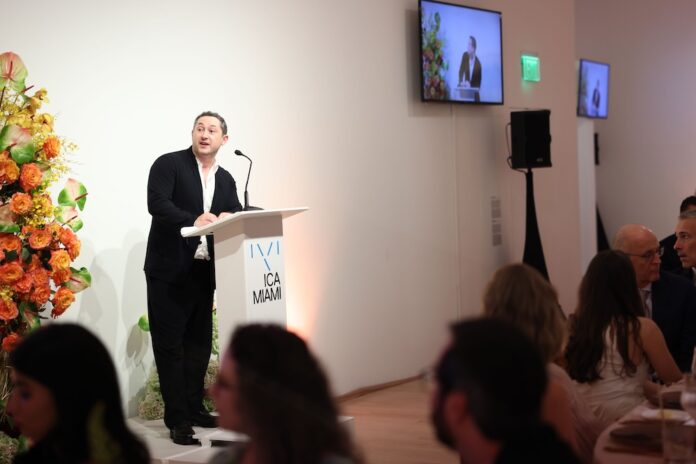
he annual celebration, held in ICA Miami’s Sculpture Garden, gathered supporters of contemporary art for an evening honoring Helen Kent-Nicoll and Edward J. Nicoll and artist Olga de Amaral.

MIAMI, FL – MARCH 23, 2026 – The Institute of Contemporary Art, Miami’s (ICA Miami) annual gala, Evening in the Garden, took place on Saturday, March 14th in the museum’s Sculpture Garden, bringing together Miami’s philanthropic and arts community. The evening raised $2.3 million in support of ICA Miami’s educational initiatives and its mission to provide free, year-round access to contemporary art.

The museum’s 12th annual gala welcomed more than 300 guests from across the community for an evening of celebration and philanthropy. The event featured a seated dinner followed by a live and silent auction of exceptional works generously donated by leading artists and galleries, including pieces by Nina Chanel Abney, Masaomi Yasunaga and Jade Fadojutimi, among others, with all proceeds supporting the museum’s exhibitions and educational programs.

Following the dinner, guests continued the celebration at the gala’s lively after-party featuring music, cocktails, light bites, and dancing with music by DJ JoviGibs. The evening concluded with an after-after party at ZeyZey Miami, offering an energetic finale to the night.

This year’s gala honored Helen Kent-Nicoll and Edward J. Nicoll for their visionary leadership and pioneering support of ICA Miami’s endowment. The evening also paid tribute to artist honoree Olga de Amaral, whose groundbreaking textile-based practice has had a profound influence on contemporary art. Evening in the Garden 2026 was presented with the generous support of Cartier.

“The ongoing support we receive plays a vital role in expanding our educational programs and ensuring contemporary art remains accessible to our broad audience,” said Alex Gartenfeld, Irma and Norman Braman Artistic Director of ICA Miami. “Helen Kent-Nicoll and Edward J. Nicoll’s leadership and generosity have helped shape the museum’s growth and strengthen its connection to the arts community. We are deeply appreciative of their continued commitment, which enables us to create meaningful opportunities for both artists and the public.”

Evening in the Garden reflects the community’s ongoing commitment to advancing ICA Miami’s mission of promoting continuous experimentation in contemporary art, advancing new scholarship, and fostering the exchange of art and ideas throughout Miami and internationally. Support from the gala also contributes to the museum’s continued growth, including the expansion of ICA Miami’s campus and programs to serve an even broader audience.

# # #

About the Institute of Contemporary Art, Miami
The Institute of Contemporary Art, Miami (ICA Miami) is dedicated to promoting continuous experimentation in contemporary art, advancing new scholarship, and fostering the exchange of art and ideas throughout the Miami region and internationally. Through an energetic calendar of exhibitions and programs, and its collection, ICA Miami provides an important international platform for the work of local, emerging, and under-recognized artists, and advances the public appreciation and understanding of the most innovative art of our time. Launched in 2014, ICA Miami opened its new permanent home in Miami’s Design District in 2017, and in 2024 announced its expansion with the acquisition of a second site on the same block at 23 NE 41st Street in the Miami Design District, set to open in 2027. The museum’s central location positions it as a cultural anchor within the community and enhances its role in developing cultural literacy throughout the Miami region. The museum offers free admission, providing audiences with open, public access to artistic excellence year-round.

The Institute of Contemporary Art, Miami is located at 61 NE 41st Street, Miami, Florida, 33137. For more information, visit www.icamiami.org or follow the museum on Instagram and explore the ICA Miami Channel for inside looks at ICA Miami exhibitions and the practices of the most exciting artists working today.

MEDIA CONTACTS

Schwartz Media Strategies

(305) 858-3935
Allie Grant, [email protected]   
Alyssa Velez, [email protected]

Page 3 of 277
1 2 3 4 5 277