Home Blog Page 26

POSMODERNIDAD

POSMODERNIDAD
POSMODERNIDAD

ORIGEN DE LA POSMODERNIDAD

La Esencia del Laberinto Posmoderno

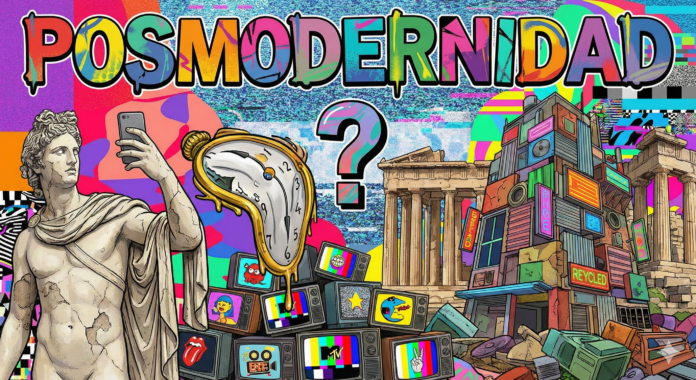
¿Qué es, en su esencia, la posmodernidad? Es una pregunta que resuena con la fuerza de un eco en un cañón, y su respuesta es tan escurridiza como el propio concepto que nombra. Más que un movimiento o una escuela de pensamiento unificada, la posmodernidad es una nebulosa cultural y filosófica que se alza como una respuesta, a menudo escéptica, a las promesas y certezas del modernismo. Si la modernidad creía en el progreso lineal, en la razón como faro infalible y en la existencia de verdades universales, la posmodernidad irrumpe para deconstruir esas nociones, para fragmentar el relato y abrazar la ambigüedad.

Piense en la modernidad como una gran catedral de mármol: imponente, con una estructura lógica y una dirección clara. La posmodernidad, en cambio, sería como un jardín de ruinas, donde los fragmentos de esa catedral se han dispersado, se han reconfigurado en nuevas formas y se han mezclado con elementos de otras épocas y culturas. Es un collage, un pastiche, una ironía que se ríe de las grandes narrativas, de la historia con mayúscula y de la idea de un propósito trascendental. Es la era de la incredulidad, como bien lo definió Jean-François Lyotard, en la que la metanarrativa –aquellos grandes relatos que daban sentido a la historia y a la existencia– se ha desmoronado.

Este es un concepto que se cocina a fuego lento a lo largo del siglo XX, pero que cobra un impulso decisivo después de la Segunda Guerra Mundial, con el desencanto ante la incapacidad de la razón para evitar las atrocidades más espeluznantes. La tecnología, que prometía un paraíso, había creado el holocausto y las bombas atómicas. La fe en el progreso se tambaleaba y, con ella, las bases del proyecto moderno. Es en este terreno fértil que florecen las ideas de pensadores como Jacques Derrida, Michel Foucault y Jean Baudrillard, que, desde la filosofía, desarman los cimientos de la verdad, el poder y la realidad.

Características de un Mundo Fragmentado

Las características de la posmodernidad no son un decálogo, sino más bien un conjunto de actitudes que se manifiestan de manera transversal en el arte, la filosofía y la cultura. Entre las más destacadas, encontramos:

  • Deconstrucción y Fragmentación: Es el pilar de la posmodernidad. No se trata de destruir, sino de desmontar para entender cómo se construyen los significados, los discursos y los valores. El mundo no es un todo coherente, sino una suma de fragmentos que no tienen un centro ni una jerarquía.
  • Ironía y Pastiche: La ironía es la herramienta predilecta del posmoderno. Es una forma de distancia crítica que permite cuestionar sin ofrecer una alternativa. El pastiche, por su parte, es la mezcla ecléctica y a menudo descontextualizada de estilos, géneros y épocas. Piense en una película de Quentin Tarantino que mezcla el cine negro con el wéstern y el anime, todo con una banda sonora de los años 70.
  • Rechazo de las Metanarrativas: Como se mencionó, la posmodernidad desconfía de cualquier relato que pretenda dar una explicación total y definitiva a la historia o a la vida. Las grandes narrativas del progreso, la emancipación o el comunismo se ven como meros mitos, construcciones de poder que invisibilizan otras voces y experiencias.
  • Hibridación y Eclecticismo: Se borran las fronteras entre lo “alto” y lo “bajo”, entre la cultura popular y la alta cultura. El arte se nutre de la publicidad, los cómics, el diseño gráfico. La arquitectura mezcla elementos góticos con materiales industriales. Todo se vuelve un campo de juego en el que no hay reglas fijas.
  • Realidad y Simulacro: En la era de la información y los medios masivos, la posmodernidad cuestiona la idea misma de la realidad. Baudrillard habla del simulacro, donde la copia ha sustituido al original, y la representación se ha vuelto más real que lo representado. Vivimos en un mundo de imágenes que no tienen referente en la realidad, y la televisión, internet y las redes sociales son los templos de este nuevo orden.

El Arte Posmoderno: Más Allá de la Galería

El arte posmoderno es, quizás, la manifestación más visible de estas ideas. A diferencia de la rigidez del modernismo, el arte posmoderno es un carnaval de estilos y técnicas. Aparece como una reacción al minimalismo y al conceptualismo de los años 60 y 70, que habían llevado la abstracción y la idea a su límite. El arte vuelve al objeto, a la figuración, pero lo hace con una mirada irónica.

La arquitectura es un terreno fértil para la posmodernidad. Abandona la pureza geométrica y la función del modernismo para abrazar la ornamentación, la pluralidad de estilos y la ironía. Robert Venturi y Denise Scott Brown son pioneros en esta área, y su libro “Aprendiendo de Las Vegas” se convierte en un manifiesto. En lugar de despreciar la estética de Las Vegas, la analizan como un modelo de comunicación y simbolismo. El edificio no solo debe ser funcional, sino también divertido, narrativo y lleno de referencias históricas y populares.

En la pintura, la posmodernidad se manifiesta a través del pastiche y la apropiación. Artistas como Jeff Koons y Andy Warhol —aunque se le considera un precursor— utilizan imágenes de la cultura popular (Warhol con las latas de sopa Campbell’s, Koons con esculturas de globos de animales). La idea de la autoría se diluye y la obra se convierte en un comentario sobre el mercado, la fama y el consumismo.

Filosofía y Literatura: La Muerte del Autor

En la filosofía, la posmodernidad es una crítica radical al proyecto ilustrado. La razón ya no es el juez supremo, sino una herramienta más, a menudo al servicio del poder. La filosofía posmoderna se aleja de los sistemas totalizadores para concentrarse en la deconstrucción de los textos, la genealogía del poder (Foucault) y el análisis de la condición humana en un mundo sin metanarrativas.

La literatura es otro campo de batalla. La narrativa lineal se rompe, el autor pierde su posición de omnisciente y el lector se convierte en un coautor. Escritores como Umberto Eco en “El nombre de la rosa” o Italo Calvino en “Si una noche de invierno un viajero” juegan con la estructura de la novela, mezclan géneros y hacen referencia a otros textos. La intertextualidad se vuelve una característica central, y la obra literaria es una red de citas, alusiones y parodias.

En conclusión, la posmodernidad es un fenómeno complejo y multifacético que ha transformado la forma en que pensamos, creamos y habitamos el mundo. No es un fin de la historia, sino el inicio de una nueva etapa donde las certezas se han disuelto y lo único que queda es la fascinación por el fragmento, el juego y la posibilidad infinita del collage.

From Gerswin to Groove: in Conversation with Conductor Andrew Grams 

From Gerswin to Groove: in Conversation with Conductor Andrew Grams

From Gerswin to Groove: in Conversation with Conductor Andrew Grams 

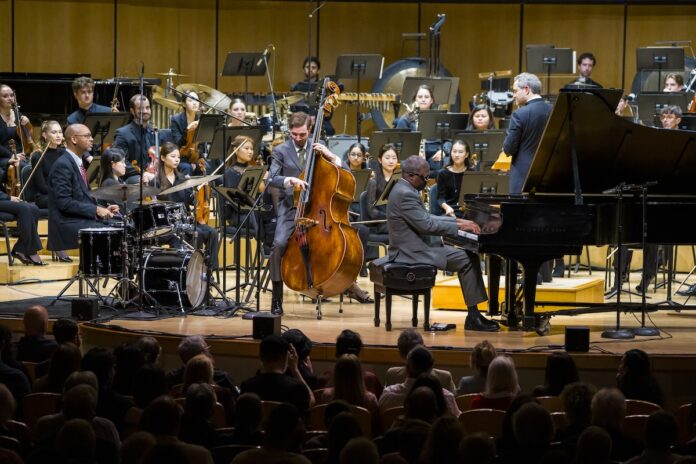
New World Symphony with Andrew Grams and Marcus Roberts Trio Rhapsody in Blue 

Written By Olga Garcia-Mayoral

Saturday, January 10, 2026, 8:00 PM • Knight Concert Hall, Adrienne Arsht Center

By the time the clarinet smears its famous blue note across the Knight Concert Hall, the evening’s premise is already humming: jazz and classical aren’t opposites—they’re dance partners. “People love to think jazz and classical are diametrically opposed,” conductor Andrew Grams told me at 12:30 p.m., hours before the downbeat. “That’s not the case at all. This program shows how those two styles coexist—very, very well—right next to each other.”

The New World Symphony begins 2026 with American classics that actually behave like conversations. Tonight’s opener, Ellington & Strayhorn’s Nutcracker Suite (in a symphonic arrangement by Jeff Tyzik), sets the table: Tchaikovsky’s melodies everyone knows, re-harmonized, re-grooved, and re-voiced in swing. From there, the orchestra and the Marcus Roberts Trio—pianist Marcus Roberts, bassist Rodney Jordan, and drummer Jason Marsalis—plunge into Gershwin’s Rhapsody in Blue, Milhaud’s La création du monde, Ellington’s Black, Brown and Beige, and James P. Johnson’s Victory Stride. The arc isn’t just stylistic; it’s historical—a panorama of American sound shaped by Black music and refracted through the symphonic lens.

A “hybrid” Rhapsody—and an elastic pulse

Which Rhapsody will we hear? “We’re using the orchestral version,” Grams says, “but with Marcus and his jazz bass and drum kit in the mix, it feels closer to the original jazz-band energy.” That choice matters less than the method: Roberts famously treats the cadenzas and connective tissue as living space. “He’ll play some of what Gershwin wrote, then go somewhere else, the trio joins him, and we come back to the orchestra,” Grams explains. “He’s given us signs—a landing on E-major 7 here, three big deflect chords there—so after the trio’s improvisation, I know exactly when to bring the orchestra back in.”

The effect should feel organic, not patched. It also honors the piece’s origin as an encounter rather than a museum piece. “Everything you love about Rhapsody in Blue will be there,” Grams says, “with some extra jazz included.”

Teaching swing to symphonic athletes

If you know New World Symphony, you know the Fellows—22 to 30, glaringly capable, voracious for repertoire—can pivot stylistically. Even so, Grams says this program asks for a complete recalibration of touch and time. “In classical music, we coach blend, patience, and listening to the sound,” he notes. “Jazz is the flip side: the front of the note, commitment to tempo, and a willingness to ride the groove.”

Tyzik’s orchestration of Ellington & Strayhorn’s Nutcracker helps. “He notates the feel in ways classically trained players can read,” Grams says. But the conductor’s work is still granular: ghost notes, back-phrasing within sections, vibrato choices that read “American,” percussion and low-brass that thrum on top of the beat rather than behind it. “I describe the sound I’m after, they play, and then I say, ‘Yes—now add this,’” he says. “Rehearsal is trial and error—and they’re doing extremely well.”

Milhaud hears Harlem—without pastiche

One of the night’s most illuminating bridges is Milhaud’s La création du monde (1923), a ballet score born from the composer’s immersion in Harlem clubs. “Milhaud wrote to a classical form, then altered rhythms and harmonies to make it more jazzy,” Grams says. “We move through sections that tell an ancient African creation story, but the players must still play jazz—within that classical structure.” The orchestra becomes a translator: the bass lines need earth; the saxophone needs speech; percussion needs swing without becoming a drum set. When it clicks, the piece reads as dialogue, not cosplay.

Ellington’s epic—and a different kind of “program.”

Ellington’s Black, Brown and Beige is a landmark: a symphonic-scale narration of Black American history, premiered at Carnegie Hall in 1943. Many conductors would underline the storyline; Grams resists map-making. “I’m not trying to assign characters or chapters,” he says. “What I want the public to hear is Ellington’s grand symphonic scale—from a jazz composer working beyond three- to five-minute songs—and to let the melodies and feelings speak. If the music washes over them, they’ll take from it what they need.”

That shift—from prescriptive program to felt argument—is smart. It trusts the audience and honors Ellington’s reach: the piece doesn’t need a dotted line; it requires the sonic room to unfold.

Stride to the finish line

If there’s a fitness test on the stand, it’s the closer: James P. Johnson’s Victory Stride. “This is where everything I’ve asked for all night gets turned up to eleven,” Grams laughs. “It’s fast, it’s athletic, and nobody can lag or drag. You anticipate; you go; you pound everything out.” In other words: the orchestra channels the engine room of the stride piano—left-hand locomotion transposed to basses, tuba, and low brass; right-hand sparkle distributed to winds and strings—until the hall feels like a jubilant downtown block.

Balances in a bright room

Knight Concert Hall is clear and present; add a trio, and you can swamp details or lose the piano’s inner life. Grams’s rule of thumb is surprisingly direct: “When the trio joins us, we play louder.” There are also sequences where the orchestra plays on its own. “It’s nice to have both—moments of conversation and moments of symphonic space,” he says. Expect clarinet and saxophone colors to sit forward; tuttis to lift rather than thicken; and in Rhapsody’s perorations, a thrilling conversation rather than a shoot-out.

What this night means—for the Fellows, and for Miami

Grams has a long history with NWS—Brahms and Mahler one week, Stravinsky with Miami City Ballet the next, a Mary Lou Williams retrospective another season. He loves what the institution asks of its young artists. “The Fellows always respond to whatever the challenge is,” he says. “It’s great for them—gaining skills and styles they’ll need to become successful professionals. And it’s great for Miami to have access to such a wide variety of music.”

That civic dimension is embedded in the repertoire itself. Nutcracker in a tuxedo of swing, French modernism listening to Harlem, Ellington’s epic insisting on scale, Johnson’s victory lap—this is American music reminding a city of its layered DNA.

Listening tips, from the podium

Grams refuses to micromanage the audience’s ear, but he offers a path in. “I love starting with the Tchaikovsky–Ellington because everyone recognizes those melodies—just newly dressed,” he says. “In Rhapsody, let the trio’s flair surprise you; notice how the orchestra catches them on those cues. In Création, listen for the classical skeleton moving under a jazz surface. In Black, Brown and Beige, let the feeling lead. And in Victory Stride, hold on.”

Most of all, he hopes people leave elated by what they’ve witnessed. “Enjoy these young people doing this,” Grams says. “It’s a great exploration of what jazz is—and how it relates to what we call classical music.

Tonight, that exploration is a lived thing: clarinets falling into blue, brass leaning forward, a trio that can reroute a river mid-phrase, an orchestra that can pivot on a dime. If Gershwin opened a door a century ago, Andrew Grams and the Marcus Roberts Trio are stepping through it at speed—inviting Miami to follow, to listen, and to feel the floor move.

Käthe Kollwitz: El arte como testimonio del dolor humano

Käthe Kollwitz
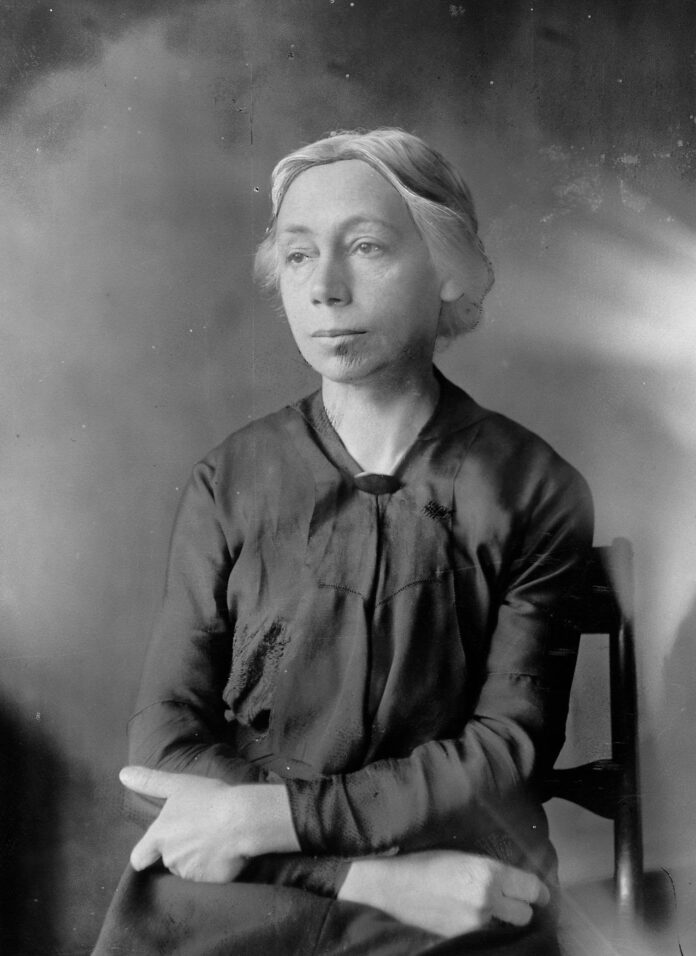
Portrait of German artist Kathe Kollwitz (1867-1945) in Berlin, Germany circa 1928. Kathe Kollwitz was appointed professor at the Prussian Academy of Arts in 1919. (Photo by Paul Popper/Popperfoto via Getty Images)

Käthe Kollwitz: El arte como testimonio del dolor humano

Cuando el mundo prefería mirar hacia otro lado, ella grabó la verdad en cada línea

Käthe Kollwitz no fue una artista de salones elegantes ni de mecenas aristocráticos. Fue la cronista implacable de los que no tenían voz, la traductora visual del sufrimiento de una época que prefería sus tragedias envueltas en retórica heroica. Mientras Europa se vestía de guerra y los manifiestos vanguardistas proclamaban nuevos lenguajes artísticos, ella se armó de lápices, buriles y arcilla para contar la verdad que nadie quería ver: la miseria, el hambre, la muerte de los pobres, de los obreros, de las madres que pierden a sus hijos.

El grabado como denuncia

En sus grabados, Kollwitz encontró el medio perfecto para su mensaje. La técnica del aguafuerte y la litografía, con sus negros profundos y sus contrastes dramáticos, le permitieron crear imágenes de una potencia visceral difícil de ignorar. Series como La rebelión de los tejedores (1893-1897) y La guerra de los campesinos (1902-1908) no eran meros ejercicios formales: eran documentos de denuncia social, crónicas visuales de la lucha de clases y la explotación.

Sus líneas no conocían la indulgencia estética. Cada trazo era deliberado, cada sombra cargaba significado. Los rostros en sus grabados —especialmente los de las mujeres— no respondían a ningún canon de belleza. Eran rostros marcados por el trabajo, el hambre, la pérdida. Rostros que miraban al espectador con una intensidad perturbadora, exigiendo reconocimiento, negándose al olvido.

No embellecía, no idealizaba: humanizaba. Y en ese acto de humanización radical estaba su mayor subversión.

La tragedia personal convertida en memoria colectiva

En 1914, su hijo Peter murió en Flandes, apenas dos semanas después de alistarse voluntariamente en la Primera Guerra Mundial. Tenía dieciocho años. Ese dolor, que pudo haberla quebrado, lo transformó en memoria colectiva. Durante años trabajó en un memorial para su hijo, un proyecto que la obsesionó y la atormentó. El resultado, inaugurado en 1932 en el cementerio de Vladslo, Bélgica, son dos figuras arrodilladas: los padres en duelo, esculpidos en granito, eternamente inclinados ante las tumbas de los jóvenes caídos.

La madre —su propio autorretrato— no grita ni se lamenta teatralmente. Su dolor es contenido, pétreo, absoluto. Es el dolor de millones de madres europeas que vieron partir a sus hijos hacia trincheras que los devoraron.

La escultura: materializar el lamento

Si en el grabado Kollwitz encontró la denuncia, en la escultura halló la monumentalidad del duelo. Su obra escultórica, aunque menos numerosa, posee una fuerza emocional devastadora. La Torre de las Madres (1937-1938), con mujeres apiñadas protegiendo desesperadamente a sus hijos, es una imagen de terror materno ante la amenaza de la guerra que se anticipa como profecía.

Pero es quizás en las diversas versiones de la Pietà donde su genio escultórico alcanza su expresión más conmovedora. La Pietà Alemana, con una madre abrazando el cuerpo sin vida de su hijo, no es solo su tragedia personal: es la de millones. No hay redención cristiana aquí, no hay promesa de resurrección. Solo el peso muerto del cuerpo joven, la rigidez de la muerte, y los brazos maternos que ya no pueden proteger.

La pintura: menos conocida, igualmente intensa

Aunque Kollwitz es reconocida principalmente por sus grabados y esculturas, su obra pictórica —dibujos, carboncillos, litografías— comparte la misma intensidad emocional. Sus autorretratos son especialmente reveladores: nos muestran a una mujer que se observa a sí misma sin concesiones, que envejece sin temor a registrar cada arruga como testimonio de una vida vivida con intensidad moral.

En sus dibujos de madres con niños, la ternura nunca es dulce. Es protectora, desesperada, consciente de la fragilidad. Sus líneas trazan cuerpos que se abrazan como último refugio en un mundo hostil.

Mujer, artista, rebelde

En una época donde ser mujer y artista ya era en sí mismo un acto de rebeldía —la Academia de Bellas Artes de Berlín no admitía mujeres hasta 1919—, Kollwitz eligió además el tema más incómodo posible: el sufrimiento de los oprimidos como su bandera. Vivió en los barrios obreros de Berlín, su esposo era médico de los pobres, y desde esa trinchera social construyó su mirada artística.

El régimen nazi comprendió perfectamente el peligro que representaba. En 1933 fue expulsada de la Academia Prusiana de las Artes. Su obra fue declarada “arte degenerado”, prohibida y retirada de museos. Fue sometida a vigilancia de la Gestapo. ¿Su crimen? Crear un arte que no adornaba paredes sino que removía conciencias, que no celebraba la fuerza sino que lamentaba a sus víctimas.

Un legado que incomoda y despierta

Käthe Kollwitz murió en abril de 1945, semanas antes del fin de la guerra que había denunciado toda su vida. No vivió para ver su reivindicación, pero su obra sobrevivió a quienes intentaron destruirla.

Hoy, sus grabados, esculturas y dibujos nos siguen mirando con los ojos cansados de la injusticia. No ofrecen consuelo fácil ni belleza decorativa. Ofrecen algo más valioso y más difícil: verdad. La verdad de que el sufrimiento humano no es abstracto, que tiene rostro, que tiene cuerpo, que tiene historia.

Su legado no está hecho para agradar, sino para despertar. Y en cada conflicto, en cada injusticia social, en cada madre que llora a su hijo, la obra de Kollwitz recupera su terrible actualidad. Porque ella no pintó solo su época: pintó el alma rota de la humanidad cuando elige la violencia sobre la compasión, el poder sobre la dignidad, la guerra sobre la vida.

En un mundo que todavía prefiere mirar hacia otro lado, Käthe Kollwitz sigue exigiéndonos que abramos los ojos.

Discovering Miami’s Fine Art Gallery Scene: A Cultural Powerhouse in the Tropics

Lenguaje artístico
Lenguaje artístico

Discovering Miami’s Fine Art Gallery Scene: A Cultural Powerhouse in the Tropics

When people think of Miami, they usually picture white-sand beaches, neon lights, and maybe a mojito or two. But beneath the city’s sun-soaked surface lies a thriving fine art scene that’s quickly become one of the most exciting in the U.S.—and arguably, the world.

Miami’s fine art galleries are not just spaces to admire beautiful objects; they’re cultural incubators, platforms for underrepresented voices, and active participants in global conversations around art, identity, and society.

Why Miami?

What makes Miami so unique as a fine art destination is its position as a cultural crossroads between North America, Latin America, and the Caribbean. This mix brings a richness and diversity to the art found here—work that’s visually stunning, conceptually powerful, and often politically charged.

Whether you’re walking through Wynwood, the Design District, or Coral Gables, you’ll find galleries that represent a wide range of styles and perspectives, from contemporary installations to historically grounded painting and sculpture.

Standout Galleries to Explore

Here are a few galleries shaping the conversation in Miami’s fine art landscape:

David Castillo Gallery – Design District

A champion of artists of color, LGBTQ+ voices, and feminist perspectives, Castillo’s curatorial vision is both sharp and socially conscious. Expect top-tier contemporary work that makes you think.

Fredric Snitzer Gallery – Allapattah

One of Miami’s pioneers, Snitzer has a long-standing history of representing Miami-based artists and bringing them into international dialogue. He’s also a major figure in Miami’s Art Basel presence.

Spinello Projects – Little River

This gallery pushes boundaries—literally. With politically charged and experimental exhibitions, Spinello is where you go to see what’s next in the art world.

Pan American Art Projects – Little Haiti

A must for lovers of Latin American and Caribbean art, this gallery builds bridges between generations, movements, and regions with exhibitions that are both scholarly and accessible.

Locust Projects – Design District

Not your typical gallery—Locust is a nonprofit art space dedicated to giving artists total freedom to experiment. Think immersive installations and radical ideas, often from early-career or mid-career artists.

Not Just for Basel

Sure, Art Basel Miami Beach brings massive attention to the city every December, but the local scene is vibrant year-round. Many galleries offer public programs like artist talks, community workshops, and even studio visits. It’s not just about buying art—it’s about engaging with it.

The Future Is Local

As Miami’s international star rises, there’s a strong movement to build a sustainable, locally rooted arts ecosystem. More galleries are showcasing Miami-based artists, partnering with universities and nonprofits, and contributing to a larger dialogue about how cities can support creative life without pricing it out.

Final Thoughts

If you haven’t yet explored Miami through its fine art galleries, now’s the time. Whether you’re a collector, a curator, or just curious, you’ll find something that speaks to you—something that stays with you.

So next time you’re in town, skip the beach (just for an afternoon) and step into a gallery. You might just discover the soul of the city.

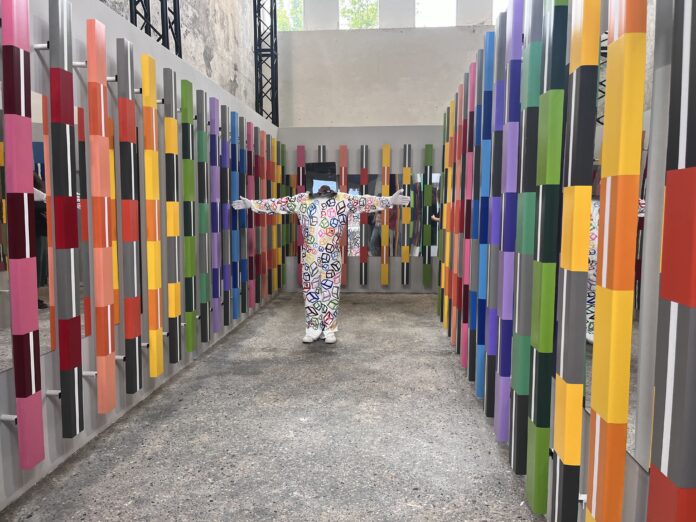
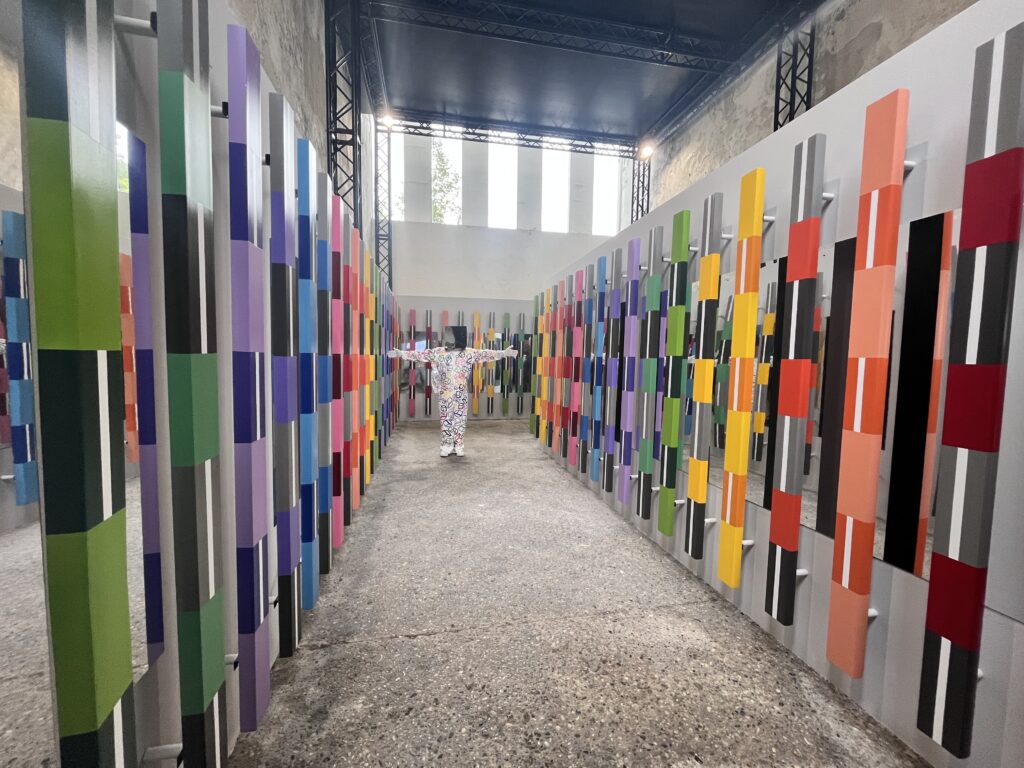
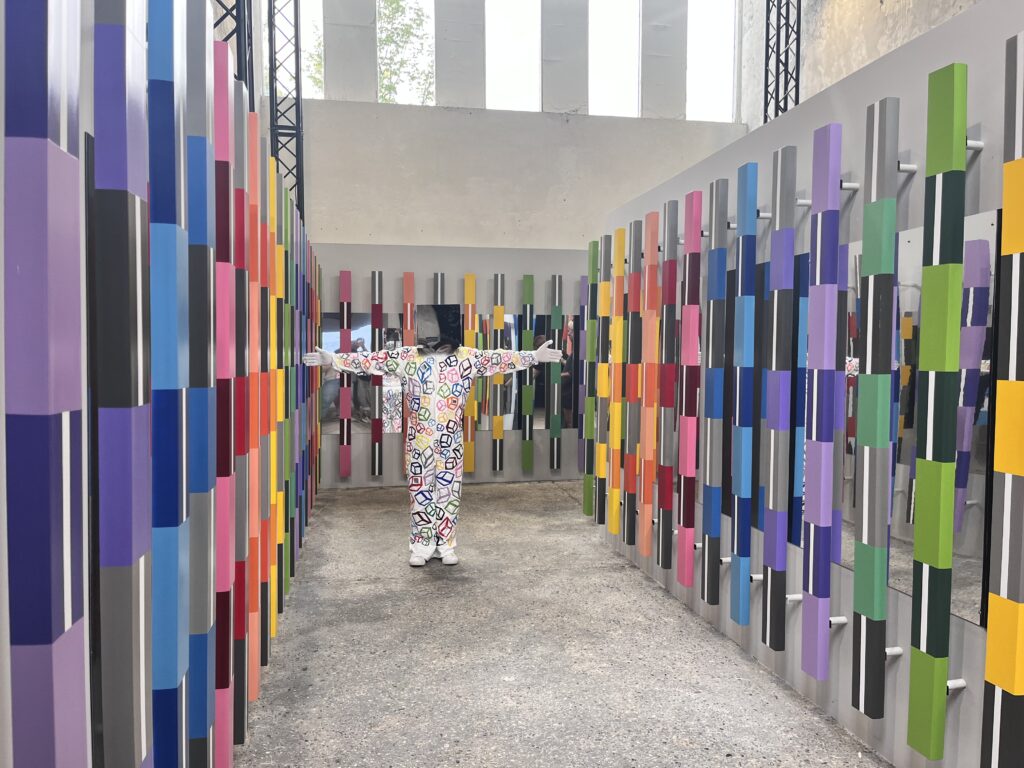
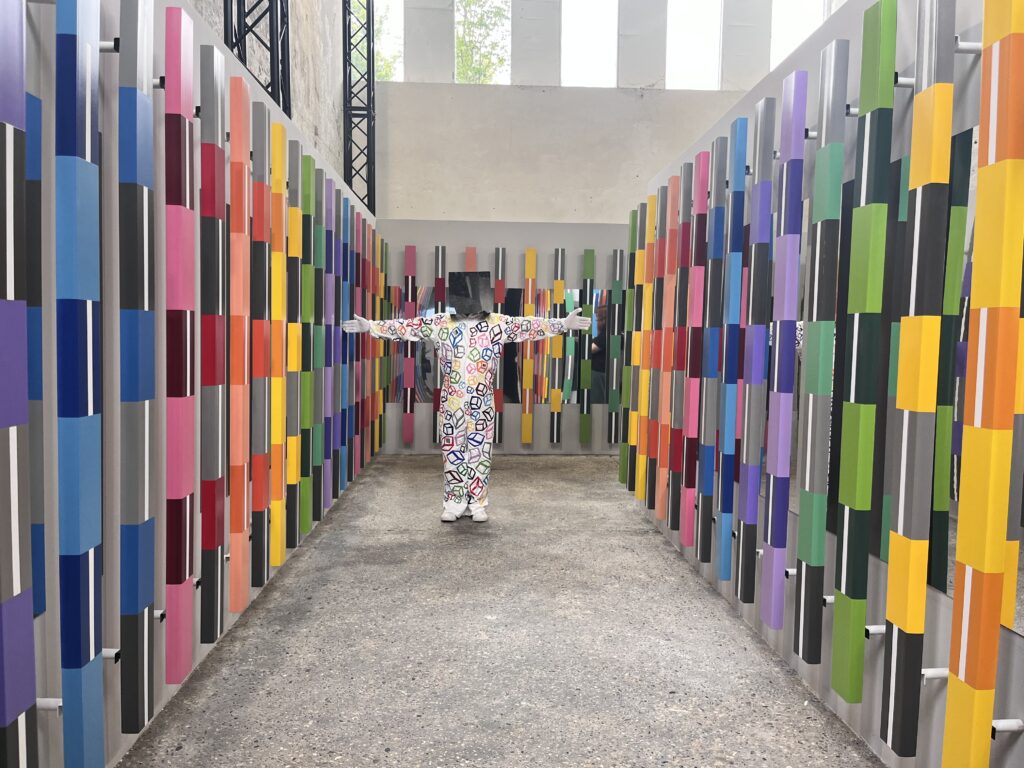
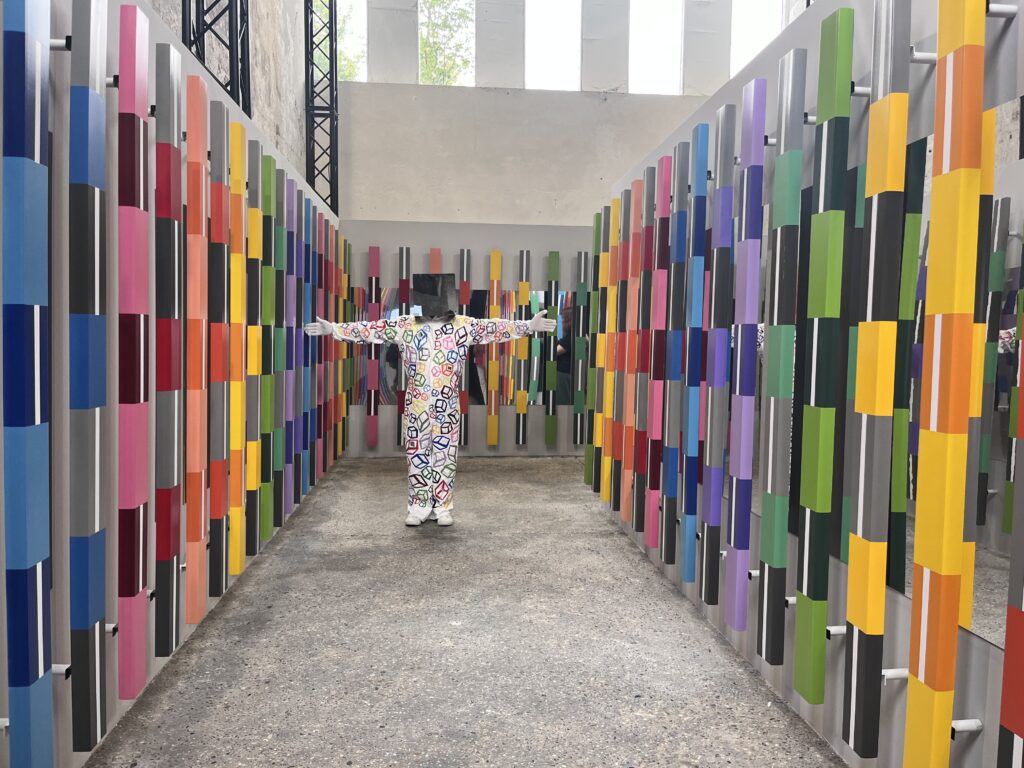
Kube Man Performance at the Venezuelan Pavilion — Venice Biennale 2024

Kube Man Performance — Venezuelan Pavilion — Venice Biennale 2024-

Kube Man Performance at the Venezuelan Pavilion — Venice Biennale 2024

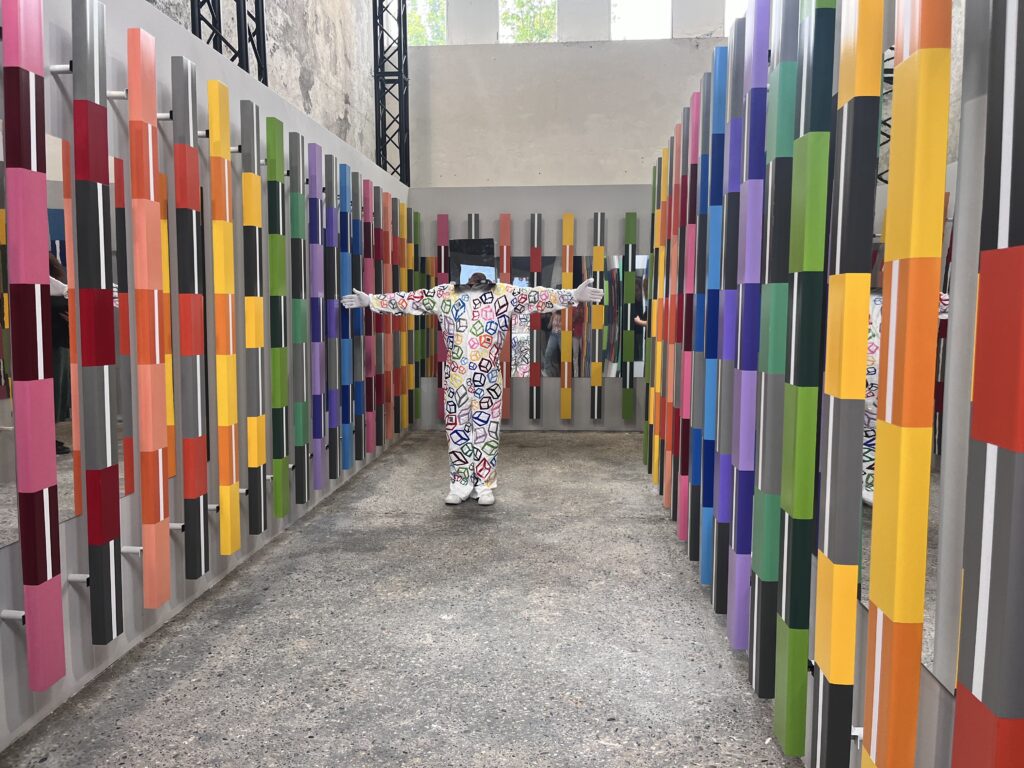
In June 2024, Kube Man presented a striking performance at the Venezuelan Pavilion during the Venice Biennale. The action unfolded within the context of the pavilion’s exhibition, featuring work by Venezuelan master Juvenal Ravelo, whose practice is renowned for its engagement with kinetic art, color theory, and participatory visual systems.

Kube Man’s performance activated the pavilion as a living space, extending Ravelo’s visual language into the realm of embodied geometry and public interaction. Through minimalist form and durational presence, the performance explored themes of balance, structure, and collective perception—dialoguing directly with the chromatic and optical principles present in Ravelo’s work.

Presented at the Venezuelan Pavilion, the performance contributed to the Biennale’s broader conversation on contemporary art, identity, and spatial experience. By merging performance art with the pavilion’s curatorial framework, Kube Man at the Venice Biennale 2024 positioned the body as an architectural and symbolic element—bridging sculpture, movement, and social engagement within one of the world’s most influential international art exhibitions.

Keywords: Kube Man performance, Venezuelan Pavilion Venice Biennale 2024, Juvenal Ravelo art, performance art Venice Biennale, contemporary Venezuelan art.

Sugar Coated

Sugar Coated

Sugar Coated

Exhibition Dates
January 22, 2026
June 14, 2026
481 S Federal Hwy
Dania Beach, FL 33004
Yeswearemadarts.com

Artist
Samantha Salzinger

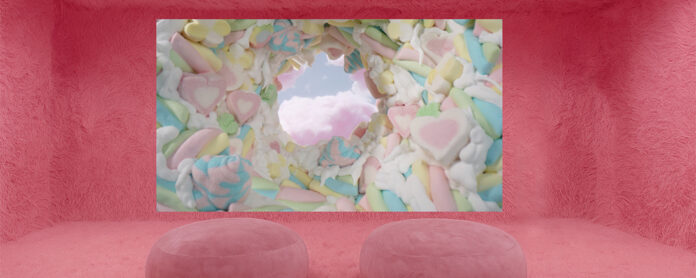
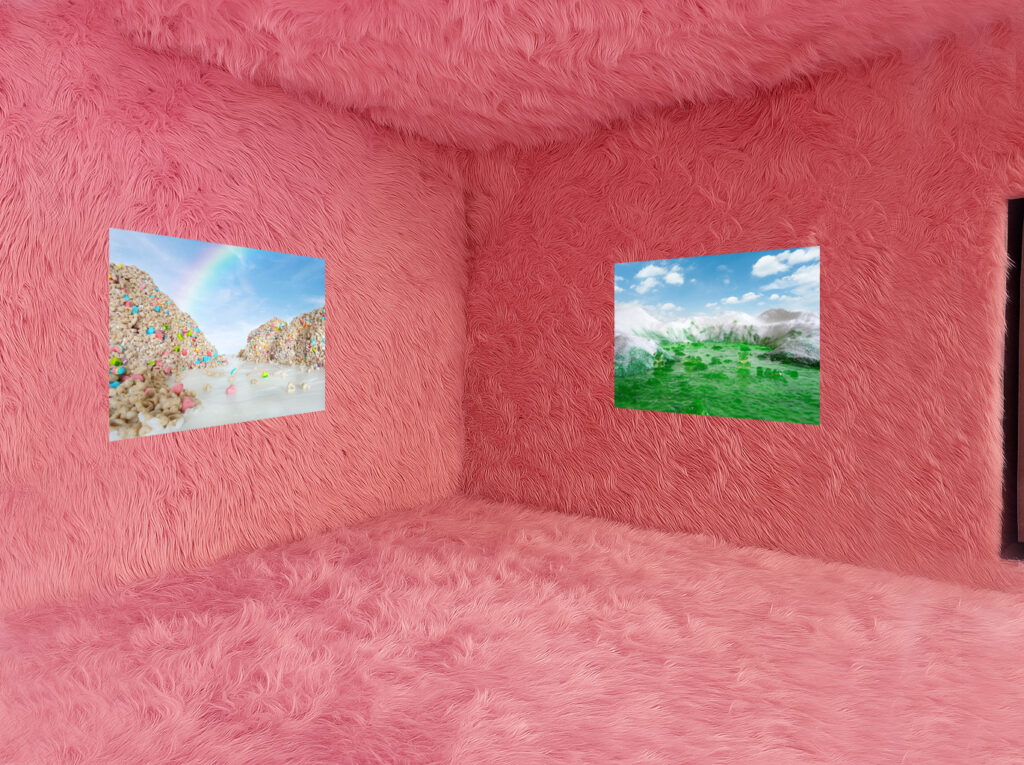
Sugar Coated constructs a world where desire, nostalgia, and excess crystallize into landscapes both seductive and unsettling. Entirely built by hand—piped, poured, sculpted, and assembled—the environments mimic the glossy perfection of digital renderings, exposing the slippage between the real and the simulated. Childhood fantasies bloom into hyperreal terrains already tipping toward collapse.

The immersive installation begins with softness: pink plush carpet underfoot, sweet aromas, pastel clouds, and forests of gumdrops, whipped cream, melted candy, and cereal rubble. At first glance, the scenes shimmer with confectionary innocence. Yet each tableau carries a fault line—a chocolate bunny sinking into sugar-laden ground, lollipop hearts bleeding into syrup, candy forests dissolving under invisible heat. Even the cereal landscape suggests ecological drift, industrial excess, and the sedimentation of consumer culture.

At the center is a large-scale, cyclical video projection in which these crafted worlds begin to breathe, shift, and decay. Free of dialogue, the work unfolds as a hypnotic loop of seduction and dissolution, echoing contemporary cycles of shopping, scrolling, and consumption—small bursts of dopamine that slide from pleasure into exhaustion.

Sugar Coated exposes the hidden cost of manufactured happiness, revealing how desire curdles into saturation and pleasure becomes a trap. The landscapes are lush and inviting, yet always on the verge of collapse—an enchanting fantasy that mirrors the unsustainable rhythms of contemporary life: swipe, scroll, buy, discard, repeat.

Sugar Coated
About the artist:

Samantha Salzinger is a multidisciplinary artist based in South Florida whose work spans sculpture, photography, video, and installation through the creation of intricate, handcrafted dioramas. She earned her MFA in Photography from Yale University and her BFA from Florida International University.

Her work has been recognized with numerous awards, including three South Florida Cultural Consortium Fellowships and the Artist Innovation Grant from the Broward County Division of Cultural Affairs, and is held in public and private collections such as the Pérez Art Museum Miami, Young at Art Museum, Yale University, and the Girls’ Club Collection.

In addition to her studio practice, Salzinger serves as Professor and Chair of the Art Department at Palm Beach State College.

Andy Warhol and the Revolution of Silkscreen Printing

Andy Warhol
Andy Warhol

Andy Warhol and the Revolution of Silkscreen Printing

When Andy Warhol began using silkscreen printing in 1962, he didn’t just adopt a new technique—he fundamentally altered what art could be and mean in the modern world. This commercial reproduction method, typically associated with printing posters and fabric designs, became in Warhol’s hands a radical artistic statement about authenticity, mass production, and the nature of image-making in consumer culture. His silkscreens of Campbell’s Soup Cans, Marilyn Monroe, and countless other subjects didn’t just depict American culture; they embodied its logic of endless reproduction and mechanical repetition.

The Mechanics of Meaning

Silkscreen printing, also known as serigraphy, is a stencil-based process where ink is pushed through a fine mesh screen onto paper or canvas. Areas blocked by the stencil remain blank, while open areas allow ink to pass through, creating the image. Warhol’s adoption of this technique was revolutionary precisely because it was so ordinary—a method used for printing t-shirts, posters, and commercial signage, not for creating fine art.

The process begins with a photographic image, which Warhol would select from newspapers, magazines, publicity stills, or his own Polaroids. This photograph would be transferred onto the silkscreen mesh using a light-sensitive emulsion. Once prepared, the screen could be used repeatedly to print the same image multiple times, with each impression slightly different depending on ink application, pressure, and registration. Warhol often employed assistants to do much of the physical printing, further distancing himself from the romantic notion of the artist’s hand directly creating each unique work.

This mechanical reproduction stood in stark contrast to the dominant artistic movement of the time: Abstract Expressionism. Artists like Jackson Pollock and Mark Rothko emphasized the singular gesture, the unrepeatable moment of creation, the artist’s direct physical engagement with the canvas. Their paintings were meant to be one-of-a-kind objects, bearing the trace of individual genius and emotional authenticity. Warhol’s silkscreens rejected all of this. They were unapologetically reproducible, mechanically executed, and emotionally flat. Where Abstract Expressionism sought depth, Warhol offered surface. Where they valued uniqueness, he embraced repetition.

Repetition as Revelation

The genius of Warhol’s silkscreen work lies in how repetition transforms meaning. His 1962 work “32 Campbell’s Soup Cans” presents each variety of soup the company offered at the time, arranged in rows like products on a supermarket shelf. The repetition is both numbing and revelatory. Look at one canvas, and you see a soup can. Look at all thirty-two, and you begin to see something else: the grid structure of consumer choice, the illusion of variety within standardization, the way capitalism offers the appearance of abundance while delivering endless versions of the same thing.

This effect intensifies in works like “100 Cans” (1962) or “200 One Dollar Bills” (1962), where the sheer quantity of repeated images creates a visual rhythm that hypnotizes and disturbs. The repetition drains the objects of their individual meaning while simultaneously making their status as images—as representations rather than things—impossible to ignore. A single dollar bill signifies money, value, exchange. Two hundred dollar bills become pattern, decoration, an abstract meditation on currency itself.

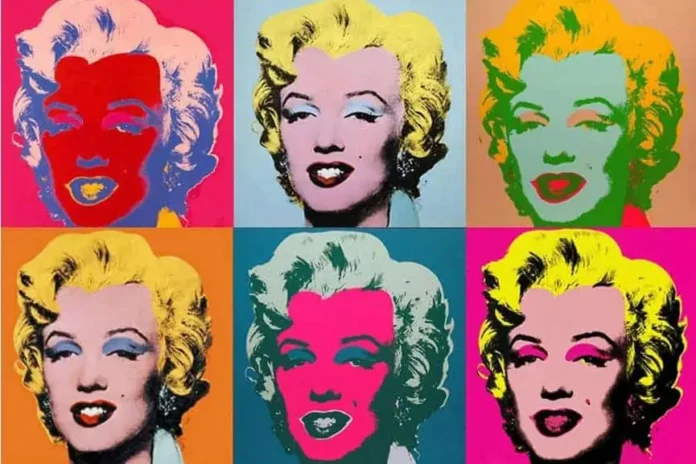
Warhol’s most powerful use of repetition came in his celebrity portraits and Disaster series. The “Marilyn Diptych” (1962), created shortly after Marilyn Monroe’s death, presents fifty silkscreened images of the actress based on a publicity still from the film “Niagara.” On the left panel, twenty-five Marilyns appear in vibrant color—hot pink, yellow, red, turquoise. On the right, twenty-five more Marilyns appear in black and white, progressively fading and degrading as the ink becomes uneven and the images lose definition.

The work captures something profound about how celebrity functions in mass media culture. Monroe is multiplied, reproduced, commodified—her face becomes a product that can be endlessly replicated and consumed. But the repetition also empties the image of meaning. Which Marilyn is the “real” one? The bright, colorful versions that match her Hollywood glamour? Or the fading, ghostly ones that suggest mortality and the person behind the image? The diptych format evokes religious altarpieces, but instead of depicting saints, Warhol presents a secular martyr to fame, a woman consumed by her own image.

The Disaster Series: When Repetition Meets Horror

Perhaps Warhol’s most unsettling use of silkscreen printing came in his Disaster series of the early 1960s. These works depicted car crashes, electric chairs, race riots, and other scenes of violence and death, sourced from newspaper photographs and repeated multiple times across large canvases. In “Silver Car Crash (Double Disaster)” (1963), the image of a mangled car and ejected body is silkscreened twice on the left side of the canvas, while the right side remains blank silver.

The repetition creates a disturbing psychological effect. When we encounter a single image of a car crash in a newspaper, we react with shock, empathy, horror. But seeing the same image repeated transforms our response. The second viewing is less shocking than the first. The third less than the second. By the time we’ve seen the image multiple times, something has changed—the horror hasn’t disappeared, but it’s been joined by a kind of numbness, a desensitization that Warhol understood as characteristic of modern media consumption.

This was Warhol’s dark insight about mass media: that repetition doesn’t intensify meaning but drains it. The more we see images of violence and tragedy, the less we feel them. The television news cycles through disasters, each one briefly shocking before being replaced by the next. Warhol’s silkscreens make this process visible, forcing us to confront how mechanical reproduction affects not just images but our emotional relationship to them.

The blank silver spaces in many Disaster paintings amplify this effect. They suggest both the void of death and the emptiness of media spectacle—the way tragedy gets consumed and discarded, leaving nothing behind but blank space waiting for the next catastrophe to fill it. The silver also evokes television screens, connecting these works to the medium through which most Americans increasingly encountered images of violence and death.

Color, Variation, and the Myth of the Original

One of the most fascinating aspects of Warhol’s silkscreen practice is how he used color. Because each print involved separate screens for different colors, and because the registration of these screens was often imperfect, each impression contained subtle variations. Warhol embraced these “imperfections,” recognizing that they undermined the concept of a single, definitive version of the work.

His portraits of Jackie Kennedy, Elizabeth Taylor, Elvis Presley, and other celebrities exist in multiple versions with different color combinations. “Shot Sage Blue Marilyn” (1964) presents Monroe’s face in unnatural hues—pink skin, yellow hair, red lips, turquoise eye shadow. These colors have nothing to do with realistic representation; they’re chosen for their visual impact, for how they make the image pop. The artificiality is the point. Just as celebrity itself is a constructed image, Warhol’s portraits use artificial colors to emphasize their own artificiality.

This multiplication of versions raised uncomfortable questions about authenticity and value in art. When there are multiple “original” Warhol Marilyns in different colors, which one is the real artwork? Is a version with blue background more authentic than one with red? The questions expose the art market’s investment in uniqueness and originality as somewhat arbitrary. If collectors pay millions for a Warhol silkscreen, they’re not paying for a unique object in the traditional sense—multiple versions exist—but for a particular iteration of an endlessly reproducible image.

Warhol made this tension explicit when he began creating “do-it-yourself” versions of paintings in the 1960s, providing collectors with paint-by-numbers-style kits to complete themselves. He also famously quipped, “I think somebody should be able to do all my paintings for me,” and later, when asked if a painting was really his work, responded, “I don’t know. I probably painted it.” These statements weren’t flippant but philosophical, questioning the very concept of artistic authorship that had defined fine art for centuries.

The Factory System: Industrializing Art Production

Warhol’s use of silkscreen printing was inseparable from how he organized his studio, which he pointedly called The Factory. The name invoked industrial production rather than artistic creation, and Warhol ran it accordingly. Assistants—Gerard Malanga was particularly important in the early years—would prepare screens, mix inks, and pull prints, often with minimal direction from Warhol himself.

This collaborative, assembly-line approach scandalized critics who believed that art required the direct, personal involvement of the artist. Wasn’t Warhol just signing off on work made by others? But this missed the conceptual sophistication of what Warhol was doing. By removing his own hand from the process, he was making a statement about art in the age of mechanical reproduction, a concept articulated by philosopher Walter Benjamin in his famous 1935 essay.

Benjamin had argued that mechanical reproduction destroyed the “aura” of artworks—their sense of unique presence and authenticity. Warhol took this insight and ran with it, suggesting that the loss of aura wasn’t something to mourn but a new condition to explore. If images could be endlessly reproduced, if artistic production could be industrialized, if authorship could be collective rather than individual, what did this mean for art? Rather than resisting these developments in the name of traditional artistic values, Warhol embraced them as the defining conditions of contemporary culture.

The Factory’s social scene—filled with socialites, drag queens, musicians, drug users, and various hangers-on—also fed into the work. Warhol understood that the drama and personalities surrounding art production were themselves part of the artistic statement. The Factory was performance art, social sculpture, and business operation all at once. The silkscreens produced there emerged from and reflected this chaotic, collaborative environment.

From Soup Cans to Commissioned Portraits

Warhol’s silkscreen practice evolved significantly over his career. The early 1960s works focused on consumer products and appropriated media images. By the mid-1960s, he was creating commissioned portraits of wealthy patrons and celebrities, a practice that would become increasingly central to his work. These portrait commissions followed a set process: Warhol would photograph the subject with a Polaroid camera, select the most flattering image, and translate it into a silkscreen print, typically in vibrant, unnatural colors.

Critics accused Warhol of selling out, of prostituting his technique for commercial gain. But again, this misunderstood his project. Warhol’s portrait business was entirely consistent with his critique of art and commerce. By openly functioning as a commercial artist—charging hefty fees, flattering his subjects, producing multiple versions in different colors—he was demonstrating that high art and commercial art had collapsed into each other. The society portraits he created in the 1970s and 1980s weren’t a betrayal of his earlier, supposedly more “critical” work; they were an extension of it.

These later portraits also showcased the silkscreen technique’s particular affordances. The process flattened and simplified facial features, removed texture and detail, and created a kind of glossy, iconic surface that made everyone look vaguely glamorous. In Warhol’s hands, socialites, business executives, and celebrities all received the same treatment—transformed into colorful, flat, reproducible images that emphasized surface appearance over psychological depth. This was portraiture stripped of interiority, focused entirely on image, which was precisely Warhol’s point about celebrity and identity in mass media culture.

Technical Innovation and Artistic Evolution

Throughout his career, Warhol continued to experiment with the silkscreen process, finding new ways to exploit its possibilities. He combined silkscreen with hand-painting, allowing gestural marks to coexist with mechanical reproduction. He printed on unconventional surfaces—metallic wallpaper for his Cow Wallpaper series, which literalized the idea of art as decoration. He created enormous silkscreens like “Mao” (1973), where the Chinese leader’s face is enlarged to intimidating proportions and repeated in multiple color variations, turning political iconography into pop art.

The “Oxidation Paintings” or “Piss Paintings” of 1978 pushed the boundaries further. These works involved urinating on canvases covered in metallic copper paint, causing chemical reactions that created abstract patterns. While not traditional silkscreens, they shared Warhol’s interest in mechanical and bodily processes, and he sometimes incorporated silkscreened images into these pieces. The works were both juvenile and profound—using the most basic bodily function to create art while also exploring abstract expressionist ideas about gesture and spontaneity through deliberately degrading processes.

His “Reversals” series of 1979-1980 took existing silkscreen images and reversed their colors, creating negative versions of famous works. This simple technical variation generated entirely new visual effects while also commenting on how minor changes in reproduction can create different works—a meditation on the relationship between original and copy that had preoccupied Warhol from the beginning.

Legacy: The Silkscreen’s Continued Influence

Warhol’s elevation of silkscreen printing fundamentally changed what was possible in contemporary art. Artists from Sigmar Polke to Robert Rauschenberg to contemporary practitioners like Kehinde Wiley have used the technique, each building on Warhol’s innovations. The method’s association with commercial reproduction—once seen as a liability—became an asset, allowing artists to engage directly with media culture, advertising, and mass-produced imagery.

More broadly, Warhol’s silkscreen practice normalized appropriation as an artistic strategy. By the 1980s, artists like Richard Prince and Sherrie Levine were re-photographing advertisements and existing artworks, creating “original” works entirely from appropriated material. This would have been unthinkable before Warhol demonstrated that borrowing images and mechanical reproduction could be legitimate artistic practices. The debates about originality, authorship, and value that his silkscreens provoked remain central to contemporary art, particularly in our digital age where images circulate and get reproduced with unprecedented ease.

Street artists and graffiti writers adopted silkscreen techniques for creating multiple versions of their work, democratizing image production in ways that aligned with Warhol’s vision. The technique’s accessibility—requiring relatively inexpensive equipment and materials—meant that artists outside traditional art institutions could use it, further breaking down barriers between high and low culture that Warhol had attacked.

The Mirror of Mass Culture

Ultimately, Warhol’s silkscreen printing was more than a technique—it was a philosophy, a critique, and a celebration of contemporary life. By using a commercial reproduction method to create fine art, he collapsed the distinction between the two. By repeating images until they became abstract patterns, he revealed how mass media numbs us to meaning. By removing his own hand from the process, he questioned Romantic notions of genius and authenticity. By embracing mechanical reproduction, he showed that the age of the unique artwork had given way to something else—an era where images circulate endlessly, where everyone has their fifteen minutes of fame, where the distinction between original and copy has become increasingly meaningless.

His silkscreens don’t resolve these tensions—they present them, making us look at consumer culture, celebrity, violence, and death through a process that mirrors how these things actually function in modern media. The technique’s flatness, its repetition, its mechanical quality, its capacity for variation within reproduction—all of these aren’t limitations but perfect formal expressions of the culture Warhol was depicting.

When we look at a Warhol silkscreen today, we’re not just seeing a portrait of Marilyn Monroe or a Campbell’s Soup Can. We’re seeing the logic of mass reproduction made visible, the transformation of everything into endlessly reproducible images, the saturation of our visual environment with the same pictures repeated until they lose and gain new meanings. We’re seeing the world that Warhol recognized was emerging in the 1960s and that has only become more pronounced in our digital age of memes, viral images, and infinite reproducibility.

In choosing silkscreen printing as his primary technique, Warhol didn’t just find a efficient way to make art. He found a method whose very nature embodied his vision of contemporary culture—mechanical, reproducible, commercial, flat, endlessly repetitive, and strangely beautiful. The technique was the message, and the message was that in the age of mass media and consumer capitalism, we’re all living in a world of reproductions, images, surfaces, and repetitions. Warhol simply made us look at it.

Performance: Su Crónica Artística

Performance Art: A Contemporary Artistic Chronicle

Performance Art Su Crónica Artística

El arte de performance surgió como una ruptura radical en el tejido de la estética tradicional, una declaración viviente de que el arte no necesita ser estático, precioso o confinado a las paredes de una galería. Es arte que respira, sangra y se desvanece—existiendo plenamente solo en el presente efímero, en el espacio cargado entre artista y testigo.

Orígenes y Primeras Provocaciones

Las semillas se plantaron a principios del siglo veinte, cuando los futuristas asaltaron los teatros italianos con sus serate, veladas de caos calculado diseñadas para provocar a las audiencias burguesas hasta la apoplejía. Marinetti y sus compatriotas lanzaban insultos y manifiestos con igual fervor, transformando el escenario en un campo de batalla donde el arte confrontaba la complacencia.

Los dadaístas en el Cabaret Voltaire de Zúrich continuaron este asalto a la convención durante la Primera Guerra Mundial. Hugo Ball apareció en su traje cubista—un ensamblaje imponente de cilindros de cartón que lo hacían apenas humano—recitando su poema sonoro sin sentido Karawane. Aquí estaba el arte despojado de la tiranía del significado, reducido a puro gesto sónico, el cuerpo del artista convirtiéndose tanto en instrumento como en obra de arte.

El Cuerpo como Lienzo y Declaración

Para la década de 1960, el arte de performance cristalizó en algo reconocible pero indefinible. El cuerpo mismo se convirtió en el medio principal—vulnerable, político e irreductiblemente presente. Cut Piece (1964) de Yoko Ono colocó a la artista en un escenario, invitando a miembros de la audiencia a acercarse con tijeras y cortar pedazos de su ropa. Cada corte revelaba no solo tela sino dinámicas de poder, voyerismo, género y la violencia que acecha bajo la interacción social.

Marina Abramović se adentró más en territorios de resistencia y riesgo. En Rhythm 0 (1974), permaneció pasiva durante seis horas junto a una mesa con setenta y dos objetos—rosas, perfume, una pistola cargada—instruyendo a los visitantes a usarlos en su cuerpo como quisieran. La performance se convirtió en un experimento aterrador sobre la naturaleza humana, demostrando cuán rápidamente se disuelve la civilidad cuando la responsabilidad desaparece.

Ritual, Identidad y el Cuerpo Político

El arte de performance se convirtió en un recipiente para explorar la identidad cuando otras formas parecían inadecuadas. Ana Mendieta presionaba su cuerpo en tierra y arena, creando siluetas llenas de sangre, fuego y flores—Siluetas efímeras que hablaban del desplazamiento, la pertenencia y la relación del cuerpo femenino con el paisaje y la violencia.

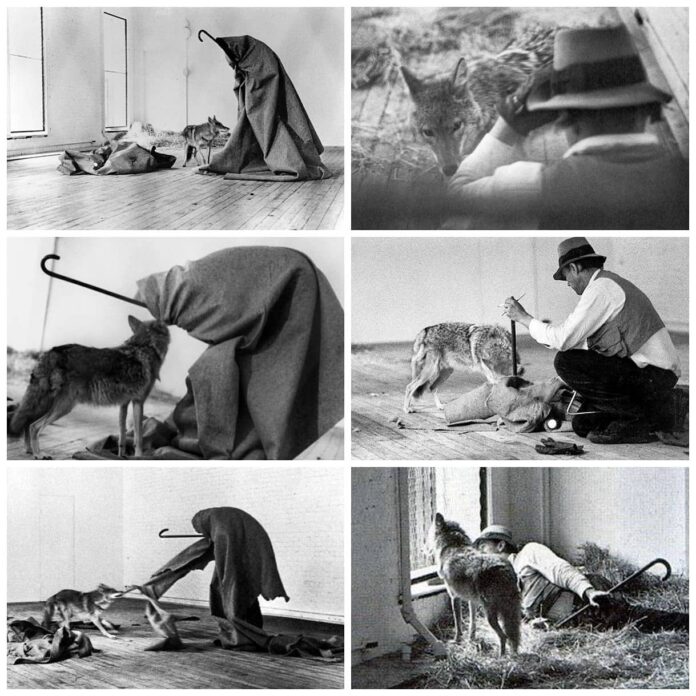
Joseph Beuys transformó sus performances en rituales chamánicos. En I Like America and America Likes Me (1974), pasó tres días enjaulado con un coyote salvaje, envuelto en fieltro, representando una ceremonia misteriosa de reconciliación entre humano y animal, colonizador y tierra colonizada. Sus performances llevaban el residuo de la mitología personal—su supuesto rescate por tártaros durante la guerra—fuera factual o no, esta narrativa se volvió inseparable de la obra.

Interior Scroll (1975) de Carolee Schneemann confrontó la incomodidad del mundo del arte con el cuerpo femenino. De pie y desnuda, extrajo lentamente un rollo de papel enrollado de su vagina y leyó de él—un texto sobre el rechazo de la experiencia corporal de las mujeres en el discurso artístico. La performance fue prueba visceral de que los cuerpos de las mujeres podían ser sujetos, no meramente objetos, de investigación artística.

Confrontando Sistemas y Estructuras

Shoot (1971) de Chris Burden duró meros segundos: en una galería de California, un amigo le disparó en el brazo con un rifle calibre .22. La documentación—fotografías, la herida vendada del artista—se volvió más conocida que el acto mismo, planteando preguntas sobre la violencia como espectáculo, los límites del arte y la mercantilización de la experiencia extrema.

Tehching Hsieh creó performances de duración casi incomprensible. Para Time Clock Piece (1980-1981), fichó un reloj cada hora durante un año entero, permaneciendo en su estudio, su cabello creciendo salvajemente en fotografías de lapso de tiempo que documentaban cada fichada. Estas performances de un año exploraban el confinamiento, la disciplina y el paso del tiempo con intensidad monástica.

Lo Relacional y lo Íntimo

En la década de 1990, artistas como Tino Sehgal crearon performances que no dejaban rastro material—sin fotografías, sin videos, sin objetos. Bailarines y performers entrenados representaban encuentros guionizados pero improvisados con visitantes del museo, transformando la galería en un espacio de puro intercambio humano. Estas “situaciones construidas” existían solo en la memoria y la experiencia vivida.

Tania Bruguera desarrolló el “Arte de Conducta”, enfatizando la capacidad del arte para afectar el comportamiento y las relaciones sociales. Sus performances a menudo colocaban a las audiencias en situaciones políticas incómodas, haciéndolas participantes cómplices en lugar de observadores pasivos.

La Documentación y sus Descontentos

El arte de performance vive en paradoja: ocurre una vez, irrepetible, pero lo conocemos a través de fotografías, videos y testimonios. Esta documentación se convierte en una especie de fantasma, evidencia de una ausencia. Vemos el rostro exhausto de Abramović, la herida de Burden, la ropa hecha jirones de Ono—pero no estuvimos allí. No respiramos ese aire ni sentimos esa tensión.

Algunos artistas abrazan esta vida secundaria; otros la resisten. La fotografía de una performance nunca es la performance, pero moldea cómo la obra viaja a través del tiempo y entra en la historia del arte.

Legado y Práctica Viva

La influencia del arte de performance permea la práctica contemporánea. Abrió puertas para la estética relacional, el arte de práctica social y la crítica institucional. Demostró que el arte podía ser gesto, duración, presencia—que el cuerpo del artista podía ser tanto medio como mensaje.

Los practicantes actuales continúan explorando la presencia y lo vivo en nuestra era hipermediada. ¿Cómo funciona la performance cuando todo se graba, se transmite, se vuelve viral? Los artistas lidian con las economías de la atención, la vigilancia y la mediación de la pantalla en la experiencia, encontrando nuevas urgencias en lo vivo y lo efímero.

El Acto de Desvanecimiento

El arte de performance permanece obstinadamente anti-mercancía en un mundo obsesionado con la posesión. No puedes poseerlo, solo presenciarlo o perderlo por completo. Insiste en la primacía del momento, en los cuerpos en el espacio, en el ahora irrepetible. En una era de reproducción infinita y persistencia digital, la desaparición del arte de performance se convierte en su gesto más radical—un recordatorio de que algunas experiencias se niegan a ser capturadas, archivadas o vendidas.

El Performance Art es una manifestación artística efímera que usa el cuerpo, el tiempo y el espacio como medio, rompiendo con la idea tradicional del objeto de arte para centrarse en la acción, la experiencia y la crítica social, conceptual, política y ritual, con pioneros como Marina Abramović y siendo una crítica a la representación y un arte de “aquí y ahora” que explora la vida misma, no solo una representación de ella. 

Características Clave del Performance Art

  • Efímero y Temporal: A diferencia de una pintura, es un evento único, un “aquí y ahora” que no se puede poseer como un objeto.
  • Cuerpo como Soporte: El artista utiliza su propio cuerpo como herramienta principal de expresión, un lugar de enunciación.
  • Acción y Experiencia: Se enfoca en la acción corporal y conceptual, creando una experiencia directa para el espectador, no solo una contemplación.
  • Crítica y Provocación: Cuestiona las normas sociales, políticas y artísticas, buscando subvertir la realidad y la performatividad de la vida cotidiana.
  • Multidisciplinario: Integra elementos visuales, conceptuales, teatrales y rituales, aunque no depende de la intermediación de otros elementos como la danza.
  • Anti-Arte: Puede ser considerado “antiarte” si el arte se define solo como objeto, desafiando la mercantilización y los sistemas de representación establecidos. 

Orígenes e Influencias

  • Vanguardias: Antecedentes en las vanguardias (Futurismo) que buscaban borrar límites entre arte y vida, provocando al público.
  • Post-Guerra: Surgió con fuerza tras las guerras mundiales, respondiendo a nuevas realidades políticas y sociales.
  • Pioneros: Artistas como Yves Klein, Joseph Beuys, Carolee Schneemann y Marina Abramović son figuras clave. 

Es arte que sabe que morirá, y representa esa muerte como su acto final y desafiante.

Performance Art: A Contemporary Artistic Chronicle

Performance Art: A Contemporary Artistic Chronicle

Performance Art: A Contemporary Artistic Chronicle

Performance art emerged as a radical rupture in the fabric of traditional aesthetics, a living declaration that art need not be static, precious, or confined to gallery walls. It is art that breathes, bleeds, and vanishes—existing fully only in the ephemeral present, in the charged space between artist and witness.

Origins and Early Provocations

The seeds were planted in the early twentieth century, when Futurists stormed Italian theaters with their serate, evenings of calculated chaos designed to provoke bourgeois audiences into apoplexy. Marinetti and his compatriots hurled insults and manifestos with equal fervor, transforming the stage into a battleground where art confronted complacency.

The Dadaists at Cabaret Voltaire in Zurich continued this assault on convention during World War I. Hugo Ball appeared in his Cubist costume—a towering assemblage of cardboard cylinders that rendered him barely human—chanting his nonsensical Karawane sound poem. Here was art stripped of meaning’s tyranny, reduced to pure sonic gesture, the artist’s body becoming both instrument and artwork.

The Body as Canvas and Statement

By the 1960s, performance art crystallized into something recognizable yet indefinable. The body itself became the primary medium—vulnerable, political, and irreducibly present. Yoko Ono’s Cut Piece (1964) placed the artist on a stage, inviting audience members to approach with scissors and cut away pieces of her clothing. Each snip revealed not just fabric but power dynamics, voyeurism, gender, and the violence lurking beneath social interaction.

Marina Abramović pushed further into territories of endurance and risk. In Rhythm 0 (1974), she stood passive for six hours beside a table of seventy-two objects—roses, perfume, a loaded gun—instructing visitors to use them on her body however they wished. The performance became a terrifying experiment in human nature, demonstrating how quickly civility dissolves when accountability vanishes.

Ritual, Identity, and the Political Body

Performance art became a vessel for exploring identity when other forms felt inadequate. Ana Mendieta pressed her body into earth and sand, creating silhouettes filled with blood, fire, and flowers—ephemeral Siluetas that spoke of displacement, belonging, and the female body’s relationship to landscape and violence.

Joseph Beuys transformed his performances into shamanic rituals. In I Like America and America Likes Me (1974), he spent three days caged with a wild coyote, wrapped in felt, enacting a mysterious ceremony of reconciliation between human and animal, colonizer and colonized land. His performances carried the residue of personal mythology—his claimed rescue by Tartars during wartime—whether factual or not, this narrative became inseparable from the work.

Carolee Schneemann’s Interior Scroll (1975) confronted the art world’s discomfort with the female body. Standing nude, she slowly extracted a rolled paper scroll from her vagina and read from it—a text about the dismissal of women’s bodily experience in art discourse. The performance was visceral proof that women’s bodies could be subjects, not merely objects, of artistic investigation.

Confronting Systems and Structures

Chris Burden’s Shoot (1971) lasted mere seconds: in a California gallery, a friend shot him in the arm with a .22 rifle. The documentation—photographs, the artist’s bandaged wound—became more widely known than the act itself, raising questions about violence as spectacle, art’s limits, and the commodification of extreme experience.

Tehching Hsieh created performances of almost incomprehensible duration. For Time Clock Piece (1980-1981), he punched a time clock every hour for an entire year, remaining in his studio, his hair growing wild in time-lapse photographs that documented each punch. These year-long performances explored confinement, discipline, and time’s passage with monastic intensity.

The Relational and the Intimate

In the 1990s, artists like Tino Sehgal created performances that left no material trace—no photographs, no videos, no objects. Trained dancers and performers enacted scripted yet improvised encounters with museum visitors, transforming the gallery into a space of pure human exchange. These “constructed situations” existed only in memory and lived experience.

Tania Bruguera developed “Arte de Conducta” (Conduct Art), emphasizing art’s capacity to affect behavior and social relations. Her performances often placed audiences in uncomfortable political situations, making them complicit participants rather than passive observers.

Documentation and Its Discontents

Performance art lives in paradox: it happens once, unrepeatable, yet we know it through photographs, videos, and testimonies. This documentation becomes a kind of ghost, evidence of an absence. We see Abramović’s exhausted face, Burden’s wound, Ono’s tattered clothing—but we weren’t there. We didn’t breathe that air or feel that tension.

Some artists embrace this secondary life; others resist it. The photograph of a performance is never the performance, yet it shapes how the work travels through time and enters art history.

Legacy and Living Practice

Performance art’s influence permeates contemporary practice. It opened doors for relational aesthetics, social practice art, and institutional critique. It demonstrated that art could be gesture, duration, presence—that the artist’s body could be both medium and message.

Today’s practitioners continue exploring presence and liveness in our hypermediated age. How does performance function when everything is recorded, streamed, going viral? Artists grapple with attention economies, surveillance, and the screen’s mediation of experience, finding new urgencies in the live and the ephemeral.

The Vanishing Act

Performance art remains stubbornly anti-commodity in a world obsessed with ownership. You cannot possess it, only witness or miss it entirely. It insists on the moment’s primacy, on bodies in space, on the unrepeatable now. In an era of infinite reproduction and digital persistence, performance art’s disappearance becomes its most radical gesture—a reminder that some experiences refuse to be captured, archived, or sold.

It is art that knows it will die, and performs that death as its final, defiant act.

El Impresionismo Musical

Impresionismo Musical

El Impresionismo Musical: Sonidos que Pintan Sensaciones

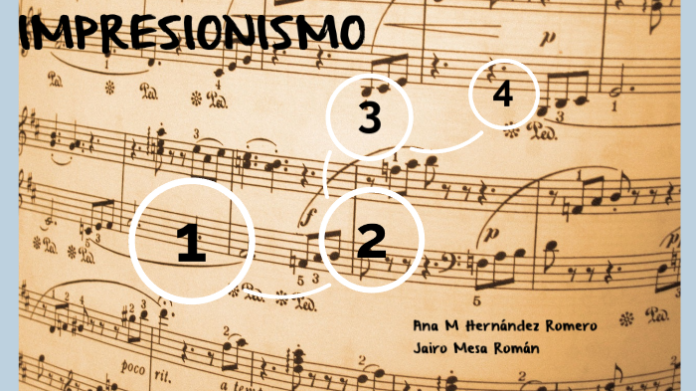
El impresionismo musical es un movimiento que floreció a finales del siglo XIX y principios del siglo XX, principalmente en Francia. Inspirado por el impresionismo pictórico (como el de Monet y Renoir), su propósito no era contar historias o expresar emociones intensas, como el romanticismo anterior, sino evocar sensaciones, atmósferas y paisajes sonoros.

Características principales del impresionismo musical

1. Atmósfera y sensación

El foco no está en narrativas claras o estructuras rígidas, sino en la creación de ambientes sutiles y etéreos. La música impresionista se siente como un susurro, una brisa, una imagen borrosa que flota y desaparece. Más que decir, sugiere.

2. Timbre y color

El timbre (color del sonido) se convierte en un protagonista. La orquestación es delicada y detallada: flautas que imitan el viento, arpas que simulan el agua, cuerdas suaves que parecen niebla. Cada instrumento se elige con precisión para crear texturas sonoras.

3. Armonía libre

Se rompen las reglas clásicas de la armonía. Los compositores usan acordes extendidos (9ª, 11ª, 13ª) y progresiones no funcionales. La tonalidad se vuelve ambigua o se disuelve por completo. También se usan acordes paralelos, que evitan el movimiento tradicional y crean una sensación flotante.

4. Escalas no tradicionales

Se emplean:

  • Escalas pentatónicas (de origen asiático),
  • Escalas de tonos enteros (sin semitonos, como una escalera sin peldaños intermedios),
  • Modos antiguos (como el dórico o lidio),
  • Y escalas exóticas, inspiradas en culturas no occidentales.

Estas aportan un aire onírico, místico o primitivo a la música.

5. Estructura formal flexible

Las formas musicales son abiertas, sin un desarrollo estricto. No hay clímax claros ni resoluciones definidas. La música fluye como el agua: se mueve sin seguir una ruta rígida. A menudo, parece que no pasa nada, pero está pasando todo.

6. Melodía desenfocada

Las melodías no tienen frases marcadas ni temas heroicos. Son líneas suaves, ondulantes, como niebla sonora. La melodía no busca imponerse, sino integrarse con el ambiente.

Compositores representativos

🎶 Claude Debussy

El pilar del impresionismo musical. Influenciado por Monet, Renoir y la poesía simbolista, Debussy entendía la música como un lenguaje de sensaciones.

Obras clave:

  • Preludio a la siesta de un fauno
  • Arabesques
  • Clair de Lune
  • La mer

“La música es el espacio entre las notas”, decía Debussy.

Maurice Ravel

Aunque a veces más estructurado que Debussy, Ravel exploró timbres, orquestaciones ricas e influencias extranjeras, como la música española.

Obras clave:

  • Bolero (influencia española)
  • Daphnis et Chloé
  • Jeux d’eau

Erik Satie

Figura excéntrica y única. Con un estilo minimalista y antiacadémico, se desmarcó de las convenciones musicales.

Obras clave:

  • Gymnopédies
  • Gnossiennes

Sus piezas, a menudo introspectivas y simples, fueron precursoras de la música ambiental y del minimalismo.

¿Por qué se llama “impresionismo”?

El término se toma prestado del impresionismo pictórico, que buscaba capturar la luz y la impresión fugaz de un momento. De la misma forma, los compositores impresionistas querían sugerir en lugar de afirmar. La música no describe una historia, sino una sensación efímera. No pretende enseñar, sino hacerte sentir.

Impresionismo y sensaciones

A diferencia del romanticismo, que exaltaba las emociones profundas, el impresionismo propone un cambio de enfoque:

  • De la emoción a la sensación
  • De la narración a la atmósfera
  • De la estructura al flujo

Recupera elementos de la música antigua y de otras culturas, como las asiáticas o árabes, que fueron consideradas exóticas por los europeos de la época. Esta apertura enriqueció el lenguaje musical con nuevos colores y formas.

Influencia en otros músicos

Aunque el impresionismo fue principalmente francés, su impacto se sintió en todo el mundo. Compositores españoles nacionalistas como Manuel de Falla, Albéniz o Granados adoptaron algunas de sus ideas, aunque no se les considere impresionistas puros.

¿Qué provoca esta música?

El impresionismo musical invita a la contemplación. No exige, invita. No grita, susurra. Es ideal para escuchar con atención suave, dejando que los sonidos te atraviesen como la brisa.

¿Por dónde empezar a escuchar?

  • Debussy – Prélude à l’après-midi d’un faune
  • Ravel – Daphnis et Chloé
  • Satie – Gymnopédie No.1
  • Debussy – Clair de Lune
  • Ravel – Pavane pour une infante défunte

Conclusión

El impresionismo musical no trata de tener razón, ni de demostrar poder técnico, sino de crear una experiencia sensorial. Es una música que pinta con sonidos, que sugiere en lugar de afirmar y que despierta la imaginación del oyente. En un mundo de ruido y velocidad, escuchar impresionismo es como mirar un atardecer reflejado en el agua: no hay nada que entender, solo algo que sentir profundamente.

Page 26 of 277
1 24 25 26 27 28 277