Home Blog Page 250

Breakthrough: A conversation with Fernando Cocchiarale about the exhibition “Ruptura” and the foundation of Concrete art

Fernando Cocchiarale artwork

Breakthrough: A conversation with Fernando Cocchiarale about the exhibition “Ruptura” and the foundation of Concrete art

BY CYNTHIA GARCIA

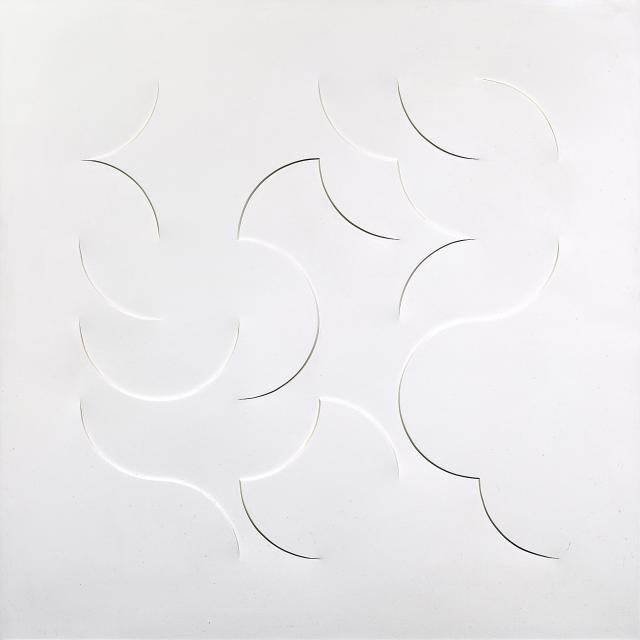
Judith Lauand (1922), Espiral (Spiral), 1956, enamel paint on eucatex, 40 cm diameter.

The exhibition “Ruptura” (Rupture), first presented in New York in 2017, is now in São Paulo at Galeria Luciana Brito, with fifty small to medium-sized artworks by eleven pioneering artists of Brazil’s signature movement, Concrete art.

Geraldo de Barros (1923-1998), Arranjo de Três Formas Semelhantes Dentro de Um Círculo, 1953, enamel paint on Kelmite cardboard, 60 x 60 cm

“Brazil is a romantic country. Concrete art was a movement that needed discipline, and Brazil also needed discipline, a certain character, order, to educate the people. I think that Concretism was important in this sense,” renowned art critic Mario Pedrosa said just months before his death in 1981, in describing why the movement flourished in the country. It also explains the frenzy around Swiss artist and former Bauhaus student Max Bill, who landed in São Paulo in the 1940s and gained guru-like status among a group of young artists who were captivated by the concepts of Concrete art he promoted, as first expressed ten years earlier by Dutch artist Van Doesburg in Paris. Backed by the new theories and with representational art no longer able to answer their issues with the industrial world, Grupo Ruptura (Rupture Group) was founded in 1952 in São Paulo.

Anatol Wladyslaw (1913-2004), Untitled, 1953, gouache on paper, 50,5 x 35 cm.

Concrete art advocated a wholesome revolutionary practice based on Constructivism and Mondrian’s Neoplasticism, wrapped up in the Bauhaus experience. In the words of the group’s mentor Waldemar Cordeiro, “Concrete art synthesizes all modern art tendencies that developed quantitative methods of structuring images based on media arising from progress in mechanics and engineering; it poses an extensive repertoire of image processing using machine language. Quantification in Concrete art, however, does not mean numerical conversion of geometric aspects but instead capturing the digital structure of perceptual analog values. In this respect, Concrete art may be described as more akin to Gestalt psychology than to geometry.”

Hermelindo Fiaminghi (1920-2004), Untitled, 1956, enamel paint on Eucatex, 44,5 x 44,5 cm.

Among the seven original founding members, four were European immigrants fleeing the Nazis: Austrian Lothar Charroux (1912-1987), Hungarian Kazmer Féjer (1923-1989), as well as Anatol Wladyslaw (1913-2004) and Leopoldo Haar (1910-1954), both from Poland. The Brazilian-born artists in the group where Waldemar Cordeiro (1925-1973), Geraldo de Barros (1923-1998), Hermelindo Fiaminghi (1920-2004), Maurício Nogueira Lima (1930-1999) and Luiz Sacilotto (1924-2003). Following the Bauhaus credo, most of them expanded their practices and contributed to the fields of industrial design, architecture and landscape design.

Waldemar Cordeiro (1925-1973), limited edition of aluminum lamp with discs originally designed for his landscape projects, 1957:2018, 54 x 30 x 30 cm, ed:20.

This exhibition also launches a special edition of twenty units of a shrewd modernist 1957 garden lamp with six parallel aluminum disks originally designed by Waldemar Cordeiro for his signature landscape projects. Charismatic and argumentative, Cordeiro was a visionary who died just as his ideas were gaining notoriety outside the intellectual circle. He was the group’s spokesman, author of the Rupture Manifest (1952), and also penned harsh art chronicles published regularly in the mainstream media throughout the 1950s. “The fascination with the machine led to the demise of naturalistic beauty” was his poetic explanation of the advent of Concrete art. His interpretation of its rigor was expressed as, “the precision of art is not a craftsmanship precision, but one of meanings.” But when it came to the dispute with Rio’s rival Neo-Concrete group, Cordeiro lashed out, “[They] have not yet given the qualitative leap that will allow them to state the problem of vanguard art in a straightforward manner,” and to deepen the antagonism with Neo-concrete’s mentor, he whipped, “I no longer doubt Ferreira Gullar is aspiring the impossible: a Concrete art that is no longer concrete.”

Kazmer Féjer (1923-1989), Plexiglass 01, c. 1970, plexiglass cast, 22 x 85 x 35 cm.

This must-see show at Luciana Brito also honors the last two original Concrete artists still living: the only female member, Judith Lauand, now ninety-six years old, and poet Augusto de Campos, eighty-seven, whose contribution to the current event comes in the form of a book with concrete poems hailing his colleagues.

One of South America’s most prominent art experts, Fernando Cocchiarale, wrote the exhibition’s presentation. For more than three decades, the Rio-born scholar, curator and author has been a teacher at PUC-RJ University and at Escola de Artes Visuais do Parque Laje, both in his native town. From 2000 to 2007, he was chief curator of Rio’s MAM, among other important posts in the field of visual arts. In 2013-2014, Cocchiarale co-curated, along with Arlindo Machado and Analívia Cordeiro, the exhibition that won the year’s critics award, “Waldemar Cordeiro: Fantasia Exata” (Exact Fantasy), at Itaú Cultural in São Paulo and in Rio’s Paço Imperial.

Manifesto Ruptura (1952) by Waldemar Cordeiro (1925-1973), poster design by Leopoldo Haar (1910-1954)

Fernando, tell us about the onset of the influential Manifesto Ruptura.
On December 9, 1952, the Museu de Arte Moderna de São Paulo opened the first show of Grupo Ruptura, the pioneering São Paulo branch of the Concretist movement. That day saw the release of the group’s founding document, the “Ruptura Manifesto” by Waldemar Cordeiro, theorist and spokesman for the group’s ideas. This concise text exposed a set of new spatial, chromatic and formal principles with a rigor never before seen in the history of Brazilian art. It conveyed the meaning of the rupture proposed by its signatories Lothar Charoux, Waldemar Cordeiro, Geraldo de Barros, Kazmer Fejer, Leopoldo Haar, Luis Sacilotto and Anatol Wladyslaw, later joined by Hermelindo Fiaminghi, Judith Lauand and Maurício Nogueira Lima.

Leopold Haar (1910-1954), photo document of undated work, 18 x 24 cm.

What did the manifesto advocate?
The manifesto included a list of trends that were the group’s artistic rivals, whose apparent modernity concealed their incomprehension of the new, as they were producing “new forms out of old principles.” These tendencies encompassed “all the varieties and hybrids of naturalism; the mere negation of naturalism, that is, the ‘wrong’ naturalism of children, the insane, the ‘primitive’ artists, the expressionists, the surrealists, etc.; the hedonist non-figurativism spawned by gratuitous taste that seeks the mere excitement of pleasure or displeasure.”

Lothar Charroux (1912-1987), Untitled, 1956, India ink on paper, 34 x 50,8 cm. Courtesy Galeria Luciana Brito

What set apart Grupo Ruptura from other vanguard movement of its day?
The artists of the “Ruptura Manifesto” questioned their contemporary adversary, informal abstractionism, and all the figurative trends that had for centuries dominated Brazilian art. This simultaneity of trends of various historical periods from which they broke away in a single manifesto revealed the limits of the initial modernism in Brazil. Unlike similar movements in Europe, it did not promote a spatial or discursive break away from the principles of classical art, nor did it generate any “ism”—a factor that lent a radical, entirely new and unique sense to the rupture headed up by Cordeiro.

Luiz Sacilotto (1924-2003), Concreção 5837 (Concretion 5837), 1958, enamel paint on aluminum, 50 x 80 cm.

How do you analyze the movement in relation to modernism per se?
Processes of modernization effectively founded in the European paradigm of rupture were very rare. They were exceptions especially if we consider the unfinished experiences of modernization in Latin America, Asia and Africa. The issues conveyed by the group were of another, more profound and radical order: to break away from the colonial past that hindered the effective modernization of Brazilian art and of the country itself.

Mauricio Nogueira Lima (1930-1999), Objeto Rítmico nº 4 (Rythmic Object Nº4), 1953, automotive paint on chipboard sheet, 50 x 60 cm.

What is the contribution of Waldemar Cordeiro, main theorist of the movement?
For two decades Cordeiro’s participation was decisive in consolidating São Paulo and Brazilian vanguards. Founded on the principles proposed by Concrete art, he promoted a rupture from Brazilian figurative modernism of the first half of the twentieth century. He also contributed to the theoretic and practical integration between art, landscaping, urban planning, criticism of art and politics. Not only that, he also engaged himself in the critical debate with the concrete vanguard group from Rio de Janeiro, Grupo Frente, the embryo of Neoconcretism. In the 1960s, Cordeiro  approached the worldwide emergence of Neofigurativism. Between 1968 and 1973, the year he passed away, he dedicated himself mainly to the investigation of computer art.

Waldemar Cordeiro, Untitled, 1952.

To wrap up, what is your view on the legacy of the Grupo Ruptura?
The group’s unprecedented renewal became fundamental in unfolding important repertoires that today constitutes the vast, multifaceted and complex Brazilian contemporary art.

Maria del Mar YoMePermito.com

Maria del Mar Yomepermito.com

Maria del Mar YoMePermito.com

¿Qué es Coaching?

El Coaching es un método por el cual un Coach acompaña y guía a una persona para que pueda conseguir sus objetivos, ya sea alcanzar más claridad, autoconfianza o superar obstáculos, de esta manera liberar el potencial del cliente a través de una serie de preguntas poderosas y así se convierta en un observador más efectivo de sí mismo.

El coach no resuelve problemas, sino facilita el crecimiento del coachee para que éste, por sí mismo haga frente a sus desafíos. 

El Coach trabaja con el Coachee (cliente) como un compañero en el trayecto de su transformación.

¿Porqué elegir a Tu Coach Personal?

 En la vida, a menudo surgen dificultades que limitan el progreso de los objetivos que se desean alcanzar, un coach te ayuda a superar esos obstáculos y así poder avanzar. 

La falta de confianza en uno mismo representa un obstáculo a la hora de tomar decisiones acertadas, un coach puede ayudarte a encontrar claridad y dirigirte a un camino más proactivo.

Si deseas gestionar mejor tu tiempo, un coach es perfecto para ayudarte a organizarte.

Un Coach te ayudará a ser consciente de lo que realmente quieres y a encontrar la manera de conseguirlo.

Son muchas las razones que pueden motivarte a elegir a tu Coach Personal ya que en un proceso de coaching vas fortalecido el compromiso con tu propia vida, con tus emociones y mejor relación contigo y tus seres queridos. También te ayudará a explotar todo tu potencial y a resaltar tus cualidades. De esta manera irás creando tu mejor versión.

El crecimiento personal se hace mucho más simple en compañía de un guía que te ayudará afrontar retos, gestionar eficazmente las emociones negativas y los conflictos internos que te pueden paralizar.

¿Porqué hacer Coaching Online?

Vivimos en un mundo donde podemos conectarnos con un solo click y tener acceso a  personas y recursos en cualquier parte del mundo. El internet ha cambiado nuestras vidas creando un mundo de nuevas posibilidades. Gracias a esto, es más fácil conectarse el coach más adecuado, sin importar su ubicación. Las barreras geográficas desaparecen y pueden mantenerse sesiones con personas de todo el mundo. 

Dentro del coaching online pueden encontrarse beneficios como la flexibilidad de horarios y comodidad de trabajar en línea. Podemos adaptarnos al ritmo de vida y las necesidades del cliente, ahorras tiempo, aumenta la posibilidad de reducir costos. 

Otro motivo para hacer tus sesiones de coaching Online es que te proporciona la posibilidad de que seas tú quien escoja un lugar tranquilo y cómodo, estas características dependerán de tus preferencias. Permitiendo adecuar tu espacio como quieras.

¿Cuánto dura un proceso de Coaching?

Un proceso de coaching personal no tiene una duración determinada, no hay una respuesta fija, todo depende de cómo es la persona y cuál sea su objetivo. Hay casos muy concretos que con pocas sesiones es suficiente, y otras que por los cambios que se desean realizar el proceso dura varios meses. Además que el cliente o Coachee tiene la potestad de finalizar el proceso de Coaching cuanto desee, con previa notificación al Coach Profesional.

¿A quién va dirigido el Coaching Online?

Un proceso de coaching está dirigido a todas aquellos personas que estén dispuestos abrir su corazón y su mente para escucharse a sí mismos, que deseen alcanzar un objetivo, o que estén viviendo una situación que quieran cambiar. 

El objetivo del Coach de Vida se relaciona con el desarrollo personal (calidad de vida, autoestima, autoconocimiento, etc.)

El compromiso y la sinceridad es fundamental, ya que el resultado del proceso de coaching sólo es posible si el cliente acciona y  llevando acabo lo que aprende en las sesiones.

CONCRETE ART

Concrete art, Constructivism, Constructivism
arte concreto
arte concreto

CONCRETE ART

In 1930, Dutch artist Theo Van Doesburg and four of his friends openly declared war on every kind of impressionism, sensibility and subjectivity in art. The concrete art group and the magazine Art Concret, which they founded in Paris, argued for rational, universal art “entirely conceived and shaped by the mind”, without “receiving anything from nature’s formal properties, or from sensuality or sentimentality”1.

Heir to Mondrian’s neoplasticism and to the principles promoted by the De Stijl movement, concrete art sought “absolute clarity” through a “simple, visually controllable” structure that signified nothing beyond itself. The emotional impulses perceptible in traditional abstraction were excluded in favour of a logical composition based on predetermined mathematical principles.

Concrete art’s Zurich home crystallised a few years later when Max Bill (1908-1994)—influenced by his studies at the Bauhaus and his friendship with members of the Abstraction-Création group in Paris—drew up his own theory on concrete art. Bill advocated a rational art, developed according to its own rules and integrating everyday life. Like the artists of the Allianz association, which Bill joined in 1937, he favoured the use of neutral, geometric, easily understandable shapes.

These Zurich concrete artists—including Richard Paul Lohse (1902-1988), Leo Leuppi, Walter Bodmer, Verena Loewensberg, Camille Graeser (1892-1980), Gottfried Honegger (1917-2016) and Sophie Tauber-Arp—all showed the same predilection for skilfully calculated geometric arrangements. In that vein, Lohse opted for modular compositions in which all elements are mutually supportive, independent and equal; Graeser favoured systematic composition principles like addition, rotation or progression, while Honegger ended up entrusting the production of mathematical calculations to a computer. The visual effect is that of an almost rhythmic chromatic polyphony, which seems to be articulated—as in the works of Fritz Glarner (1899-1972)—according to warm/cool, bright/dark and neutral/intense relationships.

For the artists of concrete art, the work primarily designates a balanced, coherent whole, whose elements are defined by their relationships with one another within the image. These relationships very often become symbols of an ideal, democratic organization, based on all individuals benefiting from the same rights and freedoms.  

[1] Carlsund, Doesbourg, Hélion, Tutundjian, Wantz, « Base de la peinture concrète », in Art Concret, n°1, 1930, Paris.

Bellas Artes

Cubeman covid19-protection
Bellas Artes - Pintura
La pintura es una de las Bellas Artes.

¿Qué son las Bellas Artes?

Las Bellas Artes refieren a las principales formas de realización artística o representación estética cultivadas históricamente por la humanidad, y consideradas formas “puras” de arte que emplean técnicas, materiales y procedimientos diferentes entre sí. Cada una de las siete, no obstante, engloba una multitud de prácticas, estilos y tendencias reconocidas.

Estas artes forman parte tradicionalmente de los elementos duraderos y trascendentales de la humanidad: aquellos considerados dignos de un lugar central en la alta cultura, tanto como documentos o testimoniales de una época, una forma de sentir, o como símbolos que atañen a una concepción específica del mundo y de la existencia.

Tradicionalmente se reconocen seis formas de las Bellas Artes: la pintura, la música, la literatura, la danza y la escultura. Posteriormente se añadieron el cine (el séptimo arte), la arquitectura y la narrativa gráfica o arte secuencial (el noveno arte).

Hay que decir que el concepto de Bellas Artes está vinculado con la idea del museo y del arte histórico, y no tanto del arte contemporáneo, que ha puesto en jaque o en cuestionamiento dicho concepto. Hoy en día el arte se contempla desde perspectivas diversas, dado que la noción tradicional de Bellas Artes ha sido acusada a menudo de ser etnocéntrica (privilegia la concepción europea del arte) y culturalmente excluyente.

Historia de las Bellas Artes

Los antiguos griegos estudiaron la representación artística (sobre todo Aristóteles) y la comprendían en dos categorías oponibles: las superiores y las menores. Las primeras eran más elevadas, poéticamente poderosas y trascendentales, mientras que las segundas eran más vulgares y sencillas. Esta distinción se suponía a partir de los sentidos empleados para percibir la belleza (vista y oído eran los sentidos superiores).

Sin embargo, el término Bellas Artes se empleó propiamente a partir del siglo XVIII para agrupar a las prácticas artísticas valoradas en la época y tratar de unificar las numerosas teorías que había sobre la belleza, el estilo o el gusto. Inicialmente se incluía entre ellas la declamación y la oratoria, pero fueron sustituidas en el tiempo.

¿Cómo se clasifican las Bellas Artes?

Bellas Artes - Música
La música busca alcanzar la belleza mediante ritmos, melodías y sonidos.

La división clásica de las Bellas Artes se establece a partir de los materiales que usa y del modo en que los utiliza, de la siguiente manera:

  • Arquitectura. Emplea los diversos materiales de construcción para confeccionar viviendas, edificaciones y espacios urbanos que sean hermosos y funcionales, estéticos y habitables al mismo tiempo.
  • Danza. Emplea el cuerpo humano y el ritmo musical como una forma de expresión de contenidos artísticos.
  • Escultura. Emplea la piedra, la arcilla o diversos materiales sólidos para lograr representaciones artísticas tridimensionales, ya sean figurativas o abstractas.
  • Pintura. Emplea pigmentos obtenidos de diversas fuentes naturales y artificiales, para representar estéticamente la realidad mediante el color y las formas sobre lienzos y otras superficies.
  • Música. Mediante diversos instrumentos construidos por el ser humano, busca alcanzar la belleza mediante ritmos, melodías y sonidos armónicamente orquestados para suscitar una experiencia estética en el escucha.
  • Literatura. Empleando el lenguaje como materia prima, compone relatos, representaciones teatrales o descripciones poéticas que luego pueden leerse y disfrutarse estéticamente.
  • Cine. Empleando instrumentos técnicos complejos, capta la luz, el sonido y el tiempo mismo en secuencias de eventos simulados o reales que componen un relato, un discurso o una representación audiovisual de la realidad.

Características de las Bellas Artes

Las Bellas Artes son diversas entre sí, pero suponen un conjunto uniforme de características:

  • Aspiran a la belleza. Del modo que sea y a través de las técnicas y materiales que sean, pero las Bellas Artes buscan comunicar una experiencia específica de lo bello, lo armónico, lo trascendente o lo profundo.
  • Son universales. En principio, las obras de arte tendrían que ser apreciables por toda la humanidad, sin importar las particularidades de su proveniencia, religión o sexo.
  • Son duraderas. Las obras de arte deberían durar en el tiempo y poder comunicar su contenido a las generaciones venideras, ya sea en museos, reproducciones o soportes especializados para ello.

Última edición: 24 de junio de 2020. Cómo citar: “Bellas Artes”. Autor: María Estela Raffino. De: Argentina. Para: Concepto.de. Disponible en: https://concepto.de/bellas-artes/. Consultado: 13 de julio de 2020.

Fuente: https://concepto.de/bellas-artes/#ixzz6S87GwhZi

The Fantastic Four: Zurich Concrete and Special Friends

Richard Paul Lohse
Richard Paul Lohse

The Fantastic Four: Zurich Concrete and Special Friends

BY QUINN LATIMER

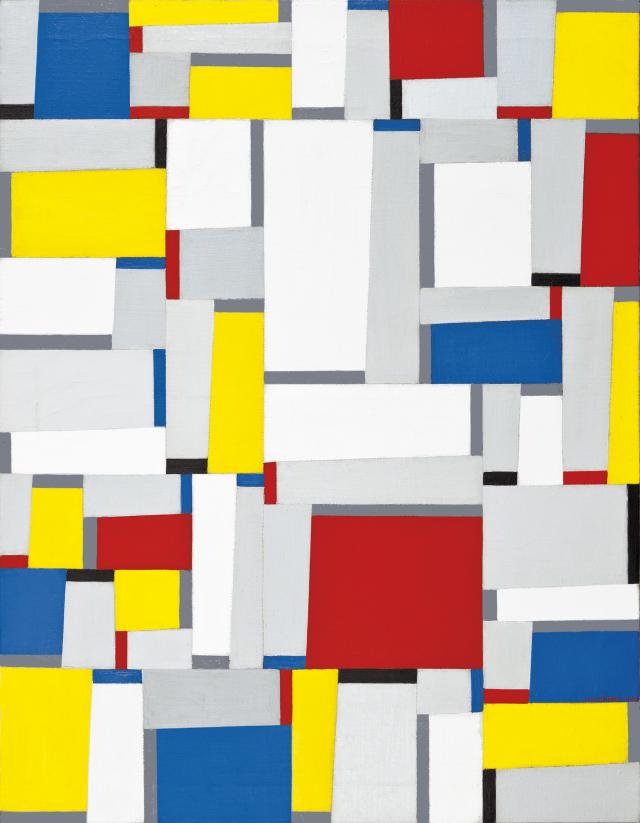
Richard Paul Lohse Fünfzehn systematische Farbreihen innerhalb eines symetrischen Systems (Fifteen Systematic Colour Sequences Within a Symmetrical System), 1950–65 Oil on canvas

The traces, shadows and aftershocks of Concrete art – and, in particular, the Zurich Concrete school – have been seen and felt everywhere in contemporary Swiss art production, with its emphasis on hard-edged, geometric abstraction. The term ‘Concrete Art’, coined in 1930 by Theo Van Doesburg in a manifesto written for the first issue of Art Concret, defined and delineated a departure from realism, nature and symbolism. Its reductionist principles of line, colour and plane organized into austere, systemic wholes – themselves copped and refined from the Bauhaus and De Stijl – were meant to ‘represent abstract thoughts in a sensuous and tangible form’, as Max Bill, the movement’s ringleader, once wrote. Concrete art was intended to create new ‘object[s] for intellectual and spiritual use’.

If such sincere proclamations sound a tinny Utopian alarm today, the kind of reduced, geometrically-prone art they proposed remains insistently de rigueur, from the Neo-Geo antics of French Switzerland (led by godfather John Armleder) to the Northern Swiss gangs of younger Basel and Zurich-based artists, who increasingly process Concrete art’s methods through the filters of digitization or consumerism. Consequently, the exhibition ‘The Fantastic Four: Zurich Concrete and Special Friends’ did not come as a particular surprise. At Haus Konstruktiv, the ‘Fantastic Four’ of the Marvel comic from whence this somewhat cloying title came, are reconfigured as the superheroes of Zurich Concrete: Bill, Camille Graeser, Verena Loewensberg and Richard Paul Lohse. The ‘special friends’ comprised a motley, intergenerational group of contemporary artists – among them, Saâdane Afif, Bruno Jakob and Shirana Shahbazi – whose radically disparate production can still be located, at times, in Concrete art’s shadow.

Haus Konstruktiv’s permanent collection is notably broad, and the exhibition mostly rode its able shoulders. Graeser’s lucid oil paintings on canvas, with their grounding in graphic design – like many of the Zurich Concretes, he worked in all areas of design: furniture, architecture, advertising – bookend his career. Gestoppte Rotation (Stopped Rotation, 1943) proved prescient of the geometric, abstract photography movement of today, while the funny, poignant Drei Farben: drei gleiche Volumen, 1/12 grün bewegt (Three Colours: Three Equal Volumes, 1/12 Shifted Green, 1975/76), featured one of his horizontal bands of colour attempting to make a break for it.

Loewensberg’s wonderful paintings from the late 1960s and ’70s, meanwhile, look like radio frequencies or lighting bolts swathed in colour, conjuring computer approximations of Clyfford Still’s (more famous) drippy abstractions from the same period. Bill’s revelatory painting of powdery pastel hues blossoming from a spiral, Betonung einer spirale (Accentuation of a Spiral, 1947), however, took the award for sheer timelessness.

In the wake of such works, the contemporary inclusions were somewhat disappointing and the choices difficult to interpret – surely there are other Swiss-related artists whose work follows Concrete art more explicitly – but some of the pairings were nevertheless inspired. Best known for her photorealist, figurative murals rendered by Iranian sign painters, Shahbazi showed large geometric works that were both lovely and surprising. If Killian Rüthemann’s site-specific installations – playfully dark retorts to geometric abstraction’s legacy – fit perfectly, Afif’s punk-ish performance documentation was less expected. Still, Concrete art’s intentions to unite art and life in all its ably designed forms bore this contribution out. And should the spectator have persisted in the misguided thinking that this Swiss movement remained regional, there was one scene-stealing side project: a series of sketches, drawings and paintings by Fritz Glarner for the famous 1960s-era Rockefeller Dining Room in New York. The artist, who emigrated to the US in 1936, designed the room for Nelson Rockefeller himself, bringing Zurich Concrete – and Glarner’s own brand of Mondrian-inflected wit, with its jam of flat, hard-edged geometric forms tricked out in blue, red and yellow – to the most American and yet international of settings.

Quinn Latimer is a writer and contributing editor of frieze. Her most recent book is Like a Woman: Essays, Readings, Poems (Sternberg Press, 2017).

Richard Paul Lohse was a Swiss painter and graphic artist and one of the main representatives of the concrete and constructive art movements. Lohse was born in Zürich in 1902. His wish to study in Paris was thwarted due to his difficult economic circumstances.

Born: September 13, 1902, Zürich, Switzerland

Died: September 16, 1988, Zürich, Switzerland

Art forms: Painting

Associated periods or movements: Concrete art

What is “Concrete Art?”

Concrete art, Constructivism, Constructivism

What is “Concrete Art?”

There are several major works of Concrete Art in the Ricola Collection. The Zurich Concretists Max Bill (1908–1994), Camille Graeser (1892–1980), Verena Loewensberg (1912–1986), and Richard Paul Lohse (1902–1988) were all important benchmarks for Alfred Richterich, the man who first conceived the collection in the late 1970s. His decision to focus the collection of art from Switzerland on artists who were working on a contemporary concept of the “work”—and that against the backdrop of a modernist understanding of art history—has influenced the collection’s development to this day.

Concrete art, Constructivism, Constructivism

But what exactly is Concrete Art? As the glance at art history in what follows will show, the term is not just a description of certain stylistic characteristics, but in fact defines the epoch that came after abstraction in the early twentieth century. Concrete Art expresses the shift in the perception of what an artist’s task actually is, and of what art can and should achieve, that began to manifest itself from 1930 onwards. The Concretists did not define a style that might be learned with the aim of applying it themselves as artists. After all, the language of art is developing all the time.

Concrete art, Constructivism, Constructivism


The first mention of “concrete” art dates from 1930 and the manifesto The Basis of Concrete Art by Theo van Doesburg (1883–1931). In a commentary on his manifesto, which like the latter was published in French in van Doesburg’s magazine Art Concret, he characterized abstraction as a historical epoch that was now finished. Nothing, he wrote there, was “more concrete, more real than a line, a color, an area.” 

The six-point manifesto reads as follows: “We say: 1. Art is universal. 2. The work of art must be conceived and shaped in its entirety in the mind before it is executed. It must not receive any of nature’s formal properties, nor those of sensuality, nor those of sentimentality. We want to exclude all lyricism, drama, symbolism etc. 3. The painting must be composed exclusively of purely pictorial elements, that is to say of shapes and colors. A pictorial element has no meaning beyond itself, so that the painting as a whole has no meaning beyond itself. 4. The construction of the painting and its elements must be simple and visually controllable. 5. The technique must be mechanical, that is to say exact, anti-impressionistic. 6. It should strive for absolute clarity.”

Each of these points is quoted and explained in detail in the commentary. And this is what van Doesburg had to say about method: “The work of art exists in its entirety in the mind before being realized materially. To match the perfection of the concept, it has to be technically perfect. It must not bear any traces of human weakness: no trembling, no imprecision, no indecision, no incomplete areas etc. etc.

Humanism is cited to justify all manner of stupidities in art. If you cannot draw a straight line by hand, use a ruler. Typescript is clearer, finer, and more legible than handwriting. We do not want an artistic hand. If you cannot draw a circle by hand, use a compass. All the tools invented by the intellect for the purpose of perfection are recommended.”
The Swiss architect, artist, and product designer Max Bill published the first of three different versions of his own definition of terms based on van Doesburg’s in a piece headed “concrete design” published in the catalogue of the exhibition Problems of Contemporary Swiss Painting and Sculpture at the Kunsthaus Zürich in 1936. In this essay, he wrote that “concrete design is that design that arises of its own accord, following its own laws without deriving these from external natural phenomena or modeling them on the same.” This was followed in 1938 by Wassily Kandinsky’s essay entitled “L’Art Concret” published in the magazine XXe Siècle.

Bill’s active work as both publicist and curator, which he was able to continue even during the war, did much to establish the concept of “Concrete Art,” even if only in Switzerland at first. His essay “From Abstraction to Concrete Painting in the 20th Century,” in which he traced the recent history of art from Cubism to abstraction and from Constructivism to Concrete Art, positioning his own work at the end of this development, was published in 1943. The Kunsthalle Basel hosted the exhibition Concrete Art organized by Bill in 1944, and a revised version of the aforementioned text was published in the catalogue of the exhibition concrete art from zurich in 1949, which was later shown in Stuttgart and Munich as The Zurich Concretists. “Concrete art is what we call those works of art that arise of their own accord, subject to their own laws, without recourse to external natural phenomena or the transformation, including through abstraction, of the same.” This is the version of the text that Bill used in later publications.

Camille Graeser, who like Max Bill, Richard Paul Lohse, and Verena Loewensberg, belonged to the first generation of Zurich Concretists, who incidentally would never officially declare themselves a group, undertook his own first attempt to draw a clear distinction between concrete art and abstract art—as his fellow artists had done before him—in 1944. In a brief article published in the abstrakt + konkret bulletin of the Galerie des Eaux-Vives in Zurich he defined both terms, but without saying anything fundamentally different than what Bill had said before him.

While the language used is more lyrical than that of the considerably younger and better known Bill, in terms of substance, these two artists, who differed radically in terms of personality and temperament, were obviously of one mind.

Roman Kurzmeyer
(translation: Bronwen Saunders, 2014)

Lygia Pape

Lygia Pape
Lygia Pape

Lygia Pape, Brazilian visual artist.

Monica Amor

From the neo-concrete to the culture of the Amazons: A Multitude of Forms looks back at the Brazilian avant-gardist.

Lygia Pape, Livro do tempo (Book of time), 1961–63. Tempera and acrylic on wood, 365 parts. Photo: Paula Pape. © Projeto Lygia Pape.

Lygia Pape: A Multitude of Forms, Met Breuer, 945 Madison Avenue, New York City, through July 23, 2017

•   •   •

The Met Breuer’s ambitious retrospective of Lygia Pape (1927–2004)—her first US museum survey—offers a unique opportunity to take a deep dive into the pioneering Brazilian modernist’s oeuvre. It also sets some intriguing art historical stakes, challenging established narratives that marry Pape’s work to that of her better-known countrymen, Lygia Clark and Helio Oiticica—fellow members of the neo-concrete movement. Formed in Rio de Janeiro in 1959, the group aimed to refashion geometric abstraction by liberating the work of art from the frame or the pedestal and bringing it into the space of the everyday. Like Clark and Oiticica, Pape began by producing sculptural reliefs and two-dimensional works during an initial period of fertile experimentation, and by the end of her career was creating pieces that directly involved the body of the artist and/or those of her viewers. But as this exhibition illustrates, her path along the way diverged from that of her close colleagues. 

Lygia Pape, Pintura (Painting), 1954–56. Gouache on fiberboard. Photo: Paula Pape. © Projeto Lygia Pape.

The show is organized chronologically, and deftly balances the many aspects of Pape’s practice. The first gallery presents a wall of early gouaches on fiberboard that attest to her fluency in the geometric vocabulary privileged by the neo-concretists. These compositions from 1954 to 1956 are colorful and dynamic, revealing an intuitive approach to shape and line that signals the influence of Swiss concrete art, which was exhibited at the first São Paulo Biennial in 1951. This gallery also features beautifully installed square wall reliefs with geometric shapes painted in a Mondrianesque palette of white, black, and primary colors protruding from predominantly white backgrounds. Relief proved instrumental for these artists—especially Clark and Oiticica—as it facilitated a transition from the static realm of the wall to the performative realm of the body. 

Lygia Pape, Relevo (Relief), 1954–56. Gouache and tempera on fiberboard on wood. Photo: Paula Pape. © Projeto Lygia Pape.

For Pape, though, that transition was less direct, as from 1955 to 1960 she pursued a dedicated exploration of line and texture in drawings and woodcuts. These thoroughly two-dimensional works, primarily executed on Japanese paper, play with linear repetition, symmetry, and the role of negative space in the production of form. The woodcuts, which the artist retrospectively called Tecelares (Weavings) sometime between 1979 and 1983, have been discussed as investigations of ambiguous space (by rejecting traditional figure/ground relations), and in terms of a mode of spectatorship that unfolds over time—both paramount concerns of the neo-concrete manifesto. Indeed, these prints have been hailed as the climax of Pape’s neo-concrete contribution. But the centrally organized composition Pape favored subtly activates the viewer’s sense of the image’s frame, that is to say, the thing that separates the space of art from the space of the world. It is precisely this distinction that Clark and Oiticica sought to overcome.  

Lygia Pape, Tecelar, 1960. Woodcut on Japanese paper. © Projeto Lygia Pape.

Rather than engaging neo-concretism’s injunction to vanquish the pictorial plane, these prints stress the materiality of the surface. This of course corresponds to the process of physically imprinting the woodblock onto the paper—the traces we see thus favor the tactile as opposed to the optical. This oneness of material, technique, and form seems to have provided rich ground for Pape to reject individual expression while accentuating texture to repress the virtual space of the white plane. The figure of weaving the Tecelares invoke suggests that the traces of the woodblock are interwoven with the paper like the weft and warp of a textile.

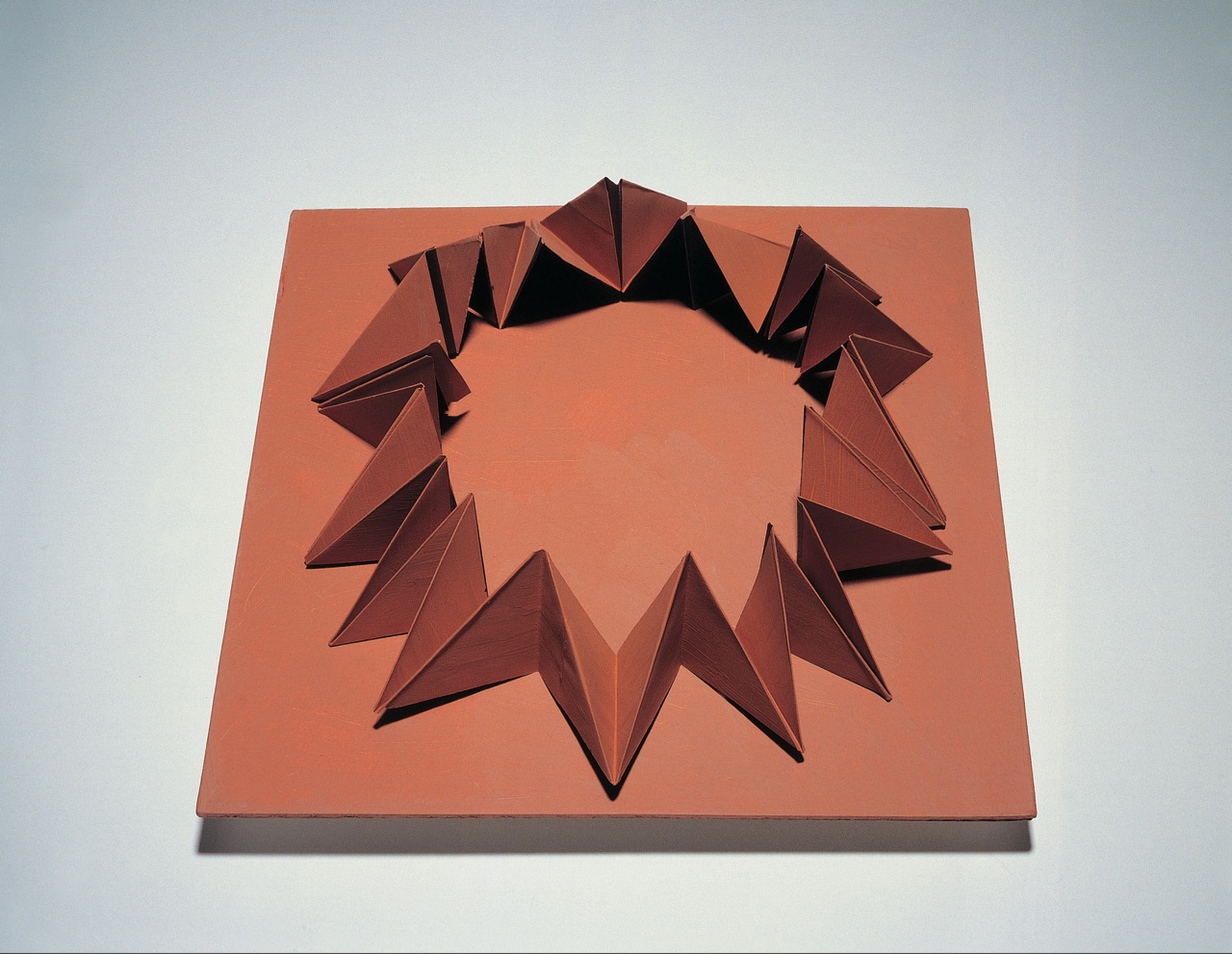
Lygia Pape, Livro da arquitetura (Book of architecture), 1959–60. Tempera on cardboard, 12 parts. Photo: Paula Pape. © Projeto Lygia Pape.

In an adjacent gallery, the Book of Creation and the Book of Architecture (both 1959–60) also deal directly with their own materiality. Here, on cardboard pages measuring approximately twelve by twelve inches each, various techniques (collage, cutouts, origami-like folds) produce abstract images symbolizing themes of space and figures of origin. Facsimiles of the unbound folios are available to viewers in the exhibition; as if paging through an interactive pop-up book, visitors can manipulate the boards in the order of their choosing, thus disrupting the traditional linear temporality of reading and bridging the divide between viewer and art object.

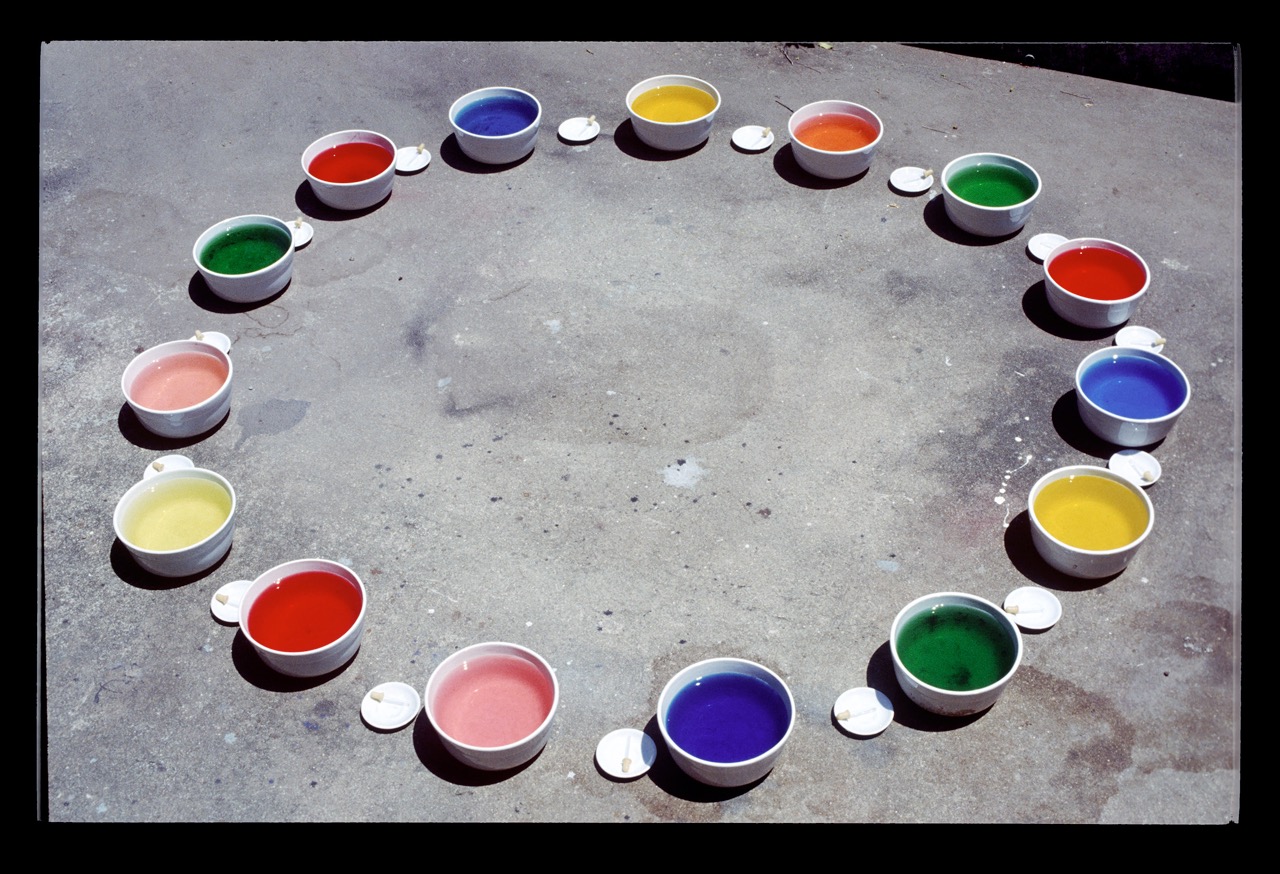
Lygia Pape, Roda dos prazeres (Wheel of pleasures), 1967. Porcelain vessels, droppers, distilled water, flavorings, and food coloring. Photo: Paula Pape. © Projeto Lygia Pape.

After a hiatus in the sixties, when Pape designed title credits for experimental filmmakers and worked as a graphic designer for a Brazilian food company, she came back to the visual arts with a practice that rejected object-making and the confines of the museum. With a new focus on the body, Pape organized performative actions at the margins of the city (beach, favela, parks). At the Met, pristine reconstructions or recently filmed versions of these actions eclipse the charged political moment in which Pape was working. Her commitment to occupy public space during this period is thus decontextualized, and remains largely untheorized in the exhibition. Though the curators do make an effort to provide some of the far-grittier documentation of original performances, other works (like Wheel of Pleasures [1967], a circle of bowls containing flavored liquids tinted by food dye that the artist would taste alongside her viewers) look like decorative objects rather than performative devices. The museum’s invitation to interact with Wheel of Pleasures on specific days does not alleviate this problem, which points to the larger issue of how to present works of a participatory, public nature in a museum context.

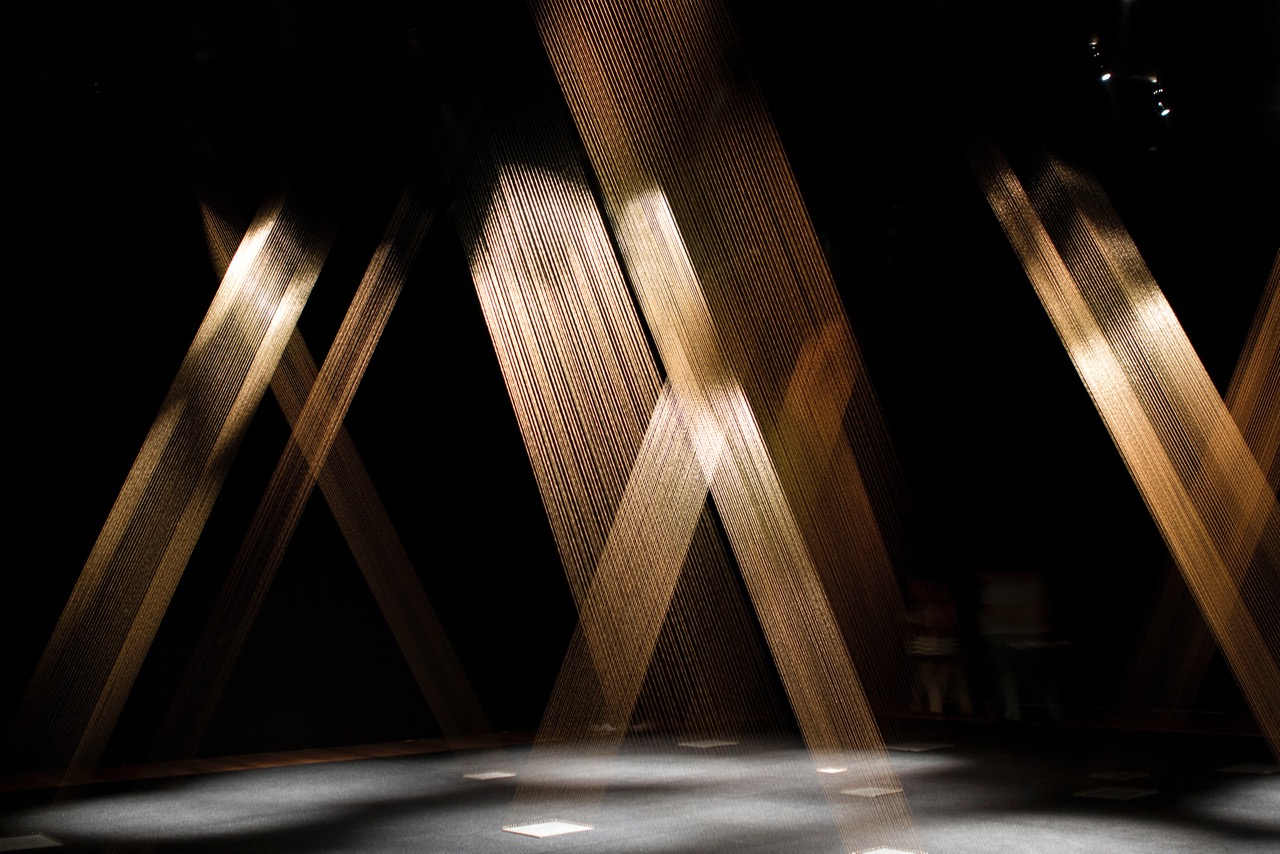
Lygia Pape, Ttéia 1, C, 1976–2004, reconstructed 2017. Golden thread, nails, wood, and lighting. (Prior installation view.) Photo: Paula Pape. © Projeto Lygia Pape.

Pape’s turn to performance in public space was followed by a series of videos and photographs documenting the native populations of Brazil, their traditions and environments. Next to these pieces, a large-scale installation of golden threads and dramatic lighting titled Ttéia 1, C (Web 1, C), conceived in 1976 but only realized in 2002, produces a dematerializing effect accentuated by the all-black space that houses the installation. It is a dramatic counterpoint to the obdurate materiality of Pape’s prints, but it sits oddly next to her anthropological and sociological work of the time. Her last sculptures, Amazoninos (1989–92), exhibited at the very end of the show, clearly attempt to synthesize Pape’s lifelong interest in abstraction with her commitment to foregrounding the culture of the Amazons. However, these iron works, consisting of abstract elements extending from a flat surface and painted in solid colors, are rather ornamental and fail to convey the complexities of these two distinct veins of inquiry. In the end, for unfamiliar viewers, the varied concerns that weave throughout Pape’s practice may feel unresolved here, raising more questions than the curators can answer in this format. The exhibition is a rich overview of the artist’s rigorous and compelling oeuvre—but also a reminder of the scholarship that still remains to be done on this acutely important artist.

Monica Amor is a professor of modern and contemporary art at the Maryland Institute College of Art. She writes and lectures regularly on postwar and contemporary art with special attention to interdisciplinary practices and the dynamics of global modernity. She is the author of Theories of the Nonobject: Argentina, Brazil, Venezuela, 1944–1969 (University of California Press, 2016) and is currently writing on Philippe Parreno’s work. Her next book project is entitled Gego: Weaving the Space In-Between.

Lygia Pape was a prominent Brazilian visual artist, sculptor, engraver, and filmmaker, who was a key figure in the Concrete movement and a later co-founder of the Neo-Concrete Movement in Brazil during the 1950s and 1960s. 

Born: April 7, 1927, Nova Friburgo, State of Rio de Janeiro, Brazil

Died: May 3, 2004, Rio de Janeiro, State of Rio de Janeiro, Brazil

Period: Neo-Concrete Movement

Books: Lygia Pape: Magnetized Space

Children: Paula Pape

Education: Universidade Federal do Rio de Janeiro (1980), School of Fine Arts – UFRJ

Awards: Guggenheim Fellowship for Humanities, Latin America & Caribbean.

Entrenador personal y nutricionista Raúl García

Entrenador personal y nutricionista Raúl García

Raúl García es entrenador personal, asesor nutricional, fisicoculturista y campeón de artes marciales. Es un especialista en mantener el cuerpo saludable y en enseñar a los demás a hacer lo propio. Nació en Madrid y llegó a Miami en 2014; su centro de trabajo está en el gimnasio Rypt Gym, de Midtown. “Me encanta ayudar a que la gente se sienta bien, haga progresos en su estado físico y gane autoconfianza”, comenta el profesor. Su receta consta de dos simples palabras: ejercicio y dieta. “No solo se trata de moldear el cuerpo con el entrenamiento sino también de cambiar la mentalidad”, refuerza. Sobre la alimentación Raúl apunta que “hay que aprender a saber cómo y cuándo comer”. Recomienda “ingerir cenas livianas, no beber café en exceso y hacer ejercicio diariamente”.  Aconseja beber bastante agua, claro, dos litros y medio diarios, como mínimo. El maestro promete poner en forma a cualquier persona cumpliendo un plan de 90 días. Raúl comenzó en el mundo de los gimnasios a los seis años de edad, haciendo judo, y luego siguió con otros deportes de contacto como la lucha grecorromana y el kickboxing. A los 20 años comenzó a impartir clases de kickboxing y judo, y dos años después, a enseñar nutrición, entrenamiento personal y fisicoculturismo. En aquella época comenzó a competir en torneos de fisicoculturismo, entre otras disciplinas físicas. Luego Raúl dirigió su radar hacia Miami, una Meca para el mundo del fitness, en la que es muy solicitado. “No solo cambio cuerpos sino que también cambio vidas”, es su leit motiv. Se lo puede contactar por el email [email protected] y la cuenta de Instagram @newgenerationmiami

Juliana Barrios presenta un disco infantil

Portada DISCO La vaquita Martina y sus amigos

Juliana Barrios presenta un disco infantil

La cantante y compositora colombiana Juliana Barrios presenta su nuevo disco, “La vaquita Martina y sus amigos”, con canciones infantiles. El álbum incluye una decena de temas donde la artista narra historias sobre la tierna Martina y otros animales como “La hormiga Teresa” y “La ratona María Andrea”. “Es un proyecto que acaricié durante años y finalmente pude concretar ahora”, cuenta Juliana, que en 2005 recibió una nominación a los premios Latin Grammy. “‘La vaquita Martina y sus amigos’ entretiene, pero también deja enseñanzas, como en el tema ‘Juana la marrana’, donde remarco la importancia del aseo personal”, agrega la artista, nacida en Cali. Juliana es una cantante espléndida, tanto es así que se graduó en el prestigioso Berklee College of Music. Vive en Miami desde el año 2000. Ha grabado cinco discos. Uno fue formando parte del dúo Bachá, junto al venezolano Jorge Luis Chacín. Juntos grabaron, por ejemplo, “Anita, no te rajes”, de la recordada telenovela del mismo nombre. En “La vaquita Martina” Juliana compuso todos los temas ya que tiene destreza en esa área también: le han grabado canciones figuras como Manny Manuel y Carolina Laó.

Erwin Pérez

Periodista y Publicista (Miami, USA)

786-277-8497

Max Bil

Max Bil
Max Bil

Max Bill  (Swiss, 1908–1994) artist and designer who founded the Concrete Art movement. His interpretations of Constructivism through painting and sculpture, integrated the study of both geometry and mathematics into his art practice. “I am of the opinion that it is possible to develop an art largely on the basis of mathematical thinking,” Bill once reflected. Born on December 22, 1908 in Winterthur, Switzerland he studied at the Kunstgewerbeschule in Zurich from 1924–1927, then with Wassily Kandinsky and Paul Klee at the Bauhaus school in Dessau for the next two years. Later the co-founder of the Ulm School of Arts and Crafts, he served as the head of architecture and product design there during the 1950s, and later as part of the Swiss Parliament from 1967 to 1971. Bill died on December 9, 1994 in Berlin at the age of 85.Today, he is perhaps best remembered today for his chronoscopes (wrist watches) which are manufactured by the Junghans company in Germany. His works are also held in the collections of a number of institutions, including The Museum of Modern Art in New York, the Art Institute of Chicago, and the National Gallery of Art in Washington, D.C., among others.

Max Bill (Swiss, 1908–1994) was a leader in the Concrete Art movement. In 1924, he trained as a silversmith at the School of Applied Arts in Zurich, but after seeing the work of Le Corbusier, his interests shifted to architecture, and he became a student at the Bauhaus in Dessau. There, he studied under notable artists such as Joseph Albers, Wassily Kandinsky, and Paul Klee. After moving to Zurich in 1929, Bill began pursuing a career as an architect, sculptor, painter, industrial designer, and graphic artist. Inspired by the ideas of Theo van Doesburg, Bill formulated principles of Concrete Art, applying mathematics and geometry to his work.

In 1944, Bill founded the journal Abstrakt Konkret, and, in the 1950s, started writing monographs, catalogues, and journal entries exploring his theories of Abstract Constructivism. Together with Otl Aicher and activist Inge Scholl, Bill founded the Ulm Hochschule für Gestaltung (College of Design), where he became the head of the architecture and Industrial Design departments. Between 1967 and 1974, he taught environmental design at the Hochschule für Bildende Künste (College of Fine Arts) in Hamburg. After joining Allianz (Union of Modern Swiss Artists) in 1941, he founded a publishing company of the same name, and was a member of Abstraction-Création artist association, CIAM (Congrès Internationaux d’Architecture Moderne), Academy for the Arts in Berlin, Bauhaus Archival Association of Berlin, I.C.P. (Institut Für Progressive Kultur), U.A.M. (Union des Artistes Modernes), and various other associations and councils of German and Swiss workers. During his career, Bill was awarded the Grand Prix in both Brazil and Italy. His other achievements include the Award for Art in Zurich and two honorary degrees.

JUNGHANS MAX BILL

Architect of time

Max Bill was an architect, painter, sculptor and product designer.  His work was influenced by the Bauhaus philosophy and therefore always reduced to the essentials.  His collaboration with Junghans began during his time as rector at the Ulm College of Design (HfG). From 1956 he designed kitchen, table and wall clocks here, which made design history.  The logical dial design was also taken up by him in 1961 with the design of wristwatches, which today are considered design icons.  Max Bill strived for constructive clarity and precise proportions.  Regardless of whether he was dealing with a watch or a work of art, for him both were “shaping the environment” and had to be suitable for everyday use.

Page 250 of 277
1 248 249 250 251 252 277