A una pregunta de un investigador de arte los concretos decían que su trabajos eran fruto de la observación de la realidad y los figurativos aseguraban que todo era un ejercicio de abstracción y creo que ni los unos ni los otros tenían razón.
La obra de arte es un trabajo de pura invención y ni aun los más empedernidos fotógrafos tampoco capturan la realidad sino que ponen su mirada a través del objetivo para encontrar lo que ellos necesitan y en todo caso eso es la realidad misma.
No busco, encuentro frase heroica de Picasso, que nos pone frente a eso que llamamos obra de arte y que en general no tiene explicación alguna.
Entre los polos reina la tensión de los fluidos que operan las liquidaciones de cuentas de los contrarios nos dice Le Corbusier en su Poema del ángulo recto y desde ese lugar podremos comenzar a vislumbrar el proceso que lleva adelante Cristina cuando nos desafía con la idea de devenir-es
Si nos ajustamos a la filosofía sabremos que devenir es el cambio que se sucede del no ser al ser o al revés y que toda la realidad es un permanente devenir en movimiento, pero aquí estamos ante una obra que va más allá de definiciones de carácter científico.
La artista nos propone una difícil lectura que es preciso descifrar, ya que en todo momento las líneas rectas que nos llevan a pensar en complejos circuitos imaginarios nos engañan cuando son atravesadas por ciertas formas inquietantes, que trasgreden las más estrictas reglas del arte geométrico y en un gesto burlón nos hace un guiño de complicidad.
En otros momentos las “nebulosas” ocupan el lugar de privilegio y subsumen a las rectas para llevarlas a un protagonismo secundario. Ser y no ser. Cambio y transformación.
Entre los polos reina la tensión…para que operen los contrarios, esta es la clave en la construcción de los productos de los que estamos hablando ya que en todo tiempo esto se hace visible si logramos penetrar en cada una de las obras en cuestión.
Pero la artista habla de devenir-es y de devenir-es es de lo que me tengo que hacer cargo. Acaso los devenir-es no son los caminos que tendremos que transitar para poder ir penetrando en esas evidentes contradicciones que nos pasean en un vaivén infinito para poder entrar y salir de ocultas realidades, en principio invisibles a nuestros ojos.
Que es lo que nos subyuga y que nos hipnotiza. Es esta mezcla provocativa donde los elementos no están armonizados, tampoco están equilibrados de acuerdo a los cánones. Nos atrapan esos mundos en devenir, en permanente movimiento y cambio. Allí en ese punto es donde se encuentran las poéticas imágenes que nos ofrece Cristina Hauk.
Sebastián Valenzuela-Valdivia (Santiago de Chile, 1990). Es investigador y curador/editor de arte contemporáneo. Actualmente es encargado del programa de Debate y Pensamiento y del acceso y difusión del Archivo del Museo de la Solidaridad Salvador Allende en Chile. Sus investigaciones y curadurías abordan principalmente estudios de recepción de imagen a través de archivos, performance mediadas y prácticas críticas museológicas y curatoriales. Ha sido beneficiado en diez ocasiones con fondos concursables o becas, de los cuales ha realizado proyectos de investigación y edición de publicaciones. Desde el año 2010 funda y dirige ÉCFRASIS, proyectos. Plataforma destinada a la publicación, investigación y difusión de arte latinoamericano por medio de una revista, editorial, investigación y un programa público.
Ulisses Carrilho (Porto Alegre, 1990) es curador de la Escuela de Artes Visuales Parque Lage y es ex alumno de la misma escuela. Tiene un Postgrado en Economía Cultural (UFRGS), estudió Comunicación Social (PUCRS) y Letras – Portugués / Francés (UFRGS). Como alumno de la Escuela, obtuvo una beca de residencia para desarrollar un proyecto en Lugar a Dudas (Cali, Colombia) donde realizó la exposición “Aquí mis crímenes no serían de amor”. Inició su carrera como subdirector del Museo de Arte Contemporáneo de Rio Grande do Sul. Formó parte del equipo de relación institucional en la Fundación Bienal del Mercosur (Porto Alegre) y en la galería Rolando Anselmi (Berlín, Alemania). En el equipo de la curadora Luiza Proença, editó las publicaciones de la IX Bienal del Mercosul. Contribuyó con textos al catálogo de la 32 Bienal de São Paulo, así como revistas de arte y publicaciones periódicas. Su investigación en el ámbito de la intersección de las artes y la educación se centra en contranarrativas, críticas a la lógica de producción del capitalismo cognitivo. Se interesa por las manifestaciones de insubordinación, desobediencia e indisciplina, y por investigar la intimidad como recurso pedagógico. En 2017, participó en la residencia Intervalo-School, alrededor de una escuela forestal en la Selva Amazónica (Río Tupana e Igapó-Açu). Desde 2015 trabaja en la Escuela de Artes Visuales Parque Lage, con Lisette Lagnado, como asistente de dirección y asistente de curador. En 2018 asumió la curaduría del Programa Público y Docente de la escuela. Vive en Rio de Janeiro.
Feda Baeza.Vive y trabaja en Buenos Aires, se dedica a la investigación, docencia y curaduría en arte contemporáneo. Actualmente dirige el Palais de Glace -Palacio Nacional de las Artes, anteriormente se desempeñó en la dirección de la Licenciatura en Curaduría en Artes en el Área de Crítica de las Artes de la Universidad Nacional de las Artes donde da clases de grado y posgrado. Es Doctora en Historia y Teoría de las Artes en la Facultad de Filosofía y Letras por la Universidad de Buenos Aires. Obtuvo el Premio Ensayo Crítico arteBA y Adriana Hidalgo 2017, el Primer Premio en el Programa Jóvenes Curadores en la edición de arteBA 2014 y el Primer Premio del Concurso Curadores 10° Aniversario Macro 2014. Es autora y coautora de artículos y libros sobre artes visuales, entre sus publicaciones se destaca el libro Proximidad y distancia. Arte y vida cotidiana en al escena argentina de los 2000 (Biblos, 2017) y Arcadia litoraleña (Adriana Hidalgo, 2020).
Matías Allende Contador (Santiago de Chile, 1990). Candidato a Doctor en Estudios Latinoamericanos por la Universidad de Chile. Es investigador y curador de arte contemporáneo, particularmente ha desarrollado pesquisas en torno a arte y cultura en América Latina. Ha realizado una fuerte experiencia museal, fue investigador permanente del Museo de Arte Contemporáneo de la Universidad de Chile (MAC), además trabajó como asistente curadurial en el Museo Nacional de Bellas Artes de Buenos Aires (MNBA). Ha trabajado como curador para diversos espacios en Santiago, donde destacó INDEPENDENCIA en el Centro Cultural GAM y PLAYPEN 4.SCL Edition para Metales Pesados Visual. Ha trabajado como curador para la Feria Internacional de Arte en Chile (Ch.ACO) y Pinta Miami en los Estados Unidos. Además, es coautor de Trabajo en utopía: modernidad arquitectónica en el Chile de la Unidad Popular y Ciudad Sísifo. Es uno de los redactores principales del Catálogo Razonado. Colección MAC, del Museo de Arte Contemporáneo. Ha escrito para revistas de crítica de arte, participado en congresos y grupos de investigación tanto en Chile, Argentina y Francia. Actual coordinador del Taller de Política Internacional desde América Latina (Centro de Estudios Culturales Latinoamericanos – UChile)
7580 NE 4th Court, #105 Miami Ironside, andgallery.net[email protected] gallery specializes in contemporary art, with a focus on South Florida artists. Please visit website for more information.
1424 Northeast Miami Pl, artcodespace.com +1-305-965-4372 [email protected] By appointment only Art Code Space specializes in modern and contemporary art. Please visit website for more information.
5520 NE 4th Ave, www.atchugarryartcenter.com[email protected] Tue – Sat 11am to 6pm Atchugarry Art Center is composed of the Piero Atchugarry Gallery and the Fundation Pablo Atchugarry.
90 NW 72nd Street, billbradygallery.com +1-305-418-0733 [email protected] Tue – Sat 11am to 5pm Bill Brady Gallery specializes in contemporary art. Please contact gallery for more information.
7411 Biscayne Blvd. A & B, instagram.com/clandestina.washere/ +1-305-798-6743 [email protected] By appointment only Clandestina is an independent contemporary art project founded in 2019. A sandpit for emergent behavior.
600 Biscayne Boulevard Freedom Tower, mdcmoad.org +1-305-237-7700 [email protected] Wed – Sun 1pm to 6pm, Thu 1pm to 8pm The Cuban Exile Experience & Cultural Legacy Gallery is a historical component of MDC Museum of Art and Design.
420 Lincoln Road, davidcastillogallery.com +1-305-573-8110 [email protected] Tue – Sat 10am to 6pm David Castillo Gallery specializes in contemporary art. Please contact gallery for more information.
300 NE 2nd Avenue MDC Building 1, 3rd Floor , dimensionsvariable.net +1-305-607-5527 [email protected] By appointment only Dimensions Variable is an exhibition space committed to the presentation and support of contemporary art.
7275 NE 4th Ave. #101, dotfiftyone.com Mon – Fri 11:30am to 7pm, Sat 2pm to 6:30pm Gonzalo Fuenmayor Palindromes December 3 – February 5, 2021 Reception: Thursday, December 3rd, 1:00 pm – 7:00 pm Dot Fiftyone Gallery presents “Palindromes”, Gonzalo Fuen mayor fourth solo show in the gallery.
5900 NW 2nd Avenue Suite A, emersondorsch.com +1-305-576-1278 [email protected] Wed – Sat 12pm to 5pmA leading contemporary art gallery in Miami. Please contact for more information.
FREDRIC SNITZER GALLERY 1540 NE Miami Court , snitzer.com +1-305-448-8976 [email protected] Tue – Fri 10am to 5pm, Sat 11am to 5pm Fredric Snitzer Gallery specializes in contemporary art. Please contact gallery for more information.
340 ROYAL POINCIANA WAY #M334 Suite M334, gavlakgallery.com Mon – Sat 11am to 6pm Jose Alvarez (D.O.P.A.) A Wondrous North Star January 23 – February 21, 2021 Reception: Saturday, January 23rd, 11:00 am – 5:00 pm Alvarez’s new body of work explores the transcendent nature of loss; in coping with the recent death of his partner, internationally renowned magician and skeptic, James Randi (“The Amazing Randi”) in 2020.
6631 Garfield St , groundcontrolmia.com+1-305-588-1286 [email protected] By appointment only GCM is a curatorial collective dedicated to the exploration, development, and documentation of multidisciplinary art practices.
112 NE 41st Street Suite 104, inigophilbrick.com +1-305-200-3489 [email protected] Mon – Sat 11:30am to 7:30pm, Sun 12pm to 6:30pm Inigo Philbrick specialises in contemporary art. Please contact the gallery for more information.
2610 SW 28th Lane, lnsgallery.com[email protected] Tue – Fri 11am to 6pm, Sat 12pm to 5pm LnS GALLERY is a progressive space specializing in contemporary art. Please contact the gallery from more information.
3852 North Miami Avenue, locustprojects.org Wed – Sat 11am to 5pm Mette Tommerup Made by Dusk November 21 – February 13, 2021 Made By Dusk is a space inspired by the Nordic Goddess, Freya, the untamed goddess of love, war, beauty, gold, and transformation.
8397 NE 2nd Avenue, mindysolomon.com +1-786-953-6917 [email protected] Tue – Sat 11am to 5pm Mindy Solomon Gallery specializes in contemporary emerging and mid-career artists.
274 NE 67th St. www.panamericanart.com +1-305-751-2550 [email protected] Tue – Sat 10am to 5pm Pan American Art Projects specializes in art of the Americas with the mission to build a bridge between North and South American cultures.
7410 NW Miami Court, thisisprimary.com +1-954-296-1675 [email protected] Wed – Fri 11am to 6pm, Sat 12pm to 4pm Primary Projects is a multidisciplinary, multifaceted, experimental project space. ROBERT FONTAINE GALLERY 2750 NW 3rd Ave Unit 22, robertfontainegallery.com +1-305-397-8530 [email protected] Robert Fontaine Gallery specializes in modern and contemporary art. Please visit website for more information.
212 NW 73rd St Simply Good, supplementprojects.com +1-310-733-9680 [email protected] By appointment only Supplement projects specializes in contemporary art. Please contact the gallery for more information.
2300 N. Miami Avenue, B, waltmanortega.com +1-305-576-5335 [email protected] Tue – Sat 12pm to 6pm Waltman Ortega Fine Art is a contemporary art gallery in Miami and Paris, representing emerging to established international artist
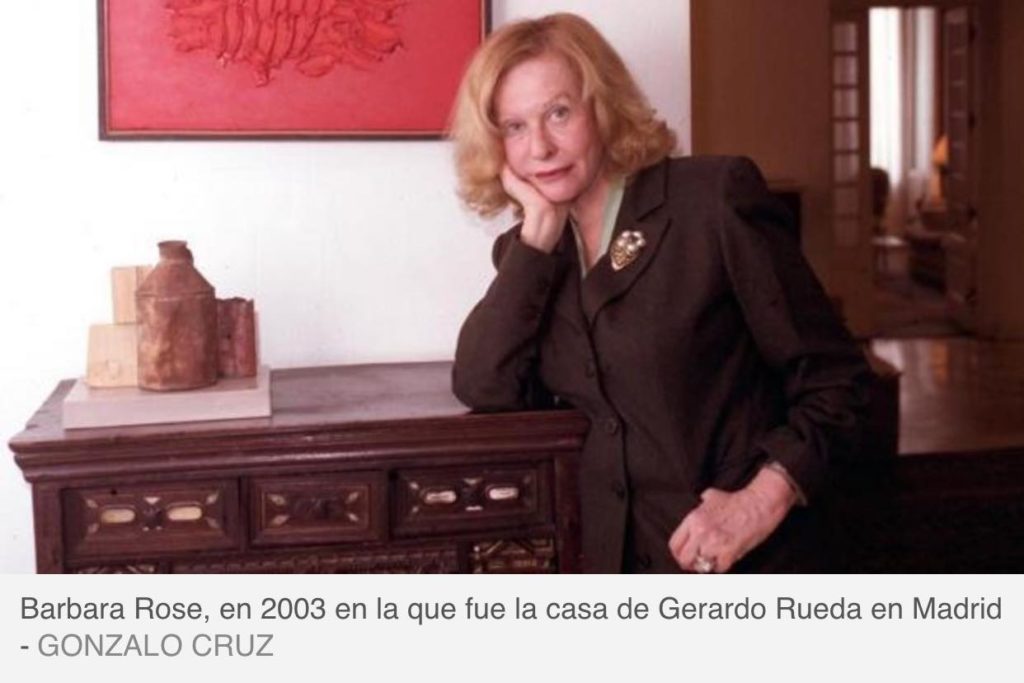
La comisaria, fallecida a los 84 años, fue experta en Gerardo Rueda y ayudó a definir el minimalismo.
Arte Para Vivir” By Sara isabella
Muere a los 84 años Barbara Rose, influyente comisaria y crítica de arte norteamericana. Durante años vivió y trabajó en España; fue una gran especialista en Gerardo Rueda, de quien publicó una monografía y comisarió varias exposiciones. Nacida en 1936 en Washington DC, esta mujer cosmopolita e hiperactiva estudió en el Smith College, el Barnard College y se doctoró en Historia del Arte en la Universidad de Columbia, donde estudió con el mítico Meyer Schapiro. También asistió a la Sorbona de París. Fue una de las críticas más influyentes de Estados Unidos en los años sesenta. Sus escritos y exposiciones cambiaron la forma en que los historiadores contaban la historia del arte de posguerra en Estados Unidos. Su fama creció en los 60 cuando comenzó a escribir ensayos para publicaciones como «Art International», «Artforum», «The Partisan Review», «New York Magazine», «Art in America»… En esta última publicó en 1965 «ABC Art», un celebérrimo ensayo que, para muchos, cambiaría para siempre la crítica de arte. Creía que las raíces del minimalismo estaban en la obra de Malevich y Duchamp, las coreografías de Merce Cunningham, la crítica de arte de Clement Greenberg, la filosofía de Wittgenstein y las novelas de Alain Robbe-Grillet. «Todos insistieron en que inventé el arte minimalista», dijo Rose a «Artforum» en 2016. «Yo no invento movimientos artísticos». En 1966 se convirtió en editora de arte de «Vogue». En 1967 publicó el libro «American Art Since 1900: A Critical History».
No solo conoció el mundo del arte desde el lado de la crítica, sino también de los museos. Fue la primera directora del Irvine Museum de la Universidad de California y de 1981 a 1985 fue responsable de exposiciones y colecciones del Museo de Bellas Artes de Houston, donde comisarió exposiciones como «Miró en América» y «Fernand Léger y el espíritu moderno». Fue directora-fundadora del Katzen Arts Center en la American University. Además dio clases en instituciones como la Universidad de Yale y la New School.
Fue una asidua de la efervescente escena artística neoyorquina de aquellos años: asistía a la ópera con Andy Warhol (la involucró en su película «13 Most Beautiful Women»)
En 1961, Rose obtuvo una beca Fulbright en Pamplona. Décadas después, vivió y trabajó durante unos años en España, un país que amaba y cuyo arte le apasionaba. Fue colaboradora de ABC. «Los artistas españoles disfrutan del apoyo de la Monarquía y de los Gobiernos central y autonómicos, con programas de apoyo y promoción en el exterior cada vez más importantes -decía-. Aunque el separatismo catalán ha convertido a Barcelona en una capital de provincia de poco interés internacional. El gran museo del arte catalán está dedicado a la Edad Media, no a la actualidad». Creía que en Estados Unidos «el temor derechista al arte como elemento subversivo se unía al prejuicio heredado del puritanismo contra lo visual y lo sensual para crear un clima hostil al artista serio». Uno de los artistas españoles que más le interesaba, pese a no haberlo conocido personalmente, fue Gerardo Rueda, de quien publicó una monografía («Gerardo Rueda. La vida es arte y el arte es la vida») y comisarió varias exposiciones. «Fue capaz de sublimar todo lo que acontecía y convertirlo en una expresión estética que se corresponde con su necesidad interior», decía de él.
Situaba a Rueda en un club muy selecto, junto a Klee y Morandi. «Cuando veo sus obras siento una emoción especial, algo trascendente». Se refería a ellos como artistas privados para diferenciarlos de los que denomina públicos: «Hay artistas que no hacen arte. Jeff Koons, por ejemplo, no es artista. Es puro marketing». Veía a Rueda más cerca de Velázquez que de Goya, de Miró que de Picasso. «Éste fue un genio, pero quiso fabricar un mito y se obsesionó en producir para ganar dinero. Para mí, los dos artistas que representan lo peor del siglo XX son españoles. Me refiero a Picasso y Dalí. Fueron avaros, cínicos. En vez de subir el nivel, dieron al público lo que éste quería. Despreciaban al público, porque creían que era ignorante». Decía que en el extranjero se tenía una idea equivocada del arte español: «Se cree que todo es Goya, que todo es negro, que todo es expresionista. Afortunadamente, se empieza a conocer el arte moderno español fuera».
Barbara Rose confesaba que era incapaz de escribir sobre el arte que no le interesaba: «No podría escribir una biografía de De Kooning; no podría escribir sobre Saura». Sí lo hizo de artistas como Esteban Vicente, Kelly y el propio Rueda. En el Museo Thyssen comisarió una exposición de Robert Rauschenberg. «Rauschenberg es un innovador, no un imitador», apuntaba Barbara Rose, amiga del artista y gran conocedora de su obra. «Rauschenberg quería lo mismo que Goya: ser testigo de su tiempo. Fue el gran innovador de la pintura americana. No escondía nada. Siempre fue muy de verdad. Un gran amigo y un gran pintor».
Why would anyone be a compliance director when the risk of financial and criminal exposure is so high?
As the founding global compliance director of Sotheby’s in 1998 and having watched the explosion of international anti-money laundering regulations recently, I have often wondered this.
From personal experience, it is a virtual certainty that your average Money Laundering Reporting Officer (MLRO) is not paid enough to make the risks worth taking. But while the EU’s 2019 5th Directive on Money Laundering (5AMLD) genuinely improves the situation for MLROs in the art market by sharing the risks more broadly, this is not such good news for “senior management”.
Such “senior management” is defined, simply, as any person with knowledge of the money laundering and terrorist financing risks who has decision making authority in relation to those risks. So, in layman’s terms, it is the top dogs of the art world who are now saddled with the primary exposure, as they are the ones most likely to have the knowledge and decision-making authority. This group includes the senior teams in auction houses and galleries, gallery owners, key directors and/or company secretaries.
What are some of the criminal penalties they face?
For four possible crimes, the prison sentences range from two to 14 years plus the possibility of fines.
• Most serious is the offence of knowing participation in a money laundering transaction or possession of criminal property, such as stolen property. This carries a maximum confinement of 14 years.
• Second, is tipping off—disclosing to someone who is the subject of a Suspicious Activity Report (SAR) that a SAR has been filed and that they or their transaction are or will be the subject of an investigation. This has potential confinement of four years.
• Another offence—and possibly the easiest mistake to make—is failing to reportor file a SAR where an art market participant has knowledge, suspicion or reasonable grounds for suspicion of money laundering in connection with a client or transaction. Ascertaining what constitutes “reasonable grounds for suspicion” is not obvious, yet the potential confinement risk is up to two years. The upshot for senior management: if one of their sales team fails to recognise something that should reasonably arouse suspicion and therefore the salesman fails to report it and an SAR is not filed, not only is the employee liable, but the senior management is exposed to imprisonment and fines.
• The fourth offence does not involve confinement but is worrisome nevertheless—failing to establish and implement appropriate policies and procedures under the 5AMLD regulations. For this type of breach, the HMRC may simply impose a fine, or in very serious cases, it may consider criminal prosecution.
However, the true risk of not having a comprehensive AML program is not the fine, but the very real risk of violating one or more of the above offences—and perhaps going to prison. Furthermore, there is the added possibility of reputational harm.
Decisions and processes around whether to file an SAR with the National Crime Agency are perhaps the most prevalent risk area for senior management, specifically situations involving new clients. Not only are clear policies and procedures critical for bringing on new clients, but the staff responsible for opening their accounts must be well versed in how to identify red flags.
Red flags
Red flags should alert an employee to a risk of money laundering and they should trigger the involvement of the MLRO and further investigation. A non-exhaustive list of red flags includes:
if the client resides in a country with lax money laundering enforcement
reluctance to provide identification verification
odd or forged identification documents
unusual and unnecessarily complex payment or transaction structures and
third party payments (those from a person or entity other than the named buyer or to a person or entity other than the named seller)
If the MLRO ultimately determines that there is no suspicion and no need to file an SAR, the business must nevertheless document their reasoning as well as the conclusion. Given the complexity of identifying and assessing red flags—not to mention the risk of a prison sentence—it is critical that staff are fully trained and fluent in the rules.
Risks to senior management extend well beyond red flags. Based on the type and value of their transactions, certain art market participants now qualify as “regulated persons” under the 2019 Regulations. The top brass of these regulated persons are responsible for a host of duties including:
conducting a risk assessment of the business
choosing and adequately supporting an appropriate MLRO
organising policies to protect against the AML risks
implementing internal policing systems
training new and existing staff
monitoring effectiveness of the policies and systems
ensuring appropriate record keeping
Fortunately less complex (and often smaller) businesses will have lower risk levels. A lower risk business may have fewer clients, who are well known to the dealer and whose transaction and payment structures are straightforward. The AML program for such businesses should be commensurate with the risks they face. But the compliance programmes of more complex businesses, like international galleries and auction houses, must reflect the higher risks they face.
In more burdensome news for senior management, HMRC also has the right to conduct compliance audits. In addition to the results of risk assessments, the audit might include a review of the policies, procedures and training records. A key indicator of a good, solid anti-money laundering culture is the speed and efficiency with which audit materials are produced to HMRC. Fumbling and delay in producing these documents may raise concern that the AML program is mere window dressing, thus reducing the dealer’s credibility in their eyes.
The obligations under 5AMLD for the art world’s top decision makers are extensive, and the stakes high. Some organisations will need to dramatically change their day-to-day work culture. Unless senior management themselves drink the compliance Kool-Aid, there is little or no hope of changing to a “think risk” culture.
Adoption of new compliance practices is difficult in the best of times but in a Covid-19 lockdown world, with many employees working from home, it may be even more challenging. Until and unless the top brass truly “think risk” in all their actions, their business and employees are exposed to the threat of prison sentences, criminal penalties and reputational harm. And I doubt even the most successful art market professionals earn enough to take these risks unprotected.
Rena Neville is the founder of Corinth Consulting, which offers AML compliance advice to art businesses
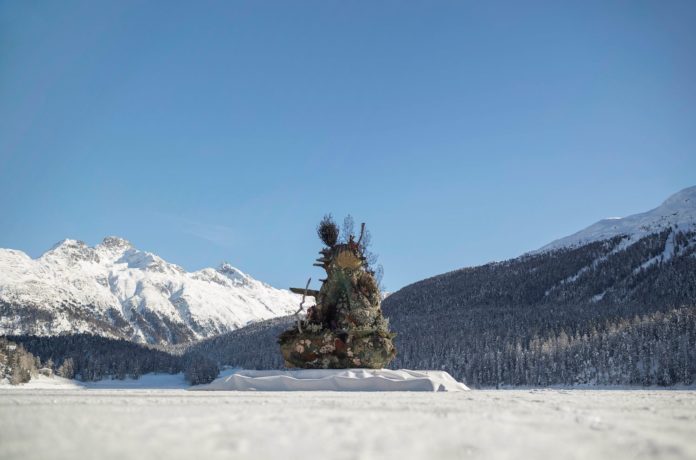
The hills are alive—with the art of Damien Hirst. The UK artist is showing more than 40 works in the Alpine Swiss city of St. Moritz including a 12-foot sculpture, called The Monk, which has been installed in the centre of the frozen Lake St. Moritz.
The Mental Escapology show, which opens next month (19 January-23 February), is spread across four indoor and outdoor sites. Another work Two Figures with a Drum will be sited on the north-eastern edge of the lake. Both pieces were last seen in Hirst’s headline-hitting 2017 exhibition Treasures from the Wreck of the Unbelievable at the Pinault Collection in Venice.
Other exhibition venues for the St. Moritz show include the Forum Paracelsus, an 18th-century building located on the site of an ancient thermal bath. Recognisable works from the Natural History series—animal corpses preserved in formaldehyde—and a photorealist painting titled Surgical Tools for Caesarean will go on show in the neoclassical space.
Kaleidoscope Paintings, which reference “the spiritual symbolism of the butterfly” according to Hirst’s website, will be shown in the Protestant church in the town centre. Unseen works from the 1990s Spot (Pharmaceutical) Paintings series, daubed with random irregularly shaped spots, will also be exhibited.
The exhibition has been curated by the art director Jason Beard, who has previously collaborated with Hirst on web and editorial projects, and organised by the dealer Oscar Humphries. “Most of the loans come from the artist. A few key works have been borrowed from private collections,” Humphries says.
“St. Moritz is an increasingly important art centre and this will be the most ambitious exhibition ever staged there. The valley, the lake, the venues we are showing in are perfect for Damien’s work. For me, it was a case of a spectacular and interesting place crying out for an artist who made work that was the mirror in scale and impact of the location,” he adds.
Asked if the exhibition includes pieces for sale, Humphries adds: “It’s not a selling show. We have produced the exhibition with the assistance and encouragement of the municipality of St. Moritz. It is a public exhibition, Damien’s first in Switzerland, which seems remarkable to me. Our desire was to make something material, big, joyous and life affirming in this difficult, digital and distanced world we are living in.”
Humphries launched a show of works by Sean Scully early last year in St. Moritz, a ski resort for affluent holidaymakers which has been rebranded as an art destination. Galleries such as Hauser & Wirth and Robilant + Voena have set up shop in the picturesque town nestled in the Engadin valley.
Hirst’s showstopping art should be a natural fit for the dramatic mountain backdrop. “Damien’s sculpture The Monk—something from the deep—on a frozen lake is a kind of perfect impossible thing. The engineering behind it was difficult, impossible even. But one of Damien’s central themes is the impossible so it’s an amazing symbiosis,” says Humphries.
Beard says: “Damien has always thought about science as religion and religion as science, so it’s fascinating to be able to draw links between his work and these sites where pilgrims have sought healing for over 3,000 years. Being able to bring this survey to four very distinct, historical and naturally beautiful settings is a very exciting opportunity.”
From Eugene Von Bruenchenhein’s rapturous paintings to Brassaï’s Parisian underground
GABRIELLA ANGELETI and WALLACE LUDEL18th December 2020 08:00 GMT
Our editors and writers scour the city each week for the most thoughtful, relevant and exciting new exhibitions and artworks on view at galleries, museums and public venues across all five boroughs of New York. This week we recommend:
Eugene Von Bruenchenhein No. 795, April 10, 1959 (1959) Andrew Edlin Gallery
Eugene Von Bruenchenhein: Phantasmagorical Paintings 1957-61
Until 23 January at Andrew Edlin Gallery, 212 Bowery, Manhattan
Eugene Von Bruenchenhein, an Outsider artist from Wisconsin, explored three substantial bodies of work in his lifetime: sculptures, which are primarily either ceramic or made from chicken bones; small, devotional photographic portraits of his wife Marie, which run the gamut from the erotic to the psychedelic, with a wide range in between; and paintings. Von Bruenchenhein began painting in the 1950s, developing techniques using brushes made from his wife’s hair, combs, his fingers, tools from his job as a baker and other idiosyncratic supplies to manipulate paint on masonite. They feel almost biblical, combining in a kaleidoscopic fervor Von Bruenchenhein’s anxieties about global atomic annihilation—as he was painting at the height of the Cold War, when such an apocalypse felt imminent—with his love for organic creatures and the cosmos. Though not exhibited until after his death, today it would be justified to view this oeuvre as a heavy hitter in the long lineage of artworks concerned with the creation and destruction myths of their particular zeitgeist. — Wallace Ludel
Until 27 February 2021 at Marlborough, 545 West 25th Street, Manhattan
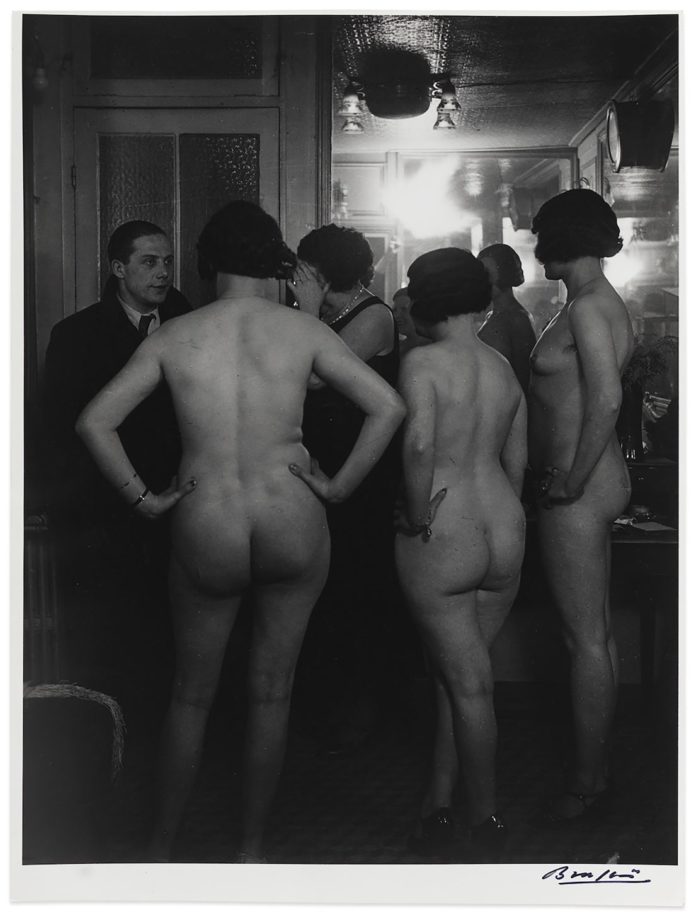
The Hungarian-French photographer and writer Brassaï arrived in Paris in 1924, where he commenced a decades-long focus on capturing colourful and often sinister facets of nocturnal Paris, particularly of the neighbourhoods of Montparnasse and Montmartre, which have historically served as hubs for artistic circles in the city. This exhibition includes 39 photographs from the 1930s provide a voyeuristic glimpse into both Parisian high society and the its underground world, which the artist felt represented “Paris at its least cosmopolitan [but] at its most alive, its most authentic”, he explained in 1976. Among the highlights, the image Chez Suzy, la preséntation (At Suzy’s, introductions) (1932-33) uncannily recreates The Judgement of Paris—the Greek mythological story of a beauty contest between the goddesses Aphrodite, Hera and Athena, which is the subject of artworks by Peter Paul Rubens and other Old Masters—by replacing the subjects with three prostitutes and Brassaï’s bodyguard, who sometimes accompanied him on his nightly excursions. — Gabriella Angeleti
Attributed to Anna Hoffman, Supper at Emmaus (around 1642) Christopher Bishop Fine Art
The Magic of the Draughtsman: Images of the Occult
Until 12 February 2021 at Christopher Bishop Fine Art, 1046 Madison Avenue, Suite 2N, Manhattan
The drawings dealer Christopher Bishop says the esoteric writings of the German art and cultural theorist Aby Warburg—coupled with a growing interest in mysticism and the cosmos—inspired this show of more than 20 Old Master and Modern drawings that explores the connection between art, magic and science, and how artists have conveyed occult and mythological subjects from the 16th to the 20th century. The show includes the only surviving work attributed to Anna Hoffman, a 17th-century Swiss draughtswoman whose contributions to the historically male-dominated field have been largely overlooked. Hoffman’s captivating drawing from around 1642 shows Christ revealing himself to two pilgrims and is inscribed on the verso as made “by Hoffmann’s daughter in Basel”, referring to her father, the painter Samuel Hoffman who trained under Rubens. Other works are populated by mermaids, witches, satyrs and other figures practicing black and white magic, including pieces by John Downman, John Trumbell, Arthur Rackham and others. — Gabriella Angeleti