Home Blog Page 20

Raquel Munera. The Children of the Homeland

Raquel Munera. The Children of the Homeland
Raquel Munera The Children of the Homeland Series, 3

Raquel Munera. The Children of the Homeland

By Milagros Bello, PHD

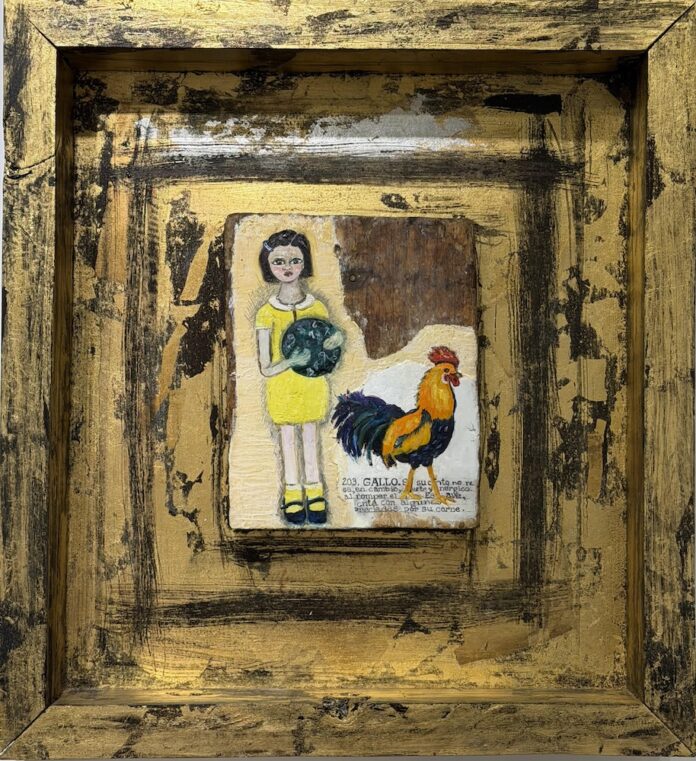
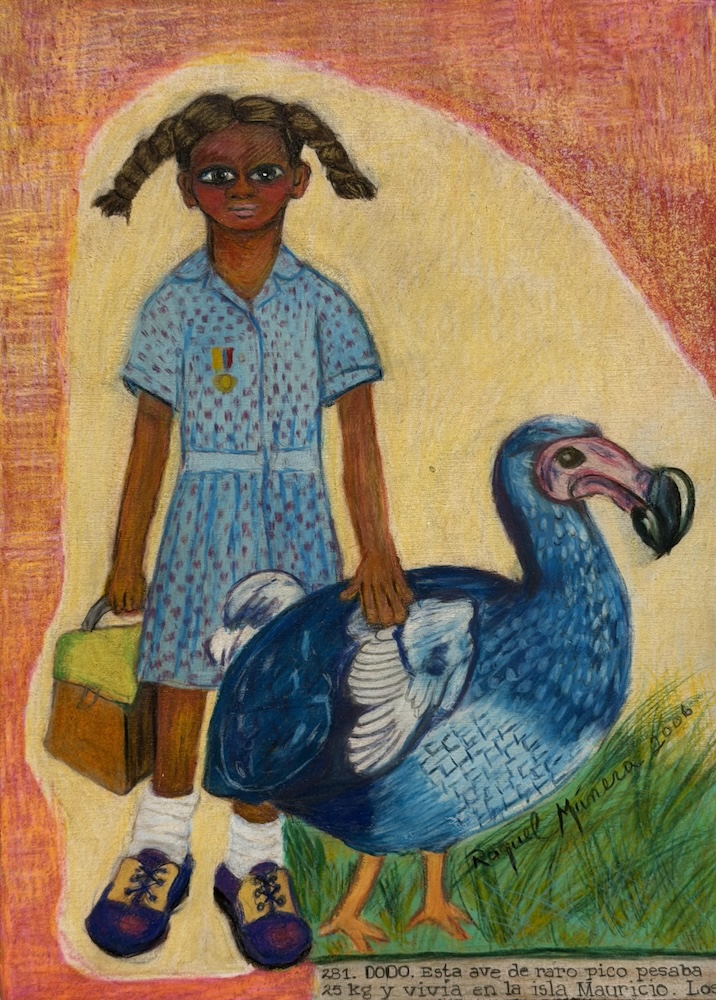
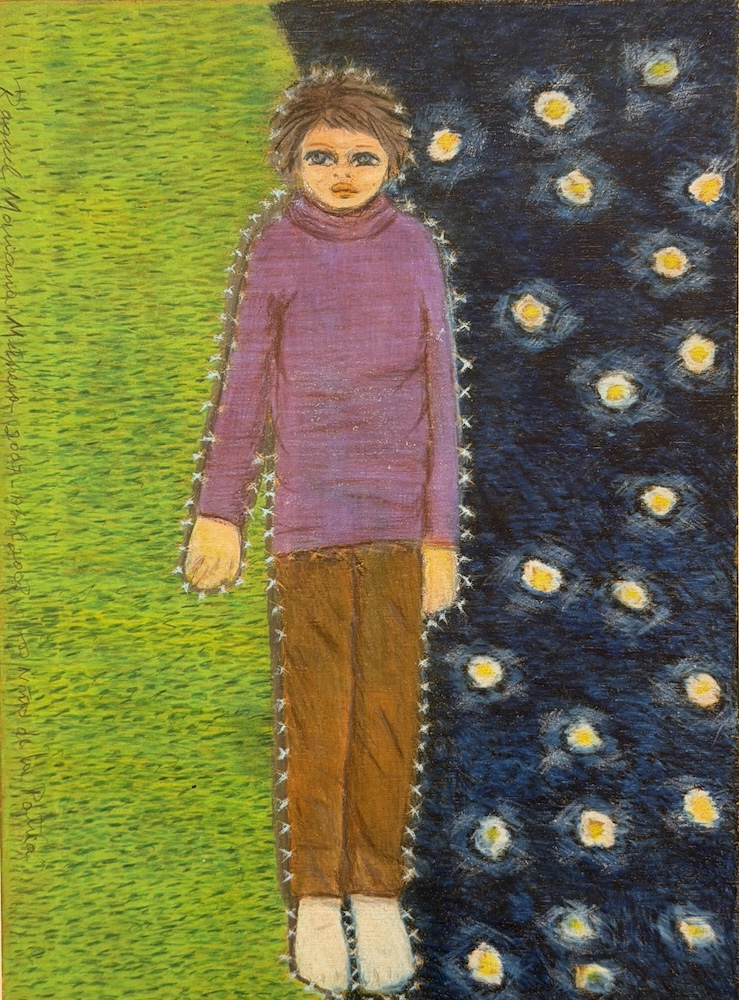
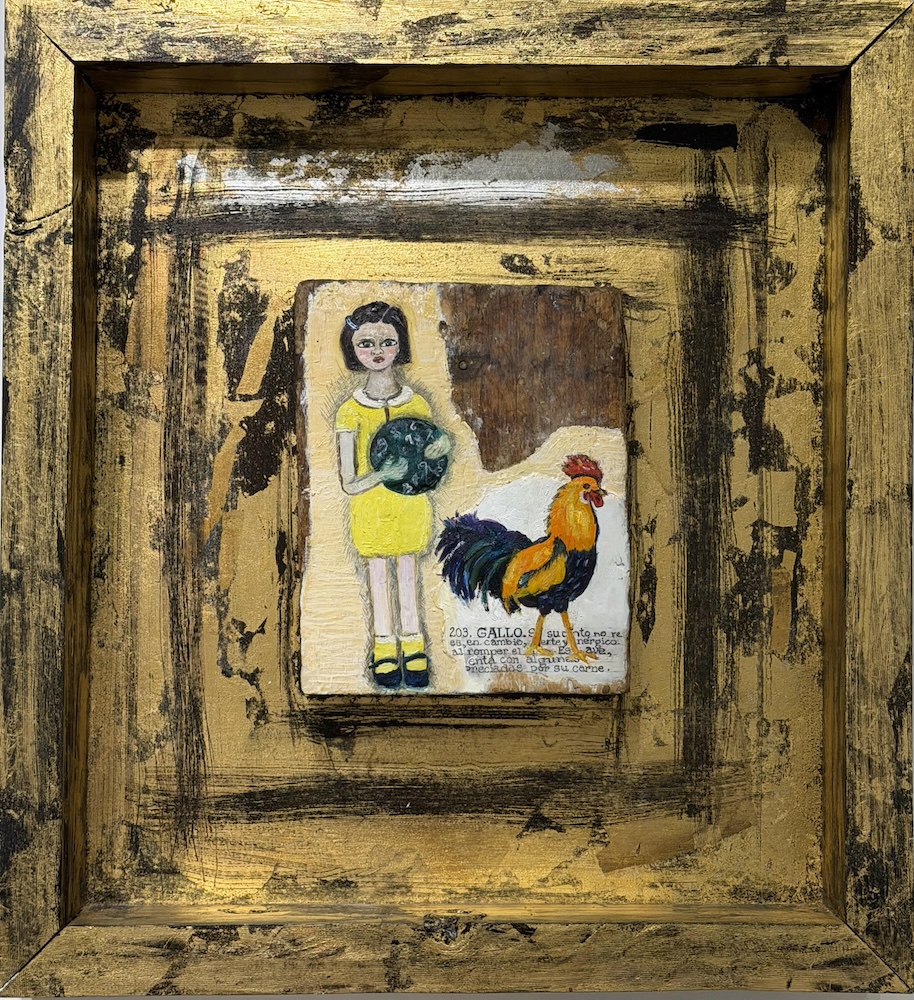
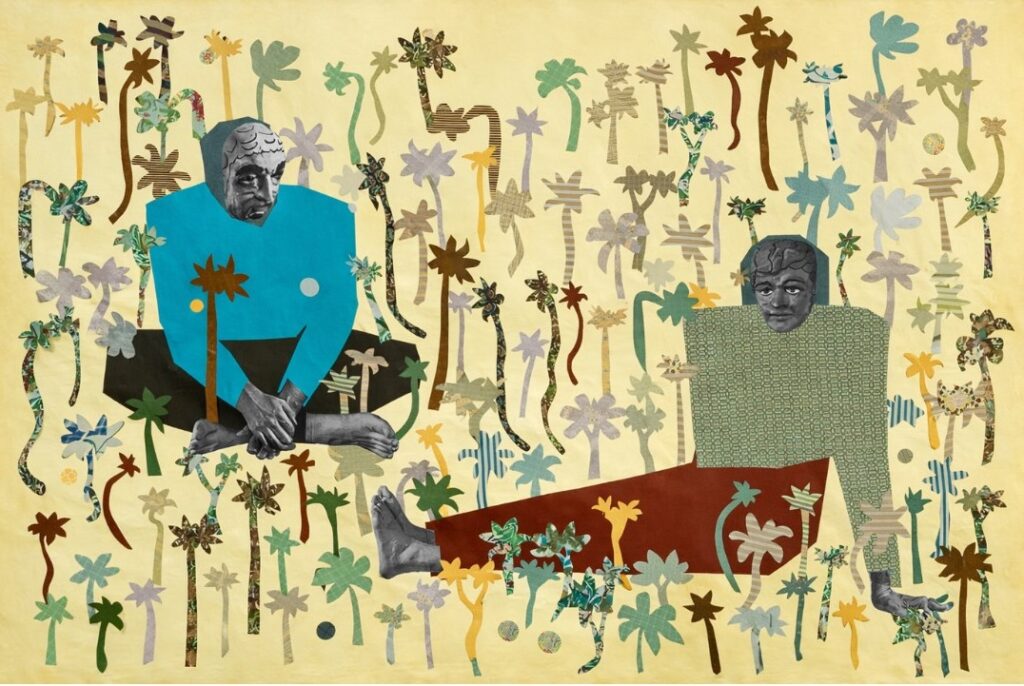
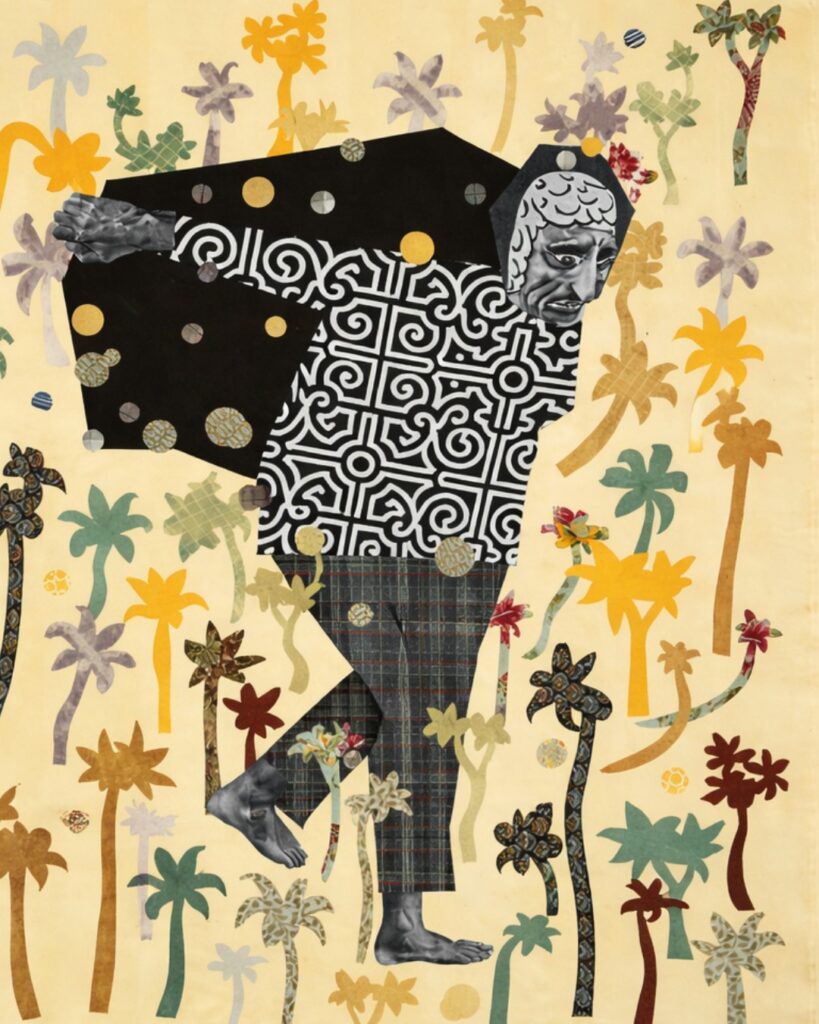
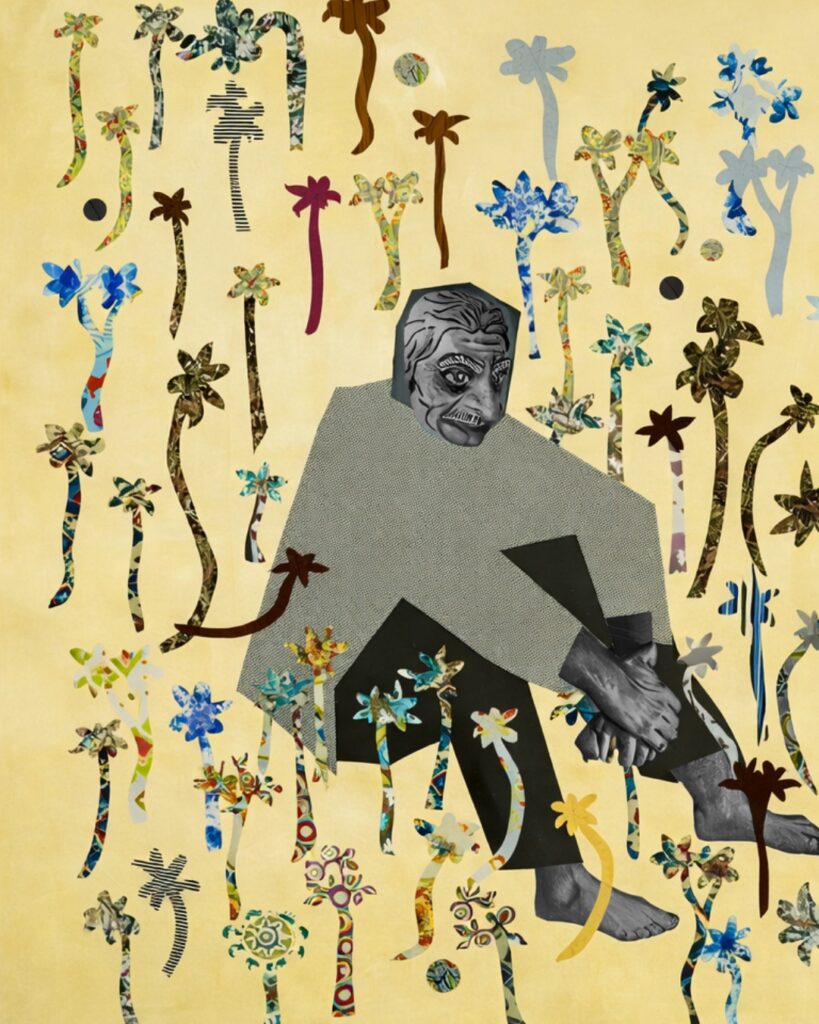
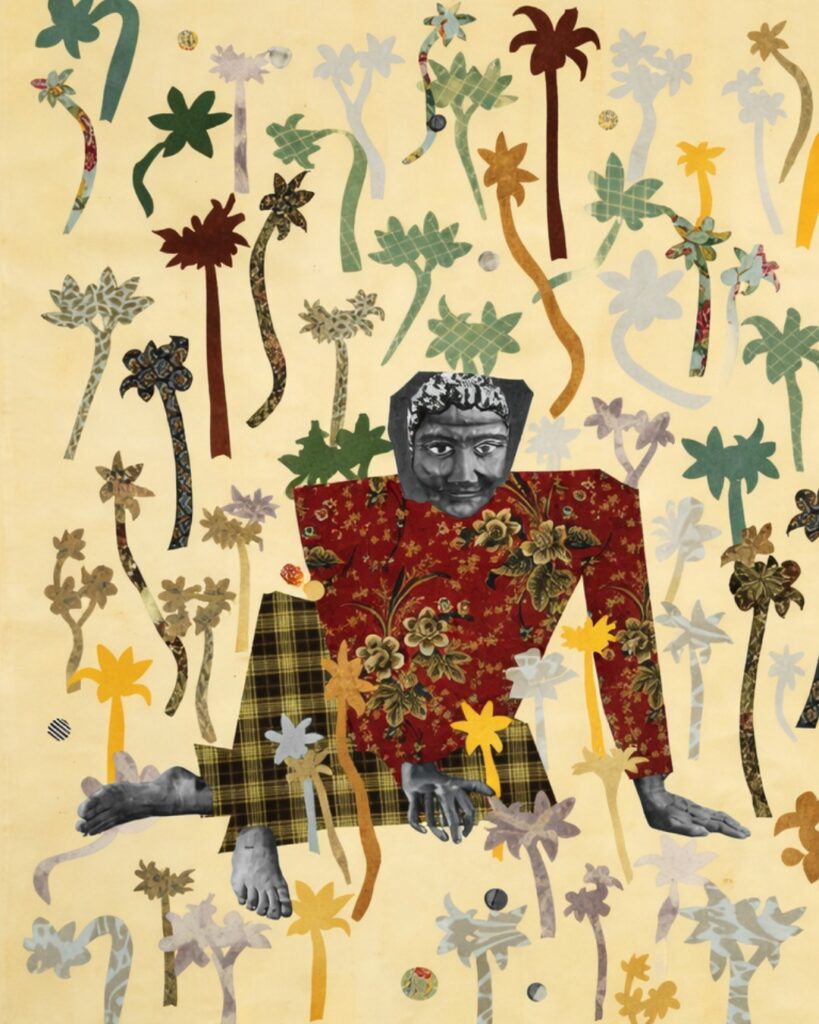
Raquel Múnera’s work unfolds as a territory of suspended memory in which childhood ceases to function as a site of innocence and instead emerges as a zone of historical, affective, and symbolic friction. Her scenes, deliberately frontal and stripped of anecdote, operate as images arrested in time—resembling pedagogical plates salvaged from school archives or votive prints preserved as relics. Their apparent formal simplicity—close to a naïve or primitive aesthetic—does not signal candor but rather a strategy of reduction. By emptying the image of narrative and simplifying gesture, Múnera intensifies the conceptual weight of each figure, allowing the composition to operate as a form of critical condensation.

The child figures that populate these works appear rigid and hieratic, devoid of emotional theatricality. Their direct gazes and static postures generate a sense of estrangement that disrupts any sentimental reading. These are not psychological portraits but iconic presences of inscription where pedagogy, natural history, ecological loss, and cultural displacement intersect. Childhood thus becomes an archival device, a site where the taxonomic remnants of progress, science, and modernity are preserved and exposed, indexes that have been classified, domesticated, or extinguished.

Raquel Munera. The Children of the Homeland
Raquel Munera The Children of the Homeland Series, 2

Across the works, the relationship between the girl and the animals is central. Birds associated with domestic imaginaries coexist within symbolic equivalences that link vulnerability and disappearance. The animal functions as a historical allegory rather than as a narrative accompaniment. What prevails is a quiet coexistence through which internal memory and the reconstruction of childhood are subtly reactivated.

Objects associated with knowledge—globes, textual fragments, encyclopedic references, suitcases, school insignia—reinforce the taxonomic systems that organize and inventory the world. These elements evoke cartographies of knowledge and educational dispositifs that promise order while simultaneously containing experience. The image frequently assumes the logic of the vitrine or the museum relic, where memory is encapsulated and preserved as a specimen.

Raquel Munera. The Children of the Homeland
Raquel Munera The Children of the Homeland Series, 1

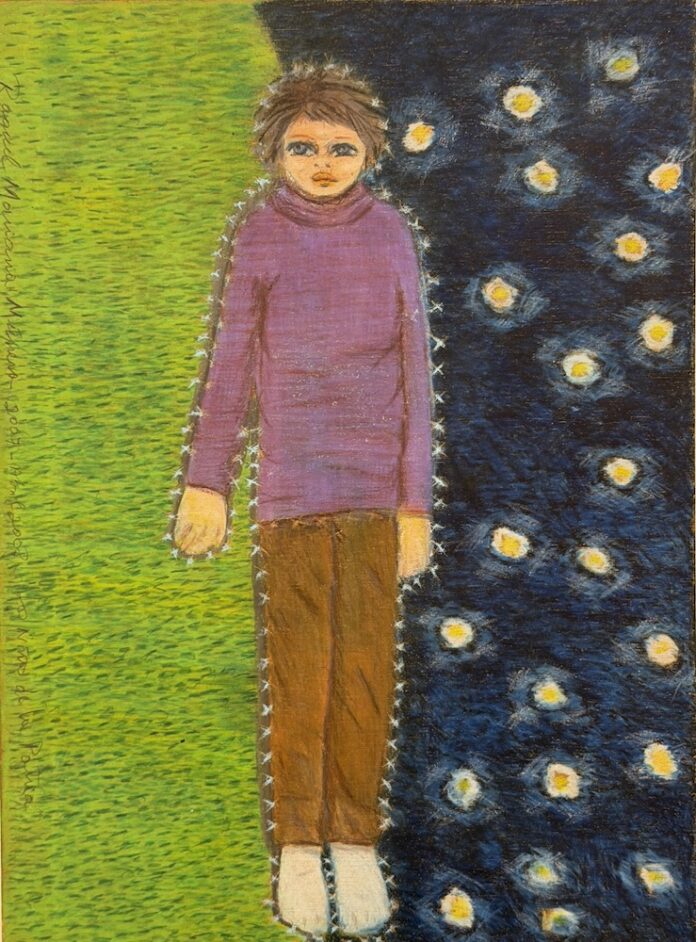
Formally, Múnera employs flat backgrounds, radical chromatic divisions, and abrupt cuts across the pictorial field that fracture any illusion of continuity. These contrasting surfaces—organic fields of color set against dark or cosmic planes—place the body in a state of perceptual suspension, opening an ontological questioning of the image itself. The subject does not inhabit space but appears suspended within it, held in an atemporal hieratic stillness.

Múnera ultimately articulates a poetics of the remnant and of dislocation. Her images function as resonant fields where the intimate and the political overlap silently. Childhood, animals, and pedagogical objects become vestiges of larger ecological, colonial, and cultural systems that have left enduring marks on collective memory. Each work presents a quietude charged with internal vibration—an apparently stable scene through which one nonetheless senses the subtle tremor of what has been displaced, forgotten, or extinguished.

Within this tension between formal candor and symbolic density, the artist offers a subtle yet incisive reflection on the fragility of life, the construction of knowledge, and the ways in which history becomes sedimented within bodies.

Raquel Munera. The Children of the Homeland
Raquel Munera The Children of the Homeland Series, 3

Milagros Bello, PhD
Curator
January 2026

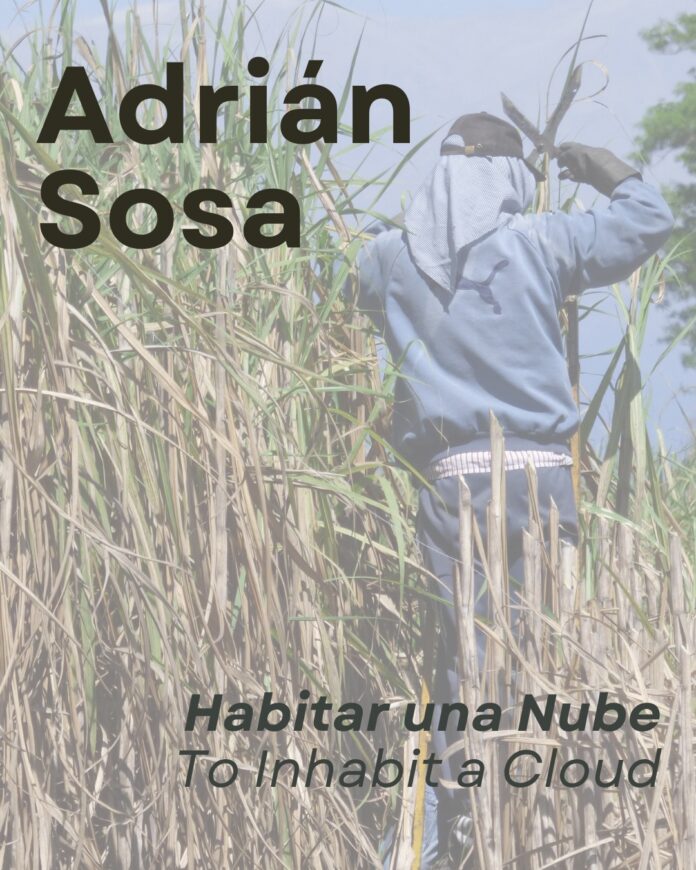
Save the Date: Adrián Sosa. Habitar una Nube (To Inhabit a Cloud)

Adrián Sosa: Habitar una Nube (To Inhabit a Cloud)

Adrián Sosa: Habitar una Nube (To Inhabit a Cloud)

Save the Date: January 29–April 11, 2026

The Frank C. Ortis Art Gallery Presents

Pembroke Pines, FL — The Frank C. Ortis Art Gallery is pleased to present Habitar una Nube (To Inhabit a Cloud), a major solo exhibition by Argentine artist Adrián Sosa, on view from January 29 through April 11, 2026. Curated by Sophie Bonet, Chief Curator, and presented in partnership with Ceibo Gallery, in collaboration with Pabellón 4 Arte Contemporáneo and Fulana Galeria, this exhibition positions Sosa’s rigorous practice within a broader discourse on labor, landscape, gesture, and material memory.

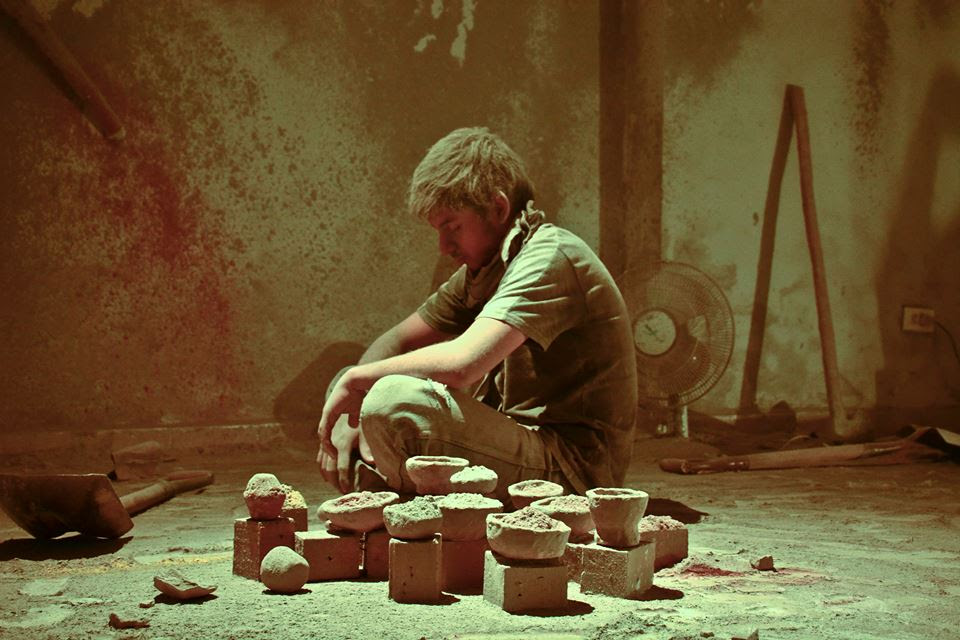
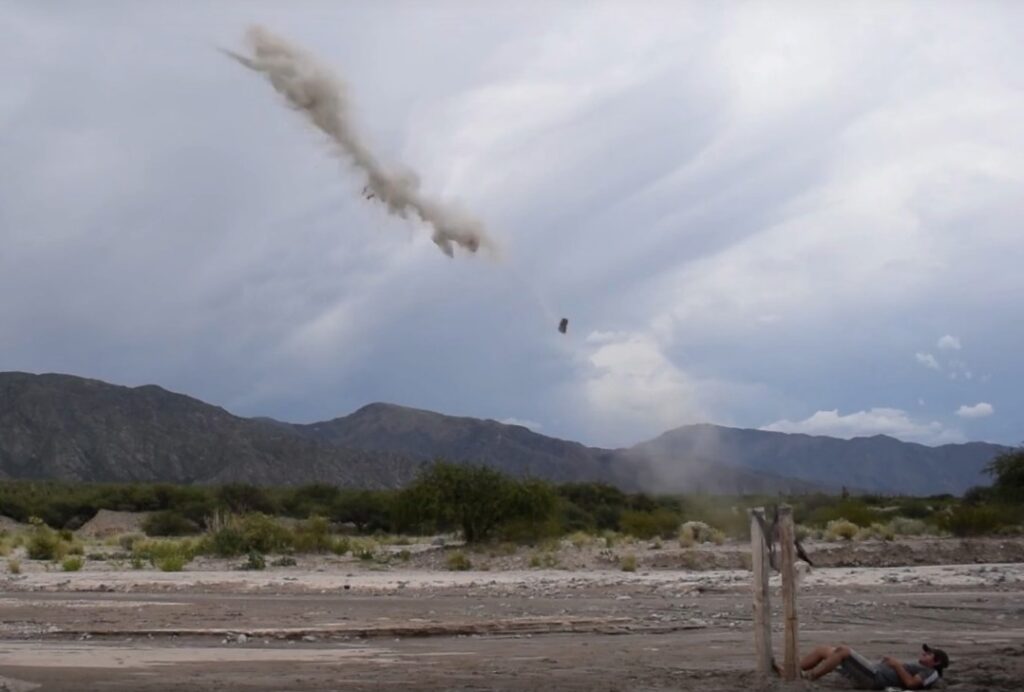
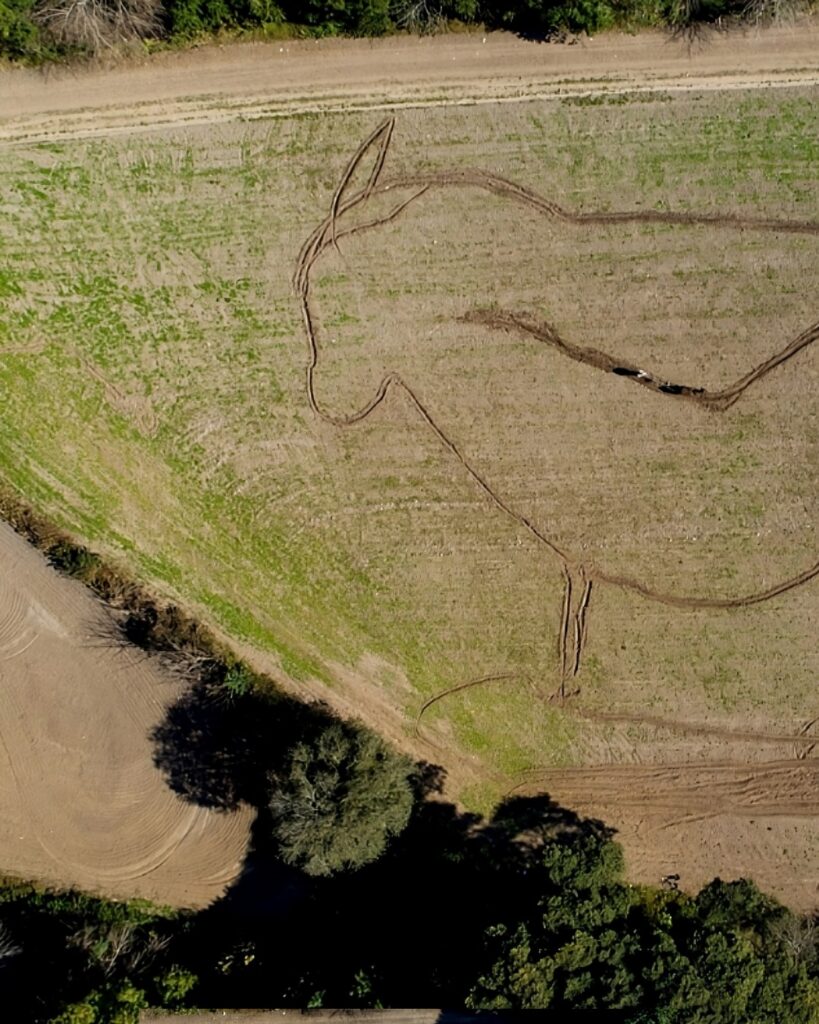
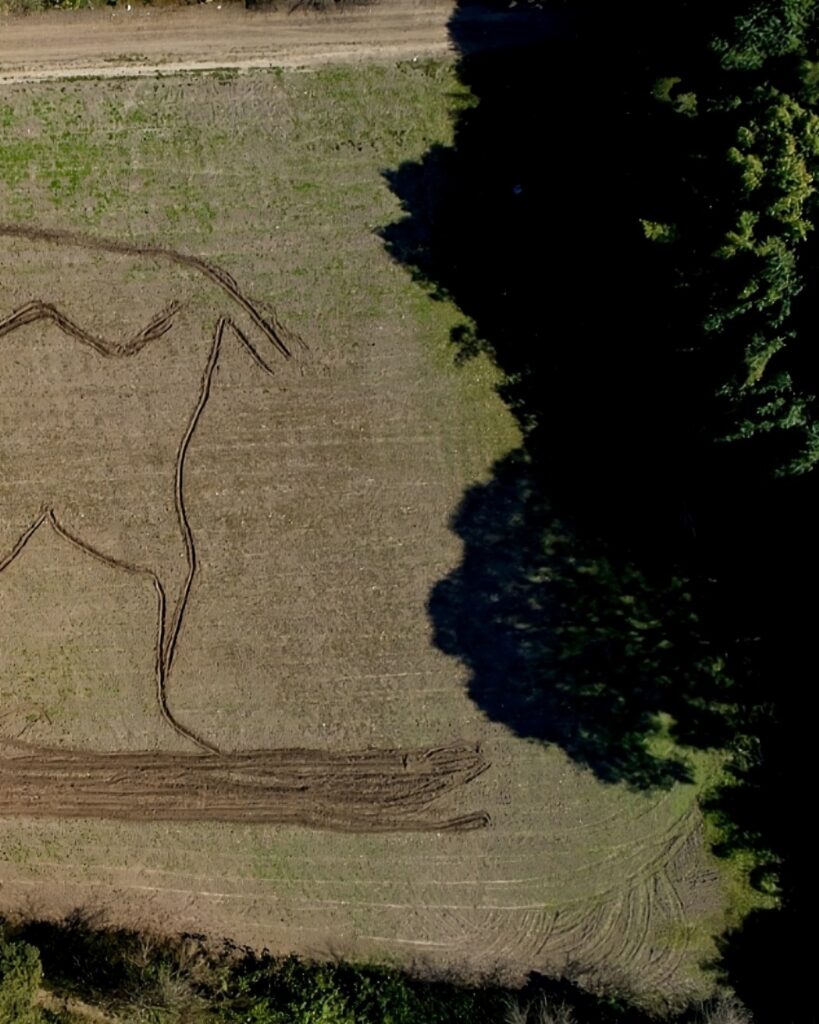
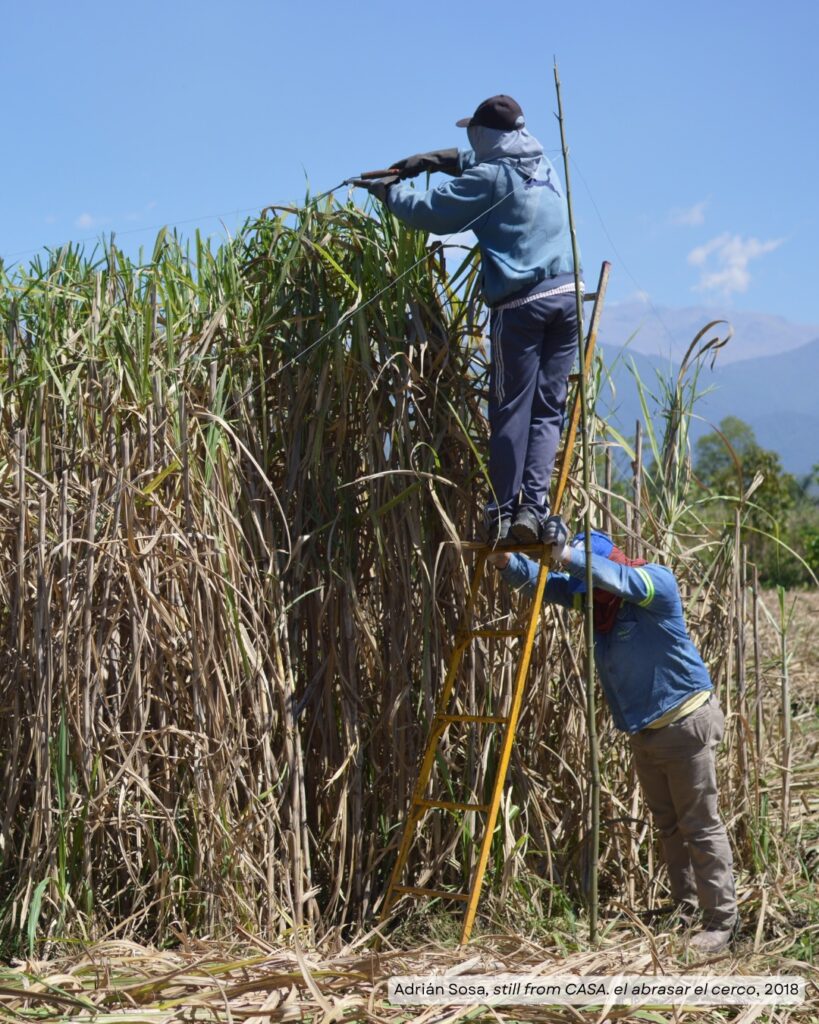
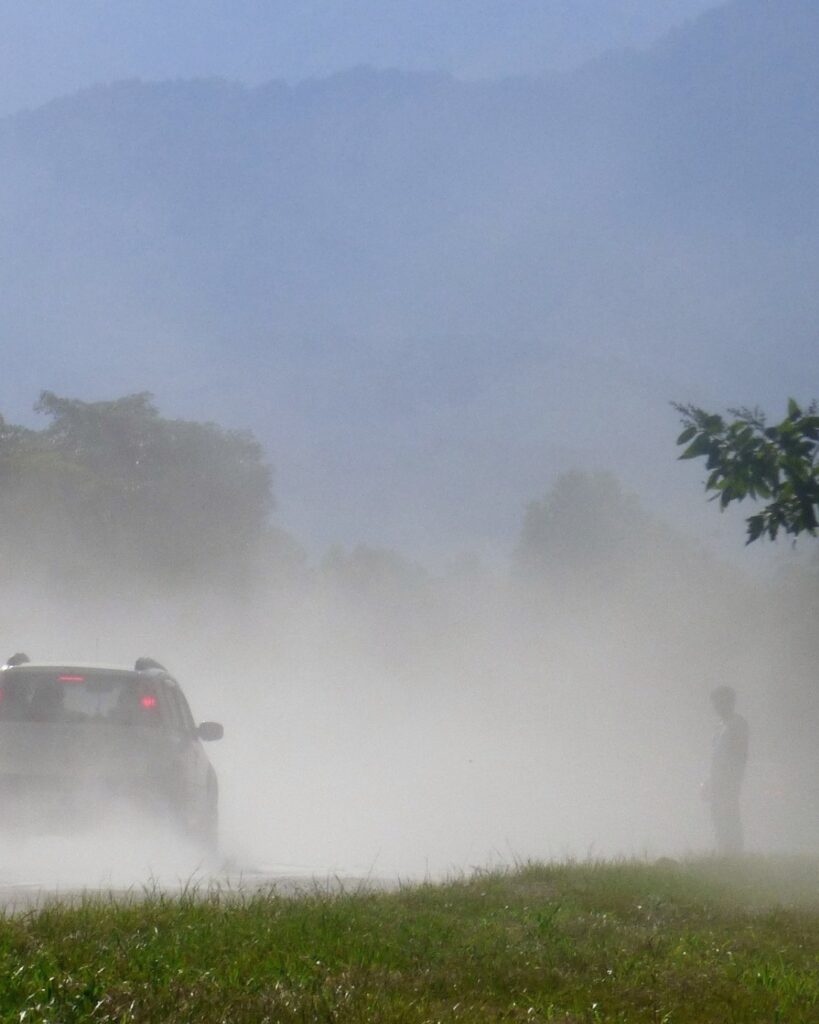
The centerpiece of the presentation is a series of video‑performances and material‑driven works rooted in the rural landscape of Tucumán, Argentina. Rather than depicting rural life as a theme or narrative, Sosa’s work emerges from lived experience and embodied labor traditions. Through a set of restrained yet charged actions—cercar (to fence), herir (to wound), trazar (to trace), levantar polvo (to raise dust)—Sosa examines labor as embodied knowledge shaped by repetition, effort, and time. These gestures do not merely record activity; they generate physical, atmospheric, and sensory relations that ask viewers to move with and alongside the works as they unfold.

To inhabit a cloud is not a metaphor — it is a condition. Sosa’s exhibition asks visitors to see with the body, listen to effort, and perceive the slow temporality of field and terrain alongside sudden ruptures of interruption. Here, matter does not accompany thought—it testifies. Earth, flour, cement, smoke, metal, and air all speak; not toward isolated personal stories, but toward broader fields of worked territories, inherited knowledge, and the often‑invisible ways communities learn to inhabit what they are given.

Adrián Sosa (b. 1994, Monteros, Tucumán, Argentina) is a contemporary visual artist whose interdisciplinary work spans video‑performance, installation, and printmaking. Sosa does not approach landscape in search of aesthetic theme; he begins from an inherited world—familial, communal, historical—where every decision is embedded within systems of labor, survival, and tradition. Whether it is fencing a yard, drawing a line in dust, raising a cloud of earth, or marking land through repetition, these actions both organize and contest reality. Through this practice, Sosa reveals labor not as image, but as persistence and knowledge.

Opening Reception — Thursday, January 29, 6–9 PM

Art lovers and community members are cordially invited to the free and open‑to‑the‑public Opening Reception at The Frank C. Ortis Art Gallery. This special evening celebrates two concurrent solo exhibitionsHabitar una Nube by Adrián Sosa and I Carry the Sun on My Shoulder and the World Turns Yellow by Edison Peñafiel—offering audiences distinct yet resonant contemporary perspectives grounded in immersive installation, materiality, and embodied experience. The reception provides a shared moment of exploration, conversation, and connection with the artists’ work.

Location:
The Frank C. Ortis Art Gallery
601 City Center Way, Pembroke Pines, Florida 33025
Admission: Free and open to the public

Adrián Sosa: Habitar una Nube (To Inhabit a Cloud)

Save the Date: Edison Peñafiel. Me pongo el sol al hombro y el mundo es amarillo

Edison Peñafiel: Me pongo el sol al hombro y el mundo es amarillo

Save the Date: January 29–April 11, 2026

Me pongo el sol al hombro y el mundo es amarillo

Save the Date: January 29–April 11, 2026
The Frank C. Ortis Art Gallery Presents
Edison Peñafiel: I Carry the Sun on My Shoulder and the World Turns Yellow

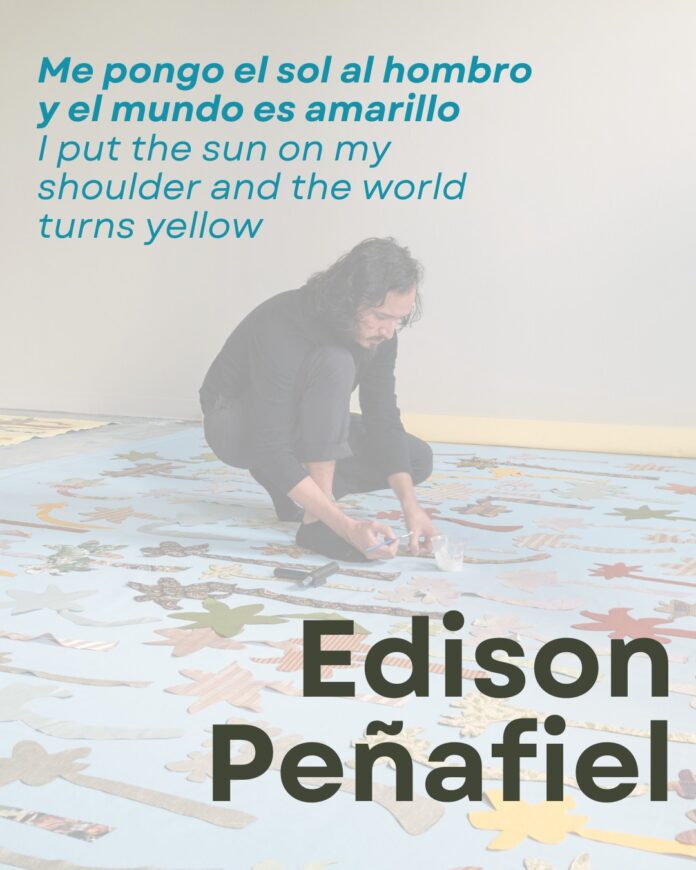
Pembroke Pines, FL — The Frank C. Ortis Art Gallery is proud to present Me pongo el sol al hombro y el mundo es amarillo (I Carry the Sun on My Shoulder and the World Turns Yellow), a major large-scale installation by acclaimed multidisciplinary artist Edison Peñafiel, on view January 29 through April 11, 2026, at 601 City Center Way, Pembroke Pines, Florida 33025.

The exhibition invites the public into an immersive environment that foregrounds movement, memory, presence, and perception. Rather than offering a single, fixed image or linear narrative, Peñafiel’s installation is experienced as a traversable environment activated through the body. Seven monumental painted curtains, suspended throughout the gallery, create a porous, shifting space where images overlap, interrupt, and reappear, encouraging viewers to slow down, explore, and engage in their own rhythms of reflection.

Migration unfolds here as a bodily and emotional terrain. Seven suspended curtains of painted raw canvas, marked by hand-cut lilies, generate a space that oscillates between rest and departure, presence and distance. Working with domestic materials and immersive scale, Peñafiel constructs a poetic architecture of belonging—one shaped by movement, memory, and the act of carrying one’s world.

Born in Guayaquil, Ecuador, in 1985, Peñafiel relocated to the United States in 2002 and has built a significant international career with site‑specific projects that explore migration, power, surveillance, and the cycles of history. His works, inspired by German Expressionism and cinematic strategies, blur boundaries between perception and illusion. Peñafiel has exhibited at institutions such as The Bass Museum and MOCA North Miami and is a recipient of the VIA Art Fund Production Grant, Knight Foundation Award, and the Florida Prize in Contemporary Art.

Opening Reception – January 29, 6–9 PM
The community is invited to a free public reception on Thursday, January 29, from 6 to 9 PM, celebrating both Peñafiel’s exhibition and Habitar una nube by Adrián Sosa. Attendees will have the opportunity to engage with both artists’ visions and connect with others in a shared space of contemporary artistic exploration.

Location:
The Frank C. Ortis Art Gallery
601 City Center Way, Pembroke Pines, FL 33025
Admission: Free & open to the public

For press inquiries or further information:
Contact: The Frank C. Ortis Art Gallery

Edison Peñafiel: Me pongo el sol al hombro y el mundo es amarillo

Art Palm Beach 2026 Ignites the Season with Global Galleries

Art Palm Beach 2026
Art Palm Beach 2026

Art Palm Beach 2026 Ignites the Season with Global Galleries and Bold New Voices

The world-class art experience returns to South Florida January 28–February 1

PALM BEACH, Fla. — Jan. 28, 2026 — South Florida’s most anticipated art event, Art Palm Beach, returns for its fourth annual edition, running January 28 – February 1, 2026, at the Palm Beach County Convention Center. Tickets are now live at ArtPalmBeach.com and Eventim.us.

Presented during Palm Beach’s peak winter season, Art Palm Beach 2026 brings together a curated mix of leading international galleries, emerging voices, and collectors, reaffirming the region’s growing status as one of the world’s premier art destinations.

This year’s edition expands its reach with brand new exhibitors from London, Basel, San Francisco, Dublin, and Palm Beach, many appearing for the first time

  • ●  Blond Contemporary (London) – Known for its sleek curatorial eye and focus on photography and contemporary painting, Blond presents striking new works that explore modern identity and form through expressive use of color and light.
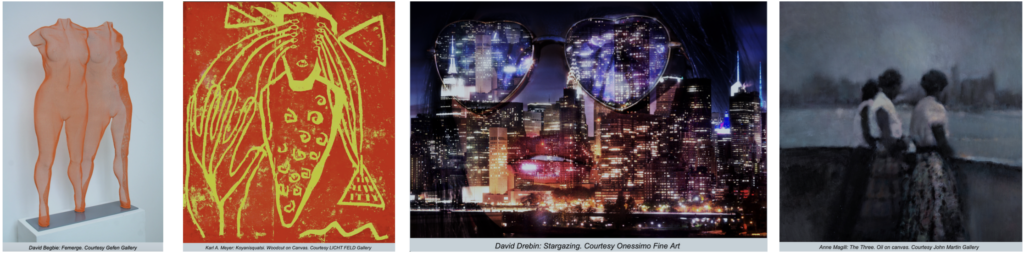
  • ●  Gefen Gallery (San Francisco) – A vibrant space championing emerging mid-career artists, Gefen brings a curated selection of abstract and sculptural pieces exploring nature, balance, & geometry.
  • ●  John Martin Gallery (London) – Representing established European painters and sculptors since 1992, John Martin presents new figurative works by Anne Magill, Mario Lobedan, & Olivia Musgrave, blending contemporary realism with poetic narrative.
  • ●  LICHT FELD Gallery (Basel) – One of Switzerland’s most forward-thinking art spaces, LICHT FELD introduces contemporary works by Karl A. Meyer, including his monumental Koyanisquatsi woodcut on canvas, alongside a series of experimental installations bridging printmaking & performance.
  • ●  Oliver Sears Gallery (Dublin) – Celebrated for combining fine art with applied art, the Dublin gallery showcases oil & wax paintings by Michael Canning & ceramic-based conceptual works exploring nature, memory, & time.
  • ●  Onessimo Fine Art (Palm Beach) – A local favorite known for museum-quality mix of glass, metal, & contemporary sculpture, featuring works by David Drebin & other international names.

They join returning favorites from past fairs, continuing Art Palm Beach’s role as a bridge between local collectors and international voices. “Art Palm Beach has become a place where anyone, from first-time visitors to seasoned collectors can connect with art in a fresh, inspiring way,” said Art Palm Beach Director/Producer Kassandra Voyagis.

For the first time ever, Art Palm Beach will feature a large-scale, biennial-style installation inside the fair, part of its signature DIVERSEartPB program curated by Marisa Caichiolo. Titled “The Biennials, Art Institutions and Museums in the Contemporary Art Ecosystem,” this museum-scale experience examines how major exhibitions and institutions shape what artists create and how audiences connect with art.

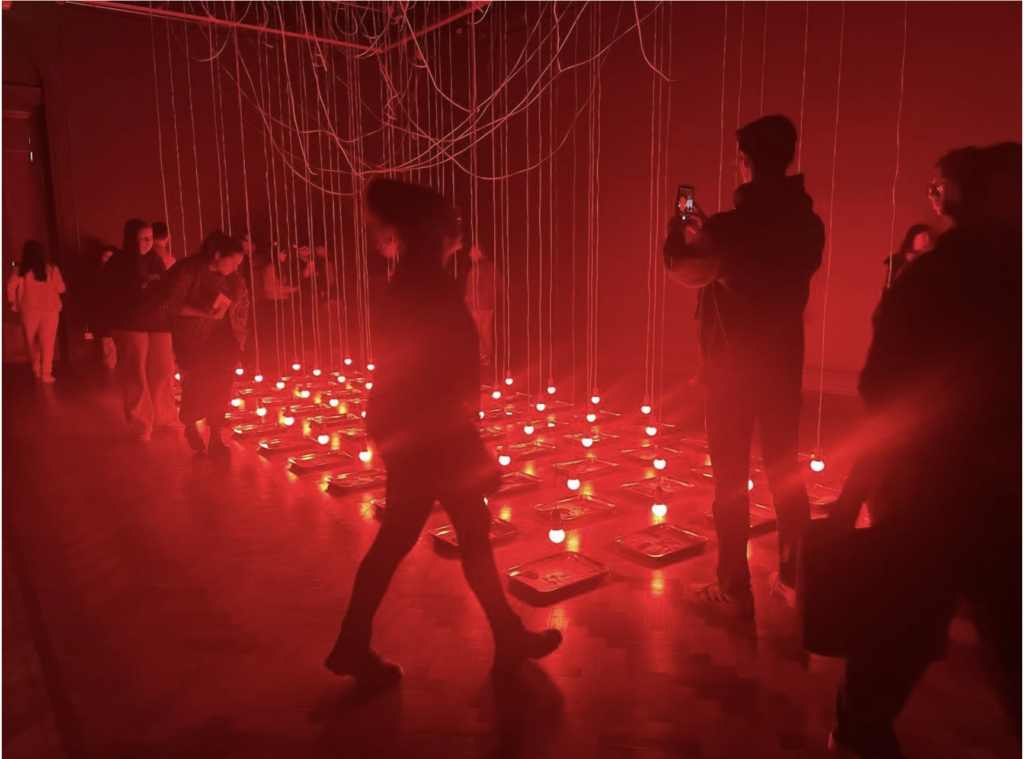
At the center of the installation is “AGUAS” by Chilean artist Eugenia Vargas- Pereira, a powerful, immersive environment of water, photography, and light that invites community participation and reflection on climate and care. This marks a groundbreaking moment for Palm Beach, introducing an international-scale art experience to South Florida for the first time. More details about additional artists, installations, and ways to participate in DIVERSEartPB will be shared in the weeks leading up to the show.

Produced by Fine Art Shows, the team behind the LA Art Show, Art Palm Beach opens just weeks after Los Angeles’ major art fair (January 7–11, 2026), positioning Art Palm Beach as the East Coast kickoff to the international art calendar.

###

About Art Palm Beach:
Art Palm Beach is South Florida’s premier fair for modern and contemporary art, showcasing leading galleries, visionary artists, and groundbreaking installations from around the world. Produced by Fine Art Shows, creators of the acclaimed LA Art Show, the fair transforms Palm Beach into a global stage for creativity, connection, and discovery each January. Visit
www.ArtPalmBeach.com for more information.

Frank Hyder – Metáfora

Frank Hyder - Metáfora

Frank Hyder – Metáfora

Eduardo Planchart Licea

La pasión del artista por lo natural se encuentra presente desde sus primeras obras pictóricas, en Garden Party, 1979 (Fiesta en el Jardín) donde representa a un grupo alrededor de una mesa. La fuerza estética de la vegetación de fondo en este cuadro, se convierte en su centro visual, que desde ese momento se transforma en un elemento esencial de su lenguaje estético, elemento prioritario de él, no como una representación metafórica y simbólica, expresa la necesidad de generar una relación de armonía con la naturaleza.

“Hyder es un maestro en la vieja técnica de hacer imágenes sobre madera. No se inhibe por el hecho de que estos trabajos usualmente son hechos en escalas más pequeñas. Además, ha experimentado espontáneamente con impresos. Ahora usa una combinación de técnicas basadas en la idea de llevar al espectador a un ambiente selvático y primitivo.” (Edward Lucien-Smith, Frank Hyder-Poet of a Threatened Eden. 2008)

La naturaleza en diversas facetas, la historia de los conquistados como metáfora son algunos de los motivos fundamentales de la propuesta artística de Frank Hyder. Con una fuerte influencia del Pop Art representado en Jasper Johns y Rauschenberg por el desprejuicio y libertad con que hace uso de materiales y temáticas. También se encuentra vinculado al arte povera por el uso que hace de hojas de árboles y otros materiales que incorpora a sus telas, cajas o las estacas de maderas con que crea sus obras instalativas.

La diversidad de materiales y técnicas transforman cada pieza en una belleza plena de significados arquetipales, como es la relación que establece con mitos e imágenes asociadas al alma y a las fuerzas que palpitan en la oscuridad de nuestro inconsciente.

Para él el tallar la madera, trabajar sobre papel artesanal, hacer uso del nudo y de materiales contemporáneos como la resina, para hacerse eco de formas ancestrales, selváticas y contemporáneas. Son propuestas nacidas en gran parte de sus experiencias personales, tal como fue su encuentro con la amazonia venezolana. Se adentra en los mitos y ritos eternizados por las sociedades silvestres como la Piaroa, la Yanomami, la Yekuana y otras que han inspirado propuestas estéticas que hunden sus raíces en el imaginario latinoamericano. Entre estas series destaca la presentada en el Museo de Arte Contemporáneo de Caracas Sofía Imber, en la exposición “Discursos en Extinción”, 1996, donde llevaal espectador a ese paradójico encuentro entre esta cultura y su entorno, a través de piezas instalativas donde la desnudez del hombre silvestre es parte integrante de la naturaleza como símbolo de la recuperación de lo paradisiaco. Evidenciado como estas culturas se relacionan de manera más armónica con su entorno, que nuestra civilización, por una concepción de progreso y bienestar contranatura.

En sus cuadros, la naturaleza, invade el espacio con composiciones donde en ocasiones no existe un centro visual único, sino múltiples centros, pues desea transmitir esa noción de naturaleza edénica asociada a las sociedades ancestrales. A veces es esta una noción exagerada, pues civilizaciones como la maya se extinguieron por el fuerte impacto ecológico con su entorno natural. Pero si algo es cierto, es la diversidad de especies y etnias, plenas de sabiduría de nuestras selvas que además son uno de los principales pulmones del planeta y destruirlo, al ritmo acelerado que se está haciendo nos llevará a un destino apocalíptico.

Y estas dimensiones de la realidad fueron expuestas en museos de Centroamérica, Venezuela y Colombia. En el Museo Jacobo Borges (2001), Caracas, representó el lúgubre manto de los misioneros, con capuchas que ocultan rostros y con faldones de formas acampanadas que asemejan la estructura de la cruz, que se confrontan a los cuerpos delgados y desnudos de las culturas tradicionales.

Entre climas de misterios en sus telas y cortes de madera, representa este choque entre civilizaciones, difícil de imaginar por su paradójica crueldad, que el artista lo plasma a través de una figuración sintética, caracterizada por una cromática en donde se establece una dialéctica entre la luz y la oscuridad, entre el caos y el orden. Resplandores que emanan de los personajes, develando las pesadillas que oculta la oscuridad y que el espectador recrea en su imaginación. Es el arte como símbolo de procesos históricos que modificaron nuestro pasado y prefiguran nuestro presente.

Hyder crea técnicas plásticas para representar estas verdades, donde hace uso de materiales tradicionales como el papel artesanal, superficies de maderas excavadas con gubias para crear las profundidades en el plano, propias de su lenguaje plástico. Entre encuentros fortuitos y azares en esta tierra caribeña plena de contrastes cromáticos, creó obras donde la selva tropical resplandece entre el verdor y manchas amarillas, rojas, azules y negras, tal como se hace presenteen la obra “Rainforest” (Selva Lluviosa), 1996. En colores que vuelan en bandadas de guacamayas que anuncian los neblinosos amaneceres amazónicos o la misteriosa oscuridad que se desliza entre la selva al acechar a su presa en la sombra depredadora y chamánica del jaguar.

Las mitologías tradicionales se han inspirado en este esplendor cromático, para crear una estética simbólica que pocos artistas le han prestado atención. Es uno de los aciertos de Frank Hyder haberse concentrado en estas realidades, a través de los dibujos corporales que se plasman en sus creaciones pictóricas y las formas que generan estas en su cultura material. Creando diversas propuestas que develan estas realidades, tal como se plasma en la serie “Tierra Libre” presentada en la Galería Medicci, 2003.

Convierte lo cotidiano en transfiguración sacra, tal como al asociar las colinas de los ranchos de Caracas con estructuras piramidales que le inspiraron un conjunto de obras de la serie ”New World Lanscape“ (Paisaje del Nuevo Mundo), 2001 donde se aleja del discurso ideológico y de la denuncia para ver nuestras colinas, cubiertas de ranchos desde una perspectiva geométrica e irónica. De esta manera surgen algunas de las obras que hizo en el taller de San Diego de los Altos en las afueras de Caracas, donde asume el rancho como cubos pues en su mayoría son creados con despojos de cajas de madera y zinc.

A través de la recreación de la estética aborigen, su entorno natural y cotidiano en los barrios de Caracas, genera un lenguaje que se enriquece con su contacto directo, convirtiendo su obra en una plenitud de ecos vitales y arquetipales. Las hojas caídas de las copas de los altos árboles de la selva lluviosa, las incorpora a su obra, junto a su textura y cromática, incluso esa sensación de suelo esponjoso propio del Amazonas, donde la vida renace de la muerte sentido que es transmitido en sus propuestas instalativas.

Refleja esta la ilusión del paraíso, pues las selvas tropicales viven en un frágil equilibrio ecológico, donde la muerte debe reabsorberse continuamente.De ahí que en sus instalaciones no sólo intervienen las paredes, el techo sino el piso al cubrirlo de telas pintadas con vegetación, que al conjugarse con los sonidos selváticos crea en el espectador un acercamiento a ese entorno.

La bidimensionalidad se conjuga con lo tridimensional, en grandes telas con peces que se traman en una ebullición de vida, entre hojas y estructuras metafóricas de los espíritus selváticos; creadas con estacas de maderas anudadas entre si yrecubiertas de tela, que generan transparencias por las que el espectador pueda tener una visión del afuera y del adentro, de la materia y el espíritu. Inspiradas en la estética y tecnología constructiva de nuestros ancestros.

Esta estructura también las incorpora a propuestas instalativas donde crea metáforas visuales de las curiaras creadas por el hombre silvestre, horadando troncos o usando amarres en las cortezas que desprenden de algunos árboles. Embarcaciones que parecen en su fragilidad hojas, sobre los ríos y caños que se mantienen flotando en un poético equilibrio.

Como un artista de Pensilvania, Estados Unidos, es inspirado por estas temáticas, hasta el extremo de adentrarse en la selva y dejarse subyugar por su misteriosa belleza. Lo motiva algo más que el espíritu de aventura. Así va madurando su visión y estética, como lenguaje experimental donde es atrapado por el entramado de la naturaleza. Su estilo se aleja del academicismo, pues así como hace uso del pincel, también hace incisiones con gubias en las superficies pictóricas de la madera, para transgredir el plano y enfatizar las profundidades. Es una técnica pictórica con huellas del grabado en madera y el ensamblaje. En la que reutiliza los fragmentos de madera tallados, para crear efectos en la obra de plumas, arrugas y barbas en sus rostros. Crea así una tensión entre el vacío del surco, que se convierten en parte de las pieles de estos personajes y la cubierta con materia reciclado. La textura que logra crear el artista, semejan pieles vegetales, por esto han sido expuestas sin marco, flotando en el espacio, para crear un efecto de liviandad orgánica.

En sus rostros destacan la serie de “Chamanes” plenos de texturas orgánicas que metaforizan esa íntima relación con el cosmo que existe entre las sociedades ancestrales, y a través de este personaje se crean gran parte de los mitos que generan fuertes vínculos con el medio ambiente que los rodea. Las pieles de estos rostros parecieran emanar de la tierra por el papel artesanal con que son creados. Este lenguaje artístico, está caracterizado por la riqueza de sus texturas para transmitir la sensación de estar ante las pulsiones de la naturaleza.

Los rostros no solamente se limitan a los chamanes, sino al hombre selvático, guerreros, cazadores… Se está ante una tipología del rostro donde se hacen presentes los diseños corporales de estas etnias. Las líneas onduladas en el rostro y el cuerpo se asimilan al agua; los puntos a luna y el sol, las curvas serpentinas a la serpiente primordial, las crestas al laberinto, a las ondas acuáticas, y al eterno retorno.

A través de los rostros también se representa el artista ha sí mismo, al identificarse con la vida de otros, a través de los diversos rostros que pinta, pues en cada ser humano cohabita la humanidad.

“Siempre he estado aquí.
Siempre he querido ser otro.
Me he acostumbrado a mi mismo,
a pesar de los cambios.
Es todo lo que necesito y es todo lo que soy,
todavía, quisiera ser otro.”
( Frank Hyder 2005)

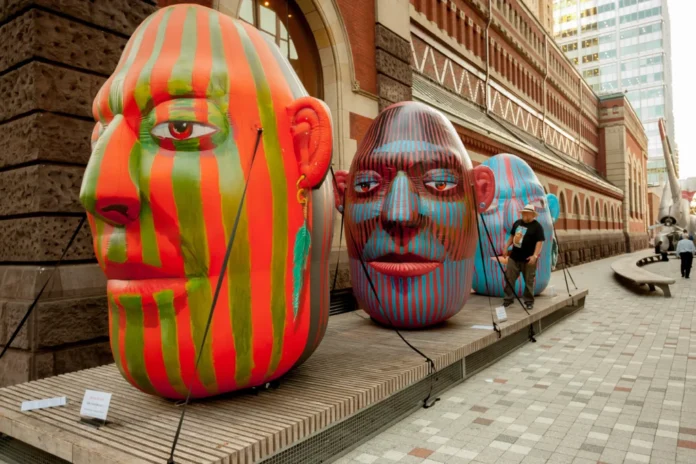
Dentro de estas expresiones estéticas, el rostro selvático inflable creado para la feria de Arte de Miami ,es un logro de esta serie, no se limitó el artista a crear una forma con polímeros inflables de un rostro, utilizando su cromática como es usual en este tipo de esculturas inflables. Sino que pintó la superficie para transmitir el espíritu selvático a ese gigantesco rostro, con pinturas corporales y elementos propios de un ser que expresa en la indumentaria corporal una relación de profundidad, de compenetración con el cosmos. Así, en su cabellera pinta nudos, semillas, plumas con sus connotaciones asociadas al vuelo chamánico.

“El agua siempre me ha fascinado, desde mis primeros trabajos, pues en ella se establece un juego de colores cambiante, movimiento y cualidades simbólicas. La Humanidad siempre ha sentido una atracción hipnótica hacia ella. En nuestro caso el agua nos ha atraído, debido a que en nuestro jardín hay un estanque con peces Koi, el cual he gozado por más de diez años.” (Frank Hyder, testimonio, 2005)

Lo acuático en forma de ríos, estanques y su vida, es otra de sus constantes, es dominada por el mismo espíritu que mueve sus creaciones inspiradas en lo selvático. Este lenguaje ecléctico desarrollado desde sus primeras obras, logra un nuevo desarrollo en la serie de peces, fundamentalmente el Koi, donde genera un tratamiento técnico opuesto. Las texturas y profundidades que lograba al excavar en la madera, se convierten en profundidades de diversos espesores, vidriosos, que transmiten en cada pieza la sensación de estar ante peces en un espacio acuático. Una de las dimensiones que más llama la atención de esta técnica es el fuerte contraste cromático. Los Koi no buscan el hiperrealismo, sino usan la forma sinuosa, para crear una propuesta que está en tensión entre la abstracción y el realismo a través de la mancha pictórica y una forma arquetipal como es la del pez, caracterizado por su belleza formal, la delicadeza de su cuerpo y los colores con que reviste su piel Acuática.

El Koi es un pez pleno de simbolismo y ha sido asumido como símbolo de la realeza desde tiempos muy tempranos en Asia, de ahi que lo cuidasen en delicados jarrones de cerámica. El Koi se encuentra presente en la actualidad en casi todas las peceras del planeta por su armónica belleza, caracterizada por colores nusuales en los peces, como blancos, rojos, azules que en un agraciado cuerpo, armoniza con una ancha y ondulante cola. Su antecedente dentro de su obra, estaría en la serie “Ritmos” donde la carpa es excavada en la superficie de madera, para convertir la línea en surco, entre fondos diversos que destacan este recurso estético. El ritmo que se genera entre los cardúmenes transmite un clima de entropía, que se diferencia del koi que emana una sensación de paz interior. En ellos, introduce la resina, para crear diversos planos de profundidades que le dan a cada tela una falsa profundidad, que transforma la obra en una trampa visual.
Frank Hyder es enfático al afirmar que su problema no es imitar la naturaleza, sino convertir sus formas en metáforas de una relación armónica del hombre con la naturaleza. Estas son telas donde los peces se muestran en grupos donde va creando el artista los fondos, las ondas que crean tensión visual con los cardúmenes. Pinta en cada capa de resina, para ir creando esa sensación de profundidad ilusoria, que caracteriza esta serie. Al unirse esta innovadora técnica a una forma piciforme como el Koi, crea una obra que genera una nueva etapa en su lenguaje artístico que une la belleza a la fuerza estética y metafórica.

Este lenguaje plástico también lo usa en los “Lotos” caracterizados por una cromática alegre, donde colores de contrastes insólitos se armonizan, para crear conjuntos de paisajes acuáticos. La obra adquiere una fuerte resonancia simbólica por el significado del “nelumbo nucifera” el loto sagrado o la rosa del Nilo. El termino en latín: nucifer hace referencias a las nueces del loto, que son sus frutos que son comestibles, y pueden germinar después de siglos, por este rasgo se han convertido en simbolismo de la eternidad y la iluminación. Es una planta en la que sus raíces crecen hasta la profundidad y de la que brota una flor sobre la superficie acuosa. Proceso que convierte el loto en símbolo de la iluminación mística, por esta razón en la India es llamado también loto sagrado. En estas obras el artista redimensiona las plantas, las hace suyas, a través de su lenguaje pictórico, plenas de alegría y gracia al igual que las obras inspiradas en los peces. De esta forma el artista Frank Hyder nos develan en cada una de sus series un profundo sentido del equilibrio y de una estética plena de espiritualidad.

Eduardo Planchart Licea

Source: https://www.medicci.com/en/frank-hyder-texts/frank-hyder-metaphor

Oil paint

Oil paint
Oil paint

Oil paint

  • While water-based paints are non-toxic, repeated exposure can irritate skin
  • Wear gloves if you have sensitive skin or eczema
  • Apply hand lotion after cleaning sessions—soap and water are drying
  • If paint gets on skin, wash promptly with soap and water

Allergies:

  • Some people develop sensitivities to acrylic polymers or latex binders
  • If you notice skin reactions, switch to gloves immediately
  • Consider more frequent hand washing during painting to minimize contact time

Ventilation:

  • While water-based paints don’t require ventilation like oils, good air circulation is still beneficial
  • Some artists are sensitive to paint odors even in acrylics
  • Acrylic mediums and varnishes may contain stronger chemicals requiring ventilation

When to Replace Brushes

Even with perfect care, brushes eventually wear out. Knowing when to retire versus persist with restoration is important.

Signs a Brush Needs Replacement

Irreversible splaying: If bristles splay outward permanently despite cleaning and reshaping attempts, the brush is done

Heavy bristle loss: Shedding a few bristles is normal; constant shedding with bald spots means replacement time

Ferrule looseness: If ferrule rattles on handle or bristles pull free, it’s over (though you might re-glue as temporary fix)

Complete loss of snap: Bristles that won’t return to shape after loading with paint have lost their spring—replace

Permanent curl or bend: Bristles bent permanently (often from drying improperly) won’t paint correctly

When Restoration is Worth It

For expensive brushes: Premium synthetic brushes ($15-50) warrant significant restoration efforts

When damage is minor: Slight stiffness, small amount of dried paint, minor shape issues—all worth fixing

Sentimental value: A favorite brush that’s been with you for years deserves rescue attempts

As learning exercise: Practicing restoration on cheaper brushes teaches valuable lessons

Special Situations and Pro Tips

Cleaning Brushes During Painting Sessions

You don’t always want to go through full cleaning process between colors:

Quick rinse technique:

  1. Swirl in water container
  2. Squeeze excess water on paper towel
  3. Ready for next color

When full cleaning is needed mid-session:

  • Switching between very different colors (white to black, yellow to purple)
  • Paint is drying on brush during work
  • Bristles feel gummy or sticky

The water management system:

  • Three containers: dirty rinse, intermediate rinse, clean water
  • Dirty water catches worst paint
  • Intermediate rinse cleans further
  • Clean water for final rinse or diluting paint
  • Rotate: clean becomes intermediate, intermediate becomes dirty, refresh clean

Dealing with Stained Bristles

Some pigments stain synthetic bristles (though less than natural bristles):

Colors that commonly stain:

  • Phthalocyanine blue and green
  • Quinacridone magenta
  • Many earth tones
  • Dioxazine purple

Is staining a problem?

  • Usually no—cosmetic only if brush is otherwise clean
  • Won’t contaminate future colors if thoroughly cleaned
  • If bothersome, dedicate those brushes to dark colors

Minimizing staining:

  • Clean immediately after use
  • Use slightly stronger soap
  • Don’t obsess—excessive cleaning damages brushes more than slight staining

Multi-Artist Households or Classrooms

Challenge: Multiple people using shared brushes Solution:

  • Establish clear cleaning protocols everyone follows
  • Assign brush cleaning responsibility on rotation
  • Have abundant cleaning supplies always available
  • Check brushes after each user—don’t let mistakes accumulate
  • Consider color-coding brushes by user in households

Traveling Artists

Challenge: Cleaning brushes when away from studio Solutions:

  • Bring ziplock bags for dirty brushes (clean properly when you reach facilities)
  • Pack small soap container and brush cleaning pad
  • Use collapsible water containers
  • Scout locations ahead: is there a sink available?
  • For emergencies: baby wipes can do preliminary cleaning (not ideal but better than nothing)
  • Clean brushes thoroughly as soon as possible after temporary measures

Conclusion: The Practice of Care

Cleaning brushes is meditation, ritual, the closing ceremony of creative work. The simple, repetitive motions—rinsing, soaping, shaping—create mindful transition between making and living. Artists who embrace brush care as practice rather than chore develop deeper relationships with their tools, noticing subtle changes in performance, understanding each brush’s personality, and extending working life by years.

The techniques outlined here—from basic three-step cleaning to deep restoration, from paint-specific approaches to bristle-specific care—provide comprehensive framework for brush maintenance. But remember: the best cleaning method is the one you’ll actually do consistently. A simple but religiously followed routine beats an elaborate technique used sporadically.

Your brushes are partners in your creative vision. They respond to pressure, carry color, make visible what exists only in imagination. They deserve—and reward—your attention, your patience, and your care. Clean them well, with understanding of what each paint and bristle type needs, and they’ll serve you faithfully for years, becoming trusted companions in the endless, beautiful challenge of making art.

The water runs clear. The bristles reshape to perfect points and edges. Another painting session ends, another begins tomorrow. And your brushes, clean and ready, wait patiently to help you create whatever comes next.

The Geometry of Necessity: Sashiko, Boro, and the Mathematics of Survival

The Geometry of Necessity: Sashiko, Boro, and the Mathematics of Survival

The Geometry of Necessity: Sashiko, Boro, and the Mathematics of Survival

I. The Little Stab That Became a Philosophy

“Little stab.” “Little pierce.”

This is how the Japanese named their most elemental stitch—sashiko. Not “embroidery,” not “decoration,” not even “reinforcement.” Just the honest description of a needle entering fabric. Stab. Pierce. Repeat.

If Impressionism taught us to see light as it truly appears—broken, shimmering, composed of a thousand subtle gradations—then sashiko teaches us to see labor as it truly exists: one small gesture, accumulated into meaning.

Consider the Impressionist brushstroke. Monet’s water lilies are not smooth illusions but visible accumulations—dab after dab of paint, each stroke discrete, each contributing to a whole that exceeds the sum of its parts. The painting shows how it was made. The process remains visible in the product.

Sashiko operates by identical principle. Each stitch is visible. Each “little stab” declares itself. The running stitch—the most elementary needlework technique—becomes, through repetition and intention, a grammar of survival.

White thread on indigo. The simplest contrast. The clearest signal. Here is where the needle entered. Here is where human attention intervened between cold and warmth, between whole and broken, between useless and essential.

II. The Radical Honesty of Pattern

In Western decorative traditions, ornament often conceals structure. Baroque embellishment hides the wall beneath. Rococo flourishes disguise the chair’s joinery. Beauty as camouflage.

Sashiko inverts this relationship. Pattern reveals function.

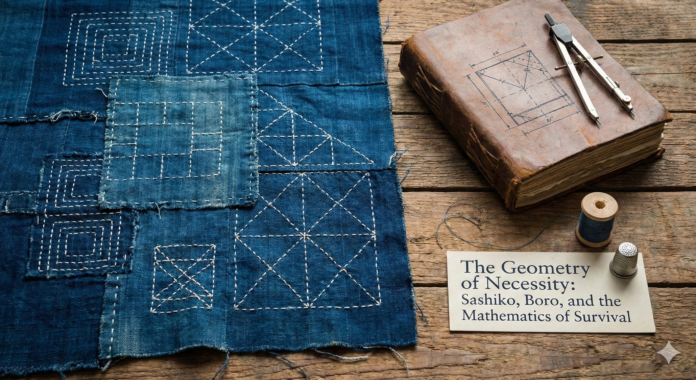
The geometric designs of sashiko—seigaiha (ocean waves), asanoha (hemp leaf), shippo (seven treasures), bishamon (armor pattern)—are not applied decoration. They are structural necessity made elegant.

When you reinforce fabric with running stitches, you create lines. When you need to reinforce fabric in multiple directions—to distribute stress, to prevent tearing along grain lines, to hold layers together—you create grids. Diagonal reinforcement creates diamonds. Radiating reinforcement creates stars.

The patterns of sashiko are the mathematics of durability.

Asanoha, the hemp leaf pattern, is composed of triangles radiating from hexagonal centers. This is not merely pretty—it’s engineering. The hexagonal structure distributes tension evenly across the fabric, the same principle that makes honeycomb architecture supremely efficient. Hemp fiber itself is among the strongest natural textiles. The pattern named after hemp performs like hemp.

Bishamon, named after the god of warriors, resembles interlocking armor scales. Again: not metaphor, but mechanics. Each diagonal line intersects with others, creating a mesh that cannot be pulled apart from any single direction. The fabric becomes, quite literally, armored.

Where Western art criticism might ask, “What does this pattern symbolize?”—sashiko answers: “It symbolizes nothing. It functions.”

And yet, precisely because it functions so honestly, it becomes beautiful. This is the aesthetic principle that Impressionism gestured toward but never fully articulated: beauty as the visible evidence of attention.

III. Boro: The Fabric That Remembers

If sashiko is the stitch, boro is what happens when stitching becomes biography.

“Boroboro”—tattered, ragged, worn to shreds. From this word of collapse comes boro, the fabric of resurrection.

Here is how boro happens:

A garment tears. You patch it with scrap fabric—perhaps from a garment that wore out earlier, perhaps from a different garment entirely. You stitch the patch in place with sashiko. The garment continues its life.

Another section wears thin. Another patch. More stitching.

Years pass. The patches themselves develop holes. You patch the patches. You stitch over old stitching.

Decades pass. The original fabric is barely visible. What you wear now is a sedimentary geology of repairs, each layer marking a different moment of decision: This is still worth saving.

Boro is time made visible.

IV. The Mathematics of Scarcity

To understand boro, you must understand the economy that created it.

In pre-industrial Japan, particularly in the rural north, cotton was precious. Indigo-dyed cotton was an investment representing months of labor: growing or acquiring the cotton, spinning thread, weaving fabric, cultivating indigo plants, extracting dye, dyeing the cloth through repeated immersions.

A single garment might represent a year’s surplus resources.

Under such conditions, disposal is not an option. Replacement is not an option. There is only continuation—the extension of utility through whatever means available.

This is where geometry enters as salvation.

You cannot create new fabric, but you can reorganize existing fabric. Scraps too small to be useful individually can be joined into useful wholes. The sashiko stitching that joins them doesn’t just hold pieces together—it creates a new structure, a meta-fabric whose strength comes not from unbroken material but from the multiplication of connections.

Think of it as network theory before networks had a theory. Each stitch is a node. Each intersection of threads is a connection. The more connections, the more redundancy. The more redundancy, the greater the resilience. Even as individual threads break, the network persists.

Boro is distributed systems architecture performed with needle and thread.

V. The Aesthetic of Accumulation

Monet painted the same haystack twenty-five times, capturing how light transformed it across seasons and hours. Each painting was discrete, but together they formed something new: a meta-work about the nature of seeing itself, about how the “same” subject is never the same.

Boro performs this principle in textile form.

Each repair session is an intervention—a moment when the wearer (or the wearer’s family) assessed damage and responded. The fabric becomes a record of these interventions. You can read it chronologically if you understand the archaeology:

  • Deepest layers: earliest repairs, often most carefully matched to original fabric
  • Middle layers: expedient repairs, using whatever was available, patches growing larger as desperation increased
  • Upper layers: repairs to repairs, stitching over stitching, no longer attempting to match anything, only to continue

This is not deterioration. This is elaboration.

The visual complexity of a mature boro textile far exceeds what any single designer could plan. It has the organic intricacy of a Pollock drip painting, but where Pollock’s gestures happened in minutes, boro’s gestures accumulated over generations.

Boro is slow-motion action painting, measured in lifetimes.

VI. You Can Do Sashiko Without Creating Boro

This distinction matters.

Contemporary sashiko, as practiced in workshops and sold in boutiques, is often purely decorative. White geometric patterns on new indigo fabric. Beautiful. Skillful. But fundamentally different from its origin.

This is sashiko as style—the visual language separated from the material conditions that created it.

It’s analogous to the difference between Impressionism painted en plein air in response to actual light, versus Impressionism as a commodity style, reproduced in studios because the market demands works “in the manner of Monet.”

There’s nothing inherently wrong with this. Style has its own validity. But we must be honest about what’s been transformed.

Decorative sashiko says: “I appreciate the aesthetic of necessity.”

Functional sashiko says: “I am performing necessity.”

The former is nostalgia. The latter is survival.

VII. You Cannot Have Boro Without Sashiko

But here’s where the relationship becomes profound:

Boro requires sashiko. Without the stitching, you just have torn fabric and loose scraps. The stitch is what transforms fragments into coherence, chaos into structure.

Sashiko is the force that prevents collapse.

This is not decorative. This is existential.

Every boro textile is a record of refusal—the refusal to accept that something broken must be discarded, that something worn must be replaced, that value exists only in the new and the whole.

The sashiko stitching is visible precisely because it wants to be seen. It announces: “Here was a hole. Here was weakness. Here is where attention intervened. Here is where care insisted on continuation.”

In Western textile conservation, the goal is often invisibility—repairs should blend seamlessly, making the garment appear “as new.” Boro rejects this entirely. The repair is not shameful. The repair is the point.

The history of breakage becomes the aesthetic itself.

VIII. Geometric Patterns as Meditation

Return to the patterns. Seigaiha, asanoha, shippo, bishamon—and dozens more, each with its own logic, its own structural purpose, its own visual rhythm.

To execute these patterns requires entering a state of consciousness that Impressionist painters would recognize: the dissolution of time into pure attention.

A single asanoha motif might contain hundreds of stitches. A garment covered in seigaiha represents thousands. Tens of thousands. Each stitch the same length, the same tension, maintaining the pattern’s integrity across hours, days, weeks of work.

This is meditation as thermodynamics—the transformation of time and attention into structure and warmth.

The running stitch itself becomes a mantra. Pierce, pull, pierce, pull. The needle finds its rhythm. The mind finds its silence. The pattern emerges not from planning but from the accumulated consequence of consistent gesture.

Sashiko is drawing with thread, but the drawing is also engineering, and the engineering is also prayer.

IX. The Visible Mending Movement: Nostalgia or Resistance?

Contemporary interest in boro and sashiko raises difficult questions.

When affluent consumers in wealthy nations practice visible mending, are they engaging in genuine material ethics—or performing poverty aesthetics from a position of security?

The answer is: yes.

Both can be true. And the contradiction is productive.

Because even if your repairs are not economically necessary, the practice itself trains attention. It slows consumption. It creates relationship with objects. It makes visible the labor embedded in textiles—not just your own labor of mending, but the invisible labor of production.

When you spend three hours reinforcing a torn jacket, you begin to understand why fast fashion is priced as it is: because no one is spending three hours on anything. The price reflects not the absence of labor but the systematic devaluation of labor.

To practice sashiko in the 21st century is to perform a thought experiment: What if my clothes were precious?

And once you’ve performed that experiment, it becomes harder to treat them—and by extension, the people who made them—as disposable.

X. The Geometry of Enough

The patterns of sashiko are finite. Thirty, forty, fifty traditional patterns, each with variations, but ultimately a limited vocabulary.

This is not poverty of imagination. This is the opposite: the deep refinement of a limited set of solutions to essential problems.

Western decorative traditions often pursue novelty—new patterns, new styles, new techniques every season. Sashiko pursues perfection within constraint.

The asanoha pattern is perfect. Not in the sense that it cannot be improved, but in the sense that it completely solves the problem it addresses. Further innovation is unnecessary. The pattern has reached its ideal form.

This is the aesthetic of enough—the recognition that some problems have sufficient solutions, and that endlessly seeking new solutions might be pathology rather than progress.

Sashiko says: This pattern works. It has worked for three hundred years. It will work for three hundred more. Let us perfect our execution rather than alter our approach.

This is profoundly anti-capitalist. Capitalism requires perpetual novelty, planned obsolescence, the constant replacement of the adequate with the “improved.” Sashiko requires nothing new. Only attention. Only time. Only the willingness to stab fabric, again and again, in patterns that honor the wisdom of those who came before.

XI. Boro as Chronicle

Every boro textile tells a specific story, but the story is encoded in a language most of us can no longer read.

An expert can examine a boro garment and extract:

  • Geographic origin (regional pattern preferences, local indigo variations)
  • Economic status (quality of base fabric, size of patches, frequency of repair)
  • Historical period (evolution of commercial fabric availability)
  • Family dynamics (whose clothing was scavenged for patches, whose labor performed the mending)

The garment becomes archaeological site, social document, economic record, family archive.

And all of this encoded information exists because someone cared enough to stitch. The alternative was naked cold, or the allocation of precious resources to replacement. The stitching is evidence of calculation: This repair is worth the time. This garment is worth saving.

Boro is the literature of the unliterate—history recorded by those who leave no other written record.

XII. The Pattern That Holds Everything Together

You can do sashiko without creating boro—you can stitch decorative patterns on whole fabric for beauty alone.

But you cannot have boro without sashiko, because the stitching is what prevents the whole assemblage from flying apart into constituent rags.

This relationship is the key to everything.

Sashiko is the force of intention. Boro is what happens when intention accumulates over time.

One is the gesture. The other is the consequence of repeated gesture.

One is the brushstroke. The other is the painting.

One is the moment. The other is duration.

Coda: What Persists

The Impressionists painted light, which is to say, they painted time—the specific quality of a specific moment, never to be repeated.

Sashiko stitches fabric, which is to say, it stitches time—the extension of utility across moments, the insistence that the past can persist into the future through care.

Both practices make the same argument: Pay attention. This moment matters. Record it.

For Monet, recording meant paint on canvas.

For the boro stitcher, recording meant thread through fabric.

Both leave evidence of seeing. Both transform ephemeral experience into material persistence.

The difference is that Monet’s paintings hang in museums, protected and preserved, viewed but not used.

Boro textiles were worn until they could be worn no more, used until they disintegrated, kept alive until the last possible thread gave way.

And then, when they finally failed, they were not mourned.

They were cut into smaller patches, to repair other garments, to continue in fragment what they could no longer continue as whole.

This is the final pattern of sashiko: nothing ends. Everything transforms. The stitch continues.

Turn off the screen. Pick up a needle. Find something worn, something torn, something precious enough to save.

Stab the fabric. Make your little pierces. Follow the geometry of necessity.

Let your repairs show.

Because what you’re stitching is not just fabric.

You’re stitching time.
Raquel Munera.  Cartografías de la Infancia

Raquel Munera. The Children of the Homeland
Raquel Munera The Children of the Homeland Series, 1

Raquel Munera.  Cartografías de la Infancia

Por Milagros Bello, PHD

La obra de Raquel Múnera se configura como un territorio de memoria en suspenso donde la infancia deja de operar como emblema de inocencia para devenir una zona de fricción histórica, afectiva y simbólica. Sus escenas, deliberadamente frontales y despojadas de anécdota, se presentan como imágenes sustraídas al flujo del tiempo: láminas pedagógicas extraídas de archivos escolares o estampas votivas preservadas bajo la lógica del relicario. Esta aparente simplicidad formal —próxima a una estética naïf o primitivista— no remite a la candidez, sino a una economía de reducción consciente. Al depurar la narratividad y contraer el gesto, Múnera concentra la densidad conceptual de la imagen, que opera entonces como dispositivo de condensación crítica antes que como representación.

Las figuras infantiles emergen rígidas, hieráticas, desprovistas de teatralidad psicológica. Sus miradas frontales y posturas estáticas producen un efecto de extrañamiento que neutraliza toda lectura sentimental. No se trata de retratos ni de escenas biográficas, sino de presencias icónicas que funcionan como superficies de inscripción donde confluyen pedagogía, historia natural, pérdida ecológica y desplazamiento cultural. La infancia se instituye así como un dispositivo archivístico: un espacio de conservación y exposición de los remanentes taxonómicos del proyecto moderno —índices clasificados, domesticados o extinguidos por las lógicas del progreso y la racionalidad científica.

Raquel Munera. The Children of the Homeland
Raquel Munera The Children of the Homeland Series, 3

En este campo semiótico, la relación entre la niña y los animales adquiere un estatuto estructural. Aves asociadas a imaginarios domésticos o a especies desaparecidas establecen equivalencias simbólicas entre vulnerabilidad, desaparición y precariedad vital. El animal deja de ser acompañamiento narrativo para constituirse en alegoría histórica. Su presencia introduce una temporalidad latente en la que memoria, pérdida y reconstrucción subjetiva coexisten sin dramatización, inscribiendo la catástrofe en el registro de lo cotidiano.

La incorporación de objetos vinculados al saber —globos terráqueos, fragmentos textuales, referencias enciclopédicas, maletas, insignias escolares— activa una reflexión sobre los regímenes taxonómicos que organizan el mundo mediante su clasificación e inventario. Estas cartografías del conocimiento, lejos de expandir la experiencia, la contienen y la normalizan. La imagen asume con frecuencia la lógica museográfica de la vitrina o del espécimen, donde la memoria queda encapsulada, preservada como resto material, convertida en evidencia antes que en vivencia.

Raquel Munera. The Children of the Homeland
Raquel Munera The Children of the Homeland Series, 2

Desde el punto de vista formal, Múnera recurre a fondos planos, divisiones cromáticas radicales y fracturas abruptas del campo pictórico que desarticulan toda continuidad espacial. Estas superficies contrastadas —zonas orgánicas enfrentadas a planos oscuros o cósmicos— sitúan al cuerpo en un estado de suspensión perceptiva que introduce un cuestionamiento ontológico del propio estatuto de la imagen. El sujeto no habita el espacio; permanece desfasado respecto de él, suspendido en un hieratismo atemporal que evidencia su condición de desplazamiento.

En conjunto, la práctica de Múnera articula una poética de lo remanente y de la dislocación. Sus obras operan como campos de resonancia donde lo íntimo y lo político se imbrican de manera silenciosa, revelando las huellas persistentes de sistemas mayores —ecológicos, coloniales, culturales— en la memoria colectiva. Cada imagen se manifiesta como una quietud cargada de latencia, una aparente estabilidad atravesada por vibraciones subterráneas donde aún resuena aquello que ha sido desplazado, olvidado o extinguido.

En la tensión entre contención formal y espesor simbólico, la artista formula una reflexión rigurosa sobre la fragilidad de la vida, la construcción histórica del conocimiento y los modos en que la experiencia se sedimenta materialmente en los cuerpos.

Milagros Bello, PhD
Curadora
Enero 2026

Oswaldo Vigas – Figuras Ancestrales

Oswaldo Vigas - Figuras Ancestrales

Oswaldo Vigas – Figuras Ancestrales
 

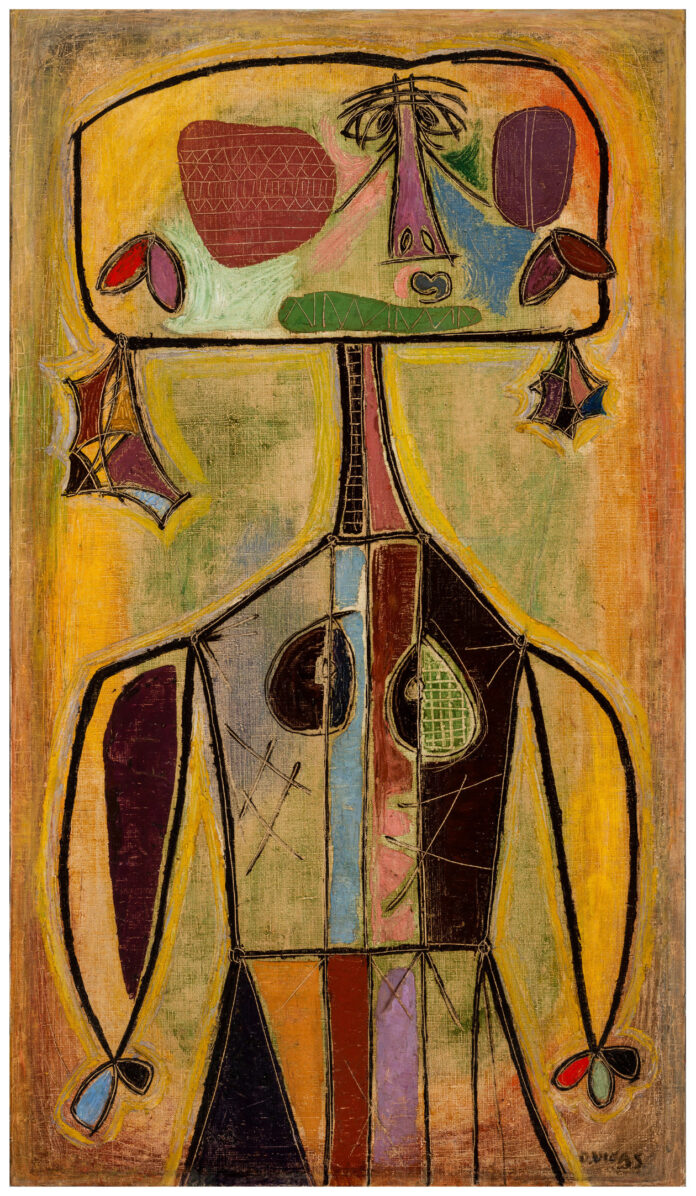
El arte para Oswaldo Vigas llena cada momento de su vida; en ella se encuentran las dimensiones que delatan sus múltiples fuentes de inspiración, entre las cuales están su amor por la conversación, la música, la lectura y la cocina. Entre estas actividades brotan de su imaginación esbozos espontáneos que, en un futuro, se convertirán en obras que serán sometidas a su mirar crítico durante días, semanas y, a veces, años. Algunos cuadros tienen la suerte de fluir más fácilmente que otros; cuando el artista plasma el dibujo en carboncillo sobre el desnudo lienzo intuye la dificultad que va a encontrar al llegar a una de las etapas más difíciles de todo creador: el saber cuándo la obra está terminada.

“Mi ideal sería que ese trabajo espontáneo del boceto tuviera ya las proporciones definitivas de los cuadros, para que no tuviera que intervenir lo racional que inevitablemente trata de imponerse y muchas veces traicionarnos.”
(Oswaldo Vigas)

Cada pieza nace de bocetos que constantemente Vigas crea; es interesante constatar la fluidez con que el artista los realiza sobre cualquier soporte que tenga a su alcance, desde porta vasos de papel hasta una servilleta de restaurante o unos tickets de Metro. Muchos de ellos son coloreados en su nacimiento y, cuando es así, como diría Vigas, “ya no están tan en la cuerda floja”. Lo cual no ocurre con los bocetos que son tan solo líneas pues ellos se encuentran todavía en el filo de la navaja.

Esta forma de encontrar lo buscado tiene cierto paralelismo con la filosofía oriental del Zen o la neo-platónica de las ideas. Si bien podríamos decir que la mayéutica de Sócrates lograba, con sus constantes preguntas sobre lo aparentemente obvio, hacer parir verdades; Vigas da nacimiento a formas inspiradas en su mitología creativa, que ha ido materializando durante décadas.

“Cada día estoy más convencido de que la adquisición más importante en el arte contemporáneo es el habernos abierto el camino hacia el pasado arcaico. Cuando uno se mete en una de esas grutas de la prehistoria, pasarle las manos a las paredes hace revivir esos momentos grabados en la roca. Nos remontamos a miles de años atrás, y eso es presente, no pasado. Cada gesto pictórico es una repetición de un acto arcaico, y eso es anterior al lenguaje hablado. La mano sabe más que la razón.”(Oswaldo Vigas)

Para el pintor la búsqueda de lo ancestral es un eterno presente, otra de las fuentes fundamentales que nutren su obra. Esta dimensión posee fuertes cargas simbólicas, de ahí la variedad y amplitud de su gusto, que incluye el arte prehispánico, el popular, el arte Maya, el Inca y su especial predilección por el arte africano; todos conviven en su concepción del gusto sin ninguna contradicción por ejemplo con el arte oriental –japonés en especial que colecciona con pasión- y las más variadas tendencias del arte moderno y contemporáneo.

Para adentrarse en su discurso visual es útil tener presente esta universalidad y eclecticismo de su cultura, pues de ellos surgen las semillas de las que nacen sus cuadros, esculturas, tapicerías, cerámicas y grabados, que provocan un hechizo que atrapa al espectador neófito y deleita al conocedor en los museos y galerías del mundo donde se ha presentado su obra.

Este impacto estético brota de un delicado equilibrio entre su libertad intelectual y espiritual, entre lo racional y lo irracional, aspectos presentes en todas y cada una de sus piezas; de ahí que cuando gana el Premio Nacional de Artes Plásticas, en 1952, con La Gran Bruja, renovará a nuestro mundo intelectual y artístico y, de manera provocativa, empezará a ocupar un lugar central en la plástica nacional, escindiendo nuestro mundo cultural e intelectual. Sus brujas, recreadas en un lenguaje personal, se enraízan en la indagación visual arqueológica del centro de Venezuela. Siendo ésta la década que Venezuela vivió bajo la dictadura de Marcos Pérez Jiménez (1948-1958), con un control represivo sobre toda la sociedad venezolana. Sin embargo, esto no pudo impedir las enriquecedoras polémicas entre tendencias que protagonizaron personajes de la altura de Miguel Otero Silva, quien fue uno de sus primeros defensores en contra de sus detractores.

Existía en el artista tal inquietud por buscar sus raíces que, en los cincuenta, se adentra en la Guajira, donde se topa con una dimensión aún ignorada del arte latinoamericano: los diseños faciales y textiles de la cultura wayuu, caracterizados por sutiles estructuras geométricas. Este interés es propio de una generación y de un continente que estaba al encuentro de su esencia cultural y espiritual. Como consecuencia de ello, en los cincuenta, en nuestras artes plásticas, se reúnen alrededor del Taller Libre de Arte de Caracas, Alirio Oramas, Oswaldo Vigas, Mario Abreu, Guillermo Meneses, Juan Liscano, Alejo Carpentier, Oswaldo Trejo, Manuel Trujillo, Rhazés Hernández López, Antonio Estévez, etc. En otros lugares del continente, como México, se está en el esplendor de las obras de Diego Rivera, Siqueiros, Orozco y Rufino Tamayo; en Ecuador se expande la figuración de Oswaldo Guayasamín; en Colombia Alejandro Obregón y Enrique Grau; en Perú nos encontramos con Fernando de Szyszlo y, en Brasil, deslumbra el muralismo de Cándido Portinari. La obra de Oswaldo Vigas ocupa un lugar fundamental en este movimiento latinoamericanista que, en Venezuela, fue opacado por el entusiasmo por el abstraccionismo-geométrico manifestado por un grupo de artistas nacionales al descubrir, en París, la llamada “Academia de arte abstracto” de Vasarely, Dewasne y Pillet; y, más tarde, por el conocido auge del cinetismo.

El lenguaje plástico del artista valenciano se afirma una vez más en su obra de 2005 y 2006. Sin embargo, podríamos afirmar que en estos años se da una inversión cromática en su lenguaje pictórico al acentuar la relación entre lo dibujístico y lo cromático. Con frecuencia la línea, como un abismo, delimita con vigor el adentro del afuera, como metáfora expresiva de las dualidades de la existencia. Tanto en el fondo como en las formas, los grises o la tela cruda, que dominaron en periodos anteriores, desaparecen, para dar vida a verdes, rojos y amarillos, colores propios del trópico. Es el bullir de la vida, característico de la cultura caribeña que se hace presente.

Oswaldo Vigas - Figuras Ancestrales

Surgen personajes, dominados por una línea que crea tensión con el desnudo lienzo y, a medida que nacen las manchas, empiezan a brotar atmósferas que poseen un sentido musical por las armonías desarrolladas. Cada uno de estos cuadros posee un universo propio, con cargas emotivas transmitidas por el artista al materializar su lenguaje visual.

La línea posee un carácter cromático y, por tanto, no solo delimita sino que asume diversas profundidades en su aislamiento. Estos trazos tienen rasgos impredecibles por su ritmo; así, en La Caída, (2005), el trazo se mantiene firme a lo largo de los cuerpos abigarrados y en sentido vertical, rodeados de un fondo verde que contrasta con el rojo de las aberturas de los rostros, transformados en sorpresivos centros visuales. Estas pequeñas manchas de rojo tienen tal presencia en este enramado de seres que se convierten en fisuras que filtran la vida; y es en estas aberturas que brota la interioridad del ser; estos cuerpos están plenos de texturas que acentúan su expresividad.

Varios de los cuadros creados por Vigas, entre finales de 2005 y 2006, tienen rasgos totémicos y una figuración que busca la ascensión, convirtiendo estos personajes en ombligos cósmicos que buscan reconstruir una síntesis visual que proyecte las paradojas que atenazan a la humanidad en el nuevo milenio, cuando ha perdido la certeza en las bases de su concepción del progreso y el desarrollo. Esto se percibe en estos cuadros cuando la de-construcción y ruptura de los personajes, propios de este imaginario pictórico, son dominadas por un movimiento gravitacional que las concentra en si mismo.

La última década de Vigas en Venezuela se caracteriza, de igual manera, por un proceso de des-fragmentación y por el manejo de dualismos simplificadores que niegan el sentido común como guía de la acción; son éstos rasgos que también se encuentran presentes en esta figuración desde sus dibujos de los noventa, tal como se evidencia en la serie de personajes donde los órganos se intercambian, las partes del cuerpo, además de ser deformadas, son re-significadas. Así estamos ante personajes cuyos rostros son dominados por lo fálico, medio a través del cual el artista plantea una humanidad dominada y manipulada por lo sexual. Está tendencia se acentúa en su figuración con la llegada del nuevo milenio. Los seres dominados por la inversión crean dramáticas situaciones; es posible encontrar bocas en forma de vagina, narices fálicas, traseros en lugar de cerebro… Recursos que enfrentan al espectador ante una belleza golpeante que crea un discurso visual revelador de la visión interior del artista en torno a la humanidad.

Oswaldo Vigas - Figuras Ancestrales

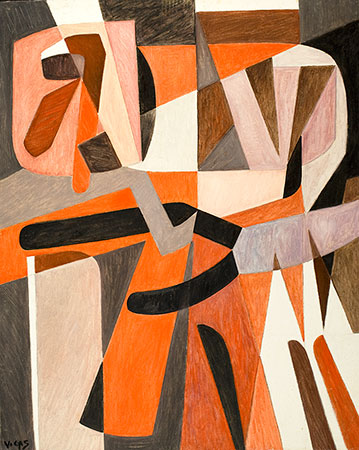
El triangulo, la medialuna, el fuego, la verticalidad y la horizontalidad, están también presentes en varios de estos cuadros en los cuales estas formas inorgánicas se transforman en orgánicas, pareciendo relacionarse con la geometría propia del arte incaico Paraca, tal como se ve en las alas de algunas aves de estos diseños textiles formadas por triángulos y plumas.

Otros cuadros se caracterizan por sus formas libres y su deformación lúdica, como ocurre con Composición con figuras y animal, 2005 y Forastero, 2006; son percibidas por el espectador como una mancha a la que se transmite sentido al proyectar la dimensión exterior en la interior. Entre las piezas dominadas por colores contundentes destaca Figuras Solares, 2006, donde mezcla lo humano y lo animal en una geometría personal y orgánica.

Estamos ante un lenguaje plástico que crea un puente entre los diversos niveles perceptivos de la realidad y que busca una comprensión cada vez más profunda de nuestra alma. Y así, reta al espectador a indagar en estas formas primordiales para que le develen sus secretos. Por esto no solo no es suficiente verlas de pasada sino que es necesario mirarlas con atención. Este rasgo del artista, está vinculado a su pasión por lo simbólico; por eso en su plástica cada pieza es un torbellino formal en el que se hace presente una figuración que busca la multiplicidad y niega la unicidad. Para ello se aleja de la realidad en su temática, para crear sus propios paradigmas visuales, que son un aporte a la historia de las artes plásticas venezolanas. Un ejemplo es el tema del eterno femenino en su obra, su zoología y los personajes antropomorfos, motivos que son hechos con la certeza de que el hombre es ante todo creador. En los cuadros horizontales, apaisados, Vigas evita las figuras aisladas al crear conglomerados de seres de diversos tipos, coherentes con su zoología y antropomorfismo fantástico, como los perros sin cabeza, las culebras que esconden sus formas, y los cuerpos humanos recompuestos en una anatomía simbólica que renace en cada espectador para reencontrarse en ella misma.

“La pintura me ha hecho ser más humano, porque creo que el valor de un hombre está en proporción directa con lo que él pueda aportar al descubrimiento de los enigmas del ser.” (Oswaldo Vigas)

Cultural Trends I’m Watching at the Beginning of 2026

ayoung-kim-performa
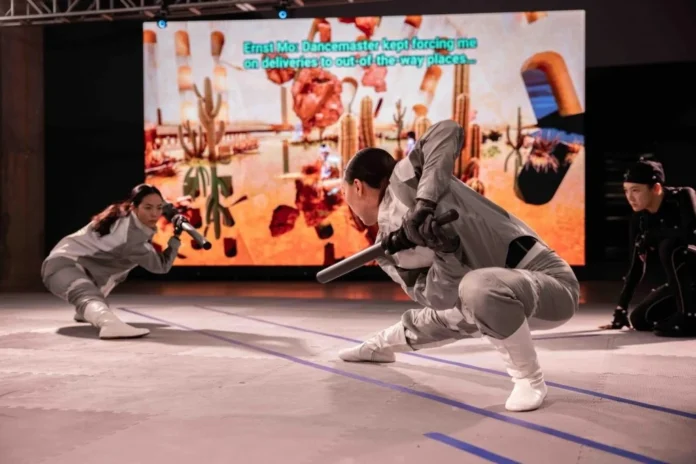
Body^n (2025)" at Performa 2025 Biennial, Canyon, New York, 2025. Courtesy of the artist and Performa 2025 Biennial. Photo by Walter Wlodarczyk.

Cultural Trends I’m Watching at the Beginning of 2026

Quick thoughts on the forces shaping art this year.

Ben Davis author

I spent the last week holed up in a hotel trying to work on a book and mainly failing. It’s very hard to focus right now. This is the first piece I’m posting in 2026, so I thought I would post quick thoughts on a bunch of trends and topics that are disconnected—things that are on my mind, that I think are worth commenting on, that are significant when it comes to the pieces that make up the overall vibe, but that I am worried I won’t have enough time to draw out in full.

I’m going to go from the very serious to the trivial. Here we go.

The Chaotic Style. I keep hearing that we are stuck in time and that the present doesn’t have a signature style. But Year 1 of Trump 2 had a very distinct, very chaotic set of cultural coordinates that time-stamps it: It’s A.I. slop, esoteric Nazi dog whistles, and internet trolling, mashed together with appeals to Americana, Classic Western Art, and gaudy luxury. The PragerU-sponsored talking A.I. portraits of the Founding Fathers in D.C. that I wrote about last year are a perfect example (though it must be said that, melted as they are, they are among the less noxious outputs in this vein). There’s a disturbing energy produced by internet-brained alt-right stuff whipped together with meme-ified symbols of tradition and taste. I’m sure there will be a lot of art about this, of some kind.

The graphic logo for the Fall of Freedom initiative, showing a hand holding up a torch, with rays of yellow and red beaming out of it

Graphic promoting the 2025 Fall of Freedom initiative.

Post-Antiwokeness? Last year’s Fall of Freedom initiative, hoping to get cultural institutions to do a day of programming on authoritarianism in November, ended up pretty muted—and it was a small ask to begin with. Now, the Trump administration is laying siege to the Twin Cities, touching off several foreign conflicts, destabilizing the economy, and censoring cultural institutions. The alt-media cultural figures who supported Trump and made him look affable have turned on him. The mounting unpopularity of this increasingly non-metaphorical culture war has only made the attacks from on high more feral. At some moment the plates are going to slip under the pressure, and there’s going to be a new cultural earthquake. Just what that would or should or will look like, I don’t know, given the cynicism that the #Resistance era of culture now invites. Some courage and ingenuity will be needed.

The Palestine Exception Lives On. From the New York Times and the Democratic Party to Artforum and the Whitney ISP, almost all liberal establishment institutions have bled credibility with young and politically engaged audiences over their failures relating to the immense carnage in Gaza over the last three years. As suggested by the very title of Omar El Akkad’s 2025 bestseller, One Day, Everyone Will Have Always Been Against This, you might expect there to be a too-late outpouring/correction. Yet even given the sea change in U.S. opinion that has left “older Republicans as the sole American demographic firmly behind Israel,” according to the Brookings Institution, I still see only a small opening, because more than any other political issue, the divides on this one pass through the center of the U.S. art audience, and political art is always most eager to confront the audience that it doesn’t have.

Beyond Slop Criticism. The tech class’s decision to align with MAGA, combined with their cheerfully apocalyptic rhetoric about generative A.I., has really colored reception of this technology, which threatens massive social disruption even if judiciously introduced. We need serious and informed criticism of the stakes. Which also means, however, that the criticism of A.I. is going to have to decouple from the criticism of “slop.” The accusation that “A.I. will never make good art” gets tangled up with all the many, many other economic, political, ethical, and environmental questions about A.I. People are literally falling in love with A.I. companions. I think we can put to rest the question of whether A.I. can make stuff that moves people. To begin to talk about the real problems—which include among them what it even means to focus on “human” creation in this context (and to advocate for that)—we can’t let the “slop” word stand in for the whole critique, satisfying as it is.

Minimalist art installation featuring a framed Cady Noland print with an American flag and bullet holes, a metal stool with stacked baskets, abstract black-and-white artwork, and a barbell on the gallery floor.

Installation of Cady Noland’s new show at Gagosian. Photo by Annie Armstrong.

The Hammons-Noland Meta. The “meta,” in video-gaming, means the most effective style of play, which shifts as a game gets updated and players innovate strategies. For the recent social-media era, the older artists who represented the “art meta”—the key role models—have been Cindy Sherman and Yayoi Kusama, representing the “artist as invented persona” mode and the “artwork as social-media set” mode. But there’s a lot of fatigue with that kind of visibility; people are bricking their phones and talking about deinfluencing. I’ve been thinking that the canonical figures who might represent a new “meta” to cohere around are Cady Noland and David Hammons: artists who deliberately cultivated opacity and inaccessibility as a style choice. If I were teaching in an art school, I’d be assigning David Hammons’s classic interview on the value of misdirection (or maybe just Martin Herbert’s book on artists’ “strategies of retreat,” Tell Them I Said No). The Noland show at Gagosian last year was an interesting event: kind of a dud, in that it read as a rehash of all her themes, yet fascinating in that her reclusiveness and refusal to offer any explanation meant that fans were still willing to stick around to try to mine all its details for meaning. Which is exactly the climate that needs to exist for art to function as art, and not just content.

Asia-Futurism, Again. Critic Dawn Chan’s term “Asia-Futurism” is 10 years old, and what with the current #2016 trend and all, I think its probably ready for another big push. In fact, it’s not nostalgia: It sits at the intersection of a lot of cultural vectors: a desire to respond (mainly implicitly) to the xenophobia of the present climate; a sense of palpable decline of an American future; museums’ pivot to futurist themes as tech becomes such a dominant cultural force; the appeal to younger audiences via adjacency to K-pop and anime. Ayoung Kim (who was a highlight of Performa, and has a show at MoMA PS1) and Lu Yang (currently at Amant Foundation) both feel like artists for this moment.

A book cover titled "Other Intimacies" by Anna Sampson. The background is a dark, textured black fabric. The title and author's name are written in a sophisticated, stylized gold serif font with elegant flourishes. Centered between the text is a framed sepia-toned photograph of two people in fetish-inspired leather attire. One person is seated on a stool wearing leather trousers and boots, while another stands in front of them wearing a black strappy harness and tall, lace-up leather boots.

Cover of Anna Sampson’s book Other Intimacies.

Kinky Sex. One bet I had for last year is that there would be a focus on sex and kink. My thinking was: A background conversation about how mainstream culture had become desexualized would meet the reaction to political correctness, and bounce off the feminist debate about “kink shaming,” thus finding some kind of outlet. This seemed a simple triangulation, providing a sense of forward cultural movement while also fitting the contours of the terrain. Here are the signs: the “indie sleaze” revival (mostly just chatter), Man’s Best Friend, and The Housemaid, but also artist Mindy Seu’s lecture-performance A Sexual History of the Internet, photographer Anna Sampson’s Other Intimacies, and artist Sarah Meyohas pivoting to the erotic art-house short film Medusa.

Jolie-laide Figuration. This one really is me thinking out loud, but something I am looking out for. The current mega-mainstreaming of cosmetic surgery, looksmaxxing, and A.I.’s conjuring of virtual people from distillations of what’s popular have created a climate where a generic attractive look is more aggressively dominant than ever. I’m looking out for forms of figuration that accentuate the flaws, tics, and quirks that give actual faces and bodies character. Neither the push toward unreal beauty standards nor the celebration of unconventional beautyin art are new; but just as one intensifies, you would expect more from the other.

Jeremy Frey's intricately woven baskets displayed on white tables in a gallery at the Art Institute of Chicago, featuring a video of a burning basket

Installation view of “Jeremy Frey: Woven” at the Art Institute of Chicago. Courtesy The Art Institute of Chicago, photography by Jonathan Mathias

Betting on Baskets. Ceramic and glass art have had major and escalating cachet in museums. Textiles and quilting have also been a main trend recently as part of a general heightened emphasis on craft as art, a largely positive collateral effect of reconsidering who and what had been left out of the traditional histories (I talked about this with curator Elissa Author in 2024). I don’t expect any of this to go away, but these trends are years old now, and the aperture might open on other craft fields with deep benches of creators who haven’t gotten their dues. Maybe there’s a basket wave? Jeremy Frey’s creations, for one, are hard to deny. He won a “Genius” grant last year.

…Vinyl? I keep meaning to write about this, but also I can’t decide about it. I’ll probably never have time to get around to it, given everything. So, I’ll put it here. There has been a vinyl record revival since 2020, tapping into nostalgia for physical media. Museums (MASS MoCA), non-profits (White Columns), and galleries (Corbett vs. Dempsey) have started putting out vinyl recently. Painter Peter Doig made vinyl records central to his current “House of Music” exhibition at the Serpentine in London. This is very hipster, very trivial, yeah, but the vinyl vogue seems to naturally connect with what art institutions have—or hope—to offer as their comparative advantage in this moment: kind of retro but in a way that feels newly relevant, physical and also durational… Interesting or not?

Page 20 of 277
1 18 19 20 21 22 277