Home Blog Page 19

Hilma af Klint: Art as Spiritual Practice and Visionary Communication

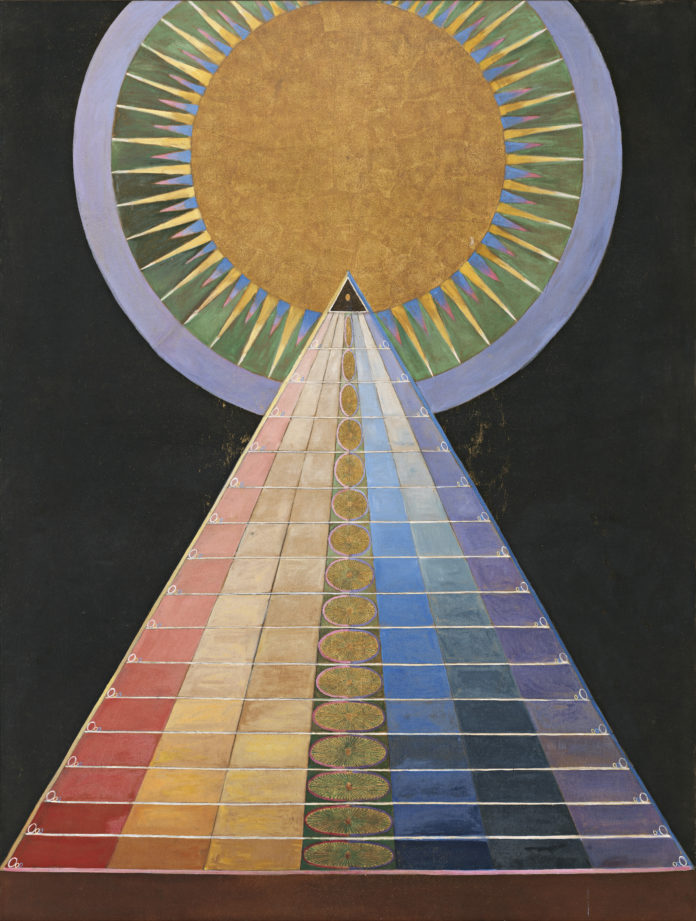
Hilma af Klints
Altarbilder, Grupp X, nr 1. Altarbild, 1915 Olja och bladmetall på duk 237,5 × 179,5 cm HAK187 © Stiftelsen Hilma af Klints Verk

Hilma af Klint: Art as Spiritual Practice and Visionary Communication

Hilma af Klint’s artistic journey represents one of the most remarkable intersections of spirituality and visual art in modern history. Working in near secrecy in early twentieth-century Sweden, af Klint created a body of abstract paintings that predated the recognized pioneers of abstraction by several years, yet her motivations differed fundamentally from those of her male contemporaries. Where Kandinsky, Malevich, and Mondrian sought to express spiritual truths through formal innovation, af Klint understood her art as a form of mediumship—a channel through which higher spiritual beings communicated messages intended for humanity’s spiritual evolution.

Born in 1862 into an upper-middle-class Swedish family with naval connections, af Klint received formal artistic training at the Royal Academy of Fine Arts in Stockholm, one of the first women to do so. She established herself as a competent painter of landscapes, botanical studies, and portraits—work that provided modest income and respectability. Yet this conventional artistic practice concealed a parallel engagement with spiritualism that would ultimately transform her understanding of art’s purpose and her own role as an artist.

The late nineteenth and early twentieth centuries witnessed an extraordinary flourishing of interest in spiritualism, theosophy, and occult practices throughout Europe and America. This was not merely superstition or fringe belief but a serious intellectual and spiritual movement that attracted scientists, artists, writers, and social reformers. The spiritualist movement emerged partly in response to the perceived failures of both orthodox religion and materialist science to address fundamental questions about consciousness, the soul, and humanity’s place in the cosmos. For many, including af Klint, spiritualism offered a third way—a path that acknowledged both empirical investigation and transcendent experience.

In 1896, af Klint joined with four other women—Anna Cassel, Cornelia Cederberg, Sigrid Hedman, and Mathilda Nilsson—to form a group called “The Five” (De Fem). These women met regularly to conduct séances during which they served as mediums, receiving messages and communications from spiritual entities they called the “High Masters.” The group kept detailed records of their séances, documenting the messages received and the various spiritual beings who communicated through them. For af Klint and her companions, these sessions were not entertainment or dabbling but serious spiritual practice aimed at accessing higher knowledge and understanding.

The séances of The Five involved automatic writing and drawing—practices in which the medium’s hand moved without conscious direction, supposedly guided by spiritual entities. Af Klint’s early automatic drawings show abstract forms, symbols, and text that she understood as communications from the spirit world. These drawings are remarkable for their confident execution and complex symbolic vocabulary, suggesting that even at this early stage, af Klint was developing a visual language quite distinct from her conventional artistic work.

In 1904, af Klint reported receiving a communication from a High Master named Amaliel, who would become her primary spiritual guide. Amaliel informed her that she had been chosen to execute a series of paintings on the “astral plane”—works that would visualize spiritual truths and contribute to humanity’s spiritual development. This commission would culminate in “The Paintings for the Temple,” a series of 193 works created between 1906 and 1915 that represents the heart of af Klint’s spiritual-artistic practice.

The circumstances surrounding the creation of “The Paintings for the Temple” reveal af Klint’s understanding of herself as instrument rather than autonomous creator. She claimed that these paintings were dictated to her by spiritual beings, that her hand was guided, and that she often did not understand the full meaning of what she was creating. This assertion challenges fundamental assumptions about artistic authorship, creativity, and intention that have dominated Western art since the Renaissance. Where the Romantic tradition celebrated the artist as individual genius, af Klint positioned herself as medium and servant to higher purposes.

Yet to accept af Klint’s self-understanding entirely would be to overlook the considerable agency, skill, and decision-making evident in the paintings themselves. The works demonstrate sophisticated compositional sense, color theory, and symbolic development. They evolve across series, showing experimentation and refinement. Af Klint may have believed she was receiving guidance, but she was also bringing her own artistic training, visual intelligence, and interpretive framework to bear on whatever visions or intuitions she experienced.

The paintings themselves are visually stunning and conceptually complex. The early works in “The Paintings for the Temple” series, particularly “Primordial Chaos” and the “Group I, The WU/Rose Series,” feature large-scale canvases dominated by spirals, botanical forms, and abstract shapes rendered in luminous colors. These images draw on multiple symbolic systems: theosophy’s understanding of spiritual evolution, botanical growth as metaphor for spiritual development, and geometric forms as expressions of cosmic principles. The spirals suggest cycles, evolution, and the relationship between microcosm and macrocosm. The biomorphic forms evoke both cellular structures visible through microscopes and vast cosmic formations, collapsing distinctions between the infinitely small and the infinitely large.

Af Klint’s color theory reflected both her academic training and her spiritual beliefs. She understood colors as carrying specific spiritual meanings and vibrations. Blues represented the spiritual and masculine principle, yellows and pinks the material and feminine. Her use of color was not decorative but functional—colors were chosen for their spiritual properties and their ability to communicate specific ideas and energies. This approach parallels but differs from Kandinsky’s color theory, which also attributed spiritual properties to colors but emerged from different philosophical and spiritual frameworks.

The symbolic vocabulary af Klint developed across “The Paintings for the Temple” is remarkably consistent and complex. Recurring motifs include the letter “U” (representing the spiritual realm) and “W” (representing the material world), snails (suggesting spiritual evolution and the soul’s journey), swans (representing purity and transcendence), and various geometric forms (circles, triangles, squares) that carried specific theosophical meanings. These symbols were not arbitrary but drawn from theosophy, Rosicrucianism, and other esoteric traditions that af Klint studied intensively.

The scale of af Klint’s ambition becomes clear when we consider the intended context for these paintings. She envisioned them being displayed in a spiral temple, a circular or spiral-shaped building where visitors would encounter the works in a specific sequence designed to facilitate spiritual development and understanding. The paintings were not meant for conventional gallery or museum display but for a sacred architectural setting that would itself embody spiritual principles. This vision was never realized in af Klint’s lifetime, and the paintings remained largely unseen, stored in her studio and later in storage facilities, for decades after her death.

Af Klint’s spiritual sources were diverse and syncretic. She drew heavily from theosophy, the spiritual movement founded by Helena Blavatsky in the late nineteenth century, which combined elements of Eastern religions (particularly Hinduism and Buddhism), Western esotericism, and claims of direct spiritual revelation. Theosophy proposed that all religions contained partial truths pointing toward a universal spiritual reality, and that humanity was evolving spiritually through successive incarnations toward higher consciousness. These ideas profoundly shaped af Klint’s understanding of her artistic mission as contributing to humanity’s spiritual evolution.

She also engaged with Rosicrucianism, an esoteric Christian tradition emphasizing mystical knowledge, alchemical transformation, and the hidden spiritual dimensions of reality. Rosicrucian symbolism—particularly the rose and cross—appears throughout her work, often combined with theosophical and other symbolic systems. This syncretism was characteristic of turn-of-the-century occultism, which freely combined elements from different traditions in pursuit of universal spiritual truth.

Anthroposophy, the spiritual philosophy developed by Rudolf Steiner after his break with the Theosophical Society, also influenced af Klint’s later work. She attended Steiner’s lectures and corresponded with him, though he reportedly discouraged her from showing her abstract spiritual paintings, advising that the world was not yet ready for them. This response must have been disappointing for af Klint, yet she appears to have taken it seriously, including in her will a stipulation that her abstract paintings should not be shown publicly until at least twenty years after her death.

The relationship between af Klint’s spiritual beliefs and her artistic practice raises profound questions about the nature of creativity, inspiration, and artistic authority. Modern art history has generally been uncomfortable with af Klint’s claims of spiritual guidance, preferring to explain her work through formal innovation, unconscious expression, or cultural context while bracketing her explicit spiritual intentions. Yet to fully appreciate af Klint’s achievement, we must take her spirituality seriously as both motivation and methodology.

Af Klint’s practice challenges the modern Western distinction between religious/spiritual experience and artistic creation. In many spiritual traditions, art-making is itself a spiritual practice—whether in Tibetan sand mandalas, Islamic calligraphy, or icon painting. Af Klint worked within this understanding, approaching painting as spiritual discipline, her studio as sacred space, and her works as objects of spiritual power and pedagogical tools for spiritual development.

The question of whether af Klint’s spiritual experiences were “real” in any objective sense misses the point. What matters is that she experienced them as real, structured her life and work around them, and produced extraordinary art as a result. Whether we understand her visions as genuine communications from spiritual entities, expressions of unconscious creative processes, or some combination thereof, the paintings themselves remain as evidence of a remarkable consciousness engaged in sustained exploration of non-ordinary states and their visual expression.

Af Klint’s gender is inseparable from her spiritual practice and its reception. Spiritualism and theosophy offered women opportunities for religious authority and leadership that conventional churches largely denied them. Women served as mediums, founded spiritual movements, and claimed direct access to divine knowledge without requiring male intermediaries. The Five’s practice was entirely woman-centered, creating space for spiritual exploration free from male authority or skepticism. Yet this same association with women and femininity contributed to the marginalization and dismissal of spiritualism by male-dominated institutions, both religious and scientific.

The fact that af Klint’s work remained unknown for decades reflects not only her own wishes but broader patterns of gender exclusion in art history. Male abstract pioneers were celebrated, theorized, and canonized while af Klint’s earlier and arguably more radical abstractions languished in storage. When her work finally began to receive attention in the 1980s and particularly after a major 2013 exhibition in Stockholm, it necessitated significant revision of modernism’s standard narratives.

Contemporary reception of af Klint’s work varies considerably. Some viewers are drawn precisely to the spiritual dimensions, finding in her paintings visual expressions of transcendent truths or non-ordinary states of consciousness. Others appreciate the formal qualities while remaining agnostic or skeptical about the spiritual content. Still others are primarily interested in how af Klint’s example disrupts art historical narratives and raises questions about gender, authorship, and the definitions of abstraction.

The current popularity of af Klint’s work coincides with renewed interest in spirituality, consciousness studies, and non-Western epistemologies in contemporary culture. In an era skeptical of both religious orthodoxy and purely materialist worldviews, af Klint’s synthesis of spiritual seeking and artistic innovation resonates with many who are exploring alternative frameworks for understanding consciousness and reality.

Af Klint’s legacy extends beyond art history to broader conversations about women’s spiritual authority, the relationships between art and spirituality, and the nature of creativity itself. Her practice suggests that artistic innovation need not emerge from individual genius alone but can arise from practices of receptivity, surrender, and collaboration—whether with other humans, as in The Five, or with whatever forces or dimensions of consciousness she accessed through mediumship.

The paintings themselves, regardless of their origins, reward sustained attention. They are visually complex, emotionally resonant, and intellectually provocative. Their combination of geometric precision and organic flow, their luminous colors and symbolic density, their monumental scale and intimate detail—all create viewing experiences that are genuinely transformative for many who encounter them. Whether one attributes this power to spiritual forces, artistic genius, or some interplay of conscious and unconscious processes, the effect remains.

Hilma af Klint died in 1944 at age 81, having spent her final years organizing her archive, writing extensively about her spiritual experiences and artistic process, and ensuring that her wishes regarding the eventual display of her work would be honored. She left behind not only the paintings but extensive notebooks, writings, and documentation that provide remarkable insight into her spiritual development and artistic intentions.

Her story reminds us that the history of art contains many suppressed narratives, that genius takes forms unrecognized by dominant institutions, and that the boundaries between artistic practice and spiritual seeking are more porous than modern secularism acknowledges. Af Klint pursued her vision with remarkable dedication, creating a body of work that challenges, inspires, and continues to generate new understandings of what art can be and do. In treating her art as spiritual practice and spiritual practice as art, she achieved a unity of purpose that remains rare and exemplary, inviting us to consider the deepest sources of creativity and the highest aspirations of artistic endeavor.
Daniel Minter: To Be Aware – Interview with

Daniel Minter

Daniel Minter: To Be Aware – Interview with

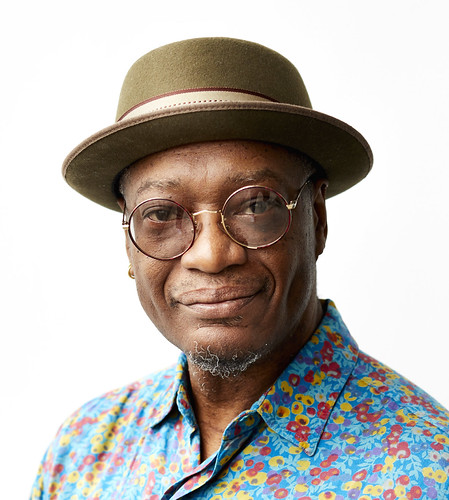
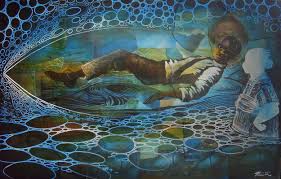
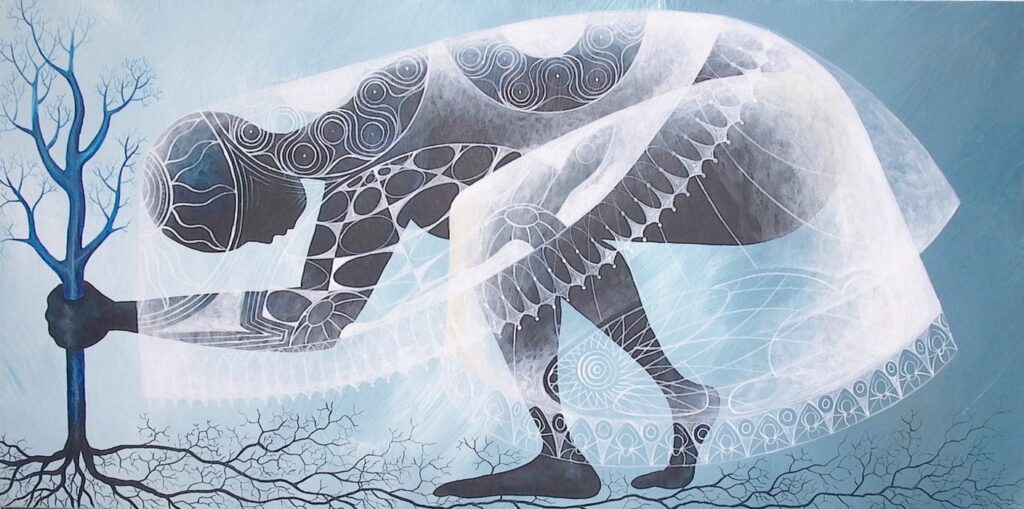
Daniel Minter is an acclaimed artist known for his work in painting and assemblage. His practice consistently engages themes of displacement and diaspora, the ordinary and extraordinary dimensions of Black life, spirituality within the Afro-Atlantic world, and the ongoing construction of meaning around the idea of home.

Minter has exhibited extensively at major institutions, including the Portland Museum of Art, Seattle Art Museum, Tacoma Art Museum, Bates College Museum of Art, the Center for Maine Contemporary Art, Bowdoin College Art Museum, and the Northwest African American Art Museum, among many others. He is the recipient of the prestigious Joyce Award and the Caldecott Medal (both in 2021). In addition, Minter has illustrated more than fifteen children’s books, many of them award-winning, including titles that received the Coretta Scott King Illustration Honor. He was also commissioned in 2004 and 2011 to design Kwanzaa stamps for the U.S. Postal Service.

Daniel Minter

For over fifteen years, Minter has worked to raise awareness of the forced removal in 1912 of an interracial community on Malaga Island, Maine. His research-based and community-engaged work on the subject emerged through sustained collaboration with descendants, archaeologists, anthropologists, and scholars. This dedication played a pivotal role in the island’s designation as a public preserve.

Minter is the co-founder of Indigo Arts Alliance in Portland, Maine, a nonprofit organization dedicated to cultivating the artistic development of people of African descent. To date, the organization has hosted more than twenty-eight Black and Brown artists from around the world.

Born in Georgia, Daniel Minter is based in Portland, Maine. He is a graduate of the Art Institute of Atlanta and holds an Honorary Doctorate of Arts from Maine College of Art & Design.

Please consider supporting this project with a monthly contribution at https://www.lightsoutgallery.org/donate

Daniel Minter
Daniel Minter

Transcript

Intro

The way I feel when I’m working—that’s a good question. I need to think about that before I really answer it. If I want to answer it truthfully, I could make something up, but if you want a true answer, I need to think about it. Because when I’m working, I’m not so concerned about how I’m feeling. It’s almost as though I’m simply trying to be a good conduit.

I know that when I’m not a good conduit, I feel frustration. But when I am being a good conduit, I’m not exactly sure how to describe what I feel. What I really want to channel is my ancestors.

I really want to speak for them, or I want them to know that I know of their existence. I want them to know that they have projected into the future, their being.

Projecting Into the Future

I try to do that in my work. I don’t know whether it happens or not, and I don’t know what that looks like in reality. I only know how I imagine it, and I try to incorporate something of that into almost everything that I do.

Hopefully, by the time I’m done with my work—and when I say done, I mean when I join the ancestors—I will have contributed something that is older than I am, and something that can project into the future.

The Ancestors

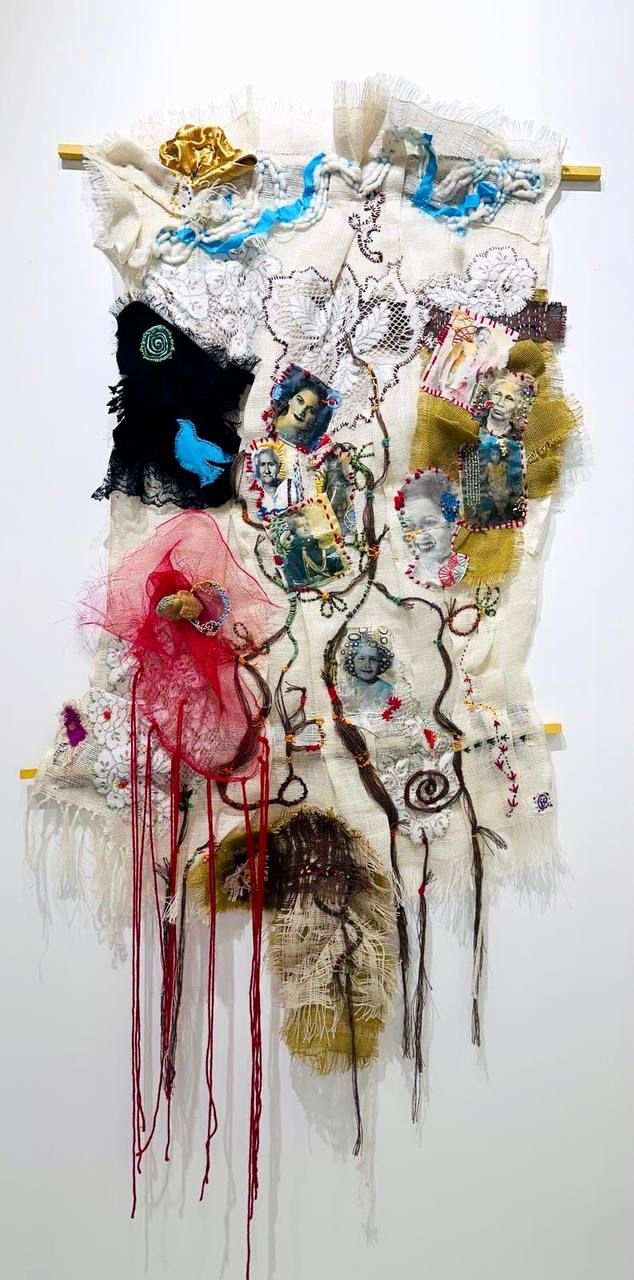
We see multiple worlds at once. African Americans see multiple worlds simultaneously. Everything we look at, we see more than one layer. It’s key to our survival to be aware of that. That is one of the reasons I always make that stare, that seeing, to denote that all is seen.

I don’t really think of them as portraits. They are people who are familiar, but some of them are actual ancestors.

Zora Neale Hurston

The one over there in the green hat is Zora Neale Hurston. Her writing was about the people in her community, the people around her, and she expanded that community to include the African diaspora.

She went to school to study anthropology in order to learn more about her people, because in anthropological studies we were routinely ignored and belittled. We were only viewed within the realms of eugenics, and anthropology was often used to support those ideas.

She wanted to study the culture that we practiced and lived by. She was not really respected as an anthropologist. She died very poor. Her papers and works were almost discarded, and many of them were.

But she had a huge impact on people who came a generation after her. Alice Walker was influenced by her. Toni Morrison’s work was influenced by Zora Neale Hurston. But she never got to see any of that.

I want her to know that her work was impactful on me, that her work made a difference in my life, in the way I view the world, the way I view the people around me, my community, and the value I place on it.

That piece of Zora functions as a work about ancestors, but they are not portraits. Even though it looks like her, it’s not a portrait.

Art

I started doing artwork before I started school. I drew and made things. I always knew that this was a huge part of the way I connected to the world and understood it. I’ve always felt that this was my most effective way of communicating.

I grew up in south Georgia, in a very small town. People had an appreciation that this was what I did, and that was part of how they knew who I was—through the things I made. People in that community always knew that about me, and I’ve always appreciated that.

I went from drawing with charcoal from the fireplace to drawing in the dirt outside. I didn’t see those things as very different. What mattered was making the mark. The only reason I’m not doing that is if something is keeping me from it. Otherwise, I’m always drawing, carving, making something, or thinking about it.

Process and Observation

The things I gravitate toward most are the things I don’t recognize at first, or things that surprise me. When I walk through the woods, the shapes of certain branches attract me. Even a particular sound may attract me.

I enjoy that simple novelty—a shape that can be multiple things, a shape that needs context to be understood. A shape can change with the addition of other objects or ideas.

You need the power of another word to activate the first word. You need modifiers and adjectives to add clarity and emphasis. There is an abundance of material everywhere you go. All you have to do is walk outside. There are branches, trees, dirt—there is always material to work with.

What is not plentiful is time.

Advice to news artists

When the work is being shown, I have to stop working and get it up there. That changes things, because people coming to see it have certain expectations of the work and of me. I have to prepare. I have to stop the growth of the work while it’s being exhibited.

I’ve been doing this since before I started school. I don’t attribute the way I think about art to school. I attribute it to the way I grew up and to my community. That’s where this way of thinking came from.

Going to school didn’t change it. I didn’t lose it.

My advice to a young artist might sound dated, but I believe that any young person who wants to be an artist has to spend time with people outside their age group if they want to learn how to interpret the world around them.

Those people are always there. If you ignore them, your view of the world will be flawed. If you can’t communicate with them, your communication will be flawed. I feel lucky that I had people in my life from different generations. They helped me understand what I want to do with my artwork.

Source: Lightsoutgallery.org & Danielminter.net

Lights Out Gallery

“We are young, passionate, feet-on-the-ground dreamers, inviting creative spirits and angelic muses to guide us so Maine may always be the artiest, most lovable place in America. Amen.”

Founded in 2019 by friends and collaborators Reed Stone McLean, Daniel Sipe, and Karlë Woods, Lights Out Gallery has worked tirelessly to promote art in Maine. Incorporated as a 501c3 nonprofit in 2021, the organization’s mission centers on expanding what is possible in Maine as a contemporary arts destination in conversation with regional, national, and international arts. Lights Out has pursued its mission through the work of documenting and exhibiting the work of Maine artists, and by building a rural community arts center that is rapidly becoming a regional hub for art and artists.

✷ 10 Tannery Street, Norway, ME 04268
[email protected]
✷ 207.227.0159

Eduardo Planchart Licea

Eduardo Planchart Licea

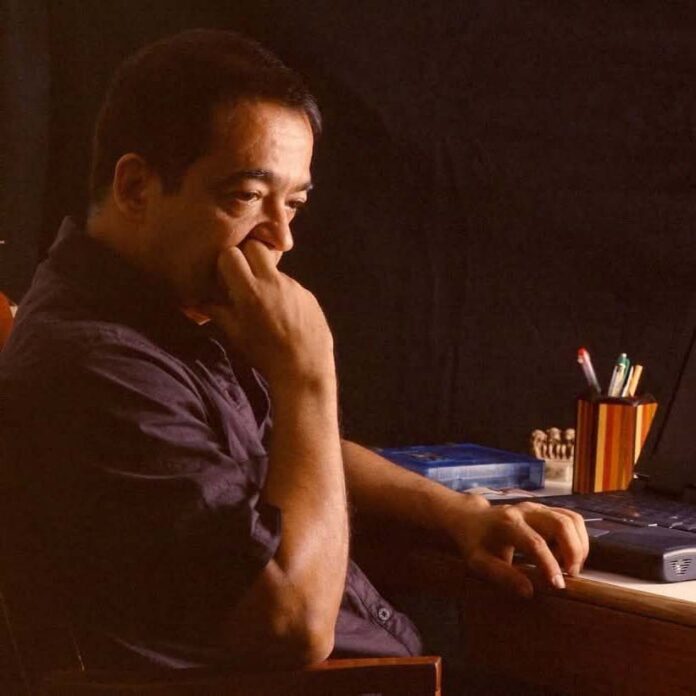
El Dr. Eduardo Planchart Licea es un reconocido filósofo, historiador, curador y crítico de arte venezolano con un doctorado en Historia del Arte Latinoamericano.
Ha publicado numerosos libros y ensayos sobre arte y cultura, y ha trabajado como columnista y crítico de arte para diversos medios impresos y digitales.
Su trabajo se ha centrado en el análisis y la difusión del arte venezolano y latinoamericano, y ha sido un importante promotor del diálogo y la reflexión en torno a la creación artística.
Algunos de los libros de Eduardo Planchart Licea son :
* La figuración actual de O. Vigas (II)
* La universalidad del arte de O.Vigas
* Reclama el artista del Tisure
* El arte indígena en Venezuela
* La revolución de la contemporaneidad

Eduardo Planchart Licea (1954): Es magíster en filosofía Latinoamericana en la USB de Venezuela y PhD de la UNAM, México en Historia de Arte Latinoamericano. Ha desempeñado funciones como curador e investigador en el MACC, Mujabo, Museo Cruz Díaz, Cenaf, Fototeca de Barquisimeto Y diversas galerías y museo a lo largo del paìs.

En Venezuela como la Galerìa Freites, Ascaso, Astrid Paredes en espacios públicos como el Orinoco Mall en Puerto Ordaz ha realizado más de 90 curadurías en Venezuela, México, Puerto Rico, Curazao,Francia y Japón. Ha escrito más de veinte libros de arte y sigue investigando nuevos proyectos, escritor de novelas como: El Mago de la Niebla, Hacedor de Santos y La Búsqueda.

En Memoria de Eduardo Planchart Licea: Un Guardián del Arte Venezolano y Forjador de Visiones
Hoy, con un profundo sentimiento de pérdida, la comunidad artística y cultural de Venezuela despide al Dr. Eduardo Planchart Licea. Su partida deja un vacío inmenso, pero su brillantez intelectual, su dedicación incansable y su profunda sensibilidad como curador de arte, investigador y visionario, permanecerán grabadas en la memoria de quienes tuvimos la fortuna de conocerlo y colaborar con él.
La huella de Eduardo en el panorama cultural venezolano es vasta y multifacética. Más allá de su monumental trabajo de registrar y catalogar casi 2000 obras de la Maestra Luisa Richter, su curiosidad intelectual lo llevó a explorar y documentar con rigor otras figuras y movimientos esenciales. Sus investigaciones sobre Oswaldo Vigas, Gaudi Esté y Juan Félix Sánchez, así como su profundo interés en el Arte Popular, revelan la amplitud de su mirada. Su compromiso con el acervo artístico también se extendió al estudio de la escultura en diversos materiales, dejando valiosas contribuciones a la comprensión de este campo.
Personalmente, siempre llevaré en mi corazón un inmenso agradecimiento por el impacto transformador que Eduardo tuvo en mi vida y en mi formación. Fue en la década de 2000, en el espacio sagrado de mi amada tutora y profesora, Luisa Richter, donde tuve el privilegio de encontrarme con él. Allí, inmerso en su vasto universo de conocimiento, Eduardo irradiaba una pasión y una erudición contagiosas. Cada conversación que presencié, cada detalle de su meticuloso trabajo y cada faceta de sus diversas investigaciones, fueron lecciones invaluables. Fue a través de su mirada experta y su profundo entendimiento del arte en sus múltiples expresiones que mi sensibilidad se afinó y mi ojo crítico se forjó. Eduardo no solo analizaba obras; él nos enseñaba a ver más allá de la superficie, a cuestionar, a sentir la esencia misma de la creación en todas sus manifestaciones.
Un Mentor y Socio Visionario
Pero su influencia trascendió la mentoría y la investigación. La confianza que depositó en mí no solo impulsó mi crecimiento, sino que nos unió en un proyecto concreto de gran envergadura. Eduardo Planchart Licea no solo fue un guía y un erudito; fue mi socio, cofundador de la galería Impulsarte. Juntos compartimos la visión y el esfuerzo de crear un espacio dedicado al arte, un testimonio de su espíritu emprendedor y de su creencia en las nuevas iniciativas. Él me brindó la oportunidad y la confianza para perseguir mis objetivos, para atreverme a incursionar y “lograr mi objetivo de impulsarme” en el camino que hoy transito.
El Dr. Eduardo Planchart Licea fue mucho más que un profesional excepcional; fue un mentor, un guía y una fuente inagotable de inspiración y colaboración. Su dedicación incansable y su invaluable apoyo en la creación de Galería Impulsarte Impulsarte_galería dejan una huella imborrable. Que su legado de rigor intelectual, pasión, humanismo y visión emprendedora continúe inspirando a las futuras generaciones a mirar el mundo del arte con la misma curiosidad, profundidad crítica y amplitud de miras que él nos enseñó.
Descanse en paz mi querido profe !

Actualmente sigue escribiendo e investigando y realizando curadurías de artista que publica en Analítica. Com y el Diario Primicia y portales de Mèxico y Miami, trabajó por más de 15 años como ensayista de arte y cultura en el Universal, El Diario de Caracas, El Mundo, El Globo Últimas Noticias. Certifica y evalúa obras de arte y fotografías.

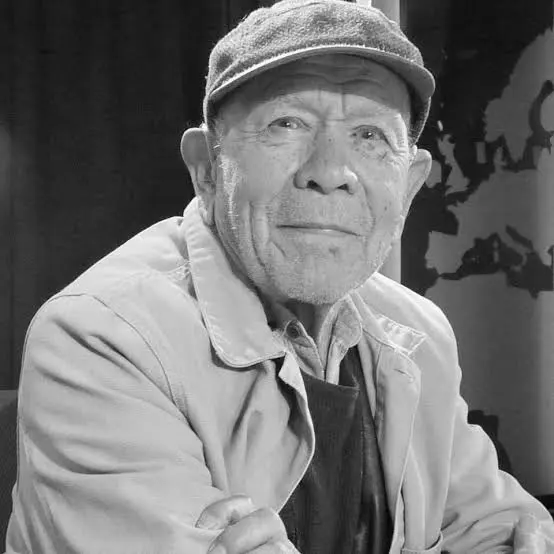
Entrevista al maestro Asdrúbal Colmenárez por el historiador y curador Eduardo Planchart Licea

Asdrúbal Colmenárez
Asdrúbal Colmenárez

Entrevista al maestro Asdrúbal Colmenárez por el historiador y curador Eduardo Planchart Licea

ASDRUBAL COLMENARES-DIALOGOS NOMADAS

Ciclo de VIDEOENTREVISTAS realizadas por Galería Medicci, Caracas

Marie Franco: A primera luz

Marie Franco

Marie Franco: A primera luz

Stories of Labor, Light, and Resilience in the Flea Market

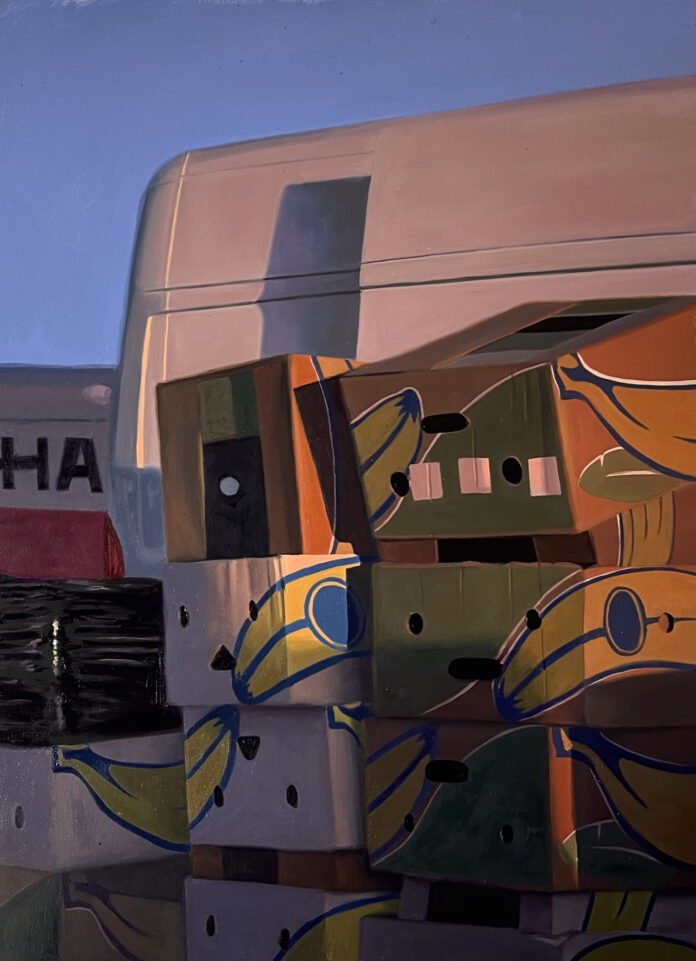
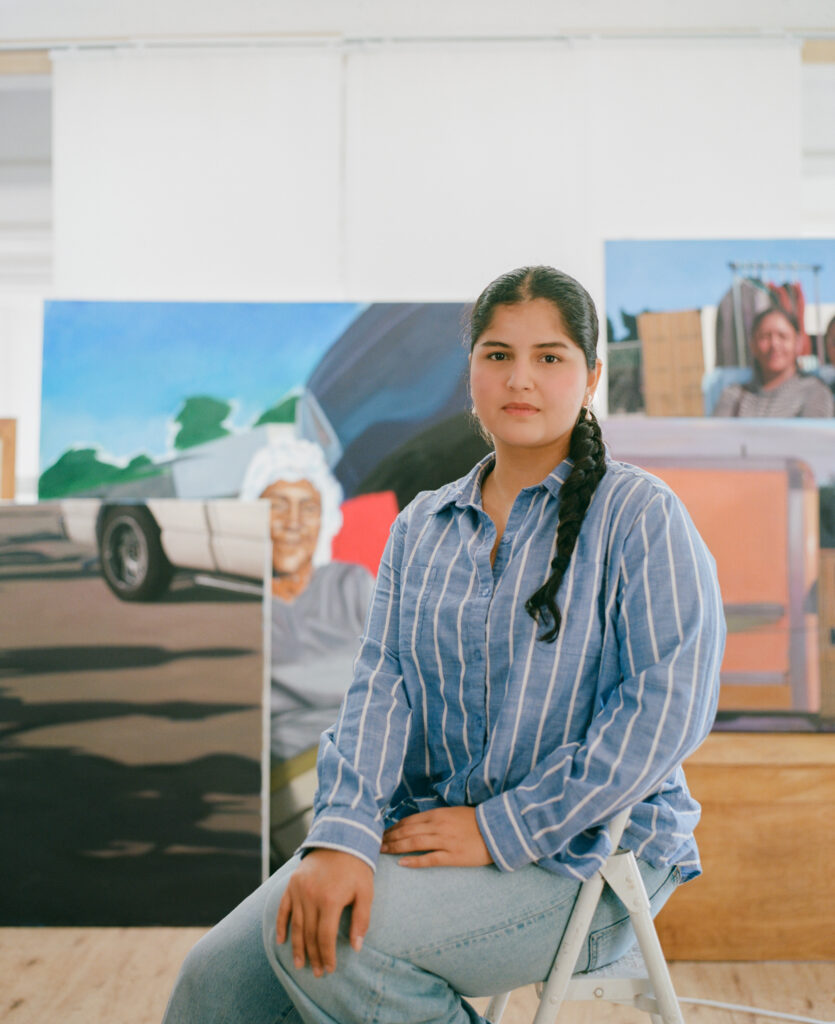
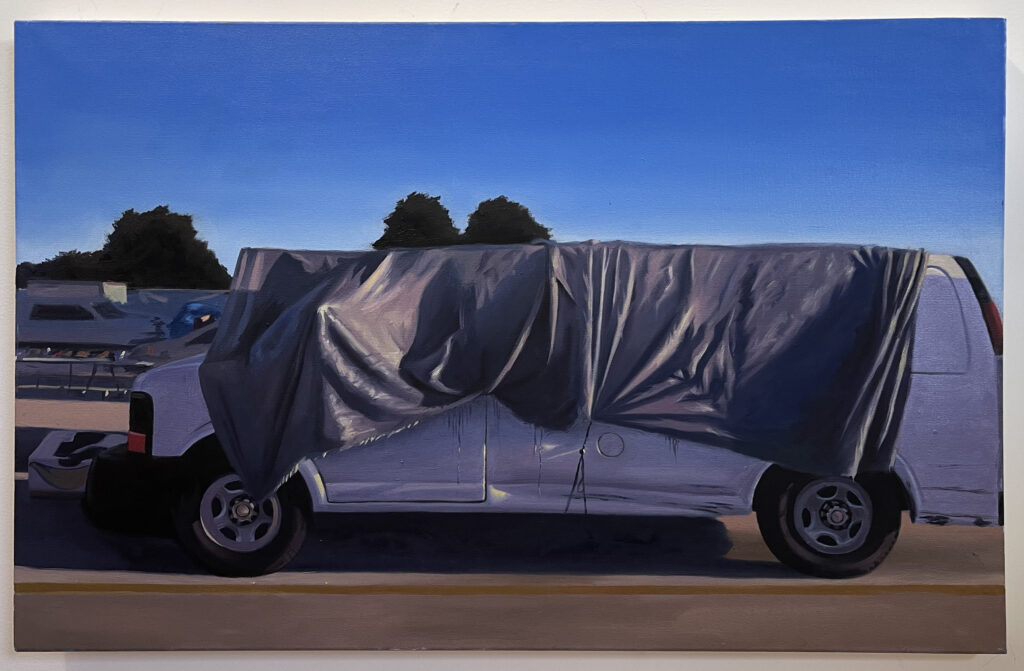
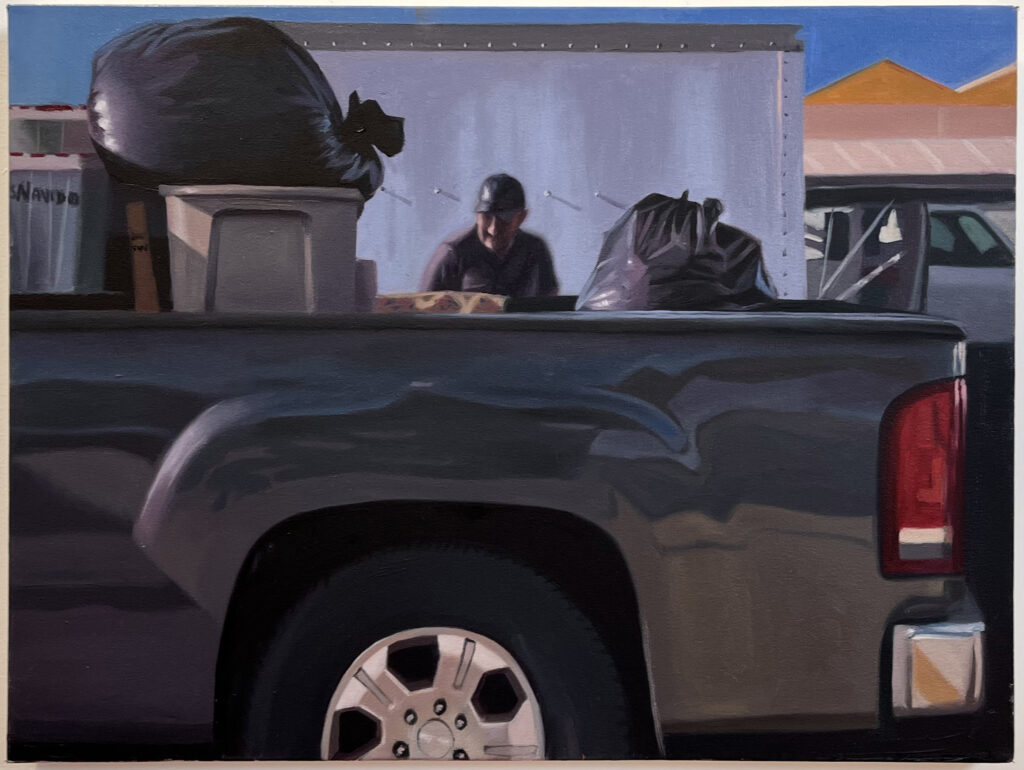
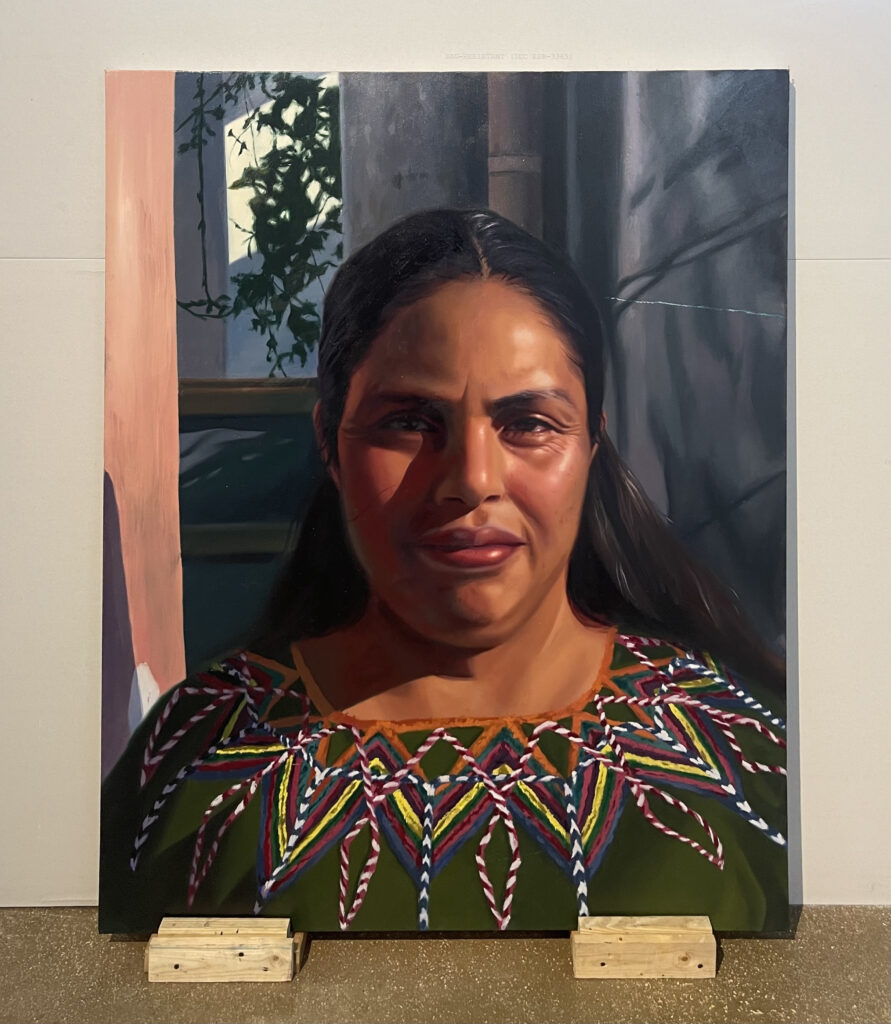
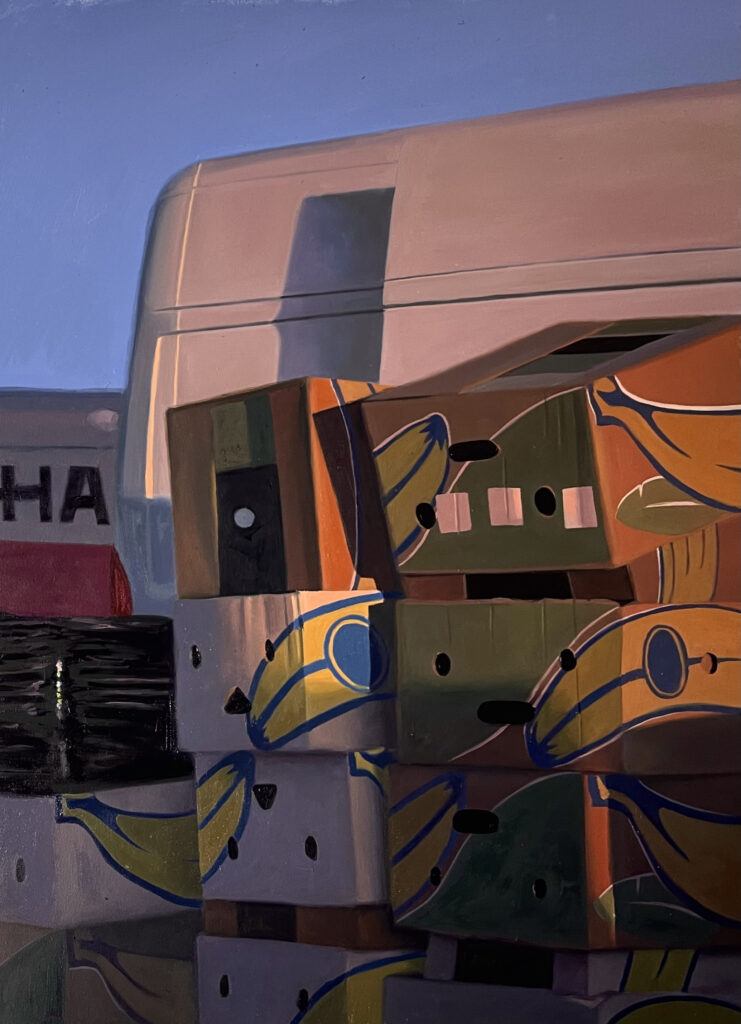
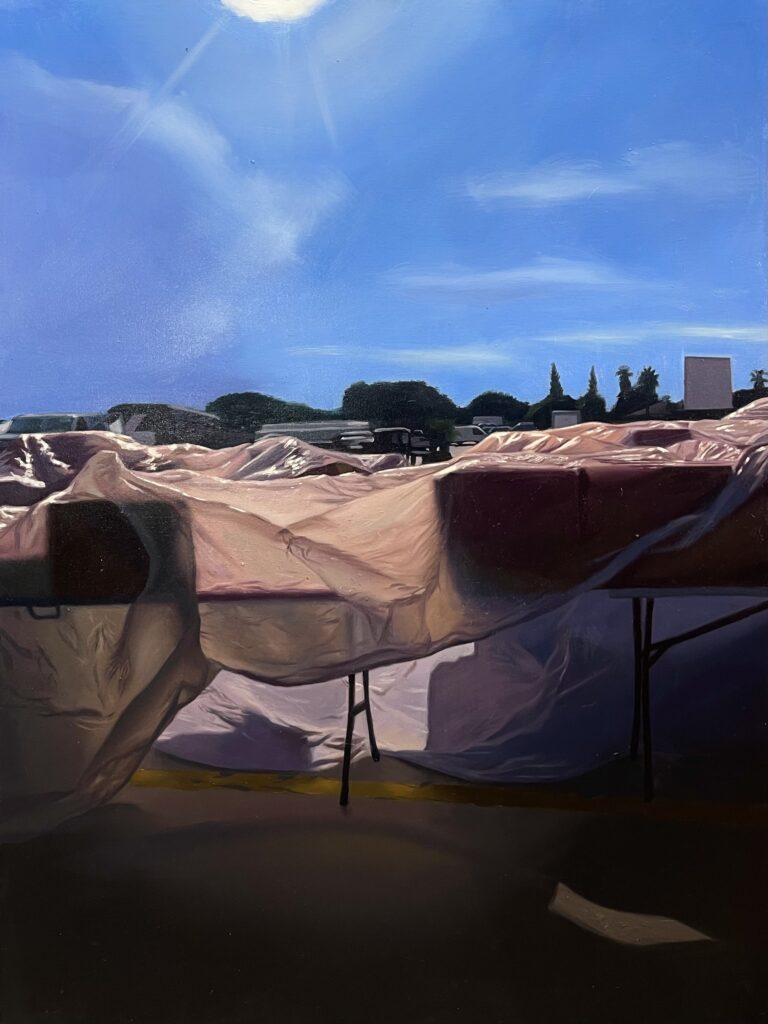
Marie Franco explores how personal experiences as a Venezuelan immigrant shaped their portrayal of Latinx communities in flea markets and swap shops. The conversation examines the intersection of labor, memory, and belonging in spaces often overlooked by institutions. Franco reflects on painting as storytelling, the symbolic significance of dawn as renewal and migration, and the strategic use of shadows to balance visibility with protection. The work seeks to create entry points for underrepresented communities while honoring their dignity and daily persistence.

Marie Franco
Marie Franco

AMM. Your work is deeply rooted in the lived Latinx immigrant experience, especially in community-driven spaces like flea markets. How did your own personal or family story shape the emotional tone of A primera luz?

MF.  My personal history is directly tied to this work. When my family first moved to Florida, my mom was a vendor at the Fort Lauderdale Swap Shop. The Ft. Lauderdale Swap Shop was my first introduction to this country as a Venezuelan child. In South Florida, it’s just my parents and me, and over time, the other vendors became our found community. That space shaped the way I understand belonging.

AMM. There is a tender realism in your paintings that captures both motion and memory. As an artist, where do you see the balance between documenting reality and interpreting it? Are you painting what is seen, or what is felt?

MF.  I see painting as a form of storytelling. Detail and resemblance are tools for telling that story, not ends in themselves. While my work draws from what I see, it also interprets the rhythm of a place, the warmth between people, the layers of memory that shape every gesture. I’m interested in the balance between realism and emotion, where what’s visible becomes a bridge to something more internal.

AMM. Flea markets, swap shops, food carts—these are not just economic zones but cultural containers. Do you view these spaces as platforms of resistance, expressions of belonging, or both?

MF.  For me, flea markets are first and foremost spaces of belonging. They’re places where people build community, sustain their families, and share culture. What draws me most is how these spaces allow people to show up fully as themselves, surrounded by others who understand their rhythm of life.

AMM. In this exhibition, the labor of waking early and “making it work” speaks through every brushstroke. How does the repetition and rigor of daily work translate formally into your painting of textures, gestures, and light?

MF.  The repetition of daily labor in the early mornings, the routines translates directly into my process. I think a lot about light in that sense: dawn as a signal of labor beginning again. The act of painting those moments mirrors that repetition. Layering textures, revisiting gestures it’s a way of honoring the work and persistence that define these communities.

Marie Franco

AMM. The title references dawn, beginnings, and first awakenings—literal and metaphorical. What was the symbolic weight of that phrase for you, and how did it shape the curation and sequencing of the works in the show?

MF.  A primera luz felt like the perfect phrase for what I wanted to express. Sunrise, for me, is both hope and renewal, another chance, another day. It also connects deeply to migration, to the idea of beginning again somewhere new. In nature, migration is as natural as the sun. That symbolism shaped the sequencing of the show, moving from moments of stillness to scenes filled with energy, like a day unfolding.

AMM. You’ve stated that your work is for—and about—communities that are often unseen or underrepresented in institutional spaces. How do you create visual entry points in your work that are equally inviting to both those inside and outside the experience?

MF.  I think a lot about who gets to see themselves represented in art spaces. I often focus on the image of a person on their scale, presence, and dignity. When someone from my community sees themselves reflected in a large painting, they deserve to feel welcomed in that space. I know many people hesitate to enter galleries, so I hope my paintings can act as an open door, a point of entry for those who might not usually feel invited in.

AMM. In your work, shadows play a key role—not only as formal elements but for their metaphorical weight: presence and absence, memory and territory. What do shadows represent in your artistic practice, and how do they interact with the stories emerging in your paintings?

MF.  Shadows have become a powerful tool in my practice. Sometimes, I use them for security and anonymity to protect the identities of the people I’m referencing. There’s always a balance between visibility and safety when representing immigrant stories. Shadows allow me to express presence without full exposure, to honor memory while maintaining care. They’re both metaphor and method: a way to hold space for those who are seen and unseen.

Art Supplies Essential Guide: Canvas, Paints & Brushes

Art Supplies Essential Guide for: Canvas, Paints, Brushes & Tools

Art Supplies Essential Guide: Canvas, Paints, Brushes & Tools in Miami, FL

Choose Your Ultimate Art Supply Store: Only the Best for Your Creative Vision

Your tools define your craft. Whether you’re painting a masterpiece, sketching ideas, or building your next visual statement, you deserve the best. Don’t settle for average — elevate your art with premium supplies from the top brands trusted by professionals worldwide. From elite brushes and archival paints to precision-crafted canvases and cutting-edge tools, it’s time to gear up with excellence.

Ready to transform your artistic potential? Start by choosing the right art tools store — your creativity deserves it.

  • Blick Art Materials
  • Jerry’s Artarama
  • id art Supply
  • Michaels Stores

1. Introduction: The Foundation of Artistic Expression

2. Canvas: Choosing Your Surface

  • 2.1 Stretched Canvas
  • 2.2 Canvas Panels and Boards
  • 2.3 Canvas Rolls
  • 2.4 Linen vs. Cotton Canvas
  • 2.5 Primed vs. Unprimed Canvas
  • 2.6 Alternative Surfaces

3. Types of Paints: Understanding Your Medium

  • 3.1 Oil Paints
  • 3.2 Acrylic Paints
  • 3.3 Watercolor Paints
  • 3.4 Gouache
  • 3.5 Tempera
  • 3.6 Encaustic
  • 3.7 Specialty Paints

4. Brushes: The Artist’s Primary Tool

  • 4.1 Natural Hair Brushes
  • 4.2 Synthetic Brushes
  • 4.3 Brush Shapes and Their Uses
  • 4.4 Specialty Brushes
  • 4.5 Brush Care and Maintenance

5. Essential Tools and Accessories

  • 5.1 Palette and Palette Knives
  • 5.2 Easels
  • 5.3 Mediums and Solvents
  • 5.4 Varnishes and Fixatives
  • 5.5 Measuring and Drawing Tools
  • 5.6 Storage and Organization

6. Conclusion: Building Your Personal Arsenal

1. Introduction: The Foundation of Artistic Expression

The relationship between an artist and their materials is intimate and essential. While vision and skill drive the creative process, the physical supplies an artist chooses can profoundly influence the character of their work, the ease of their practice, and even the longevity of their finished pieces. Understanding creative materials is not merely a practical concern but a fundamental aspect of artistic education, one that connects contemporary creators to centuries of craft tradition and technical innovation.

The world of painter’s toolkit can seem overwhelming to beginners, with endless options and technical specifications that may appear arcane or unnecessarily complex. Yet each type of canvas, paint formulation, and brush design emerged from real artistic needs and continues to serve specific purposes. An oil painter working in thick impasto requires different tools than a watercolorist creating delicate washes, just as a plein air landscape artist has different considerations than a studio portrait painter. This essay explores the three fundamental categories of studio-grade supplies: canvas and painting surfaces, types of paints, and brushes and tools, providing a comprehensive guide to help artists make informed choices about the materials that will bring their visions to life.

2. Canvas: Choosing Your Surface

2.1 Stretched Canvas

Stretched canvas represents the most traditional and popular painting surface for oil and acrylic painters. This consists of fabric stretched taut over a wooden frame, known as stretcher bars, and secured with staples or tacks. The tension creates a responsive, slightly flexible surface that many artists find pleasant to work on, as it provides a subtle give under the brush that rigid surfaces cannot match.

Stretched canvases come in standard sizes, though custom dimensions can be ordered or created by hand. The depth of the stretcher bars varies, with traditional profiles measuring about three-quarters of an inch deep, while gallery-wrapped canvases feature deeper bars, typically one and a half inches or more, allowing the painting to be displayed without a frame. The corners of quality stretcher bars include keys or wedges that can be tapped deeper into the corners to re-tighten the canvas if it becomes loose over time due to humidity changes.

2.2 Canvas Panels and Boards

Canvas panels offer a rigid alternative to stretched canvas, consisting of canvas fabric glued to a sturdy backing of cardboard, wood, or medium-density fiberboard. These panels are economical, easy to store and transport, and provide a firm surface that some artists prefer, particularly for detailed work or outdoor painting where a stable support is advantageous.

Canvas boards are particularly popular among students and artists working in series, as they can be stored flat without risk of damage to the painted surface. However, they lack the slight spring of stretched canvas and cannot be restretched if they warp, which can occur with lower-quality boards exposed to moisture. Despite these limitations, canvas panels remain an excellent choice for studies, plein air work, and artists who prefer the control of a completely rigid surface.

2.3 Canvas Rolls

For artists who prefer to prepare their own surfaces or work on very large scales, canvas sold by the roll offers maximum flexibility and economy. Purchasing canvas in rolls allows artists to cut custom sizes, stretch their own canvases, or work on unstretched fabric that can be mounted later. This approach is common among muralists, artists working in non-traditional formats, and those who find commercial pre-stretched canvases limiting.

Working with canvas rolls requires additional investment in stretcher bars, staple guns, and canvas pliers, along with the skill to stretch the fabric evenly and tightly. However, the ability to control every aspect of the surface preparation appeals to artists who want complete control over their materials, and the cost savings can be substantial for those working on large or numerous pieces.

2.4 Linen vs. Cotton Canvas

The two primary fibers used for artist canvas are linen and cotton, each with distinct characteristics that affect both the working experience and the painting’s longevity. Linen, made from flax fibers, has been the traditional choice for serious painters for centuries. It is stronger, more durable, and less prone to expansion and contraction with humidity changes than cotton. Linen’s natural texture is more irregular and interesting, providing a toothy surface that holds paint beautifully. However, linen is significantly more expensive than cotton, which can be prohibitive for students or artists working on large scales.

Cotton canvas, particularly cotton duck, offers an excellent and economical alternative. While not as strong as linen, quality cotton canvas is perfectly adequate for most painting applications and is the standard choice for many professional artists. Cotton’s surface is typically more uniform than linen, which some artists prefer, while others find it less characterful. The weight of canvas, measured in ounces per square yard, indicates its thickness and durability, with heavier weights providing more substantial surfaces.

2.5 Primed vs. Unprimed Canvas

Most commercially available canvas comes pre-primed with gesso, a white primer that seals the fabric and creates a suitable surface for paint application. Traditional gesso was made from rabbit skin glue and chalk, but modern acrylic gesso has largely replaced it due to its convenience and flexibility. Primed canvas is ready to use immediately, saving artists considerable preparation time.

Unprimed canvas, also called raw canvas, allows artists to apply their own primer or to work directly on the fabric for particular effects. Some artists prefer to apply multiple coats of their preferred primer, controlling the absorbency and texture of the final surface. Oil painters traditionally use oil-based primers, while acrylic primers work for both acrylic and oil paints. Working on unprimed canvas is also an option, particularly for certain contemporary techniques, though oil paint applied directly to fabric will eventually rot the fibers unless a barrier is created.

2.6 Alternative Surfaces

Beyond traditional canvas, artists work on numerous other surfaces. Wood panels, particularly birch plywood and maple, offer smooth, rigid supports favored by many contemporary realists. Paper, especially heavyweight watercolor paper, serves watercolorists and gouache painters. Metal, particularly aluminum and copper, provides unique surfaces for specific techniques. Glass, plastic, and even unconventional materials like leather or fabric have been employed by experimental artists seeking particular visual or conceptual effects. Each surface presents different challenges and opportunities, encouraging artists to think beyond convention.

3. Types of Paints: Understanding Your Medium

3.1 Oil Paints

Oil paint, composed of pigments suspended in drying oils such as linseed, walnut, or safflower oil, has been the dominant medium of Western painting since the Renaissance. Its slow drying time, typically ranging from days to weeks depending on pigment and thickness, allows for extended working periods and subtle blending directly on the canvas. The richness and depth of color achievable with oils, along with the medium’s flexibility in application from thin glazes to thick impasto, has made it the choice of countless master painters.

Oil paints can be thinned with solvents like turpentine or odorless mineral spirits, or mixed with various mediums to alter drying time, texture, and finish. The technique of layering thin transparent colors over opaque underlayers, known as glazing, achieves luminous effects difficult to replicate in other media. However, oil painting requires patience, proper ventilation due to solvent fumes, and understanding of fat-over-lean principles to ensure proper drying and prevent cracking. The romance and tradition of oil painting continue to attract artists despite these technical demands.

3.2 Acrylic Paints

Acrylic paints, invented in the mid-twentieth century, consist of pigments suspended in acrylic polymer emulsion. They dry through evaporation of water, becoming water-resistant and permanent within minutes to hours. This fast drying time is both an advantage and a challenge: it allows rapid layering and quick completion of works, but it prevents the extended blending possible with oils and can make it difficult to achieve smooth gradations.

Acrylics are extraordinarily versatile, capable of mimicking watercolors when heavily diluted or oils when used thickly, and they adhere to almost any non-greasy surface. They produce no toxic fumes, clean up with water, and remain flexible when dry, resisting cracking. The development of slow-drying acrylic mediums and retarders has addressed some of the challenges of rapid drying, while heavy-body acrylics provide the texture sought by painters accustomed to oil’s consistency. For contemporary artists seeking a non-toxic, fast-drying alternative to oils, acrylics have become indispensable.

3.3 Watercolor Paints

Watercolor, one of the oldest painting mediums, consists of pigments bound with gum arabic and diluted with water. The defining characteristic of watercolor is its transparency, as colors are built up through layers of translucent washes that allow light to reflect through the pigment from the white paper beneath. This luminosity gives watercolor its distinctive ethereal quality, though it also demands careful planning, as dark colors cannot be easily lightened once applied.

Watercolors come in pans, which are dried cakes of paint that must be activated with water, or tubes containing moist paint. Professional-grade watercolors contain higher pigment concentrations than student grades, resulting in more intense colors and better lightfastness. The technique requires understanding of water control, as too much water creates uncontrollable bleeding while too little prevents smooth washes. Mastering watercolor demands patience and practice, but the medium’s portability and the fresh, spontaneous effects it enables have made it beloved by artists for centuries.

3.4 Gouache

Gouache resembles watercolor in composition but includes white pigment or chalk, making it opaque rather than transparent. This opacity allows light colors to be painted over dark, providing more flexibility in correction and layering than traditional watercolor. Gouache dries to a matte, velvety finish with slightly lighter values than when wet, requiring artists to anticipate this shift.

The medium has long been favored by illustrators and designers for its ability to produce flat, even areas of intense color and its quick drying time. Unlike acrylic, gouache remains water-soluble when dry, allowing for reworking but also making finished pieces vulnerable to water damage. Contemporary artists appreciate gouache for its unique aesthetic qualities, which differ from both watercolor’s luminosity and acrylic’s plastic sheen, and for the way it combines the portability of water-based media with the coverage of opaque paints.

3.5 Tempera

Tempera, historically made by mixing pigments with egg yolk, represents one of the oldest painting mediums, predating oil painting as the primary medium for panel painting in medieval and early Renaissance Europe. Egg tempera dries quickly to a hard, durable finish and allows for extremely fine detail and smooth surfaces through careful layering of thin paint. The colors remain remarkably stable over time, as evidenced by medieval icons and panel paintings that retain their brilliance centuries later.

Modern tempera often refers to poster paint or school tempera, which uses different binders and is quite different from traditional egg tempera in working properties and permanence. True egg tempera requires rigorous technique and patience, with colors applied in careful hatching and cross-hatching rather than the broad brushwork typical of oils. While less common today, some contemporary artists have revived egg tempera for its unique aesthetic and archival properties.

3.6 Encaustic

Encaustic painting uses pigments mixed with heated beeswax, creating a medium that cools quickly into a durable, luminous surface. Ancient Greek and Roman artists used encaustic for panel paintings and funeral portraits, and the technique was revived in the twentieth century by artists drawn to its textural possibilities and unusual working properties. Encaustic can be layered, carved, textured, and collaged, offering sculptural possibilities unavailable in other painting media.

Working with encaustic requires specialized equipment including heat guns or torches to keep the wax molten, and the technique involves safety considerations due to the heat source. The resulting works have a unique depth and translucency, and when properly made, encaustic paintings are extremely durable. The medium appeals to artists interested in experimental techniques and those seeking alternatives to conventional paint media.

3.7 Specialty Paints

Beyond these traditional categories, numerous specialty paints serve particular purposes. Enamel paints provide hard, glossy finishes for decorative work. Metallic and interference paints create shimmer and color shifts. Fluorescent and phosphorescent paints glow under certain lighting conditions. Fabric paints bond with textiles. Spray paints enable gestural applications and graffiti techniques. Each specialty paint expands the artist’s vocabulary, enabling effects impossible with conventional media and encouraging experimental approaches to painting.

4. Brushes: The Artist’s Primary Tool

4.1 Natural Hair Brushes

Natural hair brushes, made from animal fur or bristles, have been the standard for fine art painting for centuries due to their superior paint-holding capacity and responsiveness. Sable brushes, made from the tail hairs of kolinsky or red sable, are prized for watercolor and detailed oil work due to their fine points, excellent spring, and ability to hold significant amounts of fluid while releasing it smoothly. The cost of genuine sable brushes reflects both the scarcity of the material and the exceptional quality of the brush.

Hog bristle brushes, stiffer and coarser than sable, are traditional for oil painting, particularly when applying thick paint or working in impasto techniques. The natural split ends, or flags, of hog bristles hold paint well and create distinctive brush marks. Other natural hairs include squirrel, used for soft wash brushes, ox hair, mongoose, and goat, each with particular characteristics suited to specific techniques. Natural hair brushes require careful maintenance to preserve their shape and performance, but for artists willing to invest in quality tools, they offer unmatched handling qualities.

4.2 Synthetic Brushes

Synthetic brushes, made from nylon or polyester fibers, have improved dramatically in recent decades and now rival natural hair in many applications while offering advantages in durability, cost, and ethical considerations. Modern synthetic brushes maintain their shape well, resist damage from harsh handling or solvents, and work particularly well with acrylic paints, which can be destructive to natural hair.

The stiffness of synthetic fibers can be engineered during manufacturing, allowing brush makers to create synthetic sables for fine work or synthetic bristles for heavier applications. While some purists still prefer natural hair, many professional artists use synthetic brushes exclusively, appreciating their consistency and performance. For students and beginning artists, quality synthetic brushes provide excellent value, offering good performance at accessible prices.

4.3 Brush Shapes and Their Uses

Round brushes, with pointed tips and full bellies, are versatile workhorses suitable for detail work, lines, and filling areas. They come in sizes from tiny 0000 for miniature work to large rounds for covering substantial areas. Flat brushes feature squared-off edges and are ideal for broad strokes, sharp edges, and laying in large areas of color. The chisel edge of a flat can also create thin lines when used on its side.

Filbert brushes combine characteristics of rounds and flats, with oval-shaped tips that create soft edges and are excellent for blending. Bright brushes resemble flats but with shorter bristles, providing more control and spring for thick paint application. Fan brushes spread bristles in a fan shape, useful for blending, softening edges, and creating textures like foliage or hair. Angular brushes have slanted edges, allowing controlled lines and access to tight corners. Each brush shape serves specific purposes, and experienced artists develop preferences based on their techniques and subjects.

4.4 Specialty Brushes

Beyond standard shapes, numerous specialty brushes serve particular needs. Rigger brushes, with extremely long, thin bristles, were originally designed for painting the rigging on ships in maritime paintings and remain ideal for long, continuous lines. Mop brushes hold large amounts of water or medium for washes and varnishing. Stippling brushes create textured effects. Spalter brushes, wide and flat, enable smooth gradient application. Script liners produce flowing calligraphic lines. Chinese and Japanese brushes, with their distinctive construction and hair types, enable traditional Eastern painting techniques. Experimenting with specialty brushes can open new technical possibilities and help artists develop distinctive marks and textures.

4.5 Brush Care and Maintenance

Proper brush care extends the life and maintains the performance of quality brushes. Brushes should be cleaned immediately after use, with appropriate solvents for oil paints or soap and water for acrylics and watercolors. Paint should never be allowed to dry in the ferrule, the metal part holding the bristles, as this can permanently damage the brush. After cleaning, brushes should be reshaped to their proper form and stored upright or flat, never resting on their tips.

Oil painters often use brush cleaners containing conditioning agents to preserve natural hair. Synthetic brushes are more forgiving but still benefit from thorough cleaning. Periodic deep cleaning with brush soap helps remove accumulated paint residue. Well-maintained brushes can last for years or even decades, making proper care an economical practice as well as a professional one. The ritual of cleaning brushes also provides a meditative conclusion to each painting session, a time to reflect on the work accomplished.

5. Essential Tools and Accessories

5.1 Palette and Palette Knives

The palette, the surface on which artists mix colors, comes in various materials and configurations. Traditional wooden palettes with thumb holes suit oil painters, while plastic and glass palettes work well for acrylics. Disposable paper palettes eliminate cleaning time. Stay-wet palettes, designed for acrylics, use damp sponges to keep paints workable for extended periods. The arrangement of colors on the palette, whether in spectral order or organized by temperature and value, reflects individual working methods.

Palette knives, with their flexible metal blades and offset handles, serve multiple functions beyond mixing paint. Many artists apply paint directly with palette knives, creating distinctive impasto effects and sharp edges impossible to achieve with brushes. Painting knives, a subset specifically designed for application rather than mixing, come in various shapes including diamond, teardrop, and rectangular forms. The technique of painting with knives rather than brushes creates bold, immediate marks and can inject energy and spontaneity into works.

5.2 Easels

An easel holds the canvas at a comfortable working angle and height, and the right easel can significantly improve the painting experience. Studio easels include massive H-frame models that accommodate large canvases and adjust to various heights, and lighter A-frame or convertible easels suitable for smaller spaces. French easels combine a tripod base with an integrated paint box, making them portable for outdoor work while providing storage for supplies.

Table-top easels serve artists working in small formats or those with space limitations. Display easels, lighter and less adjustable, are designed for showing finished works rather than active painting. When choosing an easel, considerations include available space, typical canvas sizes, whether portability is needed, and budget. A solid, comfortable easel is an investment that supports better posture and working efficiency, contributing to both the physical comfort and the technical success of the painting process.

5.3 Mediums and Solvents

Mediums modify the properties of paint, altering drying time, texture, transparency, or finish. Oil painters use numerous mediums including linseed oil to increase fluidity and slow drying, alkyd mediums to accelerate drying, stand oil for smooth, enamel-like surfaces, and traditional mixtures like Maroger medium for specific handling characteristics. The choice of medium affects not only the working properties but also the long-term stability and appearance of the finished painting.

Solvents like turpentine, mineral spirits, or odorless paint thinner are used to clean brushes and thin oil paints, though health and environmental concerns have led many artists to explore less toxic alternatives. Acrylic painters use water as the primary solvent but employ various mediums including gloss, matte, and gel mediums to control sheen and consistency, as well as retarders to slow drying. Understanding mediums and solvents allows artists to customize their paints’ behavior to suit their techniques and aesthetic goals.

5.4 Varnishes and Fixatives

Varnish, applied to completed oil paintings after they have fully dried, serves multiple purposes including protection from dust and moisture, physical protection from scratches, and enhancement or modification of surface sheen. Varnishes come in gloss, satin, and matte formulations, and can be removed and replaced as needed during conservation, provided an isolation coat has been applied first. The choice of varnish significantly affects the painting’s final appearance.

Fixatives, sprayed on drawings and pastel works, bind the medium to the paper and prevent smudging, though they can darken or alter some media. Workable fixatives allow additional layers to be applied after spraying, while final fixatives provide maximum protection but prevent further work. Acrylic paintings may also be varnished, though they require varnishes specifically formulated for acrylics. Understanding when and how to apply varnishes and fixatives is essential for protecting finished works and ensuring their longevity.

5.5 Measuring and Drawing Tools

Precision in composition and proportion often requires measuring and drawing tools. Rulers, both straight and flexible, help establish geometric elements and measure canvas divisions. Compasses and circle templates create perfect curves. Proportional dividers enable accurate scaling of reference images to canvas dimensions. Projectors, whether traditional opaque projectors or modern digital versions, assist in transferring complex images, though their use remains controversial among purists.

Drawing tools including pencils, charcoal, and conte crayons are essential for preliminary sketches on canvas. View finders help isolate and frame compositions from complex scenes. Plumb lines assist in checking vertical and horizontal alignment. While some artists work entirely freehand, others integrate these tools into their process, and there is no shame in using aids that help achieve the desired results. The goal is the finished painting, and whatever tools serve that end are legitimate.

5.6 Storage and Organization

Proper storage and organization of visual arts equipment prevents waste, protects materials, and makes the creative process more efficient. Brushes should be stored upright in jars or laid flat in drawers, never left standing on their bristles. Paints should be capped tightly and stored away from temperature extremes. Canvas should be kept away from moisture and direct sunlight. Solvents and mediums require secure containers and proper ventilation.

Studio organization systems range from simple shelving to elaborate storage units with drawers and compartments. Many artists favor transparent containers that allow visibility of contents. A well-organized studio reduces time spent searching for supplies and creates a more conducive environment for creative work. Whether working in a dedicated studio space or a corner of a room, thoughtful organization maximizes efficiency and protects the investment in quality materials.

6. Conclusion: Building Your Personal Arsenal

The universe of art tools represents centuries of innovation, tradition, and artistic problem-solving. While the array of choices can seem overwhelming, understanding the basic categories of canvas, paints, and brushes provides a foundation for making informed decisions. The key is to remember that there are no universally correct choices, only materials appropriate to specific intentions, techniques, and aesthetic goals.

Beginning artists should start with modest, quality supplies rather than either the cheapest available options or unnecessarily expensive professional materials. As skills develop and artistic direction becomes clearer, investments in specialized supplies become more meaningful. Experienced artists often develop strong preferences for particular brands, materials, and tools, preferences born from extensive experimentation and deep familiarity with how different supplies perform.

Ultimately, painting tools are the interface between vision and reality, the physical means through which imagination takes concrete form. While mastery of materials is essential, supplies remain servants to the creative vision rather than its masters. The greatest artists have worked with everything from the finest materials to whatever they could afford or find, proving that while good tools help, artistic vision and dedication matter most. Understanding your materials thoroughly allows you to make them disappear, to focus entirely on what you’re creating rather than the mechanics of creation, and that transparency of technique is the hallmark of mastery.

Top Artistic media Brands

Painters & Paints

  • Winsor & Newton – Historic British brand known for high‑quality paints in watercolors, oils, acrylics, and many art media. Wikipedia
  • Liquitex – Renowned for professional acrylic paints and mediums, a favorite among contemporary painters. Studio Eriksdotter
  • Golden – Premium acrylic paint brand praised for pigment strength and consistency. Studio Eriksdotter
  • Holbein – Japanese brand known for vibrant, high‑end paints (especially acrylics and oils). Visual Arts Passage

Drawing & Sketching

  • Faber‑Castell – One of the oldest and most respected brands for pencils, colored pencils, and drawing tools. Wikipedia
  • Prismacolor – Classic American brand especially strong in colored pencils and illustration supplies. Wikipedia
  • Derwent – High‑quality drawing pencils, watercolor pencils, and pastel pencils (often recommended across artist communities).

Brushes

  • Pro Arte – Renowned brush maker with a long reputation for quality artist brushes. Gathered
  • Royal & Langnickel – Trusted for affordable yet dependable brush sets suitable for many media. Creative Bloq
  • Old Holland – Premium professional brushes (including sable hair), ideal for fine painting techniques. (example of top options)
  • Jackson’s (brand range) – Offers quality synthetic and natural brushes through a respected supplier. Jerry’s Artarama

Canvases & Supports

  • Utrecht – Professional‑grade canvases and painting surfaces (also part of Blick’s family). Wikipedia
  • Blick / Utrecht – Major US art supply brands with high‑quality canvases and paper surfaces. Wikipedia
  • Arches & Hahnemühle – Artisan paper and canvas surfaces highly regarded by watercolor and mixed‑media artists. Watercolor Misfit

General Art Materials & Tools

  • Blick Art Materials – One of the largest art suppliers, carrying many top brands and custom surfaces. Wikipedia
  • Jerry’s Artarama – Long‑established art supply retailer offering a wide range of brands and products. Wikipedia

Why These Matter

These brands are widely referenced by artists for their:

  • Quality of materials (rich pigments, durable brushes)
  • Reliability and consistency
  • Professional and student‑grade options
  • Strong reputations in traditional and contemporary art communities

Jeannette Ehlers: Decolonizing Memory Through Art and Activism

Jeannette Ehlers
Jeannette Ehlers

Jeannette Ehlers: Decolonizing Memory Through Art and Activism

Jeanette Ehlers occupies a distinctive and vital position in contemporary art as an artist whose work actively dismantles colonial narratives while constructing new frameworks for understanding diaspora, memory, and resistance. Born in 1973 in Copenhagen to a Danish mother and a father from Trinidad, Ehlers navigates the intersections of Caribbean and European identity with unflinching clarity, producing work that is simultaneously personal testimony and historical intervention. Her practice spans video, photography, performance, and sculpture, each medium deployed strategically to excavate suppressed histories and challenge the sanitized versions of colonialism that persist in public memory.

Ehlers’s artistic project is fundamentally decolonial. She does not merely critique colonial legacies but actively works to undo the epistemological violence that colonialism enacted—the ways it determined whose stories would be told, whose bodies would be remembered, and whose humanity would be acknowledged. This commitment manifests in her meticulous research into Danish colonial history, particularly Denmark’s involvement in the transatlantic slave trade and its colonial possession of the Danish West Indies (now the U.S. Virgin Islands). By focusing on Denmark, a nation that often positions itself as progressive and benign while obscuring its colonial past, Ehlers exposes the mechanisms through which European nations have whitewashed their histories.

Jeannette Ehlers

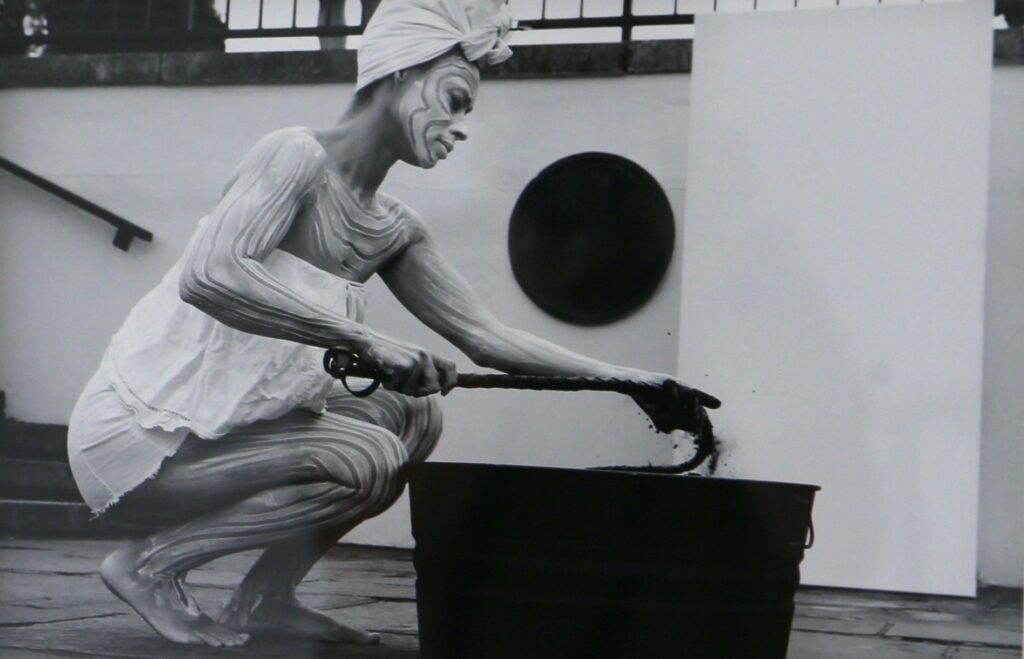
Her video and performance work demonstrates a sophisticated understanding of how bodies carry historical memory. In pieces like “Black Magic” and “Whip It Good,” Ehlers uses her own body as a site of contestation and reclamation. These works engage directly with the iconography of slavery and colonial violence, not to reproduce trauma pornography but to assert agency and transformation. When Ehlers performs actions that reference bondage, punishment, or subjugation, she simultaneously enacts resistance, turning the camera’s gaze back upon the viewer and implicating contemporary audiences in the unfinished business of colonial reckoning.

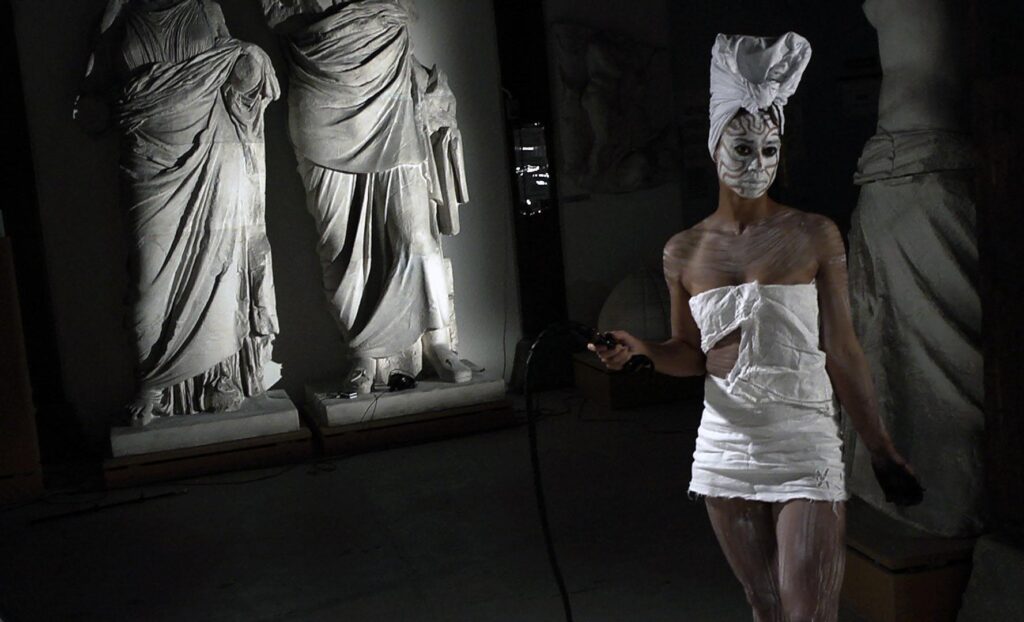
“Black Magic” is particularly emblematic of Ehlers’s methodology. The video features Ehlers in whiteface, a deliberate inversion of blackface minstrelsy that immediately unsettles racial performance and representation. By coating her skin in white paint and performing in historical settings connected to Danish colonial power, she creates a visual dissonance that forces viewers to confront the constructed nature of racial categories and the violence embedded in their creation. The whiteface is not mimicry but exposure—it reveals how whiteness itself is a performance, a fiction maintained through power rather than nature.

The use of historical locations in Ehlers’s work deserves particular attention. She frequently films in forts, plantations, and other sites directly connected to slavery and colonialism. These spaces are not merely backdrops but active participants in the work’s meaning. By inserting her Black female body into spaces designed to exclude, exploit, or commodify such bodies, Ehlers performs a kind of temporal disruption. She refuses the relegation of slavery to the past, demonstrating instead its persistent presence in contemporary spatial, economic, and social arrangements.

Jeannette Ehlers

Ehlers’s most publicly visible and controversial work is undoubtedly “I Am Queen Mary,” a monument created in collaboration with artist La Vaughn Belle and installed in Copenhagen’s harbor in 2018. The sculpture depicts Queen Mary, leader of the 1878 Fireburn rebellion in the Danish West Indies, rendered at monumental scale—twice life-size—in direct visual dialogue with Copenhagen’s iconic Little Mermaid statue. The contrast could not be more pointed: while the Little Mermaid represents a romanticized, passive femininity derived from fairy tale, Queen Mary stands as a figure of revolutionary action and historical consequence.

The statue’s creation and installation constituted an act of radical public pedagogy. Most Danes had never heard of Queen Mary or the Fireburn rebellion, during which enslaved and recently emancipated workers on St. Croix burned plantations in protest against brutal working conditions and broken promises of freedom. By placing Queen Mary in the heart of Copenhagen, gazing out toward the Caribbean, Ehlers and Belle insisted that Danish public space must acknowledge and commemorate the Black lives that Danish colonialism exploited and destroyed. The monument functions as a counter-narrative, refusing to allow Denmark to celebrate its progressive present without confronting its exploitative past.

The decision to make Queen Mary larger than life carries multiple significances. Monumentality has traditionally been reserved for European heroes, colonizers, and monarchs—those deemed worthy of permanent public commemoration. By scaling Queen Mary to heroic proportions, Ehlers grants her the visual language of power and importance that European artistic traditions have denied to Black women. Simultaneously, the sculpture’s size embodies the magnitude of resistance itself, suggesting that acts of rebellion against oppression possess world-historical importance regardless of whether dominant histories acknowledge them.

Ehlers’s photographic work extends her investigation of colonial imagery and representation. Her series “Whip It Good” appropriates and recontextualizes colonial-era photographs, paintings, and postcards that depicted enslaved and colonized people. By inserting herself into these images or recreating their compositions, she exposes the violence of the colonial gaze while simultaneously disrupting it. These photographs are not comfortable; they do not allow viewers the luxury of historical distance or aesthetic appreciation divorced from ethical reckoning.

Jeannette Ehlers

The formal qualities of Ehlers’s work reward close attention. Her compositions often feature stark contrasts—black and white, past and present, colonizer and colonized—that refuse reconciliation or easy resolution. She employs repetition, doubling, and mirroring to create visual rhythms that suggest both the cyclical nature of oppression and the possibility of its reversal. Her use of slow motion in video work stretches time, forcing viewers to dwell in uncomfortable moments rather than moving quickly past them.

Ehlers’s practice is deeply informed by theoretical frameworks from postcolonial studies, Black feminism, and cultural memory studies. Her work demonstrates familiarity with thinkers like Frantz Fanon, who analyzed the psychological dimensions of colonialism, and Édouard Glissant, who theorized Caribbean identity and the right to opacity. Yet Ehlers translates these complex theoretical insights into visceral visual experiences that communicate beyond academic audiences. This accessibility does not diminish the work’s intellectual rigor but rather fulfills art’s potential to make critical ideas available through embodied, sensory encounter.

The artist’s engagement with memory studies is particularly sophisticated. She understands that historical memory is not naturally occurring but actively constructed through monuments, archives, education, and cultural repetition. Colonial powers have invested heavily in creating official memories that justify their actions while erasing or marginalizing the perspectives of colonized peoples. Ehlers’s work functions as counter-memory, excavating suppressed histories and asserting alternative narratives. She practices what might be called memory activism—the strategic use of artistic production to reshape collective understanding of the past.

Ehlers’s position as a Black woman of mixed Caribbean and European heritage informs her work in crucial ways. She navigates multiple cultural contexts and can speak to audiences in both Europe and the Caribbean, though her perspective is not reducible to either location alone. This liminality grants her particular insight into how colonial legacies operate differently in metropole and former colony, and how diaspora creates new forms of identity that exceed national or ethnic categories.

The reception of Ehlers’s work reveals much about contemporary racial politics in Europe. While some critics and institutions have celebrated her interventions, others have responded with discomfort or hostility, particularly to “I Am Queen Mary.” The statue became a lightning rod for debates about immigration, integration, and national identity in Denmark—debates that revealed how discussions of historical colonialism inevitably connect to contemporary racial politics. Ehlers anticipated this response; indeed, her work is designed to generate productive discomfort that might catalyze transformation.

Ehlers’s influence extends beyond the art world into broader cultural and political spheres. Her work has contributed to growing movements in Europe demanding reckoning with colonial pasts, including calls to remove or recontextualize monuments to colonizers, revise history curricula, and address ongoing racial inequalities as colonial legacies rather than isolated contemporary problems. Artists throughout Europe and the diaspora have found inspiration in her example of art as active intervention rather than passive commentary.

The question of aesthetics and politics in Ehlers’s work requires nuanced consideration. Some might argue that her overt political commitments compromise aesthetic autonomy or reduce art to propaganda. This criticism misunderstands both Ehlers’s practice and the nature of political art more broadly. Her work possesses genuine formal sophistication—the careful composition, the manipulation of historical imagery, the strategic use of scale and material. These aesthetic choices are not decorative additions to political content but integral to how the work produces meaning and affects viewers.

Moreover, Ehlers’s practice challenges the false dichotomy between aesthetic and political value. She demonstrates that work can be simultaneously beautiful and confrontational, formally rigorous and ethically urgent. The notion that art must choose between aesthetic excellence and political engagement serves ultimately to protect art from having to address injustice—a protection that itself reflects political commitments, merely unacknowledged ones.

Ehlers’s artistic lineage connects to multiple traditions: the institutional critique practiced by artists like Hans Haacke, the performance work of Black feminist artists like Adrian Piper and Lorraine O’Grady, the counter-monumental strategies of artists addressing Holocaust memory, and the decolonial aesthetics emerging from postcolonial contexts globally. Yet she synthesizes these influences into a distinctive practice shaped by her particular historical and geographical situation.

Looking at Ehlers’s trajectory, we observe an artist whose practice has grown increasingly ambitious in scale and public visibility while remaining consistent in its core commitments. From early video works viewable primarily in galleries and festivals to a permanent public monument in a national capital, Ehlers has successfully expanded the reach of her decolonial project without diluting its critical edge. This progression suggests strategic thinking about how to maximize impact and reach diverse audiences.

The challenge Ehlers poses to viewers, particularly white European viewers, is profound. Her work demands acknowledgment of historical atrocities and their ongoing consequences. It refuses the comfort of historical distance, insisting that colonialism’s effects persist in contemporary inequalities and that beneficiaries of colonial exploitation bear responsibility for addressing these legacies. This is uncomfortable work, meant to be—discomfort can be the beginning of transformation.

For viewers from the African diaspora, Ehlers’s work offers different possibilities: recognition, validation, and the powerful experience of seeing histories and heroes typically marginalized now given monumental treatment. The experience of encountering Queen Mary’s statue, for instance, might produce feelings of pride, connection, and the sense that public space can reflect and honor Black resistance and achievement. This affirmative dimension of Ehlers’s practice is as important as its critical interventions.

Jeanette Ehlers’s contribution to contemporary art lies in her demonstration that artistic practice can be a powerful tool for historical justice. Her work shows that addressing colonial legacies requires not just academic historiography but cultural interventions that reshape public memory and imagination. By bringing suppressed histories into visibility, challenging official narratives, and creating new monuments to resistance, she practices art as a form of reparative justice—work that cannot undo historical harm but can contribute to the difficult process of acknowledgment, truth-telling, and transformation.

As debates about colonialism, reparations, and racial justice intensify globally, Ehlers’s work becomes increasingly relevant. She offers not just critique but methodology—ways of engaging history through embodied practice, of using artistic production to intervene in public discourse, of insisting that contemporary societies must reckon with their pasts as a precondition for more just futures. Her art reminds us that historical memory is always contested terrain, and that struggles over how we remember the past are inseparable from struggles over how we imagine and build the future.

Jacob Lawrence: Chronicler of the Great Migration and the Black American Experience

Jacob Lawrence
Jacob Lawrence

Jacob Lawrence: Chronicler of the Great Migration and the Black American Experience

Jacob Lawrence stands as one of the most significant American artists of the twentieth century, a painter whose dynamic compositions and bold use of color transformed the visual narrative of Black American life. Born in 1917 in Atlantic City, New Jersey, Lawrence came of age during the Harlem Renaissance’s waning years, yet his artistic vision would extend far beyond that movement’s parameters, creating a body of work that documented struggle, perseverance, and the ongoing quest for dignity and justice in American society.

Lawrence’s artistic education began in the vibrant cultural environment of Harlem, where he studied at the Harlem Art Workshop under the guidance of Charles Alston. This formative period exposed him to the intellectual and creative ferment of Black cultural production, where artists, writers, and thinkers were actively engaged in defining and celebrating Black identity. Unlike many of his contemporaries who traveled to Europe to study classical techniques, Lawrence remained rooted in the American experience, developing a distinctive visual language that drew from multiple sources: the flat, decorative patterns of folk art, the bold colors of Mexican muralists, and the geometric abstractions of modernism.

Jacob Lawrence
Jacob Lawrence

What distinguished Lawrence most profoundly was his commitment to narrative painting at a moment when abstraction dominated the American art world. While Abstract Expressionism captured critical attention in the 1940s and 1950s, Lawrence insisted on figuration and storytelling, believing that art should communicate directly with viewers about matters of social and historical consequence. This was not a rejection of modernism but rather a synthesis—Lawrence employed modernist techniques in service of representational storytelling, creating works that were simultaneously formally innovative and deeply accessible.

The Migration Series, completed in 1941 when Lawrence was just twenty-three years old, represents his most celebrated achievement and one of the masterworks of American art. This series of sixty tempera paintings chronicles the Great Migration, the mass movement of African Americans from the rural South to the industrial North between 1916 and 1970. Lawrence’s approach to this monumental subject reveals his genius: rather than attempting epic scale or photographic realism, he distilled each moment into essential forms and gestures. His figures are angular and simplified, his compositions spare yet dynamic, his palette restricted yet extraordinarily expressive.

Jacob Lawrence

The paintings in the Migration Series function both as individual works and as chapters in a larger narrative. Lawrence understood intuitively that migration was not a single event but a process—a series of decisions, departures, journeys, and arrivals, each laden with hope and hardship. In panel after panel, he depicted crowds at train stations, families in transit, workers in factories, and communities forming in new urban spaces. The series does not romanticize its subject; Lawrence included images of race riots, inadequate housing, and continued discrimination in the North, presenting migration as a complex phenomenon driven by both aspiration and desperation.

Lawrence’s technique in the Migration Series and throughout his career demonstrates remarkable discipline and intentionality. He worked with tempera paint, a medium that dries quickly and produces flat, matte surfaces. This choice reinforced the graphic quality of his compositions and allowed him to build up layers of color with precision. His palette, often dominated by browns, ochres, reds, and blues, evoked both the earthiness of Southern landscapes and the industrial grays of Northern cities. The limited color range created visual unity across works while allowing for surprising chromatic variations.

Jacob Lawrence

The compositional strategies Lawrence employed reveal his sophisticated understanding of pictorial space. He frequently used high viewpoints, flattened perspectives, and rhythmic repetition of forms to create visual tension and movement. Diagonal lines suggest dynamism and instability, while vertical and horizontal elements provide structure and stability. Empty spaces in his compositions carry as much weight as filled ones, creating a sense of isolation or absence that speaks to themes of displacement and loss.

Beyond the Migration Series, Lawrence continued to explore African American history and contemporary life through several other narrative sequences. The War Series, created during his service in the Coast Guard during World War II, documented the experiences of Black servicemen. The Struggle series, begun in the 1950s, examined defining moments in American history from the perspective of those fighting for freedom and equality. His later work included depictions of builders, craftsmen, and workers, celebrating the dignity of labor and the creativity inherent in manual work.

Lawrence’s commitment to education and community engagement distinguished him from many artists of his generation. He taught at numerous institutions, including the New School for Social Research, Pratt Institute, and the University of Washington, where he spent the final decades of his career. He believed that art should be accessible and that artists had a responsibility to share their knowledge and skills. This pedagogical impulse reflected his own gratitude for the mentorship he received in Harlem and his conviction that artistic talent flourished in supportive communities.

Jacob Lawrence

The question of how to situate Lawrence within art historical categories has occupied critics and scholars for decades. Some have emphasized his connection to Social Realism and the politically engaged art of the 1930s, while others have highlighted his formal innovations and alignment with modernist aesthetics. Lawrence himself resisted easy categorization, insisting that his work was simply about the American experience. Yet this apparent modesty conceals a radical claim: that Black American life was not a marginal subject but a central chapter in the nation’s story, and that depicting this life with honesty and beauty was an act of historical documentation and cultural affirmation.

Lawrence’s influence on subsequent generations of African American artists cannot be overstated. He demonstrated that one could be simultaneously modern and engaged with community, formally sophisticated and narratively direct, deeply rooted in Black cultural traditions and part of broader American artistic conversations. Artists as diverse as Romare Bearden, Faith Ringgold, Kerry James Marshall, and Kehinde Wiley have acknowledged their debt to Lawrence’s example, even as they have pursued their own distinctive visions.

What makes Lawrence’s work endure beyond its historical moment is its fundamental humanity. His paintings never reduce individuals to types or symbols; even in their stylized forms, his figures retain dignity, agency, and particularity. He understood that history was made not by abstract forces alone but by individual choices and collective action. The men and women in his paintings are striving, working, moving, hoping—always in motion, always engaged in the difficult work of survival and self-determination.

Jacob Lawrence’s career spanned more than six decades, concluding with his death in 2000. Throughout this long and productive life, he remained remarkably consistent in his artistic vision while continuing to grow and experiment. His work has been celebrated in major museums and acquired by prestigious collections, yet it has also reached broad public audiences through reproductions, textbooks, and public murals. This dual achievement—critical recognition and popular accessibility—fulfilled Lawrence’s belief that art should speak across boundaries of class, education, and background.

In assessing Lawrence’s legacy, we must recognize that he fundamentally altered how American art engages with history and identity. He proved that paintings could be both beautiful and instructive, that modernist form could enhance rather than obscure narrative content, and that the Black American experience was a subject worthy of sustained artistic attention and formal innovation. His work challenges the false dichotomy between aesthetics and politics, demonstrating that serious engagement with social realities can produce art of enduring formal power.

Jacob Lawrence painted what he knew and what mattered to him, trusting that specificity would lead to universality. In chronicling the journeys, struggles, and aspirations of Black Americans, he created a visual record that speaks to anyone who has experienced displacement, sought opportunity, or fought for justice. His art reminds us that history is not a settled account but an ongoing story, and that the work of understanding our past remains essential to imagining our future. In this sense, Lawrence’s paintings are not merely historical documents but living testaments to resilience, creativity, and the enduring power of the human spirit.

THE STOLEN DOVE JON RUBIN

THE STOLEN DOVE JON RUBIN

It’s a dove that was once stolen off the only monument of an Arab American in the United States — let me tell you the story.

The Stolen Dove will debut its first public activation at the Sundance Film Festival in Park City, UT, in collaboration with the premiere of the documentary film Who Killed Alex Odeh?, by filmmakers Jason Osder and William Lafi Youmans.

Located in front of the Santa Ana Public Library in California is a sculpture to Palestinian American poet, teacher and civil-rights leader Alex Odeh. Alex was assassinated in 1985, and the sculpture—created by Khalil Bendib and supported through a fund-raising effort led by radio personality Casey Kasem —remains the only public monument of an Arab American in the U.S. 
In 2020 the sculpture’s dove of peace, held in Odeh’s outstretched hand, wasstolen, later recovered by police, and eventually reattached to the monument. This act of vandalism is one of many that the sculpture has endured over the last 30 years. Working with the city, Alex’s family and with Bendib’s permission, we have removed the dove once more, this time with intention and care, so it can circulate as a messenger carrying forward the story of Odeh’s life and work and the justice still yet to be delivered in his case.
By setting the dove in motion again, we invite the public to participate in a living monument—one that expands beyond the library grounds and the bronze figure into the everyday lives of those who choose to know and tell Alex’s story. The dove will begin its journey with Alex’s daughter Helena and wife Norma, and then travel to a series of homes and institutions, connected to and inspired by Odeh’s legacy, who will each temporarily host the dove and share its story with their families, friends, and communities. In June the dove will be returned to the statue.
Each family or organization that hosts the dove will convene a community gathering to share the story of Alex’s life and the ongoing case. After moving the dove to the next host, they will receive a precise replica as a gift, enabling them to continue carrying the story forward. In this way, a single public sculpture of a dove multiplies into a flock, with each holder becoming a long term steward and storyteller.

The Stolen Dove is a project led by artist Jon Rubin in collaboration with the Odeh family and Grand Central Arts Center.

Cal State Fullerton’s Grand Central Art Center is dedicated to creating a dynamic intersection between contemporary art and community engagement. Situated in the vibrant City of Santa Ana, our mission is to provide a platform for artistic innovation and cultural dialogue. Through immersive exhibitions, artist residencies, and collaborative initiatives, we aim to inspire creativity, foster inclusivity, and enrich the cultural landscape by connecting diverse communities with transformative art experiences.

Trends of Life Juried Awards Exhibition. Charting the Currents of Contemporary Existence

Clak Medley view on his t painted typographies

Trends of Life Juried Awards Exhibition. Charting the Currents of Contemporary Existence

by Milagros Bello, PhD

The Trends of Life/ Juried Awards Exhibition juried by Claudia Zaion and Milagros Bello, delves into the complexities of contemporary life, examining how current dynamics—social, technological, emotional, and cultural—shape and continuously reshape the human experience. The show draws a compelling portrait of life today, capturing the rhythms, ruptures, and reinventions that define our times. It maps a sensory landscape of our fluid realities, where the ephemeral, the viral, the vulnerable, and the adaptive are interwoven in constant mutation. It interrogates the complexities of the human condition through art.

The works confront urgent themes such as the influence of artificial intelligence, cycles of anxiety and wellness, and personal mythologies; all of them crystallizing society nowadays. Each piece operates as a lens through which to interpret the affective and critical dimensions of contemporary life, inviting the viewers to an interface between personal experience and collective consciousness.  

This juried awards exhibition continues the curatorial line of MIA Curatorial Projects, focusing on tensions and transformations in contemporary art. 

Jurors’ selected Artists:
Eliana Barbosa, Elba Bello, Eumelia Castro, Francisco Cerón, Sergio Cesario, Meg Cogburn, Mabel Hernández, Karina Matheus, Clark Medley, Raquel Munera, Beatriz Sánchez, Mircza Seiler, Alexis Rivero.

AWARDED ARTISTS

Clark Medley Unspeakable mixed media installaton

Clark Medley’s Unspeakable (FIRST PRIZE AWARD), presents six vibrant translucent cylinders suspended in the air as a moving performative installation, recalling totemic forms of industrial allure. Inside them, there are rolled canvases displaying graffiti-like inscriptions with colorful typographies revealing imaginary alphabets. Defying legibility and deferral of “written thoughts” from the “unspeakable “secrets of the artist, the works cast out fragments of encoded signs that interplay as concealment and revelation. They emanate from the artist’s introspection of his daily life personal thoughts. Black straps holding them aloft emphasize a tension between levitation and gravity in an ever-changing perpetual movement.

Sergio Cesario Transhuman Tronies Series

Sergio Cesario’s Transhuman Tronies Series (The Prophet of the New World Order and Doctrine Laissez-Faire) (SECOND PRIZE AWARD), a digitally composed set of dual images printed on acrylic, critically interrogates the ontological thresholds between post-human condition and machinic agency. In the intensification of algorithmic governance and the erosion of stable distinctions between organic life and computational systems, the characters pose as archetypes of societal new paradigms. His post-photographic aesthetic merges chromatic saturation, textural fragmentation, and deliberate distortion, negotiating identity, embodiment, and the regimes of technological mediation that increasingly define contemporary existence. 

Eliana Barbosa Prejudice digital image mounted on acrylic

Eliana Barbosa’s The Irrational Course of History Today Series (THIRD PRIZE AWARD) announces critical epiphanies of the political collective subconscious grasped by the artist. The digital images printed on acrylic, inhabit chromatic matter, loose gestural marks, and imaginary de-figurations of visceral language. They are composed of brushstrokes delineations she makes over a liquid surface of a can of paint, which the artist photographs before the fleeting image dissolves on the liquid. Barbosa’s disfigured spectral visages work as political and existential apparitions reflecting power and crisis. 

Rafael Montilla Queen Nandi, Will to Become Series Canvas on wood

Rafael Montilla’s Queen Nandi, Will To Become Series (HONORABLE MENTION) Thepainting that lays out on a cut asymmetrical wood, incisively explores irregular geometry as a conceptual stance. Indebted to Concrete Art and Constructivism art, the piece subverts their historical austerity introducing sensorial dimensions of a vibrant, luminous yellow polygonal thick support and a fractured black irregular shape at the center. That deliberately acts as destabilization of balance and containment, interlocking in an extreme visual intentional asynchrony. Its sharp, angular planes, perform as resistance, and friction between order and dislocation. The abstract painting announces on the power of the Queen Nandi as a powerful Zulu Queen.

Eumelia Castro Genealogy media media textile

Eumelia Castro’s Genealogy (HONORABLE MENTION) is a textile workthat emerges as a tactile visual palimpsest, interweaving familial imagery, domestic materials, and symbolic narratives. Through her use of frayed gauze, lace, and linen—materials evoking ephemerality and vulnerability—Castro situates personal memory within a framework of aesthetic collection; a personal mythology of transferred photographic portraits, delicately overlaid with embroidery, beading, and appliqué, recovering erased lineages, where the past unfolds in rhizomatic patterns (Deleuze and Guattari). The work is as a system of affective and micropolitical connections in the construction of identity, through the laborious craft understood as a critical practice. 

Meg Cogburn The Eightfold Fence, 2020 Acrylic and Collage on Canvas 36x36 inches $11,500
Meg Cogburn The Eightfold Fence, 2020 Acrylic and Collage on Canvas 36×36 inches $11,500

Meg Cogburn’s Eightfold Fence (HONORABLE MENTION) a painting that unfolds a vibrant eight-sided mandala where geometry, media imagery, and gestural calligraphy are displayed as fragmented narratives exploring women’s lives. Its spiraling structure gathers scenes evoking Japanese domestic culture, bridging the personal with broader cultural symbolism. A golden calligraphic phrase in circular form, quoting the first poem from Kojiki (712 AD), weaves through the composition as a conceptual thread, underscoring how collective memory and myth shape perceptions of marriage and gender roles. Rich colors and layered imagery invite an open, non-linear reading, in an interplay of precise geometry and expressive script where personal histories and collective imaginaries intertwine. 

Beatriz Sanchez Memento Series assemblages

Beatriz Sanchez’s Memento Series (HONORABLE MENTION) offers an inquiry into the entanglements of memory, materiality, and affect within a contemporary assemblage practice. Repurposed objects- vintage tins, mechanical components, feathers, chains, – are assembled as sculptural pieces, evoking reliquaries or totems that function as cultural archives and as vehicles of memory and evocation. Through the reanimation of the discarded, these pieces operate as witnesses to personal and anthropological stories, sedimented as material culture in a collective memory. The works expose a taxonomy of value of what is preserved or forgotten, resonating with the lieux de mémoire (Pierre Nora) where the past is continually reactivated and contested. 

Karina Matheus Art is Alive Series Acrylic on paper

Karina Matheus’ Art is Alive Series on paper (SPECIAL MENTION AWARD) propose gesture and color as an ontological space interrogating the phenomenology of perception and the material conditions of painting. Gestures display as a threshold of order and chaos of controlled/spontaneous energetic marks emerging from meditational states in listening to alpha waves music. Colors of chromatic saturation and sensual tactility expose the sensorial allure of the work, revealing the intensity of artist’s engagement to the inner creative process. The works involve intensive visual latencies and suspensions of material and immaterial dimensions.

Mircza Seiler Imprint Series Collage on paper

Mircza Seiler’s All in Orange and Imprint Series on paper (SPECIAL MENTION AWARD) fuse gestural abstraction with the materiality of collage, layering cut-out paper fragments across the surface as traces of life and time. Chromatic repetitive dots, calligraphic marks and imprints generate an interconnected visual field charged with tension and fluidity. The collages dissolve the boundaries between gesture, sign, and material elements, establishing a dynamic space where transparencies and overlays disrupt any fixed hierarchy of figure and ground. Rather than articulating a univocal narrative, Seiler constructs a liquid cartography in which the visible operates as a threshold for what remains latent. This performative dimension invites viewers to inhabit a territory where time, memory, and gesture fold and unfold in continuous movement. The works are a site of inquiry, an open laboratory that reimagines existential experiences.

Raquel Munera’s collages (SPECIAL MENTION AWARD) unfold a critical exploration of social memory and subjectivity.  Through the assemblage of cut-out visual fragments, photos, organic elements, textured hand-made paper, superimposed on chromatic contrasts from introspective blues to vibrant green and yellow, the works articulate a visual syntax of collective memories in a visual stratigraphy. The recurrence of children’s figures in enigmatic distress subtly evokes the inherent precariousness of their life. The insistent presence of water and fish symbols allude to the fluid and perpetual rhythm of phenomena. The artist crafts visual scenarios of concealing and disclosing social narratives in the critical tension of human life.

Mabel Hernandez’s The Observing Eye (SPECIAL MENTION AWARD) emerges as a visual architecture where grids and chromatic modules evoke interior landscapes. As a focal point in the canvas, between hard geometries and irregular lines it shows an outlined observing eye that twists representation into observation. Circles and rectangles on layered textures entangled with graphic irregular marks activate dynamic polyrhythmic movements. The interplay between dense material zones and areas of sober chromatic openness creates a visual diagram of poetic intuition. Engaging with the legacy of Latin American geometric abstraction, Hernández craft her work in a sensitive territory where reason and emotion intertwine.

Elba Bello’s Bound (SPECIAL MENTION TO YOUNG ARTIST) painting presents a liminal figure suspended between presence and dissolution. A blurred human silhouette emerges like a spectral trace; its features reduced to minimal gestures that strip away identity and invite projection. Chromatic glazes in ochres and dark tones heighten this ambiguity, creating a psychological space dense with emotion. Echoing existentialist painting and figurative abstract expressionism, the work becomes a “residual presence” that evokes vulnerability and transience. They are a poetic reflection on how contemporary subjectivity dissolves under human trauma and uncertainty.

Alexis Rivero’s Alma Viva performative action (SPECIAL MENTION PERFORMANCE) proposes a hybrid theatricality that merges festive costume, expanded painting, and embodied action within a shared space of estrangement. Through a black-and-white patterns costume, a masked face, and an exuberant millinery, the artist evokes imaginaries of the clown, ritual, and excess, questioning the construction of identity and the artifice of representation. The painted surface on the floor and the dramatic lighting reinforces the pictorial and spectral dimensions of the scene, where the body becomes a device for projection and transgression.

Francisco Cerón, Coca-Cola. The Carbonate Icon, digital print reimagines Coca-Cola as both a global consumer symbol and an object of ironic devotion. Through the practice of intertextual mixing of images, Ceron creates a monumental Coca-Cola bottle crowned by historic variants suggests the brand’s secular sacralization. The vibrant reds and confetti evoke advertising’s allure, while the prohibition sign highlights the contradiction between image and consumption. The urban skyline reinforces Coca-Cola’s transnational reach, turning architecture into a pedestal for its fetish power. Cerón reveals how commercial imagery shapes collective memory, transforming everyday life into a ritual of spectacle.

Milagros Bello, PhD
Curator
@milagrosbellocurator

Page 19 of 277
1 17 18 19 20 21 277