Contemporary Textile Art — Material, Memory, and the Expanded Field of Fiber
Contemporary textile art has undergone a profound transformation over the past decades, evolving from a historically marginalized category—often relegated to craft—into a central discourse within contemporary art. Today, practices rooted in weaving, embroidery, tapestry, and other fiber-based techniques operate not merely as decorative or functional traditions, but as critical, conceptual, and spatial investigations into identity, labor, history, and materiality.
From Craft to Concept
Traditionally, textile practices such as weaving, embroidery, and quilting were associated with domestic labor and artisanal production. However, contemporary artists have recontextualized these techniques, repositioning them within the expanded field of sculpture and installation. This shift reflects a broader museological revision—one that challenges the hierarchy between fine art and craft, recognizing textile as a site of intellectual and aesthetic rigor.
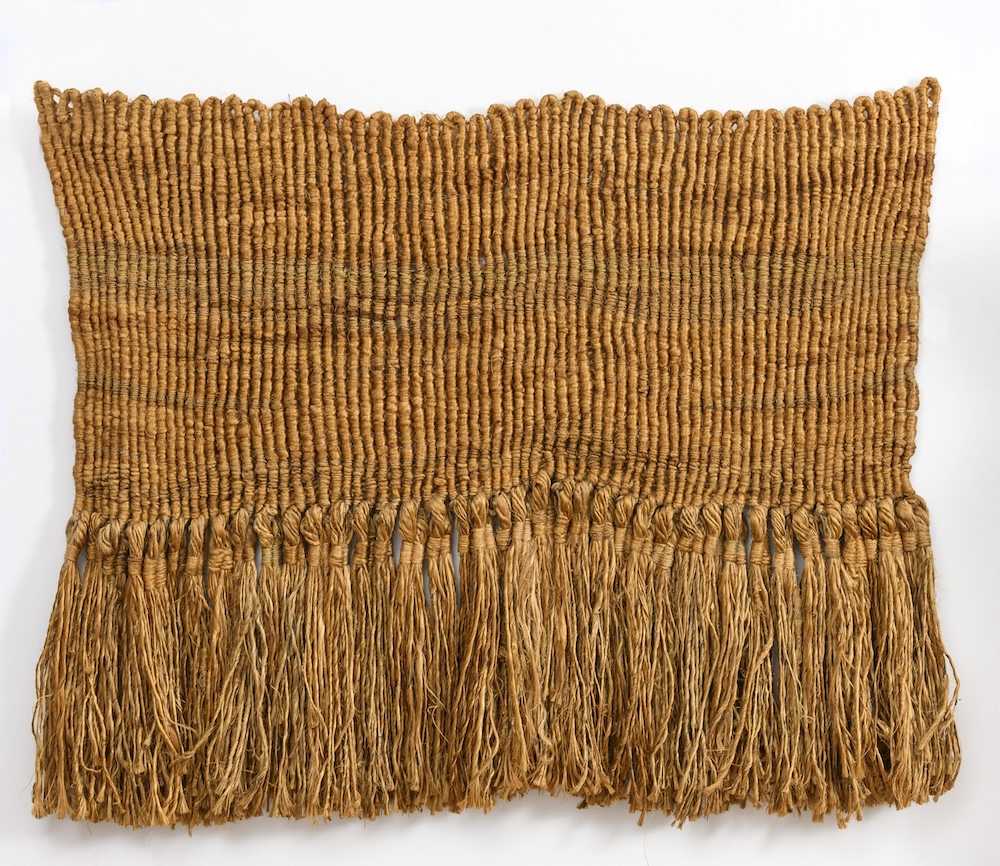
At its core, weaving—the interlacing of warp and weft—remains a foundational act. Yet in contemporary practice, it is no longer confined to flat surfaces. Artists stretch, suspend, and fragment woven structures, transforming them into architectural environments or sculptural forms. Similarly, tapestry has moved beyond narrative decoration into a medium capable of abstraction, political commentary, and spatial intervention.
Techniques as Language
Each textile technique carries its own conceptual and material vocabulary:
- Embroidery, once associated with ornamentation, is now used to inscribe narratives of identity, trauma, and memory. Its slow, repetitive gesture becomes a form of temporal resistance in an accelerated digital culture.
- Macramé and crochet have been reimagined as structural systems, producing intricate, often large-scale installations that engage with gravity, tension, and fragility.
- Felt, with its process of compression through heat and pressure, offers a metaphor for transformation—matter shifting states under invisible forces.
- Dyeing and printing techniques—from batik to indigo—are increasingly explored not only for their visual qualities but for their cultural and historical embeddedness, linking contemporary practice to global traditions and colonial histories.
These methods are no longer ends in themselves; they function as languages through which artists articulate complex ideas.
Fiber Art and the Expanded Field
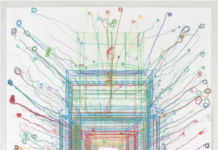
The term fiber art encapsulates the contemporary expansion of textile practice into three-dimensional and conceptual realms. No longer bound to the wall, textile works now occupy space, envelop the viewer, and often incorporate found materials, industrial fibers, or organic matter.
From a curatorial perspective, fiber art aligns with what Rosalind Krauss termed the “expanded field” of sculpture. Textile becomes a mediating structure between object and environment, between body and architecture. Installations made of thread, fabric, or rope can evoke systems—biological, social, or political—rendering visible the invisible networks that shape contemporary life.
The Politics of Soft Materials
One of the most compelling aspects of contemporary textile art is its political resonance. The use of “soft” materials—traditionally coded as feminine or domestic—becomes a deliberate strategy to challenge dominant narratives within art history.
Quilting, for instance, has been reclaimed as a form of collective storytelling, often addressing themes of community, migration, and resistance. Similarly, textile practices have been central to decolonial and diasporic discourses, where techniques and motifs carry ancestral knowledge and cultural memory.
In this sense, textile art operates as both material practice and cultural archive.
Temporality, Labor, and the Hand
Unlike many contemporary mediums, textile work foregrounds time and labor. The repetitive processes of stitching, knotting, and weaving embed duration into the object itself. This temporality resists the immediacy of digital production, reasserting the value of the handmade as a site of contemplation and care.
For the viewer, this translates into a different mode of engagement—one that is tactile, intimate, and often immersive. Textile works invite not only visual perception but a sensory and emotional response, bridging the gap between object and body.
Summary: Textile as Contemporary Condition
In 2026, contemporary textile art is no longer peripheral; it is structural to the way we understand contemporary practice. It merges technique with concept, tradition with innovation, and material with meaning.
What makes textile art so vital today is its ability to operate simultaneously on multiple levels:
- as form, through its rich visual and spatial possibilities
- as process, through its embodied labor
- as discourse, through its engagement with history, identity, and politics
Ultimately, textile art reveals that the most fundamental gestures—thread passing through fabric, fibers interlacing—can still produce some of the most complex and resonant expressions in contemporary art.