Geometric Abstraction in Ecuadorian Art
Within the history of Ecuadorian art, geometric abstraction has not merely functioned as a formal language, but as a site of intellectual inquiry—one that negotiates between modernist ideals, local sensibilities, and evolving notions of perception, space, and consciousness. While Ecuador is often internationally associated with social figuration through artists like Oswaldo Guayasamín, a parallel lineage of abstraction has quietly constructed a rigorous and sophisticated discourse.
Araceli Gilbert: Constructive Modernity
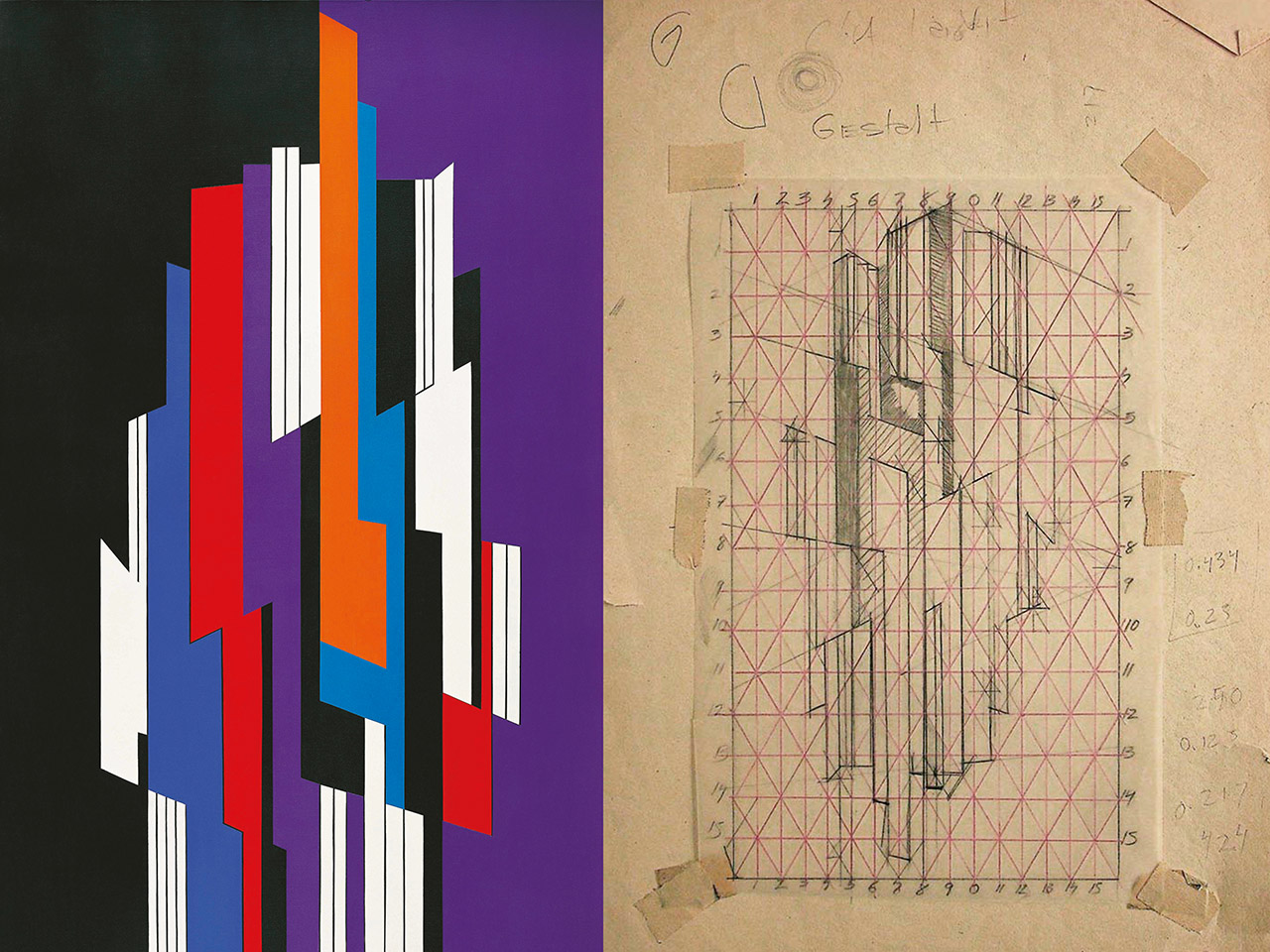
Araceli Gilbert de Blomberg stands as a foundational figure in the development of geometric abstraction in Ecuador. Deeply influenced by her studies in Europe, particularly within the circles of constructive abstraction, Gilbert introduced a visual language grounded in order, balance, and chromatic precision.
Her work is not merely formalist; it reflects a philosophical engagement with harmony and structure, positioning geometry as a universal language capable of transcending cultural boundaries. Through her practice, Ecuadorian art entered into dialogue with international modernism without losing its distinct identity.
Estuardo Maldonado: Geometry in Motion
A central figure in Latin American geometric abstraction, Estuardo Maldonado expanded the possibilities of form through a dynamic exploration of movement, optics, and spatial tension. His work bridges geometric rigor with perceptual instability, often incorporating elements of kinetic art and optical vibration.
Maldonado’s practice situates Ecuador within a broader Latin American avant-garde, aligning with movements in Venezuela and Argentina while maintaining a unique sensibility rooted in structural clarity and experimentation.
Olga Dueñas: Light, Technology, and Perception
Olga Dueñas represents a critical evolution of geometric abstraction into the realm of light and technological mediation. Over more than seven decades, her work has explored the immaterial dimensions of geometry—transforming line and structure into luminous, shifting experiences.
Her practice can be understood as a transition from object to phenomenon, where geometry becomes activated through perception. In this sense, Dueñas extends modernist abstraction into a contemporary dialogue with time, energy, and the viewer’s sensory engagement.
Larissa Marangoni: System, Repetition, and Contemporary Geometry
In the work of Larissa Marangoni, geometric abstraction is revisited through a contemporary lens. Her practice often engages systems, repetition, and modular structures, creating visual fields that oscillate between control and organic variation.
Marangoni’s work reflects a post-modern awareness of structure—not as fixed order, but as a living system—thus expanding geometric abstraction into conceptual territory that resonates with contemporary global practices.
Irene Cárdenas: Early Modern Sensibilities
Irene Cárdenas occupies an earlier moment in Ecuadorian modernism. While not strictly aligned with geometric abstraction, her work contributed to the opening of formal experimentation within the Ecuadorian context, creating the conditions for later developments in abstraction.
Paula Barragán: Material Abstraction and Poetic Surface
Paula Barragán approaches abstraction through materiality and gesture. Her work, often rooted in printmaking and surface exploration, moves away from strict geometry but retains an underlying structural sensitivity.
Barragán’s practice introduces a more poetic and tactile dimension, where abstraction becomes a space of introspection rather than construction.
Oswaldo Guayasamín: The Counterpoint of Figuration
While primarily known for his powerful figurative work, Oswaldo Guayasamín provides an essential counterpoint to abstraction in Ecuador. His expressionist language, deeply engaged with social and political realities, highlights the divergence within Ecuadorian art between universal abstraction and human-centered narrative.
Conclusion
Geometric abstraction in Ecuador is not a singular movement but a constellation of practices that evolve from structural modernism to perceptual, technological, and conceptual explorations. From the foundational rigor of Gilbert and Maldonado to the expanded fields of Dueñas and Marangoni, this lineage reveals a sustained engagement with form as a vehicle for thought—one that continues to unfold within contemporary discourse.