Beyond the Surface: Luis Pedro Picasso and the Skeleton Beneath the Portrait
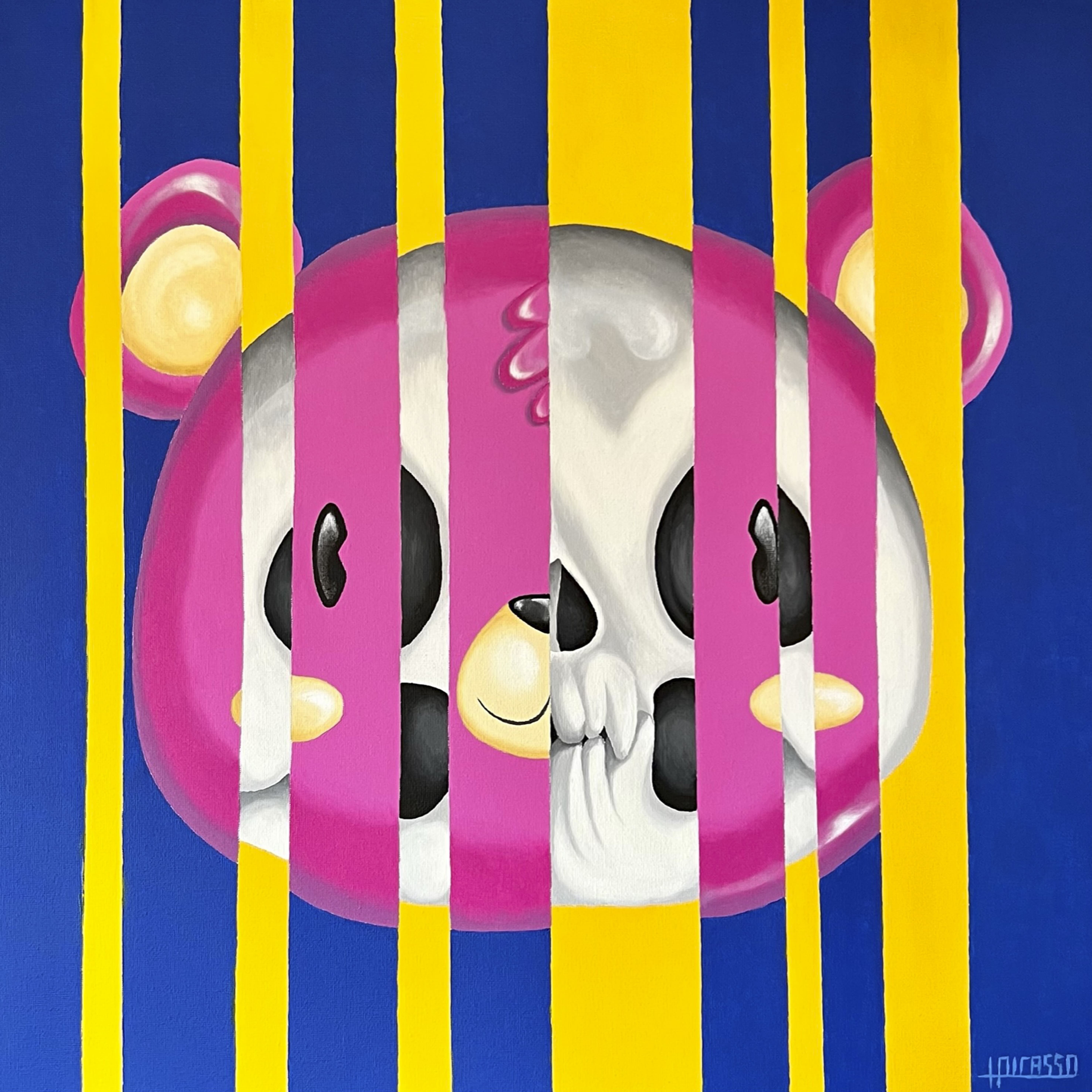
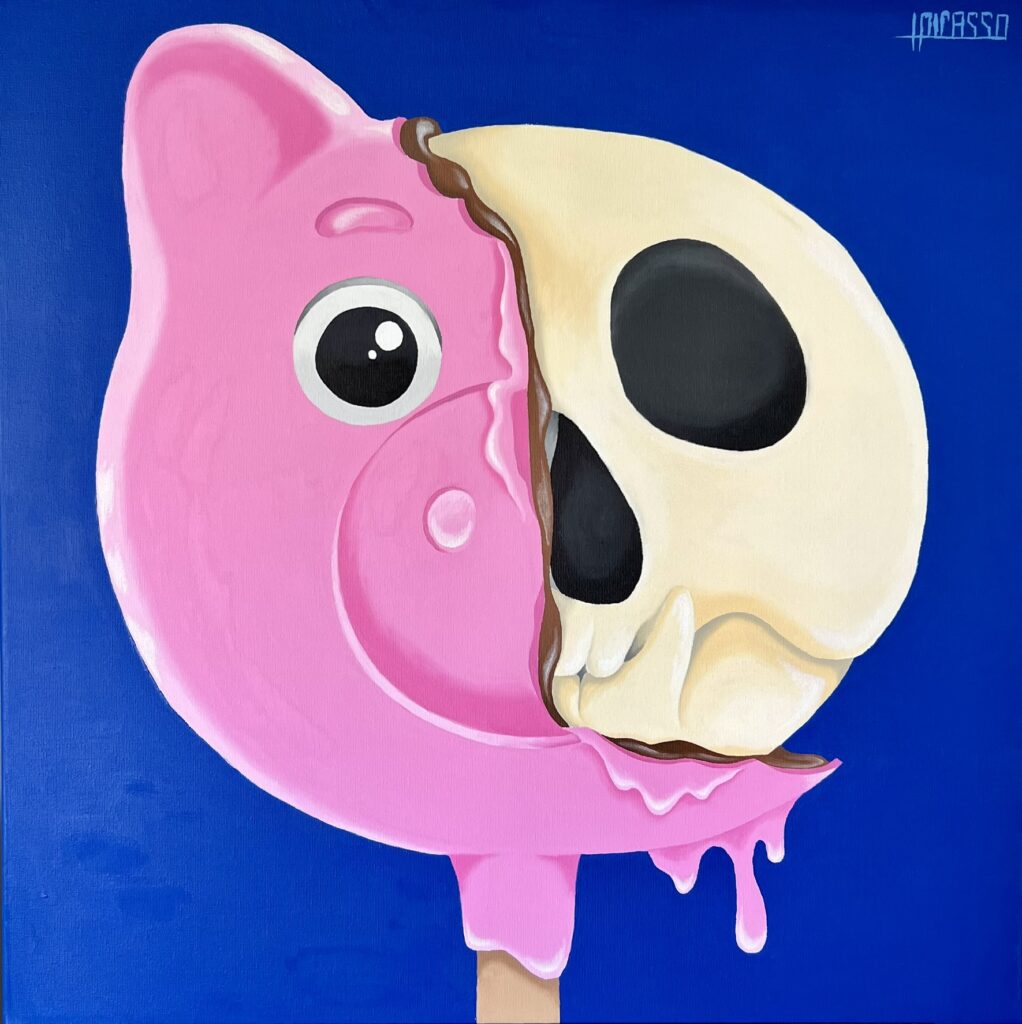
In the vibrant landscape of contemporary figurative painting, Luis Pedro Picasso has developed a distinctive visual language that he describes as “pop dissection.” His work merges the bold chromatic energy of pop culture with an unexpected exploration of anatomical structures, revealing skeletons and internal frameworks beneath expressive portraits. The result is a body of work that simultaneously celebrates the surface of identity while probing the biological structures that unite all living beings.
Raised in the countryside of Uruguay and deeply connected to nature and animal life, Picasso’s early experiences fostered a fascination with anatomy, form, and the underlying systems that sustain life. Later, his studies in graphic design introduced him to the aesthetics of pop art, a visual vocabulary that would become central to his artistic practice. Through this fusion of influences, his paintings challenge the conventions of traditional portraiture, transforming the human face into a site of investigation where color, bone, and identity intersect.
In this conversation, Picasso reflects on the origins of his concept of pop dissection, the role that anatomy and graphic design play in shaping his visual language, and the delicate balance between maintaining artistic originality and engaging with the broader contemporary art world. His reflections reveal an artist interested not only in representation, but in uncovering the shared structures that connect us beneath the surface of our visible differences.
AMM. You describe your style as “pop dissection.” How did this concept emerge, and what does it allow you to express that traditional portraiture does not?
LPP. I grew up in the countryside, surrounded by animals and nature, which led me to develop a special connection with animals, their anatomy, and their behavior. From an early age, I became passionate about drawing, especially human faces. I began by imitating them and creating faces that appeared in my mind.
During my teenage years, when I started studying graphic design, the world of pop art entered my life and strongly shaped my aesthetic. The fusion happened very naturally — I feel that it found me more than I found it.
Traditional portraiture fascinates me, but it is not the only thing I seek to express. My message is not only about people, but about what unites all living beings. From birth and creation, the cornerstone of our organism is the skeleton and the structures that compose it. My work searches for that core that connects us beyond our visible differences.
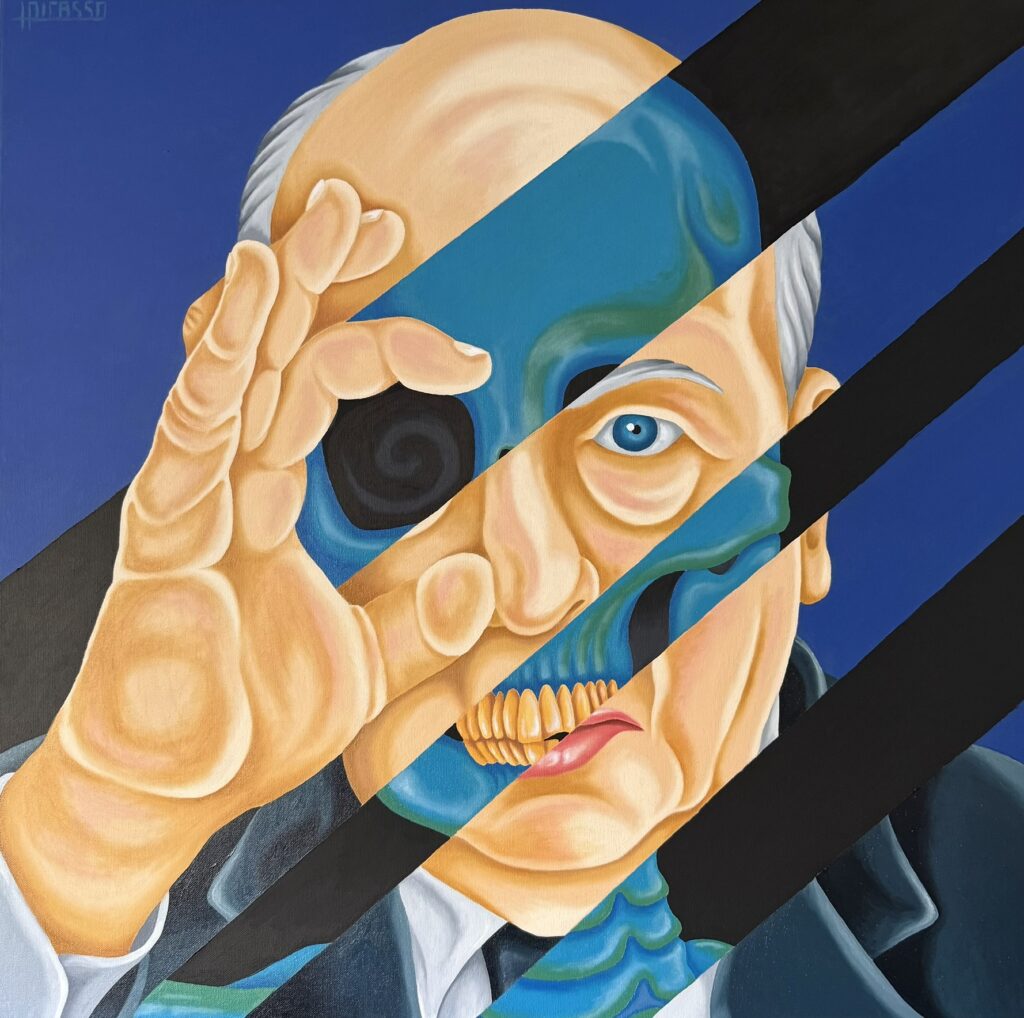
AMM. Your work combines vibrant pop colors with skeletal structures. What draws you to anatomy, and how do you see the relationship between the external face and the internal bone structure?
LPP. Vibrant colors are part of pop culture. My fascination with anatomy began during adolescence when I studied biological sciences in high school, although it probably started much earlier during my childhood in the countryside. The connection with flesh, life, and skeletons was a natural part of growing up in rural Uruguay in the 1990s.
The relationship between exterior and interior fascinates me because one could not exist without the other. At the same time, the exterior separates and differentiates us, while the skeleton makes us almost identical to one another.
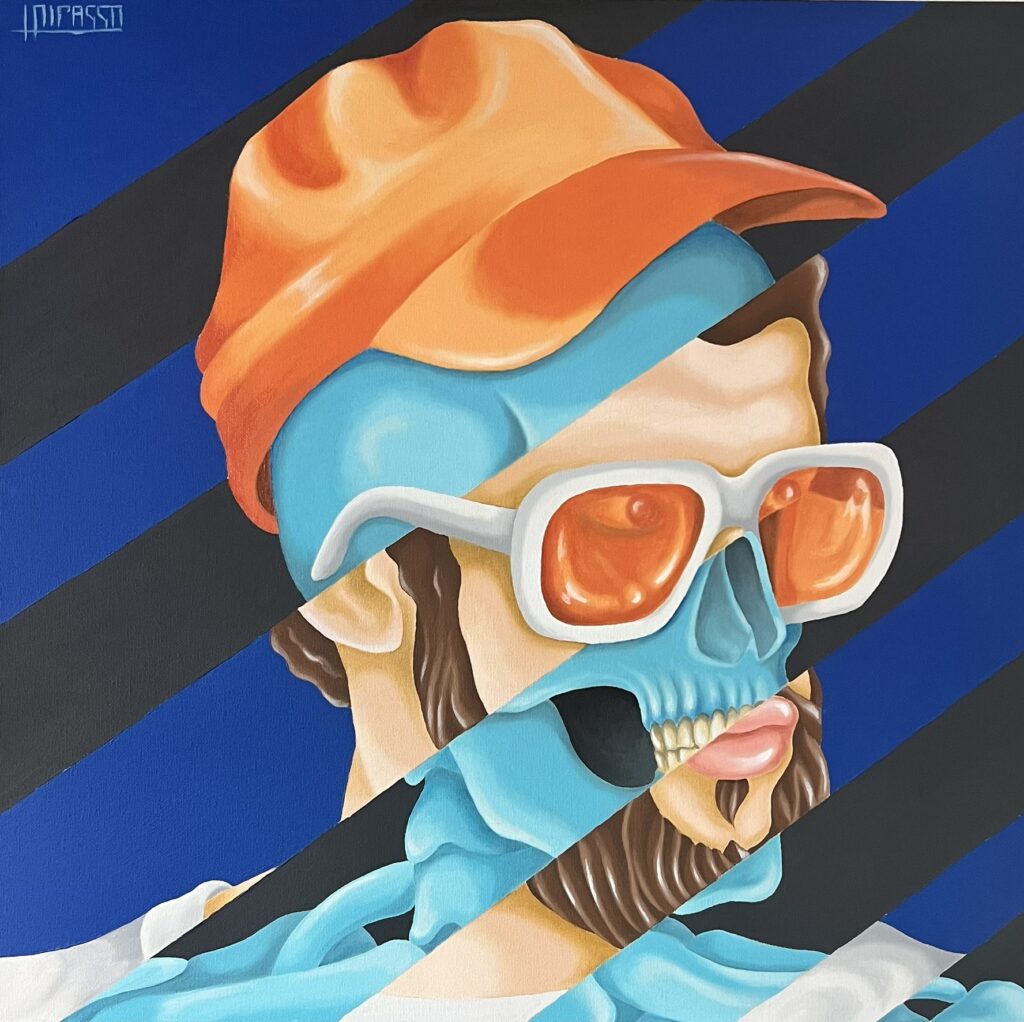
AMM. Because of your background in graphic design, some viewers question whether your works are digital or painted. How intentional is that ambiguity, and what role does graphic design play in shaping your visual language?
LPP. My background in graphic design is part of who I am and helped shape my style. I seek an imperfect perfection in my work: rough details, perfectly imperfect color blends, and lines that appear precise but are not.
The intention is not to confuse the viewer, but rather to allow each observer to dissect the work and decide what they want to see. Graphic design is very present in my visual language, but it is only one ingredient within the recipe of my artworks.
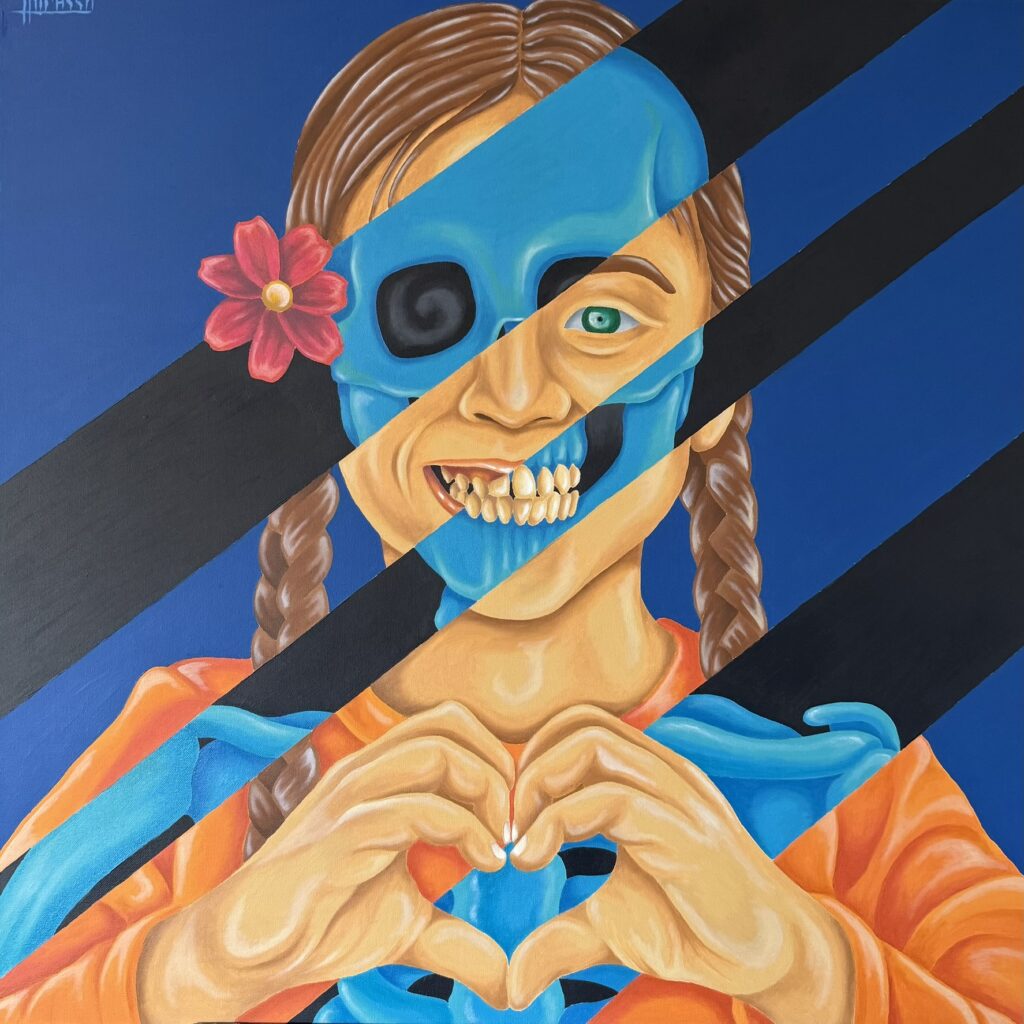
AMM. You’ve said that an artist earns the title through the people who experience the work. How do you define success as an artist, and how important is the viewer’s emotional response in validating your practice?
LPP. Artists live, in some way, through the validation of viewers. Even though some say they create only for themselves, the reality is that an artist also lives for their audience and to win over new hearts. That is why I believe the people are the ones who truly grant the title of artist.
For me, the greatest success is when a work becomes instantly recognizable — when someone stands in front of a painting and can say, “Ah yes, that’s a Picasso” (and not a Pablo one, of course ha!).
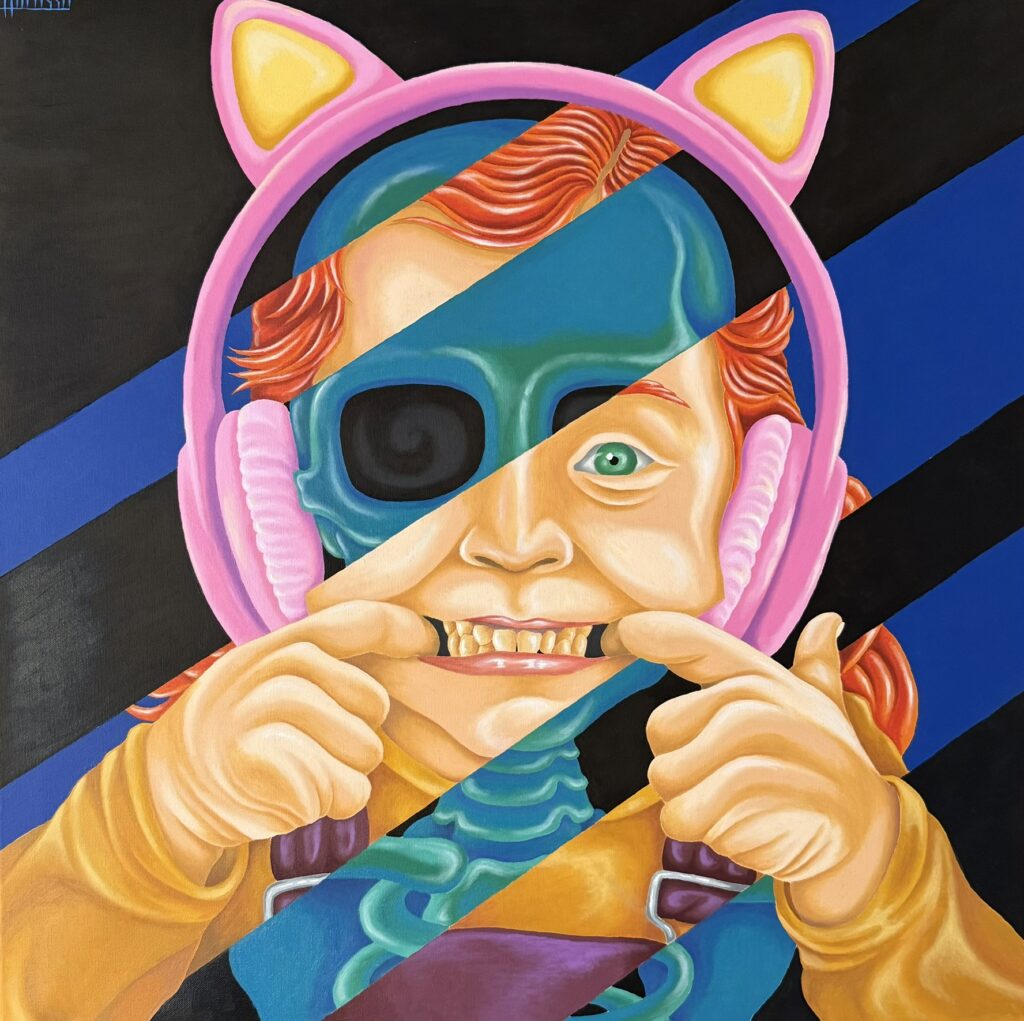
AMM. You mention the challenge of avoiding repetition and not being shaped by the art world. How do you protect your originality while still remaining aware of contemporary artistic conversations?
LPP. I believe one of the most beautiful aspects of being an artist is sharing experiences and moments with other artists. Connection, exchange, and collaboration enrich both the artwork and the artist. However, they can also influence one’s style. I’m not saying this applies to everyone, but it does affect me.
I aim for my work to be as pure and original as possible, even though in today’s world — with social media and globalization — being 100% original is almost impossible. My artistic practice is like a moment of meditation, something I prefer to do in solitude and complete isolation.