The Sacred Green Stone: Emeralds and the Art of Colombia’s Indigenous Peoples Before the Conquest
Sources: Museo del Oro del Banco de la República (Bogotá), Wikipedia scholarly entries on Muisca Art, Muisca Religion, and the Spanish Conquest of the Muisca; Smarthistory (academic art history platform); Natural Emerald Company historical research; Banco de la República cultural encyclopedia (banrepcultural.org); University of Yale indigenous studies program.
A Civilisation the World Forgot
When the Spanish conquistadors descended the Opón Mountains into the high Andean plateau in early 1537, they stumbled upon something they had not expected: a sophisticated, prosperous, and well-organized civilization — one that rivaled, in many respects, anything Europe could claim at the time. At this time the Muisca were one of four major civilizations in the New World, alongside the Incas, Mayas and Aztecs, but the ones history rarely discusses. They had formed a mostly peaceful confederation of tribes sharing a common language and religion, preferring a harmonious existence based around sun and moon worship (human sacrifices were rare), high-quality jewellery, pottery, and textiles. They were also excellent farmers, with salt mines and a huge supply of emeralds from eastern Boyacá. Colombia Corners
They are the forgotten civilization of pre-Columbian America. And at the heart of their culture — their art, their religion, their economy, and their mythology — was the emerald.
The Muisca: Masters of the Altiplano
The art of the indigenous inhabitants of the Altiplano Cundiboyacense is well studied by many researchers who published their work from the very beginning of colonial times. The conquistador who made first contact with the Muisca, Gonzalo Jiménez de Quesada, wrote in his memoirs about a skilled and well-organized civilisation of traders and farmers. Wikipedia
The Muisca had an economy and society considered to have been one of the most powerful of the American Post-Classic stage, mainly because of the precious resources of the area: gold and emeralds. When the Spaniards arrived in Muisca territory, they found a prosperous state. The abundance of salt, emeralds, and coal brought these commodities to a de facto currency status. Wikipedia
The Muisca made pottery and textiles, mined emeralds and salt, but lacked the gold and beeswax needed to create their signature gold pieces. For those raw materials, they bartered with neighboring peoples. Gold was not reduced to the use of the elite or the Muisca chiefs, and was not the principal object of prestige — it was mainly used for religious offering purposes. Instead, all Muisca families decorated their doors and windows with gold objects. Wikipedia
This is a crucial distinction that European observers fundamentally misunderstood: the Muisca were not accumulating wealth in the Western sense. They were engaging in a cosmic dialogue with their gods.
The Emerald in Muisca Cosmology: The Colour of the Underworld
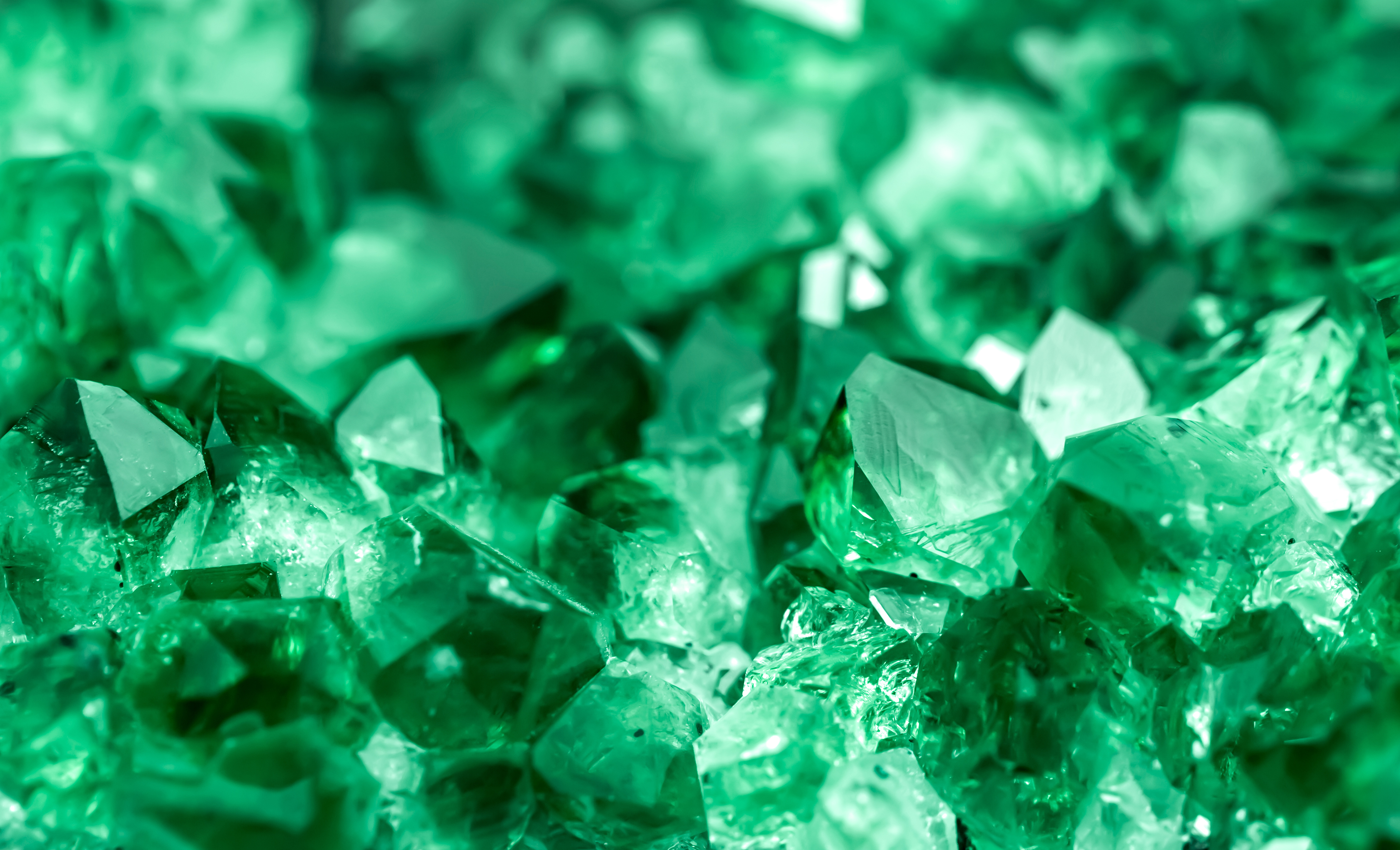
To understand why emeralds were so central to Muisca culture, one must first understand their worldview. The Muisca were a deeply religious people. They believed that the world was divided into three parts: the Supramundo above, the Inframundo below, and the Mundo Medio in the middle, where humans existed. For the Muisca, the underworld was green — and this was the symbolic value of emeralds. This colour represented water, fertility, and the force of life, which is why they incorporated so many of these emeralds in their religious offerings. Diario Joya
Among the Muisca, emerald was a symbol of fertility. It was also revered as a mythological ancestor to their tribe. Red Emerald
In the Muisca territories there were numerous natural locations considered sacred, including lakes, rivers, forests and large rocks. People gathered here to perform rituals and sacrifices mostly with gold and emeralds. Wikipedia
The emerald was not jewellery. It was theology made tangible.
The Legend of Fura and Tena: When Tears Became Stones
Every civilization creates origin myths for its most precious things. The Muisca story of how emeralds came to exist is one of the most moving in the pre-Columbian world.
The legend of Fura and Tena tells how the emeralds were created, and the rocks that contain them. Are, the supreme god and creator of the territory and people of the Muzos, created on the banks of the sacred river the first human beings, calling the woman Fura and the man Tena, granting them immortality on the condition that they remain faithful to each other. Diario Joya
Their peace was shattered by the arrival of a mysterious stranger called Zarbi. Fura was tempted by the stranger. As punishment, the two lovers were transformed into mountains, and from Fura’s weeping — deep and eternal — the emeralds were born, as green tears rising from the entrails of the earth. This story speaks not only of love and punishment, but also of the spiritual bond between human emotions and nature — a relationship the Muisca respected profoundly. Zipaquiraturistica
Today, in the municipality of Muzo in western Boyacá, two hills known as Fura and Tena rise above the Guaquimay River, separated by water as a symbol of the separation the lovers were forced to endure. For the indigenous Muzo people, these mountains were considered sacred places where their gods dwelled, and where they built altars for sacrifices. ENIGMA Joyería
It is worth noting that the two largest emeralds ever found — discovered in 1999 in the mines of Muzo — were named Fura and Tena in honour of this legend, carrying the mythology of a lost civilisation into the present day.
The Art of Goldwork: Tunjos and the Language of Offering
For Muisca goldsmiths, art had a double significance: aesthetic expression and religious symbolism. Among Muisca goldwork, the tunjos stand out — small human figures made in a single piece from thin sheet metal, in the form of a triangular plaque, stylizations made using the lost-wax technique. Todacolombia
The tunjos served three purposes: as decoration of temples and shrines, for offering rituals in the sacred lakes and rivers, and as pieces in funerary practices to accompany the dead into the afterlife. Ceramic human tunjos were kept in the houses of the Muisca, together with emeralds. Wikipedia
Muisca gold pieces are distinct from those of other Pre-Columbian peoples in terms of their use, manufacture, and appearance. The Muisca votive offerings were not worn as clothing or jewellery, but instead were used for symbolic purposes. They were often small enough to hold in the hand — sometimes as small as 1.5 cm. The tunjos were lost-wax casts using tumbaga, a gold alloy containing as much as 70% copper. Furthermore, Muisca objects are identifiable by their rough surfaces, in contrast to the polished gold of surrounding regions. Wikipedia
The Muisca society was in essence egalitarian, with slight differences in terms of jewellery use. The guecha warriors, priests and caciques were allowed to wear multiple types of jewellery, while common people used fewer ornaments. Golden or tumbaga jewellery consisted of diadems, nose pieces, breastplates, earrings, pendants, tiaras, bracelets, and masks. Wikipedia
The Muisca Raft: The Greatest Artwork of Pre-Columbian Colombia
No object better illustrates the fusion of emeralds, gold, and sacred ritual in Muisca culture than the Balsa Muisca — the Muisca Raft — housed today in the Museo del Oro in Bogotá.
Gold embodied profound meaning in the cosmogony of pre-Columbian societies as a sacred metal — a recipient of the Sun’s energy, a life-giving star, the source of fertility. Gold objects were not considered symbols of material wealth; they highlighted prestige and served as religious offerings. This marvellous piece, an outstanding example of a votive figure, is 19.5 cm long, 10.1 cm wide, and 10.2 cm high. It was made during the late period of the Muisca culture, sometime between 1200 and 1500 AD, cast as a single piece in a clay mould using the lost-wax technique, in high-grade gold (over 80%) alloyed with native silver and copper. Colombia Travel
The ritual it depicts consisted of making offerings to the deity Chibchachun, the god of merchants and goldsmiths. The types of offerings placed on the raft consisted of emeralds and gold, typically in the form of tunjos. The figure standing at the centre is believed to be the cacique, identified through hieratic scale — depicted larger than any other figure. The heavily adorned figure stands prominently at centre, flanked by twelve smaller figures wearing masks, carrying canes, and rowing. Smarthistory
By the reports of the Spanish chroniclers, when the Muisca cacique died, his nephew who succeeded him was acknowledged by his people in a ceremony that took place on a lake and included sailing on a raft and offering pieces of gold and emeralds that were thrown into the water. Banco de la República
The Muiscas conceived gold as part of a cycle they had to carry out to maintain nature’s balance. As they understood gold as a gift from the sun, they gave it back to the sun god and other gods as an offering through a ritual called “ATA-TA.” At times of the El Dorado ceremony, the Cacique would be covered with gold dust and embark on a reed raft laden with gold and emerald offerings. Arts Help
The raft was found in 1969, hidden in a ceramic pot inside a cave in the municipality of Pasca. It has never left Colombia. It has become an emblem of the nation, and the Bank of the Republic divulged it on banknotes. Today it is a symbol of Colombia and of Colombian identity, recognized as a masterpiece of the country’s indigenous ancestral culture. Banco de la República
Sacred Geography: The Lakes as Portals
The Muisca religion centred on two main deities: Sué for the Sun and Chía for the Moon. The supreme being was Chiminigagua, who created light and the Earth. The Muisca worshipped their gods at sacred sites — both natural, such as Lake Guatavita, the Siecha Lakes and Lake Tota, and constructed: the Sun and Moon Temples. Important lakes for rituals included Lake Guatavita, Lake Iguaque, Lake Fúquene, Lake Tota, the Siecha Lakes, Lake Teusacá and Lake Ubaque. Wikipedia
At these semi-annual festivals, the Caciques and the principal chiefs, bearing valuable gifts of gold-dust and emeralds, were paddled out in canoes to the exact middle of the lake, this point being determined by the intersection of two ropes stretching from four temples erected at four equidistant points on its banks. Once they arrived at this spot, the offerings were cast into the lake. Red Emerald
These lakes were not merely bodies of water. They were mouths of the earth — passages through which offerings reached the divine. One of the most extraordinary finds at the edges of Lake Guatavita during a later drainage attempt was, according to historical records, an emerald the size of a hen’s egg.
Architecture and the Lost Temples
While the other three great pre-Columbian civilisations — the Maya, Aztec, and Inca — are known for grand stone architecture, the modest Muisca architecture has left very little physical trace. The houses, called bohíos or malokas, and temples where spiritual gatherings took place honouring the gods and where tunjos, emeralds, and offerings were sacrificed, were made of degradable materials such as wood. Wikipedia
This is why so little survives. Not because the Muisca were less sophisticated — but because their architecture was organic, integrated into the land rather than imposed upon it. And because what was built from wood burns.
The Conquest: When the Sacred Became Plunder
In March 1537, Gonzalo Jiménez de Quesada led approximately 200 surviving soldiers up into Muisca territory. The Muisca were renowned for their intricately crafted goldwork and abundant emeralds. They were among the richest societies in all the New World. That wealth, however, became the impetus for their conquest. The plunder stolen by Jiménez de Quesada’s men nearly rivalled Francisco Pizarro’s sacking of the Inca. Earthasweknowit
The final haul was 200,000 gold pesos and 1,800 emeralds. Earthasweknowit
The spiritual heart of the Muisca world was destroyed in a single night. The Temple of the Sun, built to worship the Sun god Sué, one of the two main deities in the Muisca religion, was a temple filled with gold, emeralds, cloths, and mummies. While Gonzalo Jiménez de Quesada ordered his men to leave the Sun Temple, two of his soldiers entered the temple at night and found the mummies sitting on elevated platforms inside. Their torches accidentally set the temple, made of wooden poles and clay, on fire. Before this, the conquistadors had looted the temple and taken more than 300 kilograms of gold, worth 80,000 ducats at the time. Wikipedia
Spanish demand for emeralds exhausted ancient Muisca mines, while introduced livestock transformed the Andean ecosystem. Ancientwarhistory
The emeralds the Spanish extracted from the Chivor and Somondoco mines — stones that the Muisca had used as offerings to their gods, as symbols of the fertile underworld, as tears crystallized from a mythological love story — were pried from their sacred context, stripped of meaning, and shipped to Europe to be reset in the crowns of foreign kings.
What Survives
The Museo del Oro in the Colombian capital Bogotá houses the biggest collection of golden objects in the world, from various Colombian cultures including the Muisca. Wikipedia It is one of the most extraordinary museums on earth — not because of the monetary value of what it contains, but because of what those objects tell us about a civilisation that understood the relationship between art, nature, ritual, and community in ways that the conquistadors were entirely incapable of comprehending.
People often consider indigenous peoples unsophisticated, but nothing could be further from the truth. In reality, with respect to art, many of these indigenous artisans were more skilled in ancient techniques than we could fully understand. Yale University
The emerald was not a commodity to the Muisca. It was the colour of the underworld made solid. It was a tear. It was an ancestor. It was an offering returned to the earth that had produced it.
When the Spanish looked at an emerald in 1537, they saw wealth measured in ducats. When a Muisca looked at the same stone, they saw the earth breathing.
That difference is the distance between a civilization and its destruction.
For further research: Museo del Oro, Banco de la República, Bogotá (banrepcultural.org) • Smarthistory: Muisca Raft (smarthistory.org) • Wikipedia: Muisca Art, Muisca Religion, Spanish Conquest of the Muisca • Universidad de los Andes, Bogotá • Natural Emerald Company historical archive (emeralds.com)