ESTABLISHED ARTIST ART BASEL AWARD
Connecting Cao Fei, Delcy Morelos, Ho Tzu Nyen, Ibrahim Mahama, Nairy Baghramian, and Tony Cokes
Across continents and artistic languages, these six internationally acclaimed artists—Cao Fei, Delcy Morelos, Ho Tzu Nyen, Ibrahim Mahama, Nairy Baghramian, and Tony Cokes—collectively map the urgencies, transformations, and contradictions of contemporary life. Their practices expand the boundaries of sculpture, film, installation, and digital media, offering new vocabularies through which to understand identity, history, and social responsibility.
Cao Fei imagines the psychological landscapes of a digitized world; Delcy Morelos grounds viewers in the spiritual and ecological weight of the earth; Ho Tzu Nyen resurrects fragmented histories through layered cinematic fictions; Ibrahim Mahama activates public space and social memory through collective labor; Nairy Baghramian destabilizes sculptural form to reveal vulnerability and power; and Tony Cokes disrupts media narratives through text, color, and sound to expose the mechanics of ideology.
Together, they form a constellation of voices that redefine how art reflects and intervenes within the global present. Their works challenge viewers to reconsider the infrastructures—technological, political, material, and historical—that shape our lived experience. This grouping, while geographically diverse, is unified by a profound commitment to questioning the systems that govern perception, belonging, and truth. Each artist offers an invitation: to confront complexity, to embrace critical imagination, and to envision alternative futures.
Cao Fei
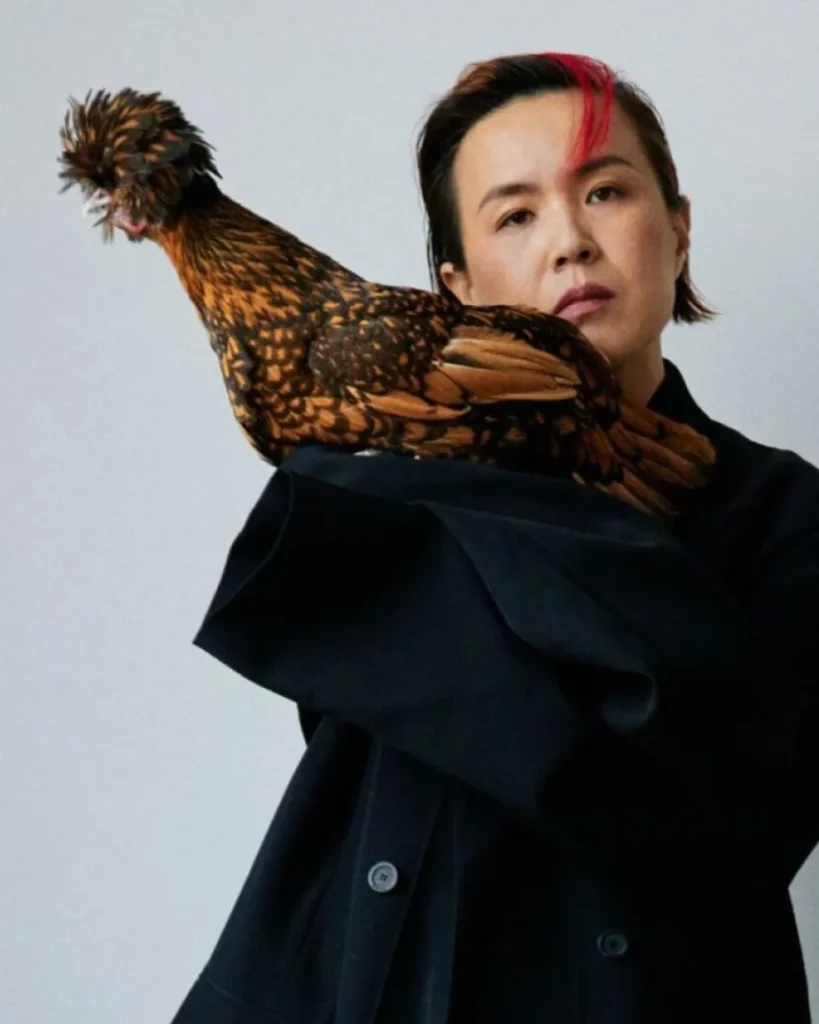
Cao Fei (b. 1978, Guangzhou) is one of the most influential artists working at the intersection of virtual reality, gaming culture, and the sociopolitical realities of contemporary China. Her films, digital environments, and speculative narratives examine how technology reshapes identity, labor, and urban life. Through imaginative world-building—ranging from Second Life avatars to future dystopias—Cao Fei captures the psychological atmosphere of a rapidly digitizing society.
Cao is an internationally renowned Chinese contemporary artist currently living and working in Beijing. She mixes social commentary, popular aesthetics, references to surrealism, and documentary conventions in her films and installations. Her works reflect on the rapid and developmental changes that are occurring in Chinese society today.
Cao Fei’s works have been exhibited at a number of international biennales, triennales, and major art museums including MoMA and the Solomon R. Guggenheim Museum in New York, Tate Modern in London, and the Centre Pompidou in Paris.
Cao Fei’s recent projects include a major retrospective at the UCCA Center for Contemporary Art, Beijing (2021); solo exhibitions at the MAXXI, the National Museum of 21st Century Arts, Rome (2021), Kunsthal Charlottenborg, Copenhagen (2022), Pinacoteca Contemporânea, São Paulo (2023), Lenbachhaus, Munich (2024), SCAD Museum of Art (2024), Museum of Art Pudong, Shanghai (2024),Art Gallery of New South Wales, Sydney (2024), Museo de Arte Latinoamericano de Buenos Aires (2024).
Cao Fei was nominated for the Hugo Boss Prize and the Future Generation Art Prize in 2010. She received the “Best Young Artist” award at the China Contemporary Art Award (CCAA) in 2006 and the ‘Best Artist’ award in 2016. In 2021, she won the Deutsche Börse Photography Foundation Prize, and in 2024, she was awarded the SCAD deFINE ART Award.
Delcy Morelos
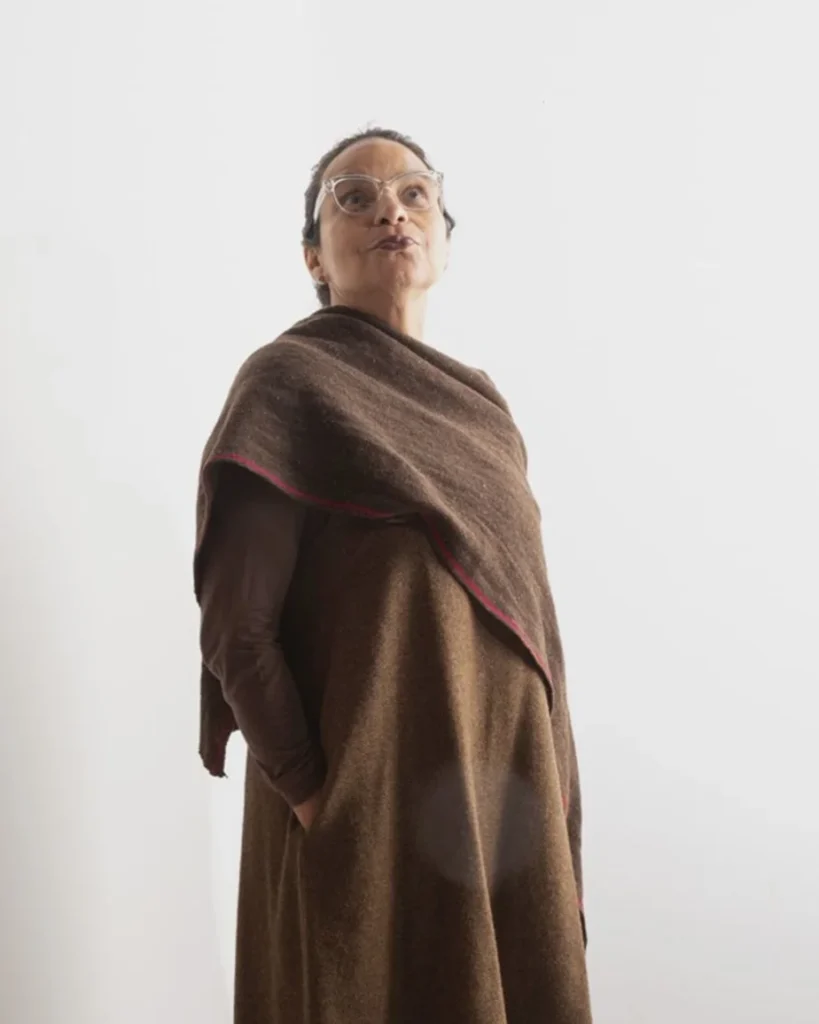
Delcy Morelos (Born in 1967 in Tierralta in Colombia) is internationally recognized for her immersive installations made from soil, natural fibers, pigments, and scents. Her work bridges Indigenous cosmologies with contemporary ecological discourse, emphasizing the spiritual and political agency of the earth itself. Morelos transforms exhibition spaces into tactile, sensorial environments that confront colonial histories, land dispossession, and the healing potency of material connection.
Delcy studied at the Cartagena School of Fine Arts. She lives and works in Bogotá. Her practice is rooted in ancestral Andean cosmovision, and her works inspire rumination on the interplay between human beings and earth, the human body and materiality.
In her early works, Morelos focused primarily on the intersection between body and violence. Over time, her material investigations extended into ceramics and textiles, developing a more sculptural practice and large-scale multisensory installations.
Ho Tzu Nyen
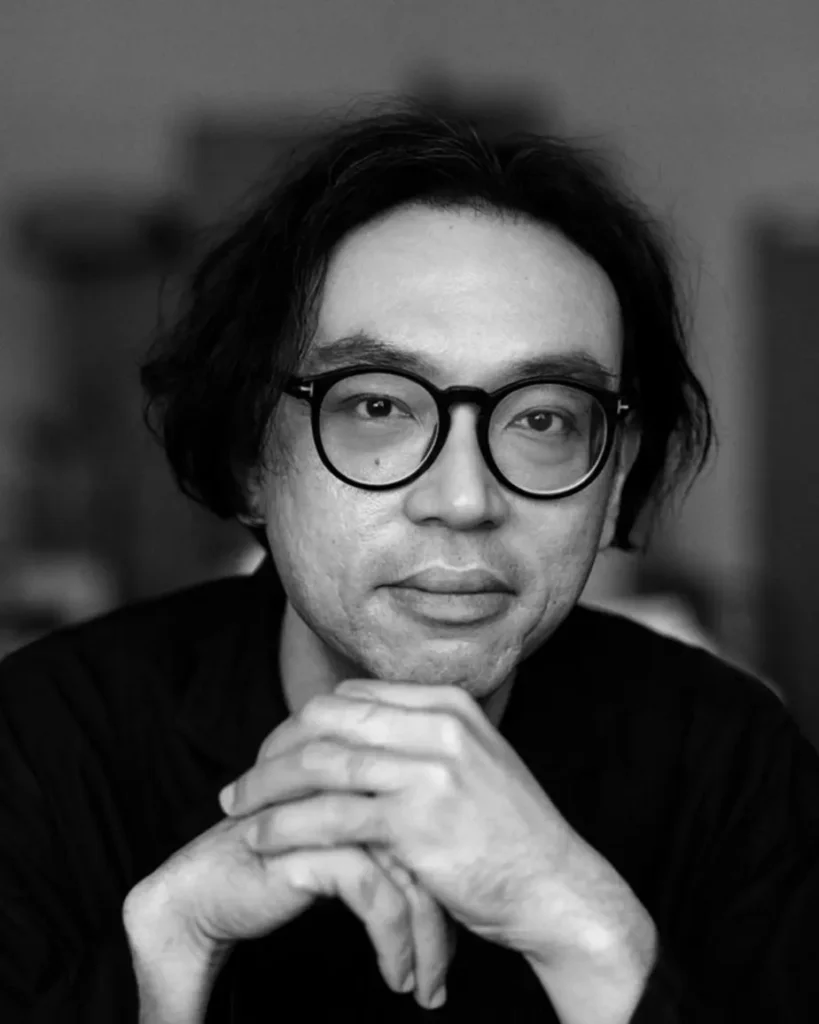
Ho Tzu Nyen (Singapore) produces conceptually rich films, theatrical installations, and algorithmic artworks that explore Southeast Asian histories, mythologies, and political imaginaries. Blending archival research with speculative narrative, he reanimates ghosts, rebels, tigers, and historical figures to investigate how power is constructed and remembered. His work stands at the forefront of contemporary moving image practice.
Steeped in numerous Eastern and Western cultural references ranging from art history to theatre and from cinema to music to philosophy, Ho Tzu Nyen’s works blend mythical narratives and historical facts to mobilise different understandings of history, its writing and its transmission. The central theme of his œuvre is a long-term investigation of the plurality of cultural identities in Southeast Asia, a region so multifaceted in terms of its languages, religions, cultures and influences that it is impossible to reduce it to a simple geographical area or some fundamental historical base. This observation as to the history of this region of the world is reflected in his pieces which weave together different regimes of knowledge, narratives and representations. From documentary research to fantasy, his work combines archival images, animation and film in installations that are often immersive and theatrical.
One-person exhibitions of his work have been held at the Mudam Museum of Modern Art (2025), Hessel Museum of Art (2024), Art Sonje Center (2024), Museum of Contemporary Art Tokyo (2024), Singapore Art Museum (2023), Hammer Museum (2022), Toyota Municipal Museum of Art (2021), Crow Museum of Asian Arts (2021), Yamaguchi Center for Arts and Media [YCAM] (2021), Edith-Russ-Haus for Media Art (Oldenburg, 2019), Kunstverein in Hamburg (2018), Ming Contemporary Art Museum [McaM] (Shanghai, 2018), Asia Art Archive (2017), Guggenheim Bilbao (2015), Mori Art Museum, (2012), The Substation (Singapore, 2003). He represented the Singapore Pavilion at the 54th Venice Biennale (2011).
Ibrahim Mahama
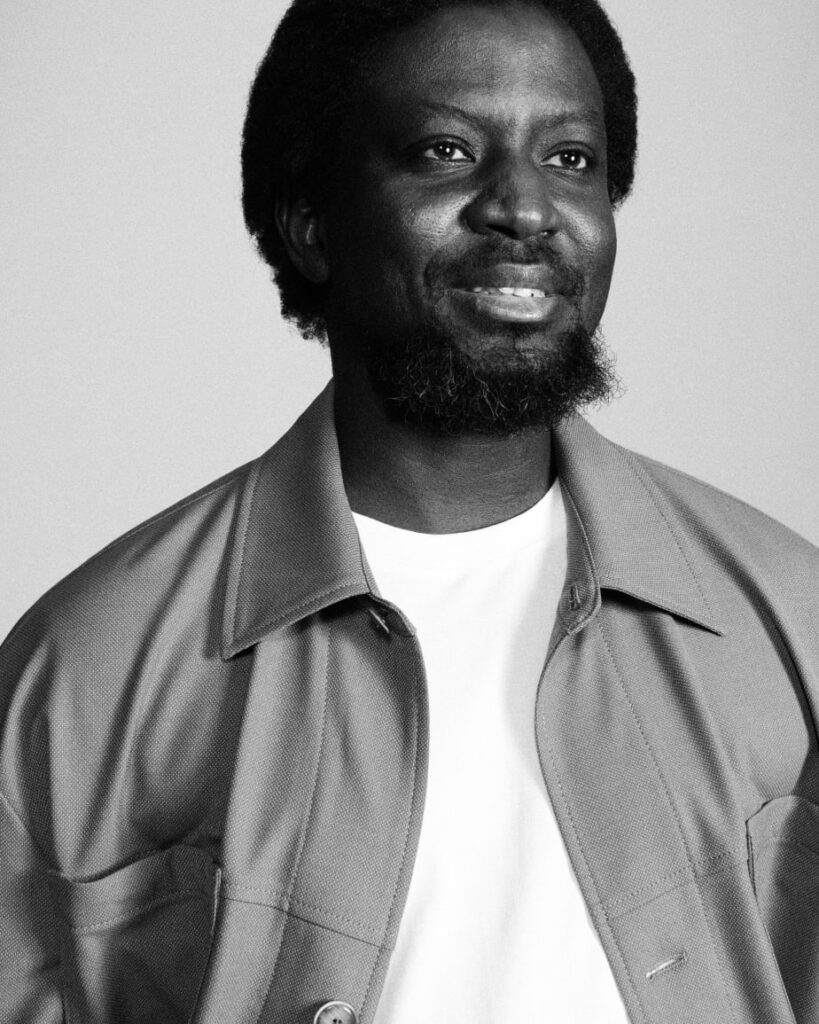
Ghanaian artist Ibrahim Mahama is known for monumental, socially engaged installations using jute sacks, rescued materials, and architectural interventions. His collaborative approach transforms discarded objects—often tied to histories of trade, migration, and labor—into powerful symbols of collective resilience. Mahama’s large-scale public works question global supply chains while empowering local communities through shared making and cultural infrastructure.
Ibrahim is an artist interested in the redistribution of materials forms through the making of artistic interventions. his current work focuses on building various institutions to connect new audiences to contemporary art. the artist’s studio isn’t just a place for production but a space for collective reflection about the conditions of the body across time. the artist’s studio can be a space of miracles.
Nairy Baghramian
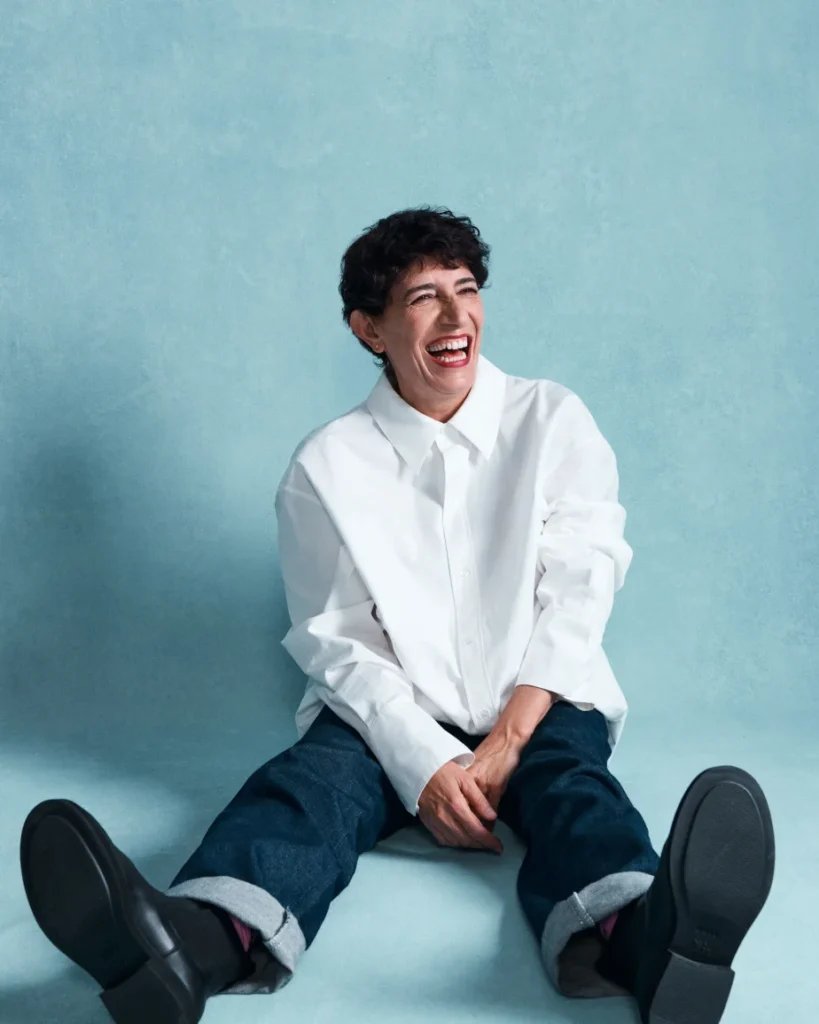
Nairy Baghramian (Iran/Germany) is a leading figure in contemporary sculpture, recognized for her explorations of the body, architecture, and material instability. Working with cast metal, resin, wax, and industrial components, she creates forms that appear simultaneously fragile and authoritative. Her sculptures probe vulnerability, support structures, and the politics of display, offering a nuanced critique of modernist sculptural traditions.
Nairy’s work traverses the realms of sculpture, installation, photography and drawing with fearless experimentation, historical acuity and conceptual rigor. Particularly in her prime medium of sculpture, the artist employs an extensive repertoire of techniques, materials and forms to address the spatial, architectural, social, political and contextual conditions of contemporary art. Using an abstract vocabulary that often combines geometric shapes and organic matter, industrial process and gestural procedure, Baghramian’s abstract yet eminently allusive works subtly explore the ligatures between art and other fields of object production (most notably interior design, dance and theater) in order to evoke and address bodies of all variants in both their vulnerability and obstinacy. Through her innovative use of materials and manipulation of familiar forms, Baghramian’s work invites viewers to reconsider their sense of self, space, object and site.
German artist Baghramian was born in Isfahan in 1971 and had to flee post-revolutionary Iran as a teenager and has been living and working in Berlin since 1984.
Recent solo exhibitions include those at South London Gallery, London UK (2024); the the Nivola Museum, Sardinia IT (2024); the Metropolitan Museum of Art, New York NY (2023 -24);the Aspen Art Museum, Aspen CO (2023); Nasher Sculpture Center, Dallas TX (2022); Carré d’Art, Nimes, France (2022); Secession, Vienna, Austria (2021); Galleria d’Arte Moderna (GAM), Milan, Italy (2021); MUDAM Luxembourg, Luxembourg (2019); Palacio de Cristal, Madrid, Spain (2018); the Walker Art Center, Minneapolis MN (2017); Statens Museum for Kunst, National Gallery of Denmark, Copenhagen, Denmark (2017); Museum of Contemporary Art, Ghent, Belgium (2016); Museum Haus Konstruktiv, Zürich, Switzerland (2016); Museo Tamayo, Mexico City, Mexico (2015); The Art Institute of Chicago IL (2014); Serralves Museum, Porto, Portugal (2014); MIT Visual Arts Center, Cambridge MA (2013); Kunsthalle Mannheim, Germany (2012); the Contemporary Art Gallery, Vancouver, Canada (2012); and Serpentine Gallery, London, UK (2010); Kunsthalle Basel, Switzerland (2006).
Baghramian has also participated at Venice Biennale, Italy (2019 and 2011); Yorkshire Sculpture International, Wakefield, UK (2019); Documenta 14 in Kassel, Germany and Athens, Greece (2017); Skulptur Projekte Muenster, Germany (2017 and 2007); Lyon Biennale, France (2017); Glasgow International Festival of Visual Art, UK (2012); and the Berlin Biennale, Germany (2014 and 2008).
Baghramian has been the recipient of numerous awards including the Aspen Art Award (2023); the Nivola Award (2022); Nasher Prize Laureate (2022); the Malcolm-McLaren-Award with Maria Hassabi (2019); the Zürich Art Prize (2016); the Arnold-Bode Prize, Kassel (2014); the Hector Prize, Kunsthalle Mannheim (2012); and the Ernst Schering Foundation Award (2007).
Her works are held in institutional collections, including Museum of Modern Art, New York NY; Metropolitan Museum of Art, New York NY; San Francisco Museum of Modern Art, CA; Hammer Museum, Los Angeles CA; Salomon Guggenheim Collection, New York NY; Walker Art Center, Minneapolis MN; Tate Modern, London, UK; Centre Pompidou, Paris, France; MUDAM Luxembourg, Luxembourg; Tamayo Museum, Mexico City, Mexico; Jumex Museum, Mexico City, Mexico; Nasher Art Center, Dallas TX; Art Institute Chicago, Chicago IL; MOCA, Los Angeles CA.
Upcoming projects are the contribution to the sculpture garden Kistefos, Oslo, NO and a solo exhibition at Wiels, Brussels, BE both in 2025.
Tony Cokes
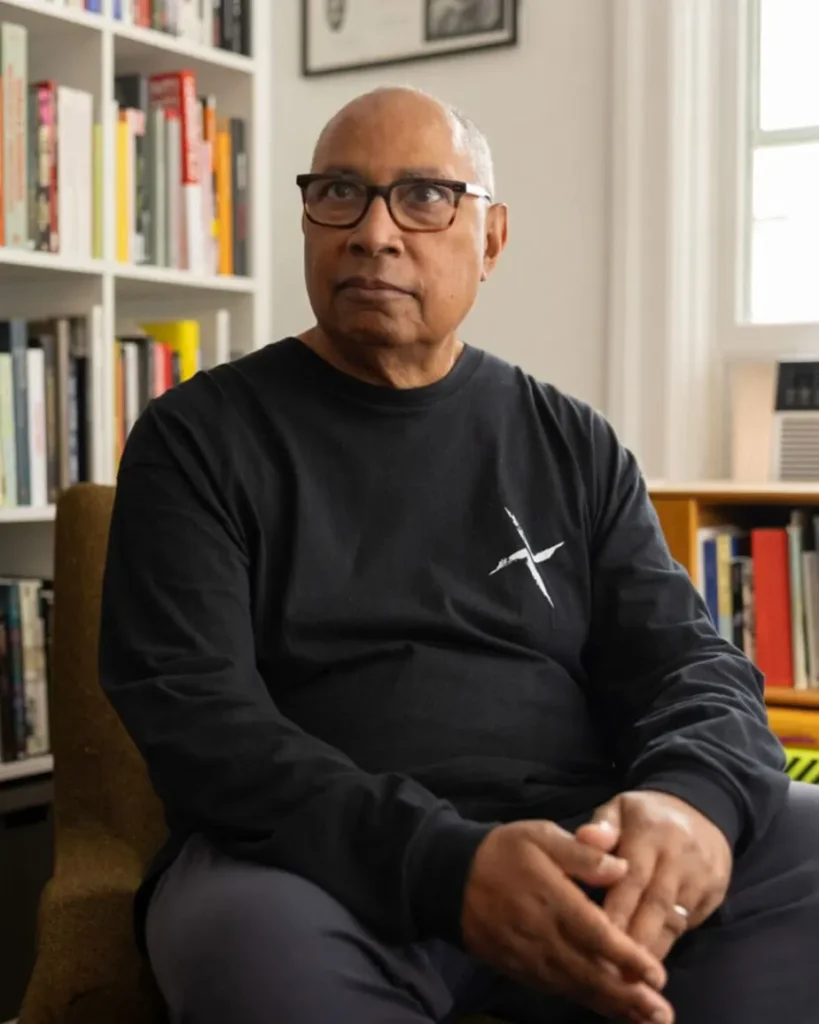
Tony Cokes (USA) is celebrated for his incisive text-based video works that remix political speeches, pop music, media theory, and found footage to critique race, capitalism, and state violence. Using bold typography and saturated color fields, Cokes deconstructs the language of power and propaganda. His work has shaped new directions in moving image art, offering a radical reconsideration of how narrative and authority function in contemporary culture.
Tony received a BA from Goddard College (1979) and an MFA from Virginia Commonwealth University (1985). He joined the faculty of Brown University in 1993 and is currently a professor in the Department of Modern Culture and Media. His work has been exhibited at national and international venues, including Haus Der Kunst and Kunstverein (Munich); Dia Bridgehampton (New York); Memorial Art Gallery University of Rochester; MACRO Contemporary Art Museum (Rome); and the Carpenter Center for the Visual Arts (Harvard University), among others.