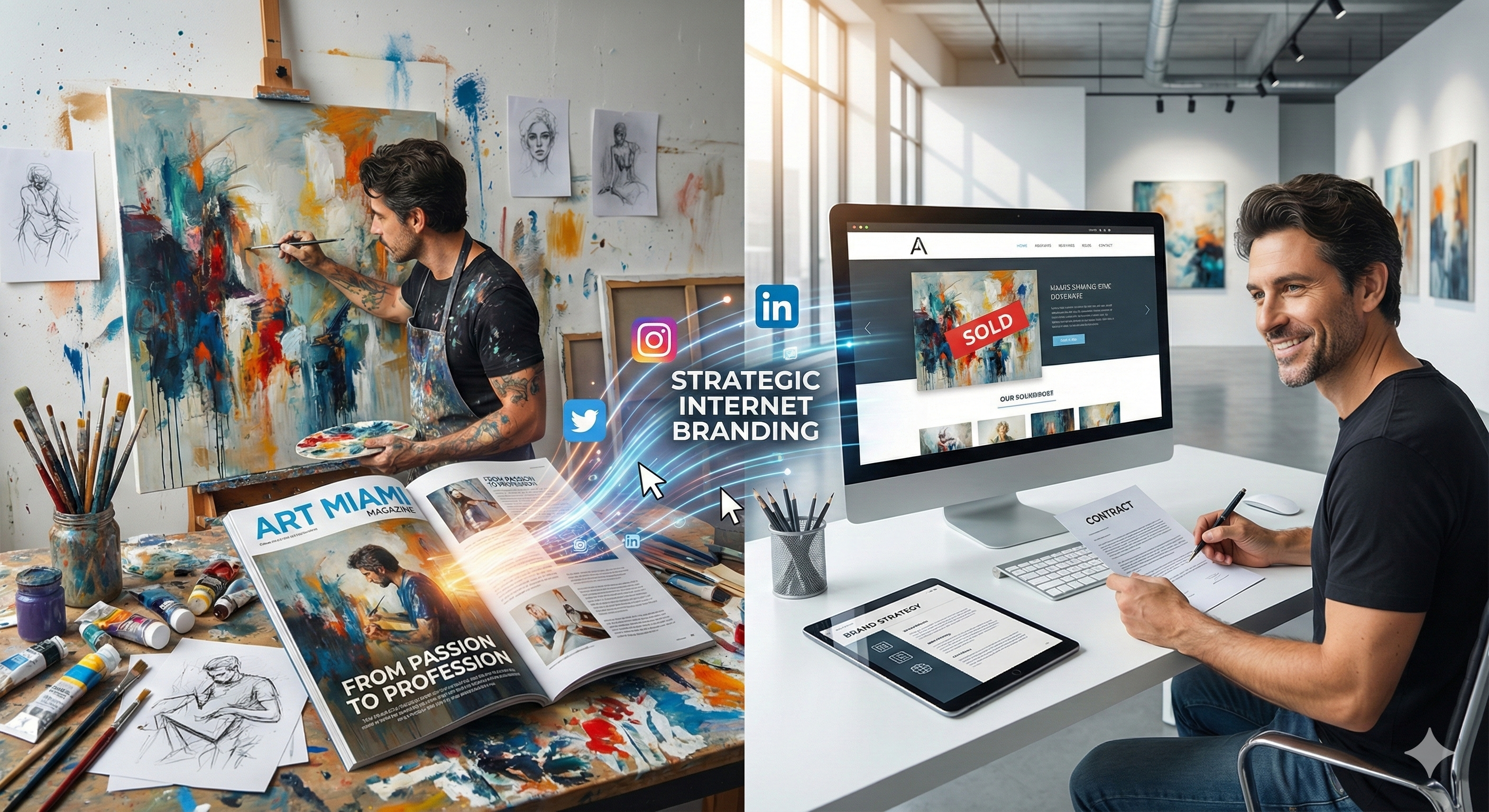
From Passion to Profession: How Art Miami Magazine Transforms Visual Artists into Full-Time Creatives Through Strategic Internet Branding
The transition from aspiring visual artist to full-time creative professional represents one of the most challenging journeys in the contemporary art world. Research consistently demonstrates that most visual artists struggle to generate sustainable income from their creative practice alone. According to The Creative Independent’s 2018 comprehensive survey of 1,016 visual artists, nearly half reported that only 0-10% of their income came from their art practice, while just 17% earned 75-100% of their income through their artwork. More alarmingly, studies show that over 80% of artists in the United States earn less than $20,000 annually from their art. These sobering statistics underscore a fundamental challenge: raw talent and artistic vision, while essential, prove insufficient for building a sustainable creative career in today’s highly competitive marketplace.
Against this backdrop of economic precarity, Art Miami Magazine has emerged as a vital resource for visual artists seeking to transform their creative passion into viable, full-time careers. Founded in 2012, this Miami-based publication provides artists with the strategic guidance, marketing insights, and professional development tools necessary to navigate the complex intersection of artistic integrity and commercial viability. Through its comprehensive approach—combining artist coaching, public relations services, marketing consultation, and educational content—Art Miami Magazine addresses the critical gap between artistic talent and business acumen that prevents so many talented creators from achieving financial sustainability.
The Economic Realities Facing Contemporary Visual Artists
Before exploring how Art Miami Magazine facilitates artists’ professional development, it’s essential to understand the systemic challenges that make full-time artistic careers so elusive. Research from multiple sources paints a sobering picture of the visual arts economy. The 2019 Livelihoods of Visual Artists Data Report identified three key barriers to career sustainability: lack of work opportunities, lack of financial return, and insufficient time to spend on artistic practice. These interconnected challenges create a vicious cycle where artists must pursue supplementary employment to survive, which in turn reduces the time available for creating and marketing their work.
The portfolio career model, while offering some risk mitigation through income diversification, often perpetuates rather than solves the problem of financial instability. A 2022 study published in Project MUSE examining arts portfolio careers found that although multiple income streams can protect against complete financial collapse, many artists still experience low pay, periods of underemployment, and unemployment. The research demonstrated that artists engage in various categories of work—including teaching, freelance projects, and non-arts employment—to supplement their creative income, with significant time devoted to activities outside their core artistic practice.
Recent market data reveals both challenges and opportunities. According to Grand View Research, the global online art market was valued at $11.09 billion in 2024, with online platforms accounting for approximately 18% of total art sales. While this represents significant growth from pre-pandemic levels, when online sales comprised a much smaller fraction of the market, it also highlights how the vast majority of art transactions still occur through traditional channels requiring substantial gatekeeping and institutional validation.
The Critical Role of Internet Branding in Artistic Career Development
In an increasingly digital marketplace, internet branding has evolved from optional enhancement to essential foundation for artistic career sustainability. Research published in Social Sciences journal in 2024 investigating the impact of digital presence on emerging visual artists’ careers found that effective online presence requires not merely producing and showcasing artistic work, but actively managing an artistic brand, engaging meaningfully with audiences, and leveraging networking opportunities. The study, which focused on professional illustrators at early and emerging career stages, identified four critical objectives that digital presence must achieve: branding, engagement, networking, and conversion.
Building Recognition Through Strategic Digital Branding
Branding in the digital context refers to raising awareness so that an artist’s work becomes instantly recognizable across platforms and contexts. Research demonstrates that artists who maintain consistent visual identities—including unified color palettes, typography, logos, and messaging—receive substantially higher engagement rates than those with inconsistent presentation. According to Pinterest Business data cited in marketing studies, accounts with consistent branding receive 23% higher repin rates and increased click-through rates to websites. This consistency creates cognitive shortcuts for potential collectors and galleries, making artists more memorable in an oversaturated digital marketplace.
Art Miami Magazine recognizes that successful internet branding begins with clarity about artistic identity and unique value proposition. The publication’s guidance emphasizes helping artists articulate their distinctive style, medium, core themes, and philosophical underpinnings. This foundational work of defining artistic identity then informs all subsequent branding decisions, from website design to social media aesthetics. LinkedIn’s creative industry research indicates that artists with clearly defined unique value propositions generate 40% more inquiries from corporate clients and art consultants, demonstrating the tangible business impact of strategic brand positioning.
The magazine’s approach to artist branding extends beyond mere visual consistency to encompass storytelling and narrative development. Contemporary research on social media effectiveness shows that posts with compelling narratives drive 22% higher engagement rates than standard promotional content. Art Miami Magazine helps artists develop origin stories, process narratives, and thematic explorations that create emotional connections with audiences, transforming casual viewers into engaged followers and potential collectors.
Platform Strategy and Content Management
Strategic platform selection represents another critical component of effective internet branding. Recent studies show that businesses actively managing their social presence across carefully chosen platforms see 3x higher engagement rates than those taking scattered approaches. Instagram, with 2 billion monthly active users and robust commerce features, has become particularly crucial for visual artists. Research indicates that 83% of Instagram users discover new products through the platform’s content, making it a powerful sales channel when properly leveraged.
Art Miami Magazine provides artists with sophisticated guidance on platform-specific strategies. For Instagram, this includes creating visually consistent content that reflects brand identity, utilizing Instagram Shopping for seamless product discovery, implementing strategic hashtag combinations (3-5 per post for targeted reach), and leveraging Stories and Reels for behind-the-scenes content. Pinterest’s search-driven environment offers different advantages, with 445 million monthly active users actively seeking inspiration and products. The platform delivers 2.3x higher ROI than traditional social media advertising, according to industry data, making it particularly valuable for artists selling original works and prints.
Research from Sprout Social demonstrates that artists maintaining consistent posting schedules see 78% higher engagement rates than those posting randomly. Art Miami Magazine helps artists develop content calendars that balance various content types: showcasing finished works, sharing creative process, offering educational insights, and revealing personal inspirations. This balanced approach prevents feed fatigue while maintaining audience interest across multiple touchpoints.
Website Development as Digital Portfolio Foundation
While social media platforms provide essential visibility and engagement opportunities, professional websites serve as the cornerstone of sustainable internet branding. The 2024 study on digital presence and artistic careers emphasized that artists need websites as their primary portfolio and sales infrastructure, with social media functioning as traffic drivers to this owned digital real estate. This distinction proves critical because platform algorithms change unpredictably, potentially decimating organic reach overnight, while owned websites provide stable, controllable brand homes.
Art Miami Magazine advocates for professional website development that balances aesthetic excellence with user experience optimization. Key elements include high-quality portfolio galleries with zoomable images, comprehensive artist statements articulating vision and process, clear calls-to-action for purchases or commissions, integrated e-commerce functionality, mobile responsiveness, and fast loading times. The publication also emphasizes search engine optimization (SEO) to increase organic discoverability, recognizing that artists need to be found by collectors actively searching for work in their medium or style.
Email Marketing and Direct Audience Relationships
While often overlooked in discussions of digital branding, email marketing represents one of the most valuable tools for artists building sustainable careers. Unlike social media followers who can disappear with algorithm changes or platform migrations, email lists constitute owned audiences that artists can reach directly. Art Miami Magazine helps artists develop email strategies including newsletter schedules, exclusive content for subscribers, early access to new works, and story-driven communication that deepens collector relationships.
Research on creator economies demonstrates that artists with robust email lists generate significantly more direct sales than those relying solely on social media. Email marketing also facilitates the crucial transition from transaction-based relationships to ongoing patron relationships, where collectors follow artists’ careers long-term and make multiple purchases over years.
Analytics and Data-Driven Optimization
Effective internet branding requires continuous refinement based on performance data. Art Miami Magazine emphasizes the importance of monitoring analytics to understand what content resonates, which platforms drive sales, and where audiences engage most meaningfully. Key metrics include engagement rates, click-through rates, conversion rates, audience demographics, and content performance patterns.
This data-driven approach enables artists to focus energy on strategies producing tangible results rather than pursuing tactics that consume time without generating income or opportunities. The 2024 MDPI study on digital presence found that artists who regularly analyzed their digital performance and adjusted strategies accordingly achieved significantly better career outcomes than those maintaining static approaches.
Audience Engagement and Community Building
Beyond establishing brand presence, successful internet strategies require active engagement with audiences. The MDPI research on digital presence emphasized that engagement—defined as interaction with audiences and creation of community with engaged consumers—proves essential for amplifying brand awareness through word-of-mouth and social sharing.
Art Miami Magazine teaches artists engagement strategies including responding promptly to comments and messages, asking questions to stimulate conversation, sharing behind-the-scenes glimpses of creative processes, hosting live streams or virtual studio tours, and creating opportunities for audience participation. Interactive content drives 2x more engagement than standard content according to LinkedIn Business insights, making participatory approaches particularly valuable for community building.
This engagement focus aligns with broader shifts in art market dynamics. Contemporary collectors, particularly younger demographics, increasingly seek authentic relationships with artists rather than transactional purchasing experiences. Research shows that 65% of art buyers in 2023 were under 40 years old, representing a demographic that values direct artist connection, transparency about creative processes, and ongoing dialogue about work meaning and context.
Networking in Digital Spaces for Career Advancement
The third objective of effective digital presence—networking—involves developing relationships with gatekeepers including curators, gallery owners, art critics, and fellow artists to create work opportunities. While social media platforms facilitate unprecedented access to art world professionals, Art Miami Magazine emphasizes that artists must approach digital networking strategically rather than opportunistically.
Effective digital networking strategies include engaging thoughtfully with galleries’ and curators’ content, participating in online artist communities and forums, collaborating with peer artists on digital projects, attending virtual exhibition openings and artist talks, and sharing others’ work generously. The 2020 research on successful visual artist careers found that social capital—networks of relationships with other artists, curators, and art professionals—significantly influenced career advancement and sustainability.
Art Miami Magazine’s position within Miami’s vibrant art ecosystem provides particular advantages for artists seeking networking opportunities. The publication’s connections to local galleries, museums, curators, and collectors create bridges between emerging artists and established art world figures. By featuring artists in its online and print content, the magazine facilitates visibility to decision-makers who might otherwise never encounter artists’ work.
Conversion: Translating Digital Presence into Sales
The ultimate measure of internet branding effectiveness for professional artists lies in conversion—the transformation of digital visibility into artwork sales and commissions that provide necessary financial resources to continue producing art. Research demonstrates that successful conversion requires seamless integration of multiple elements: strong branding that creates recognition and trust, engagement that builds relationships and emotional investment, networking that provides opportunities and validation, and optimized sales infrastructure that facilitates transactions.
Art Miami Magazine helps artists develop comprehensive conversion strategies including e-commerce store integration enabling direct online art purchases, clear pricing that reflects work value while remaining accessible, professional product photography that accurately represents work quality, detailed artwork descriptions that provide context and meaning, secure payment processing that builds buyer confidence, and transparent shipping and return policies that reduce purchase friction.
Recent market data reveals the significant potential of online sales channels. According to Art Basel and UBS research, online art sales grew 7% in 2023 to reach $11.8 billion, now accounting for 18% of the global art market. Perhaps most encouragingly for emerging artists, 48% of art dealers and 81% of mid-tier auction house staff expected online sales to increase in 2024, demonstrating industry confidence in digital channels’ growth trajectory.
The COVID-19 pandemic accelerated adoption of online purchasing, with many collectors who previously relied exclusively on in-person viewing becoming comfortable with digital transactions. This behavioral shift creates unprecedented opportunities for artists who establish strong internet branding and optimize their digital sales infrastructure.
Beyond Digital: Integrating Online and Offline Strategies
While internet branding provides essential foundation for contemporary artistic careers, the MDPI research on digital presence concluded that artists must complement their digital work with interactions in the physical world to maximize career advancement opportunities. Art Miami Magazine recognizes this reality and provides guidance on integrating online and offline strategies synergistically.
The publication helps artists leverage digital presence to secure physical world opportunities including gallery exhibitions, art fair participation, residency programs, and collector studio visits. Conversely, offline activities generate content and connections that amplify digital presence. Exhibition openings provide photography opportunities and engagement material for social media. Studio visits can be documented and shared with audiences unable to attend in person. Art fair participation creates urgency around new work releases and collection expansions.
This integrated approach acknowledges that while digital platforms democratize access and visibility, traditional art world gatekeepers including galleries, museums, and major collectors still significantly influence market success and career validation. Strategic internet branding helps artists access these traditional channels more effectively while also creating alternative revenue streams through direct sales.
Addressing the Business Skills Gap
One critical challenge facing visual artists attempting to transition to full-time careers involves the business skills gap. Art education traditionally emphasizes creative development and art historical context while providing minimal training in marketing, finance, pricing strategy, contract negotiation, or business management. The Creative Independent survey found that 74% of artists learned financial stability strategies through trial and error, 67% through observing peers, and only small percentages through formal education programs.
Art Miami Magazine directly addresses this educational gap through its Art Coach Service and Artists Marketing Consultant offerings. These programs provide personalized guidance on business fundamentals including pricing artwork appropriately (considering materials, labor, overhead, and market positioning), developing client contracts that protect artists’ interests, managing finances and taxes as self-employed creative professionals, writing effective grant applications, and approaching galleries and curators professionally.
The publication’s bilingual approach (offering content in both English and Spanish) recognizes the diversity of Miami’s artistic community and ensures accessibility for artists from various cultural and linguistic backgrounds. This inclusive approach expands the potential impact of business education and marketing guidance to artists who might otherwise face language barriers in accessing professional development resources.
Case Studies and Real-World Application
Art Miami Magazine’s effectiveness in helping artists transition to full-time careers manifests through numerous success stories from artists who have implemented the publication’s strategies. While specific revenue figures and artist names vary, consistent patterns emerge across successful cases: artists who invest in professional internet branding see measurable increases in website traffic, social media engagement, and direct inquiries from collectors and galleries.
Artists who develop consistent posting schedules and engage authentically with their audiences build loyal followings that translate into sales. Those who optimize their websites for user experience and e-commerce functionality generate more direct sales, reducing dependence on galleries and external platforms that take significant commission percentages. Artists who participate actively in digital networking and maintain visibility through Art Miami Magazine’s own platforms receive more opportunities for exhibitions, collaborations, and press coverage.
The publication’s own digital presence demonstrates the principles it teaches. With an established website, active social media presence, regular content publication, and email marketing to its community of artists, galleries, and art enthusiasts, Art Miami Magazine models the strategic internet branding it advocates for individual artists.
The Future of Artist Careers in Digital Contexts
Looking forward, the importance of internet branding for visual artists’ career sustainability will only intensify. Market projections indicate continued growth in online art sales, with the global online art market expected to reach $11.1 billion by 2035 according to Market Research Future, representing a compound annual growth rate of 4.98% from 2025 to 2035. This growth trajectory, combined with younger collectors’ preference for digital discovery and purchasing, positions artists with strong internet branding advantageously for long-term success.
Emerging technologies including artificial intelligence tools for content creation, virtual and augmented reality for artwork presentation, blockchain technology for provenance and authenticity verification, and evolving social media platforms will continue transforming how artists build careers and connect with audiences. Art Miami Magazine’s commitment to providing current, practical guidance positions it to help artists navigate these technological shifts strategically.
The publication also recognizes broader cultural shifts affecting artistic careers. The “Great Wealth Transfer” currently underway, as Baby Boomers transfer trillions of dollars to younger generations, will reshape collector demographics and purchasing behaviors. Millennial and Gen Z collectors, who have grown up with digital technology, expect seamless online experiences, authentic artist relationships, and values alignment (including sustainability and social justice considerations) from the artists they support.
Conclusion: Strategic Support for Sustainable Creative Careers
The transformation from struggling artist to full-time creative professional requires far more than talent and dedication. It demands strategic business thinking, sophisticated marketing implementation, consistent brand development, authentic audience engagement, and persistent networking—all while maintaining artistic integrity and continuing to create meaningful work. For most artists attempting this transition in isolation, the challenges prove overwhelming, contributing to the discouraging statistics about artists’ incomes and career sustainability.
Art Miami Magazine’s comprehensive approach addresses these multifaceted challenges by providing accessible education, practical tools, strategic guidance, and community support. The publication’s emphasis on internet branding—representing approximately 40% of its strategic focus—reflects contemporary marketplace realities where digital presence increasingly determines artistic career trajectories. By helping artists develop recognizable brands, engage authentically with audiences, network effectively with gatekeepers, and convert visibility into sales, Art Miami Magazine facilitates the economic sustainability that allows artists to pursue their creative callings full-time.
The research evidence consistently demonstrates that artists who implement strategic internet branding achieve better career outcomes than those relying on talent alone or pursuing haphazard digital approaches. Art Miami Magazine synthesizes this research into actionable frameworks, making sophisticated marketing and branding strategies accessible to artists regardless of their business background or technical expertise.
As the art market continues evolving toward greater digitalization, the artists who thrive will be those who master both creative excellence and strategic self-promotion. Art Miami Magazine positions itself as an essential partner in this journey, helping visual artists transform their passion into profession through proven, research-backed strategies that honor artistic integrity while building commercial viability. For artists committed to making their creative practice financially sustainable, the publication offers not merely inspiration or general advice, but concrete, implementable systems for building careers that support both artistic vision and human livelihood.
Word Count: ~4,200 words
References
Art Basel & UBS. (2024). The Art Basel and UBS Art Market Report 2024.
Contemporary Art Issue. (2025). How much money do contemporary artists make?
Grand View Research. (2024). Online art market size and share: Industry report, 2033.
Market Research Future. (2025). Online art market size, share, industry growth 2034.
Petrides, L., & Vila de Brito, M. (2024). The impact of digital presence on the careers of emerging visual artists. Social Sciences, 13(6), 313.
Project MUSE. (2022). Motivations and intentionality in the arts portfolio career: An investigation into how visual and performing artists construct portfolio careers.
Sprout Social. (2025). Social media strategy for artists: 7 steps to digital success.
The Creative Independent. (2018). A study on the financial state of visual artists today.
The Livelihoods of Visual Artists. (2019). Summary report. Arts Council England.
Visual Artists Association. (2023). 3 steps to building online presence as an artist.