Varvara Stepanova (1894–1958): Constructivism, Labor, and the Politics of Form
Varvara Fyodorovna Stepanova (Варва́ра Фёдоровна Степа́нова) stands as one of the most intellectually rigorous and politically committed figures of the Russian avant-garde. Born into a peasant family in 1894, she traversed a remarkable trajectory—from provincial origins to the epicenter of revolutionary cultural production—ultimately becoming a foundational architect of Constructivism alongside her lifelong partner and collaborator, Alexander Rodchenko. If Constructivism sought to dismantle the autonomy of art and reforge it as an instrument of social transformation, Stepanova was among its most lucid theorists and disciplined practitioners.
Education, Early Formation, and the Cubo-Futurist Moment
Stepanova received formal training at the Kazan Art School, where she met Rodchenko. Their partnership—intellectual as much as personal—would become one of the most generative collaborations in twentieth-century art. In pre-revolutionary Moscow, she moved within the same creative milieu as Wassily Kandinsky, among others. The shared apartment anecdote—Rodchenko, Kandinsky, and Stepanova under one roof—captures not merely bohemian proximity but a crucible of competing modernisms: Kandinsky’s spiritual abstraction, Rodchenko’s analytic materialism, and Stepanova’s emerging synthesis of form and function.
Before fully embracing Constructivism, Stepanova engaged with Cubo-Futurism, producing dynamic compositions and artist’s books that fractured pictorial space into rhythmic geometries. These works already reveal her preoccupation with movement, industrial dynamism, and the destabilization of traditional representation. Yet unlike many avant-gardists, she did not remain in the realm of experimental form for its own sake. The Revolution of 1917 provided a historical mandate: art must leave the easel and enter life.
Constructivism and the Refusal of the “Autonomous” Artwork
Constructivism, articulated in dialogue with figures such as Vladimir Tatlin and theorized in polemical debates across Moscow’s artistic institutions, rejected the romantic conception of the artist as solitary genius. Instead, it positioned the artist as a worker among workers—a constructor of visual culture within a new socialist society. Stepanova was not peripheral to this shift; she was central to its operationalization.
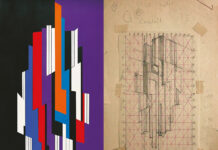
Her move from painting to applied design was neither capitulation nor compromise. It was ideological clarity. Textile design, clothing prototypes, stage design, photomontage, and graphic work for journals such as LEF became the laboratories through which she tested Constructivist principles. The grid, the diagonal, and bold chromatic contrasts were not aesthetic ornaments but structuring devices aligned with industrial reproducibility and collective use.
Textile Design and the Social Body
Perhaps nowhere is Stepanova’s revolutionary commitment more visible than in her textile and clothing designs of the early 1920s. Working with state-supported textile factories, she developed patterns that translated avant-garde geometry into mass-produced fabrics. The aim was explicit: to dissolve the boundary between high art and everyday life. Clothing was reconceived as utilitarian, standardized, and emancipatory—freeing women from restrictive bourgeois fashion and aligning the body with modern labor.
Her sportswear designs in particular articulate a new vision of the socialist body: active, rational, gender-progressive. In these works, form follows function with uncompromising clarity. Ornament gives way to structure; decoration becomes systemic. The female body is neither fetishized nor concealed but integrated into the rhythms of collective production.
Emancipation, Labor, and the Revolutionary Woman
The Russian Revolution opened unprecedented possibilities for women’s participation in political and cultural life. Stepanova exemplified this transformation. As an artist working within state-supported institutions—an exceptional circumstance in global art history at the time—she contributed to visual programs that aligned with broader legislative reforms: equal labor rights, the eight-hour workday, wage negotiation, and juridical equality between men and women.
Importantly, her contribution to women’s emancipation was not rhetorical but material. By designing functional garments and accessible textiles, she restructured the visual economy of daily life. Her work supported the ideological claim that gender equality must be embedded in the material conditions of production and representation. In this sense, she was not merely an artist of the Revolution; she was a designer of its social fabric.
Photomontage, Typography, and Visual Communism
Stepanova’s graphic design and photomontage further consolidated what might be termed a visual communism: an aesthetic language of diagonals, sans-serif typography, stark contrasts, and dynamic asymmetry that continues to shape global design. Working closely with Rodchenko, she participated in the development of a visual rhetoric that merged agitation and clarity. The page became a site of construction—images and text engineered for maximum ideological legibility.
Her approach was distinct from that of contemporaries such as El Lissitzky. Where Lissitzky often maintained a quasi-architectural transcendence, Stepanova insisted on immediacy and functionality. Her compositions rarely indulge in metaphysical speculation; they operate as directives, instructions, prototypes.
Legacy and Reassessment
With the rise of Socialist Realism in the 1930s, the experimental fervor of the avant-garde receded under state orthodoxy. Like many of her peers, Stepanova’s radical formal experiments were curtailed. Yet her impact persists—not only in museum retrospectives but in the very grammar of contemporary design: modular grids, bold typographic interventions, and the conviction that visual form carries ideological weight.
From a curatorial perspective, Stepanova demands a reframing of modernism’s canon. Too often overshadowed by Rodchenko in Western narratives, she must be recognized not as adjunct but as co-author of Constructivist methodology. Her career complicates the dichotomy between fine art and applied art, revealing that the most radical gesture of the early Soviet avant-garde was not the invention of abstraction but its insertion into the structures of everyday life.
Varvara Stepanova’s project was nothing less than the reengineering of perception in service of collective emancipation. In her hands, geometry became politics; fabric became manifesto; and design became destiny.