The Essential Guide to Palette Knives in Acrylic Painting
Palette knives are versatile tools that deserve a prominent place in every acrylic painter’s studio. While brushes often steal the spotlight, these flat, flexible metal blades offer unique possibilities for creating texture, mixing colors, and applying paint in ways that brushes simply cannot match.
What Makes Palette Knives Special?
Unlike brushes, palette knives excel at working with heavy body and medium body acrylics. Their rigid yet flexible blades allow artists to load generous amounts of paint and apply it in thick, sculptural layers known as impasto. This technique creates dramatic surface texture and catches light in compelling ways, adding dimensional interest to your work.
The versatility of palette knives extends beyond application. They’re equally valuable for scraping away wet paint to correct mistakes or create specific effects, and for efficiently mixing colors on your palette. One of their most practical advantages is cleanliness: a single swipe across a rag removes all traces of paint, leaving your knife ready for the next color. This makes color mixing far more organized and efficient compared to the thorough cleaning brushes require between uses.
Techniques and Effects
Palette knives open up a world of textural possibilities. You can create perfectly smooth, glass-like surfaces by carefully dragging the blade across your canvas, or build up rough, expressive textures by dabbing and scraping with varied pressure. The edge of the knife creates crisp, clean lines impossible to achieve with a brush, while the flat surface allows you to blend colors directly on the canvas with bold, confident strokes.
Many artists use palette knives in combination with brushes, laying down initial washes with brushes and adding textured highlights and details with knives. This mixed-media approach combines the strengths of both tools.
Choosing Your First Palette Knives
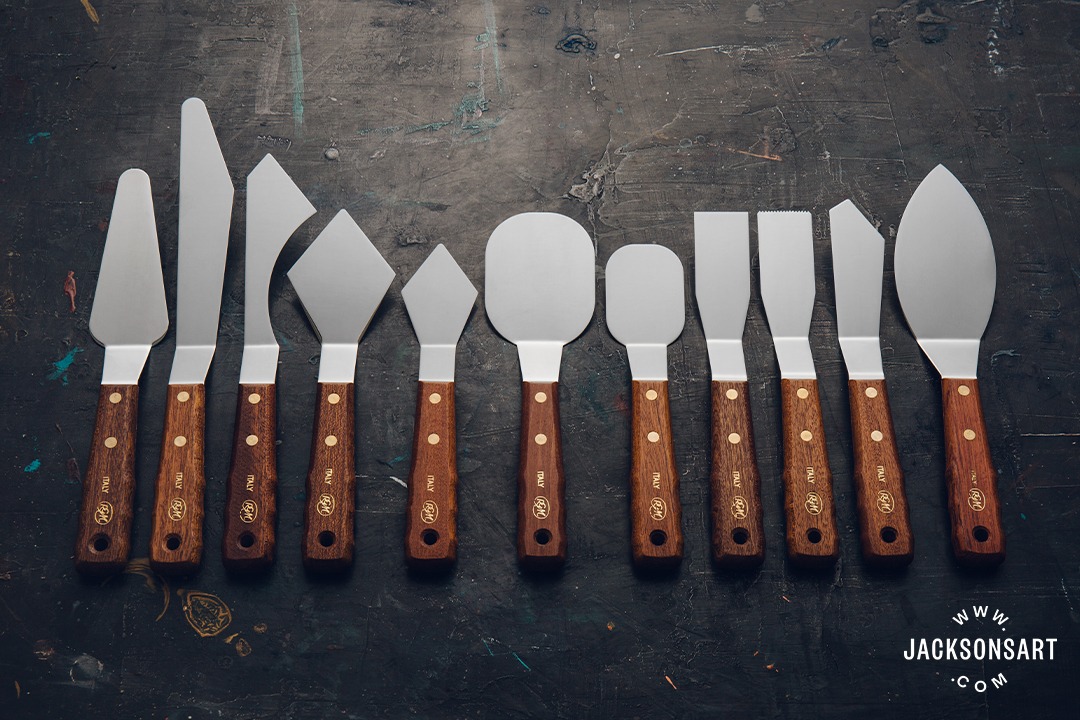
Palette knives come in numerous shapes and sizes, each suited to different tasks. Beginners don’t need an extensive collection—starting with two or three knives in different shapes will serve you well. Look for knives with offset cranked handles, which lift your hand away from the canvas and prevent smudging wet paint as you work.
Quality matters when selecting palette knives. Well-made knives from ranges like Extra Crank Offset Painting Knives or RGM Palette Knives feature durable construction and blades with the ideal balance of flexibility and strength. A blade that’s too stiff won’t allow for nuanced control, while one that’s too flexible will buckle under the pressure of thick paint application.
Consider starting with a medium-sized trowel shape for general painting and mixing, and a smaller diamond or pear-shaped knife for detail work. As you become comfortable with these tools, you’ll naturally discover which additional shapes would benefit your particular style.
Care and Maintenance
Palette knives require minimal maintenance but will last for years with proper care. Clean them thoroughly after each painting session, ensuring no dried paint accumulates along the blade edges or where the blade meets the handle. Dried acrylic is difficult to remove and can affect the knife’s flexibility over time.
Store your knives flat or hanging to prevent bending, and avoid using them as scrapers for dried paint on your palette—this can damage the blade edge and reduce their effectiveness for painting.
Expanding Your Technique
Once you’ve mastered basic palette knife application, experiment with more advanced techniques. Try sgraffito, scratching through wet paint layers to reveal colors beneath. Use the knife edge to create precise architectural elements or define sharp horizons. Layer multiple colors without blending them completely to achieve rich, complex color relationships.
The beauty of palette knife painting lies in its immediacy and boldness. Each stroke is decisive and visible, encouraging a confident, expressive approach to painting. Whether you’re creating smooth color fields or building up dramatic impasto peaks, palette knives offer a direct, tactile connection to your work that every acrylic painter should explore.