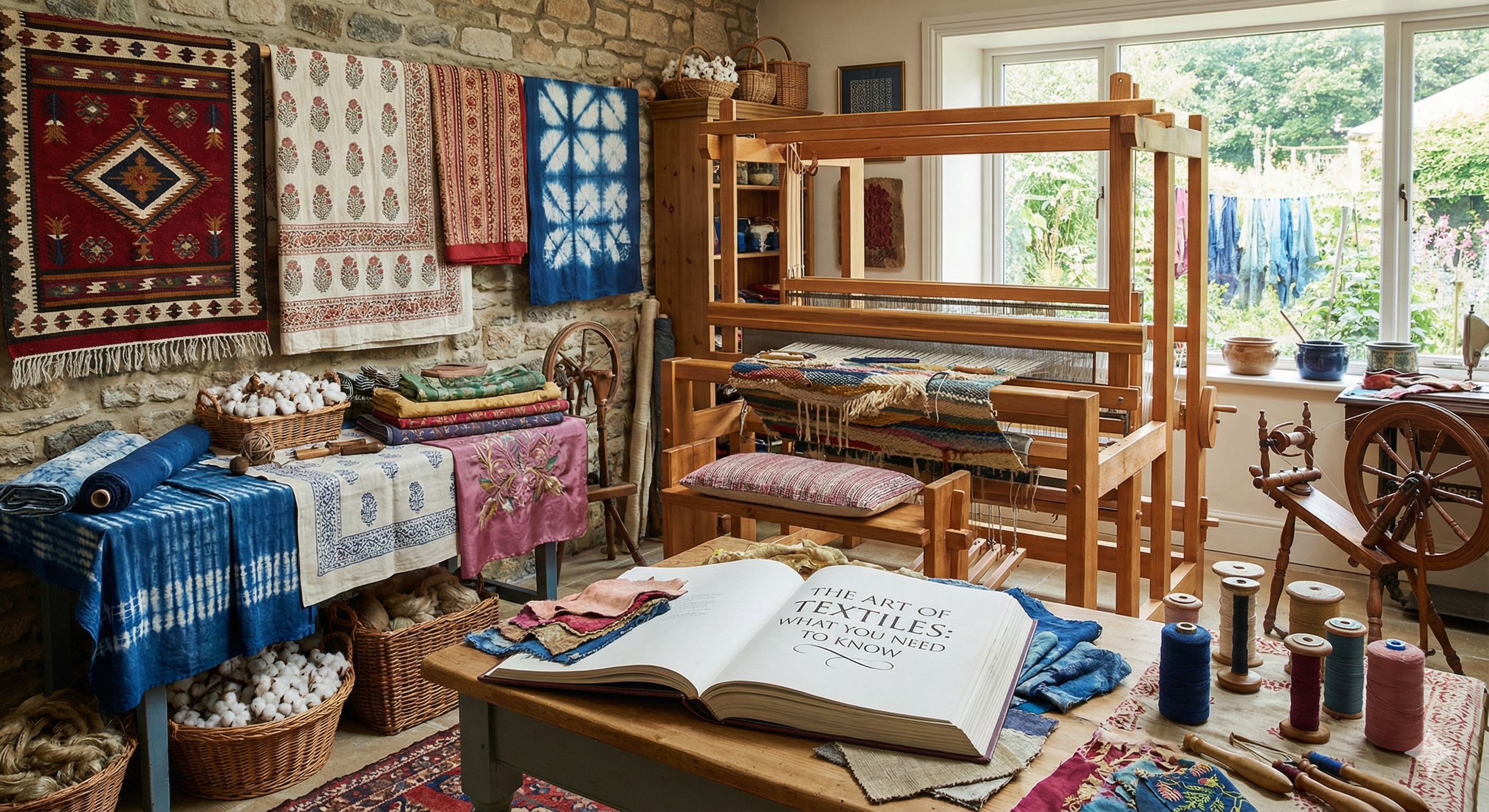
The Art of Textiles: What You Need to Know
A Guide to Luxury Fibers and Timeless Textile Crafts
Textiles are more than materials—they are a visual language made of fiber, structure, and touch. From the luxurious softness of cashmere, alpaca, and mohair to the sustainable beauty of Tencel and raffia, each fiber carries its own character, history, and expressive potential. In contemporary textile art, materials are not simply chosen for comfort or durability, but for how they shape form, texture, and meaning.
This guide explores both the natural fibers that define high-quality textiles and the time-honored techniques that bring them to life. Embroidery, needlepoint, cross-stitch, crochet, and macramé are not just crafts—they are visual practices rooted in rhythm, repetition, and gesture. These techniques transform thread into surface, pattern into narrative, and cloth into an expressive medium that resonates across cultures and generations.
For visual artists, understanding textiles means understanding how material becomes message. The warmth of wool, the fluidity of jersey, the strength of raffia, or the refined drape of Tencel all influence how a piece communicates. Whether creating, collecting, or curating, knowing the properties of fibers and the traditions behind textile techniques deepens your ability to read, appreciate, and work with textile-based art.
Textiles sit at the intersection of craft, sustainability, and visual culture. By learning how fibers and techniques interact, artists and collectors alike gain insight into what makes a textile piece not just beautiful, but meaningful.
Fibre A general term encompassing all natural and synthetic textile materials used in fabric production. Fibers form the foundation of textiles, whether sourced from plants, animals, minerals, or manufactured synthetically.
Cashmere An ultra-luxurious fiber obtained from the soft undercoat of cashmere goats. Prized for its exceptional softness, lightweight warmth, and refined elegance, cashmere is one of the most coveted materials in high-end textiles.
Wool A natural protein fiber from sheep, valued for its durability, insulation, and breathability. Wool regulates temperature naturally, resists wrinkles, and offers timeless versatility across seasons.
Cotton A soft, natural fiber harvested from cotton plants. Breathable, hypoallergenic, and easy to care for, cotton is celebrated for its comfort, absorbency, and crisp, clean feel in warm climates.
Raffia A natural fiber derived from raffia palm leaves, known for its organic texture and tropical aesthetic. Lightweight and eco-friendly, raffia brings an artisanal, relaxed elegance to textiles and home furnishings.
Alpaca A luxurious fiber from alpacas, softer and warmer than sheep’s wool. Hypoallergenic and silky to the touch, alpaca offers exceptional thermal properties without the weight, making it ideal for refined, comfortable pieces.
Mohair A lustrous fiber from Angora goats, distinguished by its brilliant sheen and resilience. Mohair drapes beautifully, resists wrinkles, and adds a sophisticated shimmer to fabrics while maintaining excellent durability.
Jersey A soft, stretchy knit fabric traditionally made from cotton, wool, or synthetic fibers. Known for its comfort and flexibility, jersey drapes elegantly and moves with the body, offering effortless, casual sophistication.
Tencel An eco-conscious fiber made from sustainably sourced wood pulp. Tencel combines the softness of silk with exceptional breathability and moisture-wicking properties, offering a luxurious feel with minimal environmental impact.
Knitting A textile craft that creates fabric by interlocking loops of yarn using needles. Knitting produces versatile, stretchy textiles ranging from delicate lacework to chunky cable knits, offering endless possibilities for garments and home décor.
Crochet A technique using a single hooked needle to create interlocking loops and chains of yarn. Crochet allows for intricate patterns, three-dimensional textures, and decorative edgings, producing everything from delicate doilies to bold statement pieces.
Needlepoint A precise form of canvas embroidery where yarn is stitched through an open-weave canvas to create detailed designs. Needlepoint produces durable, richly textured pieces ideal for pillows, upholstery, and decorative art with heirloom quality.
Embroidery The art of decorating fabric with needle and thread, creating ornamental designs through various stitching techniques. Embroidery adds dimension, color, and personalized detail to textiles, from subtle monograms to elaborate pictorial scenes.
Cross-Stitch A counted thread embroidery technique using X-shaped stitches to form patterns on even-weave fabric. Cross-stitch creates crisp, geometric designs with a charming, traditional aesthetic, perfect for samplers and decorative accents.Macramé A fiber art using knotting techniques rather than weaving or knitting to create textured patterns. Macramé produces boho-chic pieces with natural, organic appeal—from wall hangings and plant hangers to decorative home accessories with dimensional beauty.
Tool Essentials
- Scissors & Cutting Tools
(Lil’ Scissors, Big Scissors) - Measuring & Marking Tools
(Tape Measure, Stitch Markers) - Pom Pom & Craft Tools
(Pom Pom Maker)