Overcoming Creative Block: Resilience and Critical Thinking as Essential Tools
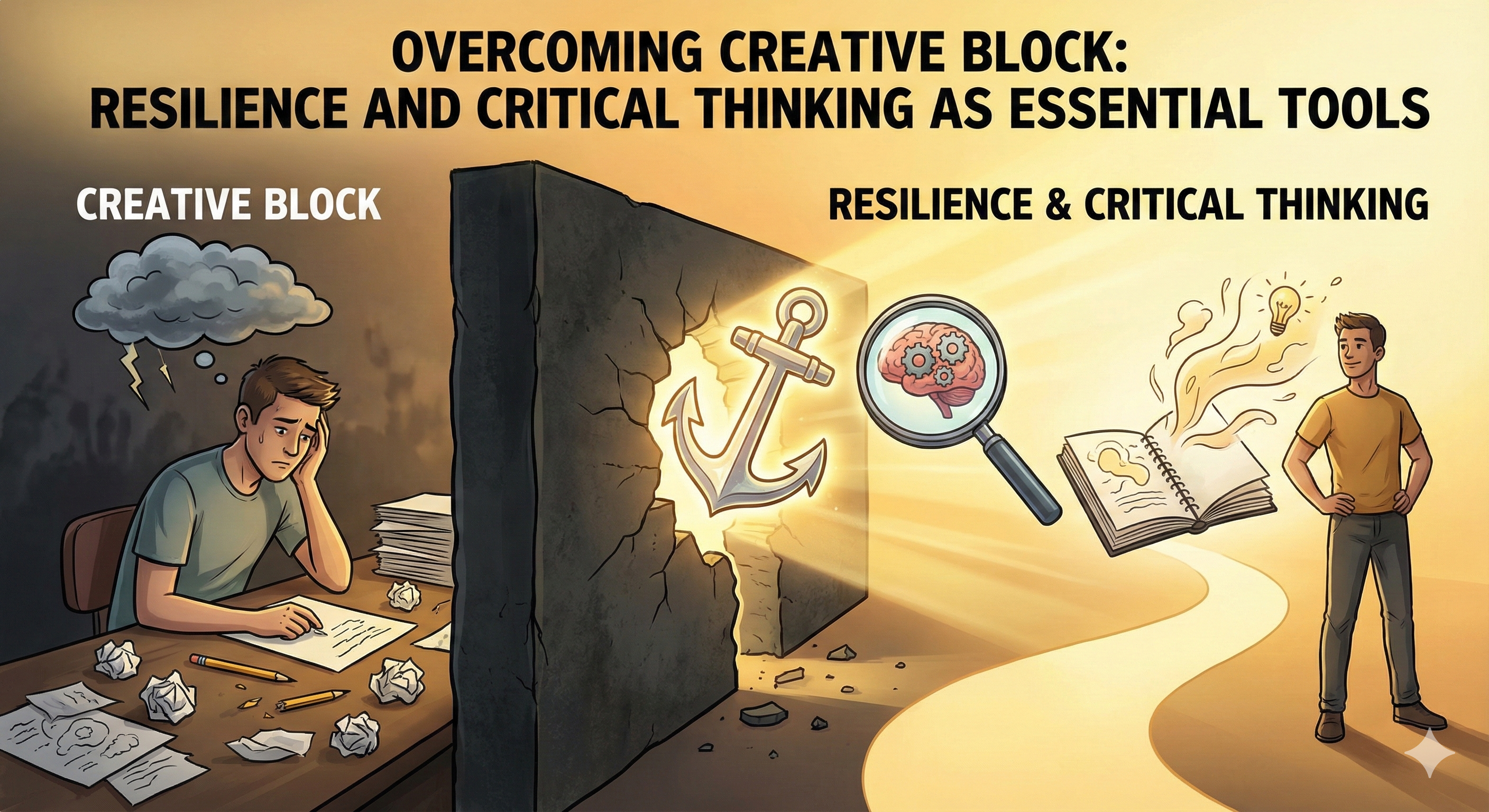
Creative block represents one of the most frustrating challenges for any creator, whether they’re an artist, writer, designer, or entrepreneur. This mental paralysis, where ideas seem inaccessible and inspiration absent, can feel insurmountable. Yet two fundamental skills prove particularly effective for navigating these difficult periods: resilience and critical thinking.
Resilience: Bouncing Back from Obstacles
Creative resilience isn’t simply about persevering blindly, but about developing an adaptive capacity when facing adversity. When creative block strikes, our first reaction is often frustration or discouragement. Resilience allows us to acknowledge these emotions without being overwhelmed by them.
A resilient creator understands that blockage is an integral part of the creative process. Rather than perceiving this phase as a personal failure, they view it as a necessary latency period, a moment when the mind reorganizes itself. This perspective radically transforms our relationship with creative block: it becomes a temporary stage rather than a permanent dead end.
Several practices prove beneficial for cultivating this resilience. Maintaining a work routine, even a minimal one, helps preserve the connection with our creative practice. This doesn’t necessarily mean producing finished works, but staying in contact with our medium. Keeping a creative journal, sketching without a specific goal, or simply observing the world around us are all gestures that nourish our resilience.
Critical Thinking: Analyzing to Unblock
If resilience helps us persevere, critical thinking gives us the tools to understand and untangle the mechanisms of blockage. This analytical approach invites us to objectively examine our creative situation rather than remaining trapped in negative emotions.
Critical thinking begins with asking the right questions. What is the true nature of this block? Is it a technical problem, a fear of judgment, mental exhaustion, or a lack of clarity about our objectives? By precisely identifying the source of the problem, we can develop targeted strategies to resolve it.
This analytical approach also allows us to question our limiting beliefs. Many creative blocks originate from thoughts like “I’m not talented enough” or “this idea isn’t original enough.” Critical thinking helps us examine these statements with distance and recognize their often unfounded or exaggerated nature.
The Synergistic Interaction Between Resilience and Critical Thinking
These two skills don’t function in isolation but mutually reinforce each other. Critical thinking helps us understand why we’re blocked, while resilience gives us the strength to implement the solutions we’ve identified. Together, they create a virtuous cycle that transforms creative block into an opportunity for growth.
For example, critical thinking might reveal that our block stems from paralyzing perfectionism. Resilience will then allow us to accept imperfection, to experiment without fear of failure, and to consider each attempt as valuable learning rather than a test of our worth.
Similarly, when resilience encourages us to maintain our practice despite difficulties, critical thinking helps us adjust our approach. Rather than endlessly repeating the same unsuccessful methods, we can analyze what works and what doesn’t, then adapt our strategy accordingly.
Cultivating These Skills Daily
Developing resilience and critical thinking requires regular commitment. For resilience, it’s about progressively building our tolerance for discomfort and uncertainty. Accepting that the creative process is inherently unpredictable and that periods of doubt are universal helps normalize our difficult experiences.
For critical thinking, the practice consists of developing a benevolent curiosity toward our own mental processes. Keeping a reflection journal where we explore our blocks, fears, and motivations allows us to refine our understanding of ourselves as creators.
Final
Creative block, though painful, is not inevitable. By cultivating resilience and critical thinking, we equip ourselves with two powerful tools for navigating these difficult periods. Resilience gives us the strength to continue when everything seems stagnant, while critical thinking illuminates the path forward. Together, they transform creative block from an insurmountable obstacle into a natural and surmountable stage of the creative journey. Rather than fearing these moments of stagnation, we can learn to navigate them with confidence, knowing that each block overcome strengthens our creative capacity and our understanding of ourselves.