
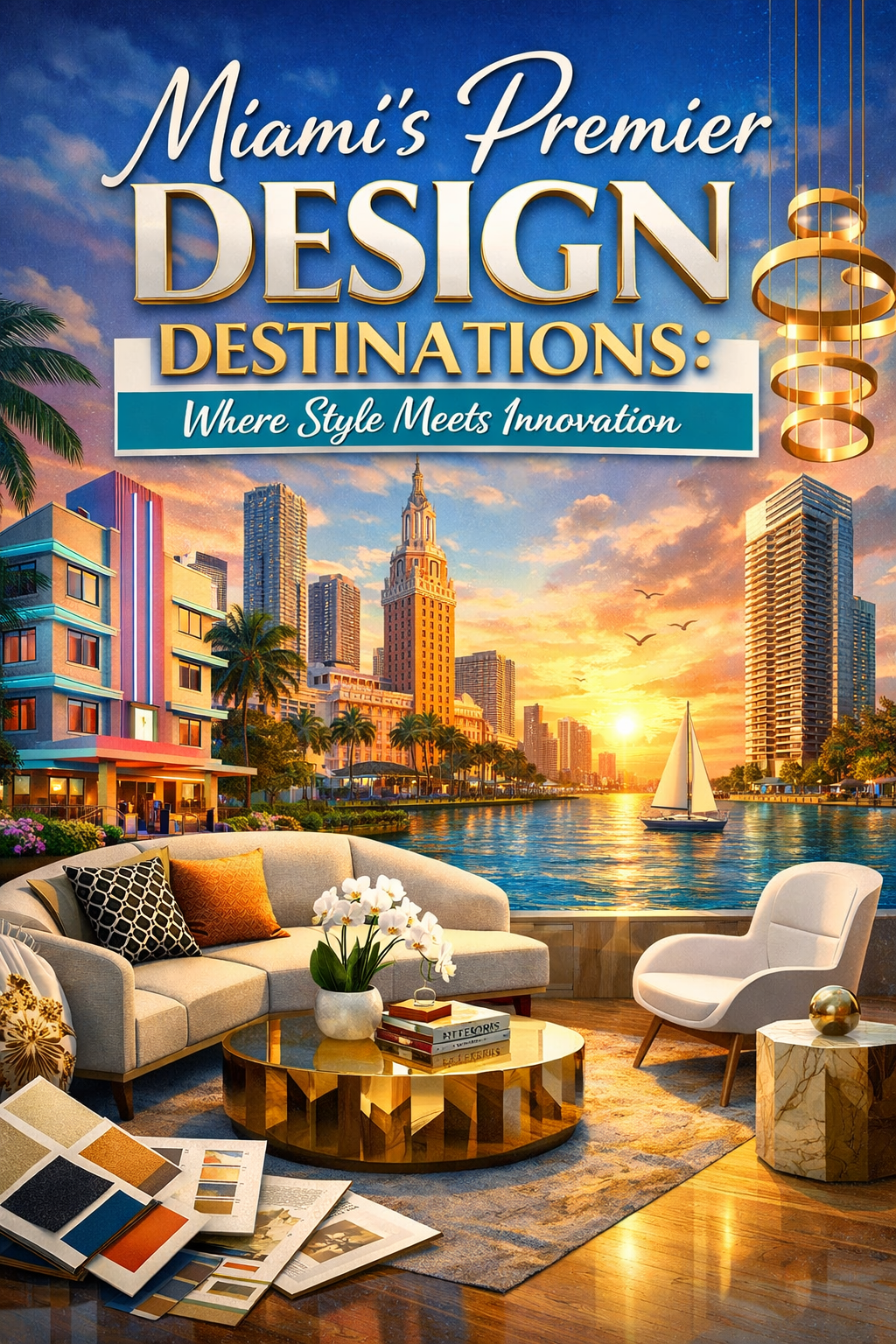
Miami’s Premier Design Destinations: Where Style Meets Innovation
Miami has evolved into one of America’s most dynamic design capitals, where Latin American influences blend seamlessly with international aesthetics. At the heart of this creative revolution stand two distinct neighborhoods that have become essential destinations for design enthusiasts, architects, and tastemakers from around the world.
Nestled in the upper east side of Miami, the Design District has transformed from an overlooked warehouse area into a 18-block creative enclave that rivals any design destination globally. This carefully curated neighborhood represents the vision of developer Craig Robins, who reimagined the area as a place where art, design, fashion, and dining converge.
Walking through the District feels like stepping into an open-air museum. Public art installations dot nearly every corner—from Buckminster Fuller’s geodesic Fly’s Eye Dome to Zaha Hadid’s sculptural furniture displayed along palm-lined streets. The neighborhood’s commitment to integrating art into everyday life creates an atmosphere where creativity isn’t confined to galleries but spills onto sidewalks and storefronts.
The design showrooms here represent the world’s most prestigious brands. Luxury furniture houses like Kartell, B&B Italia, and Poliform showcase their latest collections in stunning flagship stores. These aren’t mere retail spaces but immersive environments where visitors can experience how cutting-edge design translates into livable luxury. Interior designers and architects regularly make pilgrimages to source pieces for high-end residential and commercial projects throughout the Americas.
Fashion plays an equally prominent role. Hermès, Dior, Louis Vuitton, and other luxury maisons have established elaborate boutiques that double as architectural statements. The District has become Miami’s answer to Rodeo Drive or Madison Avenue, though with a distinctly tropical sensibility that sets it apart from its more traditional counterparts.
The culinary scene matches the neighborhood’s design pedigree. Michelin-starred chefs and James Beard Award winners have opened restaurants that treat dining as a multisensory design experience. Michael Schwartz’s Michael’s Genuine and Brad Kilgore’s Alter exemplify how food, interior design, and service can create cohesive artistic statements.
The Institute of Contemporary Art, Miami anchors the neighborhood’s cultural offerings with a striking building designed by Aranguren + Gallegos Arquitectos. Its exhibitions push boundaries and spark conversations, reinforcing the District’s role as more than a shopping destination but as a genuine creative community.
Brickell Avenue: Where Glass Towers Define Urban Sophistication
Just south of downtown, Brickell Avenue presents an entirely different vision of Miami design—one defined by soaring residential towers, sleek corporate headquarters, and cosmopolitan energy. Known as Miami’s financial district, Brickell has experienced explosive growth over the past two decades, becoming a vertical neighborhood where international architecture firms compete to create the most striking silhouettes against the tropical sky.
The architectural landscape here tells the story of Miami’s ambitions. Towers designed by renowned architects like Arquitectonica, Revuelta Architecture International, and international firms have created a canyon of glass and steel that feels more Singapore or Hong Kong than traditional Florida. Each building strives to distinguish itself through distinctive design elements—cantilevered balconies, asymmetrical facades, innovative glass treatments that respond to Miami’s intense sunlight.
Inside these towers, residential design reaches rarefied heights. Penthouses and luxury condominiums feature interiors by celebrated designers, with custom kitchens, spa-like bathrooms, and smart home technology seamlessly integrated into minimalist aesthetics. Floor-to-ceiling windows frame dramatic views of Biscayne Bay, creating living spaces where the line between interior and exterior dissolves.
The street level offers a different experience entirely. Brickell Avenue’s sidewalks buzz with energy as professionals, residents, and visitors navigate between office towers, boutique hotels, and an ever-expanding roster of restaurants and bars. Design-forward establishments like Komodo, with its striking Southeast Asian-inspired interior, and the Edition Hotel’s lobby and outdoor spaces demonstrate how hospitality design has elevated the neighborhood’s sophistication.
Brickell City Centre, a massive mixed-use development, exemplifies contemporary urban design thinking. The complex integrates retail, residential, hotel, and office space under a climate ribbon—an architectural canopy that provides shade and channels breezes through the open-air shopping areas. This innovative approach to Miami’s climate challenges represents the kind of design problem-solving that defines the neighborhood’s forward-thinking character.
The neighborhood’s design showrooms cater to developers, corporate clients, and affluent residents furnishing their high-rise homes. While less concentrated than the Design District, Brickell’s design trade serves the practical needs of those creating and inhabiting Miami’s vertical urbanism.
Two Neighborhoods, One Design Ecosystem
Though distinct in character, the Design District and Brickell Avenue function as complementary poles of Miami’s design world. The Design District offers curated, experiential engagement with design as art and aspiration, while Brickell demonstrates how design principles scale to create an entire urban ecosystem.
Together, they illustrate Miami’s maturation from a seasonal resort city into a year-round cultural capital where design isn’t merely imported but created, debated, and lived. The Latin American collectors who visit Art Basel Miami Beach, the developers transforming the skyline, and the creative professionals who’ve relocated here all contribute to an environment where design matters deeply.
For visitors seeking to understand Miami’s creative pulse, experiencing both neighborhoods provides essential context. Start with coffee in the Design District, absorbing the careful curation and artistic energy. Then head to Brickell for sunset drinks at a rooftop bar, where the view encompasses the architectural ambitions that continue reshaping this city’s identity.
Miami’s design story is still being written, but in these two neighborhoods, the narrative is already compelling—a testament to what happens when vision, investment, and creative energy converge in one of America’s most dynamic cities.