
Miami Architects Who Redefined the City: A Journey Through the Designs That Shaped an Iconic Skyline
Miami’s architectural landscape is a testament to visionary creativity, where modernism meets tropical sensibility, and where bold experimentation has consistently pushed the boundaries of design. From the pastel-hued Art Deco gems of South Beach to the soaring glass towers of Brickell, Miami’s skyline tells a story of transformation, ambition, and artistic innovation. This journey through the architects who shaped the city reveals not just buildings, but cultural statements that have defined Miami’s identity as a global destination for cutting-edge architecture and luxury living.
Renzo Piano: Cultural Elegance and Environmental Harmony
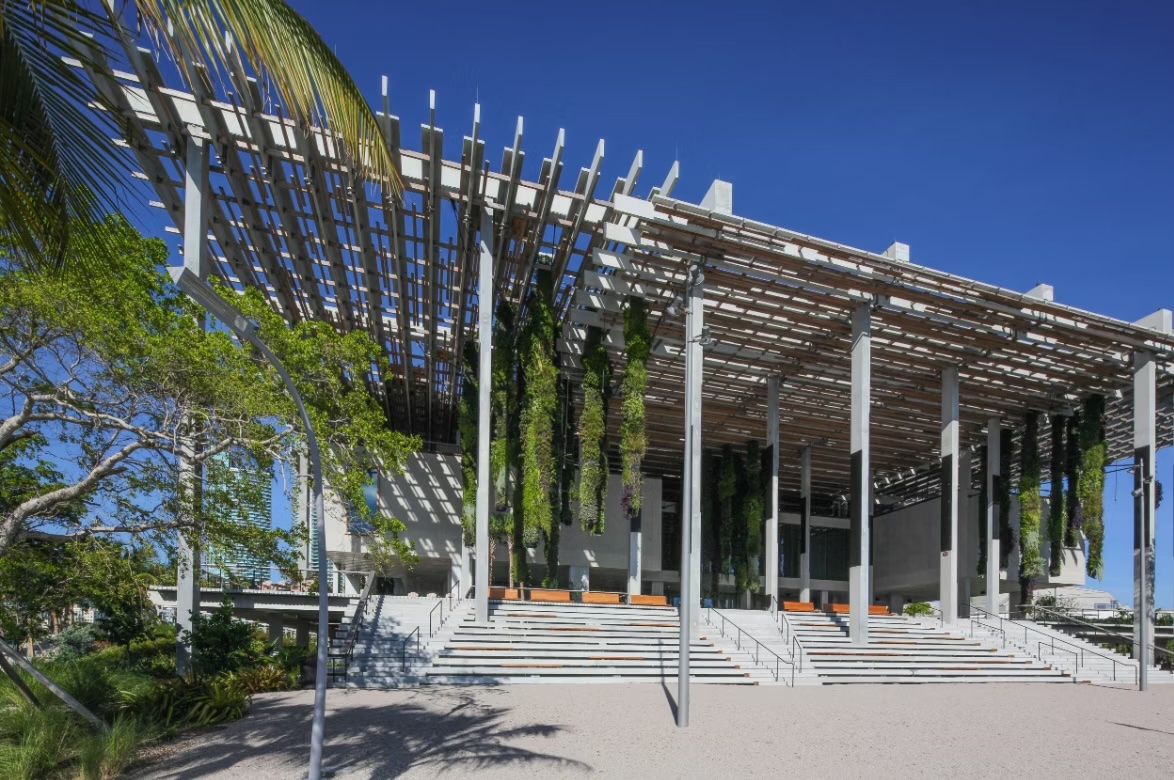
Renzo Piano, the Italian architect and Pritzker Prize laureate, brought his signature approach of poetic modernism and environmental sensitivity to Miami with the Pérez Art Museum Miami (PAMM), completed in 2013. Located in Museum Park along Biscayne Bay, this cultural institution represents Piano’s philosophy of creating buildings that engage meaningfully with their natural surroundings rather than dominating them.
The museum’s design features distinctive hanging gardens that cascade from elevated terraces, creating natural shade and cooling while establishing a visual dialogue between architecture and landscape. These vertical gardens, composed of native and subtropical plants, serve both aesthetic and functional purposes, filtering air and providing insulation while evoking Miami’s lush tropical environment. The structure itself is elevated on pillars, allowing bay breezes to flow beneath the building and creating covered outdoor spaces that blur the boundary between interior galleries and exterior landscape.
Piano’s use of large wooden canopies extends over outdoor terraces, providing shelter from Miami’s intense sun while maintaining views of the bay and downtown skyline. The building’s orientation and its extensive use of natural ventilation reflect Piano’s commitment to sustainable design, reducing energy consumption while enhancing visitor comfort. Inside, the galleries feature Piano’s characteristic attention to natural light, with carefully designed skylights and windows that illuminate artworks without causing damage. The Pérez Art Museum stands as a cultural oasis, a place where architecture, art, and nature converge to create an experience that feels distinctly Miami while maintaining Piano’s universal language of refined, humanistic modernism.
Zaha Hadid Architects: Futuristic Vision and Sculptural Innovation
The late Dame Zaha Hadid, one of architecture’s most revolutionary figures, left an indelible mark on Miami with the One Thousand Museum, a sixty-two-story residential tower completed in 2019. This project, one of Hadid’s final works before her death in 2016, exemplifies her signature parametric design approach and her ability to transform towers into sculptural statements that challenge conventional notions of what buildings can be.
The most striking feature of One Thousand Museum is its exoskeleton, a flowing white structural system that wraps around the building’s glass façade like a skeletal ribbon. This exterior structure is not merely decorative but serves as the building’s primary support system, eliminating the need for interior columns and creating vast, column-free living spaces inside. The exoskeleton was created using advanced fiber-reinforced concrete and required innovative engineering to achieve Hadid’s fluid, organic forms. The result is a building that appears to be in constant motion, its curves catching light differently throughout the day and creating ever-changing shadows and highlights.
The tower’s amenities are equally dramatic, including a sky lounge on the top floors with panoramic views of Miami, Biscayne Bay, and the Atlantic Ocean. The building also features an aquatic center with pools both inside and on outdoor terraces, a private helipad, and a ground-level lobby that continues Hadid’s flowing aesthetic with curving white surfaces and dramatic spatial volumes. One Thousand Museum represents Hadid’s vision of architecture as sculpture, where functional requirements are integrated seamlessly into forms that seem to defy gravity and conventional structural logic. The tower has become an instant icon, bringing Miami’s architecture decisively into the twenty-first century and establishing the city as a destination for the world’s most avant-garde design.
Kobi Karp: Defining the Miami Luxury Lifestyle
Kobi Karp has become synonymous with Miami luxury, designing some of the city’s most prestigious residential towers and helping to define the aesthetic of upscale waterfront living. His firm, Kobi Karp Architecture and Interior Design (KKAID), has been responsible for shaping Miami’s skyline with projects that combine sleek modernism, sophisticated materials, and amenities that cater to the desires of the global ultra-wealthy.
Among Karp’s most notable projects is Palazzo del Sol, a Fisher Island development that epitomizes exclusive island living. Fisher Island, accessible only by ferry or private yacht, is one of America’s wealthiest zip codes, and Palazzo del Sol reflects this exclusivity with its Italian Renaissance-inspired design rendered in contemporary materials. The development features expansive residences with private elevator access, floor-to-ceiling windows offering water views, and interiors finished with marble, fine woods, and custom detailing. The building’s amenities include a beach club, marina, spa, and concierge services that cater to residents’ every need.
Chateau Beach Residences in Surfside represents another facet of Karp’s design philosophy. This oceanfront tower combines French-inspired architectural elements with modern Miami aesthetics, creating a building that feels both timeless and contemporary. The glass and white façade reflects ocean light, while expansive terraces blur the line between indoor and outdoor living. Interior spaces feature open floor plans, gourmet kitchens with top-tier appliances, and spa-like bathrooms that emphasize comfort and luxury. Karp’s attention to detail extends to every aspect of the resident experience, from the landscaped motor court entrance to the rooftop pool deck with its cabanas and entertainment spaces.
What distinguishes Karp’s work is not just luxury for its own sake but a thoughtful approach to how people want to live in Miami’s unique environment. His buildings maximize views and natural light, create seamless connections to outdoor spaces, and provide amenities that support an active, social lifestyle. Karp has helped establish Miami as a destination for luxury real estate by creating buildings that are not just places to live but complete lifestyle experiences.
Sieger Suarez Architects: Sleek Modernism and Iconic Towers
Sieger Suarez Architects has been instrumental in shaping Miami’s modern residential architecture, creating sleek, sophisticated towers that have become landmarks along the city’s waterfront. The firm, founded in 1997, has built a reputation for contemporary designs that emphasize clean lines, extensive use of glass, and integration with Miami’s tropical setting.
The Continuum on South Beach, completed in phases between 2000 and 2008, established Sieger Suarez as a major force in luxury residential design. This dual-tower complex sits on twelve acres along the Atlantic Ocean, offering residents an unprecedented level of privacy and amenity. The towers feature curved glass façades that maximize ocean views from every residence, while the extensive grounds include three lagoon-style pools, a spa, fitness center, and lushly landscaped gardens that create an oasis-like atmosphere. The Continuum’s design philosophy emphasizes horizontal emphasis and flowing spaces, with each residence featuring large terraces that extend living areas outdoors.
The Porsche Design Tower, completed in 2016, represents one of Sieger Suarez’s most innovative projects. This sixty-story tower in Sunny Isles Beach features a revolutionary car elevator system that allows residents to bring their vehicles directly into their units, where they are displayed in glass-enclosed garages visible from the living spaces. This integration of automobile culture with residential architecture speaks to Miami’s car-centric lifestyle and the desires of luxury car collectors. Beyond this unique feature, the tower showcases Sieger Suarez’s mastery of contemporary design, with curving balconies, floor-to-ceiling glass, and a sophisticated palette of materials including glass, steel, and stone.
Other notable Sieger Suarez projects include the W South Beach Hotel and Residences, which brought a contemporary aesthetic to South Beach’s historic Art Deco district, and numerous towers in Sunny Isles Beach that have transformed that area into “Florida’s Riviera.” The firm’s work is characterized by an understanding of how to create buildings that respond to Miami’s climate and lifestyle, maximizing views and outdoor living while providing the privacy and luxury that high-end buyers demand.
Arquitectonica: The Architects Who Defined Modern Miami
Few firms have had as profound an impact on Miami’s architectural identity as Arquitectonica, founded in 1977 by Bernardo Fort-Brescia and Laurinda Spear. The firm emerged during Miami’s transformation from a regional city to an international metropolis, and their colorful, geometric, postmodern designs became visual symbols of the city’s cultural rebirth and global ambitions.
Arquitectonica’s early projects in the 1980s, particularly The Atlantis condominium (1982), announced a new architectural language for Miami. The Atlantis, with its famous “sky court”—a five-story void cut through the building’s center containing a palm tree, hot tub, and red spiral staircase—became an instant icon, appearing in the opening credits of “Miami Vice” and establishing Miami as a center of innovative design. This willingness to be bold, playful, and visually striking defined Arquitectonica’s approach and influenced a generation of architects.
Brickell City Centre, a massive mixed-use development completed in phases beginning in 2016, represents Arquitectonica’s evolution while maintaining their commitment to distinctive design. This project includes residential towers, a shopping center, hotel, and office space, all connected by a striking climate ribbon—a sculptural canopy designed by Arquitectonica in collaboration with ArquitectonicaGEO that provides shade and captures rainwater while creating a dramatic visual statement. The development’s integration of retail, residential, and public space has helped transform downtown Miami into a walkable urban center.
The Kaseya Center (formerly FTX Arena, American Airlines Arena), home to the Miami Heat, showcases Arquitectonica’s ability to design at an urban scale. The arena’s waterfront location and distinctive design, with its sail-like forms and integration with surrounding public spaces, make it a landmark visible from across Biscayne Bay. Inside, the arena provides state-of-the-art facilities for sports and entertainment while maintaining intimate sightlines and excellent acoustics.
Other significant Arquitectonica projects include the Westin Colonnade in Coral Gables, the Banco de Crédito in Lima, Peru (which established their international reputation), and hundreds of projects worldwide. However, their influence on Miami remains their most important legacy. Arquitectonica proved that serious architecture could be colorful, exuberant, and fun while remaining functional and well-crafted. They helped establish Miami’s architectural identity as distinct from other American cities, creating a visual language that reflects the city’s multicultural population, tropical location, and optimistic spirit.
Carlos Ott: Artistic Refinement and Elegant Modernism
Uruguayan-Canadian architect Carlos Ott has contributed several significant projects to Miami’s skyline, bringing his refined, artistic approach to luxury residential design. Ott, who gained international recognition for his design of the Opéra Bastille in Paris, applies the same attention to proportion, materials, and spatial quality to his residential towers.
The Waldorf Astoria Hotel and Residences, a mixed-use tower completed in 2019 in the Brickell financial district, exemplifies Ott’s sophisticated approach. The sleek tower rises 360 feet and features a façade that combines glass with metal panels in a rhythm that creates visual interest while maintaining elegance. The building’s stepped profile creates varied terrace sizes and enhances views, while the integration of hotel and residential uses provides residents with access to five-star services and amenities. Ott’s interior spaces emphasize quality materials, careful detailing, and the kind of spatial generosity typically found in European luxury design.
Jade Ocean and Jade Beach, twin towers in Sunny Isles Beach, showcase Ott’s ability to create buildings that respond to their oceanfront setting. These towers feature extensive use of glass to maximize ocean views, while their flowing balconies and sophisticated use of materials create an aesthetic of understated luxury. The innovative “flow-through” floor plans allow cross-ventilation and provide ocean views from every room, taking advantage of Miami’s climate and spectacular coastal location. Ott’s attention to proportions and his background in designing cultural institutions bring an added level of refinement to these residential projects, elevating them beyond mere luxury to genuine architectural quality.
Richard Meier: Minimalist Mastery and the Power of White
Richard Meier, the Pritzker Prize-winning architect known for his commitment to modernist principles and his signature use of white, has brought his distinctive aesthetic to Miami with projects that emphasize purity of form, abundance of natural light, and meticulous attention to detail.
The Four Seasons Residences at The Surf Club in Surfside, completed in 2017, represents Meier’s ability to create contemporary architecture that respects historical context while asserting a clear modernist identity. The project involved the restoration of the historic Surf Club, a 1930s social club designed by Russell Pancoast, and the addition of new residential towers designed by Meier. The towers, clad in white metal panels and glass, feature Meier’s characteristic geometric precision and his masterful handling of light and space.
Meier’s design creates a dialogue between old and new, with the restored historic clubhouse serving as a cultural and social amenity for residents of the new towers. The residences themselves showcase Meier’s modernist principles: open floor plans, floor-to-ceiling windows, white interiors that serve as neutral backgrounds for art and furnishings, and extensive terraces that connect indoor and outdoor living. The building’s orientation and the design of its façade elements provide shade and privacy while maintaining the transparency and lightness that characterize Meier’s work.
The use of white, Meier’s signature, takes on particular meaning in Miami’s intense sunlight, where white surfaces glow and reflect the constantly changing quality of tropical light. This creates buildings that appear to dematerialize in bright sun and that respond dynamically to different times of day and weather conditions. Meier’s work in Miami demonstrates that rigorous modernist principles can produce architecture that is both intellectually sophisticated and sensually pleasing, transforming the skyline with buildings that assert clarity, order, and beauty.
David Rockwell: Reinventing Hospitality and Cultural Spaces
David Rockwell and the Rockwell Group have brought their innovative approach to hospitality design to Miami, creating hotels and cultural venues that emphasize theatrical experience, flexibility, and engagement with the urban context. While many architects focus on residential towers, Rockwell’s work has helped transform Miami’s hotel and entertainment scene.
Hyde Midtown Miami, located in the emerging Midtown neighborhood, exemplifies Rockwell’s approach to contemporary hospitality. The hotel emphasizes social spaces and experiential design, with a ground-floor restaurant and bar that opens to the street, creating an active urban edge. The rooftop features a pool and entertainment venue with panoramic city views, while guest rooms are designed with flexibility in mind, incorporating movable furniture and adaptable spaces that can serve multiple functions. Rockwell’s background in theater design is evident in the dramatic use of lighting, materials, and spatial sequencing that creates a sense of narrative as guests move through the building.
Rockwell’s work extends beyond hotels to cultural venues and restaurants throughout Miami. His designs emphasize the social dimensions of architecture, creating spaces that encourage interaction, surprise, and delight. This focus on experience over mere aesthetics has helped redefine Miami’s hospitality sector, moving it beyond simple luxury toward more engaging, memorable environments that reflect the city’s energetic, social culture.
Zyscovich Architects: Community-Focused Planning and Urban Design
Zyscovich Architects has distinguished itself through a focus on urban planning and mixed-use developments that prioritize community connection and walkable urbanism. Founded by Bernard Zyscovich, the firm has been instrumental in creating master plans and projects that shape how Miami neighborhoods function and evolve.
The Midtown Miami Master Plan represents Zyscovich’s most significant contribution to the city. This 56-acre development transformed an underutilized industrial area into a vibrant mixed-use neighborhood combining residential, retail, office, and cultural uses. The master plan emphasizes walkability, with streets designed at a pedestrian scale, publicly accessible plazas and parks, and buildings that engage the street with active ground-floor uses. This approach, common in traditional urban design but rare in car-oriented Miami, has created one of the city’s most successful new neighborhoods.
Zyscovich’s design philosophy emphasizes context-sensitive architecture that responds to Miami’s climate, culture, and urban patterns. Their buildings typically feature covered walkways, outdoor dining areas, and landscaping that provides shade and creates pleasant pedestrian environments. The firm’s work in urban planning extends to numerous projects throughout Miami, including downtown master plans, transit-oriented developments, and neighborhood revitalization projects. By focusing on the spaces between buildings as much as the buildings themselves, Zyscovich has helped create a more livable, connected Miami.
Luis Revuelta: Modern Skyscrapers and Brickell’s Transformation
Luis Revuelta and his firm, Revuelta Architecture International, have been central to the transformation of Brickell into a dense, vertical neighborhood of residential towers. Revuelta’s expertise in modern skyscraper design has resulted in numerous projects that combine structural efficiency with aesthetic sophistication.
Jade at Brickell Bay, a 42-story tower completed in 2006, showcases Revuelta’s approach to contemporary residential design. The tower features a sleek glass façade with horizontal banding that emphasizes the building’s slender proportions. Floor plans are carefully designed to maximize views of Biscayne Bay and the Miami skyline, with open layouts and large terraces that extend living spaces outdoors. The building’s amenities include pools, fitness facilities, and social spaces that cater to the lifestyle of urban professionals and international buyers.
Epic Residences and Hotel, a 54-story tower on the Miami River, demonstrates Revuelta’s ability to work at a large scale while maintaining attention to detail. This mixed-use building combines a hotel and residences with extensive amenities including a riverside pool deck, spa, marina, and multiple restaurants. The building’s curved façade creates visual interest and allows varied unit layouts, while its prominent location at the mouth of the Miami River makes it a gateway landmark between downtown and Brickell.
Revuelta’s numerous other projects throughout Brickell and downtown Miami have collectively transformed these neighborhoods from primarily commercial districts into 24-hour residential communities. His work demonstrates a thorough understanding of the practical aspects of high-rise design—structural systems, building codes, construction efficiency—while creating buildings that contribute positively to Miami’s evolving skyline.
Morris Lapidus: The King of Miami Modern (MiMo)
Morris Lapidus, often called the “King of Miami Modern” or MiMo, created some of Miami’s most beloved and architecturally significant buildings in the 1950s and 1960s. His flamboyant, emotionally-driven designs rejected the austere minimalism of orthodox modernism in favor of an architecture of glamour, fun, and theatrical experience. Though working in an earlier era than most architects on this list, Lapidus’s influence on Miami’s architectural identity remains profound.
The Fontainebleau Hotel, completed in 1954 and expanded in 1959, is Lapidus’s masterpiece and arguably Miami Beach’s most iconic building. The hotel’s sweeping curved façade, dramatic porte-cochère, and over-the-top interiors featuring “woggles” (Lapidus’s term for decorative elements), sinuous staircases, and theatrical lighting created a new template for luxury resort design. Lapidus understood that people came to Miami Beach to escape everyday life, and his architecture amplified this sense of escapism and fantasy. The Fontainebleau became synonymous with Miami glamour, appearing in films and hosting celebrities, presidents, and international jet-setters.
The Lincoln Road Mall, Lapidus’s transformation of a declining commercial street into an outdoor pedestrian mall in the 1960s, demonstrated his talents extended beyond hotels to urban design. Though the project was controversial at the time and struggled economically for decades, it is now one of South Beach’s most successful retail and dining destinations. Lapidus’s design features dramatic canopies, sculptural planters, and architectural elements that create a sense of theater and event, transforming shopping into an experience rather than mere commerce.
Lapidus faced significant criticism from architectural purists who dismissed his work as kitsch, but his influence has been reassessed in recent decades. His understanding that architecture could be emotionally engaging, fun, and popular without sacrificing quality or craft anticipated postmodernism’s critique of modernist austerity. His buildings remain beloved by the public and have been recognized as architecturally significant, with the Fontainebleau receiving landmark status. Lapidus proved that Miami’s architecture could be uniquely itself—exuberant, optimistic, and unafraid of spectacle.
Henry Hohauser & L. Murray Dixon: Masters of Miami Beach Art Deco
Henry Hohauser and L. Murray Dixon were among the most prolific architects of Miami Beach’s Art Deco district in the 1930s, creating the distinctive architectural character that has made South Beach world-famous. Working during the Great Depression and catering primarily to middle-class tourists, these architects developed a streamlined, affordable version of Art Deco that emphasized curved corners, horizontal lines, pastel colors, and nautical motifs appropriate to the beachfront setting.
Henry Hohauser designed numerous iconic South Beach hotels including the Park Central (1937), the Essex House (1938), and the Century Hotel (1939). His buildings feature the characteristic elements of Miami Beach Art Deco: curved corners that soften the buildings’ profiles, horizontal “eyebrows” over windows that provide shade, vertical towers and fins that add visual interest, and elaborate entrances that create a sense of arrival. Hohauser’s designs were fundamentally pragmatic—these were modest hotels built quickly and economically—but his attention to proportion, detail, and the creation of a cohesive streetscape resulted in architecture of lasting value.
L. Murray Dixon was equally prolific, designing the Raleigh Hotel (1940), the Marlin Hotel (1939), and dozens of other South Beach buildings. Dixon’s work shows sophistication in its handling of streamlined forms and Art Deco ornamentation. His buildings demonstrate how architects working within tight budgets and standardized plans could still create distinctive, memorable architecture through careful attention to façade composition, decorative details, and the relationship between buildings and the street.
The collective work of Hohauser, Dixon, and their contemporaries created one of the most significant collections of Art Deco architecture in the world. By the 1970s, many of these buildings had deteriorated and were threatened with demolition, but preservationists led by Barbara Baer Capitman fought to save them. The establishment of the Miami Beach Architectural District in 1979 and subsequent restoration efforts transformed South Beach into a globally recognized destination, proving that preservation and adaptive reuse could drive economic revitalization. The pastel-hued, curvilinear hotels of the Art Deco district remain synonymous with Miami Beach, representing an era of optimism and democratized leisure that continues to attract millions of visitors annually.
Other Influential Names
Zeb Jarosz has brought a refined, contemporary aesthetic to Miami residential design, creating homes that emphasize harmony with the natural environment. A notable example is an expansive Miami Beach residence overlooking Biscayne Bay that exemplifies Jarosz’s approach. The home blends tropical ambiance with modern elegance, featuring verdant courtyards, raised planters, and a sophisticated mix of stone and wood materials. Large glass walls dissolve boundaries between interior and exterior, while thoughtful landscaping creates a sense of privacy and tranquility despite the home’s prominent waterfront location. Jarosz’s work demonstrates that luxury residential design can be both contemporary and contextual, responding to Miami’s climate and landscape while maintaining architectural sophistication.
Wahl Snyder Architects, active primarily in the post-war period, introduced innovative housing typologies to Miami including split-level designs that were unusual in South Florida’s predominantly flat landscape. The firm also designed significant institutional projects including schools and public housing developments that contributed to Miami’s growth in the mid-twentieth century. While less internationally known than some contemporaries, Wahl Snyder’s work in creating functional, well-designed buildings for everyday use represents an important strand of Miami’s architectural history.
Conclusion: A Skyline of Visions
Miami’s architectural landscape is a product of diverse visions, from the populist exuberance of Morris Lapidus to the refined minimalism of Richard Meier, from the geometric boldness of Arquitectonica to the futuristic curves of Zaha Hadid. What unites these disparate approaches is a willingness to be bold, to experiment, and to create architecture that makes a statement. Miami has never been a city for architectural timidity, and the architects who have succeeded here are those who understood that the city demands—and rewards—vision, ambition, and originality.
The evolution from the Art Deco hotels of the 1930s through the MiMo exuberance of the 1950s, the postmodern experiments of the 1980s, and the contemporary glass towers of today traces not just architectural fashion but Miami’s own transformation from regional resort to global city. Each era has left its mark, creating an architectural palimpsest where different styles and periods coexist, sometimes harmoniously and sometimes in productive tension.
As Miami continues to grow and evolve, new architects will add their visions to this ongoing story. The challenges of sea-level rise, climate change, and sustainable development will require innovative solutions. The need for affordable housing, better public transit, and more walkable neighborhoods will demand architects who can think beyond individual buildings to urban systems. But if Miami’s architectural history teaches anything, it is that the city has consistently attracted visionary designers willing to push boundaries and reimagine what architecture can be. The skyline that resulted from these collective efforts stands as testament to the power of architectural ambition to shape not just buildings but the identity of an entire city.