Indigenous Artists
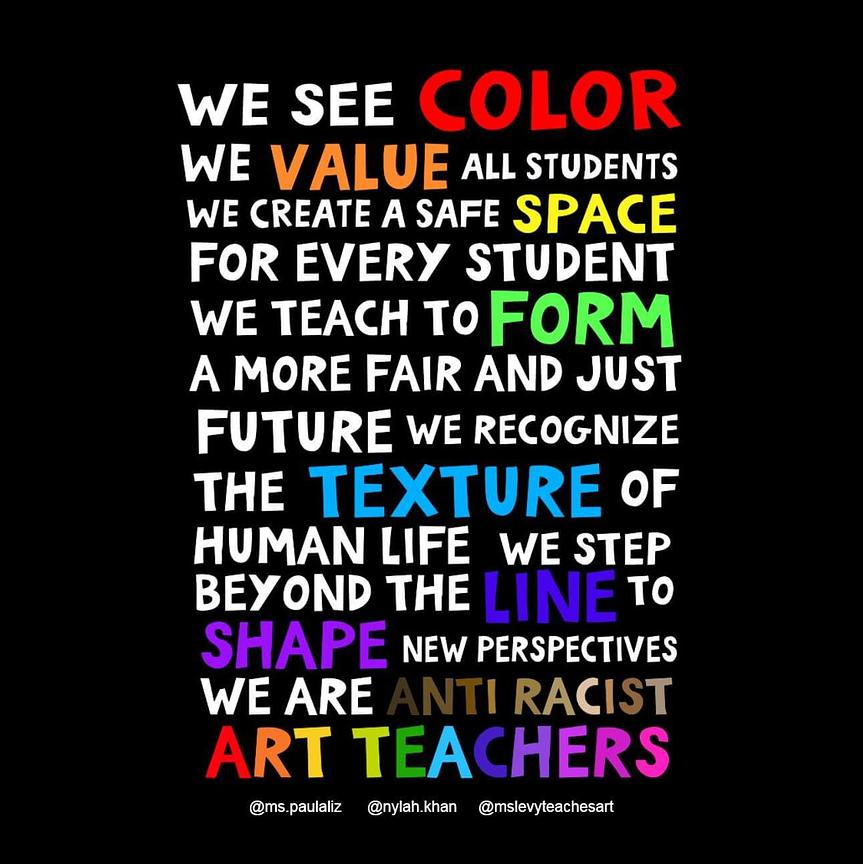
Best of the best Anti-racist Art Teachers
Aboriginal: inhabiting or existing in a land from the earliest times or from before the arrival of colonists.
Artists have many layered identities and art educators need to present them as such.
Representing diverse artists in your curriculum is only part of an Anti-Bias, Anti-Racist curriculum. It needs to be more than a symbolic effort and art educators need to take into account intersectionality when introducing these artists to students. How do aspects of an artists’ social and political identities (ex. gender, sex, race, class, sexuality, religion, ability, physical appearance, etc.) intersect within their work?
In addition, we recognize that race is socially constructed and it is impossible to put humans in clearly defined categories by race. Racial identity is deeply personal, and artists within any given subgroup define themselves differently. Race, ethnicity, and nationality are all factors artist’s individually consider as their personal identity. However, as mentioned previously that is not all that there is to their identity. We know that artists have many layered identities and art educators need to do the research to present them as such. These groupings are not perfect, as humans are not meant to be divided into boxes. We hope this resource can help art educators identify who is missing from their curriculum in order to create a curriculum more representative of the incredible diversity among students and artists today.
Terminology
Aboriginal Peoples: The collective noun used in the Constitution Act 1982 and includes the Indian (or First Nations), Inuit and Metis Peoples so legally it will always have a place at the terminology table.
First Nation(s): First Nation is a term used to identify Indigenous peoples of Canada who are neither Métis nor Inuit.
Indigenous: ethnic groups who are the original or earliest known inhabitants of an area, in contrast to groups that have settled, occupied or colonized the area more recently.
Inuit: Indigenous people in northern Canada, living mainly in Nunavut, Northwest Territories, northern Quebec and Labrador. Ontario has a very small Inuit population.
Métis Peoples: people of mixed Indigenous and European ancestry. The Métis National Council adopted the following definition of “Métis” in 2002: “Métis” means a person who self-identifies as Métis, is distinct from other Aboriginal peoples, is of historic Métis Nation Ancestry and who is accepted by the Métis Nation.
Native: An outdated collective term referring to Indians (Status, Non-status, Treaty), Métis, and Inuit but has largely been replaced by Indigenous. While some First Nations individuals refer to themselves as “Native” that doesn’t give non-Indigenous people license to do so.
Terminology defined by Indigenous Peoples terminology guidelines for usage
Name Nationality
Alan Syliboy Mi’kmaq
Alex Janvier Cold Lake
Andrea Carlson Ojibwe
Anita Fields Osage and Muscogee
Arlo Namingha Tewa and Hopi
Athena LaTocha Hunkpapa Lakota
Bill Reid Haida Canadian
Bob Boyer Cree / Métis Nation
Bonnie Devine Serpent River Ojibwa
Brian Jungen Dane-Zaa and Swiss
Bruce Alfred Kwakwa̱ka̱ʼwakw Tribe
Bunky Echo-Hawk Pawnee & Yakama
Cara Romero Chemehuevi
Charlene Teters Spokane
Christi Belcourt Métis Canadian
Crystal Worl Tlingit and Deg Hit’an Athabascan
Courtney M. Leonard Shinnecock
D. Ahsén:nase Douglas Kanien’keha:ka (Mohawk)
Dana Claxton Hunkpapa Lakota
Daphne Odjig Odawa-Potawatomi-English Heritage
David Bernie Ihanktonwan Dakota Oyate
Diego Romero Cochiti Pueblo
Demian Dinéyazhi’ Diné
Dempsey Bob Tahltan and Tlingit
Diane Douglas-Willard Haida
Duane Slick Mesqwaki and Ho-Chunk
Edward Poitras Métis
Emmi Whitehorse Navajo
Erica Lord Iñupiaq and Athabascan
Emily Kewageshig Anishnaabe
Frank Buffalo Hyde Onondaga and Nez Perce
Fritz Scholder Luiseño
Gina Adams Ojibwe, Lakota, Irish, Lithuanian
George Longfish Seneca and Tuscarora
Gregg Deal Pyramid Lake Paiute
Hock E Aye Vi Edgar Heap of Birds Cheyenne and Arapaho
Holly Wilson Delaware and Cherokee
James Lavadour Walla Walla
James Luna Luiseño and Mexican-American
Jamie Okuma Luiseño and Shoshone-Bannock
Jason Garcia (Okuu Pin) Santa Clara Pueblo and Tewa
Jaune Quick-to-See Smith Salish, Kootenai, Métis, Shoshone
Jeffrey A. Gibson Choctaw and Cherokee
Jeffrey Veregge Port Gamble S’Klallam
Joe David Nuu-Chah-Nulth
Jesse T. Hummingbird Cherokee
Jean LaMarr Pit River / Paiute
Kay WalkingStick Cherokee
Kenny Alvin Baird Cree / Métis
Kent Monkman Cree
Kenojuak Ashevak Inuit
Kim Gullion Stewart Métis
Katie Dorame Tongva
Kite (Dr. Suzanne Kite) Oglala Lakota
Lewis deSoto Cahuilla
Linda Lomahaftewa Hopi & Choctaw
Loretta Gould Mi’kmaq
Marcus Cadman Navajo and Kickapoo
Maria Martinez Tewa (San Ildefonso Pueblo)
Margaret Jacobs Mohawk
Marie Watt Seneca
Mary Edmonia Lewis Mississauga Ojibwe and Afro-Haitian
Matika Wilbur Swinomish and Tulalip
Melissa S. Cody Navajo / Diné
Mer Young Hidalgo Mescalero-Chiricahua Apache
Michael Kabotie Hopi
Molly Murphy-Adams Lakota
Mercedes Dorame Tongva
Merritt Johnson Mohawk and Blackfoot
Nadema Agard Lakota, Powhatan, Cherokee
Nathalie Bertin Métis, French, Algonquin
Nayana LaFond Anishinaabe
Neal Ambrose-Smith Salish and Kootenai
Nico Williams Anishinabe
Nicholas Galanin Tlingit and Unangax̂
Nora Naranjo-Morse Santa Clara Pueblo
Norman Akers Osage
Norval Morrisseau Anishinaabek
Preston Singletary Tlingit
Pop Chalee (Merina Lujan) Taos Pueblo
R.C. Gorman Navajo
Rebecca Belmore Anishinaabekwe
Rebecca Gloria-jean Baird Cree / Métis
Robert Davidson Haida
Rose B. Simpson Santa Clara Pueblo
Roxanne Swentzell Santa Clara Tewa
Raven Halfmoon Caddo Nation
Richard Glazer-Danay Mohawk and Jewish
River Garza Tongva & Mexican
Shelley Niro Mohawk
Shonto Begay Navajo
Sonny Assu Kwakwaka’wakw
Sonya Kelliher-Combs Athabaskan
Starr Hardridge Muscogee
Star Wallowing Bull Ojibwe-Arapaho
Steven Yazzie Navajo and Laguna Pueblo
Sydney Pursel Ioway
Tanya Lukin Linklater Alutiiq
Tommy Wayne Cannon Kiowa/Caddo
Virgil Ortiz Cochiti Pueblo
Ursula Johnson Mi’kmaq
Votan Henriquez Maya and Nahua
Wendy Red Star Apsáalooke (Crow)
Will Wilson Navajo / Diné
Contemporary Native American Artists of the Americas by Lori Santos
Native American Art/Artists – Culturally Responsible Art Education by Lori Santos
National Museum of the American Indian
Smithsonian National Museum of the American Indian: Google Arts & Culture
Wendy Red Star Is Teaching Children About the Crow Nation With Her Art
It’s Time Pop Culture Stops Embracing the Term “Spirit Animal” BY ALLISON CACICH
Inuit Art Zone Artists
Decolonizing Native American Design by Sadie Red Wing
Minneapolis Institute of Art: Native Art, Native Voices A Resource for K–12 Learners
Hood Museum of Art: Native American Art Teacher Resources
Heard Museum: The Native American Fine Art Movement: A Resource Guide
Art of Conflict: Portraying American Indians, 1850–1900
National Indian Education Association: ‘Teaching Native American Art Respectfully and Responsibly’
Shanna Ketchum-Heap of Birds: Native American Artists as Agents of Social Change
Explore the West – Kiowa Six
Design of the National Native American Veterans Memorial
National Museum of the American Indian (virtual exhibits)
11 Native American Artists Whose Work Redefines What It Means to Be American
Wendy Red Star and the Indigenous Voice
8 Contemporary Native American Artists Challenging the Way We Look at American History