Fiber, Fabric & Textile Art
The Resurgence of Textile Art: Weaving Memory, Identity, and Resistance in Contemporary Practice
The contemporary art world is witnessing a remarkable transformation: textile art and fiber art have moved from the margins to the center of critical discourse. What was once dismissed as “craft” or “women’s work” now commands attention in major museums, biennales, and galleries worldwide. This shift represents more than aesthetic preference—it signals a fundamental reconsideration of how we understand materiality, memory, and meaning in visual culture.
The Language of Thread and Fiber in Contemporary Art
Thread as medium carries unique expressive possibilities that distinguish it from traditional fine art materials. Unlike paint or stone, fabric and thread arrive already laden with associations: clothing, shelter, domestic labor, cultural tradition. When contemporary textile artists choose these materials, they engage this semantic weight deliberately.
Embroidery in fine art, for instance, transforms an act historically associated with patience, femininity, and domestic confinement into a vehicle for conceptual investigation. Artists like Tracey Emin and Ghada Amer have demonstrated how hand-stitched artwork can address sexuality, trauma, and political resistance with visceral directness. The slowness of stitching—its insistence on time and bodily presence—becomes itself a form of critique against the velocity of contemporary image culture.
Fabric as a Living Archive: Textiles and Memory
One of the most compelling developments in mixed media textiles involves their deployment as memory vessels. Fabric as a living archive operates on multiple registers simultaneously. Materially, textiles preserve traces: worn edges, stains, patches, the ghost impressions of bodies that once inhabited garments. Conceptually, they invoke collective memory through cultural patterns, traditional techniques, and inherited knowledge.
Textile materials as vessels of cultural memory appear powerfully in works addressing displacement, diaspora, and cultural survival. Artists working with traditional weaving techniques in art often engage their ancestral practices not as nostalgic preservation but as active interpretation—interweaving tradition and innovation in textile practices to speak to contemporary conditions.
Consider how woven art can literally layer different temporal moments: vintage fabric fragments combined with contemporary materials, traditional patterns executed in unexpected scales or contexts. This temporal layering makes textile-based sculpture particularly effective for exploring how identity formation works—as a constant negotiation between inheritance and invention, between what we’re given and what we make.
Tactile Poetics: The Return of Touch in Visual Arts
In an increasingly digital, screen-mediated culture, tactile art offers something increasingly rare: the insistence on embodied, sensory experience. The return of touch in visual arts through textile practices represents a kind of resistance to dematerialization. When we encounter soft sculpture or textile installation, we’re confronted with works that demand physical presence, that cannot be fully experienced through reproduction.
This tactile poetics operates powerfully in art with fabric and thread because these materials carry inherent associations with touch—the feel of cloth against skin, the gesture of hand-stitching, the bodily knowledge embedded in weaving or knotting. The work activates what theorists call “haptic visuality”—a way of seeing that remembers touching.
Embroidery as Resistance and Memory
The symbolic weight of fabric and stitching in feminist art cannot be overstated. Reclaiming techniques historically devalued as “merely decorative” or “women’s work” becomes an act of cultural revision. Artists demonstrate that embroidery as resistance and memory works precisely because it repurposes the tools of domestication toward liberation.
Chilean arpilleras—appliquéd textiles made by women during Pinochet’s dictatorship—exemplify how textile storytelling can document atrocity, maintain community, and resist erasure when other forms of witness become impossible. The portability of textile work, its apparent innocuousness, allowed it to circulate where other protest forms could not.
Contemporary practitioners extend this legacy, using fabric as narrative to address ongoing struggles: migration, labor exploitation, environmental destruction, gender-based violence. The choice of textile medium itself becomes rhetorical—invoking histories of resistance while creating new testimonies.
Exploring Identity Through Textile Art
Woven narratives and embodied storytelling offer unique possibilities for investigating how identity forms. The metaphor of weaving—multiple threads coming together to create coherent cloth—has long described cultural and personal identity formation. Contemporary artists make this metaphor literal and material.
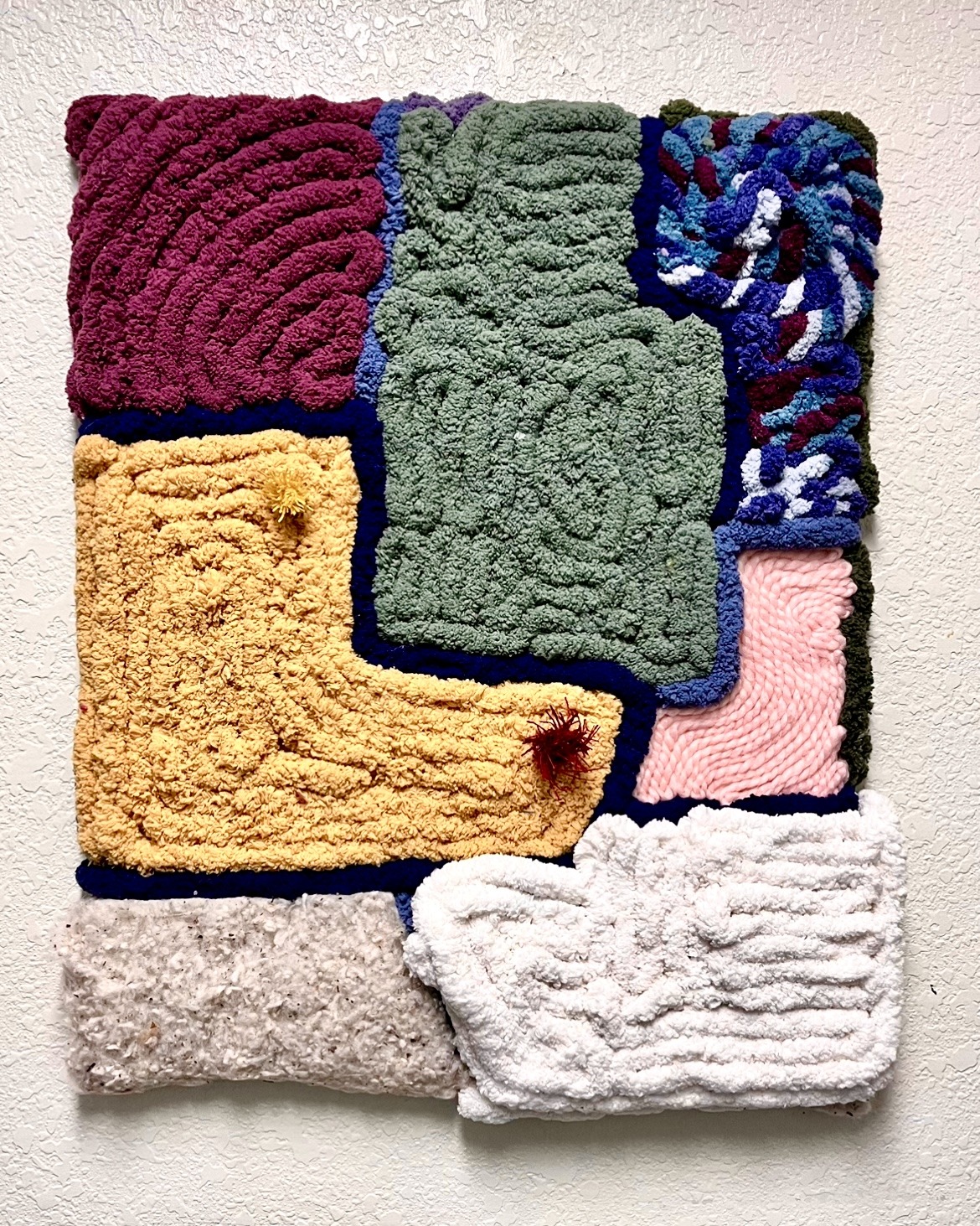
Exploring identity through textile art allows for complexity that resists reductive narratives. A single work might incorporate fabrics from different sources: family heirlooms, mass-produced commercial textiles, hand-dyed or hand-woven materials. Each carries different associations, different histories. Their combination creates what we might call textural language—meaning generated through material juxtaposition and tactile contrast.
This approach proves particularly powerful for artists navigating multiple cultural positions, hybrid identities, diasporic experience. The fabric of identity quite literally takes form as interwoven narratives, where different threads of memory maintain their distinctness even as they create unified cloth.
The Resurgence of Handcraft in Conceptual Art
Perhaps most striking is how the resurgence of handcraft in conceptual art challenges long-standing hierarchies. The modernist privileging of concept over execution, mind over hand, is thoroughly questioned by practices that insist craft knowledge is conceptual knowledge, that making is thinking.
Artists working in fiber art demonstrate sophisticated engagement with materiality, process, and meaning-making that equals any conceptual practice. The deep technical knowledge required for complex weaving techniques in art or intricate hand-stitched artwork represents years of embodied learning—a form of intelligence our culture has systematically undervalued.
This revaluation connects to broader cultural shifts: increased attention to indigenous knowledge systems, feminist epistemologies, and critiques of the mind/body dualism that has structured Western thought. Contemporary textile artists participate in fundamental reconceptualizations of what counts as knowledge, who gets to produce it, and how it circulates.
Woven Connections: Building Community Through Textile Practice
Finally, textile practice often inherently involves woven connections beyond the artwork itself. Many textile installations invite participation, teaching traditional techniques to new practitioners, creating spaces for collective making. This social dimension—the artwork as occasion for gathering, sharing knowledge, building relationship—offers alternatives to the isolated-genius model of artistic production.
The materiality of textiles facilitates this: fabric is approachable in ways marble or oil paint are not. Most people have some relationship to cloth, some memory of learning to sew or watching someone weave. This accessibility doesn’t diminish conceptual sophistication—it expands who can participate in artistic dialogue.
Conclusion: The Future Is Woven
As we look toward the future of contemporary art, textile practices offer essential resources for addressing our most pressing questions. How do we honor tradition while embracing change? How do we maintain connection in fragmenting times? How do we create beauty without ignoring violence? How do we value labor, care, and the slow work of repair?
Mixed media textiles, fiber art, and contemporary textile artists continue pushing boundaries, developing new techniques, addressing urgent themes. They remind us that the fabric of identity is always under construction, that threads of memory connect us across time and distance, that the act of making—patient, embodied, collaborative—remains essential to human meaning-making.
The rise of textile art in the contemporary moment is not nostalgic return but necessary reclamation. It insists that the hand matters, that slowness has value, that the materials deemed humble or domestic carry profound expressive power. In textural language, through tactile poetics, these practices weave futures we desperately need.
For collectors, curators, and enthusiasts seeking to deepen engagement with contemporary textile practices, consider visiting specialized galleries, attending fiber art symposia, and following artists working at the intersection of traditional craft and conceptual innovation. The conversation around textile art continues to evolve, inviting new voices and perspectives into this rich, expanding field.