Expressionism Art Movement
Expressionism was a major German contribution to the development of modern art. An important starting point was the founding of the Brücke artists association in 1905 in Dresden by Ernst Ludwig Kirchner and Erich Heckel, among others. Another centre emerged only a few years later in Munich with the founding of Der Blaue Reiter, which maintained close contacts to Europe’s avant-garde. While the Expressionist artworks are stylistically very divergent, the artists were linked by their criticism of bourgeois life and academic art. Instead of detailed imitations of reality as it was perceived, they sought to give expression to the emotions. Colours and forms attained their own importance. The city of Ludwigshafen increasingly began acquiring Expressionist artists in the 1950s, including Kirchner, Heckel, Wilhelm Lehmbruck, Otto Mueller, Emil Nolde and Max Pechstein. The spectrum was widened with the donation of Wilhelm Hack’s collection that features works by Max Ernst, August Macke, Wilhelm Morgner and Robert Delaunay.
Expressionism: Emotion Over Imitation
Expressionism stands as one of Germany’s most significant contributions to modern art, fundamentally challenging how artists represented the world around them. Emerging in the early 20th century, this revolutionary movement rejected the careful, objective observation that had dominated Western art for centuries. Instead, Expressionist artists sought to externalize internal states—to paint not what they saw, but what they felt.
The Birth of a Movement: Die Brücke (The Bridge)
The official beginning of German Expressionism can be traced to 1905 in Dresden, where a group of young architecture students formed an artists’ association called Die Brücke (The Bridge). The founding members—Ernst Ludwig Kirchner, Erich Heckel, Karl Schmidt-Rottluff, and Fritz Bleyl—chose this name deliberately, envisioning their art as a bridge between traditional academic painting and a new, more vital artistic future.
Die Brücke’s Revolutionary Vision
These artists shared a fierce rejection of bourgeois society and the stifling conventions of academic art. They sought authenticity, raw emotion, and direct expression unmediated by traditional techniques or “good taste.” Their work was characterized by:
- Bold, non-naturalistic color: Vivid greens, shocking pinks, acidic yellows applied not to represent reality but to convey feeling
- Distorted forms: Bodies elongated, faces simplified or exaggerated to express psychological states
- Aggressive brushwork: Visible, energetic strokes that emphasized the act of creation
- Primitive influences: Inspiration from African masks, Oceanic art, and medieval German woodcuts
Die Brücke artists worked communally, often painting together, sharing models and studios, and developing a distinctive visual language that shocked conservative German audiences. Their subjects—nudes in nature, urban street scenes, circus performers—reflected their interest in authenticity and their rejection of bourgeois propriety.
Key Die Brücke Artists:
- Ernst Ludwig Kirchner (1880-1938): Angular figures, urban anxiety, street scenes
- Erich Heckel (1883-1970): Landscapes, figures, woodcuts with spiritual dimension
- Karl Schmidt-Rottluff (1884-1976): Bold color, simplified forms, religious subjects
- Otto Mueller (1874-1930): Lyrical figures, often gypsies, softer palette
- Emil Nolde (1867-1956): Intense color, religious ecstasy, flower paintings (briefly associated)
- Max Pechstein (1881-1955): South Seas imagery, decorative elements
Der Blaue Reiter (The Blue Rider): Munich’s Answer
Just a few years after Die Brücke’s formation, another crucial Expressionist center emerged in Munich with the founding of Der Blaue Reiter (The Blue Rider) in 1911. Founded by Wassily Kandinsky and Franz Marc, this group represented a more spiritually and theoretically oriented approach to Expressionism.
Der Blaue Reiter’s Spiritual Mission
While Die Brücke artists focused on raw emotion and social critique, Der Blaue Reiter pursued:
- Spiritual abstraction: Movement toward pure color and form as carriers of meaning
- Inner necessity: The idea that art should emerge from spiritual need, not external observation
- Synthesis of arts: Integration of music, visual art, and theory
- International outlook: Close contacts with European avant-garde, including French Cubists and Italian Futurists
The name “Blue Rider” reflected the group’s interests—blue for spirituality, rider for movement and dynamism. They published an almanac featuring their theoretical writings alongside reproductions of children’s art, folk art, and non-Western art, arguing for the universality of artistic expression.
Key Der Blaue Reiter Artists:
- Wassily Kandinsky (1866-1944): Pioneer of abstraction, synesthesia, spiritual theory
- Franz Marc (1880-1916): Animals as spiritual symbols, color theory, killed in WWI
- August Macke (1887-1914): Colorful urban scenes, figures in landscape, killed in WWI
- Gabriele Münter (1877-1962): Landscapes, portraits, Kandinsky’s partner
- Alexej von Jawlensky (1864-1941): Mystical portraits, color experimentation
- Paul Klee (1879-1940): Whimsical abstractions, associated with the group
The Philosophy: Emotion Over Imitation
What unified these stylistically diverse artists was a fundamental philosophical stance: art should express inner reality, not merely record outer appearance.
Rejection of Academic Tradition
Academic art training in late 19th-century Europe emphasized:
- Careful observation and realistic rendering
- Mastery of perspective and anatomy
- Subdued, “harmonious” color
- Elevated subjects (history, mythology, classical beauty)
- Technical polish and finish
Expressionists rejected all of this, arguing that such art was dead—technically proficient but spiritually empty. They wanted art that communicated directly, viscerally, honestly.
The Primacy of Feeling
Instead of asking “Does this look like reality?” Expressionists asked “Does this feel true?” This meant:
Color became emotional, not descriptive: A face might be green not because skin is green, but because green expressed the artist’s feeling about that person—perhaps illness, jealousy, or alienation. The sky could be red, trees could be purple, shadows could be orange—whatever conveyed the emotional truth of the moment.
Form served expression, not accuracy: Bodies could be elongated, compressed, fragmented, or distorted if that served emotional intensity. Perspective could be ignored. Proportions could be exaggerated. The goal was psychological impact, not optical correctness.
Technique emphasized immediacy: Visible brushstrokes, rough textures, unblended colors, and “unfinished” surfaces all testified to the artist’s direct, passionate engagement with the canvas. Polish and refinement felt dishonest, like editing one’s authentic response.
Critique of Bourgeois Society
Many Expressionists connected their artistic revolution to social critique. They saw bourgeois society as:
- Hypocritical and repressive
- Materialistic and spiritually empty
- Disconnected from nature and authentic feeling
- Stifling individuality and creativity
Their subjects often reflected this critique: prostitutes and outcasts, urban alienation, psychological anxiety, scenes of nature untainted by civilization. They embraced subjects that “proper” society preferred to ignore.
Expressionism’s Expansion: Beyond the Core Groups
While Die Brücke and Der Blaue Reiter formed the movement’s center, Expressionism expanded to include many artists who shared its spirit without formal group affiliation.
Austrian Expressionism
- Egon Schiele (1890-1918): Contorted nudes, psychological intensity, died in flu pandemic
- Oskar Kokoschka (1886-1980): Psychologically penetrating portraits, turbulent landscapes
Independent German Expressionists
- Wilhelm Lehmbruck (1881-1919): Sculptor, elongated melancholic figures
- Ernst Barlach (1870-1938): Sculptor and printmaker, spiritual and social themes
- Käthe Kollwitz (1867-1945): Printmaker, social justice, working-class subjects
- Christian Rohlfs (1849-1938): Late-career Expressionist, influenced by younger artists
- Wilhelm Morgner (1891-1917): Intense color, mystical subjects, killed in WWI
Related Movements
- Neue Sachlichkeit (New Objectivity): Post-WWI movement including Otto Dix and George Grosz, more cynical and socially critical
- Expressionist architecture: Bruno Taut, Erich Mendelsohn—buildings as emotional expression
Expressionism’s International Reach
Though centered in Germany, Expressionism influenced artists across Europe:
France
- Georges Rouault (1871-1958): Religious subjects, thick black outlines
- Chaim Soutine (1893-1943): Writhing landscapes and portraits
- Maurice de Vlaminck (1876-1958): Fauve turned Expressionist, dramatic landscapes
Netherlands/Belgium
- James Ensor (1860-1949): Grotesque masks, social satire
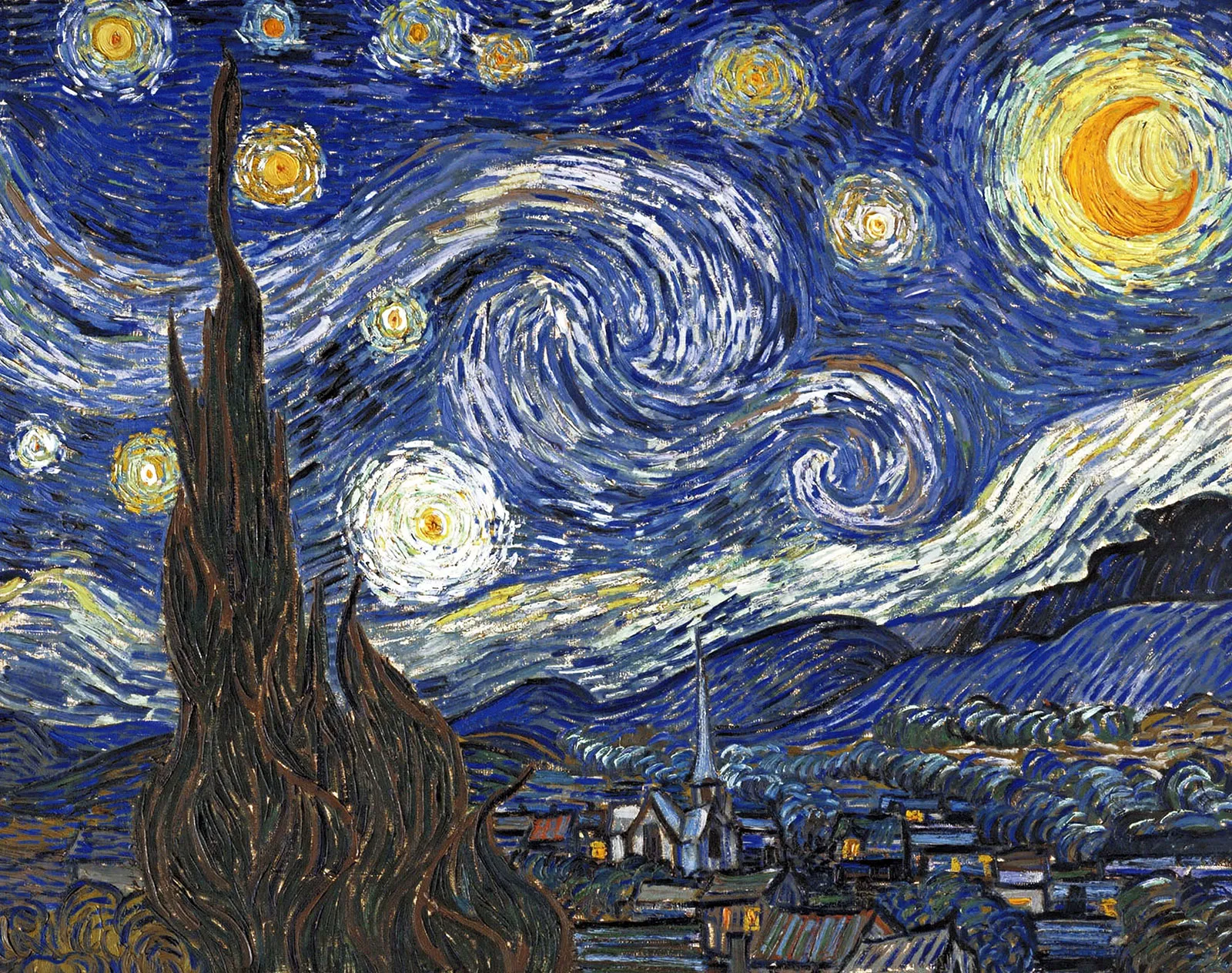
- Vincent van Gogh (1853-1890): Posthumous influence, emotional intensity
Russia
- Marianne von Werefkin (1860-1938): Colorful, emotional landscapes
- Kandinsky and Jawlensky (see above, Russian-born but worked in Germany)
The Ludwigshafen Collection: Preserving Expressionism
The city of Ludwigshafen’s Wilhelm-Hack-Museum houses one of Germany’s most significant Expressionist collections, built through strategic acquisitions and major donations.
Building the Collection (1950s onward)
In the 1950s, as Germany was recovering from World War II and confronting the Nazi regime’s condemnation of modern art as “degenerate,” Ludwigshafen began acquiring Expressionist works. This was both an artistic and a political act—reclaiming cultural heritage that had been suppressed and destroyed.
Early acquisitions included works by:
- Kirchner: Street scenes, nudes, landscapes
- Heckel: Contemplative figures and landscapes
- Lehmbruck: Sculptures of melancholic, elongated figures
- Mueller: Gentle depictions of figures in nature
- Nolde: Intense color experiments, religious ecstasy
- Pechstein: Decorative compositions, exotic subjects
The Wilhelm Hack Donation
The collection expanded dramatically with Wilhelm Hack’s donation, which added crucial works by:
Max Ernst (1891-1976): Though primarily associated with Dada and Surrealism, Ernst’s early work showed Expressionist influence. His fantastic imagery and psychological exploration connected to Expressionist concerns.
August Macke (1887-1914): Der Blaue Reiter member whose colorful scenes of modern life balanced Expressionist emotion with decorative harmony. His tragically brief career (killed in WWI at 27) produced luminous works of remarkable maturity.
Wilhelm Morgner (1891-1917): Less well-known but powerful Expressionist whose mystical, color-saturated works showed both Der Blaue Reiter’s spiritual concerns and Die Brücke’s intensity. Also killed in WWI at just 26.
Robert Delaunay (1885-1941): French artist associated with Orphism, a movement that explored pure color abstraction. While not strictly Expressionist, his work shared Expressionism’s liberation of color from descriptive function and influenced Der Blaue Reiter artists, particularly Macke.
This donation significantly internationalized the collection, showing Expressionism’s dialogue with other avant-garde movements.
Expressionism’s Legacy and Influence
Impact on Subsequent Movements
Expressionism’s emphasis on subjective emotion and formal distortion influenced:
- Abstract Expressionism (1940s-50s): American artists like Pollock and de Kooning channeled raw emotion into abstraction
- Neo-Expressionism (1970s-80s): Return to figuration and emotional intensity with artists like Anselm Kiefer, Georg Baselitz
- Contemporary expressionist painting: Continues in work of artists worldwide who prioritize feeling over representation
Challenges and Controversies
Nazi condemnation: The Nazi regime branded Expressionism “degenerate art,” confiscating thousands of works from museums, destroying or selling many. This persecution paradoxically elevated Expressionism’s importance as a symbol of artistic freedom.
Gender imbalance: While women like Münter, Kollwitz, and Werefkin contributed significantly, the movement’s narrative has historically centered male artists. Contemporary scholarship increasingly addresses this imbalance.
Primitivism questions: Expressionists’ appropriation of African and Oceanic art, while artistically generative, raises questions about cultural borrowing and exoticism that continue to be debated.
Conclusion: The Enduring Power of Expressed Emotion
Expressionism fundamentally changed what painting could be and do. By insisting that art should express rather than imitate, that color and form had inherent emotional power independent of their descriptive function, and that technical “correctness” mattered less than authentic feeling, Expressionists opened possibilities that continue to resonate.
The collections in Ludwigshafen and museums worldwide preserve this revolutionary moment when artists chose emotion over imitation, subjective truth over objective accuracy, and expressive power over academic polish. In doing so, they created works of continuing vitality—paintings and sculptures that still communicate directly, viscerally, honestly across more than a century, fulfilling their creators’ vision of art as a bridge between inner experience and outward expression.
In our contemporary moment, where authenticity and emotional honesty are both celebrated and questioned, Expressionism’s insistence that art must come from deep feeling, not superficial observation, remains provocatively relevant. The movement reminds us that sometimes, to tell the truth about what we see, we must first be truthful about what we feel.