ART BASEL AWARD CATEGORIES A new model of recognition
Art Basel Awards seek to support the future of the industry by democratically honoring those who move and make art from vision to reality. The first of its kind, Art Basel Awards span the full spectrum of artistic and cultural impact, covering nine categories.
EMERGING ARTIST
Commending an exciting new or early-career artist making initial, yet impressive strides into the industry.
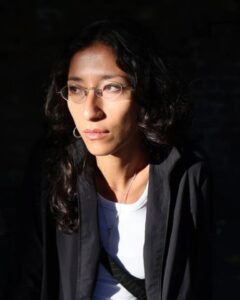
Lydia Ourahmane
Lydia Ourahmane (Algeria/UK) is known for conceptually rigorous works that examine borders, displacement, and the lingering effects of colonialism. Her practice spans installation, sound, video, and sculpture, often incorporating bureaucratic processes or personal artifacts as material. She creates environments that feel both intimate and geopolitical, revealing how political structures infiltrate the most private layers of existence.
Ourahmane is a conceptual artist whose multidisciplinary practice spans installation, sound, video, performance, and sculpture. She graduated from Goldsmiths University in 2014 and has exhibited internationally since with recent solo exhibitions at MACBA, Barcelona, SculptureCentre, New York; rhizome, Algiers; Kunsthalle Basel, Switzerland; S.M.A.K Ghent; Portikus, Frankfurt; De Appel, Amsterdam; Wattis Institute for Contemporary Arts, San Francisco and Chisenhale Gallery, London. Her work was included in the 60th Venice Biennale and 15th Gwangju Biennale (2024), 15th Istanbul Biennial (2017), 34th Bienal de São Paulo (2021), New Museum Triennial and Manifesta 12, Palermo (2018).
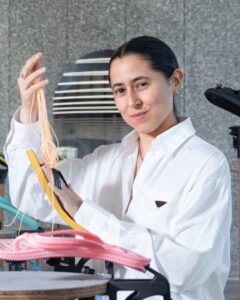
Meriem Bennani
Meriem Bennani (Morocco/NYC) merges humor, digital animation, documentary, and social satire to explore identity in the age of surveillance, migration, and internet culture. Her surreal video worlds—featuring talking animals, reality-TV aesthetics, and fractured narrative timelines—challenge orientalist stereotypes and propose new hybrid identities born from global digital life.
Meriem Bennani makes groundbreaking video installations and sculptures informed by the circulation of global cultures online. Frequently rooted in the specifics of Moroccan life offline and online, her work speaks to the hybrid nature of contemporary cultural flows. Bennani combines elements of reality television, documentary film, telenovela, music videos, science fiction, and animated cartoons in her videos. Exaggerating media tropes in what Bennani describes as a “hyperactivity of genre,” her works reflect the disjointed state of contemporary mediation, an effect she amplifies in installation settings where her moving images are mapped to sculptural projection structures or viewing stations. Using strategies of immersion, duplication, multiplicity, and remix, Bennani blends a powerful mix of humor and critique, reaffirming the power of family and home while analyzing larger systems of power across a networked world. Meriem Bennani earned her BFA from Cooper Union in New York, and her MFA at the École Nationale Supérieure des Arts Décoratifs in Paris. Her video series 2 Lizards, produced in collaboration with Orian Barki, has been hailed by writers and curators as a preeminent document of life under quarantine. Recent solo presentations include Fondazione Prada, Milan, Italy, Fondation Kamel Lazaar, Tunis, Tunisia; Whitney Museum of American Art, New York, USA; The High Line, New York, USA; The Renaissance Society at the University of Chicago, Chicago, USA; Nottingham Contemporary, Nottingham, UK; Kunstverein Wiesbaden, Wiesbaden, Germany; François Ghebaly, Los Angeles, USA; Julia Stoschek Collection, Berlin, Germany; Fondation Louis Vuitton, Paris, France; and MoMA PS1, Queens, USA. Bennani’s work was featured in the 2019 Whitney Biennial, the 2018 Biennale of Moving Images, and the 2016 Shanghai Biennale. She has an upcoming exhibition at Lafayette Anticipations in Paris.
Bennani’s work is held in the collections of the Guggenheim Museum, New York USA; The Museum of Modern Art, New York, USA; the Whitney Museum of American Art, New York, USA; Kadist Foundation, Paris, France; and Musée d’Art Moderne de la Ville de Paris, Paris, France.
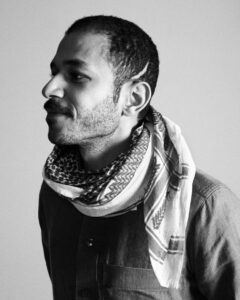
Mohammad Alfaraj
Saudi artist Mohammad Alfaraj creates poetic film-based works that focus on ecology, memory, and the fragility of human and non-human life. Often using found objects, rural landscapes, and slow-paced cinematography, his practice reflects on environmental degradation and the emotional weight of regional change. His work stands out for its quiet, meditative tone and deep sensitivity to place.
Mohammad Alfaraj: Having studied engineering and growing up loving the camera in Al Ahsa, Saudi Arabia: A palm tree oasis which is also the oil source of the country, Alfaraj’s work can be described as a cinematic collage of mediums, practices and ideas that create a world charged with stories, poetry and search for truth by exploring documentation and interpretation, which results in works that the artist hopes to nurture imagination and empathy in the experiencer. His use and reuse of organic and manmade waste plays as a physical capsule of memories and time, where these materials and their histories hold a spiritual quality too. A visual artist that works in film, photography, sculpture and poetry, that’s influenced by his hometown and his travels, in an attempt to capture the trace, imprint and impact of life both literary and metaphorically. Mohammad also engages in workshops and action based activities with the community as a belief in collective creativity.
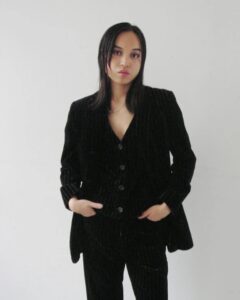
Pan Daijing
Pan Daijing (China/Berlin) is a multidisciplinary artist whose practice moves fluidly across performance, sound, opera, and film. She constructs immersive psychological environments where the human voice—raw, fragmented, or operatic—becomes an instrument of emotional architecture. Her work probes intimacy, trauma, and the unconscious, expanding the boundaries of sound art.
Oscillating between visual art and music, Pan Daijing (b. 1991, Guiyang) works across various media such as film, sound, performance, choreography, installation, and sculpture. Her work demonstrates a strong psychological sense of space, evoking physical, emotional, and sonic depths. She has held solo exhibitions at the Walker Art Center (2025), Haus der Kunst, Munich (2024), Tai Kwun Contemporary, Hong Kong (2021), and Tate Modern, London (2019), among others.
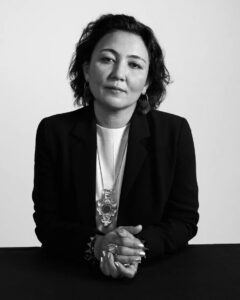
Saodat Ismailova
Uzbek filmmaker and artist Saodat Ismailova is a central figure in bringing Central Asian narratives to contemporary art. Her films and installations draw from regional mythologies, women’s histories, ritual practices, and the spiritual dimensions of everyday life. Through a lyrical and atmospheric visual language, she preserves cultural memory while confronting modern social tensions.
Saodat is an Uzbek filmmaker and artist who came of age in the post-Soviet era. Interweaving rituals, myths and dreams within the tapestry of everyday life, her films investigate the historically complex and layered culture of Central Asia. Frequently based around oral stories in which women are the lead protagonists, and exploring systems of knowledge suppressed by globalized modernity, these consciousness expanding works hover between visible and invisible worlds. Graduated from Tashkent State Art Institute and Le Fresnoy, National Studio of Contemporary Arts, France she has established artistic lives between Paris and Tashkent. In 2021 she initiated Davra research collective in Central Asia to develop local art scene. In 2022 Saodat Ismailova participated both in 59th Biennale of Venice and documenta fifteen. In 2022, she received The Eye Art & Film Prize, Amsterdam. Her new film “Melted into the Sun” is presented at Nebula collective exhibition, commissioned by Fondazione in between Art and Film, during Venice Biennale of Arts, 2024.
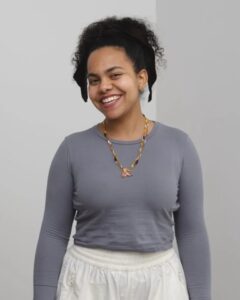
Sofia Salazar Rosales
Sofía Salazar Rosales (1999, Quito, Ecuador) explores themes of migration, diaspora, and cultural hybridity through sculpture, drawing, and installation. Her work often incorporates textiles, organic materials, and references to Andean cosmology, creating symbolic systems that bridge ancestral knowledge with contemporary concerns. She has emerged as a vital voice in expanding Latin American diasporic narratives in global art.
Sofía lives and works between NYC, Paris, France and Quito, Ecuador. She is currently participating in the two-year residency at De Ateliers in Amsterdam, having previously obtained a master’s degree with distinction at the School of Fine Arts (ENSBA Paris) in the ateliers of Tatiana Trouvé, Petrit Halilaj and Álvaro Urbano. She holds a Bachelor of Fine Arts degree with distinction from School of Fine Arts of Lyon (ENSBA Lyon) where she worked in the studios of Pauline Bastard and Niek Van de Steeg. In 2023, she was nominated for Premio illy Sustain Art Prize and Emerige-CPGA Prize and in 2022, she won the SARR Prize. Her first publication Hay cuerpos cansados por el viaje que buscan enraizarse (There are bodies tired from the journey seeking to root) was published by ChertLüdde on the occasion of her 2022 solo exhibition at Bungalow, Berlin and contains letters from her diary addressed to her sculptures. Collection: Moderna Museet, Stockholm; Centro de Arte Dos de Mayo, Madrid; Kunstmuseum St. Gallen, St. Gallen.