CONTEXT Art Miami | Booth B23 | December 2–7, 2025
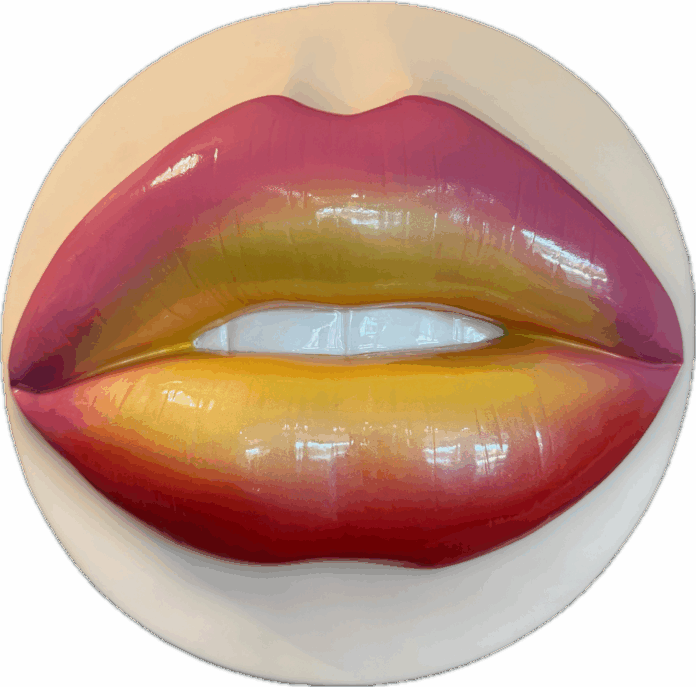
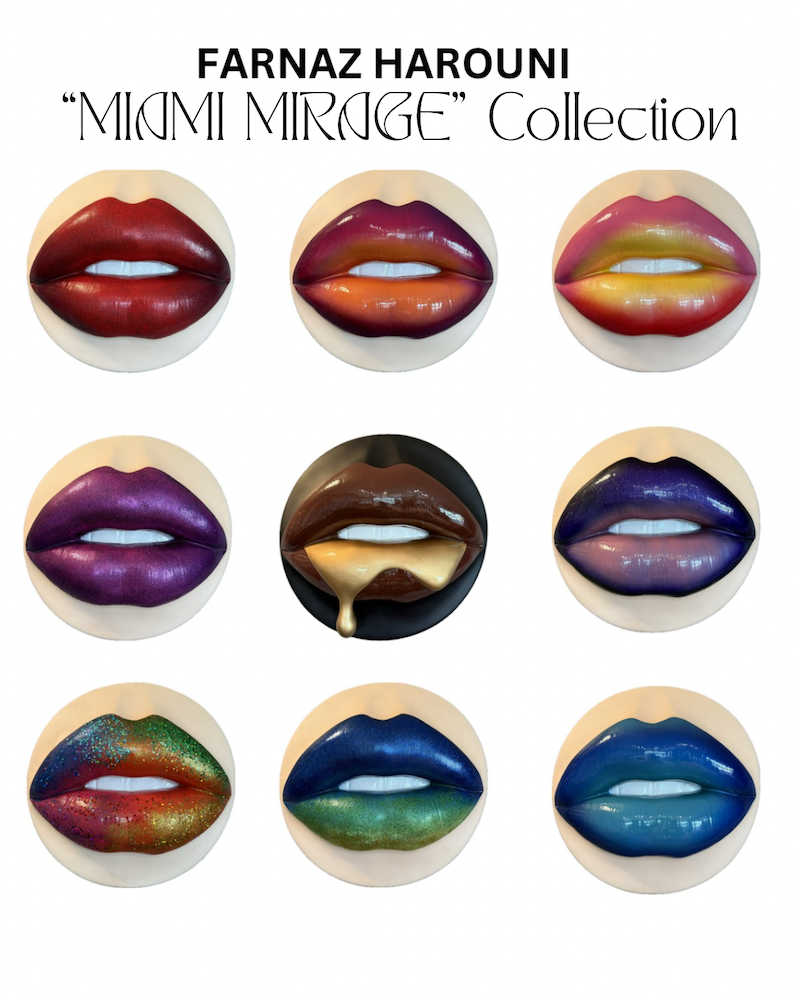
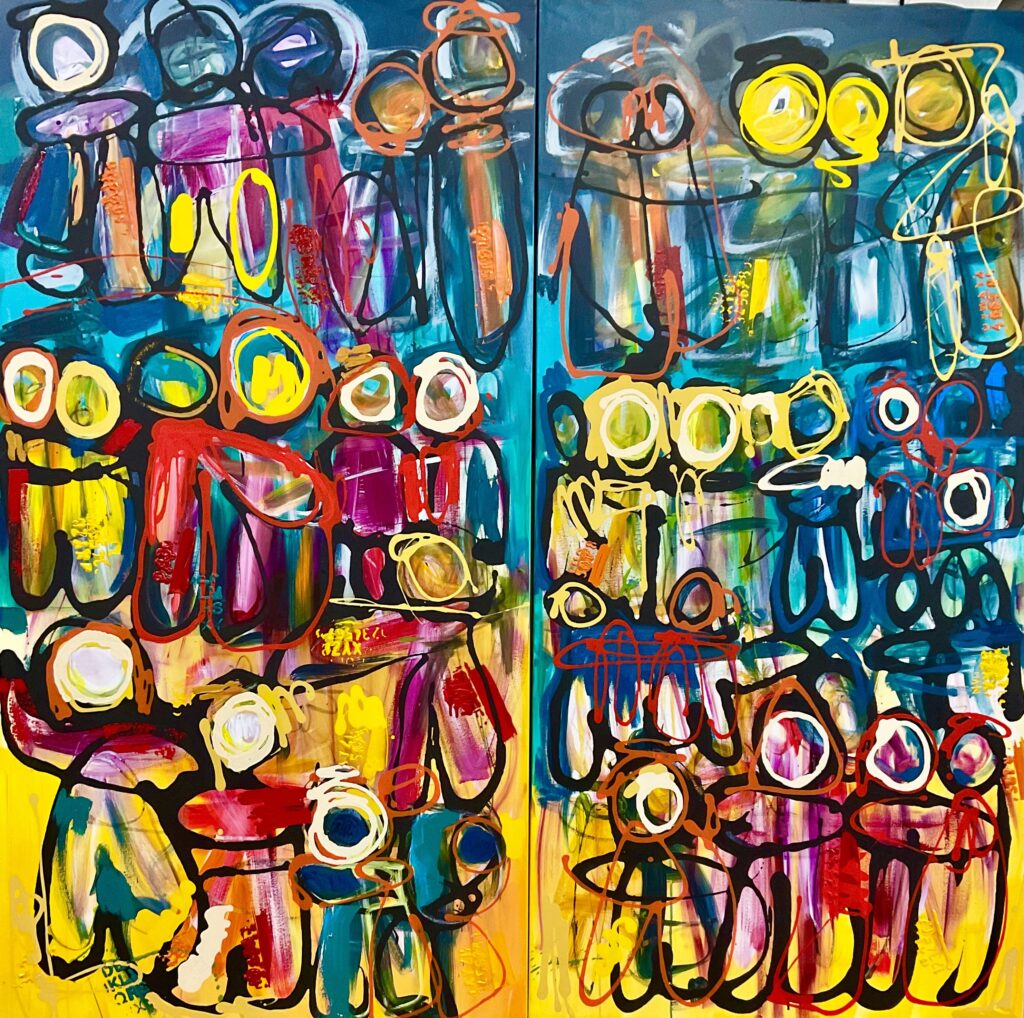
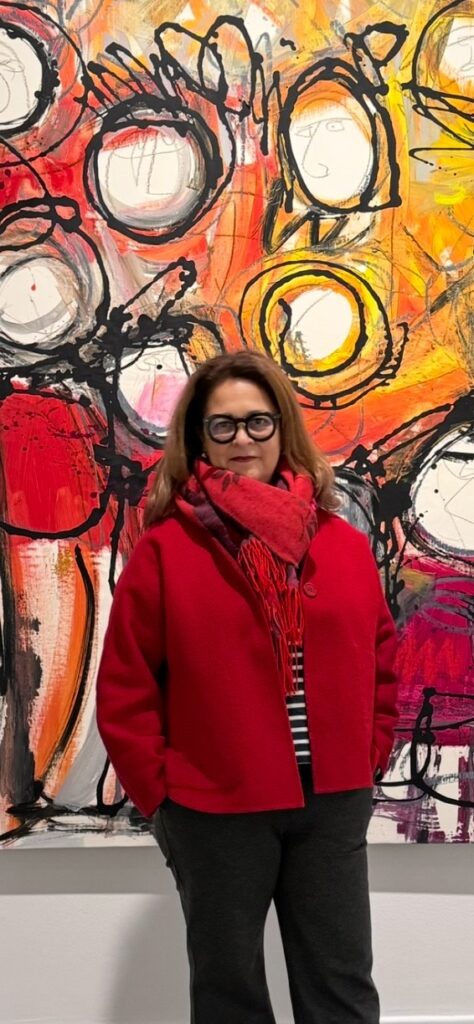
SAB Gallery is proud to present MIAMI MIRAGE, a vibrant new collection by multidisciplinary artist, designer, and professor Farnaz Harouni, debuting at CONTEXT Art Miami, Booth B23, from December 2–7 during Miami Art Week / Art Basel.
About MIAMI MIRAGE
Electric Color. Sculptural Glamour. Miami Energy.**
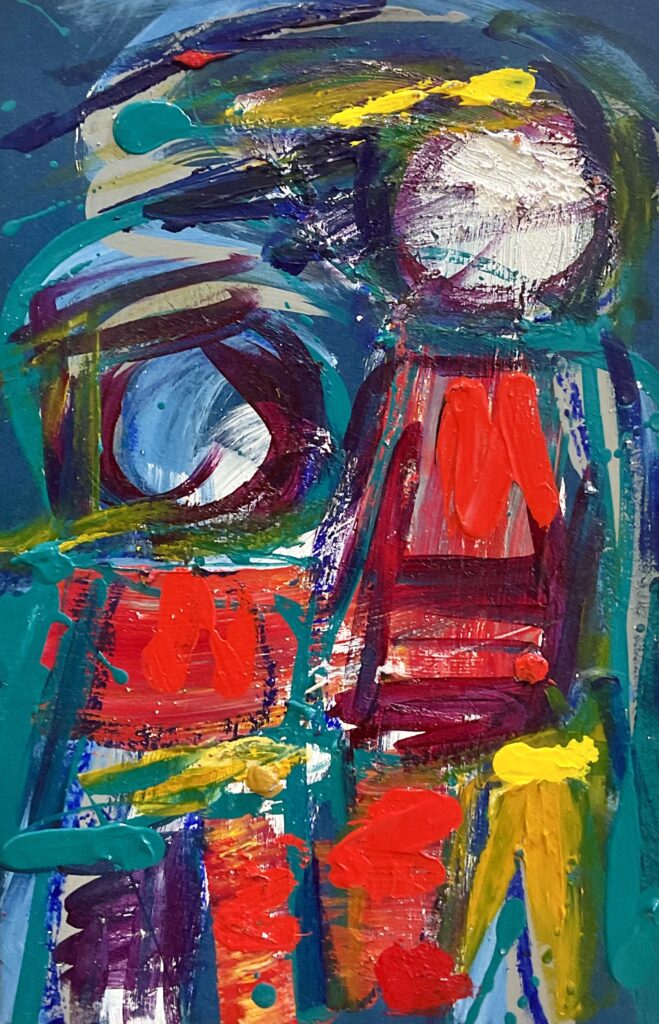
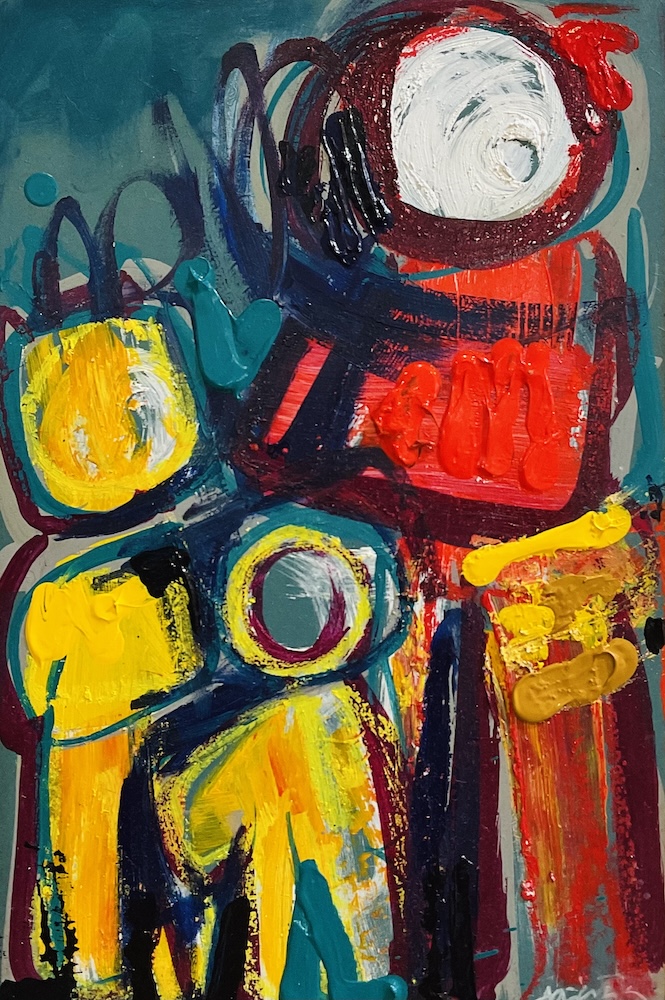
In MIAMI MIRAGE, Farnaz Harouni transforms the human lip into a radiant, electrified canvas—capturing the pulse, rhythm, and sensory heat of Miami’s cultural landscape.
Her works vibrate with:
bold neon palettes
iridescent, shimmering textures
sculptural surfaces that feel alive
energy reminiscent of Miami nightlife, sound, and movement
The collection celebrates the lip as both a universal symbol of expression and an iconic object of desire, echoing the way Miami communicates through color, rhythm, and perpetual motion. Harouni channels the city’s eclectic swirl of music, fashion, and art into each piece, creating an immersive, high-gloss universe where glamour becomes language.
“The lips are a universal symbol of the power of self-expression and an iconic object of desire,” says Farnaz Harouni. “In a place as vibrant as Miami—where art, music, and culture collide—I want to magnify that power. My work aims to provoke thought, evoke joy, and celebrate collective beauty through the lens of individual diversity.”
About the Artist: Farnaz Harouni
Farnaz Harouni is a Los Angeles–based multidisciplinary Artist, Designer, and Professor recognized for her radiant aesthetic and deeply humanistic vision. A top graduate of Otis College of Art and Design, she blends fine art, couture fashion, and interior design into a seamless creative language—earning prestigious awards and building a following among celebrities, collectors, and global tastemakers.
For over 17 years, Harouni has shaped emerging artists as a dedicated Professor at Otis. Her commitment to mentorship, community, and philanthropic work reflects the generosity and intention at the heart of her artistic practice.
Drawing inspiration from:
global travel
cultural diversity
nature’s geometry and luminosity
Harouni infuses each creation with joy, meaning, and a sense of universal connection.
Artist: Farnaz Harouni Collection:MIAMI MIRAGE Presented by: SAB Gallery Fair: CONTEXT Art Miami Booth: B23 Dates: December 2–7, 2025 Location: One Herald Plaza, Downtown Miami on Biscayne Bay
About SAB Gallery
(Insert gallery description or leave placeholder) SAB Gallery is dedicated to presenting contemporary artists whose work expands the dialogue between material innovation, conceptual depth, and visual impact.
Detroit Artists Uta Brauser Present New Work at Satellite Art Show During Art Basel Miami
Detroit Artists Ashely Worden and Uta Brauser Present New Work at Satellite Art Show During Art Basel Miami
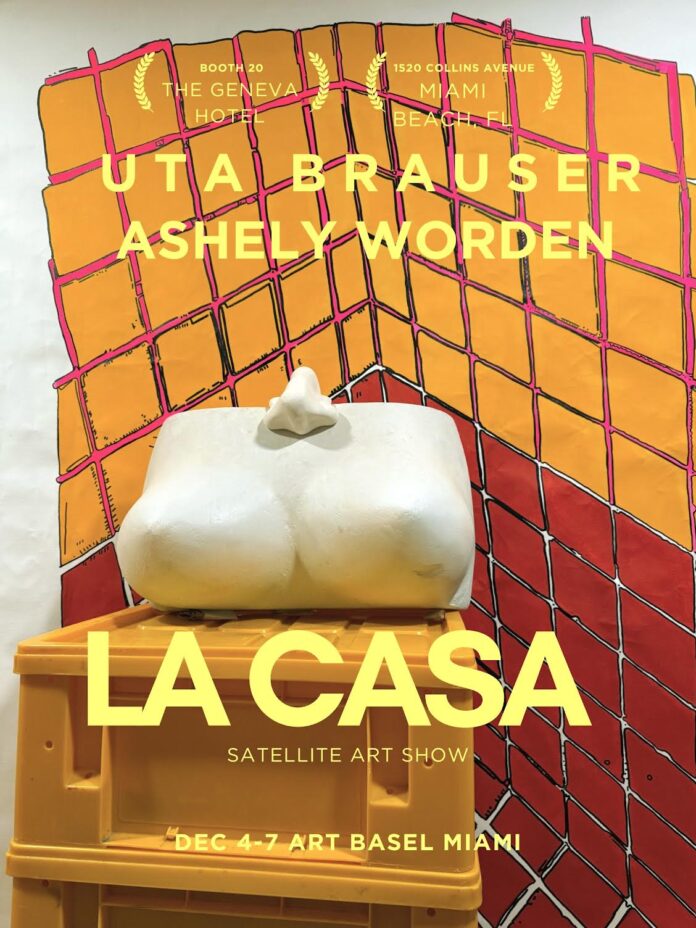
Miami, FL — Detroit-based artists Ashely Worden and Uta Brauser will debut new collaborative work at the Satellite Art Show, taking place December 5–7, 2026, during Art Basel Miami. Known for their inventive, surreal, and an incisive approach to sculpture and installation, the duo brings a fresh and provocative exploration of domestic life to one of the most anticipated art events of the year.
Worden and Brauser’s practice centers around an interrogation of home—its comforts, its contradictions, and the unseen labor it demands. Their shared artist statement articulates the core of their collaboration:
“Ashely Worden and Uta Brauser use wit and handmade absurdity to confront the uneasy truths embedded in domestic life. Their work mixes surrealist logic, improvisation, and the visual language of everyday objects to expose how humor and discomfort often sit side by side.
La casa runs through their practice: the textures of real homes layered with myth, memory, and quiet expectation. Home as noun, burden, comfort, architecture, and assignment. Their figures bend and buckle under structures that should protect them, revealing the invisible labor that sustains comfort and continuity.
Through playful distortion, Worden and Brauser ask a simple but urgent question: Who carries the weight of home—and at what cost?”
For Satellite Art Show 2026, Worden and Brauser present new sculptural works and constructed environments that expand this inquiry. Expect uncanny household forms, fragile supports, pliable bodies, and objects that teeter between the familiar and the absurd. Their installations create a world where humor becomes a pressure valve and surrealism a tool for truth-telling.
As Detroit artists, Worden and Brauser carry forward the city’s long-standing spirit of reinvention, material experimentation, and social critique. Their presence at Satellite underscores the continued significance of Detroit’s artistic contributions on an international stage.
About Satellite Art Show
Satellite Art Show is known for championing risk-taking, performance-forward, and experimental contemporary art. During Art Basel Miami, it provides an alternative platform that highlights artists and projects pushing beyond commercial and institutional norms. Satellite Art Show will take over an entire hotel with artist installations, including installations from ICE T and Andy Warhol’s blow up doll, Andy Pandy!
Exhibition Details
Event: Satellite Art Show Dates: December 5–7, 2026 Location: Booth 20, The Geneva Hotel, 1520 Collins Avenue, Miami Beach, Florida (Art Basel Week) Artists: Ashely Worden & Uta Brauser
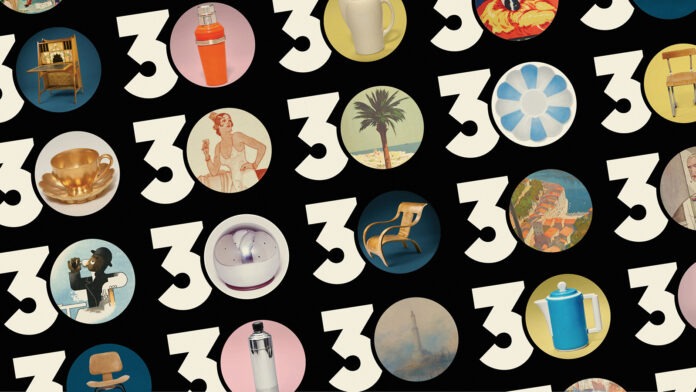
The Wolfsonian–FIU Celebrates its 30th Anniversary
With the Opening of Two New Exhibitions
Modern Design Across Borders
The Wolfsonian–FIU at 30: Design’s Past, Miami’s Present, and a Global Future
Written By Olga Garcia-Mayoral
Exhibition Openings & 30th Anniversary Celebration — November 20, 2025
Interview with Chief Curator Silvia Barisione
Walking up Washington Avenue on a bright November afternoon, the Wolfsonian–FIU still looks like a citadel: a muscular, stone-fronted landmark whose Deco-defiant bulk suggests the word Barisione herself used—fortress. Inside, however, the building opens like a cabinet of wonders. For the museum’s 30th anniversary, the drawers are pulled wide: two new exhibitions—Modern Design Across Borders and La Superba: Genoa and The Wolfsoniana—double as a birthday party and a mini-manifesto for what the Wolfsonian has always done best: tell world history through objects.
On the eve of the opening, Chief Curator Silvia Barisione joined me by phone from the galleries, where crews were finessing sightlines and labels. Our conversation swung from institutional mission to the nitty-gritty of plywood and cocktail shakers; it felt like the museum itself—scholarly and sensuous, global and granular.
“Object Stories” and a 30-Year Ethos
Asked what the Wolfsonian’s most significant contribution has been since opening in 1995, Barisione didn’t hesitate. “We try to talk about design through objects,” she said, “but we are not just a design museum. We can contextualize design objects with books, paintings, graphic design, posters—materials that let us tell object stories inside their economic and social background.”
That phrase—object stories—is the key. It’s why a travel poster can sit beside a teapot and a painting; why a piece of furniture converses with a propaganda booklet. The Wolfsonian’s strength has always been its will to connect; to show how things move across borders, circulate through markets, and gather meanings in the rooms where people live, work, and dream.
Being part of Florida International University, Barisione added, amplifies that mission. “Now we are closer to students. They come as interns, they research in the library, and we collaborate with professors. Being in the university helps us spread our mission.” The pipeline flows both ways. While FIU supports the museum, founder Mitchell “Micky” Wolfson, Jr. continues to collect with tireless curiosity—especially “books and ephemera,” Barisione noted—expanding a collection so vast that “we keep discovering things every time we do an exhibition.”
Modern Design Across Borders: Five Ways Design Travels
The anchor show, Modern Design Across Borders, focuses on the global circulations of interwar design. Rather than march chronologically, Barisione has built five “spotlight” themes—transportation, the 1925 Paris Expo, tea & coffee, plywood, and cocktail culture—that trace specific channels through which forms, materials, and habits moved.
“We wanted to celebrate design, one of our strengths,” she explained. “Lately we have done more exhibitions with paintings and graphic design—more two-dimensional objects—so this was a way to return to design, and also to celebrate many donations we have received in the last years.” The framing matters now, too: “It’s the moment to talk about global connections, cultural exchange on every level.”
Transportation anchors the story in streamlined modernity—those aerodynamic curves that shaped trains, ocean liners, automobiles, and aircraft, then boomeranged back into domestic life. Barisione loves tracing the echo: “You see streamlined shapes in the great ships and planes, and then you find them in everyday objects,” she said, pointing to cocktail shakers and siphons whose gleaming profiles miniaturize the promise of speed.
The 1925 Paris Exposition serves as a hinge: a world’s fair where national pavilions became laboratories of style, and where designers, manufacturers, and audiences tested what “modern” might look like in furniture, textiles, and tableware. The Wolfsonian installation teases out these crossings, using posters, catalogues, and objects to show how display culture accelerated design exchange.
Tea & coffee sets become a micro-history of ritual and industry. Colonial supply lines and metropolitan taste interlock in metal, porcelain, and glass. A service designed for one market could quickly migrate to another via trade fairs and department-store buyers; motifs shift language as they shift latitude.
Plywood maps a technological network: from early European innovation and export (Barisione notes how importers circulated bent and laminated woods) to mid-century American adoption, and forward to contemporary makers. “We end with a contemporary piece to show how plywood still inspires companies today,” she said—proof that material intelligence outlives fashion.
Cocktail culture—a theme with obvious Miami resonance—shows how the bar became a stage for modern living: chrome, glass, and lacquer; ergonomics scaled to the hand; social rituals tuned by design. “I wanted to connect to local culture,” Barisione told me. “Cocktail culture is such a Miami thing—so it made sense here.”
One object crystallizes how these strands braid together: a streamlined jug associated with the 1930s ocean-liner era, designed in dialogue with a ship’s aerodynamic profile and then mass-produced for the home. “The shapes inspired housewares,” Barisione said, “a contrast between the luxury of the liner and the accessible object in your kitchen—yet both speak the same design language.”
Does one theme “best” capture design as a universal language? Barisione resists the ranking. “I tried to be international in every theme,” she said. Designers migrate; companies hire across borders; imports and exports reshape taste. Plywood is a case in point: “From the turn of the century in Europe to examples in Finland, California, Virginia… you see production traveling from Europe to the United States and vice versa.”
That past is prelude. “Design is even more global now than in the interwar period,” she added, citing the contemporary plywood commission by a Finnish company working with an American designer: a tidy embodiment of the 2020s design ecosystem in which education, fabrication, and distribution are routinely transnational.
La Superba: Genoa, The Wolfsoniana, and a Transatlantic Bridge
If Modern Design Across Borders maps global flows, La Superba narrows the lens to a single port city—Genoa—and to the Wolfsonian’s sister institution in Liguria, The Wolfsoniana. “It was the right moment,” Barisione said, “because we celebrate the 20th anniversary of The Wolfsoniana, which opened in 2005—ten years after the Wolfsonian in Miami. It was a good opportunity to celebrate both institutions.” The two share DNA without sharing administrations: FIU governs in Miami; in Genoa, the collection is overseen by the Fondazione Palazzo Ducale ecosystem (Barisione referenced a new foundation structure). The transatlantic relationship remains active and generative.
The selection includes travel posters, paintings, and decorative arts that depict Genoa as both a cultural and industrial hub in the early 20th century. “Genoa is a port city,” Barisione emphasized, “with a powerful steel industry and a commercial center. You can see it in paintings of the harbor and workers, and in posters that present the city and the Riviera.” The curatorial pairing with Miami is sly: Genoa/Sestri Ponente and Miami/Miami Beach mirror each other as urban cores flanked by seaside districts—palms and promenades binding very different histories through everyday geographies..
Barisione highlighted a painting of a harbor scene in which a worker cradles a fallen comrade—an image whose humanist gravity echoes the gravity of Italian neorealist cinema. “It reflects the atmosphere of the period,” she said. What’s remarkable is the way drawings and studies for such works can be split—by intention—between the two institutions, a chessboard of loans that sustains scholarly exchange “on both sides of the ocean.” That dialogue extends to the Wolfsonian library, where researchers encounter Italian materials and then trace those threads to Genoa. “We have study centers in both places,” Barisione said. “It’s a way to keep the conversation alive.”
Two Shows, One Milestone: The Curatorial Lift
Staging two substantial exhibitions for a single anniversary is no small feat. “Working on two shows is more challenging—as you can imagine,” Barisione laughed. The complexity isn’t just logistics; it’s intellectual. Modern Design Across Borders was never meant to be a totalizing history of design, yet it had to “create connections” broad and precise enough to land with Miami audiences. “At first I thought to focus only on coffee culture,” she admitted, “but then tea made sense, and cocktail culture connects to Miami. I wanted a thread on local life.”
Behind the scenes, the curators continually unearth objects Micky Wolfson acquired decades ago that are only now coming into focus. “Every exhibition requires research—things are still to be catalogued, still to be understood,” Barisione said. It’s the kind of “problem” museums dream of: too much good material, not enough time.
The Next Chapter: Opening the “Fortress”
Where does the Wolfsonian go from here? Barisione hopes for more—more space, more students, more community. “We always hope to become bigger and to involve even more of the community,” she said. One path is programming with contemporary artists and designers who can read the collection against the present. “It’s important to understand the present through the past—but also to have new views on the collection.”’
And the building? Barisione is sensitive to the way the museum’s protective posture—hardened for hurricane seasons—can feel remote from the street. “Sometimes it is not inviting. It’s not so inclusive for people passing by,” she acknowledged. The work ahead is architectural and conceptual: to keep the collection safe while making the threshold more porous—to make the “fortress” feel like a forum.’
Miami’s Design Museum, Again and Anew
On opening night, Modern Design Across Borders and La Superba read as two sides of the same coin: one narrating how design travels; the other showing where those travels land and launch. Together, they restate the Wolfsonian’s founding wager: that you can understand the world—its ideologies, fantasies, and labors—through the things it makes.
.
In Barisione’s words, “We tell stories through objects.” At 30, the Wolfsonian is still doing exactly that—only now, the stories loop even more clearly from Miami to Genoa and back again, from ships to shakers, from plywood to posters, from classrooms to galleries. The anniversary isn’t a victory lap so much as a recommitment: to scholarship rooted in things, to public life animated by design, and to a city that has grown up alongside a museum that insists the modern is always, already, a conversation across borders.
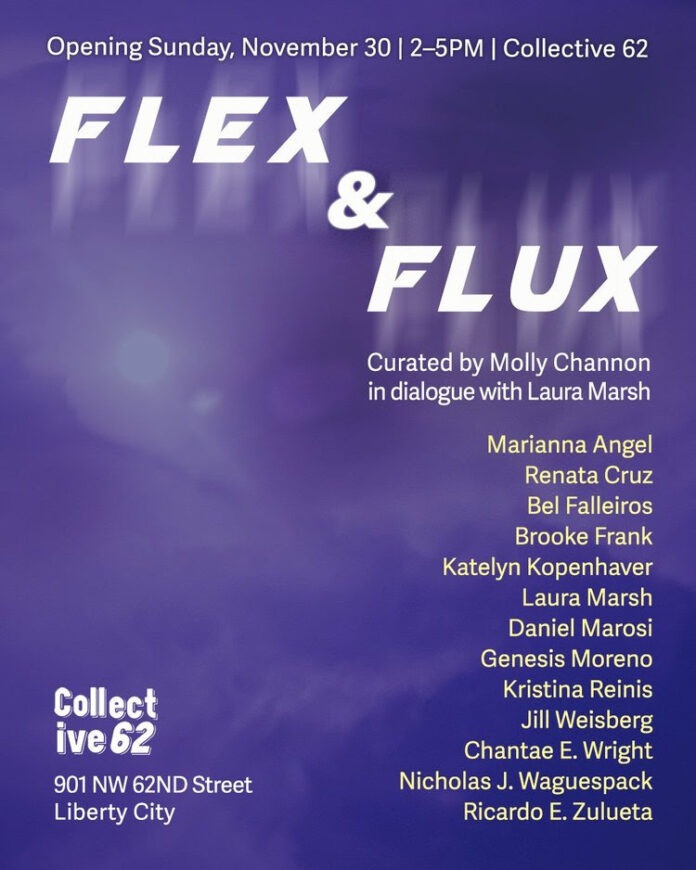
Modern Design Across Borders and La Superba: Genoa and The Wolfsoniana
Two Interconnected Exhibitions Exploring Movement, Transformation, and Collective Dialogue
Curated by Molly Channon in dialogue with Laura Marsh
Opening Reception: Sunday, November 30, 2–5 PM Venue: Collective 62, 901 NW 62nd Street, Liberty City Admission: Free and open to the public
Miami, FL — Collective 62 is pleased to announce the opening of FLEX and FLUX, two interconnected exhibitions that examine the malleability of language, material, and meaning. The public opening will take place Sunday, November 30 from 2–5 PM at Collective 62 in Liberty City.
Curated by Molly Channon in collaboration with Laura Marsh, the exhibitions gather a diverse group of multidisciplinary artists working across text, image, sculpture, installation, and conceptual forms. Together, FLEX & FLUX reveal how words, materials, and bodies exist in constant motion—reshaping, reframing, and reinterpreting the world around us.
Language as Movement: The Core of FLEX & FLUX
Many of the participating artists incorporate text and image, treating language not as a fixed entity but as something continually unfolding. In these works, words shift meaning as context, tone, and form transform their impact. This dynamic elasticity opens language to multiple interpretations—sometimes bold and declarative, addressing urgent social issues; other times quiet, poetic, and reflective, speaking to subtle emotional rhythms and internal landscapes.
Within this nuanced terrain between certainty and suggestion, language becomes both visual material and conceptual structure. FLEX & FLUX highlight this interplay, showcasing how words can stretch, bend, and reshape themselves, exposing the layered ways we communicate, interpret, and understand the present moment.
Material Transformation and the Energy of Change
While FLEX emphasizes the physical and metaphorical flexibility of form—bending, resisting, adapting—FLUX focuses on transitions, motion, and states of becoming. The exhibitions present artworks that embody change, from bodily gestures to conceptual reconfigurations, reinforcing the fluid nature of identity, community, and creative process.
Multiples Matter: Artist Editions and Iterations
As part of the exhibition, Collective 62 presents Multiples Matter, an exploration of artist multiples produced by hand, in editions, and shared online. These works exist in more than one copy yet remain anchored in original intent and authorship.
Artist multiples have a rich lineage—from Dada and Duchamp’s readymades to Russian Constructivism, Pop Art, and Fluxus—all movements committed to democratizing art and challenging elitism. Historically portable, reproducible, and playful, multiples blur the boundaries between art object and commodity. Today, they extend beyond prints into hybrid, experimental forms, expanding accessibility and reimagining how art circulates in a digital and analog world.
Participating Artists
Marianna Angel Renata Cruz Bel Falleiros Brooke Frank Katelyn Kopenhaver Laura Marsh Daniel Marosi Genesis Moreno Kristina Reinis Jill Weisberg Chantae E. Wright Nicholas J. Waguespack Ricardo E. Zulueta
About Collective 62
Located in Liberty City, Collective 62 is a woman-led artist collective and residency dedicated to supporting experimental practices, community-engaged art, and cross-disciplinary collaboration. The studio building and exhibition space serve as a platform for dialogue, creation, and cultural exchange within Miami’s diverse artistic ecosystem.
In the gritty streets of New York’s Lower East Side during the 1980s, Chinese-American painter Martin Wong created an extraordinary visual record of a neighborhood and an era that has since vanished. His meticulous paintings combined stark urban realism with visionary symbolism, capturing the lives of marginalized communities through brick walls, American Sign Language, and intimate portraits of everyday people navigating life on the city’s rough edges.
Early Life and Artistic Beginnings
Born on July 11, 1946, in Portland, Oregon, Martin Wong was raised by his Chinese-American mother in San Francisco’s Chinatown after his father died of tuberculosis in 1950. His mother, Florence, encouraged his artistic talents from an early age, and Wong began painting at age 13. He graduated from Humboldt State University in 1968 with a degree in ceramics, spending the next decade moving between Eureka and San Francisco, immersed in the Bay Area’s counterculture scene.
During this period, Wong worked as a set designer for The Angels of Light, an offshoot of The Cockettes performance art group, participating in the hippie movement’s climate of sexual freedom and psychedelic experimentation. His early work included ceramics and poetry written on long scrolls, foreshadowing the distinctive visual language he would later develop.
Arrival in New York: The Meyer Hotel Years
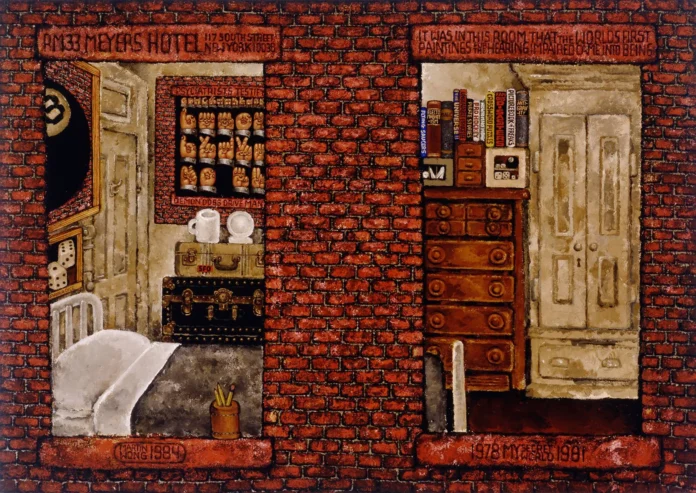
In 1978, Martin Wong moved from California to New York’s Lower East Side, then a vibrant community of predominantly Puerto Rican immigrants known by its Nuyorican name, “Loisaida”. Initially staying at the Meyer Hotel on Stanton Street, Wong found himself isolated in a decaying urban landscape that would become his primary subject matter.
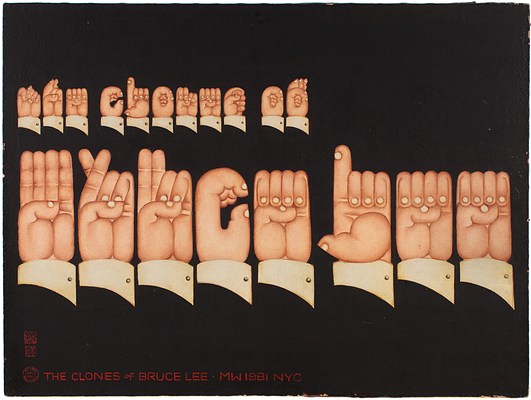
During his time at the Meyer Hotel, Wong developed two of his signature visual motifs: meticulously rendered brickwork and American Sign Language. His 1980 painting “Psychiatrists Testify: Demon Dogs Drive Man to Murder” marked the first appearance of both elements, featuring hands spelling out the tabloid headline in ASL against a backdrop of detailed brick walls.
Martin Wong
The Lower East Side: Finding His Vision
Wong’s canvases, often marked by their earthy palettes and lively social interactions, reflected his urban environment and gave visibility to groups underrepresented in both society and art, including recent immigrants and the gay community. The artist, who was openly gay, found in Loisaida a subject that resonated deeply with his own experience as an outsider.
His paintings combined multiple languages and systems of communication. Wong appropriated stylized American Sign Language symbols that appeared throughout his work, with hands forming letters and spelling out messages. Though Wong himself was hearing, his use of ASL created a distinctive visual vocabulary that scholars have noted was more about graphic symbolism than authentic communication with deaf communities.
The brick walls that dominate Wong’s work served multiple symbolic functions. Some scholars interpret his bricks as representing terrestrial reality contrasted with astronomical diagrams symbolizing hopes and dreams, making them a corporeal expression of earthly life and physical human interactions. Rendered with thick deposits of acrylic paint, Wong’s bricks gave his paintings an almost tactile presence.
Miguel Piñero and the Loisaida Community
In 1982, Wong met poet Miguel Piñero at the underground art space ABC No Rio, and Piñero introduced him to the music, poetry, and art scene of the Lower East Side. The two became artistic collaborators and briefly lovers, with Piñero living in Wong’s Ridge Street apartment for about a year and a half.
Wong credited Piñero with helping him feel integrated into the Latino community. Their collaboration produced some of Wong’s most celebrated works, including “Attorney Street (Handball Court with Autobiographical Poem by Piñero)” (1982-84), which featured Piñero’s poem spelled out in both American Sign Language and English against a graffiti-covered handball court. The Metropolitan Museum of Art acquired this painting, establishing Wong’s place in major museum collections.
Martin Wong
Urban Subjects and Visual Themes
Wong’s paintings captured the Lower East Side with documentary precision while infusing his scenes with romance and symbolism. His works from the 1980s emphasized New York’s verticality, with tall buildings appearing to oppress or entrap the city’s inhabitants, surrounded by chainlink fences and red-brick tenements looming like prison watchtowers.
One of his recurring subjects was firefighters, often depicted in homoerotic contexts. His 1986-88 painting “Big Heat” shows two firemen kissing against a backdrop of a crumbling tenement building. Wong infused his “realism” with healthy doses of fantasy and desire, reminiscent of earlier urban realist painters like Paul Cadmus and Reginald Marsh.
Wong’s firemen were often Black or Brown, and his works from this era were at their best when desire overtook reality. In “Penitentiary Fox” (1988), created the year Piñero died of liver disease, the entire cast of Piñero’s play “Short Eyes” appears to the poet in his sleep, hovering outside Sing Sing’s gates.
Champion of Graffiti Art
Beyond his own painting practice, Wong became one of the earliest champions of graffiti as legitimate art. In 1989, with the help of a Japanese investor, he co-founded with his friend Peter Broda the Museum of American Graffiti on Bond Street in the East Village, seeking to preserve what he considered “the last great art movement of the twentieth century”.
Wong befriended many graffiti artists including Rammellzee, Keith Haring, Futura 2000, Lady Pink, and Lee Quiñones. In 1994, following complications in his health, Wong donated his graffiti collection to the Museum of the City of New York. His collection comprised over 300 objects and represented a pioneering effort to preserve street art at a time when city officials were actively removing graffiti from the subway system.
Later Works and Legacy
By the 1990s, as Loisaida lost its battle against gentrification and friends died from AIDS or drug addiction, Wong’s work grew quieter and grimmer. In 1994, after being diagnosed with AIDS, he returned to San Francisco to live with his mother. His final paintings included stark black and white depictions of his mother’s cacti, a marked departure from his earlier colorful urban scenes.
Martin Wong died on August 12, 1999, at age 53. Following his death, The New York Times described him as an artist “whose meticulous visionary realism is among the lasting legacies of New York’s East Village art scene of the 1980s”.
In 2001, Wong’s mother established the Martin Wong Foundation to support art programs and young artists through collegiate scholarships at institutions including Humboldt State University, San Francisco State University, New York University, and Arizona State University.
Posthumous Recognition
Wong’s reputation has grown significantly since his death. His work is now held in major collections including the Metropolitan Museum of Art, the Museum of Modern Art, the Whitney Museum of American Art, and the Bronx Museum of the Arts. In 2022, the Museo Centro de Arte Dos de Mayo in Madrid and the KW Institute for Contemporary Art in Berlin organized “Martin Wong: Malicious Mischief,” the artist’s first museum retrospective in Europe, which subsequently traveled to London’s Camden Art Centre and Amsterdam’s Stedelijk Museum.
These exhibitions have sparked renewed interest in Wong’s complex visual language and his documentation of communities often excluded from mainstream art narratives. Wong’s work defied categorization in the trendy East Village scene of the 1980s, rendering meticulous urban landscapes in a muted palette dominated by umbers, blacks, and rusty reds. His paintings synthesized disparate influences—American urban realism, folk art’s obsessive patterning, trompe-l’oeil still life, and Chinese landscape traditions.
Enduring Impact
Martin Wong’s artistic vision captured a specific moment in New York history while addressing timeless themes of desire, community, marginalization, and resilience. His haunting paintings combined leftist politics of social realism with cosmic, transcendent symbology, with brick walls and constellations as frequent motifs.
As a queer Chinese American from San Francisco working in the elite New York art world, Wong’s outsider footing made him particularly receptive to the lives and struggles of his Latino neighbors on the Lower East Side and the graffiti artists whose work he collected and supported. His multilingual, multicultural visual vocabulary—blending ASL, graffiti, English, and references to Chinese art—created paintings that documented his adopted neighborhood while celebrating its complexity and diversity.
Today, Wong is recognized as a crucial figure in documenting pre-gentrification New York and in legitimizing graffiti as an art form. His paintings serve as both historical documents of a vanished urban landscape and as deeply personal explorations of identity, desire, and belonging in the modern city.
Adriana Torres Torchez: Painting hugs with open arms in Miami
@adrianatorrestorchez
Adrianatorrestorchez.com
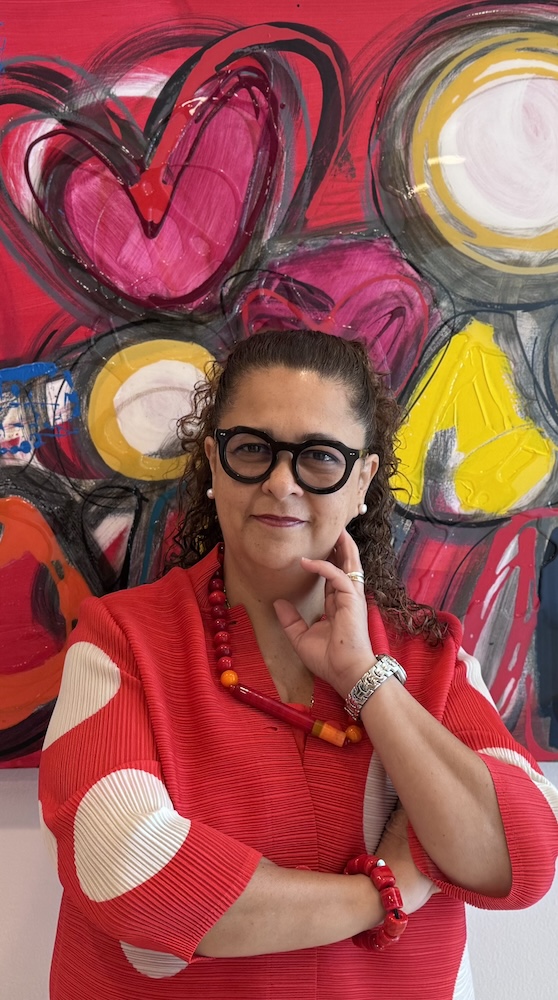
Artist and cultural manager Adriana Torres Torchez, renowned for her international career and for representing Mexico at the Venice Biennale – Personal Structures – continues to consolidate her visual language, grounded in connection and hope.
Her most recent series, such as “Hugs with Open Arms,” evokes the healing power of the embrace through expansive, luminous strokes that invite human encounter, starting with the “autism we all have.” Her work has been successfully exhibited in various cities around the world and contemporary art spaces, reaffirming her vision that art can unite, heal, and transform.
Adriana is currently preparing a new exhibition at TOP 67, an innovative creative economy space located at 6701 NE 3rd Ave, Miami, where she will present an installation inspired by the expansion of the soul and the energy of color.
With each exhibition, Torchez reaffirms her commitment to art by positively provoking viewers through her long strokes that evoke emotion and foster inclusion.
Adriana Torres Sanchez
Read the full Art Miami Magazine digital edition here:
Adriana Torres Sánchez is a mexican artist and Diplomat Actual Director of the Mexican Cultural Institute in Miami. Adriana Torres AKA ¨Torchez¨ dedicates her art work to the autism awareness. She has participated in the 2016 Verona Triennial, the 2017 Florence Biennial and the Barcelona Spain Biennial, 2017. Participación en 2016 Verona Triennial de Arte, en 2017 Florence Biennial and the Barcelona Spain Biennial, 2017 y 2018. Most important internacional Awards 2016 “Sandro Boticcelli Prize”; “Marco Polo Prize” “Michel Angelo Prize”. In 2017 “Francisco Goya” award, in Barcelona, Spain. In April 2019, premio the “Diego Velázquez in Barcelona, España. In 2021, Premio Internazionale d´Art IL David Michelangelo. Leonardo Davinci award Milan Italia, marzo 2023.
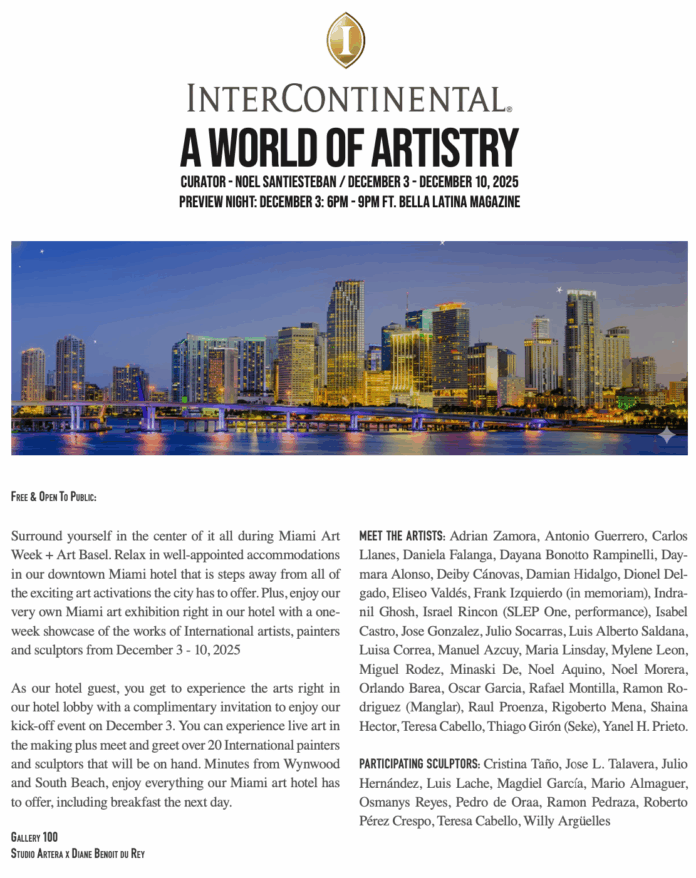
Preview Night: December 3: 6PM – 9PM ft. Bella Latina Magazine
Free & Open To Public
This Miami Art Week, immerse yourself in the city’s creative pulse at InterContinental Miami. From December 3–10, 2025, our iconic downtown hotel becomes a vibrant cultural destination with an exhibition featuring renowned international artists, painters, and sculptors.
Curated to reflect Miami’s spirit of innovation and diversity, the showcase brings together works exploring identity, movement, and transformation, echoing the city’s dynamic blend of cultures. Guests will encounter a collection of contemporary paintings, installations, and sculptures displayed throughout the hotel’s public spaces, creating a seamless dialogue between art, architecture, and hospitality.
Between gallery visits and art fairs, relax in our well-appointed accommodations overlooking Biscayne Bay, and enjoy being steps away from major events such as Art Basel Miami Beach, Art Miami, and CONTEXT.
Whether you are an art collector, curator, or admirer of creativity, InterContinental Miami invites you to surround yourself with inspiration, sophistication, and the vibrant energy of the world’s leading art week—all under one roof, where culture meets comfort and every space celebrates artistic expression.
PARTICIPATING ARTISTS
Adrian Zamora, Antonio Guerrero, Carlos Llanes, Cundo Bermudez, Daniela Falanga, Dayana Bonotto Sampinelli, Daymara Alonso, Deiby Cánovas, Damian Hidalgo, Dionel Delgado, Eliseo Valdés, Frank Izquierdo (in memoriam), Indranil Ghosh, Israel Rincon (SLEP One, performance), Isabel Castro, Halle Periu, Jose Gonzalez, Julio Socarras, Luis Alberto Saldana, Luisa Correa, Manuel Azcuy, Maria Linsday, Mylene Leon, Miguel Rodez, Minaski De, Noel Aquino, Noel Morera, Orlando Barea, Oscar Garcia, Rafael Montilla, Ramon Rodriguez (Manglar), Raul Proenza, Rigoberto Mena, Romar Margolles, Shaina Hector, Teresa Cabello, Thiago Girón (Seke), Yanel H. Prieto.
PARTICIPATING SCULPTORS
Cristina Taño, Jose L. Talavera, Julio Hernández, Luis Lache, Magdiel García, Mario Almaguer, Osmanys Reyes, Pedro de Oraa, Ramon Pedraza, Roberto Pérez Crespo, Teresa Cabello, Willy Argüelles.
Read the full Art Miami Magazine digital edition here:
Days and Hours Thursday, December 4 – 3:00 PM to 8:00 PM Friday, December 5 – 12:00 PM to 8:00 PM Saturday, December 6 – 12:00 PM to 8:00 PM Sunday, December 7 – 12:00 PM to 6:00 PM
Venue The Hangar Coconut Grove, FL
Pinta Miami will once again be one of the major highlights of Miami’s cultural calendar, taking place from December 4 to 7, 2025, when artists, collectors, and art enthusiasts will gather at Dinner Key, one of the city’s oldest neighborhoods located in Coconut Grove, to celebrate this renowned satellite fair that spotlights multidisciplinary and contemporary Latin American art.
Under the artistic direction of Irene Gelfman, Pinta’s celebrated Global Curator, the 19th edition will feature Isabella Lenzi (Artistic Director and Chief Curator at the Alberto Cruz Foundation, São Paulo) as curator of RADAR, the section dedicated to solo and duo projects. Meanwhile, Juan Canela, Chief Curator at the Museum of Contemporary Art of Panama, will oversee NEXT, the section focused on emerging and experimental artists.
A broad diversity of artistic proposals will be presented this year, with nearly 40 participating galleries from Central, North and South America and Europe, showcasing more than 500 carefully selected works of art.
“Pinta Miami is the only fair during Miami Art Week that celebrates the diversity and vitality of Latin American art. In this 19th edition, I aim to create an intimate, dynamic, and participatory space that gives visibility to contemporary Latin American art scenes in dialogue with the world. Pinta Miami stands as the definitive event for Latin American art on the local agenda, a true meeting point for the international art community.” — Irene Gelfman, Global Curator, Pinta
Outside the fair, the Sculpture Garden, curated by Irene Gelfman, will feature works by Priscila Schott, Alberto Cavalieri (VAG Victoria Art Gallery), and Rafael Barrios (Proyecto H, Mexico), exploring sculpture through geometry and abstraction.
Additionally, Argentine artist Nicola Costantino presents a Special Project in the form of a flower-art kiosk: handcrafted ceramic pieces that draw on ancestral knowledge and reimagine it in the present. The installation is presented by Pommery —The Art of Champagne—, a longstanding ally of contemporary creation and a committed supporter of Latin American artists.
Another highlight will be FORO, the Talks Program coordinated by Irene Gelfman, Pinta’s Global Curator, which—under the theme “Decoding the Art Market”—will bring together artists, curators, researchers, collectors, and cultural institutions for contemporary discussions on the development and creation of art projects from Latin America. The program will feature prominent speakers and renowned experts in Latin American contemporary art, including Spanish specialist María Sancho-Arroyo and Argentinian Juan Cruz Andrada, who will address topics such as art management challenges, the art market, the current regional art scene, AI, and more.
Through numerous institutional acquisitions, awards, and recognitions, Pinta Miami seeks to support artistic practice and foster collecting through both new and established prizes. The fair will present the EFG Latin American Art Award, in collaboraiion with Art Nexus. The winning work will be acquired for the EFG Capital collection and exhibited in Miami. Another important recognition will be the NEXT Prize, awarded to two galleries in that section by a specialized jury.
Book your flight and stay through our partner hotels
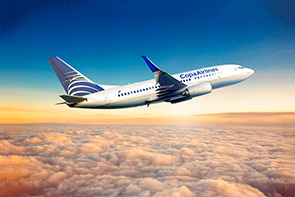
To fully enjoy the fair and the vibrant Miami Art Week, take advantage of Copa Airlines’ special discount >Click here.
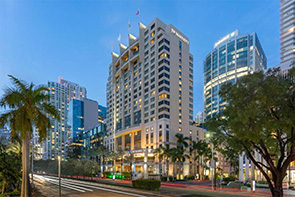
JW Marriott Brickell, the official partner hotel of this edition.Promotional rates >Click here.
This year, the hotel renews its partnership with Pinta Miami, reaffirming its commitment to Latin American art and offering our visitors an experience deeply connected to the cultural pulse of the city.
Pinta Miami partners withJW Marriott Miami to present a pop-up exhibition by artist Priscila Schott. The JW Marriott Miami will host an exclusive lobby exhibition featuring a curated selection of geometric sculptures and artworks by Priscila Schott, known for transforming simple modules into participatory and vibrant environments. Curated by Irene Gelfman, Pinta’s Global Curator, the show will be in exhibition during December.
Participating Galleries – Pinta Miami 2025
ALA Projects – Nueva York, USA
AMIA – Buenos Aires, Argentina
Appart Paris – París, Francia
Artística – Asunción Paraguay
Aura Galeria – São Paulo, Brazil
ARTMIX – Brooklyn, USA
Art Nexus – Miami, USA
Beatriz Gil Galería – Caracas, Venezuela
Bernice Steinbaum Gallery – Miami, USA
Biga Art Gallery – Buenos Aires, Argentina
Carmen Araujo Arte – Caracas, Venezuela
Ceibo Gallery – Florida, USA
CRUDO – Rosario, Argentina / Buenos Aires, Argentina
ENCARTE – Mexico City, Mexico
Espacio Líquido – Gijón, Spain / Davidson North Carolina, USA
Espacio Mancha – Santiago, Chile
Fernando Pradilla – Madrid, Spain
Galería Arteconsult – Panama City, Panama
Galería Artizar – Tenerife, Spain
Galería El Museo – Bogotá, Colombia
Galería Petrus – San Juan, Puerto Rico
Galería Trinta – Santiago de Compostela, Spain
GBG ARTS – Caracas, Venezuela
LlamazaresGalería – Gijón, Spain
LnS Gallery – Miami, USA
Lyv Gallery – Córdoba, Argentina
MARCI GAYMU GALLERY – Portimão, Portugal
Marissi Campos Galería – Lima, Peru
Mateo Sariel Galería – Panama City, Panama
Matia Borgonovo – San Salvador, El Salvador
Nohra Haime Gallery – Nueva York, USA
Pabellón 4 Arte Contemporáneo – Buenos Aires, Argentina
Pan American Art Projects – Miami, USA
Prima Galería – Santiago, Chile
Proyecto H -Mexico city, Mexico
Salar Galería de Arte – La Paz, Bolivia
Salón Comunal – Bogotá, Colombia
SEA Contemporary Art – Miami, USA
T20 – Murcia, Spain / Madrid, Spain
Tercera Avenida Projects – San Pedro Garza García, Mexico
The White Lodge – Córdoba, Argentina / Buenos Aires, Argentina
VAG – Coral Springs, USA
Verónica Viedma Arte – Asunción, Paraguay
YuVa galería de arte & diseño – Santiago del Estero, Argentina
We invite you to explore Pinta Miami’s Online Platform, where you can discover a selection of artworks that will be exhibited at the fair. Access detailed images, wall views, prices, and direct contact with the galleries, allowing you to choose your next artwork or connect from anywhere in the world. Click here
Thanks to the support of EFG Wealth Management, Pinta Miami continues to demonstrate that exceptional art goes far beyond the Miami Beach Convention Center, revealing the depth and breadth of Latin American art and culture.
Pinta Miami 2025 Days and Hours Thursday, December 4 – 3:00 PM to 8:00 PM Friday, December 5 – 12:00 PM to 8:00 PM Saturday, December 6 – 12:00 PM to 8:00 PM Sunday, December 7 – 12:00 PM to 6:00 PM
Expo del MOCAA en Brasil. Caminos de Viento y Tierra
MoCAA Leadership Visits the Museu de Arte de Goiânia to Architect a 2026 Exhibition and a Durable Inter-Institutional Framework
By Rodriguez Collection Team
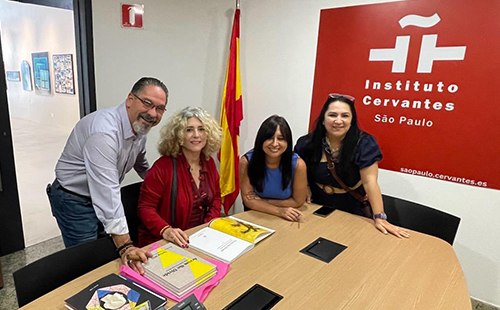
In Goiânia, senior leadership from the Museum of Contemporary Art of the Americas (MoCAA, Miami–Kendall) met with their counterparts at the Museu de Arte de Goiânia (MAG) to advance a joint exhibition slated for 2026 and to outline a broader framework for research, collection exchange, and public programs. The conversations were anchored in a shared premise: that the Americas constitute not a periphery of multiple centers but a single, interdependent field in which artistic languages circulate with reciprocal consequence.
Beyond the immediate horizon of an exhibition, the parties discussed a phased collaboration: co-curated projects drawing on each institution’s holdings; residency exchanges for curators, educators, and conservators; and a bilingual publication program attentive to archival gaps and to the methodological specificities of the region. Crucially, the partnership imagines pedagogy not as an ancillary service but as curatorial method—embedding mediation, community listening, and teacher resources into the very architecture of the shows.
For Miami, MoCAA’s involvement consolidates a mandate it has pursued since its evolution from the Kendall Art Center: to operate as a hemispheric interlocutor for Caribbean and Latin American contemporary art, serving local diasporas while convening regional discourse. For Goiânia, the alliance strengthens a cultural corridor between Brazil’s Center-West and South Florida—two scenes often read separately but linked by shared questions of territory, memory, and migration.
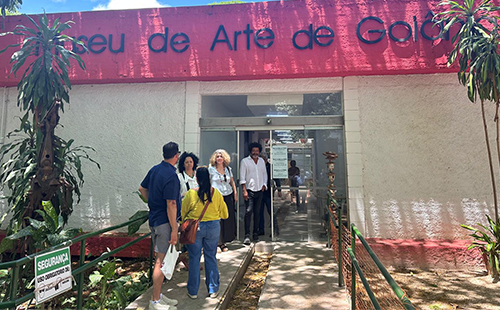
The historical ballast on the Brazilian side is clear. Established by municipal law in 1969 and inaugurated in 1970, MAG emerged as the first public museum dedicated to the visual arts in Goiás and has, since its relocation to the Bosque dos Buritis in 1981, developed a program that balances stewardship of a regional collection with a consistent rhythm of temporary exhibitions. That dual commitment—to custodianship and experiment—makes MAG an apt counterpart for collaboration at continental scale.
Both institutions emphasized the civic and educational dividends of the exchange. Circulating works and knowledges between Goiânia and Miami activates a grammar of cultural citizenship: visual literacy for school groups and families; perspective-taking and translation in multilingual publics; and research opportunities that treat community history as a living archive. Workshops, teachers’ guides, and open studios will be designed as coextensive with the exhibitions, not as afterthoughts, so that making, reading, and debate remain in continuous feedback.
From a curatorial standpoint, the forthcoming project will resist a touristic logic of “imported” spectacle. Instead, it proposes an ecology of situated displays—works installed with sensitivity to local histories, climatic materialities, and audience habits—paired with discursive formats (seminars, reading rooms, field notes) that make process legible. The wager is that form and method can travel without flattening difference, and that institutional collaboration can model the ethics it seeks to narrate.
If successful, the 2026 exhibition will serve both as milestone and prototype: a visible moment in a longer choreography of co-production, shared conservation priorities, and joint authorship of interpretive materials. In this sense, the visit to Goiânia is less a preface than a first chapter. It affirms that, for museums on this continent, working “transnationally” is no longer an exception but the condition of relevance—an ongoing practice of co-creation, circulation, and care.
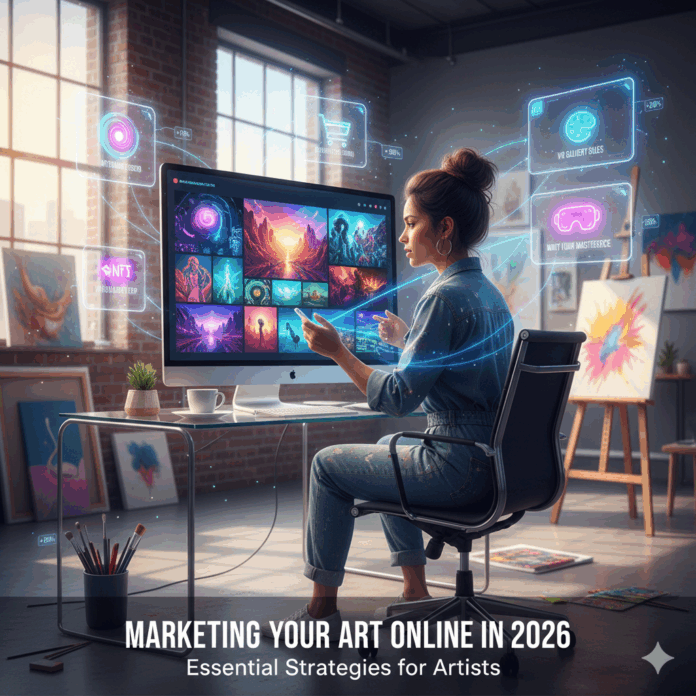
Marketing Your Art Online in 2026: Essential Strategies for Artists
Marketing Your Art Online in 2026: Essential Strategies for Artists
The global art market continues to thrive, with online sales now representing a significant portion of overall transactions. For artists in 2026, establishing a compelling digital presence isn’t optional—it’s essential for reaching collectors, building your reputation, and sustaining your creative practice.
Yet despite the opportunities, many artists still feel overwhelmed by the prospect of promoting their work online. The landscape shifts constantly, and advice that worked five years ago may no longer apply. This guide cuts through the noise to offer practical, artist-centered strategies for marketing your art in today’s digital environment.
Why Your Online Presence Matters More Than Ever
The average person now spends substantial hours online each day, and art buyers are no exception. Collectors increasingly discover artists through social platforms, search engines, and digital marketplaces. More importantly, transparency and authenticity have become paramount—research indicates that a majority of collectors believe the art market could better serve them through clearer pricing and more accessible information.
Here’s what a strong online presence offers you:
Global reach without geographical limits. Your work can be discovered by collectors on the other side of the world while you sleep. The digital space removes traditional barriers to entry that once made the art world feel impenetrable.
Direct relationships with buyers. Rather than relying solely on intermediaries, you can cultivate your own community of supporters who connect with your vision and follow your creative journey.
Multiple revenue streams. Beyond selling originals, the digital world opens doors to prints, merchandise, licensing, commissions, and even educational offerings—all from a single body of work.
Storytelling on your terms. You control your narrative. Collectors today want to understand the artist behind the work, and online platforms give you space to share that story authentically.
Three Foundational Strategies for 2026
1. Research Your Audience and Market
Before diving into tactics, invest time understanding who resonates with your work. This means going beyond demographics to understand collector motivations, where they spend time online, and what price points align with their collecting habits.
Study artists in your space who have built sustainable practices. What platforms do they use? How do they communicate about their work? What seems to generate engagement versus what falls flat?
Stay connected with artistic communities—both online and in person. Trends shift quickly, and being part of ongoing conversations helps you adapt while staying true to your vision.
2. Build a Professional Digital Foundation
Your website serves as the central hub of your online presence. It’s where collectors go to verify your credibility before making a purchase, and it operates around the clock as your digital representative.
Ensure your site meets these standards:
Responsive design that works seamlessly on mobile devices
Intuitive navigation that doesn’t frustrate visitors
High-quality images that accurately represent your work
Clear information about purchasing, commissions, and contact
A compelling artist statement and biography
Regular updates that signal an active practice
Website platforms designed for creatives—like Squarespace—offer built-in features that artists appreciate, from integrated e-commerce to straightforward search optimization tools.
3. Use Social Media Strategically
With billions of users across platforms, your ideal collectors are certainly online. The question is: where do they prefer to engage with art content?
Rather than spreading yourself thin across every platform, focus your energy where your audience actually spends time. Some collectors gravitate toward Instagram’s visual format, while others prefer discovering artists through Pinterest or engaging with long-form content on platforms like Substack.
The content you already create in your studio—works in progress, finished pieces, behind-the-scenes glimpses—holds genuine value for your audience. Sharing your process authentically builds connection and differentiates you from competitors, particularly as AI-generated imagery becomes more prevalent online.
The Essential Do’s and Don’ts of Art Marketing in 2026
Marketing advice aimed at general businesses often misses the mark for artists. Here’s guidance tailored specifically to creative practice:
Don’t force your work into a narrow niche for marketing convenience. Do recognize that your unique perspective, experiences, and approach to making art already constitute your niche. Authenticity resonates more powerfully than manufactured positioning.
Don’t undervalue the sharing of your creative journey as mere self-promotion. Do understand that storytelling creates genuine connection. Collectors who follow your process develop deeper appreciation for your work, which enhances its value.
Don’t adopt every marketing tactic you encounter without discernment. Do evaluate strategies against your own goals, temperament, and available time. Test approaches thoughtfully, and build systems that work sustainably for your practice.
Don’t assume you must be everywhere doing everything. Do focus your energy on high-impact activities. Deep engagement on one platform typically outperforms scattered presence across many.
Don’t make assumptions about your audience based on generalizations. Do build genuine relationships and gather direct feedback from collectors and followers. Their insights will prove more valuable than generic market research.
Platforms and Tools Worth Considering
The right tools can streamline your marketing efforts considerably. Here’s a practical overview:
For your website: Squarespace remains popular among artists for its design flexibility and built-in features. Shopify works well for those focused primarily on commerce.
For selling online: Established marketplaces include Etsy, Saatchi Art, and Artfinder for original works. Print-on-demand services allow you to offer prints and merchandise without managing inventory.
For visibility: Basic search engine optimization helps collectors find you. Analytics tools reveal what’s working and what needs adjustment.
For community building: Email lists give you direct access to your audience without algorithmic interference. Consider platforms that allow for longer-form connection with dedicated followers.
Navigating Common Challenges
Artists face particular obstacles when marketing their work. Here’s how to address them:
Imposter syndrome: Nearly every artist experiences this. Treat setbacks as information rather than verdicts, and remember that showing your work takes courage worth celebrating.
Pricing uncertainty: Research comparable artists, account for all your costs including time, and seek guidance from those further along in their careers. Your pricing can evolve as your reputation grows.
Time management: Creating art and marketing it compete for the same limited hours. Build sustainable routines rather than unsustainable bursts of effort. Batch similar tasks together, and automate what you can.
Fear of self-promotion: Reframe marketing as invitation rather than intrusion. You’re offering people the opportunity to engage with work that might genuinely enhance their lives.
The AI Question
Artificial intelligence continues reshaping creative industries, sparking legitimate concerns among artists about attribution, competition, and the changing perception of originality. Rather than viewing AI as purely threatening, consider how the technology might serve your practice—handling administrative tasks, supporting research, or expanding your reach—while recognizing that your human perspective, emotional depth, and physical presence in your work remain irreplaceable.
As AI-generated imagery proliferates online, handmade original artwork may become even more valued by collectors seeking authentic connection to creative vision.
Moving Forward
Marketing your art online in 2026 isn’t about following formulas or gaming algorithms. It’s about building genuine relationships with people who connect with your work, and creating systems that support your practice sustainably over time.
Start where you are. Choose one or two strategies that align with your goals and temperament. Execute them consistently before adding more. Track what works, adjust what doesn’t, and maintain the creative practice that fuels everything else.
Your work deserves to be seen. The tools and platforms exist to make that possible at a scale previous generations of artists couldn’t have imagined. The question isn’t whether to engage with digital marketing—it’s how to do so in ways that feel authentic to who you are as an artist.