Home Blog Page 42

The Art of Color: A Complete Guide to Painting Mediums

The Art of Color: A Complete Guide to Painting Mediums

The Art of Color: A Complete Guide to Painting Mediums

Color is the lifeblood of visual art, and the medium through which an artist applies that color fundamentally shapes the character of their work. From the luminous glazes of oil paint to the delicate washes of watercolor, each painting medium offers unique properties, techniques, and aesthetic possibilities. Understanding these materials empowers artists to choose the right tool for their creative vision.

Oil Paint: The Old Master’s Choice

Oil paint has reigned as the most prestigious painting medium since the Renaissance. Made by suspending pigments in drying oils—typically linseed, walnut, or safflower—oil paint offers unparalleled richness and depth of color. Its slow drying time, which can extend from days to weeks depending on thickness and pigment, allows artists to blend colors seamlessly on the canvas, creating the soft transitions and subtle gradations seen in works by Rembrandt and Vermeer.

The medium’s versatility is remarkable. Artists can apply oil paint thickly for impasto effects that catch light on textured surfaces, or thin it with solvents for transparent glazes that glow with inner luminosity. The colors retain their vibrancy as they dry, showing minimal shift from wet to dry state. However, oil painting requires patience, proper ventilation due to solvent use, and an understanding of fat-over-lean principles to prevent cracking over time.

Acrylic Paint: The Modern Innovator

Developed in the mid-20th century, acrylic paint revolutionized artistic practice with its fast-drying, water-based formulation. Pigments suspended in acrylic polymer emulsion dry through water evaporation, typically within 15 to 30 minutes, allowing artists to work quickly and build layers rapidly without long waiting periods.

Acrylics are remarkably versatile, capable of mimicking both watercolor’s transparency when heavily diluted and oil paint’s opacity when used straight from the tube. They adhere to virtually any non-greasy surface, dry to a permanent, water-resistant finish, and don’t yellow with age. This flexibility makes them ideal for everything from traditional canvas painting to mixed media work, murals, and experimental techniques. The trade-off for this convenience is the challenge of blending colors before they dry and a slight darkening of colors as the paint cures.

Watercolor: Transparency and Light

Watercolor painting embraces spontaneity and the luminous quality of light passing through transparent pigment to reflect off white paper. Pigments are bound with gum arabic, a water-soluble binder that allows for fluid, ethereal effects impossible with opaque mediums. The white of the paper serves as the lightest value, requiring artists to work from light to dark and plan their compositions carefully.

The medium demands a unique approach: water control determines everything from delicate washes to bold, saturated passages. Techniques like wet-on-wet, where paint meets wet paper or wet paint, create soft, diffused edges and atmospheric effects. Wet-on-dry produces crisp, defined edges. The unpredictability of water’s behavior—how it pools, blooms, and dries—means each painting involves a dance between control and surrender. While mistakes are difficult to correct, this limitation encourages confidence and decisiveness.

Gouache and Tempera: Opaque Water-Based Mediums

Gouache resembles watercolor but contains white pigment or chalk, making it opaque rather than transparent. This opacity allows artists to work from dark to light, paint over mistakes, and achieve flat, matte areas of vibrant color. Popular with illustrators and designers, gouache dries quickly to a velvety, non-reflective surface. It can be rewetted after drying, allowing for adjustments but also requiring protective fixative for finished works.

Tempera, one of the oldest painting mediums, traditionally uses egg yolk as a binder for pigments. Fast-drying and capable of extremely fine detail, egg tempera was the primary medium for panel painting before oils became dominant. It dries to a hard, luminous matte surface that’s remarkably durable. Modern acrylic-based tempera serves similar functions in education and illustration, though it lacks the subtle translucency of egg tempera. Both mediums excel at creating precise, controlled passages with jewel-like color intensity.

Pastels: Pure Pigment Power

Pastels are nearly pure pigment with minimal binder, offering color intensity that rivals any medium. Soft pastels contain just enough gum or resin binder to hold pigment together, creating sticks that deposit rich, velvety color directly onto textured paper. The immediacy of pastel application—no brushes, no water, no drying time—appeals to artists who want direct, spontaneous mark-making.

Hard pastels and pastel pencils contain more binder, allowing for detailed work and crisp lines. Oil pastels use oil and wax as binders, never truly drying and remaining workable indefinitely. The creamy texture of oil pastels allows for blending and layering, creating effects similar to oil painting but without solvents. All pastels require fixative to prevent smudging, and their delicate surface demands careful handling and protection under glass.

Pencil and Drawing: The Foundation

Graphite pencils remain the most accessible and versatile drawing tool. The range from hard (H) to soft (B) grades allows artists to achieve everything from precise technical drawings to rich, velvety blacks. Graphite’s erasability makes it ideal for preliminary sketches and detailed studies. Carbon and charcoal pencils offer deeper blacks and a more expressive, less reflective quality than graphite.

Colored pencils use wax or oil-based binders with pigment, allowing for detailed color work with the control of a pencil. Wax-based pencils blend smoothly and layer well, while oil-based versions are harder and can be dissolved with solvents for painterly effects. The medium rewards patience; building color through multiple layers creates depth and luminosity that single applications cannot achieve. Artists can work on various papers, from smooth surfaces for detailed illustration to textured papers for expressive mark-making.

Pens: Precision and Permanence

Pen and ink drawing offers unparalleled precision and permanence. Technical pens with consistent line widths suit architectural and technical illustration, while dip pens with flexible nibs allow for expressive line variation responding to pressure. Fountain pens combine convenience with line variation, and brush pens bridge drawing and painting with fluid, calligraphic marks.

The permanent nature of most pen work demands confidence and planning, though this limitation can be liberating. Techniques like hatching, cross-hatching, stippling, and contour drawing build value and texture through accumulated marks. Modern pens include gel pens, markers with various nibs, and specialized tools for manga and comic art. Each type offers different line qualities, from the mechanical consistency of fineliners to the organic variation of bamboo pens.

Ink: Fluid Expression

Drawing and painting inks extend beyond pens to brush application and experimental techniques. India ink, a deep black pigmented ink, has been used for centuries in Asian brush painting and Western illustration. It’s waterproof when dry, allowing for layering and mixed media work. Acrylic inks share acrylic paint’s permanence but in liquid form, flowing smoothly from pen or brush.

Walnut and iron gall inks offer warm, brown tones favored in historical manuscripts. Colored inks provide vibrant hues with the fluidity of watercolor but often with greater intensity. Ink washes create atmospheric effects similar to watercolor, while undiluted ink produces rich, saturated passages. The medium encourages spontaneity; ink’s fluid nature means accidents often become happy discoveries, and the strong value contrasts create dramatic, graphic compositions.

Printmaking Ink: Reproduction and Repetition

Printmaking inks are specially formulated for transferring images from matrix to paper through various printing processes. Oil-based relief inks, used in woodcut and linocut, are thick and tacky, holding detail on raised surfaces and transferring cleanly under pressure. Water-based relief inks offer easier cleanup but require different handling to prevent drying on the block.

Intaglio inks, wiped into etched or engraved lines on metal plates, must have the right viscosity to fill recesses while wiping cleanly from smooth surfaces. Lithographic inks work with the grease-attracts-grease, water-repels-grease principle of stone or plate lithography. Screen printing inks push through mesh stencils, available in various formulations for fabric, paper, or other substrates. Each ink type contributes to the distinct aesthetic of its printing method—the bold graphics of relief printing, the subtle tones of intaglio, or the flat color fields of screenprinting.

Encaustic and Wax: Ancient Innovation

Encaustic painting, using pigmented beeswax as the medium, dates to ancient Greece but has found renewed interest among contemporary artists. The wax is melted, mixed with pigment and damar resin, then applied to a rigid surface while hot. Each layer is fused to previous layers with a heat gun or torch, creating a luminous, three-dimensional surface with extraordinary depth and texture.

The medium allows for unique techniques: embedding objects, creating translucent layers, scraping and carving into the surface, and achieving effects impossible with traditional paint. Cold wax medium, mixed with oil paint, offers some of encaustic’s textural possibilities without the heat requirement. Wax mediums create matte, tactile surfaces that invite touch, and the archival stability of encaustic—ancient encaustic portraits remain vibrant—appeals to artists concerned with longevity.

Pigments and Powders: Color at Its Source

Understanding pigments—the raw coloring agents in all paints and drawing materials—deepens artistic practice. Historically sourced from minerals, plants, and animal products, pigments like ultramarine (from lapis lazuli), vermilion (from cinnabar), and Indian yellow (from mango-fed cattle urine) were precious commodities that influenced artistic choices and symbolism.

Today, both traditional mineral pigments and modern synthetic pigments are available as dry powders. Artists can create custom paints by mixing pigments with appropriate binders: linseed oil for oil paint, gum arabic for watercolor, acrylic medium for acrylics. This allows for precise control over paint consistency, transparency, and texture. Dry pigments also serve in fresco, where pigment suspended in water bonds with wet lime plaster, and in various experimental techniques. Understanding pigment properties—lightfastness, toxicity, tinting strength, and opacity—empowers artists to make informed decisions about permanence and safety.

Choosing Your Medium

Each painting medium offers distinct advantages and limitations. Oil paint’s blendability and richness suit contemplative, layered approaches. Acrylics’ versatility and quick drying enable rapid experimentation. Watercolor’s transparency captures light and atmosphere with unique delicacy. The choice depends on artistic goals, working methods, practical considerations, and personal preference.

Many contemporary artists embrace mixed media, combining materials to exploit each medium’s strengths. Understanding the properties of various painting mediums—how they behave, interact, and age—equips artists to make intentional choices that serve their creative vision. Whether applying ancient encaustic techniques or pushing the boundaries of acrylic innovation, artists continue to explore color’s infinite possibilities through the diverse mediums at their disposal.
Liberty Sculpture — Available for Acquisition

Liberty Sculpture — Available for Acquisition

Liberty Sculpture — Available for Acquisition

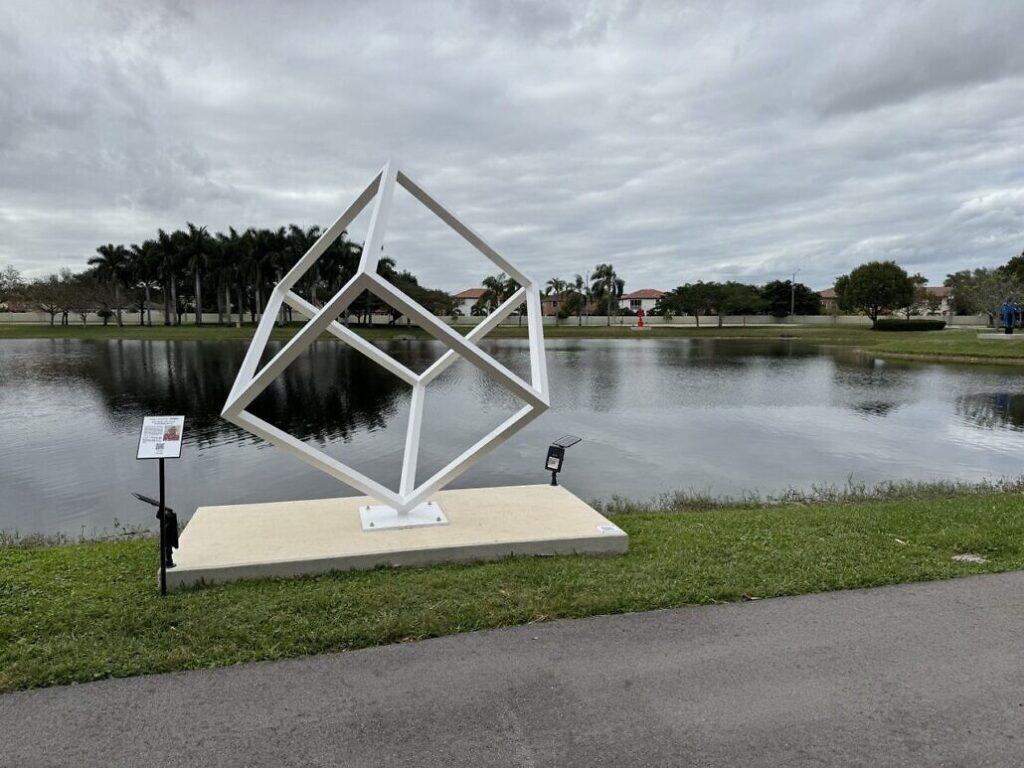
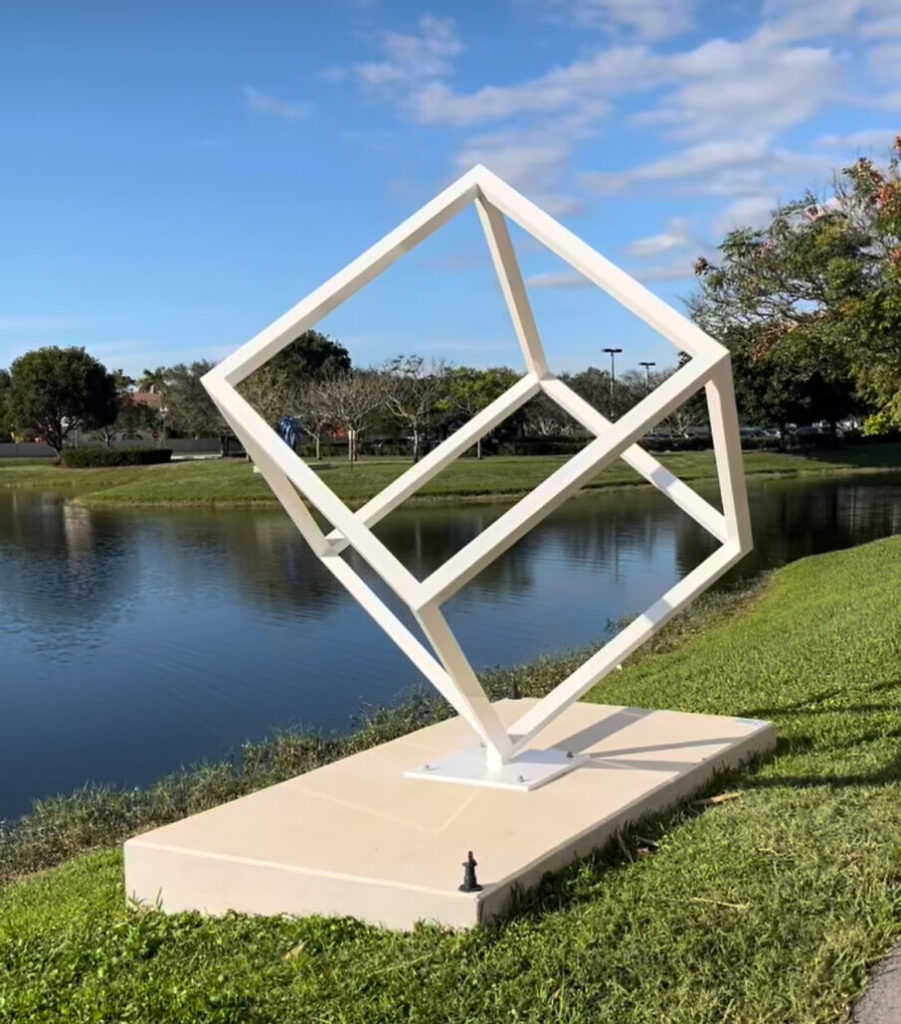
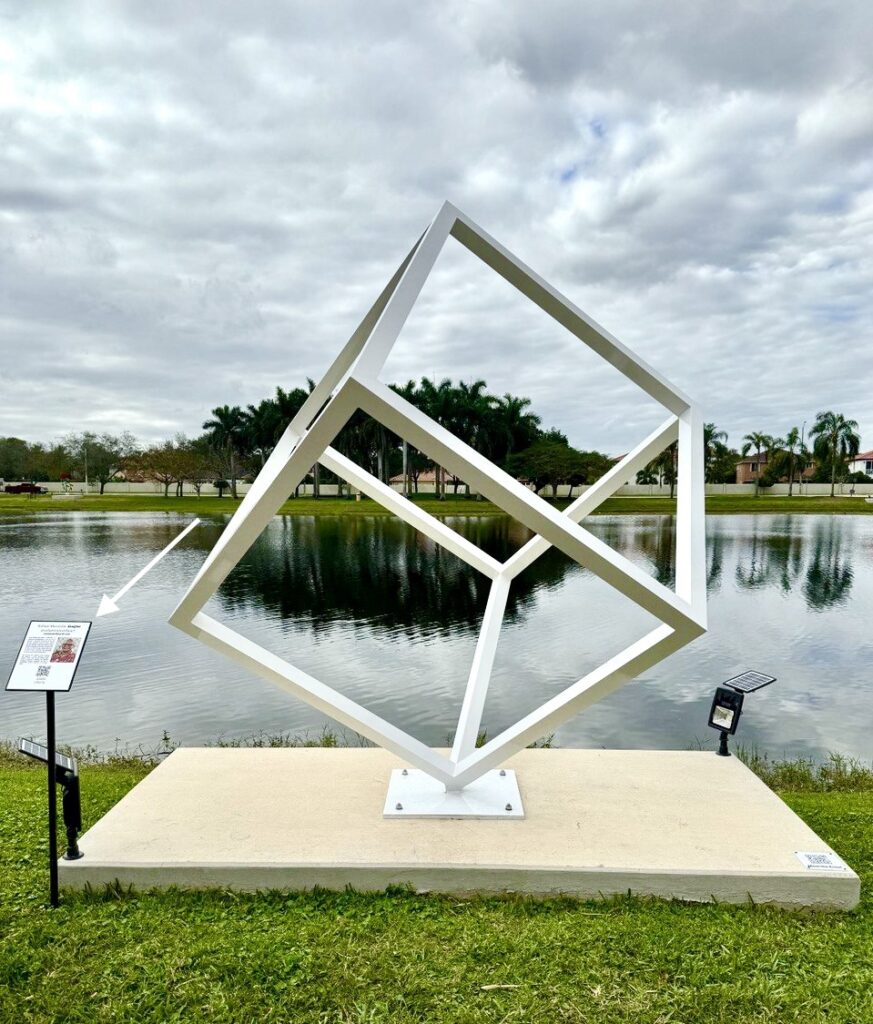
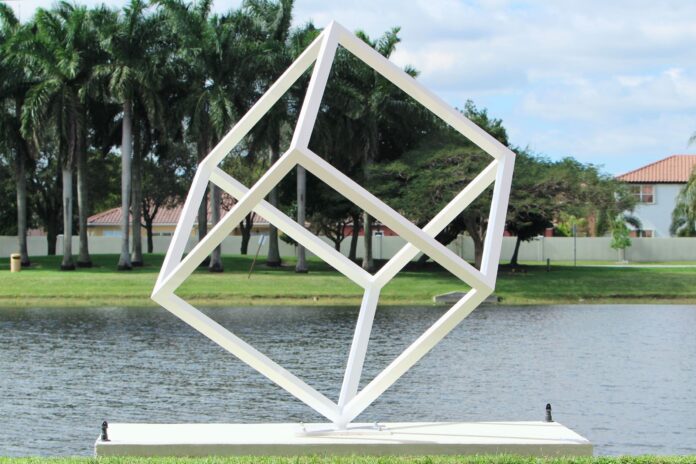
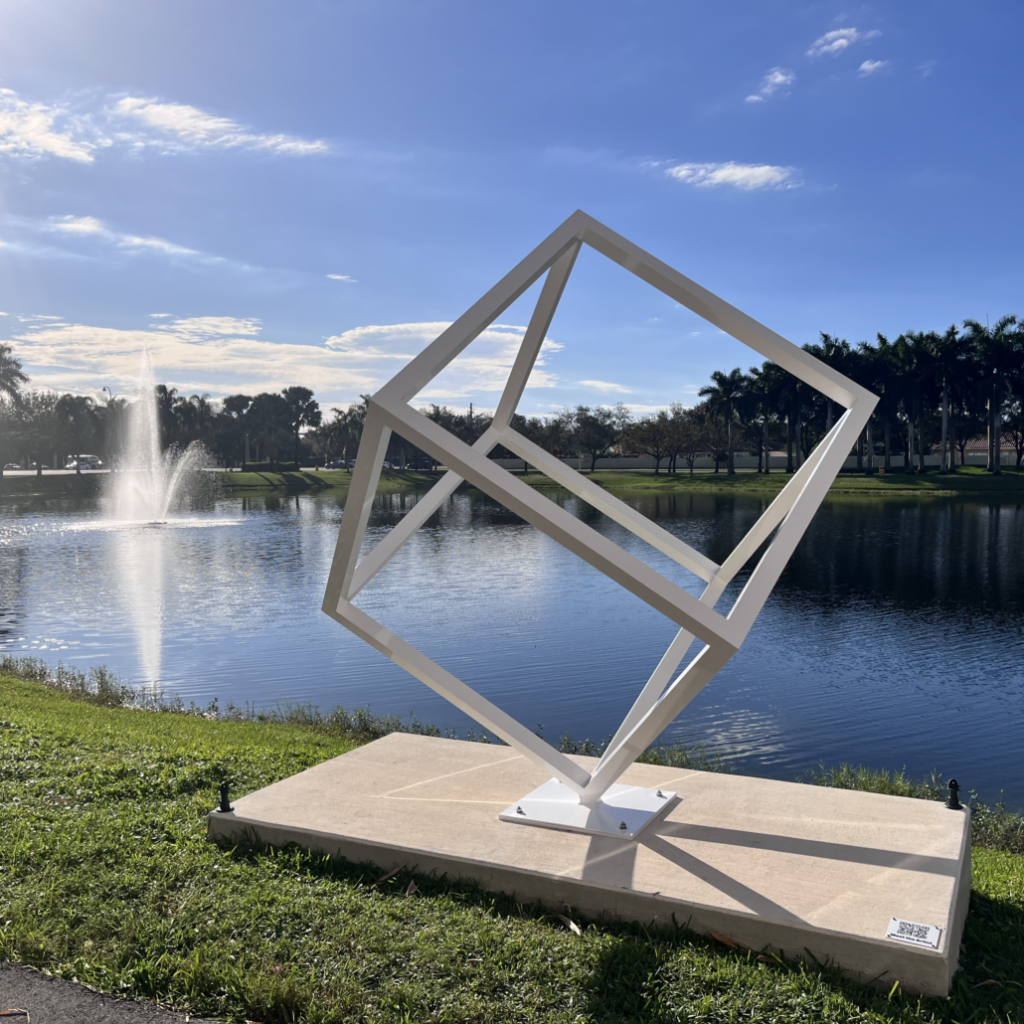
The sculpture “Liberty” was selected for inclusion in the City of Miramar’s rotational Public Art on Loan Project called MCC ARTSCAPE for the 2024 – 26 period.

Statement
Liberty embodies the universal pursuit of freedom through geometric clarity and spatial balance. Crafted with an open, architectural presence, the sculpture stands as a symbol of both inner and outer freedom—an invitation to reflect on the spaces we inhabit and the possibilities we create within them.

Title: Liberty
Artist: Rafael Montilla
Year: 2024
Material: Aluminum
Finish: Powder coating
Dimensions: 7 ft × 7 ft × 7 ft
Price: $21,000 USD

Transportation within Miami Dade is included in the purchase price, but the concrete base and installation are not included

Workshop, Wheel Throwing for All Levels – 4-Week Series (Wednesdays)

Workshop Wheel Throwing for All Levels
Art Class Wheel Throwing for All Levels

Workshop, Wheel Throwing for All Levels – 4-Week Series (Wednesdays)

Arts Warehouse

Jan 7 from 11:30am to 1:30pm EST

REGISTER

Location

313 Northeast 3rd Street

Delray Beach, FL 33444

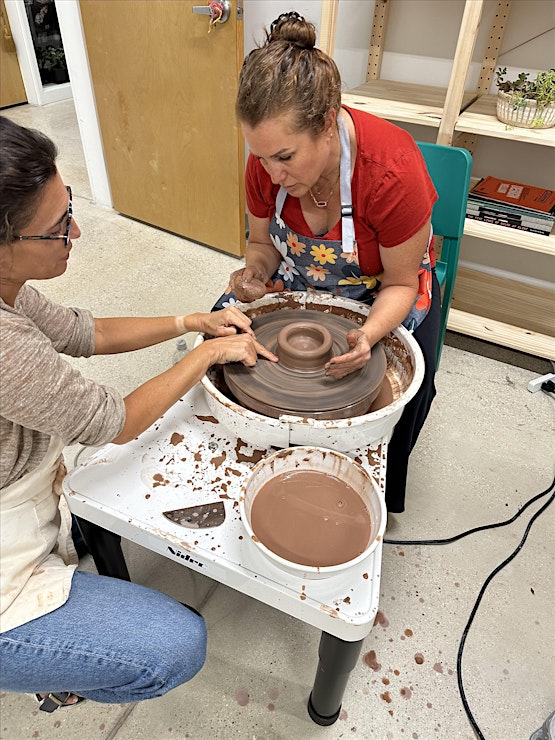
Designed for different levels of experience, this semi-private workshop series invites 2 students at a time to get on the wheel!

4-Week Wheel Throwing Class (Wednesday Session)

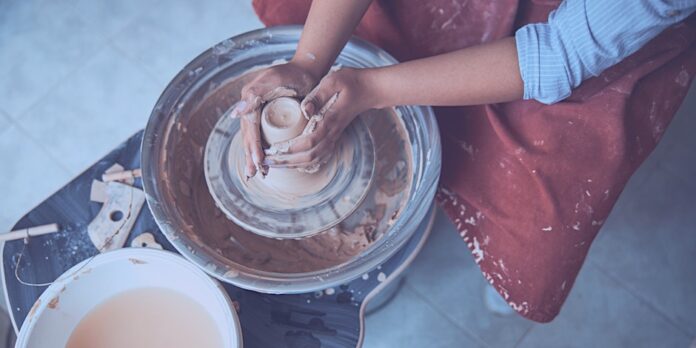
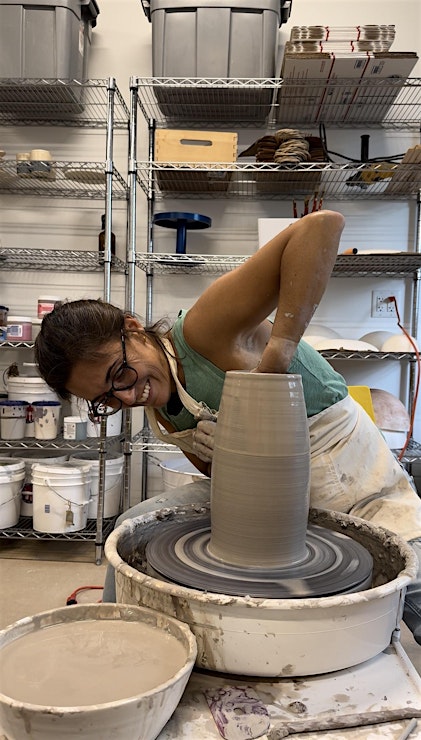
This 4-week wheel-throwing class is suitable for all experience levels. The class is limited to two students, which allows Ceramic Artist Landis Carey to tailor instruction to each student’s ability.Throughout the course, you will learn:

  • The basics of clay preparation, including wedging and centering.
  • Essential wheel-throwing techniques for creating basic forms such as cylinders and bowls.
  • Methods of finishing, including trimming your pieces.
  • The basics of glazing and firing your finished work.

Classes will combine demonstrations, personalized instruction, and plenty of practice time to ensure you build confidence and skill at your own pace. By the end of the course, you will have a collection of your handcrafted pottery to take home and enjoy.

Who Should Enroll: Beginning and experienced potters. No prior experience in pottery or ceramics is necessary. Ages 16+

Course Duration: 4 weeks, with one 2-hour session per week.

Course Dates* & Times:

11:30 am – 1:30 pm

Wednesdays: January 7, 14, 21, 28

*Students must be able to attend all sessions; there are no make-up dates.

Materials: All necessary materials, including clay, tools, and glazes, are provided. Students are encouraged to bring an apron or wear clothing that can get messy.

Cost: $360 – This ticket covers all four sessions and materials.

About the Instructor: Our experienced instructor, Landis Carey, is a professional ceramic artist with over 20 years of wheel-throwing experience. She will provide individualized attention and guidance, ensuring a supportive and engaging learning environment.

**Please note, Refunds will be processed only if requested 72+ hours prior to scheduled workshop date/time. No refund will be given if requested less than seventy two (72) hours until scheduled workshop time for any reason. Only one ticket transfer will be allowed per person per workshop type, and will only occur if requested outside of the 72 hour mark of the registered workshop. To request a refund and cancel your ticket, please call 561-330-9614**

Color Theory with Colored Pencils

Color Theory with Colored Pencils by Juan Sebastian Restrepo

Color Theory with Colored Pencils

December 11 @ 2:00 pm – 3:30 pm

REGISTER HERE

Led by Juan Sebastian Restrepo

$30

All Materials Provided

This workshop is best for Beginner participants, 12+ or adults

This hands-on workshop introduces students to the fundamentals of color theory through the use of colored pencils and guided worksheets. We’ll explore the color wheel, warm and cool tones, blending techniques, and how color conveys emotion and meaning in visual art. Students will leave with a personalized color study and a stronger understanding of how to apply color theory to their own creative work.

Materials Provided: Colored pencils, printed worksheets, drawing paper.

Color Theory with Colored Pencils by Juan Sebastian Restrepo

About the Instructor:

Juan Sebastian Restrepo holds an MFA in Painting from Southern Illinois University Edwardsville (SIUE), where he also taught Visual Organization 1 and was an active member of the Painting and Drawing Association. He earned his BFA in Painting from Pratt Institute in 2015. Restrepo has held several entry- level positions in Florida museums and galleries, including The Bakehouse Art Complex, Institute of Contemporary Art, Miami (ICA Miami), and Museum of Art and Design at Miami Dade College (MOAD). Currently, he serves as an Adjunct Faculty member at Florida International

University and Miami Dade College, where he teaches Drawing and Art Appreciation. Recently, he curated the “intersections” exhibition at New World School of the Arts. Restrepo’s work has been exhibited in various locations, including Illinois, Oklahoma, Mississippi, Florida, and New York.

** Please note, Refunds will be processed only if requested 72+ hours prior to scheduled workshop date/time. No refund will be given if requested less than seventy two (72) hours until scheduled workshop time for any reason. Only one ticket transfer will be allowed per person per workshop type, and will only occur if requested outside of the 72 hour mark of the registered workshop. To request a refund and cancel your ticket, please call 561-330-9614**

Details

Date:December 11Time:

2:00 pm – 3:30 pm

Event Category: Classes/Workshops

Event Tags: Drawing December

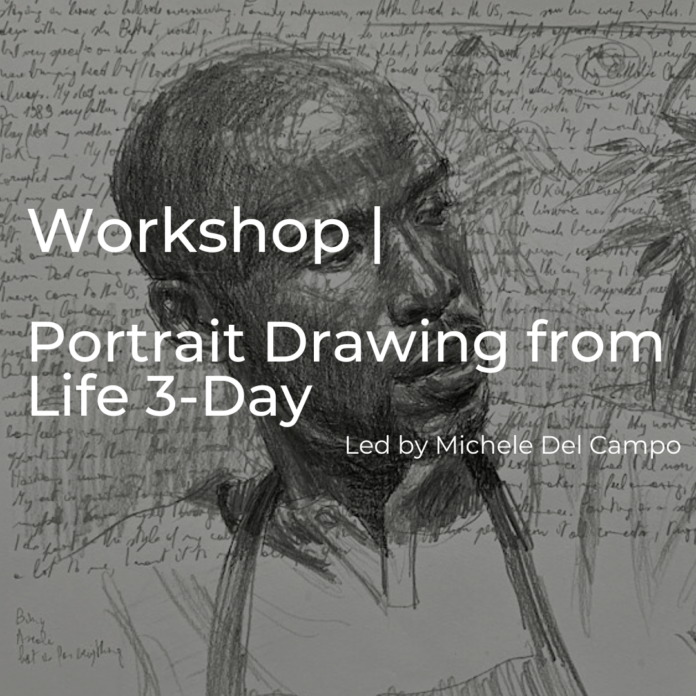
Portrait Drawing from Life 3-Day

Portrait Drawing Class

Portrait Drawing from Life 3-Day

December 10 @ 1:00 pm – 4:00 pm

REGISTER HERE

Art Workshops at Arts Warehouse

313 NE 3rd Street
Delray Beach, FL 33444
(561) 330-9614

*Please don’t wait to register! Workshops that do not meet the minimum number of students 3 days prior to the session date will be canceled or rescheduled. Signing up early helps us ensure that the workshop can take place. Thank you!

Portrait Drawing from Life Workshop

$240 – All Materials Provided.

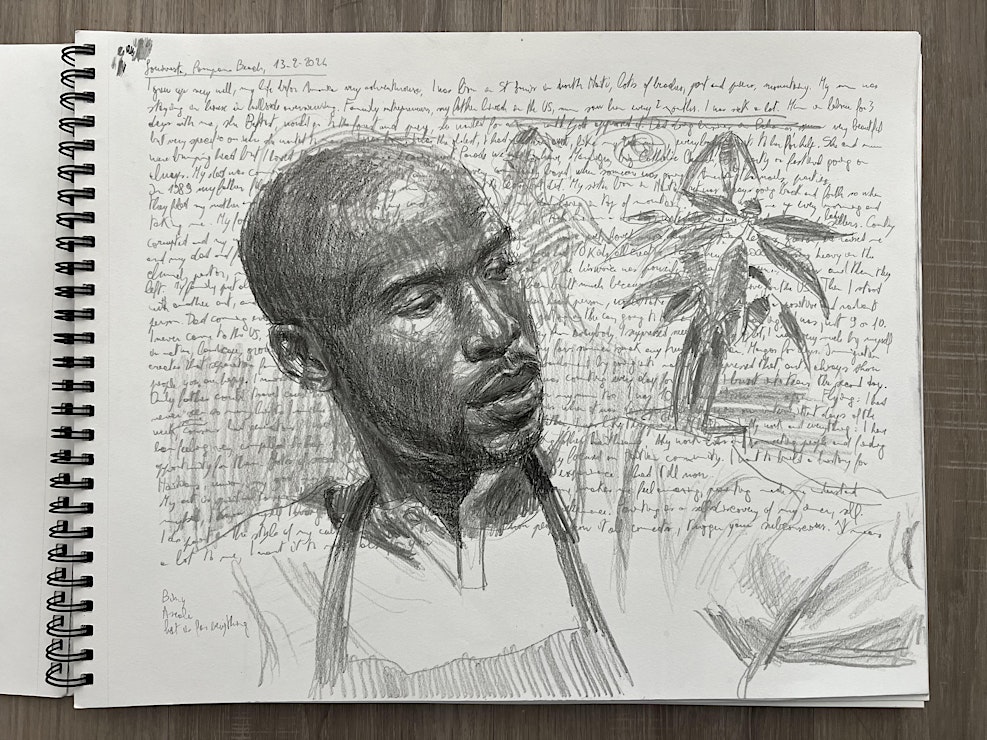
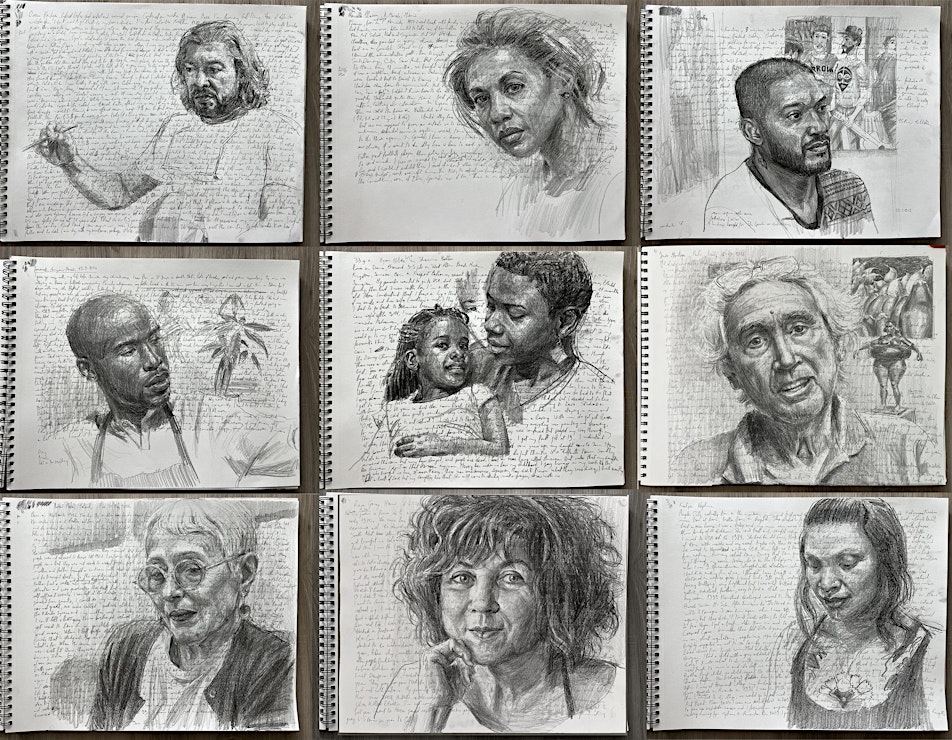
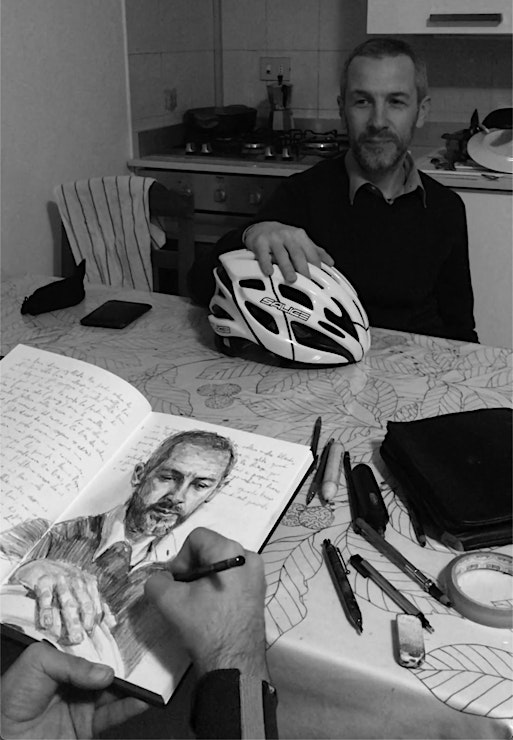
Join Artist Michele Del Campo for an engaging 4-week portrait drawing workshop designed to enhance your skills and creativity when creating a portrait. Each session lasts 2.5 hours and is open to all skill levels, encouraging individual expression alongside technical growth.

  • Wednesday, December 10 | 1pm to 4pm
  • Thursday, December 11 | 1pm to 4pm
  • Friday, December 12 | 1pm to 4pm

(No makeup dates)

What to Expect:

In this immersive workshop, participants will explore the art of portrait drawing through a structured approach. Each day will focus on different essential techniques:

– Day 1: Learn a constructive method for drawing, emphasizing standard proportions to create a solid foundation for your portraits.

– Day 2: Dive into the world of light and shadow, distinguishing values and sculpting shadows through tonal drawing. Focus on the elements of a face, understanding how to capture the unique features that define everyone.

– Day 3: Explore the additive vs. subtractive methods of drawing, allowing you to choose the technique that resonates with your artistic style. For this session, there will be a live model.

Materials:

All essential materials will be provided, with optional materials available for a fee. Participants are also welcome to bring any materials they feel comfortable using.

Portrait Drawing Class

Instructor Information:

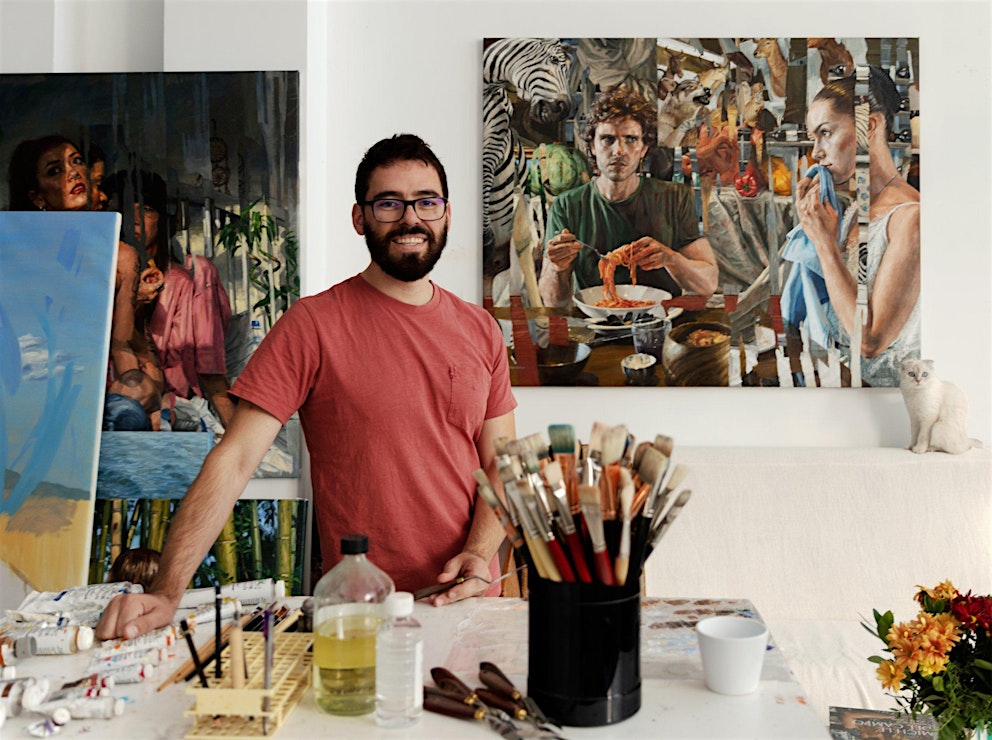
Michele Del Campo

Grew up in San Nicandro Garganico, a small town in southern Italy. Isolated in the countryside, he would spend his time drawing and cycling long distances, when not at school. When he was 18 his family moved to Milan, and after beginning to study Fine Arts, disappointed with the learning, at the age of 20 he began a pilgrimage which led him to live in many places around the world. After studying Illustration in Falmouth (England) and then Dundee (Scotland) he went to Madrid (Spain) where he resumed his studies in Fine Arts and at the same time he began exhibiting in art galleries. In 2006 he won the most prestigeous painting prize in Spain, the “Premio BMW”, and in 2007 he finished his Master of Fine Arts.

In 2008 he moved to London, where he had several solo exhibitions, and in 2016 to Glasgow (Scotland). In this city, where there is hardly any of the sun that he grew up with, and while he was preparing solo exhibitions for international galleries in Lima (Perú), Madrid (Spain) or San Francisco (USA), he decided there was no point in struggling to find a good artist studio and commit to spending years in the same place. He stopped accumulating objects, got rid of possessions and began to travel and paint wherever he was, and then take the rolled-up canvases to the galleries with which he collaborated. In 2017 he began to travel with two suitcases and a tube for the canvases, where he captured the inspiration found in each place. In 2023 Del Campo moved to Miami. Del Campo has had solo shows in Madrid, Valencia, Barcelona, London, Milan, Lugano, Lima, San Francisco and Dallas, and has participated in group shows and art fairs in Europe, Asia, the United States and Latin America.

In his art, locations remain unidentifiable, as he frequently blends aspects from one city with those of another. Instead, his primary emphasis lies on individuals, their narratives, connections, and emotions, which surpass geographical boundaries and manifest in a more extensive human encounter.

He paints people his friends and family, and the people he meets in his travels, and fondly cultivates his circle without borders. His paintings, far from simply seeking to capture a resemblance with his sitters or the reality as it is, strive to construct a narrative. He gets inspiration from the stories of his sitters, to speak about the uprooting, the zest for life, the solitude and the awareness of the ephemeral.

In his recent paintings, he’s transcending realism, crafting compositions that embody fragments of a reality formed by diverse moments and places. This connection mirrors the way we engage with images nowadays.

Details

Date:December 10Time:

1:00 pm – 4:00 pm

Event Category:Classes/Workshops

Event Tags:Drawing December

Masterclass, Figure Drawing Studio with Live Model & Instructor Support

Drawing & Painting class at Arts Warehouse Delray Beach, FL

Masterclass, Figure Drawing Studio with Live Model & Instructor Support

Arts Warehouse

Instructor: Michele Del Campo

313 NE 3rd Street
Delray Beach, FL 33444
(561) 330-9614

Dec 10 from 10:30am to 12:30pm EST

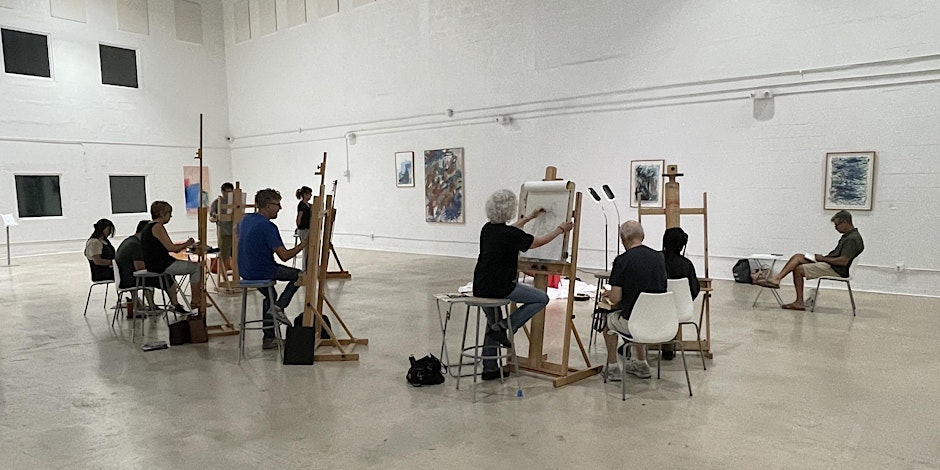
This session is guided! Bring your own materials and set up in the figure studio as the nude model moves through different poses.

Drawing & Painting class at Arts Warehouse Delray Beach, FL

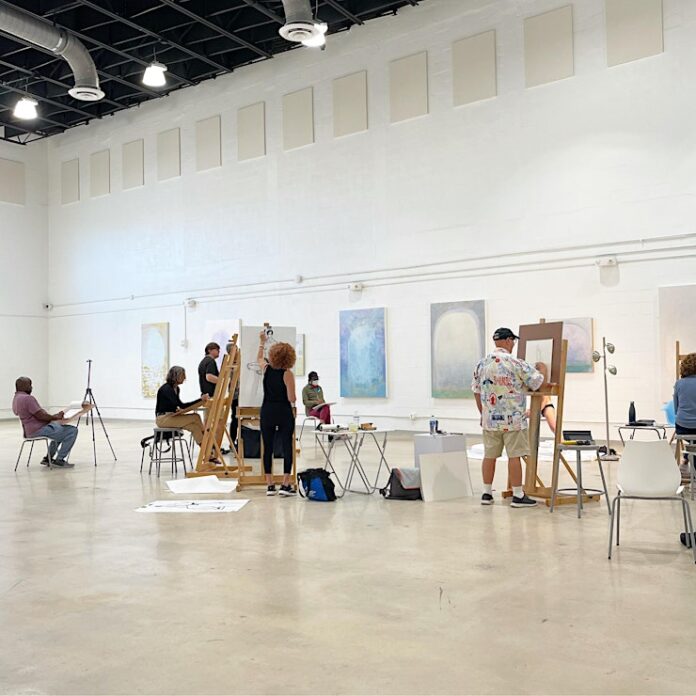
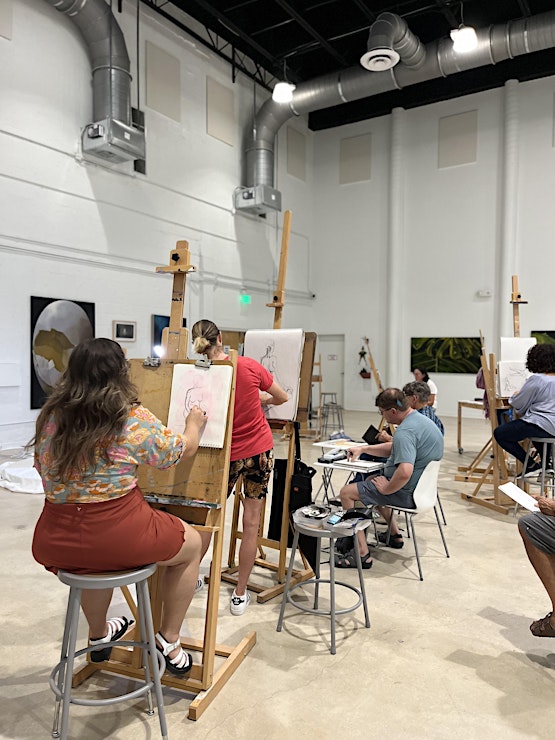
Artists of all levels are invited to BYOM(aterials) and set up in the figure studio Masterclass. This session will be guided by instructor/artist Michele Del Campo. Unlike the regular Open Figure Studio Sessions, this will include verbal instruction and examples along the way.

  • Pre registration is required as space is limited!
  • The model will be nude or partially nude.
  • Easels are first come first served upon arrival
  • Drawing boards are available, are first come first served upon arrival
  • Artists are welcome to bring their own easels
  • Only Drawing materials welcome!
  • Space is limited
  • This session is for artists 18+
  • The model for this session is TBD

Ticket/Registration options:

1 . Online registration $15.00 paid with credit card or Debit card

2 . Online registration and will pay with check or money order at the door. Please click get tickets and reserve your spot with the pay in person ticket option. All checks must be made out to the Delray Beach CRA. IF YOU RESERVE A CHECK TICKET AND CAN NO LONGER ATTEND, PLEASE CANCEL YOUR TICKET OR CALL 561-330-9614.

NO CASH PAYMENTS ARE ACCEPTED

With any questions, contact us!

** Please note, Refunds will be processed only if requested 72+ hours prior to scheduled workshop date/time. No refund will be given if requested less than seventy two (72) hours until scheduled workshop time for any reason. Only one ticket transfer will be allowed per person per workshop type, and will only occur if requested outside of the 72 hour mark of the registered workshop. To request a refund and cancel your ticket, please call 561-330-9614**

Drawing & Painting class at Arts Warehouse Delray Beach, FL

Instructor Information:

Michele Del Campo

Grew up in San Nicandro Garganico, a small town in southern Italy. Isolated in the countryside, he would spend his time drawing and cycling long distances, when not at school. When he was 18 his family moved to Milan, and after beginning to study Fine Arts, disappointed with the learning, at the age of 20 he began a pilgrimage which led him to live in many places around the world. After studying Illustration in Falmouth (England) and then Dundee (Scotland) he went to Madrid (Spain) where he resumed his studies in Fine Arts and at the same time he began exhibiting in art galleries. In 2006 he won the most prestigeous painting prize in Spain, the “Premio BMW”, and in 2007 he finished his Master of Fine Arts.

In 2008 he moved to London, where he had several solo exhibitions, and in 2016 to Glasgow (Scotland). In this city, where there is hardly any of the sun that he grew up with, and while he was preparing solo exhibitions for international galleries in Lima (Perú), Madrid (Spain) or San Francisco (USA), he decided there was no point in struggling to find a good artist studio and commit to spending years in the same place. He stopped accumulating objects, got rid of possessions and began to travel and paint wherever he was, and then take the rolled-up canvases to the galleries with which he collaborated. In 2017 he began to travel with two suitcases and a tube for the canvases, where he captured the inspiration found in each place. In 2023 Del Campo moved to Miami. Del Campo has had solo shows in Madrid, Valencia, Barcelona, London, Milan, Lugano, Lima, San Francisco and Dallas, and has participated in group shows and art fairs in Europe, Asia, the United States and Latin America.

In his art, locations remain unidentifiable, as he frequently blends aspects from one city with those of another. Instead, his primary emphasis lies on individuals, their narratives, connections, and emotions, which surpass geographical boundaries and manifest in a more extensive human encounter.

He paints people his friends and family, and the people he meets in his travels, and fondly cultivates his circle without borders. His paintings, far from simply seeking to capture a resemblance with his sitters or the reality as it is, strive to construct a narrative. He gets inspiration from the stories of his sitters, to speak about the uprooting, the zest for life, the solitude and the awareness of the ephemeral.

In his recent paintings, he’s transcending realism, crafting compositions that embody fragments of a reality formed by diverse moments and places. This connection mirrors the way we engage with images nowadays.

More info micheledelcampo.com

Art Workshops

Art Workshops at Arts Warehouse
Art Workshops at Arts Warehouse 313 NE 3rd Street Delray Beach, FL 33444

Art Workshops at Arts Warehouse

313 NE 3rd Street
Delray Beach, FL 33444
(561) 330-9614

Arts Warehouse offers a variety of workshops throughout the month for beginners and advanced students alike. Explore the current art workshop offerings by category in the drop down menus below. Click on the square for more info and a link to register. New workshops added monthly!

Arts Warehouse hosts a variety of hands on visual art, and also lecture-style workshops throughout the year. If you have a workshop you’d like to teach at Arts Warehouse, please submit the teaching proposal form linked below. Proposals will be reviewed by the Arts Warehouse staff, and if accepted, staff will follow up with the instructor for logistics and scheduling. A one-time special workshop (one day, 2-5hours) has proven the best format, but multi-day workshops are welcome to submit. Please review the current workshop offerings to make sure that Arts Warehouse does not already offer the same/similar workshop on the calendar!

Arts Warehouse can provide tables, chairs, limited floor easels, and access to shared studio equipment depending on class requirements and space used.

Arts Warehouse will include approved and scheduled workshops to our website and other marketing outlets. Ticketing will operate via the Arts Warehouse’s Eventbrite page as it is our main ticketing resource.

Things to note:

Instructors are paid 80% of total revenue made from the workshop.

Instructors must supply their own materials to host the workshop
*Some reusable materials are available from AW including water cups, brushes, and other tools on a case by case basis.

The location of the workshop within the building may vary based on schedule, group size, and other factors.

Instructors are required to provide a Certificate of Insurance (COI) listing the Delray Beach CRA as additionally insured in order to host a workshop at Arts Warehouse

The registration deadline for all workshops is 3 days before the workshop date. Don’t wait! We encourage you to register early to ensure a spot and that the class will be held.

Registration for workshops is online through Eventbrite, but check or money order registration is also accepted in person. Call 561-330-9614 for more information.

Past successful workshops have included:

Visual Art

Intro to Creativity Acrylic Painting

Unlock your creative potential while learning the essentials of acrylic painting, from color mixing to expressive brushwork.

Sumi Ink for All Levels

Explore the elegance of traditional Sumi ink techniques through meditative strokes, bold contrasts, and mindful mark-making.

Abstracted Landscape Collage (2-Day)

Transform landscapes into layered compositions using paper, paint, and mixed media in this immersive two-day workshop.

Fluid Florals in Watercolor

Learn to paint loose, luminous floral compositions using flowing watercolor techniques that embrace movement and spontaneity.

Primary Color Portrait Paintings

Create striking portraits using only primary colors, discovering the power of limited palettes and expressive color harmony.

Intro to Figure Drawing

Develop essential figure-drawing skills through gesture, proportion, and anatomy exercises designed for beginners.

Urban Sketching

Capture the energy of the city with quick, observational sketches using pen, pencil, and watercolor.

Mark Making in Watercolor

Experiment with expressive marks, textures, and patterns to build dynamic watercolor compositions.

Screenprinting and Paper Dyeing

Learn the fundamentals of screenprinting and experiment with unique paper-dyeing methods to create bold, graphic artwork.

Watercolor Sketchbook (2-Day)

Build your own watercolor sketchbook practice while exploring color, composition, and on-the-go painting techniques.

Intro to Sewing – Hand & Machine

Master the basics of sewing—hand stitching, machine operation, and simple projects perfect for beginners.

Spray Paint Techniques

Discover creative spray-paint methods, from stenciling to layering, used in street art and contemporary design.

Figure Drawing with Procreate

Combine traditional figure-drawing concepts with digital tools to create expressive studies using the Procreate app.

Book Binding / Book Arts

Design and assemble your own handcrafted books while learning binding techniques and creative paper artistry.

Earring Design

Create custom earrings using beginner-friendly techniques in jewelry design, color selection, and material crafting.

Surreal Playground – Collage

Dive into dreamlike storytelling through collage, combining unexpected imagery to build surreal, imaginative scenes.

Intro to Abstract Expression

Experiment with gesture, emotion, and intuitive mark-making to create powerful abstract works.

Shadow Puppet Design

Design and construct expressive shadow puppets while exploring movement, storytelling, and light-based performance.

Mandala Makers

Create intricate mandalas using guided techniques that explore symmetry, meditation, and personal expression.

Paint Your Pet Portrait

Capture your pet’s personality in a vibrant painted portrait—perfect for beginners and animal lovers alike.

Arts Professional Development

Digital Marketing Basics for Artists

Learn the essential tools and strategies to promote your artwork online, build visibility, and reach the right audience.

Instagram 1, 2, 3

A three-level Instagram series covering profile setup, content creation, engagement strategies, analytics, and growth tailored specifically for artists.

Writing an Artist Statement

Craft a clear, compelling artist statement that communicates your vision, process, and conceptual framework with confidence.

Branding on a Budget

Discover practical, cost-effective branding strategies to elevate your artistic identity without breaking the bank.

Group Critique

Participate in a supportive critique circle where artists exchange feedback, gain new perspectives, and strengthen their creative development.

The Museum of Central American Art

Alejandro Aróstegui, West River, 1968, mixed media on board, 48" x 62"

The Museum of Central American Art

Join us for an Art Talk with Aldo Castillo
From Curating to Collecting:

Exploring the Synergy & Rewards of Art Engagement

 Sunday, December 14, 2025 
2:00 pm
(nicaraguan rum & refreshments)
The ANNEX 290 SE 2nd Avenue, Delray Beach, Florida

RSVP: [email protected]
561 808.8587
Aldo Castillo is an internationally acclaimed art curator, dealer, artist, and cultural leader celebrated for his influential role in promoting contemporary art and human rights. Born in Nicaragua and raised in Guatemala and the United States, Castillo began his curatorial career at the Popol Vuh Museum before founding the Aldo Castillo Gallery in Chicago in 1993 and later establishing the Aldo Castillo Arts Foundation (ACAF).With more than 35 years of experience, he has curated over 350 exhibitions worldwide, representing artists from more than 30 nations and developing major corporate and institutional art collections. His projects include collaborations with museums and international art fairs across the Americas, Europe, and Asia. Honored among Hispanic Trends Magazine’s Top 100 Entrepreneurs and inducted into the Chicago Gay and Lesbian Hall of Fame, Castillo continues to champion cultural exchange and diversity through art that transcends borders. 
Coming January 14, 2026
Sunday Spaeker Series
The Poetry & Literature of Nicaragua:

from Rubén Darío to Ernesto Cardenalreadings & talk by

Jorge Eduardo Argüello
Alejandro Arostegui & PRAXISViewing available by appointment Wednesdays – Saturdays  12:00 noon to 5:00 The ANNEX 290 SE 2nd Avenue, Delray Beach, FloridaRegister here for your visit561 808.8587
Alejandro Aróstegui  ( b.1935 Nicaragua )Alejandro Aróstegui’s work is pensive and still. His landscapes (lakeshores, deserts, distant volcanoes) and cityscapes are haunting. His still lifes (simplified objects on tables) are, at the same time, disquieting and serene. Recycling the distinctive gleam of the aluminum can, Aróstegui’s paintings offer the viewer shimmering cities and rivers, solemn figures and grave forms. His best work is both compelling and distinctive. He is one of Nicaragua’s most important modern painters. PRAXISAróstegui and the writer Amaru Barahona of Costa Rica met in Europe. They were concerned about the political and social issues of their countries. When they return home they reach out to artist César Izquierdo of Guatemala. Barahona writes the manifesto. The group functions as a democracy and seeks the intersection of culture, all of the arts and teaching. Revolutionary poetry, ancient petroglyphs and the natural beauty of their countries, as well as the political and economic realities inspire it.Our exhibition includes: Leoncio Sáenz, Genaro Lugo, Leonel Vanegas, Luis Urbina, Orlando Sobalvarro, Ernesto Cardenal and Roger Perez de la Rocha.Their motto: action, dynamism and a permanent state of restlessness.

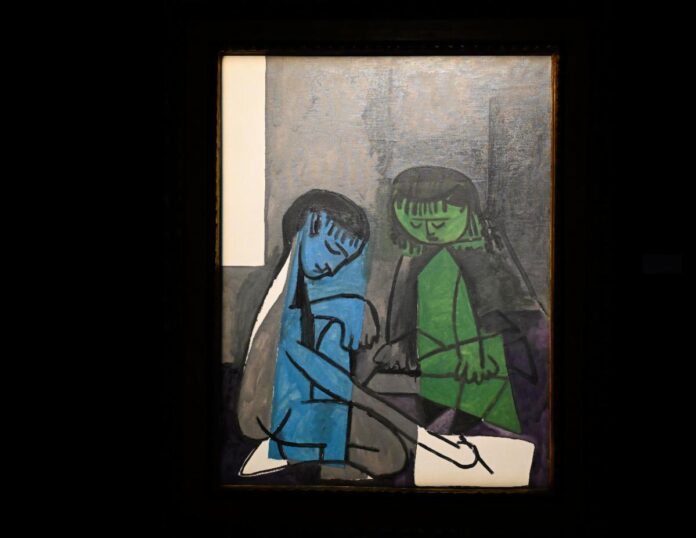
A Hidden Picasso Comes to Light

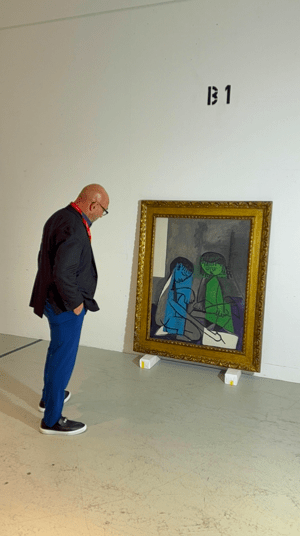
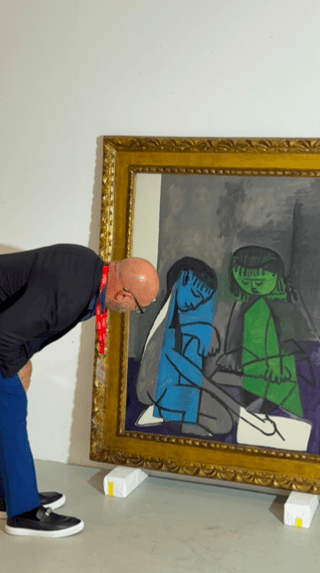
Pablo Picasso, The two children on view (1954) at Gary Nader Art Centre.

A Hidden Picasso Comes to Light: The Untold Story Behind ‘The Two Children’ (1954)

Gary Nader Art Centre presents one of Picasso’s most intimate, fiercely protected works from his 1954 Vallauris series of Claude and Paloma

During a pivotal and emotionally charged moment in his life, Pablo Picasso created a deeply personal suite of six paintings in 1954 portraying his youngest children, Claude and Paloma. These works—tender, introspective, and stylistically radical—were painted in Vallauris shortly after the end of his relationship with Françoise Gilot. Today, one of these rare canvases, The Two Children (dated 14 May 1954 on the reverse), emerges from decades of private protection to be shown at Gary Nader Art Centre.

This is not merely an artwork “never before seen.” Its significance lies in why it remained unseen.

A Father Painting Through Absence, Memory, and Love

In early 1954, after the painful separation from Françoise Gilot the previous year, Picasso was visited by Claude and Paloma in Vallauris. Their presence triggered a burst of creativity anchored in longing, affection, and the fragile balance of a family reorganizing itself.

Across six oil paintings—each approximately 116 × 89 cm—Picasso explored themes of childhood, imagination, and emotional distance. Claude, often depicted in blue, appears absorbed in drawing or play; Paloma, in green, becomes a symbol of quiet contemplation. The aesthetic language is deceptively simple: flat planes of color, linear silhouettes, and a childlike purity that recalls Matisse’s late cut-outs, completed just months before the master’s death.

Art historians have long noted Picasso’s lifelong fascination with childhood. “At eight, I was Raphael,” he famously said. “It took me a whole lifetime to paint like a child.” The 1954 series is the culmination of that pursuit.

A Hidden Picasso Comes to Light
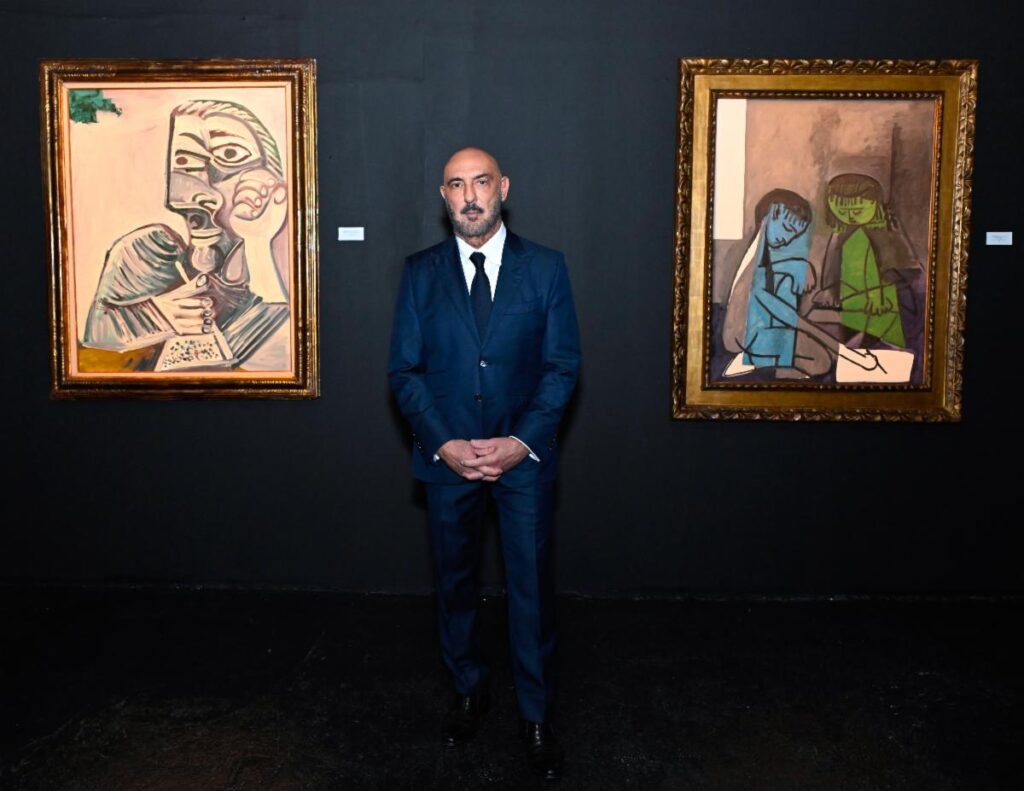
Gary Nader during the opening gala of the Picasso to Botero exhibition at Gary Nader Art Centre.

Two Works, One Moment — Why This Canvas Matters

Among the six paintings, the most widely known is Claude dessinant, Françoise et Paloma (17 May 1954), housed in the Musée Picasso–Paris. What few people know is that just three days earlier, on 14 May 1954, Picasso painted another version of the same poetic moment—The Two Children, the work now presented in Miami.

Both paintings share striking similarities in composition, palette, and emotional vocabulary. The closeness of their dates suggests that Picasso, immersed in the fragile intimacy of reconnecting with his children, was experimenting with subtle variations on a feeling rather than on a form: capturing fleeting tenderness through repetition, like holding a breath he didn’t want to release.

A Hidden Picasso Comes to Ligh
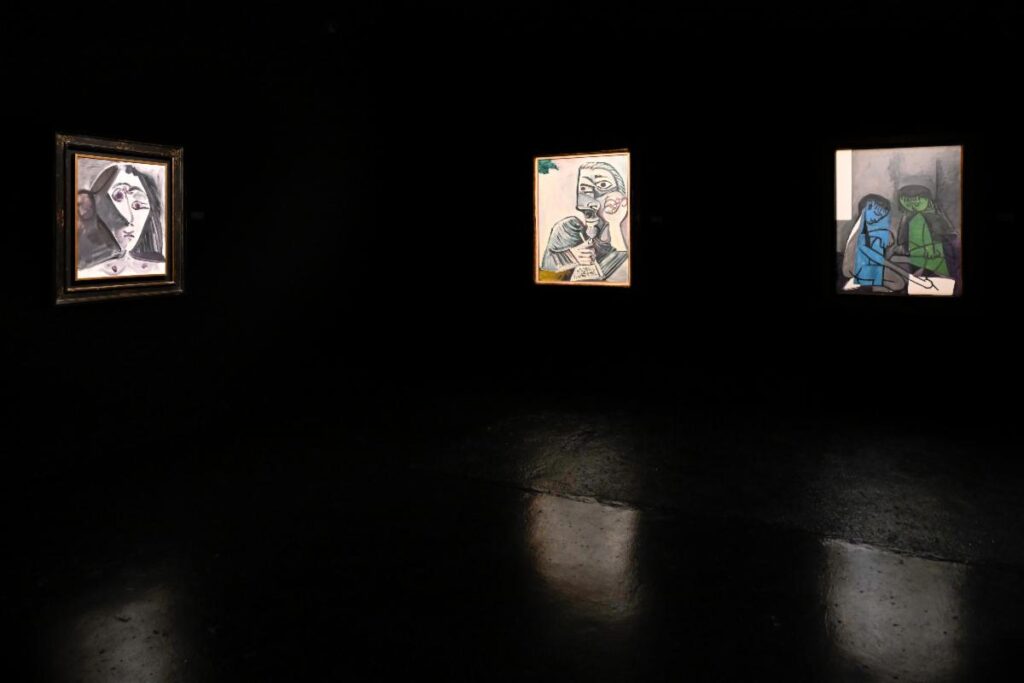
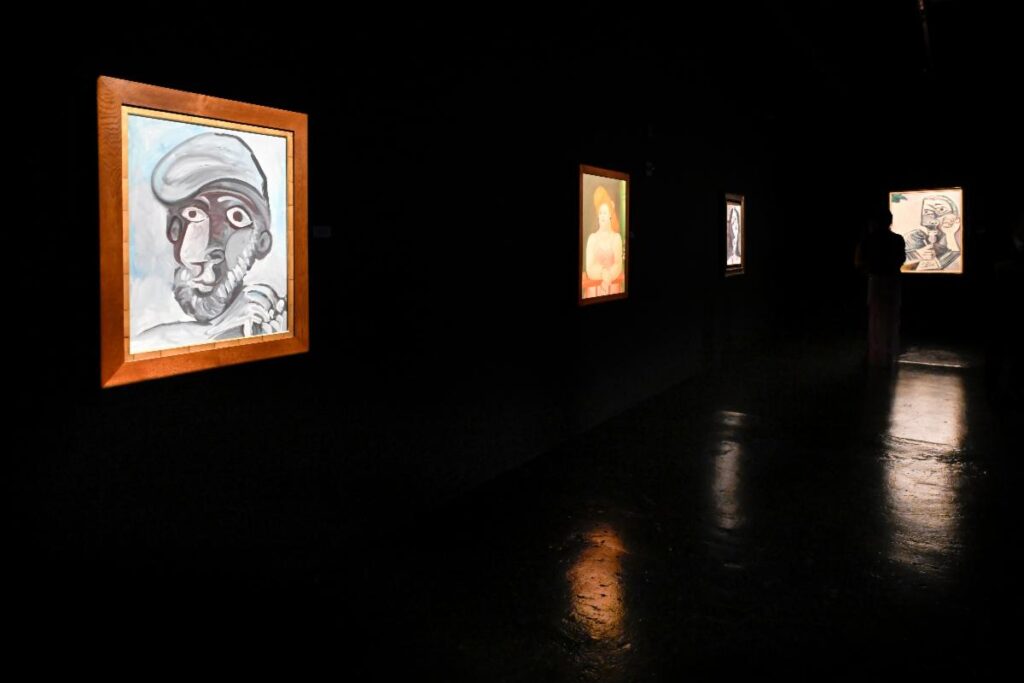
A striking installation view of ‘Picasso to Botero’ at Gary Nader Art Centre, featuring rare portraits and the 1954 masterpiece The Two Children. The exhibition is on view through March 28, 2026.

Why Picasso Never Sold It

Unlike many works that circulated quickly through galleries and private collections, the 1954 series of Claude and Paloma remained in Picasso’s personal domain for decades. These paintings were not merely artistic studies—they were fragments of his inner life.

Picasso kept them. Guarded them. Protected them. They were, in a very real sense, part of his family.

Scholars such as Kirk Varnedoe, Werner Spies, and Susan Galassi interpret these works as a turning point: precursors to the later Las Meninas variations, meditations on domesticity, memory, and legacy. They are among the few works in which the public persona of Picasso recedes to reveal the private father—vulnerable, searching, profoundly human.

The Two Children was one of the canvases he never considered commercializing. Its emergence today invites not only admiration but reflection: how does one quantify a father’s affection that survived heartbreak? How does one display something the artist himself protected from the world?

Gary Nader at first sight with Picasso’s The Two Children (1954)
A Rare Opportunity to Encounter an Intimate PicassoToday, The Two Children stands as a poetic testament to love, loss, and artistic reinvention. Its presence at the Gary Nader Art Centre offers an unprecedented opportunity to engage with a moment of Picasso’s life that was never meant to be public—until now.
Visitors are invited to experience this extraordinary work in person and witness a side of Picasso that history often overlooks:the father, the observer, the man searching for emotional clarity through simplicity.
And if you leave wondering how such a fiercely cherished canvas—long held within the private orbit of Picasso’s estate—found its way into the collection of Gary Nader…
Well, perhaps you’ll be lucky enough to cross paths with Gary in the galleries.
If so, ask him.Some stories deserve to be heard directly from the one who made the impossible possible.
ABOUT GARY NADER ART CENTRE:Located in Miami’s Wynwood Arts District, the Gary Nader Art Centre is one of the world’s most prestigious and dynamic galleries. With a strong focus on modern and contemporary art, it has gained international acclaim for its groundbreaking exhibitions and its pivotal role in promoting global artistic excellence, with a particular emphasis on Latin American contributions. The gallery regularly hosts solo and group shows featuring iconic artists such as Basquiat, Botero, Chagall, Cruz-Diez, Dubuffet, Kahlo, Picasso, Rivera, Lam, Warhol, and many more.As the largest gallery in the world — spanning 55,000 square feet — the Gary Nader Art Centre houses a main exhibition hall, the Nader Museum, the immersive Botero Immersed Experience (featuring the world’s largest private collection of works by the Colombian master), and the Nader Sculpture Park, located in the Miami Design District. This one-of-a-kind outdoor exhibition space features over 50 monumental sculptures by renowned international artists. In a short time, it has become a cultural must-see for both locals and tourists and a premier venue for fashion shows, musical performances, cultural events, and private gatherings.
With a private collection of more than 2,000 artworks from the 20th and 21st centuries, the Centre offers an expansive and profound perspective on global modern and contemporary art. Founded by Gary Nader in 1985, the gallery has become a cornerstone of Miami’s art scene. Nader’s vision and dedication have been essential in building the Centre’s global reputation and expanding its impact on the international art world.

For more information: 
Gary Nader Art Center  
Email: [email protected]
Email: [email protected] 
Phone: 305-576-0256
Web: www.garynader.com​​
For Media Inquiries: María Carolina Alonso: [email protected]
Gary Nader 62 NE 27 ST Miami FL 33137
[email protected] 
Gallery Hours Mon. – Sat. 10am – 6pm

Uprise Art Gallery

up rise art nyc

Contemporary Keepsakes

One-of-a-kind artworks perfect for gifting or keeping.

Focus Collections are curated selections of works by new artists, available for a limited-time only.

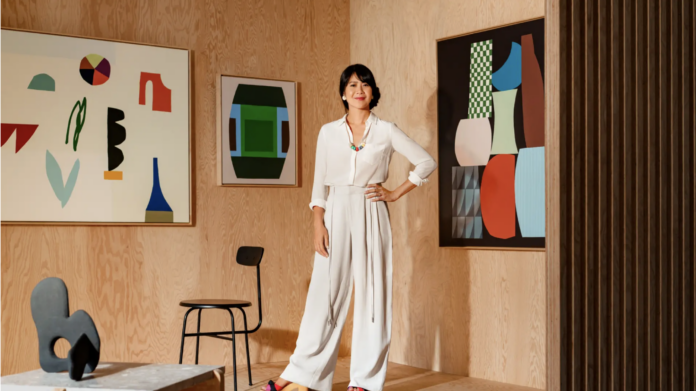
Uprise Art is an art gallery featuring original artwork by contemporary artists for the spaces where you live, work, and gather.

Adam Frezza & Terri Chiao (CHIAOZZA)
Adrian Kay Wong
Agnes Walden
Alex Proba
Aliza Cohen
Alma Charry
Anastasia Greer
Andrew Alba
Angel Oloshove
Anna Beeke
Anna Koeferl
Anna Moller
Anton Nazarko
Arantxa Solis
Arielle Zamora
Arlina Cai
Aschely Vaughan Cone
Ashely Peifer
Ashok Sinha
Ba Ousmane
Bbblob
Ben Skinner
Bill Finger
Blake Aaseby
Britt Bass
Brittany Ferns
Brooke Holm
Bryce Anderson
Carla Weeks
Carmen McNall
Carmen Vela
Caroline Walls
Carrie Crawford
Chad Kouri
Chloe Fields
Christian Nguyen
Christina Flowers
Christina Watka
Clay Mahn
Colleen Ho
Damien Davis
Dan Covert
Dana Bechert
Dana Bell
David Rhoads
Devon Reina
Diana Delgado
Dolly Faibyshev
Eddie K
Eddie Perrote
Elisa Gomez
Eltono
Erik Barthels
Erin D. Garcia
Erin Lynn Welsh
Erin Zhao
Evan Venegas
Evi O.
Fay Ku
Fitzhugh Karol
Gabrielle Raaff
Gail Tarantino
Gizem Vural
Hayley Sheldon
Holly Addi
Hyun Jung Ahn
Inka Bell
J.C. Fontanive
Jackie Meier
Jackson Joyce
Jessica Haye & Clark Hsiao
Jessica Simorte
Jessica Sinks
Jocelyn Tsaih
Joe Geis
John Platt
Jordan Sullivan
Karina Bania
Kate Clements
Kate Roebuck
Katrine Hildebrandt-Hussey
Kayla Plosz Antiel
Keiko Kamata
Kimmy Quillin
Kit Porter
Kostas Papakostas
Kyle Pellet
Langdon Graves
Laura Berman
Laura Naples
Liesl Pfeffer
Linda Colletta
Lisa Hunt
Lourenço Providência
Lucha Rodríguez
Lucía Rodríguez Pérez
Lydia Bassis
Mada Vicassiau
Maria de la O Garrido
Martina Lang
Matt Neuman
Mia Farrington
Michael Moncibaiz
Michael Northrup
Millee Tibbs
Misato Suzuki
Mitch Paster
Natalia Nicole Rodríguez
Natalie Beall
Nefertiti Jenkins
Nick Meyer
Nicole Anastas
Nina Bellucci
Olivia Botha
Padma Rajendran
Paola Rodriguez Arias
Paulina Ho
Piero Passacantando
Pilar Wiley
Rachel Levit Ruiz
Rachel Sussman
Rebeca Raney
Robert Otto Epstein
Roberta Gentry
Roche
Ruben Castillo
Ruth Freeman
Ryan James MacFarland
Santiago Ascui
Sarah Ingraham
Sarah Sullivan Sherrod
Saxon Quinn
Scott Sueme
Senem Oezdogan
Sinziana Velicescu
Stacey Beach
Susan Simonini
Teresa Christiansen
Thomas Hammer
Tony Sjöman
Tyler Scheidt
Una Ursprung
Vicki Sher
Ward Roberts
William Luz
William Storms
Xochi Solis

Page 42 of 278
1 40 41 42 43 44 278