Home Blog Page 4

National Museum of the American Latino

National Museum of the American Latino

National Museum of the American Latino To Showcase Salsa Music and
Celia Cruz’s Iconic Costumes in New Exhibition April 18

“¡Puro Ritmo! The Musical Journey of Salsa” Will Premiere in the Museum’s
Temporary Exhibition Space at the National Museum of American History

The Smithsonian’s National Museum of the American Latino

Exhibition Opening: “¡Puro Ritmo! The Musical Journey of Salsa” Date: Saturday, April 18 Location: Molina Family Latino Gallery, Smithsonian’s National Museum of American History

Presented in English and Spanish, the multimedia exhibition explores the rhythm, movement, and shared heritage of salsa music in the United States.

Exhibition Overview

Spanning four thematic sections and featuring nearly 300 objects, “Puro Ritmo” traces salsa’s roots from the dance halls of Havana to the clubs of New York City, Washington, D.C., Los Angeles, and beyond. The exhibition situates salsa within major moments in U.S. history, including Caribbean migration, the evolution of jazz, and the influence of Afro-Cuban rhythms on rock ’n’ roll, disco, and house music.

“‘Puro Ritmo’ tells a vital chapter of the American experience that has been shaped by movement, migration and global exchange,” said Jorge Zamanillo, director of the National Museum of the American Latino. “Salsa is not simply a Latin genre; it’s become a great American musical tradition.”

Celia Cruz: Queen of Salsa

A centerpiece of the exhibition is the presentation of five ensembles and five pairs of shoes worn by Celia Cruz, celebrated worldwide as the Queen of Salsa. Gifted by the Estate of Celia Cruz, the five dresses and a pair of shoes are now part of the Latino Museum’s permanent collection. The outfits will rotate throughout the exhibition’s two-and-a-half-year run, offering visitors multiple opportunities to experience Cruz’s vibrant stage presence.

Featured items include:

  • Dresses dating to 1970
  • A cape designed by Irma Peñalver
  • A 2002 ensemble by Willy Mena
  • Distinctive performance shoes, including pairs with dramatic cantilever heels

Other Highlights

The exhibition also features iconic figures such as Tito Puente and Eddie Palmieri, alongside influential artists including Arsenio Rodríguez, Graciela, Ray Barretto, and Willie Colón. It explores the industry-shaping impact of Fania Records and its cofounders, Jerry Masucci and Johnny Pacheco.

Through the museum’s collection and loans from Smithsonian museums, individuals, and institutions, “Puro Ritmo” includes objects connected to Puerto Rican music promoter Héctor Maisonave and producer Harvey Averne, both of whom played key roles in expanding salsa’s reach and recognition.

Museum’s Mission

As the National Museum of the American Latino continues to grow, it is deepening its collecting efforts to build a permanent collection that reflects the breadth of U.S. Latino history and culture. In the years ahead, the museum will expand its acquisitions to preserve the stories, objects, and artistic legacies that define the American Latino experience.

About the Museum

Established by Congress in 2020, the Smithsonian’s National Museum of the American Latino honors the dreams, challenges, and triumphs of U.S. Latinos and elevates their stories within the nation’s narrative. The museum creates transformative experiences, fosters a deeper understanding of American history and culture, and connects communities nationwide.

Visit the museum’s exhibitions at the Molina Family Latino Gallery in the National Museum of American History or at latino.si.edu. Follow @USLatinoMuseum on Instagram, Facebook, LinkedIn, and YouTube.
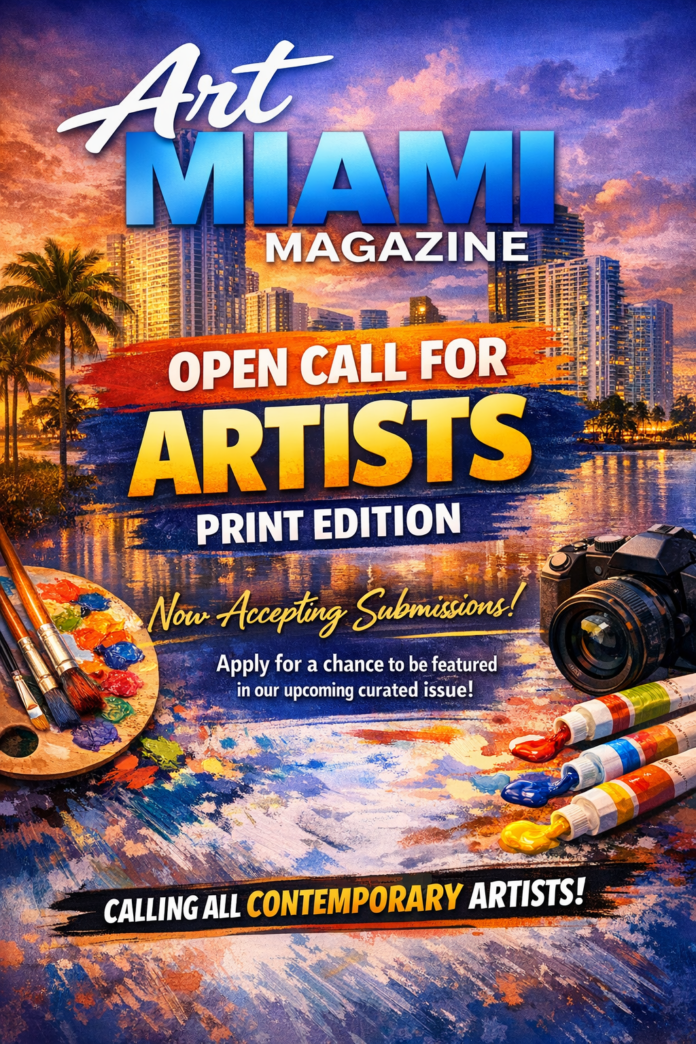
Open Call for Artists (Print Edition)

open call
Art Miami Magazine – Open Call for Artists (Print Edition)

Open Call for Artists (Print Edition)

Art Miami Magazine is currently curating its upcoming printed edition and invites a select group of contemporary artists to apply for consideration.

We are seeking artists with a strong visual language and a distinctive artistic voice, working across painting, sculpture, photography, and mixed media.

The printed edition is distributed throughout Miami via a curated network of galleries, cultural venues, and luxury spaces, reaching collectors, curators, and art professionals. This upcoming issue will also extend its reach internationally, including Mexico City.

Each feature includes a curated print presentation of your work, accompanied by a critical text, an online interview, and extended visibility across our digital platforms, including a dedicated artist profile and promotion to our network of collectors, curators, and art professionals. Artists based in the United States will also receive a complimentary printed copy of the magazine.

Application Process:

  1. Submit your application
    Please submit your CV, artist statement, short bio, and a selection of artworks (website, Instagram, or portfolio link) to: [email protected](or via WeTransfer)
  2. Selection & next steps
    If selected, you will receive full details regarding the feature, available formats, and participation options.

We work with a limited number of artists per issue to maintain a focused and high-quality publication.

Deadline: April 15, 2026

We look forward to discovering your work.

How to Read Abstract Art Without Feeling Lost

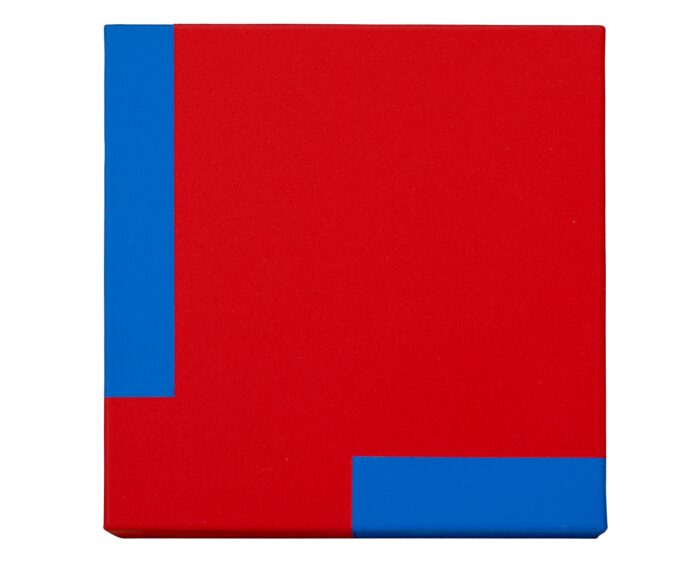
Carmen Herrera
Carmen Herrera (b.1915) Untitled 2013, acrylic on canvas 10 × 10 × 2.8 in (25 × 25 × 7 cm)

How to Read Abstract Art Without Feeling Lost

Have you ever stood in front of an abstract painting feeling like everyone else understands something you simply can’t see? That feeling — that there’s a hidden code you’re supposed to crack — is, paradoxically, the biggest obstacle to enjoying abstract art. And the good news is: that code doesn’t exist.

The Biggest Myth About Abstract Art

The most common mistake is thinking abstract art is random or meaningless. In reality, every mark, every color choice, and every compositional decision is intentional. Abstract artists use visual elements — line, color, shape, texture — as their vocabulary to communicate ideas and emotions that words cannot express.

Here’s the secret galleries rarely tell you: there is no single correct way to interpret an abstract work. The anxiety comes from believing there’s something you’re “failing to see.” The truth is that abstract art speaks directly to your senses and emotions, bypassing analytical thinking altogether.

The Three Questions That Unlock Any Painting

When approaching an abstract work, start with these three simple questions:

  1. What do I see? — Describe what’s in front of you without judging it.
  2. What do I feel? — Tension, calm, energy, melancholy?
  3. What does this remind me of? — It doesn’t matter if the association seems strange.

Don’t overthink it. Your first reactions are usually your most valuable ones.

Color as Emotional Language

Your brain already reads color emotionally, even without realizing it:

  • Red can feel aggressive, passionate, or warm.
  • Blue can evoke calm, coldness, or melancholy.
  • Yellow tends to feel energetic or optimistic.

Abstract artists use these associations deliberately. When Mark Rothko paints large red canvases, he is creating an emotional environment, not simply filling space. Context matters too: red paired with black can feel violent; surrounded by yellow, festive. Artists understand how colors interact to shape the viewer’s emotional experience.

What Shapes, Lines, and Textures Are Telling You

Shapes communicate before you can rationalize them:

  • Angular shapes feel aggressive or dynamic.
  • Curved forms feel soft and fluid.

Wassily Kandinsky believed triangles were aggressive, circles peaceful, and squares stable. Line quality also reveals energy: rough lines suggest tension; smooth lines communicate calm. Like handwriting, abstract marks show the artist’s mood and intention.

Texture matters too. Thick impasto — paint applied densely — feels intense and physical. Smooth surfaces evoke calm. Pollock’s rhythmic drips feel chaotic and full of bodily energy. Rothko’s thin washes seem to glow from within.

Composition: Where Your Eyes Go and Why

Composition shapes how you experience the work:

  • Symmetry creates calm and order.
  • Asymmetry creates tension and instability.

Pay attention to three things: where your gaze goes first, how it travels across the canvas, and where it rests. Scale matters too — a large work can feel immersive and enveloping; a small one, intimate and personal.

Three Practical Methods That Actually Work

When you don’t know where to begin, try one of these approaches:

The Weather Method — If this painting were a weather phenomenon, what would it be? An electrical storm? A soft drizzle? A clear summer day?

The Music Method — If it had a sound, would it be improvised jazz, orderly classical music, or chaotic electronic?

The Movement Method — How would your body respond if you had to dance to this work? Slow and fluid, or sharp and aggressive?

These aren’t just clever tricks — they help you access emotional meanings that rational analysis tends to block.

When You Recognize Absolutely Nothing

Pure abstraction works like music: nobody asks what a symphony means; you simply experience it. Focus your attention on relationships:

  • How do the colors interact with each other?
  • How do the shapes relate?
  • Does the composition feel static or in motion?

Meaning emerges from those relationships, not from recognizable objects.

Does Knowing Art History Actually Help?

Context enriches the experience, but it isn’t required. Knowing that Piet Mondrian was searching for spiritual harmony adds depth to his compositions of black lines and primary colors. Understanding that the American Abstract Expressionists were responding to the trauma of World War II explains a certain emotional violence in their work. But even without that knowledge, the emotional intensity of a Franz Kline or a de Kooning is immediate and felt directly.

The Exercise That Changes Everything: Five Minutes with One Work

Most museum visitors spend fewer than 30 seconds in front of a painting. Abstract art reveals itself slowly. Try this: choose one single painting and spend at least five minutes with it. Details emerge, relationships clarify, and your emotional response deepens in ways that a quick glance never allows.

The Title: Guide or Trap?

Titles can orient your interpretation — or deliberately sidestep it. They are one piece of information, not the definitive answer. Some artists title their works descriptively; others use numbers or neutral words precisely to avoid directing your reading. Use them as a starting point, not a boundary.

Types of Abstraction: Not Everything Works the Same Way

Abstraction is not monolithic. Different types call for different ways of looking:

  • Geometric abstraction → pay attention to formal and mathematical relationships.
  • Color-field painting → surrender to meditative immersion.
  • Gestural abstraction → look for energy and emotion in the mark-making.
  • Action painting → imagine the artist’s physical movement in the act of creation.

Contemporary abstraction frequently explores digital culture, theory, politics, and personal identity — layers that can enrich your reading without being essential to the direct experience.

The Permission Nobody Gave You

Don’t worry about “getting it right.” Abstract art welcomes multiple interpretations, and your response becomes part of the work’s meaning. You are not a passive receiver of a coded message — you are an active participant in the creation of meaning.

The next time you stand in front of an abstract work you don’t “understand,” remember: you are not looking for the correct answer. You are having a conversation.

What’s your biggest challenge when encountering abstract art? The answer to that question is already telling you something about how you see the world.

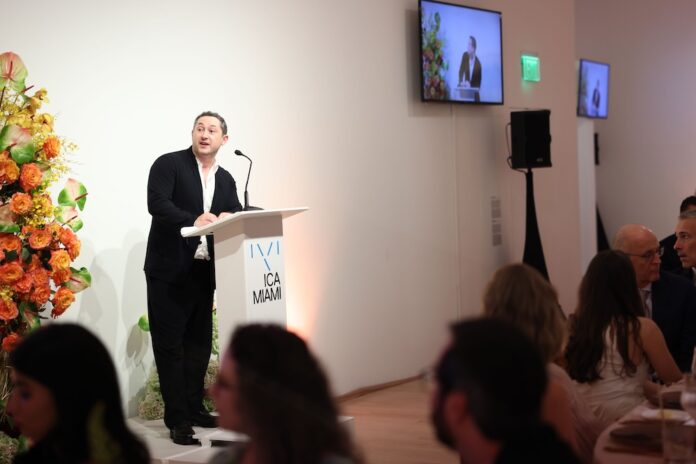
Institute of Contemporary Art,

Alex Gartenfeld
Alex Gartenfeld

Institute of Contemporary Art, Miami’s Evening in the Garden
Gala Raises $2.3M to Support Educational Initiatives and Community Programming

he annual celebration, held in ICA Miami’s Sculpture Garden, gathered supporters of contemporary art for an evening honoring Helen Kent-Nicoll and Edward J. Nicoll and artist Olga de Amaral.

MIAMI, FL – MARCH 23, 2026 – The Institute of Contemporary Art, Miami’s (ICA Miami) annual gala, Evening in the Garden, took place on Saturday, March 14th in the museum’s Sculpture Garden, bringing together Miami’s philanthropic and arts community. The evening raised $2.3 million in support of ICA Miami’s educational initiatives and its mission to provide free, year-round access to contemporary art.

The museum’s 12th annual gala welcomed more than 300 guests from across the community for an evening of celebration and philanthropy. The event featured a seated dinner followed by a live and silent auction of exceptional works generously donated by leading artists and galleries, including pieces by Nina Chanel Abney, Masaomi Yasunaga and Jade Fadojutimi, among others, with all proceeds supporting the museum’s exhibitions and educational programs.

Following the dinner, guests continued the celebration at the gala’s lively after-party featuring music, cocktails, light bites, and dancing with music by DJ JoviGibs. The evening concluded with an after-after party at ZeyZey Miami, offering an energetic finale to the night.

This year’s gala honored Helen Kent-Nicoll and Edward J. Nicoll for their visionary leadership and pioneering support of ICA Miami’s endowment. The evening also paid tribute to artist honoree Olga de Amaral, whose groundbreaking textile-based practice has had a profound influence on contemporary art. Evening in the Garden 2026 was presented with the generous support of Cartier.

“The ongoing support we receive plays a vital role in expanding our educational programs and ensuring contemporary art remains accessible to our broad audience,” said Alex Gartenfeld, Irma and Norman Braman Artistic Director of ICA Miami. “Helen Kent-Nicoll and Edward J. Nicoll’s leadership and generosity have helped shape the museum’s growth and strengthen its connection to the arts community. We are deeply appreciative of their continued commitment, which enables us to create meaningful opportunities for both artists and the public.”

Evening in the Garden reflects the community’s ongoing commitment to advancing ICA Miami’s mission of promoting continuous experimentation in contemporary art, advancing new scholarship, and fostering the exchange of art and ideas throughout Miami and internationally. Support from the gala also contributes to the museum’s continued growth, including the expansion of ICA Miami’s campus and programs to serve an even broader audience.

# # #

About the Institute of Contemporary Art, Miami
The Institute of Contemporary Art, Miami (ICA Miami) is dedicated to promoting continuous experimentation in contemporary art, advancing new scholarship, and fostering the exchange of art and ideas throughout the Miami region and internationally. Through an energetic calendar of exhibitions and programs, and its collection, ICA Miami provides an important international platform for the work of local, emerging, and under-recognized artists, and advances the public appreciation and understanding of the most innovative art of our time. Launched in 2014, ICA Miami opened its new permanent home in Miami’s Design District in 2017, and in 2024 announced its expansion with the acquisition of a second site on the same block at 23 NE 41st Street in the Miami Design District, set to open in 2027. The museum’s central location positions it as a cultural anchor within the community and enhances its role in developing cultural literacy throughout the Miami region. The museum offers free admission, providing audiences with open, public access to artistic excellence year-round.

The Institute of Contemporary Art, Miami is located at 61 NE 41st Street, Miami, Florida, 33137. For more information, visit www.icamiami.org or follow the museum on Instagram and explore the ICA Miami Channel for inside looks at ICA Miami exhibitions and the practices of the most exciting artists working today.

MEDIA CONTACTS

Schwartz Media Strategies

(305) 858-3935
Allie Grant, [email protected]   
Alyssa Velez, [email protected]

Art in Jacksonville

José Caldas
José Caldas

Art Galleries in Jacksonville

  • The Space Gallery: 120 E Forsyth St, Jacksonville, FL 32202.
  • The Frame Shop Art Gallery: 10015 San Jose Blvd, Jacksonville, FL 32257.
  • Archway Gallery and Framing: 363 Atlantic Blvd, Atlantic Beach, FL 32233.
  • Gallery of Antiques and Collectibles: 3033 Post St, Jacksonville, FL 32205.
  • FSCJ South Campus Art Gallery: 11901 Beach Blvd, Jacksonville, FL 32246.
  • Barnetts Art & Frame Gallery: 1040 Hendricks Ave, Jacksonville, FL 32207.
  • Adrian Pickett Gallery: 118 E Adams St, Jacksonville, FL 32202.
  • Stellers Gallery Mandarin: 11111 San Jose Blvd, Jacksonville, FL 32223.
  • Mitchell’s Fine Art Gallery & Collectibles: 1957 San Marco Blvd, Jacksonville, FL 32207.
  • Off the Grid Gallery: 112 E Adams St, Jacksonville, FL 32202.
  • Stallard’s Studio Gallery: 2689 Rosselle St, Jacksonville, FL 32204.
  • Royal Gallery: 3616 Southside Blvd, Jacksonville, FL 32216.

Art Museums in Jacksonville

Cummer Museum of Art & Gardens: 829 Riverside Ave, Jacksonville, FL 32204.

MOCA (Museum Of Contemporary Art) Jacksonville: 333 N Laura St, Jacksonville, FL 32202.

MOSH (Museum Of Science & History): 1025 Museum Cir, Jacksonville, FL 32207.

Ritz Theatre & Museum: 829 N Davis St, Jacksonville, FL 32202.

Beaches Museum: 381 Beach Blvd, Jacksonville Beach, FL 32250.

USS Orleck Naval Museum: 610 E Bay St, Jacksonville, FL 32202.

Mandarin Museum and Historical Society: 11964 Mandarin Rd, Jacksonville, FL 32223.

Karpeles Manuscript Library Museum: 101 W 1st St, Jacksonville, FL 32206.

Jacksonville Historical Society: 314 Palmetto St, Jacksonville, FL 32202.

Still, Moving Brings Together Five Painters at Spinello Projects

With the Sound of the Bird Dionnys Matos
Dionnys Matos With the Sound of the Birds, 2026 Oil on canvas 48 x 60 in.

Still, Moving Brings Together Five Painters at Spinello Projects

03. 13 – 04. 11. 2026
2930 NW 7th Ave, Miami, FL 33127
(646) 780-9265
@spinelloprojects

Spinello Projects is pleased to present Still, Moving, a group exhibition of paintings by Miami-based artists Nicole Burko, Dionnys Matos, Ernesto Gutiérrez Moya, and David E. Olivera, alongside Colombian-based artist Nicolás Beltrán. This exhibition marks the first occasion on which all five artists present work with the gallery.

In Still, Moving, water is not a singular subject but a shifting presence — at once elemental, psychological, architectural, and spiritual. Across distinct practices and perspectives, the exhibition unfolds as body, boundary, memory, and horizon. Water appears suspended, yet never static; contained, yet never fully held.  

For Nicole Burko (b.1987, Toronto, Canada), water is a site of physical and existential encounters. Drawing from her experiences freediving into underwater caverns in a single breath, her immersive oil paintings navigate thresholds between desire and dread, intimacy and mortality. Depth becomes both a literal space and a psychological terrain — a place where stillness heightens awareness and movement becomes survival.

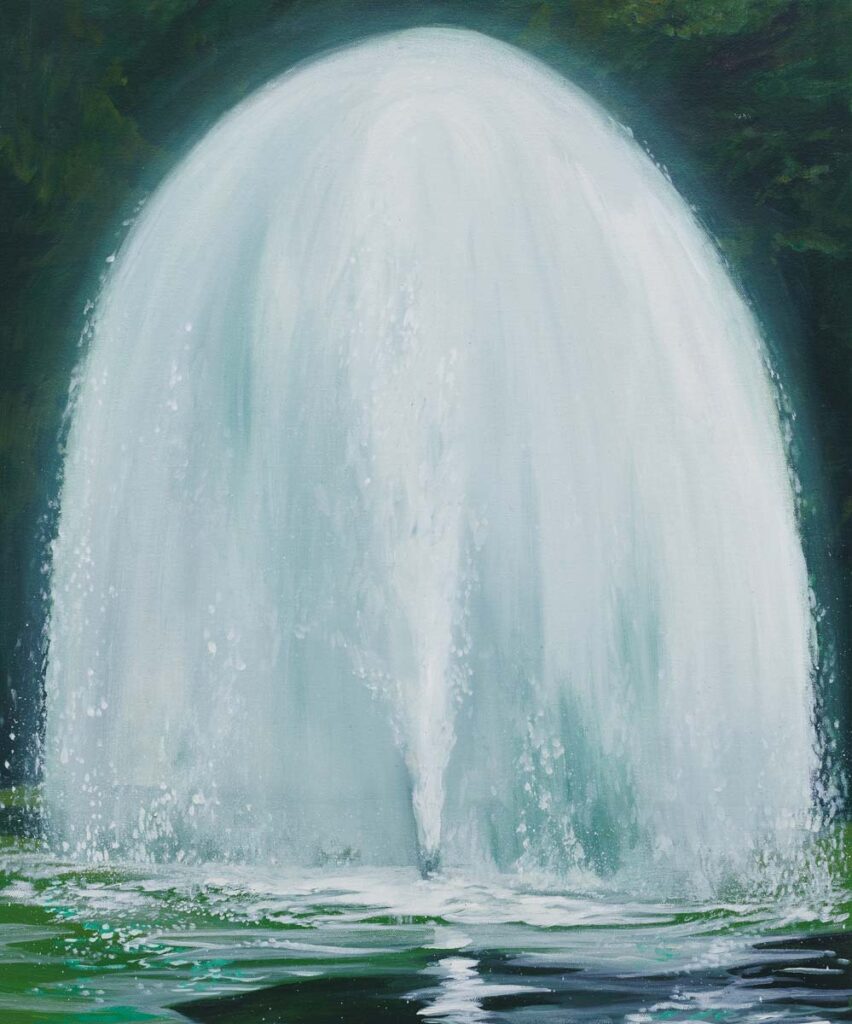
In the work of Ernesto Gutiérrez Moya (b.1995, Havana, Cuba), water emerges through architectural memory. His recurring fountains function as metaphysical anchors — symbols of permanence shaped by impermanence. Formed in the context of growing up in Cuba, these suspended structures hold emotional narratives that feel sensed rather than seen. The fountain, endlessly circulating yet fixed in place, embodies the paradox at the heart of the exhibition: water choreographed, but never entirely controlled.

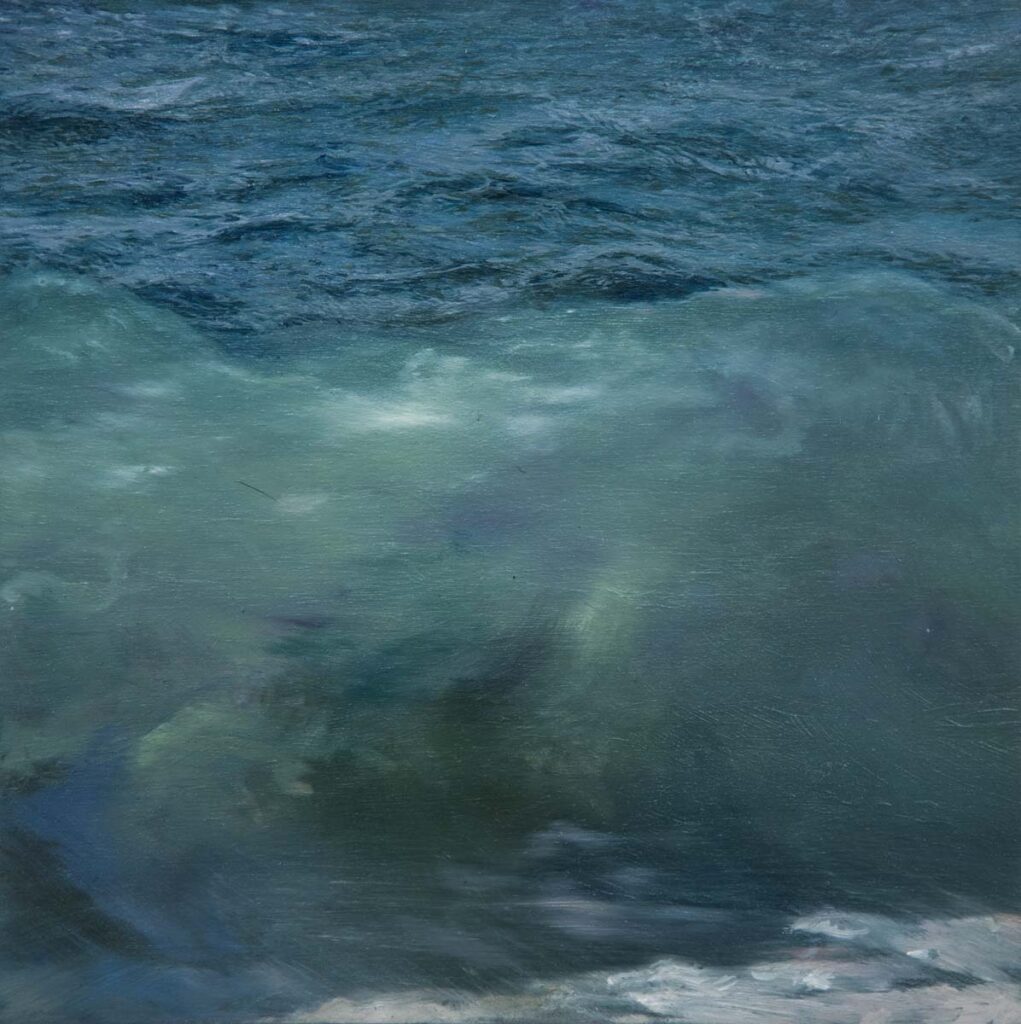
For Dionnys Matos (b.1991, Holguín, Cuba), the sea embodies duality — nourishment and destruction, promise and rupture. Rooted in the cultural and spiritual presence of Yemayá, the ocean becomes a living force of renewal. Each wave carries both ending and beginning, suggesting that movement itself is a form of continuity.

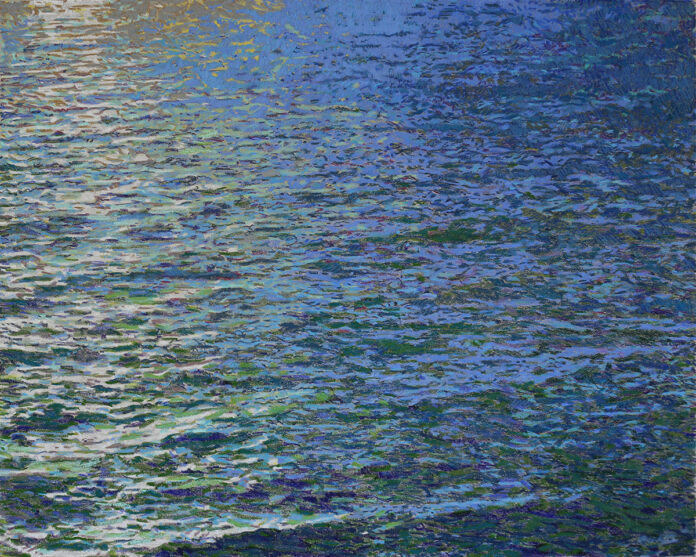
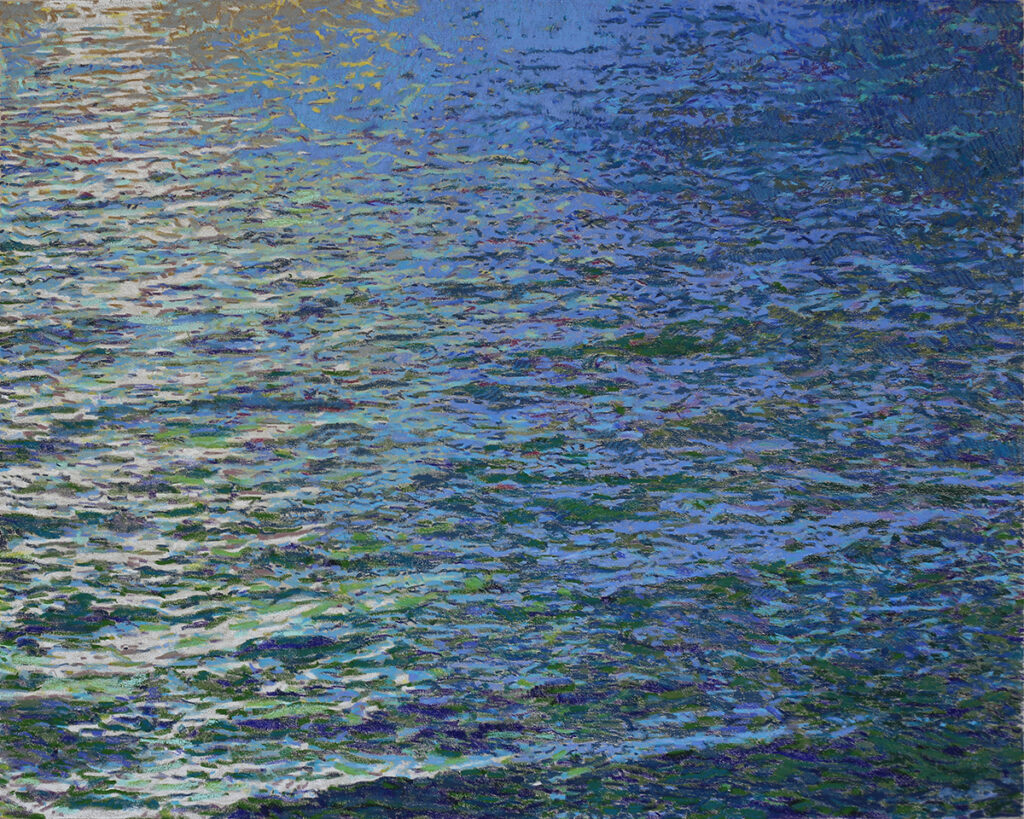
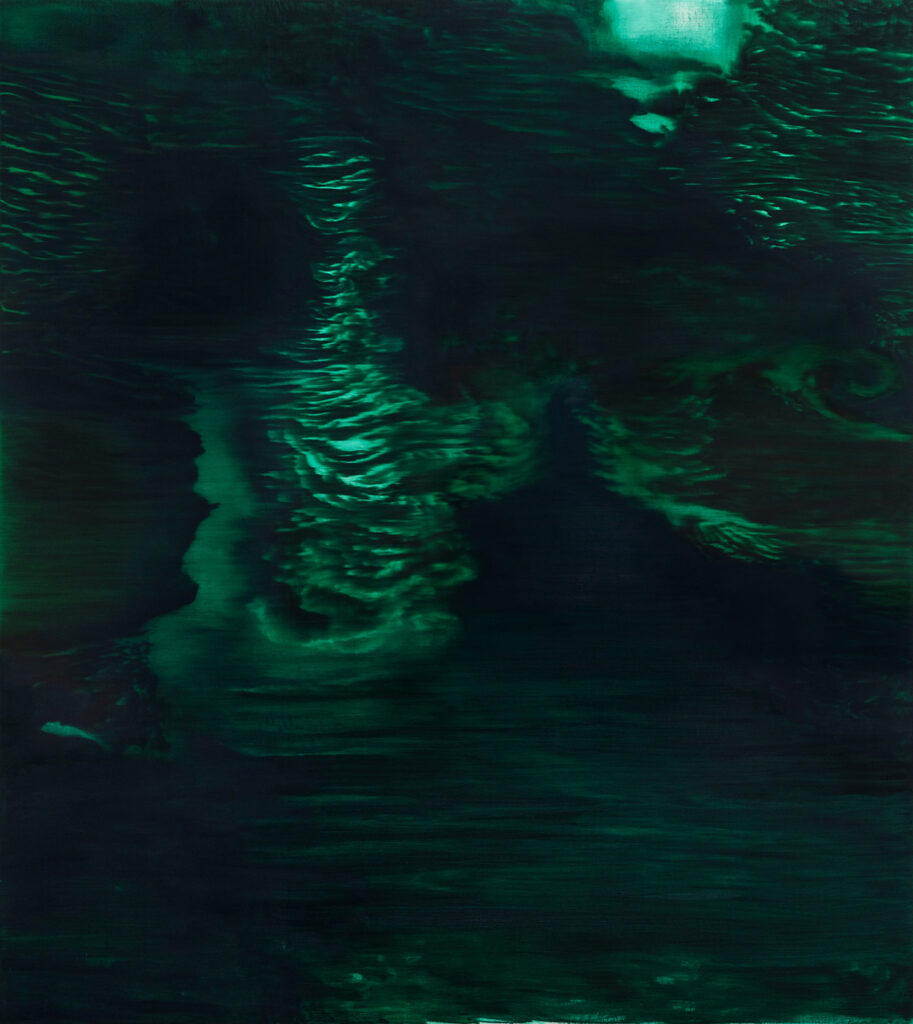
Meanwhile, Nicolás Beltrán (b. 1992, Ibagué, Colombia) allows water to become the protagonist. Inspired in part by the immersive color fields of Mark Rothko, his monumental shaped-canvas painting pursues dilution and expansion — moments in which perception slows and the visible world opens into contemplation. Rendered at a life-size scale, the work envelops the viewer, allowing motion to quiet into atmosphere.

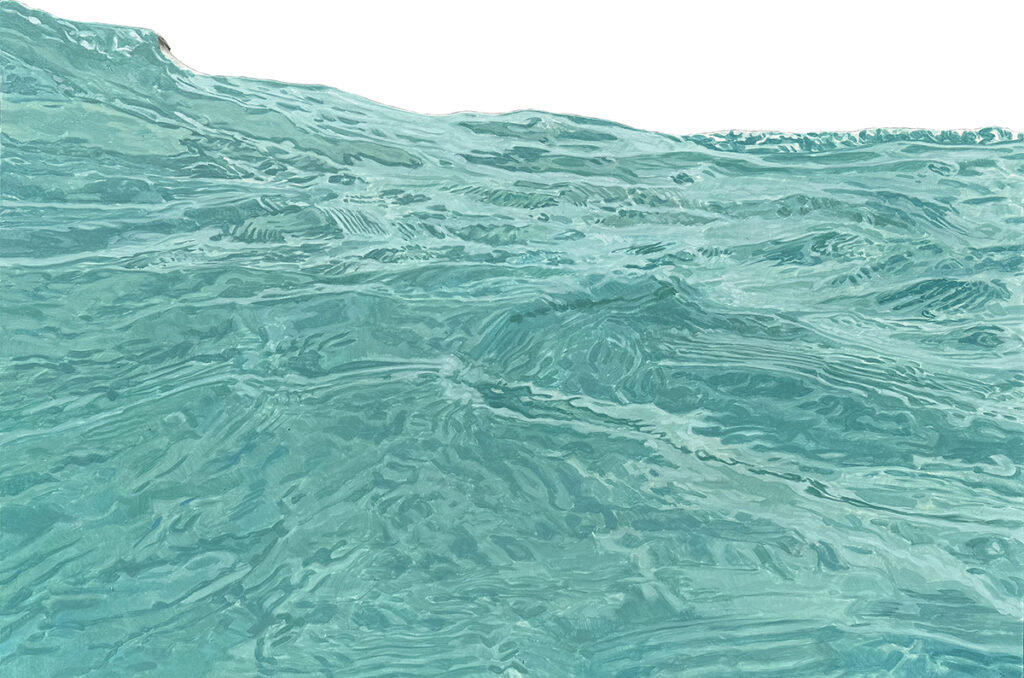
David E. Olivera (b.1983, Granada, Nicaragua) translates maritime imagery into compositions that oscillate between abstraction and detail. Drawing from subconscious impulse and deliberate observation, his paintings embody collective memory and coastal histories. Movement becomes both physical and emotional — a reflection of freedom, curiosity, and the pull of the horizon.

Together, these works present water as more than scenery or motif. It is a condition of being — fluid, transformative, alive. Whether encountered through the body, architectural memory, spiritual devotion, or abstraction, water becomes a vessel for reflection and connection. In holding motion within the stillness of paint, Still, Moving invites us to consider how transformation is not always visible, and how even the quietest surface carries depth beneath it.

With the Sound of the Bird Dionnys Matos
Dionnys Matos
With the Sound of the Birds, 2026
Oil on canvas
48 x 60 in.
David E Olivera
David E Olivera
In the Past, 2021
Oil on panel
12 x 12 in.
Nicolás Beltrán
Nicolás Beltrán
Wave II, 2025
Oil on canvas
74.5 x 103 in.
Nicole Burko
Nicole Burko
Consumed, 2025
Oil on linen
72 x 64 in.
Ernesto Gutiérrez Moya
The Dome, 2023
Oil on canvas
24 x 20 in.

Spinello Projects Celebrates 20 Years with Changes: Reflections on Time & Space, a Landmark Exhibition Exploring Memory, History, and Transformation

Bringing past and present into conversation, Changes: Reflections on Time & Space traces twenty years of belief, community, and creative evolution within Miami’s cultural landscape.

On the occasion of Spinello Projects’ 20th anniversary, Changes: Reflections on Time & Space gathers fifteen artists whose practices have intersected with the gallery’s history. Drawing from founder Anthony Spinello’s personal art collection, the exhibition stages a dialogue between seminal works collected over the past two decades and new or recent works by the same artists—many of whom share deep ties to Miami. This constellation of artworks maps not only Spinello’s own trajectory, but also a chapter in the city’s evolving cultural landscape, reflecting the intertwined histories of place, practice, and community. Here, time is both a subject and a medium. The works span years, even decades, and carry with them the histories of their making—the social, political, and personal contexts that shaped them. Changes: Reflections on Time & Space is more than an exhibition—it is a time capsule, a love letter, and a testament to two decades of belief, growth, and transformation.

Artists include: Farley Aguilar, Esai Alfredo, Eddie Arroyo, Bernadette Despujols, Nereida Garcia-Ferraz, Elliot & Erick Jimenez, Kris Knight, Sinisa Kukec, Jared McGriff, Reginald O’Neal, Marlon Portales, Nina Surel, Naama Tsabar, Agustina Woodgate

Collective 62: Donde el arte femenino encuentra su territorio

Collective62-Art-Studios
Collective62 Art Studios es un espacio artístico independiente dedicado a la creación fuera de los circuitos artísticos tradicionales.

Collective 62: Donde el arte femenino encuentra su territorio.

Art Studios es un espacio artístico independiente dedicado a la creación fuera de los circuitos artísticos tradicionales.

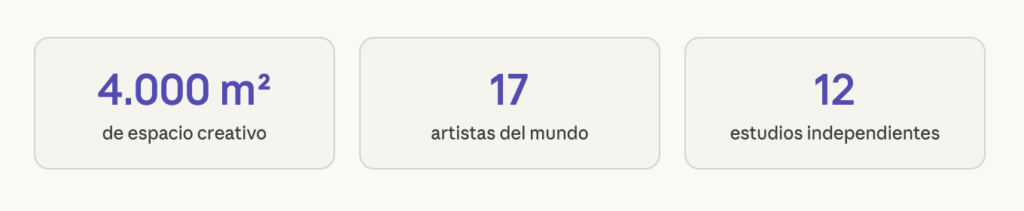
4,000 m² · 12 estudios · 17 artistas

En Liberty City, uno de los barrios con más historia de Miami, 17 artistas de todo el mundo comparten 4.000 metros cuadrados y una convicción: la creación artística se profundiza cuando se comparte.

Hay espacios que no se limitan a contener el arte. Lo generan. Lo fermentan. The Collective 62, ubicado en la calle 62 de Liberty City, en Miami, Florida, es uno de ellos. Fundado y gestionado por la artista Nina Surel, este espacio de más de 4.000 metros cuadrados no es un simple estudio compartido: es un organismo vivo donde diecisiete mujeres artistas de distintas latitudes del mundo trabajan, crean y se sostienen mutuamente en el proceso creativo más exigente y solitario que existe.

Surel —artista, madre, emprendedora y gestora cultural— no llegó a este proyecto por accidente. Venía trabajando desde hace tiempo en objetivos colectivos vinculados al arte, consciente de que la soledad del estudio puede ser tanto una fortaleza como una trampa. Fue esa tensión —entre la necesidad de espacio propio y la fertilidad del intercambio— lo que la llevó a concebir The Collective 62 como una plataforma de estudio, desarrollo y producción de proyectos artísticos para mujeres, donde el primer recurso compartido no es el espacio físico, sino el conocimiento: el expertise de cada integrante, puesto al servicio del colectivo.

“El primer recurso que se comparte no es el espacio: es el saber. El expertise de cada artista, puesto al servicio de todas.”

Una arquitectura para la creación colectiva

La distribución del espacio no es casual. Los 4.000 metros cuadrados se organizan en doce estudios individuales, separados y delimitados, pero comunicados entre sí a través de áreas de recreación y encuentro común. Esta arquitectura habla de una filosofía precisa: la artista necesita su territorio, su silencio y su ritmo propio; pero también necesita el corredor donde aparece la conversación inesperada, la pregunta que desestabiliza, el ojo ajeno que ve lo que el propio no puede ver.

Liberty City —históricamente uno de los barrios más resilientes y complejos de Miami, con una identidad cultural afroamericana de profundo arraigo— ofrece a The Collective 62 algo que no podría encontrar en los distritos artísticos más codificados de la ciudad: autenticidad territorial. Instalarse aquí no es un gesto estético, sino un posicionamiento. El arte que se produce en la calle 62 no está ajeno a la historia de ese suelo.

La figura de Surel: gestión como práctica artística

En el campo del arte contemporáneo, la gestión cultural raramente recibe el reconocimiento crítico que merece. Nina Surel encarna, sin embargo, una figura que merece análisis: la artista-gestora cuya práctica no se separa de su labor organizativa. Crear las condiciones materiales, institucionales y afectivas para que otras artistas produzcan no es una actividad paralela a la creación; es, en sí misma, una forma de creación. Surel lo entiende así, y The Collective 62 es la prueba más contundente de esa convicción.

Reunir a diecisiete mujeres artistas interdisciplinarias de todo el mundo bajo un mismo techo —con la diversidad de prácticas, idiomas, tradiciones estéticas y formas de trabajar que eso implica— requiere una inteligencia organizativa y relacional de primer nivel. Que ese tejido funcione, que se mantenga la tensión productiva entre lo individual y lo colectivo, es el logro más silencioso y más significativo de este proyecto.

“Instalarse en Liberty City no es un gesto estético: es un posicionamiento. El arte que nace en la calle 62 no está ajeno a la historia de ese suelo.”

Interdisciplinariedad como método

Las diecisiete artistas que integran The Collective 62 provienen de distintas disciplinas —pintura, escultura, fotografía, performance, instalación, medios digitales— y de distintas partes del mundo. Esta diversidad no es decorativa. Es metodológica. Cuando una pintora trabaja junto a una performer o una videoartista, los límites de su propia práctica comienzan a desplazarse. No necesariamente en la dirección del otro, sino en una dirección que no habría descubierto en soledad.

Miami, ciudad de tránsitos y superposiciones culturales, es el contexto perfecto para un proyecto así. Una ciudad que siempre ha sabido que la identidad se construye en la fricción, no en la pureza. The Collective 62 es, en ese sentido, profundamente miamense: un espacio donde la mezcla no es el problema, sino el método.

Un modelo para el presente

En un momento en que el mercado del arte presiona hacia la individualización de la práctica artística —el artista como marca, el estudio como empresa— The Collective 62 propone una alternativa que no es nostálgica ni utópica, sino pragmáticamente colectiva. No niega la singularidad de cada artista. La potencia. Y lo hace a través de lo más concreto: un espacio físico, un nombre de calle, una puerta abierta.

Iniciativas como esta merecen no solo visibilidad crítica, sino estudio. Son laboratorios donde se está gestando, en silencio y con rigor, una parte significativa del arte que Miami —y el mundo— producirá en los próximos años. Surel y las diecisiete artistas de la calle 62 ya lo saben. El resto tarde o temprano lo descubrirá.

Artists:

Alex Núñez

Amy Gelb

Chantae Elaine Wright

Deryn Cowdy

Evelyn Politzer

Fernanda Froes

Giannina Coppiano Dwin

Jeanne Jaffe

Jula Tüllmann

Laura Villarreal

Marina Gonella

Natalie Priede

Nina Surel

Pilar Fernandez

Sharon Berebichez

Stephanie Eti Hadad

Veronica Pasman

COLLECTIVE 62
827 NW 62 St
Liberty City, Miami FL 33150
+1 305-586-0252
[email protected]
Thecollective62.com
@thecollective62

MORADO: Significado, Arte y Cultura

morado
Morado

MORADO: Significado, Arte y Cultura

El color del poder absoluto, lo sagrado y lo imposible

01. INTRODUCCIÓN: El color que nadie podía permitirse

Durante más de mil años, el morado fue el color más caro del mundo. Un gramo de pigmento púrpura auténtico costaba más que su peso en oro, lo que llevó a los emperadores romanos a promulgar leyes que castigaban con la muerte su uso no autorizado. Más que un simple color, el morado era una institución y una declaración de poder absoluto que marcaba la frontera entre lo humano y lo divino. Aunque hoy los pigmentos sintéticos lo han democratizado, persiste en nuestra memoria cultural su asociación con la realeza, lo místico y lo extraordinario.

02. HISTORIA ANTIGUA: El tinte de diez mil caracolas

La legendaria “púrpura de Tiro” se extraía de los murícidos, moluscos marinos del Mediterráneo. El proceso era extremadamente costoso: se necesitaban entre 10,000 y 30,000 caracoles para teñir un solo manto imperial. Aunque el proceso de producción desprendía un olor penetrante a pescado podrido, el resultado era un color que no se desteñía y se intensificaba con el sol, perdurando durante siglos. Tras la caída de Constantinopla en 1453, esta tradición se interrumpió y los secretos del tinte se perdieron parcialmente hasta el siglo XIX.

03. CIENCIA Y DESCUBRIMIENTO: El joven químico y la mancha violeta

En 1856, William Henry Perkin, un estudiante de 18 años, descubrió accidentalmente la mauveína, el primer colorante sintético de la historia, mientras intentaba sintetizar quinina. Este hallazgo permitió que el morado, antes exclusivo de emperadores, fuera accesible para todas las clases sociales. El descubrimiento de Perkin no solo revolucionó la moda, sino que fundó la industria química sintética moderna, impactando la medicina, la fotografía y la tecnología actual.

04. ARTE: El color que los impresionistas liberaron

Históricamente, el morado fue un color secundario en la pintura debido a que los pigmentos puros eran inestables, tóxicos o muy caros.

  • Monet: Revolucionó el uso del color al descubrir que las sombras no son negras, sino azules y violetas, como se observa en sus series de la catedral de Rouen.
  • Van Gogh: Su obra Lirios (1889) es uno de los estudios de violeta más intensos, pintado desde su celda en Saint-Rémy.
  • Kandinsky: Asoció el morado con la meditación profunda y el duelo espiritual, considerándolo un color que pertenece al espacio entre lo visible y lo invisible.

05. SIMBOLISMO: Entre el poder y el misterio

  • Realeza: Símbolo de autoridad suprema desde Roma hasta Bizancio.
  • Espiritualidad: Color litúrgico del Adviento y la Cuaresma (penitencia y reflexión); asociado también al tercer ojo e intuición.
  • Duelo: Segundo color de luto en Europa y Latinoamérica, y color de luto completo en Tailandia y Brasil.
  • Feminismo: Símbolo del movimiento sufragista desde 1908 y del feminismo internacional contemporáneo.

06. LINGÜÍSTICA: El morado en las palabras

  • “Vestirse de púrpura”: Aspirar al poder supremo.
  • “Prosa púrpura”: Texto excesivamente ornamentado o elaborado.
  • “Born in the purple”: Referencia a quienes nacen en privilegio absoluto (basado en las cámaras de mármol pórfido de Bizancio).
  • “Morado de frío”: Tono violáceo de la piel ante temperaturas extremas.

07. RELIGIÓN Y RITUAL

El morado es el color del umbral y la espera sagrada en el cristianismo. En el budismo tibetano, representa estados avanzados de meditación, mientras que en el judaísmo, el tekhelet (azul-violeta) era un color sagrado para las vestimentas rituales. En la masonería, simboliza la síntesis de virtudes (azul/sabiduría y rojo/valentía) propia de los grados más elevados.

08. PSICOLOGÍA: El color de la introspección

Se asocia consistentemente con la creatividad, el pensamiento divergente y la sensibilidad estética elevada. Es el color de la tensión creativa entre la agresividad del rojo y la frialdad del azul. Kandinsky lo describía como un rojo llevado a lo sobrehumano, vinculado a estados límite como la melancolía profunda o el éxtasis espiritual.

09. MODA Y CULTURA: De la realeza al rock

Tras su democratización en el siglo XIX, el morado pasó de ser un símbolo conservador a uno de transgresión artística en el siglo XX. Artistas como Jimi Hendrix (Purple Haze) y especialmente Prince, quien convirtió el morado en su identidad total, redefinieron el estatus cultural de este color.

10. TÉCNICA: Los morados de la paleta

Violeta de Dioxazina (PV23): El violeta más puro y estable de la paleta contemporánea.

Púrpura de Tiro: El pigmento histórico original, casi imposible de reproducir hoy.

Mauveína: Primer colorante sintético, aunque inestable frente al tiempo.

Violeta de Cobalto (PV14): Primer pigmento morado estable (1859), esencial para los impresionistas.

River of Grass at the Art and Culture Center/Hollywood

River of Grass at the Art and Culture Center/Hollywood

River of Grass at the Art and Culture Center/Hollywood

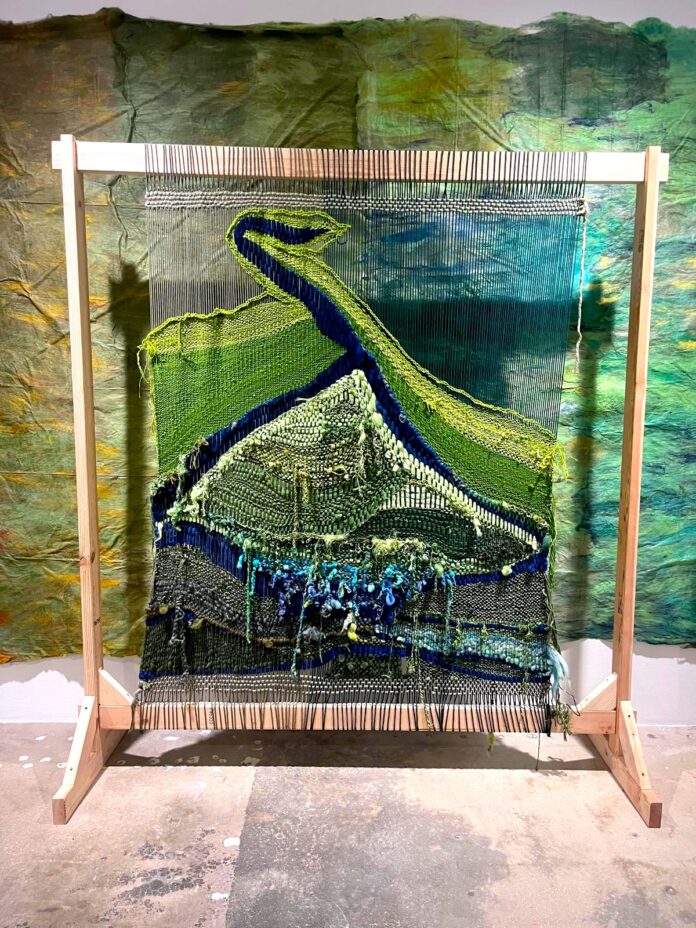
A glimpse into River of Grass at the Art and Culture Center/Hollywood is a powerful experience. The exhibition brings together textile, video, and installation to reflect on Florida’s fragile ecosystems and the layered landscapes of the Everglades.

The custom-built looms—6-foot squares—become both structure and artwork, creating woven corridors that you walk through. There’s a strong sense of place and materiality, with each piece contributing to a larger ecological and cultural narrative.

A thoughtful and engaging show that invites you to slow down and consider the environment in a new way.

On view March 14 through May 17

Hollywood Art and Culture Center
1650 Harrison St
Hollywood, Florida 33020

JESSICA BARBOSA, MARCO CARIDAD, ANDREA CARDENAL, DALIA BERLIN, NATALIE BHEEKIE, FERNANDA FROES, MILA HAJJAR, ISABEL INFANTE, SARAH LAING, AURORA MOLINA, PAOLA MONDOLFI, EVELYN POLITZER, ALINA RODRIGUEZ ROJO, JESSICA BARBOSA, DEBORA ROSENTAL, SUSANNE SCHIRATO, AIDA TEJADA, MARU ULIVI, LAURA VILLARREAL, SILVIA YAPUR, MACARENA ZILVETI

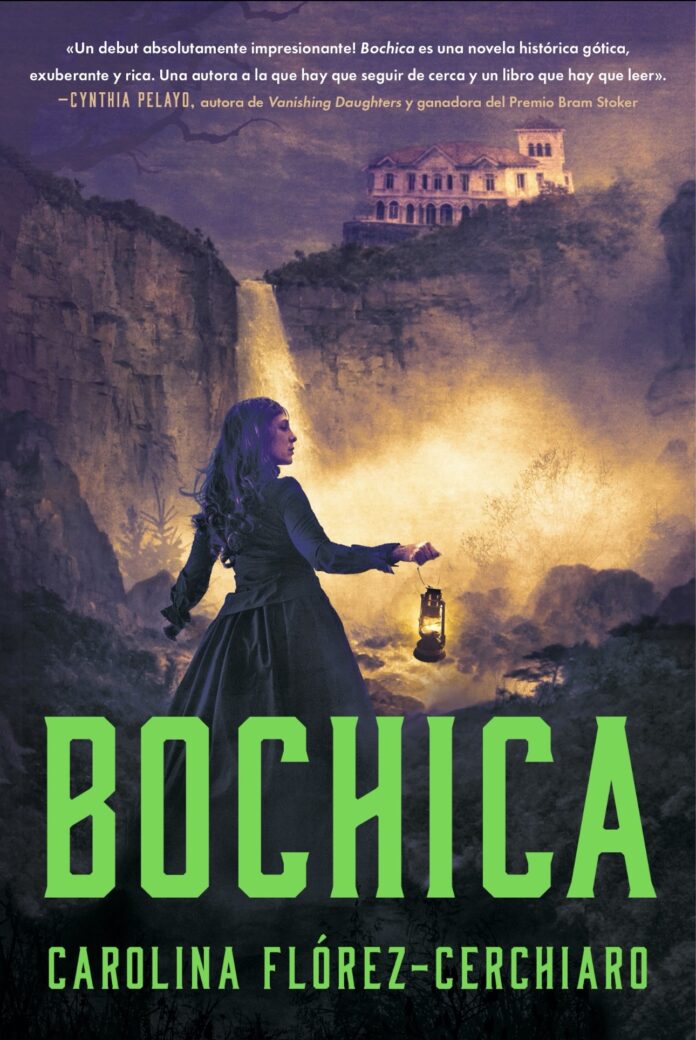
La colombiana Carolina Flórez-Cerchiaro lanza la novela de terror “Bochica”

Bochica

La colombiana Carolina Flórez-Cerchiaro lanza la novela de terror “Bochica”

El libro marca el debut literario de la periodista Carolina Flórez-Cerchiaro. Fue editado por HarperCollins Español y ya está disponible en plataformas digitales y librerías de todo USA

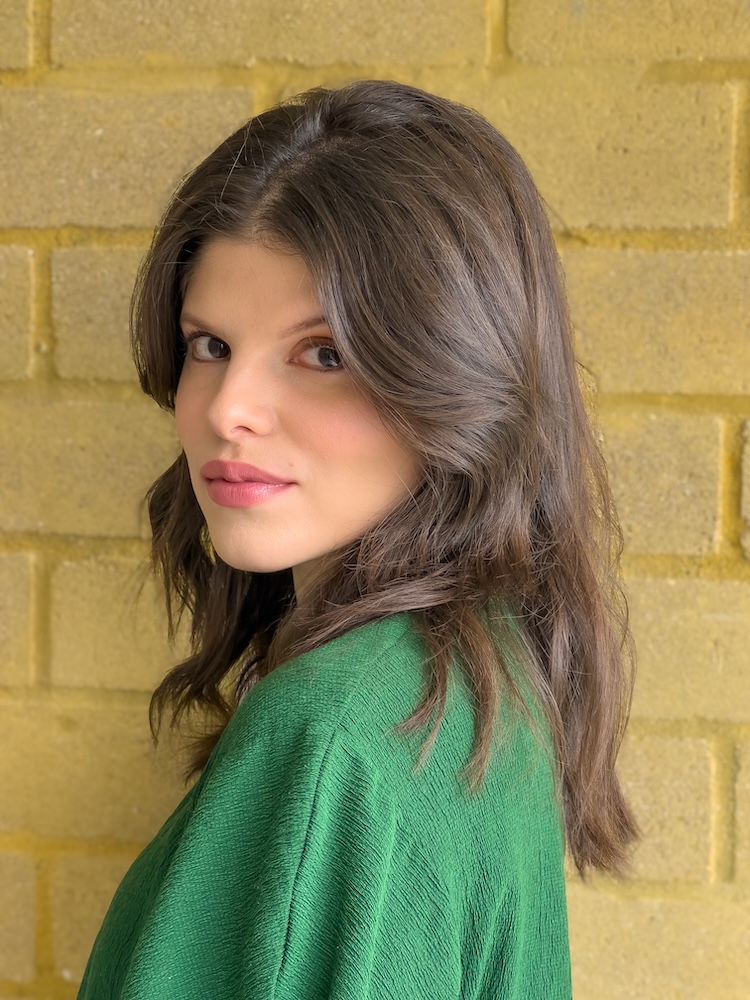
Carolina Flórez-Cerchiaro Photo by Juan G. Betancur-
Carolina Flórez-Cerchiaro Photo by Juan G. Betancur

“Bochica” es una poderosa y escalofriante novela de terror gótico ambientada en la Colombia de las primeras décadas del siglo pasado. Su argumento está en sintonía con obras literarias como “El Resplandor”, de Stephen King, “La Maldición de Hill House” de Shirley Jackson, y “Gótico” de la autora mexicana Silvia Moreno-García.

El hilo argumental de “Bochica” es llevado por “Antonia”, cuya familia fue atravesada por la tragedia luego de mudarse a tierras sagradas cerca de Bogotá. “En el fondo, mi libro trata sobre mujeres que intentan abrirse camino en una sociedad muy católica y conservadora”, define Carolina Flórez-Cerchiaro.

“Bochica” tuvo una exitosa versión en inglés, publicada en mayo del año pasado. Cynthia Pelayo, autora del libro “Vanishing Daughters” y ganadora del Premio Bram Stoker, manifestó que la novela “es el debut impresionante de una autora a la que hay que seguir de cerca”.

Carolina Flórez-Cerchiaro vive en Bogotá. Es apasionada por las historias. Su trabajo está impulsado por la curiosidad, su amor por la historia y lo sobrenatural, y el deseo de dar voz a perspectivas marginadas. Es aficionada al café, a armar rompecabezas y escuchar audiolibros.

En 1920, “Antonia” y sus padres se mudan a La Casona, la opulenta mansión construída al borde del Salto del Tequendama: una majestuosa cascada a las afueras de Bogotá, territorio sagrado de los indígenas Muisca. Lo que comienza como un sueño, pronto se convierte en tragedia: mientras decenas de personas van al Salto a quitarse la vida, Antonia empieza a sufrir pesadillas terribles y Estela, su madre, se desvaría cada vez más. 

La estocada final ocurre cuando Estela cae al vacío, y su padre, enloquecido por el dolor, intenta quemar la casa con Antonia todavía dentro. Tres años después, atormentada por sueños perturbadores y el críptico diario de su difunta madre (Estela), Antonia regresa a la casa, ahora convertida en un lujoso hotel. 

Pero la visita desencadena una serie de visiones y recuerdos fragmentados que la obligan a preguntarse sobre las verdaderas circunstancias de la muerte de su madre. En busca de respuestas, y sin poder confiar en nadie, Antonia se lanzará a desenterrar los secretos más oscuros de La Casona. El horror ancestral que habita entre sus muros ha sido despertado, y ya no hay vuelta atrás. 

“Si la novela logra entretener y, al mismo tiempo, hacer que alguien se vea reflejado en la historia que está leyendo, siento que estoy haciendo bien mi trabajo”, manifiesta la autora de “Bochica”.

Page 4 of 277
1 2 3 4 5 6 277