Home Blog Page 4

Art in Jacksonville

José Caldas
José Caldas

Art Galleries in Jacksonville

  • The Space Gallery: 120 E Forsyth St, Jacksonville, FL 32202.
  • The Frame Shop Art Gallery: 10015 San Jose Blvd, Jacksonville, FL 32257.
  • Archway Gallery and Framing: 363 Atlantic Blvd, Atlantic Beach, FL 32233.
  • Gallery of Antiques and Collectibles: 3033 Post St, Jacksonville, FL 32205.
  • FSCJ South Campus Art Gallery: 11901 Beach Blvd, Jacksonville, FL 32246.
  • Barnetts Art & Frame Gallery: 1040 Hendricks Ave, Jacksonville, FL 32207.
  • Adrian Pickett Gallery: 118 E Adams St, Jacksonville, FL 32202.
  • Stellers Gallery Mandarin: 11111 San Jose Blvd, Jacksonville, FL 32223.
  • Mitchell’s Fine Art Gallery & Collectibles: 1957 San Marco Blvd, Jacksonville, FL 32207.
  • Off the Grid Gallery: 112 E Adams St, Jacksonville, FL 32202.
  • Stallard’s Studio Gallery: 2689 Rosselle St, Jacksonville, FL 32204.
  • Royal Gallery: 3616 Southside Blvd, Jacksonville, FL 32216.

Art Museums in Jacksonville

Cummer Museum of Art & Gardens: 829 Riverside Ave, Jacksonville, FL 32204.

MOCA (Museum Of Contemporary Art) Jacksonville: 333 N Laura St, Jacksonville, FL 32202.

MOSH (Museum Of Science & History): 1025 Museum Cir, Jacksonville, FL 32207.

Ritz Theatre & Museum: 829 N Davis St, Jacksonville, FL 32202.

Beaches Museum: 381 Beach Blvd, Jacksonville Beach, FL 32250.

USS Orleck Naval Museum: 610 E Bay St, Jacksonville, FL 32202.

Mandarin Museum and Historical Society: 11964 Mandarin Rd, Jacksonville, FL 32223.

Karpeles Manuscript Library Museum: 101 W 1st St, Jacksonville, FL 32206.

Jacksonville Historical Society: 314 Palmetto St, Jacksonville, FL 32202.

Still, Moving Brings Together Five Painters at Spinello Projects

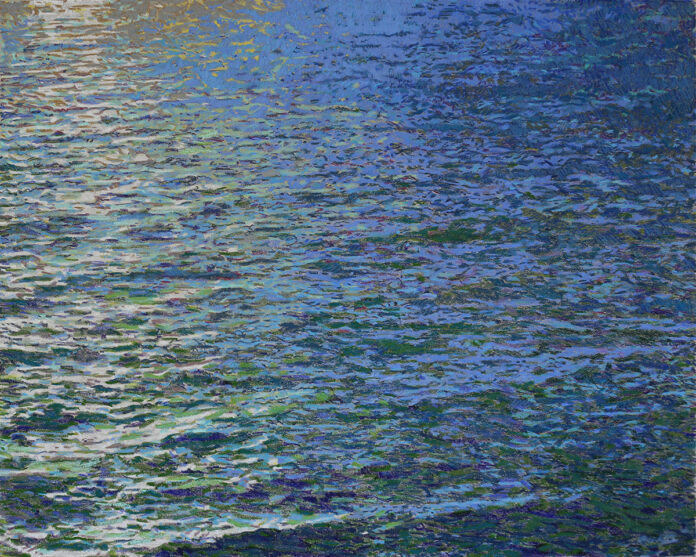
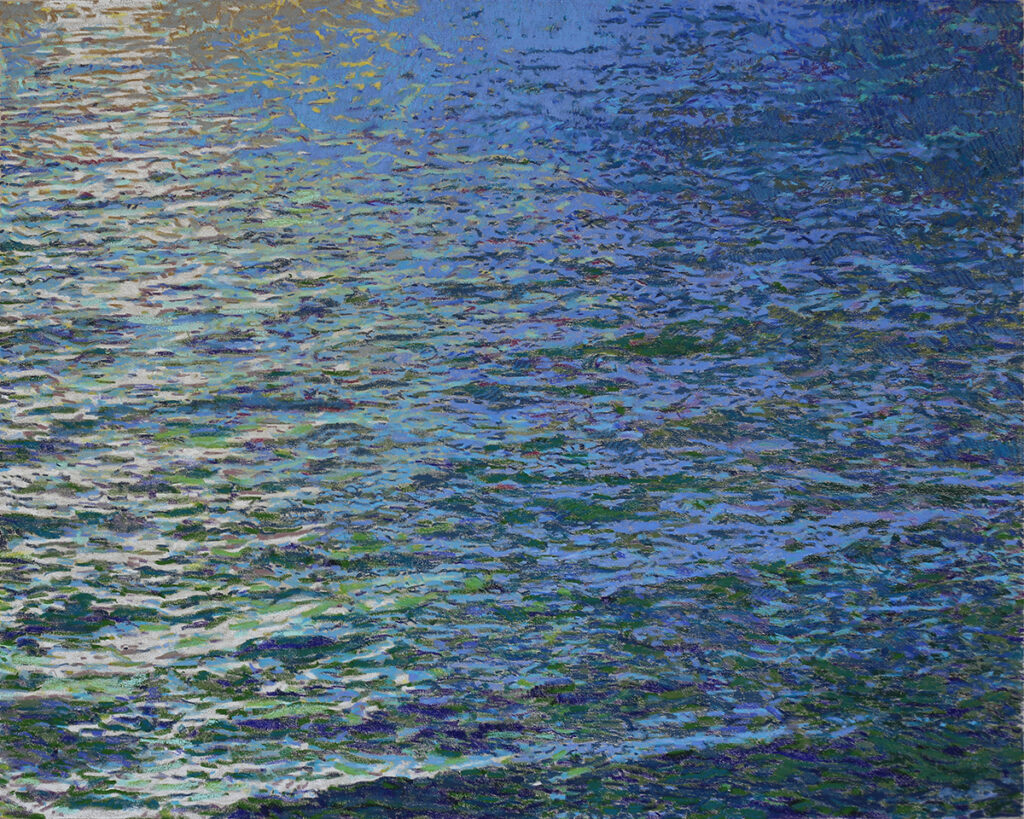
With the Sound of the Bird Dionnys Matos
Dionnys Matos With the Sound of the Birds, 2026 Oil on canvas 48 x 60 in.

Still, Moving Brings Together Five Painters at Spinello Projects

03. 13 – 04. 11. 2026
2930 NW 7th Ave, Miami, FL 33127
(646) 780-9265
@spinelloprojects

Spinello Projects is pleased to present Still, Moving, a group exhibition of paintings by Miami-based artists Nicole Burko, Dionnys Matos, Ernesto Gutiérrez Moya, and David E. Olivera, alongside Colombian-based artist Nicolás Beltrán. This exhibition marks the first occasion on which all five artists present work with the gallery.

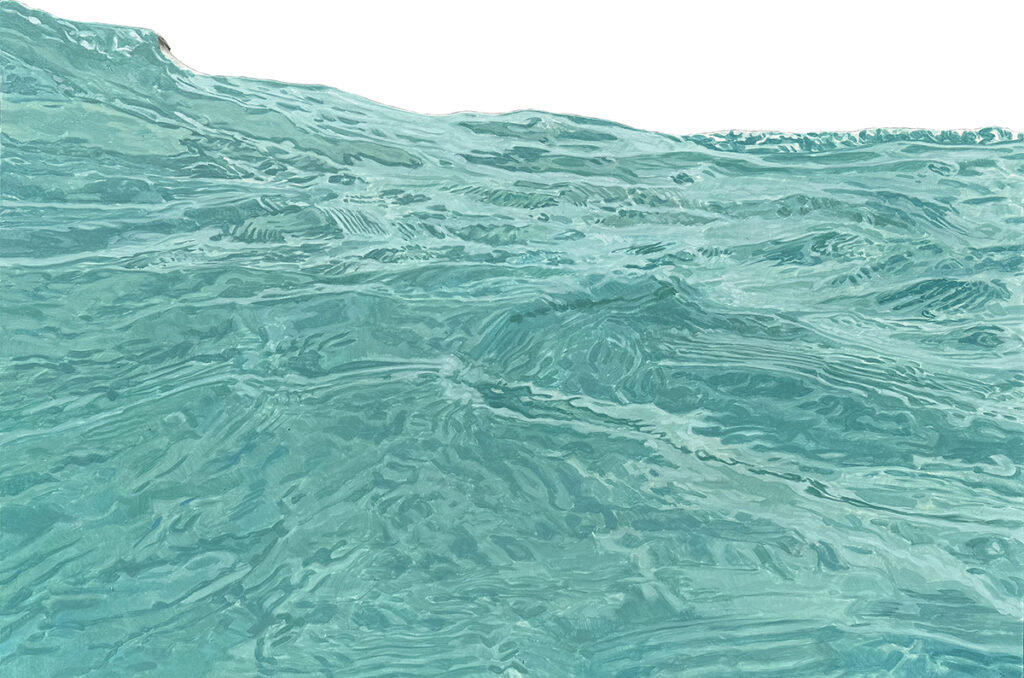
In Still, Moving, water is not a singular subject but a shifting presence — at once elemental, psychological, architectural, and spiritual. Across distinct practices and perspectives, the exhibition unfolds as body, boundary, memory, and horizon. Water appears suspended, yet never static; contained, yet never fully held.  

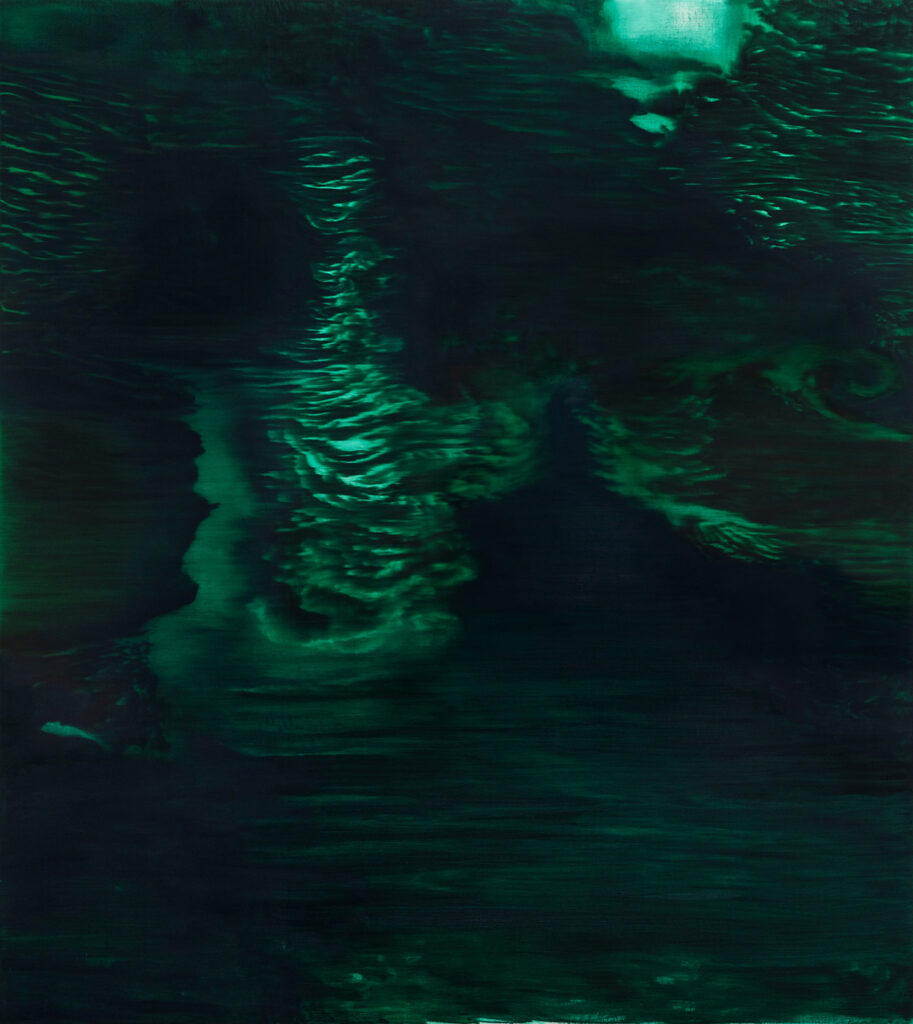
For Nicole Burko (b.1987, Toronto, Canada), water is a site of physical and existential encounters. Drawing from her experiences freediving into underwater caverns in a single breath, her immersive oil paintings navigate thresholds between desire and dread, intimacy and mortality. Depth becomes both a literal space and a psychological terrain — a place where stillness heightens awareness and movement becomes survival.

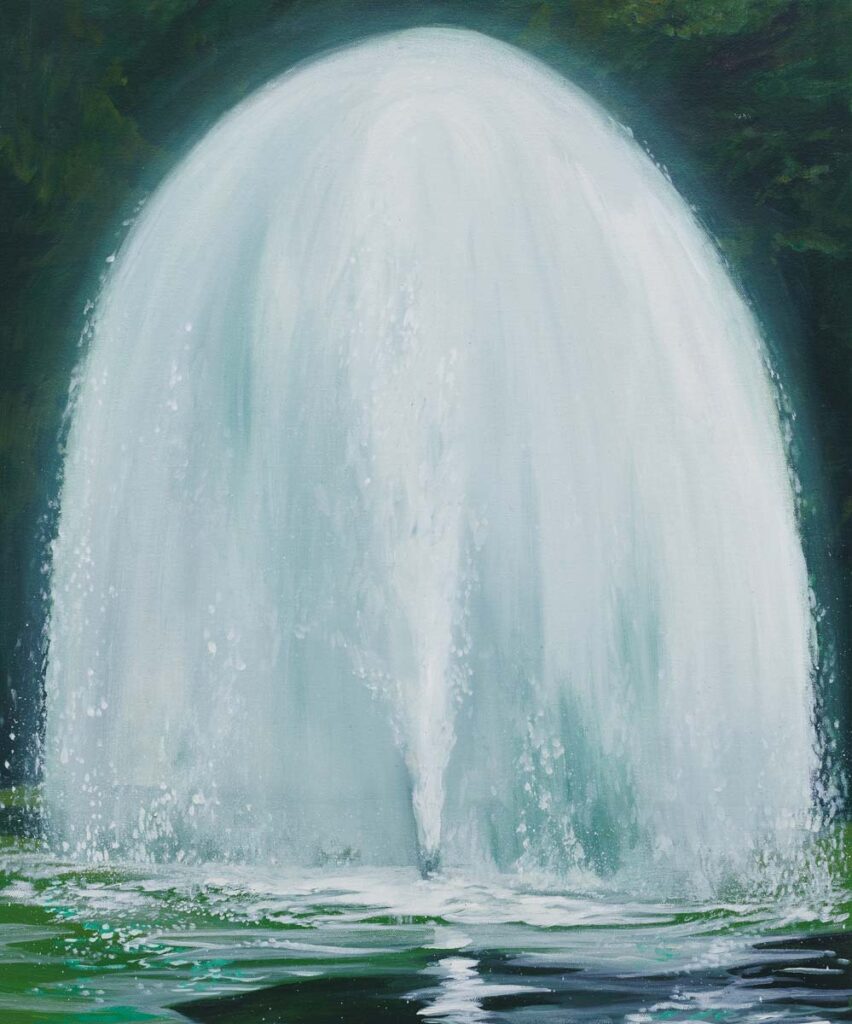
In the work of Ernesto Gutiérrez Moya (b.1995, Havana, Cuba), water emerges through architectural memory. His recurring fountains function as metaphysical anchors — symbols of permanence shaped by impermanence. Formed in the context of growing up in Cuba, these suspended structures hold emotional narratives that feel sensed rather than seen. The fountain, endlessly circulating yet fixed in place, embodies the paradox at the heart of the exhibition: water choreographed, but never entirely controlled.

For Dionnys Matos (b.1991, Holguín, Cuba), the sea embodies duality — nourishment and destruction, promise and rupture. Rooted in the cultural and spiritual presence of Yemayá, the ocean becomes a living force of renewal. Each wave carries both ending and beginning, suggesting that movement itself is a form of continuity.

Meanwhile, Nicolás Beltrán (b. 1992, Ibagué, Colombia) allows water to become the protagonist. Inspired in part by the immersive color fields of Mark Rothko, his monumental shaped-canvas painting pursues dilution and expansion — moments in which perception slows and the visible world opens into contemplation. Rendered at a life-size scale, the work envelops the viewer, allowing motion to quiet into atmosphere.

David E. Olivera (b.1983, Granada, Nicaragua) translates maritime imagery into compositions that oscillate between abstraction and detail. Drawing from subconscious impulse and deliberate observation, his paintings embody collective memory and coastal histories. Movement becomes both physical and emotional — a reflection of freedom, curiosity, and the pull of the horizon.

Together, these works present water as more than scenery or motif. It is a condition of being — fluid, transformative, alive. Whether encountered through the body, architectural memory, spiritual devotion, or abstraction, water becomes a vessel for reflection and connection. In holding motion within the stillness of paint, Still, Moving invites us to consider how transformation is not always visible, and how even the quietest surface carries depth beneath it.

With the Sound of the Bird Dionnys Matos
Dionnys Matos
With the Sound of the Birds, 2026
Oil on canvas
48 x 60 in.
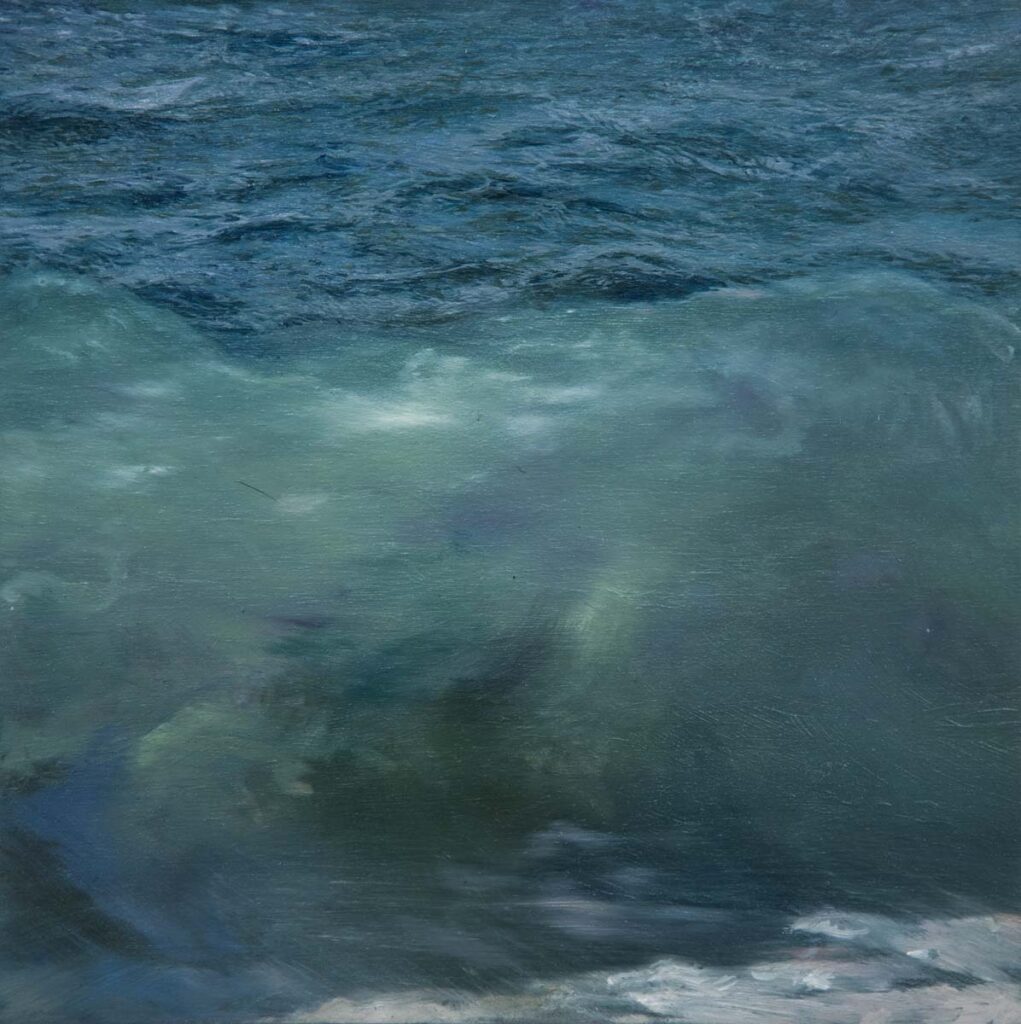
David E Olivera
David E Olivera
In the Past, 2021
Oil on panel
12 x 12 in.
Nicolás Beltrán
Nicolás Beltrán
Wave II, 2025
Oil on canvas
74.5 x 103 in.
Nicole Burko
Nicole Burko
Consumed, 2025
Oil on linen
72 x 64 in.
Ernesto Gutiérrez Moya
The Dome, 2023
Oil on canvas
24 x 20 in.

Spinello Projects Celebrates 20 Years with Changes: Reflections on Time & Space, a Landmark Exhibition Exploring Memory, History, and Transformation

Bringing past and present into conversation, Changes: Reflections on Time & Space traces twenty years of belief, community, and creative evolution within Miami’s cultural landscape.

On the occasion of Spinello Projects’ 20th anniversary, Changes: Reflections on Time & Space gathers fifteen artists whose practices have intersected with the gallery’s history. Drawing from founder Anthony Spinello’s personal art collection, the exhibition stages a dialogue between seminal works collected over the past two decades and new or recent works by the same artists—many of whom share deep ties to Miami. This constellation of artworks maps not only Spinello’s own trajectory, but also a chapter in the city’s evolving cultural landscape, reflecting the intertwined histories of place, practice, and community. Here, time is both a subject and a medium. The works span years, even decades, and carry with them the histories of their making—the social, political, and personal contexts that shaped them. Changes: Reflections on Time & Space is more than an exhibition—it is a time capsule, a love letter, and a testament to two decades of belief, growth, and transformation.

Artists include: Farley Aguilar, Esai Alfredo, Eddie Arroyo, Bernadette Despujols, Nereida Garcia-Ferraz, Elliot & Erick Jimenez, Kris Knight, Sinisa Kukec, Jared McGriff, Reginald O’Neal, Marlon Portales, Nina Surel, Naama Tsabar, Agustina Woodgate

Collective 62: Donde el arte femenino encuentra su territorio

Collective62-Art-Studios
Collective62 Art Studios es un espacio artístico independiente dedicado a la creación fuera de los circuitos artísticos tradicionales.

Collective 62: Donde el arte femenino encuentra su territorio.

Art Studios es un espacio artístico independiente dedicado a la creación fuera de los circuitos artísticos tradicionales.

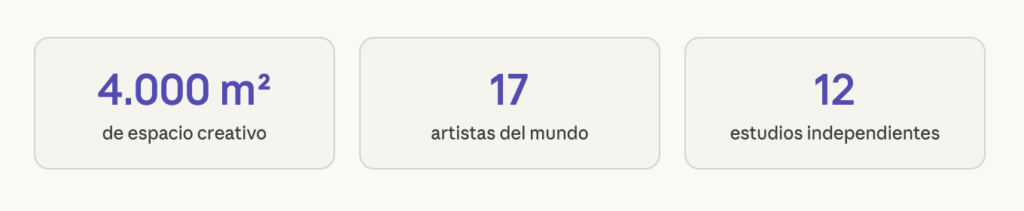
4,000 m² · 12 estudios · 17 artistas

En Liberty City, uno de los barrios con más historia de Miami, 17 artistas de todo el mundo comparten 4.000 metros cuadrados y una convicción: la creación artística se profundiza cuando se comparte.

Hay espacios que no se limitan a contener el arte. Lo generan. Lo fermentan. The Collective 62, ubicado en la calle 62 de Liberty City, en Miami, Florida, es uno de ellos. Fundado y gestionado por la artista Nina Surel, este espacio de más de 4.000 metros cuadrados no es un simple estudio compartido: es un organismo vivo donde diecisiete mujeres artistas de distintas latitudes del mundo trabajan, crean y se sostienen mutuamente en el proceso creativo más exigente y solitario que existe.

Surel —artista, madre, emprendedora y gestora cultural— no llegó a este proyecto por accidente. Venía trabajando desde hace tiempo en objetivos colectivos vinculados al arte, consciente de que la soledad del estudio puede ser tanto una fortaleza como una trampa. Fue esa tensión —entre la necesidad de espacio propio y la fertilidad del intercambio— lo que la llevó a concebir The Collective 62 como una plataforma de estudio, desarrollo y producción de proyectos artísticos para mujeres, donde el primer recurso compartido no es el espacio físico, sino el conocimiento: el expertise de cada integrante, puesto al servicio del colectivo.

“El primer recurso que se comparte no es el espacio: es el saber. El expertise de cada artista, puesto al servicio de todas.”

Una arquitectura para la creación colectiva

La distribución del espacio no es casual. Los 4.000 metros cuadrados se organizan en doce estudios individuales, separados y delimitados, pero comunicados entre sí a través de áreas de recreación y encuentro común. Esta arquitectura habla de una filosofía precisa: la artista necesita su territorio, su silencio y su ritmo propio; pero también necesita el corredor donde aparece la conversación inesperada, la pregunta que desestabiliza, el ojo ajeno que ve lo que el propio no puede ver.

Liberty City —históricamente uno de los barrios más resilientes y complejos de Miami, con una identidad cultural afroamericana de profundo arraigo— ofrece a The Collective 62 algo que no podría encontrar en los distritos artísticos más codificados de la ciudad: autenticidad territorial. Instalarse aquí no es un gesto estético, sino un posicionamiento. El arte que se produce en la calle 62 no está ajeno a la historia de ese suelo.

La figura de Surel: gestión como práctica artística

En el campo del arte contemporáneo, la gestión cultural raramente recibe el reconocimiento crítico que merece. Nina Surel encarna, sin embargo, una figura que merece análisis: la artista-gestora cuya práctica no se separa de su labor organizativa. Crear las condiciones materiales, institucionales y afectivas para que otras artistas produzcan no es una actividad paralela a la creación; es, en sí misma, una forma de creación. Surel lo entiende así, y The Collective 62 es la prueba más contundente de esa convicción.

Reunir a diecisiete mujeres artistas interdisciplinarias de todo el mundo bajo un mismo techo —con la diversidad de prácticas, idiomas, tradiciones estéticas y formas de trabajar que eso implica— requiere una inteligencia organizativa y relacional de primer nivel. Que ese tejido funcione, que se mantenga la tensión productiva entre lo individual y lo colectivo, es el logro más silencioso y más significativo de este proyecto.

“Instalarse en Liberty City no es un gesto estético: es un posicionamiento. El arte que nace en la calle 62 no está ajeno a la historia de ese suelo.”

Interdisciplinariedad como método

Las diecisiete artistas que integran The Collective 62 provienen de distintas disciplinas —pintura, escultura, fotografía, performance, instalación, medios digitales— y de distintas partes del mundo. Esta diversidad no es decorativa. Es metodológica. Cuando una pintora trabaja junto a una performer o una videoartista, los límites de su propia práctica comienzan a desplazarse. No necesariamente en la dirección del otro, sino en una dirección que no habría descubierto en soledad.

Miami, ciudad de tránsitos y superposiciones culturales, es el contexto perfecto para un proyecto así. Una ciudad que siempre ha sabido que la identidad se construye en la fricción, no en la pureza. The Collective 62 es, en ese sentido, profundamente miamense: un espacio donde la mezcla no es el problema, sino el método.

Un modelo para el presente

En un momento en que el mercado del arte presiona hacia la individualización de la práctica artística —el artista como marca, el estudio como empresa— The Collective 62 propone una alternativa que no es nostálgica ni utópica, sino pragmáticamente colectiva. No niega la singularidad de cada artista. La potencia. Y lo hace a través de lo más concreto: un espacio físico, un nombre de calle, una puerta abierta.

Iniciativas como esta merecen no solo visibilidad crítica, sino estudio. Son laboratorios donde se está gestando, en silencio y con rigor, una parte significativa del arte que Miami —y el mundo— producirá en los próximos años. Surel y las diecisiete artistas de la calle 62 ya lo saben. El resto tarde o temprano lo descubrirá.

Artists:

Alex Núñez

Amy Gelb

Chantae Elaine Wright

Deryn Cowdy

Evelyn Politzer

Fernanda Froes

Giannina Coppiano Dwin

Jeanne Jaffe

Jula Tüllmann

Laura Villarreal

Marina Gonella

Natalie Priede

Nina Surel

Pilar Fernandez

Sharon Berebichez

Stephanie Eti Hadad

Veronica Pasman

COLLECTIVE 62
827 NW 62 St
Liberty City, Miami FL 33150
+1 305-586-0252
[email protected]
Thecollective62.com
@thecollective62

MORADO: Significado, Arte y Cultura

morado
Morado

MORADO: Significado, Arte y Cultura

El color del poder absoluto, lo sagrado y lo imposible

01. INTRODUCCIÓN: El color que nadie podía permitirse

Durante más de mil años, el morado fue el color más caro del mundo. Un gramo de pigmento púrpura auténtico costaba más que su peso en oro, lo que llevó a los emperadores romanos a promulgar leyes que castigaban con la muerte su uso no autorizado. Más que un simple color, el morado era una institución y una declaración de poder absoluto que marcaba la frontera entre lo humano y lo divino. Aunque hoy los pigmentos sintéticos lo han democratizado, persiste en nuestra memoria cultural su asociación con la realeza, lo místico y lo extraordinario.

02. HISTORIA ANTIGUA: El tinte de diez mil caracolas

La legendaria “púrpura de Tiro” se extraía de los murícidos, moluscos marinos del Mediterráneo. El proceso era extremadamente costoso: se necesitaban entre 10,000 y 30,000 caracoles para teñir un solo manto imperial. Aunque el proceso de producción desprendía un olor penetrante a pescado podrido, el resultado era un color que no se desteñía y se intensificaba con el sol, perdurando durante siglos. Tras la caída de Constantinopla en 1453, esta tradición se interrumpió y los secretos del tinte se perdieron parcialmente hasta el siglo XIX.

03. CIENCIA Y DESCUBRIMIENTO: El joven químico y la mancha violeta

En 1856, William Henry Perkin, un estudiante de 18 años, descubrió accidentalmente la mauveína, el primer colorante sintético de la historia, mientras intentaba sintetizar quinina. Este hallazgo permitió que el morado, antes exclusivo de emperadores, fuera accesible para todas las clases sociales. El descubrimiento de Perkin no solo revolucionó la moda, sino que fundó la industria química sintética moderna, impactando la medicina, la fotografía y la tecnología actual.

04. ARTE: El color que los impresionistas liberaron

Históricamente, el morado fue un color secundario en la pintura debido a que los pigmentos puros eran inestables, tóxicos o muy caros.

  • Monet: Revolucionó el uso del color al descubrir que las sombras no son negras, sino azules y violetas, como se observa en sus series de la catedral de Rouen.
  • Van Gogh: Su obra Lirios (1889) es uno de los estudios de violeta más intensos, pintado desde su celda en Saint-Rémy.
  • Kandinsky: Asoció el morado con la meditación profunda y el duelo espiritual, considerándolo un color que pertenece al espacio entre lo visible y lo invisible.

05. SIMBOLISMO: Entre el poder y el misterio

  • Realeza: Símbolo de autoridad suprema desde Roma hasta Bizancio.
  • Espiritualidad: Color litúrgico del Adviento y la Cuaresma (penitencia y reflexión); asociado también al tercer ojo e intuición.
  • Duelo: Segundo color de luto en Europa y Latinoamérica, y color de luto completo en Tailandia y Brasil.
  • Feminismo: Símbolo del movimiento sufragista desde 1908 y del feminismo internacional contemporáneo.

06. LINGÜÍSTICA: El morado en las palabras

  • “Vestirse de púrpura”: Aspirar al poder supremo.
  • “Prosa púrpura”: Texto excesivamente ornamentado o elaborado.
  • “Born in the purple”: Referencia a quienes nacen en privilegio absoluto (basado en las cámaras de mármol pórfido de Bizancio).
  • “Morado de frío”: Tono violáceo de la piel ante temperaturas extremas.

07. RELIGIÓN Y RITUAL

El morado es el color del umbral y la espera sagrada en el cristianismo. En el budismo tibetano, representa estados avanzados de meditación, mientras que en el judaísmo, el tekhelet (azul-violeta) era un color sagrado para las vestimentas rituales. En la masonería, simboliza la síntesis de virtudes (azul/sabiduría y rojo/valentía) propia de los grados más elevados.

08. PSICOLOGÍA: El color de la introspección

Se asocia consistentemente con la creatividad, el pensamiento divergente y la sensibilidad estética elevada. Es el color de la tensión creativa entre la agresividad del rojo y la frialdad del azul. Kandinsky lo describía como un rojo llevado a lo sobrehumano, vinculado a estados límite como la melancolía profunda o el éxtasis espiritual.

09. MODA Y CULTURA: De la realeza al rock

Tras su democratización en el siglo XIX, el morado pasó de ser un símbolo conservador a uno de transgresión artística en el siglo XX. Artistas como Jimi Hendrix (Purple Haze) y especialmente Prince, quien convirtió el morado en su identidad total, redefinieron el estatus cultural de este color.

10. TÉCNICA: Los morados de la paleta

Violeta de Dioxazina (PV23): El violeta más puro y estable de la paleta contemporánea.

Púrpura de Tiro: El pigmento histórico original, casi imposible de reproducir hoy.

Mauveína: Primer colorante sintético, aunque inestable frente al tiempo.

Violeta de Cobalto (PV14): Primer pigmento morado estable (1859), esencial para los impresionistas.

River of Grass at the Art and Culture Center/Hollywood

River of Grass at the Art and Culture Center/Hollywood

River of Grass at the Art and Culture Center/Hollywood

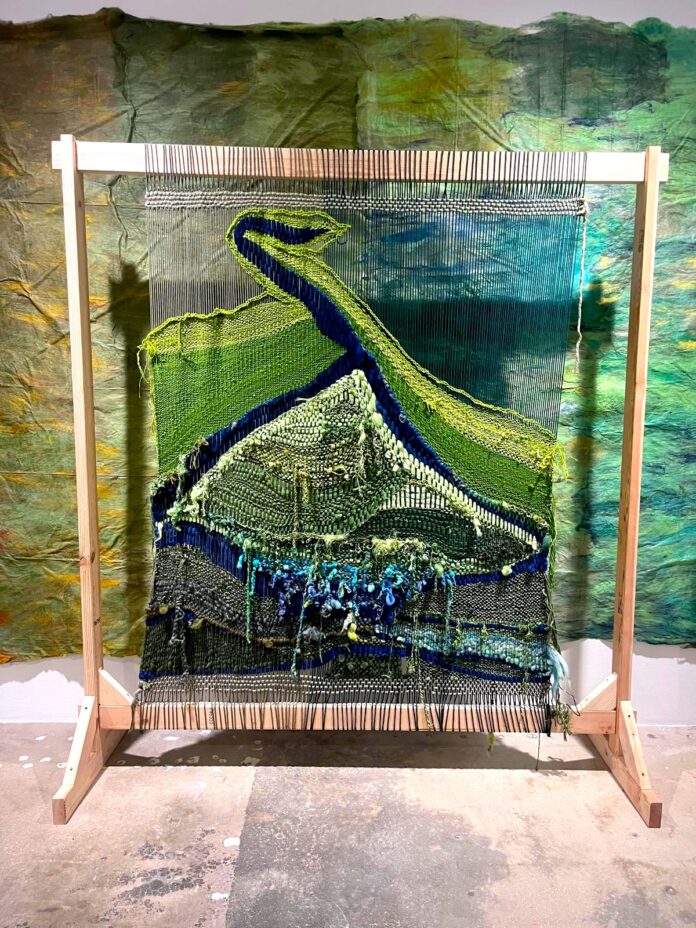
A glimpse into River of Grass at the Art and Culture Center/Hollywood is a powerful experience. The exhibition brings together textile, video, and installation to reflect on Florida’s fragile ecosystems and the layered landscapes of the Everglades.

The custom-built looms—6-foot squares—become both structure and artwork, creating woven corridors that you walk through. There’s a strong sense of place and materiality, with each piece contributing to a larger ecological and cultural narrative.

A thoughtful and engaging show that invites you to slow down and consider the environment in a new way.

On view March 14 through May 17

Hollywood Art and Culture Center
1650 Harrison St
Hollywood, Florida 33020

JESSICA BARBOSA, MARCO CARIDAD, ANDREA CARDENAL, DALIA BERLIN, NATALIE BHEEKIE, FERNANDA FROES, MILA HAJJAR, ISABEL INFANTE, SARAH LAING, AURORA MOLINA, PAOLA MONDOLFI, EVELYN POLITZER, ALINA RODRIGUEZ ROJO, JESSICA BARBOSA, DEBORA ROSENTAL, SUSANNE SCHIRATO, AIDA TEJADA, MARU ULIVI, LAURA VILLARREAL, SILVIA YAPUR, MACARENA ZILVETI

La colombiana Carolina Flórez-Cerchiaro lanza la novela de terror “Bochica”

Bochica

La colombiana Carolina Flórez-Cerchiaro lanza la novela de terror “Bochica”

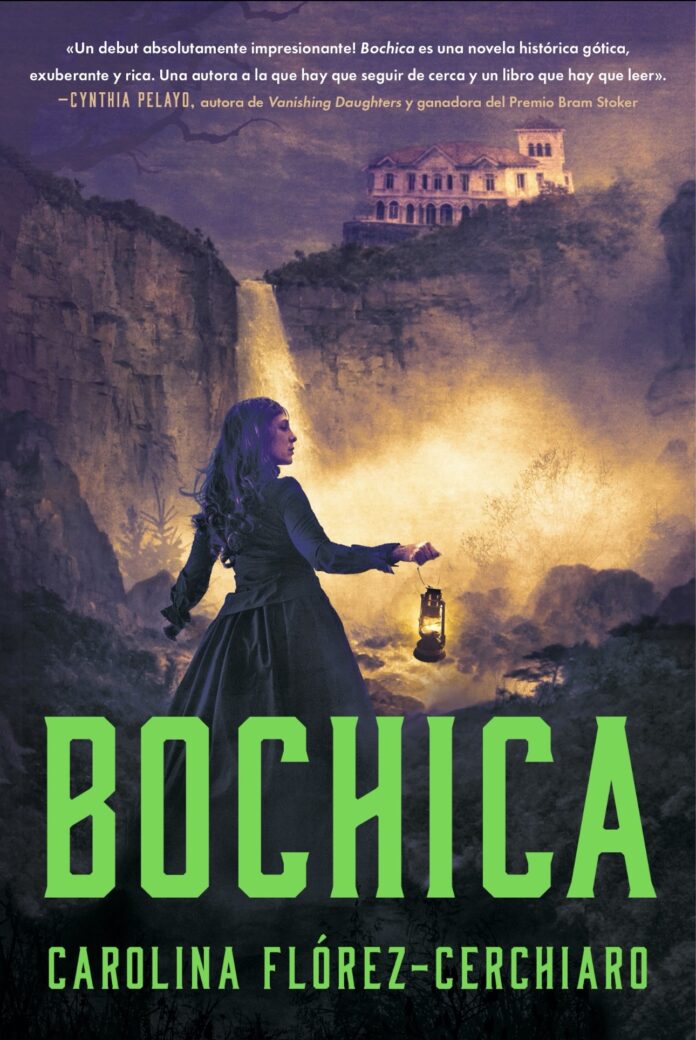
El libro marca el debut literario de la periodista Carolina Flórez-Cerchiaro. Fue editado por HarperCollins Español y ya está disponible en plataformas digitales y librerías de todo USA

Carolina Flórez-Cerchiaro Photo by Juan G. Betancur-
Carolina Flórez-Cerchiaro Photo by Juan G. Betancur

“Bochica” es una poderosa y escalofriante novela de terror gótico ambientada en la Colombia de las primeras décadas del siglo pasado. Su argumento está en sintonía con obras literarias como “El Resplandor”, de Stephen King, “La Maldición de Hill House” de Shirley Jackson, y “Gótico” de la autora mexicana Silvia Moreno-García.

El hilo argumental de “Bochica” es llevado por “Antonia”, cuya familia fue atravesada por la tragedia luego de mudarse a tierras sagradas cerca de Bogotá. “En el fondo, mi libro trata sobre mujeres que intentan abrirse camino en una sociedad muy católica y conservadora”, define Carolina Flórez-Cerchiaro.

“Bochica” tuvo una exitosa versión en inglés, publicada en mayo del año pasado. Cynthia Pelayo, autora del libro “Vanishing Daughters” y ganadora del Premio Bram Stoker, manifestó que la novela “es el debut impresionante de una autora a la que hay que seguir de cerca”.

Carolina Flórez-Cerchiaro vive en Bogotá. Es apasionada por las historias. Su trabajo está impulsado por la curiosidad, su amor por la historia y lo sobrenatural, y el deseo de dar voz a perspectivas marginadas. Es aficionada al café, a armar rompecabezas y escuchar audiolibros.

En 1920, “Antonia” y sus padres se mudan a La Casona, la opulenta mansión construída al borde del Salto del Tequendama: una majestuosa cascada a las afueras de Bogotá, territorio sagrado de los indígenas Muisca. Lo que comienza como un sueño, pronto se convierte en tragedia: mientras decenas de personas van al Salto a quitarse la vida, Antonia empieza a sufrir pesadillas terribles y Estela, su madre, se desvaría cada vez más. 

La estocada final ocurre cuando Estela cae al vacío, y su padre, enloquecido por el dolor, intenta quemar la casa con Antonia todavía dentro. Tres años después, atormentada por sueños perturbadores y el críptico diario de su difunta madre (Estela), Antonia regresa a la casa, ahora convertida en un lujoso hotel. 

Pero la visita desencadena una serie de visiones y recuerdos fragmentados que la obligan a preguntarse sobre las verdaderas circunstancias de la muerte de su madre. En busca de respuestas, y sin poder confiar en nadie, Antonia se lanzará a desenterrar los secretos más oscuros de La Casona. El horror ancestral que habita entre sus muros ha sido despertado, y ya no hay vuelta atrás. 

“Si la novela logra entretener y, al mismo tiempo, hacer que alguien se vea reflejado en la historia que está leyendo, siento que estoy haciendo bien mi trabajo”, manifiesta la autora de “Bochica”.

Cultural Council for Palm Beach County Announces 2026 Artist

Cultural Council Awards Prestigious 4th Round of the Artist Innovation Fellowship
Art Without Boundaries: Cultural Council for Palm Beach County Announces 2026 Artist Innovation Fellowship Recipients

Art Without Boundaries: Cultural Council for Palm Beach County Announces 2026 Artist Innovation Fellowship Recipients

Palm Beach County, FL — March 15, 2026 — The Cultural Council for Palm Beach County proudly announced the recipients of its 2026 Artist Innovation Fellowships during its signature annual celebration, An A-Muse-ing Evening, marking a significant investment in the region’s creative future.

Now in its largest iteration since the program’s launch in 2020, the initiative will award $10,000 to each of 10 selected artists, bringing the program’s total funding to $257,500 distributed among 31 artists across diverse disciplines. The fellowship is designed to support artistic exploration without restriction, encouraging innovation, experimentation, and the development of new creative directions.

This year’s fellowship recipients are:
Jill Hotchkiss, Sonya Sanchez Arias, Quimetta Perle, Virginia Blische, George Bayer, Ashley Osori, Michelle Drummond, Quinn Miller, Elizabeth Price, and Elizabeth Straight.

Unlike traditional grants tied to specific deliverables, the Artist Innovation Fellowship provides artists with the rare opportunity to pursue ideas freely, without predefined outcomes. Fellows will also participate in Cultural Council programming throughout the year and may serve as mentors to emerging artists, further strengthening the region’s creative ecosystem.

“The Artist Innovation Fellowship gives artists something truly rare: the freedom to imagine without limits,” said Dave Lawrence, President & CEO of the Cultural Council for Palm Beach County. “When we invest in artists as individuals, our entire community grows stronger. By empowering our Fellows to act as cultural tourism ambassadors for The Palm Beaches, we extend that impact globally.”

The announcement was part of An A-Muse-ing Evening, a vibrant celebration of arts and culture in Palm Beach County that also honored outstanding contributions to the cultural landscape. This year’s awardees included:

  • Outstanding Corporate Support: The Boca Raton
  • Outstanding Cultural Ambassador: Florida Weekly
  • Cultural Impact Award: The Peach
  • Alexander W. Dreyfoos Lifetime Achievement Award: Donald M. Ephraim

The fellows were selected by a regional panel of arts professionals based on artistic excellence, dedication to their practice, and the transformative potential of their proposed explorations.

The evening—and the continued success of the fellowship program—was made possible through the support of sponsors, participating cultural organizations, Palm Beach County-based creatives, and the Cultural Council’s dedicated staff.

As Palm Beach County continues to position itself as a dynamic hub for arts and culture, initiatives like the Artist Innovation Fellowship underscore the importance of investing in creative talent—not only as a cultural asset, but as a driver of community identity and global engagement.

The 2026 Artist Innovation Fellows and proposals are:

Sonya Sanchez Arias, Visual Art
Blend collaged portraits and print on non-nontraditional surfaces including plastics, metals, glass, and fabrics. Combine digital printing and hard embroidery to reintroduce ancestral handwork into contemporary image-making.

George Bayer, Visual Art
Attend an apprenticeship at Benrido in Kyoto (founded in 1887 the world’s only remaining studio producing full-color photographic collotypes) to learn this endangered technique and create two large-format collotype works, along with a suite of 10 limited-edition boxed sets of gelatin prints.

Virginia Blische, Visual Art
Create an animated series based on multiple felted characters including Rosewell, a frog who loves all things space related.

Michelle Drummond, Visual Art
Study how rural and underrepresented communities navigate environmental and infrastructure challenges (i.e., inaccessibility of clean water). Examine the threads of interconnectedness among these communities and translate their stories into sculptural forms.

Jill Hotchkiss, Visual Art
Collaborate with Flavor Paper Silkscreen Studio to translate dendritic imagery into large wall coverings that serve as immersive environments for scrolls and reliefs, expanding the work into installation-scale formats.

Quinn Miller, Visual Art
Document stories, landscapes, and symbols that parallel the agricultural found in Palm Beach County, especially on the history of sugarcane production within South Florida. The artwork created will explore identity and belonging in rural communities. Work created will be printed on sugarcane paper showing destruction by the elements (i.e., weather).

Ashley Osorio, Music
Bring Comala, an 18th-century opera by the forgotten composer Harriet W. Stewart, to life. Complete the transcription, record Acts 1 and 2 with professional musicians, and contribute as both scholar and performer.

Quimetta Perle, Visual Art
Using interactive fabric, embedding additional imagery into the work, so it is both still and moving, light emitting as well as light reflective.

Elizabeth Price, Theatre
Attend the National Michael Chekhov Society acting training workshop in June 2026. Under the mentorship of Kristen Haaggi to bring to life the story of recovery from an accident.

Elizabeth Straight, Literature
Write and curate a matrilineal poetry collection grounded in creative vulnerability and ancestral memory.

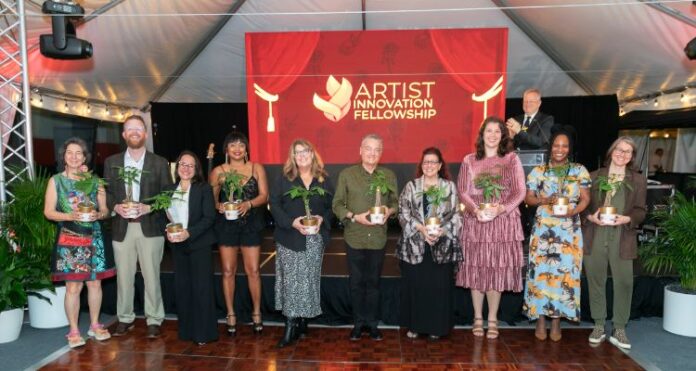
Photo Link: AIF Recipients at the Cultural Council’s 2026 Muse Awards
(L to R): Quimetta Perle, Quinn Miller, Jill Hotchkiss, Michelle Drummond, Virginia Blische, George Bayer, Sonya Sanchez Arias, Ashley Osorio, Elizabeth Straight, Elizabeth Price
*Photo Credit: Premier Photo

About the Cultural Council for Palm Beach County
The Cultural Council for Palm Beach County is the official support agency for arts and culture in The Palm Beaches, Florida’s Cultural Capital®. Headquartered in the historic Robert M. Montgomery, Jr. building in Downtown Lake Worth Beach, the Council presents exciting year-round exhibitions and performances featuring artists who live or work in Palm Beach County. The Council features spectacular work by Palm Beach County-based professional artisans in its Roe Green Uniquely Palm Beach Store and offers complimentary resources for visitors in its Jean S. and Frederic A. Sharf Visitor Information Center. The Council is open to the public Tuesday through Saturday from 12 to 5 p.m. For more information and a comprehensive calendar of cultural events in The Palm Beaches, visit palmbeachculture.com.

Bozlu Art Makes its United States Art Fair Debut at Palm Beach Modern + Contemporary

Bozlu Art Makes its United States Art Fair Debut at Palm Beach Modern + Contemporary
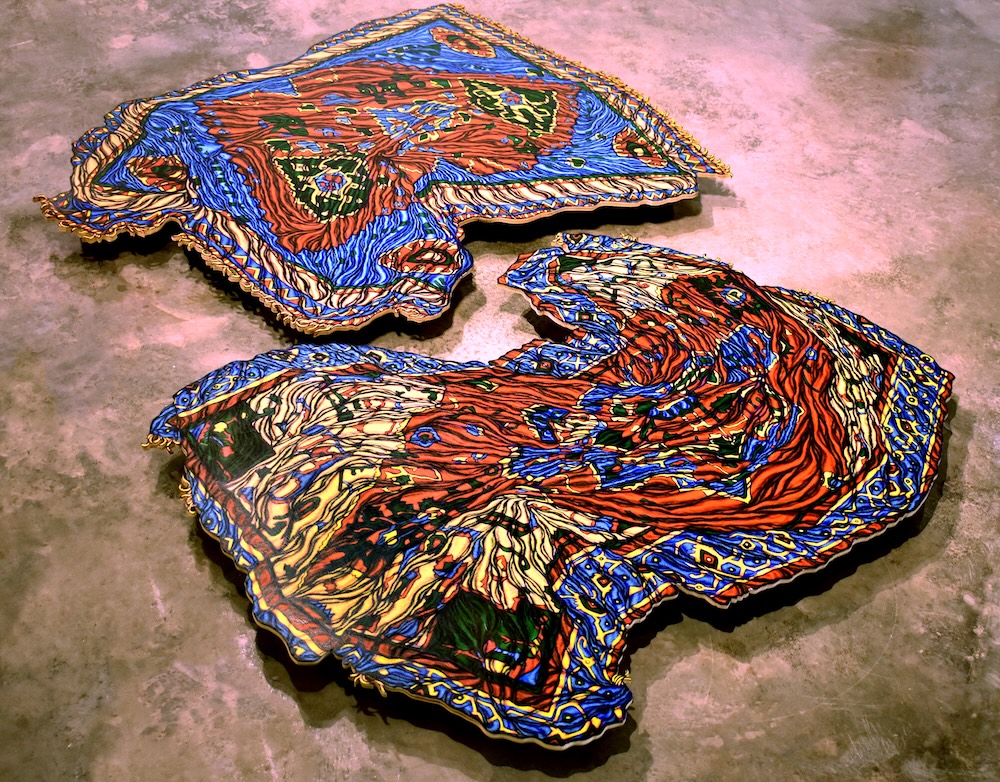
Ali Alışır

Bozlu Art Makes its United States Art Fair Debut atPalm Beach Modern + Contemporary

Palm Beach, Florida (March 16, 2026) — Bozlu Art Project announces its United States art fair debut at the 2026 edition of Palm Beach Modern + Contemporary, taking place March 19–22 at the Palm Beach County Convention Center in West Palm Beach, Florida.

The gallery brings esteemed artists, Ali Kazma, Nadide Akdeniz, and Ali Alışır, as well as emerging talents Mär Martinez, and Merve Zeybek to its inaugural presentation, rounding out an internationally acclaimed booth.

Recognized as South Florida’s premier seasonal art fair, the event brings together an international roster of galleries, presenting works from the modern, post-war, and contemporary eras to a global audience of collectors, curators, and cultural leaders. Marking the gallery’s first presentation at the fair, Bozlu Art introduces a dynamic perspective from Türkiye’s contemporary art landscape to one of the most active collecting environments in the United States.

Founded in 2013, the gallery has built its program around fostering critical dialogue, supporting artists’ international visibility, and contributing to the documentation and development of contemporary art discourse through its art book publishing program. Through exhibitions, publications, and archival initiatives, Bozlu Art has positioned itself as a platform for expanding the global understanding of artistic production emerging from Türkiye and its broader cultural context.

Bozlu Art’s participation reflects the growing internationalization of the Palm Beach art ecosystem, where global galleries converge each season to engage a rapidly expanding base of collectors and institutions. Within this context, the presentation of Turkish contemporary art carries resonance. Bridging histories that span Europe, the Middle East, and Central Asia, Türkiye’s artistic production offers a layered dialogue between tradition and experimentation — an intersection increasingly relevant to conversations shaping contemporary art today.

By bringing this perspective to Palm Beach, Bozlu Art Project underscores the fair’s role as a meeting point for diverse artistic narratives and reinforces the city’s emergence as a significant platform for international cultural exchange. As a regular exhibitor across Türkiye, the Palm Beach exhibition represents an important step in Bozlu Art’s international expansion. By introducing a selection of artists whose practices span conceptual photography, lens-based media, sculptural painting, and contemporary interpretations of traditional forms, the gallery seeks to foster new dialogue between Turkish contemporary art and the dynamic collector community of South Florida.

Aquí tienes el texto organizado por secciones para que cada artista y la información de contacto sean fáciles de localizar, manteniendo tu contenido íntegro y en su idioma original:

About the Booth Presentation

Ali Alışır (b. 1978, Istanbul) Ali Alışır’s practice examines the psychological and social effects of life in an increasingly digital and image-saturated world. Educated in graphic arts at Yeditepe University in Istanbul and later completing a master’s degree in photography at Accademia Italiana in Florence, the artist developed a distinctive visual language rooted in conceptual photography and digital manipulation. Across series including Virtual Bodies, Virtual Places, Virtual Wars, and Virtual Landscapes, Alışır explores how rapidly evolving technologies reshape perception, identity, and the environments we inhabit.

His work has been exhibited internationally and is held in numerous public and private collections, including Istanbul Modern and Odunpazarı Modern Museum (OMM). Writing on Alışır’s exploration of virtual space and technological transformation, Elephant Journal observes that his work reflects a moment when “reality is not something as clear and explicit as we thought,” pointing to the increasingly synthetic nature of digitally mediated images.

Bozlu Art Makes its United States Art Fair Debut at Palm Beach Modern + Contemporary

Ali Kazma (b. 1971, Istanbul) Working primarily with lens-based media, Ali Kazma investigates the structures and systems that shape human activity across contemporary society. After earning his M.A. from The New School in New York, Kazma developed a practice centered on observing the processes through which people produce, build, and transform the world. His videos closely document spaces of labor – from industrial sites and scientific laboratories to artistic studios – creating an evolving visual archive of gestures, routines, and technologies that define modern life. Through these meticulous studies of work, time, and material processes, Kazma reveals the often unseen infrastructures underlying cultural and economic production.

Kazma represented Türkiye at the 55th Venice Biennale in 2013 and has presented major solo exhibitions at institutions including the Jeu de Paume, the Hirshhorn Museum and Sculpture Garden, and the Nouveau Musée National de Monaco. His works are held in major institutional collections such as Museum of Modern Art in New York and Tate Modern. Writing on Kazma’s practice, Fondation Cartier pour l’art contemporain notes that his work “highlights the relationship between the visible and invisible aspects of reality,” examining how systems of labor, time, and production shape the contemporary human condition.

Bozlu Art Makes its United States Art Fair Debut at Palm Beach Modern + Contemporary

Mär Martinez (b. 1996, United States) Mär Martinez is an artist working in sculptural painting, using layered surfaces and tactile materials to examine systems of dominance, aggression, and power embedded within culturally enforced binaries. Drawing from both studio practice and art historical research, Martinez creates materially complex works that challenge traditional hierarchies within painting while interrogating the social structures that shape identity and control. She holds a BFA in Studio Art and a BA in Art History from the University of Central Florida and is currently pursuing an MFA in Painting at Hunter College in New York.

Martinez was the 2024–2025 recipient of the Fulbright Program Creative Arts Research Award, during which she conducted research in Istanbul on handweaving and natural dye processes in collaboration with the Sadberk Hanım Museum and Mimar Sinan Fine Arts University. The resulting body of work reflects an ongoing interest in textile traditions, labor, and material histories. As noted by the Elizabeth Greenshields Foundation, which awarded Martinez its 2026 grant, her work “demonstrates a compelling commitment to technical mastery and the continued evolution of painting as a contemporary medium.”

Bozlu Art Makes its United States Art Fair Debut at Palm Beach Modern + Contemporary

Merve Zeybek (b. 1991, Adapazarı, Türkiye) Merve Zeybek’s practice draws from the visual traditions of Turkish illumination and miniature painting, translating these historical forms into a contemporary language of abstraction and organic pattern. A graduate of the Department of Traditional Turkish Arts at Marmara University’s Faculty of Fine Arts, Zeybek examines relationships between form and ground through compositions inspired by botanical structures and natural systems. Her work reinterprets traditional visual perspectives while exploring themes of birth, transformation, and the cyclical rhythms of life.

Alongside her studio practice, Zeybek has worked since 2013 as a paper conservator at Enderun Art Gallery, a role that informs her deep engagement with historical materials and techniques. Her work has been featured in major emerging artist platforms including BASE and Mamut Art Project, both recognized for introducing new voices in the Turkish contemporary art scene.

Bozlu Art Makes its United States Art Fair Debut at Palm Beach Modern + Contemporary

Nadide Akdeniz (b. 1945, Niğde, Türkiye) For more than five decades, Nadide Akdeniz has developed a distinctive painterly language rooted in the observation of nature and its symbolic resonance within contemporary life. Educated at Gazi Education Institute and later at Dokuz Eylül University, Akdeniz began her career in the late 1960s and has exhibited extensively since 1969. While her early works explored urban life with a critical and occasionally ironic lens, her practice evolved in the 1990s toward richly detailed landscapes in which plants, trees, and organic forms dominate the pictorial space. Characterized by meticulous technique and vibrant green and blue palettes, her compositions merge realism with imaginative narrative, creating environments where nature becomes both subject and metaphor.

Akdeniz’s paintings often construct dense, fantastical ecosystems in which everyday objects and symbolic forms emerge within lush botanical worlds, reflecting social, ecological, and cultural narratives. Describing her unique visual universe, curator Marianne Pitzen referred to the artist as the “green sorcerer of the great green world,” a phrase that has become closely associated with Akdeniz’s work and its immersive natural imagery.

Visitor & Contact Information

For collectors and curators interested in available works from the gallery’s Palm Beach presentation, a complete price list and artwork details can be accessed at [this link].

For ticket purchases and more information on Visitor information and ticket access for Palm Beach Modern + Contemporary, please visit: https://www.artpbfair.com/

Media Contact:

Mexican pink (Rosa Mexicano)

Mexican pink (Rosa Mexicano)

Mexican pink (Rosa Mexicano)

The Wound That Vibrates:

Color, Identity, and the Cultural Force of Mexican Pink

Mexican pink (Rosa Mexicano) is a vivid, saturated purplish-pink—often described as a blend of magenta and fuchsia—that symbolizes Mexican culture, joy, and identity. Rooted in indigenous traditions and inspired by natural pigments and flowers like bougainvillea, it was popularized by designer Ramón Valdiosera in the 1940s as a vibrant representation of Mexico’s spirit. Wikipedia

I. A Color That Announces Itself

There are colors that whisper, and there are colors that shout. Mexican Pink — rosa mexicano, rendered in hexadecimal as #E4007C — does neither. It declares. A purplish, blazing magenta that saturates the eye almost before the mind can process it, this hue occupies a unique position in the global chromatic lexicon: it is simultaneously a pigment, a political act, a cultural autobiography, and a work of art in its own right. To encounter it in the wild — on the corrugated paper cutouts of an Oaxacan market stall, bleeding from the walls of a Luis Barragán courtyard, blazing across the bodice of a Tehuantepec tehuana — is to understand that certain colors are not merely seen but experienced as a kind of sensory argument.

This essay undertakes a critical examination of Mexican Pink as a chromatic artifact: a color whose biography spans pre-Columbian pigment-making, twentieth-century fashion diplomacy, modernist architecture, and contemporary branding. To study it is to trace Mexico’s own contested self-image across time — the negotiation between indigenous tradition and global modernity, between the festive and the funereal, between the local and the universal.

II. Deep Roots: The Chromatic Inheritance of Cochineal

The story of Mexican Pink cannot begin in 1949, with a fashion show at New York’s Waldorf-Astoria Hotel, however consequential that evening proved. It must begin much earlier — with an insect. The female cochineal (Dactylopius coccus), a scale parasite that feeds on the pads of the nopal cactus, produces in its body a compound called carminic acid: one of the most potent, light-fast, and chromatically rich natural dyes ever discovered. In Nahuatl, the language of the Aztecs, it was called nocheztli — blood of the prickly pear — a name that already encodes the color’s visceral character. Long before European conquest, Mesoamerican artisans had mastered the extraction of this pigment to produce a full spectrum of reds, crimsons, purples, and, at diluted concentrations, intense fuchsias and pinks.

The oldest Mexican textile known to contain cochineal pigment is approximately 2,300 years old. By the fifteenth century, the dye appeared in pre-Hispanic codices, featherwork, murals, and tributary textiles across the Aztec empire. When Spanish conquistadors arrived in Tenochtitlan, they were struck by the intensity and permanence of New World reds in a way that European madder and kermes simply could not match. Within decades, dried cochineal became one of the most valuable exports of New Spain — second only to silver — and Spain maintained a jealous monopoly over the live insects for nearly three centuries. The pigment permeated European painting: chemical analysis has confirmed cochineal lake in Rembrandt’s The Jewish Bride and in canvases by Vermeer, Velázquez, and Rubens, among others. Mexico had, in effect, supplied the world’s palette long before any formal claim was made to a distinctively “Mexican” color.

What is crucial for a chromatic reading of rosa mexicano is understanding this pre-modern depth. The color did not spring into existence as a fashion concept. It emerged from millennia of dye-craft, ritual use, and material knowledge embedded in indigenous communities. When mordanted with alum, cochineal yields warm crimsons; shift the pH toward alkaline, and the same carminic acid blossoms into purples and magentas — the spectral neighborhood from which Mexican Pink is drawn. The color carries in its chemistry the memory of every hand that ever crushed a female cochineal on a nopal leaf and held the result up to the light.

III. The Naming: Ramón Valdiosera and the Politics of Color

Colors acquire names, and naming is an act of power. On May 6, 1949, the multidisciplinary Mexican artist Ramón Valdiosera — painter, cartoonist, writer, and fashion designer, born in 1918 in Ozuluama, Veracruz — presented a fashion collection at the Waldorf-Astoria Hotel in New York. The collection was animated by a particular shade of bougainvillea-toned pink, vivid and purplish, which Valdiosera had encountered as a constant visual presence throughout his extensive research travels across Mexico in the mid-1940s. He had spent years in contact with different ethnic groups, collecting garments typical of various regions and observing how this precise hue — the pink of handmade toys, traditional costumes, sugar skulls, and the facades of vernacular houses — ran through Mexican visual culture like a continuous thread.

When journalists at the Waldorf-Astoria pressed him about the prominence of this color in his designs, Valdiosera’s answer was direct: this color belongs to Mexico. It is part of our cultural heritage. One reporter reportedly called it “Mexican pink,” to which the designer replied — in the version that has passed into legend — “Rosa mexicana, sí.” The name fixed. It is an episode that illustrates how chromatic identity is often manufactured at moments of cross-cultural encounter: the color needed the gaze of foreign press to crystallize into a named national symbol. Valdiosera’s gesture was both an act of cultural diplomacy — he had the support of President Miguel Alemán, who was using fashion to project Mexico as a modern nation — and an act of chromatic repatriation, insisting that Mexico’s visual identity could not be reduced to sombreros and serapes.

The political resonance of the moment deserves emphasis. The postwar era was one in which Latin American nations were contending with the soft-power projections of North American and European culture. Valdiosera’s intervention — presenting an indigenous color on the most prestigious fashion stage in the English-speaking world and demanding it be recognized as both Mexican and modern — was a quietly radical cultural maneuver. Rosa mexicano did not mark Mexico as exotic; it marked it as sovereign, vibrant, and self-authoring.

IV. Architecture as Color Field: Barragán and the Spatial Grammar of Pink

No figure did more to elevate Mexican Pink from fashion phenomenon to canonical art-historical presence than Luis Barragán (1902–1988), the Guadalajara-born architect who won the Pritzker Prize in 1980 and whose Casa Luis Barragán in Mexico City is now a UNESCO World Heritage Site. Barragán is, for many critics, the supreme colorist of twentieth-century architecture — a figure who understood, far more acutely than most of his modernist contemporaries, that color is not decoration applied to form but is itself a spatial, emotional, and temporal force.

Barragán’s relationship to Mexican Pink was not incidental. His friend and collaborator Jesús Reyes Ferreira — the painter known as Chucho Reyes — encouraged him to look at the colors of Mexican markets: the fruit, the sweets, the toys, the painted wooden horses. These were not “primitive” sources to be ironed out by internationalist design principles; they were, for Barragán, the chromatic DNA of a place and a people. As the Japanese architect Yutaka Saito observed of Barragán’s palette, the pink comes from the bougainvillea, just as his rust-red derives from the tabachin flower and his lavender from the jacaranda. These are not arbitrary choices; they are transcriptions of the Mexican landscape into architectural surface.

In works such as the Cuadra San Cristóbal equestrian estate (1967–68) and the Gilardi House (1976–77), Barragán deployed Mexican Pink as what we might call a “color event” — a wall or plane of such saturated hue that it functions less as background than as presence. The Nobel laureate Octavio Paz, writing about Barragán’s work, captured something essential when he observed that the architecture is modern but not modernist, universal but not a reflection of New York or Milan — its roots are traditional and popular. Pink, in Barragán’s hands, is the chromatic locus of that paradox: it is absolutely contemporary in its visual impact and absolutely rooted in indigenous sensibility. Mexico’s harsh sunlight interacts with the pigment differently at different hours, so that a pink wall is never simply pink — it is a slow color film whose drama unfolds across the day.

Barragán’s biographers note that he was known to request entirely pink meals at home, such was the totality of his chromatic immersion. Whether apocryphal or not, the anecdote illustrates the degree to which his engagement with color was existential rather than merely professional. He once said that when he used a strong color, it was because his mind had been illuminated by the memory of some Mexican festival, some market stall, the brilliance of a watermelon or a wooden horse. This is not the language of surface treatment; it is the language of chromatic memory.

V. The Color as Cultural Emblem: Omnipresence and Meaning

Today, Mexican Pink saturates the built and material environment of Mexico in ways that go far beyond fashion and architecture. It is the official color of Mexico City taxis. It is the ground color of papel picado, the perforated paper decorations ubiquitous at festivals and altars. It appears in the packaging of traditional sweets, the facades of cantinas and market stalls, the embroidered flowers of Oaxacan textiles, and the painted ceramics of Talavera workshops. The dye brand Colorantes el Caballito — whose products have colored the threads and fabrics of artisanal Mexico for generations — makes rosa mexicano among its most recognized offerings. In CMYK color space, the hue is defined by a magenta value of 100: it is as saturated as magenta can be, pushed through its red-purple tonal register into something that reads simultaneously as warm and cool, electric and organic.

This omnipresence raises a critical question that any serious engagement with the color must address: does familiarity dilute meaning? Does the very ubiquity of rosa mexicano transform it from a charged cultural signifier into mere background noise — a chromatic wallpaper of national identity? The art-critical answer, I would argue, is no — but with a caveat. Mexican Pink operates through what we might call cumulative intensity: each individual deployment of the color, whether on a clay pot or an airport terminal wall, participates in a larger field of meaning that is kept alive by the whole ecology of its appearances. A single pink wall in a Mexico City colonia would be merely a pink wall; the same wall, read within the culture’s chromatic lexicon, is a node in a vast network of chromatic memory and collective identity.

The color’s relationship to national branding further complicates its critical reception. As Mexico has developed a formal country brand in recent decades, rosa mexicano has become an official element of national image projection — appearing in government tourism materials, Olympic delegations, and diplomatic settings. There is a tension here between the color’s indigenous and popular roots and its instrumentalization by state power. Yet this tension is not unique to Mexican Pink; it is the fate of all colors that achieve the status of national symbol, from the red of China to the indigo of Indian textiles. What distinguishes rosa mexicano is the unusual transparency of its genealogy: unlike many national colors whose origins are obscured by myth, this one has a documented biography that runs from pre-Columbian dye-pots through a Waldorf-Astoria fashion show to the walls of a UNESCO-listed house.

VI. On the Phenomenology of a Saturated Hue

Any serious critical account of Mexican Pink must ultimately return to the sheer perceptual experience of the color itself — to what it does to the eye and, through the eye, to the nervous system and the imagination. Saturation, in color theory, measures the intensity or purity of a hue relative to its admixture of gray. Mexican Pink, at M=100 in CMYK, sits at a point of near-maximum chroma in the magenta-red family: it overwhelms more than it invites, insists more than it suggests. This is not a color that permits indifference.

Psychologically, highly saturated pinks in the magenta register have been associated with energy, warmth, and vitality across cultures — though the specific valences of pink are notoriously culturally variable. In the Mexican context, the color’s energy is inextricable from the festive tradition: the baroque exuberance of día de muertos altars, the chromatic cacophony of a Oaxacan market, the sensory overload of a village saint’s day. Mexican Pink does not evoke sweetness or fragility, as pinks often do in northern European and North American contexts; it evokes volume, life-force, and unapologetic pleasure. It is a color that belongs to a visual culture comfortable with abundance and exuberance — a culture that has never, despite centuries of colonial pressure, abandoned its appetite for color.

There is also something worth noting in the color’s position on the spectral boundary between red and blue, between warmth and coolness. This ambiguity gives rosa mexicano a restlessness that purely warm or purely cool colors lack. Against the white lime walls and indigo skies of Mexican vernacular architecture, it neither advances nor recedes in a predictable way; it vibrates. It is this optical vibration — the term Josef Albers used to describe colors that interact at maximum contrast — that Barragán exploited so masterfully in his architecture, where the pink plane does not merely sit on the wall but seems to pulsate against the blue sky above it.

VII. Conclusion: A Color That Belongs to History

Mexican Pink is, in the end, one of the most fully realized examples in the modern era of what we might call a “living color”: a hue that has accumulated sufficient historical, cultural, and aesthetic meaning to function as a language in itself. Its biography runs from the blood of a cactus insect to the walls of a UNESCO-protected house; from the hands of pre-Columbian weavers to the runways of mid-century New York; from the official taxis of a megacity to the private imaginations of one of the twentieth century’s greatest architects.

To dismiss it as merely a fashion color or a marketing asset would be to miss the depth of the archive it carries. Rosa mexicano is a color that has been earned — earned through centuries of dye-craft, through the political labor of cultural self-definition, through the artistic vision of figures who understood that a saturated hue applied to a wall or a dress could be a form of argument about who a people are and what they choose to value. It is a wound in the visible world that vibrates with life.

In this sense, Mexican Pink is not simply a color that describes Mexico. It is a color through which Mexico has, at certain decisive moments, chosen to describe itself — and in doing so, has told us something true about the relationship between chromatic intensity and cultural identity, between pigment and pride, between the eye and the soul.

VIII. Color Code Breakdown

  • Hex Code: #E4007C
  • RGB: 228, 0, 124
  • CMYK: 0%, 100%, 46%, 11%
  • HSV: 327°, 100%, 89% 

IX. Origins: Mexican Pink

The story of cochineal in pre-Hispanic Mexico is one of the most extraordinary chapters in the history of color — part botany, part mythology, part geopolitical dominance.

The insect and the chemistry

Thousands of years ago, Mesoamericans discovered that pinching an insect found on prickly pear cacti yielded a blood-red stain on fingers and fabric. Breeders in Mexico’s southern highlands began cultivating cochineal, selecting for both quality and color over many generations. My Slice of Mexico The result of that patient, multigenerational breeding program was remarkable: the carminic acid in female cochineals could be used to create a dazzling spectrum of reds, from soft rose to gleaming scarlet to deepest burgundy. My Slice of Mexico What we now call Mexican Pink — the fuchsia-magenta end of that spectrum — was achieved by shifting the extraction toward alkaline conditions, causing the same acid to bloom into purples and pinks rather than crimsons.

The scale of production required was staggering. It takes about 25,000 live insects to create one pound of dye, and even more dried insects — about 70,000. Intermoda Every gram was harvested by hand.

Sacred and political status

The Aztec, Zapotec, and Mixtec peoples were known to associate the dye’s rare color with ancestral magic and protection. According to pre-Columbian legend, nocheztli — the Nahuatl name for cochineal, meaning “cactus blood” — was originally born out of the blood shed by two quarreling gods across a field of nopal cactus. The Yucatan Times

This divine origin story had real political weight. An early Mexican codex, the Matrícula de tributos, documents the use of cochineal as a kind of bargaining currency, or tribute, to Aztec rulers. The Yucatan Times It was also precious enough that it served as a form of tribute for the last Aztec emperor, Montezuma II. Mexican Routes

Everyday and ritual uses

Cochineal spread through ancient Mexico and Central America, where it was used for the quotidian and the sacred alike — textiles, furs, feathers, baskets, pots, medicines, skin, teeth, and even houses bore the brilliant red dye. My Slice of Mexico The ancient settlers of Mexico also painted the bodies of their dead in red, which was believed to have magical powers that would provide the dead with the necessary energy to continue their path after death. Latinxhistory

The farming system

Indigenous people in the Mexican regions of Puebla, Tlaxcala, and Oaxaca had developed systems for breeding and engineering cochineal insects for ideal dye production HistoricalMX — a sophisticated agricultural science that the Spanish would later exploit wholesale. In its heyday in the 1770s, over 1.5 million pounds were being produced in Mexico each year: given that some 70,000 insects were required for each pound, that amounts to over 100 billion bugs harvested annually. Language Log

The color spectrum — and where Mexican Pink lives

What makes cochineal so remarkable as the ancestor of Mexican Pink specifically is its chromatic flexibility. Applied with alum mordant in acidic conditions, it yields warm scarlets and crimsons. Push the same compound toward alkaline pH — with wood ash or lime, substances abundantly available to Mesoamerican dyers — and the carminic acid shifts spectrally toward purples and magentas. The intense purplish-pink we now call rosa mexicano was always latent in the chemistry of this insect, waiting to be drawn out by the right hand and the right mordant. Pre-Hispanic dyers knew this. They were not discovering a color in 1949; they were inhabiting one they had known for millennia.

Even as cheap, mass-produced synthetic dyes came to dominate the global market, many Oaxacan artisans have preferred to continue working with cochineal for their handicrafts — and in Oaxaca and in greater Mexico, cochineal red is more than just a color. The Yucatan Times It remains a living craft, a living memory, and the biological foundation of Mexican Pink itself.

Key References

Albers, Josef. Interaction of Color. Yale University Press, 1963.

Ambasz, Emilio. The Architecture of Luis Barragán. Museum of Modern Art, 1976.

Barragán, Luis. Pritzker Prize Acceptance Speech. 1980.

Garrard-Burnett, Virginia. “Cochineal.” Encyclopedia of Latin American History and Culture. Scribner’s, 2008.

HistoricalMX. “Ramón Valdiosera, A Life.” historicalmx.org. Accessed 2026.

HistoricalMX. “Cochineal: Red Dye for the World.” historicalmx.org. Accessed 2026.

Latinx History. “Rosa Mexicano — Ramón Valdiosera.” latinxhistory.com, 2025.

Mexican Routes. “The History of Mexican Pink.” mexicanroutes.com, 2024.

Paz, Octavio. Quoted in TheArtStory.org, “Luis Barragán.” theartstory.org. Accessed 2026.

Phipps, Elena. Cochineal Red: The Art History of a Color. The Metropolitan Museum of Art, 2010.

Schielke, Thomas. “How Luis Barragán Used Light to Make Us See Color.” ArchDaily, 2018.

Science History Institute. “Red the World Over.” sciencehistory.org, 2026.

Smarthistory. “The Bug That Had the World Seeing Red.” smarthistory.org. Accessed 2026.

The Mazatlán Post. “The True Story of How Mexican Pink Was Born.” themazatlanpost.com, 2018.

Wikipedia. “Mexican Pink.” en.wikipedia.org. Accessed 2026.

Her Majesty Queen Sofía to Travel to Miamito Present PrestigiousSophia Awards for Excellence in Gala at PAMM

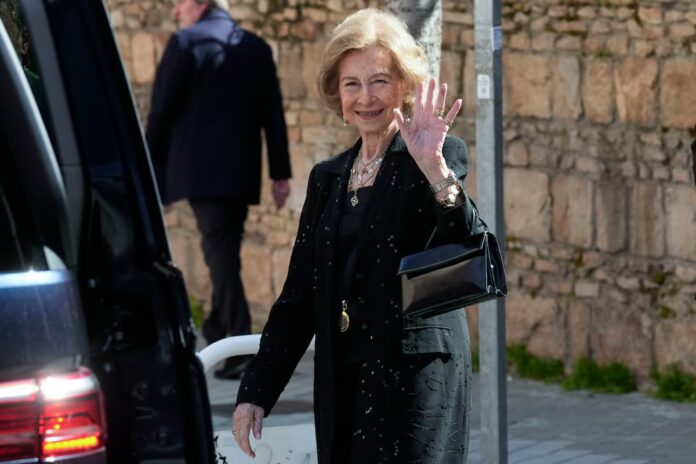
Majesty Queen Sofía
La reina Sofía asiste este martes a la misa en recuerdo de su hermana, Irene de Grecia, en la catedral ortodoxa griega de San Andrés y San Demetrio, en Madrid. Borja Sánchez-Trillo (EFE)

Her Majesty Queen Sofía to Travel to Miamito Present PrestigiousSophia Awards for Excellence in Gala at PAMM

Honoring Jorge M. & Darlene Pérez and Frank & Haydée Rainieri

Miami, FL —December 11th. Her Majesty Queen Sofía will be travelling from Spain to Miami to present the Sophia Awards for Excellence during a major international gala on Saturday March 21st, 2026, at the Pérez Art Museum Miami (PAMM).

Organized by the Queen Sofía Spanish Institute, the Sophia Awards for Excellence (formerly the Gold Medal) is one of the most distinguished honors linking the Spanish-speaking world and the United States. As the highest distinction bestowed by the Queen Sofía Spanish Institute, it has recognized some of the most influential figures in global arts, culture, diplomacy, science, and public life, including President Bill Clinton, Henry Kissinger, Plácido Domingo, Penélope Cruz, Norman Foster, Alicia de Larrocha, Carolina Herrera, Mario Vargas Llosa, Gloria and Emilio Estefan, Carlos Slim, Chef José Andrés, and Gustavo Dudamel, underscoring the award’s exceptional prestige.

In 2026, the Sophia Awards for Excellence will be presented to two distinguished couples whose leadership and vision have shaped communities across the United States, Latin America, and the Caribbean: Jorge M. & Darlene Pérez and Frank & Haydée Rainieri.

2026 Honorees

Jorge M. & Darlene Pérez

Jorge M. Pérez is widely recognized as one of the most influential real estate developers, contemporary art collectors, and cultural philanthropists in the United States. As Founding Executive Chairman of Related Group, he has transformed South Florida’s skyline for over 45 years, leading a development portfolio exceeding $50 billion. His commitment to the arts includes building one of the country’s most significant contemporary art collections, establishing El Espacio 23, and contributing more than $300 million to cultural and community initiatives, including major gifts to the Pérez Art Museum Miami, Tate Modern, and Museo Reina Sofía. In 2025, he was named “Friend of Spain” by the Spain– United States Chamber of Commerce.

Darlene Pérez, a Miami native and advanced registered nurse practitioner, has spent more than 30 years advocating for healthcare, education, and the arts. She founded the Pérez Art Museum’s International Women’s Committee, serves on several medical and academic boards, and through the Jorge M. Pérez Family Foundation has overseen grants to more than 160 nonprofit organizations, totaling over $100 million in support of arts, education, and health initiatives. Together, the Pérez family has significantly shaped South Florida’s civic and cultural landscape while strengthening artistic connections between Spain and the United States.

“Darlene and I are honored to receive this distinguished recognition from Her Majesty Queen Sofía. Miami is a city shaped by the Spanish-speaking world, and we have dedicated our lives to ensuring that its cultural institutions reflect that history and vibrancy,” said Mr. Pérez. “We remain committed to building a community where art, philanthropy, and shared heritage open doors for future generations.”

Frank & Haydée Rainieri

Frank and Haydée Rainieri, founders and leaders of Grupo Puntacana, are renowned Dominican entrepreneurs and humanitarians whose shared vision transformed Punta Cana into a world-class tourism destination and a model for sustainable development.

Additionally, scheduled to open in 2026, the Rainieri Cultural Center is taking shape in the heart of Punta Cana as a dynamic space dedicated to celebrating the cultural richness of the Dominican Republic. This new non-profit institution aims to highlight the many expressions of Dominican identity and foster artistic creation, offering both the local community and visitors an experience that interweaves history, identity, and creativity.

Through exhibitions, workshops, and educational programs, the center aspires to become a catalyst for sustainable cultural development, providing a profound and multifaceted perspective on the Dominican spirit—the only one of its kind in the entire region.

Frank Rainieri has received some of the highest international recognitions, including the Presidential Citation Award from President Ronald Reagan and the Order of Merit of Duarte, Sánchez and Mella in the Grade of Grand Cross Silver Plaque—the highest honor bestowed by the Dominican Republic. He has also received the Hotelier of the Year award, been appointed Ambassador Extraordinary and Plenipotentiary of the Sovereign Order of Malta, and named Ambassador for Sustainable Tourism by the UNWTO, as well as receiving the honorary title of Director Emeritus from CAST and CHTA.

Haydée Rainieri has been honored for her leadership in the tourism sector, including the Grand Prize of the Dominican Hotel and Tourism Association (ASONAHORES), where she later served as President. In 2016, she received the Women Together Award from the United Nations for the Grupo Puntacana Foundation’s contributions to 10 of the 17 Sustainable Development Goals.

Together, the Rainieris have advanced sustainability, education, and community development in the Dominican Republic, elevating the region’s international recognition.

A Special Event Celebrating 250 Years of Shared History: U.S. and Spain

As the nation approaches its semiquincentennial (1776–2026), the 2026 Sophia Award for Excellence Gala marks the beginning of the commemorations honoring 250 years of shared history and friendship between Spain and the United States.

As part of this milestone, for the first time the Queen Sofía Spanish Institute is bringing the America & Spain 250 initiative to Florida. The initiative aims to highlight Spain’s and the Spanish-speaking world’s crucial contributions to the American Revolution and to the development of the United States. It also seeks to inform today’s Hispanic and Latino communities about the foundational role their ancestors played in the establishment of the nation—a message that is particularly meaningful today.

To host the Gala in Miami—a city that connects the United States with Spain, Latin America, and the Caribbean—underscores the region’s pivotal role in this shared history and its growing prominence as an international center of culture and heritage.

The Gala offers guests the opportunity to join leaders from the cultural, philanthropic, civic, and business sectors for an evening of international significance. Table sponsorships and individual tickets are available at multiple levels, including premier seating and private greetings with distinguished guests.

Proceeds support the Queen Sofía Spanish Institute and its educational and cultural initiatives, which promote the visibility of the contributions of Spanish-speaking communities to the history and development of the United States.

RSVP to attend the Sophia Award for Excellence Gala here.

About the Queen Sofía Spanish Institute

The Queen Sofía Spanish Institute (QSSI) is a New York-based nonprofit organization founded in 1954 by a group of American Hispanophiles who sought to stimulate interest in the art, culture, customs, language, literature, and history of Spain and the Spanish-speaking world.

Today, QSSI continues this vision by highlighting the contributions of Spanish-speaking communities to the history and culture of the United States, while showcasing excellence across diverse fields. Its mission is to foster lasting ties of friendship, promote mutual understanding, and strengthen bonds of peace.

The Sophia Award for Excellence—named after the Greek word for wisdom, “Sophia”—is presented to individuals or organizations that have significantly contributed to the international appreciation of Spain and the Americas through their time, expertise, and distinguished achievements in the sciences, arts, or humanities.

2024 Annual Report
– Photos to share with press release

For media inquiries please contact:
Celia Maldonado
[email protected]
Queen Sofía Spanish Institute

Page 4 of 277
1 2 3 4 5 6 277