Why Ignorant People Think They’re Smart — The Dunning-Kruger Effect
Why Ignorant People Think They’re Smart — The Dunning-Kruger Effect
How can someone be utterly wrong — yet completely confident? The Dunning-Kruger Effect dives into this unsettling reality: ignorance often disguises itself as intelligence. It reveals the psychological blind spots, ego traps, and the disturbing truth about why the least capable often speak the loudest.
The Lemon Juice Bank Robber
Imagine a man walks into a bank in broad daylight — no mask, just a strange grin. Minutes later, he leaves with pockets stuffed full of cash, convinced nobody could see him. Why? He thought lemon juice would make him invisible to cameras.
This happened in 1995 with a man named MacArthur Wheeler. When caught and shown security footage, he was shocked. He wasn’t stupid; he had a theory — tested it — had confidence, and was catastrophically wrong.
And this reveals something most of us would rather not face: Sometimes the most dangerous person in the room is the one who doesn’t realize how little they understand. That’s the Dunning-Kruger Effect.
What Is the Dunning-Kruger Effect?
In the late 1990s, psychologists David Dunning and Justin Kruger studied this strange phenomenon. Here’s what they found:
People who scored the lowest on tests of logic, grammar, and humor thought they did the best.
People who scored the highest often underestimated themselves.
In short: The less skilled you are, the less you’re equipped to recognize your own incompetence. And the more skilled you are, the more you see the vastness of what you don’t know — which often breeds humility.
Why Does This Happen?
When you don’t know much, you can’t recognize your blind spots. And as you gain real knowledge, you realize there’s so much more to learn — making you less sure of yourself.
That’s the core of the Dunning-Kruger Effect: A distortion of insight. When you don’t know enough, you don’t know what you don’t know.
The Dunning-Kruger Effect Throughout History
This isn’t just a psychological quirk — it’s shaped history:
Athens (415 BCE) — Confident leaders ignored experienced generals and launched a disastrous military campaign in Sicily.
20th-Century Germany — A failed artist rose to power on absolute certainty, leading millions into catastrophe.
And it’s still happening today in boardrooms, politics, social media, and more.
Why Does Confidence Often Beat Competence?
Humans are wired to follow confidence — it feels safe. Evolutionarily, the most assertive leader often survived. But this breaks down in a world that requires expertise, nuance, and careful thought.
Social media and algorithms amplify this problem:
Algorithms reward loudness and certainty.
Nuance and humility don’t go viral.
Outrage and overconfidence do.
And so we end up rewarding the most misguided voices — while thoughtful, informed people hesitate to speak.
Why Do the Wise Stay Silent?
Those who truly understand the complexity of the world often hesitate. They recognize that knowledge is fragile and incomplete. And this is the other side of Dunning-Kruger — the curse of the competent:
Impostor Syndrome: Skilled, knowledgeable people worry they’re frauds.
Public Silence: They withdraw from debate, fearing they might be wrong — even when they know far more than most.
And the louder, less-informed voices fill the void.
A World Amplifying Ignorance
When the loudest voices dominate:
Misinformation spreads faster than facts.
Bad leaders rise to power.
Populist movements flourish.
Truth and complexity become casualties of confidence.
This is a social epidemic fueled by algorithms, outrage, and an addiction to certainty.
Is There a Way Out?
Yes — it begins with awareness. Intellectual humility is the antidote:
Ask yourself, “What if I’m wrong?”
Cultivate metacognition — the skill of thinking about your own thinking.
Value questions over answers.
Reward reflection over certainty.
Teach Metacognition and Critical Thinking
Schools, media, and technology must encourage:
Curiosity and skepticism.
Slow, careful thought.
Critical thinking — not blind certainty.
Platforms that reward expertise, not attention-seeking.
As Daniel Kahneman reminds us, we have two modes of thinking: Fast (impulsive) — confident but shallow. Slow (deliberate) — cautious but careful.
We need to embrace the slow.
Why Humility Is Strength
When was the last time you changed your mind? When did you last say, “I don’t know,” and mean it? Humility isn’t weakness — it’s wisdom. And confidence built on ignorance is the most fragile of all.
The Final Question
The Dunning-Kruger Effect is everywhere — even inside us. If you feel sure this doesn’t apply to you, pause. That might mean it already does.
True intelligence knows its limits. And real growth begins by acknowledging what we don’t know — and choosing to keep learning.
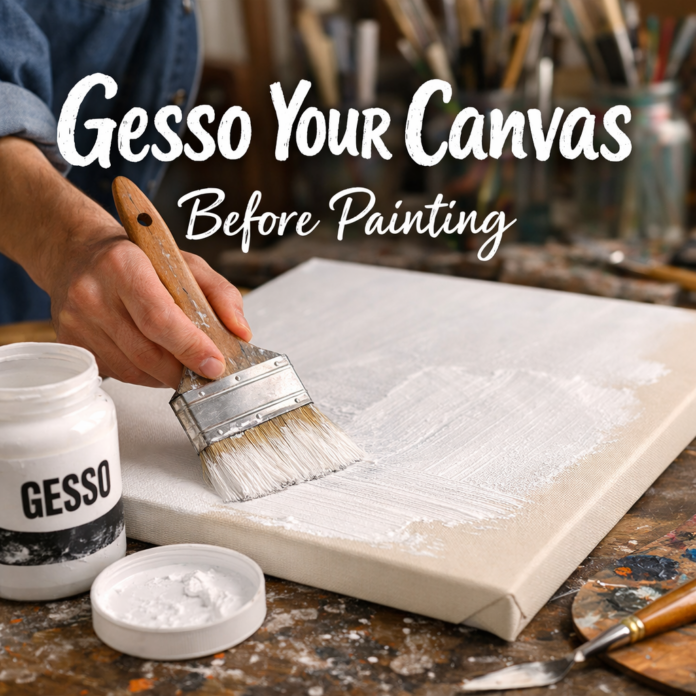
Gesso is one of the simplest—and most important—steps in preparing a canvas for painting. Whether you work in acrylics or oils, applying gesso creates a foundation that improves the longevity, vibrancy, and overall quality of your artwork.
What Is Gesso?
Gesso (pronounced “jess-o”) is a white acrylic-based primer made from a combination of chalk, pigment, and binder. It prepares and protects the canvas surface by:
Creating a slightly textured “tooth” for paint adhesion
Sealing the surface to prevent paint from soaking through
Preventing degradation of the fabric or surface over time
Gesso is the foundation of a lasting, vibrant, professional painting. Skipping it may save a few minutes—but applying it elevates the quality and lifespan of your work dramatically.
1. Creates a Stable, Durable Surface
Raw canvas fibers absorb paint unevenly and can deteriorate over time. Gesso seals the fibers, preventing paint from soaking in too deeply and protecting the surface from cracking or rotting.
2. Allows Paint to Glide and Adhere Properly
A well-gessoed canvas has just the right amount of “tooth.” This slight texture helps paint stick better while still allowing smooth application, blending, and layering.
3. Enhances Color Vibrancy
Because gesso forms a bright, reflective ground, it makes your colors appear richer and more luminous. On untreated canvas, pigments can look dull or uneven.
4. Saves You Paint
On unprimed canvas, much of the paint disappears into the fabric. Gesso prevents excessive absorption, helping your colors sit on the surface where they belong—meaning you use less paint overall.
5. Prevents Oil Paint Damage
If you paint with oils, gesso is essential. Oil paint can break down raw canvas fibers over time. A gesso layer acts as a protective barrier, ensuring the canvas stays intact for decades.
6. Improves Longevity and Archival Quality
Museum-quality works begin with proper priming. Gesso helps prevent cracking, warping, discoloration, and other aging issues, ensuring your artwork lasts.
7. Lets You Control Your Ground
Gesso can be adjusted to suit your style:
Thin layer → smoother, more delicate surface
Multiple layers → more tooth for texture
Tinted gesso → toned ground for mood and contrast
You can sand it for an ultra-smooth finish or leave brushstrokes visible for extra character.
Qué debe saber o aprender un artista conceptual de Carl Jung
Qué debe saber o aprender un artista conceptual de Carl Jung
1) El punto de partida: el arte no sólo “dice algo”, también activa algo
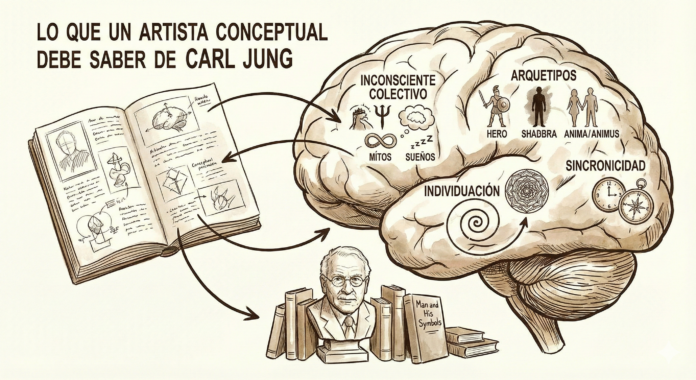
El arte conceptual se apoya en ideas, sistemas y significados; Jung te ofrece un lente para entender por qué ciertas imágenes, gestos o narrativas tocan fibras profundas sin necesidad de explicar todo de forma literal.
La clave es la distinción entre:
inconsciente personal (tu biografía, tus heridas, tus deseos, tus recuerdos)
inconsciente colectivo (patrones universales y transhistóricos que Jung llama arquetipos)
Para un artista conceptual, esto es oro: significa que puedes trabajar con símbolos que no dependen únicamente de tu historia privada, sino de estructuras que el público reconoce “por debajo” del lenguaje.
2) Arquetipos: no son “personajes”, son formas de experiencia
En la lectura jungiana, un arquetipo no es un ícono fijo (“la madre”, “el héroe” como cliché). Es una matriz que organiza experiencias humanas: protección/amenaza, pertenencia/exilio, máscara/verdad, sacrificio/renacimiento, etc.
Qué aprender (aplicable a conceptual):
Diseña obras como dispositivos arquetipales, no como ilustraciones.
Piensa en el arquetipo como “motor” de interpretación: la obra no impone un significado; lo desencadena.
3) “El artista como ‘collective man’”: cuando la obra te atraviesa
Jung escribe sobre el artista de una manera provocadora: como alguien que, en cierto sentido, “carga” material psíquico colectivo y lo transforma en lenguaje del presente. En su ensayo sobre arte y literatura (CW 15), Jung formula que el arte puede “apoderarse” del creador y convertirlo en instrumento—y llama al artista “collective man”.
Traducción conceptual (sin misticismo barato):
Hay proyectos que no nacen de una idea “controlada” sino de una necesidad interna.
El rol del artista conceptual sería dar forma, estructura y contexto (institucional, espacial, textual) para que esa energía se vuelva legible sin domesticarse.
4) Sombra y Persona: dos herramientas perfectas para crítica cultural
Aunque Jung tiene muchos conceptos, para arte conceptual hay dos especialmente potentes:
La Persona (la máscara social)
Tu marca, tu rol, tu “identidad pública” (artista, empresario, editor, etc.). Es útil, pero también puede volverse prisión.
La Sombra
Lo que rechazamos de nosotros: deseos, rabias, envidia, miedo, vergüenza; y también potenciales que no nos permitimos. Trabajar con “sombra” es trabajar con lo no dicho del sujeto y de la cultura (lo reprimido social). (Como marco general jungiano, ver guías académicas sobre Jung y su obra).
Aplicación directa a conceptual:
Obras sobre hipocresía social, corrección política, violencia simbólica, consumo, colonialidad, desigualdad: suelen ser obras sobre sombra colectiva.
Pregunta-método: ¿Qué quiere negar esta institución / esta ciudad / este mercado? Ahí suele estar el material más cargado.
5) Imaginación activa: una técnica de producción (con método y cuidado)
Jung desarrolló la imaginación activa como forma de relacionarse con imágenes internas, no para “fantasear”, sino para observar cómo se transforma un símbolo cuando lo atiendes sin imponerle tu voluntad.
Cómo usarla como artista conceptual (práctico):
Parte de una imagen (un sueño, un objeto, un recuerdo, una noticia).
Sostén la imagen y registra variaciones (texto/dibujo/voz).
No busques “mensaje”; busca tensión: contradicciones, metamorfosis, resistencia.
Luego convierte eso en sistema conceptual: archivo, protocolo, performance, instalación, edición impresa/digital.
Advertencia sana: si estás tocando trauma fuerte, paranoia, episodios disociativos o ansiedad severa, este tipo de trabajo conviene hacerlo con apoyo profesional. Jung mismo enfatiza cautela con prácticas que abren material inconsciente.
6) The Red Book como modelo: cuando pensamiento + imagen + libro son obra
Para un conceptual, The Red Book / Liber Novus es importantísimo no sólo por Jung “psicólogo”, sino por Jung “autor visual”: un manuscrito con caligrafía e imágenes, una obra híbrida entre diario, mito, pintura y experimento interior.
Lección conceptual:
No todo tiene que resolverse en “cuadro” o “escultura”.
El formato (libro, archivo, facsímil, lectura pública, edición, vitrina, web) es parte del significado.
Puedes construir una obra como “manuscrito contemporáneo”: texto + símbolos + protocolo + documentación.
7) Más allá de Jung: Neumann y la creatividad como puente
Si quieres una vía directa Jung → arte, Erich Neumann escribió Art and the Creative Unconscious, donde investiga la relación entre el artista, la cultura y el inconsciente creador. Es una referencia útil para sostener un discurso serio cuando tu obra se apoya en psicología profunda.
Cierre editorial
Lo más valioso que Jung puede darle a un artista conceptual no es un “tema” (arquetipos como decoración), sino un método para pensar la obra como:
activación simbólica,
conflicto entre máscara y verdad,
emergencia de lo reprimido individual y social, y
traducción contemporánea de imágenes profundas en un lenguaje actual—texto, instalación, archivo, performance o publicación.
Referencias concretas:
Textos y fuentes primarias / institucionales
C. G. Jung — “Archetypes” y “collective unconscious” (CW 9.1): base de su teoría de los arquetipos y el inconsciente colectivo. Association of Jungian Analysts+1
IAAP (International Association for Analytical Psychology): explica el inconsciente colectivo y cita a Jung: “el contenido del inconsciente colectivo está compuesto esencialmente por arquetipos (CW 9.1, §88)”. IAAP
Jung — “Spirit in Man, Art and Literature” (CW 15): Jung formula explícitamente una visión del artista como vehículo de fuerzas psíquicas colectivas (“collective man”) y del arte como impulso innato. Carl Jung Depth Psychology+1
Library of Congress + Philemon Foundation: describen The Red Book / Liber Novus como un manuscrito iluminado (caligrafía e imágenes) donde Jung registró “experimentos” con imágenes internas—clave para pensar creación y método. The Library of Congress+1
Método y práctica (Jung)
“Active Imagination” (imaginación activa): método asociado a Jung para dialogar con imágenes internas (útil como técnica creativa, con cautelas). Jungian Spiritual Sciences Center+1
Académicos / profesores (Jung + artes)
Susan Rowland (Pacifica Graduate Institute): profesora e investigadora que enseña Jung y práctica creativa; vinculada a enfoques de Jungian Arts-Based Research (JABR) que conectan arquetipos, creatividad y producción artística/investigación. Pacifica Graduate Institute+2Pacifica Graduate Institute+2
Pensadores cercanos (Jung y arte)
Erich Neumann (analista jungiano): autor de Art and the Creative Unconscious, un puente directo entre psicología analítica y proceso creativo/artístico. Amazon+2Archive.org+2
Crítica / teoría del arte (mencionando lectura “arquetipal”)
Un ejemplo académico en revista de crítica de arte discute el uso de “arquetipo” (vinculándolo a Jung) para interpretar motivos en artistas modernos (caso Mondrian). Stony Brook Academic Commons
Miami Fine Art Gallery Scene: Where Culture Meets Creativity
Miami isn’t just about sun, sand, and salsa—it’s a world-class destination for contemporary and fine art. Over the past few decades, the city has grown into a thriving cultural hub, home to some of the most dynamic fine art galleries in the U.S. Whether you’re a collector, an artist, or an art lover, exploring Miami’s galleries is an experience that reveals the soul of this vibrant city.
A Cultural Crossroads
What makes Miami’s art scene so unique? Its location and cultural diversity. Sitting at the gateway between North and South America, Miami is a melting pot of cultures—especially Latin American and Caribbean—which gives rise to powerful narratives, vibrant aesthetics, and fresh perspectives in visual art.
Artists here don’t just make beautiful work—they tackle themes of identity, displacement, environmental change, and social justice, often weaving personal stories into broader cultural conversations.
Must-Visit Fine Art Galleries in Miami
Here are a few standouts you should have on your radar:
David Castillo Gallery
Located in the Design District, this gallery champions diversity in contemporary art—representing women, LGBTQ+ artists, and artists of color. Every exhibition is as intellectually engaging as it is visually stunning.
Locust Projects
A nonprofit space that gives artists creative freedom to push boundaries. Expect immersive installations and experimental works you won’t find anywhere else.
Fredric Snitzer Gallery
An anchor in Miami’s fine art landscape, Snitzer Gallery has helped launch the careers of major contemporary artists. It continues to be a leader in exhibiting bold, conceptually rich art.
Pan American Art Projects
Focused on artists from Latin America and the Caribbean, this gallery bridges past and present with thoughtful, multi-generational exhibitions.
Spinello Projects
One of the edgiest spaces in Miami, Spinello Projects showcases provocative work by emerging and established artists who engage with politics, pop culture, and power.
The Art Doesn’t Stop with Basel
While Art Basel Miami Beach and Miami Art Week draw international crowds each December, the city’s gallery scene is thriving year-round. Neighborhoods like Wynwood, Little Haiti, Coral Gables, and Allapattah each offer unique gallery experiences that highlight Miami’s cultural richness.
From glossy exhibition openings to quiet, meditative shows, the city’s galleries reflect a wide range of voices, aesthetics, and perspectives.
Supporting Art, Community & Culture
Many galleries in Miami go beyond selling art—they serve as cultural institutions. They host talks, workshops, and educational events, helping to build an art-literate public and support emerging talent. These spaces are keeping the local art ecosystem healthy and inclusive.
Final Thoughts
Miami’s fine art galleries offer more than just visual pleasure—they invite connection, reflection, and dialogue. Whether you’re looking to buy, learn, or be inspired, there’s no better place to dive into the art world than this sunny city by the sea.
So next time you’re in Miami, skip the beach (just for a bit) and step into a gallery. You might just discover your next favorite artist—or a new way of seeing the world.
Sheila Hicks: The Revolutionary Textile Artist Who Transformed Fiber into Fine Art
Sheila Hicks: The Revolutionary Textile Artist Who Transformed Fiber into Fine Art
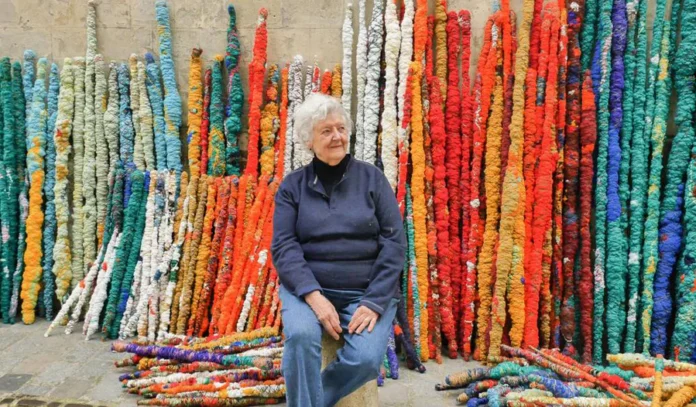
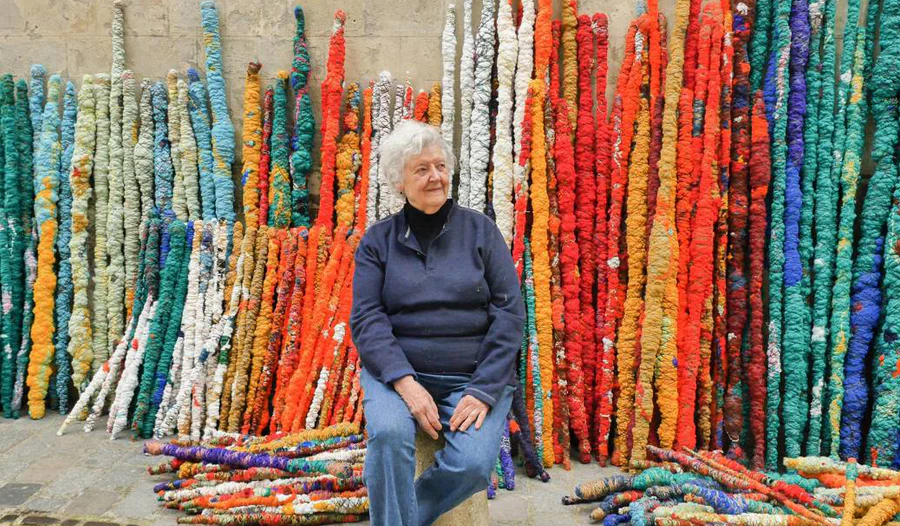
For over six decades, Sheila Hicks has been quietly revolutionizing the art world, proving that textile art deserves equal standing with painting and sculpture in contemporary practice. Born in 1934 in Hastings, Nebraska, this American-born artist—who has lived and worked in Paris since 1964—has created a body of work that fundamentally challenges the boundaries between craft and fine art, between decoration and conceptual rigor, between the monumental and the intimate.
Today, at nearly 90 years old, Hicks remains one of the most influential contemporary textile artists working globally, with installations in major museums worldwide and a legacy that has paved the way for generations of artists working in fiber art.
Sheila Hicks: The Revolutionary Textile Artist Who Transformed Fiber into Fine Art
Early Formation: From Painting to Thread as Medium
Sheila Hicks’s journey into textile art began somewhat unexpectedly. She studied painting at Yale University under Josef Albers, the legendary Bauhaus master known for his rigorous investigations of color theory. Albers’s influence—his emphasis on experimentation, his belief that materials themselves generate meaning—would prove foundational to Hicks’s development.
However, the pivotal moment came during a 1957-58 Fulbright Fellowship to Chile. There, Hicks encountered pre-Columbian textiles and observed indigenous weaving traditions still practiced in Andean communities. This exposure transformed her understanding of what thread as medium could accomplish. She saw that weaving techniques in art carried millennia of cultural knowledge, that fabric as narrative had been central to human expression long before the Western fine art tradition emerged.
Unlike many artists who merely appropriate indigenous techniques, Hicks engaged deeply with the communities she encountered. She learned traditional methods, understood their cultural context, and began interweaving tradition and innovation in textile practices in ways that honored source materials while developing her own distinctive voice.
The Minimes: Intimate Investigations in Fiber Art
One of Hicks’s most significant contributions to contemporary textile artists is her “Minimes”—small-scale hand-stitched artwork pieces, typically no larger than a few inches, that she has created daily since the 1960s. These intimate works function as a kind of visual diary, exploring color relationships, material properties, and structural possibilities with the same rigor Albers brought to his color studies.
The Minimes demonstrate how embroidery in fine art and wrapped thread techniques can achieve the conceptual density of any modernist painting. Each piece investigates fundamental questions: How does one color interact with another? What happens when different fibers—linen, silk, wool, synthetic materials—encounter each other? How does the direction of wrapping affect visual perception?
These small textile-based sculptures also challenge art world hierarchies that privilege large scale and public display. By insisting on the significance of intimate, portable works, Hicks asserts that monumentality isn’t the only measure of artistic importance. The Minimes are tactile art at its most concentrated—objects that invite close looking, that reward sustained attention, that cannot be fully grasped in a glance.
Sheila Hicks: The Revolutionary Textile Artist Who Transformed Fiber into Fine Art
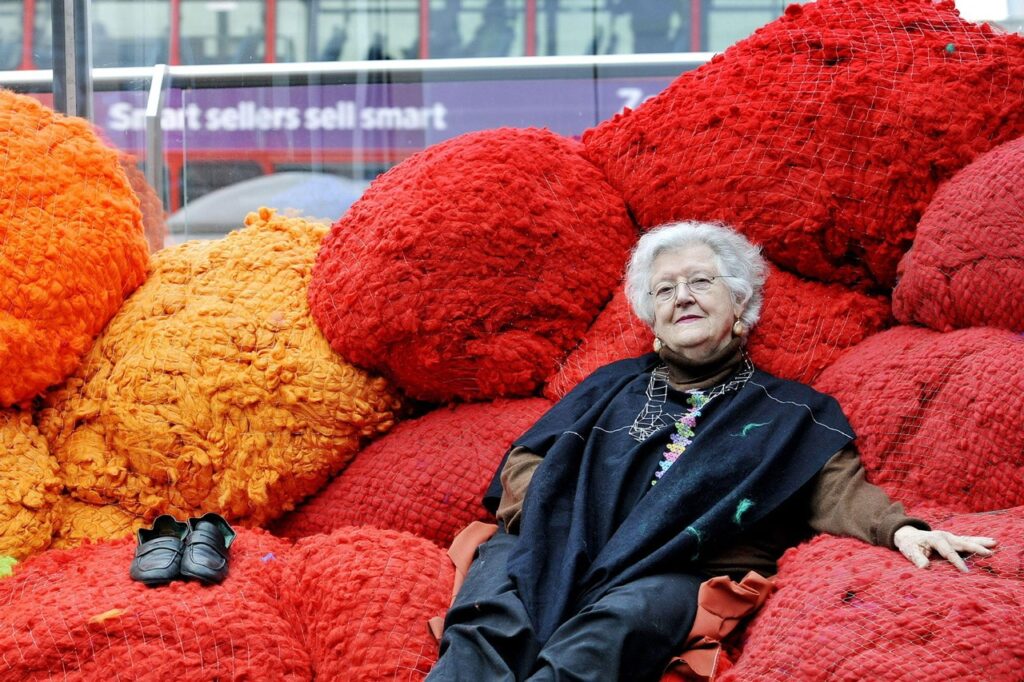
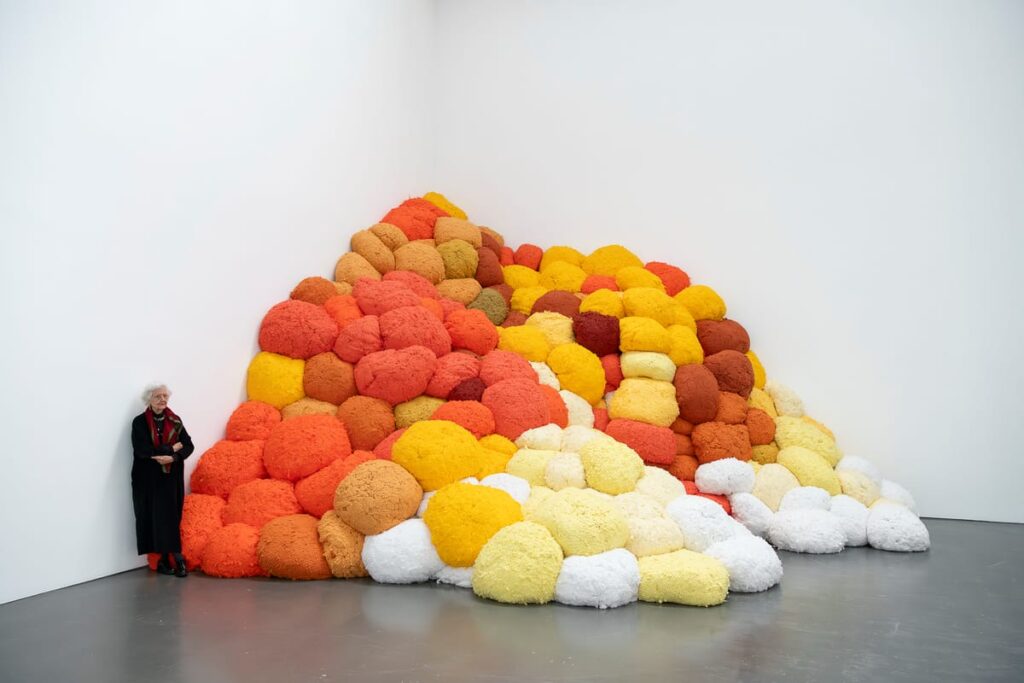
While the Minimes work at the scale of the hand, Hicks has simultaneously created room-filling textile installations that demonstrate the spatial and architectural possibilities of fiber art. Works like “The Evolving Tapestry: Escalade Beyond Chromatic Lands” (1967-68) or her 2018 installation at the Hayward Gallery in London show how woven art can activate entire environments.
These large-scale pieces often involve mixed media textiles, combining natural and synthetic fibers, incorporating found materials, and employing diverse techniques from wrapping to knotting to weaving. The installations create immersive experiences where viewers don’t just look at art with fabric and thread—they move through it, around it, experiencing how light filters through fiber, how color relationships shift from different angles, how texture operates at architectural scale.
Hicks’s monumental works demonstrate what she calls “the language of thread and fiber in contemporary art”—a vocabulary as sophisticated and expressive as any traditional medium. Her installations for corporate headquarters, hotels, and public spaces prove that textile art can command the same gravitas and spatial presence as large-scale painting or sculpture.
Sheila Hicks: The Revolutionary Textile Artist Who Transformed Fiber into Fine Art
Color as Material: Exploring Identity Through Textile Art
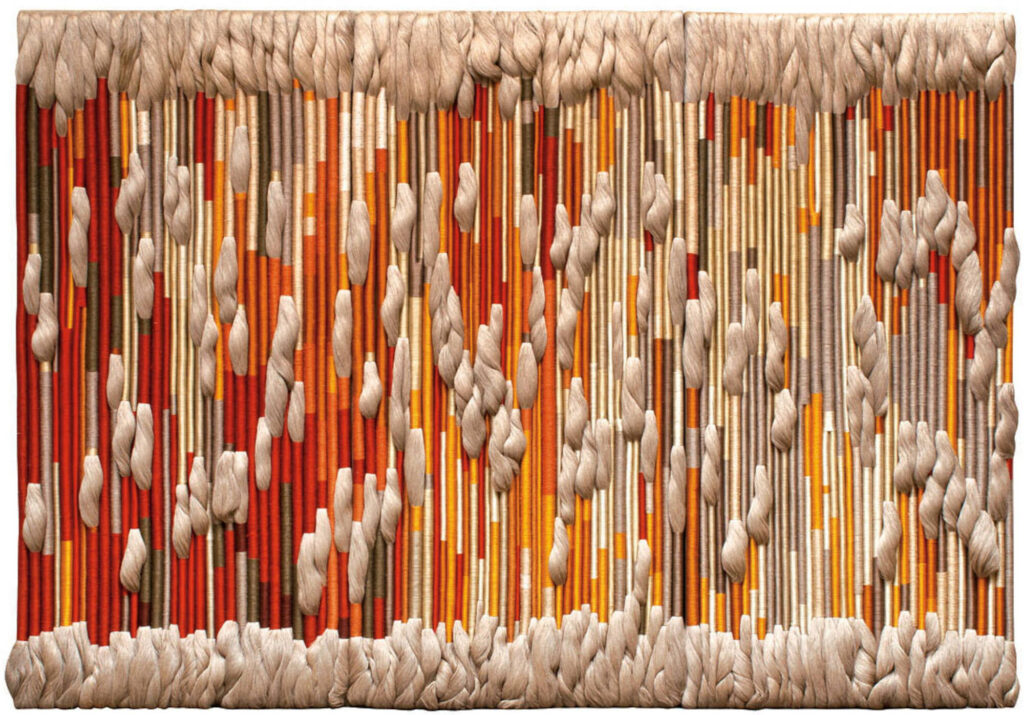
Color has always been central to Hicks’s practice. Her woven narratives often develop through chromatic progressions—vibrant reds bleeding into oranges, cool blues transitioning to purples, unexpected juxtapositions that create visual electricity. This approach reflects her training with Albers but extends it into three dimensions and tactile experience.
Unlike paint, where color sits on a surface, Hicks’s color is structural—it’s the fiber itself. This means color has physical properties: weight, texture, reflectivity, the way it catches or absorbs light depending on the material. A red in silk performs differently than a red in wool. This textural language adds layers of meaning unavailable to painting.
Her color investigations also connect to cultural memory and place. Hicks’s extensive travels—throughout Latin America, India, Morocco, and beyond—exposed her to diverse chromatic traditions. Her work engages textile materials as vessels of cultural memory, channeling the saturated pinks of Mexican textiles, the intricate color work of Moroccan weaving, the earth tones of Peruvian cloth, while never simply replicating these traditions.
Technique and Innovation: The Resurgence of Handcraft in Conceptual Art
Sheila Hicks exemplifies the resurgence of handcraft in conceptual art. She masters traditional weaving techniques in art—backstrap looms, frame looms, tapestry techniques—but refuses to be bound by them. Her innovations include:
Wrapping and Bundling: Rather than traditional flat weaving, Hicks often wraps fiber around cores, creating cylindrical forms that can stand, lean, or accumulate into larger structures. This technique appears in works like “The Principal Wife Goes On” (2015-16), where wrapped bundles in jewel tones cascade down gallery walls.
Modular Construction: Many of Hicks’s large installations consist of individual wrapped or woven units that can be configured differently in each installation. This modularity means the same elements can create different spatial experiences, making the work inherently adaptable and responsive to site.
Material Hybridity: Hicks freely combines luxury fibers like silk with industrial materials, synthetic threads with natural ones. This mixed media textiles approach refuses hierarchies that privilege certain materials over others, instead focusing on what each material can contribute visually and structurally.
Spontaneous Structure: Unlike traditional tapestry, which follows predetermined patterns, much of Hicks’s work develops intuitively. She responds to the materials as they accumulate, making decisions about color placement, density, and form in the moment. This process-driven approach brings the improvisational energy of action painting into fiber art.
Fabric as a Living Archive: Textiles and Memory
Throughout her career, Hicks has understood fabric as a living archive. Her work engages threads of memory both personal and cultural. The Minimes, created almost daily over decades, form an autobiography in fiber—a record of sustained looking, making, and thinking. When exhibited together, they reveal patterns in her thinking, returns to certain color combinations or structural solutions, the evolution of her practice over time.
Her larger works similarly engage memory, though often cultural rather than personal. By employing techniques learned from indigenous weavers or referencing textile traditions from various cultures, Hicks creates woven connections across time and geography. This isn’t appropriation but rather what we might call “textile cosmopolitanism”—a practice that honors diverse making traditions while synthesizing them into something new.
This approach demonstrates how exploring identity through textile art can work. Hicks’s identity as an artist is itself woven from multiple threads: her American origins, her decades in France, her deep engagement with Latin American cultures, her training in European modernism. Her work doesn’t resolve these multiple positions into false unity but rather holds them in productive tension, much like the different fibers in her wrapped bundles maintain their distinct qualities while creating coherent form.
Sheila Hicks: The Revolutionary Textile Artist Who Transformed Fiber into Fine Art
The Symbolic Weight of Fabric and Stitching in Feminist Art
Though Hicks herself has sometimes resisted being classified primarily as a feminist artist, her work inevitably participates in broader conversations about the symbolic weight of fabric and stitching in feminist art. By choosing materials historically associated with women’s domestic labor and insisting on their seriousness as artistic media, Hicks challenges deep-seated hierarchies in the art world.
Her career trajectory itself represents a form of resistance. Beginning in the 1960s when textile art was almost entirely excluded from fine art institutions, Hicks persisted. She didn’t abandon fiber to work in more “acceptable” media—she proved that contemporary textile artists could achieve the same level of critical and commercial success as painters or sculptors.
This persistence has created space for subsequent generations of artists working in fiber. The current prominence of textile installation, the acceptance of hand-stitched artwork in major museums, the critical attention paid to embroidery in fine art—all of this builds on groundwork that Hicks and a few peers laid decades ago.
Tactile Poetics: The Return of Touch in Visual Arts
Hicks’s work powerfully exemplifies tactile poetics and the return of touch in visual arts. In an increasingly dematerialized, screen-based culture, her insistence on physical presence, on material weight and texture, offers essential counterbalance. Her installations are emphatically three-dimensional, occupying space in ways that demand bodily engagement rather than just optical consumption.
The soft sculpture quality of much of her work creates unique spatial experiences. Unlike the hardness of bronze or the rigidity of stretched canvas, Hicks’s fiber works often have a yielding quality. They might sag slightly under their own weight, shift subtly in air currents, change appearance as viewers move around them. This mutability—this responsiveness to physical conditions—makes the work feel alive in ways that static media cannot achieve.
Even when viewers cannot touch the work directly (museum protocols generally forbid it), the visual texture is so pronounced that it activates haptic visuality—we see with our sense of touch, our bodies remembering what such materials feel like. This sensory dimension adds layers of meaning and affect unavailable to purely optical art.
Global Influence and Contemporary Relevance
Today, Sheila Hicks’s influence on contemporary textile artists is impossible to overstate. Artists like Olga de Amaral, Magdalena Abakanowicz, and countless younger practitioners working in fiber art build on foundations she helped establish. Major exhibitions in recent years—at the Centre Pompidou (2018), Hayward Gallery (2018), The Hepworth Wakefield (2022)—have introduced her work to new audiences and cemented her place in art history.
Her relevance extends beyond the textile world. Hicks demonstrates how sustained commitment to material investigation can generate endless formal and conceptual possibilities. Her practice model—maintaining both intimate daily work (the Minimes) and monumental public commissions—offers alternatives to the boom-bust cycle that dominates much contemporary art production.
Moreover, her emphasis on direct material engagement, on hand knowledge, on the intelligence embedded in making processes, speaks powerfully to current concerns about craft knowledge, embodied learning, and alternatives to purely digital or conceptual practices. In this sense, Hicks’s work participates in the resurgence of handcraft in conceptual art that characterizes much 21st-century practice.
Legacy: Weaving the Future
As we consider Sheila Hicks’s extraordinary seven-decade career, several achievements stand out:
Material Mastery: She has proven that thread as medium offers expressive possibilities equal to any traditional fine art material, that weaving techniques in art can generate work of profound visual and conceptual sophistication.
Scale Flexibility: From the palm-sized Minimes to room-filling installations, Hicks demonstrates that textile-based sculpture can operate at any scale, each with its own expressive potential.
Cultural Bridge-Building: Through interweaving tradition and innovation in textile practices, she has created dialogues between indigenous making traditions and contemporary art discourse, between craft knowledge and conceptual investigation.
Institutional Transformation: Her success has helped shift how museums, galleries, and critics understand textile art, contributing to broader acceptance of fiber art as legitimate contemporary practice.
Generative Influence: She has inspired countless artists to work in mixed media textiles, to take hand-stitched artwork seriously, to investigate tactile art and woven art as vehicles for contemporary concerns.
Conclusion: The Enduring Power of Fiber
Sheila Hicks’s career reminds us that the most profound innovations sometimes come not from abandoning tradition but from engaging it deeply enough to transform it. Her work demonstrates that textile materials as vessels of cultural memory can speak to the most pressing contemporary questions, that fabric as narrative remains powerfully relevant, that the patient, embodied work of making—wrapping thread, building color relationships, responding to materials—generates knowledge and meaning that cannot be achieved any other way.
For students, collectors, and anyone interested in contemporary textile artists, Hicks’s work offers inexhaustible study. Each installation, each Minime, each wrapped bundle invites sustained looking and reveals how exploring identity through textile art, how woven narratives and embodied storytelling, how the language of thread and fiber in contemporary art can articulate experiences and ideas that language alone cannot capture.
In Sheila Hicks, we find not just a master craftsperson but a profound visual thinker whose chosen medium happens to be fiber. Her legacy ensures that textile art will continue evolving, that new generations will discover what becomes possible when thread becomes sculpture, when color becomes structure, when patient handwork becomes radical artistic vision.
For those wishing to experience Sheila Hicks’s work directly, her pieces are held in major collections including the Museum of Modern Art (New York), Centre Pompidou (Paris), Tate Modern (London), and the Metropolitan Museum of Art. Her ongoing production ensures that new work continues appearing in galleries and exhibitions worldwide.
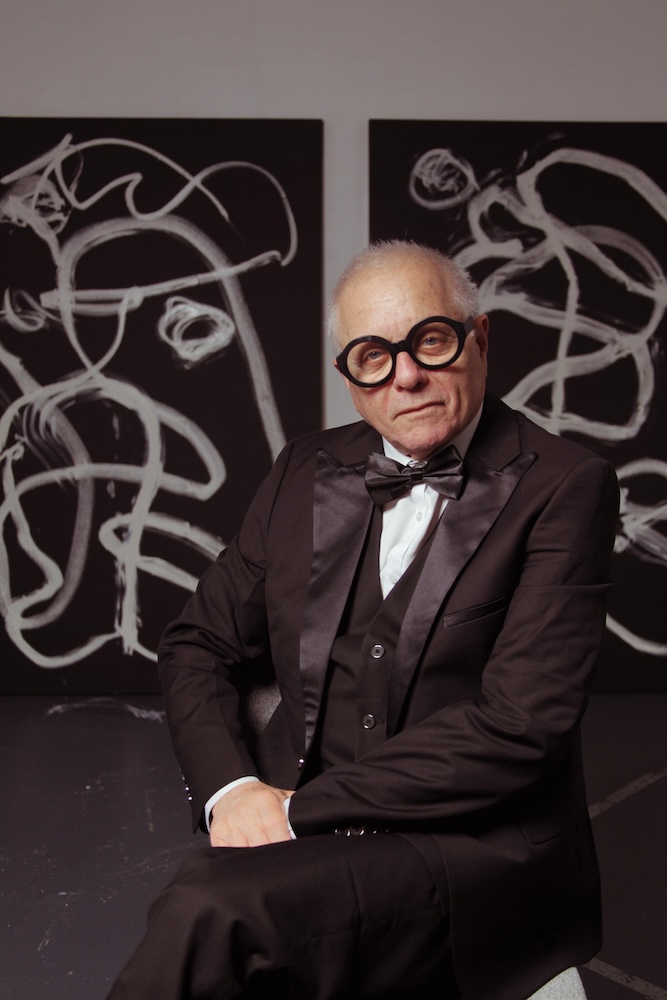
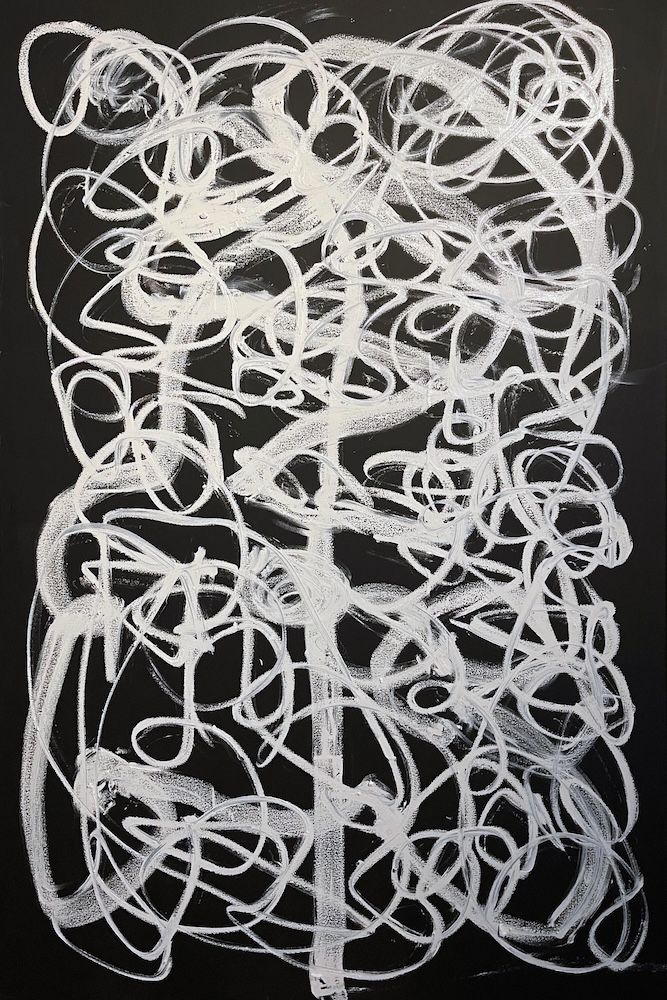
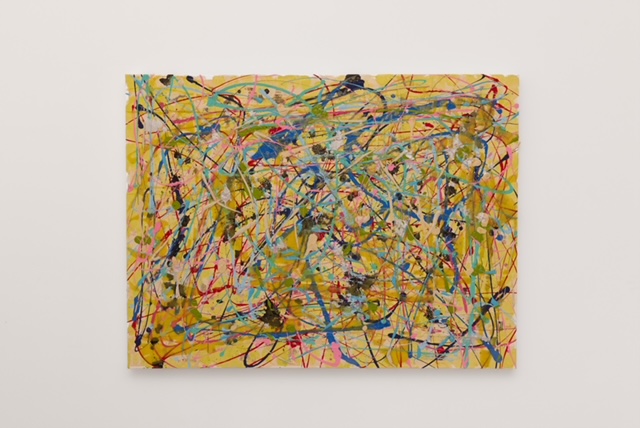
Orlando Urdaneta’s works unfold as territories of turbulent linearity, where drawing ceases to function as representation and instead becomes an energetic event. Against the density of the black ground, white strokes emerge as impulses that trace an architecture in perpetual instability: form is generated, suspended, and dissolved within a single gesture. The purpose is not to depict the world but to activate the material force of the line as something that precedes image-making.
Each composition operates as a topography of excess, constructed through recurring movements, interlaced trajectories, and rhythms that sustain their own internal vibration. Sensation overtakes representation, transforming the surface into a space where intensity circulates freely. The lines participate in an open relational system: they intersect, deviate, create friction, and produce meaning through the tension and contact of their paths.
Urdaneta’s tracings evoke a script without alphabet, a form of writing that assumes the role of visible thought. The lines advance, break, tighten, retreat, and reappear, leaving the imprint of a mind thinking through energy rather than narrative. They function as ephemeral presences—merging and dissolving simultaneously—inhabiting the threshold between inscription and erasure.
Within a framework of peripheral aesthetics, the work enacts a conceptual shift by elevating what is often dismissed as marginal: raw line, repetition, turbulence, and instability. Urdaneta transforms these elements into sites of expressive and conceptual density, proposing a poetics of dislocation in which form remains mutable, dynamic, and perpetually in transit. This instability opens a field of microforces and resonances that reshape perception and invite viewers into an active sensory encounter.
Urdaneta’s paintings—articulated as diagrams of affective turbulence—summon viewers to navigate shifting intensities, to experience vision as movement, and to understand drawing as an inquiry into the deep architectures of sensation and the internal vibrations that sustain thought itself.
The Enduring Art of Fiber: From Ancient Craft to Contemporary Expression
Fiber, Fabric & Textile Art
The Resurgence of Textile Art: Weaving Memory, Identity, and Resistance in Contemporary Practice
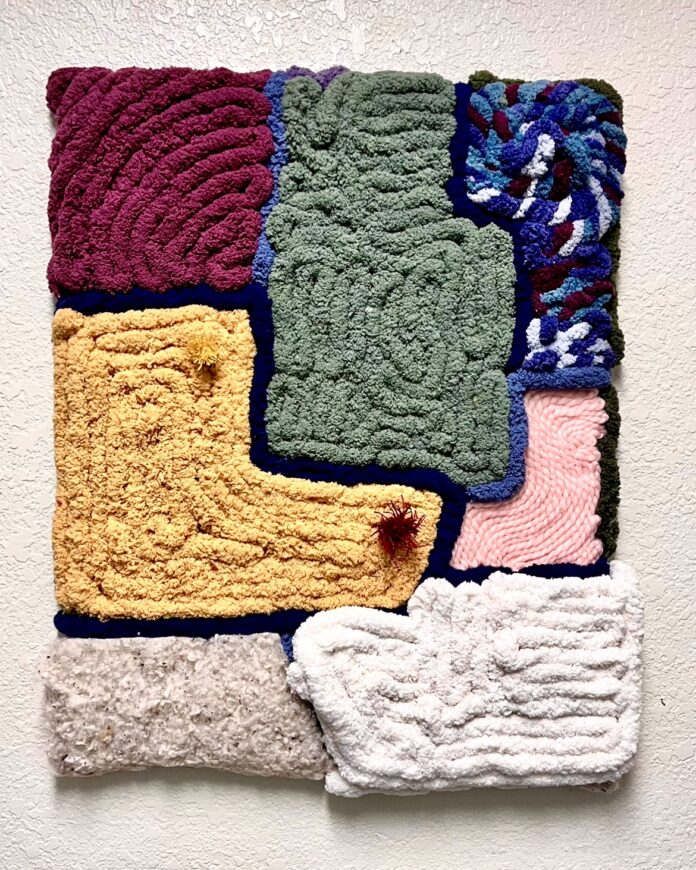
The contemporary art world is witnessing a remarkable transformation: textile art and fiber art have moved from the margins to the center of critical discourse. What was once dismissed as “craft” or “women’s work” now commands attention in major museums, biennales, and galleries worldwide. This shift represents more than aesthetic preference—it signals a fundamental reconsideration of how we understand materiality, memory, and meaning in visual culture.
The Language of Thread and Fiber in Contemporary Art
Thread as medium carries unique expressive possibilities that distinguish it from traditional fine art materials. Unlike paint or stone, fabric and thread arrive already laden with associations: clothing, shelter, domestic labor, cultural tradition. When contemporary textile artists choose these materials, they engage this semantic weight deliberately.
Embroidery in fine art, for instance, transforms an act historically associated with patience, femininity, and domestic confinement into a vehicle for conceptual investigation. Artists like Tracey Emin and Ghada Amer have demonstrated how hand-stitched artwork can address sexuality, trauma, and political resistance with visceral directness. The slowness of stitching—its insistence on time and bodily presence—becomes itself a form of critique against the velocity of contemporary image culture.
Fabric as a Living Archive: Textiles and Memory
One of the most compelling developments in mixed media textiles involves their deployment as memory vessels. Fabric as a living archive operates on multiple registers simultaneously. Materially, textiles preserve traces: worn edges, stains, patches, the ghost impressions of bodies that once inhabited garments. Conceptually, they invoke collective memory through cultural patterns, traditional techniques, and inherited knowledge.
Textile materials as vessels of cultural memory appear powerfully in works addressing displacement, diaspora, and cultural survival. Artists working with traditional weaving techniques in art often engage their ancestral practices not as nostalgic preservation but as active interpretation—interweaving tradition and innovation in textile practices to speak to contemporary conditions.
Consider how woven art can literally layer different temporal moments: vintage fabric fragments combined with contemporary materials, traditional patterns executed in unexpected scales or contexts. This temporal layering makes textile-based sculpture particularly effective for exploring how identity formation works—as a constant negotiation between inheritance and invention, between what we’re given and what we make.
Tactile Poetics: The Return of Touch in Visual Arts
In an increasingly digital, screen-mediated culture, tactile art offers something increasingly rare: the insistence on embodied, sensory experience. The return of touch in visual arts through textile practices represents a kind of resistance to dematerialization. When we encounter soft sculpture or textile installation, we’re confronted with works that demand physical presence, that cannot be fully experienced through reproduction.
This tactile poetics operates powerfully in art with fabric and thread because these materials carry inherent associations with touch—the feel of cloth against skin, the gesture of hand-stitching, the bodily knowledge embedded in weaving or knotting. The work activates what theorists call “haptic visuality”—a way of seeing that remembers touching.
Embroidery as Resistance and Memory
The symbolic weight of fabric and stitching in feminist art cannot be overstated. Reclaiming techniques historically devalued as “merely decorative” or “women’s work” becomes an act of cultural revision. Artists demonstrate that embroidery as resistance and memory works precisely because it repurposes the tools of domestication toward liberation.
Chilean arpilleras—appliquéd textiles made by women during Pinochet’s dictatorship—exemplify how textile storytelling can document atrocity, maintain community, and resist erasure when other forms of witness become impossible. The portability of textile work, its apparent innocuousness, allowed it to circulate where other protest forms could not.
Contemporary practitioners extend this legacy, using fabric as narrative to address ongoing struggles: migration, labor exploitation, environmental destruction, gender-based violence. The choice of textile medium itself becomes rhetorical—invoking histories of resistance while creating new testimonies.
Exploring Identity Through Textile Art
Woven narratives and embodied storytelling offer unique possibilities for investigating how identity forms. The metaphor of weaving—multiple threads coming together to create coherent cloth—has long described cultural and personal identity formation. Contemporary artists make this metaphor literal and material.
Exploring identity through textile art allows for complexity that resists reductive narratives. A single work might incorporate fabrics from different sources: family heirlooms, mass-produced commercial textiles, hand-dyed or hand-woven materials. Each carries different associations, different histories. Their combination creates what we might call textural language—meaning generated through material juxtaposition and tactile contrast.
This approach proves particularly powerful for artists navigating multiple cultural positions, hybrid identities, diasporic experience. The fabric of identity quite literally takes form as interwoven narratives, where different threads of memory maintain their distinctness even as they create unified cloth.
The Resurgence of Handcraft in Conceptual Art
Perhaps most striking is how the resurgence of handcraft in conceptual art challenges long-standing hierarchies. The modernist privileging of concept over execution, mind over hand, is thoroughly questioned by practices that insist craft knowledge is conceptual knowledge, that making is thinking.
Artists working in fiber art demonstrate sophisticated engagement with materiality, process, and meaning-making that equals any conceptual practice. The deep technical knowledge required for complex weaving techniques in art or intricate hand-stitched artwork represents years of embodied learning—a form of intelligence our culture has systematically undervalued.
This revaluation connects to broader cultural shifts: increased attention to indigenous knowledge systems, feminist epistemologies, and critiques of the mind/body dualism that has structured Western thought. Contemporary textile artists participate in fundamental reconceptualizations of what counts as knowledge, who gets to produce it, and how it circulates.
Woven Connections: Building Community Through Textile Practice
Finally, textile practice often inherently involves woven connections beyond the artwork itself. Many textile installations invite participation, teaching traditional techniques to new practitioners, creating spaces for collective making. This social dimension—the artwork as occasion for gathering, sharing knowledge, building relationship—offers alternatives to the isolated-genius model of artistic production.
The materiality of textiles facilitates this: fabric is approachable in ways marble or oil paint are not. Most people have some relationship to cloth, some memory of learning to sew or watching someone weave. This accessibility doesn’t diminish conceptual sophistication—it expands who can participate in artistic dialogue.
Conclusion: The Future Is Woven
As we look toward the future of contemporary art, textile practices offer essential resources for addressing our most pressing questions. How do we honor tradition while embracing change? How do we maintain connection in fragmenting times? How do we create beauty without ignoring violence? How do we value labor, care, and the slow work of repair?
Mixed media textiles, fiber art, and contemporary textile artists continue pushing boundaries, developing new techniques, addressing urgent themes. They remind us that the fabric of identity is always under construction, that threads of memory connect us across time and distance, that the act of making—patient, embodied, collaborative—remains essential to human meaning-making.
The rise of textile art in the contemporary moment is not nostalgic return but necessary reclamation. It insists that the hand matters, that slowness has value, that the materials deemed humble or domestic carry profound expressive power. In textural language, through tactile poetics, these practices weave futures we desperately need.
For collectors, curators, and enthusiasts seeking to deepen engagement with contemporary textile practices, consider visiting specialized galleries, attending fiber art symposia, and following artists working at the intersection of traditional craft and conceptual innovation. The conversation around textile art continues to evolve, inviting new voices and perspectives into this rich, expanding field.
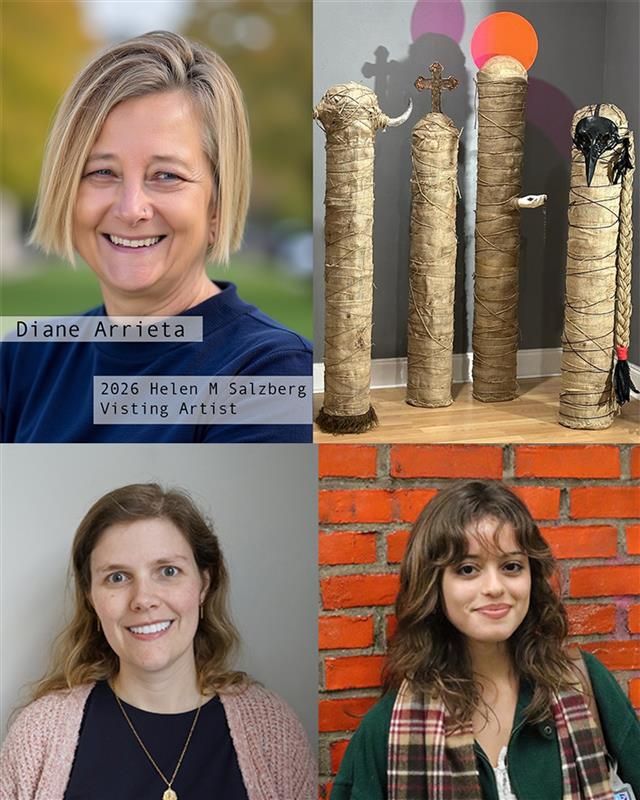
Palm Beach State College has selected Diane Arrieta as the 2026 Helen M. Salzberg Visiting Artist, recognizing her dynamic exploration of the intersections between nature, culture and feminine resilience.
Drawing from her Lenape and Czechoslovakian agrarian heritage, Arrieta’s work delves into the relationships between land, cultural memory, and the endurance of the feminine spirit. Her sculptural installations combine clay, fiber, and found materials with industrial elements to highlight the tension between ancestral environments and the forces of modern disruption. Trained in Wildlife and Ecosystems Health, she approaches her creative process as a form of ecological listening—amplifying the voices of endangered species and examining the consequences of human behavior on fragile ecosystems. Her art has been exhibited across the United States and the United Kingdom, earning her multiple awards and critical recognition.
As part of her residency, Arrieta will deliver an artist talk on Tuesday, Feb. 3, from 3:30–4:45 p.m. in Meldon Hall (BB-111) during Palm Beach State College’s annual Liberal Arts Conference. She will discuss her life, artistic practice, and the ecological themes that inform her work, followed by a Q&A session. The talk will be immediately followed by an opening reception for her solo exhibition at the Helen M. Salzberg Gallery.
A longtime supporter of the college, Helen M. Salzberg is a philanthropist and arts patron whose generosity has enriched Palm Beach State’s cultural and educational programs. Her vision for accessible, inspiring art experiences continues to shape the college’s arts initiatives. Through her namesake gallery on the Palm Beach Gardens campus and visiting artist endowment, Salzberg’s legacy endures—encouraging emerging and established artists alike to share their perspectives and inspire the next generation of creative thinkers.
Artwork: Lauren Jane Clancy
@laurenjaneclancyart
Web: www.underoneart.com
Save the Date: Thursday, Jan 22
Boca Raton — FAU University Galleries | Opening Reception
America 250: We Hold These Truths, We Walk These Grounds Celebrating the upcoming 250th anniversary of the United States, America 250: We Hold These Truths, We Walk These Grounds reúne a destacados artistas contemporáneos que examinan las múltiples capas de la identidad, la memoria y la herencia estadounidense. A través de fotografía, instalación y objetos simbólicos, la exposición reimagina íconos culturales como manzanos, caballos salvajes, ganado longhorn, retratos presidenciales y reliquias familiares como portales hacia la memoria colectiva. Entre los artistas destacados se encuentran el fotógrafo ganador del Pulitzer Doug Mills, el becario del NYFA Daesha Devón Harris, y John Hitchcock, beneficiario de una beca de la Robert Rauschenberg Foundation.
4:30 – 8:30 PM Schmidt Center Gallery & Public Space 777 Glades Road, Boca Raton, FL 33431 Entrada gratuita y abierta al público.
Downtown Miami — Fredric Snitzer Gallery | Artist Conversation
Deborah Brown in Conversation Acompaña a la artista Deborah Brown y a Maritza M. Lacayo en una conversación sobre la práctica pictórica de Brown en relación con su exposición Inside Out. Exploran temas de proceso creativo, materialidad, y cómo la pintura contemporánea dialoga con experiencias personales y colectivas. Cocktails: 6:30 – 7 PM Conversation: 7 – 8 PM 1540 NE Miami Ct, Miami, FL 33132 RSVP requerido.(Sujeto a confirmación con la galería.)
Miami Design District — Nader Sculpture Park | Live Performance
Music at the Park La compositora y performista Marcela Preziosi presenta una experiencia sonora inmersiva en el Nader Sculpture Park, donde el sonido electrónico contemporáneo se encuentra con esculturas monumentales al aire libre. La pieza busca explorar la relación entre espacio, forma y percepción auditiva en un entorno público. 7 PM 4201 NE 2nd Ave, Miami, FL 33137
Wynwood — Arlo’s Living Room Gallery | Opening Reception
Fine Art Photography No te pierdas la inauguración de este exhibición colectiva de fotografía con obras de Tyler Shields, Jeffrey Czum y Nick Mele, tres artistas con estilos distintos pero una visión compartida de cómo la imagen contemporánea se sitúa entre la técnica, la imaginación y la cultura popular. Además, habrá una conversación con los artistas donde abordarán sus procesos, técnicas y enfoques conceptuales. 6 – 8 PM Arlo Wynwood, 2217 NW Miami Court, Miami, FL 33127
Artwork cover by Lauren Jane Clancy @laurenjaneclancyart Web: www.underoneart.com
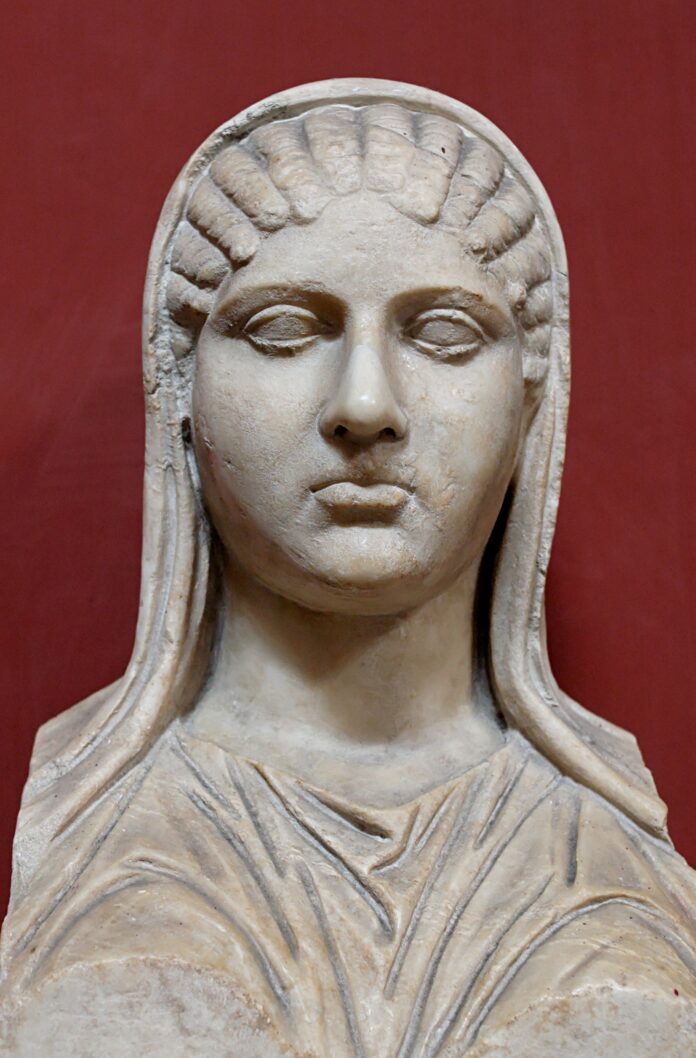
Aspasia of Miletus (c. 470–400 BCE) was a prominent figure in ancient Greece, known for her intellectual influence, particularly in Athens during the 5th century BCE. While she is often remembered as the companion of the Athenian statesman Pericles, her contributions to philosophy, rhetoric, and education have also been noted by ancient sources. Below is an overview of her life, influence, and legacy, along with references to ancient sources and modern scholarship.
Life and Background
Origins: Aspasia was born in Miletus, a Greek city in Ionia (modern-day Turkey), around 470 BCE. She moved to Athens, where she became a prominent figure in Athenian society.
Relationship with Pericles: Aspasia was the partner of Pericles, the leading statesman of Athens during its Golden Age. Although they could not marry due to Athenian citizenship laws (Pericles was an Athenian citizen, and Aspasia was a foreigner), their relationship was well-known and influential.
Social Status: Aspasia was a hetaira (courtesan), a class of educated women in ancient Greece who enjoyed more freedom and respect than most Athenian women. Hetairai were known for their intellectual and social skills, and Aspasia was among the most famous.
Intellectual Contributions
Philosophy and Rhetoric: Aspasia was renowned for her knowledge of philosophy and rhetoric. Ancient sources suggest she engaged in philosophical discussions with Socrates and other intellectuals. Some even claim she taught rhetoric to Socrates and Pericles.
Influence on Athenian Politics: Aspasia’s close relationship with Pericles likely gave her significant influence over Athenian politics and culture. She was said to have advised Pericles on matters of state and rhetoric.
Education of Women: Aspasia was known for educating women in philosophy and rhetoric, which was unusual in a society where women were largely excluded from public intellectual life.
Ancient References to Aspasia
Plato: In Plato’s Menexenus, Socrates mentions Aspasia as his teacher in rhetoric, suggesting she composed Pericles’ famous funeral oration. While this may be a fictional account, it highlights her reputation as a skilled rhetorician.
Reference: Plato, Menexenus, 235e–236a.
Xenophon: Xenophon references Aspasia in his Memorabilia, where Socrates recommends her as a teacher of rhetoric and household management.
Reference: Xenophon, Memorabilia, 2.6.36.
Plutarch: In his Life of Pericles, Plutarch provides a detailed account of Aspasia’s life, her relationship with Pericles, and her intellectual influence.
Reference: Plutarch, Life of Pericles, 24–32.
Aristophanes: The comic playwright Aristophanes mentions Aspasia in his plays, often satirizing her influence over Pericles and Athenian politics.
Reference: Aristophanes, Acharnians, 523–529.
Modern Scholarship
Reevaluation of Aspasia: Modern scholars have reexamined Aspasia’s role, emphasizing her intellectual contributions and challenging the traditional view of her as merely Pericles’ companion.
Reference: Madeleine Henry, Prisoner of History: Aspasia of Miletus and Her Biographical Tradition (1995).
Gender and Intellectual History: Aspasia’s life has been studied in the context of gender roles in ancient Greece, highlighting the limited opportunities for women in public intellectual life.
Reference: Arlene Saxonhouse, Fear of Diversity: The Birth of Political Science in Ancient Greek Thought (1992).
Rhetoric and Philosophy: Scholars have explored Aspasia’s influence on rhetoric and philosophy, particularly her association with Socrates and Pericles.
Reference: Cheryl Glenn, Rhetoric Retold: Regendering the Tradition from Antiquity Through the Renaissance (1997).
Legacy
Symbol of Female Intellectualism: Aspasia is often celebrated as one of the few women in ancient Greece who achieved recognition for her intellectual abilities.
Cultural Depictions: Aspasia has been depicted in literature, art, and film as a symbol of wisdom and influence, often romanticized or criticized depending on the era and perspective.
Historical Controversy: Due to the scarcity of primary sources, much of what is known about Aspasia comes from secondhand accounts, leading to debates about her true role and influence.
Conclusion
Aspasia of Miletus was a remarkable figure in ancient Greece, known for her intellectual prowess, influence on Athenian politics, and association with prominent figures like Pericles and Socrates. While much about her life remains debated, her legacy as a philosopher, rhetorician, and educator continues to inspire modern scholarship and cultural representations.