Home Blog Page 21

Oswaldo Vigas – Figuras Ancestrales

Oswaldo Vigas - Figuras Ancestrales

Oswaldo Vigas – Figuras Ancestrales
 

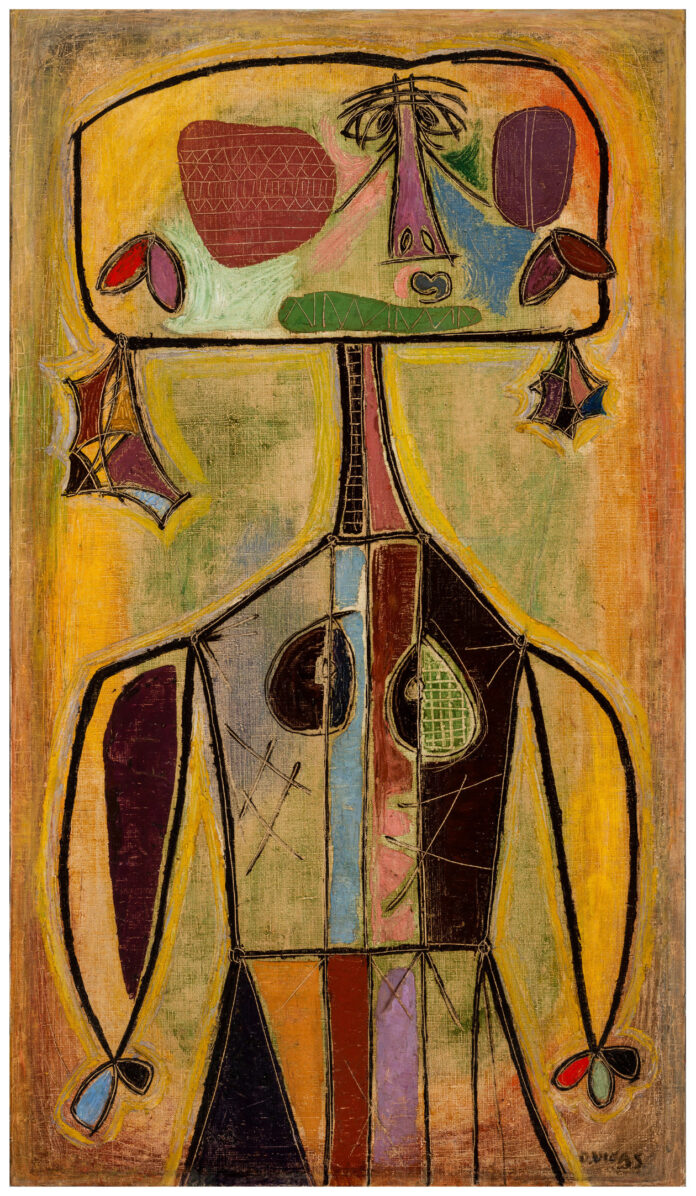
El arte para Oswaldo Vigas llena cada momento de su vida; en ella se encuentran las dimensiones que delatan sus múltiples fuentes de inspiración, entre las cuales están su amor por la conversación, la música, la lectura y la cocina. Entre estas actividades brotan de su imaginación esbozos espontáneos que, en un futuro, se convertirán en obras que serán sometidas a su mirar crítico durante días, semanas y, a veces, años. Algunos cuadros tienen la suerte de fluir más fácilmente que otros; cuando el artista plasma el dibujo en carboncillo sobre el desnudo lienzo intuye la dificultad que va a encontrar al llegar a una de las etapas más difíciles de todo creador: el saber cuándo la obra está terminada.

“Mi ideal sería que ese trabajo espontáneo del boceto tuviera ya las proporciones definitivas de los cuadros, para que no tuviera que intervenir lo racional que inevitablemente trata de imponerse y muchas veces traicionarnos.”
(Oswaldo Vigas)

Cada pieza nace de bocetos que constantemente Vigas crea; es interesante constatar la fluidez con que el artista los realiza sobre cualquier soporte que tenga a su alcance, desde porta vasos de papel hasta una servilleta de restaurante o unos tickets de Metro. Muchos de ellos son coloreados en su nacimiento y, cuando es así, como diría Vigas, “ya no están tan en la cuerda floja”. Lo cual no ocurre con los bocetos que son tan solo líneas pues ellos se encuentran todavía en el filo de la navaja.

Esta forma de encontrar lo buscado tiene cierto paralelismo con la filosofía oriental del Zen o la neo-platónica de las ideas. Si bien podríamos decir que la mayéutica de Sócrates lograba, con sus constantes preguntas sobre lo aparentemente obvio, hacer parir verdades; Vigas da nacimiento a formas inspiradas en su mitología creativa, que ha ido materializando durante décadas.

“Cada día estoy más convencido de que la adquisición más importante en el arte contemporáneo es el habernos abierto el camino hacia el pasado arcaico. Cuando uno se mete en una de esas grutas de la prehistoria, pasarle las manos a las paredes hace revivir esos momentos grabados en la roca. Nos remontamos a miles de años atrás, y eso es presente, no pasado. Cada gesto pictórico es una repetición de un acto arcaico, y eso es anterior al lenguaje hablado. La mano sabe más que la razón.”(Oswaldo Vigas)

Para el pintor la búsqueda de lo ancestral es un eterno presente, otra de las fuentes fundamentales que nutren su obra. Esta dimensión posee fuertes cargas simbólicas, de ahí la variedad y amplitud de su gusto, que incluye el arte prehispánico, el popular, el arte Maya, el Inca y su especial predilección por el arte africano; todos conviven en su concepción del gusto sin ninguna contradicción por ejemplo con el arte oriental –japonés en especial que colecciona con pasión- y las más variadas tendencias del arte moderno y contemporáneo.

Para adentrarse en su discurso visual es útil tener presente esta universalidad y eclecticismo de su cultura, pues de ellos surgen las semillas de las que nacen sus cuadros, esculturas, tapicerías, cerámicas y grabados, que provocan un hechizo que atrapa al espectador neófito y deleita al conocedor en los museos y galerías del mundo donde se ha presentado su obra.

Este impacto estético brota de un delicado equilibrio entre su libertad intelectual y espiritual, entre lo racional y lo irracional, aspectos presentes en todas y cada una de sus piezas; de ahí que cuando gana el Premio Nacional de Artes Plásticas, en 1952, con La Gran Bruja, renovará a nuestro mundo intelectual y artístico y, de manera provocativa, empezará a ocupar un lugar central en la plástica nacional, escindiendo nuestro mundo cultural e intelectual. Sus brujas, recreadas en un lenguaje personal, se enraízan en la indagación visual arqueológica del centro de Venezuela. Siendo ésta la década que Venezuela vivió bajo la dictadura de Marcos Pérez Jiménez (1948-1958), con un control represivo sobre toda la sociedad venezolana. Sin embargo, esto no pudo impedir las enriquecedoras polémicas entre tendencias que protagonizaron personajes de la altura de Miguel Otero Silva, quien fue uno de sus primeros defensores en contra de sus detractores.

Existía en el artista tal inquietud por buscar sus raíces que, en los cincuenta, se adentra en la Guajira, donde se topa con una dimensión aún ignorada del arte latinoamericano: los diseños faciales y textiles de la cultura wayuu, caracterizados por sutiles estructuras geométricas. Este interés es propio de una generación y de un continente que estaba al encuentro de su esencia cultural y espiritual. Como consecuencia de ello, en los cincuenta, en nuestras artes plásticas, se reúnen alrededor del Taller Libre de Arte de Caracas, Alirio Oramas, Oswaldo Vigas, Mario Abreu, Guillermo Meneses, Juan Liscano, Alejo Carpentier, Oswaldo Trejo, Manuel Trujillo, Rhazés Hernández López, Antonio Estévez, etc. En otros lugares del continente, como México, se está en el esplendor de las obras de Diego Rivera, Siqueiros, Orozco y Rufino Tamayo; en Ecuador se expande la figuración de Oswaldo Guayasamín; en Colombia Alejandro Obregón y Enrique Grau; en Perú nos encontramos con Fernando de Szyszlo y, en Brasil, deslumbra el muralismo de Cándido Portinari. La obra de Oswaldo Vigas ocupa un lugar fundamental en este movimiento latinoamericanista que, en Venezuela, fue opacado por el entusiasmo por el abstraccionismo-geométrico manifestado por un grupo de artistas nacionales al descubrir, en París, la llamada “Academia de arte abstracto” de Vasarely, Dewasne y Pillet; y, más tarde, por el conocido auge del cinetismo.

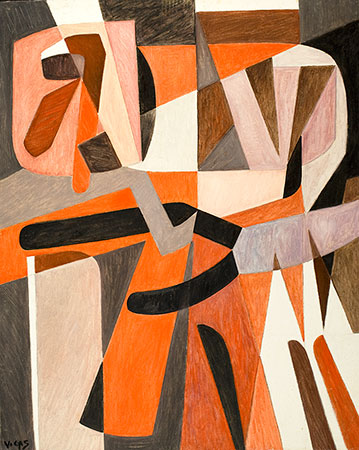
El lenguaje plástico del artista valenciano se afirma una vez más en su obra de 2005 y 2006. Sin embargo, podríamos afirmar que en estos años se da una inversión cromática en su lenguaje pictórico al acentuar la relación entre lo dibujístico y lo cromático. Con frecuencia la línea, como un abismo, delimita con vigor el adentro del afuera, como metáfora expresiva de las dualidades de la existencia. Tanto en el fondo como en las formas, los grises o la tela cruda, que dominaron en periodos anteriores, desaparecen, para dar vida a verdes, rojos y amarillos, colores propios del trópico. Es el bullir de la vida, característico de la cultura caribeña que se hace presente.
Oswaldo Vigas - Figuras Ancestrales

Surgen personajes, dominados por una línea que crea tensión con el desnudo lienzo y, a medida que nacen las manchas, empiezan a brotar atmósferas que poseen un sentido musical por las armonías desarrolladas. Cada uno de estos cuadros posee un universo propio, con cargas emotivas transmitidas por el artista al materializar su lenguaje visual.

La línea posee un carácter cromático y, por tanto, no solo delimita sino que asume diversas profundidades en su aislamiento. Estos trazos tienen rasgos impredecibles por su ritmo; así, en La Caída, (2005), el trazo se mantiene firme a lo largo de los cuerpos abigarrados y en sentido vertical, rodeados de un fondo verde que contrasta con el rojo de las aberturas de los rostros, transformados en sorpresivos centros visuales. Estas pequeñas manchas de rojo tienen tal presencia en este enramado de seres que se convierten en fisuras que filtran la vida; y es en estas aberturas que brota la interioridad del ser; estos cuerpos están plenos de texturas que acentúan su expresividad.

Varios de los cuadros creados por Vigas, entre finales de 2005 y 2006, tienen rasgos totémicos y una figuración que busca la ascensión, convirtiendo estos personajes en ombligos cósmicos que buscan reconstruir una síntesis visual que proyecte las paradojas que atenazan a la humanidad en el nuevo milenio, cuando ha perdido la certeza en las bases de su concepción del progreso y el desarrollo. Esto se percibe en estos cuadros cuando la de-construcción y ruptura de los personajes, propios de este imaginario pictórico, son dominadas por un movimiento gravitacional que las concentra en si mismo.

La última década de Vigas en Venezuela se caracteriza, de igual manera, por un proceso de des-fragmentación y por el manejo de dualismos simplificadores que niegan el sentido común como guía de la acción; son éstos rasgos que también se encuentran presentes en esta figuración desde sus dibujos de los noventa, tal como se evidencia en la serie de personajes donde los órganos se intercambian, las partes del cuerpo, además de ser deformadas, son re-significadas. Así estamos ante personajes cuyos rostros son dominados por lo fálico, medio a través del cual el artista plantea una humanidad dominada y manipulada por lo sexual. Está tendencia se acentúa en su figuración con la llegada del nuevo milenio. Los seres dominados por la inversión crean dramáticas situaciones; es posible encontrar bocas en forma de vagina, narices fálicas, traseros en lugar de cerebro… Recursos que enfrentan al espectador ante una belleza golpeante que crea un discurso visual revelador de la visión interior del artista en torno a la humanidad.
Oswaldo Vigas - Figuras Ancestrales

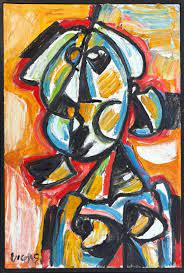
El triangulo, la medialuna, el fuego, la verticalidad y la horizontalidad, están también presentes en varios de estos cuadros en los cuales estas formas inorgánicas se transforman en orgánicas, pareciendo relacionarse con la geometría propia del arte incaico Paraca, tal como se ve en las alas de algunas aves de estos diseños textiles formadas por triángulos y plumas.

Otros cuadros se caracterizan por sus formas libres y su deformación lúdica, como ocurre con Composición con figuras y animal, 2005 y Forastero, 2006; son percibidas por el espectador como una mancha a la que se transmite sentido al proyectar la dimensión exterior en la interior. Entre las piezas dominadas por colores contundentes destaca Figuras Solares, 2006, donde mezcla lo humano y lo animal en una geometría personal y orgánica.

Estamos ante un lenguaje plástico que crea un puente entre los diversos niveles perceptivos de la realidad y que busca una comprensión cada vez más profunda de nuestra alma. Y así, reta al espectador a indagar en estas formas primordiales para que le develen sus secretos. Por esto no solo no es suficiente verlas de pasada sino que es necesario mirarlas con atención. Este rasgo del artista, está vinculado a su pasión por lo simbólico; por eso en su plástica cada pieza es un torbellino formal en el que se hace presente una figuración que busca la multiplicidad y niega la unicidad. Para ello se aleja de la realidad en su temática, para crear sus propios paradigmas visuales, que son un aporte a la historia de las artes plásticas venezolanas. Un ejemplo es el tema del eterno femenino en su obra, su zoología y los personajes antropomorfos, motivos que son hechos con la certeza de que el hombre es ante todo creador. En los cuadros horizontales, apaisados, Vigas evita las figuras aisladas al crear conglomerados de seres de diversos tipos, coherentes con su zoología y antropomorfismo fantástico, como los perros sin cabeza, las culebras que esconden sus formas, y los cuerpos humanos recompuestos en una anatomía simbólica que renace en cada espectador para reencontrarse en ella misma.
“La pintura me ha hecho ser más humano, porque creo que el valor de un hombre está en proporción directa con lo que él pueda aportar al descubrimiento de los enigmas del ser.” (Oswaldo Vigas)

Cultural Trends I’m Watching at the Beginning of 2026

ayoung-kim-performa
Body^n (2025)" at Performa 2025 Biennial, Canyon, New York, 2025. Courtesy of the artist and Performa 2025 Biennial. Photo by Walter Wlodarczyk.

Cultural Trends I’m Watching at the Beginning of 2026

Quick thoughts on the forces shaping art this year.

Ben Davis author

I spent the last week holed up in a hotel trying to work on a book and mainly failing. It’s very hard to focus right now. This is the first piece I’m posting in 2026, so I thought I would post quick thoughts on a bunch of trends and topics that are disconnected—things that are on my mind, that I think are worth commenting on, that are significant when it comes to the pieces that make up the overall vibe, but that I am worried I won’t have enough time to draw out in full.

I’m going to go from the very serious to the trivial. Here we go.

The Chaotic Style. I keep hearing that we are stuck in time and that the present doesn’t have a signature style. But Year 1 of Trump 2 had a very distinct, very chaotic set of cultural coordinates that time-stamps it: It’s A.I. slop, esoteric Nazi dog whistles, and internet trolling, mashed together with appeals to Americana, Classic Western Art, and gaudy luxury. The PragerU-sponsored talking A.I. portraits of the Founding Fathers in D.C. that I wrote about last year are a perfect example (though it must be said that, melted as they are, they are among the less noxious outputs in this vein). There’s a disturbing energy produced by internet-brained alt-right stuff whipped together with meme-ified symbols of tradition and taste. I’m sure there will be a lot of art about this, of some kind.

The graphic logo for the Fall of Freedom initiative, showing a hand holding up a torch, with rays of yellow and red beaming out of it

Graphic promoting the 2025 Fall of Freedom initiative.

Post-Antiwokeness? Last year’s Fall of Freedom initiative, hoping to get cultural institutions to do a day of programming on authoritarianism in November, ended up pretty muted—and it was a small ask to begin with. Now, the Trump administration is laying siege to the Twin Cities, touching off several foreign conflicts, destabilizing the economy, and censoring cultural institutions. The alt-media cultural figures who supported Trump and made him look affable have turned on him. The mounting unpopularity of this increasingly non-metaphorical culture war has only made the attacks from on high more feral. At some moment the plates are going to slip under the pressure, and there’s going to be a new cultural earthquake. Just what that would or should or will look like, I don’t know, given the cynicism that the #Resistance era of culture now invites. Some courage and ingenuity will be needed.

The Palestine Exception Lives On. From the New York Times and the Democratic Party to Artforum and the Whitney ISP, almost all liberal establishment institutions have bled credibility with young and politically engaged audiences over their failures relating to the immense carnage in Gaza over the last three years. As suggested by the very title of Omar El Akkad’s 2025 bestseller, One Day, Everyone Will Have Always Been Against This, you might expect there to be a too-late outpouring/correction. Yet even given the sea change in U.S. opinion that has left “older Republicans as the sole American demographic firmly behind Israel,” according to the Brookings Institution, I still see only a small opening, because more than any other political issue, the divides on this one pass through the center of the U.S. art audience, and political art is always most eager to confront the audience that it doesn’t have.

Beyond Slop Criticism. The tech class’s decision to align with MAGA, combined with their cheerfully apocalyptic rhetoric about generative A.I., has really colored reception of this technology, which threatens massive social disruption even if judiciously introduced. We need serious and informed criticism of the stakes. Which also means, however, that the criticism of A.I. is going to have to decouple from the criticism of “slop.” The accusation that “A.I. will never make good art” gets tangled up with all the many, many other economic, political, ethical, and environmental questions about A.I. People are literally falling in love with A.I. companions. I think we can put to rest the question of whether A.I. can make stuff that moves people. To begin to talk about the real problems—which include among them what it even means to focus on “human” creation in this context (and to advocate for that)—we can’t let the “slop” word stand in for the whole critique, satisfying as it is.

Minimalist art installation featuring a framed Cady Noland print with an American flag and bullet holes, a metal stool with stacked baskets, abstract black-and-white artwork, and a barbell on the gallery floor.

Installation of Cady Noland’s new show at Gagosian. Photo by Annie Armstrong.

The Hammons-Noland Meta. The “meta,” in video-gaming, means the most effective style of play, which shifts as a game gets updated and players innovate strategies. For the recent social-media era, the older artists who represented the “art meta”—the key role models—have been Cindy Sherman and Yayoi Kusama, representing the “artist as invented persona” mode and the “artwork as social-media set” mode. But there’s a lot of fatigue with that kind of visibility; people are bricking their phones and talking about deinfluencing. I’ve been thinking that the canonical figures who might represent a new “meta” to cohere around are Cady Noland and David Hammons: artists who deliberately cultivated opacity and inaccessibility as a style choice. If I were teaching in an art school, I’d be assigning David Hammons’s classic interview on the value of misdirection (or maybe just Martin Herbert’s book on artists’ “strategies of retreat,” Tell Them I Said No). The Noland show at Gagosian last year was an interesting event: kind of a dud, in that it read as a rehash of all her themes, yet fascinating in that her reclusiveness and refusal to offer any explanation meant that fans were still willing to stick around to try to mine all its details for meaning. Which is exactly the climate that needs to exist for art to function as art, and not just content.

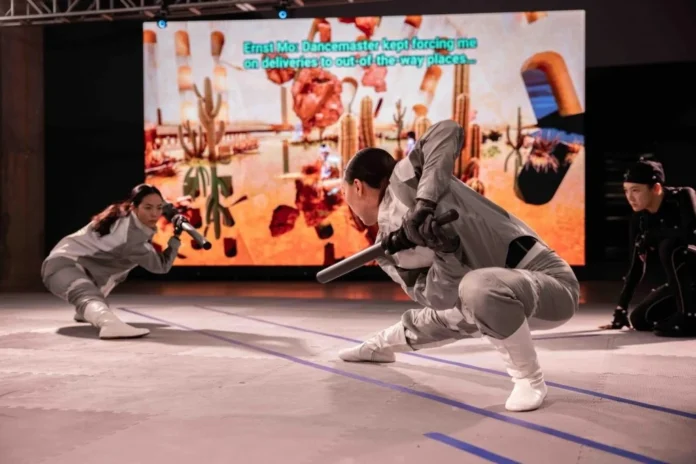
Asia-Futurism, Again. Critic Dawn Chan’s term “Asia-Futurism” is 10 years old, and what with the current #2016 trend and all, I think its probably ready for another big push. In fact, it’s not nostalgia: It sits at the intersection of a lot of cultural vectors: a desire to respond (mainly implicitly) to the xenophobia of the present climate; a sense of palpable decline of an American future; museums’ pivot to futurist themes as tech becomes such a dominant cultural force; the appeal to younger audiences via adjacency to K-pop and anime. Ayoung Kim (who was a highlight of Performa, and has a show at MoMA PS1) and Lu Yang (currently at Amant Foundation) both feel like artists for this moment.

A book cover titled "Other Intimacies" by Anna Sampson. The background is a dark, textured black fabric. The title and author's name are written in a sophisticated, stylized gold serif font with elegant flourishes. Centered between the text is a framed sepia-toned photograph of two people in fetish-inspired leather attire. One person is seated on a stool wearing leather trousers and boots, while another stands in front of them wearing a black strappy harness and tall, lace-up leather boots.

Cover of Anna Sampson’s book Other Intimacies.

Kinky Sex. One bet I had for last year is that there would be a focus on sex and kink. My thinking was: A background conversation about how mainstream culture had become desexualized would meet the reaction to political correctness, and bounce off the feminist debate about “kink shaming,” thus finding some kind of outlet. This seemed a simple triangulation, providing a sense of forward cultural movement while also fitting the contours of the terrain. Here are the signs: the “indie sleaze” revival (mostly just chatter), Man’s Best Friend, and The Housemaid, but also artist Mindy Seu’s lecture-performance A Sexual History of the Internet, photographer Anna Sampson’s Other Intimacies, and artist Sarah Meyohas pivoting to the erotic art-house short film Medusa.

Jolie-laide Figuration. This one really is me thinking out loud, but something I am looking out for. The current mega-mainstreaming of cosmetic surgery, looksmaxxing, and A.I.’s conjuring of virtual people from distillations of what’s popular have created a climate where a generic attractive look is more aggressively dominant than ever. I’m looking out for forms of figuration that accentuate the flaws, tics, and quirks that give actual faces and bodies character. Neither the push toward unreal beauty standards nor the celebration of unconventional beautyin art are new; but just as one intensifies, you would expect more from the other.

Jeremy Frey's intricately woven baskets displayed on white tables in a gallery at the Art Institute of Chicago, featuring a video of a burning basket

Installation view of “Jeremy Frey: Woven” at the Art Institute of Chicago. Courtesy The Art Institute of Chicago, photography by Jonathan Mathias

Betting on Baskets. Ceramic and glass art have had major and escalating cachet in museums. Textiles and quilting have also been a main trend recently as part of a general heightened emphasis on craft as art, a largely positive collateral effect of reconsidering who and what had been left out of the traditional histories (I talked about this with curator Elissa Author in 2024). I don’t expect any of this to go away, but these trends are years old now, and the aperture might open on other craft fields with deep benches of creators who haven’t gotten their dues. Maybe there’s a basket wave? Jeremy Frey’s creations, for one, are hard to deny. He won a “Genius” grant last year.

…Vinyl? I keep meaning to write about this, but also I can’t decide about it. I’ll probably never have time to get around to it, given everything. So, I’ll put it here. There has been a vinyl record revival since 2020, tapping into nostalgia for physical media. Museums (MASS MoCA), non-profits (White Columns), and galleries (Corbett vs. Dempsey) have started putting out vinyl recently. Painter Peter Doig made vinyl records central to his current “House of Music” exhibition at the Serpentine in London. This is very hipster, very trivial, yeah, but the vinyl vogue seems to naturally connect with what art institutions have—or hope—to offer as their comparative advantage in this moment: kind of retro but in a way that feels newly relevant, physical and also durational… Interesting or not?

“When Is a Wall a Wall?”

“When Is a Wall a Wall?”
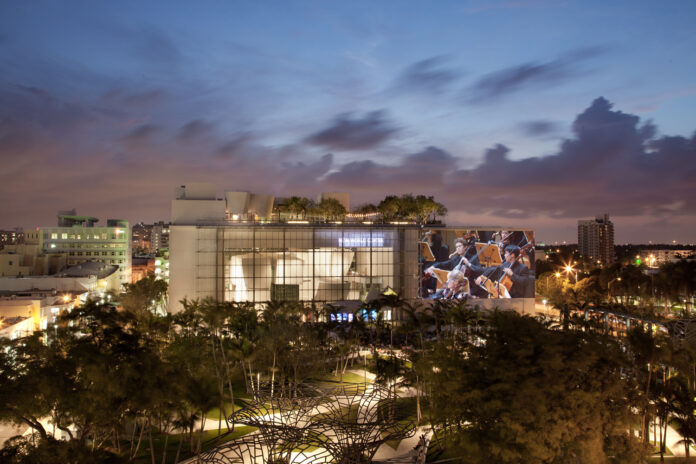
New World Symphony Campus

“When Is a Wall a Wall?”

New World Symphony at 15: John Adams, Stéphane Denève, and a living tribute to Frank Gehry

Written By Olga Garcia-Mayoral

Saturday, January 17, 2026, 7:30 PM • Michael Tilson Thomas Performance Hall, New World Center

On Saturday night at the New World Center, the 15th-anniversary celebration unfolded like a beloved letter—to a hall, to a city, and to the artists who imagined both. The evening honored the building’s architect, the late Frank Gehry, with an all–John Adams program led by Adams himself and New World Symphony Artistic Director Stéphane Denève. It felt at once intimate and historic: a gathering in a house still charged with the spirit of its designer and the audacity of the music it was built to hold.

In the atrium, “NWS at 15” traced the arc from Gehry’s early sketches to performance highlights; inside, a newly donated Gehry sculpture—once a working maquette and later a companion in the living room of Michael Tilson Thomas (MTT) and Joshua Robison—stood with tender purpose. Gehry’s handwritten riddle on its reverse, “When is a Wall a Wall?”, now reads as both architectural koan and curatorial prompt: where does a boundary end and a passage begin? It was the right question for a program about thresholds—between past and future, stage and city, pulse and breath.

Two conductors, one portrait

The concert drew a clean line through Adams’s catalog without smoothing away its variety. Adams conducted The Chairman Dances (Foxtrot for Orchestra) and the new piano concerto After the Fall with soloist Víkingur Ólafsson; Denève took the helm for I Still Dance and Doctor Atomic Symphony, the latter paired with a video tribute to MTT and Robison.

Denève waved off the notion that an evening shared by two conductors needed a single interpretive “house style.” “There are pieces from different epochs, and each has its own sound world,” he told me before the performance. “John prides himself on doing every piece as its own genre—à la Stravinsky. We didn’t chase one ‘coherence’; the coherence is that it is all music by one genius.”

Adams, after rehearsal, was wry about conducting his own work. He still makes tiny changes, he said, but they’re mostly practical. “This particular hall has a very generous stage, but not a lot of seats—sometimes a fortissimo can make your teeth chatter,” he admitted. “I’ve occasionally told them to play a little softer.” More revealing was what he said about listening to Denève rehearse Doctor Atomic Symphony: “It sounds counterintuitive, but sometimes even the composer doesn’t realize certain things are in the music. It takes a great conductor like Stéphane to reveal it.”

“The Chairman Dances”: a foxtrot with a human face

It’s easy to play The Chairman Dances as a motor; harder to make it dance. Adams’s own beat was elastic enough to let a phrase tilt or smile without losing carriage. The woodwinds chattered in bright consonants; the strings found a spring in their bow that suggested the body rather than the machine. If there was an embedded message, it was that irony is not the only form of modernism. Joy, too, can be contemporary.

“After the Fall”: Ólafsson’s spark, Adams’s engine

Composed for Ólafsson, After the Fall is the latest chapter in Adams’s extended conversation with the piano. He doesn’t play the instrument himself (“I grew up in a house without a piano; I played clarinet,” he reminded me with a laugh), yet the writing sits under the hands with a physical logic that jazz pianists would recognize. “I listen to a great deal of jazz piano—Bill Evans, Chick Corea, Herbie Hancock, Keith Jarrett,” he said. “That kind of playing—spontaneous, very American gestures—feeds my imagination.”

If there’s a thread he hopes audiences follow through Chairman and After the Fall, it’s the pulse. “I was very influenced by Reich and Glass—their clear use of pulsation—and of course by pop and jazz,” he said. “There’s a strong sense of pulse in almost all of my music. I think that’s a very American trait.”

In performance, Ólafsson’s touch made the piano flicker between steel and silk, while Adams’s beat kept the surrounding latticework taut. The New World Fellows handled the concerto’s tricky hinge-points with a kind of collected daring; the result felt like architecture in motion—sweeping lines, yes, but also the stubborn integrity of load-bearing walls.

“I Still Dance”: an ode to energy—and friendship

Adams titled his 2019 piece after a line from Joshua Robison. “I asked him if he still did ballroom dancing,” Adams recalled. “He said, ‘Oh, I still dance.’ I took that answer as a title.” Then he smiled at the mischief of the muse. “Once I started, the piece didn’t turn out to be a dance at all. It’s a toccata in a minor key—powerful, massive. I always feel like apologizing to Michael and Josh that I didn’t actually give them a dance. But they appreciated it; Michael gave a wonderful premiere.”

Denève framed the work as honoring. “We wanted to elevate a private dedication into an ode to resilience,” he said. The newly created video counterpointed rather than illustrated: a slow-moving collage beginning with a photograph of MTT and Robison; within their silhouettes, scores and dances appeared—glimpses of motion as life force. “They have been dancing all their time—giving movement, giving energy,” he said. At the close, live images of the Fellows folded into the sequence, a gesture Denève described as continuity: “Their baby is the New World Symphony, and it will continue. When they cannot dance, others will dance.”

The music ends, not ends—dynamic falling away, a small high note repeating like a heartbeat. “To be continued,” Denève called it. So did the audience: the silence after the last note felt like an intake of breath that didn’t want to be exhaled.

“Doctor Atomic Symphony”: searing, not saturated

Denève’s reading of Doctor Atomic Symphony was narrative without being literal, letting its crisis ecology speak in orchestral terms: anxiety spirals, moral stasis, the surge of terrible resolve. The famous Mahlerian lament from the opera—Oppenheimer’s “Batter my heart”—arrived near the end not as balm but as human residue, sung now by brass and strings. “I have a passion for narrativity,” Denève said, showing me his score covered in text cues. “I wrote out the poetry—every line, even a German translation once—so the players understand the words behind the sound.”

Technically, the victory was one of restraint within Gehry’s bright, intimate acoustic. “Our hall is quite alive,” Denève said. “We worked all week, so brass and percussion don’t cover strings and winds, and still go for extreme dynamics.” He described the final passacaglia as carefully “voiced like polyphony,” overlapping brass triads like shingles so the air seems to carry its own resonance. Climaxes were searing but legible; bass lines grounded the panic instead of bloating it; piccolos cut air without shredding it. You could sense the week of calibration he described—less here, more there, now together breathe—until the orchestra’s engine had torque rather than mere horsepower.

The hall that listens back

Gehry’s room remains the third protagonist. Its intimacy tempts saturation; its brightness rewards clarity. Adams hears the room’s virtues and limits, too. “I Still Dance is almost too big for this hall,” he told me. “It’s a toccata on steroids—very powerful and massive—, and it needs some room. But it’s still thrilling in here.”

Beyond the doors, the WALLCAST® broadcast extended the celebration to SoundScape Park with newly upgraded audio. Denève, not a gearhead by his own account, still noticed the leap: “It feels even more immersive and warm—outside now sounds closer to inside.”

Fellows as protagonists

Perhaps the most moving constant of the night was the Fellows’ ownership of the sound. Adams, who has coached and conducted at NWS for decades, never treats them like students. “You don’t talk down to these players,” he said. “They’re really good. The luxury here is more rehearsal time than most professional orchestras; you can drill deeper.” The payoff was audible—subdivisions that locked without fear, attacks that brought an American brightness without going hard, chamber instincts inside a big orchestra frame.

Denève spent time this week on rhythm as rhetoric. “There is such an American groove in John’s music,” he told me. “The rhythms are tricky. First, we make them accurate; then we give them a shape—we connect the rhythm in a singing way.” You could hear that in the way fast notes phrased like speech and in the confidence of the percussionists, who felt more like a drum set with a hundred arms than a row of separate stations.

Architecture as instrument, city as audience

Gehry’s hall—like Disney Hall in Los Angeles, its West Coast cousin—invites risk: surround screens to play with, platforms to populate, a civic porch that can become a concert plaza in an instant. “There’s so much potential to light things differently, put the audience in different configurations,” Denève said, already dreaming aloud about more projects that use the multiple “cells” around the stage. The space’s scale—welcoming, not cavernous—helps the institution try without apology. Not everything needs to be maximal to feel meaningful.

And then there’s the city. The WALLCAST® outside, with upgraded energy-efficient audio, turned SoundScape Park into a kind of companion auditorium. It’s one of Gehry’s many gifts to Miami that the building’s skin is also its instrument. The idea that a world-class performance inside can become a free neighborhood ritual outside remains radical in its simplicity.

The maquette that came home

The newly installed Gehry sculpture on the second floor, a preliminary study saved from oblivion by MTT and Joshua and now returned to NWS, carried the night’s quietest charge. It’s a reminder that buildings begin as conversations; that the line between sketch and space is as porous as the one between score and sound; that objects can hold time. “When is a Wall a Wall?” Gehry scrawled. Perhaps: when it keeps out weather. But not when it keeps out people. The maquette’s new life inside the house it once imagined feels exactly right.

What we carry forward

Both maestros kept their eyes on tomorrow as much as yesterday. Adams, amused and moved by the generational span in front of him, spoke of the Fellows’ “vitality and pleasure” and the hope it gives him for the future of his pieces. Denève, asked what seed he wants to plant for the next 15 years, answered without hesitation: keep the repertoire alive—relevant to the world outside—while predicting the future by commissioning the right people. He sees voice, opera, and storytelling as growth lanes; he sees digital content as a tool, not a destination; he sees live music as a kind of medicine. “The purity of being together in silence,” he said, “listening to people vibrating something in the air—this will be more and more valued.”

The night proved the point. In a hall that still feels brand new, honoring a friend who made rooms sing, New World Symphony offered Miami a portrait of an American original—and a sketch for the years ahead. If Adams’s music asked us to feel the engine of pulse, Gehry’s question asked us to rethink the edges of our listening. Walls can hold us; they can also open. On this night, they did both.

If you’d love to watch the WALLCAST®, you may do so via this link: https://www.nws.edu/events-tickets/wallcast-concerts-and-park-events/ 

Omnia vincit amor: et nos cedamus amori — to my dear friend, A.E.S.

Art Palm Beach 2026

Art Palm Beach 2026
Art Palm Beach 2026

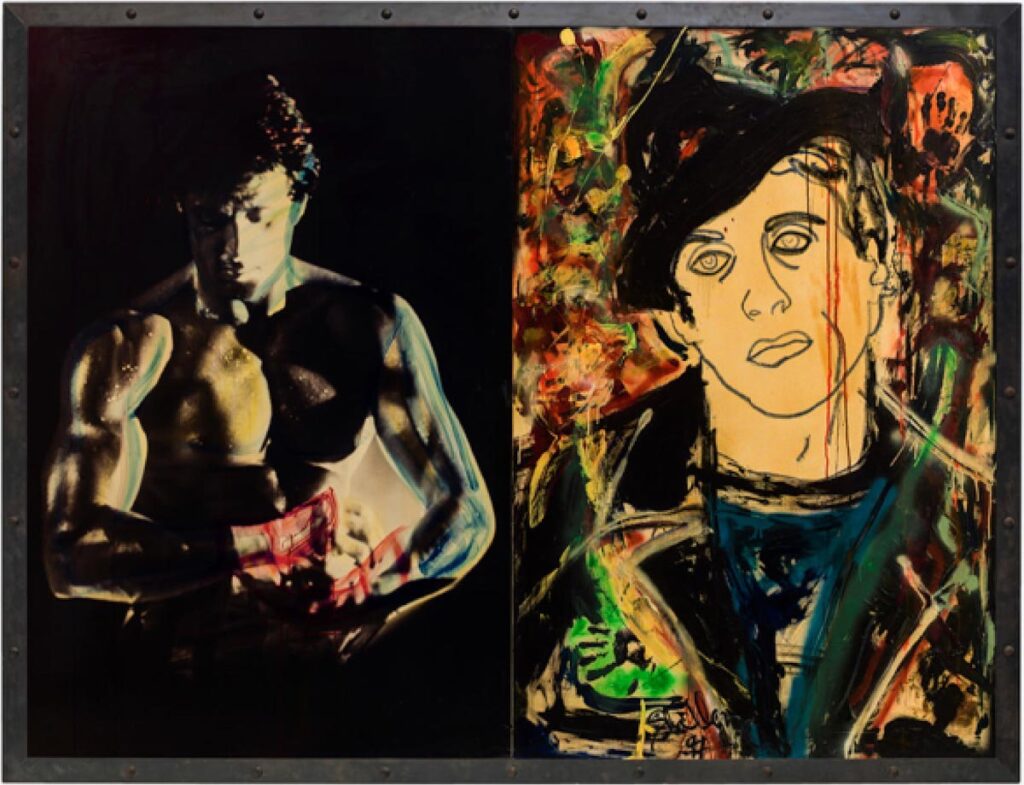
Sylvester Stallone’s Artistic Evolution Unveiled Exclusively at Art Palm Beach 2026

Stallone’s six-decade journey goes on display, exposing the passion, perseverance, & creative force that built an icon.

Microsoft Word – APB 2026 Sylvester Stalone Release Final.docx

PALM BEACH, Fla. – Jan. 28, 2026 – This winter, one of the most recognizable figures in film steps fully into the world of fine art. In a landmark moment, Sylvester Stallone: Evolution, presented by Provident Fine Art, will debut at Art Palm Beach 2026, the first exhibition to unite six decades of Stallone’s paintings in a single sweeping retrospective. The fair returns for its 4th Year January 28 – February 1, 2026, at the Palm Beach County Convention Center, with tickets now available at ArtPalmBeach.com.

Long before the world knew him as Rocky Balboa or John Rambo, Sylvester Stallone was a painter searching for identity through pigment, movement, and emotion. His canvases raw, layered, and fiercely
personal mirror the same underdog spirit that defined his cinematic legend.
“Before I ever stepped in front of a camera, I was painting,” says Stallone. “Art has always been my way of pushing through the chaos and putting emotion into something real.”

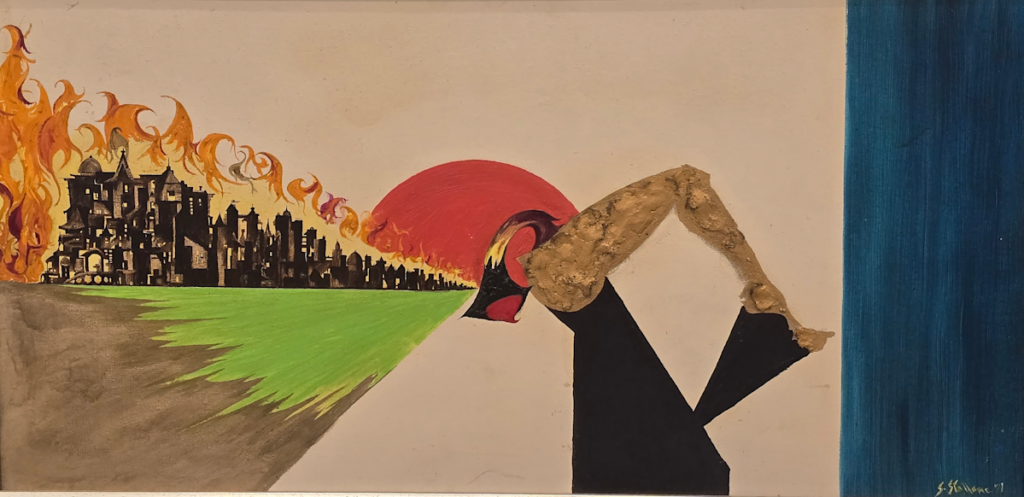
Evolution traces that journey from surrealist beginnings in the 1960s and 70s to the bold abstractions of his mature work. Early pieces wrestle with mythology and struggle, while later paintings explode with color, rhythm, and transcendence, a visual autobiography of a man who lives entirely through creativity.

The exhibition at Art Palm Beach marks Stallone’s first major U.S. retrospective in years and his first-ever showcase spanning every decade of his artistic practice. Each work reflects the dualities that have defined him: vulnerability and strength, control and chaos, silence and spectacle.

A selection of paintings, including the mixed-media standout “Male Pattern Badness,” will be available for acquisition at Art Palm Beach. It has previously been exhibited in retrospectives at the Russian Museum in St. Petersburg and in Nice, France, earning international acclaim for its emotional immediacy and cinematic scale.

“Art Palm Beach has always been about discovery,” said Kassandra Voyagis, Director/Producer of Art Palm Beach. “This exhibition reveals a new side of a cultural icon and celebrates the courage it takes to reinvent oneself through art.”

Under Voyagis’s leadership, Art Palm Beach has become a nexus for the global art community, a meeting point for collectors, galleries, and artists pushing the boundaries of contemporary expression.

ART PALM BEACH 2026

January 28 – February 1, 2026

Participating Galleries

A

  • Abby Modell Contemporary Art Glass
    Boca Raton, FL — Booth 209
  • Adamar Fine Arts
    Miami, FL — Booth 710
  • Ai Bo Gallery
    Purchase, NY — Booth 809
  • Allegro Studio Art
    West Bloomfield, MI — Booth 902
  • Art of Contemporary Africa
    San Francisco, CA | Johannesburg, South Africa — Booth 908
  • Artier Fine Art Gallery
    Palm Springs, CA — Booth 812
  • AVANT GALLERY
    Miami Beach, FL — Booth 818

B

  • Blond Contemporary
    London, United Kingdom — Booth 500

C

  • Callaghans of Shrewsbury
    Shrewsbury, United Kingdom — Booth 806
  • Carousel Fine Art
    West Palm Beach, FL — Booth 309
  • Casterline | Goodman Gallery
    Aspen, CO — Booth 501
  • Ccucu Gall-Art
    Miami, FL — Booth 211
  • Cernuda Arte
    Coral Gables, FL — Booth 805
  • Contemporary Art Gallery
    Miami, FL — Booth 614
  • Contessa Gallery
    Cleveland, OH — Booth 301
  • Corridor Contemporary
    Tel Aviv, Israel — Booth 713
  • CST Gallery
    Sparta, NJ — Booth 215

D

  • Delpuma Fine Art
    Orlando, FL — Booth 214
  • Deodato Arte
    Milan, Italy — Booth 311

E

  • Eckert Fine Art
    Washington Depot, CT — Booth 608
  • Epicentrum Art Gallery
    Opole, Poland | Paris, France | New York, NY — Booth 715
  • Ethan Cohen
    New York, NY — Booth 601

G

  • Galerie Duret
    Paris, France — Booth 314
  • Galerie Mark Hachem
    Paris, France — Booth 712
  • Galerie Raphael
    Frankfurt, Germany — Booth 607
  • Gallery Fredric Got
    Saint-Paul-de-Vence, France — Booth 407
  • Gallery Wald
    Gyeonggi-do, Republic of Korea — Booth 329
  • Gefen Gallery
    San Francisco, CA — Booth 411
  • Gladwell & Patterson
    London, United Kingdom — Booth 804

H

  • Habatat
    Royal Oak, MI — Booth 201
  • Haven Gallery
    Northport, NY — Booth 903
  • Himmeljord Arts
    Fort Collins, CO — Booth 415
  • HOFA
    London, United Kingdom — Booth 808
  • Hollis Taggart
    New York, NY — Booth 701

J

  • JF Gallery
    West Palm Beach, FL — Booth 307
  • John Martin Gallery
    London, United Kingdom — Booth 803

K

  • K + Y Contemporary
    Paris, France — Booth 401
  • Kedria Arts
    Pontiac, MI — Booth 612

L

  • L.E. Gallery
    Brussels, Belgium — Booth 709
  • Laurent Marthaler Contemporary
    Montreux, Switzerland — Booth 815
  • Licht Feld Gallery
    Basel, Switzerland — Booth 711
  • Long-Sharp Gallery
    Indianapolis, IN — Booth 503

M

  • Markowicz Fine Art
    Laguna Niguel, CA | Miami, FL — Booth 409
  • Masterworks Fine Art Gallery
    Palo Alto, CA — Booth 102
  • Modern Fine Art
    New York, NY — Booths 801 & 802

N

  • Nicolas Auvray Gallery
    New York, NY — Booth 203
  • Nisticovich Gallery
    Tel Aviv, Israel — Booth 813

O

  • Oliver Cole Gallery
    Miami, FL — Booth 905
  • Oliver Sears Gallery
    Dublin, Ireland — Booth 803
  • Onessimo Fine Art
    Palm Beach Gardens, FL — Booth 512

P

  • Palma Arte
    Saliceto di Alseno, Italy — Booth 312
  • Peace Waters
    San Diego, CA — Booth 900
  • Pontone Gallery
    London, United Kingdom — Booth 603
  • Priveekollektie Contemporary Art | Design
    Heusden aan de Maas, The Netherlands — Booth 703
  • Provident Fine Art
    Palm Beach, FL — Booth 305

Q

  • Quantum Contemporary Art
    London, United Kingdom — Booth 811
  • Quidley & Company
    Naples, FL — Booth 413

R

  • Rebecca Hossack Art Gallery
    London, United Kingdom — Booth 609
  • Robert Fontaine Gallery
    Miami, FL — Booth 105
  • Rosenbaum Contemporary
    Boca Raton, FL — Booth 100

S

  • Sist’Art Gallery
    Milan | Venice, Italy — Booth 207
  • Smith-Davidson Gallery
    Amsterdam, The Netherlands — Booth 800
  • Sponder Gallery
    Boca Raton, FL — Booth 613
  • Steidel Contemporary
    Lake Worth Beach, FL — Booth 611
  • Sundaram Tagore Gallery
    New York | Singapore | London — Booth 605

T

  • Tali Almog Gallery
    Boca Raton, FL — Booth 213
  • The Bonnier Gallery Inc.
    Miami, FL — Booth 104
  • Timothy Yarger Fine Art
    Los Angeles, CA — Booth 335

V

  • Vallarino Fine Art
    New York, NY — Booth 101
  • Verse Gallery
    Fort Lauderdale, FL — Booth 810
  • VK Gallery
    Amsterdam, The Netherlands — Booth 212

W

  • Winsor Birch
    Marlborough & Wiltshire, United Kingdom — Booth 300

Z

  • Zemack Contemporary Art
    Tel Aviv, Israel — Booth 403
  • ZYGO ART GALLERY
    Tel Aviv, Israel — Booth 901

Sponsors

  • Athletes for Life™ Foundation
    Goleta, CA — Booth 303
  • CAVALLINO
    Palm Beach, FL — Outside Entrance
  • Yvel
    Palm Beach, FL — Booth 509

Featured Exhibitions

  • John Knuth: Renewed Resilience
    Presented by Hollis Taggart Downtown — Booth 103
  • Matteo Massagrande
    Presented by Pontone Gallery — Booth 615
  • Sylvester Stallone: Evolution
    Presented by Provident Fine Art — Booth 405

###

About Art Palm Beach:
Art Palm Beach is South Florida’s premier fair for modern and contemporary art, showcasing leading galleries, visionary artists, and

groundbreaking installations from around the world. Produced by Fine Art Shows, creators of the acclaimed LA Art Show, the fair

FOR IMMEDIATE RELEASE Media Contact

Thomas Tobin

[email protected]

Sylvester Stallone’s Artistic Evolution Unveiled Exclusively at Art Palm Beach 2026

Stallone’s six-decade journey goes on display, exposing the passion, perseverance, & creative force that built an icon

212.624.2648

transforms Palm Beach into a global stage for creativity, connection, and discovery each January. Visit ArtPalmBeach.com for more information.

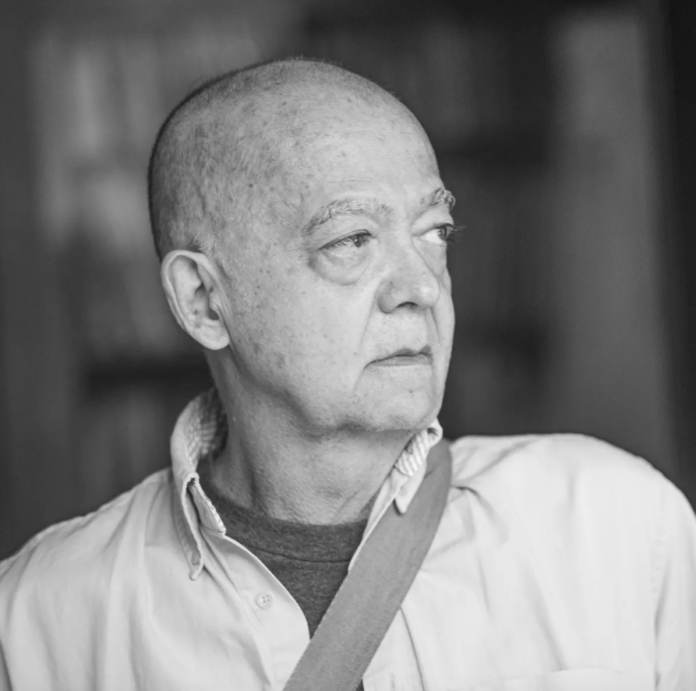
Eduardo Planchart Licea (1954-2025)

Eduardo Planchart Licea

Eduardo Planchart Licea (1954-2025)

Arte Venezolano

Eduardo Planchart Licea
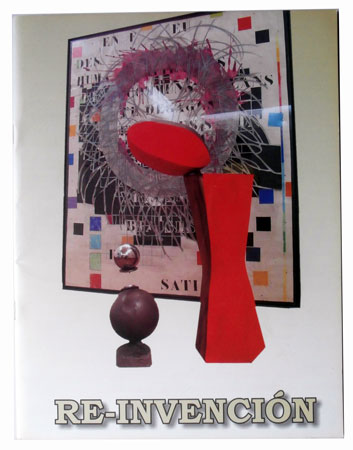
Fuente: libro Re-Invencion; ediciones Galeria Medicci; Caracas, año 2010Textos: Tomas Kepets; Eduardo Planchart LiceaFotografias: Yelis Ontiveros; Renato Donzelli; Mariana Parra
 
Eduardo Planchart Licea
Se recomienda la lectura del libro: Juan Felix Sanchez, el Gigante de Tisure; Armitano Editores, Caracas, año 1992Textos: Eduardo Planchart LiceaFotografias: Maria del Carmen Carrillo; Jose Luis Lopez; Jose Ramon Moreno
 
Eduardo Planchart Licea
Se recomienda la lectura del libro Miguel Sanoja, Bronces 1948-2003, Caracas, año 2004Textos: Carlos Gottberg; Elida Salazar; Belgica Rodriguez; Ida Gramcko; Elizabeth Schon; Eduardo Planchart Licea; Beatriz Sogbe; Alicia PatiñoFotografias: archivo Miguel Sanoja; Olgalucia Jordan; Charlie Riera; Gintaras Karosas
 
Eduardo Planchart Licea
Se recomienda la lectura del libro: I CERTAMEN MAYOR DE LAS ARTES Y LAS LETRAS 2005, CAPITULO ARTES VISUALESDirección general: Ana Maria ZoghbiTextos: Jose Barroso; Maria Elena Diaz Carmona; Gregorio Gonzalez Vivas; Rocco Mangieri; Eduardo Planchart Licea; Victor Rojas; Tony Tong; Alejandro Useche; Carolina ValecillosFotografias: Hernan Villar; Morella Muñoz Tebar
 
Eduardo Planchart Licea
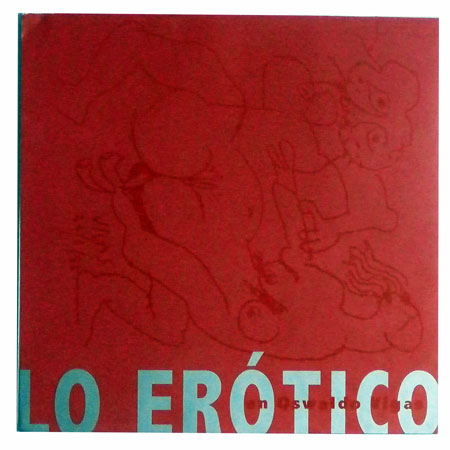
Se recomienda la lectura del libro Lo Erotico en Oswaldo Vigas, Ediciones Estudio Arte 8Textos: Mariela Lairet T. ; Eduardo Planchart Licea; Maria Fernanda LairetFotografias: Renato Donzelli ; Maria Fernanda Lairet
 
Eduardo Planchart Licea
Se recomienda la lectura del libro: Re-Invencion; ediciones Galeria Medicci; Caracas, año 2010Textos: Tomas Kepets; Eduardo Planchart LiceaFotografias: Yelis Ontiveros; Renato Donzelli; Mariana Parra
 
Eduardo Planchart Licea
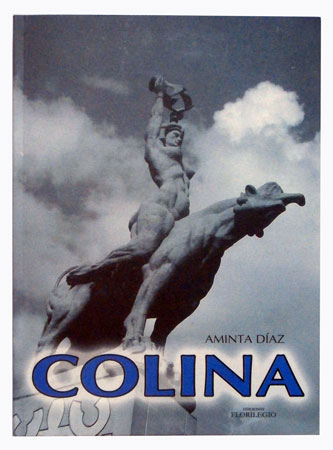
Se recomienda la lectura del libro Alejandro Colina, Vida y Obra 1901-1976; Ediciones Florilegio, Caracas, año 2014Investigación y dirección editorial: Aminta Diaz SolorzanoTextos y citas: Aminta Diaz; Alejandro Colina; Argenis Ramuarez Angarita; Leon Colina Heredia; Jose Nucete Sardi; Cruz Alvarez Garcia; Gilberto Antolinez; Jesus Marcano Villanueva; Francisco Villanueva Lopez de Uralde; Luis Guevara Moreno; Eduardo Planchart Licea; Carlos Colina; Palmenes Yarza; Carlos Maldonado Bourgoin; Juan Calzadilla; Manuel Felipe Rugeles; Oswaldo Vigas; Julio Berroeta Lara; Mateo Manaure; Antonio Sosa Vallenilla; Martin Funes; Rolando Quintana; Maria Teresa Novoa; Santiago PoletoFotografias: Alexis Perez Luna; archivo Procine; Carlos German Rojas; Carlos Bolivar; Beatriz Nones; archivo Roraima Colina; archivo Sucesión Colina; archivo CINAP; archivo Aminta Diaz; Revista Elite

Save the Date — Friday, Jan 23, 2025

Lauren Jane Clancy at Aqua during Miami Art Week
Artwork: Lauren Jane Clancy @laurenjaneclancyart Web: www.underoneart.com

Save the Date — Friday, Jan 23, 2025

Allapattah – Gato Gordo Gallery | Opening Reception

The Enduring Spark: 100 Years of Black History
Gato Gordo Gallery inaugura una exposición significativa para Black History Month, celebrando el centenario de la primera conmemoración oficial de la historia afroamericana en Estados Unidos. The Enduring Spark reúne obras de artistas contemporáneos que reflexionan sobre la herencia, la presencia y la resistencia creativa de la diáspora africana a lo largo de un siglo de luchas y logros culturales. Esta muestra se presenta como una plataforma para explorar narrativas poco representadas, y se espera que incluyan pintura, fotografía, performance y piezas multimedia que dialogan con temas de memoria, identidad y justicia social.

4600 NW 7th Avenue, Miami, FL 33127
6 – 9 PM


Downtown Miami – Galeria Azur Miami | Opening Reception

Vastus — Solo Exhibition by Deborah Bennett‑Kagan
Galeria Azur Miami presenta Vastus, una exposición individual de la artista Deborah Bennett‑Kagan, cuyo trabajo explora el océano como un espacio marcado por la intervención humana, el consumismo y la responsabilidad ambiental. A través de pintura, instalación y recursos visuales contemporáneos, Bennett‑Kagan investiga cómo el mar refleja tanto la belleza como los desafíos ecológicos de la era actual —incluyendo la contaminación, la pérdida de biodiversidad y la relación del ser humano con los ecosistemas acuáticos—. Esta muestra se suma a diálogos globales sobre arte y sostenibilidad, subrayando el papel del arte como medio de conciencia ambiental.

255 Biscayne Blvd Way, Miami, FL 33131
6 PM


South Miami – Imago por las Artes | Poetry Reading

Noches de Poesía: Dos Orillas del Caribe
Imago por las Artes presenta una velada de poesía con las voces de Lizette Espinoza y María Auxiliadora Álvarez, bajo la curaduría de Claudia Noguera Penso. Noches de Poesía: Dos Orillas del Caribe es un encuentro poético que celebra la riqueza cultural y lingüística que une el Caribe latinoamericano, explorando temas de identidad, migración, memoria y pertenencia. Con un formato íntimo, la lectura invita al público a sumergirse en versos que cruzan fronteras simbólicas y literarias entre las islas y los continentes.

4028 SW 57th Ave, Miami, FL 33155
7:30 PM

Artwork cover by Lauren Jane Clancy @laurenjaneclancyart Web: www.underoneart.com

La normalización de la ficción: poder simbólico, cultura visual y arte contemporáneo en HyperNormalisation

La normalización de la ficción: poder simbólico, cultura visual y arte contemporáneo en HyperNormalisation

La normalización de la ficción: poder simbólico, cultura visual y arte contemporáneo en HyperNormalisation

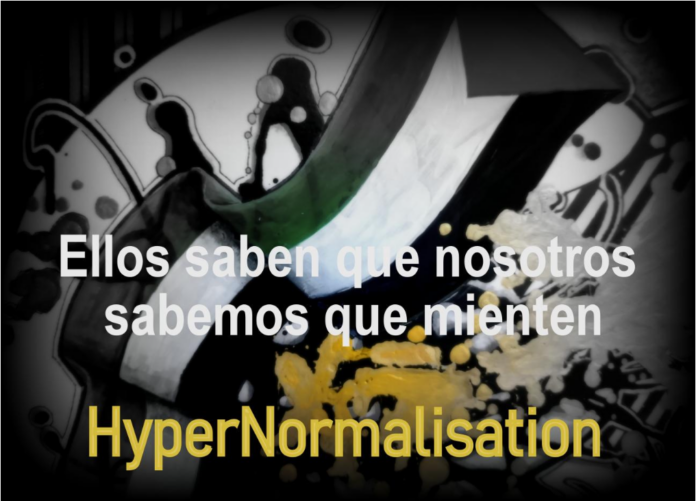
Ellos saben que nosotros sabemos que mienten
Adam Curtis (2016)
Roberto Rosique

Hace diez años, Adam Curtis (2016)1 sacó al aire un documental denominado HyperNormalisation, un término acuñado por el antropólogo Alexéi Yurchak (2005), 2 en el que describe la paradoja de un sistema social y político que todos saben que está en crisis o es ficticio, pero que, al mismo tiempo, todos aceptan y reproducen como si fuera normal. Esa “normalidad artificial”


1 Es un documentalista británico y escritor, conocido por sus ensayos audiovisuales producidos para la BBC. Su obra combina archivo histórico, narración crítica y montaje experimental para explorar las conexiones entre política, economía, psicología y cultura contemporánea. Entre sus trabajos más influyentes se encuentran The Century of the Self (2002), The Power of Nightmares (2004), Bitter Lake (2015) y HyperNormalisation (2016), en el que cuestiona las ficciones colectivas que sostienen el orden social y político. 2 Yurchak, A. (2005). Everything was forever, until it was no more: The last Soviet generation. Princeton University Press.

se vuelve más real que la realidad misma, porque las personas continúan actuando dentro de ella sin alternativas visibles, consolidando una ficción colectiva que organiza la vida cotidiana, en la que revela estructuras ocultas y abre la caja de Pandora del neoliberalismo; nos invita a comprender en qué lugar de la historia nos encontramos. A pesar del tiempo transcurrido, su contenido no ha perdido vigencia: sigue permitiendo corroborar el engranaje de un sistema del que no podemos liberarnos con facilidad.

Los tiempos convulsos actuales invitan a reflexionar sobre esa narrativa fílmica, cuya correlación con la realidad sociopolítica resulta innegable. Intento ponerla en diálogo con el arte, del que tampoco queda exento: ¿de qué manera se relacionan ambos campos y cómo podemos, a través de este recurso, revertir algunas de las consecuencias de esa ficción normalizada? El propósito es abrir grietas en ella, producir conciencia, generar preguntas y mantener viva la posibilidad de lo inesperado. En este sentido, el arte, en diálogo con Curtis, se convierte en un dispositivo para restituir lo real frente a la simulación.

El documental de Adam Curtis constituye una de las reflexiones audiovisuales más incisivas sobre las transformaciones políticas, culturales y simbólicas que configuran la realidad contemporánea. A través de una narración fragmentaria basada en material de archivo, Curtis analiza cómo, desde la década de 1970, los sistemas de poder —políticos, económicos y tecnológicos— han optado por construir relatos simplificados de la realidad para gestionar su creciente complejidad. Estos relatos, aunque reconocidos como artificiales, han sido aceptados colectivamente como normales, dando lugar al fenómeno denominado “hipernormalización”.

Uno de los aspectos más relevantes del documental es su análisis del colapso de las narrativas políticas tradicionales. Curtis muestra cómo los Estados, ante la imposibilidad de controlar procesos económicos y sociales cada vez más complejos, sustituyeron la acción política real por la gestión de imágenes, emociones y discursos. Esta sustitución ha generado una política basada en la simulación, donde la estabilidad aparente se mantiene mediante ficciones consensuadas que ocultan conflictos estructurales no resueltos.

Otro eje central del documental es la centralidad de los medios de comunicación y la cultura visual en la construcción de la realidad contemporánea. Curtis evidencia cómo las imágenes, los datos y los relatos mediáticos no solo informan, sino que producen realidad, moldeando la percepción colectiva del mundo. En este contexto, la información deja de funcionar como conocimiento crítico y se transforma en un flujo continuo que genera desorientación, ansiedad y pasividad social.

Asimismo, HyperNormalisation aporta una reflexión fundamental sobre el poder simbólico, entendiendo este como la capacidad de imponer una visión del mundo que es aceptada como natural. Esta idea conecta con teorías sociológicas contemporáneas, como las de Pierre Bourdieu, al mostrar cómo la dominación actual opera menos por coerción directa y más por la internalización de narrativas que estructuran el pensamiento y la experiencia cotidiana. El documental revela cómo el ciudadano contemporáneo habita un sistema que reconoce como fallido, pero del cual no logra desprenderse.

Otro aspecto clave es la representación de un estado de crisis permanente, caracterizado por la fragmentación del sentido, la pérdida de referentes ideológicos y la incapacidad de imaginar futuros alternativos. Curtis no propone soluciones ni proyectos utópicos; su objetivo es evidenciar la lógica de un presente bloqueado, donde la conciencia crítica no conduce necesariamente a la transformación. Esta condición resulta especialmente significativa para comprender fenómenos actuales como el desencanto político, la polarización social y la expansión de discursos simplistas o populistas.

El aporte principal de este testimonio visual a la realidad contemporánea radica en su capacidad para hacer visible lo invisible: los mecanismos simbólicos que sostienen un sistema en crisis. El documental funciona como una cartografía crítica del presente, que no busca ordenar el caos, sino exponerlo en toda su complejidad. De este modo, invita al espectador a cuestionar las narrativas que estructuran su percepción del mundo y a reconocer el papel activo que desempeña en la reproducción de estas ficciones.

En términos generales, HyperNormalisation no es únicamente un documental político; es sobre todo una herramienta crítica para comprender la condición contemporánea. Su valor reside en ofrecer un diagnóstico lúcido del presente, revelando cómo la normalización de la ficción se ha convertido en una estrategia central del poder, y cómo esta lógica atraviesa la política, la cultura, los medios y la experiencia cotidiana. En un contexto marcado por la incertidumbre y la saturación informativa, el documental aporta una clave fundamental para pensar críticamente la realidad en la que vivimos.

HyperNormalisation y la sociología del arte: poder simbólico, campo artístico y crítica contemporánea
Adam Curtis ofrece en el documental un marco analítico especialmente útil para la sociología del arte, al revelar los mecanismos simbólicos mediante los cuales se construye y naturaliza la realidad contemporánea. Aunque el filme no aborda el arte de manera explícita, sus planteamientos permiten comprender de forma crítica el funcionamiento del campo artístico, sus estructuras de poder y los procesos de legitimación cultural que lo atraviesan.

Uno de los aportes fundamentales del documental es su análisis del poder simbólico, entendido como la capacidad de imponer relatos que organizan la percepción colectiva del mundo. Desde la sociología del arte, y en particular desde la teoría de Pierre Bourdieu, el arte constituye un espacio privilegiado de producción simbólica, donde agentes como artistas, críticos, curadores, museos y mercados disputan el control del significado y del valor cultural. HyperNormalisation permite observar cómo estos relatos no solo describen la realidad, sino que la producen, estableciendo marcos de interpretación que se aceptan como naturales incluso cuando su carácter artificial es evidente.

El documental también resulta esclarecedor para pensar el campo artístico como un sistema potencialmente hipernormalizado. En términos bourdieusianos, el campo del arte funciona mediante reglas específicas que organizan el acceso al reconocimiento y al prestigio simbólico. Curtis muestra cómo, en la sociedad contemporánea, muchos sistemas continúan operando a pesar de ser reconocidos como fallidos, debido a la ausencia de alternativas imaginables. Esta lógica puede trasladarse al ámbito artístico, donde prácticas críticas e institucionales coexisten en una dinámica que reproduce el sistema incluso cuando lo cuestiona. El arte crítico, en este contexto, corre el riesgo de convertirse en un gesto esperado y neutralizado.

Asimismo, el documental contribuye a reflexionar sobre la tensión entre autonomía y cooptación institucional, uno de los problemas centrales de la sociología del arte contemporáneo. El documental evidencia cómo el poder actual no necesita censurar la crítica, sino que puede integrarla dentro de sus propios marcos simbólicos. De manera análoga, el campo artístico absorbe discursos críticos a través de museos, bienales y mercados, transformándolos en capital simbólico. Esta dinámica plantea interrogantes sobre la eficacia política del arte y sobre los límites reales de su capacidad transformadora.

Otro aspecto relevante es la relación entre habitus, percepción y gusto, conceptos fundamentales en la sociología del arte. Curtis muestra cómo la percepción de la realidad está estructurada por marcos culturales invisibles que condicionan lo que se considera pensable o imaginable. De modo similar, el gusto artístico y la comprensión del arte contemporáneo están mediados por disposiciones sociales que determinan qué estéticas son reconocidas como legítimas y cuáles permanecen excluidas. El documental ayuda a entender cómo estas disposiciones se reproducen y naturalizan, reforzando jerarquías culturales bajo la apariencia de libertad creativa.

En suma, el ensayo fílmico permite repensar el rol social del artista en la contemporaneidad. Al igual que Curtis, muchos artistas ya no se presentan como creadores de objetos estéticos autónomos, sino como productores de cartografías simbólicas que revelan redes de poder, sistemas de control y estructuras invisibles. Desde la sociología del arte, esta transformación implica un desplazamiento del valor estético hacia el valor crítico y cognitivo de la obra, aunque no exento de tensiones con las instituciones que legitiman dichas prácticas.

En conclusión, HyperNormalisation constituye una herramienta teórica valiosa para la sociología del arte al ofrecer una lectura estructural de la realidad contemporánea que permite analizar el campo artístico como un espacio atravesado por relaciones de poder simbólico, procesos de normalización y crisis de la crítica.

HyperNormalisation y su relación con el arte contemporáneo
El documental ofrece, por otro lado, un marco interpretativo fundamental para comprender muchas de las dinámicas conceptuales, estéticas y críticas del arte contemporáneo. A partir del concepto de “hipernormalización”, tomado del antropólogo Alexéi Yurchak, bajo esa premisa Curtis describe una situación histórica en la que los sistemas políticos, económicos y mediáticos continúan funcionando sobre relatos simplificados y ficciones evidentes, aceptadas colectivamente ante la imposibilidad de imaginar alternativas reales. Esta lógica de simulación y colapso simbólico se refleja de manera directa en numerosas prácticas artísticas actuales.

El arte contemporáneo comparte con HyperNormalisation una profunda desconfianza hacia los relatos oficiales del poder y hacia las narrativas de progreso, estabilidad y transparencia. Muchas obras no buscan representar la realidad de forma mimética, sino poner en evidencia la artificialidad de los discursos dominantes, ya sean políticos, mediáticos o económicos. En este sentido, el arte opera como un dispositivo crítico que revela cómo la realidad contemporánea está mediada por imágenes, datos y ficciones que sustituyen la complejidad del mundo por modelos simplificados y emocionalmente eficaces.

El documental también permite comprender la centralidad de la imagen y el espectáculo en la cultura actual, aspecto clave del arte contemporáneo. Curtis muestra cómo el poder actúa cada vez más a través de la gestión de imágenes, emociones y percepciones, lo que conecta con prácticas artísticas basadas en el uso de archivos, material audiovisual, apropiación de imágenes mediáticas y estrategias de montaje. El arte contemporáneo no solo utiliza estos lenguajes, sino que los somete a una lectura crítica, revelando sus mecanismos de producción y manipulación simbólica.

Desde una perspectiva sociológica cercana a la de Pierre Bourdieu, el testimonio de Curtis evidencia el funcionamiento del poder simbólico, entendido como la capacidad de imponer visiones del mundo que son aceptadas como naturales. El campo del arte contemporáneo no está exento de estas dinámicas: museos, bienales y mercados artísticos participan también en la construcción de relatos legitimadores. El documental ayuda a problematizar el papel del arte crítico, planteando la tensión entre denuncia y cooptación institucional, una cuestión central en los debates actuales sobre la eficacia política del arte.

Asimismo, la atmósfera de ansiedad, fragmentación y pérdida de sentido que atraviesa la hipernormalización se manifiesta en muchas estéticas contemporáneas. Instalaciones inmersivas, narrativas discontinuas, obras basadas en el exceso de información o en el colapso visual expresan un estado de crisis estructural, más que una voluntad de ofrecer soluciones. El arte contemporáneo, al igual que el documental, no pretende clarificar el mundo, sino hacer visible su complejidad, contradicción e inestabilidad.

En este contexto, el artista adopta un rol cercano al del analista o cartógrafo: no propone utopías cerradas, sino que mapea redes de poder, sistemas de control y flujos simbólicos que configuran la experiencia contemporánea. HyperNormalisation refuerza esta concepción del arte como una forma de pensamiento crítico visual, capaz de generar conciencia sobre los mecanismos invisibles que estructuran la realidad.

En conclusión, HyperNormalisation constituye una herramienta teórica clave para comprender el arte contemporáneo como una práctica situada en un mundo dominado por la simulación, la hipermediación y la crisis de los grandes relatos. Su valor reside en ofrecer un diagnóstico lúcido del presente que permite repensar el papel del arte no como solución, sino como espacio de resistencia simbólica, cuestionamiento crítico y reflexión colectiva.

Enero, 2026

Arte prehistórico: primeras manifestaciones artísticas

Arte prehistórico: primeras manifestaciones artísticas

Arte prehistórico: primeras manifestaciones artísticas

¿Qué es el arte prehistórico?

El arte prehistórico comprende el conjunto de producciones simbólicas y materiales realizadas por los seres humanos antes de la invención de la escritura. Incluye imágenes, objetos, construcciones y marcas con valor expresivo, ritual, social o simbólico, producidas desde los primeros homínidos hasta el inicio de las civilizaciones históricas.

Se trata de una categoría amplia que abarca decenas de miles de años y múltiples regiones del planeta. El arte prehistórico no se limita a pinturas rupestres: incluye esculturas, grabados, objetos portátiles, arquitectura megalítica y utensilios con carga simbólica.

Hoy se entiende que estas manifestaciones no fueron decorativas ni ingenuas, sino formas complejas de pensamiento simbólico, estrechamente vinculadas a la vida social, espiritual y cognitiva de las primeras comunidades humanas.

Antigüedad y expansión del arte prehistórico

Durante mucho tiempo se creyó que el arte prehistórico surgió hace unos 40.000 años, con las pinturas rupestres del Paleolítico superior en Europa. Sin embargo, investigaciones recientes han ampliado radicalmente este horizonte temporal.

Existen evidencias de comportamientos simbólicos:

  • en África austral, con grabados abstractos de más de 75.000 años,
  • en Europa, asociados a grupos neandertales de más de 65.000 años,
  • y posibles objetos con intención simbólica aún más antiguos, cuya interpretación sigue siendo debatida.

El arte prehistórico se desarrolló de manera independiente en distintas regiones del mundo, acompañando la expansión del ser humano y dando lugar a tradiciones visuales y simbólicas diversas.

Características del arte prehistórico

El arte prehistórico es extraordinariamente diverso, pero comparte algunos rasgos generales:

Técnicas

Se utilizaron procedimientos como:

  • talla por percusión, abrasión y pulido,
  • grabado sobre piedra, hueso o madera,
  • aplicación de pigmentos mediante pinceles rudimentarios,
  • aerografiado (soplado de pigmento),
  • estarcido, especialmente para manos en negativo.

Materiales

Los materiales empleados provenían del entorno inmediato:

  • piedra, sílex, hueso, marfil y madera,
  • carbón vegetal, ocre, hematita y otros minerales,
  • grasas animales y pigmentos orgánicos como aglutinantes.

Temáticas y símbolos

Las representaciones incluyen:

  • animales (bisontes, caballos, ciervos, mamuts),
  • figuras humanas y seres híbridos,
  • manos, signos abstractos y motivos geométricos,
  • figuras femeninas asociadas a la fertilidad,
  • escenas rituales, de caza o narrativas simbólicas.

Lejos de ser simples ilustraciones, estas imágenes estaban ligadas a creencias, rituales, conocimientos y estructuras sociales.

Historia del arte prehistórico

El origen exacto del arte prehistórico sigue siendo objeto de debate. Se sabe que:

  • los neandertales practicaban conductas simbólicas complejas,
  • los humanos anatómicamente modernos desarrollaron una gran diversidad de expresiones artísticas,
  • el arte se volvió más variado a medida que las sociedades se hicieron más complejas.

El desarrollo del arte acompañó procesos clave como:

  • la organización social,
  • la transmisión cultural,
  • la relación con el territorio,
  • y la emergencia del pensamiento abstracto.

Períodos del arte prehistórico

El arte prehistórico suele organizarse según los grandes períodos de la Edad de Piedra:

Arte paleolítico

Es el más antiguo. Incluye pinturas rupestres, grabados y pequeñas esculturas. Predominan los animales, los signos abstractos y las figuras simbólicas.

Arte mesolítico

Período de transición. Aparecen escenas más dinámicas y narrativas, con figuras humanas estilizadas, especialmente en el arte levantino de la península ibérica.

Arte neolítico

Con la sedentarización y la agricultura, el arte incorpora:

  • cerámica decorada,
  • nuevas técnicas constructivas,
  • arquitectura y arte megalítico,
  • una mayor relación con el territorio y los ciclos naturales.

Tipos de arte prehistórico

Arte parietal

Conjunto de pinturas, grabados y relieves realizados sobre paredes y techos de cuevas y abrigos rocosos. Es una de las formas más estudiadas del arte paleolítico.

Arte mobiliar

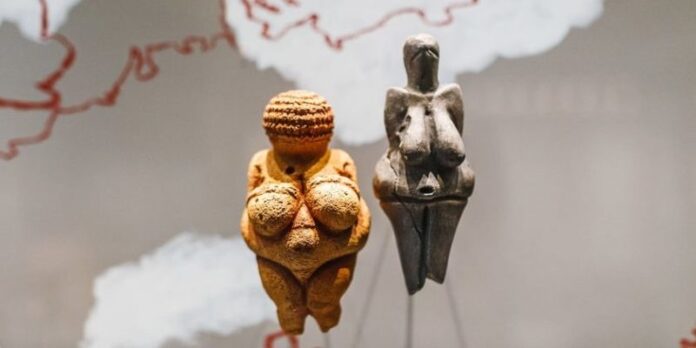
Objetos transportables con valor simbólico, como figurillas, utensilios decorados y esculturas pequeñas, entre ellas las llamadas “venus”.

Arte megalítico

Grandes construcciones de piedra, como:

  • menhires,
  • dólmenes,
  • cromlechs.

Estas estructuras suelen estar vinculadas a rituales funerarios, organización social o conocimientos astronómicos.

Ejemplos destacados de arte prehistórico

Entre las manifestaciones más conocidas se encuentran:

  • las pinturas rupestres de Altamira (España),
  • las cuevas decoradas de Chauvet (Francia),
  • la Venus de Willendorf (Austria),
  • el arte parietal de Tito Bustillo (España),
  • monumentos megalíticos como Stonehenge (Inglaterra).

Cada uno de estos ejemplos muestra el alto grado de complejidad técnica, simbólica y estética alcanzado por las sociedades prehistóricas.

Relectura contemporánea

Hoy el arte prehistórico se estudia no como un antecedente rudimentario del arte moderno, sino como una expresión plena del pensamiento humano. Estas obras revelan que la capacidad simbólica, creativa y estética es constitutiva de nuestra especie desde sus orígenes.

Lejos de ser un simple inicio, el arte prehistórico representa uno de los cimientos fundamentales de la cultura humana.

Cierre

El arte prehistórico demuestra que crear símbolos, imágenes y espacios rituales fue una necesidad tan antigua como el lenguaje o la organización social. Comprender estas primeras manifestaciones artísticas nos permite entender no solo el pasado de la humanidad, sino la raíz misma del arte como forma de conocimiento y experiencia compartida.

Art Evaluation: How to Appreciate Art

Frits Thaulow
Frits Thaulow Water Mill 1892

Art Evaluation: How to Appreciate Art

Appreciating art is not about having the “right” answer — it is about learning how to see, feel, and think with greater awareness. Every artwork invites a conversation between the artist and the viewer, and that dialogue begins not with analysis, but with perception.

To truly appreciate art, we move through four essential stages: observation, analysis, context, and interpretation. Each deepens our relationship with the work and allows us to experience it not just visually, but intellectually and emotionally.

1. Observe & React — The First Look

The first moment you encounter a work of art is the most honest. Before reading a label or trying to “understand” it, simply let yourself feel.

Ask yourself:

  • What is my immediate emotional response?
  • Do I feel calm, curious, unsettled, inspired, or confused?

This instinctive reaction is not random — it is the artwork communicating directly with you.

Then begin to look carefully:

  • Notice the colors, shapes, lines, textures, and scale.
  • Observe whether the work feels dense or open, loud or quiet, rigid or flowing.
  • Let your eyes travel through the composition. Where do they go first? What holds your attention?

At this stage, there is no judgment — only awareness.

2. Analyze & Understand — The Deeper Dive

Once you’ve taken in the surface of the artwork, you can begin to explore how it was made and why it feels the way it does.

Look for:

  • Elements of design: light, contrast, balance, rhythm, movement
  • Techniques: brushstrokes, layering, carving, stitching, or digital construction
  • Materials: paint, metal, fabric, clay, wood, video, or mixed media

Ask:

  • Is the surface smooth or rough?
  • Is the composition tight or expansive?
  • How does the artist guide your eye?

This stage helps you see the artwork as a deliberate construction, not just an image.

3. Contextualize — The Detective Work

Art does not exist in a vacuum. Every piece is shaped by the artist’s life, culture, and historical moment.

Now is the time to ask:

  • Who created this?
  • When and where was it made?
  • What was happening socially, politically, or artistically at that time?

Reading a wall label or exhibition text can enrich your understanding — but it should never replace your own experience. Let information add depth, not override your personal response.

4. Interpret & Discuss — Finding Meaning

Finally, art becomes a space for meaning.

Ask yourself:

  • What ideas or emotions does this work suggest to me?
  • What story, question, or feeling does it leave behind?

There is no single correct interpretation. Art is not a puzzle to be solved, but a conversation to be entered. Talking about a work with others often reveals perspectives you may never have considered — and that’s part of its power.

Your reaction matters. Your experience is valid.

Why This Process Matters

Art appreciation is not about expertise — it is about attention. When you learn how to slow down, look, and think, every artwork becomes richer.

Whether in a museum, a gallery, or a public space, this four-step approach transforms viewing into understanding and observation into connection.

Art doesn’t demand that you know everything.
It only asks that you look, feel, and stay curious.

Best Art Supplies in Miami: Where Creativity Finds Its Tools

art supplies stores in miami

Best Art Supplies in Miami: Where Creativity Finds Its Tools

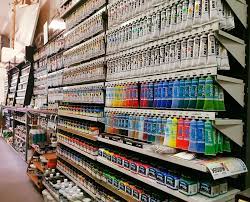
Miami is not only a global hub for contemporary art, it’s also a city that fuels the creative spirit with energy, color, and culture. From street art in Wynwood to fine art studios in Coral Gables, Miami’s art scene is thriving—and for every masterpiece, quality materials are a must.

Whether you’re a professional painter, muralist, sculptor, or an art student just starting out, here are the best places to buy art supplies in Miami, offering everything from essential basics to hard-to-find specialty materials.

Blick Art Materials – Miami Design District

Location: 50 NE 36th St, Miami, FL 33137
Website: blick.com

Why It’s Great:
Blick is a national favorite among artists, and its Miami location in the heart of the Design District is a go-to destination for professionals and students alike. They stock everything—oil paints, acrylics, brushes, canvases, markers, printmaking tools, easels, and more. The staff is knowledgeable, and the selection includes both student-grade and premium materials.

Bonus: Regular sales, in-store demos, and a generous student discount.

Artist & Craftsman Supply – Little Havana

Location: 1001 SW 8th St, Miami, FL 33130
Website: artistcraftsman.com

Why It’s Great:
This independently owned, employee-run store is a gem. It’s full of character and offers a wide range of high-quality supplies for painters, sculptors, illustrators, printmakers, and crafters. The shop is known for its great customer service and creative energy.

Best For: Unique brands, eco-friendly options, and hard-to-find pigments and tools.

Caza Art Supplies – Doral

Location: 3555 NW 79th Ave, Doral, FL 33122
Website: cazaartsupplies.com

Why It’s Great:
Caza is the go-to spot for muralists and graffiti artists in Miami. They specialize in street art supplies and carry top brands like MTN, Montana, Posca, Krink, and more. If you’re working with spray paint or looking to do large-scale wall work, this is your place.

Pro Tip: Follow them on social media for artist showcases and street art events.

Michael’s – Various Locations

Notable Locations:

  • 3201 N Miami Ave, Miami, FL 33127 (Midtown)
  • 8303 W Flagler St, Miami, FL 33144

Website: michaels.com

Why It’s Great:
Though it’s a chain, Michael’s is widely accessible and perfect for mixed-media artists, crafters, and hobbyists. They offer framing services, craft kits, and beginner-level art supplies at affordable prices. Great for quick pickups and seasonal projects.

Jerry’s Artarama – West Miami

Location: 12948 SW 87th Ave, Miami, FL 33176
Website: jerrysartarama.com

Why It’s Great:
Jerry’s is a reliable favorite with a massive selection and competitive prices. From fine art supplies to bulk options for educators and students, it’s a one-stop shop for artists of all disciplines.

Highlights: Affordable canvas packs, wide range of brushes, and professional-grade brands.

Bonus: Online + Hybrid Options

If you prefer to shop online but need something quickly, Blick and Jerry’s both offer in-store pickup. Many Miami-based artists also use Amazon for tools and then turn to local shops for paints, surfaces, and specialty materials.

Final Thoughts: Where to Start?

  • Need fine art materials? Try Blick or Jerry’s.
  • Looking for spray paint and street art supplies? Head to Caza.
  • Want affordable crafting or framing options? Michael’s is your best bet.
  • Prefer a local, artist-run vibe? Artist & Craftsman is your store.

Wherever your creative journey takes you, these Miami art supply stores offer the tools, materials, and inspiration to help bring your ideas to life.

Page 21 of 277
1 19 20 21 22 23 277