Home Blog Page 2

Dibujos en el desierto: las Líneas de Nazca como acto artístico fundacional

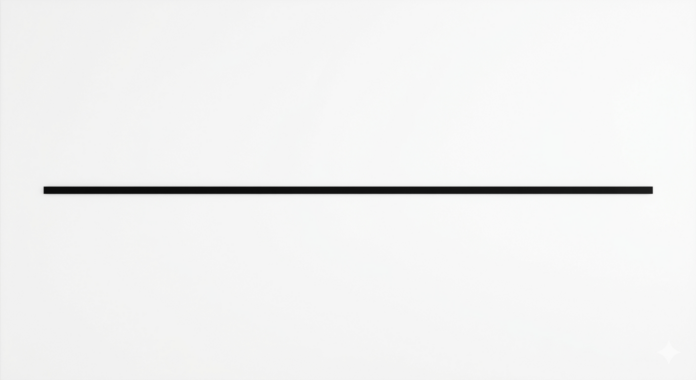
La línea

Dibujos en el desierto: las Líneas de Nazca como acto artístico fundacional

“Sobre el gesto, el rito y la escala imposible de una obra que nadie pudo ver”

I. El problema de la escala

Existe una paradoja estructural en el corazón de las Líneas de Nazca que ningún sistema estético ha resuelto del todo: se trata de obras de arte que sus propios creadores nunca pudieron contemplar en su totalidad. Trazadas sobre las pampas desérticas del sur del Perú entre los años 500 a.C. y 500 d.C. por la cultura Nazca —y en fases anteriores por la cultura Paracas—, estas figuras de proporciones colosales solo revelan su forma completa desde el aire, una perspectiva que sus autores no tenían disponible. Esta condición no es un accidente técnico. Es, arguyo, el núcleo filosófico de toda la empresa visual.

La superficie donde se inscriben mide aproximadamente 629 kilómetros cuadrados entre las pampas de Nazca y Palpa. Sobre ella se despliegan más de 800 líneas rectas, 300 figuras geométricas y centenares de figuras figurativas —aves, monos, arañas, ballenas, figuras humanas— cuya longitud oscila entre los metros y los trescientos metros. El colibrí mide 93 metros; el mono, 110. Las líneas más largas se extienden casi 30 kilómetros sin interrupción apreciable. La combinación de estas cifras sitúa al conjunto fuera de cualquier categoría convencional de representación.

“Las Líneas de Nazca son uno de los mayores enigmas de la arqueología debido a su cantidad, naturaleza, tamaño y continuidad.” — UNESCO, Inscripción como Patrimonio de la Humanidad, 1994

Esta imposibilidad perceptiva —hacer sin ver— resuena con fuerza en el arte contemporáneo y sus discusiones sobre proceso, intención y receptor. Obras conceptuales, land art, arte relacional: todos estos movimientos han reflexionado sobre la distancia entre el gesto creador y la experiencia del espectador. Las Líneas de Nazca llevan esa distancia a su extremo lógico: aquí el espectador totalizador no existe. O, mejor dicho, existe solo en el plano de lo divino, de lo cósmico, de aquello a lo que la obra está dedicada.

II. Historia de la mirada científica

La historia académica de las Líneas de Nazca es también la historia de cómo una civilización moderna aprende a mirar algo para lo que no tiene categorías. El arqueólogo peruano Toribio Mejía Xesspe fue el primero en reportarlas científicamente en 1927, aunque las percibió caminando por las laderas —es decir, desde una perspectiva tangencial, nunca cenital. No fue hasta que los pilotos militares y civiles peruanos comenzaron a sobrevolar la zona cuando la magnitud real del conjunto se hizo visible.

El antropólogo estadounidense Paul Kosok llegó al desierto de Nazca entre 1940 y 1941 con el propósito original de estudiar los antiguos sistemas de irrigación. Desde el aire comprendió que miraba algo radicalmente diferente. Su observación de que varias líneas convergían en el horizonte durante el solsticio de invierno del hemisferio sur lo llevó a proponer que el conjunto funcionaba como “el calendario astronómico más grande del mundo”, orientado hacia los movimientos del sol, la luna y especialmente las Pléyades. Esta hipótesis, desarrollada con rigor en su obra póstuma Life, Land and Water in Ancient Peru (1965), establecería el paradigma dominante durante décadas.

Fue la matemática y arqueóloga alemana María Reiche quien llevó la hipótesis astronómica a su mayor elaboración. Reiche dedicó más de cuarenta años al estudio, cartografía y conservación de los geoglifos. Vivió en el desierto, midió con sus propias manos cada figura, e identificó correspondencias entre las figuras y constelaciones específicas: la araña con Orión, el mono con la Osa Mayor. Su trabajo fue decisivo para que la UNESCO inscribiera el sitio como Patrimonio de la Humanidad en 1994. Sin embargo, el propio Anthony Aveni, astrónomo de la Universidad de Colgate y uno de los mayores especialistas en arqueoastronomía andina, revisó sistemáticamente la hipótesis y no encontró evidencia suficiente para sostenerla. Sus líneas no apuntaban a los cuerpos celestes con la consistencia que una función calendárica requeriría.

III. El agua, el rito, el territorio sagrado

El paradigma interpretativo cambió de manera sustancial a partir de 1997, cuando el arqueólogo alemán Markus Reindel —del Instituto Arqueológico Alemán— y el arqueólogo peruano Johny Isla —del Instituto Andino de Estudios Arqueológicos— iniciaron el Proyecto Nasca-Palpa, el primer estudio de campo sistemático y multidisciplinar sobre los geoglifos. Durante más de dos décadas, el equipo documentó y excavó más de 650 yacimientos, comparó la iconografía de las líneas con la cerámica de la cultura Nazca y aplicó técnicas de teledetección, fotogrametría e imágenes de alta resolución.

Las conclusiones de Reindel e Isla reorientaron el debate. En las pequeñas cavidades halladas en el interior de los geoglifos encontraron ofrendas de productos agrícolas y animales, especialmente marinos. Las estacas de madera y cuerdas halladas en los extremos de algunas líneas —uno de cuyos fragmentos fue datado por carbono-14, estableciendo la cronología del conjunto— sugerían herramientas de trazado y también de demarcación ritual. La conclusión a la que llegaron fue que los geoglifos constituían un paisaje ritual cuya función principal era la invocación del agua: un recurso crítico en una de las zonas más áridas del planeta, donde la presencia de precipitaciones podía significar la diferencia entre la supervivencia y el colapso de una comunidad agrícola.

Esta lectura se ve reforzada por los hallazgos de Nicola Masini y Giuseppe Orefici en la Pampa de Atarco, próxima al centro ceremonial de Cahuachi. Utilizando sensores remotos —desde imágenes satelitales hasta drones—, los investigadores identificaron cinco grupos de geoglifos con motivos, patrones y funciones diferenciadas. El grupo más significativo presenta motivos en zigzag y meandros con función claramente ceremonial, cruzados por trapecios y líneas que convergen hacia las pirámides de Cahuachi. Este vínculo espacial, funcional y religioso entre los geoglifos y el complejo templario de Cahuachi es, en la actualidad, uno de los consensos más sólidos de la investigación arqueológica sobre el sitio.

“Cahuachi era un centro ceremonial. La gente venía desde las montañas y desde la costa trayendo ofrendas.” — Giuseppe Orefici, excavador principal de Cahuachi

Cahuachi fue la capital religiosa de la cultura Nazca: un complejo de más de cuarenta montículos con estructuras de adobe, cementerios rituales, cámaras de ofrendas y evidencia de peregrinación desde zonas distantes. No era un asentamiento permanente, sino un espacio de congregación periódica. Las investigaciones de la Universidad de Yamagata en Japón —dirigidas por el arqueólogo Masato Sakai— propusieron en 2015 que las Líneas de Nazca funcionaban como el camino de peregrinación hacia Cahuachi: cuatro tipos distintos de geoglifos agrupados a lo largo de diferentes rutas convergentes hacia el centro ceremonial. Los fragmentos de cerámica hallados en los puntos de intersección de las líneas refuerzan la idea de tránsito humano, de procesión, de cuerpos moviéndose a través del desierto siguiendo las figuras trazadas en el suelo.

IV. La revolución tecnológica y el corpus ampliado

En las dos últimas décadas, el corpus conocido de geoglifos ha crecido de manera exponencial gracias a la incorporación de drones y, más recientemente, de inteligencia artificial. Cuando la UNESCO declaró el sitio Patrimonio de la Humanidad en 1994, se conocían poco más de treinta figuras. En 2022 el número ascendía a 358. En 2024, el equipo del Instituto Nazca de la Universidad de Yamagata, en colaboración con el Centro de Investigación Thomas J. Watson de IBM, publicó en las Proceedings of the National Academy of Sciences (PNAS) el descubrimiento de 303 nuevos geoglifos figurativos mediante un algoritmo de inteligencia artificial entrenado con miles de fotografías aéreas de alta resolución. De los 303 hallazgos, 178 fueron identificados por la IA y posteriormente verificados en campo por arqueólogos. El número total de geoglifos documentados en 2025 supera ya los 893.

Pero el hallazgo no es solo cuantitativo. El análisis de Sakai y su equipo revela una distinción cualitativa fundamental: existen dos grandes tipos de geoglifos según su técnica y función. Los geoglifos de tipo lineal —de mayor tamaño, trazados retirando la capa superior de guijarros rojizos para exponer el suelo amarillento inferior— se concentran en los puntos de inicio y fin de la red de senderos y están conectados con Cahuachi y otros lugares sagrados. Los de tipo relieve —más pequeños, construidos acumulando material— se encuentran a una distancia media de 43 metros de los senderos y eran visibles para quienes los recorrían a pie. La hipótesis que emerge es que los primeros organizaban el territorio sagrado a escala territorial; los segundos acompañaban al peregrino en su trayecto, como señales visuales de una narrativa mítica desplegada sobre el suelo del desierto.

V. Patrimonio en disputa: la dimensión política

Ningún análisis del sitio puede ignorar su dimensión política y su fragilidad como patrimonio. En mayo de 2025, el Ministerio de Cultura del Perú emitió una resolución que reducía el área protegida de la Reserva Arqueológica de Nasca de 5.633 a 3.235 kilómetros cuadrados. La medida generó una reacción inmediata de la comunidad arqueológica nacional e internacional: el Colegio Profesional de Arqueólogos del Perú solicitó la renuncia de los funcionarios involucrados, el Congreso presentó mociones de interpelación al ministro de Cultura, y medios como El País y la alemana DW advirtieron sobre el riesgo de exposición a la minería informal. En junio de 2025, el Ministerio anuló la resolución y restableció el perímetro original. El episodio revela la tensión persistente entre los imperativos económicos y la protección de un legado que pertenece, en rigor, a toda la humanidad.

VI. Las Líneas como proposición artística

¿Qué significa, para un proyecto artístico contemporáneo, invocar las Líneas de Nazca? No como fuente iconográfica ni como referencia exótica, sino como proposición filosófica sobre la naturaleza misma de la práctica artística. Las Líneas plantean preguntas que la teoría del arte no ha terminado de absorber: ¿puede existir una obra sin espectador? ¿Qué diferencia hay entre un acto ritual y un acto estético? ¿Es la escala un problema o una condición de posibilidad? ¿Puede el proceso —el acto colectivo de trazar, de caminar, de ofrecer— ser la obra misma, independientemente de cualquier resultado visible?

Reindel ha descrito la construcción y mantenimiento de las líneas como “actividades comunales —como construir una catedral”. Esta analogía es iluminadora: la catedral gótica tampoco era comprensible en su totalidad para quienes la edificaban piedra a piedra. Ambas son obras de una fe que organiza el trabajo colectivo hacia un horizonte que excede la experiencia individual. La diferencia es que la catedral apunta hacia arriba —hacia el espacio interior que alberga a la comunidad— mientras que las Líneas de Nazca apuntan hacia abajo, inscribiéndose en la tierra con la misma vocación de permanencia y el mismo sentido de ofrenda.

Para el proyecto artístico que este texto acompaña, las Líneas de Nazca funcionan como un antecedente radical: la demostración de que el arte puede existir en una escala que excede la percepción individual, que puede ser colectivo en su ejecución y cósmico en su destinatario, que puede habitar la frontera entre el gesto humano y el paisaje, entre la necesidad material y el deseo simbólico. Son la obra más grande que la humanidad haya trazado sin saber que la estaba trazando para nosotros, desde el futuro, desde el aire.

Referencias académicas principales

Kosok, P. (1965). Life, Land and Water in Ancient Peru. Long Island University Press.

Reindel, M. & Isla, J. (2006). “Proyecto Arqueológico Nasca-Palpa: Documentación, restauración y conservación de los geoglifos.” Andes, 5.

Aveni, A. F. (2000). Between the Lines: The Mystery of the Giant Ground Drawings of Ancient Nasca, Peru. University of Texas Press.

Masini, N. & Orefici, G. (2010). “Geoglyphs and Spatial Organization of the Nazca Territory.” Journal of Cultural Heritage, 11(4), 406–415.

Sakai, M. et al. (2024). “Comprehensive documentation of Nazca figurative geoglyphs.” Proceedings of the National Academy of Sciences (PNAS), 121(39).

Orefici, G. (1993). Nasca: Arte e storia di un popolo del deserto. Newton Compton.

UNESCO. (1994). Inscripción de las Líneas y Geoglifos de Nasca y Pampas de Jumana. Comité de Patrimonio Mundial.

Helaine Silverman & Donald Proulx. (2002). The Nasca. Blackwell Publishing.
La línea: ontología de un gesto universal

La línea

La línea: ontología de un gesto universal

De Euclides a las Líneas de Nazca: la línea como acto, como abstracción y como obra

Prólogo — El gesto más antiguo

Antes de la palabra, antes del nombre, antes de la imagen reconocible, el ser humano trazó una línea. Sobre piedra, sobre barro, sobre la piel del mundo. Ese gesto —tan simple que parece no merecer explicación— es en realidad el acto fundacional de toda representación, toda abstracción, toda medición del espacio. La línea no es solo un elemento formal: es la primera hipótesis que la humanidad formuló sobre la naturaleza de la realidad. Decir que algo es una línea es decir que existe una dirección, una intención, una distancia entre dos puntos. Es decir que el espacio tiene estructura. Las Líneas de Nazca, trazadas en el desierto peruano hace más de dos mil años, no son la excepción a este principio. Son su manifestación más radical, más desconcertante y más bella.

I. La línea como definición — Euclides y la geometría del mundo

En torno al año 300 a.C., en Alejandría, el matemático griego Euclides compiló y sistematizó el conocimiento geométrico de su tiempo en los trece libros de los Elementos. El gesto inaugural de esa obra monumental es también el más austero: Euclides comenzó definiendo los términos con los que no podía proceder de otra manera. “Un punto es aquello que no tiene partes”, escribió. Y luego: “Una línea es una longitud sin anchura.” Esta definición, que a primera vista parece trivial, es en realidad uno de los actos más profundos del pensamiento occidental. Euclides comprendió que la línea no puede derivarse de nada más elemental: es un primitivo, un término indefinible en términos aún más simples. La línea es el límite entre lo que existe y lo que no; es la frontera misma.

El quinto postulado de Euclides —el llamado “postulado de las paralelas”— afirma que por un punto exterior a una recta pasa exactamente una recta paralela a ella. Durante dos mil años esta proposición fue considerada una verdad necesaria, una certeza tan firme como la propia lógica. Sin embargo, en el siglo XIX, Carl Friedrich Gauss, János Bolyai y Nikolái Lobachevski demostraron por separado que podían existir geometrías coherentes en las que el postulado no se cumple: geometrías donde las paralelas eventualmente se cruzan, o donde divergen indefinidamente. Este descubrimiento no destruyó a Euclides. Lo transformó: reveló que la geometría euclidiana es una entre muchas geometrías posibles, la que describe con precisión el espacio plano y local, el espacio de la experiencia cotidiana. Las líneas de Nazca, trazadas sobre la pampa desértica con una precisión que asombra a los ingenieros modernos, habitan ese espacio euclidiano. Son líneas rectas en el sentido más puro: longitud sin anchura, dirección sin volumen.

“Una línea es una longitud sin anchura.” — Euclides, Elementos, Definición 2, c. 300 a.C.

El filósofo presocrático Tales de Mileto, activo en el siglo VI a.C., es considerado uno de los primeros en aplicar el razonamiento deductivo a la geometría. Se le atribuye el teorema que lleva su nombre: cualquier ángulo inscrito en una semicircunferencia es recto. Pero su legado más duradero fue la idea de que las propiedades geométricas —incluidas las de las líneas paralelas— podían derivarse mediante razonamiento puro, sin necesidad de medición física. Esta es la apuesta que la matemática sostuvo durante siglos y que Euclides llevó a su culminación. La línea como concepto puro —independiente de cualquier traza material, de cualquier instrumento— es una abstracción que las culturas prematematicas también conocieron de manera intuitiva, pero que los griegos convirtieron en objeto de demostración.

II. La línea como ecuación — Descartes y el espacio cartesiano

En 1637, el filósofo y matemático francés René Descartes publicó La Géométrie como apéndice a su Discurso del método. En ese texto fundacional, Descartes realizó algo aparentemente sencillo y en realidad revolucionario: asignó coordenadas numéricas a los puntos del plano. Con ese gesto, la línea dejó de ser solo un objeto geométrico para convertirse también en un objeto algebraico. Una línea recta pasó a poder escribirse como:y = mx + b

donde m es la pendiente —la dirección de la línea— y b el punto de intersección con el eje vertical. Esta ecuación parece inocente. Pero implica algo extraordinario: que toda línea recta del plano puede ser capturada por dos números. La infinidad de puntos que componen una línea queda reducida a dos parámetros. La geometría y el álgebra dejan de ser disciplinas separadas y se convierten en un lenguaje único. Descartes llamó a su programa una “Vera Mathesis”, una verdadera matemática universal que unificaría todas las ramas del saber cuantitativo. Lo que comenzó como la formalización de la línea recta terminó siendo el fundamento del cálculo diferencial, de la física newtoniana, de la ingeniería moderna y —en última instancia— del álgebra lineal como disciplina autónoma.

III. La línea como estructura — Cayley, Peano y el álgebra lineal

En el siglo XIX, la matematización de la línea alcanzó su nivel más abstracto. El matemático británico Arthur Cayley —jurista de profesión, matemático de vocación— publicó en 1858 su Memoir on the Theory of Matrices, donde introdujo la multiplicación matricial y la noción de matriz inversa. Con ello hizo posible el grupo lineal general: el conjunto de todas las transformaciones lineales del espacio. En ese marco, una línea ya no es solo un conjunto de puntos o una ecuación, sino la imagen de una transformación, el rastro de un operador. Cayley comprendió que tratar una matriz como un objeto único —denotarla con una sola letra, manipularla como un todo— era la clave para una nueva teoría. Su teorema más célebre, el teorema de Cayley-Hamilton, establece que toda matriz cuadrada satisface su propio polinomio característico: la línea, en su forma matricial, contiene en sí misma la descripción de su propio comportamiento dinámico.

En 1888, el matemático italiano Giuseppe Peano fue aún más lejos. En su Calcolo geometrico, Peano formuló la primera definición axiomática moderna de espacio vectorial, refinando el trabajo previo del alemán Hermann Grassmann. Un espacio vectorial es un conjunto de objetos —llamados vectores— que pueden sumarse entre sí y multiplicarse por escalares, siempre que esas operaciones satisfagan diez axiomas precisos. En ese marco, una línea es un subespacio vectorial de dimensión uno: el conjunto de todos los múltiplos escalares de un vector no nulo. La línea deja de ser una figura del plano para convertirse en una estructura algebraica. No importa si sus “vectores” son números, funciones, polinomios o señales físicas: la línea como subespacio vectorial es la misma entidad en todos esos contextos. La abstracción llegó a su máxima pureza.L = { t · v : t ∈ ℝ } — Línea como subespacio vectorial generado por v ≠ 0

La influencia de Peano, ignorada inicialmente, fue redescubierta en 1918 por Hermann Weyl y poco después por Stefan Banach, Hans Hahn y Emmy Noether, quienes construyeron sobre sus axiomas la totalidad del análisis funcional del siglo XX. La línea abstracta de Peano es el hilo que conecta la geometría griega con la mecánica cuántica, con la teoría de la información y con la inteligencia artificial. Toda red neuronal moderna es, en su núcleo, una composición de transformaciones lineales: una arquitectura de líneas en espacios de dimensiones inimaginables.

IV. Línea de tiempo — La historia de la línea

c. 600 a.C. — Tales de MiletoAplica razonamiento deductivo a las propiedades de líneas paralelas y ángulos. Primera sistematización geométrica en el mundo occidental.

c. 300 a.C. — Euclides de AlejandríaDefine la línea como “longitud sin anchura” en los Elementos. Formula los cinco postulados, incluido el postulado de las paralelas. Organiza toda la geometría como sistema deductivo.

500 a.C. – 500 d.C. — Cultura Nazca, PerúTrazado de los geoglifos en la pampa desértica. Líneas rectas de hasta 30 km sin desviación apreciable. La línea como acto ritual, territorial y cosmológico.

1637 — René DescartesPublica La Géométrie. Introduce el sistema de coordenadas cartesianas: la línea recta se convierte en ecuación algebraica. Geometría y álgebra se unifican por primera vez.

1822–1832 — Gauss, Bolyai, LobachevskiDemuestran independientemente que el postulado de las paralelas de Euclides no es universalmente necesario. Nacen las geometrías no euclidianas: la línea paralela deja de ser única.

1844 — Hermann GrassmannPublica Ausdehnungslehre. Introduce los conceptos de independencia lineal, base y dimensión. Precursor directo del espacio vectorial moderno.

1858 — Arthur CayleyFormula la teoría de matrices y el teorema de Cayley-Hamilton. La línea como transformación lineal en el espacio de matrices. Fundación del álgebra lineal abstracta.

1888 — Giuseppe PeanoDefine axiomáticamente el espacio vectorial. La línea queda formalizada como subespacio de dimensión uno: el concepto más simple y más poderoso del álgebra lineal.

1910–1926 — Wassily Kandinsky / Paul KleeEn el Bauhaus, Kandinsky publica Punto y línea sobre plano (1926); Klee declara “una línea es un punto que salió a caminar.” La línea como lenguaje espiritual y psicológico del arte abstracto.

1924–2024 — Arqueología de NazcaDe la primera documentación científica (Tello, 1927) a la inteligencia artificial (Sakai/IBM, 2024): la línea trazada en el desierto sigue revelando nuevas figuras. Hoy se conocen más de 893 geoglifos.

V. Líneas reales e imaginarias — La filosofía de lo que no se puede tocar

La geometría euclidiana trabaja con dos clases de líneas que no existen en la naturaleza: la línea recta infinita y las líneas paralelas. Ninguna cuerda, ningún rayo de luz, ninguna carretera es perfectamente recta o perfectamente paralela a otra. Son abstracciones: entidades que la mente puede concebir con perfecta claridad y que la materia no puede realizar con perfecta fidelidad. Esta tensión entre lo ideal y lo real es el corazón mismo de las matemáticas y, puede argumentarse, del arte también.

Pero existen también líneas que son imaginarias en un sentido más literal: líneas que no existen como objetos físicos pero que organizan nuestra percepción del mundo. La línea del horizonte no es una cosa: es el límite de nuestra visión, el lugar donde la curvatura de la Tierra oculta lo que hay más allá. El ecuador terrestre no tiene existencia material: es una convención matemática que divide el planeta en dos hemisferios. La línea de tiempo —esa metáfora espacial que usamos para ordenar la historia— es una proyección de la experiencia temporal sobre el espacio geométrico. Todas estas “líneas” son construcciones conceptuales que operan en la realidad con tanta eficacia como si fueran físicas. Guían barcos, organizan calendarios, estructuran narrativas.

Las líneas de Nazca habitan una posición ambigua entre lo real y lo imaginario. Son físicamente reales: existen como surcos en el suelo, como diferencias de color entre capas geológicas, como objetos que pueden medirse y fotografiarse. Pero su forma —el colibrí, el mono, la araña— solo existe en la imaginación del espectador que las contempla desde arriba, o en la mente del creador que las concibió antes de trazarlas. La figura es imaginaria; la línea es real. Este desdoblamiento es precisamente lo que las hace tan fascinantes: son la materialización de un pensamiento que solo puede completarse desde una perspectiva que sus autores no tenían, o que tal vez reservaban para sus dioses.

“El arte no reproduce lo visible; hace visible lo invisible.” — Paul Klee

VI. La línea en el arte — Del trazo a la teoría

En la historia del arte occidental, la línea ha sido simultáneamente el gesto más elemental y el más teóricamente cargado. Las pinturas rupestres de Altamira y Lascaux —ejecutadas hace 20.000 años— son ya un ejercicio de línea de contorno: la mano del artista paleolítico captó la silueta del bisonte con una economía de medios que ningún académico posterior mejoraría sustancialmente. La línea de contorno es quizás la forma más pura de representación: presupone un mundo con límites, con superficies, con la distinción entre figura y fondo.

En el siglo XX, la línea alcanzó su mayor elaboración teórica en las manos de Wassily Kandinsky y Paul Klee, ambos profesores del Bauhaus. En Punto y línea sobre plano (1926), Kandinsky construyó una gramática de los elementos pictóricos con rigor casi científico. Distinguió entre líneas líricas y dramáticas, entre las que nacen de la tensión externa y las que emergen de la fuerza interna. Identificó la línea horizontal con el frío, con la muerte, con lo terrestre; la línea vertical con el calor, con lo espiritual, con la elevación. La línea diagonal, oblicua, era para Kandinsky la más dinámica, la más inquieta, la que más temperatura emotiva contenía. Esta taxonomía no era meramente formal: era una psicología del gesto, una fenomenología de la dirección.

Klee, más irónico y más intuitivo, formuló la definición más citada de la historia del arte: “Una línea es un punto que salió a caminar.” En esa frase breve habita toda una filosofía del proceso: la línea no es un resultado sino un trayecto, no es una forma sino una acción desplegada en el tiempo. La línea es el registro del movimiento de la mano, la huella de una decisión que se tomó instante a instante. Esta visión anticipó el expresionismo abstracto americano —con Franz Kline convirtiendo el trazo en materia prima, con Jackson Pollock eliminando cualquier distancia entre el cuerpo y la superficie—, y conecta directamente con el land art de los años sesenta y setenta, donde artistas como Richard Long, Walter De Maria y Michael Heizer comenzaron a trazar líneas directamente sobre el paisaje.

La Lightning Field de De Maria (1977), cuatrocientas varas de acero instaladas en una cuadrícula en el desierto de Nuevo México, es quizás la obra de arte que más directamente dialoga con las Líneas de Nazca: una red de líneas verticales trazadas en el desierto, visibles en su totalidad solo desde arriba o desde lejos, diseñadas para interactuar con fenómenos atmosféricos —los rayos— que nadie puede controlar ni predecir. Como en Nazca, la escala excede la percepción individual; como en Nazca, la obra existe en la frontera entre la intervención humana y la naturaleza.

VII. La línea de Nazca como síntesis filosófica

Vistas desde esta perspectiva cruzada —matemática, filosófica, artística—, las Líneas de Nazca dejan de ser un misterio arqueológico y se convierten en un argumento sobre la naturaleza de la línea misma. Sus creadores no conocían a Euclides, ni a Descartes, ni a Cayley. Pero demostraron, con herramientas de una simplicidad absoluta —estacas, cuerdas, trabajo colectivo—, que comprendían algo profundo sobre la geometría del espacio: que una dirección puede mantenerse con coherencia perfecta durante kilómetros; que el plano tiene estructura; que la figura puede existir independientemente de su escala.

Las líneas de la pampa son, en su base técnica, el mismo objeto que la primera definición de Euclides: longitud sin anchura. Son, en términos cartesianos, ecuaciones encarnadas en el terreno. Son, en el vocabulario de Peano, subespacios de dimensión uno del plano físico. Y son, en el lenguaje de Kandinsky, trazos con temperatura emocional, con dirección intencional, con carga espiritual. La civilización Nazca no necesitó ninguna de esas categorías para producirlas. Las categorías, en cambio, necesitan a las Líneas de Nazca para recordar que toda abstracción tiene, en algún lugar, una raíz en el gesto humano: una mano, una cuerda, un surco en el suelo del mundo.

El proyecto artístico que este texto acompaña parte de esa convergencia. Propone que la línea —en su doble naturaleza de abstracción matemática y gesto material, de concepto filosófico y huella física— es el umbral en el que el arte y la ciencia reconocen su origen compartido. Trazar una línea es siempre un acto de pensamiento. Y pensar es, en el fondo, trazar líneas en el espacio de las posibilidades.

Referencias principales

Euclides. Elementos (c. 300 a.C.). Ed. T. Heath, Dover Publications, 1956.

Descartes, R. (1637). La Géométrie [Apéndice al Discours de la Méthode]. Jan Maire, Leyden.

Cayley, A. (1858). “A Memoir on the Theory of Matrices.” Philosophical Transactions of the Royal Society, 148, 17–37.

Peano, G. (1888). Calcolo geometrico secondo l’Ausdehnungslehre di H. Grassmann. Fratelli Bocca Editori, Torino.

Grassmann, H. (1844). Die lineale Ausdehnungslehre. Otto Wigand, Leipzig.

Kandinsky, W. (1926). Punkt und Linie zu Fläche [Punto y línea sobre plano]. Bauhaus-Bücher, Múnich.

Klee, P. (1925). Pädagogisches Skizzenbuch [Cuaderno pedagógico]. Bauhaus-Bücher, Múnich.

Sakai, M. et al. (2024). “Comprehensive documentation of Nazca figurative geoglyphs.” PNAS, 121(39).

Moore, G. H. (1995). “The axiomatization of linear algebra: 1875–1940.” Historia Mathematica, 22(3), 262–303.

Plato Stanford Encyclopedia. (2013). “Epistemology of Geometry.” Stanford University.

A GALLERY

A GALLERY

73-956 El Paseo
Palm Desert, CA 92260

Artists


Glass

  • Scott Amrhein
  • Leon Applebaum
  • Jennifer Baker & David Marshall
  • Jacob Barfield
  • Brian Brenno
  • George Bucquet
  • Nina Paladino Caron
  • John Chiles
  • Stephen Cox
  • Jennifer Stang Eickenmeyer
  • Barry Entner
  • Tom Farbanish
  • Virginia Gabaldo
  • Jeff Goodman
  • Audrey Handler
  • Michael K. Hansen
  • Jon Kuhn
  • Micah Lamar
  • Tanya Lyons
  • Tom Marosz
  • Elizabeth Mears
  • Paul Messink
  • Dennis Mullen
  • Karen Naylor
  • Stephen Rich Nelson
  • Joel O’Dorisio
  • Kenny Pieper
  • Susan Rankin
  • Peter Ridabock
  • Helen Rudy
  • Tom Rupnicki
  • Rob Scavuzzo
  • Dutch Schulze
  • Henner Schroder
  • Randi Solin
  • Randy Strong
  • Harry Stuart
  • Kazuki Takizawa
  • Christian Thirion
  • David Wight

Paintings


  • Hessam Abrishami
  • Brian Allan
  • Jill Amundsen
  • Roberto Azank
  • John Baran
  • Helen Bell
  • Edith Bergstrom
  • Cynthia Braun
  • Bradford Brenner
  • John Burrows
  • Anna Carll
  • Greg Creason
  • Gregory Deane
  • Leticia Demeuse
  • Paula Dejardins
  • Dusanka
  • Tony Griffith
  • Chuck Gumpert
  • Brian Hibbard
  • Gina Higgins
  • Erica Hopper
  • Dennis Johnson
  • James Leonard
  • Susan Leonhard
  • Anita Lewis
  • Bruce Marion
  • Judith Marshall
  • Allison Mason
  • Anne Moore
  • Hyatt Moore
  • Alain Moulis
  • Dennis Nagatani
  • Glenda Nordmeyer
  • Christopher Peter
  • Michael Protiva
  • Patricia Qualls
  • Gregg Robinson
  • David Rothermel
  • Robin Sandler
  • Andrew Skorut
  • A. M. Stockhill
  • Kirk Tatom
  • Lawrence Taylor
  • Nancy Tongue
  • Lynn Welker
  • Adrienne Wannamaker
  • Judy Whitmyre
  • Gia Zeituny

Sculptures


  • Ed Alton
  • Michael Bauermeister
  • Fabienne Bismuth
  • Joan Carson
  • Barbra Chen
  • Cari Cohen
  • Jane DeDecker
  • Dan Dykes
  • Craig French
  • Verne Funk
  • Robert Gigliotti
  • Jeffrey Jon Gluck
  • Todd Gray
  • Ivette Helsfund
  • Damon Hildreth
  • Mark Hopkins
  • Patrick Keenan
  • Dana & Ruth Kleinman
  • Joan Konkel
  • Roberta Laidman
  • Josh Latkin
  • Donna McCullough
  • Daniel Meyer
  • Johannes Michelsen
  • Masao Ojima
  • Phyllis Pacin
  • Richard Pankratz
  • Dean Petaja
  • John Petrey
  • John Richen
  • Shanna Robb
  • Shirley Ruuska-Brown
  • Shelley Schreiber
  • Jeffrey Seretan
  • Ron Simmer
  • Joel Urruty
  • Kim Walker

Artists

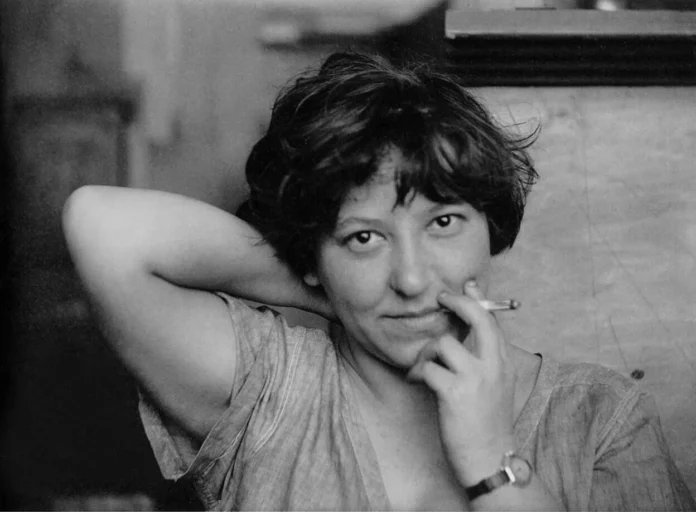
Varvara Stepanova
Varvara Stepanova

• A
• Artseeker Gallery
• Aurum Arts
• Aaaron Labin (Grigoryan)
• Aare Freimann
• Abhishek Kumar
• Abi Whitlock
• Adam Bogusz
• Adam Collier Noel
• Adam Mazek
• Adam Regan
• Adriana Dziuba
• Adrian Bradbury
• Adriano Ribeiro
• Afekwo
• Aflatun Israilov
• Agata Kycia
• Aidan Flanagan Irish Landscapes
• Airina Kukushkina
• Aisha Haider
• Aisylu Burangulova
• Ajay Harit
• Akacius Vegh
• Akwi Nji
• Alanah Jarvis
• Alan Harris
• Alan Horne Art Originals
• Albert Kechyan
• Alberto Gulminetti
• Albina Bunina
• Albina Urbanek
• Alejos
• Aleksandra Niemczyk
• Aleksandr Kryushyn
• Aleksandr Neliubin
• Alena Kuschnereit
• Alena Panchishin
• Alenka Koderman
• Alesia Yeremeyeva
• Alessandra Zini
• Alessandro Andreuccetti
• Alessandro Butera
• Alessio Mazzarulli
• Alexander Koltakov
• Alexander Levich
• Alexander Mikhalchyk
• Alexander Moldavanov
• Alexander Shadrin
• Alexander Shandor
• Alexander Shvyrkov
• Alexander Titorenkov
• Alexander Zhilyaev
• Alexandra Buckle
• Alexandra Djokic
• Alexandra Dobreikin
• Alexandra Jagoda (Ovcharenko)
• Alexandra Morris
• Alexandra Petropoulou
• Alexandr Dobrodiy
• Alexandr Klemens
• Alex Cassels
• Alex Dewars
• Alexeï Yakurin
• Alexey Adonin
• Alexey Potapenko
• Alex James Long
• Alex Mensah
• Alex Nizovsky
• Alex Senchenko
• Alex Sher
• Alex Stutchbury
• Alfia Koral
• Alfonso Sánchez
• Alice Gavin Atashkar
• Alina Hubarenko
• Alina Karpova
• Alina Lobanova
• Alina Marsovna
• Alisa Diakova
• Alisa Onipchenko-Cherniakovska
• Alison Chambers
• Alison Fennell
• Alison Headley
• Alison Stevenson
• Alla Kallass
• Alla Semenova
• Alla Vlaskina
• Alona Lesnichenko
• Altin Furxhi
• Amai Galech
• Amanda Averillo
• Amanda Dagg
• Amanda Deadman
• Amanda Horvath
• Amanda Ribbans
• Amaya Fernández Fariza
• Amber Gittins
• Amelia Coward
• Amelia Taylor
• Amita Dand
• Amrish Malvankar
• Amy Cundall
• Ana Del Valle Ojeda
• Ana Hefco
• Anahita Amouzegar
• Anahita Ghazanfari
• Anait Vardanyan
• Ana Maria Edulescu
• Ana Mutavdžić
• Anastacia Kevich
• Anastasia Art Line
• Anastasia Balabina
• Anastasia Bas
• Anastasia Borodina
• Anastasia Chernysheva
• Anastasia Kozorez
• Anastasia Mamoshina
• Anastasia Parfilo
• Anastasia Woron
• Anastasiia Grygorieva
• Anastasiia Kraineva (Masniuk)
• Anastasiia Novitskaya
• Anastasiia Valiulina
• Anastasiya Kostyuk
• Anastasiya Mouchan
• Anastasiya Timchenko
• Anastassia Markovskaya
• Anastassia Skopp
• Anatolii Tarabаnov
• Anatolii Varvarov
• Anatoliy Menkiv
• Andrada Anghel
• Andrea Bocedi
• Andrea Krnetic
• Andrea Mcilhatton Cardow
• Andrea Olivazzo
• Andrea Reichhart
• Andrea Serra
• André Baldet
• Andre Bräuer
• Andrej Ostapchuk
• Andrejs Ko
• Andre Pallat
• Andres Alvarez
• Andres Portillo
• Andrew Hodgson
• Andrew Lander
• Andrew Lennon
• Andrew Lever
• Andrew Mcneile Jones
• Andrew Moodie
• Andrew Morris
• Andrew Reid Wildman
• Andrew Watt
• Andrey Boris
• Andrey Pavli
• Andrey Saharov
• Andrii Chebotaru
• Andrii Kovalyk
• Andrii Lysenko
• Andrij Savchuk
• Andriy Vutyanov
• Andromachi Giannopoulou
• Angel
• Angela Dierks
• Angel Atanasov
• Angeles M. Pomata
• Angelika Millmaker
• Angelina Doseva
• Angeline Maas
• Angel London
• Angelo Di Carlo
• Angelo Tine’
• Angie Wright
• Angus Vasili
• Anika De Souza
• Aniko Hencz
• Anil Nene
• Anita Kaufmann
• Anita Nowinska
• Anjana Cawdell
• Anna Andreadi
• Annabelle Amory
• Anna Bergin
• Anna Bessonova (Kotelnik)
• Anna Bogushevskaya
• Anna Brazhnikova
• Anna Bush
• Anna Cher
• Anna Lubchik
• Anna Lyashenko
• Anna Onikiienko
• Anna Pavlova
• Anna Pepe
• Anna Reznikova
• Anna Rita Angiolelli
• Anna Schofield
• Anna Selina
• Anna Shabalova
• Anna Shchapova
• Anna Shevel
• Anna Sidi-Yacoub
• Anna Silabrama
• Anna Soghomonyan
• Anna Steshenko
• Anna Styrc
• Anne Baudequin
• Anne Shaughnessy
• Anne Storno
• Annet Loginova
• Annette Spinks
• Annette Wolters
• Annika Schmitt
• Ann Krasikova
• Ann Palmer
• Ann Zhuleva
• Ansgar Dressler
• Antavazd Talayan
• Antigoni Tziora
• Antoni Dragan
• Antonino Addis
• Antonino Puliafico
• Antonio Cruz
• Antonio Maggio Carluccio
• Antonio Mele
• Antonio Murgia
• Anya Getter
• Anzhelika Klimina
• Ara Youn
• Areti Ampi
• Ariadna De Raadt
• Ariela Stem
• Arinika Stratievsky
• Arlene Marks
• Armando Rossi
• Art By Catalin
• Artem Andreichuk
• Artem Grunyka
• Artemisia
• Arti Chauhan
• Artmoods Tp
• Art Of Aaron Wooten
• Arunas Miliukas
• Arun Prem
• Arvydas Urniezius
• Asha Shenoy
• Ashley Baldwin-Smith
• Ashot Petrosyan
• Aurora Camaiani
• Axelle Biltgen
• Ayesha Pearce
• Ayna Paisley
• Ayse Mcgowan
• Â
• Âme Sauvage
• B
• Barbara Friehs
• Barbara Harlow
• Barry Gray
• Bast
• Bea Schubert
• Beata Belanszky Demko
• Beata Harasim
• Beata Podwysocka
• Beatriz Candioti
• Becky Hobden
• Behshad Arjomandi
• Belinda Nadwie
• Belinda Reynell
• Belyaeva Oleksandra
• Benedicte Gele
• Ben Hughes
• Benjamin Duarri
• Bert Bruins
• Bill Stone
• Bogdana Antoniuk
• Bogdan Shiptenko
• Bohdan Dobrivskyi
• Bohdan Katolyk
• Bohdan Vykhrenko
• Bojan Jevtić
• Bo Kravchenko
• Boris Serdyuk
• Boro Ivetic
• Bozena Happach
• Brandon Levalley
• Branisa Beric
• Brian Tucker
• Bridie O’Brien
• Bronwen Jones
• Brooke T Ryan
• Burcu Akarcay
• C
• Creative Family Studio
• Cadiou Frederic
• Camilla Blauenfeldt
• Carla Sá Fernandes
• Carlos Martín
• Carlos Pun Art
• Carlo Toma
• Carographic By Carolyn Mielke
• Carole King
• Carolina Alotus
• Caroline Green
• Caroline Lowe
• Caroline Millott
• Caroline Rees
• Carol Staines
• Carol Wood
• Carolynne Coulson
• Carol Zsolt
• Catalin Ilinca
• Cat Goward
• Cathal Gallagher
• Catherine Varadi
• Cath Waters
• Catia Goffinet
• Cawamo
• Cb.
• Cecco Mariniello
• Cecilia Frigati
• Cene Gal Istvan
• Chantal Proulx
• Cheryl Harrison Ma
• Cheryl Johnson
• Chiara Vignudelli
• Chihiro Kinjo
• Chin H Shin
• Chris Bourne
• Chris Carbone
• Chris Keegan
• Chris Matthews
• Chrissie Havers
• Chrissy Guest
• Christa Haack
• Christel Haag
• Christian Schwarz
• Christina Bilbili
• Christine Callum Mcinally
• Christine Harrison
• Christopher Gill
• Christopher Vidal
• Christopher Witchall
• Chris Walker
• Claire Mccall
• Clare Hoath
• Clare Parkes
• Claudia Daminato
• Claudia Trongmo
• Claudio Ciardi
• Cm
• Colin Robson
• Colin Ross Jack
• Colour Black
• Corinne Hamer
• Cornelia Weber
• Cristian Cuevas
• Cristina Dalla Valentina
• Cristina Mihailescu
• Cristina Simeoni
• C Staunton
• Cynthia Gregorová
• Cynthia Ligeros
• D
• Daiva Karaliute
• Dalia Barke
• Damion Cook
• Damola Ayegbayo
• Dan Booth
• Dangerous Minds Artists
• Danguole Serstinskaja
• Dan Hecho
• Daniela Nocito
• Daniela Pasqualini
• Daniela Roughsedge
• Daniela Schweinsberg
• Daniel Brian Fishback
• Daniel Bulimar Henciu
• Danielle Stretch
• Daniel Shipton
• Daniel Stroup
• Daniel Urbaník
• Danijela Dan
• Dan Laurentiu Arcus
• Danutė Virbickienė
• Dara Park
• Daria Baklykova
• Daria Borisova
• Daria Galinski
• Daria Gerasimova
• Daria Kusto
• Daria Maier
• Daria Startseva
• Daria Yablon-Soloviova
• Dario Cavicchioni
• Dario Moschetta
• Darko Topalski
• Darren Carey
• Darren Jekel
• Dasha Pears
• Dave Susick
• David Conn
• Davide De Palma
• David Fernandez Giron
• David Harmer
• David Huntzinger
• David J Edwards
• David Jones
• David Padworny
• David Studwell
• David Tracey
• David Vincent Wheeler
• Davina Nicholas
• Davit Davtyan
• Dawn Underwood
• Db Waterman
• Debbie Young
• Deborah Jones
• Deborah Lang
• Declan Faulkner
• Dee Evans
• Deepa Kern
• Dejan Trajkovic
• Deke Wightman
• Delnara El
• Dena Adams
• Dennis Crayon
• Denny Stoekenbroek
• Denys Gorodnychyi
• Denys Kuvaiev
• Derek Hare
• Derek M
• Dex
• Diana Janson
• Diana Malivani
• Diana Rainova
• Diana Rosa
• Diana Sandetskaya
• Diane Mclellan
• Diane Wardman
• Dianne Bowell
• Dick Van Dijk
• Dietrich Moravec
• Dimitris Pavlopoulos
• Dimitri Strelkov
• Dimitris Voyiazoglou
• Dina Volkova
• Dita Galas
• Dmitrij Tikhov
• Dmitry And Olga Artym
• Dmitry Fedorov
• Dmitry Oleyn
• Dmitry Pitenin
• Dmytro Filatov
• Dmytro Shavala
• Dolgor Dugarova
• Domenica Brockman
• Dominic Virtosu
• Dominique Dève
• Don Bishop
• Dong Su
• Don Keene
• Donna Ceraulo
• Donn Poll
• Doriana Popa
• Doris Duschelbauer
• Dorit Lecke
• Douglas Fox
• Douglas Newton
• Dragomir Minkov (Drago)
• D Sterling
• Dubay Orest
• Dubayova Ruth
• Duealberi
• Duhaj Peter
• Duncan Hopkins
• Dunja Jung
• E
• Edel Alonso Bello
• Edelgard Schroer
• Eduardo Blanco
• Eduard Zhaldak
• Edward Abela
• Egle Kurlianskaite
• Egle Lipeikaite
• Egle Ra
• Ej Mack
• Ekaterina Orlova
• Ekaterina Prisich
• Elaine Allender
• Eleanore Ditchburn
• Eleanor Gabriel
• Elena Adele Dmitrenko
• Elena Bondarenko
• Elena Bulatova
• Elena Genkin
• Elena Klimenko
• Elena Klyan
• Elena Kraft
• Elena Kurochko
• Elena Lykhodid
• Elena Mashajeva-Agraphiotis
• Elena Mosurak
• Elena Pertceva
• Elena Sanina
• Elena Sokolova
• Elena Tomilova
• Elena Yuzefovich
• Elena Zapassky
• Eleni Denart
• Elina Vetrova
• Eliry Arts
• Elisa Trueman
• Elise Mendelle
• Elisheva Nesis
• Elizabeth Anne Fox
• Elizabeth Becker
• Elizabeth Moran
• Elizabeth Vlasova
• Elizabeth Westcott
• Eliza Kołodziej
• Elizaveta Pugacheva
• Ellisa Hague
• Els Driesen
• Elvira Sultanova
• Elza Slo
• Emilia Milcheva
• Emily Kent
• Emma Dashwood
• Emmanuel Akolo
• Emma Pesti
• Emma Pilkington
• Emma Sian Pritchard
• Emma Sperring
• Eni Pullumbi
• E Robledo
• Estelle Asmodelle
• Eugene Gorbachenko
• Eugene Segal
• Eugenia Gorbacheva
• Eva
• Eva Akopian
• Eva Fialka
• Evald
• Evangelos Vangelatos
• Eva Volf
• Eve Devore
• Evgenia Makarova
• Evgenia Smirnova
• Evgenii Kouzo
• Evgeniq Ivanova
• Evgen Semenyuk
• Evgeny Chernyakovsky
• Ewa Czarniecka
• Exclusive Arts
F
• Family Art
• Fabian Bertona
• Fabienne Monestier
• Fabien Petillion
• Fabio Accorrà
• Faith Patterson
• Family
• Federica Belloli
• Félix Rubio
• Fieke De Roij
• Fintan Whelan
• Fiona Philipps
• Flavio Furlan
• Flora Butler
• Florina Breazu
• Fosco Culto
• Francesca Borgo
• Francesca Currie
• Francesca Iannaccone
• Francesco Mussida
• Francisco Santos
• Francois De Melogue
• Frank Barnes
• Frank Creber
• Frankie Malone
• Franko
• Fuensanta Ruiz Urien
G
• Gallery Paveikslai.Lt
• Greatukrainianartist
• Gabo Mendoza
• Gabriela Azar Schreiner
• Gabriele Prismantaite
• Gago Chtchyan
• Gala Bond
• Galina Poloz
• Galina Victoria
• Galya Koleva
• Galyna Shevchencko
• Gandee Vasan
• Gary Moger
• Gary Obee
• Gary Thomas
• Gastone Cecconello
• Gav Banns
• Geert Lemmers Fpa
• Geeta Yerra
• Gela Mikava
• Gennady Vylusk
• Gennaro Santaniello
• George Hall
• George Irvine
• George Koutsouris
• George Troyanov
• Georgia Sawers
• Georgie
• Gerard Kramer
• Gerry Ludlow
• Gesa Reuter
• Gill Bustamante
• Gilles Tricoire
• Gillian Luff
• Gina Parr
• Gina Valenti-Lazarchik
• Giorgio Gosti
• Gisella Stapleton
• Gitti Gv
• Giuliano Monechi
• Giuseppe Panzica
• Giuseppe Pastore
• Giusy Lauriola
• Gökhan Okur
• Goodvin Nerko
• Gor Avetisyan
• Gordon Bruce
• Gordon Hunt
• Gordon T.
• Gozde Temiz Istanbul
• Grâce Pégéron
• Graham Gercken
• Graham Mckenzie-Smith
• Graham R Mclachlan
• Grant Pecoff
• Grey Cloud Studio
• Grigor Velev
• Gulshaba Abbasova
• Gurgen Arutunyan
• Guy Pickford
• Guzaliya Xavier
• Guzel Min
H
• Hal Bohner
• Halyna Kirichenko
• Hanna Adzinets
• Hanna Bell
• Hanna Dujmović
• Hannah Battershell
• Harv Greenberg
• Haykuhi Khachatryan
• Hazel Thomson
• Heather Kostal
• Heather Matthews
• Heather W. Ernst
• Heidi P
• Heike Bohnstengel
• Heike Roesel
• Helen Boden
• Helen Maxfield
• Helen Mount
• Helen Shukina
• Helen Sinfield
• Helinda (Olga Müller)
• Henadzy Havartsou
• Hennadii Penskyi
• Henrieta Angel
• Hilary Winfield
• Hilbertas Jatkevicius
• Hilde Hoekstra
• Hiranya R
• Holly Bennett
• Holly Wojahn
• Hongtao Huang
• Howard Sills
• Hristo Hristov
• Hugh Abernethy
I
• Integrated Artists Gallery
• Interart Gallery Gor
• Iana Cherepanska
• Ian Macphie
• Ian Scott Massie
• Ida Harm
• Igor Dubovoy
• Igor Konovalov
• Igor Nekraha
• Igor Novikov
• Igor Viksh
• Igor Yuryev
• Ihar Sviancicki
• Ihor Bychkivskyy
• Ilana Shechter
• Ilaria Dessí
• Ilaria Finetti
• Iliana Tosheva
• Iliya Novachev
• Ilshat Nayilovich
• Iñaki San
• Indie Ru
• Inez Froehlich
• Inna Etuvgi
• Inna Martynenko
• Inna Medvedeva
• Inna Pantelemonova
• Ira Ivanova
• Ira Volkova
• Ira Whittaker
• Irene Gärtner
• Irene Sirko
• Irene Wilkes
• Irina Alexandrina
• Irina Anis
• Irina Bibik-Chkolian
• Irina Dmitrieva
• Irina Goleva
• Irina Kurganskaya
• Irina Laube
• Irina Plaksina
• Irina Ponna
• Irina Rumyantseva
• Irina Sazonova
• Irina Sergeyeva
• Irina Sherbiak
• Irina Smirnova-Seymour
• Irina Tolstikova
• Irina Trushkova
• Irina Ushakova
• Irini Karpikioti
• Irsa Ervin
• Irtsya Boyko
• Iryna Tymkul
• Isabella Nazzarri
• Isabellangela Germinario
• Isabelle Lucas
• Isabelle Pelletane
• Isabelle Vobmann
• Isabel Mahe
• Ishai Rimmer
• Isolde Pavlovskaya
• Iulia Paun
• Ivana Gigovic
• Ivana Urso
• Ivan Grozdanovski
• Ivan Kirilenko
• Ivan Kovalenko
• Ivan Minekov
• Ivan Panov
• Ivan Shapoval
• Ivan Stoyanov
J
• Jacek Cholewa
• Jackie Ward
• Jaco Putker
• Jacques Donneaud
• Jacques Tange
• Jaimie Volkaerts
• Jake Nordstrum
• Jakub Dk – Jakub D Krzewniak
• J Alexandra Connor
• James Earley
• James Mcgairy
• James Shipton
• Jamie Lee
• Jane Daniell
• Jane Elizabeth Cullum
• Jane Palmer Art
• Jane Skingley
• Janet Hamilton
• Jane Tilley
• Janis Goodman
• Jan Noah
• Jan Rippingham
• Jan Rogers
• Jaromir Gargulak
• Jaroszewska Joanna (Or Jarowska)
• Jason Forcier
• Javier Diaz
• Jayme Mestieri
• Jay Seabrook
• Jean-Marc Comby
• Jean-Philippe Estebenet
• Jean-Pierre André Leclercq
• Jeff Parker
• Jeffrey Davies
• Jelena Djokic
• Jennet Annayeva
• Jennie Smallenbroek
• Jennifer Day
• Jennifer Taylor
• Jenny (Evgeniya) Andreeva
• Jenny Furman
• Jenny Tsoneva
• Jerome Cholet
• Jessica Baron
• Jessica Bleasby
• Jesús Gómez
• Jevgenijus Litvinas
• Jg Wilson
• Jianzhe Chon
• Jill Ann Harper
• Jimmy Leslie
• Jiri Havlik
• Jixiang Dong
• Joanna Cholewa
• Joanna Farrow
• Joanna Plenzler
• Joanne Spencer
• Jo Beer
• Jo Davies
• Jo Earl
• Joe Mcdonald
• Joe Mcharg
• John Angerson Studio
• John Cottee
• John Fleck
• John Halliday
• John Kerr
• Johnny Popkess
• John Welsh
• Jolic
• Jonas Peres
• Jonathan Pradillon
• Jonathan Speed
• Jonesy
• Jon Garbet
• Jon Joseph
• Jon Paul Wilson
• Josephine Window
• Joseph Lynch
• Josep M. Pastó
• Joshua Daniels
• Journey Gong
• Joyce Fournier
• J R Root
• Juan Bernal
• Juan Jose Garay
• Juan Pita
• Juan Sly
• Judith Ruiz
• Judy Konopka
• Julia Borg
• Julia Gorislavska
• Julia Ismambetova
• Julia Kozminova
• Julian Davies
• Julian Wheat
• Julia Rigby
• Julia Shilo
• Julia Skrypnyk
• Julia Swaby
• Julia Valtanen
• Julie Dyer
• Julijana Ravbar
• June Choi
• Junija (Yuna) Galejeva
• Jura Kuba Art
• Juri Semjonov
• Justice Hyde
• Justin.K
• Justyna Rozacka
• Jutta Widrinsky
K
• Kajazun Avetisyan
• Kalenyuk Alex
• Kalpana Soanes
• Kamil Woj
• Kanika Kingshott
• Karen Elaine Evans
• Karen Rieger
• Karen Wilcox
• Kariko Ono
• Karim Carella
• Karina Danylchuk
• Karin Lichtenegger
• Karin Vermeer
• Karolina Franceschini
• Karolina Kijak
• Kasia Januszkiewicz
• Kasia Pawlak
• Kat Crosby
• Kate Goetz
• Kate Kulish
• Kate Revill
• Katerina Koroleva
• Kateryna Kostyk
• Kate Sosonna
• Kate Strupinski
• Kate Willows
• Katherine Spiller
• Kathleen Mullaniff
• Kathleen Rietz
• Kathryn Sillince
• Kathy Carney
• Kathy Ferguson
• Kathy Morton Stanion
• Katia Bellini
• Katia Ricci
• Katia Solodka
• Katie Jurkiewicz
• Katja Wittmer
• Katrina Avotina
• Katrina Case
• Katrina Loren Exconde
• Katrin Roth
• Katya Timoshenko
• Kay Macdonald
• Kaz Jones
• Keith Alexander
• Keith Reed
• Kellenberger Martin
• Kelsey Emblow
• Ken Vrana
• Kerry Lisa Davies
• Kestutis Jauniskis
• Ketki Fadnis
• Kevin Maddison
• Khanlar Asadullayev
• Khattin Valery
• Kimberlee Rocca
• Kimberley Day
• Kimberley Harris
• Kim Jones Miller
• Kira Narbutt
• Kiro
• Kirsten Handelmann
• Kirsten Schankweiler
• Kirsten Todd
• Kirstie Dedman
• Kirsty Wain
• Kjetil Hansen
• Kloska Ovidiu
• Kolodyazhniy Sergey
• Koola Adams
• Kordeliz
• Kosta Morr
• Kovács Anna Brigitta
• Krasimir Krastev
• Kris Mercer
• Kristen Olson Stone
• Kristina Saudinyte
• Kristina Vatova
• Kristine Facchetti
• Krystyna Szczepanowski
• Ksenia Astakhova
• Ksenia June
• Ksenia Kozhakhanova
• Kseniya Berestova
• Kujbus Janos
• Kume Bryant
• Kunlong Wang
• Kylie Sams
L
• Lantern Art Gallery
• Lady Jurassika
• Lana Frey
• Lana Guise
• Lana Verdi
• Larissa Uvarova
• Laser 3.14
• Laura Cabral
• Laura Clay Robson
• Laura Kedzlie
• Laura Muolo
• Laura Spring
• Laura Taylor
• Laure Bury
• Laurel Macdonald
• Layla Khani (Aka Laylart)
• Leah Nadeau
• Lee Campbell
• Lee Jenkinson
• Lee Mccarthy
• Leezee Lee ( Georgiana L. Nicolae)
• Leigh Bagley
• Lena Med
• Lena Okamoto
• Lena Owens At Olena Art
• Lena Smirnova
• Lena Vylusk
• Lene Bladbjerg
• Leo Baxiner
• Leonid Kirnus
• Leon Sarantos
• Lesja Rygorczuk
• Lesley Blackburn
• Leslie Dannenberg
• Leslie Singer
• Lesya Ros
• Letovbarski Artlab
• Lewis Evans
• Leyla Demir
• Leyla Kamliya
• Lia Chechelashvili
• Lia Matevosyan Haselton
• Liam Hennessy
• Liam Roberts
• Liang Hailun
• Lianne Issa
• Lida Duchnewitsch
• Lida Khaikara
• Lidia Matviyenko /Lidikart/
• Liliana Gigovic
• Lilia Orlova-Holmes
• Lili A Phelouzat
• Lilit Vardanyan
• Lil Nutter
• Lina Redford
• Linda Cares
• Linda Collins Lamb
• Linda Coppens
• Linda Hoyle
• Linda Jones
• Linda Mcdonald
• Ling Strube
• Lisa Lennon
• Lisa Price
• Lisa Punter
• Liubou Sas
• Liubov Kuptsova
• Liubov Ponomarova
• Liubov Ro
• Liubov Samoilova
• Liudmila Pisliakova
• Liudmyla Chemodanova
• Livien Rózen
• Livija D. G.
• Liza Illichmann
• Lizzie Butler
• Lloyd Tabing
• Loetitia Pillault
• Lohmuller Adina
• Lola Jovan
• Lons
• Lorie Schackmann
• Lorna Doyan
• Loui Jover
• Louise Brown
• Louise Gillard
• Louise O’Gorman
• Luba Ostroushko
• Lucia Dibi
• Lucia Fabová
• Lucia Verdejo
• Lucie Jirku
• Luci Power
• Lucyanne Terni
• Lucy Moore
• Ludmila Budanov
• Ludmilla Ukrow
• Luis López Cabán
• Luis Medina
• Lumina Studio
• Lusine Keryan
• Lynda Gagnon
• Lyndsay Tarren-Leister
• Lynne Douglas
• Lyra Morgan
M
• Maarit Korhonen
• Made By Mood
• Magdalena Morey
• Magdalena Palega
• Maggie Jukes
• Magnus Gjoen
• Mahonart75
• Maija Nochevnaya
• Maire Flanagan
• Maja Đokić Mihajlović
• Maja Gajewska
• Maja Grecic
• Maksym Newskulenko
• Malasits Zsolt
• Malcolm Ludvigsen
• Malgorzata Krakowiak
• Manel Villalonga
• Manna A.
• Manuel Leonardi
• Marat Cherny
• Marc Ehrenbold
• Marcello Carrozzini
• Marco Barberio
• Marco Ortolan
• Marco Paludet
• Marc Todd
• Marcus Cederberg
• Margaret Juul
• Margarita Ivanova
• Margarita Stepanova
• Margot Raven
• Maria Al Zoubi
• Maria Arias
• Maria Atanacković
• Maria Bevilacqua-Fischer
• Maria Egorova
• Maria Esmar
• Maria Kireev
• Maria Luisa Azzini
• Mariam Darchiashvili
• Marian Carter
• Marian Gorin
• Mariann Johansen-Ellis
• Maria Paunova
• Maria Romano
• Maria Susarenko
• Maria Tuzhilkina
• Marie Antuanelle
• Marie Madej
• Mariia Bashtova
• Mariia Hyhar
• Mariia Ignatkina
• Mariia Raskin
• Marilyn Fox
• Marina Belousova
• Marina Del Pozo
• Marina Deryagina
• Marina Krylova
• Marina Popkova-Sologub
• Marina Skromova
• Marina Zotova
• Mario Lautier-Vella
• Marisa Añón
• Mariska Karto
• Mari Skakun
• Marita Tobner
• Marius Roos
• Marja Brown
• Marjan Fahimi
• Marjansart
• Mark De Kievit
• Mark Hannah
• Mark Harrison
• Mark Howard Jones
• Mark Peterson
• Mark Purllant
• Mark Skirving
• Marnie Mcknight
• Marta Zawadzka
• Martha Chapa
• Martina Boycheva
• Martin Allen
• Martina Palmoni
• Martin Singer
• Martta Garcia
• Martyna Maik
• Marya
• Maryanne Mckernie
• Mary Kemp
• Maryna Boiko
• Mary Stubberfield
• Mary Voloshyna
• Massimiliano Capraro
• Massimiliano Ligabue
• Massimo Castronuovo
• Mateja Marinko
• Matias Machado
• Matthew Hills
• Mattia Paoli
• Maureen Finck
• Maureen Greenwood
• Maurizio Puglisi
• Maxence Ma
• Maximo Damico
• Maxine Gregson
• Max Yaskin
• Mayrig Simonjan
• Mazi Katanov
• Megha Hendrick.
• Mei He
• Mel Davies Original Art
• Mel Graham
• Melinda Macdonald
• Melinda Matyas
• Melissa Aristizábal
• Melissa Mcgill
• Melissa Tobia
• Mengqiu Li
• Mercedes Lagunas
• Mercédès Soret
• Meruzhan Khachatryan
• Michael E. Voss
• Michael Filonow
• Michael Gillespie
• Michael Mchugh
• Michael Rak
• Michael Richards
• Michelle Carolan
• Michelle Parsons
• Mihaela Ionescu
• Mike Edwards
• Mikéla Henry-Lowe
• Mikhail Kirilenko
• Miki Sexton
• Mila Moroko
• Mila Weis
• Milena Gaytandzhieva
• Milena Nicosia
• Milis Pyrography
• Miloš Hronec
• Mily Art
• Mima Taneva
• Mine Okur
• Mirek Kuzniar
• Miri Baruch
• Mir-Jan
• Misty Lady – M. Nierobisz
• Mladen Ilic
• M.Lee
• Mlynarcik Emil
• Modestas Mykolaitis
• Momalyu
• Monica Sarandrea
• Monika Luniak
• Monika Rembowska
• Morag Paul
• Movses Poghosyan
• Mr Clement
• Mugnier Marc
• Mullo Art
• Muraz Martirosyan
• Muriel Napoli
• Mykhailo Novikov
• Mykola Dzhychka
• Mykola Koidan
• Mykola Samoilenko
• Myroslava Denysyuk
N
• Nadezda Stupina
• Nadia Attura
• Nadia Culph
• Nadiia Antoniuk
• Nagui
• Nancy Eckels
• Nancy J. Mclaughlin
• Natadamano
• Natalia Bessmertnova
• Natalia Butenko
• Natalia Ivanova
• Natalia Langenberg
• Natalia Lugovskaya
• Natalia Shaykina
• Natalia Sidorina
• Natalia Veyner
• Natalia Yampolskaia
• Natalie Levkovska
• Nataliia Karavan
• Nataliia Krykun
• Nataliia Nosyk
• Nataliia Plakhotnyk
• Nataliia Sydorova
• Natalija Riabchuk
• Nataliya Bagatskaya
• Natalya Pravda
• Nataly Derevyanko
• Natasha Kanevski
• Nathalie Pymm Art
• Nazar Grunyka
• Nazar Symotiuk
• Neha Soni
• Nelina Trubach-Moshnikova
• Nelly Van Nieuwenhuijzen
• Nemanja Nikolic
• Nerijus Kisielius
• Nevena Kostić
• Newel Hunter
• Nick Chaffe
• Nick Molloy
• Nick Pike
• Nicola Briggs Ceramics & Art
• Nicolas Goia
• Nicolas Maureau
• Nicolay Vydcovsky
• Nicoletta Bagatti
• Nicole Tudor-Williams
• Nicol Vacaru
• Nigel Sharman
• Nikifor Swiristuhin
• Nikita Maksimchuk
• Nikki Wheeler
• Nikola Gulev
• Nikola Ivanovic
• Nikolaos Schizas
• Nikola Tsvetanov
• Nikolaus Weiler
• Nikolay Dmitriev
• Nikolay Martinov
• Nikolay Zlatanov
• Nikoleta Ivanova
• Nikolina Petolas
• Nina Grigel
• Nina Piatrouskaya
• Nino Ponditerra
• Nithya Swaminathan
• Nivas Kanhere
• Nives Palmić
• Niyati Jiwani
• Nizaac Vallejo
• Noeline Thomson
• Noel Sawyer
• Nora Blazeviciute
• Norma Beatriz Zaro
• Northlight Harbour
• Novi Lim
• Nuri Yakubov
O
• Oconnart
• Oggie Golev
• Ognyan Chitakov
• Ognyan Hristov
• Oksana Bilyk
• Oksana Fedorova
• Oksana Petrova
• Oksana Siciliana
• Oksana Svizhak
• Oksana Vasylyeva
• Oleg And Alexander Litvinov
• Oleg Baulin
• Oleg Kamaev
• Oleg Kateryniuk
• Oleg Riabchuk
• Oleh Rak
• Ole Karako
• Oleksandra Padushyna
• Oleksandr Balbyshev
• Oleksandr Korol
• Oleksii Vylusk
• Olena Hontar
• Olena Horhol
• Olena Hromova
• Olena Kolotova
• Olena Kosenko
• Olena Romanenko
• Olena Topliss
• Olesia Gr
• Olesya Bay
• Olesya Izmaylova
• Olexsandr Tsytsenko
• Olga Beliaeva Watercolour
• Olga Bezhina
• Olga Blazhko
• Olga David
• Olga Egorov
• Olga Gamy
• Olga Goryunova
• Olga Koelsch
• Olga Koval
• Olga Kurbanova
• Olga Mcnamara Biennaleartist
• Olga Melezhik
• Olga Pascari
• Olga Riabchuk
• Olga Rokhmanyuk | Roartus
• Olga Samar
• Olga Samar
• Olga Skorokhod
• Olga Tchefranov (Shefranov)
• Olga Tkachyk
• Olga Tsarkova
• Olha Darchuk
• Olha Dashkevych
• Olha Laptieva
• Olha Malko
• Olivier Payeur
• Olly Howe
• Olya Enina
• Olya Tereschuk
• Omar Obaid
• One Air Art Studio
• Orlin Ivanov
• Oscar Alvarez Pardo
• Oxana Lazari
• Oxana Raduga
• Oxypoint
P
• Pas Paintings Art Shop
• Paige Castile
• Pamela Rys
• Paola Imposimato
• Paola Minekov
• Paolo Andrea Deandrea
• Paolo Beneforti
• Paolo Borile
• Paolo Kozma
• Paolo Vitale
• Paper Draper
• Paresh Nrshinga Frsa
• Pascal Giroud
• Patricia Clements
• Patrick Palmer
• Patty Rodgers
• Paula Berteotti
• Paula Boyd-Barrett
• Paula Oakley
• Paul Baaske
• Paul Bennett
• Paul Berriff Obe
• Paul Bursnall
• Paul Cheng
• Paul Gurney
• Paul Hardern
• Paul Harrison
• Paul Heron
• Paul Hillary
• Paul J Best
• Paul Kingsley Squire
• Paul Mitchell
• Paul Narbutt
• Paul Nash
• Paul Rossi
• Paul Simpkins
• Paul Stowe
• Pavel Guliaev
• Pavel Kuragin
• Peg Morris
• Penny Burton
• Pete Conroy
• Peter Frost
• Peter Goodhall
• Peter Nottrott
• Peter Stahr
• Peter Tovpev
• Peter Zelei
• Petq Popova
• Petr Johan Marek
• Petr Strnad
• Phil Broad
• Philip Hearsey
• Philippa Headley
• Philippe Buil
• Philippe Perennou
• Phil Smith
• Pia Järvinen
• Pierre Meurice
• Pix-N-Art
• Pk Roberton
• Pol Henry Ledent
• Polina Kharlamova
• Polina Salenko
• Pooja Verma
• Poovi Art
• Prashant Prabhu
• Preston M. Smith (Pms)
• Priyanka Sagar
• Priyanka Singh
• Procach Olesia
• Prozzorrr
• Przemek Kręt
• Q
• Qi Debrah
• R
• Rachel Vogeleisen
• Radek Smach
• Radosveta Zhelyazkova
• Rafael Carrascal
• Raffi Ghazaryan
• Rakhmet Redzhepov
• Randi Antonsen
• Randy Pratt
• Rashna Hackett
• Rasho Mitev
• Rebeca Fuchs
• Rebecca Ainscough – Sculpture
• Rebecca Coleman
• Rebecca Denton
• Rebecca Hodel
• Rebecca J. White
• Rebecca Pells
• Rebecca Vincent
• Reme Jr.
• Reneta Isin
• Revaz Tcheishvili
• Riccardo Ticco Capparella
• Richard Freer
• Richard Gibson
• Richard Heys
• Richard Kuhn
• Richard Manning
• Richard Marsden
• Richard Meyer
• Richard Mierniczak
• Robbert Frank Hagens
• Robbie Potter
• Roberta Cervelli
• Roberta Heslop
• Robert Kerr
• Robert Lynn
• Robert Mcspadyen
• Roberto Canduela Luengo
• Roberto Munguia Garcia
• Robert Owen Bloomfield
• Robert Tillberg
• Robert Tolchin
• Robert Wells
• Rob Van Hoek
• Rod Bere
• Roeland Kneepkens
• Rokas Berziunas
• Roma Mountjoy
• Roman Sedlak
• Roman Sleptsuk
• Romas Zmuidzinavicius
• Romuald Mulk Musiolik
• Ronald Hunter
• Ron Cooper
• Roni Giani
• Rory Mitchell
• Rory O’Neill
• Rosalind Forster
• Rosalind Roberts
• Roseanne Jones
• Rosi Roys
• Rossitza Trendafilova
• Rostyslav Malysh
• Rudra Kishore Mandal
• Rumen Sazdov
• Rumen Spasov
• Ruoshen
• Ruslana Levandovska
• Ruslan Khais
• Ruslan Kiprych
• Ruth Cowell
• Ryan Louder
• Ryoko Minamitani
• S
• Sabbi Gavrailov
• Sabrina Seck
• Sage Mountain Studio
• Salana Art / Svetlana Samovarova
• Sal Jones
• Sally Fisher
• Samah Kthar
• Samantha Adams
• Samantha Malone
• Samira Yanushkova
• Samuel-Emanuel Nelepcu
• Sandra Gebhardt-Hoepfner
• Sandra Haney
• Sandy Dooley
• Sanja Jancic
• Santi Flores
• Sarah Adams
• Sarah Ann Mitchell
• Sarah Bale
• Sarah Berger
• Sarah Louise Armstrong
• Sarah Stowe
• Sarah Teasdale
• Sara Netherway
• Sarawut Donrasri
• Saroja Van Der Stegen
• Sasha Robinson
• Saskia Huitema
• Sava Draganov
• Scott Mclachlan
• Sean Christopher Ward
• Sean Fear
• Sebastian Beianu
• Sebastian Merk
• Seda Eyuboglu
• Segutoart
• Semire Akyazı
• Seona Mason
• Serge Horta
• Sergei Monin
• Sergei Yatsenko
• Sergej Sologub
• Sergey &Amp; Vera Goncharenko
• Sergey Kachin
• Serghei Ghetiu
• Sergio Aranda
• Sergiy Dekalyuk
• Serhii Cherniakovskyi
• Serhii Voichenko
• Shabs Beigh
• Shadia Sabagh
• Sharyn Bursic
• Shazia Mufti
• Shelley Smolen
• Shellie Garber
• Shelli Finch
• Sherry Edmondson
• Shushanik Karapetyan
• Shweta Mahajan
• Sigurdur Olafsson
• Silvia Beneforti
• Silvia Flores Vitiello
• Silvia Frei
• Silvia Habán
• Silvia Pavlova
• Silvia Vassileva
• Silvija Drebickaite
• Simona Gocan
• Simona Nedeva
• Simona Tsvetkova
• Simon Beesley
• Simon Blackley
• Simon Bolton
• Simon Findlay
• Simon Jones
• Simon Jones
• Simon Kozhin
• Simon Lawson
• Simon Sağlamoğlu
• Simon Tünde
• Slasky
• Snezana Djordjevic
• Sofia Fresia
• Sofi Ginger
• Sol Michiels
• Sona Adalyan
• Sonaly Gandhi
• Sonata Art
• Sonja Brussen
• Soos Roxana Gabriela
• Soos Tiberiu
• Sophie Adair
• Sophie Colmer-Stocker
• Sophie Rodionov
• Srdjan Jevtic
• Sreya Gupta
• Stacy Neasham
• Stanislava Cherkasova
• Stanislav Bojankov
• Stanislav Lazarov
• Stanislav Vederskyi
• Stefan Fierros
• Stefania Di Filippo
• Stefanie Rogge
• Stefano Mazzolini
• Stefano Pallara
• Stella Dunkley
• Stephanie Nückel
• Stephen Abela
• Stephen Benedek
• Stephen Brook
• Stephen Conroy
• Stephen Howard Harrison
• Stephen Murray
• Stephen Whatcott
• Stephen Williams
• Steph Moraca
• Steve Keenan
• Steve Mitchell
• Steven Fleit
• Steven Page Prewitt
• Steve Potts
• Steve White
• Stevie Nicholson
• Stevlin Yovchev
• Stuart Roper
• Stuart Wright
• Sue Roe
• Sumit Mehndiratta
• Super Pop Boy
• Suren Nersisyan
• Suren Ter-Avakian
• Susana Sancho Beltrán
• Susana Z. Harris
• Susanna Costantini
• Susanna Montagnino
• Susan Stewart
• Susan Wooler
• Suzanne Vaughan
• Suzanne Williams
• Suzette Datema
• Suzie Cumming
• Suzsi Corio
• Sven Pfrommer
• Svetlana Gadjieva
• Svetlana Martin
• Svitlana Andriichenko
• Svitlana Brazhnikova
• Svitlana Gunchenko
• Swapna Namboodiri
• Sylvaine Catoire
• Sylvie Oliveri
• Syuzanna Tarverdyan
• Székelyhidi Zsolt
• Szilvia Ipacs ‘Ipacszilvi’
• Szilvia Németh
• T
• Tapyba.Info Art
• Ta Byrne
• Taidakov Nikolai
• Takacs Judit
• Takayuki Harada
• Talia Russell
• Tal Paz-Fridman
• Tamara Andjus
• Tamara Bakhshinyan
• Tamara Bettencourt
• Tamara Lepianka
• Tamara Osmajlic
• Tamara Vieira
• Tammy Silbermann
• Tanbelia
• Tania Chanter
• Tania Serket
• Tanja Frost
• Tanya Bilous
• Tanya Lytko
• Tanya Russell
• Tanya Stefanovich
• Tanya Sun
• Tarja Laine
• Taron Khachatryan
• Tashe
• Tatiana Alekseeva
• Tatiana Filipowicz
• Tatiana Georgieva
• Tatiana Hellum
• Tatiana Iliina
• Tatiana Malinovscaia
• Tatiana Rezvaya
• Tatjana Auschew
• Tatyana Ambre
• Tatyana Barinova
• Tatyana Bolivar
• Tatyana Fogarty
• Tatyana Tokareva
• Tehos
• Teis Albers
• Teresa Tanner
• Tetiana Bond
• Tetiana Cherevan
• Tetiana Gryshchenko
• Tetiana Hutsul
• Tetiana Koda
• Tetiana Kovalova
• Tetiana Novikova
• Tetiana Osadchuk
• Tetiana Pchelnykova
• Tetiana Savchenko
• Tetiana Shendryk
• Tetiana Tiplova
• Tetiana Vysochynska
• The Khanh Bui
• Theodor Anghel
• Theresa Shaw
• Therese O’Keeffe
• Thierry Vobmann. Abstract .
• Thomas Donaldson
• Thomas Hjelm
• Thuline De Cock
• Tiffany Budd
• Tigran Avetyan
• Tigran Mamikonyan
• Tihomir Cirkvencic
• Timea Valsami
• Timothy Adam Matthews
• Tim Southall
• Tina Shyfruk
• Tiny De Bruin
• Titinin Yurii
• Tiziano Marasco
• Tollo Pozzi
• Tomasa Martin
• Tomas Stanaitis
• Tomasz Mikutel
• Tomaž Gorjanc – Tomo
• Tom Clay
• Tom Cringle
• Tom Hanslien
• Tommy Lennartsson
• Tomoaki Orikasa
• Tom Stevens
• Toni Kondev
• Toni Swiffen
• Tony Fowler
• Toth Erno
• Toth Kristof
• Tracy Nicholls
• Trayana Panayotova
• Trayko Popov
• Tret•Iak
• Tsvetan Nikolov
• Tudor Evans
• U
• Uli Lächelt
• Ulli Schmitt
• Ulugbek Doschanov
• Ulyana Korol
• Uma Krishnamoorthy
• Una Hurst
• Ute Laum
• Uwe Fehrmann
• V
• Vamosiart
• Verno Art Studios
• Vladart
• Volupt Art
• Vachagan Manukyan
• Vadim Shamanov
• Vadim Vaskovsky
• Vahan.U
• Vahe Yeremyan
• Valentin
• Valentina Andrukhova
• Valentina Ash
• Valentina Gaychuk
• Valentina Kozyar
• Valentina Porcelli
• Valentina Toma’ Aka Zoe Chigi
• Valentin Mitev
• Valentyna Sokolovska
• Valeria Ocean
• Valeriia Radziievska
• Valeri Tsvetkov
• Valerix
• Valeriy Savenets-1
• Valery Koroshilov
• Vamosi Melinda
• Vamosi Peter
• Vanada Abstract Art
• Vanessa Poutou
• Vangar
• Vania Dimitrova & Svetoslav
• Vanya Georgieva
• Various Artists
• Vasyl Koval
• Vé Boisvert
• Velika Prahova
• Veljko Martinovic
• Venelinov
• Vera Hoi
• Vera Klimova
• Vera Melnyk
• Vera Stein
• Vered Brett
• Verity Westwood
• Veronica Ciccarese
• Veronica Vilsan
• Veronika Demenko
• Veronika Obushikhina
• Veselina Georgieva
• Veselina Marinova
• Veta Barker
• Viacheslav Zaykin
• Victo
• Victoria Coleman
• Victoria Cozmolici
• Victoria Curling-Eriksson
• Victoria Horkan
• Victoria Obolensky
• Victoria Perloff
• Victoria Ramanovich
• Victoria Sukhasyan
• Victor Onyshchenko
• Victor Sheleg
• Viet Ha Tran
• Viki Smoliar
• Viktar Yushkevich Yuvart
• Viktória Déri
• Viktoria Lapteva
• Viktoria Shvoren
• Viktoriia Epifanova
• Viktoriia Pidvarchan
• Viktor Mishurovskiy
• Viktor Solt
• Viktor Zuk
• Vili Nikolov
• Vilma Gataveckienė
• Vincent Dupont-Blackshaw
• Vincenzo Stanislao
• Vio Valova
• Vishalandra Dakur
• Vita Banko
• Vitaliy Bobrik
• Vitaly Petrovsky
• Vita Schagen
• Vlad Durniev
• Vladimir Jarmolo
• Vladimir Michev
• Vladyslav Durniev
• V. Lishko
• Volha Belevets
• Volodymyr Glukhomanyuk
• Volodymyr Mazur
• Volodymyr Melnychuk
• Volodymyr Smoliak
• V+V Kniazievi
• Vyacheslav Linskyi
• Vyacheslav Onyshchenko
• Vytautas Laisonas
• W
• Waldemar Kaliczak
• Warren Faye
• W. Eddie
• Wencke Uhl
• William Dey
• Wioletta Gancarz
• Wyatt Bunce
• Wyatt Todd
• X
• Xavi Castel
• Xiaoyang Galas
• Xuan Khanh Nguyen
• Y
• Yamil Picco
• Yana Dulger
• Yan Anikev
• Yana Raynus
• Yana Ros
• Yannick Bouillault
• Yaroslav Kurbanov
• Yaroslav Sobol
• Yaroslav Yasenev
• Yehor Dulin
• Yelena Ralina
• Yenny Cocq
• Yevgeniy Repiashenko
• Yoshiko Murdick
• Yuan Hua Jia
• Yuanyuan Liu
• Yue Zeng
• Yulia Ani
• Yulia Berseneva
• Yulia Evsyukova
• Yulia Krasnov
• Yulian Campo
• Yulia Nikonova
• Yulia Odukalets
• Yulia Pristupa
• Yuliia Dunaieva
• Yuliia Kyrsanova
• Yuliia Levytska
• Yuliia Moiseieva
• Yuliia Poraiko
• Yuliia Prokopchuk
• Yuliia Sharapova
• Yūrei
• Yurii Novikov
• Yurii Pashkov
• Yurii Prysiazhnyi
• Yuriy Kozyar
• Yuriy Matrosov
• Yuri Zelonuy
• Yvonne Coomber
• Z
• Zakhar Shevchuk
• Zee
• Zeljka Paic
• Zhana Viel
• Zhanna Kondratenko
• Zhanna Utkina
• Zhao Hui Yang
• Zhao Yongchang 赵永昌
• Zlatina Krusteva
• Zoe Elizabeth Norman
• Zoe Hattersley
• Zoran Mihajlović Muza
• Zulfiya Mukhamadeyeva
• Zurab Sharvadze
• Zuzana Murenji Domonkos

Beyond the Visible:A History of Abstract Painting 2026

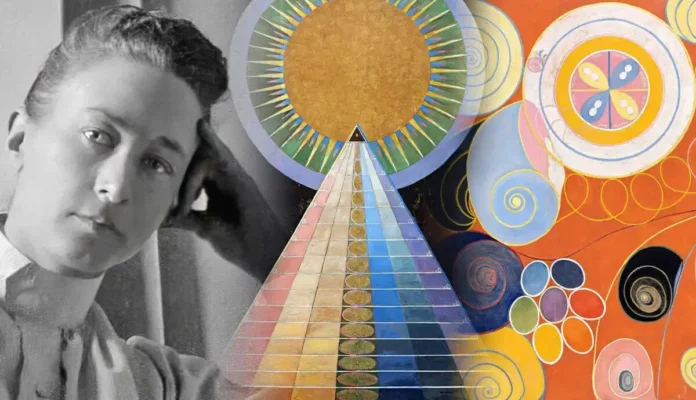
Hilma af Klint: Pioneer of Abstract Painting

Beyond the Visible:
A History of
Abstract Painting

From Hilma af Klint’s spirit-guided canvases to Pollock’s dripped galaxies, abstract painting is the most radical act in the history of Western art — a sustained refusal to depict, and a wager that pure form can carry the full weight of human experience.

Every painting makes a choice about the world. The representational painter chooses to mirror it; the abstract painter chooses to abandon that mirror entirely, or to shatter it into something unrecognizable and perhaps more true. This second choice — which is really a bet, a philosophical wager on the capacity of color, line, and form to carry meaning without the crutch of resemblance — is the defining act of modern art. It altered, irreversibly, what a painting is permitted to be.

Abstract art did not arrive fully formed. It was the result of a century of accumulated pressure: the camera liberating painting from its documentary function; non-Western visual cultures destabilizing European conventions; the explosion of modern physics, psychology, and theosophy reorganizing humanity’s sense of what was real and what was hidden. By the early twentieth century, the conditions were in place for a rupture. The only question was who would make it — and when.

I. The Hidden Founder: Hilma af Klint

The official history of abstraction has been systematically wrong. For decades it named Wassily Kandinsky as the originator, citing his first non-objective compositions from around 1911. af Klint What Kandinsky did not know is that a Swedish painter by the name of Hilma af Klint had created her first abstract painting in her Stockholm studio in 1906, five years before him. She did not know it either. They worked in complete mutual ignorance, like two trains on the same tracks — Klint arriving before Kandinsky.

Born in 1862, af Klint was a trained portraitist and landscape painter who had become drawn, alongside four other women artists she called “The Five,” to theosophy and the possibility of communicating with forces beyond ordinary perception. Her Paintings for the Temple, which she began in 1906, were painted directly through her, without preliminary drawings and with great force — she had no idea what the paintings were supposed to depict, yet she worked swiftly and surely, without changing a single brushstroke. The resulting works — spiraling, biomorphic, geometrically ordered — are today recognized as the earliest sustained body of abstract painting in Western art history.

“Hilma af Klint worked with non-figurative forms years before her male peers Wassily Kandinsky, Piet Mondrian and Kazimir Malevich were credited with inventing abstract art.”

— Smithsonian Magazine

Believing her art carried spiritual messages that would benefit humankind, af Klint stipulated in her will that her paintings remain out of sight for twenty years following her death — convinced her contemporaries were not yet equipped to understand them. When the boxes were finally opened at the end of the 1960s and her work slowly entered public consciousness through the 1980s, it forced a complete rewriting of the founding myth. Hilma af Klint created abstract paintings as early as 1906, predating other artists’ first forays into abstraction; her paintings feature nonrepresentational geometric and organic forms. She is now the hidden mother of the movement — hidden by patriarchal art history, and by her own prophetic doubt that the world was ready.

II. Kandinsky and the Grammar of Feeling

Kandinsky Wassily Kandinsky (1866–1944) arrived at abstraction through a different portal: synesthesia and music. Trained in law before dedicating himself to painting, Kandinsky developed the conviction that color and form could produce emotional and even auditory sensations independent of any depicted subject. His 1911 treatise Concerning the Spiritual in Art is the founding theoretical document of abstraction — a systematic argument that the purely visual could speak the language of the soul.

Where af Klint’s abstraction was channeled and spiritual in an almost literal sense, Kandinsky’s was philosophical and worked toward by intellectual effort. His compositions of the early 1910s — cascading color masses, angular forms in tension, loosely related to landscape and horsemen — gave way, after his years at the Bauhaus, to harder-edged geometric work. The New York Times described his practice as exhibiting a rigorous focus on logic, utility and simplicity, but this misses the core of it: Kandinsky was after emotional resonance, and he believed that geometry, used rightly, could carry it.

III. The Order of Pure Form: Suprematism, Constructivism, De Stijl

While Kandinsky worked from feeling outward toward form, another lineage of abstractionists worked from form inward toward philosophy. Kazimir Malevich’s Suprematism, inaugurated by the notorious Black Square (c. 1915), proposed that geometric abstraction represented a higher order of reality — the supremacy of pure feeling over the contingencies of the visible world. A black rectangle on a white ground was not reduction but elevation: the elimination of everything unnecessary until only the essential remained.

Constructivism Constructivism was an early twentieth-century art movement founded in 1915 by Vladimir Tatlin and Alexander Rodchenko. Abstract and austere, constructivist art aimed to reflect modern industrial society and urban space, rejecting decorative stylization in favour of the industrial assemblage of materials. Where Malevich sought the spiritual, the Constructivists sought the social: art as instrument of the revolutionary new order, geometric abstraction as the visual language of a collective modernity. Their grid-structures, photomontages, and agitational graphics extended abstract principles into every domain of material culture.

De Stijl In the Netherlands, Piet Mondrian and Theo van Doesburg arrived at a different but related purity. De Stijl was an innovative visual language marked by abstraction and universality, reducing the visual to the essential using only vertical and horizontal lines and primary colors. Mondrian called his system Neoplasticism. He saw the grid as an embodiment of universal forces: vertical lines carrying the energy of the sun’s rays, horizontal lines relating to the earth’s movement. By simplifying his visual vocabulary to straight lines, primary colors, and rectangular shapes, Mondrian sought a streamlined “language” of art — four elements he thought were part of a universal language that would promote universal harmony.

IV. Marlow Moss: The Double Line and the Erased Name

Moss Any honest account of abstract painting’s development must contend with the systematic erasure of its women. Marlow Moss (1889–1958) is perhaps the most egregious example. Moss was the first British Constructivist artist, working in both painting and sculpture, and she had a documented, verifiable influence on the very master whose work most defines the Neoplasticist canon.

Moss moved to Paris in the late 1920s to apprentice herself to Fernand Léger, although it was her encounter with Piet Mondrian, around 1928, that would define her approach to abstraction for the rest of her career. What followed was a relationship of genuine intellectual exchange — and one in which the established account has been quietly, persistently unjust to Moss. Her thinking was that the then customary single-line grid of Neo-Plasticism split a composition up, rendered it static, and prevented it from visually expanding outwards. Mondrian was impressed enough that in 1931 he nominated Moss for founding membership of the new Association Abstraction-Création, and began to experiment with the double-line himself.

“Moss devised the double line as an innovation to the Neo-Plasticist grid. Mondrian would later use the parallel lines himself — without referring to Moss’s authorship.”

— Von Bartha Gallery

The war was devastating for Moss’s legacy. At the beginning of World War II, Moss fled France and went to Cornwall in the UK, but a 1944 bombardment destroyed all of her works stored in Gauciel — the output of a highly creative two decades in Paris, narrowly escaped on a boat to England. What survives is extraordinary: tight, luminous compositions of double lines and white grounds that vibrate with contained energy. Her work is held in the collections of MoMA, the Tate, and the Centre Pompidou — and her name is still largely unknown.

V. The American Rupture: Abstract Expressionism

The next great transformation came from an unexpected quarter. Abstract Expressionism Abstract expressionism in the United States emerged as a distinct art movement in the aftermath of World War II and gained mainstream acceptance in the 1950s. It was the first specifically American movement to achieve international influence and put New York City at the center of the Western art world, a role formerly filled by Paris.

All the artists of the movement were committed to art as expressions of the self, born out of profound emotion and universal themes, and most were shaped by the legacy of Surrealism — a movement they translated into a new style fitted to the post-war mood of anxiety and trauma. The Surrealist technique of automatism — allowing the hand to move without conscious control, mining the unconscious — became central to their method. Pollock dripped. De Kooning slashed. Kline made gestures that looked like architecture being torn down.

Pollock Jackson Pollock’s drip paintings of the late 1940s represent the most extreme gesture of liberation in Western art history. In 1947, Pollock developed a radical new technique, pouring and dripping thinned paint onto raw canvas laid on the ground — the paintings were entirely nonobjective; in their subject matter, scale, and technique, the works were shocking to many viewers. What Pollock discovered was that the act of painting — its physical drama, the evidence of the body moving through space and time — could be the subject of the work. The canvas became, as Harold Rosenberg memorably framed it, an arena of action rather than a surface for representation.

Rothko Mark Rothko arrived at a very different but equally radical conclusion. Where Pollock’s canvases are electric with event, Rothko’s large-scale color fields are conspicuously still — hovering rectangles of luminous color that seem to absorb light rather than reflect it. For Rothko, his glowing soft-edged rectangles of luminescent color were meant to provoke a quasi-religious experience in viewers, even eliciting tears. “I paint big to be intimate,” he said: the notion is toward the personal rather than the grandiose. His Orange, Red, Yellow (1961) is one of the most powerful emotional instruments ever constructed in paint.

VI. The Branching Tree: Abstract Painting’s Descendants

Abstract painting did not reach an endpoint. It branched, and its branches continue to grow. The following movements all emerged from, or are in direct dialogue with, the abstract tradition:

1910s–30s

Suprematism

Malevich’s geometric purity; the supremacy of pure feeling above representation. The Black Square as both painting and manifesto.

1915–30s

Constructivism

Soviet-born movement fusing abstraction with industrial production, politics, and social transformation. Tatlin, Rodchenko, El Lissitzky.

1917–31

De Stijl / Neoplasticism

Mondrian’s grid of primary colors and right angles as a universal visual language. A utopian geometry seeking cosmic harmony.

1919–33

Bauhaus

The great German school synthesizing abstract art with craft and design. Where Constructivism met everyday life. Klee, Albers, Kandinsky as professors.

1940s–50s

Abstract Expressionism

The New York School’s explosion of gesture, scale, and unconscious mark-making. Pollock, de Kooning, Rothko, Krasner, Kline, Mitchell.

1950s–60s

Color Field Painting

Large flat planes of pure color as meditative and emotional fields. Rothko, Newman, Frankenthaler, Louis, Noland.

1950s–60s

Action Painting / Tachisme

The physical act as subject; Europe’s parallel to American gesture painting. Paint applied spontaneously, impulsively, as existential testimony.

1950s–60s

Lyrical Abstraction

Emotive, fluid painting balancing spontaneity with compositional control. Frankenthaler’s soak-stain technique; Sam Francis; Joan Mitchell.

1960s

Minimalism

The reduction of abstraction to its irreducible elements: Frank Stella’s shaped canvases, Ad Reinhardt’s near-black monochromes, Donald Judd’s industrial forms.

1960s

Hard-Edge Painting

Crisp, flat, geometric fields with sharp transitions. Ellsworth Kelly, Al Held, Kenneth Noland. The human hand made deliberately invisible.

1960s

Op Art

Optical illusions and perceptual instability as artistic subject. Bridget Riley, Victor Vasarely. The viewer’s eye becomes the medium.

1960s–70s

Conceptual Abstraction

When the idea supersedes the object entirely. Art as proposition. The painting as documentation of a thought rather than its resolution.

1970s–80s

Neo-Expressionism

A return of raw gesture, figuration, and emotional urgency in reaction to Minimalism. Basquiat, Kiefer, Baselitz, Schnabel.

1980s–now

Post-Painterly Abstraction

Cool, detached, process-based painting moving beyond expressionism. Richter’s squeegee paintings; Julie Mehretu’s layered cartographies of event.

Contemporary Abstraction

No single center remains. Digital tools, global perspectives, feminist and postcolonial revisionism have opened abstraction to an unprecedented plurality of voices and methods.

Digital & Generative Abstraction

Algorithms, AI, and code as co-authors of abstract form. The question of authorship and intention reopened for a new century.

VII. What Abstract Painting Asks of Us

Abstract painting is frequently accused of hermeticism — of being art for initiates, art that excludes. The accusation is almost always made by those who have not stood long enough in front of a Rothko or a Frankenthaler or a Mondrian to let the work do its work. Abstract painting does not exclude; it demands. It asks the viewer to abandon the habit of identification — the comfortable procedure of recognizing chair, face, landscape — and to be present, instead, to sensation, to color relationship, to spatial tension, to the emotional pressure a composition can exert before the naming-mind has had time to intercede.

This is, in fact, a more intimate demand than representation makes. Representation allows the viewer to stand at a safe distance from the image, processing it through the familiar machinery of recognition. Abstraction offers no such distance. The viewer stands before pure address.

Abstract art mainly focuses on the content of an artwork rather than its subject — through forms and colors it gives out different degrees of a particular emotion or idea, experienced by feelings and mind, not by recognition of images.

— On the definition of abstract painting

The century-long project of abstract painting has produced some of the most powerful objects Western culture has made. It has also produced a great deal of noise — work that mistakes absence of skill for absence of ego, or confuses visual poverty with spiritual depth. But the tradition at its best, from af Klint’s spiraling cosmologies to Rothko’s luminous fields to Julie Mehretu’s vast palimpsests of history and event, constitutes an argument that painting — freed from the obligation to describe the world — can, paradoxically, show us something truer about experience than any description could achieve.

The abstract painting does not show us what the world looks like. It shows us what it feels like to be in it — which is, in the end, the older and deeper task of art.

Source:

Hilma af Klint

  • Tate Etc. – “The First Abstract Artist? (And It’s Not Kandinsky)” → tate.org.uk
  • Smithsonian Magazine – “A Swirl of Intrigue Surrounds Hilma af Klint’s Newfound Status as an Icon of Abstract Art” → smithsonianmag.com
  • Artsy – “How the Swedish Mystic Hilma af Klint Invented Abstract Art” → artsy.net
  • DailyArt Magazine – “Hilma af Klint: Pioneer of Abstract Art” → dailyartmagazine.com
  • The Collector – “Hilma af Klint: 7 Facts About the Pioneer of Abstract Art” → thecollector.com

Wassily Kandinsky / Abstracción temprana

  • Contemporary Art Issue – “Abstract Art Explained: Ultimate FAQ on Abstraction” → contemporaryartissue.com
  • Artyfactory – “Modern Art Timeline Part 1” → artyfactory.com

Constructivismo / De Stijl / Suprematismo

  • Wikipedia – “Constructivism (art)” → en.wikipedia.org/wiki/Constructivism_(art)
  • Wikipedia – “Abstract Expressionism” → en.wikipedia.org/wiki/Abstract_expressionism
  • Study.com – “Abstract Art Styles: Definition, List & Examples” → study.com
  • Artlex – “19 Types of Abstract Art: Characteristics and Artists” → artlex.com

Abstract Expressionism

  • The Metropolitan Museum of Art – “Abstract Expressionism” (essay) → metmuseum.org
  • Britannica – “Abstract Expressionism” → britannica.com
  • Tate – “Abstract Expressionism” (art term) → tate.org.uk
  • The Art Story – “Abstract Expressionism Movement Overview” → theartstory.org

Marlow Moss

  • Art UK – “Queering Constructivism: The Legacy of Marlow Moss” → artuk.org
  • Ideelart – “A Long-Overdue Artist Spotlight on Marlow Moss” → ideelart.com
  • Wikipedia – “Marlow Moss” → en.wikipedia.org/wiki/Marlow_Moss
  • Tate – “Marlow Moss 1889–1958” → tate.org.uk
  • Von Bartha Gallery – “Marlow Moss, Who?” → vonbartha.com
  • Sotheby’s – “Marlow Moss: Artist Biography” → sothebys.com
  • The Mayor Gallery – “Marlow Moss” → mayorgallery.com
  • AWARE Women Artists – “Marlow Moss” → awarewomenartists.com

Konstantin Grcic

Sol & Sombra / Furniture / Plank 2025

Konstantin Grcic

The Weight of
Necessary Things

Simplicity as structural principle in the work of a designer who refuses ornament without rejecting meaning

Art Criticism·Essay·Industrial Design

There is a distinction — rarely observed, almost always collapsed — between objects that have been reduced and objects that were never excessive to begin with. The history of twentieth-century design is littered with the wreckage of the former: furniture from which ornament has been surgically removed, leaving behind the ghost of an idea that was never fully committed to its own logic. Konstantin Grcic, born in Munich in 1965 and working out of Berlin for more than three decades, belongs emphatically to a rarer tradition. His objects do not arrive at simplicity by subtraction. They are constituted by it.

This is the essential distinction that separates Grcic from the long lineage of designers who wear minimalism as a stylistic badge. Minimalism, as a formal category, is available to anyone willing to strip a surface. Simplicity — the kind that Grcic insists upon, and that pervades every object his studio has produced — is something fundamentally different: it is a structural and philosophical principle, a commitment to the idea that every material, every line, every joint must justify its own existence.

“The intelligent and economical use of material forms an important part of my understanding of good design.”

— Konstantin Grcic

Grcic has articulated this distinction himself, with some impatience for the minimalist label. Minimalism, he has argued, is often misunderstood as something formalistic — something rectangular, something mute. The real idea of minimalism, he concedes, can be more complicated. But even so, he prefers the word simplicity, precisely because it carries no formal prescription. A well-worn old tool, he notes, is simple. No one would call it minimalist. This is not a semantic quibble. It is a philosophy of use, an ethic of making.

The Education of the Hand and the Mind

To understand the work, one must understand the formation. Grcic’s trajectory is unusual for a designer of his theoretical sophistication: he began, in the mid-1980s, as a cabinetmaker. His training at the John Makepeace School in Dorset, England — an institution devoted to craftsmanship in the Arts and Crafts tradition — gave him something that no amount of conceptual education could supply: an intimate knowledge of how material behaves under the hand, of the resistance of wood grain, of the intelligence embedded in a joint. He subsequently studied at the Royal College of Art in London, where he encountered the work of Jasper Morrison and spent a brief but formative period in Morrison’s studio.

This dual formation — the craftsman’s hand and the conceptualist’s mind — is not incidental to Grcic’s work. It is its very armature. Where a designer trained only in theory might resolve a structural problem with a drawing, Grcic has consistently reached for physical models: cardboard, aluminium welding rods, litho plates salvaged from a printing company. The famous twenty-seven development models for Chair_ONE, donated in their entirety to Munich’s Die Neue Sammlung in 2013, constitute perhaps the most eloquent argument for this method. They are not sketches. They are thinking made material — a record of logic discovering itself through iterative making.

“What began as a simple sketch, a series of cardboard models, prototypes, is now a real chair. The more we worked on the models, the more we learnt to understand the structural logic behind what we were doing.”

— Konstantin Grcic, on Chair_ONE

Chair_ONE: The Geometry of Necessity

No work in Grcic’s catalogue demonstrates his principle more rigorously than Chair_ONE (2004), which the Victoria and Albert Museum has described as introducing “a new paradigm into the design vocabulary of contemporary furniture — that of the crystal or fractal.” The chair, produced by Magis in die-cast aluminium after four years of intensive development, is often called skeletal. It is more precise to call it structural argument. Every element of that tessellated seat — its web of flat bars, more tightly knit where load demands it, more open where it does not — is positioned by engineering logic rather than aesthetic preference.

The Art Institute of Chicago, which held a retrospective of Grcic’s work in 2009, observed that the chair recalls the wire rod furniture of Harry Bertoia and Charles and Ray Eames, but departs from it decisively: where wire rod was an act of material reduction in the service of visual lightness, die-cast aluminium demanded a different kind of intelligence. The mould logic of liquid metal injection — the requirement that form be demoulded, that geometry accommodate process — shaped the visual language from within. Form follows fabrication, one might say, but only in the sense that fabrication is itself a form of thinking.

It is not comfortable-looking — this is intentional. Chair_ONE does not offer the reassurance of upholstery or curve. It confronts the body with geometry. And yet it is, by all accounts, comfortable to sit in. This paradox is central to Grcic’s project: his objects propose a different relationship between appearance and experience, one in which the eye is not coddled in advance of the body’s encounter.

The Mayday Lamp: Simplicity as Democratic Tool

If Chair_ONE represents Grcic’s most structurally radical work, the Mayday Lamp (1999) — produced by Flos and now part of the permanent collection of the Museum of Modern Art in New York — reveals the other dimension of his simplicity: its relationship to use and accessibility. The lamp is conceived as a tool rather than a luminaire: portable, hook-equipped, designed for the kind of provisional, improvisational illumination one associates with a mechanic’s workshop or a camping excursion. Its conical polypropylene form owes nothing to any lamp that preceded it. It owes everything to the logic of what a lamp, understood as a functional object rather than a decorative one, might actually be.

Achille Castiglioni, who by any measure understood the functional object better than almost any designer of the twentieth century, reportedly called Grcic his spiritual heir. The compliment is not merely biographical. Castiglioni’s great contribution was the recognition that ordinary, anonymous objects — tools, industrial components, everyday things — contained a design intelligence that could be redeployed in new contexts without irony and without condescension. Grcic inherits this sensibility entirely. The Mayday Lamp is not a lamp that looks like a tool; it is a lamp that thinks like one.

Against the Decorative Impulse

What distinguishes Grcic’s simplicity from mere austerity — from the cold, repudiating blankness that sometimes passes for rigor — is its intellectual texture. The New York Times has noted his “rigorous focus on logic, utility and simplicity,” but this formula risks understating the speculative dimension of his practice. Grcic has spoken of design as “the adventure of not knowing exactly what the creative process will produce.” He rejects preconceived ideas about functionality, comfort, and beauty not because he is indifferent to these categories, but because he believes that premature commitment to them forecloses discovery.

This is the epistemological core of his method: design as inquiry rather than confirmation. The object that results is not the illustration of a prior concept; it is the record of a process of thought that needed material form in order to complete itself. The Miura Stool (2005), with its fluid automotive-inspired surfaces — so different from the angular severity of Chair_ONE — demonstrates that this method is not attached to any single formal vocabulary. Simplicity, for Grcic, does not look like anything in particular. It is a quality of relationship between the object and the forces — structural, material, gravitational, human — that constitute it.

“I’m sometimes called a minimalist, and minimalism is often misunderstood as something quite formalistic. I prefer the term ‘simplicity.’ Something ‘simple’ could be an old tool. People wouldn’t call that minimalist.”

— Konstantin Grcic, in conversation with Disegno

The Object as Proposition

Grcic has said that for him, an object is never only an object. A design poses questions: about how we live, how we inhabit space, how culture evolves. This is not a claim to art — Grcic is too precise a thinker to blur that boundary carelessly — but it is a claim to seriousness. His objects generate what might be called intellectual tension: they do not resolve immediately into comfort or pleasure, but demand an active engagement from the user, a willingness to renegotiate one’s assumptions about what a chair, a lamp, or a stool is supposed to feel like.

This is, perhaps, what it means to work in the tradition of Castiglioni rather than in the tradition of, say, Philippe Starck. The latter offers objects that seduce on first encounter, that perform their own wit and charm. Grcic’s objects withhold. They reveal themselves through use, through the accumulation of encounters, through the slow discovery that what first appeared austere is in fact extraordinarily considered. The reward is not immediate, but it is durable.

Coda: The Serious Work of Necessary Things

Grcic has said, with characteristic directness: “Design is not fun. It is serious work.” Coming from a designer whose pieces are represented in the permanent collections of the MoMA and the Centre Pompidou, who has received the Compasso d’Oro three times and been named Designer of the Year at Design Miami, this is not a pose. It is a statement of vocation. The seriousness consists precisely in the refusal to treat simplicity as a style — as something that can be applied to an object from without, like a coat of lacquer — and in the insistence on pursuing it as a structural condition, achievable only through rigorous, iterative, physically embodied thinking.

In an era when “less” has become a brand proposition, when minimalism is as likely to be found on an Instagram mood board as in a design studio, Grcic’s practice offers an important corrective. Reduction, in itself, achieves nothing. What achieves something is the intelligence that makes reduction necessary — that arrives at the spare form not by subtracting from abundance but by beginning with necessity and refusing to exceed it. This is what Grcic makes. Objects that could not be otherwise. Objects that are, in the most demanding sense of the word, simple.

Photo:

Sol & Sombra / Furniture / Plank
2025

Like sun and shadow, SOL and SOMBRA were conceived as a pair—two chairs with a shared foundation yet distinct identities. SOL is compact and agile, while SOMBRA is more generous and relaxed.

Both are crafted from solid ash, whose vertical legs and horizontal armrests create a calm, open presence. Subtle details such as tapered feet and carved armrests highlight their craftsmanship.

SOL has a small footprint and a low, active posture, with a plywood seat and backrest designed to flex for comfort.

SOMBRA is wider and softer, with upholstered cushions and broad armrests that double as handy surfaces for a book, phone, or drink.

Project Assistant:

  • Frederic Rätsch

Producer:

Source: https://konstantin-grcic.com/projects/2025-sol-furniture-plank

Wire, Mesh, and the Poetics of Space

Wire, Mesh, and the Poetics of Space

Wire, Mesh, and the Poetics of Space

Explore transparency, structure, and void

To work with wire or metal mesh is to reject sculpture as mass and to reinvent it as relation. These artists do not simply build objects; they construct tensions between line and volume, solidity and transparency, body and void. In their hands, wire ceases to be merely industrial material and becomes a philosophical instrument: it can draw in space, suspend weight, map invisible forces, or transform the sculptural object into a field of connections. Across modern and contemporary art, alambre and malla metálica have offered a radically different way of thinking form—not as a closed body, but as an open structure.

Alexander Calder

Alexander Calder was among the first to understand that wire could function as drawing released from the page. The Calder Foundation notes that, after arriving in Paris in 1926, he developed wire sculpture as a way of “drawing” portraits, animals, circus figures, and personalities in three dimensions. Rather than modeling mass, Calder traced contour. His wire pieces are airy, witty, and immediate, but beneath their lightness lies a profound shift in sculptural thought: the figure no longer depends on volume to exist. It can be summoned by line alone. In Calder, wire becomes an economy of means and a liberation of form. Sculpture stops being heavy and begins to think like drawing.

Gego

Gego pushes this logic much further. If Calder uses wire to outline the figure, Gego uses it to dissolve the very certainty of form. Trained as an architect and engineer, she brought unusual structural intelligence to her work, yet her achievement was never merely technical. Her networks, lattices, and suspended constellations transform line into unstable spatial experience. MoMA notes that in 1969 she coined the term Reticuláreas for works that gave material and dimensional form to her earlier drawings; the Guggenheim has emphasized these environments as large-scale installations of nets or webs. Gego’s importance lies in the fact that she does not treat line as boundary, but as relation. Her wire is not descriptive; it is generative. It creates a world of crossings, interruptions, rhythms, and trembling intervals. In her work, space is no longer empty background. It becomes the true medium of sculpture.

Ruth Asawa

Ruth Asawa transformed wire into something at once intimate and infinite. The Whitney and MoMA both emphasize her signature hanging woven-wire sculptures, while SFMOMA describes the breadth of a practice built from ceaseless exploration of wire and simple materials. Her suspended forms appear almost weightless, like breathing organisms or transparent cocoons. Yet their delicacy should not be mistaken for fragility of thought. Asawa understood repetition as a generative force: loop after loop, form emerges through patience rather than imposition. Her work joins craft and modernism without hierarchy. The woven technique she encountered through basket-making methods in Mexico became, in her hands, a sculptural language of extraordinary refinement. Asawa’s sculptures do not occupy space aggressively; they inhabit it like living presences. They are among the most lyrical demonstrations that transparency can be as sculpturally powerful as mass.

Naum Gabo

With Naum Gabo, the use of line enters a more explicitly theoretical territory. The Guggenheim and Tate identify him as a central figure of Constructivism, a movement that rejected the old idea of sculpture as solid block and instead conceived space as continuous and dynamic. Gabo’s linear constructions do not carve mass; they articulate energy, direction, and structure. His significance lies in showing that modern sculpture could be built from intervals rather than from weight. The line in Gabo is rational, disciplined, almost scientific, but never cold. It gives visible form to a new worldview in which art, engineering, and modern life participate in the same search for order. His constructions propose that volume can be implied without being filled, that matter can be minimized without diminishing form.

Antony Gormley

Antony Gormley inherits the modern lesson of line and structure, but turns it back toward the human body. On his website, Gormley describes works built from matrices of rings and later speaks of continuous steel wire as a means of forming sculpture as a single strip of metal unfurling in space. In his work, mesh, rings, grids, and linear frameworks become a way to think embodiment from within. The body is no longer modeled as surface anatomy; it is rendered as a field, a coordinate system, a tension between internal and external space. Gormley’s figures often feel as though they are made of atmosphere held together by thought. They ask where the body ends and the surrounding world begins. Wire and steel mesh here become metaphysical tools: they allow sculpture to represent not the image of the body, but its condition of being in space.

Janet Echelman

Janet Echelman monumentalizes the logic of the net. Her own biography and project materials describe sculptures at the scale of buildings and city blocks, transformed by wind and light, and experienced not simply as objects but as environments. Echelman shifts the conversation from sculpture as fixed form to sculpture as responsive event. Her aerial networks hover over urban space like weather systems, at once engineered and sensuous. Though her material language often belongs more to fiber than to metal, her relevance here lies in the logic of mesh itself: a structure made of relation, tension, and permeability. Her works make visible the invisible choreography of air, public movement, and collective experience. They are not monuments in the old sense; they are spatial fields that breathe with the city.

Chiharu Shiota

Chiharu Shiota is not a wire sculptor in the literal sense, yet her installations belong to this genealogy because she thinks through the logic of the web. Her official materials describe an exploration of “presence in the absence,” while the Mori Art Museum emphasizes how her thread installations render invisible presences visible across entire spaces. Shiota’s webs are less structural than psychic. They trap memory, longing, fear, and attachment in dense networks that fill rooms like emotional architecture. If Gego creates relational space through wire, Shiota creates existential space through thread. Her environments feel like interior states externalized. They are immersive not because they are large, but because they seem to catch the viewer inside a diagram of memory itself.

Harry Bertoia

Harry Bertoia occupies a unique territory between sculpture, design, and sound. Knoll describes him as an artist who experimented for decades with light, sound, and volume through sculpture, furniture, and architectural installations. His wire chairs are now canonical examples of modern design, but they are also sculptural events: space passes through them, and structure becomes visible rather than concealed. Even more compelling are his Sonambient sculptures, where thin metal rods turn linear form into acoustic experience. In Bertoia, wire is not only visual; it is vibrational. His work reminds us that line can resonate, that structure can sing. He collapses the distinction between functional object and autonomous artwork not by blurring them rhetorically, but by making both answer to the same material intelligence.

Tomás Saraceno

Tomás Saraceno expands the idea of mesh into an ecological and planetary imagination. Art21 and Serpentine describe his practice as inspired by the structures and behaviors of the “more-than-human” world, especially spider webs, and as a bridge among architecture, engineering, sculpture, and environmental thought. Saraceno’s webs are not metaphors alone; they are models of interdependence. He sees in arachnid structures a way to rethink how humans inhabit the world alongside other forms of life. His installations and research projects turn the web into both form and philosophy. In his hands, the net is no longer merely a sculptural device. It becomes a cosmology of relation, where every vibration implies shared consequence.

El Anatsui

El Anatsui transforms metal into something astonishingly close to fabric. Tate and the Brooklyn Museum describe his monumental works as composed of thousands of bottle tops and metal fragments joined with copper wire into shimmering, flexible surfaces that change shape with each installation. This is one of the great reinventions of sculptural material in contemporary art. Anatsui takes the discarded remnants of circulation—consumption, trade, colonial exchange—and turns them into hanging fields of memory. The copper wire that joins each fragment is crucial: it binds without fully fixing, allowing the work to remain mutable. His metal “cloths” oscillate between armor and textile, monument and ruin, abundance and fracture. If wire in Calder draws, in Gego networks, and in Bertoia resonates, in El Anatsui it sutures history.

Conclusion

Taken together, these artists reveal that wire and mesh are never secondary materials. They are conceptual instruments. They allow sculpture to think in terms of relation rather than mass, permeability rather than closure, vibration rather than fixity. Calder gives us line as drawing in air; Gego gives us line as networked space; Asawa gives us line as woven breath; Gabo gives us line as modern structure; Gormley gives us line as embodiment; Echelman gives us net as civic atmosphere; Shiota gives us web as memory; Bertoia gives us metal as sound; Saraceno gives us network as ecology; and El Anatsui gives us joined fragments as historical skin. What unites them is the understanding that the most powerful sculpture is not always the most solid. Sometimes it is the work that seems most open, most permeable, most unfinished—because it leaves space for the world to enter.

Circular Reflections

Circular Reflections exhibition
Westchester Regional Library

In a city defined by a diverse Latin diaspora, we often see history through a rearview mirror. On April 4, curator Miguel Rodez is inviting Miami to look through a different lens—specifically, 80 of them.

I’m reaching out to share an exclusive first look at “Circular Reflections,” a monumental exhibition nine years in the realization. Opening at the striking Brutalist Westchester Regional Library, this isn’t just another gallery show; it’s an itinerant “visual symphony” seeking to document Cuban Art by featuring 80+ accomplished contemporary Cuban artists.

The Hook:

·       Breaking the Square: Every piece in this collection abandons traditional parameters for a uniform 21-inch circular format. This creates a hypnotic, rhythmic pull across the library’s expansive two-story lobby, transforming the space into a portal of “dreamscapes and abstract color explosions.”

·       The “Quiet Whisper”: Moving beyond static observation, Rodez—a former Chairman of Miami-Dade’s Art in Public Places Trust—has paired each work with a written reflection, designed to spark a personal “internal tug-of-war” for the viewer.

·       The Pedigree: This is the most ambitious project to date for Rodez, whose background in history and philosophy elevates this from a simple art display to a deep intellectual dialogue on the current state of Cuban identity.

With the massive scale of this “traveling odyssey” and the caliber of the 80+ artists involved (list attached), this is a significant moment for the Miami-Dade arts calendar.

I’d love to coordinate an interview to discuss the decade-long curation process or provide high-res images of the circular works for a feature.

The Details:

·       What: Opening of Circular Reflections

·       When: Saturday, April 4, 2026, at 1:00 p.m.

·       Where: Westchester Regional Library (9445 SW 24 St.)

Ramon Alejandro
Enrique Alfonso
Mario Almaguer
Mario Almaguer
Franklin Alvarez Fortún
David Anasagasti (Ahol Sniffs Glue)
Anthony Ardavin
Nestor Arenas
Alejandro Arrechea
Yovani Bauta
Cesar Beltran
Luis Cabrera
Pablo Cano
Alberto Carol
Ramón Carulla
Mabelin Castellanos
Sergio Chavez
Jose Chiu
Ana Albertina Delgado
Angel Delgado
Julio Cesar Delgado Pacheco
Alain Donate
Vicente Dopico
Ivonne Ferrer
Julio Figueroa Beltran
Jorge Fornes
Carlos Gallostra
Juanma García
Sergio García
Osley Gil
Victor Gomez
Asbel Gomez Dumpierre
Ismael Gomez Peralta
Felix González Sanchez
Antonio Guerrero
Rodrigo Guillen
Frank Izquierdo
Aisar Jalil Martinez
Alvaro Labañino
Sergio Lastres
Esteban Leyva
Gloria Lorenzo
José Marquez Valdez
Piki Mendizabal
Alejandro Mendoza
Aldo Menendez
Luisa Mesa
Aurora Molina
Luis Molina
Clara Morera
José Lorenzo Moya Diaz
Orlando Naranjo
Adriano Nicot
Denis Nuñez Rodriguez
Agustin Rolando Rojas Leyva
Rolando Paciel
Luis Pardini
Sergio Payares
Magin Perez Ortiz
Guillermo Portieles
Ciro Quintana
Abel Quintero
Niels Reyes Cadalso
David Roche
Miguel Rodez
Candida Rodriguez
David Rodriguez
Hernan Rodriguez
Henry Rodriguez Bienes
Jose Antonio “Tony” Rodriguez Olivares
Orlando Rodriguez Barea
Rubén Rodriguez
Violeta Roque de Arana
Baruj Salinas
Luis Saldaña
Jorge Santos Marcos
Yampier Sardina Esperon
Medardo Miguel Tauntor Albóñiga
José Tonito
Juan Carlos Verdial Soltura
Fredy Villamil
Pedro Vizcaino
Ramon Williams

Los Sentidos Entrelazados: Sinestesia, Arte y la Ciencia de Richard E. Cytowic

Los Sentidos Entrelazados: Sinestesia, Arte y la Ciencia

Los Sentidos Entrelazados: Sinestesia, Arte y la Ciencia de Richard E. Cytowic

¿Qué es la sinestesia?

La sinestesia es la experiencia física involuntaria de una asociación entre modalidades sensoriales distintas. Es decir, la estimulación de un sentido provoca de manera consistente una percepción en uno o más sentidos diferentes. PhilPapers El término proviene del griego: syn (unión) y aisthesis (percepción). Un sinestésico puede escuchar una nota musical y simultáneamente ver un color, sentir una textura en los dedos al probar un alimento, o percibir que el miércoles tiene el color índigo.

No es un trastorno, sino un rasgo neurológico —como el oído perfecto— que crea acoplamientos sensoriales vívidos. Un sinestésico podría escuchar una voz y al mismo tiempo verla como un color o una forma, saborear su distintivo matiz, o sentirla como un toque físico. MIT Press

Su fenomenología la distingue claramente de la metáfora, los tropos literarios, el simbolismo sonoro y los artificios artísticos deliberados que a veces usan el término “sinestesia” para describir sus uniones multisensoriales. PhilPapers

Richard E. Cytowic: El científico que devolvió la sinestesia a la ciencia

Richard E. Cytowic es un neurólogo y autor estadounidense que reavivó el interés por la sinestesia en la década de 1980 y la devolvió a la ciencia convencional. En 1989, publicó un texto pionero, Synesthesia: A Union of the Senses, seguido de una exploración popular del tema en 1993, The Man Who Tasted Shapes. Wikipedia

Cytowic es Profesor Clínico de Neurología en la Universidad George Washington. Redescubrió la sinestesia hace cuarenta años y la devolvió a la ciencia convencional. ResearchGate Su trabajo ha sido objeto de dos documentales de la BBC: Orange Sherbert Kisses (1994) y Derek Tastes of Earwax (2014), y su vídeo de TED, “What Color is Tuesday? Exploring Synesthesia”, ha superado 1,8 millones de visualizaciones.

Sus investigaciones fundamentales

La contribución académica de Cytowic abarca décadas. Su artículo seminal “Synesthesia: Phenomenology and Neuropsychology” (1995) estableció el marco científico para diagnosticar y estudiar el fenómeno. En él identificó una constelación demográfica y cognitiva inesperada que coexiste con la sinestesia: predominan las mujeres y los zurdos, el rasgo es familiar, la memoria es superior mientras que las matemáticas y la navegación espacial se ven afectadas. La sinestesia parece ser una función del hemisferio izquierdo que no es cortical en el sentido convencional, y el hipocampo es crítico para su experiencia. PhilPapers

En 2009, junto al neurocientífico David Eagleman, publicó Wednesday Is Indigo Blue: Discovering the Brain of Synesthesia, ganador de la Medalla Montaigne 2011. En él explican la neurociencia y la genética detrás de las experiencias multisensoriales de la sinestesia, y sostienen que la percepción ya es multisensorial en todos los seres humanos, aunque para la mayoría sus múltiples dimensiones existen más allá del alcance de la conciencia. La realidad, señalan, es más subjetiva de lo que la mayoría de la gente reconoce. MIT Press

Porque la sinestesia contradecía la teoría existente, Cytowic pasó veinte años persuadiendo a sus colegas de que era un fenómeno cerebral real e importante, y no una mera curiosidad. Hoy, científicos en quince países están explorando la sinestesia y cómo está cambiando la visión tradicional del funcionamiento cerebral. PenguinRandomhouse.com

Uno de sus hallazgos más provocadores tiene que ver con la creatividad. Cytowic ha sugerido que la sinestesia podría expresarse en partes no sensoriales del cerebro —como la memoria, la planificación y el razonamiento moral—, amplificando la creatividad en relación con esos dominios. Asimismo, la mayor comunicación entre regiones cerebrales podría expresarse de forma difusa, resultando en un talento generalizado para conectar temas aparentemente no relacionados. Wikipedia

La sinestesia y los artistas: cuando los sentidos se convierten en arte

La conexión entre la sinestesia y la creatividad ha fascinado desde hace tiempo tanto a científicos como a artistas. Muchos creadores famosos han reportado experiencias sinestésicas: el pintor David Hockney describía ver las notas musicales como colores; el músico Pharrell Williams habla de los acordes como texturas relucientes; el poeta Arthur Rimbaud escribió célebremente sobre las vocales como colores. Science News Today

Wassily Kandinsky: el pintor que escuchaba colores

La sinestesia, esa rara condición neurológica en la que dos sentidos quedan interconectados, puede haber inspirado a Vasily Kandinsky a dedicarse a la pintura. Guggenheim Museums Kandinsky experimentaba una forma de sinestesia conocida como cromatestesia, en la que los sonidos evocaban colores y formas en su mente. Creía que ciertos colores correspondían a determinados instrumentos musicales, y estas asociaciones sinestésicas influyeron profundamente en su enfoque de la pintura abstracta. Sus obras buscaban con frecuencia representar visualmente la música y las emociones que esta evocaba. Juanmoisesdelaserna

No es casual que sus pinturas lleven títulos como Composición, Improvisación o Impresión, todos tomados del lenguaje musical. La relación entre pintores y músicos —como la de Kandinsky con Arnold Schönberg— fue central en el desarrollo de la pintura sinestésica a principios del siglo XX. Dialnet

Sin embargo, existe debate sobre si Kandinsky fue realmente un sinestésico en el sentido neurológico. El propio artista declaró que sus correspondencias entre colores y timbres musicales no tenían una base “científica”, sino que se fundaban en una combinación de sus propias sensaciones, los prejuicios culturales imperantes y el misticismo. Wikipedia

Franz Liszt: el director que pedía “más rosa”

El compositor Franz Liszt exigía célebremente a su orquesta que tocara “más rosa” o “menos verde”, dejando perplejos a los músicos pero insinuando un mundo sensorial invisible para ellos. Science News Today Liszt era un sinestésico auditivo-audiovisual, alguien que asociaba colores con ciertos sonidos, y poseía la cualidad singular de poder visualizar la música. Infosalus

Vladimir Nabokov: letras de colores equivocados

El famoso sinestésico Vladimir Nabokov insistía desde niño en que los colores de las letras en sus bloques de madera estaban “todos mal”. Su madre entendió perfectamente lo que quería decir porque ella también tenía sinestesia. El hijo de Nabokov, Dmitri, también es sinestésico, lo que ilustra cómo la sinestesia corre en las familias. MIT Press

Pharrell Williams: ver la música en colores

El músico y productor estadounidense Pharrell Williams ha hablado abiertamente sobre su sinestesia audio-visual. Williams ve colores cuando escucha música, y atribuye parte de su éxito como productor a su capacidad sinestésica para visualizar y manipular el sonido. Juanmoisesdelaserna

Otros creadores sinestésicos confirmados o probables

Entre los creadores sinestésicos, confirmados o probables, figuran los escritores Vladimir Nabokov y Joanne Harris; pintores como Vincent Van Gogh, Wassily Kandinsky o David Hockney; músicos como Nikolai Rimsky-Korsakov, Leonard Bernstein, Duke Ellington, Stevie Wonder, Billy Joel o Pharrell Williams; científicos como Richard Feynman o Nikola Tesla; y actores como Geoffrey Rush o Marilyn Monroe. Oftalvist

Por qué la sinestesia alimenta la creatividad

Una posibilidad es que, al vincular los sentidos de maneras inusuales, el cerebro sinestésico fomenta el pensamiento metafórico y las asociaciones novedosas. Donde otros ven una frontera, los sinestésicos experimentan un puente. Esta flexibilidad cognitiva puede ayudar a explicar su frecuente presencia en los círculos artísticos y musicales. Los neurocientíficos también señalan que los sinestésicos sobresalen con frecuencia en tareas de memoria, ya que asociar colores, formas o personalidades con información abstracta les proporciona pistas adicionales para el recuerdo. Science News Today

Cytowic va más lejos: en sus primeras investigaciones y en Synesthesia: A Union of the Senses, considera la aparente frecuencia del rasgo entre los artistas, y la naturaleza subjetiva e ilusoria de lo que tomamos por realidad objetiva, particularmente en el ámbito visual. ResearchGate

La prevalencia: más común de lo que pensamos

Un dato que ha sorprendido a la comunidad científica desde las investigaciones de Cytowic es la prevalencia del fenómeno. Una de cada veintitrés personas lleva los genes de la sinestesia. Su manifestación más frecuente es ver los días de la semana en colores, seguida de percibir letras, números y signos de puntuación en distintos tonos aunque estén impresos en negro. Otras manifestaciones incluyen saborear los alimentos en formas, ver la música en colores en movimiento y ubicar los números y otras secuencias de manera espacial. MIT Press

Cytowic ve hoy la sinestesia como un espectro —un término paraguas que cubre cinco grupos de acoplamientos que pueden ocurrir por varias vías. Y, sinestésico o no, cada cerebro filtra de manera única lo que percibe: la perspectiva de cada individuo sobre el mundo es profundamente subjetiva. MIT Press

Una ventana al cerebro humano

La sinestesia no es una rareza exótica ni un artificio poético. Es, como argumenta Cytowic a lo largo de cuatro décadas de investigación, una ventana privilegiada al funcionamiento del cerebro. Ofrece un estudio único de una condición que ha desconcertado a los científicos durante más de doscientos años, y cuya investigación demuestra que se trata de un fenómeno basado en el cerebro —perceptivo, no imaginario. Springer

El legado de Cytowic es haber convertido algo que parecía imposible —que alguien pudiera literalmente saborear formas o escuchar colores— en uno de los campos más fecundos de la neurociencia contemporánea. Y al hacerlo, nos recuerda que la realidad que percibimos no es el mundo tal como es, sino el mundo tal como cada cerebro, único e irrepetible, lo construye.

Obras académicas de referencia de Richard E. Cytowic (MIT Press): Synesthesia: A Union of the Senses (1989/2002); The Man Who Tasted Shapes (1993); Wednesday Is Indigo Blue: Discovering the Brain of Synesthesia (con David Eagleman, 2009, ganador de la Medalla Montaigne 2011); Synesthesia (2018); Your Stone Age Brain in the Screen Age (2024).

Rebecca Setareh

Rebecca Setareh

Rebecca Setareh
Rebecca Setareh

@artofrebecca

Rebecca Setareh, a resident of Miami, Florida, is an internationally acclaimed artist known for her unique integration of rock and bronze in sculpture. She holds a Bachelor’s in Fine Arts from the Institut des Beaux-Arts St. Luc in Liege, Belgium. Her work has garnered significant recognition, including awards from prominent figures such as Iran’s former Prime Minister and Queen Farah Diba Pahlavi.  

Her sculptures masterfully blend the fluidity of bronze figures that represent the man-made world, with the roughness of natural stone representing Mother nature, creating a visual harmony that represent the duality of life’s existence and the oneness that permeates all. By challenging societal tendencies to categorize and divide, Rebecca captures moments that communicate the pleasure and pains of human existence, often drawing from her own life experiences. Her unique approach has earned her acclaim in numerous national exhibitions and attracted a global audience. Her brand is called, Art of Rebecca and viewers can connect with her via Instagram: @artofrebecca or her website: www.artofrebecca.com

Rebecca Setareh
Screenshot
Page 2 of 278
1 2 3 4 278