Sandra Monterroso
[1974, Guatemala]
Sandra Monterroso is a known textile artist whose work reflects gender issues and power structures. Inspired by the techniques and aesthetics of indigenous people from her native Guatemala, her work is often presented as installations.
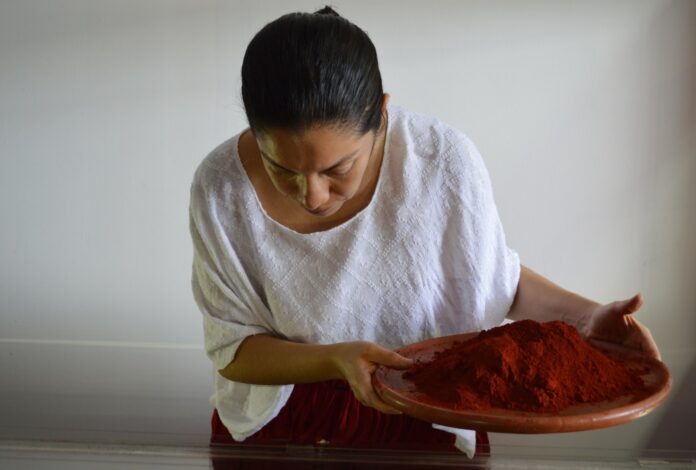
Sandra Monterroso occupied the Studio House until December 16. During that time, she developed the project of the series Corazón delator: recetas para sanar heridas (Telltale Heart: Recipes to Heal Wounds), inspired by a story by Edgar Alan Poe and in indigenous recipes to cure evil eye. At the end of the residency period, the pieces were exhibited.
Monterroso’s artistic education includes a Ph.D. in artistic practices, a master’s in design processes, and a bachelor’s degree in graphic design. She lives and works in Guatemala City, Guatemala. Her oeuvre reflects gender and power themes and her commentaries about the colonial residues in contemporary society. She is inspired by the techniques and aesthetics of the indigenous population of her native country. She uses in her creative process artisanal procedures, such as fabric dyeing using natural components from her culture. Her pieces offer a point of encounter between the traditional and the contemporary and often are presented as soft sculptures and installations. Her work has been included in numerous international exhibitions in museums, institutions, and galleries.
Sandra Monterroso began her artistic career in performance art in 1999. She earned a B.A. in Graphic Design in 2001 followed by an M.A. in Design from Universidad Popular Autónoma del Estado de Puebla (UPAEP) in Puebla, Mexico. In 2020, Monterroso earned a PhD in Art Practice from the Akademie der bildenden Künste Wien in Vienna, Austria. She has represented Guatemala in more than twelve biennials, including the 56th La Biennale di Venezia, the 12 Bienal de La Habana, and the Frestas – Trienal de Artes in São Paulo. Monterroso lives and works in Guatemala City.
In her work, Monterroso explores the dynamics of indigenous culture in the postcolonial era, gender issues, and other constructs of power across media including tapestry, painting, video, installation, and performance. Her influences include Cindy Sherman (USA), Gina Pane (France), Carolee Schneemann (USA), Ana Mendieta (Cuba), and Marina Abramović (Serbia), as she explores issues of identity and relational dynamics between genders and cultures. As Monterroso explains, “Behind the silence and the paradox of modernity and coloniality, I start taking as a symbolic reference more particularly the Mayan Q’eqchi’ language as an inheritance from my grandmother, whose linguistic structure is completely metaphorical.”
Monterroso has shown her work in selected exhibitions around the world, including the Bienal de Artes Visuales del Istmo Centroamericano (BAVIC), Museo de Arte de El Salvador (Museo MARTE), San Salvador, El Salvador (2006); Indigenous Voices, La Biennale di Venezia, Padiglione America Latina-IILA, Venice, Italy (2015); Art-Action Feministe: Panorama de la vidéo-performance féministe contemporaine latino-américaine, Centre Pompidou, Paris, France (2009); Cosmópolis II, Centre Pompidou, Paris, France (2019); To Weave in Blue, Poema al Tejido, The Martha and Robert Fogelman Galleries of Contemporary Art, University of Memphis, Tennessee, USA (2020); and Visionarios, Museo Nacional Centro de Arte Reina Sofía (MNCARS), Madrid, Spain (2009).
Monterroso’s work is included in the permanent collections of Centro de Arte Fundación Ortiz-Gurdián, Managua, Nicaragua; Essex Collection of Art from Latin America (ESCALA), Colchester, England, UK; Fundación Paiz, Guatemala City, Guatemala; Museo de Arte y Diseño Contemporáneo (MADC), San José, Costa Rica; Museo Nacional Centro de Arte Reina Sofía (MNCARS), Madrid, Spain; YES Contemporary, Miami, Florida, USA; and many private collections
SELECTED SOLO EXHIBITIONS
2023
Decolorando las Hebras and Colorando las Hebras (video, 2011), Arts of the Ancient Americas Jewel Box Gallery, Denver Art Museum, CO, USA
Sandra Monterroso: The Healing Paradox, Sicardi | Ayers | Bacino, Houston, TX, USA
2022
Altar para pájaros, Instituto de Visión, New York, NY, USA
Cuerpos Infinitos: Sandra Monterroso, Musiq’ / Breath of the spirit, Casa del Lago UNAM, Mexico City, Mexico
Cuerpos Infinitos: Sandra Monterroso, Heart of the Windy Place (performance), Casa del Lago UNAM, Mexico City, Mexico
2020
Threads of Memory, Sicardi | Ayers | Bacino, Houston, TX, USA
Dyed in the wool – the committed poetics of nonconformity, Cecilia Brunson Projects, London, UK
Artwork in Focus – Sandra Monterroso: Tu Ashé Yemanya, Cecilia Brunson Projects, London, UK
2019
Las heridas también se tiñen de azul, Centro Cultural de España, Guatemala City, Guatemala
El agua se volvió oro, el río se volvió oro, el oro se volvió azul, Museo ExTeresa, Mexico City, Mexico
2018
Hybris, NG Gallery, Panama City, Panama
2017
Inchaq’na / Hermana Mayor, French Alliance, Guatemala City, Guatemala
Distorsiones e imperfecciones, The 9.99 Gallery, Guatemala City, Guatemala
2014
Acciones para abolir el deseo, The 9.99 Gallery, Guatemala City, Guatemala
2013
Efectos cruzados, Museo de Arte Contemporáneo, San Salvador, El Salvador
2011
Efectos cruzados, Galería Piegatto (Arte La Fábrica), Guatemala City, Guatemala
2009
Meditando el error, Galería de Artes Visuales, Universidad Rafael Landivar, Guatemala City, Guatemala
2008
Rakoc Atin. Palacio de la Corte Suprema de Justicia, Guatemala City, Guatemala
2005
Sucesos Carcomidos, Galería El Attico, Guatemala City, Guatemala
2004
Metabolismo, Centro Cultural de España, Guatemala City, Guatemala
1999
Ave Fénix, Vestíbulo BANCAFÉ, Guatemala City, Guatemala
SELECTED PUBLIC COLLECTIONS
Essex Collection of Latin American Art, London, UK
Fundación Paiz para la Educación y la Cultura, Guatemala City, Guatemala
Museo Nacional Centro de Arte Reina Sofía, Madrid, Spain
Museum of Contemporary Art and Design (MADC), San José, Costa Rica
Ortíz Gurdián Foundation, Managua, Nicaragua
YAXS Foundation, Guatemala City, Guatemala
Yes Contemporary, Miami, FL, USA
Sandra Monterroso
The Healing Paradox
Exhibition text by independent curator and art historian Alma Ruiz
January 26 – March 16, 2023
Sandra Monterroso
The Healing Paradox
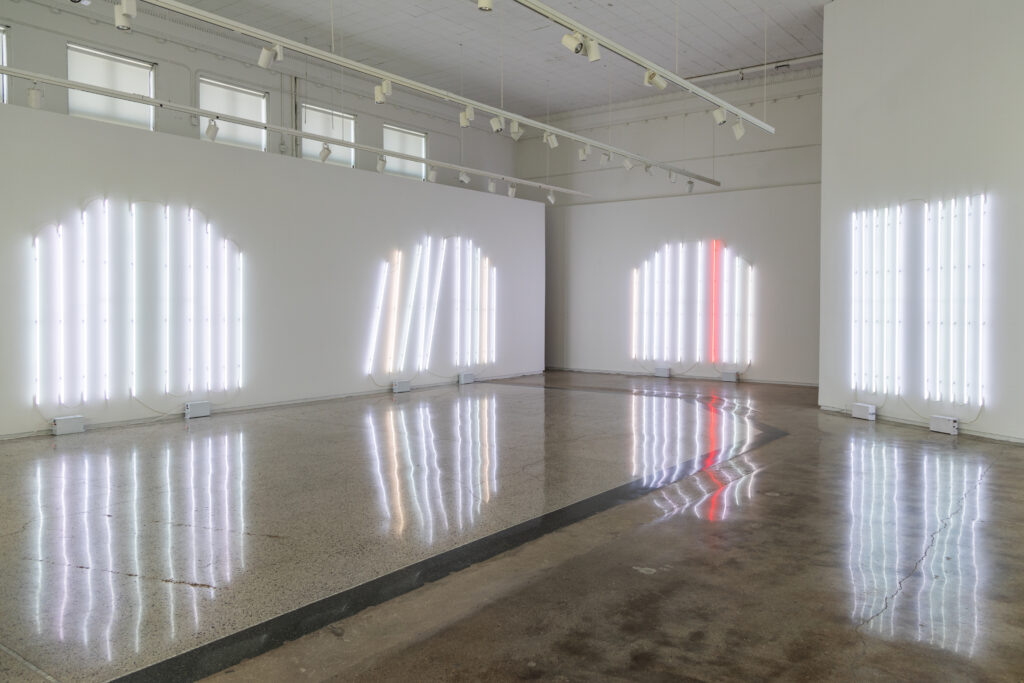
The Healing Paradox marks Sandra Monterroso’s second solo show at Sicardi | Ayers | Bacino. Continuing her interest in Guatemalan textiles as art-making material and as tools to address her country’s embattled history, Monterroso, an artist with Maya Q’eqchi’ roots, focuses her attention this time on more modest materials. Leftover fabrics from a local rug factory and organic cotton and linen embellished with embroidery and neon lights effectively become a compelling locus where discussions about healing wounds within a complex postcolonial heritage occur.
Monterroso utilizes soft materials paired with manufactured objects to construct visual paradoxes. For example, several pieces are made of fabrics originally destined for landfills. Woven by indigenous hands who labor for low salaries to produce beautifully crafted rugs for luxury homes, the scraps tangentially point to a socioeconomic hierarchy between the haves and have-nots. In rescuing the discarded materials, Monterroso performs a redeeming ritual, imbuing them with new life as artworks and, paradoxically, transforming them into repositories of the inequalities, discrimination, and racism that still exist toward marginalized groups without openly highlighting their victimization. In their conclusive form, the pieces are joined to create a whole, mending leads to metaphorical healing.
Color is an important signifier connecting Maya Q’eqchi’s culture to Monterroso’s personal history. The artist is known for her extensive use of indigo and cochineal dyes, with which she colors her textiles and yarns. There is evidence that the Mayas used indigo to create Mayan blue, a pigment developed in the late pre-Classic period, 1900 BC to 200 AD. It can be found in Mesoamerican pottery, murals, and archeological artifacts. The cochineal comes from a tiny cactus-dwelling insect harvested to produce a red dye. While the indigenous people used the red pigment to dye their textiles and for its healing properties and associations with divine light and the sun, the Spanish conquistadors viewed it as a source of wealth. As European demand for cochineal increased, its production became another form of indigenous exploitation. The inclusion of these pigments in the title of many of Monterroso’s works, for example, Like the Triangles: The Celestial Water and the Indigofera Give Us Back the Light and Like the Rhombus: The Earth and the Cochineal Give us Back the Light, underscores their relevance in the rituals of her ancestors and her role in preserving such knowledge. The triangle and diamond-shaped neon lights appended to the fabric stand in for territory/land; the slightly discernible circle inside the neon is a seed, a symbol of birth, growth, and land cultivation. To say that their inclusion seems paradoxical is true; their electric-powered presence gives back the light needed in an altered state of consciousness to enter a moment of reflection on modernity or, more precisely, on the open wounds resulting from the encounters and disagreements that occurred while going through this modernity.
Monterroso’s exploration of healing within a postcolonial context is also expressed in Rombhus to Heal Wounds, a beautiful, bright-colored cotton piece embroidered with recetas* widely used for physical and spiritual healing. Here we can find prescriptions for curing the evil eye, ‘frights,’ cancer, and other ailments. One of them reads, Prescription for the evil eye (non-physical): In a cloth bag, put a few grains of achiote (annatto) and some cross-shaped chili peppers, pass [the bag] all over the [patient’s] body, tracing the shape of a cross, and throw it into the fire. Many of the prescriptions found in this and other of Monterroso’s works come from Aspects of Popular Medicine in Rural Guatemala. Published in 1978 by the now-defunct Instituto Indigenista Nacional, this study responded to the growing interest of archeologists, sociologists, linguists, and other social scientists in third-world popular medicine and its psychosomatic practices. Long treasured by her family, the book was recently gifted to the artist by her maternal aunt.
Her increased usage of sewing to assemble textiles and organic fabrics into new works has led Monterroso to reflect on the role that sewing has played in her family history. Her maternal grandmother, aunts, and mother relocated to Guatemala City to work as seamstresses. This fact was irrelevant until recently when the artist acknowledged that, perhaps subconsciously, she was continuing the family trade with works like Organic Composition in Rhombus No.1 and No. 2, sewn cotton and linen tapestries colored with natural dyes. Like other components in Monterroso’s oeuvre, sewing has been successfully added to her artistic lexicon and joyfully embraced by the artist to honor and celebrate her maternal lineage and Maya Q’eqchi’ heritage.
Alma Ruiz
Independent Curator
Contact: Dcfamilyfoundation.com
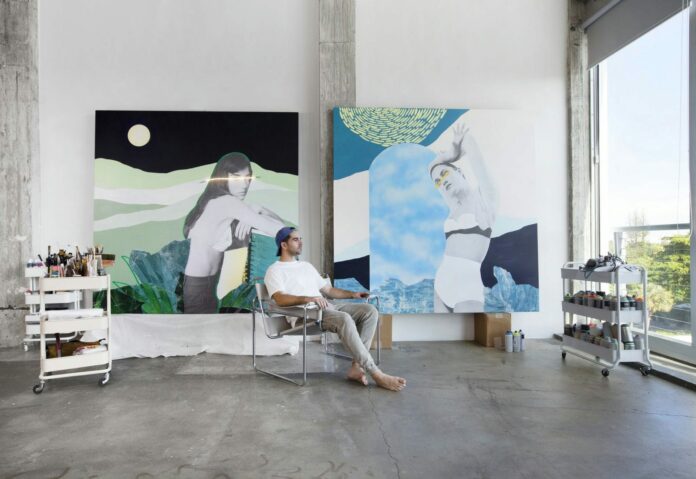
 Adriana VignoliAdriana Vignoli lives in Brasília-DF and works with sculpture, drawing, and photography. She conceptualizes sculptures that have a life of their own, and change slowly and continuously, transforming themselves into other, unpredictable forms. Graduated in Architecture and Urbanism from the University of Brasília, and is currently pursuing a doctorate at the Institute of Arts, also from UnB. Vignoli participated in national and international artistic residencies, the most recent being at Pivô Pesquisa (2022), São Paulo. Awarded the Funarte Marc Ferrez award (2021), and received the TCU National Exhibition Award in Brasília (2020). Shared an international group exhibition at Fundación Klemm, Buenos Aires (2019), and Nassauischer Kunstverein in Wiesbaden and at Hochschule für Bildende Künste Dresden (2014), while living in Berlin. Nominated for the PIPA Prize (2016). Received the FUNARTE National Award for Contemporary Art (2015). Her works are in national and international public collections. In Brazil, she is represented by Casa Albuquerque (Brasília, DF), Matias Brotas (Vitória, ES) and Celma Albuquerque (Belo Horizonte, MG) galleries.
 Alex KorolkovasAlex Korolkovas was born in 1969, in São Caetano do Sul (São Paulo – Brazil) and studied Advertising at the Methodist University of São Paulo. Korolkovas studied at the Art Center College of Design in Pasadena, CA, and worked as an assistant to photographers such as the renowned photographer Earl Miller. He was among the Top 10 fashion creatives in a contest held by Casa de Criadores (2004) and nominated for the Abril Prize of Journalism in the “photo essay” category for his work for VIP Magazine (2006). Alex moved again to the US in 2016, where he won the Visual Press Awards in Florida – in The Fine Art Photography category. Also in 2016, he held the Valentina exhibition in Miami that earned him another Visual Press Awards early in 2017, this time for Best Solo Exhibit. In fashion, Alex photographed for the best Brazilian designers – Jorge Bischoff, Reinaldo Lourenço, Glória Coelho, Pedro Lourenço, Cavalera to name a few. He currently collaborates with Brazilian, German, and American magazines, and lives in NY with his wife Mariana.
 Andre MendesBorn in Curitiba, 1979. Graduated in Graphic Design from the Pontificia Catholic University of Paraná and specialized in artistic drawing at the Institut Superior de Disseny y Escola de la Imatge – IDEP, Barcelona. Mendes has been a part of over 11 solo exhibitions and 18 group exhibitions all over Brazil, Europe, and Asia since 2009. He has also participated in three artist residency programs: Tropikos, Hof Art Space, Bangkok, Thailand (2015), Kakiseni International Art Residency, Kuala Lumpur, Malaysia (2012), Jarbas Lopes, Maricá, Brazil (2008). Several of his pieces are displayed in museums, galleries, and institutional collections, such as GRPCOM Gazeta do Povo News, Curitiba, Brazil; Paraná Institute of Oncology, Curitiba, Brazil; Ricardo Fernandes Gallery, Paris, France; Santa Cruz Hospital, Curitiba, Brazil; Secretary of Culture of Ponta Grossa, Brazil; and Zilda Fraletti Gallery, Curitiba, Brazil.
 Bia DoriaPlastic artist Bia Doria lives and works in São Paulo. She has already won several important prizes, participates in several exhibitions, and her works are in some of the most relevant galleries, museums, and places in the world. Bia works with waste from management forest, native trees rescued from fires, deforestation, bottom of rivers, and dams. From the North to the South of Brazil, she runs through, passes through, recovers, polishes, recreates, and takes care of nature. She is an important representative of sustainable contemporary art. She learned to observe nature and visualize works of art in trees, branches, roots of dead trees and other natural elements that were discarded. Her enhancement allowed her creations to expand and her convictions ecological issues echoed with greater amplitude, making the artist an important representative of sustainable contemporary art. She has published three books: Bia Doria Esculturas (2021), Raízes do Brasil, Editora Pit Cult (2014), and Bia Doria (2011).
 Carlos Cruz-DiezFrench-Venezuelan artist Carlos Cruz-Diez (Caracas, 1923 – Paris, 2019) lived and worked in Paris since 1960. A major protagonist in the field of Kinetic and Optical Art, a movement that encourages “an awareness of the instability of reality.” His body of work established him as one of the key 20th century thinkers in the realm of color. Carlos Cruz-Diez’s visual art explores the perception of color as an autonomous reality evolving in space and time, unaided by form or support, in a perpetual present. His artworks are housed in prestigious permanent collections at institutions such as: Museum of Modern Art (MoMA), New York; Tate Modern, London; Musée d’Art Moderne de la Ville de Paris; Centre Pompidou, Paris; Museum of Fine Arts, Houston; Wallraf-Richartz Museum, Cologne.
 ChrispapitaChristian Escobar, “Chrispapita” in the art world, is a self-taught artist from Guatemala, is passionate about various contemporary artistic movements. As a child, he showed great interest in drawing; from pencil drawings to acrylic on canvas, he developed his own technique and style. Hyperrealism and realism is what he ́s best known for, inspired by the human figure and applying features of urban cultures and their relationship with nature and science. His artistic and life philosophy is the baroque ideal of Memento Mori, which means “Remember that you will die”, which motivates him to create works where the main theme is celebrating life, living in the present, learning from our past and future. He uses chiaroscuro as a tool to generate a correct dramatization in his themes, playing with the duality between light and darkness.
 Chrystiane CorreaBorn in Niterói – Rio de Janeiro, lives and works in Rio de Janeiro. Bachelors in Social Communications – Universidade Gama Filho; EAV, Parque Lage – João Magalhães Núcleo de Estudos – João Wesley e Chang; Creative Process – Charles Watson, Atelier Novo Mundo, RJ; Davi Cury – Protect me from what i want / Proteja-me do que desejo – Daniela. Individual Exhibitions – 2011 – “O original, é o natural”, CCPCM (Centro Cultural Paschoal Carlos Magno) – Niterói/RJ; 2003 – Gravatá, Galeria de Artes Visuais Lana Botelho – Rio de Janeiro/RJ. Select Collective Exhibitions – 2016 – Confluences in Brazilian Contemporary Art, Art&Design Gallery – Miami/EUA; 2015 – JM Castellano Cervilla – Granada/Espanha; 2015 – Bienal Internacional de Arte; Contemporânea – Paris/França; 2014 – Bienal Internacional de Arte Contemporânea – Paris/França.
 Claudio TozziClaudio Tozzi is a Brazilian artist born in 1944 in São Paulo, Brazil, who has worked since the 1960s to challenge the political and social culture of Brazil and the world. Through his art he has highlighted the censorship of military dictatorships, the woes of mass media, and the strength of individuals. He participated in the NeoFiguration movement, primarily about issues experienced by Brazilians. Brazil lived under an oppressive dictatorship for years and the NeoFiguration movement worked to question the physical and social conditions of the era. Tozzi’s work has since been shared worldwide as he has gained popularity outside Brazil due to widely understood themes. He is one of the most well known and influential artists in Brazil.
 Dabus & ThibesFernanda was born in Santa Maria, Brazil but has lived in the US since 200. Art came into her life first with dance and music, and many years later in psychology and psychoanalysis. Art has helped her explore her emotions and relationships in different colors and energies. The art of exploring new spaces has long been part of who she is. Her admiration for the arts has been there, ever present, until she finally found the courage to translate her life experiences onto canvas. Cecilia was born in Parana, Brazil. Since Cecilia’s earliest memories, she felt challenged to grasp the essence of art and its various possibilities. After living for a time in Europe, Thibes went back to Brazil and participated in two advanced training programs within the Anthroposophical Artistic field. her atelier has been an active space for work as an Art Therapist, Art Teacher, and Painter. It is also a place where the artist has a permanent collection of her artwork.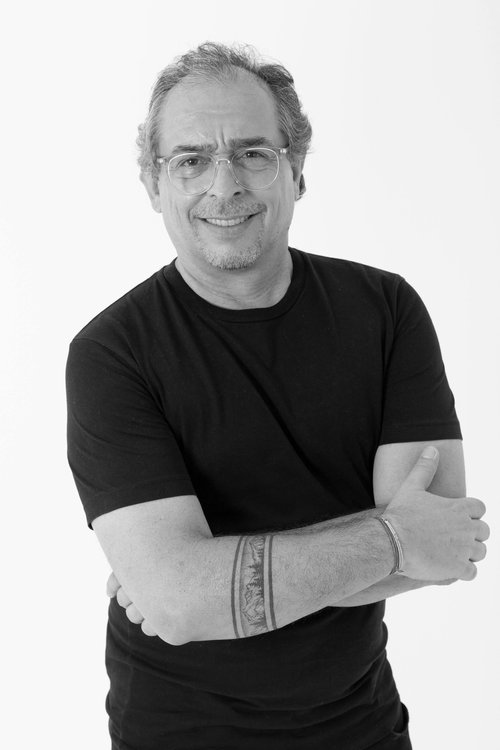


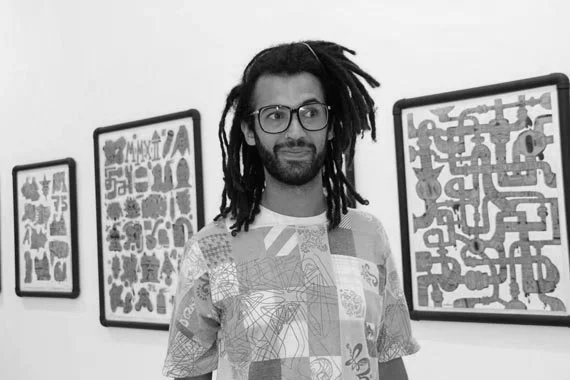


 Gilberto SalvadorPainter, draftsman, engraver, architect, teacher. Gilberto Orcioli Salvador graduated in architecture in 1969 from the College of Architecture and Urbanism of the University of São Paulo – FAU/USP, where he later worked as a professor. Simultaneously, he devoted himself to painting and drawing. He held his first exhibition in 1965 at the Teatro de Arena Art Gallery in São Paulo. He was awarded a gold medal at the Salão de Arte Contemporânea, Campinas, in 1967, and, in the 1969 and 1970 editions, with the acquisition prize. Participated in several editions of the São Paulo International Biennial, and two exhibitions at Masp stand out among his solo shows, in 1985 and 1995. In 1999, the sculpture Vôo de Xangô was installed at the Jardim São Paulo Station of the Companhia do Metropolitano de São Paulo. His work is characterized by the opposition between gestural and rigid lines, organic and inorganic forms, movement and static. Living forms, men, flowers and animals mix with geometric figures.
 J
J


 Kazuo WakabayashiBorn in Kobe, Japan, in 1931, Kazuo Wakabayashi was already a trained artist when he immigrated to São Paulo in 1961. Wakabayashi quickly gained popularity in Brazil, Japan, and the United States. Four years after his arrival in Brazil, he participated in a group exhibition of Japanese-Brazilian artists at the Organization of American States, where he also held his first US solo show in 1969. In the 1940s and 1950s, while still in Japan, Wakabayashi experimented with figure studies, landscapes, and portraits of the female body. His later work can be divided into two periods. The first can be categorized as “informalist”, while also adhering to geometric principles; marked by thick, textured surfaces and abstract, monochromatic forms. In his second and latest period, beginning in the 1980s, he returned overtly to Japanese tradition, translating characteristics of traditional woodcuts, and specifically Ukiyo-e prints into three-dimensional, large-scale paintings and prints.