Home Blog Page 100

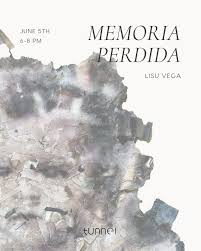
TUNNEL Presents: “Memoria Perdida” – A Solo Exhibition by Lisu Vega

TUNNEL Presents: “Memoria Perdida” – A Solo Exhibition by Lisu Vega

TUNNEL Presents: “Memoria Perdida” – A Solo Exhibition by Lisu Vega

Opening Reception – Thursday, June 5, 2025 | 6 – 9 PM
TUNNEL | 300 SW 12th Ave, Miami, FL

Miami, FLTUNNEL is proud to present “Memoria Perdida,” a powerful solo exhibition by multidisciplinary artist Lisu Vega, opening on Thursday, June 5, 2025, with a public reception from 6:00 to 9:00 PM.

Born in Miami and raised in Maracaibo, Venezuela, Vega draws from her bi-cultural heritage to explore themes of migration, memory, identity, and sustainability. Her latest body of work spans a rich variety of media, including engraving, photography, fiber art, sculpture, installation, and fashion art, blending personal narrative with social commentary.

“Memoria Perdida” offers an intimate look at Vega’s evolving artistic language and material experimentation, deeply rooted in both place and memory. Attendees will have the opportunity to meet the artist and experience her work in the distinctive atmosphere of TUNNEL, a space dedicated to bold, contemporary voices.

The event is free and open to the public.

The Colorful Divide: Synthetic Organic vs. Inorganic Pigments in Painting

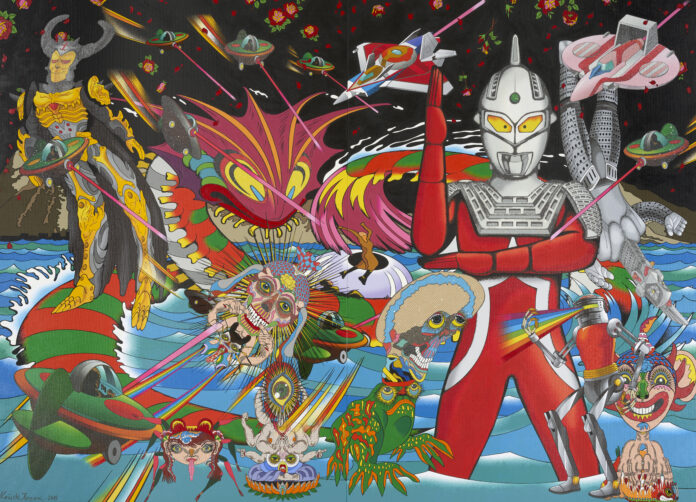
Keiichi Tanaami: Memory Collage

The Colorful Divide: Synthetic Organic vs. Inorganic Pigments in Painting

When choosing colors for your palette, you’re not just selecting a hue; you’re engaging with the vast and varied world of pigments. These tiny particles are the very essence of color in paint, and they broadly fall into two categories: synthetic organic and inorganic. Understanding the differences between them can significantly impact your artistic choices and the longevity of your work.

Inorganic Pigments: Earthy Stability

Inorganic pigments are typically derived from minerals and metal salts. Think of the ancient earth pigments – ochres, siennas, and umbers – which have been used by artists for millennia. Modern inorganic pigments include titanium white, cadmium yellows and reds, and cobalt blues.

Key characteristics of inorganic pigments often include:

  • Opacity: They tend to be more opaque, offering greater covering power.
  • Lightfastness: Generally, they exhibit excellent lightfastness, meaning they resist fading over time when exposed to light.
  • Chemical Stability: They are often more chemically stable and less reactive with solvents and binders.
  • Cost-Effectiveness: Many inorganic pigments are more economical to produce.
  • Color Range: While offering a wide range, their colors can sometimes be less vibrant or intense compared to their organic counterparts.

Historically, inorganic pigments formed the backbone of the artist’s palette. Their reliability and permanence made them essential for works intended to last.

Synthetic Organic Pigments: Vibrant Hues

Synthetic organic pigments, on the other hand, are carbon-based molecules that are artificially created. The rise of the chemical industry in the late 19th and 20th centuries led to an explosion of these vibrant new colors, such as phthalo blues and greens, quinacridone reds and violets, and azo yellows and oranges.

Key characteristics of synthetic organic pigments often include:

  • Transparency (often): Many organic pigments are more transparent, allowing for layering and glazing techniques.
  • Color Intensity: They are known for their bright, saturated, and intense colors.
  • Tinting Strength: They often have a high tinting strength, meaning a small amount can significantly alter a mixture.
  • Lightfastness (variable): While many modern synthetic organic pigments offer good lightfastness, it can vary more widely across different colors compared to inorganic pigments.
  • Cost: They can sometimes be more expensive to produce due to complex chemical processes.

The advent of synthetic organic pigments dramatically expanded the artist’s palette, offering previously unavailable brilliance and color saturation.

Choosing Your Pigments

The decision of whether to use synthetic organic or inorganic pigments often comes down to the specific needs of your artwork. Do you prioritize opacity and historical permanence? Inorganic might be your focus. Are you seeking intense, transparent colors for layering? Synthetic organics could be the answer. Many artists, of course, utilize a blend of both to achieve their desired effects.

As you develop your artistic practice, experimenting with both types of pigments will deepen your understanding of their unique qualities and how they can best serve your creative vision.

Sources:

https://www.britannica.com/technology/pigment

https://www.marketsandmarkets.com/Market-Reports/organic-pigments-market-1076.html

https://sunsikell.wordpress.com/2010/01/18/pigment-varieties-part-ii/

The Artist’s Signature: Rhythm in Form and Light

The Artist's Signature: Rhythm in Form and Light

The Artist’s Signature: Rhythm in Form and Light

The concept of rhythm extends beyond a singular beat; it encompasses a multitude of stylistic expressions in painting, particularly through the interplay of form and light. An artist’s unique approach to these rhythmic elements often becomes a defining characteristic of their style. Let’s explore how different approaches to form rhythm and light rhythm contribute to the distinct visual language of various artists and movements.

The Rhythm of Form:

How an artist articulates form – the contours, the volumes, the shapes – establishes a powerful rhythmic foundation.

  • Linear Rhythms: Artists like Botticelli emphasize linear rhythms. The flowing outlines of figures and drapery create elegant, sinuous patterns that guide the eye. The repetition of these graceful curves establishes a distinct visual cadence.
  • Volumetric Rhythms: In contrast, artists like Michelangelo sculpt form through strong contrasts of light and shadow, emphasizing the three-dimensional volume. The rhythmic interplay here lies in the swelling and receding of these forms, creating a sense of powerful, sculptural movement.
  • Geometric Rhythms: Cubist painters like Picasso and Braque fractured and reassembled forms into geometric shapes, creating a rhythmic structure based on the repetition and variation of angles, lines, and planes. The eye dances across the canvas, piecing together the fragmented reality.
  • Organic Rhythms: Artists such as Georgia O’Keeffe employ organic, flowing forms, often repeating and echoing curves and swells found in nature. The rhythm here is softer, more sensual, guiding the eye through smooth transitions and echoing shapes.

The Rhythm of Light:

The way an artist manipulates light – its intensity, its direction, its transitions – also establishes a distinct visual rhythm.

  • Chiaroscuro Rhythms: Masters like Rembrandt utilized dramatic contrasts of light and shadow (chiaroscuro) to create a rhythmic push and pull. The sudden shifts from intense illumination to deep darkness guide the viewer’s focus and evoke a sense of drama.
  • Broken Light Rhythms: Impressionists like Monet captured the fleeting effects of light through short, broken brushstrokes. The rhythm here is one of dappled light and shadow, creating a shimmering, vibrant surface where light itself becomes a dynamic, repeating element.
  • Subtle Gradations: Artists like Leonardo da Vinci employed sfumato, the gentle blending of light and shadow, creating soft, almost imperceptible transitions. The rhythm of light here is more gradual, contributing to a sense of ethereal softness and atmospheric perspective.
  • Flat, Patterned Light: In some stylistic approaches, light is less about modeling form and more about creating patterns. Think of Art Deco or certain folk art traditions where light and shadow might be simplified into distinct, repeating shapes, contributing to an overall decorative rhythm.

An artist’s unique style often emerges from the specific way they synthesize these rhythmic approaches to form and light. For example, a painter might combine strong volumetric rhythms with the broken light of impressionism to create a dynamic and textured portrayal of a figure.

Consider the work of artists you admire. How do they employ the rhythms of form and light? What makes their visual cadence unique? Understanding these stylistic choices can not only deepen your appreciation of their work but also inform the development of your own artistic voice.

Moving the Mortared Line

Moving the Mortared Line

Moving the Mortared Line

6 June – 9 July 2025

Voloshyn Gallery is pleased to present Moving the Mortared Line, a group exhibition curated by Catherine Mary Camargo, featuring works by David Correa, Alberto Checa, Tom Scicluna, Christopher Carter, Javier Barrera, George Sanchez-Calderon, Luna Palazzolo-Daboul, and Loni Johnson.

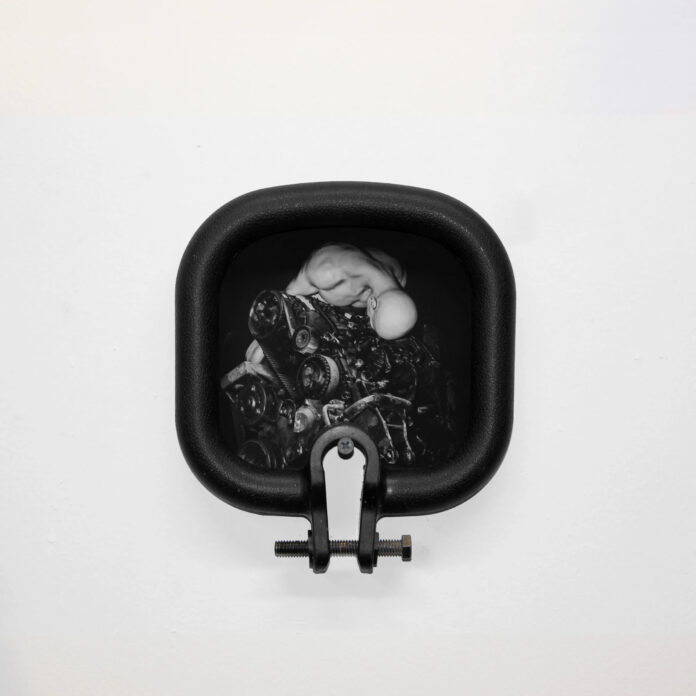
Moving the Mortared Line brings together a group of artists whose practices are grounded in the use of materials and tools born out of necessity—those often found in construction, repair, or survival. The exhibition takes its title from the labor material mortar, used both literally and metaphorically to signal acts of building, binding, and resisting within precarious conditions. Plaster, wood, steel, propane gas, a repurposed weed eater handle, iron bolts, cement, and stills from baptism footage—these are just a few of the materials activated across the included works. Each artist engages with the friction between the man-made and the lived, tracing personal and political histories embedded in everyday objects and gestures.

The exhibition embraces intentional, often humble materials—those overused, quickly discarded, or rarely afforded artistic value. These politically charged objects challenge dominant ideas of worth, class, and taste within the art world. The thin line between taste and prosperity—especially as defined through the eyes of the wealthy—is disrupted as everyday objects become charged with energy, memory, and resistance. Moving the Mortared Line asks us to consider how material can carry its own currency: one imbued with experience.

While some of the artists in Moving the Mortared Line actively engage with generative systems and algorithmic data—translating structure into visual form as a critique of capitalist excess, social bias, and cultural invisibility—others approach these concerns more subconsciously, drawn intuitively to materials and forms that echo similar tensions and ideas. David Correa, for instance, uses performance, poetic narrative, and relic-like sculpture to satirize modern man’s existential entanglement with machines and tools. Alberto Checa repositions the labor of the brown body by working with improvised, utilitarian materials—his sculptural systems reveal the futility and hidden loops of capitalist production. Loni Johnson, through ritual and movement, creates spaces of healing and reflection for Black women, drawing on ancestral memory and embodied knowledge in her multidisciplinary installations, performances, and inclusive workshops. Meanwhile, Christopher Carter assembles large-scale sculptures from found industrial materials, honoring the layered complexity of his African American, Native American, and European heritage. Overall, symbolic signs and easily digestible references begin to lose meaning in their individual practices, Moving the Mortared Line evokes a return to simple objects and direct gestures—traces of the body, behavior, labor, nature, and spatial exploration are restored.

This ethos inherently draws inspiration from the conceptual art movements of the 1960s, such as Arte Povera in Italy and Mono-ha in Japan, whose artists utilized common objects and ephemeral materials. It also engages with the concept of “Architecture of Necessity,” introduced by Cuban artist and theorist Ernesto Oroza, which examines the built spaces and everyday objects made or repaired for daily use in Cuba.

The work highlights a recurring human impulse: in conditions of scarcity, people instinctively turn to the debris around them—weathered chairs, car parts, fragments of the urban landscape—reshaping them through necessity. Perception narrows to sheer utility, and a quiet choreography of improvisation takes hold. What may seem like a response to lack or contamination becomes an intuitive practice of making with what’s at hand. As Ernesto Oroza writes, “The individual in need will focus exclusively on the repertoire of the usefulness, propitiating a conjunction, a harvest time”1—a moment when disparate materials converge through urgent utility and improvisation.

Significantly, the improvisational objects documented by Oroza resonate with the character of 1960s conceptual art movements such as Arte Povera. Curated by Germano Celant, Arte Povera challenged capitalist spectacle by embracing humble, everyday materials such as—twigs, burlap, stone—as a form of political resistance and poetic critique. Artists like Jannis Kounellis, Pier Paolo Calzolari, and Luciano Fabro revealed how scarcity could become creative strategy. Yet a central critique of Arte Povera lies in the inconsistency of this logic among its artists: Fabro, for instance, often used marble—a material far from ephemeral or “poor.” His work opened a conversation with classical traditions and the legacy of Italian art, from the Roman Empire to the Renaissance, complicating the movement’s anti-establishment framing. 

This exhibition builds upon such histories while extending them into a wider, often overlooked global context of material use. Rather than draw only from canonized examples, it centers the resourceful practices that have long existed in Afro-diasporic, Caribbean, Latin American, and Afro-Arab regions—contexts where scarcity and survival give rise to sophisticated systems of making, deeply embedded in local cultural life. These gestures, while resonant with conceptualism, are rarely archived within dominant narratives of art history. The question, then, is not whether the work shares formal affinities with Arte Povera or Mono-ha, but why similar gestures in different geographies have been historically excluded from the same recognition. The often crucial distinction: in places like the Caribbean, where economic necessity and limited access to materials define daily life, DIY engineering and innovation aren’t artistic choices—they are vital strategies for survival. Function comes before aesthetics.

These sensibilities resonate with the artists in Moving the Mortared Line, many of whom blur the boundary between minimalism and resistance. Though born in places like London, Cuba, Argentina, and Miami, all eight artists have lived and worked within Miami’s layered social fabric. Their chosen materials and explored narratives—whether consciously or not—reflect lived experiences shaped by a city where legally documented immigrants comprised 65% of the labor force as of 2019, profoundly influencing its cultural, social, and economic landscape. Therefore, their works often reflect the lived realities of systemic imbalance, especially as experienced by working-class individuals and underrepresented communities.

Ultimately, Moving the Mortared Line traces a loose but deliberate cartography of global precarity and resistance. It seeks to draw lines—sometimes faint, sometimes insistent—between geographies, class conditions, and inventive material practices. The exhibition remains anchored in my own position as a half-Haitian, half-British artist and researcher from Miami, shaped by a multicultural lens and a deep sensitivity to what is often left unsaid or undervalued. These works treat material not only as medium but as evidence—of survival, of critique, and of care. They remind us that in contexts of constraint, making becomes not only an act of resistance, but also a blueprint for community and expanded definitions of taste and aesthetic value.

Words from the Curator,

Catherine Mary Camargo

1 “The individual in need will focus exclusively on the repertoire of the usefulness, propitiating a conjunction, a harvest time.”

Ernesto Oroza, Updating City (theorem) – 2000/2010. Accessed May 28, 2025. https://www.ernestooroza.com/updating-city-theorem-20002010/.

Opening Reception: Friday, June 6th, 6:00 PM to 8:00 PM

Dates: June 6th – July 9, 2025

Gallery Hours: Tuesday–Saturday, 11:00 AM to 5:00 PM

Address: 802 NW 22nd Street, Miami, FL, US, 33127

Voloshyn Gallery Artists:
MYKOLA RIDNYI

OLEKSIY SAI

DANYLO HALKIN

NIKITA KADAN

NIKOLAY KARABINOVYCH

PAVLO KERESTEY

LESIA KHOMENKO

KATERYNA LYSOVENKO

DANIIL REVKOVSKIY AND ANDRIY RACHINSKIY

VLADA RALKO

YEVGEN SAMBORSKY

SANA SHAHMURADOVA TANSKA

ABI SHEHU

MARIA SULYMENKO

33 Contemporary Gallery Presents: “Museology” by Heather Arenas

Heather Arenas
Heather Arenas

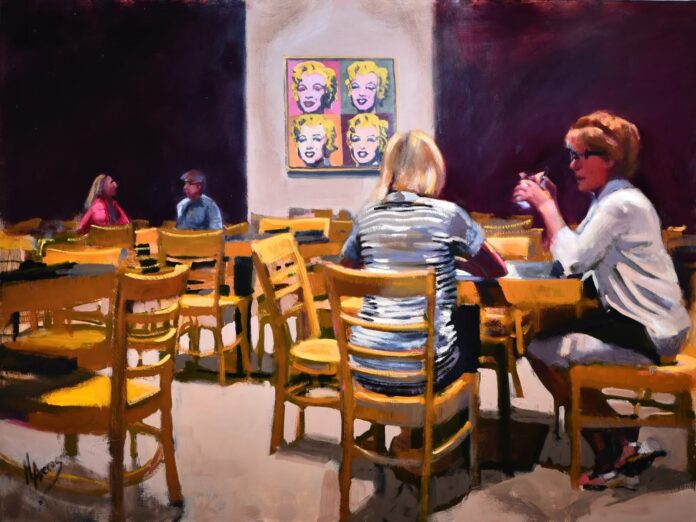
Museology: Art, People, and the Spaces Between – A Solo Exhibition by Heather Arenas

Opening Reception – Thursday, June 5, 2025 | 6 – 8 PM
500 N. Dixie Hwy, Lake Worth Beach, FL 33460

Lake Worth Beach, FL33 Contemporary Gallery is proud to present “Museology,” a solo exhibition by acclaimed artist Heather Arenas. The opening reception will take place on Thursday, June 5, 2025, from 6:00 to 8:00 PM at our Lake Worth Beach location.

Palm Beach, FL – 33 Contemporary Gallery is proud to present Museology: Art, People, and the Spaces Between, a solo exhibition of new works by acclaimed painter Heather Arenas. The exhibition opens with a public reception on Wednesday, June 5, from 6 to 8 PM, and will remain on view throughout the month of June at the Palm Beach Art & Design Showroom.

In Museology, Arenas delves into the profound connections between art, viewers, and the silent spaces that lie between them. Inspired by the quiet revelations found during museum visits, the artist reimagines these moments as deeply personal journeys—where meaning, memory, and emotion intertwine.

Using a refined palette of white, yellow, red, and black, Arenas paints compelling scenes that explore life’s dualities—joy and tension, presence and distance. A central figure in the work is “Dot,” a small yellow character representing warmth, goodness, and the enduring influence of her grandmothers. “Dot” becomes a symbolic guide, inviting viewers to consider their own narratives in relationship to art.

“These spaces between art and observer are more than voids,” Arenas explains. “They’re full of interpretation, emotional resonance, and memory. I want viewers to step into that space and find something meaningful for themselves.”

Arenas’ unique blend of figurative elements, museum-inspired scenes, and symbolic use of color create a visually poetic experience that invites contemplation and conversation.

About the Artist:
Heather Arenas is a contemporary painter whose work often explores themes of human connection, observation, and reflection. Her art has been exhibited across the United States and recognized for its evocative storytelling and emotional sensitivity. Her background in science, combined with classical training, brings a thoughtful balance of intellect and intuition to her work.

Join us for an evening of thoughtful conversation, powerful visuals, and community connection. Meet the artist, experience the work firsthand, and take part in a celebration of the transformative role art plays in our lives.

The event is free and open to the public.

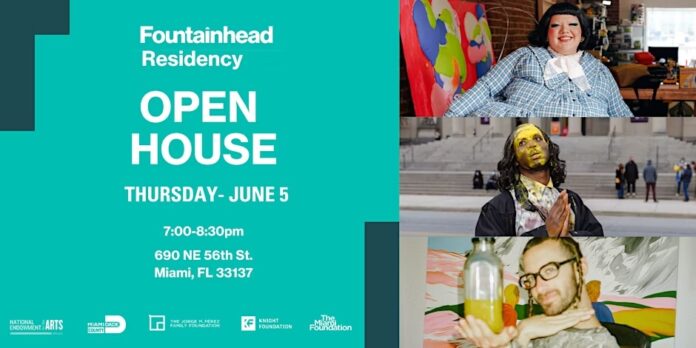
Fountainhead Residency Presents: Session 4 Open House

Fountainhead Residency Open House: Session 4

Fountainhead Residency Presents: Session 4 Open House

Thursday, June 5, 2025 | 7 – 8:30 PM
690 NE 56th Street, Miami, FL 33137

Miami, FL — Fountainhead Residency invites you to an inspiring evening at our Session 4 Open House, featuring resident artists Navot Miller, Gabriela Ruiz, and Monsieur Zohore.

Join us on Thursday, June 5, 2025, from 7 to 8:30 PM for an intimate look into the practices, lives, and stories of three dynamic artists shaping contemporary art today. This open house offers a unique opportunity to explore their current work, engage in conversation, and connect with the creative energy that defines the Fountainhead experience.

Set in a relaxed and welcoming environment, the evening encourages dialogue between artists and the community, fostering deeper understanding and appreciation of their creative journeys and cultural influences.

Admission is free and open to all.
To learn more, visit: www.fountainheadarts.org

The Kampong

Experience Miami’s Artistic Pulse – Absolutely Free!

The Kampong

Revenant Florida: Landscapes as Living Memory

Thursday June 5 Closing Reception

9:00 a.m. – 4:00 p.m. (last entrance at 3:00 p.m.)

4013 S Douglas Rd, Miami, FL, United States, Florida

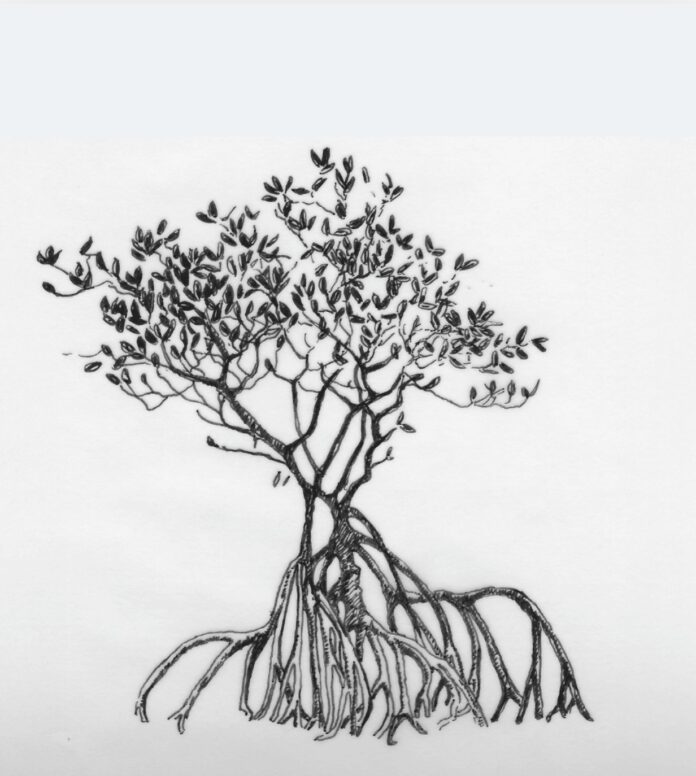
Much of Florida’s past has been deliberately buried or swept away by storms, and older structures are rare, but history exists beyond the remnants of manmade structures and stones and circles. Christina Pettersson speculates on how not just historic sites but the landscape itself – trees, plants and even birds – can act as living artifacts of our history, providing a unique opportunity to access a multitude of events, human drama, natural disasters, or more intimate details of the past. In Revenant Florida, Pettersson presents drawings that bear witness to sacred places in her home state.

Consider Fairchild Oak, the oldest tree in Florida at over 400 years old, located within Bulow Creek State Park, once part of a slave plantation. Or a particularly hallowed grove at Kissimmee Prairie State Park, where the last living Carolina Parakeet (our only native parrot species in North America) was shot in 1904. Questioning the myth of Florida as a young place, her drawings reckon with how beautiful places often resonate with a darker past.

With a bit of sorcery, Pettersson’s menagerie of creatures and structures reconnects viewers to their ancestral past, signaling a communal remembrance of our unique environmental heritage that made life at this particular place possible. It is a reminder of the eternal view, the beating heart of a place, that once was, is still and ever will haunt it.

Included in the exhibition are illustrations of 24 historic sites within Biscayne Bay, including The Kampong, as part of an initiative to make Biscayne Bay a National Heritage Area, headed by founder and Director of Bridge Kate Fleming.

Join us for the closing reception on Thursday, June 5 at 6pm! Enjoy exhibition tours with the artist Christina Pettersson, guided garden walks with the team from The Kampong and local trivia hosted by Superfly Trivia. There will also be food and beverages for purchase.

The Modern Palette: A History of Dry Pigments for Acrylic Paint

El Panorama Artístico en 2025: Hacia una Verdadera Democratización del Arte

The Modern Palette: A History of Dry Pigments for Acrylic Paint

Acrylic paint, a relatively recent arrival on the artistic scene, owes its vibrant spectrum to a fascinating blend of historical practices and modern scientific innovation in the realm of dry pigments. Unlike oil paint, which has a lineage tied to traditional earth and mineral pigments for centuries, acrylic’s story is more closely linked to the advancements of 20th-century chemistry.

While the concept of using dry pigments mixed with a binder to create paint is ancient, the specific evolution for acrylics takes a different path. When acrylic polymers began to be developed as a paint medium in the early to mid-20th century, artists and manufacturers had access to a significantly expanded palette of dry pigments compared to earlier eras.

Early acrylic formulations certainly incorporated some of the time-tested inorganic pigments – the earth tones, iron oxides, titanium dioxide for white, and carbon black. These provided a foundational range of colors known for their stability. However, one of the defining characteristics of acrylic paint has been its embrace of the newly developed synthetic organic and inorganic pigments.

The late 19th and early 20th centuries witnessed a revolution in pigment production driven by the burgeoning chemical industry. This era saw the creation of a vast array of synthetic organic pigments, offering artists hues with greater brilliance, intensity, and often improved lightfastness compared to some traditional pigments. Think of the vibrant phthalo blues and greens, the intense quinacridone reds and violets – many of these owe their existence to this period of chemical innovation.

Acrylic polymers, being a synthetic binder themselves, proved highly compatible with these modern pigments. This synergy allowed for the creation of paints with a wide range of vivid and permanent colors that artists readily adopted. The versatility of acrylics also meant that they could effectively carry both finely ground traditional pigments and the new, often more finely dispersed, synthetic varieties.

Therefore, the history of dry pigments for acrylic paint isn’t a linear progression from natural sources. Instead, it’s a story of embracing the advancements in pigment chemistry that coincided with the development of the acrylic medium itself. This access to a broader and more reliable spectrum of colors has undoubtedly contributed to the expressive possibilities that acrylic paint offers contemporary artists.

Toledo Museum of Art Presents Infinite Images

Toledo Museum of Art

Toledo Museum of Art Presents Infinite Images: The Art of Algorithms Exploring Generative Art From Conceptual Systems to Code

Opening July 12, this landmark exhibition investigates rule-based approaches to artmaking from the 1960s to today, positioning early conceptual and systematic practices by artists like Vera Molnár and Sol LeWitt, alongside contemporary generative works by Dmitri Cherniak, Tyler Hobbs, and Operator, with loans from the Alan Howard Collection, complemented by loans from the Kanbas Collection and the Toledo Museum of Art.

Toledo Museum of Art

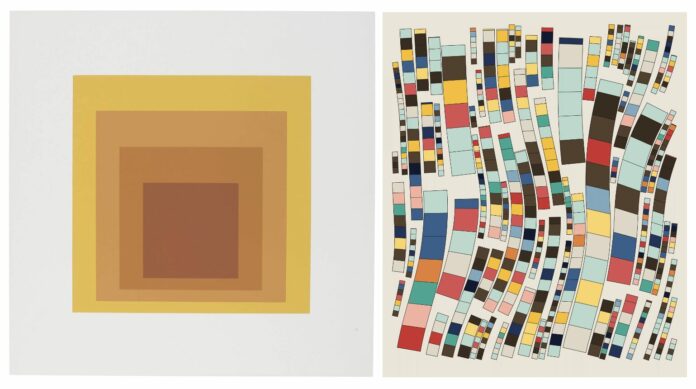
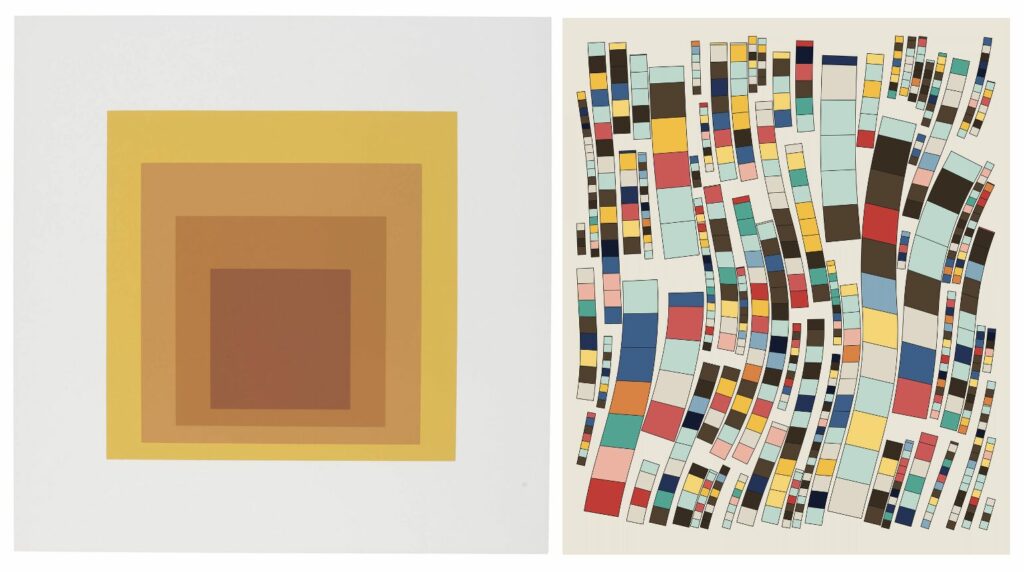
(L): Josef Albers (American, 1888-1976), Homage to the Square: Soft Edge–Hard Edge. 10 color screenprint on white woven paper, 1965. Page dimensions 17 x 17 in. Courtesy of Toledo Museum of Art
(R): Tyler Hobbs (American, b. 1987), Fidenza #857. NFT, 2021. Dimensions variable. Courtesy of the artist.

Toledo, OH – June 2, 2025 – Opening July 12 at the Toledo Museum of Art (TMA), Infinite Images: The Art of Algorithms is a far-reaching investigation into how artists have employed rule-based systems and automation, from hand-drawn geometric abstraction to generative code, to structure visual language across decades of evolving technology. Curated by digital art expert Julia Kaganskiy, the exhibition features 24 artists whose works span more than six decades, from Josef Albers (1888–1976) and Vera Molnár (1924–2023) to Sarah Meyohas (b.1991) and Casey Reas (b. 1972). The exhibition will remain on view through November 30, 2025.
 
Early landmark works such as Molnár’s Interruptions (1968) and Albers’ Homage to the Square: Soft Edge–Hard Edge (1965) are placed in context with recent works by Operator and Tyler Hobbs, illuminating shared strategies of structure, repetition, and chance. With loans from the Alan Howard Collection, complemented by works from the Kanbas Collection and the Toledo Museum of Art, Infinite Images marks a significant curatorial moment in placing generative and digital art within the broader continuum of art history.
 
Curator Julia Kaganskiy comments, “Generative art has risen to prominence in recent years thanks, in part, to innovations introduced by blockchain technologies as well as generative AI. This exhibition considers the long lineage of generative and algorithmic strategies in artmaking, as well as the shifting definition of generative practice and how artists work with rules, chance, emergence and automation.”
 
Infinite Images represents a curatorial milestone for the Toledo Museum of Art, demonstrating the institution’s commitment to championing the art of the digital age. For many of the participating artists, including Deafbeef, Tyler Hobbs, Zach Lieberman, Sarah Meyohas, Entangled Others, Operator, QuayolaAnna RidlerMonica RizzoliSnowfroSam Spratt, and Emily Xie, this exhibition marks their first presentation in a major U.S. museum. Their works are exhibited in conversation with key figures from earlier generations whose practices were rooted in systems-based and conceptual approaches, including Anni and Josef Albers, Max BillSol LeWitt, and Vera Molnár, bridging analog and digital methodologies across time.
 
Digital art is a natural evolution of the creative tools artists have always embraced. Throughout history – artists like the pioneer in generative art Vera Molnár in the 1960s – have gravitated toward new media, from oil paint to photography, to expand their expressive potential,” says Alan Howard. He continues, “digital art continues this lineage, not in competition with traditional media, but in dialogue with it. This exhibition serves as an opportunity to experience firsthand how digital art resonates within the broader continuum of artistic expression.
 
Infinite Images: The Art of Algorithms is divided into four chapters, each building upon the previous section to establish a clear visual and intellectual story for museum visitors:“The Imaginary Machine” introduces generative art and connects it to other 20th-century avant-garde movements, including conceptual art, geometric abstraction, and concrete art through the work of the pioneering digital artist Vera Molnár.Vera Molnár’s Interruptions (1968) is one of the first series of generative drawings created by the artist with the aid of a computer and plotting machine, a type of early mechanical printer. Working algorithmically by hand since 1959, this series represents the first time Molnár was able to translate her analog algorithmic process—her “imaginary machine”—to a real computer, allowing her to work with greater complexity and speed.“Chance and Control” dives into the role of randomness in generative systems, surveying how digital artists engage with the unknown.Autoglyphs (2019) by Larva Labs is a series of 512 unique drawings of intricate, text-based geometric patterns. This series represents the first generative work where the code used to produce the image is stored directly on the Ethereum blockchain. Each image was generated at the moment that it was collected (minted). During this exhibition, a Bantam Tools ArtFrame1824 plotter will continuously draw a selection of ten Autoglyphs each day. TMA members can claim these prints for free on a first-come, first-served basis.“Digital Materiality” showcases how artists exploit the distinct material properties of digital media and computation, embracing simulation and interactivity.The artist 0xDeafbeef created a custom interactive sculpture based on his 2021 series Glitchbox (2021/2025) for this exhibition. Drawing on his skills as a blacksmith, computer programmer, and electrical engineer, he has given his virtual audiovisual instrument a physical form resembling a modular synthesizer. Inviting visitors to explore the work’s algorithmic parameters using levers and knobs, he gives a tactile, sensory nature to the digital work.“Coded Nature” highlights how generative artworks mirror nature’s own generative processes, such as emergence and evolution, and how digital artists use (and misuse) these models to provide a new lens on the natural world.Earthly Delights 3.2 is part of a series of generative software works created by Casey Reas as a meditation on patterns found in nature and the evolution of experimental cinema in the digital age. The work is created using a custom GAN (generative adversarial network) and a dataset of foraged plants. The generative software creates a nonlinear cinematic sequence by continuously rearranging fixed frames so that Earthly Delights exists in perpetual evolution. Visitors will never see the same arrangement twice.“With Infinite Images, the Toledo Museum of Art affirms its commitment to presenting bold, forward-looking exhibitions that expand our understanding of what art is and can be,” said Adam Levine, Edward Drummond and Florence Scott Libbey President, Director and CEO of TMA. “This show honors the legacy of conceptual and systems-based artists while spotlighting contemporary digital work that gestures to a future that includes these new art-making practices.”
 
Exhibition Artists
Infinite Images artists include: Anni Albers, Josef Albers, Max Bill, Dmitri Cherniak, Sofia Crespo, Deafbeef, Entangled Others, Tyler Hobbs, Larva Labs, Sol Lewitt, Zach Lieberman, LoVidWilliam Mapan, Sarah Meyohas, Vera Molnár, Operator, Quayola, Casey Reas, Anna Ridler, Monica Rizzoli, Sam Spratt, Snowfro, Jared Tarbell, and Emily Xie.
 
Sponsors
With loans from the Alan Howard Collection, complemented by works from the Kanbas Collection and the Toledo Museum of Art, Infinite Images: The Art of Algorithms is made possible by Presenting Sponsors Susan and Tom Palmer, Season SponsorsTaylor Automotive Family and Blackdove, and additional support from the Ohio Arts Council, which receives support from the State of Ohio and the National Endowment for the Arts.

This release was written by a human with support from AI and has been fact-checked for accuracy.

About Toledo Museum of Art

Recently named the 2025 Best Art Museum in the USA TODAY 10Best Readers’ Choice Awards, the Toledo Museum of Art (TMA) is a beloved cultural institution in Toledo, Ohio, and a global leader in the museum field. Established in 1901, its renowned collection features over 25,000 works, ranging from antiquity to contemporary art, and includes one of the finest collections of glass in the world. In addition, TMA became the first major cultural institution to use cryptocurrency to purchase a work (Abyssinian Queen by Yatreda ያጥሬዳ) for its collection in November 2024. Situated on a 40-acre campus, TMA integrates art into people’s lives through its world-class collection, engaging exhibitions, robust educational programs, and community outreach. 
 
Visitor InformationAdmission & Parking: Always freeLocation: Toledo Museum of Art, 2445 Monroe St., Toledo, OH (one block off I-75; exit signs posted)Hours: Wednesday, Thursday, Sunday: 11 a.m.–5 p.m., Friday, Saturday: 11 a.m.–8 p.m. Closed Monday, Tuesday, and select holidaysVisitor Contact:
Phone: 419-255-8000
Website: toledomuseum.org
IG  @ToledoMuseum |  FB  Toledo Museum |  X  @ToledoMuseum
 
About Julia Kaganskiy
Julia Kaganskiy is an independent curator based in New York City. She has been working at the forefront of art and technology since 2008 as a curator, editor, and cultural strategist. She was the founding director of NEW INC at the New Museum, the first museum-led incubator for art, design and technology. She has conceived and organized exhibitions for HEK (Basel), LAS Art Foundation (Berlin), Matadero Madrid (Madrid), 180 the Strand (London), Borusan Contemporary (Istanbul), Science Gallery (Dublin), Eyebeam (New York City) and many others. www.juliakaganskiy.com
 
About Studio TheGreenEyl
Exhibition and visual identity design for Infinite Images: The Art of Algorithms is led by Studio TheGreenEyl under the creative direction of Richard The. TheGreenEyl is a design and research practice based in Berlin and New York. They create exhibitions, installations, objects, images, interactions and algorithms. TheGreenEyl was founded in 2009 by Richard The, Gunnar Green, Frédéric Eyl, Willy Sengewald and Dominik Schumacher and has since worked internationally with partners from culture, industry and research. Their work has been exhibited at the 19th Venice Architecture Biennale, MoMA New York, The Kennedy Center, Ars Electronica, NewInc at the New Museum, Design Museum London, and 21_21 Design Sight Tokyo. www.thegreeneyl.com
 
Press Visits
Reservations are requested for all accredited members of the media. Please contact FITZ & CO to request a reservation.
 
Press Inquiries
Lizzie McNamara / FITZ & CO / [email protected] / 917.432.4765
Hope Thomson / FITZ & CO / [email protected] / 646.589.0945

Queer Showcase, primavera-verano 2025

Queer Showcase, primavera-verano 2025

Queer Showcase, primavera-verano 2025

Del 6 al 29 de junio | Centro Cultural Artefactus

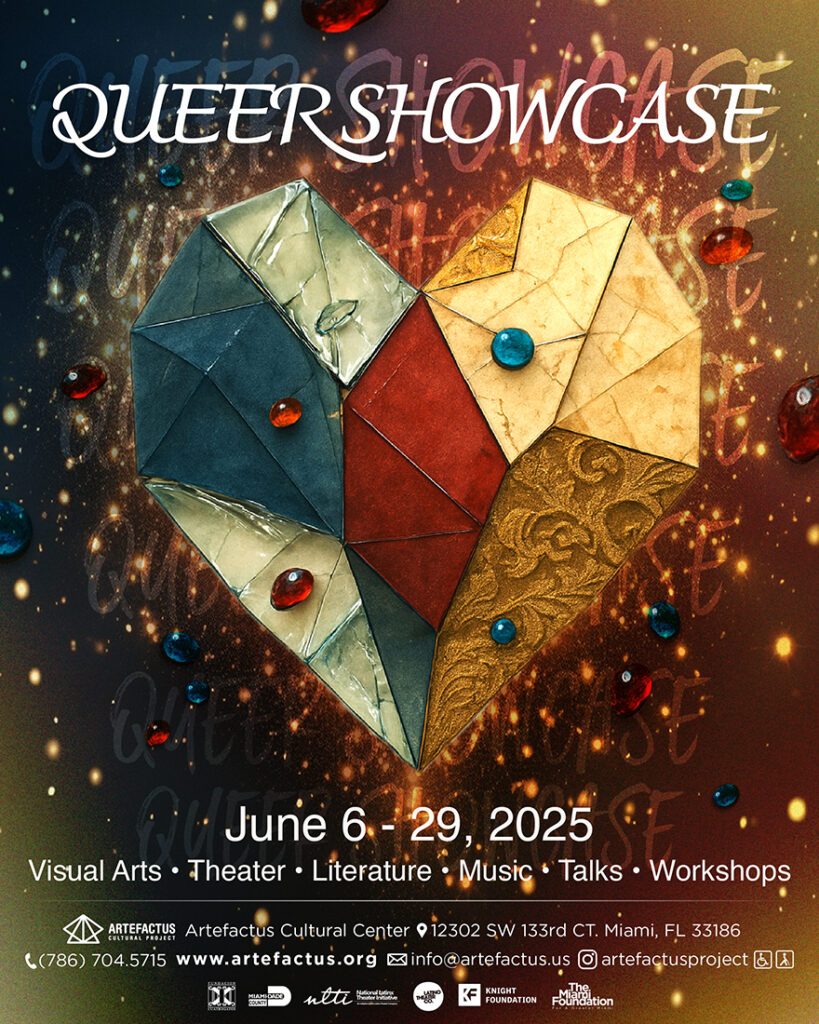
Del 6 al 29 de junio de 2025, cuando la primavera se disuelve en verano y el calendario nos sitúa en un tiempo de tránsito y expansión, el Queer Showcase regresa al Centro Cultural Artefactus con una edición que reafirma su vocación como territorio de apertura, diversidad y resistencia creativa. Curado por Artefactus Cultural Project, este ciclo reúne artistas, escritores y públicos que entienden el arte como una forma de pensar el mundo desde los bordes, los márgenes, las preguntas. En este umbral de estaciones, las narrativas queer encuentran un espacio de reflexión, libertad y celebración.

La temporada se inaugura el viernes 6 de junio, a las 8:30 p.m., con la exposición “Rompecabezas: Una nostalgia sin dramas”, del artista visual Sergio Chávez (La Habana, 1965), quien reside en Estados Unidos desde 1999. Formado en la Academia de Bellas Artes de San Alejandro y en la Escuela Nacional de Artes Aplicadas, Chávez trabajó junto a figuras esenciales del arte cubano como Antonia Eiriz y Manuel Mendive. Su obra ha sido exhibida en Miami y París, y ha sido definida por el poeta Reinaldo García Ramos como una forma de nostalgia “discreta, sin aspavientos”, que rehúye el dramatismo para enunciar desde la evocación y el humor.

Como parte de esta velada inaugural, se ofrecerá un pequeño concierto íntimo a cargo del músico Waldo Díaz Miranda, quien acompañará la apertura con una selección de piezas interpretadas al piano. Díaz Miranda, músico cubanoamericano graduado con honores de la New World School of the Arts y la University of Miami, ha desarrollado una brillante carrera como pianista clásico, director coral, compositor y educador. Sus interpretaciones han sido transmitidas por la emisora nacional CMBF y ha actuado en escenarios como Carnegie Hall, el Adrienne Arsht Center y la New World Symphony. La entrada es libre y gratuita.

El sábado 7 de junio, a la misma hora, se presentará la novela “Negro en la costa” de la escritora cubanoamericana María Elena Hernández, bajo el sello de Ediciones Furtivas y con el apoyo de la Fundación Cuatrogatos. Acompañada por la narradora y crítica María Cristina Fernández, la autora dialogará con el público sobre este libro que rescata del olvido la figura del pensador cubano Walterio Carbonell, cuya trayectoria fue marcada por el exilio interno y la censura tras denunciar el racismo en la Cuba posrevolucionaria. Guillermo Cabrera Infante lo describió como “uno de los pocos intelectuales negros que hay en Cuba”, expulsado por decir en voz alta lo que muchos callaban. Este acto literario es, también, un gesto de justicia y de memoria. Entrada libre.

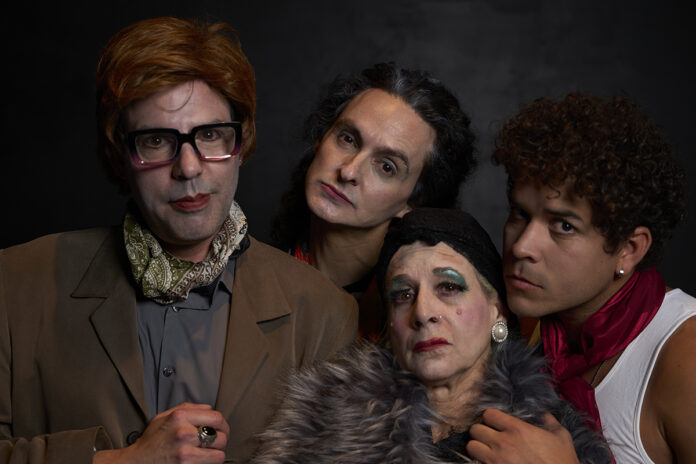
El segundo fin de semana del ciclo, los días 13, 14 y 15 de junio, se presenta “Delirios”, una obra escrita y dirigida por Eddy Díaz-Souza que explora los bordes entre la cordura y la locura, la pertenencia y la exclusión, a través de una familia que debe lidiar con la llegada de un visitante inesperado. Con una estructura que conjuga el absurdo, el drama y la comedia, esta pieza teatral reflexiona sobre el paso del tiempo, los silencios familiares y las decisiones postergadas. El elenco está conformado por Belkis Proenza, Rei Prado, Alberto Menéndez y Santiago Salas. Las funciones comenzarán a las 8:30 p.m. el viernes y sábado, y el domingo a las 5:00 p.m.

El viernes 20 de junio se inaugura “La Ciudad de las Columnas”, del artista visual Felipe Alarcón Echenique (La Habana, 1966), quien reside actualmente en Madrid.

Esta exposición, inspirada en la emblemática metáfora de Alejo Carpentier, es una reinterpretación pictórica de La Habana desde una mirada que combina el neocubismo y el barroco antillano. Las columnas de la ciudad se multiplican, se fragmentan, se transforman en signos de persistencia, ruina y renovación. La obra de Alarcón, marcada por la experimentación técnica y una sensibilidad literaria, convierte la arquitectura en archivo de memoria y en testimonio de lo irrepetible. Entrada gratuita.

La temporada cierra con tres funciones de “El Show de Grindr”, los días 27, 28 y 29 de junio, una producción de Dreki Theater escrita y dirigida por José Raúl Acosta, con las actuaciones de Dairín Valdés, Lola Bosch, Eddy Estrada y Osiel Veliz. En esta obra híbrida de teatro musical y cabaret, Grindr —un personaje de género fluido, mitad app de citas, mitad diva escénica— guía al público por un collage de historias LGBT+ donde el humor ácido, las canciones icónicas y la participación del público se entrelazan con experiencias reales. Entre los personajes que suben a escena están Amanda, una mujer trans que se subasta en busca de afecto; Ally, un padre trans que lucha por mantener el amor y la custodia de su hijo; Renée, skoliosexual reacia a las etiquetas hasta que el deseo la desborda; y Nirvana, un stripper y gurú bisexual con un pie en el rock y otro en el abismo espiritual. A medida que sus relatos se entrecruzan, el espectáculo comienza a fracturarse y amenaza con poner en crisis no solo la narrativa del show, sino también la aparente unidad de la comunidad queer. Con una mirada crítica y profundamente humana, “El Show de Grindr” pone en escena las luces y sombras de la representación, el mercado del deseo y la lucha por habitar la verdad de cada quien. Las funciones inician a las 8:30 p.m. y la información sobre entradas está disponible en el sitio web de Artefactus.

Queer Showcase no es solo una temporada artística, sino una plataforma para visibilizar lo invisible, escuchar lo silenciado y convocar a la imaginación como acto político. En sus múltiples lenguajes —visual, escénico, narrativo—, este programa confirma que el arte queer no es un género ni una moda, sino una forma de pensar el mundo desde la diferencia.

Para más información y boletos:

www.artefactus.org | [email protected]

Page 100 of 278
1 98 99 100 101 102 278