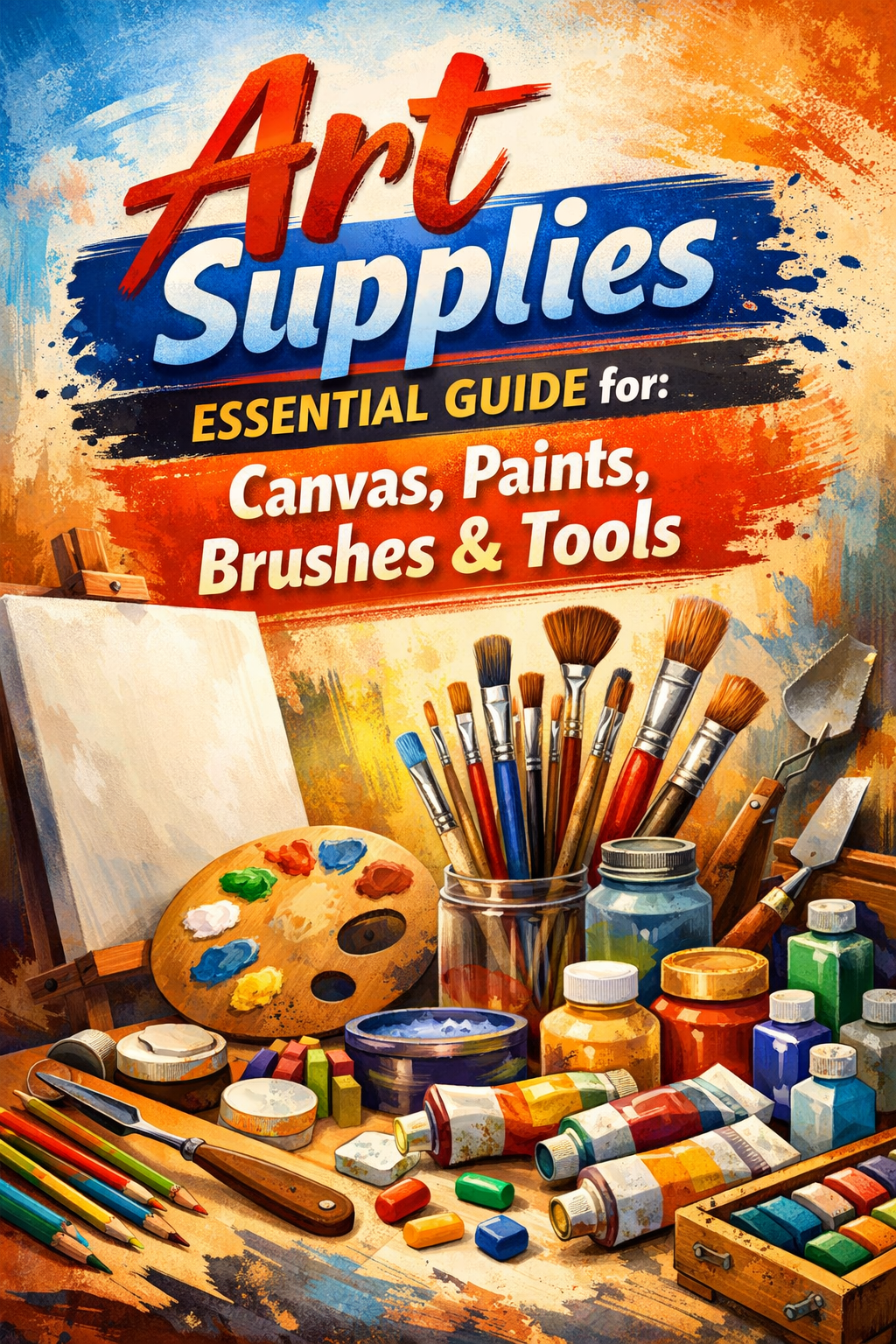
Art Supplies Essential Guide: Canvas, Paints, Brushes & Tools in Miami, FL
Choose Your Ultimate Art Supply Store: Only the Best for Your Creative Vision
Your tools define your craft. Whether you’re painting a masterpiece, sketching ideas, or building your next visual statement, you deserve the best. Don’t settle for average — elevate your art with premium supplies from the top brands trusted by professionals worldwide. From elite brushes and archival paints to precision-crafted canvases and cutting-edge tools, it’s time to gear up with excellence.
Ready to transform your artistic potential? Start by choosing the right art tools store — your creativity deserves it.
- Blick Art Materials
- Jerry’s Artarama
- id art Supply
- Michaels Stores
1. Introduction: The Foundation of Artistic Expression
2. Canvas: Choosing Your Surface
- 2.1 Stretched Canvas
- 2.2 Canvas Panels and Boards
- 2.3 Canvas Rolls
- 2.4 Linen vs. Cotton Canvas
- 2.5 Primed vs. Unprimed Canvas
- 2.6 Alternative Surfaces
3. Types of Paints: Understanding Your Medium
- 3.1 Oil Paints
- 3.2 Acrylic Paints
- 3.3 Watercolor Paints
- 3.4 Gouache
- 3.5 Tempera
- 3.6 Encaustic
- 3.7 Specialty Paints
4. Brushes: The Artist’s Primary Tool
- 4.1 Natural Hair Brushes
- 4.2 Synthetic Brushes
- 4.3 Brush Shapes and Their Uses
- 4.4 Specialty Brushes
- 4.5 Brush Care and Maintenance
5. Essential Tools and Accessories
- 5.1 Palette and Palette Knives
- 5.2 Easels
- 5.3 Mediums and Solvents
- 5.4 Varnishes and Fixatives
- 5.5 Measuring and Drawing Tools
- 5.6 Storage and Organization
6. Conclusion: Building Your Personal Arsenal
1. Introduction: The Foundation of Artistic Expression
The relationship between an artist and their materials is intimate and essential. While vision and skill drive the creative process, the physical supplies an artist chooses can profoundly influence the character of their work, the ease of their practice, and even the longevity of their finished pieces. Understanding creative materials is not merely a practical concern but a fundamental aspect of artistic education, one that connects contemporary creators to centuries of craft tradition and technical innovation.
The world of painter’s toolkit can seem overwhelming to beginners, with endless options and technical specifications that may appear arcane or unnecessarily complex. Yet each type of canvas, paint formulation, and brush design emerged from real artistic needs and continues to serve specific purposes. An oil painter working in thick impasto requires different tools than a watercolorist creating delicate washes, just as a plein air landscape artist has different considerations than a studio portrait painter. This essay explores the three fundamental categories of studio-grade supplies: canvas and painting surfaces, types of paints, and brushes and tools, providing a comprehensive guide to help artists make informed choices about the materials that will bring their visions to life.
2. Canvas: Choosing Your Surface
2.1 Stretched Canvas
Stretched canvas represents the most traditional and popular painting surface for oil and acrylic painters. This consists of fabric stretched taut over a wooden frame, known as stretcher bars, and secured with staples or tacks. The tension creates a responsive, slightly flexible surface that many artists find pleasant to work on, as it provides a subtle give under the brush that rigid surfaces cannot match.
Stretched canvases come in standard sizes, though custom dimensions can be ordered or created by hand. The depth of the stretcher bars varies, with traditional profiles measuring about three-quarters of an inch deep, while gallery-wrapped canvases feature deeper bars, typically one and a half inches or more, allowing the painting to be displayed without a frame. The corners of quality stretcher bars include keys or wedges that can be tapped deeper into the corners to re-tighten the canvas if it becomes loose over time due to humidity changes.
2.2 Canvas Panels and Boards
Canvas panels offer a rigid alternative to stretched canvas, consisting of canvas fabric glued to a sturdy backing of cardboard, wood, or medium-density fiberboard. These panels are economical, easy to store and transport, and provide a firm surface that some artists prefer, particularly for detailed work or outdoor painting where a stable support is advantageous.
Canvas boards are particularly popular among students and artists working in series, as they can be stored flat without risk of damage to the painted surface. However, they lack the slight spring of stretched canvas and cannot be restretched if they warp, which can occur with lower-quality boards exposed to moisture. Despite these limitations, canvas panels remain an excellent choice for studies, plein air work, and artists who prefer the control of a completely rigid surface.
2.3 Canvas Rolls
For artists who prefer to prepare their own surfaces or work on very large scales, canvas sold by the roll offers maximum flexibility and economy. Purchasing canvas in rolls allows artists to cut custom sizes, stretch their own canvases, or work on unstretched fabric that can be mounted later. This approach is common among muralists, artists working in non-traditional formats, and those who find commercial pre-stretched canvases limiting.
Working with canvas rolls requires additional investment in stretcher bars, staple guns, and canvas pliers, along with the skill to stretch the fabric evenly and tightly. However, the ability to control every aspect of the surface preparation appeals to artists who want complete control over their materials, and the cost savings can be substantial for those working on large or numerous pieces.
2.4 Linen vs. Cotton Canvas
The two primary fibers used for artist canvas are linen and cotton, each with distinct characteristics that affect both the working experience and the painting’s longevity. Linen, made from flax fibers, has been the traditional choice for serious painters for centuries. It is stronger, more durable, and less prone to expansion and contraction with humidity changes than cotton. Linen’s natural texture is more irregular and interesting, providing a toothy surface that holds paint beautifully. However, linen is significantly more expensive than cotton, which can be prohibitive for students or artists working on large scales.
Cotton canvas, particularly cotton duck, offers an excellent and economical alternative. While not as strong as linen, quality cotton canvas is perfectly adequate for most painting applications and is the standard choice for many professional artists. Cotton’s surface is typically more uniform than linen, which some artists prefer, while others find it less characterful. The weight of canvas, measured in ounces per square yard, indicates its thickness and durability, with heavier weights providing more substantial surfaces.
2.5 Primed vs. Unprimed Canvas
Most commercially available canvas comes pre-primed with gesso, a white primer that seals the fabric and creates a suitable surface for paint application. Traditional gesso was made from rabbit skin glue and chalk, but modern acrylic gesso has largely replaced it due to its convenience and flexibility. Primed canvas is ready to use immediately, saving artists considerable preparation time.
Unprimed canvas, also called raw canvas, allows artists to apply their own primer or to work directly on the fabric for particular effects. Some artists prefer to apply multiple coats of their preferred primer, controlling the absorbency and texture of the final surface. Oil painters traditionally use oil-based primers, while acrylic primers work for both acrylic and oil paints. Working on unprimed canvas is also an option, particularly for certain contemporary techniques, though oil paint applied directly to fabric will eventually rot the fibers unless a barrier is created.
2.6 Alternative Surfaces
Beyond traditional canvas, artists work on numerous other surfaces. Wood panels, particularly birch plywood and maple, offer smooth, rigid supports favored by many contemporary realists. Paper, especially heavyweight watercolor paper, serves watercolorists and gouache painters. Metal, particularly aluminum and copper, provides unique surfaces for specific techniques. Glass, plastic, and even unconventional materials like leather or fabric have been employed by experimental artists seeking particular visual or conceptual effects. Each surface presents different challenges and opportunities, encouraging artists to think beyond convention.
3. Types of Paints: Understanding Your Medium
3.1 Oil Paints
Oil paint, composed of pigments suspended in drying oils such as linseed, walnut, or safflower oil, has been the dominant medium of Western painting since the Renaissance. Its slow drying time, typically ranging from days to weeks depending on pigment and thickness, allows for extended working periods and subtle blending directly on the canvas. The richness and depth of color achievable with oils, along with the medium’s flexibility in application from thin glazes to thick impasto, has made it the choice of countless master painters.
Oil paints can be thinned with solvents like turpentine or odorless mineral spirits, or mixed with various mediums to alter drying time, texture, and finish. The technique of layering thin transparent colors over opaque underlayers, known as glazing, achieves luminous effects difficult to replicate in other media. However, oil painting requires patience, proper ventilation due to solvent fumes, and understanding of fat-over-lean principles to ensure proper drying and prevent cracking. The romance and tradition of oil painting continue to attract artists despite these technical demands.
3.2 Acrylic Paints
Acrylic paints, invented in the mid-twentieth century, consist of pigments suspended in acrylic polymer emulsion. They dry through evaporation of water, becoming water-resistant and permanent within minutes to hours. This fast drying time is both an advantage and a challenge: it allows rapid layering and quick completion of works, but it prevents the extended blending possible with oils and can make it difficult to achieve smooth gradations.
Acrylics are extraordinarily versatile, capable of mimicking watercolors when heavily diluted or oils when used thickly, and they adhere to almost any non-greasy surface. They produce no toxic fumes, clean up with water, and remain flexible when dry, resisting cracking. The development of slow-drying acrylic mediums and retarders has addressed some of the challenges of rapid drying, while heavy-body acrylics provide the texture sought by painters accustomed to oil’s consistency. For contemporary artists seeking a non-toxic, fast-drying alternative to oils, acrylics have become indispensable.
3.3 Watercolor Paints
Watercolor, one of the oldest painting mediums, consists of pigments bound with gum arabic and diluted with water. The defining characteristic of watercolor is its transparency, as colors are built up through layers of translucent washes that allow light to reflect through the pigment from the white paper beneath. This luminosity gives watercolor its distinctive ethereal quality, though it also demands careful planning, as dark colors cannot be easily lightened once applied.
Watercolors come in pans, which are dried cakes of paint that must be activated with water, or tubes containing moist paint. Professional-grade watercolors contain higher pigment concentrations than student grades, resulting in more intense colors and better lightfastness. The technique requires understanding of water control, as too much water creates uncontrollable bleeding while too little prevents smooth washes. Mastering watercolor demands patience and practice, but the medium’s portability and the fresh, spontaneous effects it enables have made it beloved by artists for centuries.
3.4 Gouache
Gouache resembles watercolor in composition but includes white pigment or chalk, making it opaque rather than transparent. This opacity allows light colors to be painted over dark, providing more flexibility in correction and layering than traditional watercolor. Gouache dries to a matte, velvety finish with slightly lighter values than when wet, requiring artists to anticipate this shift.
The medium has long been favored by illustrators and designers for its ability to produce flat, even areas of intense color and its quick drying time. Unlike acrylic, gouache remains water-soluble when dry, allowing for reworking but also making finished pieces vulnerable to water damage. Contemporary artists appreciate gouache for its unique aesthetic qualities, which differ from both watercolor’s luminosity and acrylic’s plastic sheen, and for the way it combines the portability of water-based media with the coverage of opaque paints.
3.5 Tempera
Tempera, historically made by mixing pigments with egg yolk, represents one of the oldest painting mediums, predating oil painting as the primary medium for panel painting in medieval and early Renaissance Europe. Egg tempera dries quickly to a hard, durable finish and allows for extremely fine detail and smooth surfaces through careful layering of thin paint. The colors remain remarkably stable over time, as evidenced by medieval icons and panel paintings that retain their brilliance centuries later.
Modern tempera often refers to poster paint or school tempera, which uses different binders and is quite different from traditional egg tempera in working properties and permanence. True egg tempera requires rigorous technique and patience, with colors applied in careful hatching and cross-hatching rather than the broad brushwork typical of oils. While less common today, some contemporary artists have revived egg tempera for its unique aesthetic and archival properties.
3.6 Encaustic
Encaustic painting uses pigments mixed with heated beeswax, creating a medium that cools quickly into a durable, luminous surface. Ancient Greek and Roman artists used encaustic for panel paintings and funeral portraits, and the technique was revived in the twentieth century by artists drawn to its textural possibilities and unusual working properties. Encaustic can be layered, carved, textured, and collaged, offering sculptural possibilities unavailable in other painting media.
Working with encaustic requires specialized equipment including heat guns or torches to keep the wax molten, and the technique involves safety considerations due to the heat source. The resulting works have a unique depth and translucency, and when properly made, encaustic paintings are extremely durable. The medium appeals to artists interested in experimental techniques and those seeking alternatives to conventional paint media.
3.7 Specialty Paints
Beyond these traditional categories, numerous specialty paints serve particular purposes. Enamel paints provide hard, glossy finishes for decorative work. Metallic and interference paints create shimmer and color shifts. Fluorescent and phosphorescent paints glow under certain lighting conditions. Fabric paints bond with textiles. Spray paints enable gestural applications and graffiti techniques. Each specialty paint expands the artist’s vocabulary, enabling effects impossible with conventional media and encouraging experimental approaches to painting.
4. Brushes: The Artist’s Primary Tool
4.1 Natural Hair Brushes
Natural hair brushes, made from animal fur or bristles, have been the standard for fine art painting for centuries due to their superior paint-holding capacity and responsiveness. Sable brushes, made from the tail hairs of kolinsky or red sable, are prized for watercolor and detailed oil work due to their fine points, excellent spring, and ability to hold significant amounts of fluid while releasing it smoothly. The cost of genuine sable brushes reflects both the scarcity of the material and the exceptional quality of the brush.
Hog bristle brushes, stiffer and coarser than sable, are traditional for oil painting, particularly when applying thick paint or working in impasto techniques. The natural split ends, or flags, of hog bristles hold paint well and create distinctive brush marks. Other natural hairs include squirrel, used for soft wash brushes, ox hair, mongoose, and goat, each with particular characteristics suited to specific techniques. Natural hair brushes require careful maintenance to preserve their shape and performance, but for artists willing to invest in quality tools, they offer unmatched handling qualities.
4.2 Synthetic Brushes
Synthetic brushes, made from nylon or polyester fibers, have improved dramatically in recent decades and now rival natural hair in many applications while offering advantages in durability, cost, and ethical considerations. Modern synthetic brushes maintain their shape well, resist damage from harsh handling or solvents, and work particularly well with acrylic paints, which can be destructive to natural hair.
The stiffness of synthetic fibers can be engineered during manufacturing, allowing brush makers to create synthetic sables for fine work or synthetic bristles for heavier applications. While some purists still prefer natural hair, many professional artists use synthetic brushes exclusively, appreciating their consistency and performance. For students and beginning artists, quality synthetic brushes provide excellent value, offering good performance at accessible prices.
4.3 Brush Shapes and Their Uses
Round brushes, with pointed tips and full bellies, are versatile workhorses suitable for detail work, lines, and filling areas. They come in sizes from tiny 0000 for miniature work to large rounds for covering substantial areas. Flat brushes feature squared-off edges and are ideal for broad strokes, sharp edges, and laying in large areas of color. The chisel edge of a flat can also create thin lines when used on its side.
Filbert brushes combine characteristics of rounds and flats, with oval-shaped tips that create soft edges and are excellent for blending. Bright brushes resemble flats but with shorter bristles, providing more control and spring for thick paint application. Fan brushes spread bristles in a fan shape, useful for blending, softening edges, and creating textures like foliage or hair. Angular brushes have slanted edges, allowing controlled lines and access to tight corners. Each brush shape serves specific purposes, and experienced artists develop preferences based on their techniques and subjects.
4.4 Specialty Brushes
Beyond standard shapes, numerous specialty brushes serve particular needs. Rigger brushes, with extremely long, thin bristles, were originally designed for painting the rigging on ships in maritime paintings and remain ideal for long, continuous lines. Mop brushes hold large amounts of water or medium for washes and varnishing. Stippling brushes create textured effects. Spalter brushes, wide and flat, enable smooth gradient application. Script liners produce flowing calligraphic lines. Chinese and Japanese brushes, with their distinctive construction and hair types, enable traditional Eastern painting techniques. Experimenting with specialty brushes can open new technical possibilities and help artists develop distinctive marks and textures.
4.5 Brush Care and Maintenance
Proper brush care extends the life and maintains the performance of quality brushes. Brushes should be cleaned immediately after use, with appropriate solvents for oil paints or soap and water for acrylics and watercolors. Paint should never be allowed to dry in the ferrule, the metal part holding the bristles, as this can permanently damage the brush. After cleaning, brushes should be reshaped to their proper form and stored upright or flat, never resting on their tips.
Oil painters often use brush cleaners containing conditioning agents to preserve natural hair. Synthetic brushes are more forgiving but still benefit from thorough cleaning. Periodic deep cleaning with brush soap helps remove accumulated paint residue. Well-maintained brushes can last for years or even decades, making proper care an economical practice as well as a professional one. The ritual of cleaning brushes also provides a meditative conclusion to each painting session, a time to reflect on the work accomplished.
5. Essential Tools and Accessories
5.1 Palette and Palette Knives
The palette, the surface on which artists mix colors, comes in various materials and configurations. Traditional wooden palettes with thumb holes suit oil painters, while plastic and glass palettes work well for acrylics. Disposable paper palettes eliminate cleaning time. Stay-wet palettes, designed for acrylics, use damp sponges to keep paints workable for extended periods. The arrangement of colors on the palette, whether in spectral order or organized by temperature and value, reflects individual working methods.
Palette knives, with their flexible metal blades and offset handles, serve multiple functions beyond mixing paint. Many artists apply paint directly with palette knives, creating distinctive impasto effects and sharp edges impossible to achieve with brushes. Painting knives, a subset specifically designed for application rather than mixing, come in various shapes including diamond, teardrop, and rectangular forms. The technique of painting with knives rather than brushes creates bold, immediate marks and can inject energy and spontaneity into works.
5.2 Easels
An easel holds the canvas at a comfortable working angle and height, and the right easel can significantly improve the painting experience. Studio easels include massive H-frame models that accommodate large canvases and adjust to various heights, and lighter A-frame or convertible easels suitable for smaller spaces. French easels combine a tripod base with an integrated paint box, making them portable for outdoor work while providing storage for supplies.
Table-top easels serve artists working in small formats or those with space limitations. Display easels, lighter and less adjustable, are designed for showing finished works rather than active painting. When choosing an easel, considerations include available space, typical canvas sizes, whether portability is needed, and budget. A solid, comfortable easel is an investment that supports better posture and working efficiency, contributing to both the physical comfort and the technical success of the painting process.
5.3 Mediums and Solvents
Mediums modify the properties of paint, altering drying time, texture, transparency, or finish. Oil painters use numerous mediums including linseed oil to increase fluidity and slow drying, alkyd mediums to accelerate drying, stand oil for smooth, enamel-like surfaces, and traditional mixtures like Maroger medium for specific handling characteristics. The choice of medium affects not only the working properties but also the long-term stability and appearance of the finished painting.
Solvents like turpentine, mineral spirits, or odorless paint thinner are used to clean brushes and thin oil paints, though health and environmental concerns have led many artists to explore less toxic alternatives. Acrylic painters use water as the primary solvent but employ various mediums including gloss, matte, and gel mediums to control sheen and consistency, as well as retarders to slow drying. Understanding mediums and solvents allows artists to customize their paints’ behavior to suit their techniques and aesthetic goals.
5.4 Varnishes and Fixatives
Varnish, applied to completed oil paintings after they have fully dried, serves multiple purposes including protection from dust and moisture, physical protection from scratches, and enhancement or modification of surface sheen. Varnishes come in gloss, satin, and matte formulations, and can be removed and replaced as needed during conservation, provided an isolation coat has been applied first. The choice of varnish significantly affects the painting’s final appearance.
Fixatives, sprayed on drawings and pastel works, bind the medium to the paper and prevent smudging, though they can darken or alter some media. Workable fixatives allow additional layers to be applied after spraying, while final fixatives provide maximum protection but prevent further work. Acrylic paintings may also be varnished, though they require varnishes specifically formulated for acrylics. Understanding when and how to apply varnishes and fixatives is essential for protecting finished works and ensuring their longevity.
5.5 Measuring and Drawing Tools
Precision in composition and proportion often requires measuring and drawing tools. Rulers, both straight and flexible, help establish geometric elements and measure canvas divisions. Compasses and circle templates create perfect curves. Proportional dividers enable accurate scaling of reference images to canvas dimensions. Projectors, whether traditional opaque projectors or modern digital versions, assist in transferring complex images, though their use remains controversial among purists.
Drawing tools including pencils, charcoal, and conte crayons are essential for preliminary sketches on canvas. View finders help isolate and frame compositions from complex scenes. Plumb lines assist in checking vertical and horizontal alignment. While some artists work entirely freehand, others integrate these tools into their process, and there is no shame in using aids that help achieve the desired results. The goal is the finished painting, and whatever tools serve that end are legitimate.
5.6 Storage and Organization
Proper storage and organization of visual arts equipment prevents waste, protects materials, and makes the creative process more efficient. Brushes should be stored upright in jars or laid flat in drawers, never left standing on their bristles. Paints should be capped tightly and stored away from temperature extremes. Canvas should be kept away from moisture and direct sunlight. Solvents and mediums require secure containers and proper ventilation.
Studio organization systems range from simple shelving to elaborate storage units with drawers and compartments. Many artists favor transparent containers that allow visibility of contents. A well-organized studio reduces time spent searching for supplies and creates a more conducive environment for creative work. Whether working in a dedicated studio space or a corner of a room, thoughtful organization maximizes efficiency and protects the investment in quality materials.
6. Conclusion: Building Your Personal Arsenal
The universe of art tools represents centuries of innovation, tradition, and artistic problem-solving. While the array of choices can seem overwhelming, understanding the basic categories of canvas, paints, and brushes provides a foundation for making informed decisions. The key is to remember that there are no universally correct choices, only materials appropriate to specific intentions, techniques, and aesthetic goals.
Beginning artists should start with modest, quality supplies rather than either the cheapest available options or unnecessarily expensive professional materials. As skills develop and artistic direction becomes clearer, investments in specialized supplies become more meaningful. Experienced artists often develop strong preferences for particular brands, materials, and tools, preferences born from extensive experimentation and deep familiarity with how different supplies perform.
Ultimately, painting tools are the interface between vision and reality, the physical means through which imagination takes concrete form. While mastery of materials is essential, supplies remain servants to the creative vision rather than its masters. The greatest artists have worked with everything from the finest materials to whatever they could afford or find, proving that while good tools help, artistic vision and dedication matter most. Understanding your materials thoroughly allows you to make them disappear, to focus entirely on what you’re creating rather than the mechanics of creation, and that transparency of technique is the hallmark of mastery.
Top Artistic media Brands
Painters & Paints
- Winsor & Newton – Historic British brand known for high‑quality paints in watercolors, oils, acrylics, and many art media. Wikipedia
- Liquitex – Renowned for professional acrylic paints and mediums, a favorite among contemporary painters. Studio Eriksdotter
- Golden – Premium acrylic paint brand praised for pigment strength and consistency. Studio Eriksdotter
- Holbein – Japanese brand known for vibrant, high‑end paints (especially acrylics and oils). Visual Arts Passage
Drawing & Sketching
- Faber‑Castell – One of the oldest and most respected brands for pencils, colored pencils, and drawing tools. Wikipedia
- Prismacolor – Classic American brand especially strong in colored pencils and illustration supplies. Wikipedia
- Derwent – High‑quality drawing pencils, watercolor pencils, and pastel pencils (often recommended across artist communities).
Brushes
- Pro Arte – Renowned brush maker with a long reputation for quality artist brushes. Gathered
- Royal & Langnickel – Trusted for affordable yet dependable brush sets suitable for many media. Creative Bloq
- Old Holland – Premium professional brushes (including sable hair), ideal for fine painting techniques. (example of top options)
- Jackson’s (brand range) – Offers quality synthetic and natural brushes through a respected supplier. Jerry’s Artarama
Canvases & Supports
- Utrecht – Professional‑grade canvases and painting surfaces (also part of Blick’s family). Wikipedia
- Blick / Utrecht – Major US art supply brands with high‑quality canvases and paper surfaces. Wikipedia
- Arches & Hahnemühle – Artisan paper and canvas surfaces highly regarded by watercolor and mixed‑media artists. Watercolor Misfit
General Art Materials & Tools
- Blick Art Materials – One of the largest art suppliers, carrying many top brands and custom surfaces. Wikipedia
- Jerry’s Artarama – Long‑established art supply retailer offering a wide range of brands and products. Wikipedia
Why These Matter
These brands are widely referenced by artists for their:
- Quality of materials (rich pigments, durable brushes)
- Reliability and consistency
- Professional and student‑grade options
- Strong reputations in traditional and contemporary art communities