A Hidden Picasso Comes to Light: The Untold Story Behind ‘The Two Children’ (1954)
Gary Nader Art Centre presents one of Picasso’s most intimate, fiercely protected works from his 1954 Vallauris series of Claude and Paloma
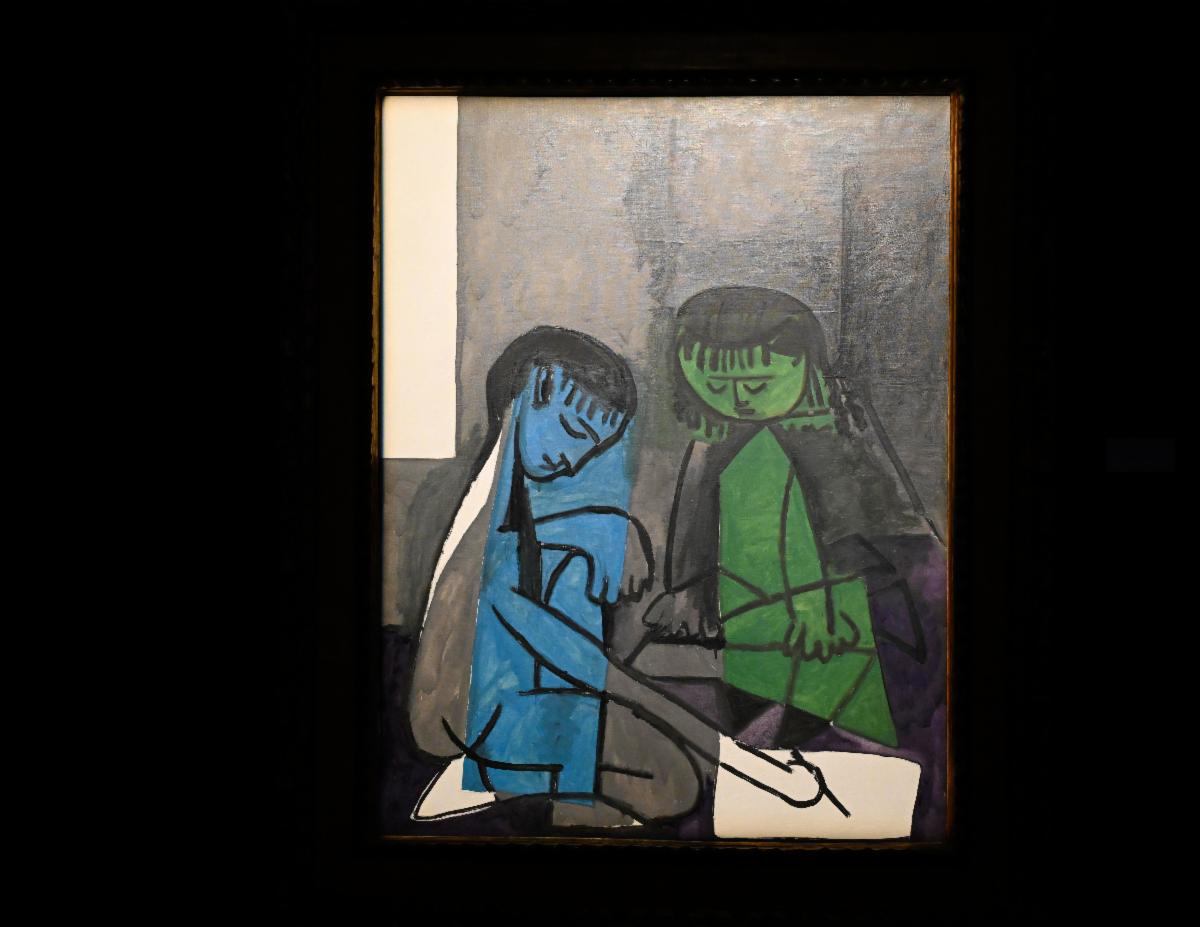
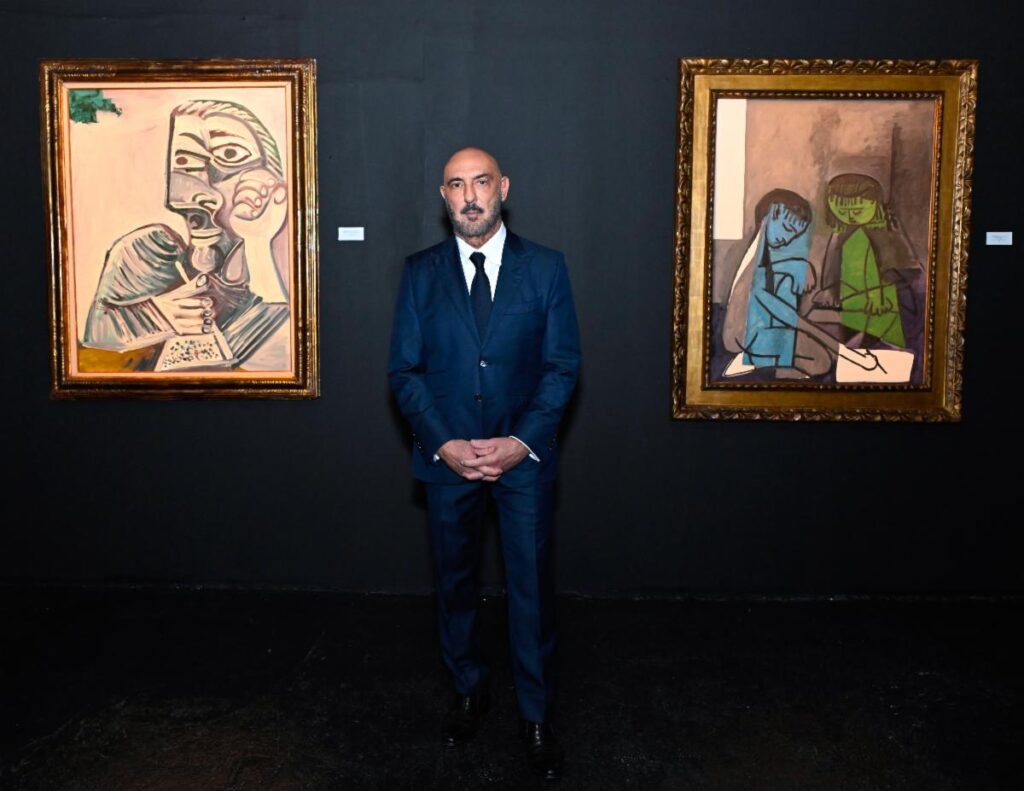
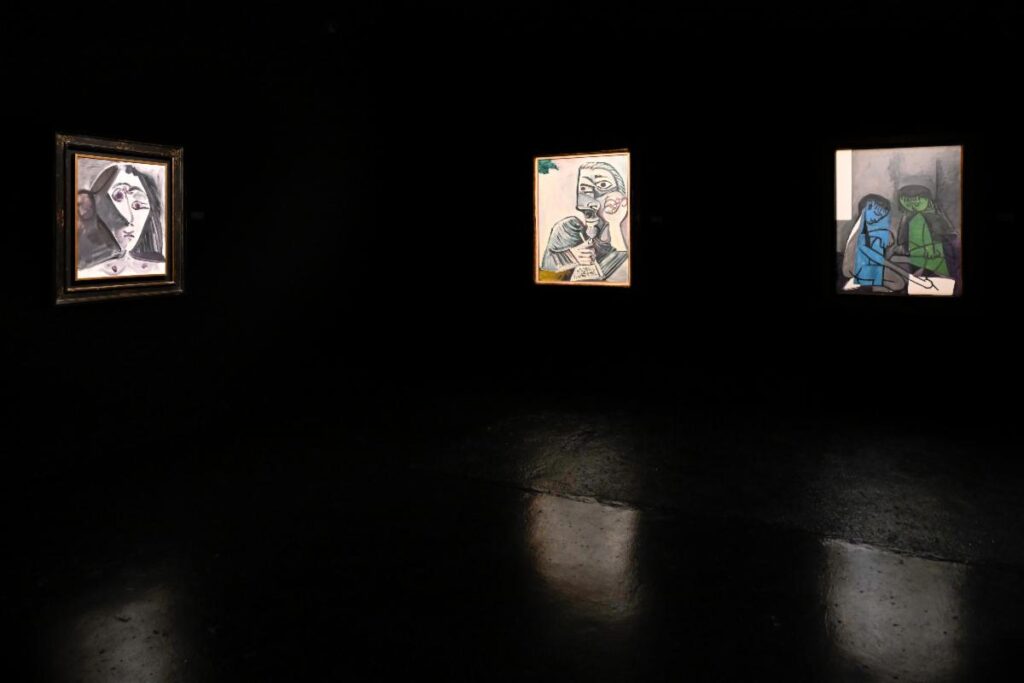
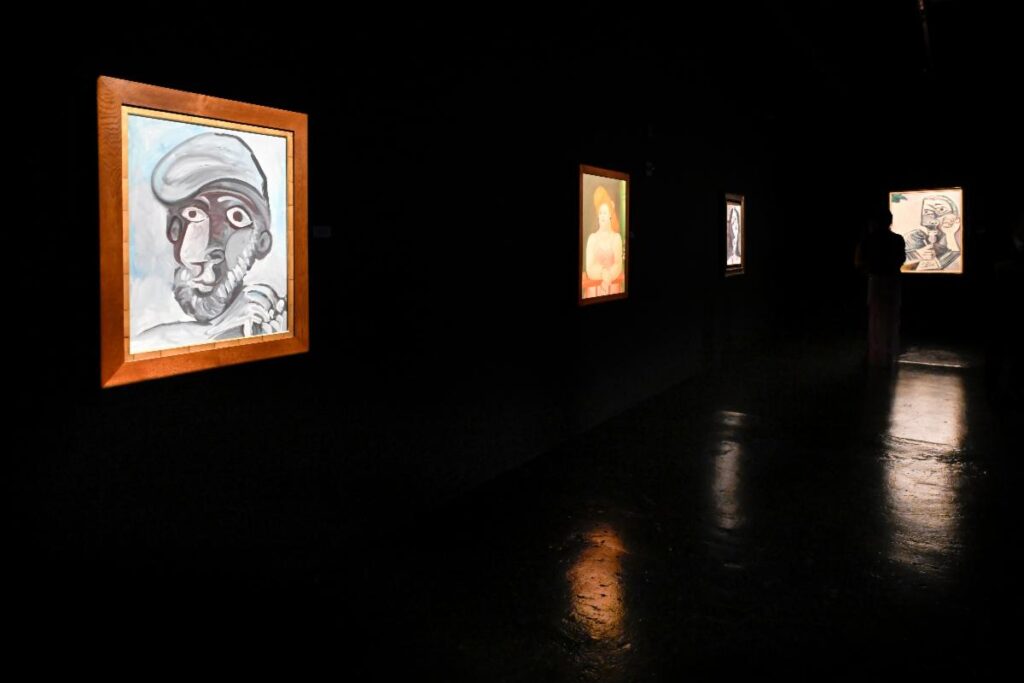
During a pivotal and emotionally charged moment in his life, Pablo Picasso created a deeply personal suite of six paintings in 1954 portraying his youngest children, Claude and Paloma. These works—tender, introspective, and stylistically radical—were painted in Vallauris shortly after the end of his relationship with Françoise Gilot. Today, one of these rare canvases, The Two Children (dated 14 May 1954 on the reverse), emerges from decades of private protection to be shown at Gary Nader Art Centre.
This is not merely an artwork “never before seen.” Its significance lies in why it remained unseen.
A Father Painting Through Absence, Memory, and Love
In early 1954, after the painful separation from Françoise Gilot the previous year, Picasso was visited by Claude and Paloma in Vallauris. Their presence triggered a burst of creativity anchored in longing, affection, and the fragile balance of a family reorganizing itself.
Across six oil paintings—each approximately 116 × 89 cm—Picasso explored themes of childhood, imagination, and emotional distance. Claude, often depicted in blue, appears absorbed in drawing or play; Paloma, in green, becomes a symbol of quiet contemplation. The aesthetic language is deceptively simple: flat planes of color, linear silhouettes, and a childlike purity that recalls Matisse’s late cut-outs, completed just months before the master’s death.
Art historians have long noted Picasso’s lifelong fascination with childhood. “At eight, I was Raphael,” he famously said. “It took me a whole lifetime to paint like a child.” The 1954 series is the culmination of that pursuit.
Two Works, One Moment — Why This Canvas Matters
Among the six paintings, the most widely known is Claude dessinant, Françoise et Paloma (17 May 1954), housed in the Musée Picasso–Paris. What few people know is that just three days earlier, on 14 May 1954, Picasso painted another version of the same poetic moment—The Two Children, the work now presented in Miami.
Both paintings share striking similarities in composition, palette, and emotional vocabulary. The closeness of their dates suggests that Picasso, immersed in the fragile intimacy of reconnecting with his children, was experimenting with subtle variations on a feeling rather than on a form: capturing fleeting tenderness through repetition, like holding a breath he didn’t want to release.
Why Picasso Never Sold It
Unlike many works that circulated quickly through galleries and private collections, the 1954 series of Claude and Paloma remained in Picasso’s personal domain for decades. These paintings were not merely artistic studies—they were fragments of his inner life.
Picasso kept them. Guarded them. Protected them. They were, in a very real sense, part of his family.
Scholars such as Kirk Varnedoe, Werner Spies, and Susan Galassi interpret these works as a turning point: precursors to the later Las Meninas variations, meditations on domesticity, memory, and legacy. They are among the few works in which the public persona of Picasso recedes to reveal the private father—vulnerable, searching, profoundly human.
The Two Children was one of the canvases he never considered commercializing. Its emergence today invites not only admiration but reflection: how does one quantify a father’s affection that survived heartbreak? How does one display something the artist himself protected from the world?
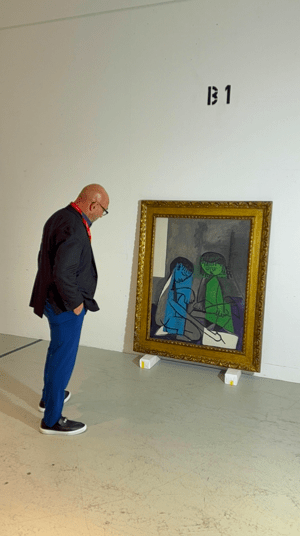
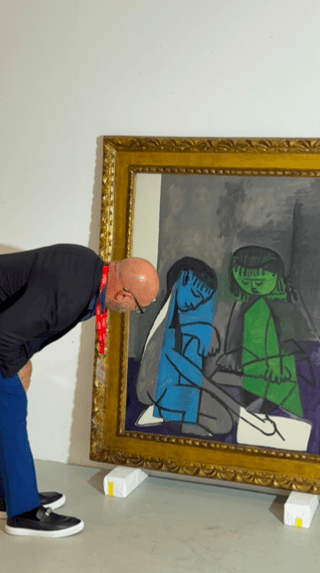
| A Rare Opportunity to Encounter an Intimate PicassoToday, The Two Children stands as a poetic testament to love, loss, and artistic reinvention. Its presence at the Gary Nader Art Centre offers an unprecedented opportunity to engage with a moment of Picasso’s life that was never meant to be public—until now. Visitors are invited to experience this extraordinary work in person and witness a side of Picasso that history often overlooks:the father, the observer, the man searching for emotional clarity through simplicity. And if you leave wondering how such a fiercely cherished canvas—long held within the private orbit of Picasso’s estate—found its way into the collection of Gary Nader… Well, perhaps you’ll be lucky enough to cross paths with Gary in the galleries. If so, ask him.Some stories deserve to be heard directly from the one who made the impossible possible. |
| ABOUT GARY NADER ART CENTRE:Located in Miami’s Wynwood Arts District, the Gary Nader Art Centre is one of the world’s most prestigious and dynamic galleries. With a strong focus on modern and contemporary art, it has gained international acclaim for its groundbreaking exhibitions and its pivotal role in promoting global artistic excellence, with a particular emphasis on Latin American contributions. The gallery regularly hosts solo and group shows featuring iconic artists such as Basquiat, Botero, Chagall, Cruz-Diez, Dubuffet, Kahlo, Picasso, Rivera, Lam, Warhol, and many more.As the largest gallery in the world — spanning 55,000 square feet — the Gary Nader Art Centre houses a main exhibition hall, the Nader Museum, the immersive Botero Immersed Experience (featuring the world’s largest private collection of works by the Colombian master), and the Nader Sculpture Park, located in the Miami Design District. This one-of-a-kind outdoor exhibition space features over 50 monumental sculptures by renowned international artists. In a short time, it has become a cultural must-see for both locals and tourists and a premier venue for fashion shows, musical performances, cultural events, and private gatherings. With a private collection of more than 2,000 artworks from the 20th and 21st centuries, the Centre offers an expansive and profound perspective on global modern and contemporary art. Founded by Gary Nader in 1985, the gallery has become a cornerstone of Miami’s art scene. Nader’s vision and dedication have been essential in building the Centre’s global reputation and expanding its impact on the international art world. For more information: Gary Nader Art Center Email: [email protected] Email: [email protected] Phone: 305-576-0256 Web: www.garynader.com For Media Inquiries: María Carolina Alonso: [email protected] Gary Nader 62 NE 27 ST Miami FL 33137 [email protected] Gallery Hours Mon. – Sat. 10am – 6pm |