Jeannette Ehlers: Decolonizing Memory Through Art and Activism
Jeanette Ehlers occupies a distinctive and vital position in contemporary art as an artist whose work actively dismantles colonial narratives while constructing new frameworks for understanding diaspora, memory, and resistance. Born in 1973 in Copenhagen to a Danish mother and a father from Trinidad, Ehlers navigates the intersections of Caribbean and European identity with unflinching clarity, producing work that is simultaneously personal testimony and historical intervention. Her practice spans video, photography, performance, and sculpture, each medium deployed strategically to excavate suppressed histories and challenge the sanitized versions of colonialism that persist in public memory.
Ehlers’s artistic project is fundamentally decolonial. She does not merely critique colonial legacies but actively works to undo the epistemological violence that colonialism enacted—the ways it determined whose stories would be told, whose bodies would be remembered, and whose humanity would be acknowledged. This commitment manifests in her meticulous research into Danish colonial history, particularly Denmark’s involvement in the transatlantic slave trade and its colonial possession of the Danish West Indies (now the U.S. Virgin Islands). By focusing on Denmark, a nation that often positions itself as progressive and benign while obscuring its colonial past, Ehlers exposes the mechanisms through which European nations have whitewashed their histories.
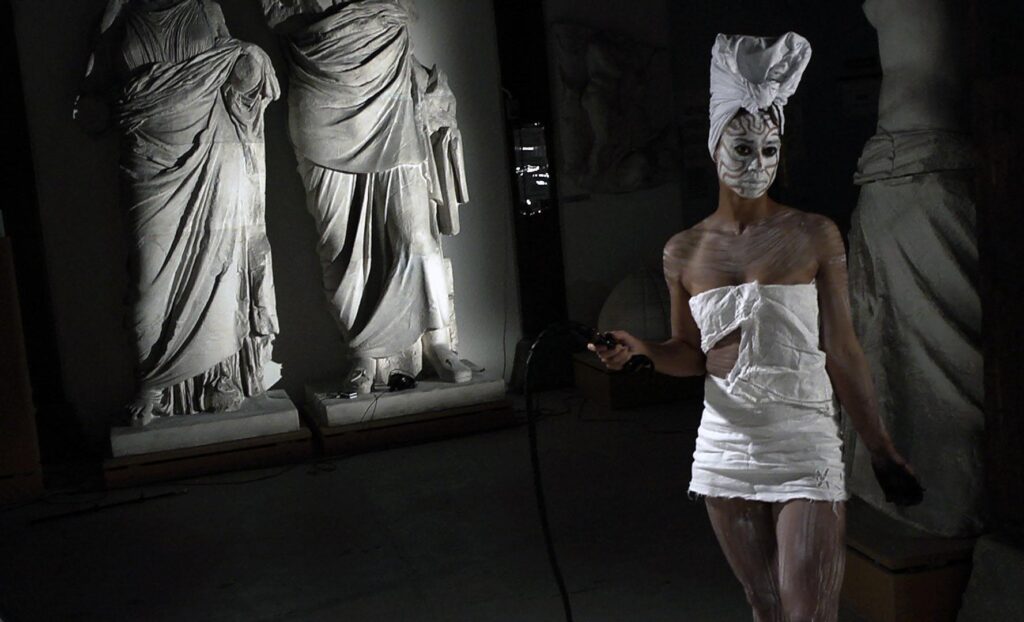
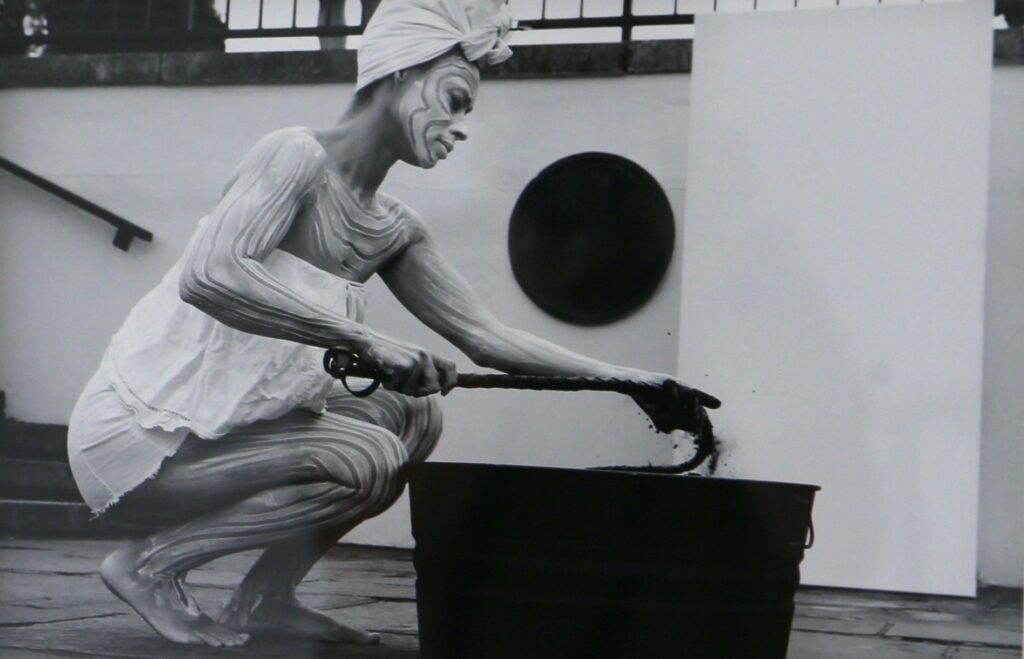
Her video and performance work demonstrates a sophisticated understanding of how bodies carry historical memory. In pieces like “Black Magic” and “Whip It Good,” Ehlers uses her own body as a site of contestation and reclamation. These works engage directly with the iconography of slavery and colonial violence, not to reproduce trauma pornography but to assert agency and transformation. When Ehlers performs actions that reference bondage, punishment, or subjugation, she simultaneously enacts resistance, turning the camera’s gaze back upon the viewer and implicating contemporary audiences in the unfinished business of colonial reckoning.
“Black Magic” is particularly emblematic of Ehlers’s methodology. The video features Ehlers in whiteface, a deliberate inversion of blackface minstrelsy that immediately unsettles racial performance and representation. By coating her skin in white paint and performing in historical settings connected to Danish colonial power, she creates a visual dissonance that forces viewers to confront the constructed nature of racial categories and the violence embedded in their creation. The whiteface is not mimicry but exposure—it reveals how whiteness itself is a performance, a fiction maintained through power rather than nature.
The use of historical locations in Ehlers’s work deserves particular attention. She frequently films in forts, plantations, and other sites directly connected to slavery and colonialism. These spaces are not merely backdrops but active participants in the work’s meaning. By inserting her Black female body into spaces designed to exclude, exploit, or commodify such bodies, Ehlers performs a kind of temporal disruption. She refuses the relegation of slavery to the past, demonstrating instead its persistent presence in contemporary spatial, economic, and social arrangements.
Ehlers’s most publicly visible and controversial work is undoubtedly “I Am Queen Mary,” a monument created in collaboration with artist La Vaughn Belle and installed in Copenhagen’s harbor in 2018. The sculpture depicts Queen Mary, leader of the 1878 Fireburn rebellion in the Danish West Indies, rendered at monumental scale—twice life-size—in direct visual dialogue with Copenhagen’s iconic Little Mermaid statue. The contrast could not be more pointed: while the Little Mermaid represents a romanticized, passive femininity derived from fairy tale, Queen Mary stands as a figure of revolutionary action and historical consequence.
The statue’s creation and installation constituted an act of radical public pedagogy. Most Danes had never heard of Queen Mary or the Fireburn rebellion, during which enslaved and recently emancipated workers on St. Croix burned plantations in protest against brutal working conditions and broken promises of freedom. By placing Queen Mary in the heart of Copenhagen, gazing out toward the Caribbean, Ehlers and Belle insisted that Danish public space must acknowledge and commemorate the Black lives that Danish colonialism exploited and destroyed. The monument functions as a counter-narrative, refusing to allow Denmark to celebrate its progressive present without confronting its exploitative past.
The decision to make Queen Mary larger than life carries multiple significances. Monumentality has traditionally been reserved for European heroes, colonizers, and monarchs—those deemed worthy of permanent public commemoration. By scaling Queen Mary to heroic proportions, Ehlers grants her the visual language of power and importance that European artistic traditions have denied to Black women. Simultaneously, the sculpture’s size embodies the magnitude of resistance itself, suggesting that acts of rebellion against oppression possess world-historical importance regardless of whether dominant histories acknowledge them.
Ehlers’s photographic work extends her investigation of colonial imagery and representation. Her series “Whip It Good” appropriates and recontextualizes colonial-era photographs, paintings, and postcards that depicted enslaved and colonized people. By inserting herself into these images or recreating their compositions, she exposes the violence of the colonial gaze while simultaneously disrupting it. These photographs are not comfortable; they do not allow viewers the luxury of historical distance or aesthetic appreciation divorced from ethical reckoning.
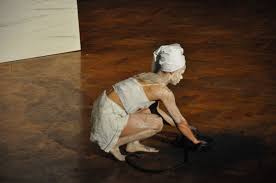
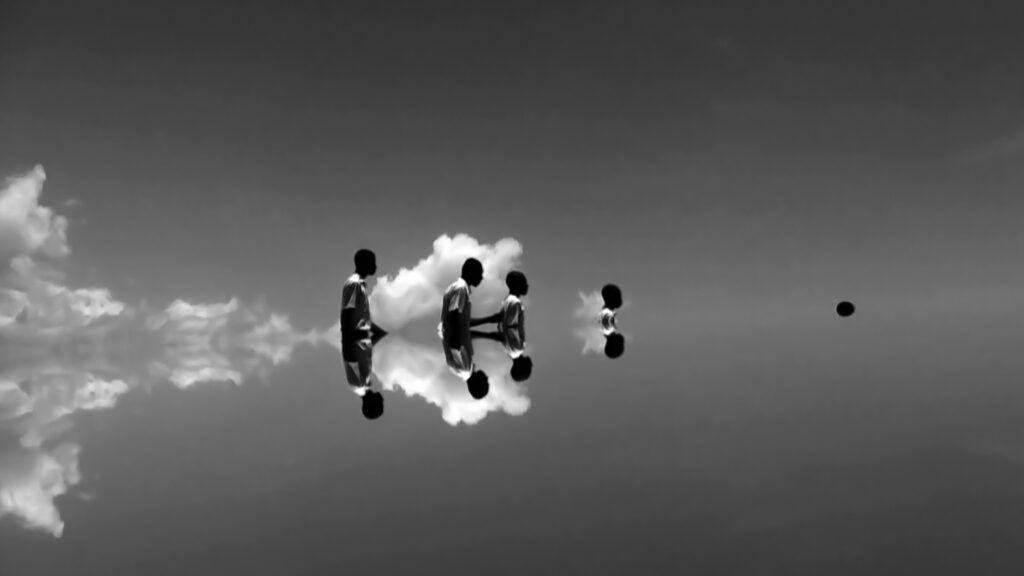
The formal qualities of Ehlers’s work reward close attention. Her compositions often feature stark contrasts—black and white, past and present, colonizer and colonized—that refuse reconciliation or easy resolution. She employs repetition, doubling, and mirroring to create visual rhythms that suggest both the cyclical nature of oppression and the possibility of its reversal. Her use of slow motion in video work stretches time, forcing viewers to dwell in uncomfortable moments rather than moving quickly past them.
Ehlers’s practice is deeply informed by theoretical frameworks from postcolonial studies, Black feminism, and cultural memory studies. Her work demonstrates familiarity with thinkers like Frantz Fanon, who analyzed the psychological dimensions of colonialism, and Édouard Glissant, who theorized Caribbean identity and the right to opacity. Yet Ehlers translates these complex theoretical insights into visceral visual experiences that communicate beyond academic audiences. This accessibility does not diminish the work’s intellectual rigor but rather fulfills art’s potential to make critical ideas available through embodied, sensory encounter.
The artist’s engagement with memory studies is particularly sophisticated. She understands that historical memory is not naturally occurring but actively constructed through monuments, archives, education, and cultural repetition. Colonial powers have invested heavily in creating official memories that justify their actions while erasing or marginalizing the perspectives of colonized peoples. Ehlers’s work functions as counter-memory, excavating suppressed histories and asserting alternative narratives. She practices what might be called memory activism—the strategic use of artistic production to reshape collective understanding of the past.
Ehlers’s position as a Black woman of mixed Caribbean and European heritage informs her work in crucial ways. She navigates multiple cultural contexts and can speak to audiences in both Europe and the Caribbean, though her perspective is not reducible to either location alone. This liminality grants her particular insight into how colonial legacies operate differently in metropole and former colony, and how diaspora creates new forms of identity that exceed national or ethnic categories.
The reception of Ehlers’s work reveals much about contemporary racial politics in Europe. While some critics and institutions have celebrated her interventions, others have responded with discomfort or hostility, particularly to “I Am Queen Mary.” The statue became a lightning rod for debates about immigration, integration, and national identity in Denmark—debates that revealed how discussions of historical colonialism inevitably connect to contemporary racial politics. Ehlers anticipated this response; indeed, her work is designed to generate productive discomfort that might catalyze transformation.
Ehlers’s influence extends beyond the art world into broader cultural and political spheres. Her work has contributed to growing movements in Europe demanding reckoning with colonial pasts, including calls to remove or recontextualize monuments to colonizers, revise history curricula, and address ongoing racial inequalities as colonial legacies rather than isolated contemporary problems. Artists throughout Europe and the diaspora have found inspiration in her example of art as active intervention rather than passive commentary.
The question of aesthetics and politics in Ehlers’s work requires nuanced consideration. Some might argue that her overt political commitments compromise aesthetic autonomy or reduce art to propaganda. This criticism misunderstands both Ehlers’s practice and the nature of political art more broadly. Her work possesses genuine formal sophistication—the careful composition, the manipulation of historical imagery, the strategic use of scale and material. These aesthetic choices are not decorative additions to political content but integral to how the work produces meaning and affects viewers.
Moreover, Ehlers’s practice challenges the false dichotomy between aesthetic and political value. She demonstrates that work can be simultaneously beautiful and confrontational, formally rigorous and ethically urgent. The notion that art must choose between aesthetic excellence and political engagement serves ultimately to protect art from having to address injustice—a protection that itself reflects political commitments, merely unacknowledged ones.
Ehlers’s artistic lineage connects to multiple traditions: the institutional critique practiced by artists like Hans Haacke, the performance work of Black feminist artists like Adrian Piper and Lorraine O’Grady, the counter-monumental strategies of artists addressing Holocaust memory, and the decolonial aesthetics emerging from postcolonial contexts globally. Yet she synthesizes these influences into a distinctive practice shaped by her particular historical and geographical situation.
Looking at Ehlers’s trajectory, we observe an artist whose practice has grown increasingly ambitious in scale and public visibility while remaining consistent in its core commitments. From early video works viewable primarily in galleries and festivals to a permanent public monument in a national capital, Ehlers has successfully expanded the reach of her decolonial project without diluting its critical edge. This progression suggests strategic thinking about how to maximize impact and reach diverse audiences.
The challenge Ehlers poses to viewers, particularly white European viewers, is profound. Her work demands acknowledgment of historical atrocities and their ongoing consequences. It refuses the comfort of historical distance, insisting that colonialism’s effects persist in contemporary inequalities and that beneficiaries of colonial exploitation bear responsibility for addressing these legacies. This is uncomfortable work, meant to be—discomfort can be the beginning of transformation.
For viewers from the African diaspora, Ehlers’s work offers different possibilities: recognition, validation, and the powerful experience of seeing histories and heroes typically marginalized now given monumental treatment. The experience of encountering Queen Mary’s statue, for instance, might produce feelings of pride, connection, and the sense that public space can reflect and honor Black resistance and achievement. This affirmative dimension of Ehlers’s practice is as important as its critical interventions.
Jeanette Ehlers’s contribution to contemporary art lies in her demonstration that artistic practice can be a powerful tool for historical justice. Her work shows that addressing colonial legacies requires not just academic historiography but cultural interventions that reshape public memory and imagination. By bringing suppressed histories into visibility, challenging official narratives, and creating new monuments to resistance, she practices art as a form of reparative justice—work that cannot undo historical harm but can contribute to the difficult process of acknowledgment, truth-telling, and transformation.
As debates about colonialism, reparations, and racial justice intensify globally, Ehlers’s work becomes increasingly relevant. She offers not just critique but methodology—ways of engaging history through embodied practice, of using artistic production to intervene in public discourse, of insisting that contemporary societies must reckon with their pasts as a precondition for more just futures. Her art reminds us that historical memory is always contested terrain, and that struggles over how we remember the past are inseparable from struggles over how we imagine and build the future.