The Enduring Art of Fiber: From Ancient Craft to Contemporary Expression
In an age dominated by digital screens and mass production, fiber arts stand as a powerful reminder of humanity’s deep connection to materials, touch, and the transformative potential of skilled hands. Fiber arts use natural or synthetic fibers like yarn, thread, and fabric to create art, encompassing traditional crafts like knitting, weaving, crochet, quilting, embroidery, and macrame alongside contemporary sculptural and installation art, focusing on materials and skilled handwork to create aesthetic pieces, ranging from functional items to complex, expressive artworks.
This vast artistic territory—at once ancient and urgently contemporary—invites us to reconsider the boundaries between craft and fine art, utility and beauty, tradition and innovation.
Understanding Fiber Arts: A Diverse Landscape
At its core, fiber art involves the manipulation of flexible materials through various techniques to create objects of aesthetic and often functional value. What distinguishes fiber art from mere textile production is intention—the artist’s conscious decision to use fiber as a medium for creative expression, much as a painter chooses oils or a sculptor selects bronze.
The materials themselves vary enormously. Natural fibers—cotton, wool, silk, linen, jute—carry centuries of human history in their very substance. Synthetic fibers—polyester, nylon, acrylic—offer different properties: durability, color vibrancy, weather resistance. Contemporary fiber artists often blend both, creating hybrid works that honor tradition while embracing modernity’s possibilities.
Types of Fiber Art Techniques
The technical vocabulary of fiber arts is as rich and varied as the works themselves. Each technique offers distinct aesthetic possibilities and requires specific skills developed over years of practice.
Weaving forms the foundation of textile creation, involving the interlacing of threads on a loom to create fabric. The warp threads run vertically, held under tension, while weft threads pass horizontally over and under them. This ancient technique can produce everything from simple plain weaves to complex patterns incorporating multiple colors and textures. Contemporary weavers push beyond traditional flat cloth, creating three-dimensional sculptural forms and experimental structures that challenge our assumptions about what weaving can be.
Knitting and crochet both involve looping yarn with needles or hooks to form fabric, but they achieve different results through distinct methods. Knitting typically uses two needles and creates a fabric with multiple active loops, while crochet uses a single hook and completes each stitch individually. These techniques, long associated with domestic craft, have been reclaimed by artists who create everything from delicate lace to massive public installations. The inherent flexibility of knitted and crocheted fabric allows artists to create organic, flowing forms impossible in more rigid mediums.
Quilting involves stitching together layers of fabric, traditionally combining a decorative top, batting for warmth, and a backing. While quilts serve practical purposes, they’ve long carried artistic and cultural significance. From the geometric precision of Amish quilts to the narrative complexity of African American story quilts, this technique combines color theory, composition, and skilled needlework. Contemporary quilters treat fabric as their palette, creating abstract compositions and representational images that rival painting in sophistication.
Embroidery decorates fabric with needle and thread, adding texture, color, and imagery to a base material. Techniques range from simple running stitches to elaborate silk thread paintings that require thousands of hours to complete. Embroidery’s versatility makes it perfect for both traditional folk art preservation and contemporary conceptual work. Artists use embroidery to subvert expectations, adding delicate stitching to unexpected materials or using thread to write text that comments on gender, labor, or domesticity.
Felting creates fabric by matting fibers together, often with heat and moisture, without weaving or knitting. Wool is the traditional fiber for felting, as its microscopic scales interlock when agitated in hot water. The technique produces dense, warm fabric that can be shaped three-dimensionally. Contemporary artists exploit felting’s sculptural possibilities, creating everything from lifelike animals to abstract forms that seem to grow organically from the fiber itself.
Macrame involves knotting cords or yarns into decorative patterns. This ancient technique experienced a revival in the 1970s and has returned again in recent years. Beyond the hanging planters and wall hangings that popularized macrame, artists use knotting techniques to create intricate sculptural works, jewelry, and large-scale installations. The rhythm of repetitive knotting produces meditative, organic patterns that can be both structured and free-flowing.
Basketry weaves natural fibers into vessels, using materials like willow, reed, grass, and bark. One of humanity’s oldest crafts, basketry combines functionality with beauty. Contemporary basket makers expand traditional forms, creating sculptures that maintain the coiling, twining, or plaiting techniques of traditional basketry while serving purely aesthetic purposes. The natural materials connect these works to landscape and season, carrying the colors and textures of the plants from which they’re made.
Tapestry creates decorative woven wall hangings, typically featuring images or patterns. Unlike other weaving where weft threads run continuously across the warp, tapestry weaving builds up areas of color separately, like painting with thread. Medieval European tapestries told elaborate stories in wool and silk; contemporary tapestry artists continue this narrative tradition while also exploring abstraction, creating works that blur the line between weaving and painting.
Forms of Fiber Art: Beyond the Traditional
The ways fiber art manifests in our world extend far beyond the expected.
Wearable art transforms apparel, jewelry, and accessories into artistic statements. These pieces challenge fashion’s commercial imperatives, prioritizing creative expression over mass appeal or conventional beauty. A fiber artist might create a dress from hand-dyed silk that functions as sculpture, or knit jewelry that pushes the boundaries of what counts as adornment. Wearable art exists in the intersection between body, craft, and gallery, making the wearer a collaborator in displaying the work.
Fiber sculpture creates three-dimensional works using fiber techniques, liberating these methods from flat surfaces. Artists might crochet life-sized figures, felt abstract forms, or weave architectural structures. These sculptures possess a softness and flexibility that distinguishes them from metal or stone, inviting touch even when museums forbid it. The tactile quality of fiber sculpture creates an intimacy rarely found in other sculptural mediums.
Installations incorporate fiber art into large-scale works that transform entire spaces. These ambitious projects might fill rooms with suspended threads, creating environments viewers walk through, or wrap buildings in knitted fabric, temporarily softening urban hardness. Fiber installations often involve community participation, with dozens or hundreds of people contributing to collaborative works that express collective identity.
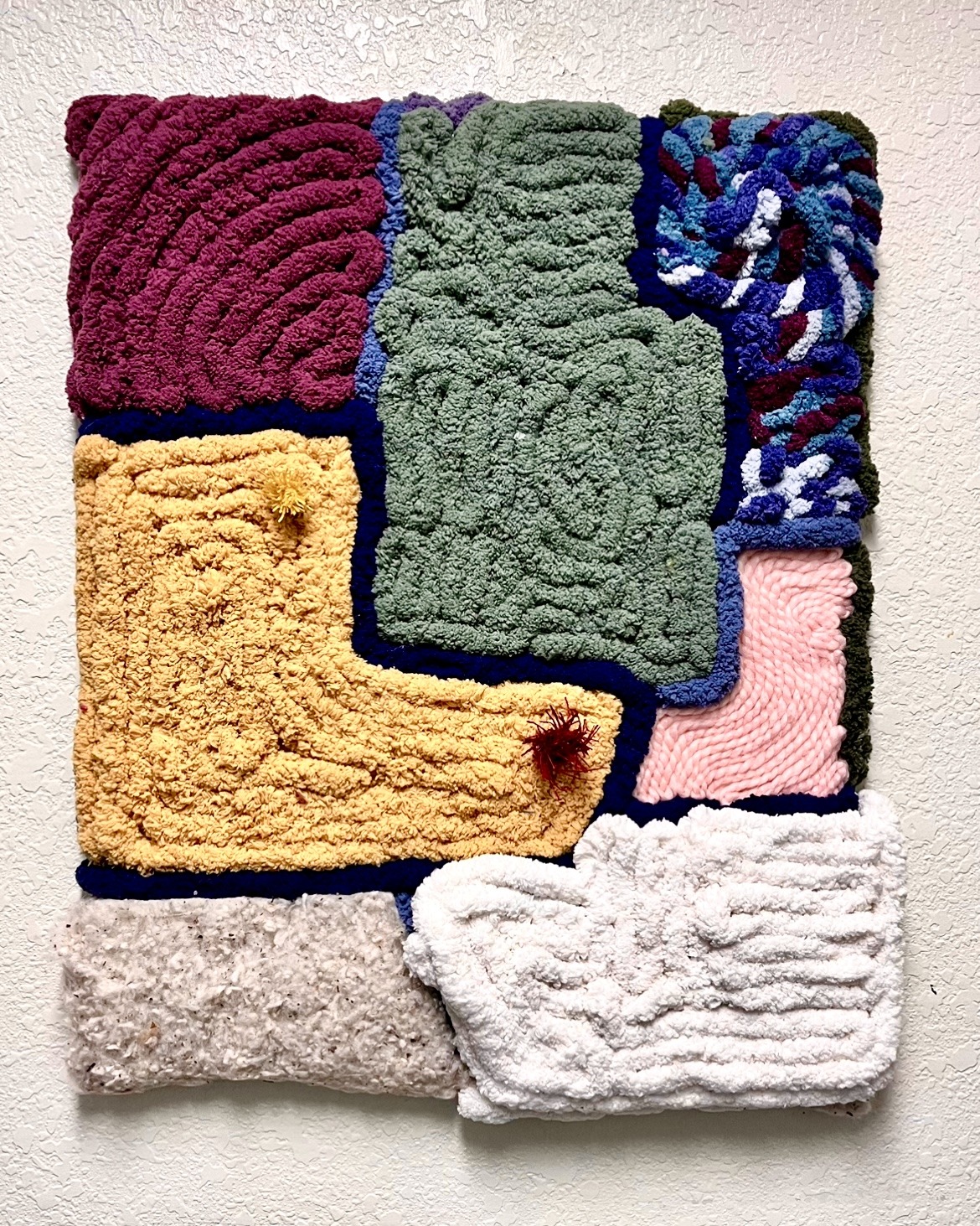
Wall and floor art—including tapestries, rugs, and quilts—occupies the traditional territory of fiber arts while increasingly claiming space in contemporary galleries. These works challenge the hierarchy that privileges painting and sculpture, asking why thread on canvas should be valued differently than paint on canvas. Contemporary artists create wall hangings that incorporate found materials, personal artifacts, and unconventional techniques, pushing the boundaries of what tapestry or textile art can mean.
The Significance of Fiber Arts Today
In the 21st century, fiber arts carry meanings and fulfill functions that extend far beyond decoration or utility.
Bridging craft and fine art remains one of fiber arts’ most important contributions to contemporary culture. For too long, the art world dismissed fiber arts as “craft”—implying something lesser, more domestic, more feminine than “real” art. This hierarchy reflected gendered assumptions about value, with techniques associated with women’s domestic labor considered inferior to male-dominated painting and sculpture. Contemporary fiber artists have fought to elevate traditional techniques beyond pure utility into expressive art, securing places in major museums and commanding serious critical attention. This shift benefits all artists by questioning arbitrary hierarchies and expanding what counts as legitimate artistic practice.
Storytelling through fiber carries particular power. Textiles can carry deep cultural, emotional, and personal messages in ways that feel both universal and intimate. Consider how quilts have documented African American history, preserved family memories, and protested social injustice. Think of how Hmong story cloths record refugee experiences, how AIDS memorial quilts commemorate lives lost, how political banners mobilize movements. Fiber’s association with home, body, and care gives these works emotional resonance that more “prestigious” mediums sometimes lack. When an artist embroiders text onto fabric, the painstaking labor of stitching each letter becomes part of the message—the time invested embodies commitment to the words themselves.
Material focus distinguishes fiber arts from other mediums by emphasizing the tactile quality and manual labor involved. In fiber art, the process remains visible in the finished work. You can see the individual knots in macrame, trace the path of thread in embroidery, understand how a basket was constructed by examining it. This transparency of technique invites appreciation of skill and labor in ways that smooth, finished surfaces do not. Every fiber artwork bears witness to the hours—sometimes thousands of hours—invested in its creation. In our age of instant digital reproduction, this slow making carries countercultural weight, insisting that some things of value cannot be rushed or mechanized.
The Therapeutic and Meditative Dimensions
Beyond their aesthetic and cultural significance, fiber arts offer therapeutic benefits increasingly recognized in healthcare and wellness contexts. The repetitive motions of knitting, the focused attention of embroidery, the problem-solving of weaving—all produce meditative states that reduce anxiety and promote wellbeing. Occupational therapists use fiber techniques to rebuild fine motor skills; psychiatrists recommend them for stress management; community centers teach them as tools for social connection.
This therapeutic dimension doesn’t diminish fiber arts’ artistic legitimacy—rather, it demonstrates how art can serve multiple functions simultaneously. A piece can be technically accomplished, aesthetically sophisticated, culturally meaningful, and personally healing all at once.
Looking Forward: Fiber Arts in the Future
As we move further into the 21st century, fiber arts continue evolving. Artists experiment with smart textiles incorporating electronics, creating works that respond to touch, light, or sound. Others address environmental concerns, using only natural dyes and biodegradable fibers or creating works from ocean plastic and recycled materials. Digital technologies like computerized looms and laser cutting expand what’s possible while raising questions about the role of handwork in defining fiber arts.
Yet even as techniques expand, the fundamental appeal of fiber arts remains constant: the human need to create with our hands, to transform raw materials into objects of beauty, to leave something behind that bears the mark of our presence and care.
Conclusion: The Thread That Connects Us
Fiber arts remind us that we are makers, that our hands possess intelligence, that beauty can emerge from patient, repetitive labor. They connect us to ancestors who spun and wove, to communities that gather to quilt, to strangers whose textiles tell stories we need to hear. In a world that increasingly feels untethered and ephemeral, fiber arts ground us in materiality, in skill, in the satisfying weight of something well-made.
Whether creating a simple scarf or a complex installation, working in centuries-old techniques or inventing new ones, fiber artists participate in humanity’s oldest creative impulse: taking something flexible and formless and, through skill and vision, making it into something that matters. Thread by thread, knot by knot, stitch by stitch—this is how we weave meaning into our lives, how we create beauty from chaos, how we remain, fundamentally and gloriously, human.