The Artistry of Fiber: Exploring Rugs, Carpets, and Textiles as Fine Art
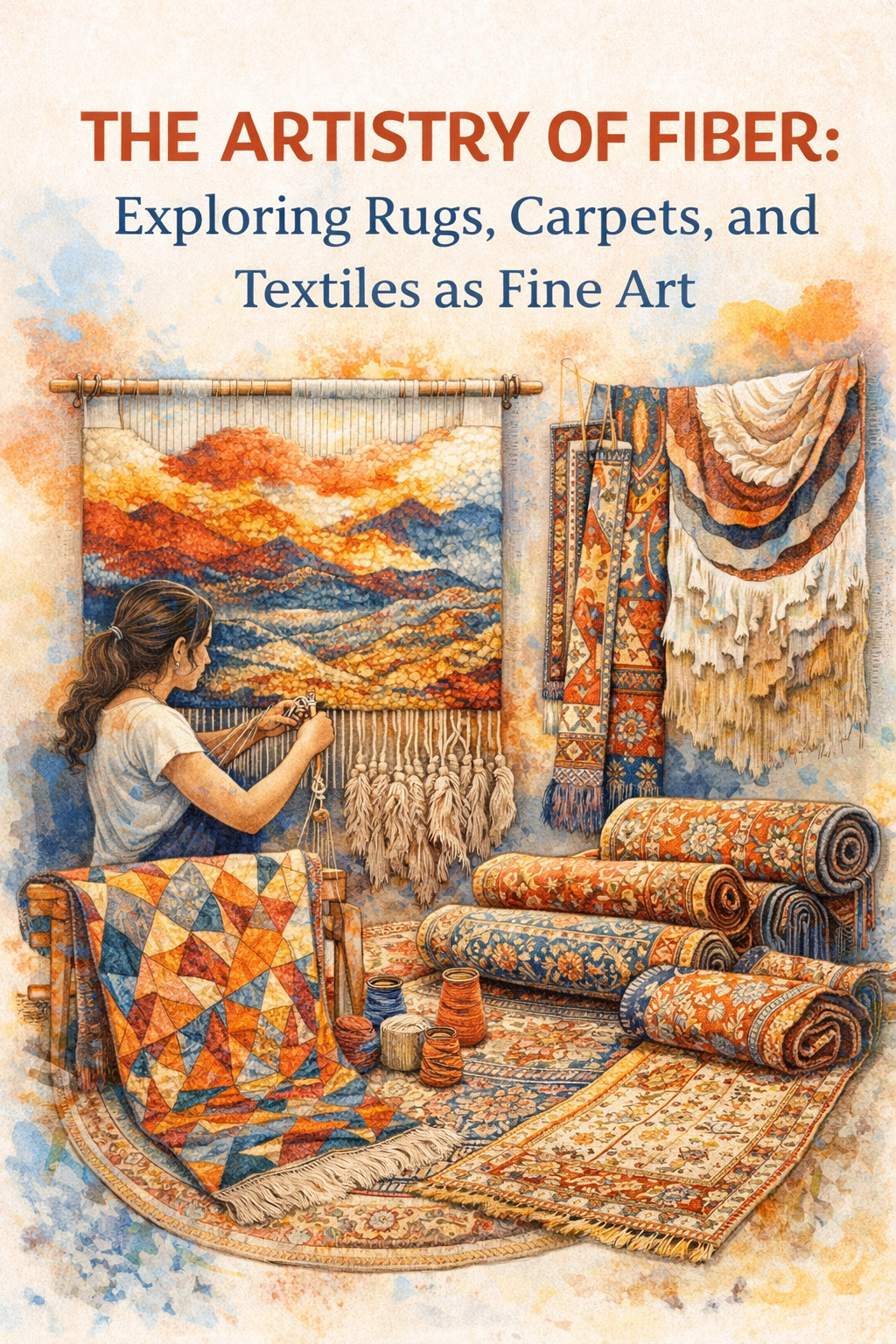
For millennia, humans have transformed humble fibers into objects of extraordinary beauty and cultural significance. Rugs, carpets, and textiles represent one of humanity’s oldest art forms, yet they often occupy an ambiguous space in the art world—simultaneously functional and decorative, utilitarian and sacred, craft and fine art. These fiber-based creations deserve recognition not merely as home furnishings but as profound artistic expressions that weave together technical mastery, cultural identity, and aesthetic vision.
The Ancient Roots of Textile Art
Textile creation predates recorded history. Archaeological evidence suggests that humans were spinning fibers and weaving fabric as early as 27,000 years ago. The oldest known knotted-pile carpet, the Pazyryk Carpet, dates to the 5th century BCE and was discovered remarkably preserved in a Siberian tomb. Its intricate patterns and sophisticated technique reveal that even in ancient times, textile creation had evolved far beyond mere necessity into the realm of art.
These early textiles weren’t simply practical items—they were repositories of meaning. Patterns encoded genealogies, myths, and cosmologies. Colors carried symbolic weight. The very act of creation was often ritualistic, with knowledge passed down through generations like precious heirlooms.
Technical Mastery: The Foundation of Fiber Art
Creating a rug or textile requires extraordinary technical skill that rivals any traditional art form. Weavers must master multiple disciplines simultaneously: they are mathematicians calculating pattern repeats, engineers understanding structural integrity, chemists mixing dyes, and artists composing color and form.
Consider the Persian carpet weaver who might tie hundreds of thousands—or even millions—of individual knots to create a single masterwork. Each knot must be precisely placed, with consistent tension, to build up an image that exists nowhere except in the weaver’s mind and hands. The density of knots can reach 500 or more per square inch in the finest examples, approaching the resolution of a painting.
Similarly, tapestry weavers work from the reverse side of their creation, building images they cannot fully see until completion. Textile artists working with natural dyes must understand the chemistry of mordants, the seasonal variations in plant materials, and the unpredictable alchemy of color development.
Cultural Narratives Woven in Fiber
Textiles serve as cultural texts, encoding the histories, beliefs, and identities of the communities that create them. Navajo rugs incorporate spiritual symbols and clan patterns, each weaving telling a story about the maker’s lineage and worldview. Turkish kilims use geometric motifs that have remained remarkably consistent for centuries, preserving ancient symbolic languages. African kente cloth uses specific color combinations and patterns to denote social status, commemorate historical events, or mark ceremonial occasions.
These works function as living museums, preserving cultural knowledge that might otherwise be lost. The patterns of Turkmen tribal rugs, for instance, serve as visual genealogies, with each tribe maintaining distinctive guls (medallions) that identify their makers as surely as a signature. When we look at these textiles, we’re not simply observing decorative objects—we’re reading complex cultural documents.
Contemporary Fiber Art: Breaking Boundaries
In recent decades, artists have pushed fiber-based art into bold new territories, challenging the hierarchies that once placed painting and sculpture above textile work. Artists like Anni Albers, who came from the Bauhaus tradition, elevated weaving to modernist abstraction. Her geometric compositions in thread possess the same rigor and innovation as the paintings of her contemporaries.
Contemporary artists continue this evolution. Faith Ringgold’s story quilts merge African American quilting traditions with narrative painting and political commentary. El Anatsui transforms discarded bottle caps into shimmering, tapestry-like sculptures that hang like fabric but gleam like precious metal. Ghada Amer embroiders pornographic imagery with delicate thread, subverting expectations about “women’s work” and confronting taboos around sexuality.
These artists demonstrate that fiber-based art can address any subject, embody any aesthetic, and claim space in the most prestigious galleries and museums worldwide.
The Sensory Dimension
Fiber art engages viewers in ways that painting and sculpture cannot fully replicate. Textiles possess a tactile dimension that invites touch—the nap of velvet, the rough texture of jute, the cool smoothness of silk. Even when we don’t physically touch them, our bodies remember these sensations, creating an embodied response to the work.
The scale of carpets and tapestries also creates unique spatial experiences. A large carpet transforms a room, defining space and creating warmth in ways that are simultaneously practical and aesthetic. Tapestries can function as architectural elements, softening acoustics while commanding visual attention. This integration of art into lived space represents one of fiber art’s distinctive contributions to human experience.
The Labor of Love and Time
Perhaps no aspect of fiber art speaks more powerfully than the sheer investment of time and labor each piece represents. A master weaver might spend months or years creating a single carpet. Every inch represents hours of focused attention, physical skill, and creative decision-making.
This temporal dimension becomes part of the artwork’s meaning. In our age of rapid production and instant gratification, a hand-knotted rug stands as a monument to patience, dedication, and the value of slow, careful work. The irregularities that distinguish handmade textiles from machine-made copies—the slight variations in tension, the occasional color shift—become marks of human presence, proof that a person sat for countless hours bringing beauty into existence.
Preservation and Appreciation
Museums and collectors increasingly recognize the artistic merit of textiles, though challenges remain. Fiber art is inherently fragile, vulnerable to light, moisture, and wear. Conservation requires specialized knowledge and resources. Many historical textiles exist in museum storage rather than on display, their fragility limiting public access to these treasures.
Yet this vulnerability also reminds us of art’s impermanence. Unlike bronze or marble, textiles age and eventually return to the earth. This transience connects them to other ephemeral art forms and to the human condition itself—everything beautiful is also temporary.
Conclusion: Reweaving the Narrative
Rugs, carpets, and textiles challenge us to reconsider what we value as art. They blur boundaries between craft and fine art, function and aesthetics, tradition and innovation. They remind us that some of humanity’s most profound artistic achievements have been made by anonymous hands, passed from generation to generation, created in homes rather than studios.
As we continue to grapple with questions about cultural appreciation, craft hierarchies, and the definition of art itself, fiber-based works offer important lessons. They teach us that art doesn’t require a gallery wall or a famous signature to be meaningful. They show us that beauty can be functional, that tradition can be radical, and that some of our most intimate daily objects—the carpets we walk on, the textiles that warm us—deserve our sustained attention and deepest appreciation.
In the end, these fiber arts weave together the fundamental human need to create meaning through making, to leave something beautiful behind, and to connect past and future through the continuous thread of artistic expression.