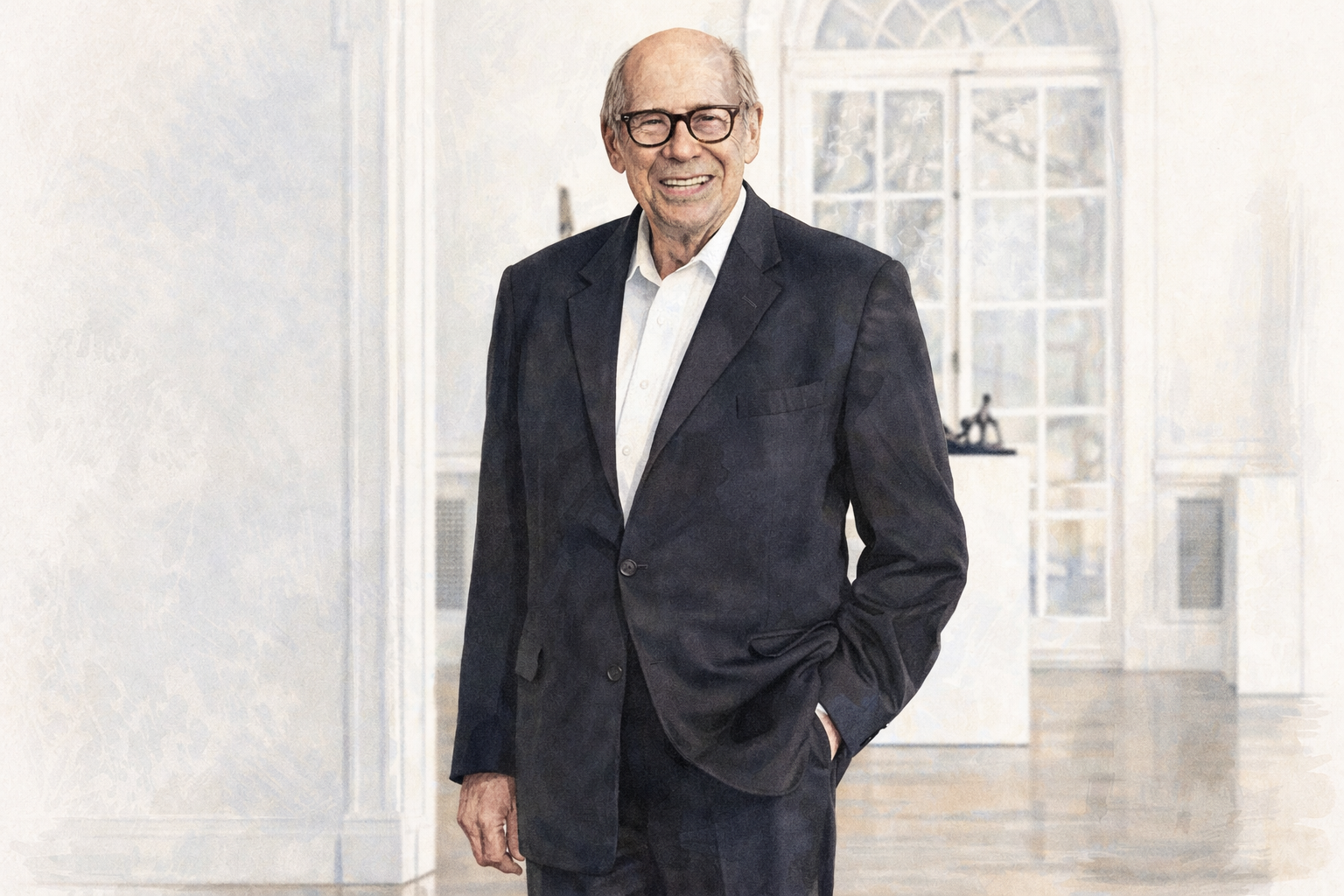
Robert Mnuchin, Goldman Sachs Power Broker Turned Leading New York Art Dealer, Dies at 92
The article by Katya Kazakina on artnet.com offers a thoughtful and compelling tribute to Robert Mnuchin, a towering figure whose life bridged two very different worlds: high finance and the international art market. Titled “Robert Mnuchin, Investment Banker Who Became Leading New York Art Dealer, Dies at 92,” the piece provides readers not only with the facts of his passing but with a nuanced portrait of a man who shaped the art world as we know it.
Kazakina opens with the news of Mnuchin’s death at age 92 at his home in Bridgewater, Connecticut, grounding the article with reverence and clarity. Her reporting places his death in context, noting confirmation from family and recognition from major outlets like The New York Times. This sets the tone for a respectful and detailed life story that follows.
The article excels in showing the breadth of Mnuchin’s remarkable career. Before he became a major art dealer, Mnuchin was a Goldman Sachs pioneer—a central figure in the rise of block trading during the 1960s and 70s. Kazakina reports how industry insiders once called him “the acknowledged dean of block traders.” His deep analytical instincts, encyclopedic memory, and market savvy made him a legendary force on Wall Street. This rich background context gives readers insight into the skills that later helped him excel in a completely different field.
What makes the piece particularly strong is how it traces his transition from finance to art—a shift that surprised many. Instead of remaining in his comfort zone, Mnuchin pursued his passion and launched a gallery after retiring from Goldman Sachs. Kazakina smartly captures his own reflection on that decision: he wanted to test “whether his success came from his own abilities or the institution behind him.” This personal insight enriches the narrative, showing his courage and independence.
The article also highlights his reputation in the auction room. Hardly a mere observer, Mnuchin was a formidable bidder. Kazakina recounts his famous acquisition of Jeff Koons’s Rabbit in 2019 for $91.1 million on behalf of a client, a record for a living artist. The detail about his cream-colored jacket and flip phone at the auction humanizes the moment and reflects his unique presence in the art world.
Kazakina does not shy away from personal dimensions, mentioning his family—including his son Steven Mnuchin, former U.S. Treasury Secretary—while also making clear that Robert Mnuchin himself generally steered clear of politics. Instead, he was defined by colleagues as modest, disciplined, and deeply committed to the arts.
The narrative is thoughtfully rounded out with biographical details—from his upbringing in Manhattan and Scarsdale, through Yale and the Army, to his long life spent immersed in art and culture. The article balances milestones in his professional life with personal context, giving a complete sense of the man behind the market influence.
Importantly, Kazakina also notes Mnuchin’s evolving approach to gallery representation, including expanding shows to feature more female artists and artists of color. This demonstrates how he continued to grow with the art world, rather than remaining static or narrowly focused.
In capturing Mnuchin’s final years, Kazakina shows that his passion never faded. He worked despite physical challenges, remained involved in gallery exhibitions, and expressed unabashed love for what he did: “I’d be lost without it.” Such reflections lend emotional resonance to the piece without overstatement.
Overall, Kazakina’s article is both informative and reflective. It offers a richly detailed tribute to a complex figure who shaped the art market through personal conviction, business acumen, and deep engagement with art. For anyone interested in art history, auction culture, or the evolution of the modern art market, this obituary is both a fitting memorial and a compelling lesson.