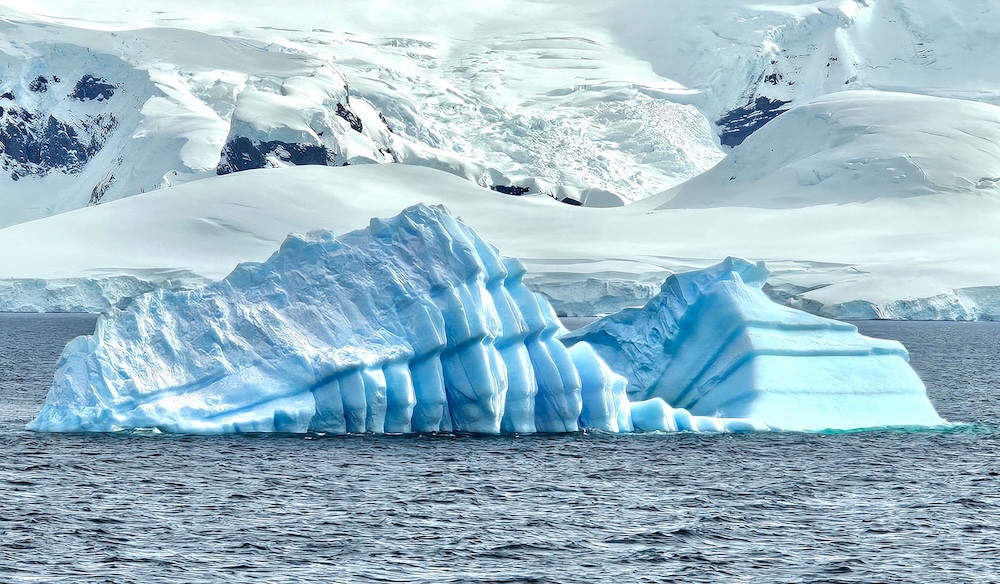
In the Perlan Sultan Abadi’s photographs, nature comes into presence at the moment when its intensity seems to deepen. A cloud gathers darkness while yielding to light; the sea receives the atmosphere’s shadow; ice rises from the water with the uncanny stillness of a form belonging to vaster reaches of time. Each image holds an apparition whose fullness remains beyond our grasp.
The artist’s gaze rests where the elements meet and transform one another. The sky acquires weight, water becomes luminous depth, and ice harbors the possibility of change within its stillness. Light does not dispel the mystery of these materials; it makes that mystery perceptible. Even when a coastline or a mountain enters the frame, its presence is slight beside the immensity unfolding above it.
Bachelard writes in Air and Dreams that “to every immanence a transcendence is joined.” His thought offers a way of approaching these photographs while remaining within the physical world: it is visible matter itself, in its movement and density, that opens the imagination toward what the image cannot contain, pointing to the immanence of nature.
For Merleau-Ponty, the visible has a thickness of its own. What comes into view carries a depth that at once intimates and conceals. It is within this thickness that the artist seems to work. Her photographs leave the landscape open, sustaining the moment when we sense that to look is to enter into relation with a presence that exceeds its image.
Physis
In the Physis series, Perla Sultán Abadi turns her gaze toward transient configurations. The photograph fixes matter in a given state and, in doing so, makes its provisional character perceptible. Sultán Abadi holds cloud, water, and coastline within the frame. A diffuse vapor blurs their boundaries and mingles the visible atmosphere with the murmur the image evokes. A poetic reverie emerges where sight and listening meet.
The bird’s-eye view lightens the forms, making altitude itself part of the experience of looking. The photographer’s gaze rises, and the viewer floats.
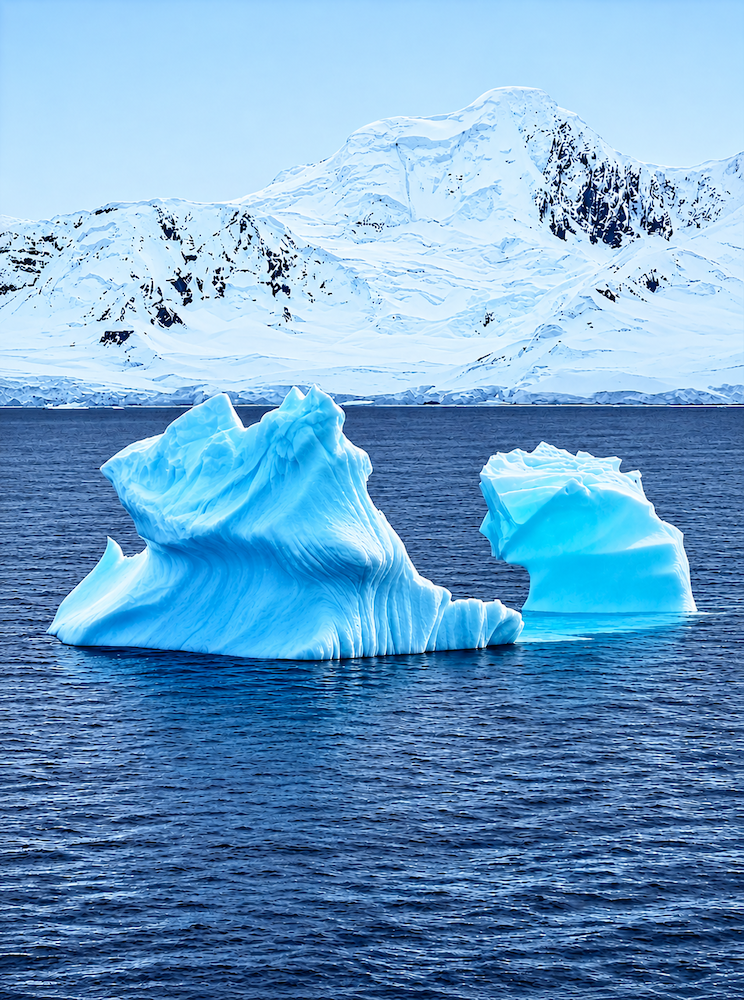
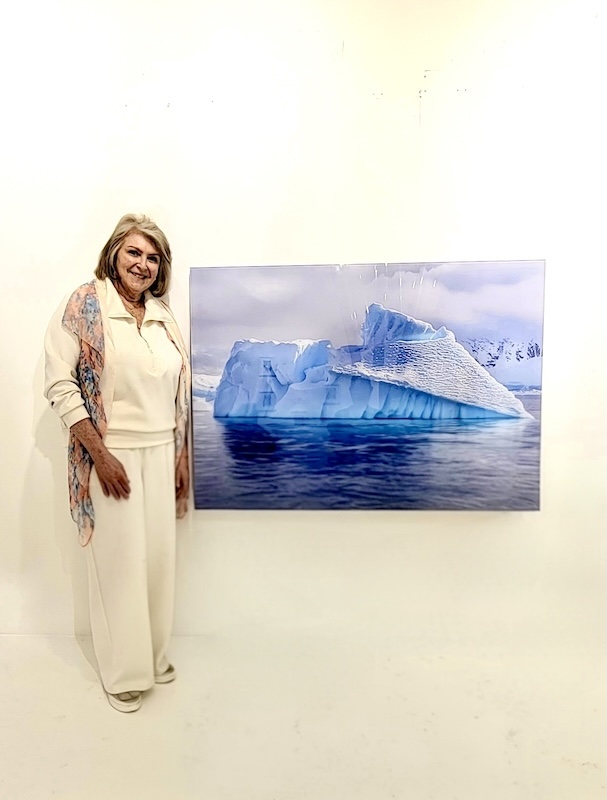
In the photographs of glaciers, that mobility takes on a sculptural density. The framing brings the ice close enough to give it a tactile presence. The eye moves from the monumentality of the volume to the minute articulations of its surface. As the gaze draws closer, the iceberg takes on the physiognomy of a body. Erosion shapes the mass by subtraction, scoring its surfaces, opening fissures, defining edges, and hollowing out the volume. Its contours bear the marks of that transformation. The singularity of each body is held in suspension by the very forces that undo it.
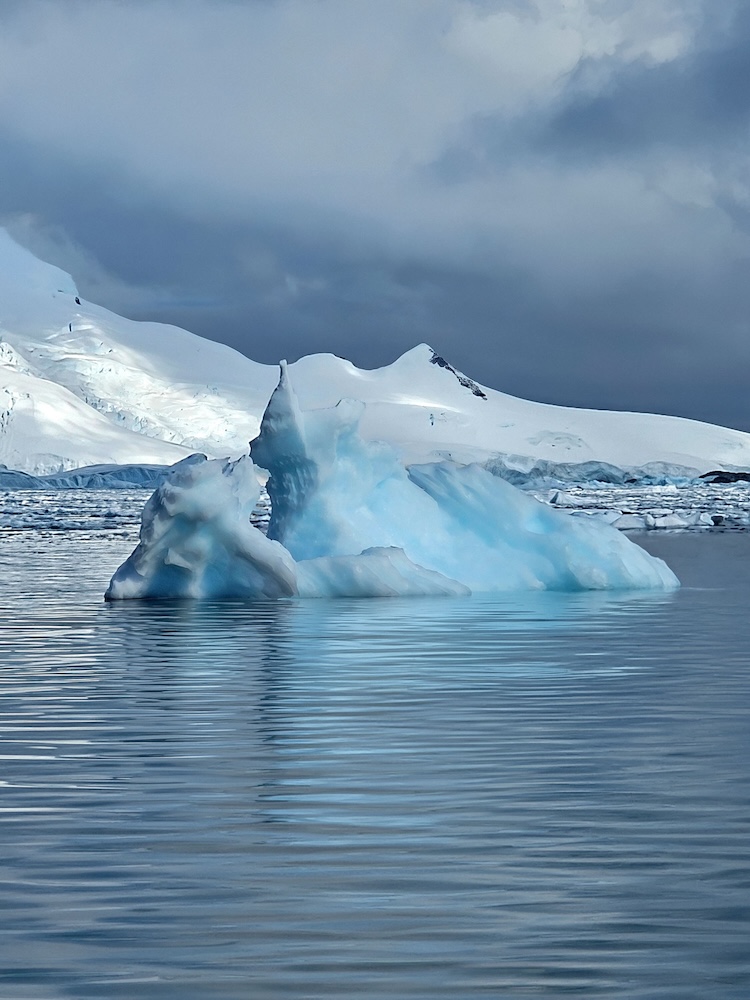
The frame gathers the fragment into a compositional whole, granting it autonomy and monumental scale. The arrangement of its planes suggests an architecture whose apparent stability is interrupted by fractures and cavities. The tension between the unity established by the frame and the material processes that exceed it lies at the critical center of the series.
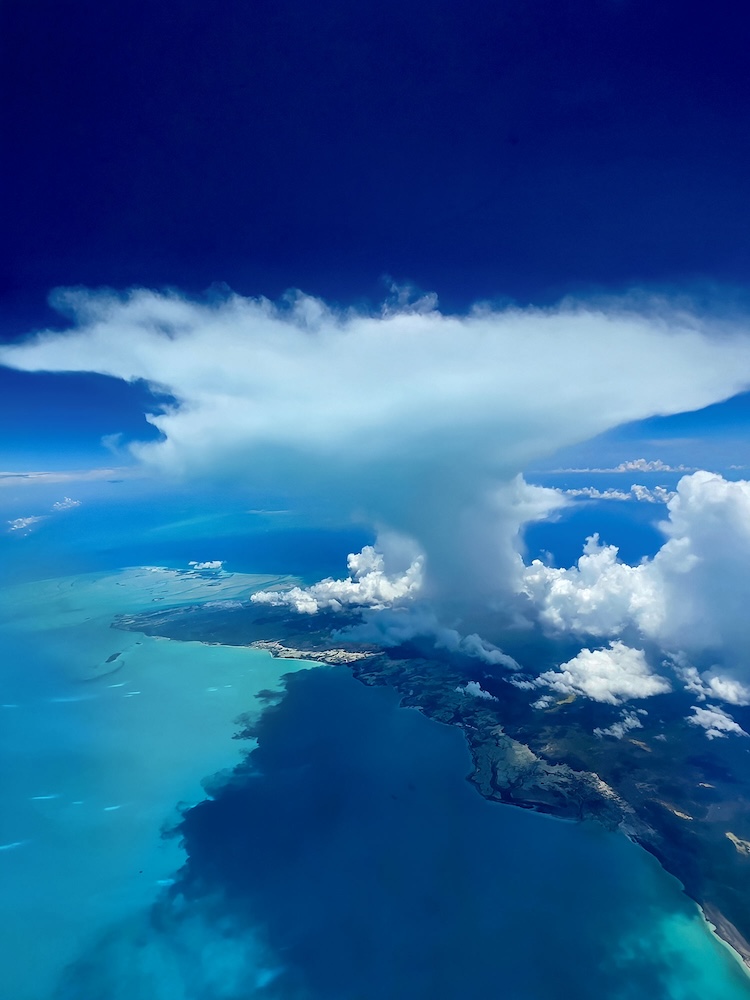
In this work, nature is a presence in transcendence. Each photograph arrests an instant while allowing the continuity of a world still unfolding beyond the gaze to pulse within it. The visual capture preserves a fugitive moment in the process of disappearing.
Milagros Bello, PhD
Curator